In this guide
- 01Why Kakigori Deserves A Second Look
- 02What Makes "Nikko Natural Ice" Worth The Fuss
- 03The Heritage Counters: Craft Over Setting
- 04The Hotel Lounge: Kakigori At Its Most Composed
- 05The Kakigori Crawl: A Single Chauffeured Day
- 06A Tokyo Micro-Season Of Flavors
- 07The Optional Nikko Provenance Day
- 08Common Questions
- 09Why Choose Japan Royal Service
Ice was once a currency of rank. In Heian-era Japan, shaved ice sweetened with vine syrup was a rarity offered to the aristocracy — a taste of coolness few could ever hope to enjoy. The court poet Sei Shōnagon wrote about it more than a thousand years ago. It was a luxury then. It quietly remains one now.
Today that lineage lives on in the delicate craft of kakigori. Not the paper-cone slush of a seaside stall. We mean the refined, snow-fine version served in a handful of Tokyo counters and five-star lounges, built on natural winter ice and single-origin fruit. This is the version worth planning your day around.
Our team at Japan Royal Service has spent many summers threading these experiences into private itineraries. What follows is a concierge-grade view: where the craft lives, what the fuss over Nikko ice really means, and how to enjoy it without queues, heat, or crowds bearing down on you.
Why Kakigori Deserves A Second Look
Most visitors file kakigori under "summer street snack." That reading misses the point entirely.
The dish predates the Golden Route by centuries. Kakigori has existed since the Heian Period (794–1185), when access to ice meant access to power. There was no refrigeration. Ice was cut in winter, stored in earthen pits, and hauled out in the swelter of summer for the very few who could command it.
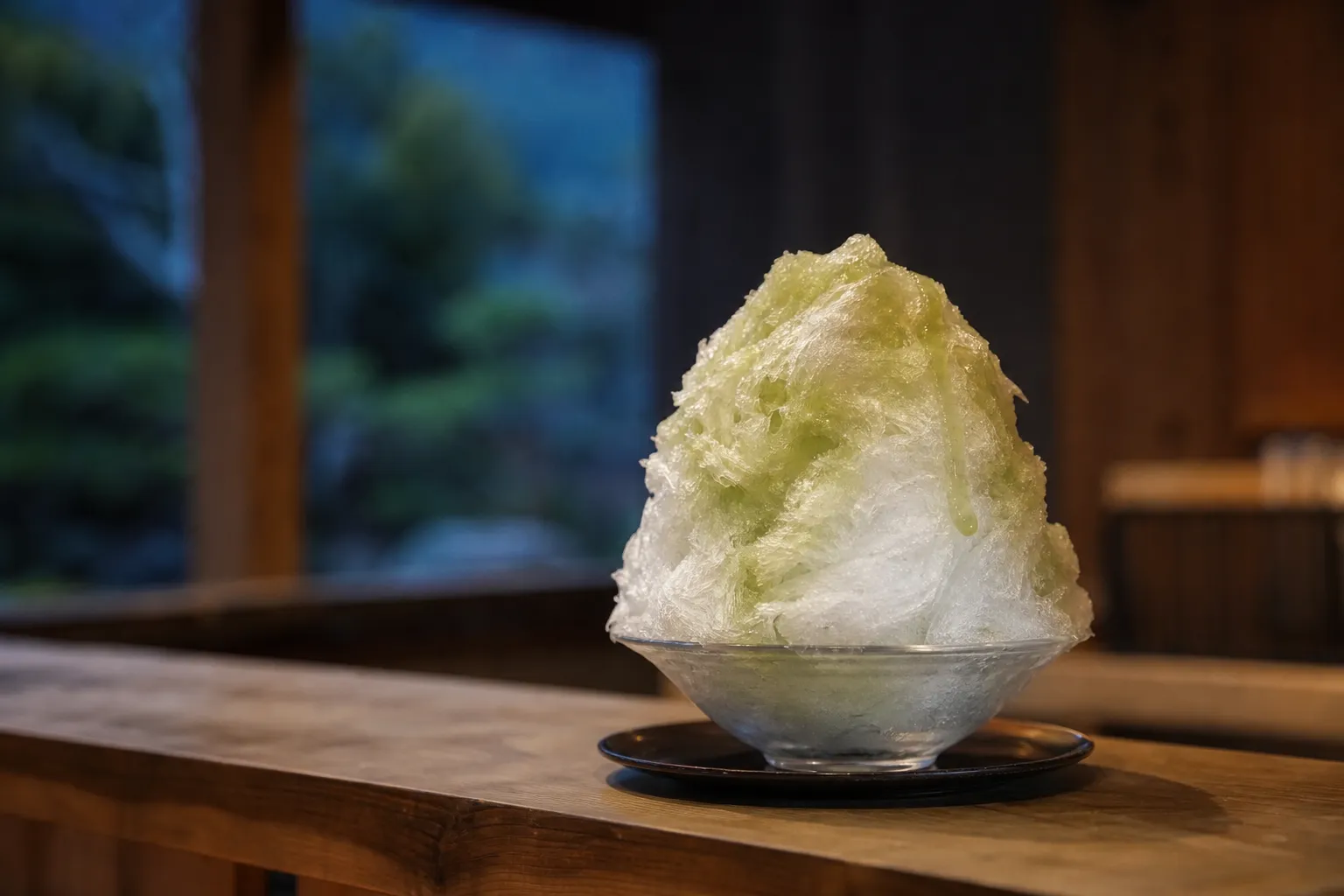
That scarcity shaped its character. Even now, the finest kakigori is a study in restraint — a mound of ice shaved so thin it collapses on the tongue, dressed with syrup that tastes of one perfect fruit and nothing else. There is a quiet wabi-sabi logic to it. Simple materials, exacting craft, a pleasure that vanishes the moment you reach for it.
In our experience, guests who arrive skeptical leave converted. The texture alone rewrites their expectations.
What Makes "Nikko Natural Ice" Worth The Fuss
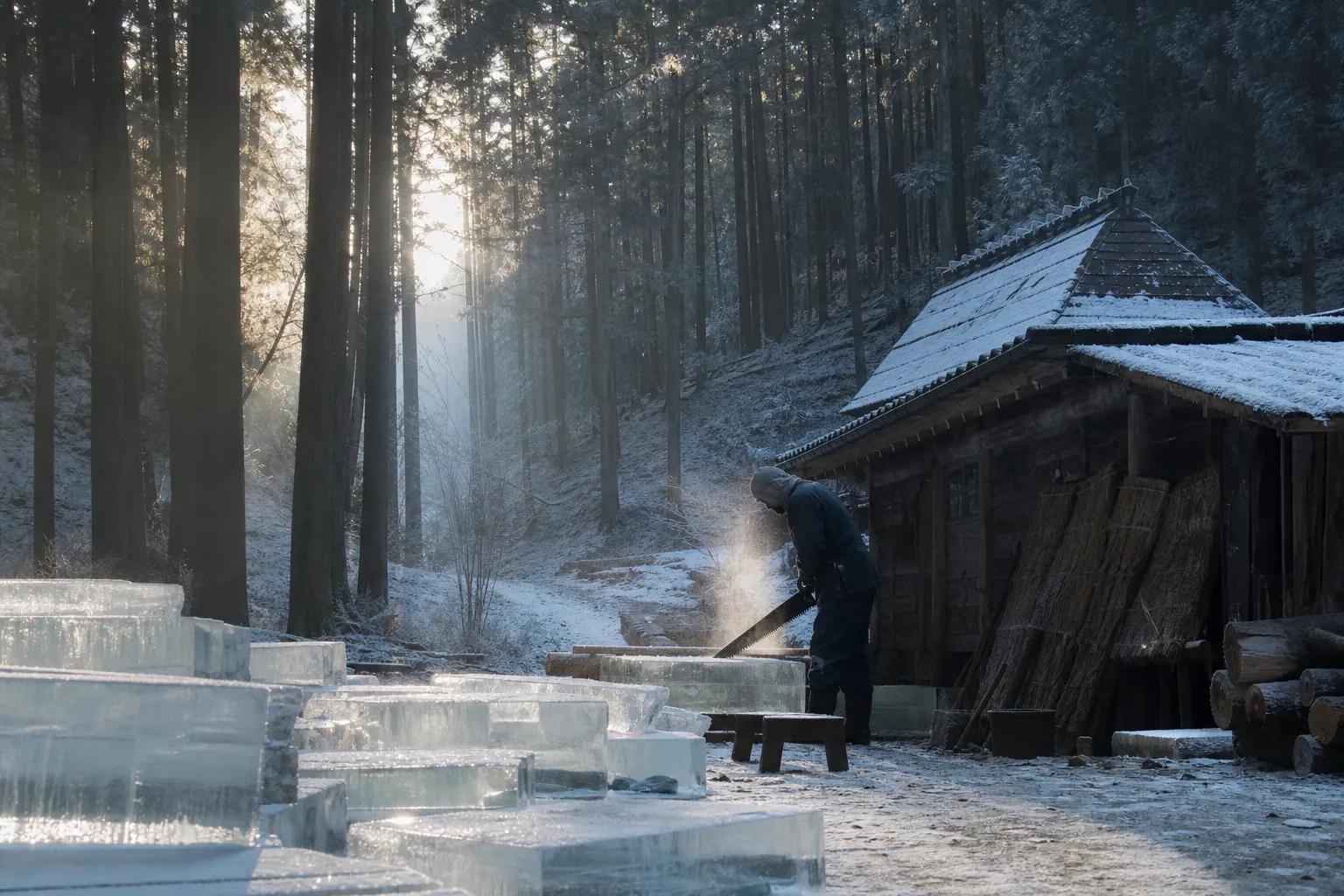
You will hear the phrase Nikko tennen-gori (日光天然氷) at the better counters. It matters. Here is why.
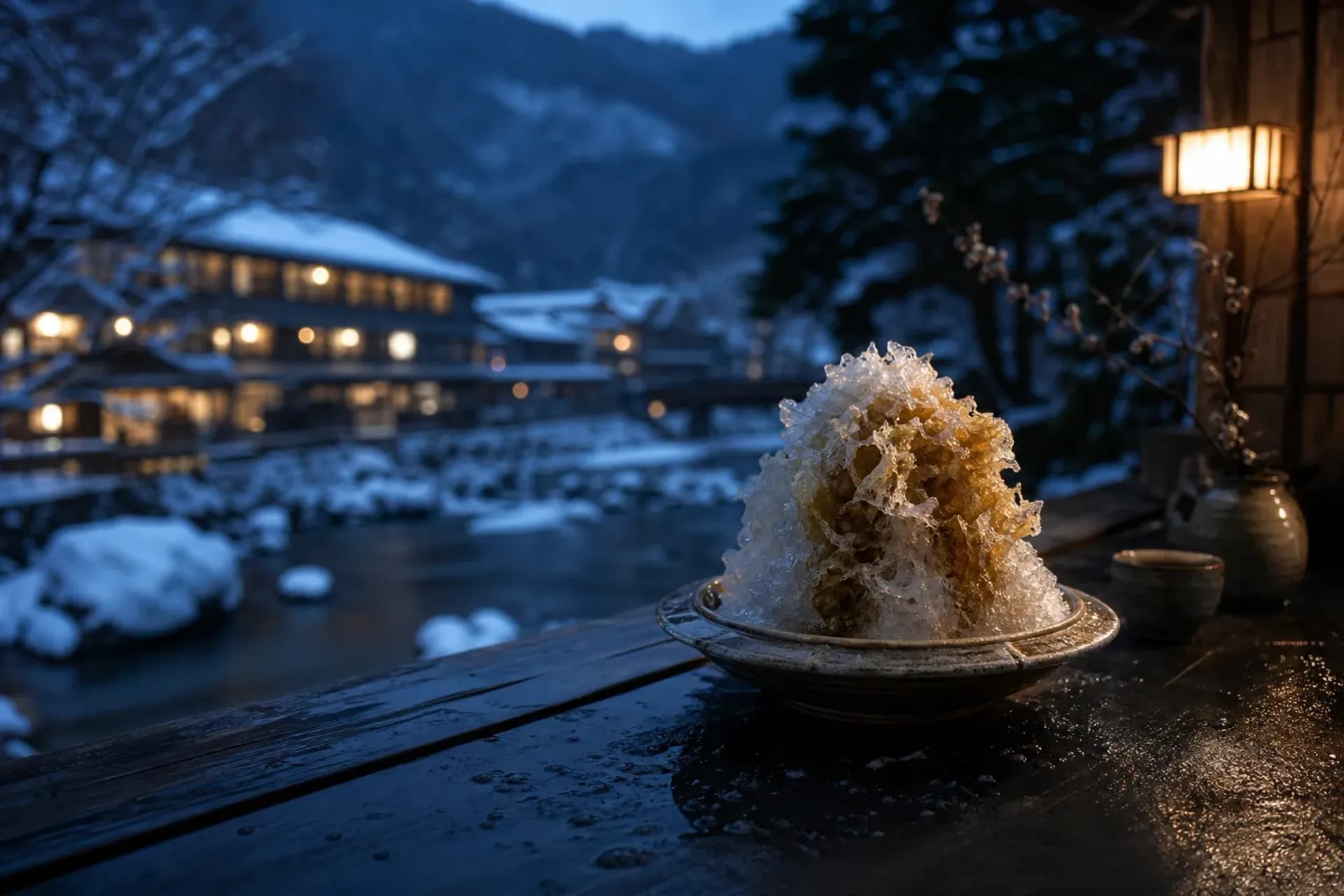
Natural ice is frozen slowly outdoors over winter weeks, not blasted in a machine overnight. The slow freeze produces dense, clear ice with almost no trapped air. Shaved thin, it melts differently — softer, cleaner, without the harsh crunch of factory ice. Nippon.com has documented the recent revival of this natural-ice craft, naming Nikko in Tochigi alongside Nagatoro in Saitama and Hokuto in Yamanashi as the prized production areas. Greater Tokyo, it notes, is where most natural-ice specialists cluster.
Only a few families still produce it. The output is small. The demand is not. That gap is precisely what elevates a bowl of natural-ice kakigori above the ordinary.
Nikko's own tourism board treats shaved ice as a signature local experience, with a dedicated page for visitors (visitnikko.jp/en/spots/kakigori-shaved-ice/). For guests who want provenance rather than hearsay, we sometimes fold a Nikko day into a wider itinerary — the ice houses, the shrines, the mountain quiet. More on that below.
Worth knowing: Natural ice is genuinely scarce. Some shops sell out of it by early afternoon and switch to standard ice. If natural ice is the whole point of your visit, timing is everything — we plan arrivals accordingly.
The Heritage Counters: Craft Over Setting
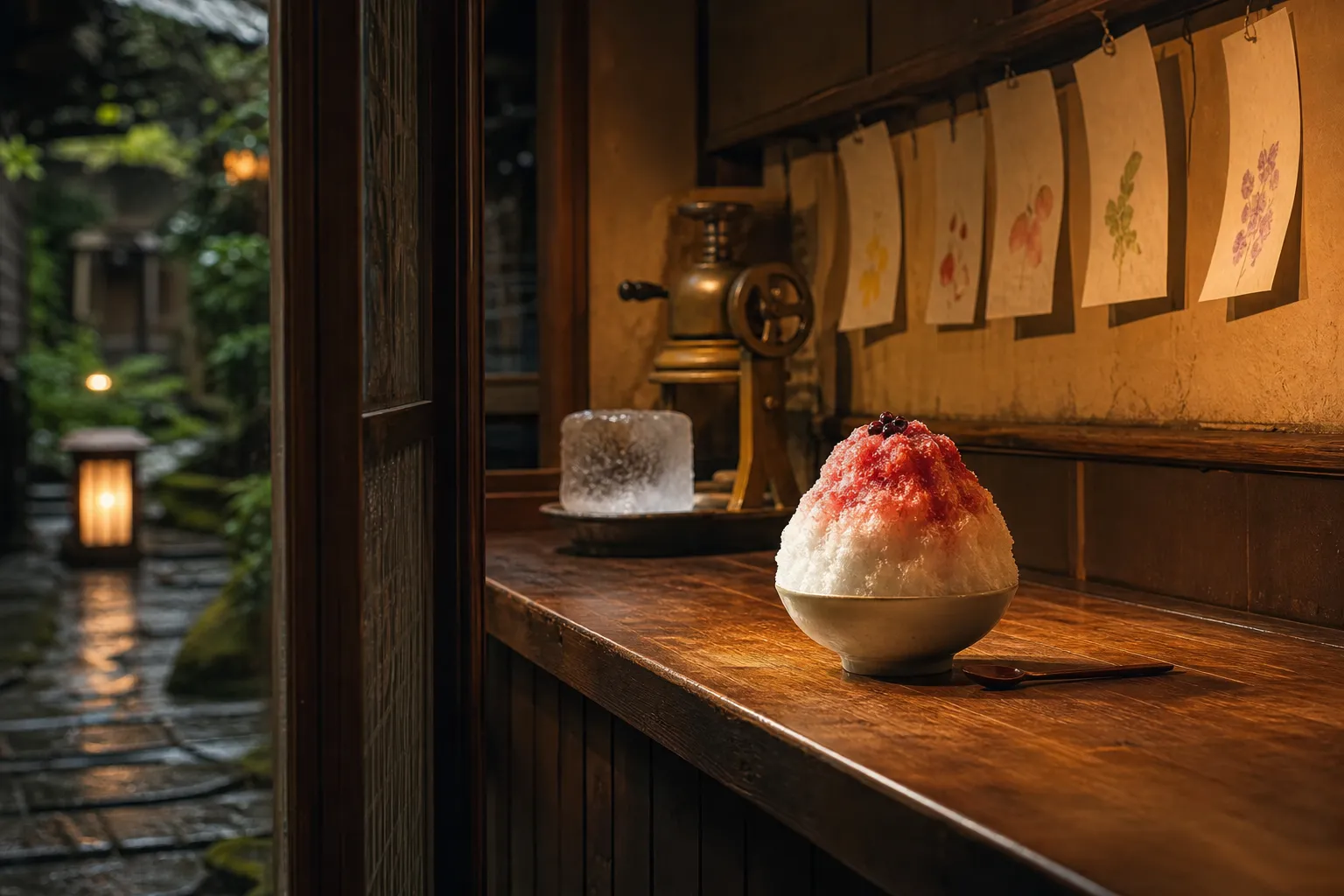
Two ends of the spectrum exist in Tokyo. On one end, small owner-run shops where the ice is the entire performance. On the other, the polished hotel lounge. A good day touches both.
Himitsudo, Yanaka
Himitsudo (ひみつ堂) in old Yanaka is among the most beloved natural-ice specialists in the city. Its official site is himitsudo.com. The shop is small, the flavors rotate with the season, and the queues are legendary in high summer.
That last detail is the whole problem. On a hot Saturday the wait can swallow your afternoon. Big mistake, if you have dinner plans. Our concierge team plans these visits around opening windows and weekday timing to keep the experience calm rather than grueling.
Azuki To Kouri, Yoyogi
Azuki to Kouri sits at 1F Grand Duo Yoyogi, 1-46-2 Yoyogi, Shibuya (English site: azukitokouri.com/en). The name nods to azuki, the red bean at the heart of Japanese sweets. The style here leans toward the refined, seasonal, and beautifully composed.
Neither of these is a secret in the strictest sense. But knowing which to visit, on which day, at which hour — that is where friction disappears. And friction, in July heat, is the enemy of a good afternoon.
The Hotel Lounge: Kakigori At Its Most Composed
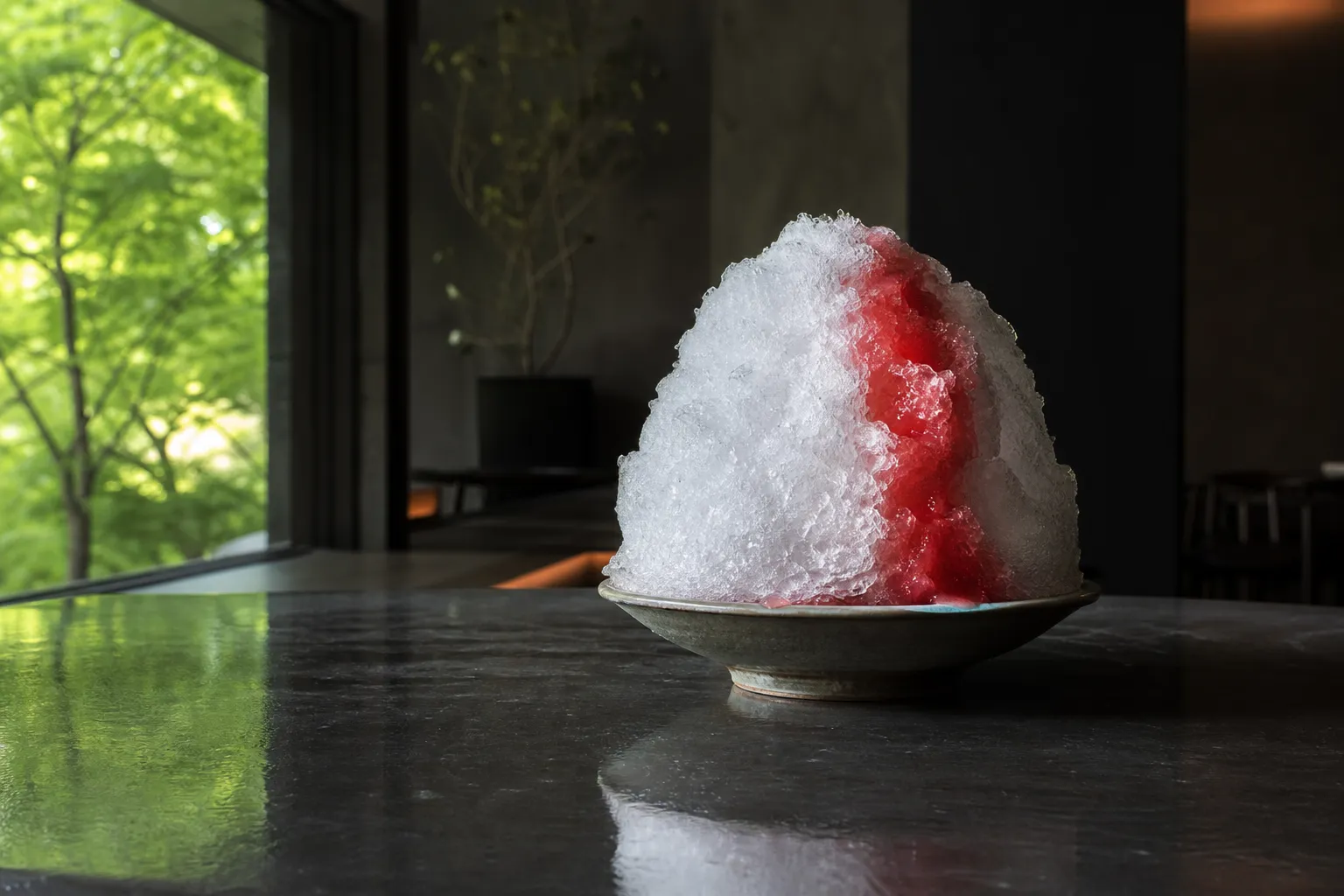
The other pole of the spectrum belongs to Tokyo's luxury hotels, which have turned kakigori into a seasonal signature.
Hotel New Otani Tokyo maintains a dedicated kakigori feature page (newotani.co.jp/tokyo/restaurant/recommend/kakigori/) and states plainly that it uses Nikko natural ice. For the 2026 season, the hotel's page lists a Tottori watermelon kakigori planned from June 8, 2026 through late July 2026. A separate press release dated June 9, 2026 details a "Shin Edo Kakigori — Tottori Watermelon" served at its Japanese restaurant KATO'S DINING & BAR, running through late July 2026 (newotani.co.jp/tokyo/press-release/2026/0609-01/).
The appeal here is different from the neighborhood shop. Air-conditioned calm. Seated service. A quiet table where the day's heat simply stops mattering. For a guest pacing a long summer itinerary, that composure is itself the luxury.
Premium ingredients define this tier. Single-farm melon. Regional watermelon at its peak. The kind of fruit that carries its own provenance — a Shizuoka Crown melon, say, or a prized Tottori watermelon. When such produce meets natural ice, the result is closer to fine dessert than to street food.
A note on booking: these are seasonal, limited-time offerings, and specifics change year to year. We always confirm the current menu and dates against the hotel's own published pages before we suggest anything. Guests interested in learning more may contact our concierge for tailored guidance.
The Kakigori Crawl: A Single Chauffeured Day

Here is how we like to build it. One day. Two contrasting experiences. Zero wasted heat.
The idea is simple: pair one heritage counter with one hotel lounge, connected by private car so the summer streets never touch you. A rough shape looks like this.
- Late morning: Arrive at a heritage counter (e.g., Yanaka) before the midday queue builds
- Early afternoon: Private transfer to a nearby museum, garden, or Ginza / Omotesando shopping
- Late afternoon: Seated hotel-lounge kakigori — natural ice, premium fruit, cool composure
- Evening: Discreet dinner nearby, unhurried, itinerary intact
The chauffeured spine is what holds it together. Our fleet — the Lexus LM 500 or the Toyota Alphard among them — waits when you linger and moves when you are ready. No taxi hunts in the sun. No subway transfers with shopping bags. For families, the executive Alphard earns its keep on days like this.
We coordinate the whole route through our private Tokyo chauffeur service so timing, reservations, and comfort align. The contrast is the reward: the artisan's small counter against the hotel's hush, both built on the same slow-frozen ice.
A Tokyo Micro-Season Of Flavors
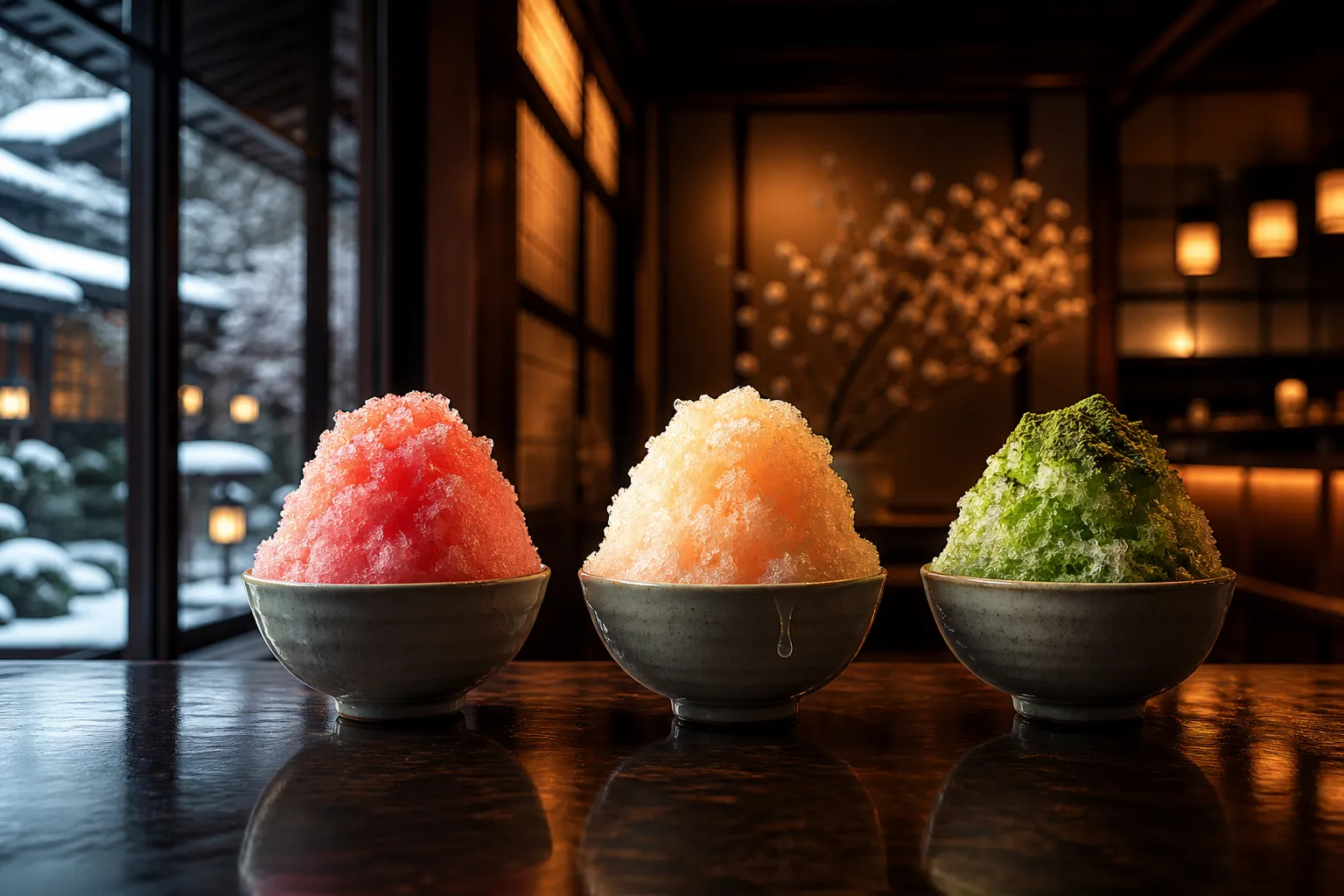
Kakigori runs on shun — the sense of a fruit at its exact peak. That is why the good menus shift week to week rather than sitting still.
Early summer brings melon and the first watermelons. Midsummer belongs to peach and the height of the melon season. Matcha and hojicha hold steady across the whole stretch for those who prefer restraint over sweetness. New Otani's own 2026 calendar, with its watermelon offering keyed to specific dates, is a small illustration of how tightly these menus track the season.
This is also why we date-check everything. A flavor that ran last July may be gone this year. We confirm against primary sources before we place a single reservation.
The Optional Nikko Provenance Day
For guests who want to follow the ice to its source, Nikko rewards the detour.
Roughly two hours north of Tokyo by car, Nikko is where much of the city's natural ice originates. The town pairs shaved-ice culture with the grandeur of Nikko Tōshō-gū, its cedar avenues, and mountain air that feels a full season cooler than the capital. Visitnikko.jp treats kakigori as a local specialty worth the visit in its own right.
We shape this as a private day trip: the mountain quiet in the morning, a natural-ice bowl at its origin, and back to Tokyo by evening. It is the difference between hearing about provenance and tasting it where it was made.
Common Questions
Is Kakigori Really A Luxury? Isn't It Just Shaved Ice?
The everyday version is a snack. The version we plan around is not. Natural-ice kakigori built on single-origin fruit — Nikko ice, Tottori watermelon, Shizuoka melon — is closer to a plated dessert at a fine restaurant. Its Heian-era roots as an aristocratic rarity are not marketing; they are documented history.
When Is The Season?
Broadly May through September, with the deepest heat of July and August as the peak. Many hotels now extend their menus across this longer window. Specific limited-time flavors, however, run on tight dates — which is exactly why we verify before booking.
Can We Avoid The Queues At The Famous Shops?
Often, yes — with timing. Weekday mornings and early opening windows are the levers. Some counters do not take reservations, so arrival strategy matters. Pairing an unreservable heritage shop with a seated, bookable hotel lounge is how we keep a day calm from end to end.
Where Does The Best Ice Come From?
Nikko in Tochigi is the most celebrated source, alongside Nagatoro in Saitama and Hokuto in Yamanashi. The slow winter freeze produces dense, clear ice that shaves into an almost weightless texture. That texture is what separates a memorable bowl from a forgettable one.
Why Choose Japan Royal Service
Anyone can find a kakigori shop online. What we offer is the version without friction — the calm, sequenced, discreet day that turns a small pleasure into a memory.
Our team at Japan Royal Service handles the parts that quietly matter: timing your arrival before a queue forms, holding a lounge table when the heat peaks, and moving you between neighborhoods in private comfort rather than crowded trains. We confirm every seasonal menu against the venue's own published information before we suggest it. And we keep your itinerary — and your name — entirely to ourselves.
For guests who prize provenance, we can extend the story to Nikko itself. For those who prefer a single elegant afternoon, we compress it into a chauffeured half-day between Ginza and Omotesando. Either way, the craft leads and the logistics disappear.
That balance — cultural depth without the hassle — is the whole of what we do.
Planning a Tokyo summer and curious where gourmet kakigori fits? Reach our concierge through the contact form at japanroyalservice.com, or message our team directly via WhatsApp for private, tailored guidance. We will listen first, then design the day around you.