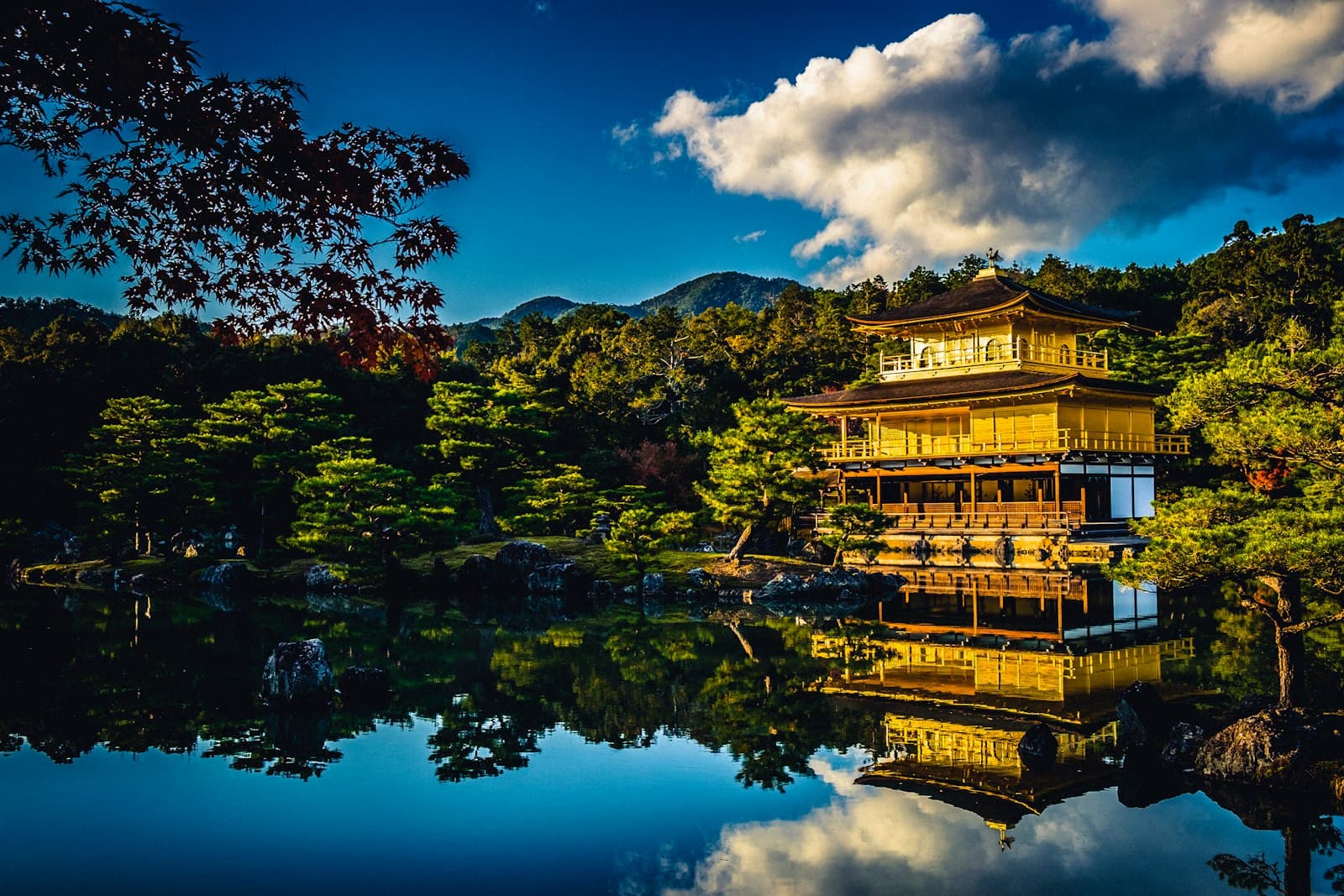
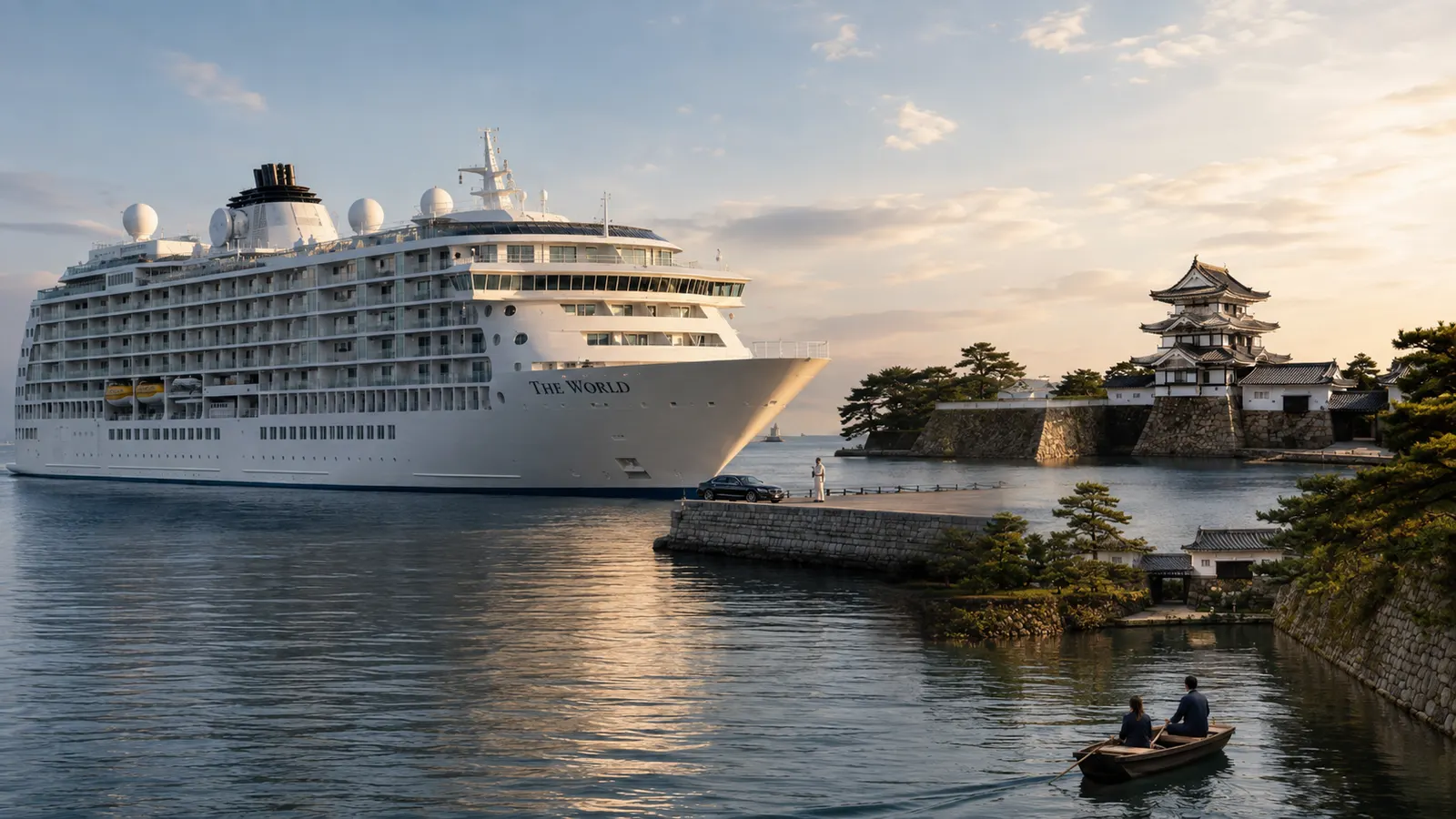
Tamamo Park, Takamatsu — one of a series of shore days Japan Royal Service builds around a call at this port.
The moat at Takamatsu Castle is full of seawater, and there are sea bream in it.
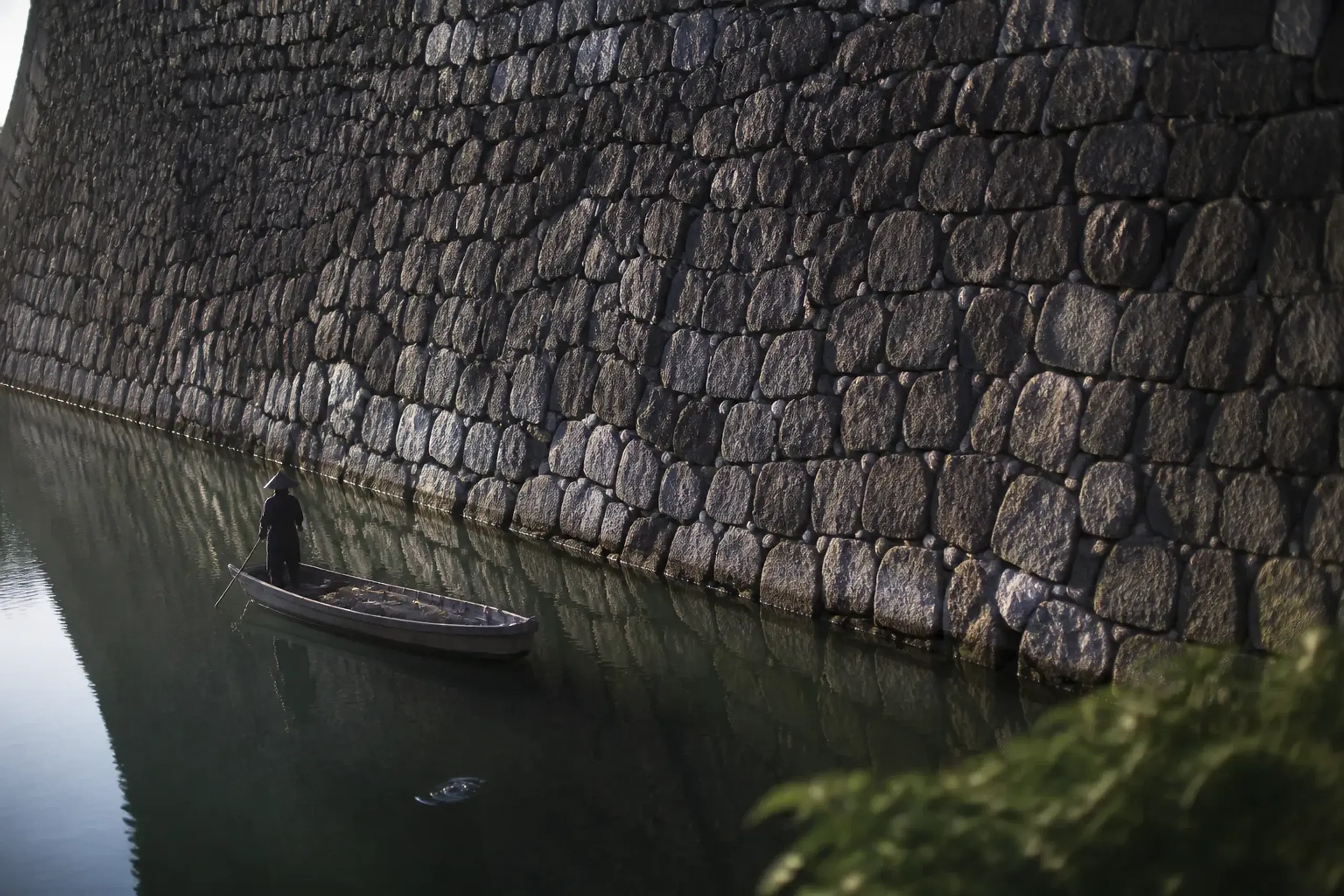
Not a pond stocked for effect. The moat is fed directly from the Seto Inland Sea through a water gate that opens at high tide, so the level rises and falls with the day, and the fish turning under the stone walls are red sea bream — madai — that belong to salt water. Every other castle in Japan keeps carp. This one keeps sea bream, because the moat is not a moat in the ordinary sense at all. It is an inlet with walls.
Takamatsu is one of Japan's three great water castles, and it is roughly five minutes by car from the cruise berth at Sunport — closer than anything else of interest in the city.
A castle that used the sea as a wall
The design decision that defines the place was to set the keep on the shoreline and let the sea itself do the work of a moat on one flank. Ships could come in under the walls. The lord could step from his residence into a boat and be at sea within minutes.
The moat is still tidal, and that is worth holding on to as a visitor: the water gate opens with the high tide and lets fresh seawater in, so the level moves through the hours of a single day. The castle you photograph in the morning is not quite the castle you see again before dinner. The stone shows more of itself at low water; the walls sit deeper at high. It is a place that quietly rewards a second look on the same call.
The families, and the name
The castle is a National Historic Site, held by the Ikoma family for four generations and then by the Matsudaira for eleven. The name Tamamo reaches back further still. In the Man'yōshū, the poet Kakinomoto no Hitomaro used tamamo yoshi as a pillow-word for Sanuki Province, and the sea here was known as Tamamo-no-Ura — the shore of the fair seaweed. The park carries a name a thousand years older than the walls it surrounds.
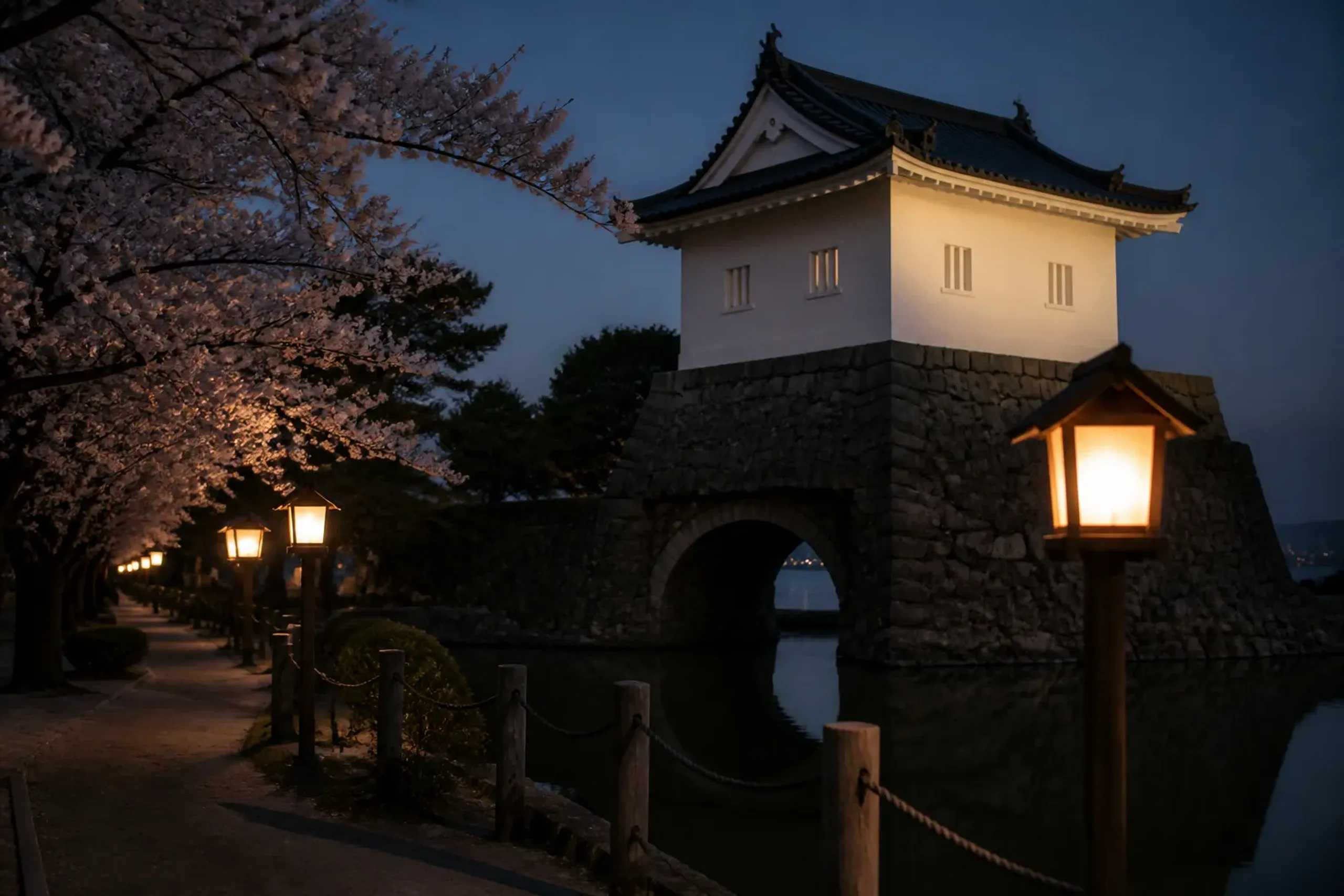
The keep itself does not survive; it was dismantled in the Meiji period, as most were. What remains is, in its way, more interesting. The stone base of the keep stands intact, and two turrets that were never lost. The Tsukimi-yagura — the moon-viewing turret — and the Ushitora-yagura are both Important Cultural Properties, as are the Mizute-gomon water gate and the connecting Watari-yagura. The city has published studies toward a possible reconstruction of the keep, but for now it is the keep base you climb, not a keep.
The Tsukimi turret sat directly above the water gate where the lord's boat came in.
The gate that opens onto water
The single detail worth carrying away is the Mizute-gomon. The castle once faced the open sea, and a lord departing for his obligatory attendance in Edo — the sankin-kōtai — boarded a small boat at this very gate, then transferred to his main ship waiting offshore for the passage to Osaka. It is a castle gate that opens not onto land but onto water. A lord leaving his own fortress by boat is a better story than any rampart, and it is the kind of thing you feel standing at the threshold, looking out at the tide.
The boat, and the fish
There is a small tradition here of feeding the sea bream in the moat, and there is a boat you can take out onto the water — a quiet ten or fifteen minutes looking up at the walls from the surface, which is precisely how the castle was designed to be seen and almost nobody now sees it.
The boat is a wasen, modelled on a vessel drawn in an Edo-period map of the castle roughly 370 years old. The boatman gives commentary as he goes, and the view of the keep base from the water is the reason to step aboard. One thing to plan around: the boat runs from March to November only. A winter call gets no boat, and it is better to know that before the title of this piece promises one.
Feeding is the other small ritual. Pellets come from a dispenser, poured into a box, and roll down a bamboo chute into the moat, where the bream rise for them. Guides here fold in a piece of local wordplay: taigan jōju, a pun on daigan jōju — the fulfilment of a great wish — with the character for sea bream swapped in. It is the kind of thing a guide offers and a guidebook leaves out.
Hiunkaku
Inside the grounds stands a building most visitors walk straight past. Hiunkaku was completed in 1917 by Matsudaira Yorinaga, the twelfth head of the Takamatsu Matsudaira family — the same man who, in 1934, founded the Kokufu Bonsai Association. That is not a coincidence worth glossing over: the connection runs directly to the pine culture of nearby Kinashi, and it is the same family hand behind both.
Hiunkaku is an Important Cultural Property in its own right — a very late, very confident piece of traditional Japanese domestic architecture, built when the family that had ruled here for two and a half centuries no longer ruled anything and were building for themselves rather than for display. It faces a karesansui garden that is a nationally designated Place of Scenic Beauty, restraint answered by restraint: raked gravel and the silence of stone rather than any flourish.
The building is available room by room, as a rental venue, and the schedule matters, because rooms under seismic reinforcement cannot be hired while those not under work can. At time of writing:
- Sotetsu-no-Ma — work completed March 2022; available since April 2022.
- Ōshoin, the principal hall — under work from January 2024 to October 2026; closed at time of writing, reopening around October 2026.
- Maki-no-Ma — scheduled for work from October 2028 to March 2030.
- Remaining rooms — undecided.
The city notes that periods may change and directs enquiries to the park management office; we confirm the current position before we propose a room. Partially available, in other words — with a named schedule, which is exactly what a planner needs.
When it opens
Two openings govern the timing of a call, and both are worth stating plainly.
The interior of the Tsukimi-yagura opens on Sundays only, 09:00–12:00 and 13:00–15:00, and the Mizute-gomon is opened Sundays, 09:00–15:00. On any other day of the week you see them from outside, not within. If the water gate and the moon-viewing turret are part of why you have come, the day of the call decides whether you enter or admire from the path.
The boat, as above, is the other constraint: March to November, weather permitting. Admission to the grounds is free on 1–3 January and on 5 May.
Why this one matters more than its size suggests
The park sits within walking distance of JR Takamatsu Station, Kotoden Takamatsu-Chikkō Station and Takamatsu Port, and roughly five minutes by car from the berth at Sunport. It is the closest thing of any real interest to where the ship lies.
That proximity is its quiet argument. A guest who does not want a full day out, or who wants an hour before dinner, or who is simply not up to a long drive on a particular morning, can be here and back without the day being planned around it. It is the natural first or last stop of a call, and a genuine option when a sailing window is tight.
Over several days in port, having one good thing within walking distance changes how the rest of the time can be spent. It is the difference between every outing being a commitment and some of them being a choice.
What we arrange
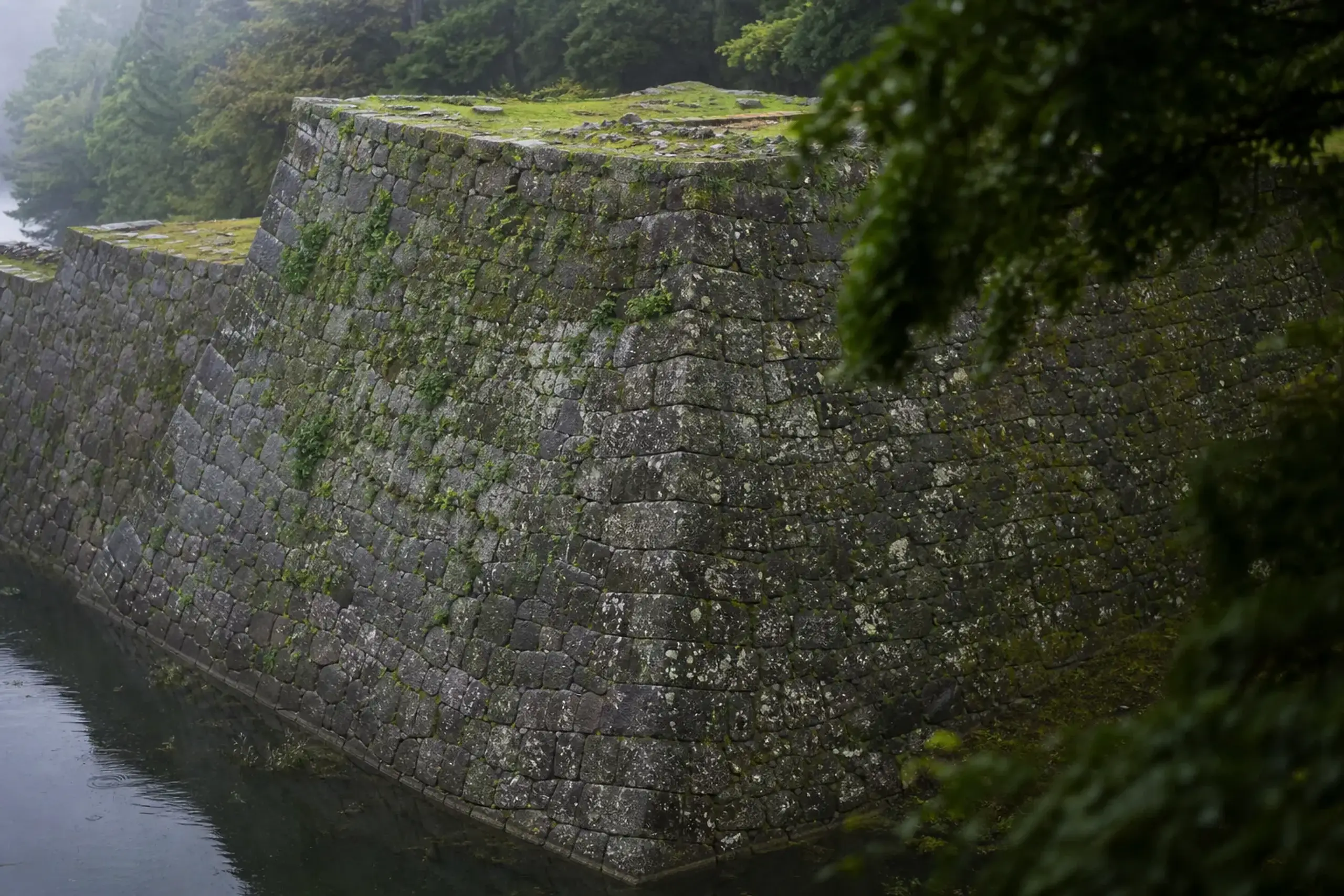
We provide a guide who can read the stonework — the keep base is a lesson in how a Japanese castle wall is actually assembled, stone answering stone. We arrange the boat, in season and in weather, and the feeding at the moat's edge. We arrange access to the Tsukimi turret and the Mizute-gomon, and where a Sunday call allows it, entry within them rather than a view from the wall. And we arrange Hiunkaku, where a private room facing the karesansui garden is the right answer for an afternoon — reserved through people the other side already knows. The private transfer from the berth is arranged as part of the same day, as is the whole of a tailor-made itinerary around it. We state this plainly, once.
Frequently Asked Questions
How far is it from the ship?
Roughly five minutes by car from the berth at Sunport, and within walking distance of Takamatsu Port and the two stations. It is the closest thing of real interest to the berth, which makes it the one outing that does not require the day to be planned around it.
Is the castle keep still standing?
No — the keep was dismantled in the Meiji period. What survives is the stone base of the keep, together with two original turrets, the Tsukimi-yagura and the Ushitora-yagura, both Important Cultural Properties. The city has studied a possible reconstruction of the keep, but it has not been rebuilt.
Why is the moat seawater?
The castle was built on the shoreline and used the Seto Inland Sea as its defence on one side. The moat is fed from the sea through a water gate that opens at high tide, so it remains tidal — and it holds red sea bream rather than the carp found in every other castle in Japan.
Can Hiunkaku be reserved?
Yes, room by room, subject to a published seismic-reinforcement schedule. The principal hall, the Ōshoin, is closed until around October 2026; other rooms are available. We confirm the current position before proposing one.
More on this rotation
- Tange, Ōe and the design governor — Takamatsu
- A private Noh performance — Takamatsu
- Sanukite, the stone that rings — Takamatsu
Arranging the day
When the ship lies at Takamatsu for days rather than hours, everything on this page changes.
A turret that opens only on Sundays stops being a gamble when the day can be chosen. A private room at Hiunkaku can hold a whole afternoon instead of a passing look. Nothing has to be cut short to make a gangway.
We are a Japanese company, working in Japanese, with the people who hold the keys to these places — the arrangements made by someone the other side already knows. Enquiries are handled privately and directly; you can contact us here. We do not publish our clients, our itineraries, or our rates.