In this guide
Oshogatsu, the New Year, is the time when much of Japan pauses. Offices close, families gather, and the first days of January follow their own rhythm of shrine visits, special meals and quiet streets. In Tokyo, one morning stands apart: the New Year Greeting at the Imperial Palace.
The New Year Greeting at the Imperial Palace
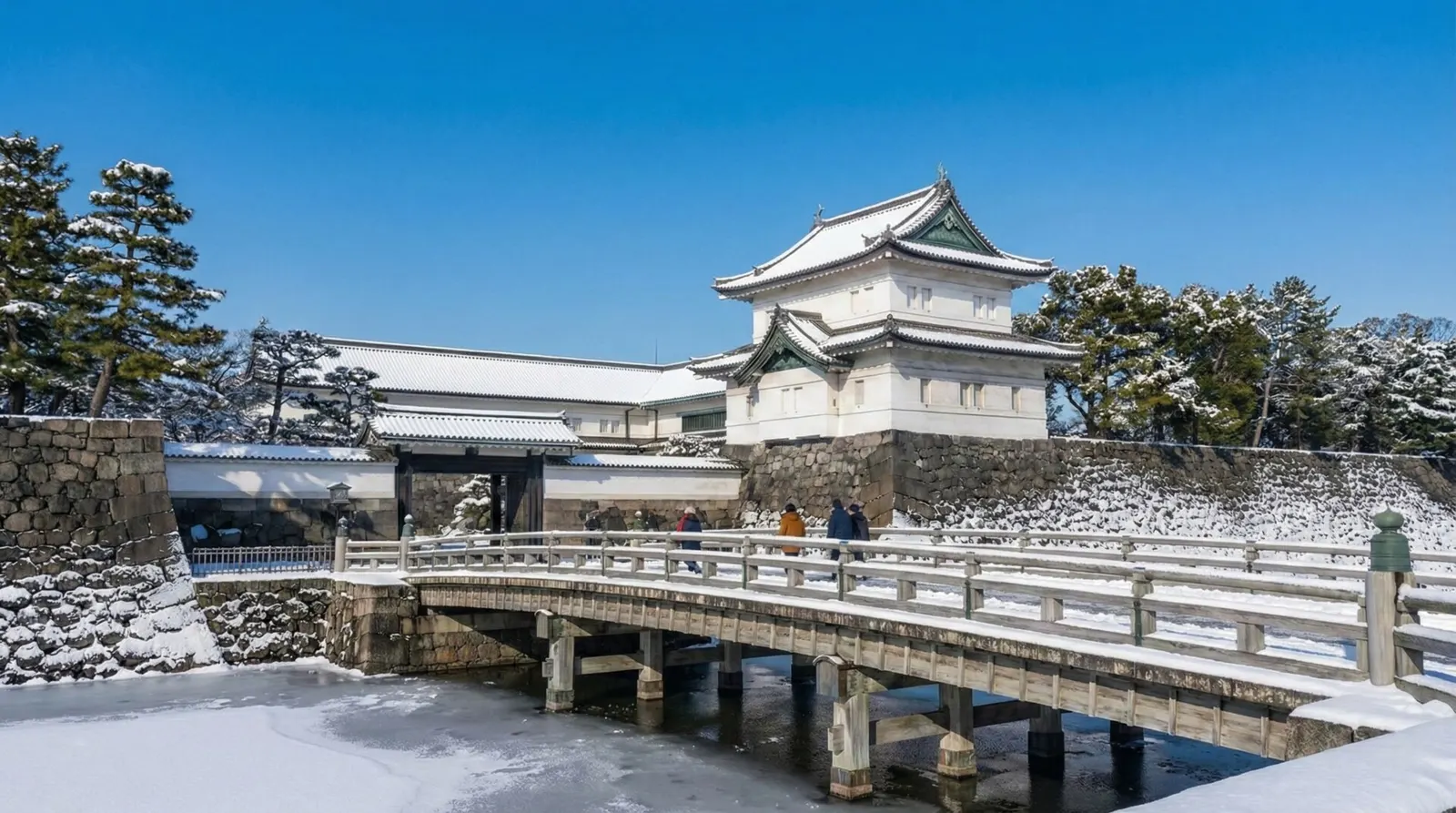
On January 2 each year, the inner grounds of the Imperial Palace open to the public for the New Year Greeting, known in Japanese as Shinnen Ippan Sanga. The Emperor, the Empress and other members of the Imperial Family appear several times on the balcony of the Chōwaden, a reception hall in the palace, and the Emperor offers a short New Year message to the crowd.
Visitors enter through the Main Gate after a baggage inspection, walk into the plaza in front of the Chōwaden, and leave through other gates once the greeting ends. Entry times and the number of appearances are announced by the Imperial Household Agency each year, and the event can be cancelled in heavy snow or bad weather. The JRS concierge team confirms directly with the guest at time of arrangement.
What the Morning Is Like
The line moves slowly and steadily, and much of the morning is spent walking and standing outdoors in the January cold. Many visitors carry small Japanese flags and raise them when the Imperial Family appears. Bring warm layers, comfortable shoes and as little as possible to carry, since bags are inspected at the gate.
How We Plan the Day
We plan the morning around a single appearance rather than the whole day. Traffic around the palace is heavy on January 2, so we set drop-off and pick-up points away from the gates, with vehicles from partner companies with English-speaking drivers. An English-speaking guide, booked separately from the driver, can explain the greeting and the history of the palace grounds as you walk. Afterwards, a warm room and a late breakfast or lunch are already booked.
Other New Year Traditions to Build Around
Hatsumode, the First Shrine Visit
Hatsumode is the first visit of the year to a shrine or temple, usually made in the first days of January. Meiji Jingū in Tokyo draws large crowds over the first three days. Smaller neighbourhood shrines keep the same customs at a gentler pace: a prayer at the main hall, an omikuji fortune, and a new omamori charm, with last year's charm returned to the shrine. Many larger shrines also offer kitō, a formal prayer ceremony led by a priest, which visitors can request at the shrine office.
Osechi, the New Year Meal
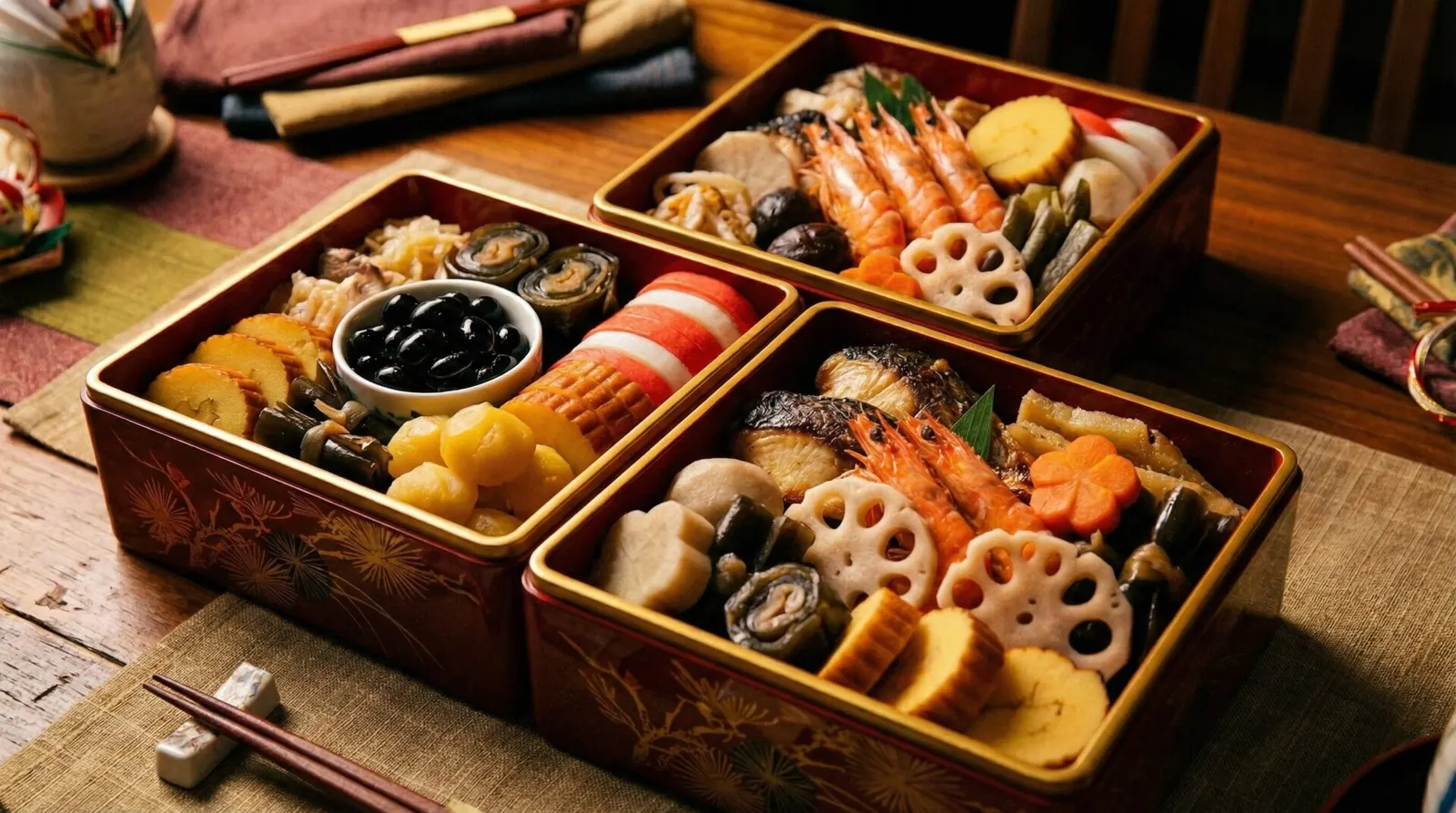
Osechi ryōri is the traditional New Year meal, served in stacked lacquer boxes called jūbako. The dishes are prepared ahead so that cooking can pause in the first days of the year, and each one carries a wish. Kuromame (sweet black soybeans) stand for diligent work, kazunoko (herring roe) for many descendants, ebi (shrimp) for a long life, and datemaki (a sweet rolled omelette) for learning. Ozōni, a soup with mochi, is eaten alongside, and its style changes from region to region.
Ryokan and many hotel restaurants serve osechi on the first mornings of the year. We book these ahead, with dietary needs passed on in advance.
The City in the First Days of January
Many shops, museums and restaurants close for several days around New Year, while department stores reopen early in the month with New Year sales and fukubukuro, sealed "lucky bags". Some cultural venues hold New Year events such as kakizome, the first calligraphy of the year, and mochi pounding. Opening days and programmes change each year, and the JRS concierge team confirms directly with the guest at time of arrangement.
Planning a Calm Tokyo New Year
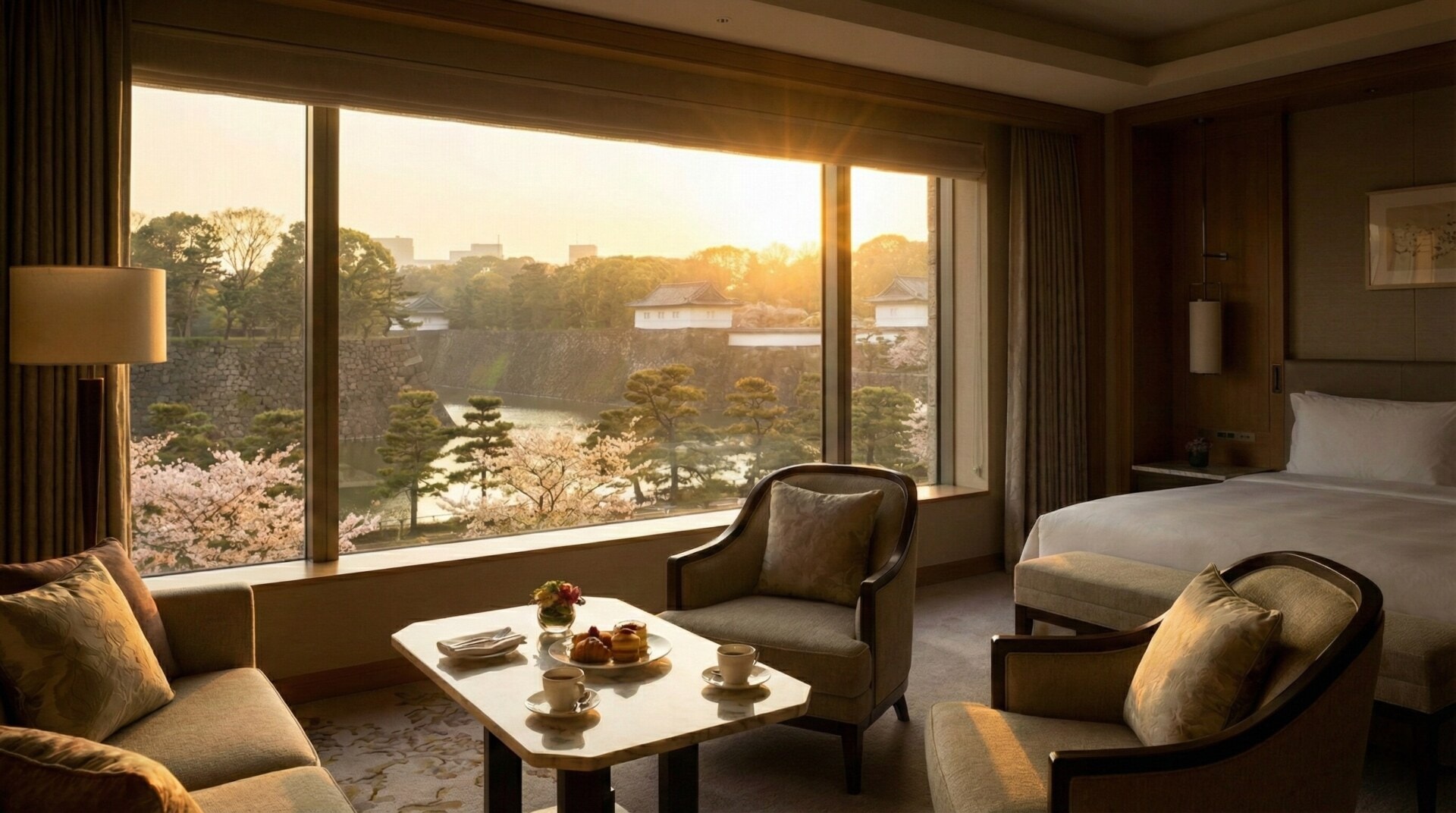
The last days of December and the first days of January are a busy travel period in Japan, as many people return to their family homes. Rooms, restaurant tables and train seats are booked well ahead. For a New Year trip, JRS arranges:
- rail tickets, including Green Car seats, with platform assistance
- vehicles from partner companies with English-speaking drivers
- English-speaking guides, booked separately from drivers
- ryokan and restaurant bookings, including osechi, with dietary needs passed ahead
- same-day re-planning when weather changes
Frequently Asked Questions
When is the New Year Greeting held?
On January 2 each year. The Imperial Household Agency announces entry times and arrangements in advance, and the JRS concierge team confirms directly with the guest at time of arrangement.
Do I need to apply in advance?
Arrangements, including whether any advance application is needed, are set by the Imperial Household Agency each year. The JRS concierge team confirms directly with the guest at time of arrangement.
Is there another day when the public can see the Imperial Family?
Yes. The Emperor's Birthday greeting, held on February 23, follows a similar format.
To begin planning, contact our team here.