
In this guide
- 01The Mechanism: Reputation As Collateral
- 02What Is Actually Being Assessed, And Why It Isn't Creditworthiness
- 03Why Time Cannot Be Compressed
- 04What An Introduction Asks Of The Guest
- 05Why Refusal Is Normal, And Not Personal
- 06Where This Does Not Apply — Most Of Japan
- 07What An Intermediary Actually Does
- 08Why Choose Japan Royal Service
You have tried the obvious levers. A generous offer to the house. A message through the hotel. A polite request to be seated at a counter that, on paper, has open dates. The answer is still no, and the refusal does not soften when the sum rises. This is not obstruction. It is a system, and it runs on something other than money.
At Japan Royal Service, we spend a fair amount of our week explaining this to travellers who are, by any measure, accustomed to getting a yes. What follows is a plain account of how a narrow band of Japanese establishments manage access, why the usual instruments fail there, and where the whole thing simply does not apply. No mystique. It is a reputation system with clear incentives, and once you see the incentives, the rest follows.
The Mechanism: Reputation As Collateral

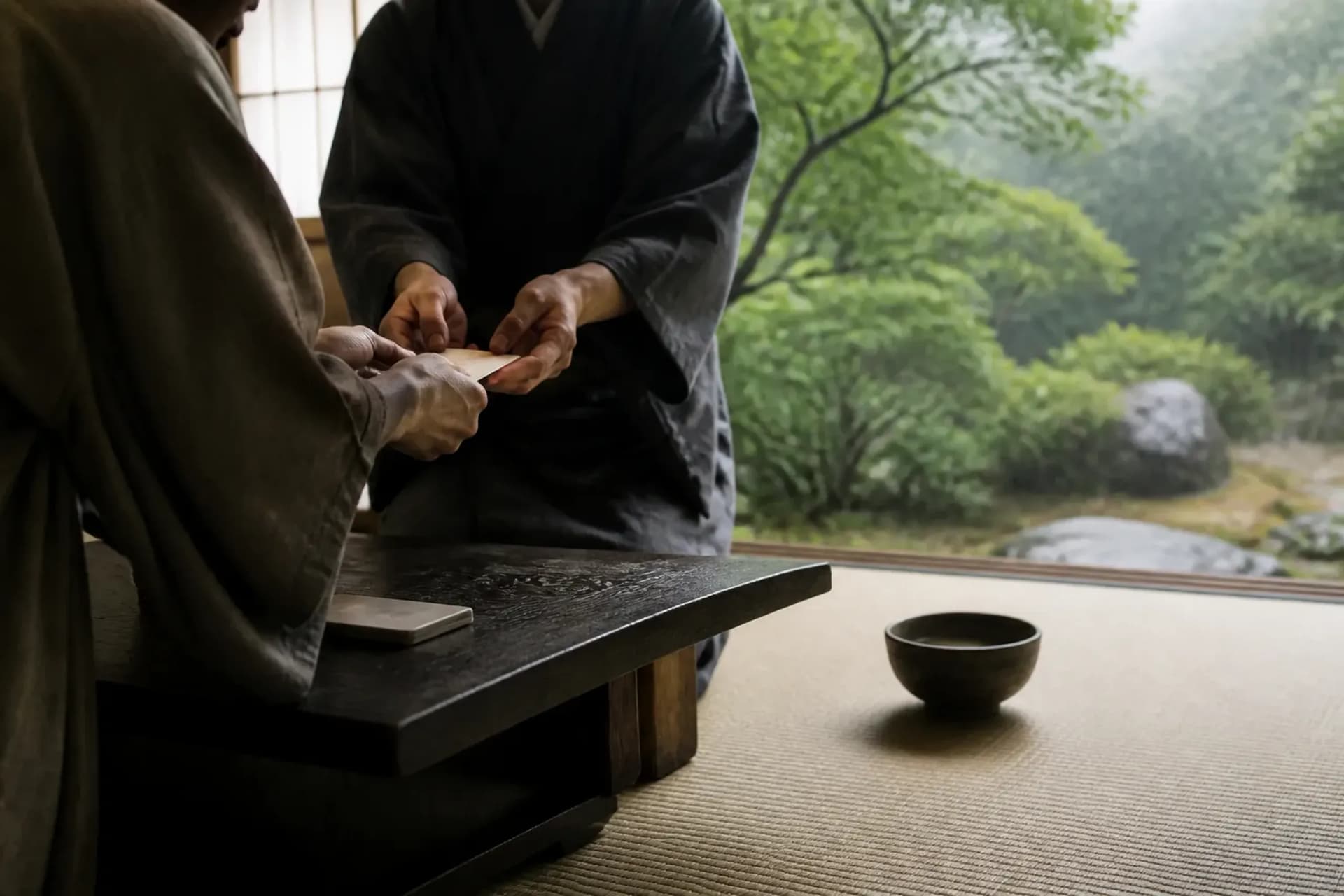
A closed door in a hanamachi lane says less about you than about the relationship that would open it.
Here is the whole idea in one sentence. When someone introduces you, they stake their own standing on how you behave.
That is the engine. An introducer — a long-standing patron, a house that already trusts you, a firm the establishment has worked with for years — puts their name against yours. If you arrive late, photograph what you should not, talk about it loudly afterward, or treat the seat as a trophy, the cost lands partly on them. Their credit is spent. Next time they ask, the answer comes slower.
So the establishment is not really deciding whether to admit you. It is deciding whether to trust the person vouching for you, and by extension whether that person's judgment about strangers can be relied upon. The introduction is a small loan of reputation, and everyone involved knows the terms.
This is why a single mechanism explains so much of the behaviour that puzzles first-time visitors. The refusal of walk-ins. The preference for known guests. The willingness to leave a seat empty rather than fill it with an unknown quantity. Each of these makes sense the moment you accept that the thing being protected is trust, not revenue.
The Japanese term most often attached to this practice is ichigen-san okotowari (一見さんお断り) — literally, turning away the first-time guest who arrives without an introduction. [VERIFY: term and nuance before publication.] In Kyoto's geiko districts, teahouses have long operated on an introduction-only basis; Japan's own tourism board notes this openly, while also noting that certain agencies and hotels can arrange receptions. The custom is not secret. It is documented. It is simply misunderstood as snobbery when it is, in fact, risk management.
What Is Actually Being Assessed, And Why It Isn't Creditworthiness
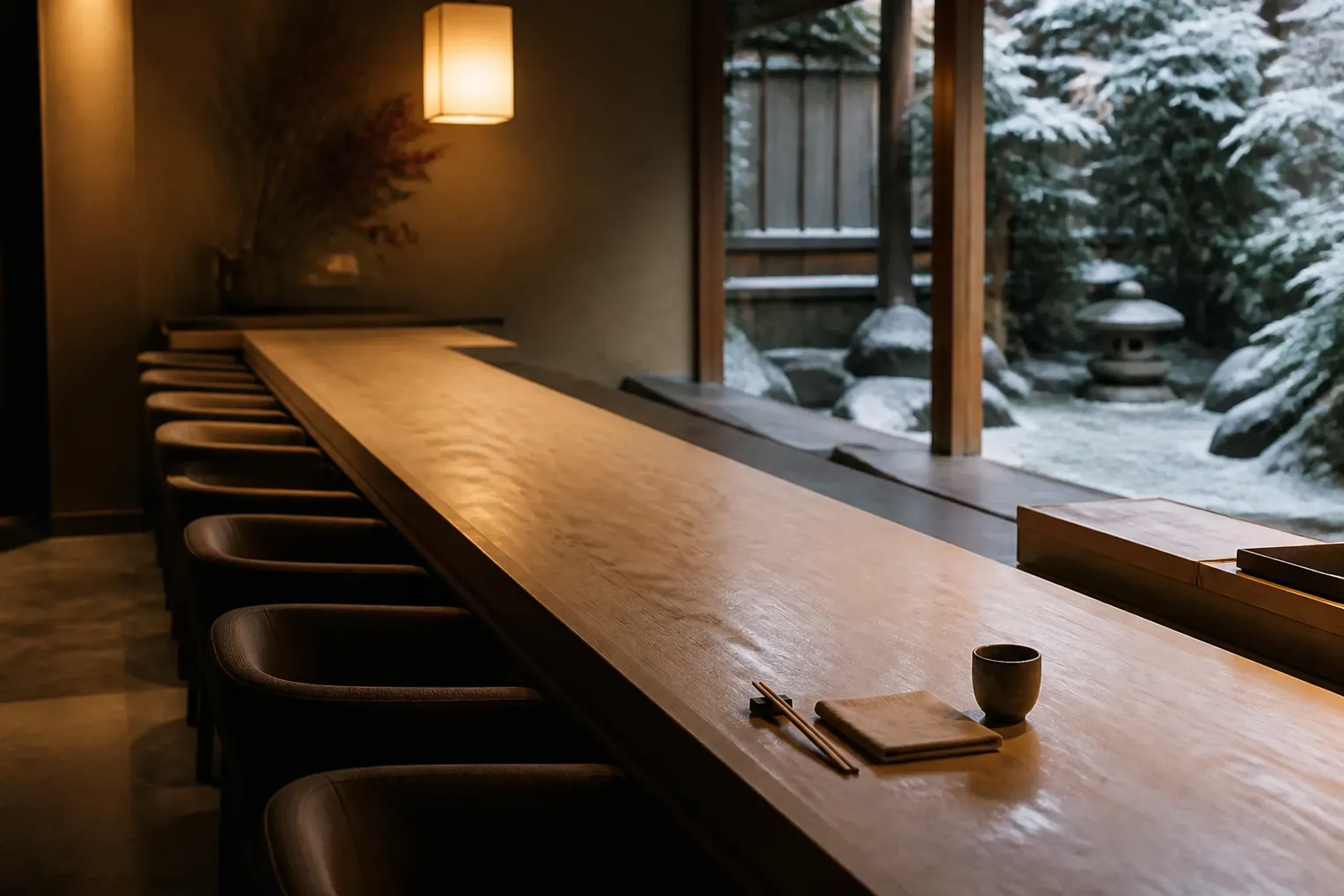
A small counter weighs conduct and continuity, not whether your payment clears.
A stranger who offers more money is still a stranger. That is the flaw in the instinct to escalate the sum.
The risk the house is managing is not financial. A small counter with eight seats, or a teahouse whose regulars have sat there for a generation, is not worried about whether your payment clears. It is worried about conduct. Will you be punctual. Will you be discreet. Will you be easy to have in the room. Will you come back, or was this a one-time box to tick.
Money answers none of those questions. If anything, a stranger waving a larger figure raises the very anxiety the introduction is meant to settle, because it signals that access, rather than the experience, is the point.
What actually gets weighed is closer to character than credit:
- Reliability — you show up, on time, as arranged.
- Conduct — you follow the room's norms without being managed.
- Discretion — you do not narrate the evening to the world afterward.
- Continuity — there is a reasonable chance of a relationship, not a single extraction.
None of that can be purchased in advance. It can only be vouched for by someone who has watched you behave, or by a firm willing to place its own record behind you.
Key point: The house is not pricing your visit. It is pricing the risk that you are the wrong kind of guest — and money cannot lower that risk.
Why Time Cannot Be Compressed

Relationships of this kind are built across years. That is the real cost, and it is the one no budget shortens.
An introducer's confidence in you accumulates slowly — through repeated visits, small courtesies observed, a pattern of behaving well when no one was watching. A house's trust in a firm like ours was earned the same way, over many quiet seasons of guests who arrived on time and left no trace. You cannot assemble that history in the eight weeks before a first trip.
This has a blunt consequence. For a first visit to Japan, a great deal is genuinely open to you — and a small, specific set of things is not, no matter who you engage or what you are prepared to spend. An honest advisor tells you which is which rather than promising to conjure the second category on short notice.
The pressure on this system has only grown. Japan welcomed a record 42.7 million international visitors in 2025, the first year past 40 million. When demand rises that sharply, the small counters and traditional districts do not expand; they tighten. An introduction becomes a more valuable filter precisely because the crowd outside the door is larger.
What An Introduction Asks Of The Guest

Gion is a residential neighbourhood; in 2026 its boundaries are marked plainly, and access follows conduct.
Accepting an introduction is not a one-way favour. It comes with obligations, most of them unspoken, all of them real.
You are expected to be punctual — earlier rather than later. To follow the conventions of the room without needing them explained twice. To exercise restraint: fewer photographs, quieter conversation, no treating the evening as content. And to understand that the introduction is not transferable. It was extended to you, for this occasion. It is not a key you can hand to a friend or resell as a story.
Above all, discretion. Publicising an introduction — naming the house, tagging it, describing exactly how you got in — undoes the thing that made it possible. It tells the establishment, and everyone who vouched for you, that their trust was misplaced. This matters everywhere, but Kyoto has made the stakes concrete. The city's 2026 visitor guidance for Southern Gion is unambiguous: do not follow geiko or maiko, do not photograph people or private property without permission, do not enter private roads. Gion is a residential neighbourhood, and its residents have said so plainly, with the city's backing. Access there follows conduct. It always has.
Why Refusal Is Normal, And Not Personal
A house may decline a booking it could fill twice over. This is not a slight, and it is worth understanding why.
For an establishment built on continuity, occupancy is not the goal. Fit is. An empty seat costs one evening's revenue. The wrong guest can cost the relationships that make the place what it is — a regular who no longer feels at home, a maiko put in an uncomfortable position, an atmosphere that took years to settle and an evening to disturb. Weighed against that, turning away a stranger is the conservative choice, not the arrogant one.
So if the answer is no, it usually says nothing about you as a person. It says that the trust required was not in place, on that date, through that channel. Persistence does not fix it. Charm does not fix it. A larger figure does not fix it, and often makes it worse. The only thing that changes a no is a credible relationship, and those take the time they take.
Where This Does Not Apply — Most Of Japan
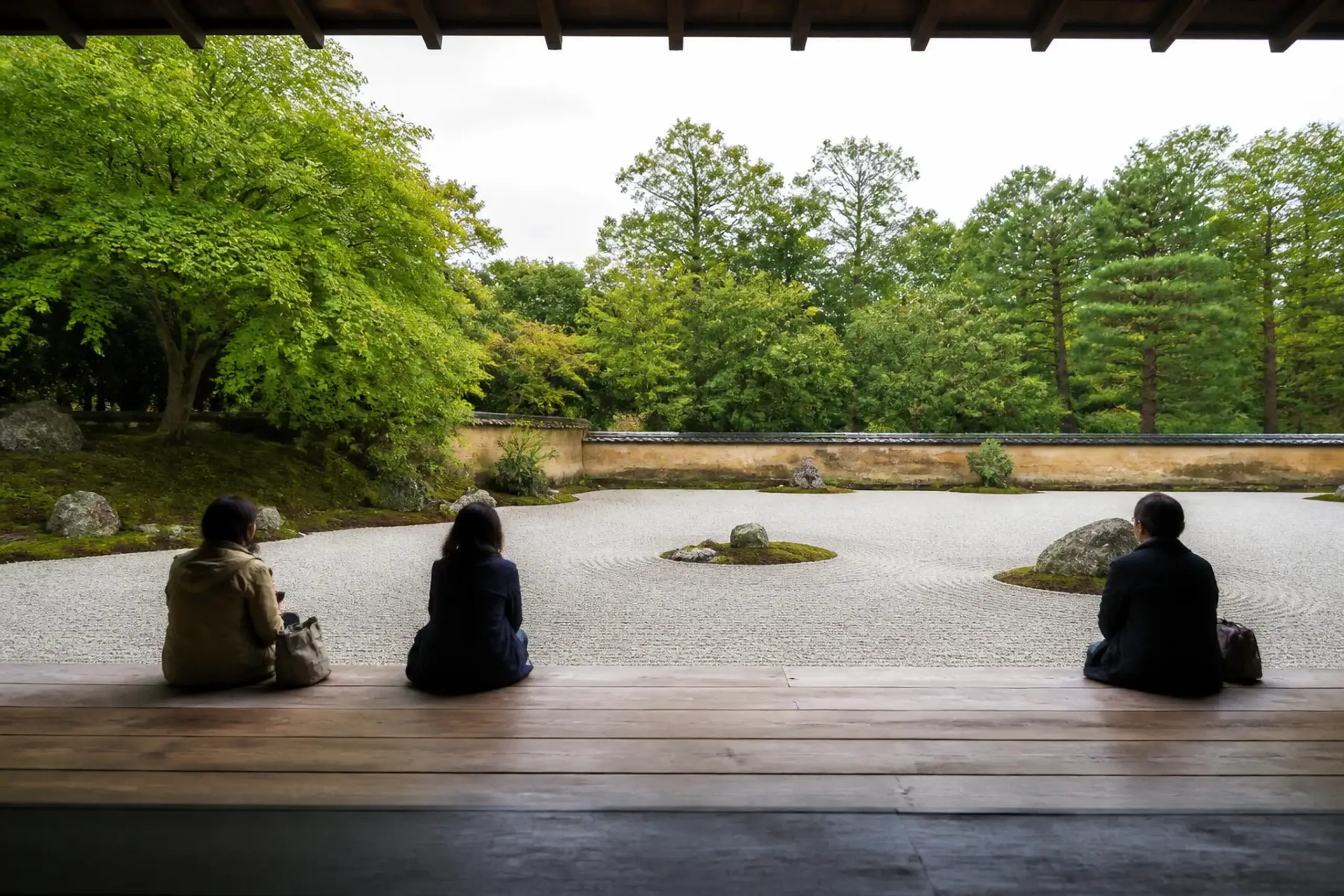
Most of what makes Japan extraordinary is simply bookable — the gated remainder is narrow.
It would be inaccurate to leave you thinking Japan is a locked country. It is not. The introduction economy governs a narrow set of establishments and traditions, and most of what makes the country extraordinary is simply bookable.
Consider the honest spread of what is available:
| Tier of access | How it works |
|---|---|
| Openly bookable, high-integrity culture | Public cultural performances, major gardens and temples, a great many superb restaurants — reserved directly, on merit and timing. |
| Reservation with strict policies | Small counters that take direct bookings but expect punctuality, discretion, and a real understanding of the format. |
| Introduction-only | A narrow band of teahouses, certain ateliers and producers, a handful of counters — where a relationship is the price of entry, and often should not be pursued unless that relationship is genuine. |
The point of naming the ladder is to prevent overpromising in both directions. Plenty of what visitors imagine to be sealed off is, in truth, a phone call away. And the small remainder that is genuinely relationship-gated cannot be faked, which is why we would rather route your interest toward the extraordinary things that are open than sell you a fantasy about the ones that are not.
The pattern extends beyond dining and the hanamachi. In some craft regions — Shigaraki in Shiga among them — certain workshop visits are noted as by introduction only. Access to a kiln or a producer can be relationship-based rather than transactional, for the same reason: the maker is protecting a working environment, not selling admission.
What An Intermediary Actually Does
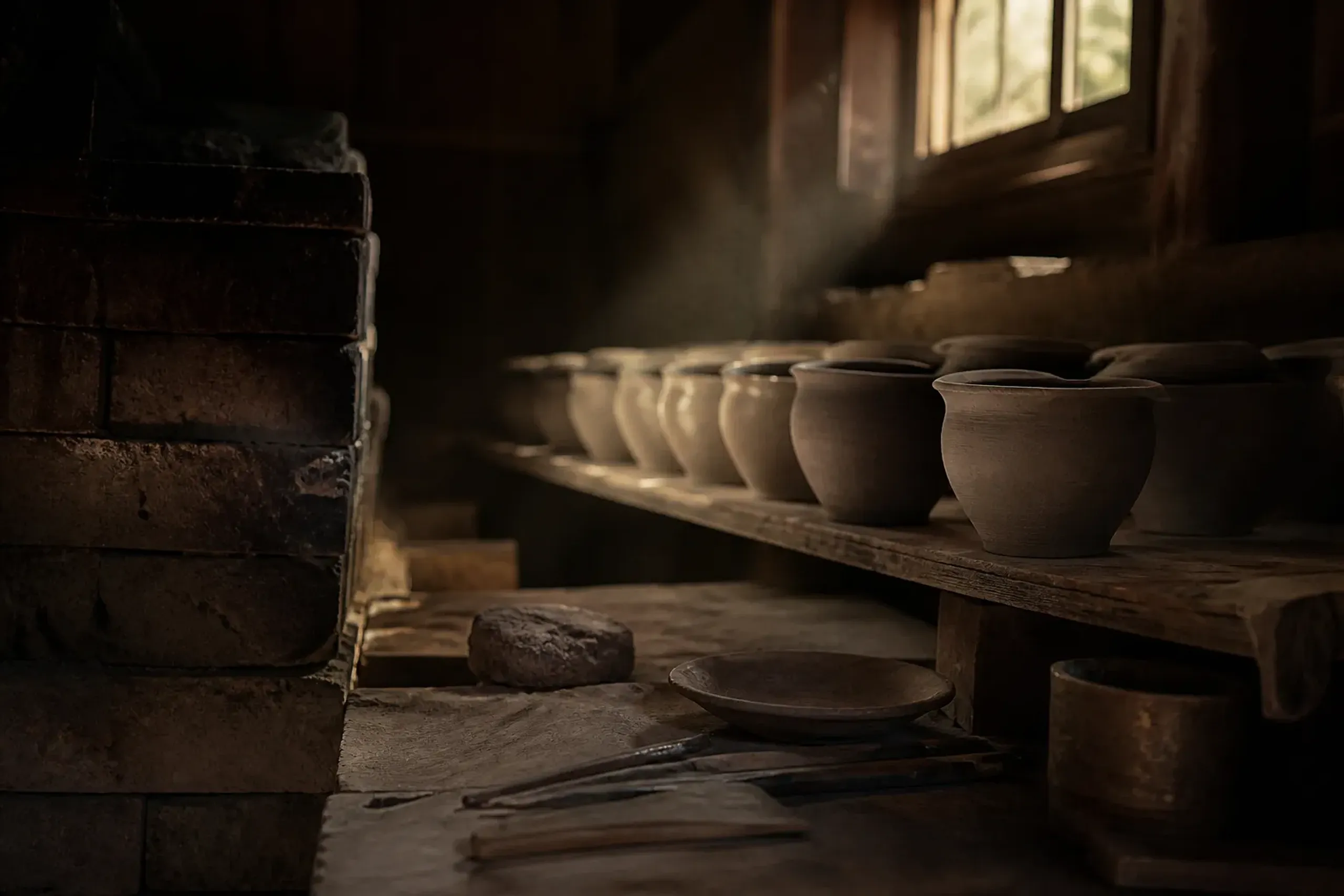
In craft regions like Shigaraki, some workshop visits are by introduction only — the maker is protecting a working space, not selling entry.
Stated plainly, without decoration: a firm operating well inside this system holds relationships, carries risk, and vouches.
Holding relationships means the years of continuity described above already exist — not as a claim, but as a record the houses recognise. Carrying risk means that when we introduce a guest, our own standing is the collateral. If you conduct yourself poorly, the cost is ours to absorb and ours to repair, which is precisely why we are careful about whom we place where. And vouching means we are, in effect, telling an establishment: we know this person, we understand the room, this will go well.
That is the entire service in this narrow domain. It is not a matter of paying more on your behalf. It is a matter of the establishment trusting us enough to extend the introduction, and of us trusting that you will honour it. Our concierge does the unglamorous work behind that sentence — confirming what is realistic, briefing guests on conduct where it matters, and, just as often, telling someone honestly that a particular door is not one we would open on a first trip.
The broader environment reinforces the logic. Japan's government has set a target to expand the number of regions applying overtourism measures from 47 in 2025 to 100 by 2030, and the OECD's 2026 review lists balancing inbound tourism against residents' lives as a Japanese policy priority. As the country draws firmer boundaries, relationship-based access and quiet, well-briefed conduct stop being luxuries. They become the only responsible way through the door.
Why Choose Japan Royal Service
We say little about ourselves in articles like this, and that is deliberate. What we can tell you is what we do inside the system described above. In our experience, the travellers who are happiest in Japan are the ones who understand which doors are open, which take a relationship, and which are best left alone on a first visit — and who are handled by a firm that carries the risk of an introduction rather than pretending money removes it.
Our team at Japan Royal Service works across Tokyo, Kyoto, Osaka, Nara and beyond, pairing discreet private chauffeured transport with the kind of tailor-made itinerary that respects both your interests and the communities you visit. We hold the relationships. We carry the standing. And we are candid about what is realistic for your dates.
If it would help to understand what is genuinely open to you — and what is not — reach our team privately via WhatsApp or LINE, or contact us here. We are glad to assess what is realistic for your dates and interests, without promising doors that no one can open on demand.