In this guide
- 01Why Oki Feels Like Japan Before The Itinerary Era
- 02The Charter Mindset: Make The Flight The First Experience
- 03Oki’s Four Inhabited Islands: One Geopark, Four Micro-Worlds
- 04Landmarks That Make Oki Worth The Detour
- 05The Table In Oki: Seafood, Oki Wagyu, And The Virtue Of Restraint
- 06Culture With Roots: Oki’s Bull Sumo And Local Etiquette
- 07How To Get To The Oki Islands (Official Routes And Realistic Timing)
- 08When To Go: Choosing The Right Week, Not Just The Right Season
- 09What A Bespoke Oki Itinerary Looks Like (5 Days, Privately Paced)
- 10FAQ: Oki Islands Travel Planning For Luxury Travelers
- 11Why Choose Japan Royal Service
You can take the ferry. Many do. It works.
But if you are the kind of traveler who counts time, hates crowds, and prefers a clean arc to a trip, the Oki Islands ask for a different entry. A private charter reframes the entire journey. The approach becomes the first scene, not a long transfer.
Our team at Japan Royal Service plans Oki with one idea in mind. Keep the islands remote, not difficult. That is the difference between “far” and “private.”
Why Oki Feels Like Japan Before The Itinerary Era
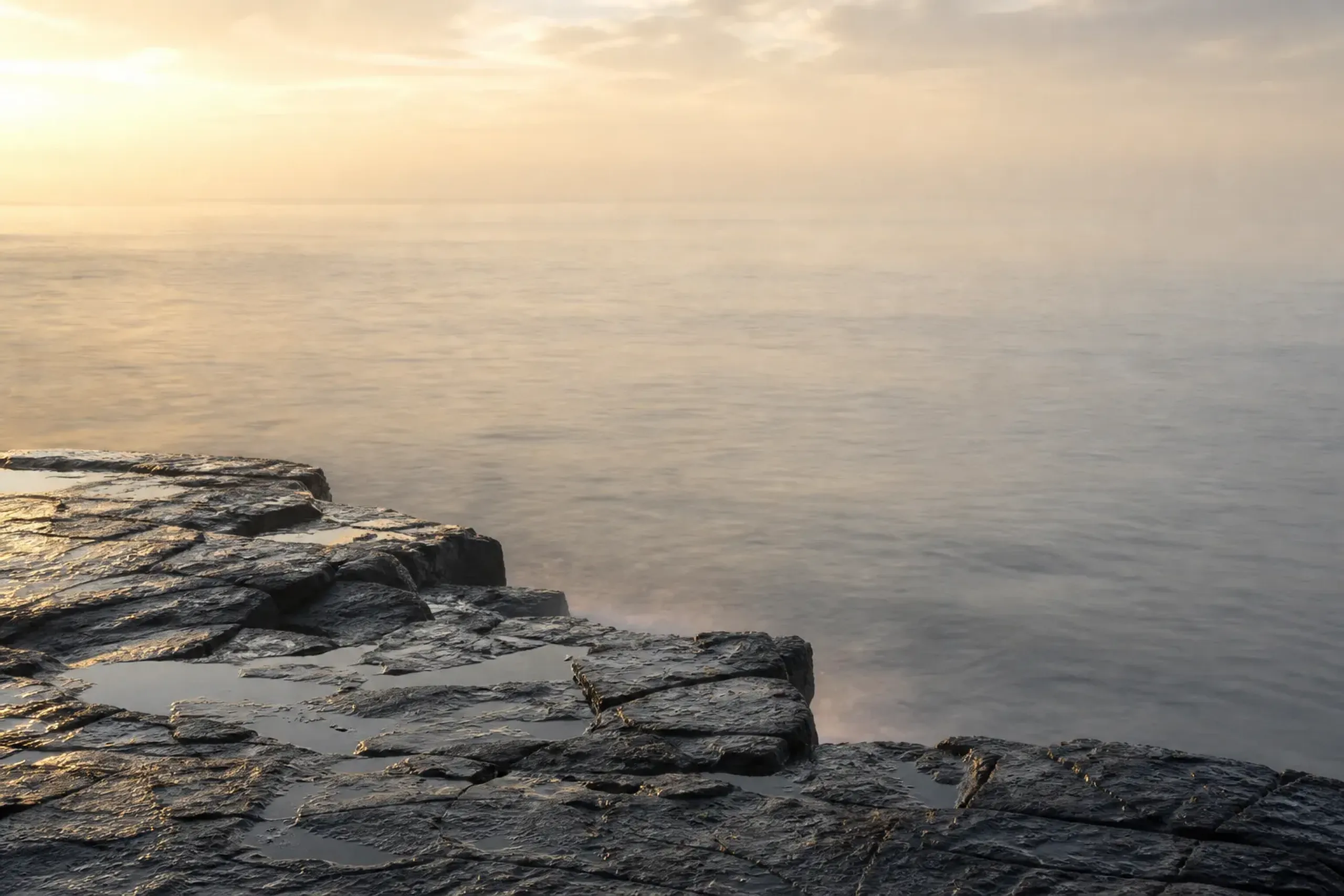
A place that still feels separate from the mainland—quiet, elemental, and unhurried.
The Oki Islands sit in the Sea of Japan, about 40–80 km north of the Shimane Peninsula. That distance is small on a map. It feels large in practice.
Oki is also a UNESCO Global Geopark. Real designation, not a marketing label. It is listed as “Oki Islands UNESCO Global Geopark” on UNESCO’s IGGP list (year shown as 2015 on the list page), and it is tied to the wider landscape of Daisen-Oki National Park.
This is where wabi-sabi lands without explanation. Basalt edges. Wind-worried pines. Villages that do not perform for the camera.
And yes, it is quiet. Properly quiet.
The Charter Mindset: Make The Flight The First Experience

Arriving by air turns the approach into the first experience, not a long transfer.
A ferry can be part of the story. It can also be a tax on your mood.
When we discuss Oki privately with HNW guests, we often start with the same question. Do you want your first hour on Oki to feel like recovery, or arrival? A chartered approach is about pacing, not spectacle.
You trade the long middle segment—port logistics, waiting rooms, fixed departure times—for a single, intentional movement. Air to coastline. Coastline to car. Then straight into the island rhythm.
Discretion matters here. Small airports, light footprints, and a day that does not announce itself.
What Changes When You Fly Instead Of Ferry
Three things shift immediately. Fast.
- Your day opens up: less dead time means a longer first walk, a longer lunch, an unhurried sunset.
- Your energy stays intact: remote places punish the tired traveler. Oki rewards the alert one.
- Your privacy improves: fewer public touchpoints, fewer chances for itinerary leakage, fewer “group” moments.
We are precise about one point, though. Weather in island regions can change plans. Any private plan needs buffers and a calm Plan B.
Key fact: Official access guidance for the Oki Islands via the national park route includes flights from Haneda to Yonago (about 90 minutes), then a shuttle bus to Sakaiminato Port or Shichirui Port (about 15–30 minutes), then an Oki Kisen boat to the island port (about 1–4.5 hours). Schedules vary by season.
Oki’s Four Inhabited Islands: One Geopark, Four Micro-Worlds
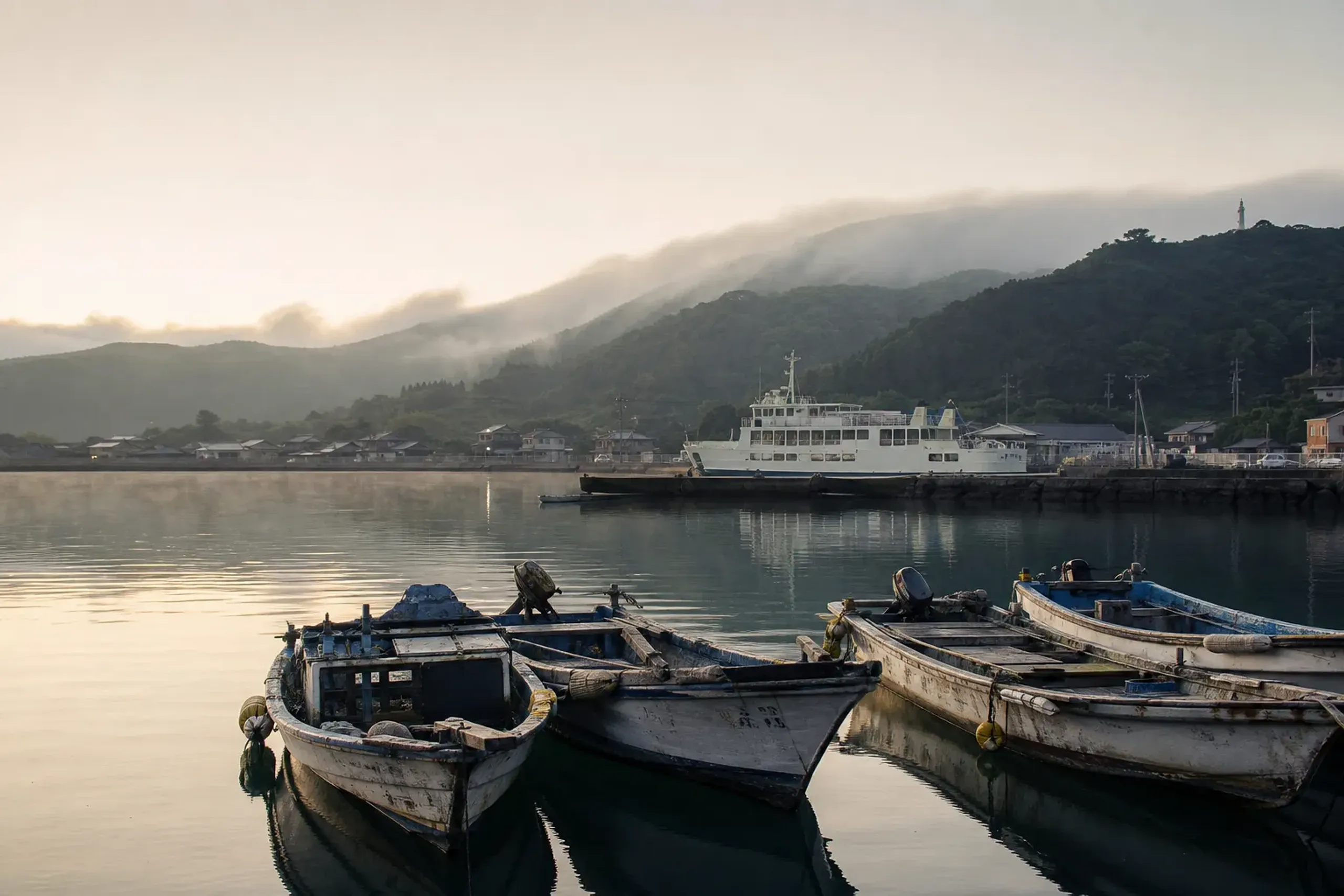
Four inhabited islands. Distinct rhythms. One geopark landscape.
Only four of the 180-odd Oki Islands are inhabited. That is not trivia. It is the structure of the trip.
The inhabited quartet is Dōgo and the three Dōzen islands: Nakanoshima, Nishinoshima, and Chiburijima. Each reads differently on the ground, even when the sea looks the same shade of steel-blue.
Our role is to keep the days from blending together. No mushy “island hopping” for the sake of it. You want contrast, and you want it in the right order.
Dōgo: The Practical Gateway With Depth
Dōgo often becomes the anchor for arrivals, departures, and any day that needs infrastructure. Useful. Not dull.
Think of Dōgo as your control panel. It lets us shape the rest of the journey with less friction, which is a quiet form of luxury that seasoned travelers notice immediately.
Nakanoshima (Ama Town): A Design-Led Base For Slow Observation
Nakanoshima is where many guests finally exhale. It has the right pace for long dinners and early walks.
It is also home to Entô, a lodging facility in Ama Town established in 2021, positioned as a hub for staying within the Oki UNESCO Global Geopark / Daisen-Oki National Park context. Design-forward, yes. More important: it makes the geopark feel legible.
This is the “intellectual luxury” side of Oki. Geology, coastline, weather, and time.
Nishinoshima: Coastlines That Reward A Private Schedule
Nishinoshima is about edges. Sea-wind. Headlands. The kind of coastline that wants you there off-peak, not at the same hour as everyone else.
When timing is controlled, you get the photograph that looks staged. It is not. It is just empty.
Chiburijima: Small Scale, Strong Character
Chiburijima is smaller, and it shows. In a good way.
It supports the kind of day that feels personal: a short ride, a slow look, a conversation that does not get interrupted. If you want a reset, this is where it lands.
Landmarks That Make Oki Worth The Detour
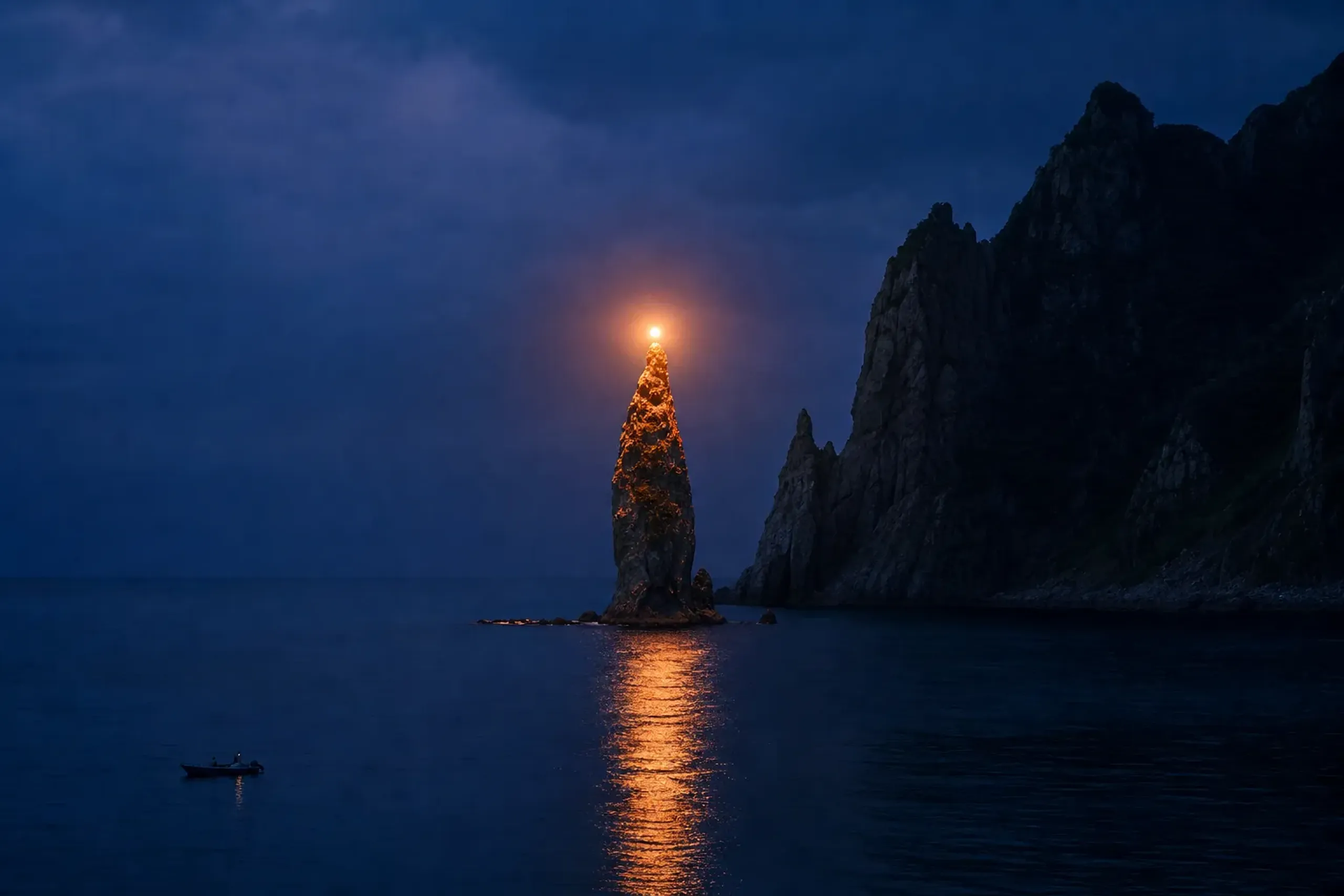
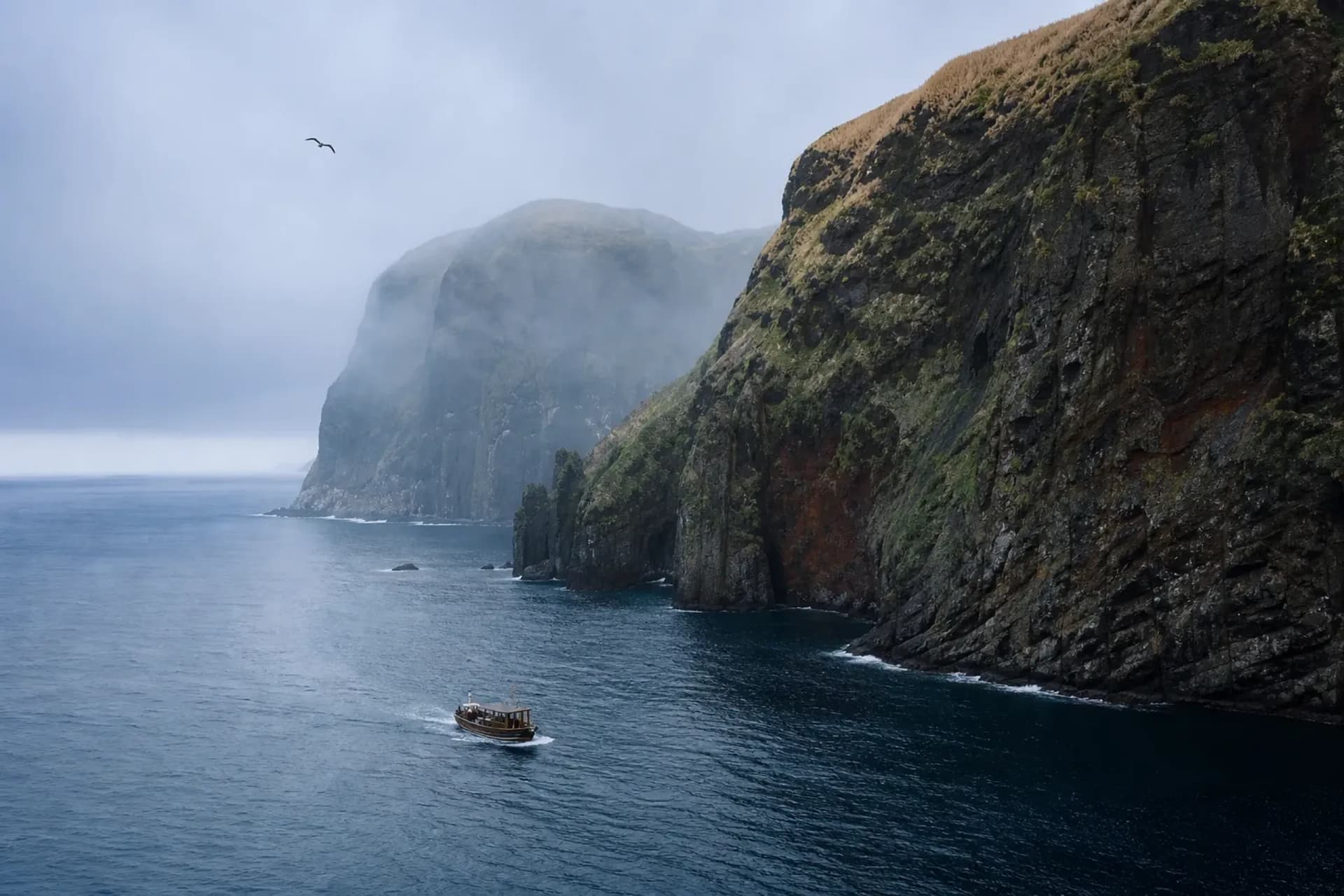
Rōsoku-jima is famous for a reason—timing and weather make it feel personal.
Oki does not need a long checklist. It needs a few strong moments, given space.
Two natural icons come up again and again in guest conversations. Candle Island at sunset, and the height of Matengai Cliff. Both are real, specific, and best experienced when your schedule is not dictated by public timetables.
Candle Island (Rōsoku-jima): The Sunset That Feels Private
Rōsoku-jima is often described in one line: a candle-shaped rock that aligns with the setting sun. Simple. Then you see it.
On the right evening, the light catches the rock in a way that makes people go quiet. Phones come out, yes, but they come down quickly. The scene does the work.
JNTO’s Oki destination page highlights Candle Island as one of the natural sights. It is not obscure. The difference is how you time it.
Matengai Cliff: A 257-Meter Reminder Of Scale
Matengai Cliff reaches 257 meters. A clean fact, and a bracing one when you stand near the edge.
It is a place for steady weather and a steady pace. Rushed visits feel thin. Give it time, and it becomes the point of the whole trip.
Shirashima Coast And Jodogaura Coast: Textures, Not Trophies
Some coastlines exist to be “done.” Oki’s do not.
Official destination sources highlight Shirashima Coast and Jodogaura Coast. These are not theme-park viewpoints. You go to notice the rock color, the sea temperature in the air, and the way the island holds silence.
The Table In Oki: Seafood, Oki Wagyu, And The Virtue Of Restraint
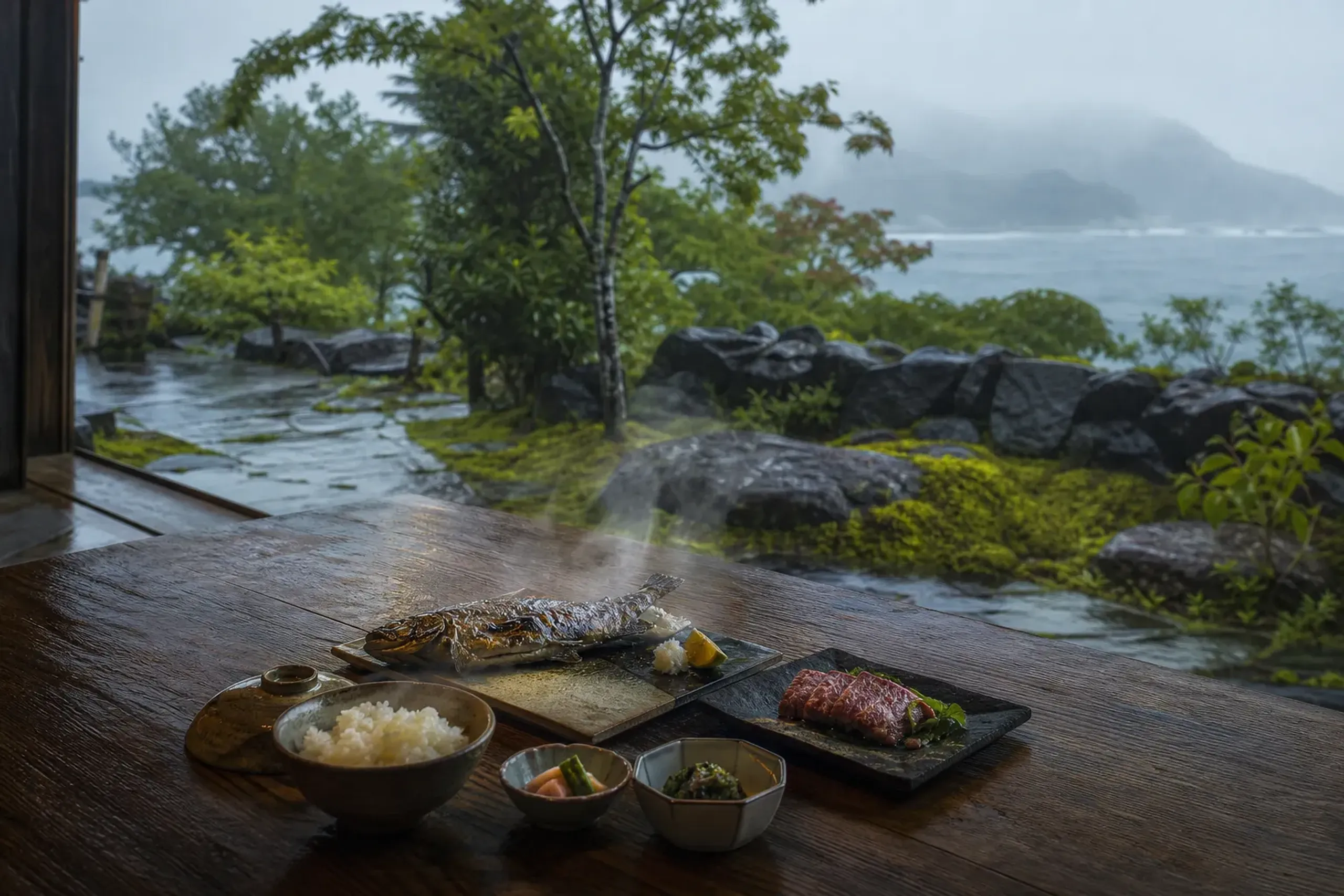
In Oki, the best meals feel calm—ingredient-led, not theatrical.
Oki’s food story is not performative. That is the point.
You will find what islands do best: seafood handled simply, often close to where it was landed. Then, when you want something richer, there is Oki wagyu, which has become a compelling local signature for guests who enjoy Japanese beef but prefer a quieter setting than a big-city counter.
We plan meals the same way we plan landscapes. One strong highlight. Then contrast. Then a night where you do very little, and eat very well.
Shokunin Encounters, Done With Care
In our experience, Oki pairs beautifully with shokunin-focused days elsewhere in Japan. Knife makers in Sakai. Lacquer in Kanazawa. A ceramic kiln visit in Kyushu. Then Oki, as the exhale.
On-island, craft and food still reward an introduced approach. The best conversations happen quietly, and they tend to happen when a guest shows real respect for time and place. Not when they demand a performance.
Culture With Roots: Oki’s Bull Sumo And Local Etiquette
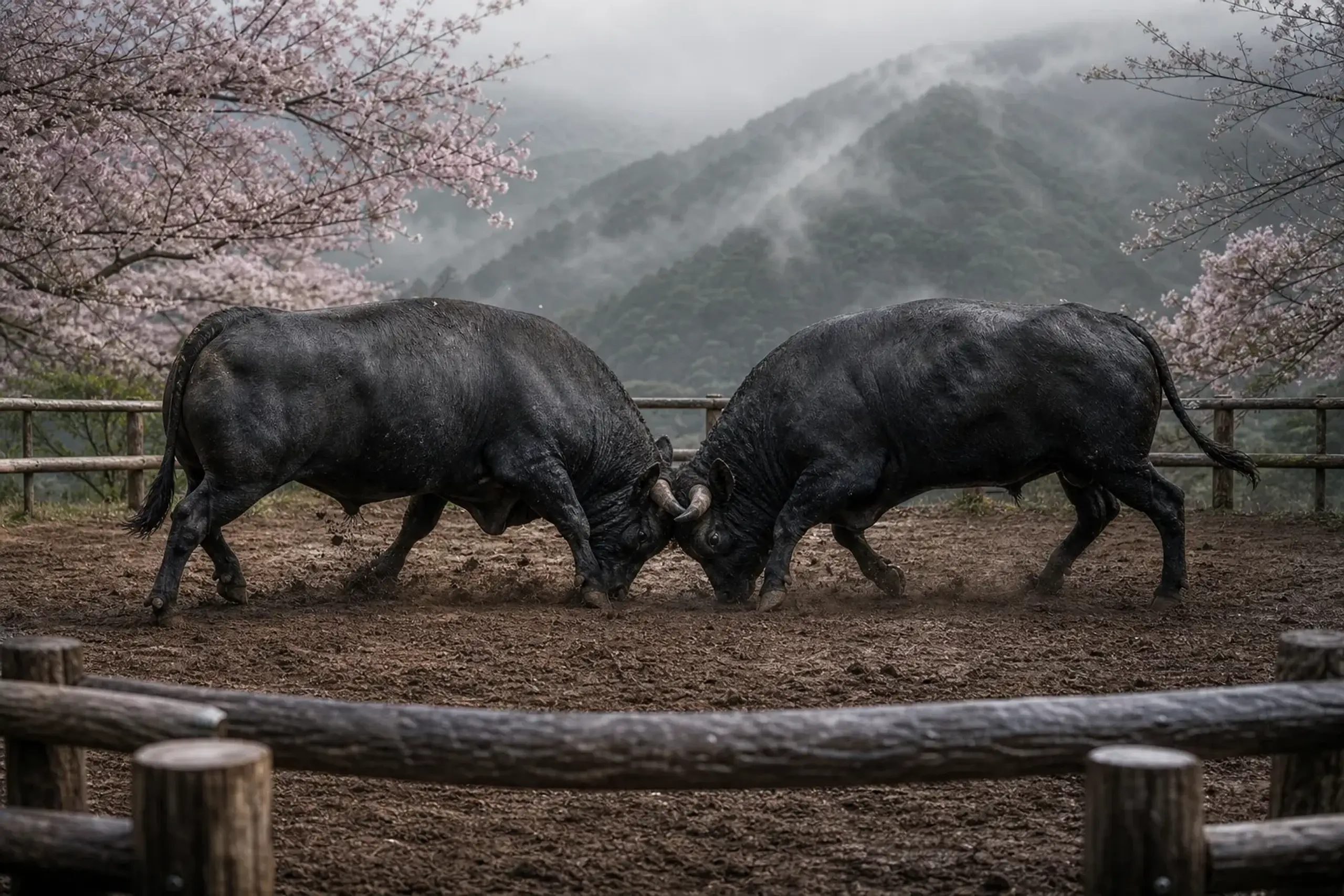
Oki has a tradition that surprises many first-time visitors: ushi-zumō, often described in English as bull sumo. It is a real cultural practice in the region, and it is not staged for tourists in the way some “folk shows” can be.
If you are interested in cultural events in Oki, approach with the right posture. Ask, do not assume. Listen more than you speak.
Our concierge team can share tailored guidance on how to engage respectfully, and what to look for, once we understand your dates and travel style.
How To Get To The Oki Islands (Official Routes And Realistic Timing)
Remote Japan becomes enjoyable when logistics are honest. No sugar-coating. No vague promises.
As part of Daisen-Oki National Park access guidance, one standard published route is: fly from Haneda Airport to Yonago (about 90 minutes), take a shuttle bus to Sakaiminato Port or Shichirui Port (about 15–30 minutes), then take an Oki Kisen boat to the island port (about 1–4.5 hours). Times vary by boat and destination.
The three Dōzen islands—Nishinoshima, Nakanoshima, Chiburijima—are connected by ferries operated by Oki Kisen Ferry Line and smaller inter-island ferries. This is what enables a multi-island arc without backtracking to the mainland.
How To Book Ferries (Information Only)
Ferry travel in Oki is operated by the official carrier. Guests book via the operator’s official channels, and timetables depend on the season and the vessel.
If you are considering passes and special tickets, the Oki-toku site publishes holiday exclusion periods. For 2026, published blackout windows include 25 April–6 May 2026, 18 July–16 August 2026, and 19 December 2026–3 January 2027.
For questions about routing, buffers, or how to protect tranquility around peak periods, contact our concierge for tailored guidance.
When To Go: Choosing The Right Week, Not Just The Right Season
Oki is sensitive to timing. That is why it stays special.
For many HNW travelers, the best strategy is not chasing a “peak” label. It is choosing a week with fewer fixed departures, fewer holiday constraints, and more flexible daylight. Weekdays often feel calmer.
We also watch published exclusions like the Oki-toku blackout periods, because they often mirror demand pressure. Avoiding those windows can protect the entire mood of the trip.
One more thing. Weather rules.
What A Bespoke Oki Itinerary Looks Like (5 Days, Privately Paced)
Oki rewards staying longer than you think. Three days can feel like a scouting trip. Five days starts to feel like a real stay.
Below is a sample structure that reflects how our team at Japan Royal Service thinks about the islands: an arrival that does not exhaust you, a mid-trip crescendo, then a soft landing before you leave.
Day 1: Arrival And A Quiet First Walk
Arrive, settle, and keep the first afternoon light. No heroic push.
A short coastal walk, then an early dinner. If you land well, Candle Island can come later in the trip, when the weather window is right.
Day 2: Geopark Day—Cliffs, Coasts, And Long Stops
This is your landscape day. The one with space.
Plan for Matengai Cliff when conditions are stable. Add one coastal section—Shirashima Coast or Jodogaura Coast—then return with time to spare. Spare time is the point.
Day 3: Island-to-Island Movement, Done Slowly
Move across the Dōzen islands by ferry. The crossings are short enough to feel like texture, not transit.
Bring one focused activity: cycling if it suits you, or simply a village walk and a long lunch. MATCHA has published a 3-day outdoor retreat itinerary that references bicycle rental via Ama Town Tourism Association, which signals that cycling is a practical, on-the-ground option in the region.
Day 4: The Table Day—Seafood And Oki Wagyu
Keep the day relaxed. Sleep longer.
Put your best meal here: seafood handled with restraint, and Oki wagyu if you want a richer counterpoint. The goal is a dinner you remember for its calm, not for its theatrics.
Day 5: Return With A Clean Exit
Depart with margin. Tight connections feel cheap.
If you are continuing to Tokyo, Kyoto, or beyond, this is where a controlled handoff matters—luggage, timing, and a final hour that stays private.
Private Transportation, The Quiet Backbone
Oki is not the place to improvise ground movement. Cars, ports, and timing need discipline.
When our guests prefer a chauffeured approach on the mainland—airport transfers, port transfers, and day touring—we discuss options from our private transportation service so the journey stays consistent in tone from city to sea.
FAQ: Oki Islands Travel Planning For Luxury Travelers
Are The Oki Islands A Good Alternative To The Seto Inland Sea Art Islands?
Yes, if your priority is nature, geopark landscapes, and quiet. The Seto Inland Sea islands are often chosen for contemporary art. Oki is chosen for coastline drama, national park context, and a sense of separation.
How Many Days Do You Need In Oki?
Three days can work if you keep your focus narrow. Five days is more comfortable, especially if you want more than one island without rushing ferry timings.
Is Oki Part Of A National Park?
Yes. The Oki Islands are part of Daisen-Oki National Park.
What Is The Official UNESCO Designation?
The geopark is officially listed as Oki Islands UNESCO Global Geopark on UNESCO’s IGGP list.
What Are The Four Inhabited Oki Islands?
The four main inhabited islands are Dōgo and the three Dōzen islands: Nakanoshima, Nishinoshima, and Chiburijima. There are also more than 180 uninhabited islands.
How Do The Dōzen Islands Connect?
Nishinoshima, Nakanoshima, and Chiburijima are connected by ferries operated by Oki Kisen Ferry Line and smaller inter-island ferries.
Where Should You Stay For A Design-Forward Base?
Entô in Ama Town (Nakanoshima) is positioned as a hub for staying within the Oki geopark/national park context, and it opened in 2021.
Why Choose Japan Royal Service
Luxury travel to remote Japan is rarely about one “exclusive” moment. It is about control: who knows your route, how your days flow, and how little you need to explain.
Our team at Japan Royal Service designs tailor-made itineraries with discretion as the baseline, then layers in hidden-Japan routing and shokunin-led encounters where they genuinely fit your pace and interests. Oki is a natural match for that philosophy, because it rewards travelers who value silence over noise.
If you are considering the Oki Islands privately—by charter, by a carefully timed ferry plan, or as a quiet counterpoint to Kyoto and Tokyo—reach our team privately via WhatsApp or LINE, or contact us here.