In this guide
- 01The Concrete Architect’s Wooden Building: Why The Shinmonzen Feels Like A Kyoto Secret
- 02Where Exactly Is The Shinmonzen In Gion, Kyoto?
- 03Is The Shinmonzen A Ryokan Or A Hotel?
- 04A Bounded Fact Sheet: The Shinmonzen At A Glance
- 05Jean-Georges At The Shinmonzen And The Six-Seat Bar: Two Distinct Design Credits
- 06What’s New At The Shinmonzen In 2026?
- 07OGATA At The Shinmonzen: Tea, Objects, And The Quiet Side Of Kyoto
- 08How To Plan A Discreet Arrival And Departure In Crowded Gion
- 09Shokunin Moments Near The Shinmonzen: Craft Over Souvenirs
- 10How Many Nights Should You Stay At The Shinmonzen?
- 11How To Book The Shinmonzen And Its Dining, Without Losing The Mood
- 12Who The Shinmonzen Is For (And Who Should Choose Something Else)
- 13Frequently Asked Questions
- 14Let Us Open The Quiet Door
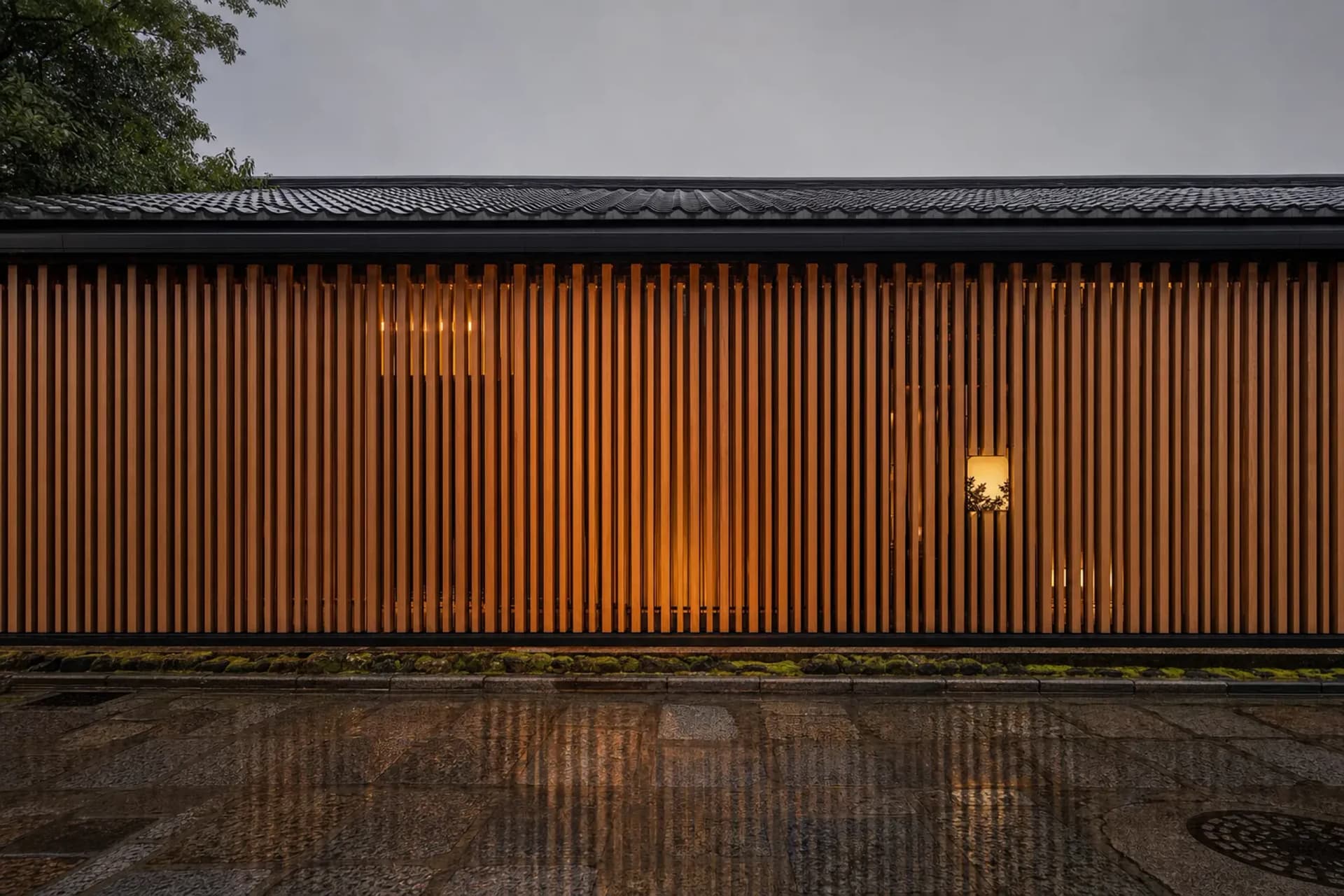
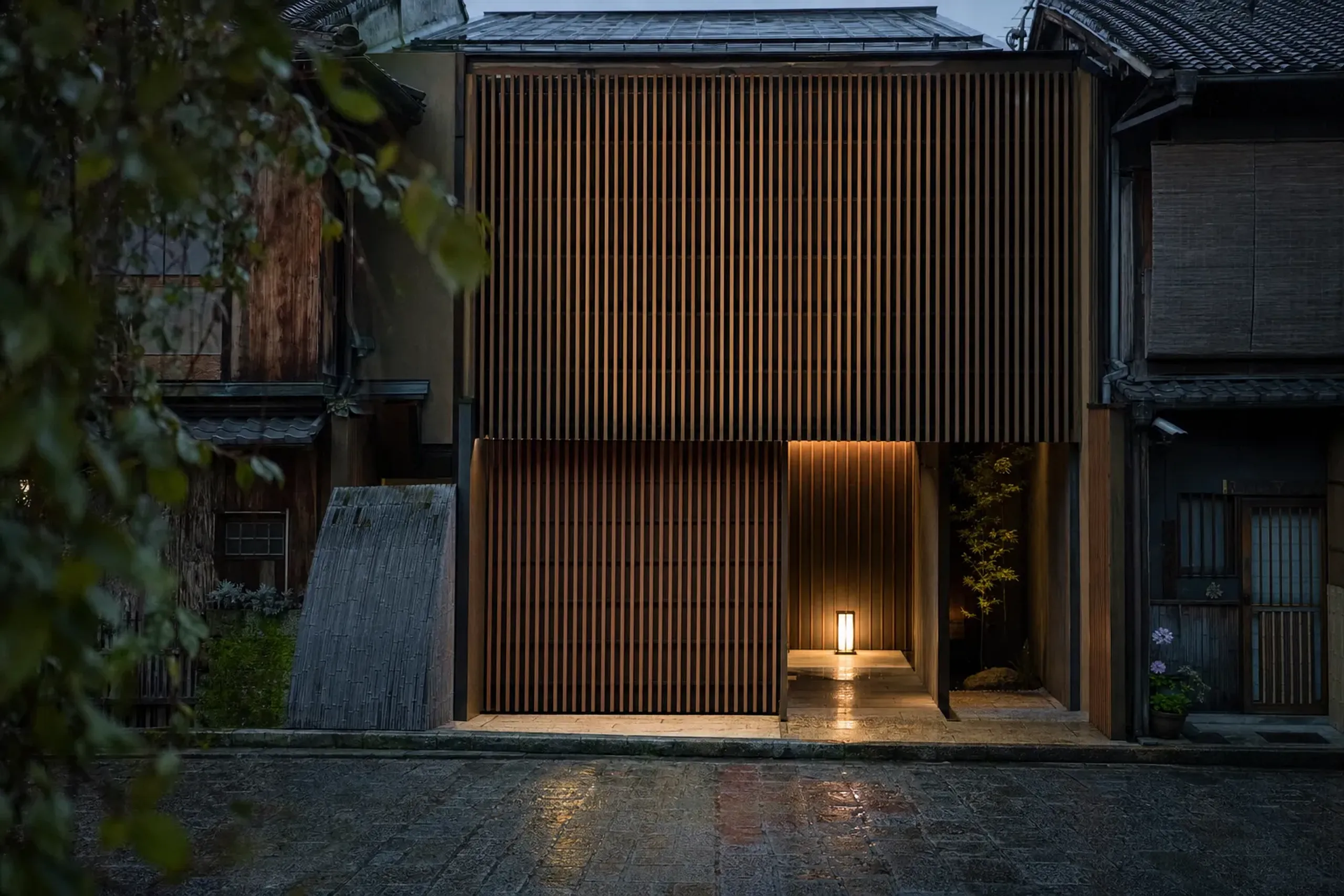
On Shinmonzen-dori in Gion, the façade is timber. Quiet timber. The kind you could walk past on the way to dinner and never clock as “a design hotel.”
That is the point. Or at least, it is the effect.
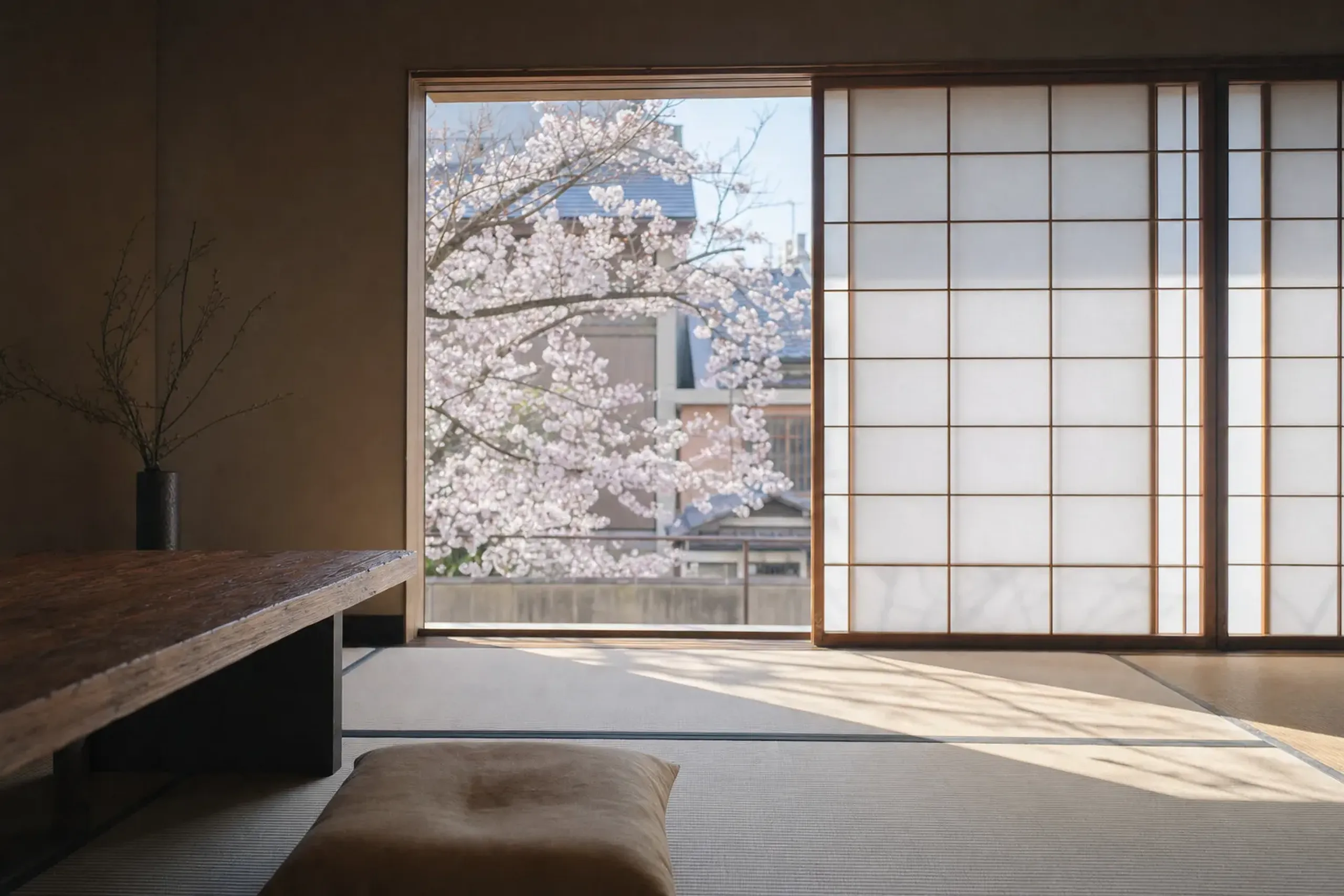
The building is by Tadao Ando. The architect whose name is usually spoken in the same breath as exposed concrete, hard edges, and the way a wall can hold light like water. Yet at The Shinmonzen, his nine-suite hotel uses none of that famous concrete vocabulary. No raw slabs. No dramatic pours. Instead: tatami, shoji, wood, and a low hush that feels closer to a refined ryokan than a global architecture headline.
If you’ve stayed in enough luxury hotels, you start to notice the same tricks. Over-lit lobbies. Loud scenting. “Design” that tries too hard. The Shinmonzen moves the other way—restraint first, craft second, and privacy always. Small, deliberate, almost stubborn. Good.
The Concrete Architect’s Wooden Building: Why The Shinmonzen Feels Like A Kyoto Secret
The Shinmonzen is a nine-suite boutique hotel in Gion, Kyoto, designed by Tadao Ando—an architect globally recognized for exposed concrete—yet this property presents a timber façade and traditional interiors.
That contrast is the honest hook. We won’t pretend to know why he chose wood here. No official source confirms a single reason. Still, the experience is unmistakable the moment you step in: tatami underfoot, shoji filtering the light, and a controlled calm that makes the street outside feel farther away than it is. This is wabi and sabi made livable—the beauty of restraint expressed in grain and shadow rather than gloss.
It is also a lesson in Kyoto manners. The most expensive-looking thing in the neighborhood is often the least interesting. The Shinmonzen does not announce itself. It simply holds its line.
For architecture-minded travelers, it’s an unusual Ando encounter. Not a museum. Not a chapel. A place you wake up in.
Where Exactly Is The Shinmonzen In Gion, Kyoto?
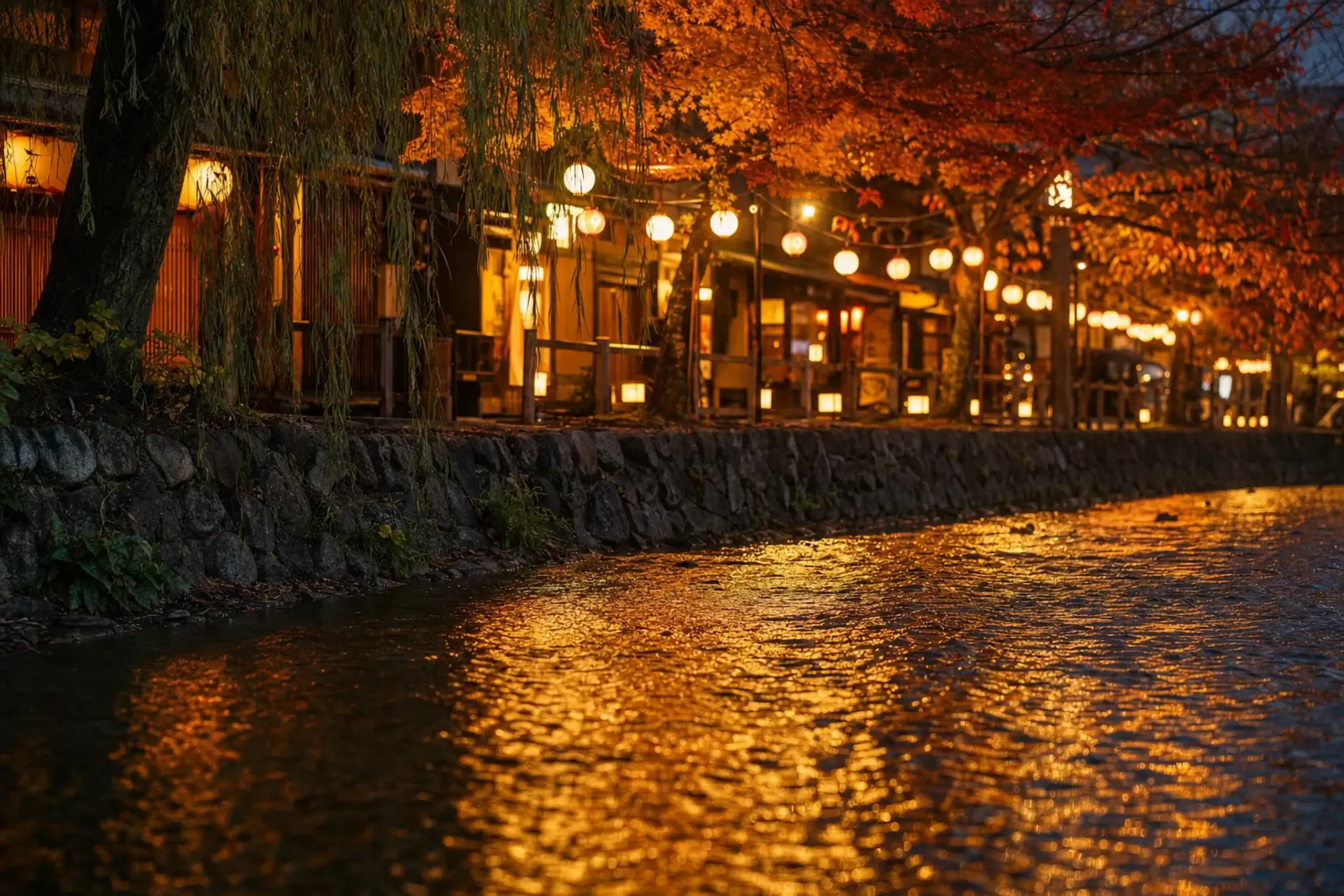
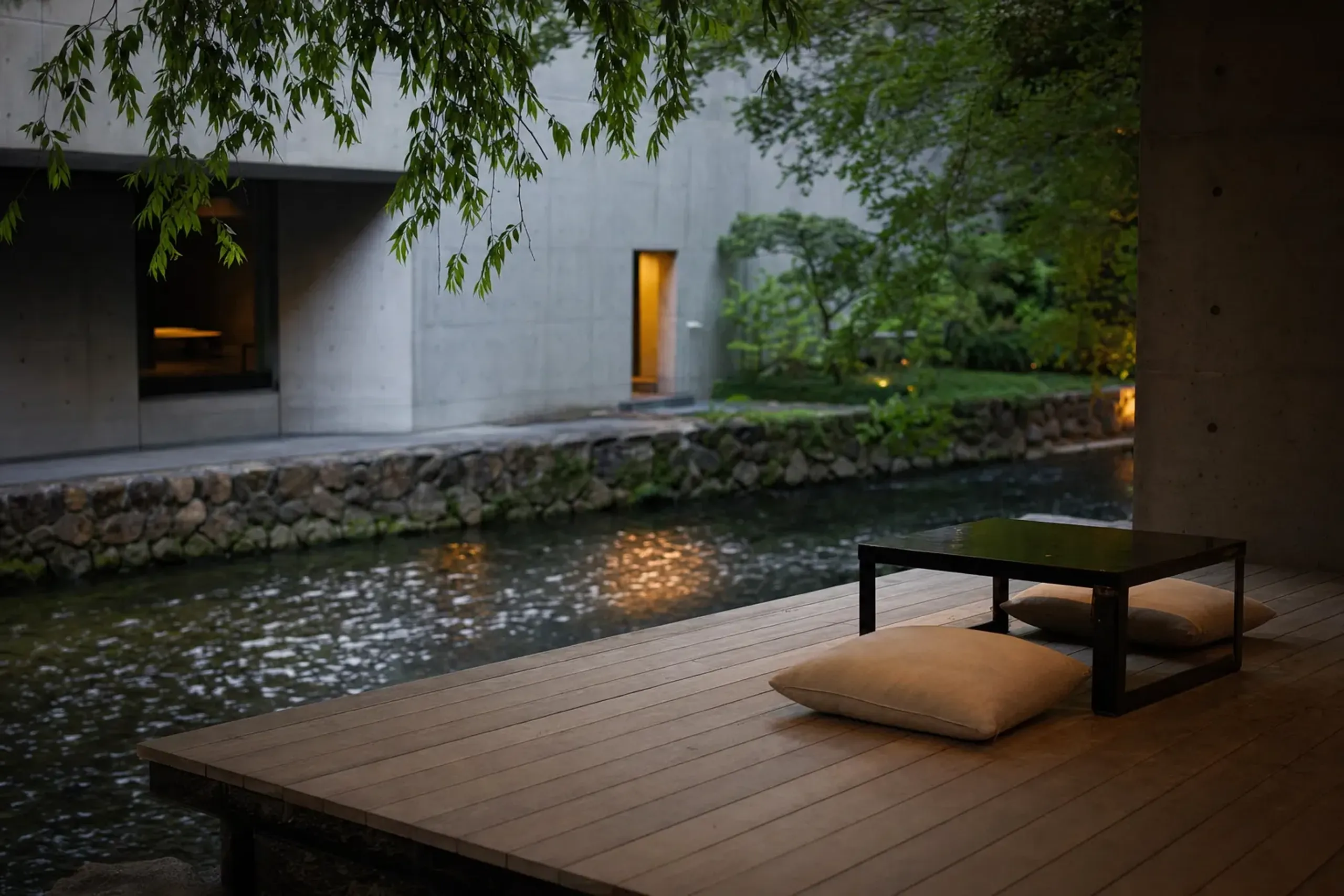
The Shinmonzen sits in Gion on Shinmonzen Street by the Shirakawa River, tucked between an art gallery and an antique shop, with riverside terrace seating in warmer months.
This is not the part of Kyoto that rewards a checklist. It rewards timing. A late-morning walk when day-trippers are still in transit. An early evening return when lantern light starts to matter. Knowing which hour belongs to which lane—that sense of seasonality and timing—is quietly the whole game in Gion.
The hotel’s address logic is collector-like: quiet lane, specialist neighbors, small frontage. If you care about objects—lacquer, old ceramics, the mood of a room—this is where Kyoto starts to feel personal. It is a corner of the city that Google cannot really deliver; you have to be walked into it.
And because it is Gion, there is etiquette. Keep voices down on the lane. Don’t crowd maiko or geiko for photos. If you want a portrait, ask politely and accept “no” with a nod. Simple.
Is The Shinmonzen A Ryokan Or A Hotel?
The Shinmonzen is a luxury boutique hotel with nine suites, designed with traditional Japanese elements like tatami and shoji, but it is not a traditional ryokan.
The difference matters for expectations. A ryokan often follows a set rhythm—fixed dinner time, communal bathing norms, staff-led pacing. The Shinmonzen reads more like a contemporary hotel that borrows the texture of old Kyoto: muted interiors, tactile materials, and spaces that feel composed rather than decorated.
If you want the ritual structure of a classic ryokan stay, Kyoto has many options. If you want Gion’s nighttime atmosphere, then a small hotel base on the river can be the sharper move. One door. One short walk. Back to quiet.
Our team at Japan Royal Service often frames it like this: The Shinmonzen is for travelers who want Kyoto to feel edited.
A Bounded Fact Sheet: The Shinmonzen At A Glance
Some details deserve to be plain. No poetry. Here is what is verified and useful when you are deciding.
- Location: Gion, Kyoto (Gion Shirakawa / Shinmonzen Street) by the Shirakawa River
- Scale: Nine suites (genuine scarcity)
- Architecture: Designed by Tadao Ando
- River Setting: Riverside terrace seating in warmer months
- Recognition: Awarded 2 MICHELIN Keys
With only nine suites, availability can feel tight even in “ordinary” weeks. Plan like an adult. Early decisions buy you calm.
Jean-Georges At The Shinmonzen And The Six-Seat Bar: Two Distinct Design Credits
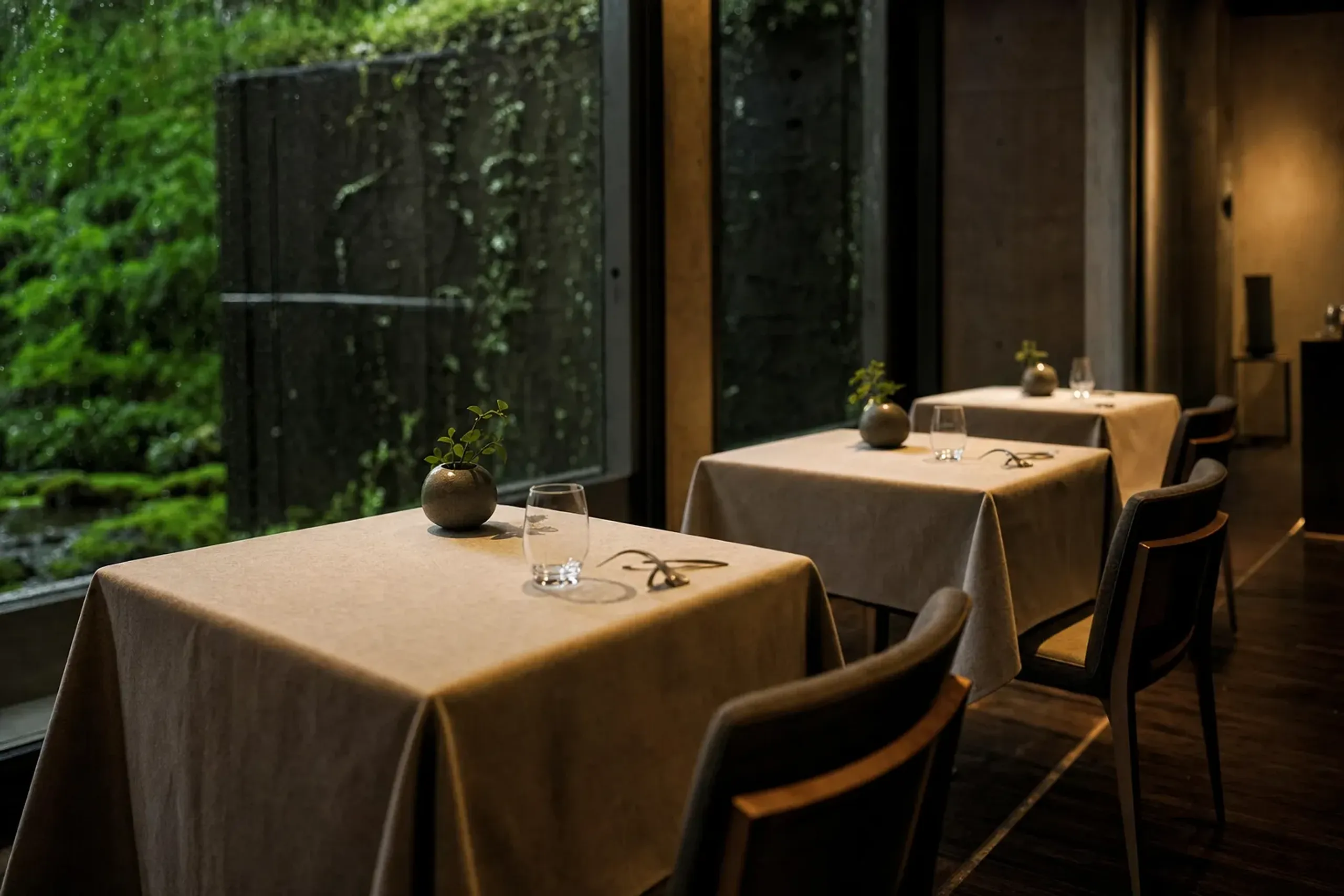
At The Shinmonzen, dining is not an afterthought. It’s part of the property’s spine. Quiet service, measured pacing, and a sense that the room was built for conversation rather than spectacle.
The formal restaurant’s menu is overseen by chef Jean-Georges Vongerichten. The restaurant has been recognized by the MICHELIN Guide (one MICHELIN Star in the MICHELIN Guide Kyoto/Osaka selections referenced by MICHELIN’s corporate publication, and it is listed among starred restaurants on the Guide’s site).
You feel that seriousness in how the meal is structured. No theatrics. Just intent.
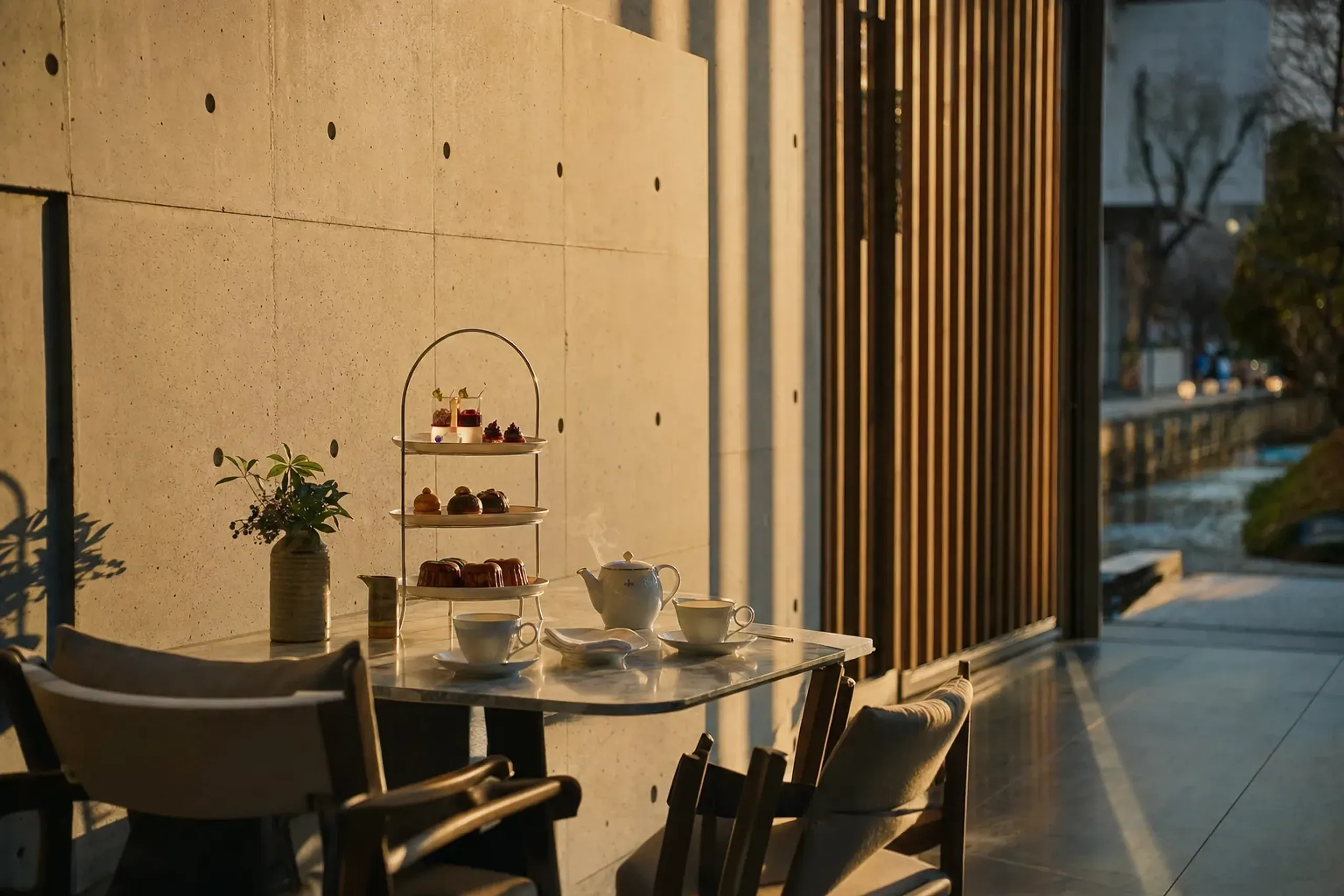
There is also an open-air café serving Paris-style afternoon tea with patisserie. Light, social, and easy to fit into a Kyoto day that already includes temples, galleries, or a long lunch elsewhere.
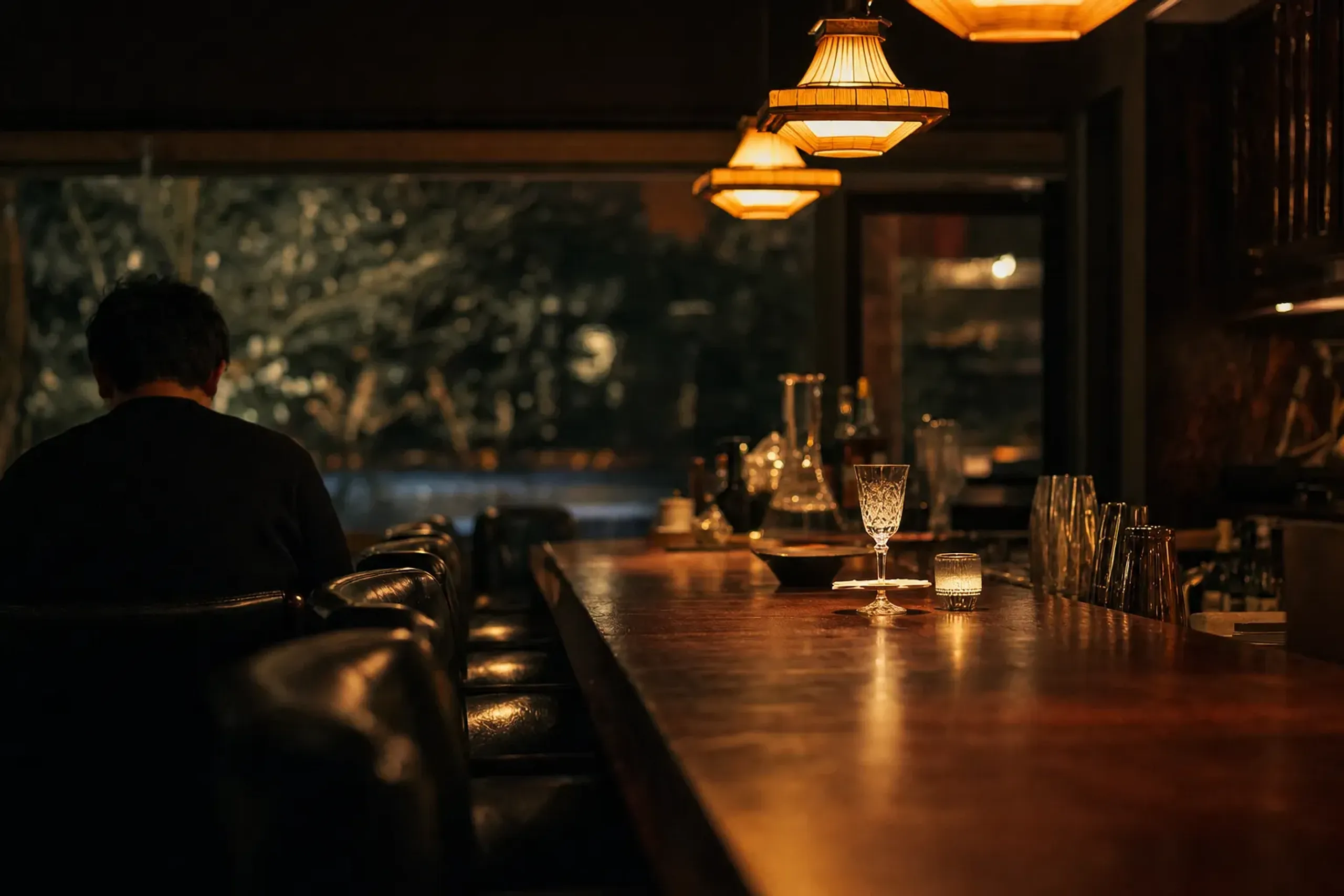
Then there is the Shinmonzen Bar. Tiny. Six seats. And crucially, it has its own design credit: New York-based architect Stephanie Goto designed the bar separately from Ando’s work on the building. This is not trivia. It explains why the mood shifts when you step inside—retro edges, a little Manhattan in the lighting, and an omakase-style cocktail approach that can extend onto the riverside terrace when weather permits.
Key fact: Tadao Ando designed the hotel building, while Stephanie Goto designed The Shinmonzen Bar specifically—two separate credits that are often blended together incorrectly.
What’s New At The Shinmonzen In 2026?
In July 2026, The Shinmonzen announced the appointment of Oscar Engman as Executive Chef, alongside continued MICHELIN recognition for Jean-Georges at The Shinmonzen.
For repeat Kyoto travelers, this is the kind of change that actually matters. A new executive chef can subtly recalibrate the whole food identity—ingredient sourcing, pacing, even the way a kitchen thinks about seasonality—without changing the hotel’s calm exterior.
If food is your deciding factor, treat 2026 as a reason to revisit. One dinner can change your memory of a neighborhood. It happens.
Our concierge team at Japan Royal Service can share practical guidance privately on how to build a Kyoto stay around a single anchor meal, so the day feels spacious rather than jammed.
OGATA At The Shinmonzen: Tea, Objects, And The Quiet Side Of Kyoto
The Shinmonzen hosts OGATA at The Shinmonzen, presented by the property as a boutique and tea-focused concept within the hotel.
This matters because it pulls the experience away from “hotel luxury” and toward cultural texture. Tea is not a tasting flight here. It’s attention training. The cup is small, the movements are exact, and you start noticing what Kyoto does best: control, understatement, and long memory.
Afternoon tea collaborations are also visible publicly through a reservation listing for “Afternoon Tea - Ogata x The Shinmonzen.” That signals a real, current program rather than a vague brand partnership.
For HNW travelers, this is often the sweet spot: you get cultural weight without the crowd pressure of headline sites.
How To Plan A Discreet Arrival And Departure In Crowded Gion
The easiest way to protect privacy in Gion is to minimize time spent standing on the street with luggage, and to arrive at off-peak moments like late morning or early afternoon.
Kyoto is gentle until it isn’t. At dusk, certain lanes in Gion can bottleneck fast. A discreet plan is less about luxury and more about avoiding small annoyances: waiting for a taxi, moving bags through clusters, explaining directions in a rush. Discretion here is not an add-on; it is the reason the whole address works.
Our team at Japan Royal Service can support this with private transportation / chauffeur service, so you move on your own clock and step out close to the door.
Calm solves most problems.
One more note. If you plan to dine on-site, build in buffer time. A rushed arrival shows up in your shoulders. The staff will notice, even if they never say so—the kind of silent, anticipatory care that never asks for acknowledgment.
Shokunin Moments Near The Shinmonzen: Craft Over Souvenirs
In our experience, The Shinmonzen attracts travelers who want craft with a pulse. Not gift-shop craft. Real shokunin work—hands, tools, repetition, and standards that border on severe. This is the heart of Kyoto: masters who have given decades to a single discipline and hold to it without compromise.
Gion and the surrounding Kyoto center are full of ateliers and specialist shops, but the difference between browsing and meaningful access is introduction and timing. Some places welcome visitors; others prefer discretion and a serious buyer’s attitude. That is normal here—and the doors worth opening rarely have signage.
If you are interested in private sessions with artisans—ceramics, lacquer, or culinary craft—our concierge team can offer tailored guidance after you inquire, shaped around your collecting comfort level and how much time you want inside a workshop. Two hours can be enough. Four can be too much. In some cases, a quiet introduction is what turns a shop visit into time at a master’s side—access that is not on any public menu.
This is also where restraint pays off. Buy one piece you will keep forever. Skip the bag of “nice things.”
How Many Nights Should You Stay At The Shinmonzen?
Two to three nights is the sweet spot at The Shinmonzen: long enough to settle into Gion’s evening rhythm, short enough to keep the nine-suite stay feeling rare.
One night can work if you are using Kyoto as a stopover, but it tends to feel like you only saw the doorway.
Four nights can be wonderful, yet it changes the pacing—you start planning your days around avoiding crowds rather than chasing wonder.
If your Kyoto trip is longer, consider a split stay: a few nights in Gion for walkability, then a quieter base elsewhere once you’ve had your fill of lantern-lit streets. Your nervous system will thank you.
We build these arcs often through a tailor-made itinerary that prioritizes quiet hours and low-friction logistics.
How To Book The Shinmonzen And Its Dining, Without Losing The Mood
The most reliable way to book The Shinmonzen is through the property’s official channels, and dining reservations should follow the restaurant’s published reservation method where applicable.
Because the hotel has only nine suites, planning early is less “travel hack” and more basic respect for scarcity. Decide your Kyoto dates first. Then choose the room type that fits how you travel—early riser, late sleeper, or someone who will actually use a terrace.
For on-site dining, follow official guidance for Jean-Georges at The Shinmonzen and any current afternoon tea programs (such as “Ogata x The Shinmonzen”) through their stated reservation platforms. Policies can change. Quietly confirm.
For questions, contact our concierge. We’ll help you think through timing, pacing, and how to keep the stay feeling composed from arrival to departure.
Who The Shinmonzen Is For (And Who Should Choose Something Else)
The Shinmonzen is for travelers who want Kyoto with the volume turned down.
That means fewer rooms, fewer passersby, and fewer compromises in location.
It suits HNW guests who are design-aware but not trying to “collect” hotels like trophies. It also suits VHNW and UHNW guests who prize discretion—no announcements, no lobby scenes, no forced friendliness.
It may not be your best match if you want a large spa ecosystem, constant on-site activity, or the social energy of a big-name tower hotel. Different tools. Different outcomes.
There is no shame in choosing the easier option. Just be honest about what you want your Kyoto to feel like at 10 p.m.
Frequently Asked Questions
Is The Shinmonzen Really Designed By Tadao Ando?
Yes—The Shinmonzen states that the hotel is designed by architect Tadao Ando.
What surprises many travelers is the material mood: despite Ando’s global reputation for exposed concrete, the hotel presents timber, tatami, and shoji elements rather than concrete interiors.
How Many Suites Does The Shinmonzen Have?
The Shinmonzen has nine suites, which makes it one of the smallest luxury hotel stays in central Gion.
This scale is not marketing language; it changes the lived experience—less lobby traffic, fewer strangers, and a stronger sense that you are staying in a private address.
Does Jean-Georges At The Shinmonzen Have A MICHELIN Star?
Yes—MICHELIN’s published materials for the Kyoto/Osaka selections have listed Jean-Georges at The Shinmonzen with one MICHELIN Star.
Always check the current MICHELIN Guide selection for the most up-to-date status, since restaurant listings can change year to year.
Let Us Open The Quiet Door
The Shinmonzen rewards those who arrive with intention—right hour, right pace, the right introductions already made. That is precisely the work our concierge does behind the scenes: securing one of nine suites, anchoring a stay around a single unforgettable meal, and, where possible, arranging private time with the artisans of Gion that no public listing will ever show you.
When you are ready to shape a Kyoto that feels edited rather than crowded, contact us here for a discreet, tailored proposal.