In this guide
- 01Why Two Bases Beat Three (And Four, And Five)
- 02The Problem You Already Feel In Kyoto (And How To Beat It)
- 03The Two-Base Skeleton (Night-By-Night, Realistic And Calm)
- 04The Kyoto Base: Quiet Icons, Imperial-Grade Atmosphere, Better Hours
- 05The Quiet Region Base: Where The Trip Finally Exhales
- 06The Calm Transfer Playbook: Luggage, Timing, And The Hidden Hours
- 07A Two-Base Kyoto Plan For July 2026: Gion Matsuri Without The Crush
- 08How To Book The Key Pieces (Official Steps, Then Concierge Guidance)
- 09FAQ: The Two-Base Japan Itinerary
- 10Why Choose Japan Royal Service
Midday at Fushimi Inari Taisha can feel like a moving sidewalk. Loud. Slow. Shoulder-to-shoulder.
Arashiyama at noon? The bridge becomes a photo queue, the lanes clog, and the “bamboo grove moment” turns into crowd-control.
Most luxury travelers do not mind icons. They mind friction.
Our team at Japan Royal Service sees the same pattern every season: guests over-pack cities, over-move hotels, and then blame Japan for being “busy.” Big mistake.
The fix is not avoiding Kyoto. It is designing Kyoto as a base with restraint, then pairing it with a second base that restores quiet—so you can have the temples and the calm, without living out of a suitcase.
Why Two Bases Beat Three (And Four, And Five)
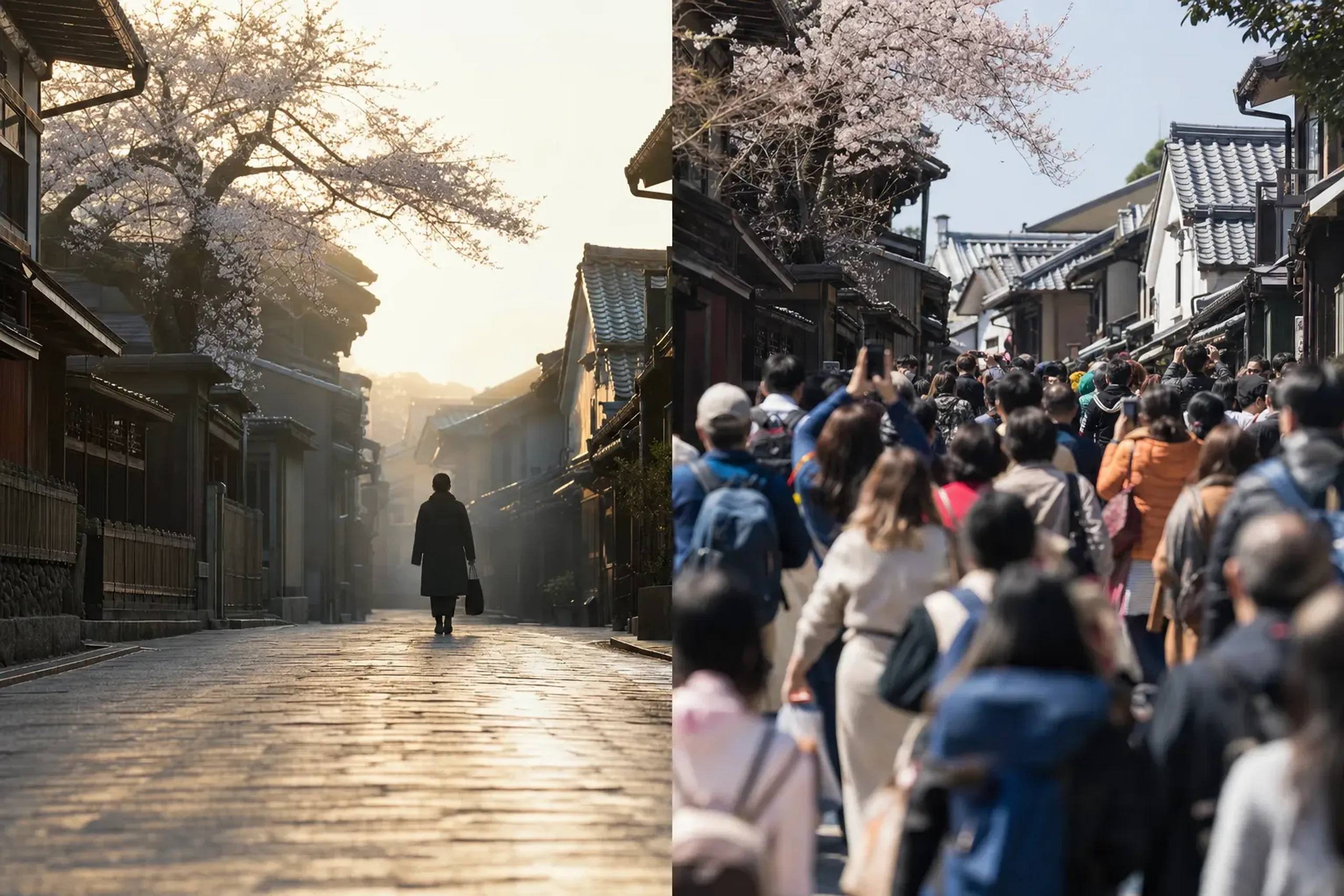
The same city can feel private—or packed—depending on structure and timing.
Two bases create a shape to your trip. One anchor for cultural density, one anchor for decompression.
Less moving means fewer check-ins and fewer “transfer days” that quietly eat your best hours. That is where most itineraries bleed time.
It also supports discretion. A stable base reduces exposure: fewer public lobbies, fewer arrivals, fewer chances for your plans to drift into someone else’s conversation.
And it fits wabi-sabi. Restraint reads as confidence in Japan—especially in Kyoto, where the best moments are often small and early.
The Core Logic
- Base 1 (Kyoto): front-load depth, route around the tour-bus circuit, use first-light timing, and choose neighborhoods that let you step out quietly.
- Base 2 (Quiet Region): slow the pace, recover, and enjoy Japan’s “negative space”—gardens, water, mountains, hot springs, craft towns.
The Problem You Already Feel In Kyoto (And How To Beat It)
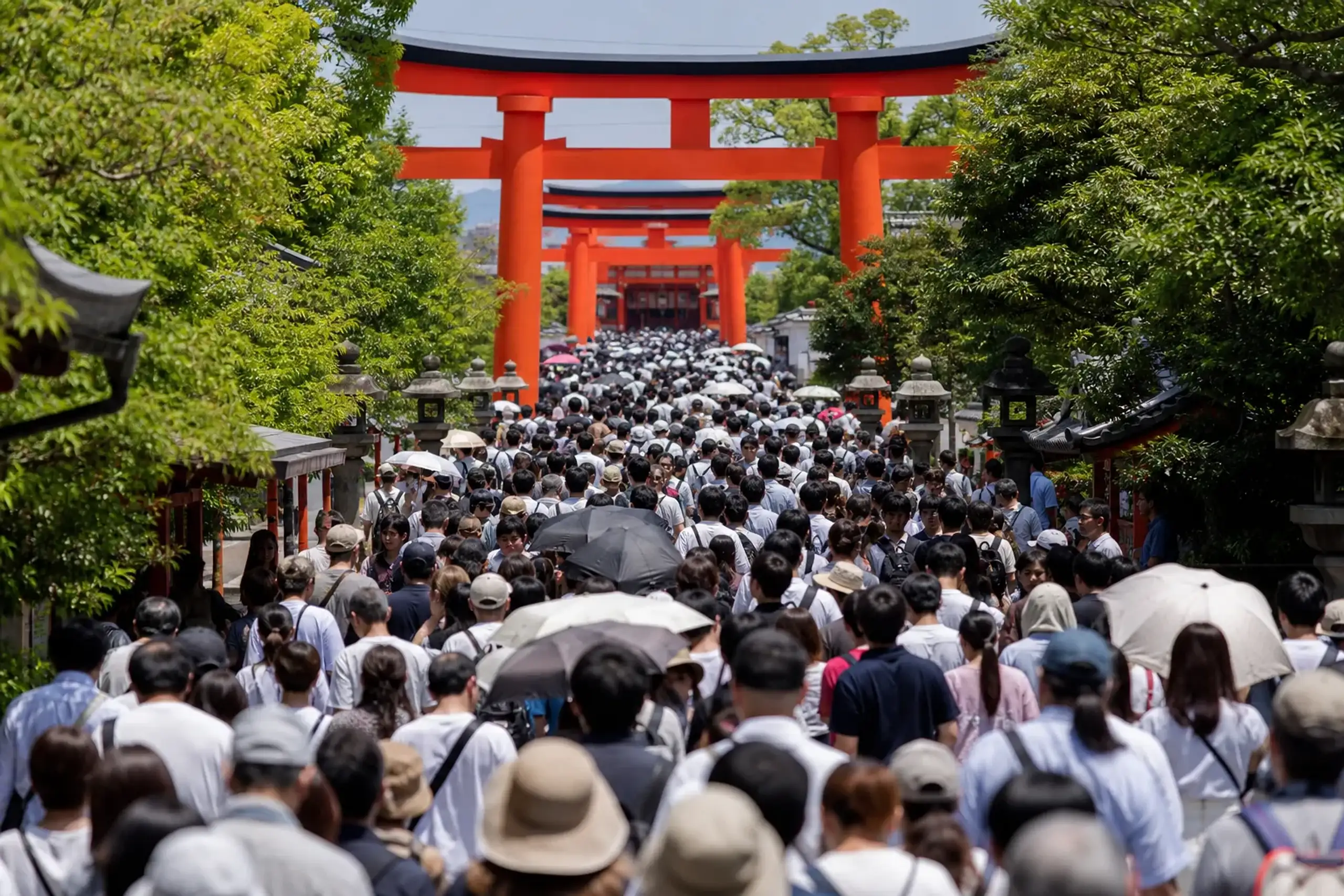
Your Kyoto experience changes dramatically when you stop arriving at peak hours.
Kyoto does not fail travelers. Timing fails travelers.
Arrive at a headline site at 11:30, and you inherit every coach tour. Arrive at first light, and the same stone steps feel private again.
Kyoto’s official guidance in 2026 recognizes the strain: crowded buses, packed streets, and the need for “hands-free travel.” It is not theory. It is lived reality.
Our concierge team treats crowd-management as a design constraint, not an afterthought. Quiet wins.
Key fact: Kyoto Travel’s official visitor guidelines in 2026 recommend “Hands-Free Travel” as part of being a considerate, low-impact visitor in a crowded city.
What “Kyoto Done Right” Looks Like
- First-light starts for places that choke by late morning.
- Short, sharp returns to your base between outings—no long midday marathons.
- Less bus dependence when streets are strained (Kyoto’s guidance is explicit about congestion).
- Neighborhood choice that supports quiet exits and discreet arrivals.
The Two-Base Skeleton (Night-By-Night, Realistic And Calm)
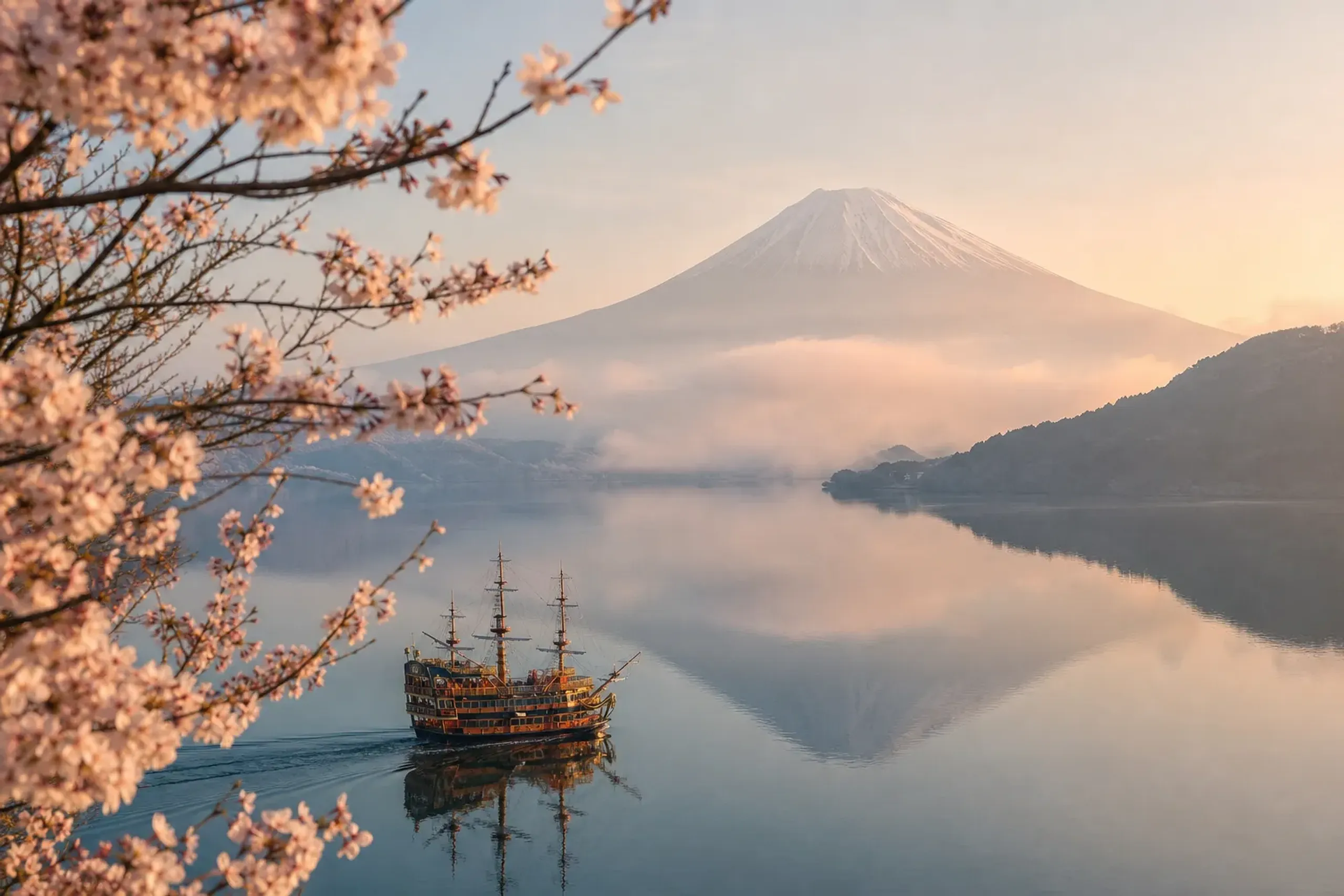
This is the trip shape we return to for HNW clients who want the icons, but hate the churn. Simple.
Think 4–5 nights in Kyoto, then 3–4 nights in a quiet region. No third base unless you have a strong reason.
It is also flexible. Seven nights? Do 4 + 3. Ten nights? Do 5 + 5, and breathe.
7-Night Version (Kyoto 4 + Quiet Region 3)
- Nights 1–4: Kyoto base
- Nights 5–7: quiet region base (Hakone, Kanazawa, Matsumoto area, or Setouchi)
9-Night Version (Kyoto 5 + Quiet Region 4)
- Nights 1–5: Kyoto base
- Nights 6–9: quiet region base
Where Tokyo Fits (Without Breaking The Two-Base Idea)
Many travelers assume “two-base Japan” must be Tokyo + Kyoto. It can be.
But if your primary pain is Kyoto crowding, it can be smarter to keep Kyoto as Base 1 and make Base 2 a decompression region—then add Tokyo as a short bookend at the start or end.
That approach keeps the itinerary psychologically simple. Two homes. Tokyo becomes a crisp entry/exit, not another move in the middle.
The Kyoto Base: Quiet Icons, Imperial-Grade Atmosphere, Better Hours
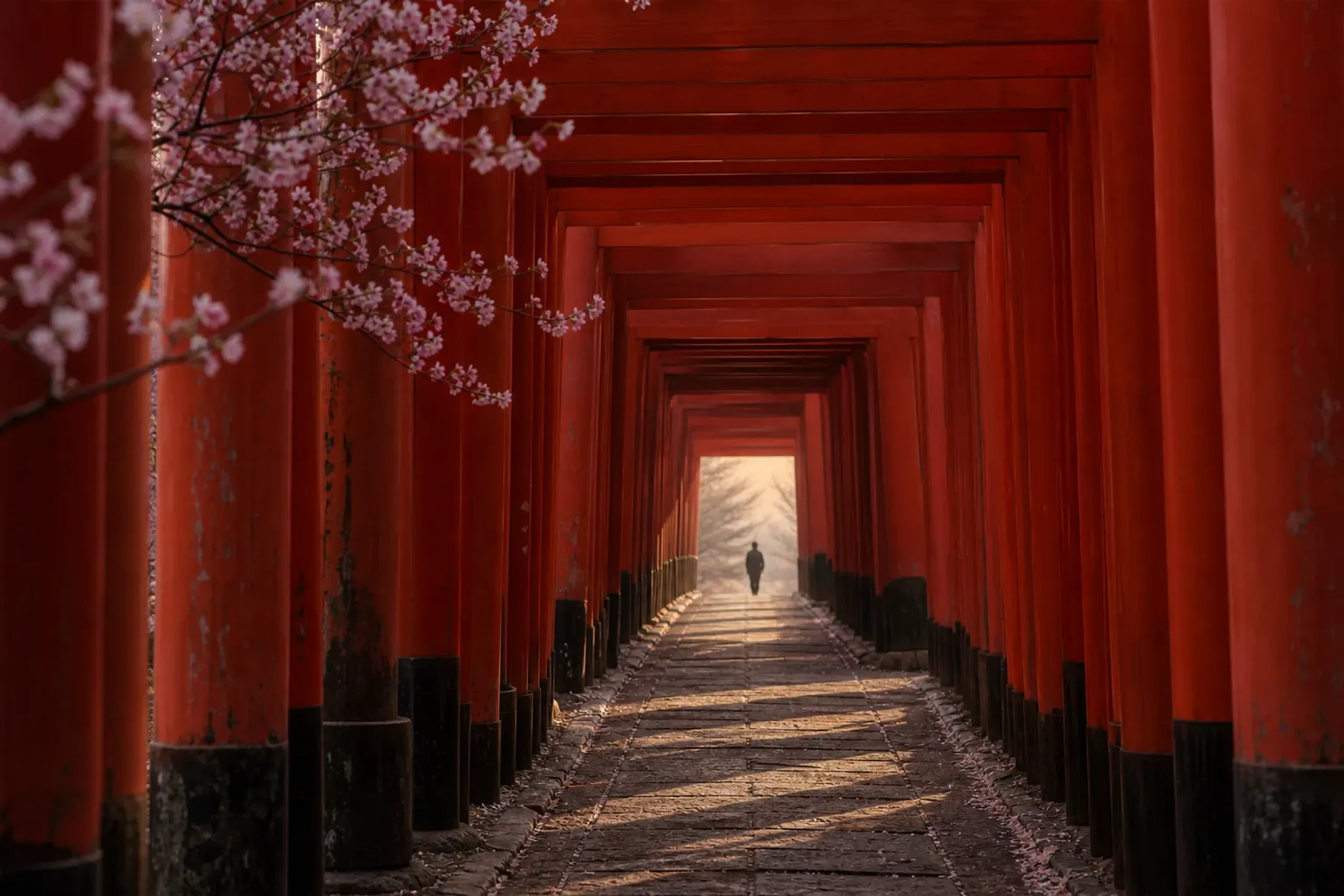
First light is Kyoto’s simplest crowd strategy—and its most persuasive.
Kyoto is not a checklist city. It is a mood city.
Our team designs Kyoto days to put you at the same famous places, but at hours that change the experience. The difference is stark.
Fushimi Inari Taisha at first light feels like footsteps and birds. At noon, it is a funnel.
This is also where imperial-class atmosphere matters. Not flashy. Formal, hushed, precise.
Kyoto Morning Pattern (A Repeatable Template)
- 06:00–09:00: primary icon (early)
- 09:30–11:00: secondary site nearby, before peak arrival
- Midday: retreat—tea, a garden, or a quiet lunch
- Late afternoon: one focused experience, not three rushed stops
Kyoto Icons That Reward First-Light Timing
- Fushimi Inari Taisha (early pathways, before tour waves)
- Arashiyama (bamboo grove area and riverside lanes, best before the bridge becomes crowded)
- Kiyomizu-dera (arrive early for breathing room on the approach lanes)
Kyoto Neighborhoods That Support A Calm Base
We do not treat “Kyoto” as one place. It is a set of micro-bases.
Gion and nearby areas can be culturally dense, with quick access to classic districts on foot. That convenience matters when you are timing mornings tightly.
For 2026 planners, Kyoto’s new openings matter here—not as hype, but as logistics: where you can arrive quietly, reset privately, and step out without wrestling traffic.
- Miyagawa-cho area: a historic kagai (geisha district) context and a strong base for walking access in central Kyoto.
- Gion area: a classic cultural neighborhood where careful timing can reduce exposure.
2026 Kyoto Openings That Change The Base Strategy
Capella Hotels’ press material states Capella Kyoto opened March 22, 2026 in the historic Miyagawa-cho kagai. That matters if you value heritage texture and short, discreet transitions.
JNTO’s January 2026 newsletter notes Imperial Hotel Kyoto debuted March 5, 2026, in a Gion context—useful for travelers drawn to imperial-class formality and a more contained, composed atmosphere.
Our role publicly is advisory. If you want tailored guidance on where each base works best for your dates and preferences, our concierge team can discuss options privately.
Shokunin In Kyoto: Craft Over Crowds
Kyoto rewards travelers who choose one craft encounter over ten souvenir stops. Always.
Shokunin culture is not a “tour.” It is skill, repetition, and pride that lives in the hands.
When guests ask us what they will remember most, it is rarely a busy street. It is a small room, soft light, and a master explaining why one detail matters.
That is where hidden-Japan begins: behind doors that do not advertise loudly.
The Quiet Region Base: Where The Trip Finally Exhales
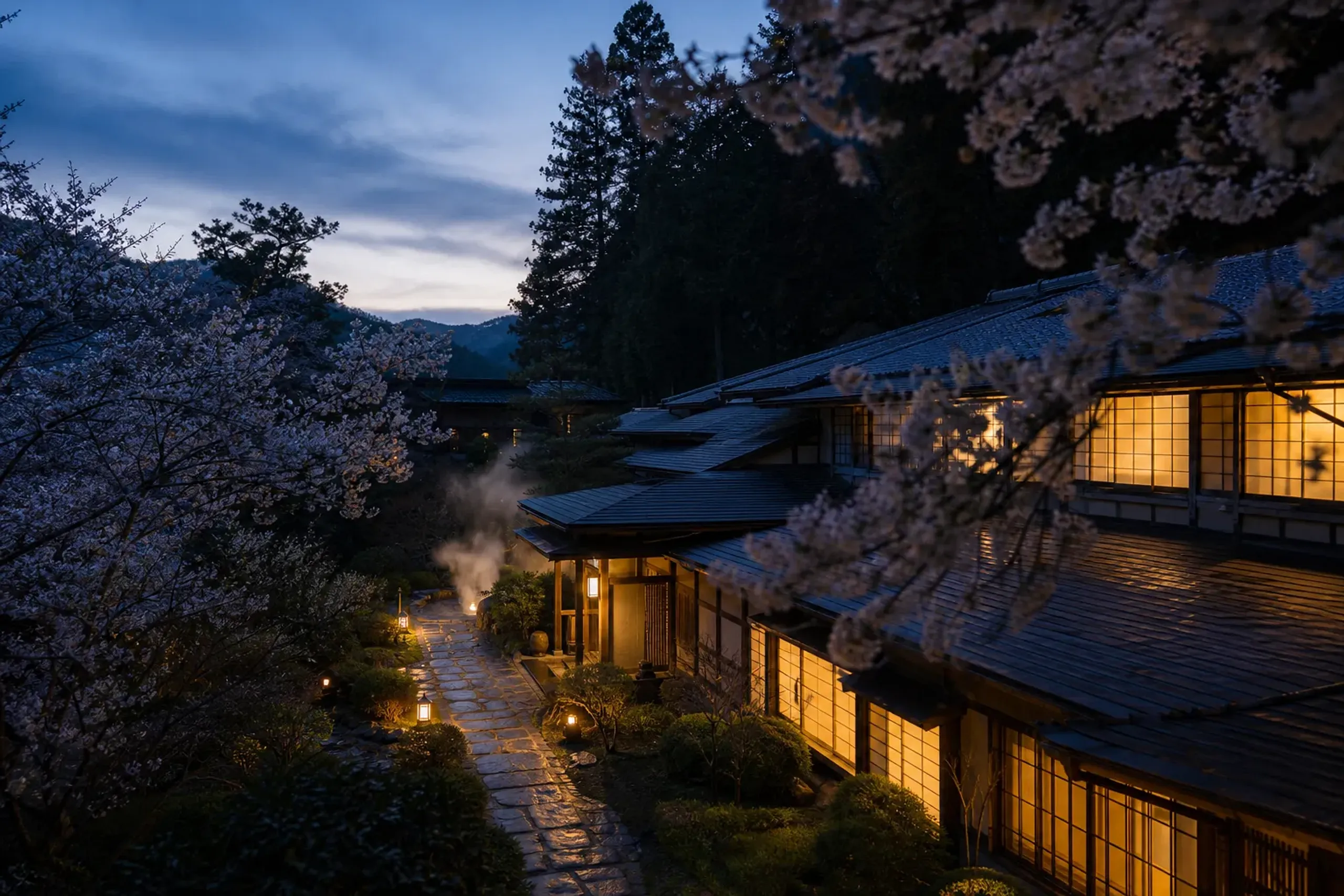
A second base should feel like release, not another checklist.
Kyoto can be exquisite. It can also be stimulating.
A second base should feel like release. Mossy stones. Lake air. Steam in winter. Silence that stays quiet.
This is where wabi-sabi becomes practical, not poetic. You are buying back your nervous system.
Below are pairings we use often for HNW travelers because they are legible, achievable, and genuinely restorative.
Option A: Hakone (Onsen-First Recovery Near Tokyo)
Hakone is close enough to be convenient, yet far enough to feel like a reset. That proximity is the luxury.
For late 2026 planning, Mitsui Fudosan announced HOTEL THE MITSUI HAKONE with an opening date of December 15, 2026, which is relevant if you are mapping winter 2026/27 with a privacy-onsen emphasis.
Hakone also supports a controlled pace. One property, one private bath rhythm, a short list of outings.
Guests who want guidance on best timing, transfers, and how to keep exposure low can contact our concierge team privately.
Option B: Kanazawa (Craft, Gardens, And A Slower Cultural Tempo)
Kanazawa suits travelers who want culture without the Kyoto crush. It is not a “replacement.” It is its own city.
The craft culture is tangible—lacquerware, gold leaf work, ceramics—and the pace is friendlier to unhurried walking.
If Kyoto is your intense first movement, Kanazawa is your second: calmer, still refined, less performative.
It also pairs well with shokunin-focused days, where one atelier visit can carry an afternoon.
Option C: Matsumoto Area (A Regional Base With 2026 Freshness)
If you want a quieter regional town with a strong sense of place, the Matsumoto area becomes interesting in 2026.
Industry press has noted KAI Matsumoto (Hoshino Resorts) reopening after a full-property renovation on August 4, 2026. That is an actionable date for late-summer and autumn planning.
This base can support a measured rhythm: a castle-town day, a craft day, a countryside day. Three days can feel like a real chapter.
And it keeps you out of the Kyoto/Tokyo glare for a while. Useful.
Option D: Setouchi (Inland Sea Calm As A Counterweight To Kyoto)
The Seto Inland Sea region is often the moment the trip turns quiet in a serious way. Water does that.
Use it as a decompression base after Kyoto: sea air, ferry timing, small islands, and evenings that end early by choice.
If you are art-curious, the broader Setouchi area is known for island-based contemporary art, including Naoshima (Kagawa Prefecture). That is real, and it can be deeply satisfying when paced well.
We keep the plan grounded: fewer islands, more time, less rushing for photos.
The Calm Transfer Playbook: Luggage, Timing, And The Hidden Hours
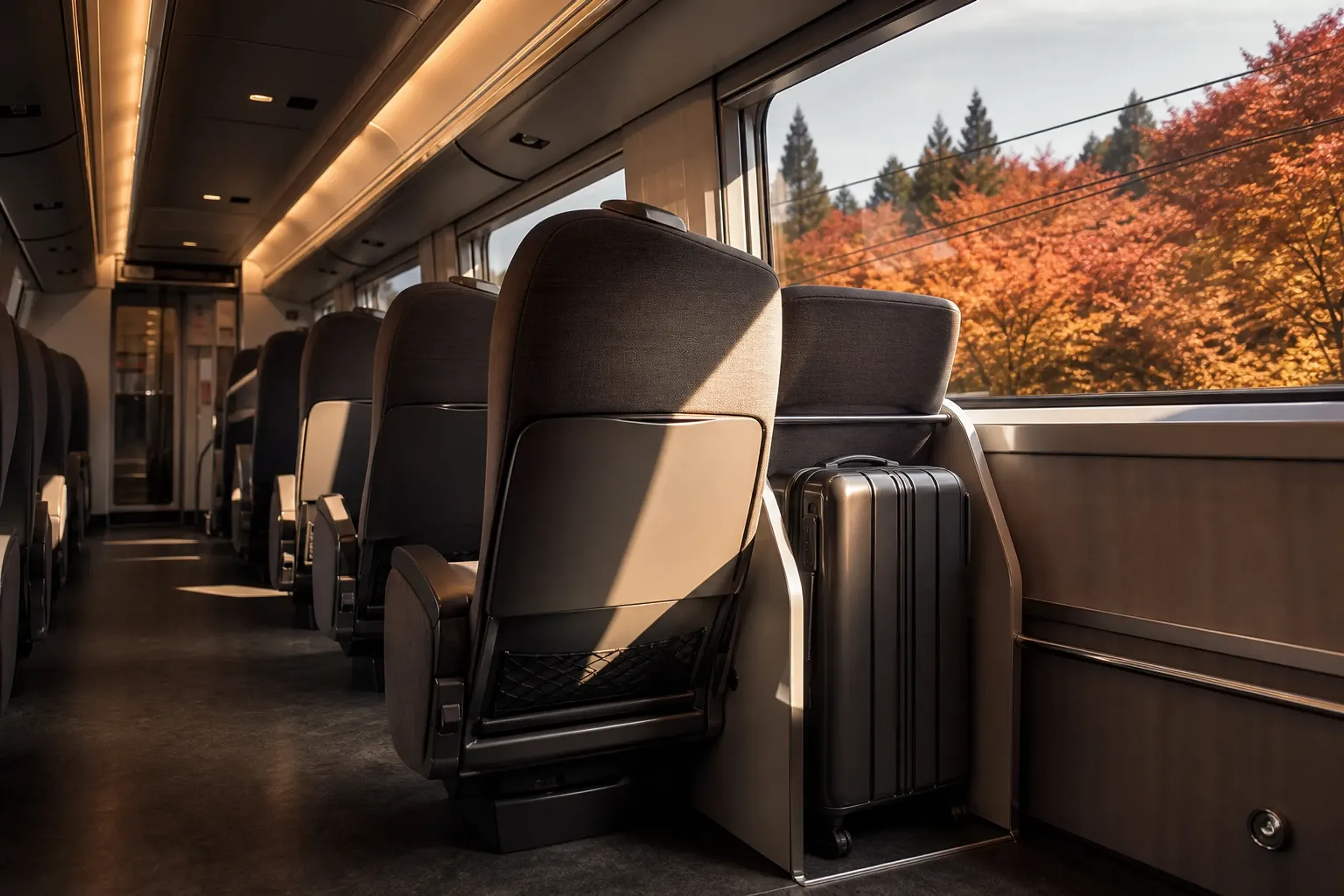
Transfer-day polish starts with luggage reality—not wishful thinking.
Two bases still require one major transfer. That day decides whether the trip feels polished or ragged.
The common mistake is dragging large suitcases onto trains at peak hours, then arriving exhausted and irritated. Avoidable.
JR Central publishes official guidance on oversized baggage rules on applicable Shinkansen services, including the ability to make oversized baggage reservations and the existence of designated areas. This is not optional reading if you travel heavy.
Kyoto’s own guidance also emphasizes “hands-free travel.” That is not only about etiquette—it is about preserving your day.
What We Recommend For Transfer-Day Design
- Start early so arrival feels like a beginning, not a collapse.
- Protect the first afternoon in the new base: one garden, one café, one slow walk.
- Plan luggage intentionally (oversized baggage seats where applicable, or hands-free logistics aligned with official guidance).
Private Transportation As A Discretion Tool
In our experience, privacy is not only about “exclusive venues.” It is about transitions.
A quiet pickup point. A watchful driver. The right vehicle for your party and luggage. That is where a day stays calm.
For guests who want to reduce exposure and keep timing tight, we often discuss private transportation privately—especially in Kyoto, where a few minutes of timing can change the entire feel of a site.
For families, executives, and small groups, vehicle choice also matters. Practical luxury.
A Two-Base Kyoto Plan For July 2026: Gion Matsuri Without The Crush
July changes Kyoto’s texture. Gion Matsuri runs throughout the month, and the city’s energy rises with it.
AP News reported on July 19, 2026 that Gion Matsuri is celebrated throughout July, with Shinto traditions and towering floats. That aligns with what visitors feel on the ground: a festival month, not a single day.
Kyoto Travel’s official 2026 guidance for Yoiyama and the float procession describes early and latter festival periods, with Yoiyama periods expanding across multiple days in recent years.
The two-base structure helps here because it lets you experience the festival nights, then leave Kyoto for quiet—without regretting it.
Suggested July Shape (Keep It Simple)
- Kyoto base: schedule festival evenings with conservative daytime pacing.
- Quiet region base: shift to recovery days immediately after your festival peak nights.
Etiquette That Protects Your Experience (And Kyoto’s)
Kyoto’s 2026 visitor guidelines are explicit about the city’s strain. Respect is not a lecture. It is self-interest.
Travel hands-free when possible. Avoid clogging narrow lanes. Be measured around residential streets.
When you behave like a considerate guest, the city softens. People notice.
And your photos look better, too.
How To Book The Key Pieces (Official Steps, Then Concierge Guidance)
Luxury travel in Japan is often limited less by budget and more by rules: luggage policies, venue etiquette, and booking windows that punish procrastination.
For intercity rail, use official JR resources for the Shinkansen route relevant to your plan. JR Central’s official page explains oversized baggage handling and, on applicable services, oversized baggage seat reservations and designated areas.
For Kyoto-specific behavior guidance and event timing, Kyoto Travel’s official site publishes visitor guidelines and festival guidance, including Gion Matsuri Yoiyama and float procession information for 2026.
For questions, contact our concierge. If you want a tailor-made itinerary built around discreet hours, calm transfers, and the right second base, we can advise privately after you inquire.
FAQ: The Two-Base Japan Itinerary
Is Two Bases Enough For A First Trip To Japan?
For many HNW travelers, yes. Two bases create depth without fatigue, especially if Kyoto is one base and the second base is chosen for recovery and contrast.
Should The Two Bases Be Tokyo And Kyoto?
It can be, and that classic pairing is popular for a reason. But if your main concern is Kyoto crowding, consider Kyoto + a quiet region, with Tokyo as a short bookend rather than a full base.
How Many Nights In Kyoto For This Structure?
We usually see 4–5 nights working well for first-timers who still want a calm rhythm. Fewer can feel rushed, especially if you want early mornings and rest between outings.
What Quiet Region Pairs Best With Kyoto?
Hakone is strong for onsen-focused recovery near Tokyo. Kanazawa works well for crafts and gardens at a slower pace. The Matsumoto area can be compelling in 2026 with KAI Matsumoto’s reopening date publicly reported as August 4, 2026.
How Do We Avoid Luggage Stress On The Shinkansen?
Read the official oversized baggage rules for the Shinkansen service you plan to use. JR Central publishes guidance on oversized baggage reservations and designated areas on applicable services. Plan around that reality early.
Can Japan Still Feel Private If We Want The Famous Sites?
Yes—if you commit to the right hours and a disciplined daily shape. First light changes Kyoto. A quiet second base changes the entire trip.
Why Choose Japan Royal Service
Competitors often sell Japan as a list. Our team at Japan Royal Service sells it as a lived sequence—timed, paced, and protected.
Discretion comes first: we keep your identity and itinerary confidential, and we design days that reduce public exposure rather than chase attention.
Wabi-sabi is our style guide: restraint, quiet materials, and the confidence to leave space—because the silence around a temple can be the best thing you bring home.
Imperial-class access is not a slogan for us; it is a standard of formality and atmosphere, shaped around sites and properties with state-guest history where appropriate and handled with care.
And when you want depth, we lean into shokunin: private, skill-forward encounters that feel human, not mass-produced.
If you want the icons without the crush, and a second base that truly restores you, our concierge team will guide you—quietly, precisely, and on your terms.
For private coordination, reach our team directly via WhatsApp or LINE, or contact us here.