In this guide
- 01The Midday Problem, Stated Plainly
- 02The Principle: One Anchor A Day, One Area A Day
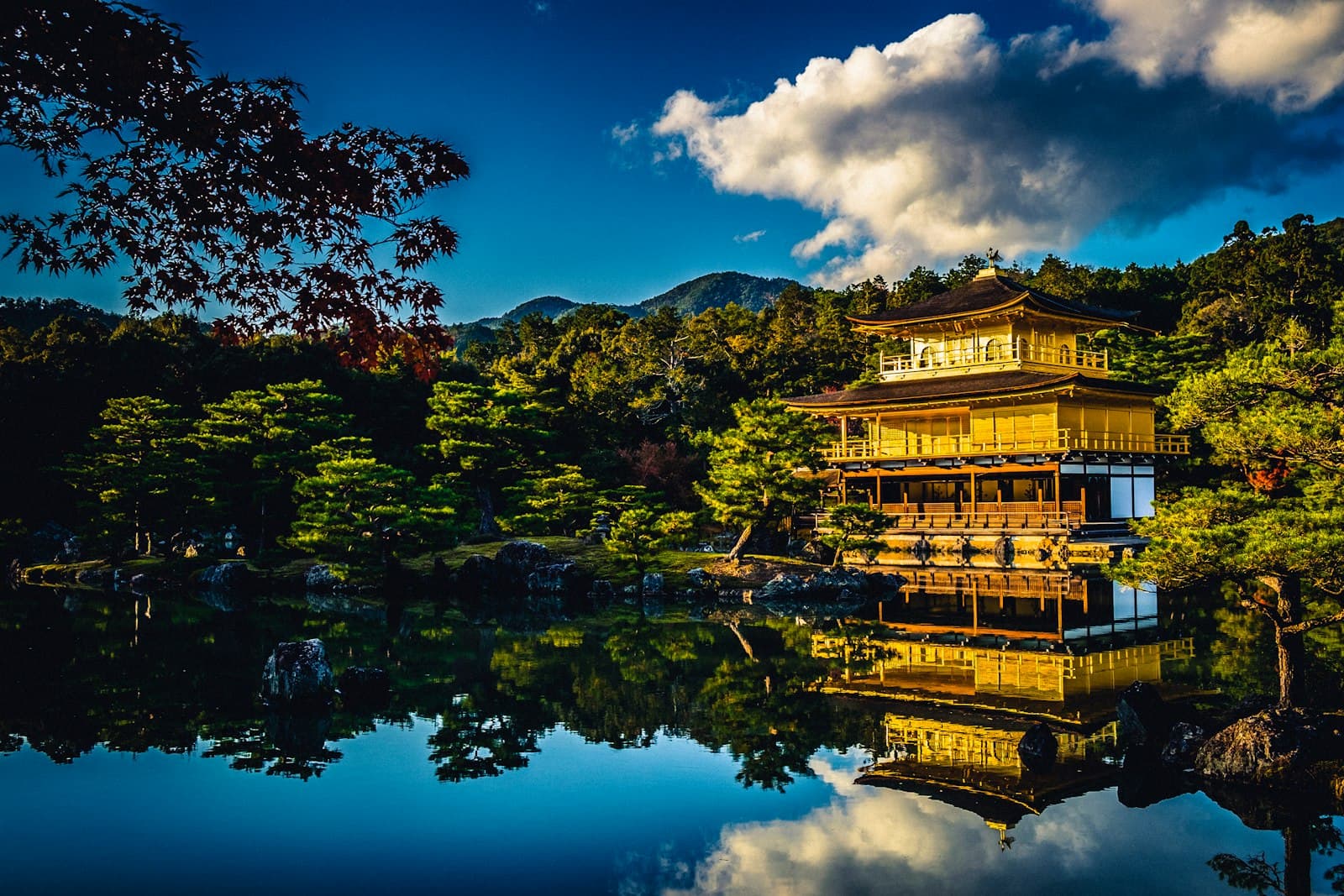
- 03Day 1 — Northwest Kyoto: Kinkaku-ji And The Quiet North
- 04Day 2 — Southern Kyoto: Fushimi Inari Without The Crush
- 05Day 3 — Arashiyama: The West, Front-Loaded
- 06What Three Days Does Not Cover
- 07Weekday, Weekend And Seasonal Adjustments
- 08Where Timing Stops Working And Access Begins
- 09Why Choose Japan Royal Service
- 10Frequently Asked Questions
Picture the visitor at noon. They are standing at the foot of Kiyomizuzaka in a queue that does not move, having planned four sites for the day and reached the second at the worst possible hour. Their morning was rushed, their afternoon is now a bottleneck, and the photographs they wanted are full of strangers. This is the most common way to spend a peak-week day in Kyoto, and it is almost entirely avoidable.
Kyoto is not hard to visit well. It is hard to schedule well. The sites are further apart than they look, the transit is slower than people expect, and the crowd curve is sharper than most itineraries account for. What follows is a full-day operating logic for the weeks when the city is at its busiest: cherry-blossom season, the deep autumn colour weeks, and the run of national holidays that fill the inner districts. It is scheduling, not sightseeing. If a site appears below, it appears with an hour and a reason.
The Midday Problem, Stated Plainly
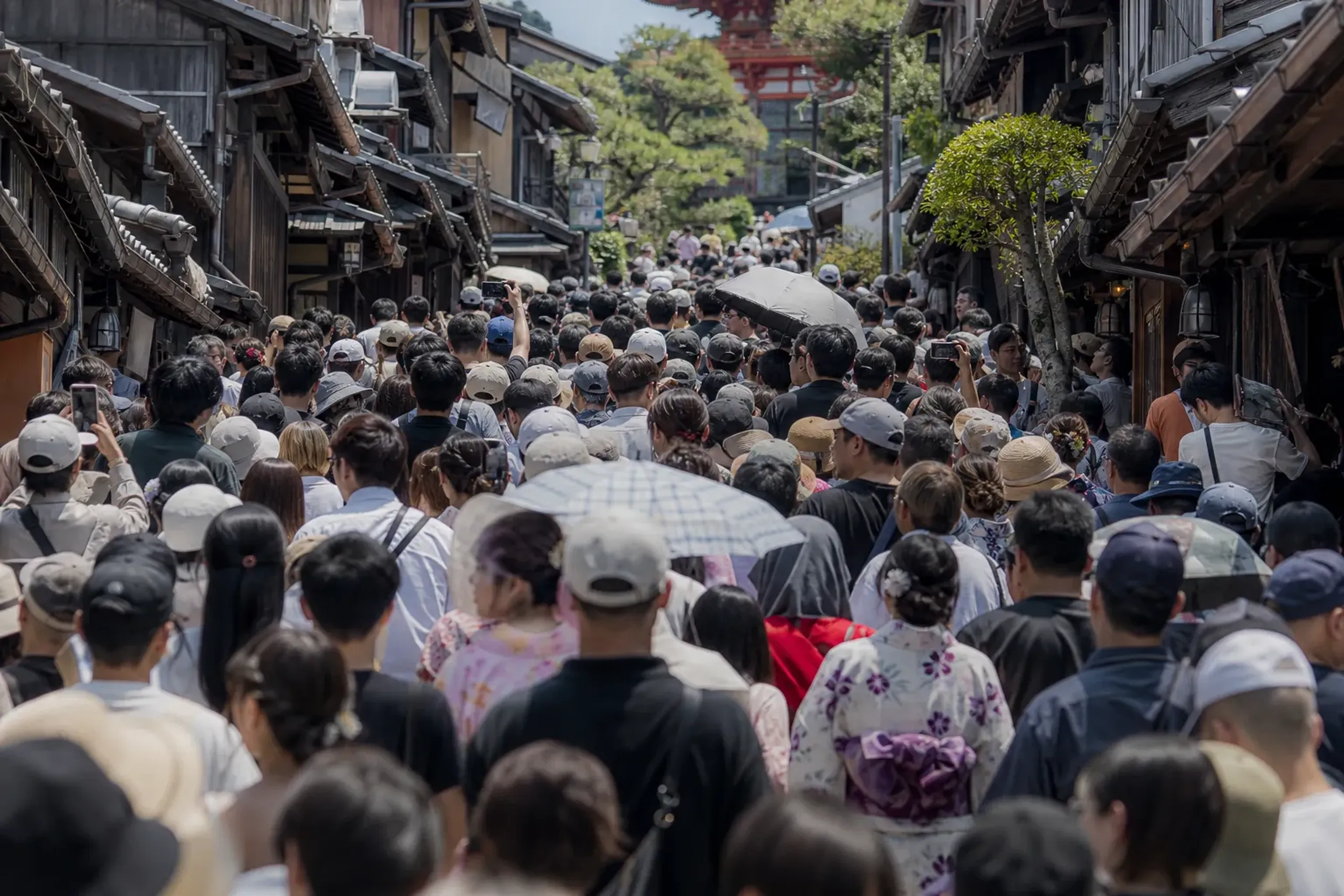
Central Kyoto between roughly 11am and 3pm is the worst it gets. That is not a mood. It is when day-trippers arrive from Osaka, when tour coaches release their groups, and when the sun is high and unkind for photographs. In observed peak-week patterns, the marquee sites — Kiyomizu-dera, the Arashiyama bamboo grove, Fushimi Inari's lower gates — are close to their daily maximum in exactly this window.
Most itineraries put visitors into that window. They start late, arrive at the famous places around midday, and queue. Everything in this plan follows from solving one problem: what to do with the hours between eleven and three, so that the crowd does its worst while you are somewhere it cannot reach you.
Use the official tools as decision gates. Kyoto's tourism board publishes a Kyoto Travel Congestion Forecast Map, which lets you pick a date, time and weather condition and see forecast congestion around major spots — Kinkaku-ji, Fushimi Inari, Nishiki Market, the Philosopher's Path, Togetsukyo Bridge, the bamboo forest and more — with live cameras at some Saga-Arashiyama locations. Check it the night before and the morning of. From March 20, 2026, the transport bureau's Pokeloke plus+ also shows real-time bus crowding and vehicle location, which turns a guessed bus into a checked one.
The Principle: One Anchor A Day, One Area A Day
Two rules carry this whole plan.
One anchor per day. Not four. Give each day a single site that justifies the day, then let everything else orbit it loosely. Three or four "must-sees" in a day sounds efficient and produces a worse trip, because Kyoto's sites are spread across a wide basin and the time lost between them is time spent tired, not time spent seeing. Two considered stops beat four rushed ones. Every time.
One area per day. Build the day around geography, not theme. A day that pairs Arashiyama in the west with Higashiyama in the east looks balanced on paper and collapses in practice — the cross-city transfer lands you in transit precisely at midday. Cluster. Northwest one day, east one day, south one day. Let the district, not the checklist, decide the shape.
Two further habits make the difference. Get your one anchor done early — the Japan Royal Service first-light approach to Kyoto mornings is covered separately, and it remains the single highest-leverage move you can make; we will link it and move on. And accept that direction of travel within a day is not reversible: some sites reward the early hour and punish the late one, and sequencing them backwards undoes the whole plan.
Day 1 — Northwest Kyoto: Kinkaku-ji And The Quiet North
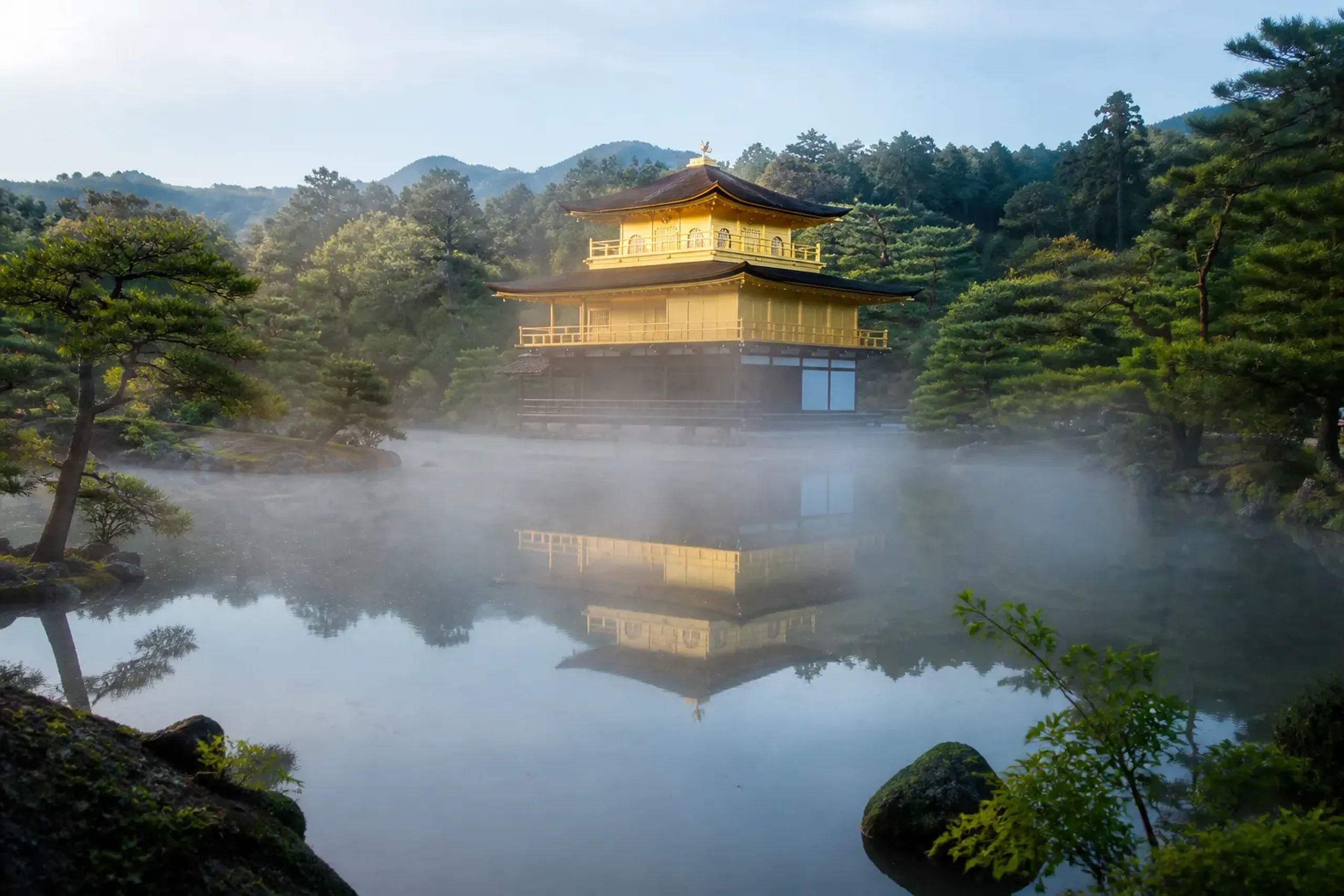
The northwest holds the city's most photographed building and, a short distance away, some of its calmest gardens. The trap is treating it as a bus tour. The fix is sequence.
Morning
Anchor the day on Kinkaku-ji, the Golden Pavilion, and reach it as close to opening as you can. The gold over the pond does not need a crowd to be worth it; it needs light and space, both of which exist for perhaps ninety minutes after the gates open and almost never after. This is the one site today that is genuinely better early and genuinely worse late.
Midday
Now you are ahead of the curve, so spend the eleven-to-three window on interiors and enclosed gardens that absorb people rather than concentrate them. Ryoan-ji's rock garden is a short hop away; it is a place you sit with, not queue through, and its scale tolerates visitors better than a temple approach lined with shops. Take your main meal deliberately at the front of the window — sit down before the restaurants fill, not after. A seated lunch at 11:30 is a strategy; a seated lunch at 1:15 is a wait.
Afternoon
Continue north and west into the quieter temple grounds around the area rather than doubling back into the centre. This is dispersion by design — Kyoto City's own spring initiatives actively encourage spreading visitors across the day and the map, and the north rewards it. Larger grounds hold more people gracefully than narrow lanes do.
Evening
Late afternoon is Kyoto's most underused window. After four, the coach groups thin, the light softens, and central districts change character. Return toward your base in the late afternoon and give the evening to Kyoto's food quarters rather than another temple. Where seasonal night illuminations are offered, they run only in specific windows — worth confirming, never worth assuming.
Day 2 — Southern Kyoto: Fushimi Inari Without The Crush
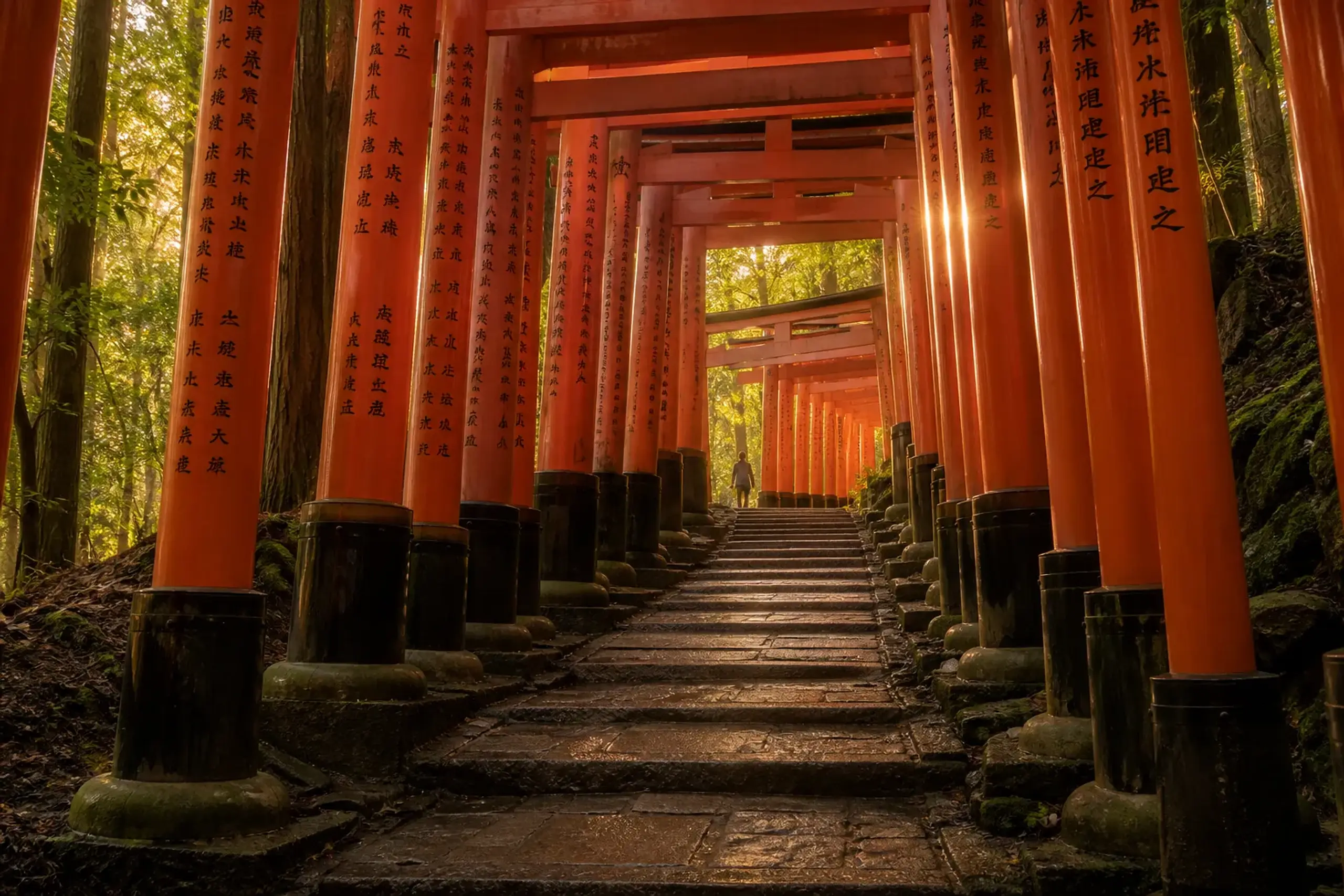
Fushimi Inari Taisha is open around the clock, which is the single most useful fact about visiting it in a busy week. That one detail reshapes the whole day.
Morning
Anchor on Fushimi Inari and its vermilion torii, and go early — the lower gates are calm before the first Osaka trains arrive and become a shuffling line by late morning. Climb higher than most visitors do; the crowd density falls off sharply the further up the mountain path you go, an observed pattern rather than a published figure. The shrine sits directly on the JR line, which matters for the second rule of the day: rail first, bus second.
Peak-week routing rule: design the day around rail and short taxi hops, not the city bus. Kyoto's buses are the first thing to seize up in a busy week. Keep the bus as a fallback only, and check it live on Pokeloke plus+ before you commit — real-time crowding and vehicle location tell you in seconds whether to board or walk to the nearest station.
Midday
By late morning you have your anchor. Spend the crowded window somewhere covered and forgiving: a sit-down meal timed to the front of the hour, then an interior. Fushimi's sake district lies nearby and is the kind of place that holds people comfortably — a working neighbourhood, not a single narrow attraction — which is exactly what you want between eleven and three.
Afternoon
Resist the urge to bolt east to Higashiyama for a third "famous" stop. That is the cross-city transfer that ruins Day 2. Instead, stay south and let the afternoon breathe, or return toward the base for a genuine rest before the evening. A pause in the afternoon is not lost time; it is what lets the evening land.
Evening
Give this evening to Gion. The Higashiyama lanes and Hanamikoji are calmer and more atmospheric after the day-trippers leave, and an evening walk here reads completely differently from the midday version most visitors get. Note that Hanamikoji has visitor-conduct restrictions on its private side streets — respect the posted rules. Where an evening walk with knowledgeable guidance changes the experience, that becomes a matter of access rather than timing, and we will come to it.
Day 3 — Arashiyama: The West, Front-Loaded
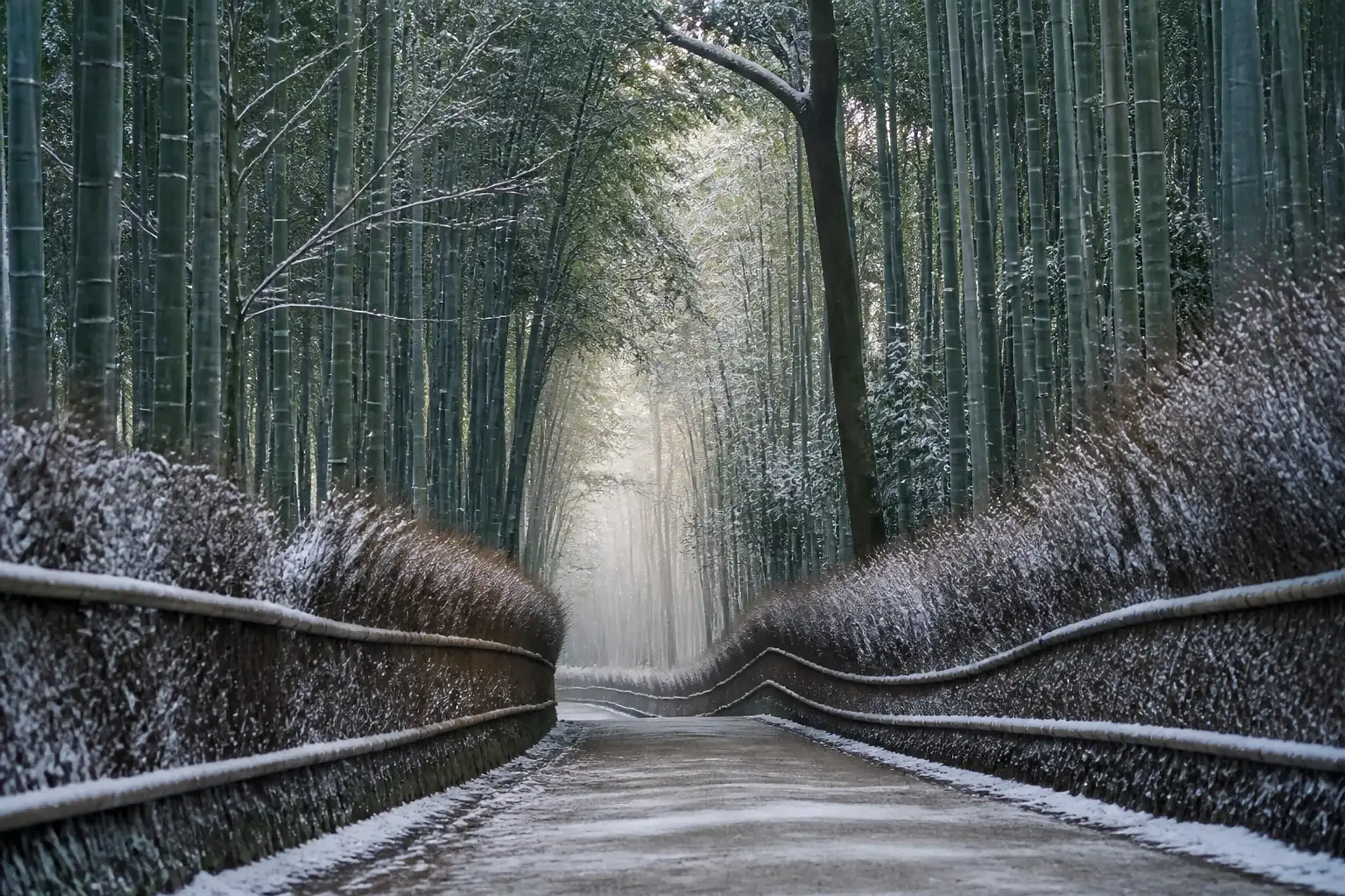
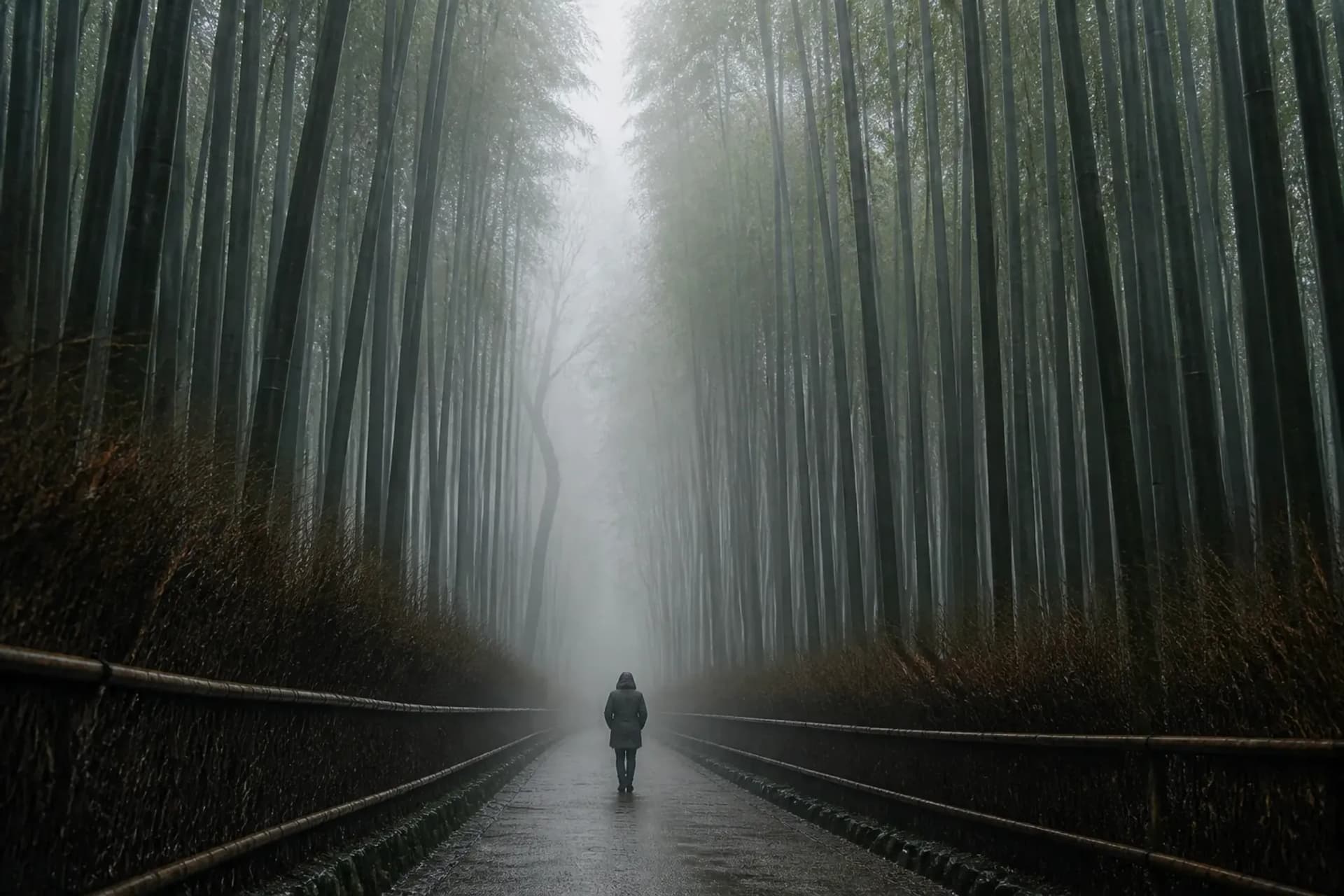
Arashiyama is the day that punishes late starts most severely. The bamboo grove and Togetsukyo Bridge are among the tightest pinch points in the whole city, and by midday in a peak week the main grove path is shoulder to shoulder. The live cameras on the congestion map cover parts of Saga-Arashiyama for exactly this reason — check them the morning of.
Morning
Anchor on Arashiyama and treat the bamboo grove as a first-thing-only site. The grove is best walked before the crowds arrive and effectively not worth walking in the midday peak. Tenryu-ji's garden nearby is the substantial stop — a large temple ground that holds visitors far better than the narrow grove path.
Midday
Once the grove and Tenryu-ji are behind you, walk the district's back lanes away from the bridge. Arashiyama has depth beyond its two icons — quieter temple grounds and residential streets to the north and west that the coach crowd never reaches. This is where you spend the eleven-to-three window: on foot, on the edges, with a meal timed early. The main riverside strip is precisely where not to be at one in the afternoon.
Afternoon
Ride the rail back toward central Kyoto in the early-to-mid afternoon, ahead of the return crush. Arashiyama's own transit lines carry their heaviest load when everyone leaves at once in the late afternoon; beat it by twenty minutes and the difference is enormous.
Evening
For a final evening, Nishiki Market is worth knowing for what it is not: it is a lunchtime and afternoon place that thins as vendors close, so treat it as an earlier stop, not a dinner plan. Give the last evening instead to a considered dinner near your base and an unhurried walk. Three days end better with a slow evening than a fourth site.
What Three Days Does Not Cover
Honesty here saves disappointment later. Three days, done at this pace, covers the northwest, the south, and the west properly — one anchor and one area each. It does not cover everything, and it is not meant to.
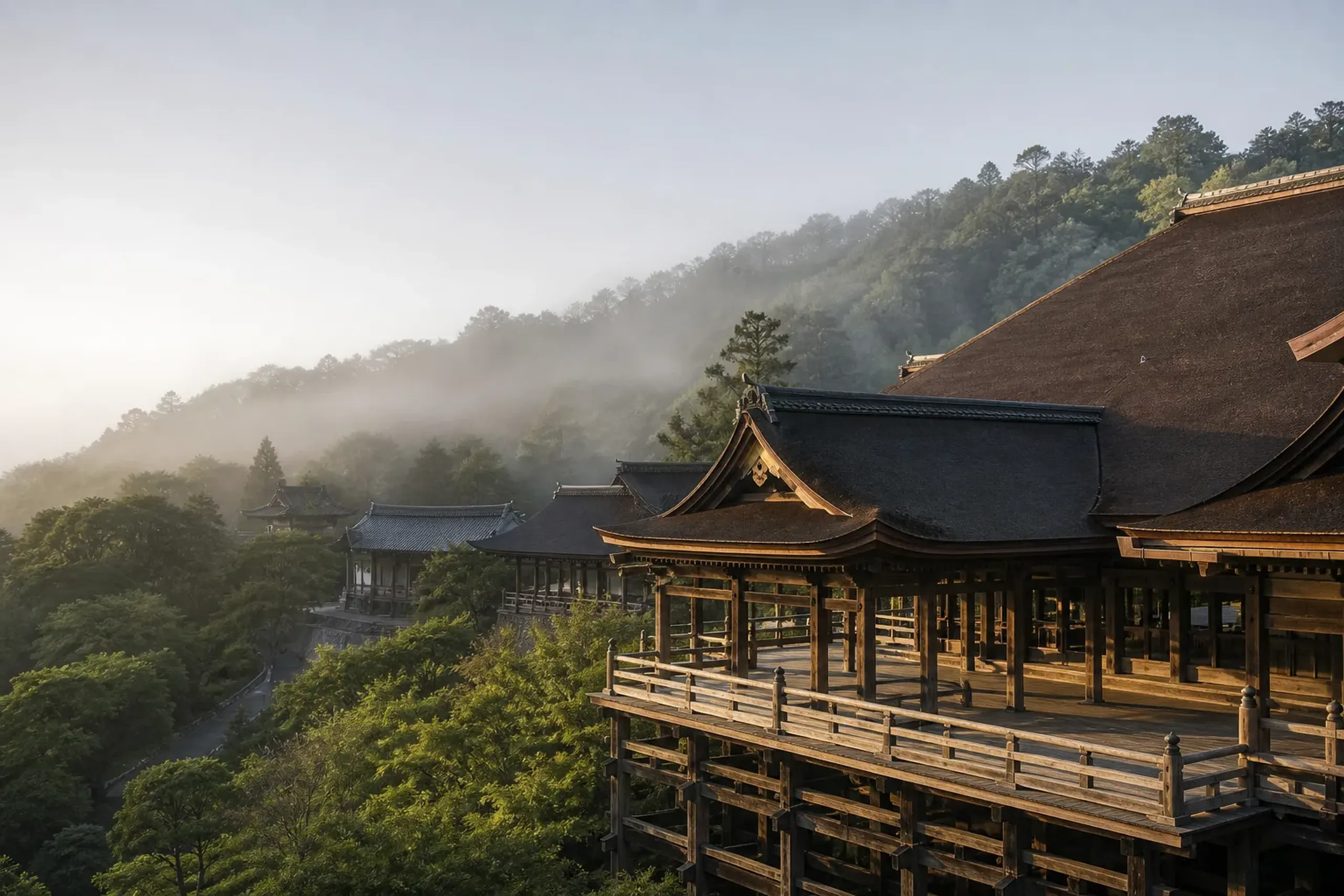
- Full Higashiyama by day. Kiyomizu-dera, Nene-no-Michi and the eastern temple concentration deserve their own day; this plan touches Gion in the evening only, on purpose.
- The northern mountains. Ohara, Kurama and the far north are a separate expedition.
- Day trips. Nara and the wider Kansai region are excellent crowd-relief options but are a fourth and fifth day, not a squeeze.
- Nijo Castle and central sites. Real omissions, named plainly so you can decide whether to trade a day for them.
Kyoto is said to hold more than two thousand temples and shrines. Three days is a way of seeing a few of them properly, not a survey.
Weekday, Weekend And Seasonal Adjustments
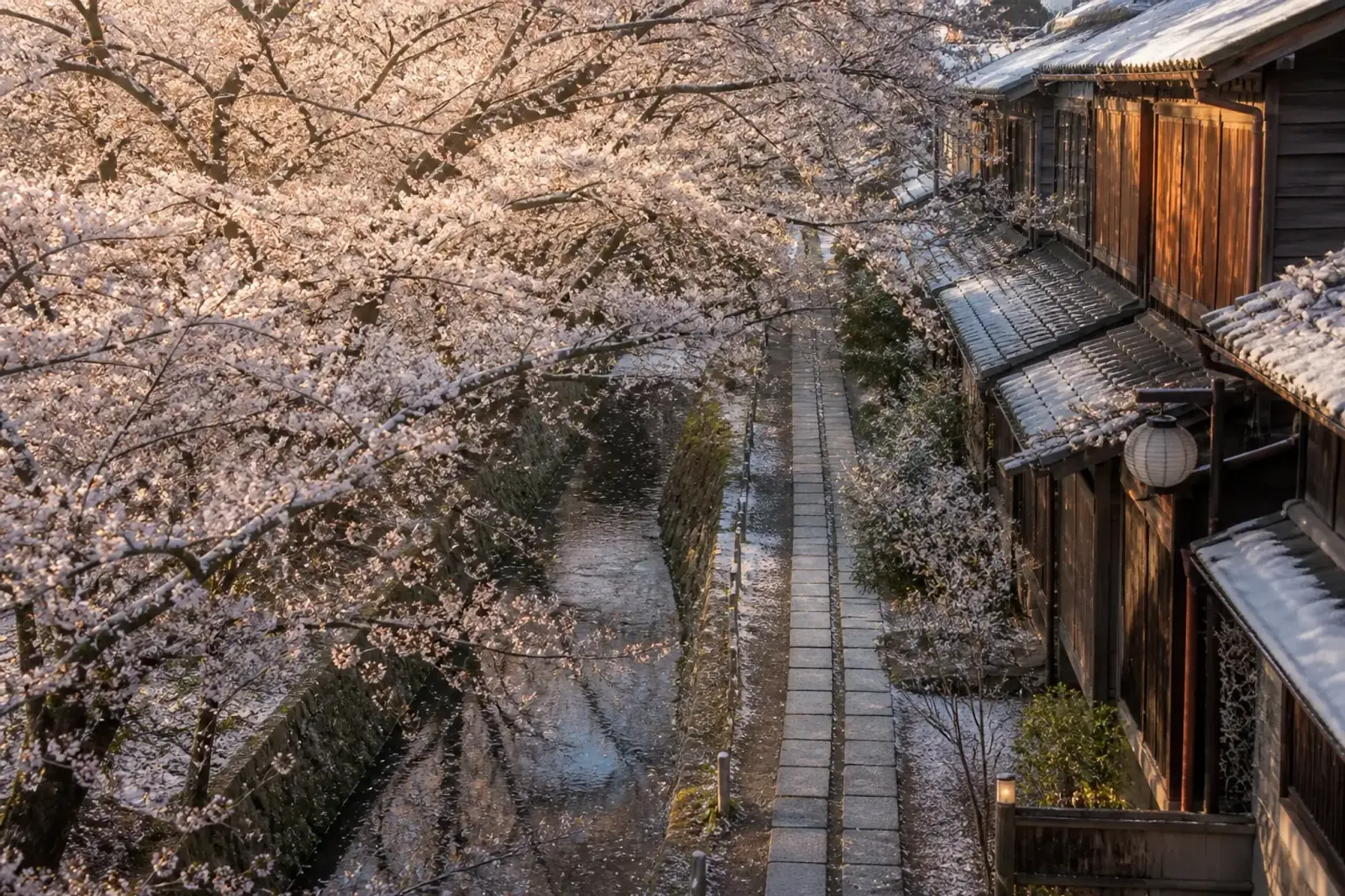
The plan bends with the calendar. A few adjustments matter more than all the rest.
Weekday over weekend where you can. Saturdays draw domestic day-trippers into the inner districts on top of international visitors, and the midday curve steepens accordingly. If your dates allow it, put your busiest anchor — Arashiyama or Fushimi Inari — on a weekday and save gentler programming for the weekend.
Cherry-blossom weeks. For 2026, a Japan Weather Corporation forecast cited by Kyoto Prefecture's official tourism site predicted opening around March 25 and full bloom around April 2 — a forecast, not a guarantee, and worth rechecking. These are among the hardest weeks in the city. Front-load everything, lean harder on early hours and evening illuminations where offered, and treat the congestion map as a daily instrument.
Non-obvious disruption days. The Kyoto Marathon brought large-scale traffic restrictions on February 15, 2026, closing and rerouting roads across the city for the day. Event days like this are invisible on a normal itinerary and decisive on the ground; confirm your dates against the city's event calendar before fixing a route.
The 2026 accommodation-tax change. Kyoto revised its accommodation-tax tiers on March 1, 2026, introducing a charge of up to ¥10,000 per person per night for stays where the accommodation fee is ¥100,000 or more. It does not change your schedule, but it does change your invoice at the top hotel and ryokan tier — worth knowing before it appears on the folio.
Where Timing Stops Working And Access Begins
Timing solves most of Kyoto. It does not solve all of it. There is a point at which the crowd has been beaten and the question becomes not when but whether you can enter at all — the tea room that takes guests by introduction, the temple viewing outside public hours, the evening in Gion with someone who is known there.
That is a different subject, and we treat it separately: how access works in Kyoto, what an introduction changes, and why some doors do not open to timing alone. For the full day laid out above, timing is enough. For the doors behind it, it is not.
Why Choose Japan Royal Service
Our team at Japan Royal Service builds Kyoto days the way this article describes them: around one anchor, one area, and the honest crowd curve of the week you are actually travelling. We are a Tokyo-headquartered concierge with our own chauffeured fleet, which means the private transportation that keeps you off the seized-up city buses is ours to coordinate, not subcontracted and hoped for.
Where a generic itinerary hands you a list of temples, we hand you a tailor-made itinerary timed against your specific dates, checked against the official congestion forecast, and routed to keep you out of the eleven-to-three crush. In our experience the value at this level is not access to famous places — it is the removal of friction and the quiet that timing buys. Discretion is assumed throughout: your dates, your routing and your identity stay with us.
Frequently Asked Questions
What Is The Worst Time Of Day To Visit Kyoto's Famous Sites?
Roughly 11am to 3pm in the central and marquee districts. Day-trippers have arrived, tour coaches have released their groups, and the queues are at their longest. Anchor each day early and spend that window on interiors, larger grounds, timed meals or a return to your base.
How Many Sites Should I Plan Per Day In Kyoto?
One anchor and one supporting stop — two considered places, not four. Kyoto's sites are spread across a wide basin and transit is slower than visitors expect, so a packed list produces a tired, transit-heavy day rather than a fuller one.
Should I Rely On Kyoto's City Buses In Peak Season?
Design the day around rail and short taxi hops instead, and keep the bus as a checked fallback. From March 20, 2026 the transport bureau's Pokeloke plus+ shows real-time bus crowding and vehicle location, so you can see whether to board or walk to the nearest station.
Are Three Days Enough For Kyoto?
Three days cover three areas properly — one anchor and one district each. They do not cover full Higashiyama by day, the northern mountains, Nijo Castle, or day trips to Nara. Name what you are skipping and decide deliberately rather than trying to see it all.
Does The 2026 Accommodation-Tax Change Affect Luxury Travelers?
Yes. From March 1, 2026, Kyoto charges up to ¥10,000 per person per night where the accommodation fee is ¥100,000 or more. It does not change your schedule, but it will appear on top-tier hotel and ryokan invoices.
If you would like your three days timed against your exact dates — cherry-blossom week, autumn colour, or a holiday weekend — reach our team privately via WhatsApp or LINE, or contact us here. We will build the day around the week you are actually travelling.