In this guide
- 01What Is Shuni-e (Omizutori) At Nigatsu-dō, And Why Do People Travel For It?
- 02Unbroken Since 752: The Record Comes Before The Fire
- 03How Do The Omizutori Torches Work, And What Are You Actually Seeing At Night?
- 04When Should You Watch Otaimatsu At Nigatsu-dō To Avoid The Worst Crowds?
- 05The Part Omizutori Is Named For Cannot Be Watched
- 06How Can You Experience Shuni-e Without Fighting The Night Crowds?
- 07A Practical Viewing Playbook: Dates, Times, And Where Crowds Break The Experience
- 08Cold Is Part Of The Rite: What To Wear On The Nigatsu-dō Hillside In March
- 09Pairing Shuni-e With Kyoto In Early March (The Smart One-Week Arc)
- 10How To Plan Shuni-e In Nara Without Guessing
- 11What We Can And Cannot Do Around Shuni-e (Plainly)
- 12Frequently Asked Questions
- 13Why Choose Japan Royal Service
At seven in the evening, the hillside above Nigatsu-dō feels like a held breath.
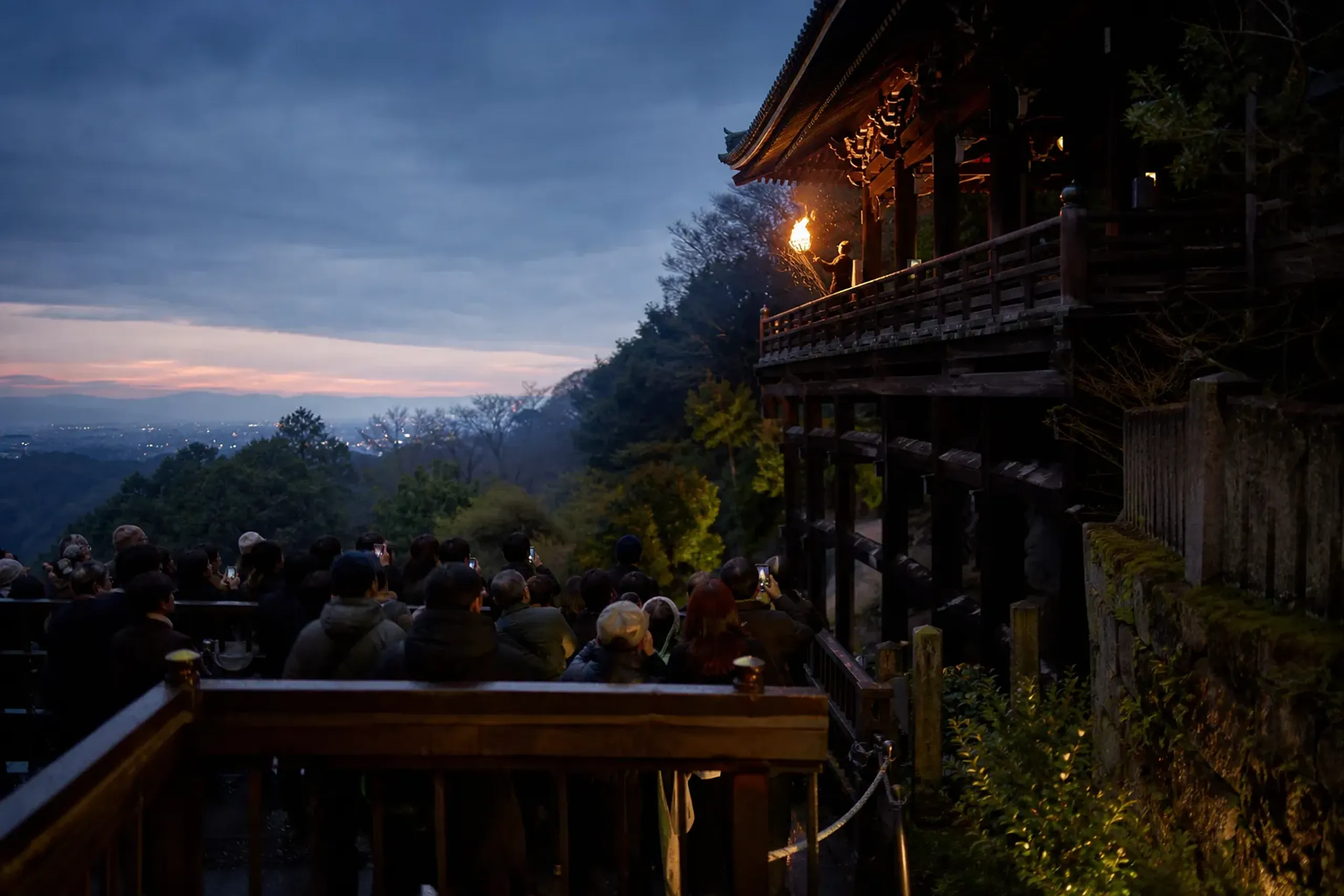
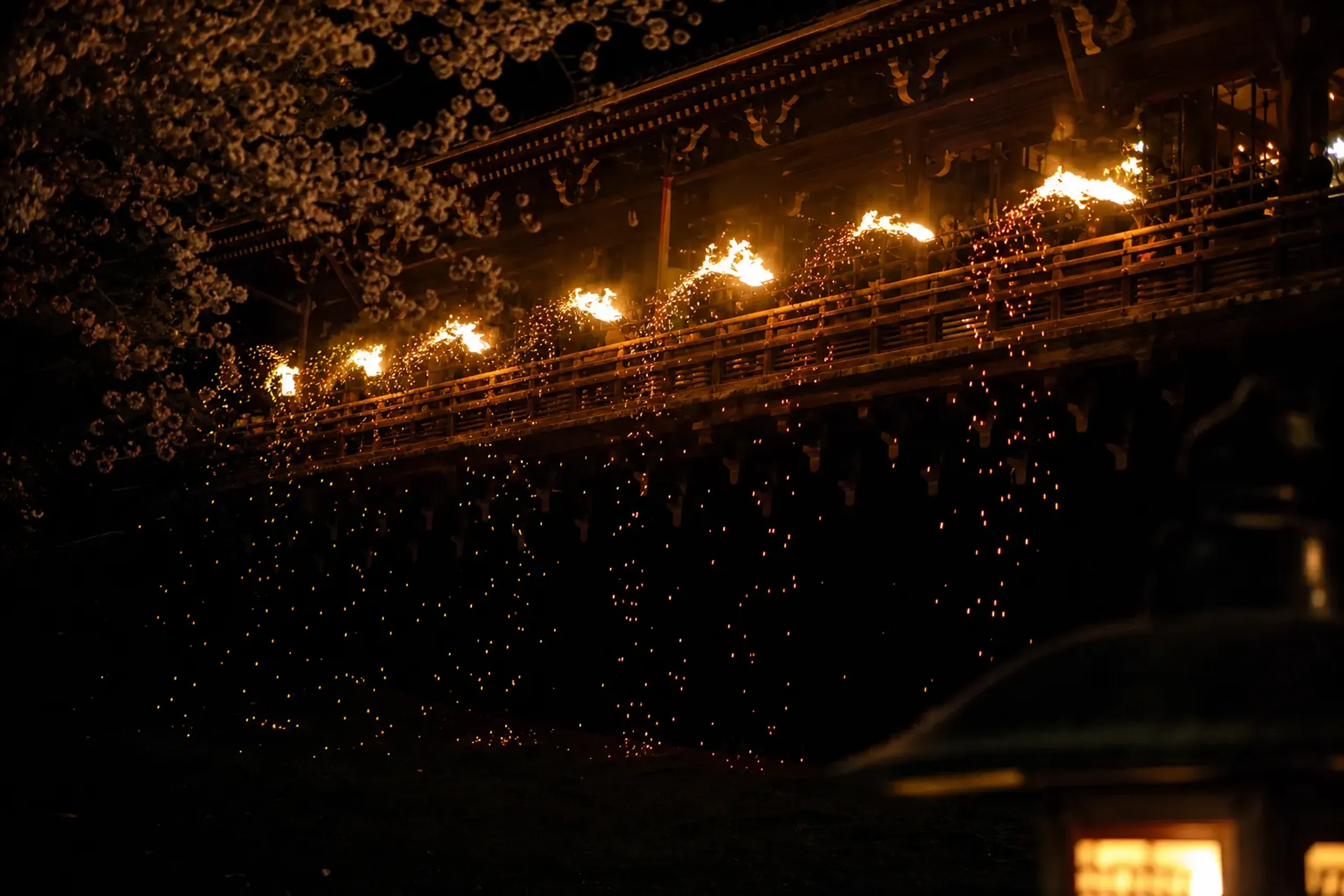
Cedar smoke drifts first, thin and sharp. Then the crowd stirs, because the balcony rail begins to glow—one torch, then another, then a streak of sparks falling like quick, dry rain.
It is easy to mistake this for a “fire event.” Big mistake.
What you are watching is a courtesy attached to a far older, far quieter act: Shuni-e, the repentance rite that has been performed here every year since 752.
What Is Shuni-e (Omizutori) At Nigatsu-dō, And Why Do People Travel For It?
Shuni-e is a Buddhist repentance rite held at Nigatsu-dō every year from March 1–14, performed before the Eleven-Faced Kannon, with prayers for peace, protection of the state, and a good harvest.
As of 2026, it has been done 1,275 times without a break. Not through civil war. Not after Tōdai-ji burned—twice. Not through the Meiji-era suppression of Buddhism. Not through 1945.
That record changes how the night reads. The torches are not the point. They are the outer edge of a practice that runs from daytime into the small hours, on the same wooden thresholds, in the same seasonal cold.
In our experience, luxury travelers respond to this kind of continuity because it cannot be replicated. It isn’t “premium.” It is simply still here.
Unbroken Since 752: The Record Comes Before The Fire
The Shuni-e began in 752, started by Jitchū, a disciple of Rōben (the founder of Tōdai-ji). That part is plain history.
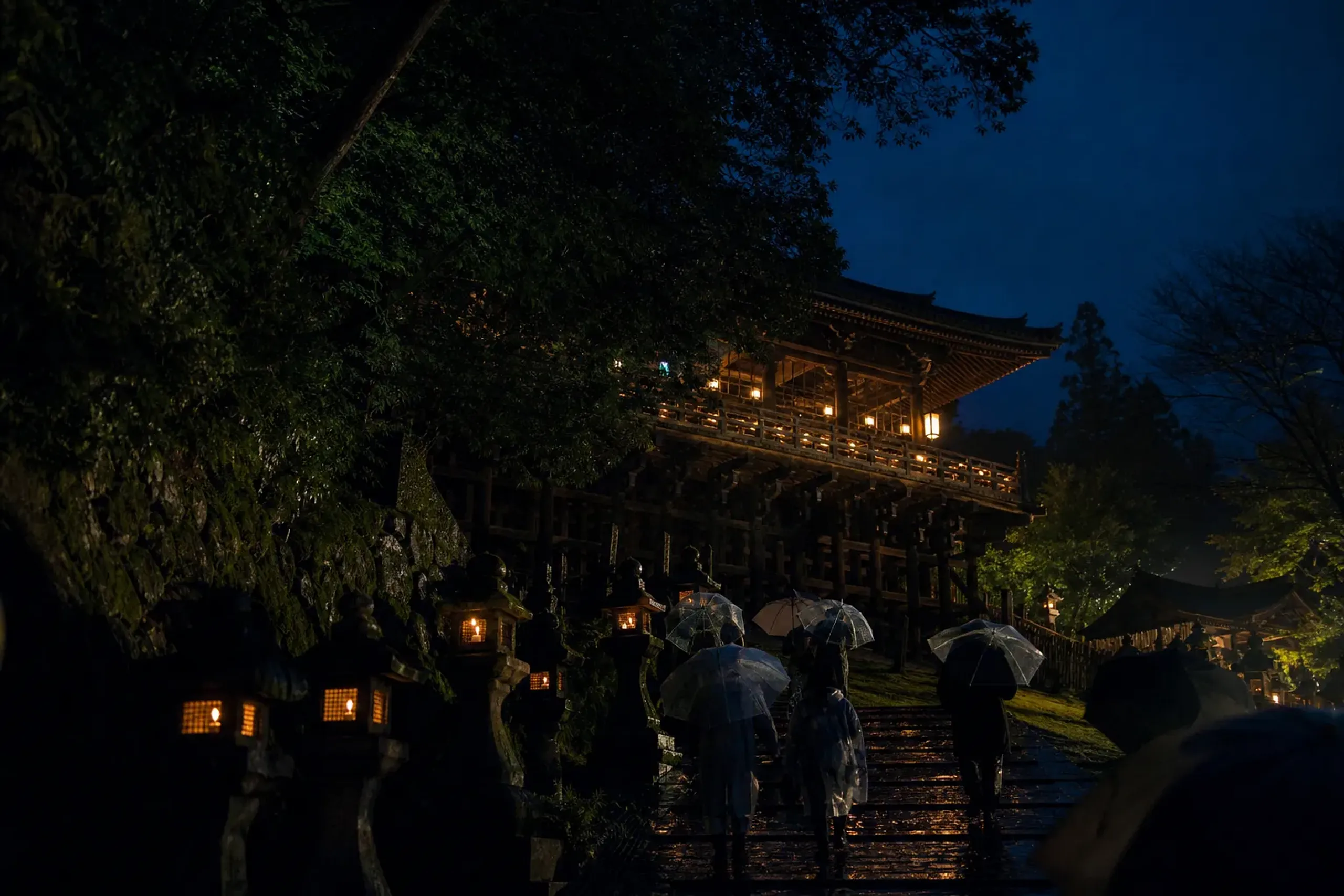
The harder thing to grasp is what “unbroken” means in a place like Japan, where temples have rebuilt, reorganized, and survived in ways outsiders rarely notice. Nigatsu-dō itself is a National Treasure, and the rite is performed before the hall’s Kannon—Ō-Kannon and Ko-Kannon—through the whole fortnight.
People often arrive expecting a show. They leave remembering a mood: the sound of feet on old boards, a hush that spreads even among strangers, and the sense that you are borrowing time from a calendar that does not belong to you.
That is the real draw. The fire just makes it visible from below.
How Do The Omizutori Torches Work, And What Are You Actually Seeing At Night?
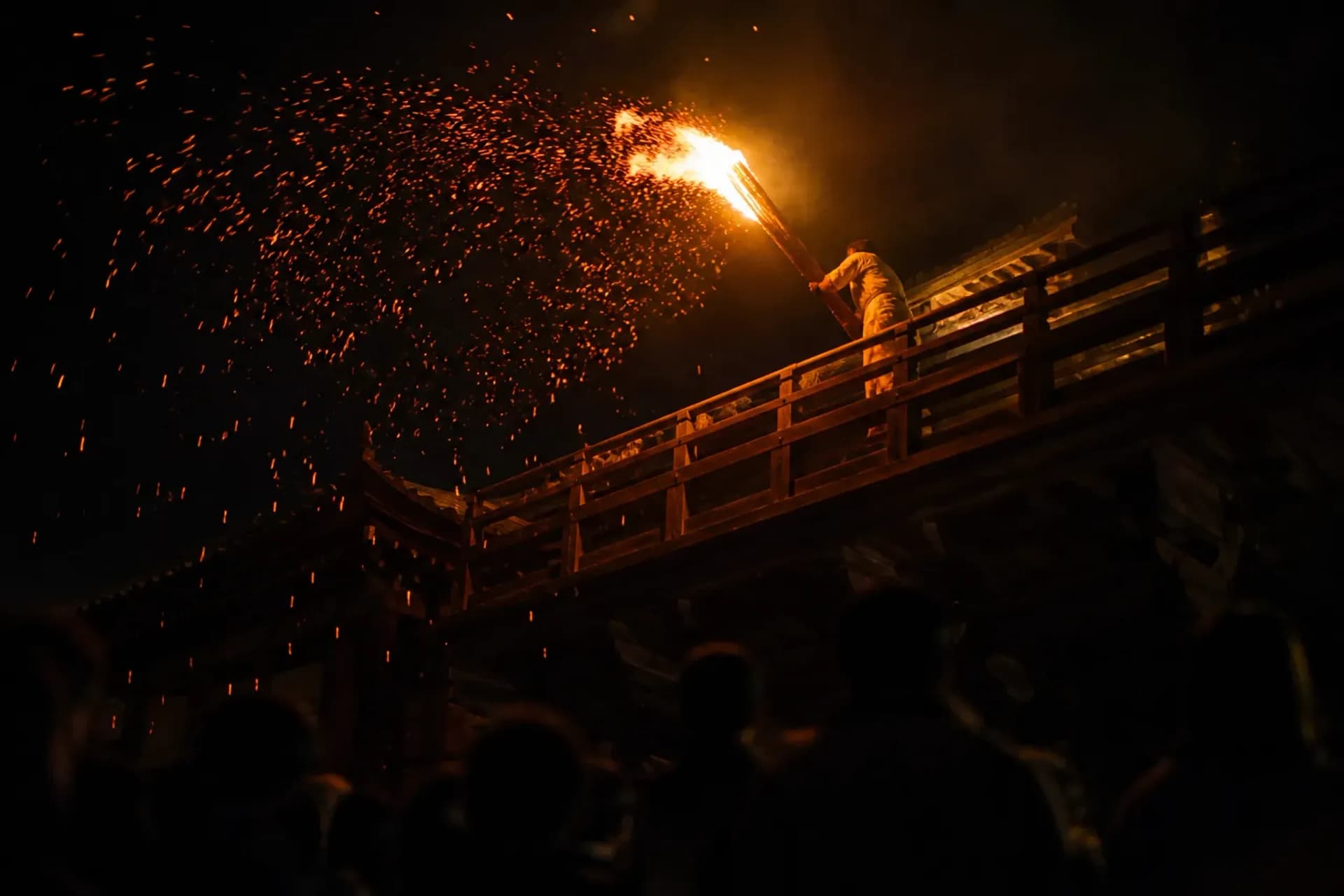
At night, you are watching dōji (lay attendants) carry handmade cedar-leaf torches on bamboo shafts along the Nigatsu-dō balcony to light the practitioners’ path.
The torches were originally practical. They lit the feet of the practitioners as they climbed to the hall. They walked.
The “running” you see today developed much later, as spectator numbers grew. It is performed as a gesture of thanks to those watching—an outward-facing moment appended to an inward rite.
That detail matters. It restores the correct scale: your view is brief, but the work is long.
Verified Torch Specs (Useful, But Not The Point)
Ordinary nights use torches of roughly six metres and about forty kilograms. They are substantial, even before the wind catches them.
On March 12, the larger kago-taimatsu appear—seven to eight metres, and sixty kilograms or more.
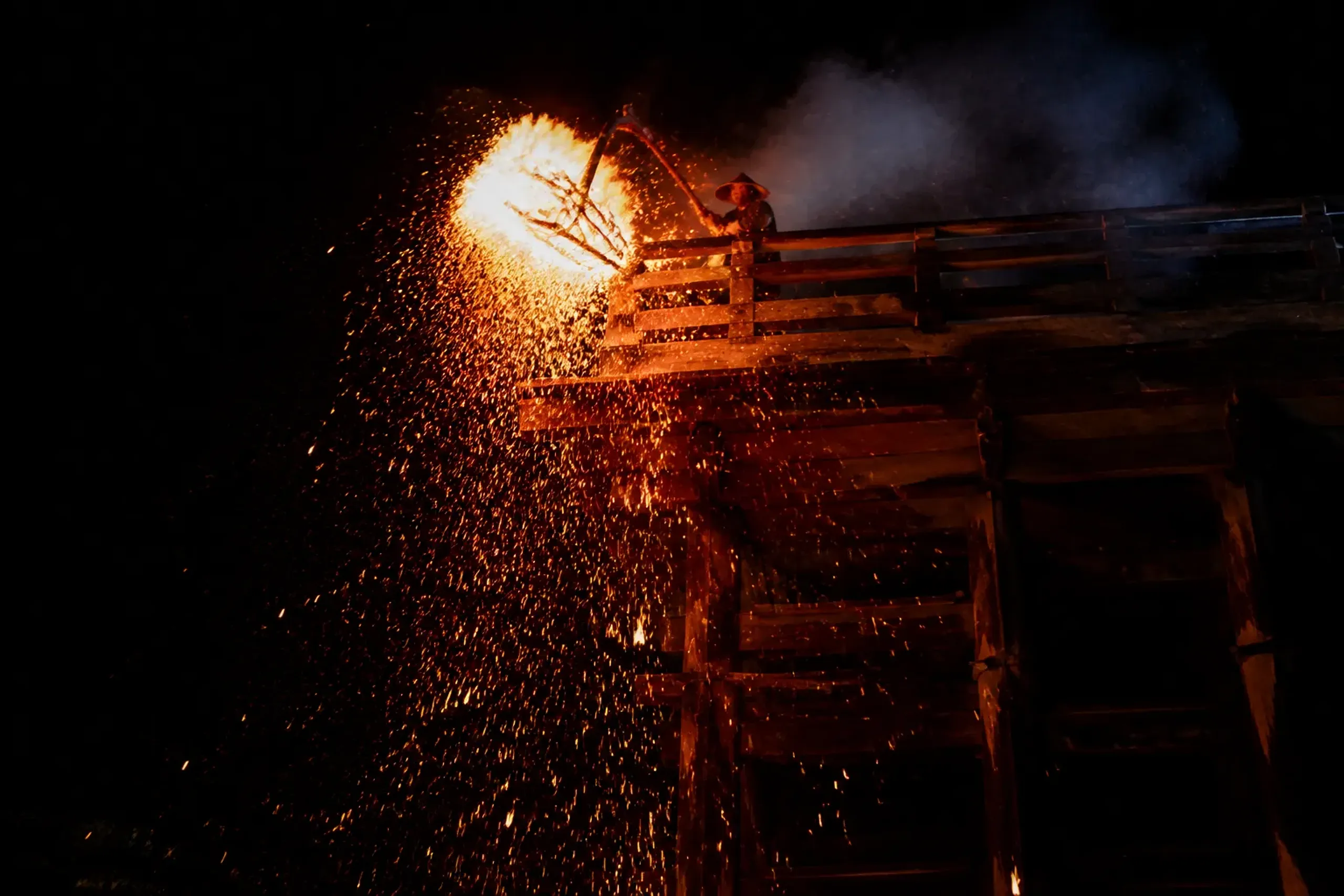
You feel it in the crowd first, a collective lean forward, then the sudden brightness as sparks scatter over the lawn.
Sparks falling on spectators are said to bring freedom from illness, and fallen cedar leaves are kept as charms. This is a belief held by many attendees, not a health claim, and not a promise.
When Should You Watch Otaimatsu At Nigatsu-dō To Avoid The Worst Crowds?
Choose a weekday night in the first week (March 1–11) for the best balance of visibility and breathing room.
Here is the trade: March 12 is famous, and it is also the hardest night to watch well. Crowds swell through the fortnight, weekends are busy, and the 12th draws the heaviest pressure of all.
Movement is managed. One-way. Brief. If you choose the 12th for the biggest torches, you often get the shortest look.
On earlier weekday nights, the torch run is shorter—about twenty minutes—but you have a real chance to arrive calmly, stand with some space, and leave without feeling pushed along.
Verified Torch Times (Plan, Then Add Margin)
- March 1–11: 19:00, ten torches, around twenty minutes
- March 12: 19:30, eleven torches, around forty-five minutes
- March 14: 18:30
Arrive early anyway. Late arrivals can be directed to a second viewing area, and when that fills, the torches may not be visible at all.
Key fact: If the primary and secondary viewing areas fill, you can be present at Nigatsu-dō and still see no torches.
The Part Omizutori Is Named For Cannot Be Watched
Omizutori proper happens after March 12, around 1:30 a.m.
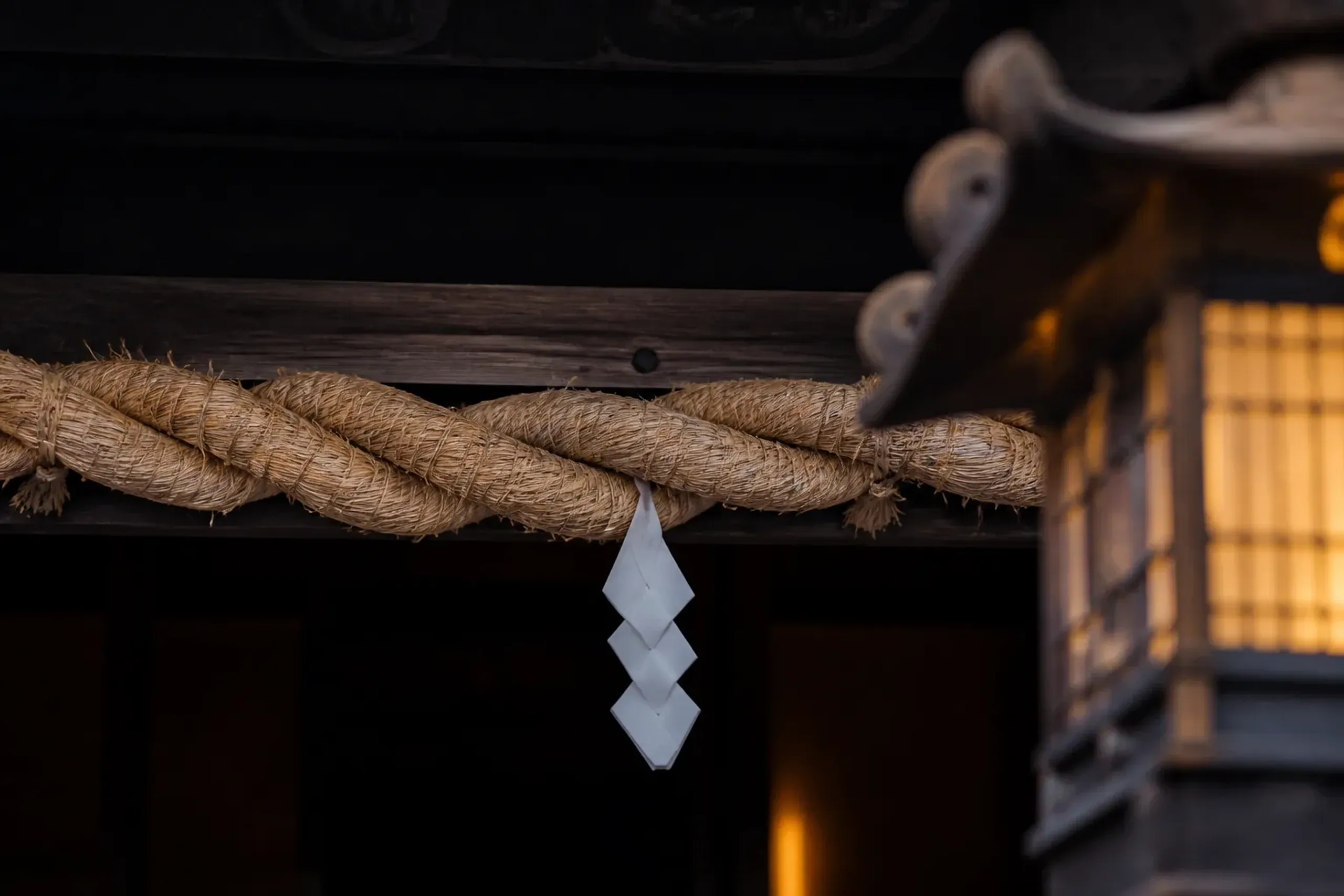
On March 13, when water is drawn from the Wakasa-i well and offered to Kannon.
And here is the most important sentence in this journal: the drawing of water itself cannot be watched by the public, and no arrangement changes that.
The water is drawn inside the Akai-ya, a Kamakura-period building sealed year-round with shimenawa as a sacred boundary. Only the practitioners enter, and only during the Shuni-e.
This is not a limitation to “solve.” It is the point of the rite’s integrity. In our experience, clients trust a concierge most when we name the closed doors as clearly as the open ones.
How Can You Experience Shuni-e Without Fighting The Night Crowds?
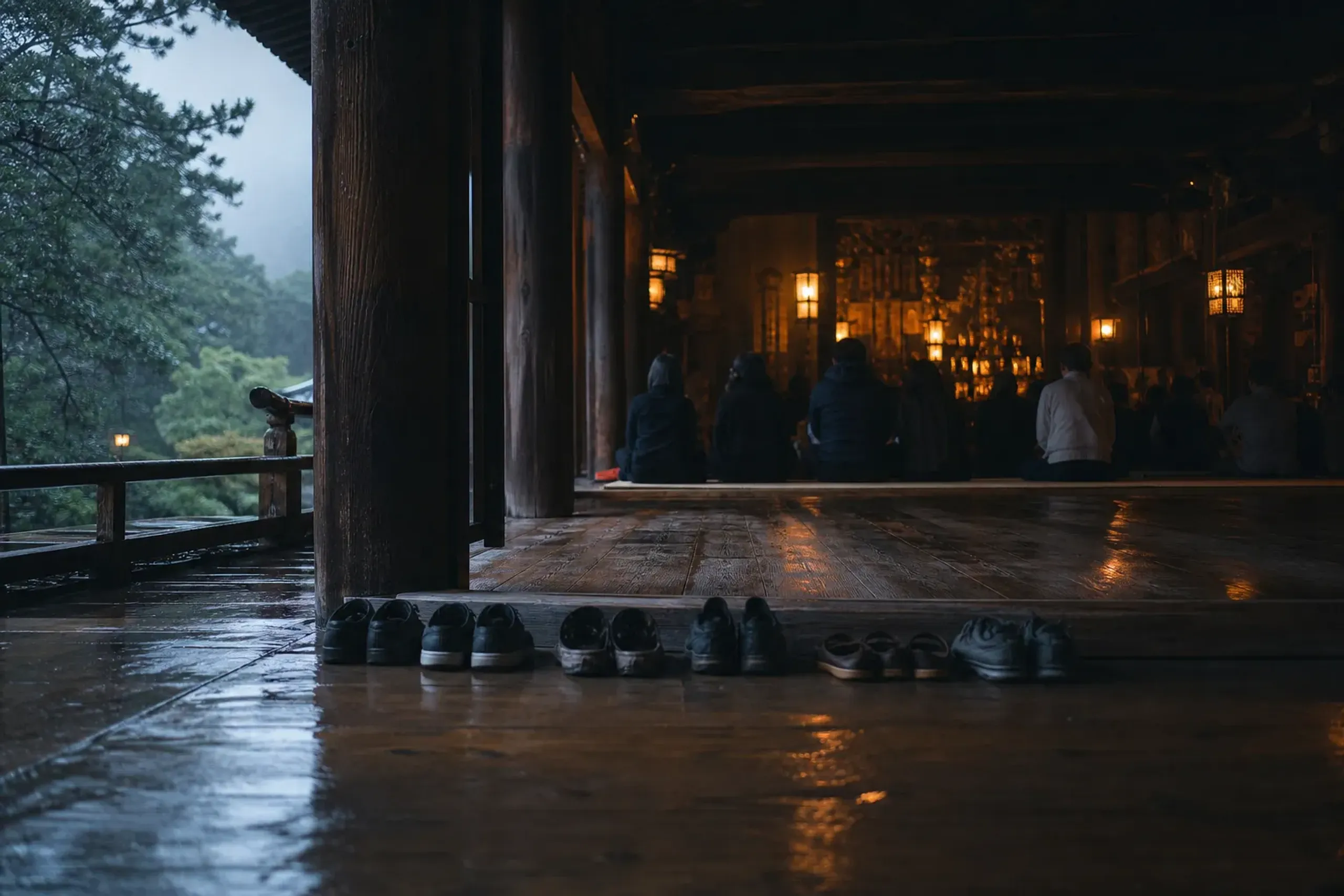
Visit Nigatsu-dō during the day, remove your shoes, and observe Shuni-e practices from the outer sanctuary in a quieter, more attentive setting.
The night lasts twenty minutes on many dates. The day is where time slows down.
Rites run from daytime into the small hours across the full March 1–14 period. During the day, visitors may enter Nigatsu-dō, take off their shoes, and watch from the outer sanctuary while the practices continue inside the hall’s rhythm.
Daytime access arrangements can change year to year. We always confirm the current rules close to the date, because a plan that ignores restrictions is just optimism.
Etiquette That Keeps The Hall Quiet
Follow what the space asks for. Soft steps. Phone away. And no casual photography during rites unless it is clearly permitted on-site.
Outside, the air is bright and ordinary. Inside, it is dim, and the sound of your own breathing suddenly feels too loud.
A Practical Viewing Playbook: Dates, Times, And Where Crowds Break The Experience
For most HNW travelers, the best approach is simple: daytime observance first, then a weekday torch night for atmosphere.
The viewing areas below Nigatsu-dō are finite. Spectators gather on the lawn below the hall inside bamboo fencing and in the plaza. When these fill, visitors are directed to a second viewing area.
When the second area fills, visibility can drop to zero. That is why we focus on pacing and timing rather than “famous nights.”
A Clear Choice For Most Guests
If you want the postcard image, you will be tempted by March 12. Resist, unless you are comfortable with crowds and a short, one-way viewing window.
If you want the feeling—the smoke, the wood, the slope, and enough space to stand without bracing your shoulders—pick a weekday in the first week. It is the calmer bet.
Cold Is Part Of The Rite: What To Wear On The Nigatsu-dō Hillside In March
Nigatsu-dō sits on an exposed hillside, and early March nights in Nara are cold enough to thin your patience if you dress lightly.
Wear insulation you can stand in for an hour. Gloves help. So does a scarf that does not shed.
This is not a fashion moment. It is a waiting moment.
We plan warmth the same way we plan timing: quietly, and in advance, so the evening stays focused on the hall.
Pairing Shuni-e With Kyoto In Early March (The Smart One-Week Arc)
Early March is a natural window to pair Nara’s Shuni-e with Kyoto, because the rite’s March 1–14 calendar aligns with the kind of late-winter, early-spring pacing Kyoto rewards.
Nara at night, Kyoto by day, works well for many guests. It keeps transitions short and reduces the sense of “racing” that can creep into Japan’s Golden Route if you treat every place as a checklist.
If you want context before the hillside, the Nara National Museum scheduled a feature exhibition in 2026—Treasures of Tōdaiji’s Omizutori Ritual (Feb 7–Mar 15, 2026)—which frames the ritual through objects and history. It is a strong companion for travelers who prefer understanding to spectacle.
For a Kyoto angle in the same seasonal window, we often point readers to multi-day on-call pacing in Japan as a mindset: fewer pivots, more depth, and room to adjust when crowds or restrictions shift.
How To Plan Shuni-e In Nara Without Guessing
Plan for March 1–14, prioritize weekday nights in the first week, and treat daytime observance at Nigatsu-dō as the main experience rather than an add-on.
We base planning on published schedules and on-the-ground restriction notices, because Shuni-e crowd management can change. Nara City has published restriction guidance for visiting Tōdai-ji Shuni-e (Otaimatsu), and Tōdai-ji publishes its annual events calendar listing Shuni-e (Omizutori) for March 1–14.
Logistics matter even more than usual here.
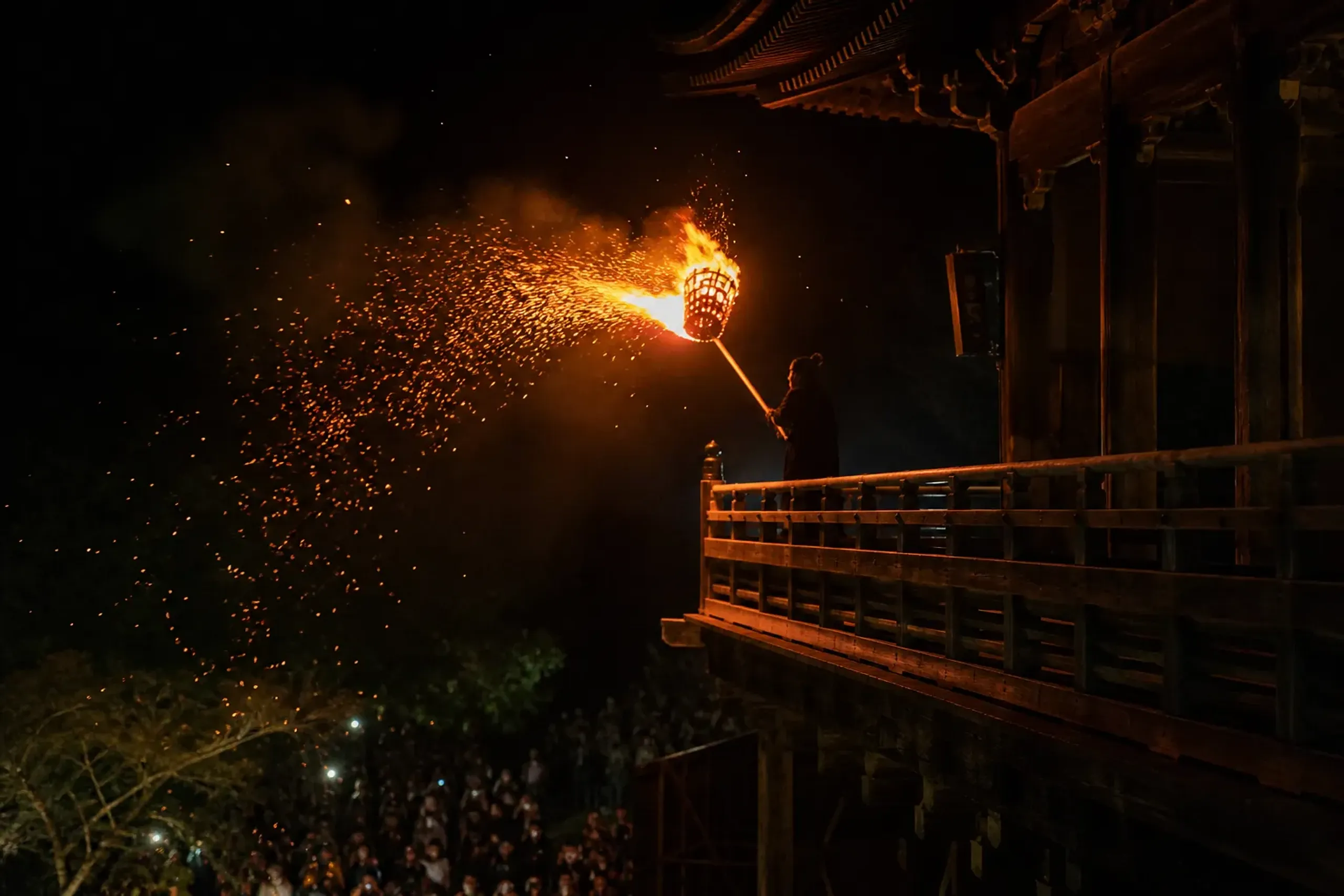
You are moving in the dark, in cold air, with one-way foot traffic and fixed start times.
For transport comfort, the first mention matters: our guests often rely on private transportation with a chauffeur so arrival and departure feel calm, even when public routes compress.
What We Can And Cannot Do Around Shuni-e (Plainly)
Japan Royal Service can provide guiding and transfers, support private prayer, and offer tailored guidance on access arrangements around Shuni-e based on current published rules and local restrictions.
We also state the boundary clearly. Always.
No one can arrange public entry to the Akai-ya or viewing of the water-drawing at the Wakasa-i well. The space is sealed year-round with shimenawa, and only the practitioners enter during Shuni-e.
This clarity protects your time. It also protects the rite.
Frequently Asked Questions
Is Omizutori At Tōdai-ji A “Fire Festival”?
Omizutori is not a festival; it is part of Shuni-e, a repentance rite performed at Nigatsu-dō from March 1–14 before the Eleven-Faced Kannon.
The torch-running is what many visitors see, but it sits alongside daytime and overnight practices that carry the rite’s meaning.
Can Visitors Watch The Water Being Drawn During Omizutori?
No—visitors cannot watch the water-drawing at the Wakasa-i well, and no arrangement changes that.
Omizutori proper happens around 1:30 a.m. on March 13 inside the Akai-ya, a sacred space entered only by practitioners during Shuni-e.
Which Night Is Best For Seeing The Torches At Nigatsu-dō Without Extreme Crowds?
A weekday night in the first week (March 1–11) usually offers the best visibility and comfort.
March 12 has the largest torches and the heaviest crowds, with one-way movement and brief viewing even for those who arrive early.
Can I Observe Shuni-e During The Day, Not Just At Night?
Yes—visitors may be able to enter Nigatsu-dō during the day, remove shoes, and observe practices from the outer sanctuary.
Because daytime access rules can change, we confirm current arrangements close to your dates.
Why Choose Japan Royal Service
Luxury travelers choose Japan Royal Service when they want Japan explained with discipline, not dressed up with exaggeration.
We work well for HNW guests because we translate complexity into calm: fixed ritual dates, shifting crowd controls, and the kind of “closed means closed” boundaries that deserve respect. Quietly done.
Discretion is not a slogan for us. It is method—confidential itineraries, low-profile movement, and a tone that fits an active Buddhist rite rather than turning it into content.
And when you want cultural depth, we follow the grain of Japan: shokunin-level seriousness in the details, and the humility to say, plainly, what cannot be accessed.
For private coordination, reach our team at Japan Royal Service privately via WhatsApp or LINE, or contact us here.
If you share your dates and party size, our concierge will respond with a tailored approach built around Shuni-e’s real constraints.