In this guide
- 01Why Pacing Is The Real Luxury At Tokyo Disney Resort
- 02Queue-Compression Stack: What Each Tokyo Disney “System” Does (And Does Not Do)
- 03The Comfort-First Blueprint: Ride Window, Then A Cool Seated Reset
- 04How To Transition After The Priority Pass Ends (After Aug 31, 2026)
- 05Priority Seating As A Cooling System (Not Just A Meal)
- 06Late-Entry Tickets As A Luxury Pacing Tool (Summer 2026)
- 07Quiet Romance After Disney: Lantern Streets, Ryokan Stillness, And One Wildly Japanese Night
- 08Private Transportation As The Comfort Multiplier (Before And After The Park)
- 09How To Book Disney Premier Access And Priority Seating (Official Method)
- 10FAQ: Tokyo Disney Comfort Planning For HNW Travelers
- 11Why Choose Japan Royal Service
A Tokyo Disney day can be magical. It can also be punishing.
Heat, queues, and long stretches on your feet turn an expensive holiday into a test of patience. That is not what a honeymoon, anniversary, or rare family trip is meant to feel like. Not even close.
Our team at Japan Royal Service approaches Tokyo Disney Resort the way we approach Japan itself: with pacing, restraint, and discretion. The goal is not “more rides.” It is more comfort. More time seated. More time cool. More time together.
This guide explains a comfort-first framework built around Disney Premier Access (DPA) and pre-booked Priority Seating, especially as the free 40th Anniversary Priority Pass ends after August 31, 2026. The thesis is simple: ride window, then a cool sit-down reservation. Repeat.
Why Pacing Is The Real Luxury At Tokyo Disney Resort
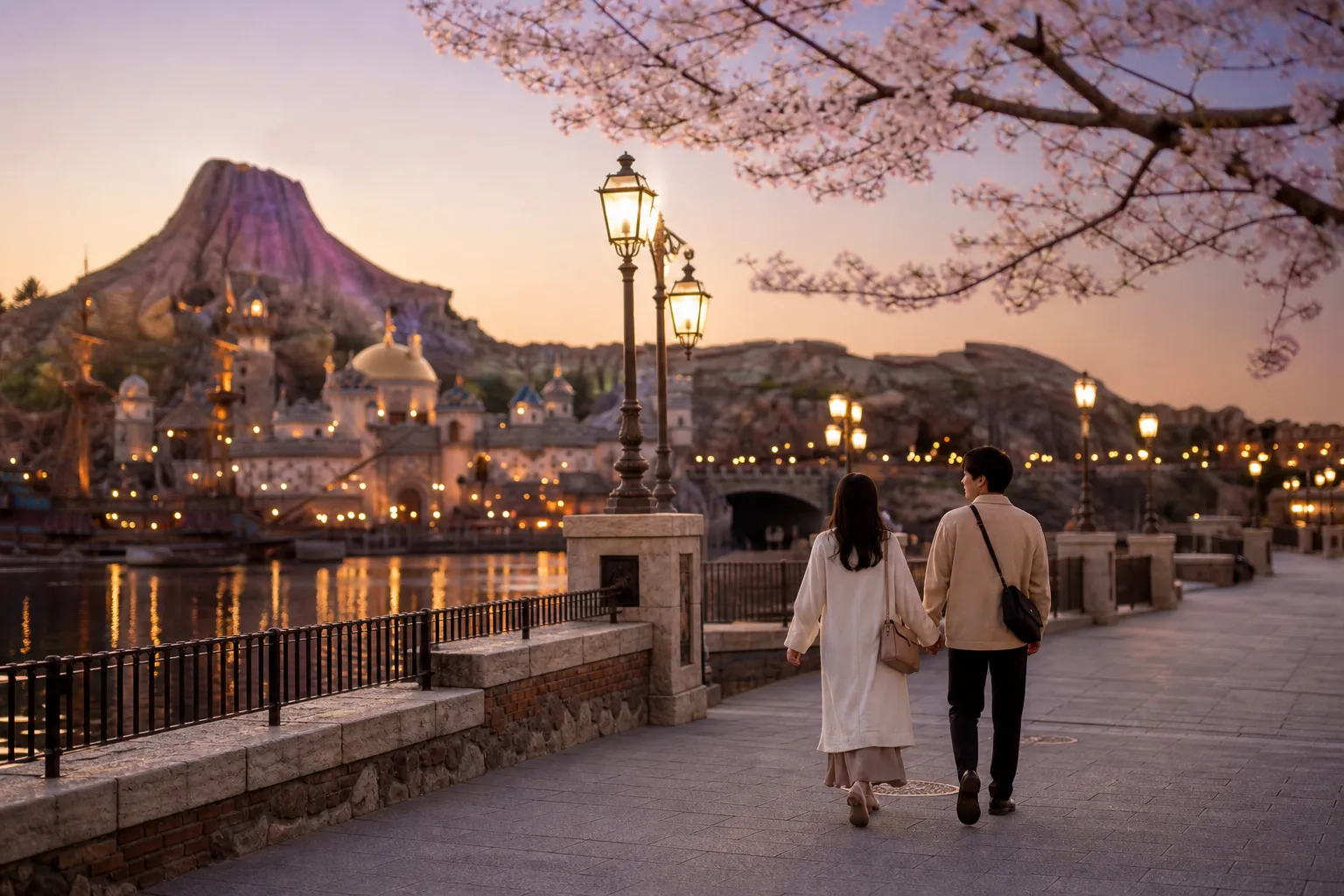
When the day is paced, the park feels like a date—rather than a race.
You can buy admission. You cannot buy back energy.
In our experience, the hardest part of Tokyo DisneySea or Tokyo Disneyland is not choosing attractions. It is managing the hours between them—walking in sun, standing in lines, searching for a seat, then repeating the cycle until you feel wrung out.
A comfort-first plan treats the park like a series of small “chapters.” Each chapter has a peak (your timed attraction) and a recovery (a shaded or air-conditioned reset). Tiny breaks. Big difference.
This matters most for couples traveling for a milestone, or parents traveling with children. It also matters for HNW guests who simply prefer calm to commotion. A full day can still feel quiet. If you design it that way.
The Emotional Itinerary Most Guests Forget To Design
Many itineraries end at the park gate. Big mistake.
Tokyo after dark can be gentle and cinematic—lantern-lit streets, small counters, a slow drink, a final stroll. When your Disney day is paced, your evening stays intact, and the next morning does not start with recovery fatigue.
That is where a Japan trip becomes coherent: a high-energy theme park day that still leaves room for wabi-sabi nights, soft conversation, and the kind of silence you only notice when you are not exhausted.
Queue-Compression Stack: What Each Tokyo Disney “System” Does (And Does Not Do)
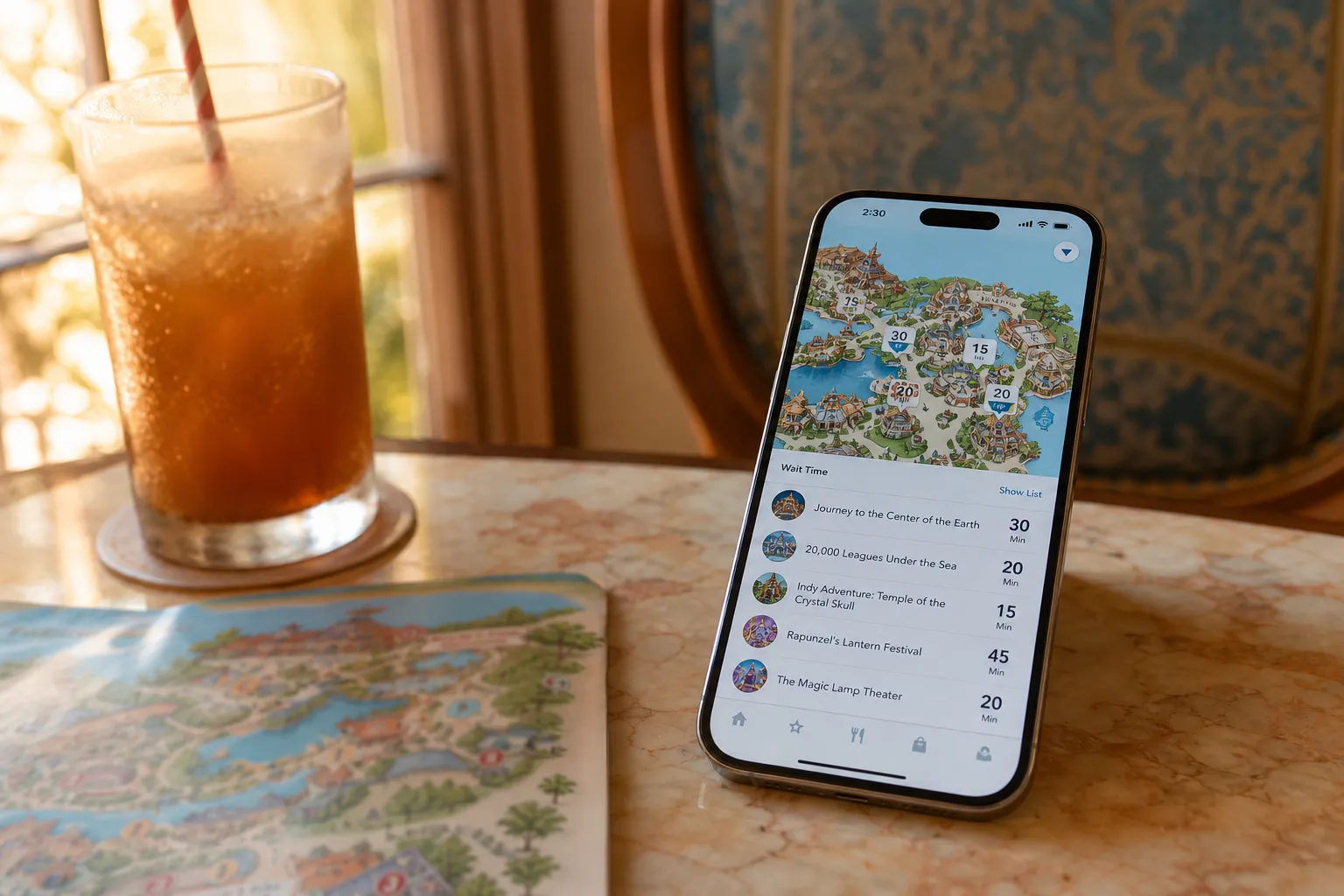
A calm plan starts with clarity about what each system actually does.
Tokyo Disney Resort is app-driven. That is the reality.
The comfort advantage comes from knowing which tool reduces waiting, which tool reduces uncertainty, and which tool reduces decision fatigue. Guests often mix them up, then wonder why the day feels frantic.
Here is the clean, no-drama stack. Simple language. Clear boundaries.
- Disney Premier Access (DPA): A paid service that lets you specify a time to experience an eligible attraction with a shorter wait time, purchased via the Tokyo Disney Resort app after entering the park. Tokyo Disney Resort also offers Premier Access for parades/shows (designated viewing area/seat depending on the offering). DPA is about timed certainty and less standing.
- 40th Anniversary Priority Pass: A free app-based service that will no longer be available after August 31, 2026. Until then, it can reduce waits for certain experiences, but it is not a long-term pacing anchor for 2026+ planning.
- Priority Seating (Restaurants): An advance reservation system for restaurants in the parks or Disney hotels, designed to minimize waiting. On the same dining date, the system limits bookings to one time slot in each meal category (breakfast, lunch, dinner). Priority Seating is your cool seated reset.
Key fact: Disney Premier Access is a post-entry action. Happy Entry guidance reinforces that after entering the park, guests can purchase DPA, make an Entry Request, or get a Standby Pass.
What This Means For HNW Guests In 2026
The free Priority Pass ending after August 31, 2026 changes the texture of planning. Quietly.
It nudges more guests toward paid and app-timed systems, which increases the value of a plan that does not chase every attraction. Our view is blunt: compress the worst queues, then protect your body temperature and mood with a seated reservation.
Comfort compounds. Stress also compounds. Choose your compounding.
The Comfort-First Blueprint: Ride Window, Then A Cool Seated Reset
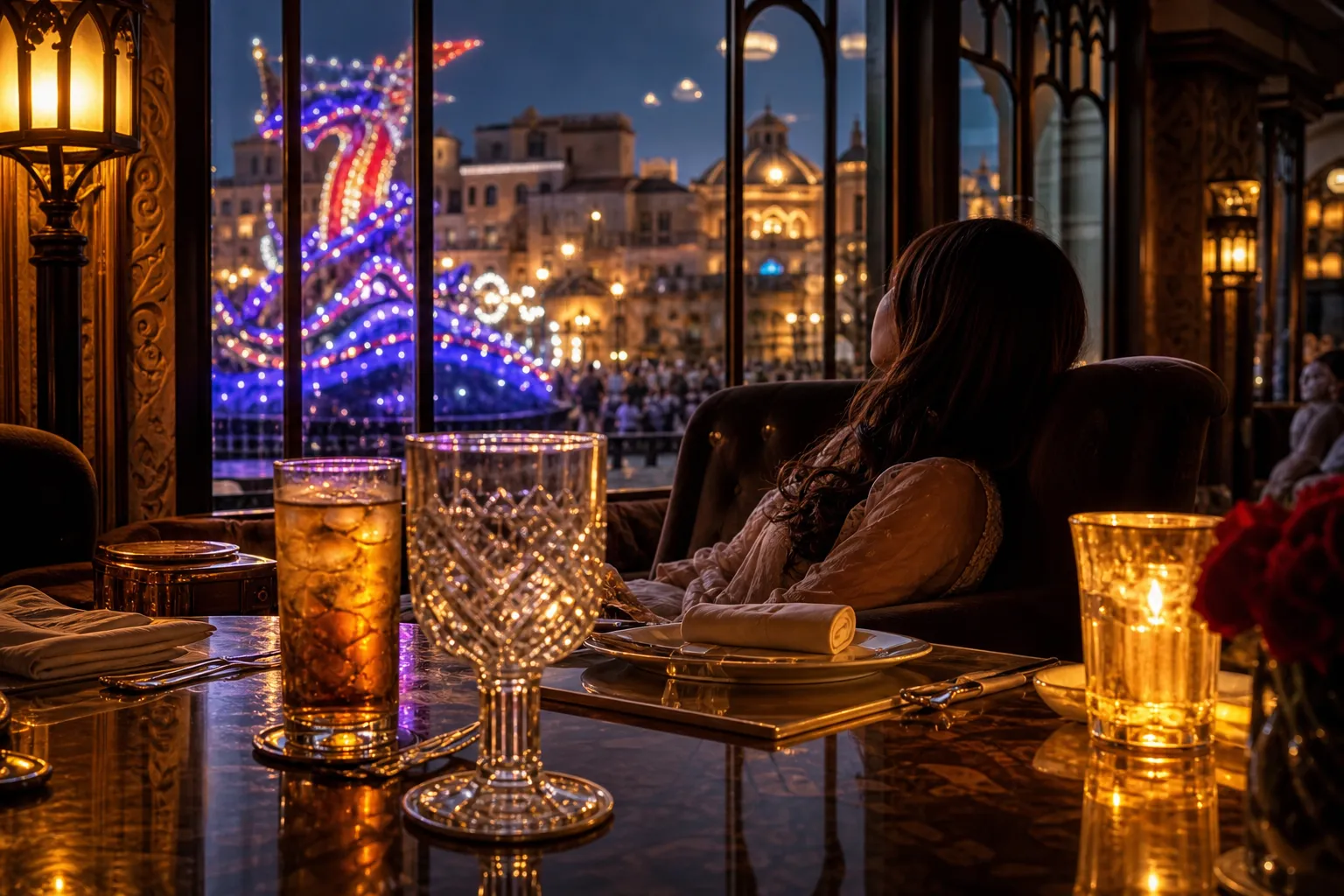
The luxury move: compress a queue, then sit down somewhere cool—on purpose.
This is the backbone. Nothing fancy.
Pick a DPA return time for a high-demand attraction. Experience it with a shorter wait. Then move directly into a planned “cool chapter”: a Priority Seating meal, a lounge-like pause, or an indoor show if that is what your party can enjoy without feeling rushed.
Repeat two or three times, then stop. Yes—stop. Ending the day while you still feel elegant is the point.
A Practical “Chapter” Template You Can Reuse
We design chapters that feel almost boring on paper. Perfect.
- Chapter start: A short walk. No cross-park marathon.
- Peak: One timed experience (often DPA for an attraction, or a Premier Access parade/show viewing).
- Reset: Priority Seating or an indoor, seated break.
- Soft buffer: One low-friction activity nearby—shopping, a photo moment, a gentle attraction with manageable waits.
The buffer is where couples feel like they are “on holiday,” not on a schedule. It is also where families avoid the spiral that starts with hunger and ends with a meltdown.
How Many Chapters Fit In A Day?
For HNW travelers, we rarely aim for maximum density. That is the wrong metric.
Two to four chapters can be plenty, depending on heat, crowds, and how your evening plans look. When you plan a lantern-lit dinner later, the park becomes the first act—not the entire play.
How To Transition After The Priority Pass Ends (After Aug 31, 2026)
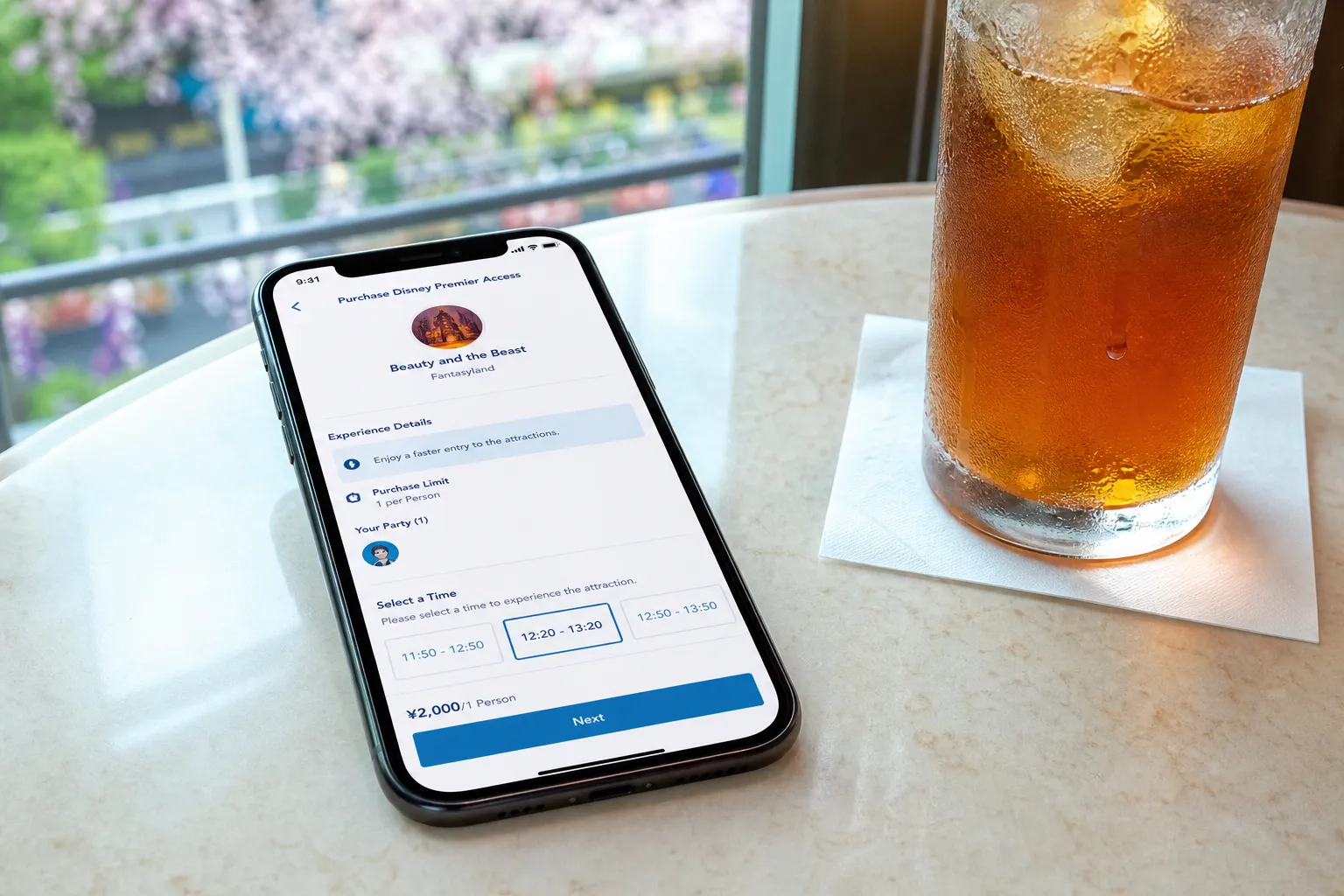
If your trip is after August 31, 2026, do not build your plan around the 40th Anniversary Priority Pass. It will be gone.
That does not mean you must accept brutal waits. It means your plan should lean harder on two things you can control: (1) timed queue compression via DPA for select priorities, and (2) reserved seated breaks via Priority Seating to keep your body and mood stable.
In our experience, the “post-Priority Pass” guest wins by choosing fewer headline attractions and treating meals like strategic anchors. Romantic trips benefit most. A calm lunch at the right time can rescue the entire afternoon.
The New Luxury Skill: Choosing What Not To Do
HNW guests are used to choice. Tokyo Disney tests that habit.
When every attraction looks tempting, the day becomes reactive—checking the app, changing directions, standing anyway. A comfort-first plan has a small, intentional wish list, with real rest built in.
Wabi-sabi applies here. Restraint reads as taste.
Priority Seating As A Cooling System (Not Just A Meal)
Most guests treat reservations as a bonus. We treat them as climate control.
Priority Seating can be booked in advance for restaurants in the parks or Disney hotels, and it is designed to minimize waiting. The system limit matters: one booking per meal category (breakfast, lunch, dinner) on the same dining date. That rule shapes the day.
Use your single lunch slot well. Use your single dinner slot even better. Those two sit-down blocks can turn a packed park into something that feels privately paced.
How To Use The Meal-Category Limit Without Feeling Boxed In
You are not trapped by the rule. You are guided by it.
- Lunch is often the “heat break” that protects your afternoon energy.
- Dinner is the emotional close: slower, more romantic, less about logistics.
If your party thrives on early mornings, breakfast can be the anchor. If not, skip it, sleep in, and arrive with composure.
Late-Entry Tickets As A Luxury Pacing Tool (Summer 2026)
Some of the smartest Disney days start late. Truly.
Tokyo Disney Resort offers limited-period “After 3 Summer Passport” (entry from 3:00 p.m.) and “After 5 Summer Passport” (entry from 5:00 p.m.) tickets from July 1, 2026 through September 14, 2026, for entry to either Tokyo Disneyland or Tokyo DisneySea. For heat-sensitive travelers, that can be a deliberate choice, not a compromise.
Less midday sun. Less standing. A shorter window that still fits one or two big priorities, plus a slow dinner. That is often the right shape for a honeymoon.
Option A: Full-Day Entry With A Midday Reset
Best when you want a classic day, but refuse to suffer through it.
- Plan 2–4 chapters.
- Use Priority Seating as the “cool core.”
- Protect the evening: a gentle return, then dinner outside the resort if desired.
Option B: After 3 / After 5 Entry For A Cooler, Smaller Disney Story
Best when summer heat is the enemy and you prefer a polished half-day.
- Arrive later, dressed for comfort, not endurance.
- Use DPA for one headline attraction or a key parade/show viewing.
- Place one Priority Seating reservation as your anchor.
Quiet Romance After Disney: Lantern Streets, Ryokan Stillness, And One Wildly Japanese Night
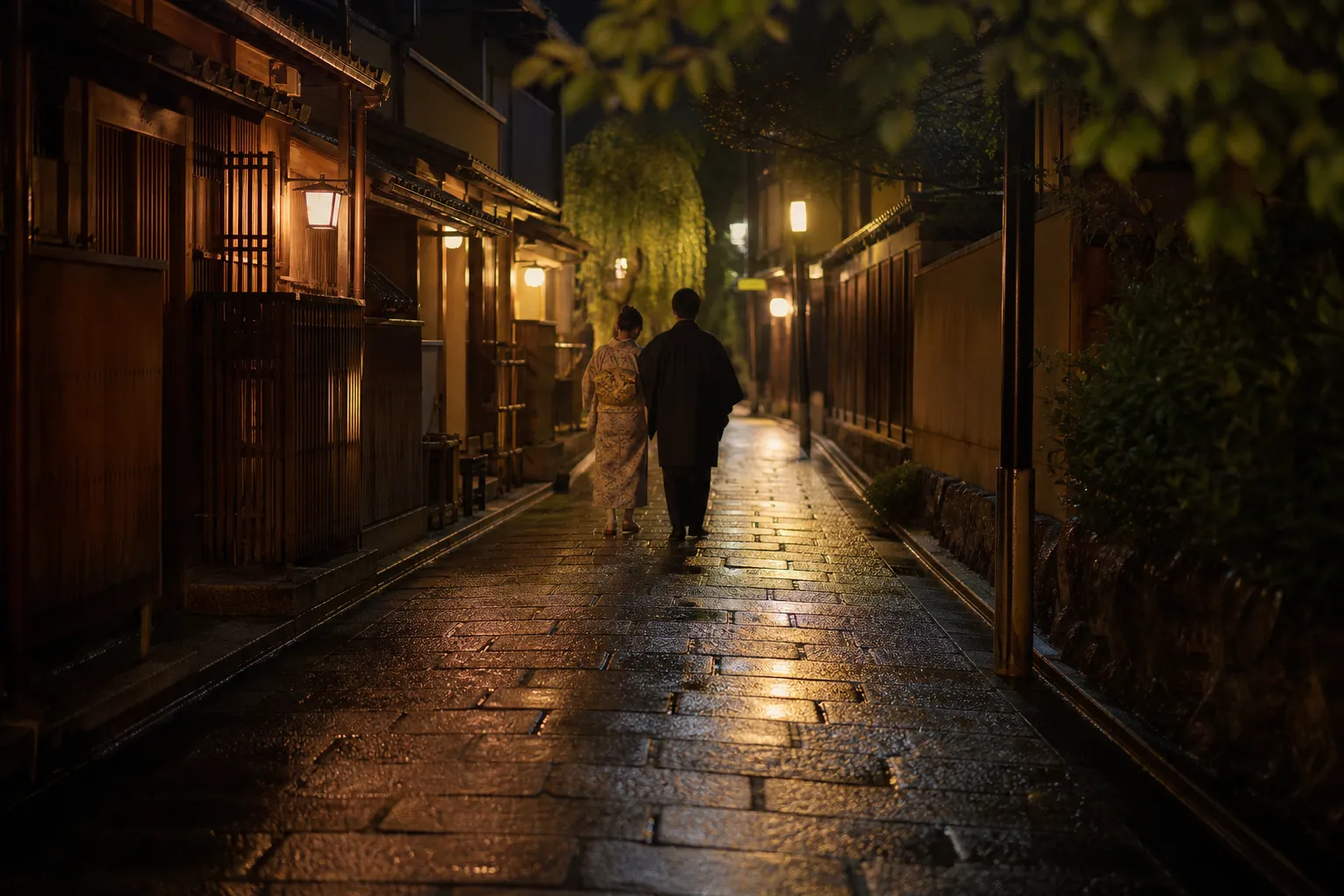
After the park, Japan can turn quiet—lantern light, slow steps, and a softer pace.
A great Disney day should not steal the rest of Japan from you.
For couples, we often shape the trip so the park is followed by a softer register: a calm bar seat in a hotel, a late walk through an atmospheric district, then a return to a room that feels insulated from the city. Tokyo can do that. Kyoto does it even more easily.
And when you want one night that feels impossible to replicate at home, we look to traditions that are both real and rooted.
Ukai (Cormorant Fishing) As The Hero Night Experience
Ukai is not nightlife. It is older than that.
In Gifu City, cormorant fishing on the Nagara River is a long-running summer tradition, watched from boats on the water as the fishing masters work by firelight. The feeling is elemental—dark river, flame, motion, then quiet again.
For the right guest, it becomes the emotional counterweight to Tokyo’s bright intensity. One night of fire on water. Then back to silence.
Where This Fits In A HNW Itinerary
We like to place ukai after a high-stimulation day. It resets the nervous system.
Tokyo first, then a night in a quieter place, then culture with fewer people and more meaning. Hidden-Japan logic, applied gently. Your photos change, too—less neon, more ember-light.
Private Transportation As The Comfort Multiplier (Before And After The Park)
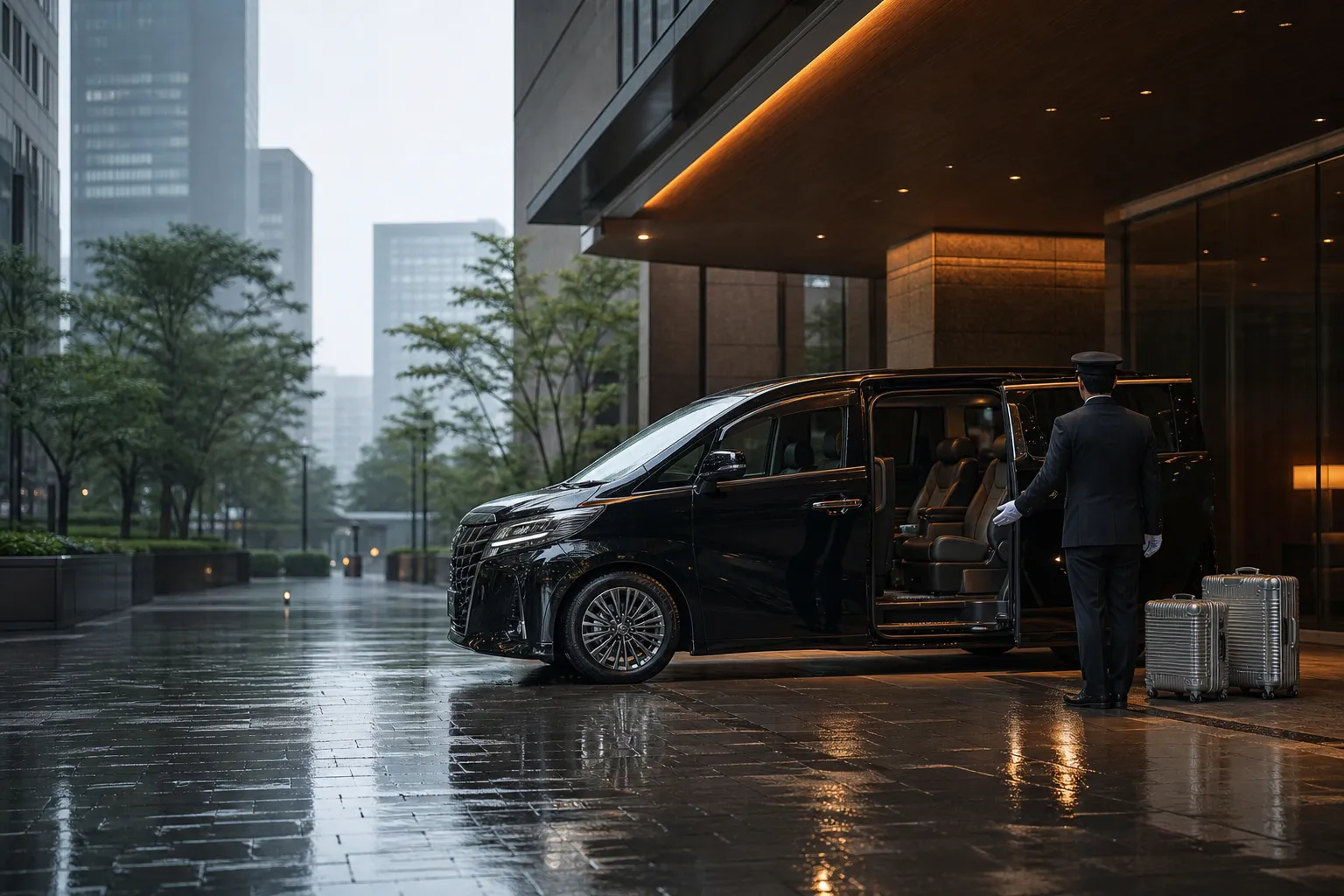
The day ends better when the return is quiet, private, and temperature-controlled.
The park is only part of the stress equation. Transit is the other half.
When guests leave a long day and still face crowded platforms, transfers, and decision fatigue, the cost is emotional. The next morning starts late, the mood gets sharp, and the trip narrows.
We often see the opposite when guests use private transportation: a calm departure, a controlled temperature, space to decompress, and a return that feels like a continuation of the day’s care rather than a sudden drop into chaos.
Fleet Fit: Matching Vehicle To The Day’s Mood
Vehicle choice is not only status. It is ergonomics.
- Lexus LM 500: for guests who want a truly private, lounge-like cabin feel.
- Toyota Executive Alphard: a steady favorite for couples and families who value quiet space.
- Mercedes V-Class: when you want executive group comfort and clean lines.
For larger parties, options like a Hiace Grand Cabin, Mercedes Sprinter Van, or Toyota Coaster (microbus) can keep everyone together without turning the day into logistics theater.
How To Book Disney Premier Access And Priority Seating (Official Method)
Tokyo Disney planning rewards the correct sequence. Miss it, and you will feel it.
Disney Premier Access (DPA): What To Do
- DPA is purchased through the Tokyo Disney Resort app.
- You can purchase it after entering the park.
- It lets you specify a time for an eligible attraction with a shorter wait time.
For questions, contact our concierge.
Priority Seating: What To Know
- Priority Seating reservations are made in advance through Tokyo Disney Resort’s official reservation system for eligible restaurants in the parks or Disney hotels.
- On the same dining date, the system limits bookings to one time slot in each meal category (breakfast, lunch, dinner).
For questions, contact our concierge.
FAQ: Tokyo Disney Comfort Planning For HNW Travelers
What Is The Best Luxury VIP Airport Transfer Service In Tokyo For HNW Travellers?
For many HNW guests, the “best” is the service that protects privacy, time, and composure from the moment you land. Our team at Japan Royal Service focuses on discreet meet-and-move routing and a calm cabin environment so your Tokyo days start clean, not frayed.
How Do I Book The Official Tokyo Disney VIP Tour As A Foreigner?
Tokyo Disney Resort offers an official VIP Tour, and eligibility and availability can vary by policy and date. For tailored guidance on what is official, what is realistic for your travel dates, and how it fits a comfort-first plan, contact our concierge team privately.
Is Disney Premier Access Worth It In 2026?
If your goal is comfort, DPA can be worth considering because it lets you choose a return time and experience eligible attractions with a shorter wait. It is most valuable when you use it to compress your worst queue, then go straight into a seated reset.
What Happens After The Free Priority Pass Ends On August 31, 2026?
Tokyo Disney Resort states the 40th Anniversary Priority Pass will no longer be available after August 31, 2026. For trips after that date, plan around what remains: DPA timing, realistic attraction priorities, and pre-booked Priority Seating to protect rest.
How Do You Keep A Tokyo Disney Day Romantic?
Design the day like a date, not a scoreboard. Keep walking loops short, use a sit-down reservation as a midday “cool room,” and end early enough to enjoy Tokyo after dark—quiet bars, a slow dinner, and a return that does not feel like recovery.
Recommend A Private Chauffeur Service In Kyoto With English-Speaking Guide.
Kyoto is where pacing becomes visible: early shrine visits, short drives, and carefully chosen neighborhoods that feel hushed at night. Our team at Japan Royal Service builds days that respect walking cadence and privacy, then connects them into a wider tailor-made itinerary.
Why Choose Japan Royal Service
Luxury travelers have more Japan information than ever. That is not the problem.
The problem is orchestration: how to move through high-demand places without friction, how to protect your name and itinerary, and how to make modern Japan—new flagship hotels, bright city nights—flow naturally into older Japan: shokunin studios, small rituals, and hidden-Japan doors that open only through the right introductions.
Our team at Japan Royal Service works in the quiet spaces where travel becomes personal. We plan with discretion first, then layer in craft-forward encounters with shokunin, wabi-sabi moments of restraint, and pacing that keeps your trip elegant even on the busiest days.
For private coordination, reach our team privately via WhatsApp or LINE, or contact us here.
Considering a fully private day? See our Tokyo Disney Resort private VIP tour guide for the official rates, what is included, and how the booking works.