In this guide
- 01Why A Tokyo Evening Runs On Four Different Clocks
- 02The Early Hours: Galleries And Programming Before Dinner
- 03Dinner: A Narrower Window Than You Expect
- 04Bars: The Layer Tokyo Does Better Than Almost Anywhere
- 05What Is Tokyo Like After The Trains Stop?
- 06How Do You Sequence Two Or Three Layers In One Night?
- 07Where You Sleep Decides What Your Night Can Be
- 08The Night Nobody Wants To Go Out
- 09Frequently Asked Questions
- 10Why Choose Japan Royal Service
A couple we know arrived in Tokyo, booked a much-discussed dinner for eight-thirty, and considered the evening handled. The meal ran two hours and finished well. Then they stood on the pavement outside, unsure what came next, and went back to the hotel. They had booked a dinner and mistaken it for a night.
Tokyo's evening is not a single event. It is stratified by the hour, and each layer runs on its own clock. Galleries and early programming close while the sun is still deciding. Dinner has narrower hours than most visitors expect. Bars open into the space dinner leaves behind, and the late city belongs to a different set of rules entirely. Understanding how the layers stack is the difference between an evening and a meal.
Our team at Japan Royal Service builds these evenings for guests who want more than a table. This is how the hours work, and how to put two or three of them together without rushing.
Why A Tokyo Evening Runs On Four Different Clocks
Most visitors treat the evening as beginning at eight. That single assumption removes an entire layer from the night. The early hours — galleries, small performances, private viewings — are already closing by the time a late diner sits down.
Think of a Tokyo night in four bands. First the early cultural hours, which end sooner than you would guess. Then dinner, with its own tight window. Then bars, the layer the city does better than almost anywhere.
And finally the late hours, after the trains stop, when the streets quiet and a different Tokyo comes forward.
They do not flow evenly into one another. A late dinner eats the bar layer. A gallery visit at seven is impossible. Building a good evening means respecting each clock rather than assuming they all wait for you.
The Early Hours: Galleries And Programming Before Dinner
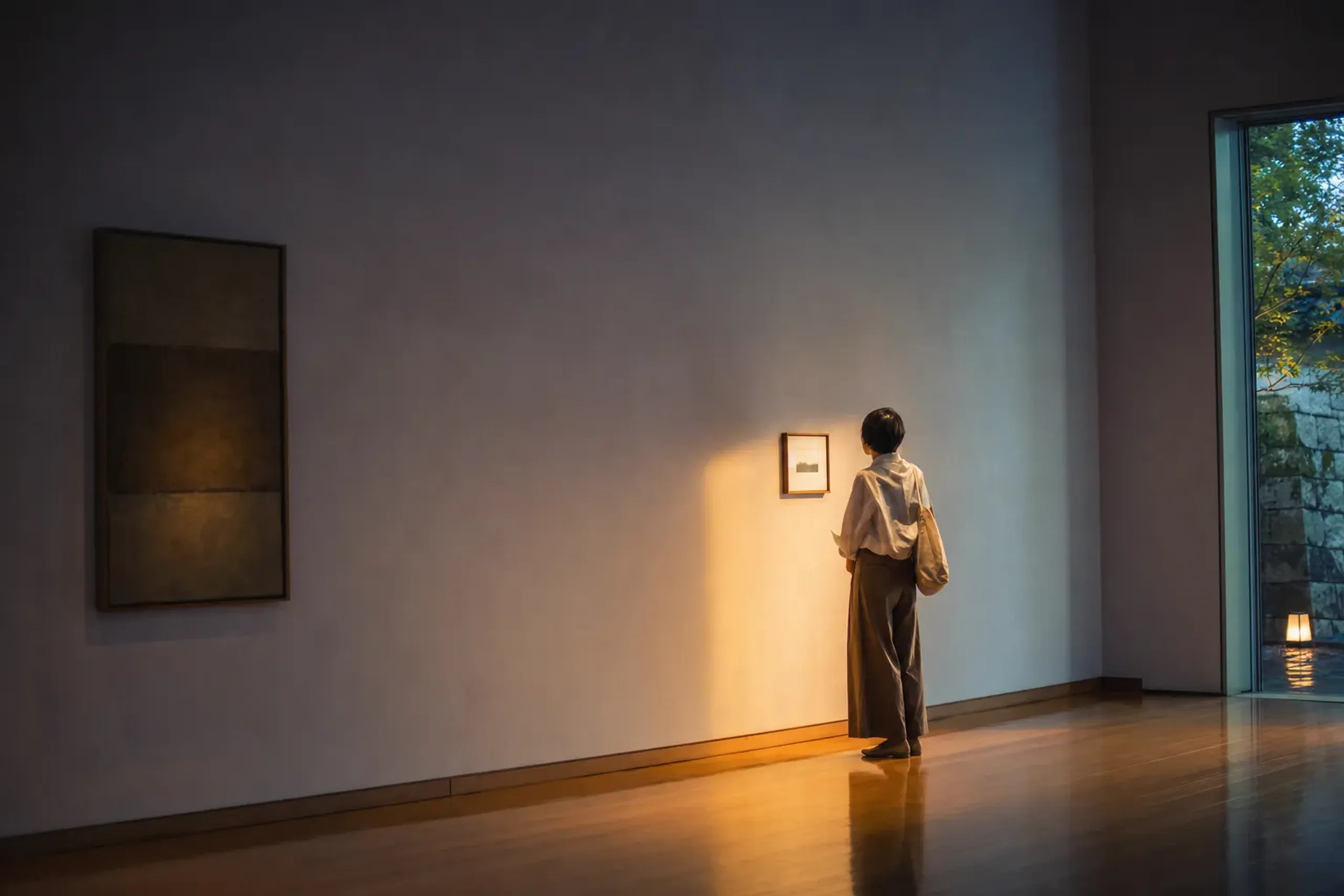
The first layer is the one visitors miss most often. Tokyo carries a dense population of small commercial galleries — single-room spaces, dealer showrooms, artist-run rooms tucked into upper floors of unremarkable buildings. Many keep hours that end in the early evening. Some close entirely on days you would not predict.
This is where an evening can begin quietly and well. A private viewing arranged in advance, a dealer showing work outside public hours, a small performance that starts before the dinner rush rather than after it. The register here is calm. You are looking, not consuming, and the pace is slower than anything the rest of the night offers.
The catch is timing. This layer closes early. If you plan to eat at eight and see art after, you have already lost it. The early hours reward guests who treat the evening as starting at five or six, not those who wait for dark. A short viewing, then dinner, is a common and satisfying shape — but only if the sequence runs in that order.
Tokyo's larger cultural programming plays to the same clock in its own way.
Kabuki, for instance, runs matinee and evening bills at major houses, and the Japan Arts Council publishes schedules well ahead — a Kabuki run at the New National Theatre, Tokyo is listed for October 2026, to name one anchor. An evening built around a performance is not built around dinner. The show fixes the hour, and everything else arranges itself around it. For guests who want art rather than a table, this is the truest early layer.
Dinner: A Narrower Window Than You Expect
Dinner deserves brief treatment here, because two of our published guides already own it. The point specific to evenings is timing, not access.
Tokyo's dinner hours are narrower than most visitors assume. Many of the best rooms seat once, or seat early and turn once. A booking at eight or eight-thirty is not a relaxed choice — it is a decision to end the useful part of your evening around ten-thirty, with the bar layer compressed and the early layer already gone. A seven o'clock table changes the entire arithmetic of the night.
Here, the single rule is this: choose your dinner hour for the evening you want, not the meal alone. A late booking closes off everything after it.
Key point: In Tokyo, the dinner hour you choose decides the rest of the night. An early table keeps the bar layer open. A late one ends the evening at the table.
Bars: The Layer Tokyo Does Better Than Almost Anywhere
If Tokyo has a single genius after dark, it is the bar.
Not the loud room — the small one. And this is the layer most misunderstood by visitors who arrive expecting a scene.
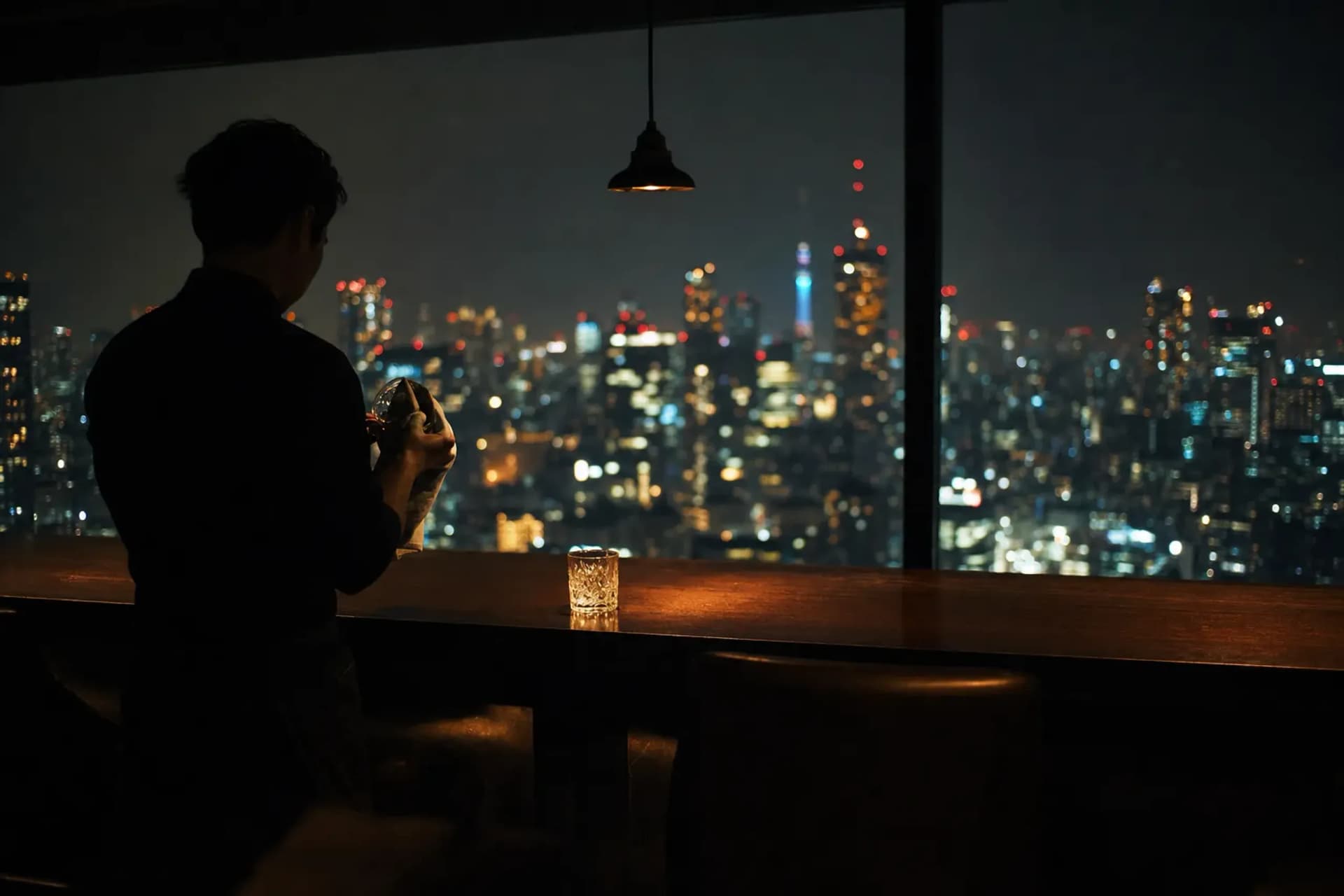
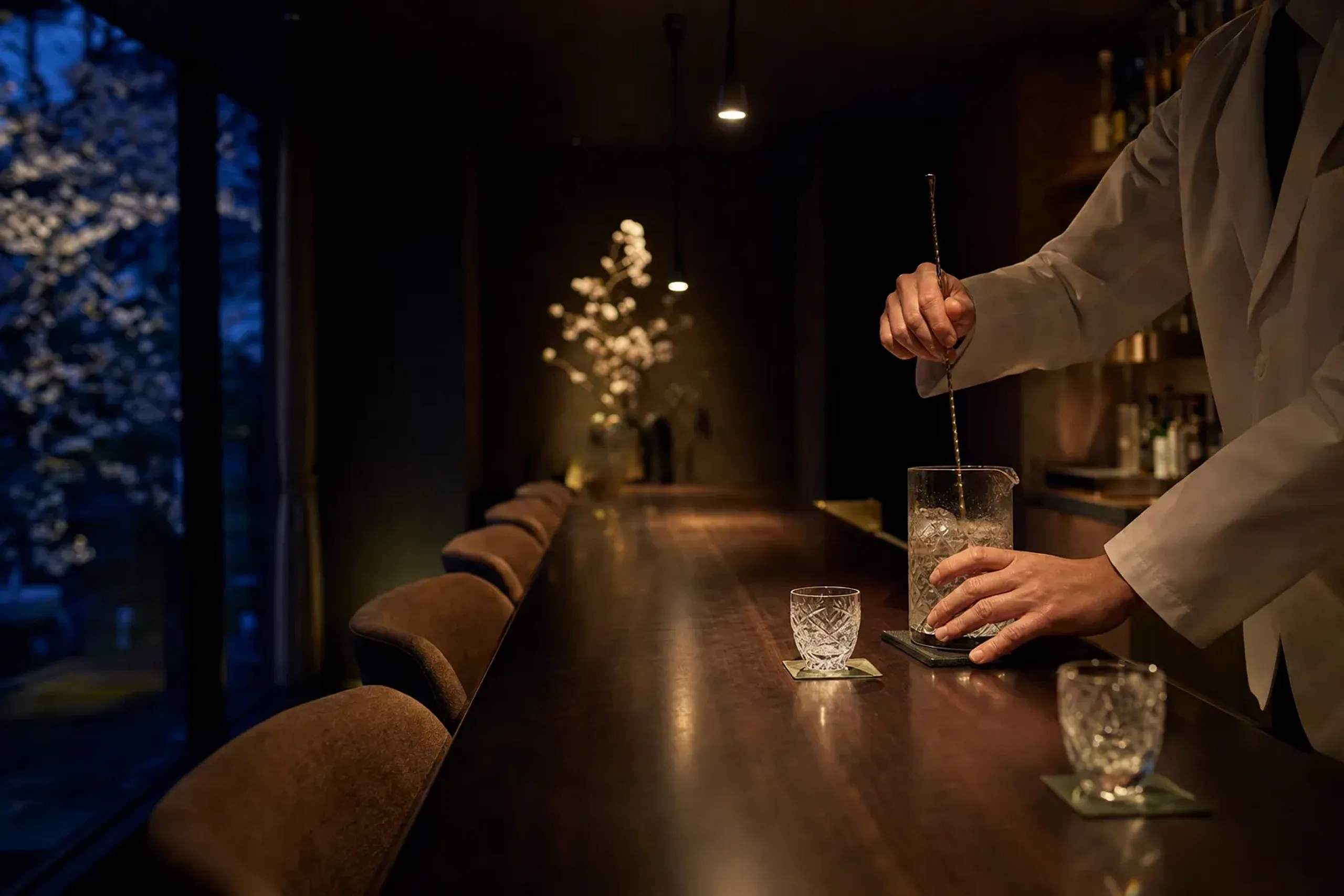
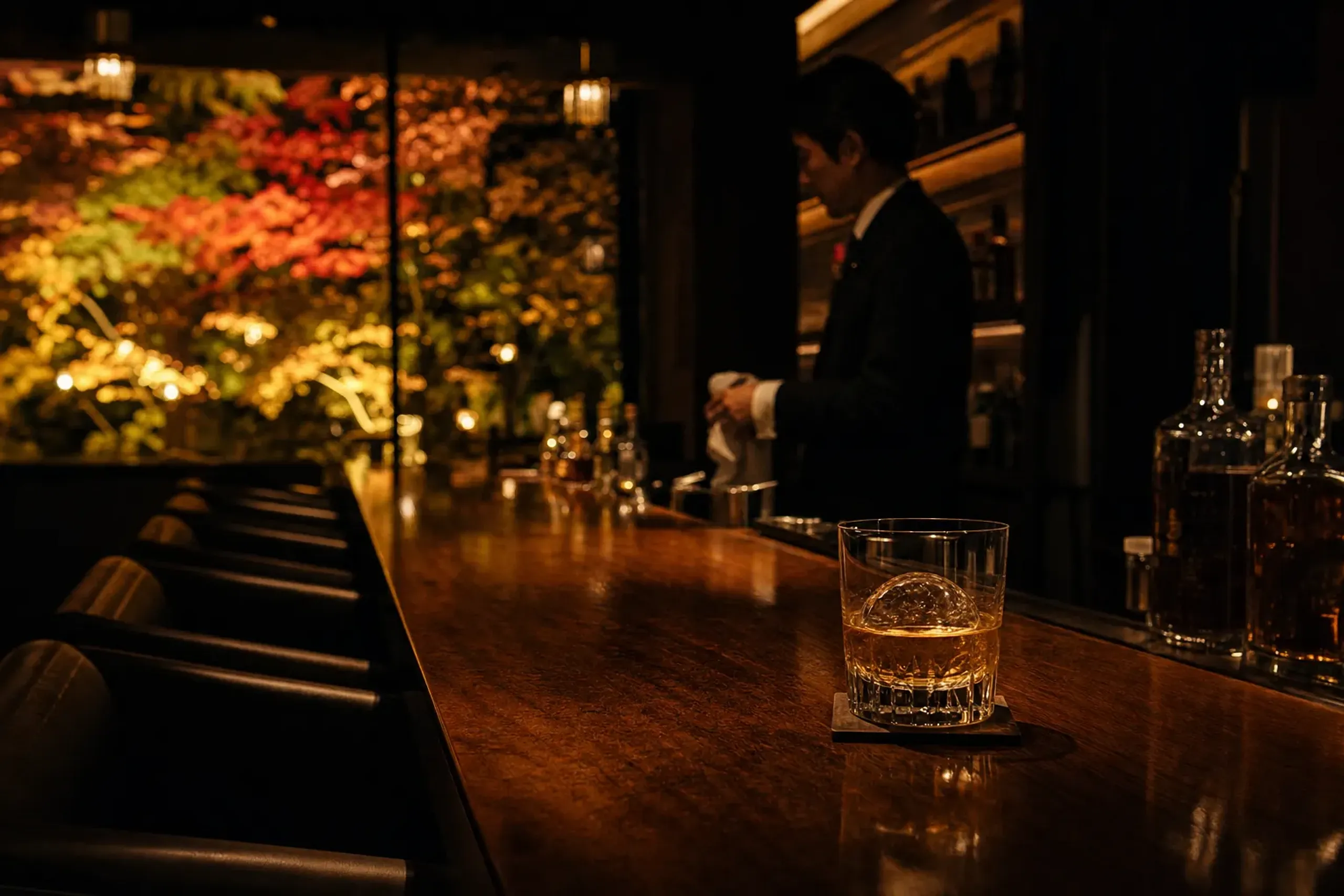
The range is wide. There are rooms with a single bartender and a dozen seats, where the work is precise and the conversation quiet. There are hotel bars set high enough to hold the whole grid of the city in one window. There are places built around exactly one thing — a spirit, a method, a stretch of records — done with a seriousness that would feel excessive anywhere else and feels exactly right here.
What sets a Tokyo bar apart is scale, attention, and the absence of noise. A good room is small on purpose. The bartender watches your glass and moves before you ask. Nothing competes for your ear. You can hear ice. The effect is closer to a private study than a night out, and it is the reason many guests remember the bar longer than the dinner that preceded it.
Party Size Is A Real Constraint
The smallness that makes these rooms good also limits them. A counter of ten seats does not absorb a party of six without swallowing the room whole. Many of the finest bars simply cannot take a group. This is not exclusivity for its own sake — it is arithmetic.

A couple has the run of the city. A group of four narrows the field. Six or more changes the question entirely, pushing you toward hotel bars and larger rooms that hold a party without strain. None of this is a problem if you know it going in. It becomes one only when a group of eight tries the door of a room built for a dozen.
Which Nights Of The Week Matter
Some rooms close on days visitors do not expect — a Sunday here, a Monday there, following no rule you can generalize. Galleries do the same. An evening planned for the wrong weekday can find its intended anchor dark. This is a small thing that becomes a large one at the door, and it is the kind of detail worth confirming before the night rather than during it.
What Is Tokyo Like After The Trains Stop?
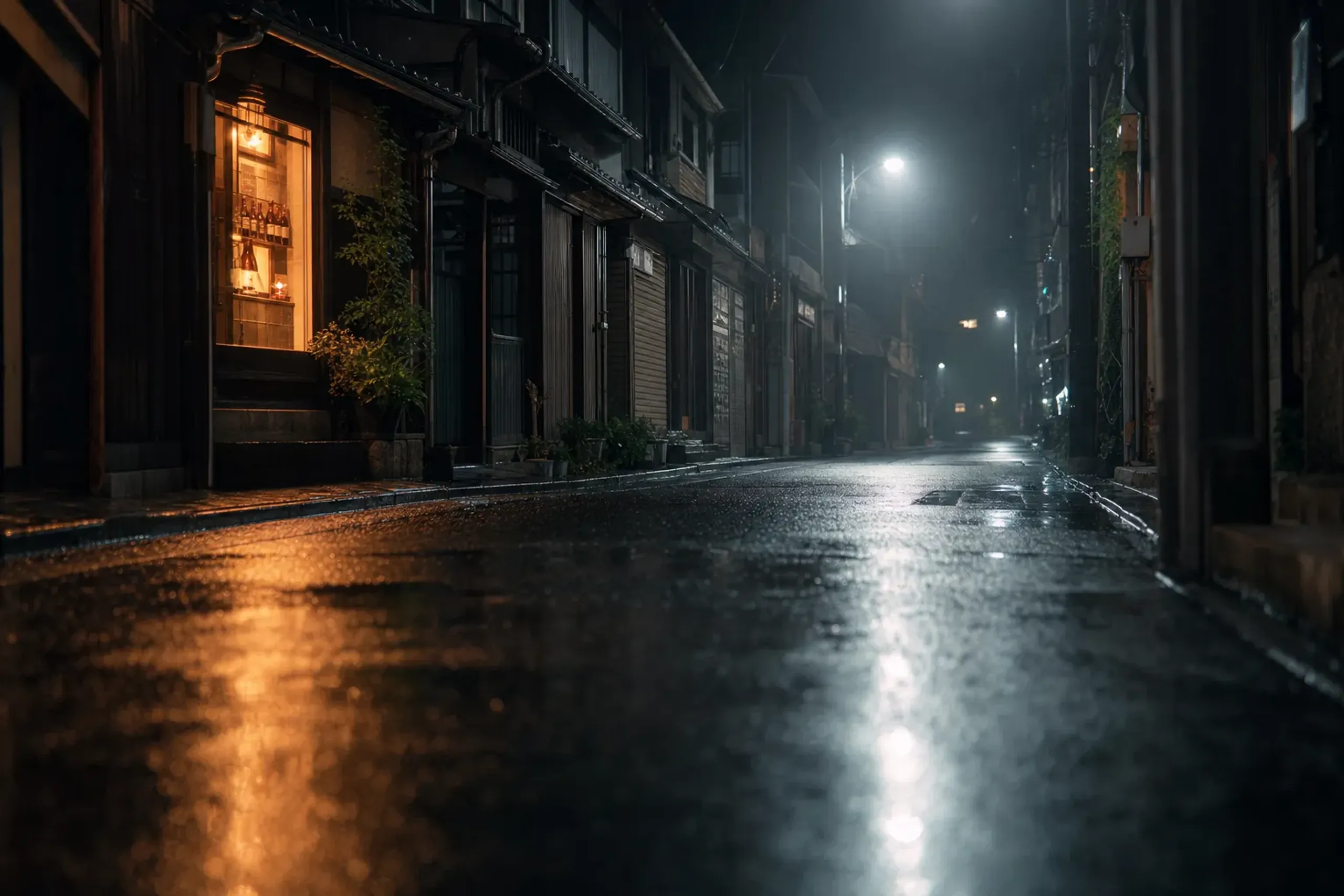
After the last trains run, Tokyo becomes a quieter and more private city. The crowds thin, the pace drops, and the bars that stay open take on the settled feeling of a room that no longer expects newcomers.
The last train governs almost everyone's evening. Locals watch the clock through the final hour, and a bar can empty in ten minutes as the departures approach. What follows is a different city — calmer, less peopled, its late rooms occupied by those who chose to stay. There is a particular stillness to a small bar at that hour, when the street outside has gone silent and the only sound is the one behind the counter.
The practical fact is this: the last train shapes everyone else's night, but it need not shape yours. With private chauffeured transport arranged, the clock stops mattering. You leave when the evening is finished, not when the timetable insists. That single arrangement is what turns a three-layer night from ambitious into easy — the difference between rushing the last bar and closing it without a thought.
How Do You Sequence Two Or Three Layers In One Night?
Two layers is usually right; three is ambitious. A good evening does not try to hold all four.
The most reliable shape pairs an early layer with dinner, or dinner with a bar. A short gallery viewing at six, then a seven o'clock table, and the night has weight without hurry. Or an early dinner, then one or two bars, letting the second half of the evening slow down. Either gives you two well-made hours rather than four rushed ones.
Three layers can be done, but the seams have to be clean. Viewing, then dinner, then a single bar — that works if dinner is early and the transitions are handled rather than improvised. What breaks a three-layer night is travel time between rooms, waiting for a car, or a dinner that ran long. Remove that friction and three becomes possible. Leave it in and two was the wiser plan all along.
Where You Sleep Decides What Your Night Can Be
A base chosen for daytime convenience can quietly cost you the evening. Some districts empty after eight — perfectly good addresses by day, dark and shuttered once the offices close. A hotel that puts you near a station in the morning may leave you a long car ride from anywhere worth going after dinner.
The districts that hold their evenings are not always the ones a first visit gravitates toward. This is worth deciding before you book a room, not after. We have argued the district question in detail elsewhere; here it is enough to say that the night is a factor in where you stay, and an easy one to overlook.
The Night Nobody Wants To Go Out
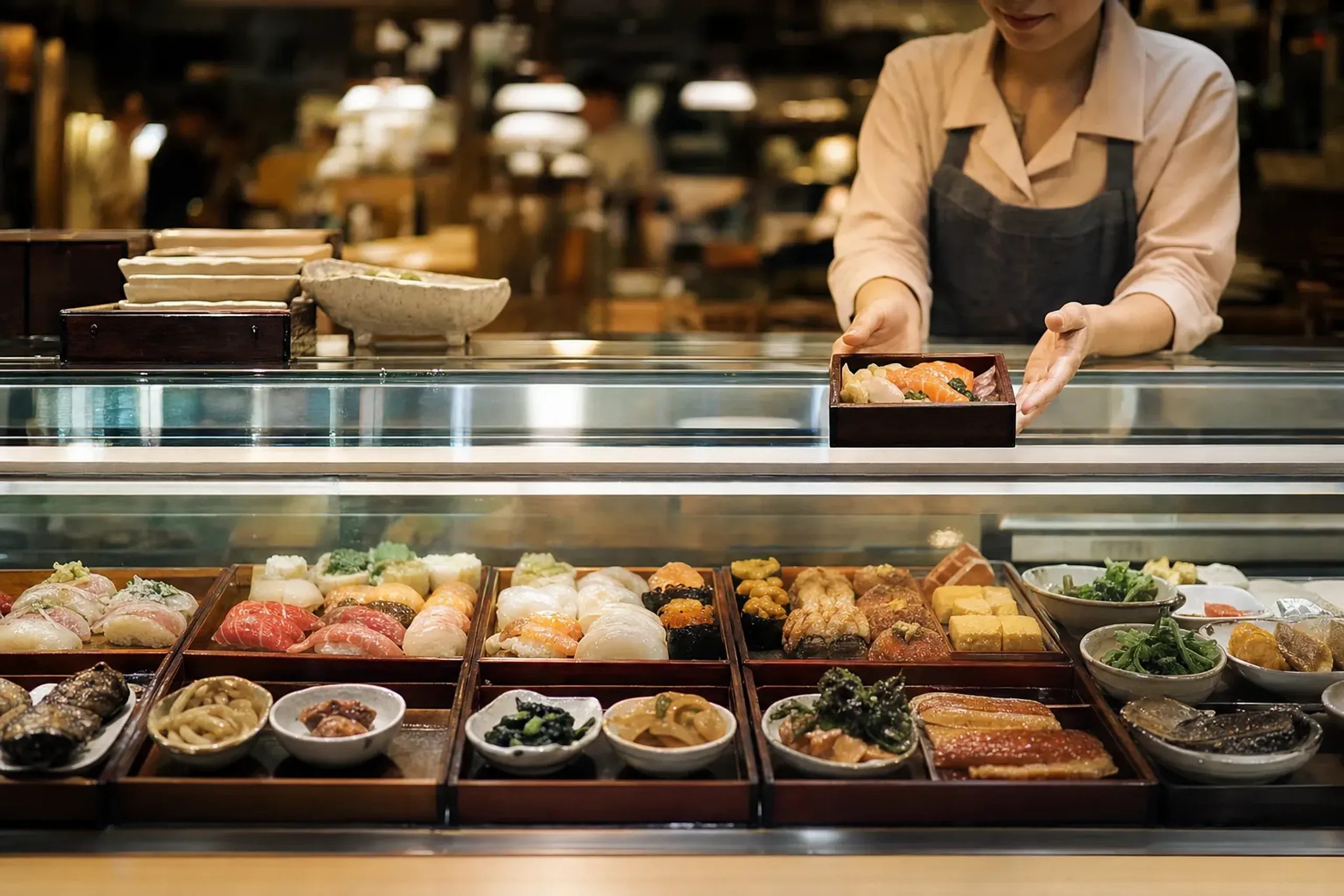
Not every evening should be a production. Some nights the day was long, the flight was longer, and the right answer is a quiet room and something good to eat in it.
Tokyo makes this easy. The food halls beneath the major department stores — the depachika — assemble a dinner of remarkable quality without a single reservation. Prepared dishes, a whole counter of them, laid out with the same care a restaurant would give. You carry it back, you open the curtains, and the evening is complete without leaving the building. It is one of the city's genuine luxuries, and one of its least understood. An evening in is not a failed evening. Sometimes it is the best one of the trip.
Frequently Asked Questions
What Time Do Small Galleries And Evening Programming Close In Tokyo?
Tokyo's small commercial galleries generally close in the early evening, well before dinner. This layer is easily missed by visitors who treat the night as beginning at eight, so plan viewings for the late afternoon or early evening instead.
Can A Group Of Six Get Into A Small Tokyo Bar?
Often no. Many of Tokyo's finest bars seat only ten to fourteen guests, and a party of six can fill or overwhelm the room. Larger groups are better served by hotel bars and rooms built to hold a party without strain.
What Happens To A Tokyo Evening After The Last Train?
The city quiets and empties as departures approach, and the late rooms take on a settled calm. The last train shapes most people's night, but with private transport arranged, you can leave when the evening ends rather than when the timetable does.
How Many Things Should I Plan For One Tokyo Evening?
Two layers is usually right; three is ambitious. Pair an early gallery viewing with dinner, or dinner with a bar. Three — viewing, dinner, and a bar — works only when dinner is early and the transitions between rooms are handled cleanly.
What Should I Do On A Night I Don't Want To Go Out In Tokyo?
Visit a depachika, the food hall beneath a major department store, and assemble a restaurant-quality dinner to take back to your room. No reservation is needed, and the quality rivals a proper meal out.
Why Choose Japan Royal Service
An evening in Tokyo rewards knowing which hour holds what, and which door is worth opening on which night. That is the work we do. Our concierge arranges bar and restaurant bookings, private gallery access, after-hours viewings, and evening cultural programming — and, as importantly, the private transport that makes two or three layers hold together without a rush for the last train.
In our experience, the best evenings are built around the days rather than bolted on at the end. We shape the whole arc: what closes early, what opens late, which rooms take your party size, which weekday the anchor is dark. The result is a night with weight, not a meal with nothing after it.
To plan a Tokyo evening around your days, reach our team privately via WhatsApp or LINE, or contact us here.