In this guide
- 01Why 2026 Rewards The Careful Traveler
- 02The Quiet-Luxury Logic: Base, Timing, Movement
- 03Day 1: Landing Soft In Tokyo
- 04Day 2: Old Tokyo Before The City Wakes
- 05Day 3: Understated Tokyo And A Slow Handover
- 06Day 4: The Shinkansen And Kyoto's Calmer Side
- 07Day 5: Kyoto's Eastern Hills Without Midday Congestion
- 08Day 6: Gardens, Craft, And The Northern Hush
- 09Day 7: A Gentle Departure
- 10Two Versions Of The Same Week
- 11When To Go: A Quiet-Luxury Read On The Calendar
- 12How To Book A Week Like This
- 13Frequently Asked Questions
- 14Why Choose Japan Royal Service
Here is the honest promise. You will not dodge every crowd in Japan. In the first half of 2026 the country welcomed roughly 21.1 million foreign visitors, and both capitals feel it. But you can experience Tokyo and Kyoto at their calmest — the empty temple path at dawn, the private breakfast served after the commuter rush has thinned, the garden entered before the first tour flag appears.
The trick is not luck. It is timing, base selection, and quiet logistics. Our team at Japan Royal Service builds these weeks around three levers: where you sleep, when you move, and who clears the path ahead of you. This is the seven-day version, written the way we plan it privately for guests.
Use it as a framework. Then let us tighten every detail to your dates.
Why 2026 Rewards The Careful Traveler
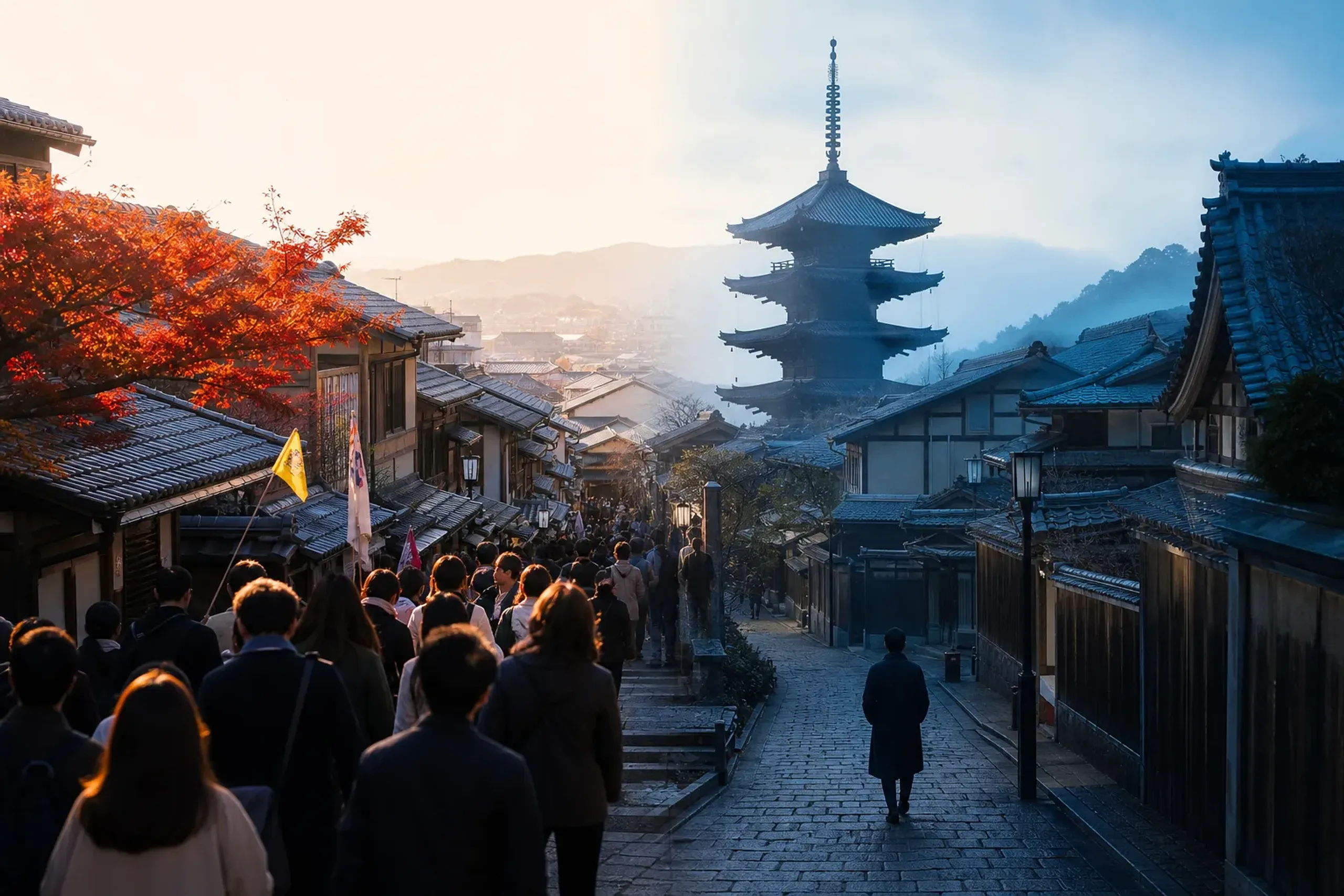
Crowds are the new baseline. Kyoto has become so busy that the city now publishes an official Kyoto Travel Congestion Forecast — a five-point comfort scale for major districts, with live cameras for spots like Gion and Kiyomizu. We watch it. Read that again: the destination itself now tells you when to stay away.
There is also a cost shift worth knowing before you book. Kyoto's accommodation tax changed on March 1, 2026. Stays in the highest nightly bands now carry meaningfully higher per-person rates.
Key fact: As of March 1, 2026, Kyoto's accommodation tax added higher tiers — ¥4,000 per person per night for lodging priced ¥50,000–¥99,999, and ¥10,000 per person per night for lodging at ¥100,000 and above. It is collected at the property, based on the accommodation fee per person per night. Quiet-luxury stays sit squarely in the top band, so factor it into your total.
None of this should deter you. It simply means the difference between a good week and a serene one now lives in the planning. That is exactly where we earn our keep.
The Quiet-Luxury Logic: Base, Timing, Movement
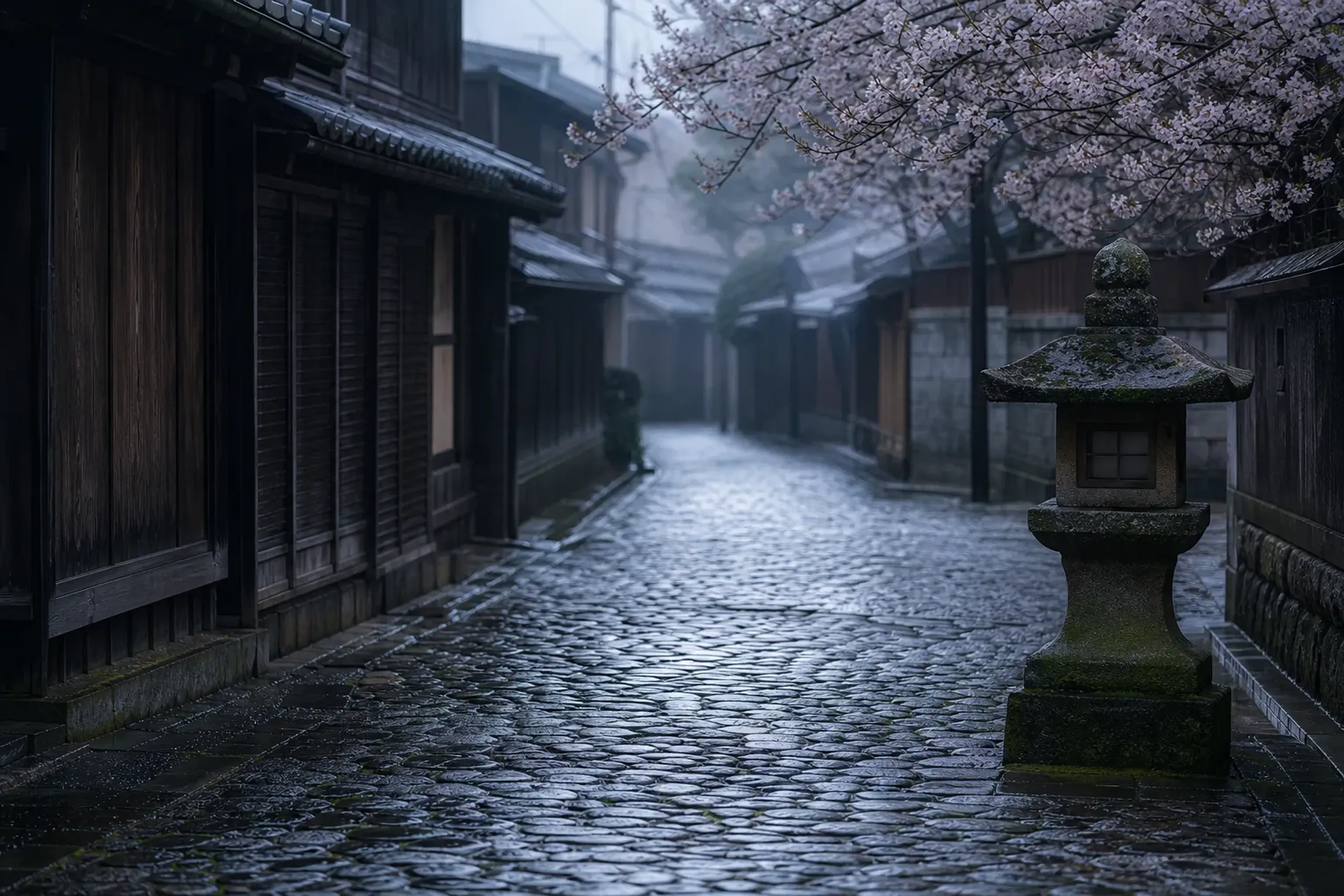
Most itineraries sequence sights. We sequence calm. Three principles shape every day.
Choose Micro-Neighborhoods, Not Cities
"Stay in Tokyo" tells you nothing. Stay in Kagurazaka and you wake to stone lanes and small kissaten instead of neon canyons. In Kyoto, a base near the Imperial Palace or in the Okazaki museum quarter keeps you a short, calm transfer from the eastern hills — without living inside the congestion.
Move Against The Rhythm Of The City
Temples empty at dawn. Commuter trains clear by mid-morning. Tour coaches arrive around eleven. So we route you early, rest you through the midday crush, and send you back out as the light softens and the day-trippers retreat to their stations.
Remove Friction You Never See
A private chauffeur waiting at the gate. Restaurant reservations locked weeks ahead. Luggage moved ahead so you carry nothing between cities. In our experience, quiet is mostly the absence of small stresses stacking up.
Day 1: Landing Soft In Tokyo
You arrive at Haneda or Narita and the week's tone is set in the first hour. A crowded train with luggage is the wrong opening note. A private VIP transfer is the right one — you glide from the arrivals hall to a vehicle waiting curbside, and the city unspools through the window while someone else navigates it.
Our fleet ranges from the Lexus LM 500 and the Toyota Executive Alphard to the Mercedes V-Class for larger parties. Private chauffeured transport is not a splurge on a week like this. It is the spine of it.
Base: Akasaka or Kagurazaka. Akasaka pairs central access with residential calm; 1 Hotel Tokyo opened there on March 5, 2026, in the Akasaka Trust Tower, with rooms looking toward the Imperial Palace gardens — nature-inflected quiet inside the capital. Kagurazaka trades skyline for cobblestone intimacy.
Best time to arrive: Early afternoon. Settle, then take a slow evening walk. Nothing scheduled.
Avoid this window: Rush-hour road transfers between 5 and 7 p.m. if your flight lands then — we build in buffer or reroute.
Day 2: Old Tokyo Before The City Wakes
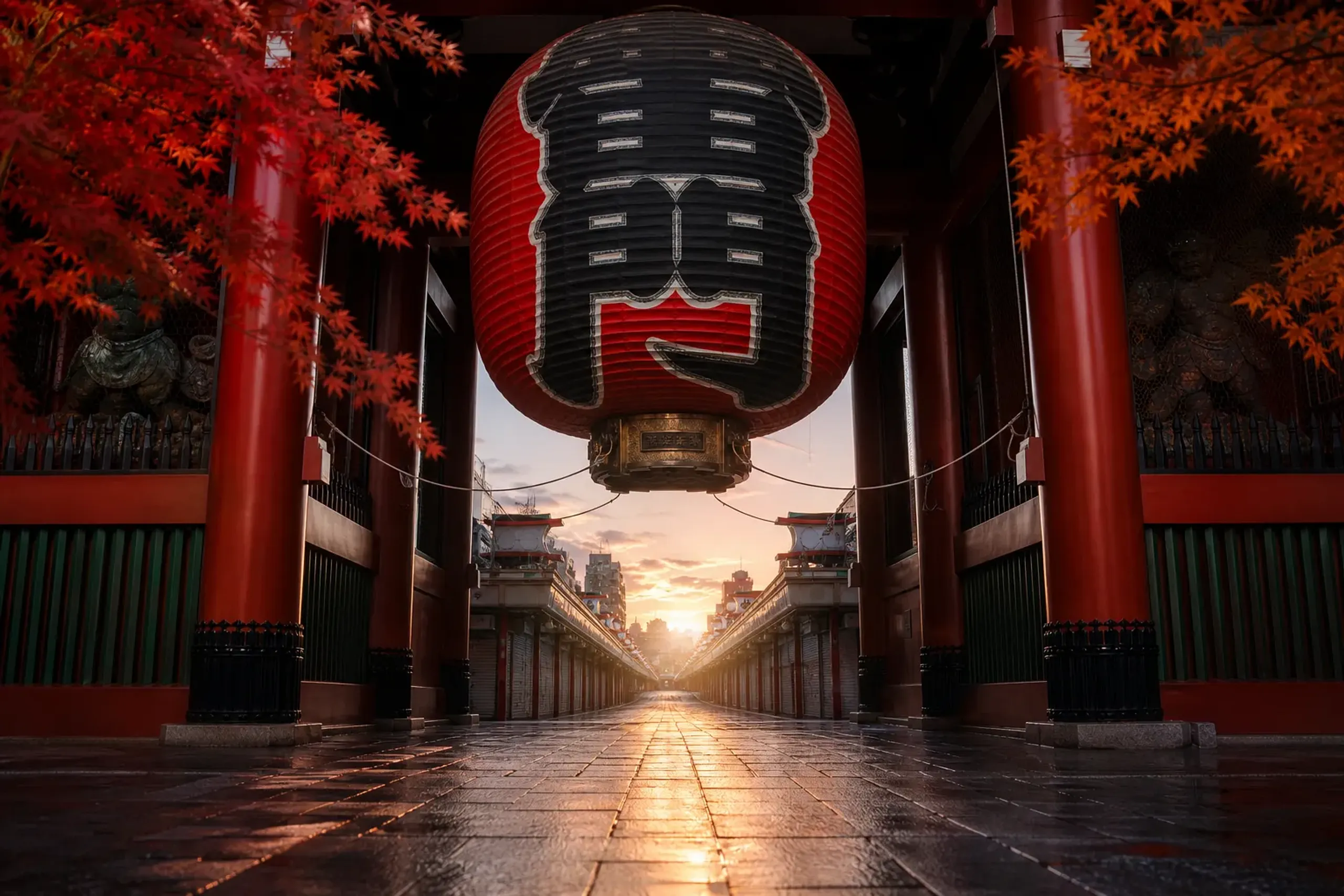
This is the morning that changes how people think about Tokyo. Asakusa at 6:30 a.m. is almost silent. Senso-ji's approach along Nakamise is shuttered and swept, the great lantern hanging over an empty gate. By ten it will be a river of selfie sticks. You will already be gone.
We pair this with a slow breakfast back in your neighborhood after 9:30, once the commuter surge has passed. Then a mid-morning visit to the Imperial Palace East Gardens, walking the stone ramparts before the coaches roll in.
Luxury alternative: If you prefer contemporary calm, teamLab Borderless at Azabudai Hills — the permanent museum that opened February 9, 2024 — rewards a first-entry slot far more than a midday one. The rooms breathe when they are not packed.
Avoid this window: Senso-ji and Nakamise between 11 a.m. and 4 p.m. It is beautiful and it is chaos.
Evening: a small, reservation-only dinner near your base. No cross-city trek. This is the pattern — sleep the sights close to home so late nights stay easy.
Day 3: Understated Tokyo And A Slow Handover
Spend the morning in the quieter luxury quarters. Aoyama and the backstreets of Daikanyama reward wandering — independent galleries, cedar-scented boutiques, coffee served with genuine care. This is Tokyo without the postcard stress.
Reserve the afternoon for one deliberate encounter. A private tea gathering, a calligraphy session, or time in a shokunin's atelier — a maker who does not usually open the door to outside guests. Watching a craftsman's hands is its own kind of quiet. It resets the pace of the whole trip.
Best time to arrive at shops: Opening hour, around 11 a.m., before Aoyama fills. Leave by early afternoon.
Tonight, pack light. Tomorrow the luggage goes ahead by forwarding service, and you travel to Kyoto carrying almost nothing.
Day 4: The Shinkansen And Kyoto's Calmer Side
Mid-morning is the sweet spot for the bullet train — after the business commuters, before the tourist wave. A private transfer takes you to the platform; a chauffeur meets you in Kyoto. No taxi queue, no luggage tetris.
Base: Okazaki, northern Higashiyama, or the Imperial Palace area. Each sits a short, low-friction ride from the eastern temples while keeping you out of the Gion–Kiyomizu crush. For those choosing a new address, the Imperial Hotel, Kyoto opened March 5, 2026, with 55 rooms in the Gion context — formal, hushed, discreet. Capella Kyoto opened March 22, 2026, in the historic Miyagawa-cho kagai, with culture-forward, place-based design. Which suits you depends on whether you want stately calm or a quieter, craft-led sense of place; our concierge can walk you through the difference candidly.
Afternoon: Nothing strenuous. A stroll along the Philosopher's Path toward Nanzen-ji, whose vast temple grounds and brick aqueduct absorb visitors far better than the eastern honeypots.
Dinner near your base. A kaiseki counter, perhaps — an introduction-only room where the season dictates every course.
Day 5: Kyoto's Eastern Hills Without Midday Congestion
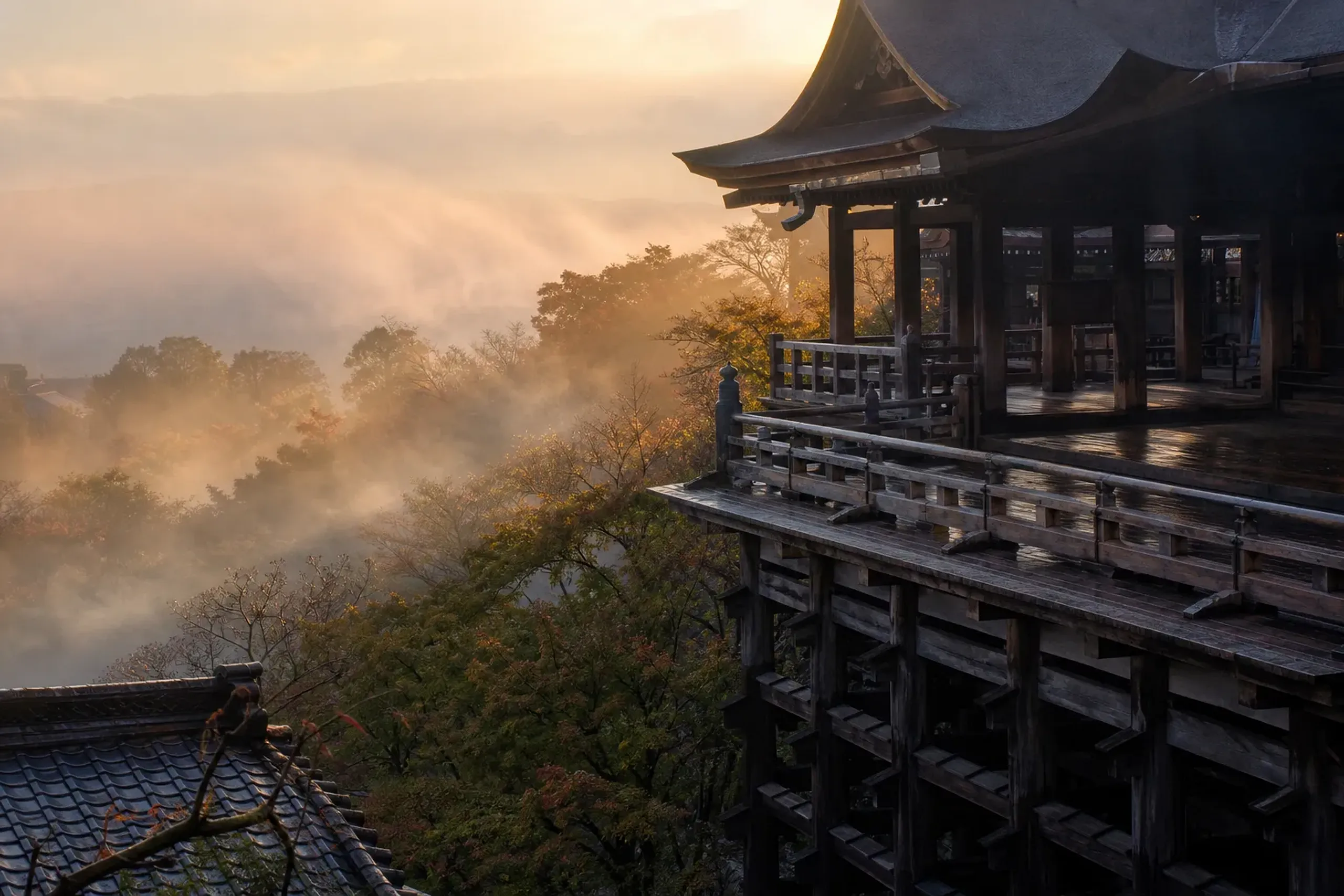
The dawn start earns its reputation here. Kiyomizu-dera opens early, and standing on its wooden stage above the mist-held city with almost no one beside you is worth every minute of the alarm. From there, walk downhill through Sannenzaka and Ninenzaka while the slopes are still cool and empty.
By the time congestion builds — and Kyoto's own forecast will tell you the hour — you are heading back for a late breakfast and rest.
Plan around this: Consult the official Kyoto Travel Congestion Forecast the night before. Its five-point comfort scale and live cameras for Gion and Kiyomizu let us pick the exact window to send you — and the exact one to avoid.
Luxury alternative for the afternoon: Skip the crowded bamboo groves. Instead, travel north to Kibune and Kurama — a serene valley of moss, river, and mountain temple that feels a world away from central Kyoto. Cooler in summer, quiet almost always.
Day 6: Gardens, Craft, And The Northern Hush
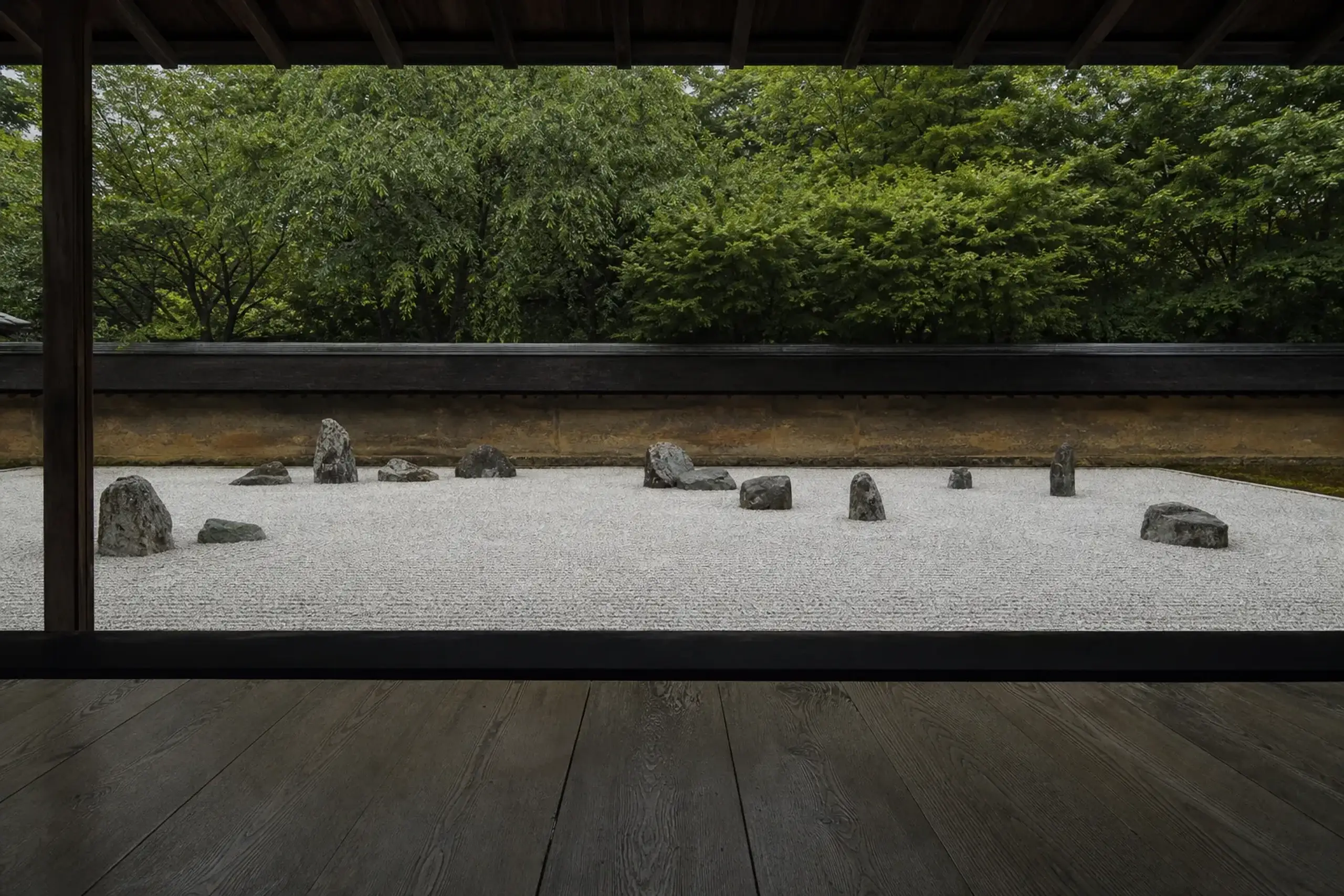
Reserve this day for the gardens that reward stillness. Enter early. Ryoan-ji's rock garden means little in a crowd and everything in silence — fifteen stones, raked gravel, and the discipline of restraint that the wabi-sabi aesthetic is built on. Get there before the coaches and you understand why it has held people for centuries.
Later, another maker's session if the week has one more in it — a kintsugi table, gold seams tracing repaired ceramics, imperfection made beautiful. This is the Kyoto that Google struggles to surface: rooms entered by introduction, not by ticket.
Avoid this window: Any famous garden between noon and 3 p.m. in high season. The comfort forecast will confirm it.
Evening: a farewell dinner close to your base. Slow, unhurried, no transfer to spoil the mood.
Day 7: A Gentle Departure
End soft, the way you began. A late breakfast, a final walk through a quiet garden or a favorite lane, and a private transfer to Kansai or Itami — or back toward Tokyo if your flight leaves from Haneda. No scramble, no queue. The week closes on the same calm note it opened with.
Two Versions Of The Same Week
Timing decides everything. We build the same skeleton two ways depending on your dates.
Option A: The Festival-Free Serenity Week
- Choose shoulder weeks — late spring outside Golden Week, or early-to-mid autumn before foliage peaks.
- Steer clear of Kyoto's Gion Matsuri, which runs July 1–31, with the busiest Yoiyama nights on July 14–16 and July 21–23.
- Avoid Tokyo's Sanja Matsuri at Asakusa Shrine, held May 15–17, 2026, unless you specifically want it.
- Result: maximum quiet, minimum reservation pressure.
Option B: The Festival-Smart Week
- Attend exactly one cultural event with controlled, reserved viewing, then keep every other day low-crowd.
- Kyoto's calendar offers Aoi Matsuri on May 15, the Gozan Okuribi bonfires on August 16, and Jidai Matsuri on October 22 — each a defined, single-day spectacle rather than a month of congestion.
- We plan around the crowd surge, not into it: private viewing where available, early positioning, and a swift chauffeured exit before the throng disperses.
When To Go: A Quiet-Luxury Read On The Calendar
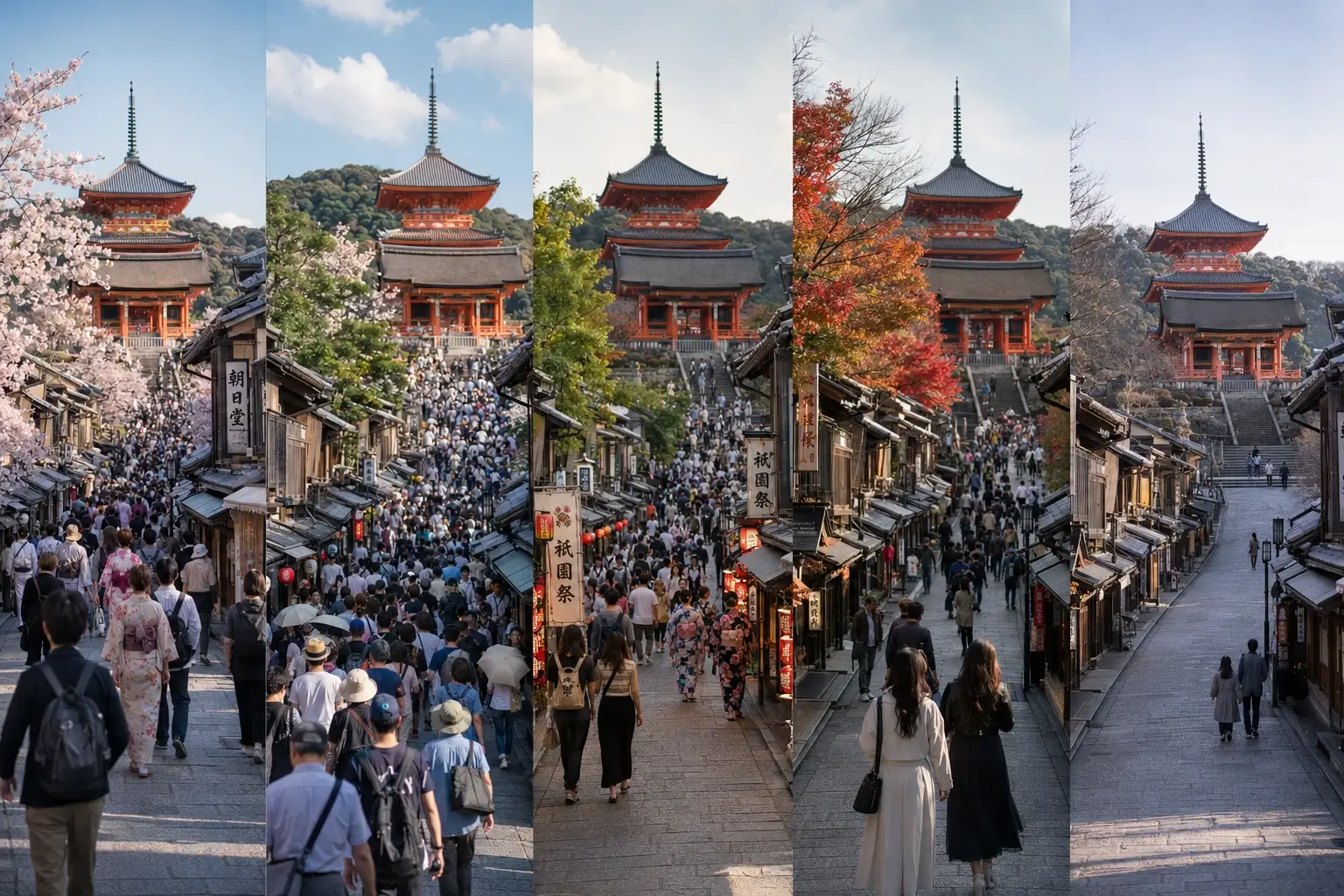
JNTO publishes official monthly visitor-arrival figures throughout 2026, and we track them to advise on timing. The broad guidance holds.
- Cherry blossom peak
- Crowd Reality: Extreme
- Quiet-Luxury Verdict: Only with dawn access and private gardens
- Golden Week (early May)
- Crowd Reality: Domestic surge
- Quiet-Luxury Verdict: Avoid unless unavoidable
- July (Kyoto)
- Crowd Reality: Gion Matsuri all month
- Quiet-Luxury Verdict: Festival-smart plan only
- Autumn foliage peak
- Crowd Reality: Very high
- Quiet-Luxury Verdict: Shoulder weeks either side are ideal
- Early-mid autumn / late spring shoulders
- Crowd Reality: Moderate
- Quiet-Luxury Verdict: The sweet spot
How To Book A Week Like This
The real quiet-luxury advantage is not one grand booking. It is dozens of small, correct decisions made early. Restaurant counters worth having fill weeks ahead. Introduction-only rooms are not sold to strangers. Vehicle routing must flex around the congestion forecast on the day.
So the sequence is simple. Fix your dates first, choosing shoulder weeks where you can. Select your bases by neighborhood, not just by hotel. Then let a tailor-made itinerary handle the timing, the transfers, and the reservations as one connected whole. For questions on any property, festival window, or the current Kyoto tax bands, contact our concierge.
Frequently Asked Questions
Is seven days enough for both Tokyo and Kyoto?
Yes, if you resist the checklist. Three nights in Tokyo, three in Kyoto, and one travel day gives real depth in each. Depth beats distance on a quiet week.
How much is Kyoto's accommodation tax now?
Since March 1, 2026, lodging priced ¥50,000–¥99,999 per person per night carries ¥4,000, and lodging at ¥100,000 or above carries ¥10,000, per person per night. It is collected at the property.
What is the single best crowd-avoidance tactic?
Dawn. Nearly every famous site in both cities is peaceful before 8 a.m. and difficult after 11. Pair early starts with Kyoto's official congestion forecast and you sidestep most of it.
Should I avoid July in Kyoto?
Only if you dislike festivals. Gion Matsuri runs the whole month with heavy crowds on the Yoiyama nights. We can plan a festival-smart week that enjoys one controlled event and stays quiet the rest of the time.
Why Choose Japan Royal Service
Anyone can list temples. Fewer can deliver the empty version of one. What we do at Japan Royal Service is protect your time and your privacy across a whole week — the private transfers timed against a live congestion forecast, the reservations secured before they vanish, the introduction-only rooms opened quietly on your behalf, the luggage that appears in the next city without you touching it.
We work in English, Japanese, Thai, and Filipino, and we hold your identity and your itinerary in complete confidence. No two of our weeks look alike, because no two guests do. The itinerary above is a starting frame. The real one is yours.
For private coordination on dates, bases, and the finer details, reach our team directly via WhatsApp or LINE, or contact us here.