In this guide
- 01What Is Actually Private in Tokyo Skytree
- 02The Arrival: An Ascent Timed to the Light
- 03Sunset Over the Sumida
- 04The Course: What Comes to the Table
- 05When the City Switches to Full Night
- 06Booking Windows and Practical Details
- 07The Sky-to-Street Evening: Extending Beyond the Table
- 08Frequently Asked Questions
- 09Why Choose Japan Royal Service
The elevator doors part, and the city drops away beneath you. Below, the Sumida River threads silver through Asakusa. To the west, if the air is clear, Mount Fuji stands in dark silhouette against a bruised-orange sky. You are 345 metres up, and there is a table waiting — set with linen, glass, and a single course about to arrive. No queue. No jostling crowd pressing against the observation glass one floor above. Just this.
Most visitors experience Tokyo Skytree as a ticketed viewing platform, shuffling past the windows with several hundred strangers. There is another way to experience it. A reserved table. A timed ascent. Twilight instead of midday glare. This guide separates what is genuinely private and bookable inside the Skytree from the marketing haze — and shows how our team at Japan Royal Service choreographs the evening so it feels effortless.
What Is Actually Private in Tokyo Skytree
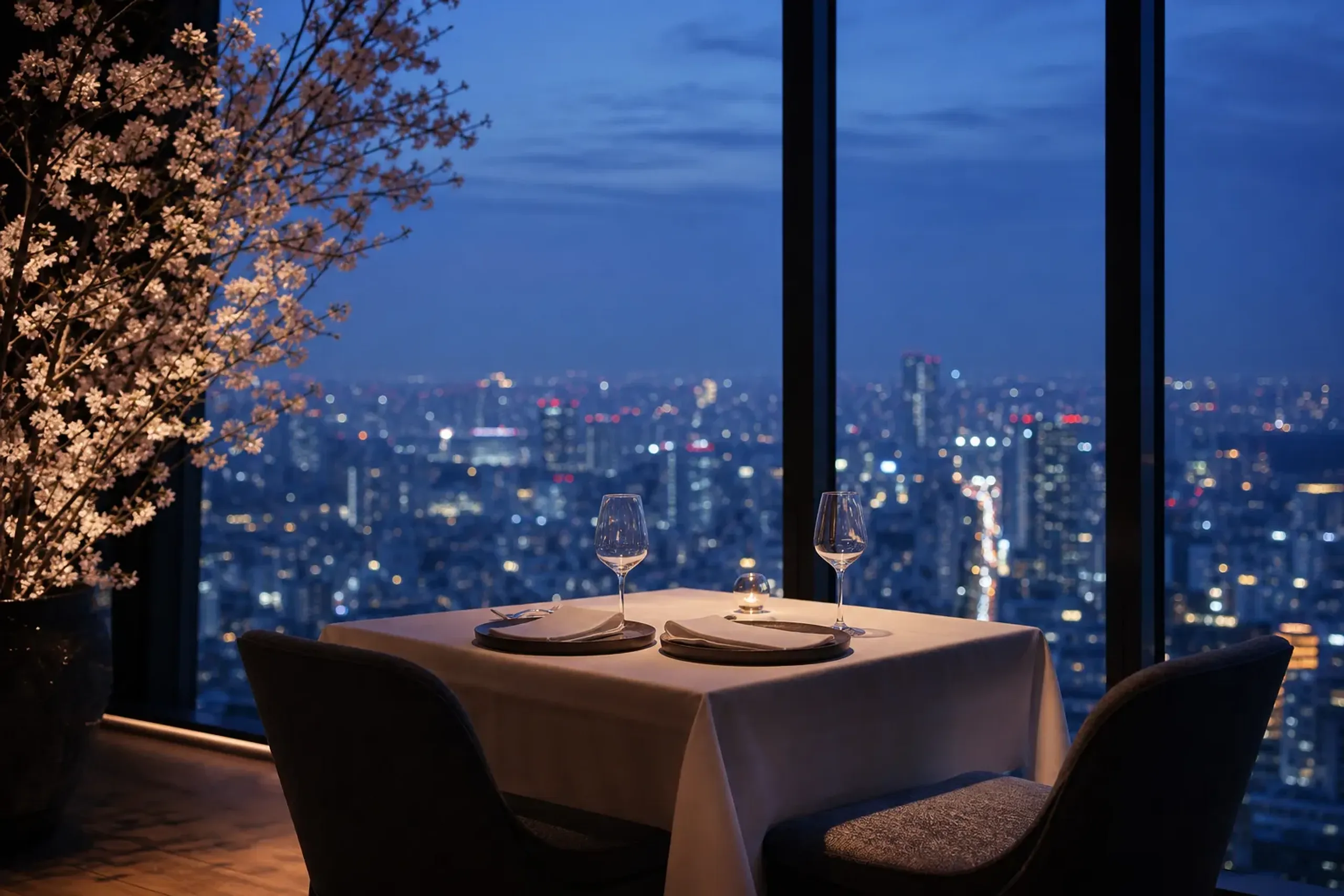
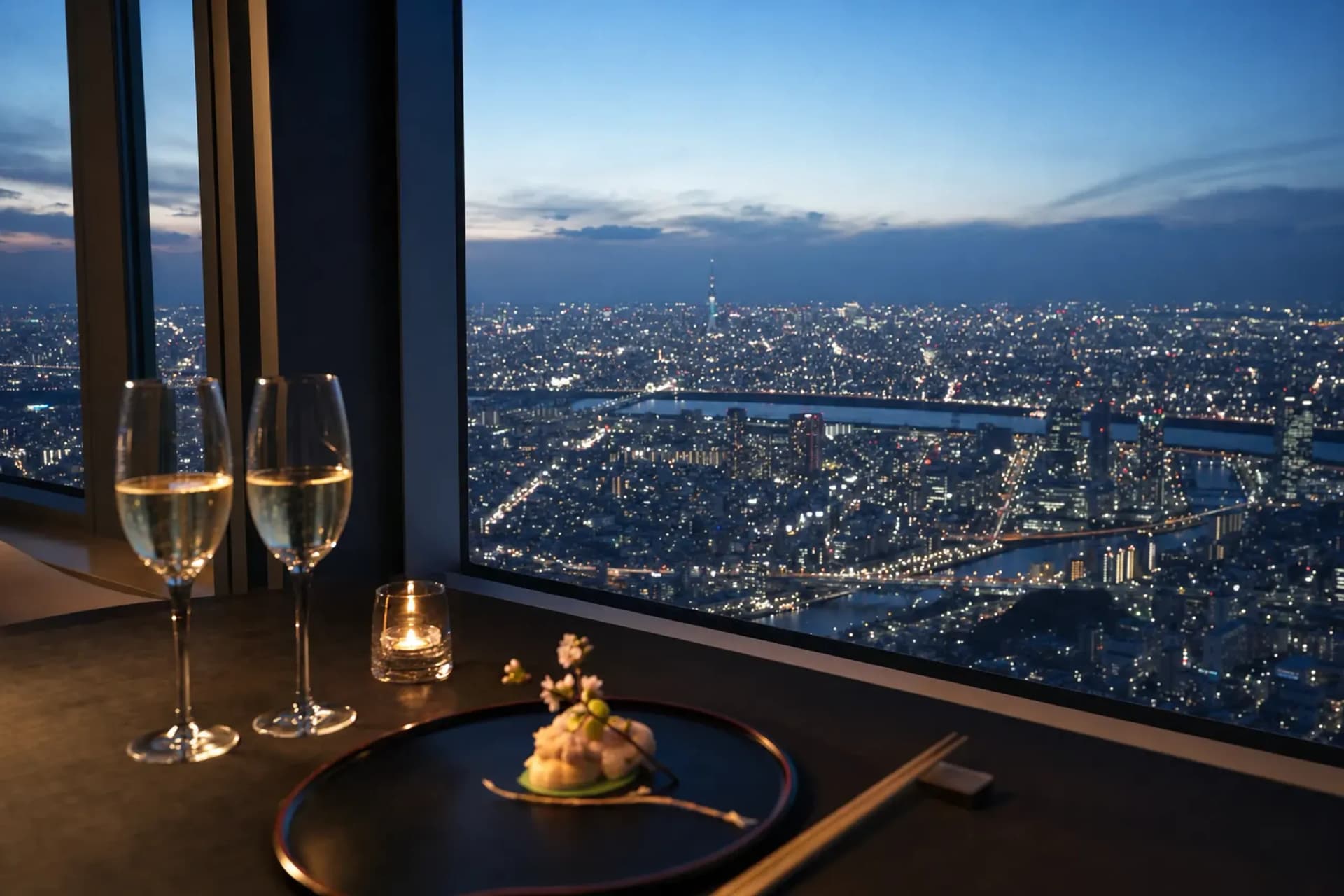
The only fine-dining room at 345 metres: a reserved table where the view is part of the course.
Let us be precise, because vagueness here costs real disappointment. Tokyo Skytree is an observation tower. It is not a telescope observatory — there is no astronomer's dome, no in-tower stargazing dinner. Anyone selling you that is selling fiction.
What does exist is genuinely special. The tower’s fine-dining restaurant sits on the Tembo Deck at Floor 345. It is the only fine-dining room at that altitude. To reach it, you need a Tokyo Skytree admission ticket, so the meal and the view come as one package.
Within that restaurant sits the piece most travellers care about: a private dining room with its own view from 345 metres, seating up to eight guests. Reservations open two months in advance and are taken by phone.
The honest version: A private table at 345m — yes. A private room for up to eight — yes, book two months out by phone. An "astronomy observatory dinner" — no such product exists. We would rather you knew this before you booked than after.
The Arrival: An Ascent Timed to the Light
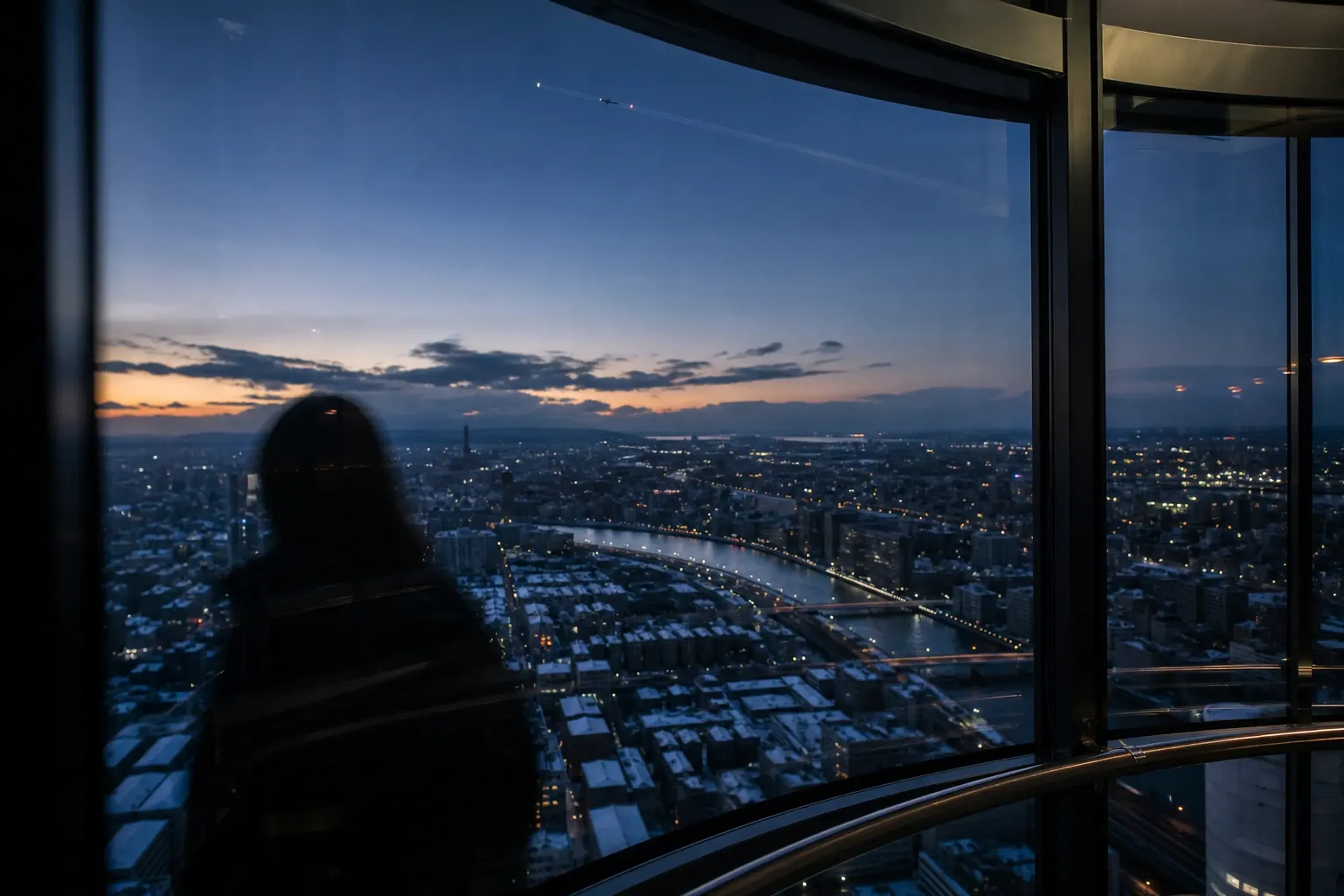
Timing is the whole game. Arrive at noon and you get a hazy, flattened city under harsh sun. Arrive as the light softens and the same view becomes theatre.
Our concierge builds the evening backward from sunset. The ideal ascent lands you at the table roughly forty minutes before the sun drops — enough time to settle, order the first pairing, and watch the sky do its work. A private transfer in a vehicle from a partner company with an English-speaking driver brings you to the tower base without the parking scramble; our private transfer means no taxi queue, no rental-car anxiety, no fumbling for the entrance in a district you don't know.
The lift itself climbs fast. Ears pop. Then the doors open and Tokyo unfurls — a grid of light stretching past the horizon, the Sumida bending below, aircraft lights blinking toward Haneda. First-timers go quiet here. That silence is the point.
Sunset Over the Sumida
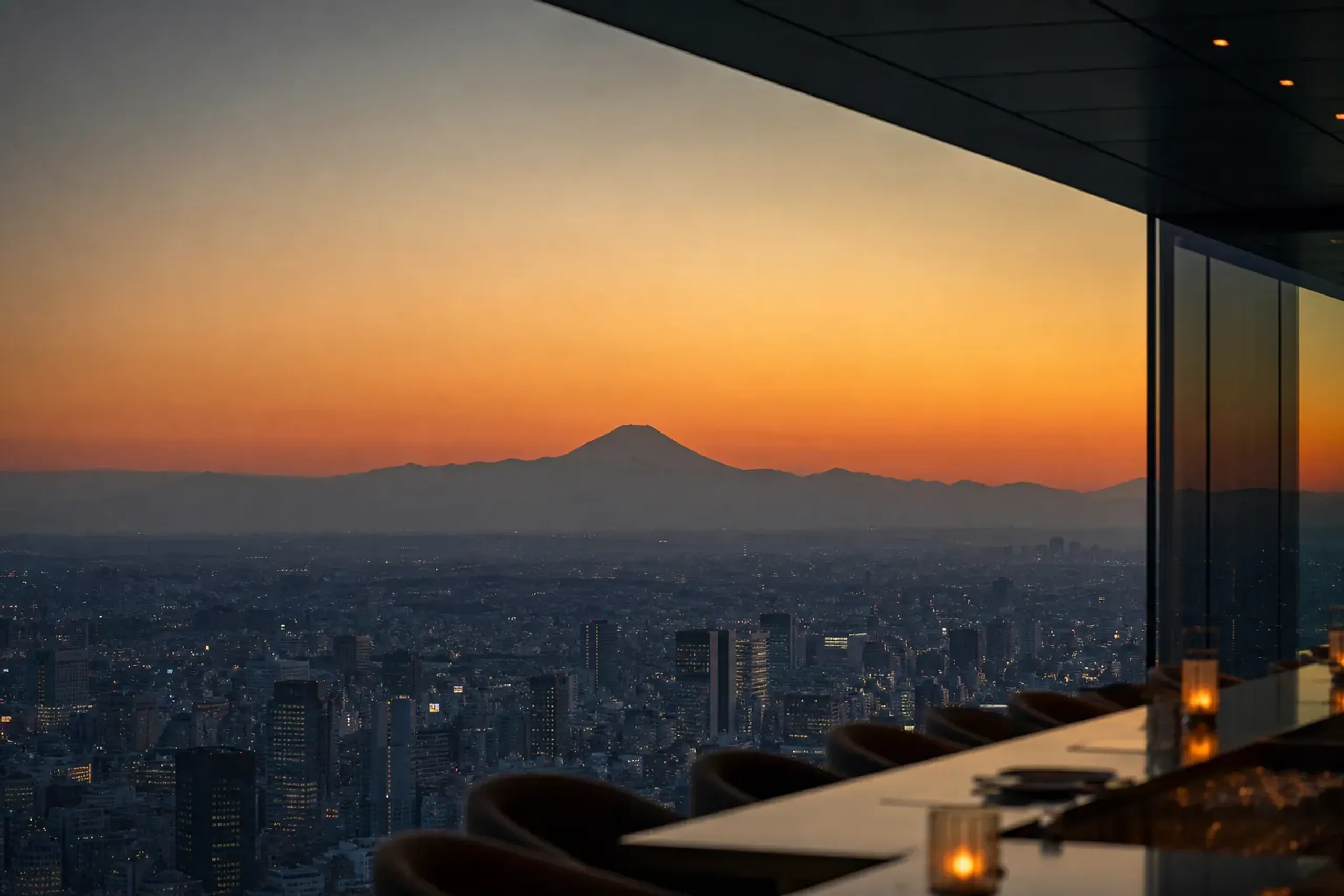
On clear winter afternoons, Fuji reads as a clean dark cone against the fading light.
This is the stretch people remember for years. The sun sinks somewhere behind the western sprawl, and for perhaps twenty minutes the whole city glows amber. On a clear evening — more common in the drier months — Mount Fuji reads as a clean dark cone against the fading light.
Weather governs everything. Winter afternoons, especially December through February, deliver the sharpest Fuji visibility because the air holds less moisture. Summer haze can hide it entirely. Put plainly: if seeing Fuji from the table matters to you, we plan the date around the season, not the other way round. No honest planner promises a mountain on demand.
The tables against the glass are the ones worth having. When we secure a reservation, seating position is part of the conversation — a window seat at twilight is a different experience from an interior table, and we treat that difference as non-negotiable.
The Course: What Comes to the Table
The restaurant serves French-influenced cuisine built on Japanese produce, presented as a set course. The plating leans quiet and precise — the restraint of a single seasonal ingredient given room to speak, rather than a plate crowded to impress.
The wine and sake pairings track the seasons. Here the Japanese instinct for peak-season produce shows on the plate: what arrives in November differs from what arrives in May, and the kitchen builds around whatever is at its best. Ask, and the sommelier will walk you through it.
One practical note that matters for packing. The restaurant has updated its dress code, moving toward something more accessible than the old formal register. That eases the logistics of folding this dinner into a wider evening — you are no longer forced into black tie to sit at 345 metres. Our concierge confirms the current standard before every reservation, because a client turned away at the door is a failure we do not accept.
When the City Switches to Full Night
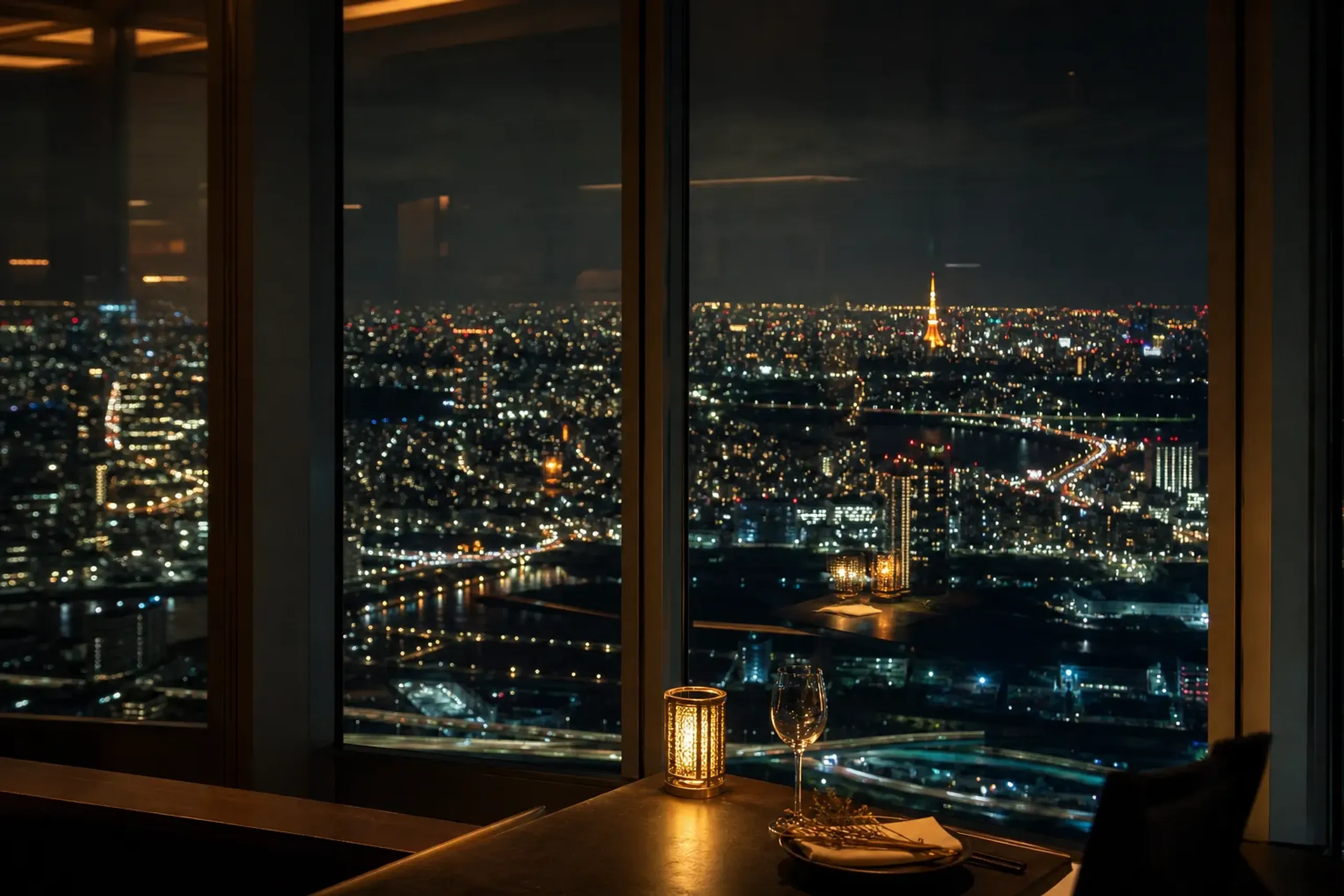
The moment dusk tips into darkness and the whole city ignites beneath the glass.
There is a moment — you feel it more than see it — when dusk tips into darkness and Tokyo simply ignites. Tokyo Tower glows orange in the middle distance. The expressways become rivers of red and white. The Sumida turns to black glass reflecting the illumination.
This is when the private-table advantage becomes obvious. The public deck one floor up is thick with tripods and elbows during full illumination. You are seated, glass in hand, watching the same spectacle in stillness. That contrast — crowd below, calm above — is why the private room suits couples and small groups who want the moment uninterrupted.
Booking Windows and Practical Details
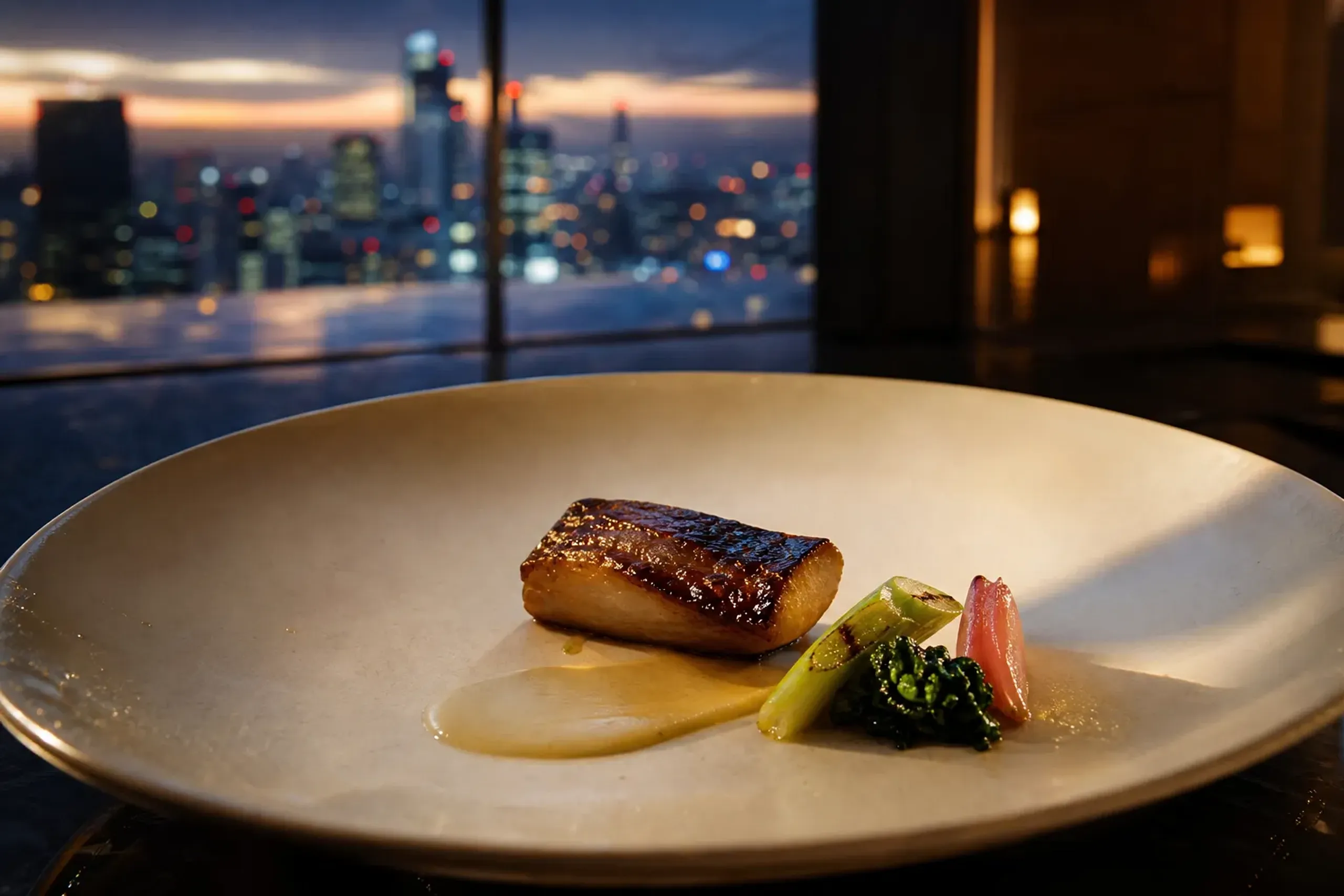
Quiet, precise plating that lets a single seasonal ingredient speak.
Here are the practical details.
- Restaurant: Fine-dining restaurant on the Tembo Deck, Floor 345
- Private room: Up to 8 guests, view from 345m
- Reservation lead time: Private-room bookings open 2 months prior, by phone
- Ticket requirement: Tokyo Skytree admission ticket required to enter
- Best Fuji visibility: Clear, dry winter afternoons (Dec–Feb)
- Dress code: Updated to a more accessible standard
Two calendar anchors worth planning around — or avoiding. Tokyo Skytree runs special operations tied to the Sumida River Fireworks Festival each summer. Demand around that evening spikes hard, and crowds swell. The tower also hosts pop-culture collaboration events on the observation decks. If you want quiet, we steer you away from these peaks. If you want the fireworks, we plan the ascent and the table far in advance. These dates are set each year, and the JRS concierge team confirms them directly with the guest at time of arrangement.
The Sky-to-Street Evening: Extending Beyond the Table
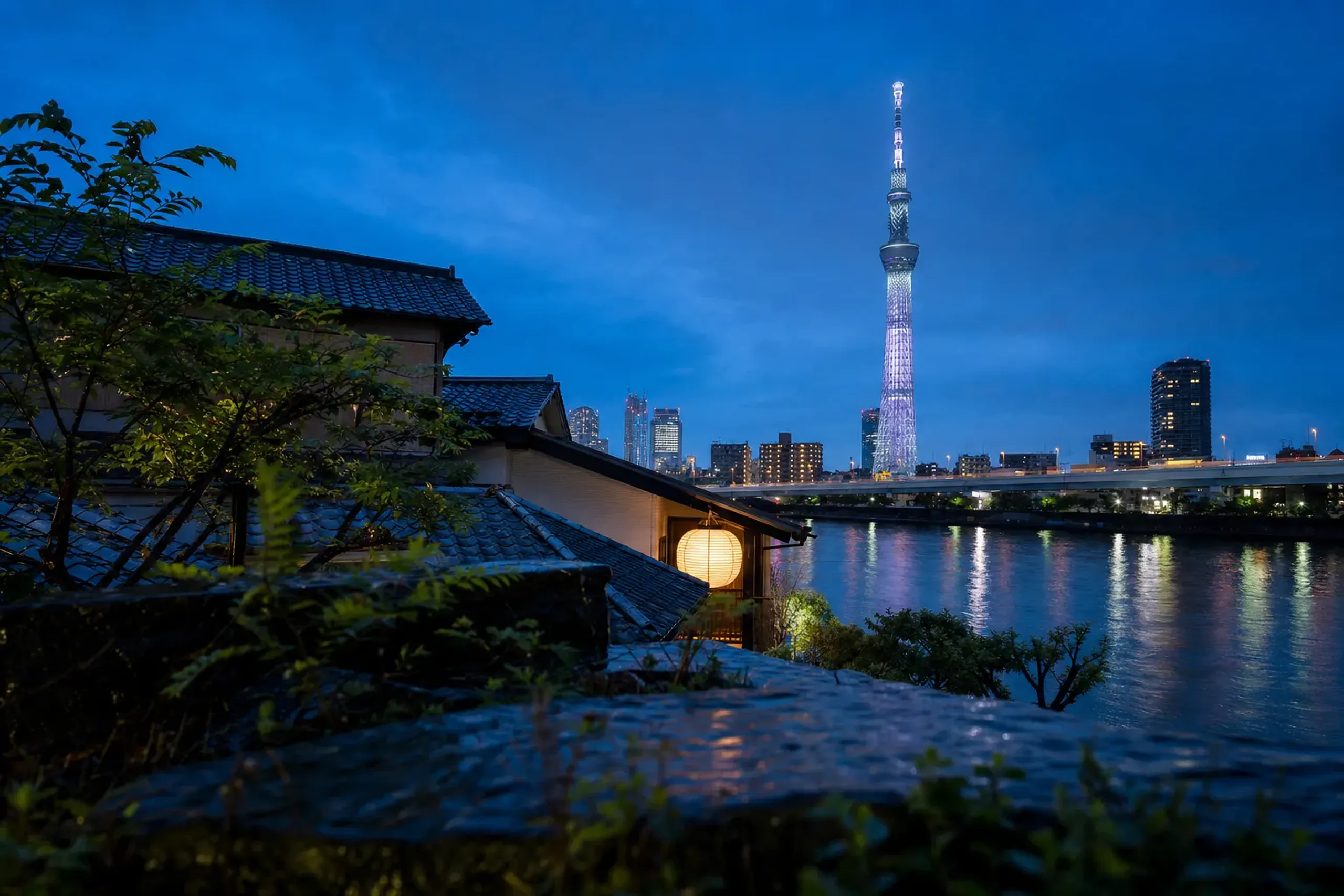
From street level in Asakusa, the tower you just dined inside glows above the old temple district.
A dinner at 345 metres is a scene, not a whole night. It works well as the opening act.
After the last course, a private car carries guests down and along the river to Asakusa, ten minutes away. From the Sumida's edge the Skytree reads entirely differently — a lit spire above the old temple district, best photographed from street level after dark. Senso-ji's precinct, quiet by that hour, makes a graceful close. From there the evening can drift toward a late cocktail elsewhere in the city, arranged to your taste.
The choreography — the timing between courses, the car waiting, the pace of the walk — is the actual product. Anyone can buy a ticket. Sequencing an evening so nothing feels hurried and nothing waits on you is a different craft, and it is the one we practise. Everything above can be folded into a wider tailor-made itinerary spanning several days and cities.
Frequently Asked Questions
Is There Really a Private Dining Room in Tokyo Skytree?
Yes. The tower’s fine-dining restaurant on Floor 345 has a private room seating up to eight with a view from 345 metres. Reservations open two months ahead and are taken by phone.
Do I Need a Skytree Ticket to Dine at 345 Metres?
Yes. A Tokyo Skytree admission ticket is required to reach the restaurant on Floor 345. The view and the meal come together.
When Can I See Mount Fuji From the Table?
Clear, dry winter afternoons — roughly December through February — offer the best odds. Summer haze often hides it. No one can guarantee the mountain; we plan the date to improve the chance.
What Should I Wear?
The dress code has moved to a more accessible standard. It is no longer strictly formal. Our concierge confirms the current requirement before each reservation.
How Far Ahead Do These Dinners Sell Out?
The private room releases two months in advance and fills quickly for weekend and twilight slots. Peak dates — fireworks evenings, collaboration events — vanish fastest. Early planning is the only reliable path.
Why Choose Japan Royal Service
The Skytree table is bookable in theory. In practice, the private slots move fast, the private room takes phone reservations two months out on a schedule that ignores your timezone, and the difference between a noon table and a twilight window seat is the difference between a photo and a memory.
Our team at Japan Royal Service works the details you would otherwise chase alone. We time the ascent to the light. We confirm dress code and seating before you fly. We arrange the car below, the pause between courses for a proposal, the quiet walk along the Sumida afterward. And we do all of it whether you are marking an anniversary or simply want one flawless evening above the city. We handle the choreography; you keep the memory.
Private slots at 345 metres are limited, and the calendar tightens fast around the good dates.
To begin planning, contact our team here.