In this guide
- 01The Two Formats, Defined Without Ranking
- 02What A Traditional Evening Actually Involves
- 03Sleep, And Who The Futon Suits
- 04Mobility, Age, And Party Composition
- 05Privacy And The Presence Of Staff
- 06Meal Timing Against Your Itinerary
- 07The Hybrid Middle, Where Most Guests Land
- 08How Many Nights In Each Format
- 09Frequently Asked Questions
- 10Why Choose Japan Royal Service
A guest of ours once booked a famous traditional house, the kind with a lineage measured in centuries. She had waited months for the room. She lay awake most of the night on a futon her body did not want, and woke before her early breakfast to a knock she had not expected. The stay was flawless. It simply was not for her.
That is the whole problem in one sentence. A ryokan can be extraordinary and still be the wrong choice, because the question is not quality. The question is fit. Traditional and modern ryokan ask different things of a guest, and the gap between them is wider than most travelers realize until they are lying on the floor at two in the morning.
This guide sorts that out. Not which house is best, but which format suits how you actually move through a day. We will not name properties. We will define the two formats plainly, walk through what a traditional evening really involves, and be honest about sleep, mobility, privacy, meal timing, and party size. Neither format is more authentic than the other. That framing is the mistake we see most often, and we are going to avoid it deliberately.
The Two Formats, Defined Without Ranking
Start with clean definitions. The words "traditional" and "modern" get thrown around loosely, so here is what they tend to mean in practice. Ryokan conventions vary enormously by house and region, so treat these as tendencies, not laws.
Traditional
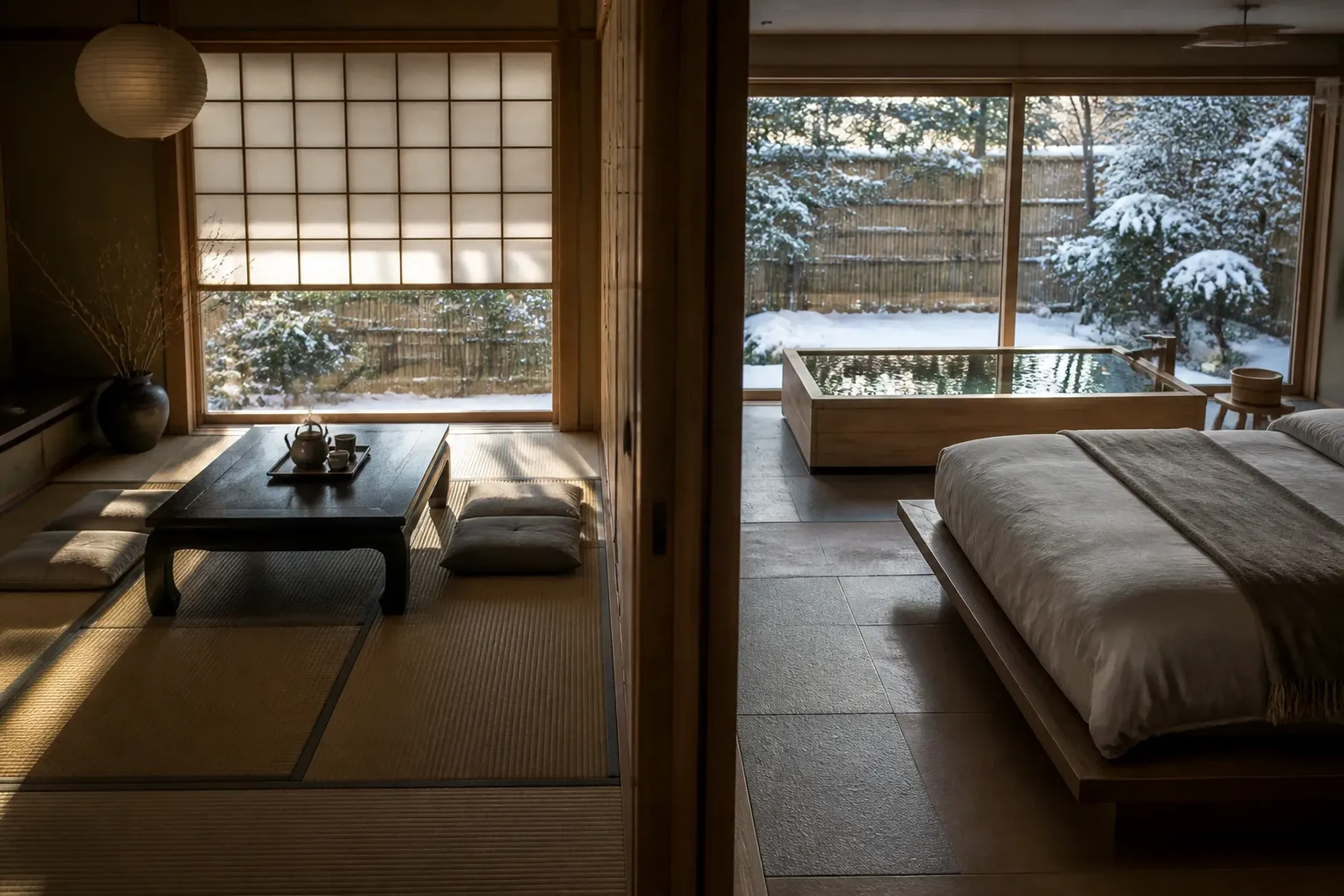
A traditional ryokan is built around tatami rooms and floor living. You sleep on a futon that staff lay out in the evening and clear in the morning. Meals often run to a fixed schedule, and dinner is frequently served in your room as a multi-course kaiseki. You wear a yukata provided by the house. Bathing may be communal or scheduled, and staff enter the room to serve and to handle the futon. English can be limited. The rhythm of the evening belongs to the property, not to you.
Two sentences of texture, no more. The light in these rooms is low and the materials are quiet: paper, cedar, worn stone. It is a space designed to slow you down whether or not you asked to be slowed.
Modern
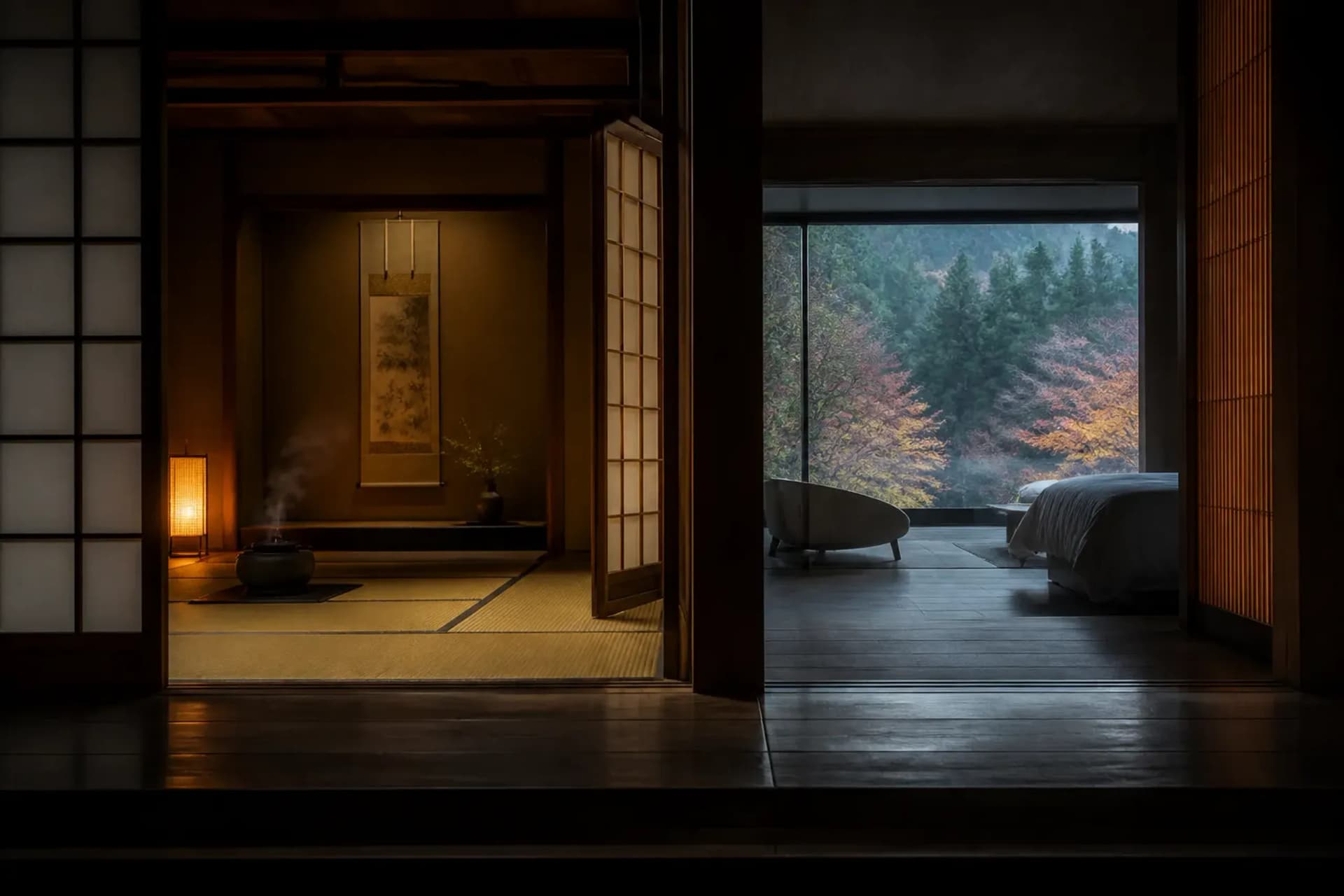
A modern ryokan keeps the ritual but loosens the constraints. You typically sleep in a bed. Bathrooms are usually private and in-room. Dining is often flexible, sometimes in a restaurant with a range of seating times rather than a single fixed hour. Privacy runs closer to a hotel: staff knock and wait rather than entering to arrange the room. Many of these houses read as design-forward or resort-style while still delivering the kaiseki dinner and the onsen sequence that make a ryokan a ryokan.
Key point: A modern ryokan is not a diluted traditional one. It is a different, valid interpretation of the same rituals. MICHELIN's own editorial on the reinvention of the ryokan treats contemporary houses such as Amanemu in Ise-Shima as thoroughly ryokan, not as compromises.
What A Traditional Evening Actually Involves
This is where most surprises live. A traditional stay is not a hotel with tatami. It is a choreographed evening, and the choreography is the property's, not yours. Here is a typical arc. Details shift house to house, but the shape holds.
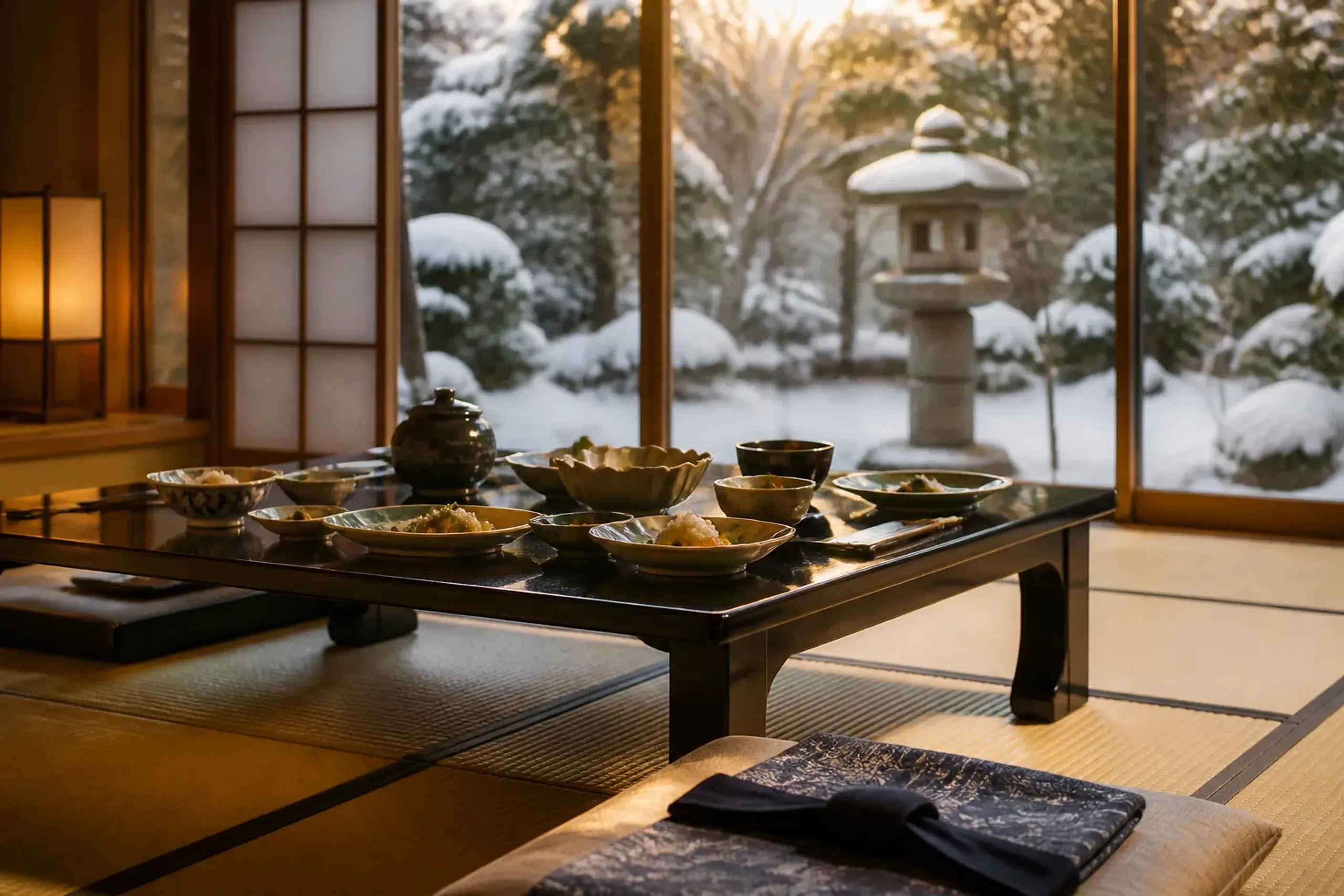
You arrive mid-to-late afternoon. There is a reason check-in tends to be earlier than a city hotel: the evening is meant to begin. You change into yukata. You bathe, often before dinner rather than after. Then dinner arrives, frequently at a fixed hour, and in many traditional houses that hour sits somewhere around six in the evening. Kaiseki is served course by course, either in your room or in a private dining space, and it takes time. It is meant to.
While you are at dinner, or after, staff enter your room to lay the futon. You return to a bed made on the floor where a low table stood an hour earlier. Breakfast is early and often at a set time too, and a traditional Japanese breakfast is a full meal, not a coffee. Check-out follows, and it tends to assume you were up, bathed, and fed.
Read that back. The property has set your dinner time, your breakfast time, your wake window, and the moment someone comes into your room. For many guests this is exactly the release they wanted. For others it is a cage with beautiful joinery. Knowing which you are is the entire point of this article.
Sleep, And Who The Futon Suits
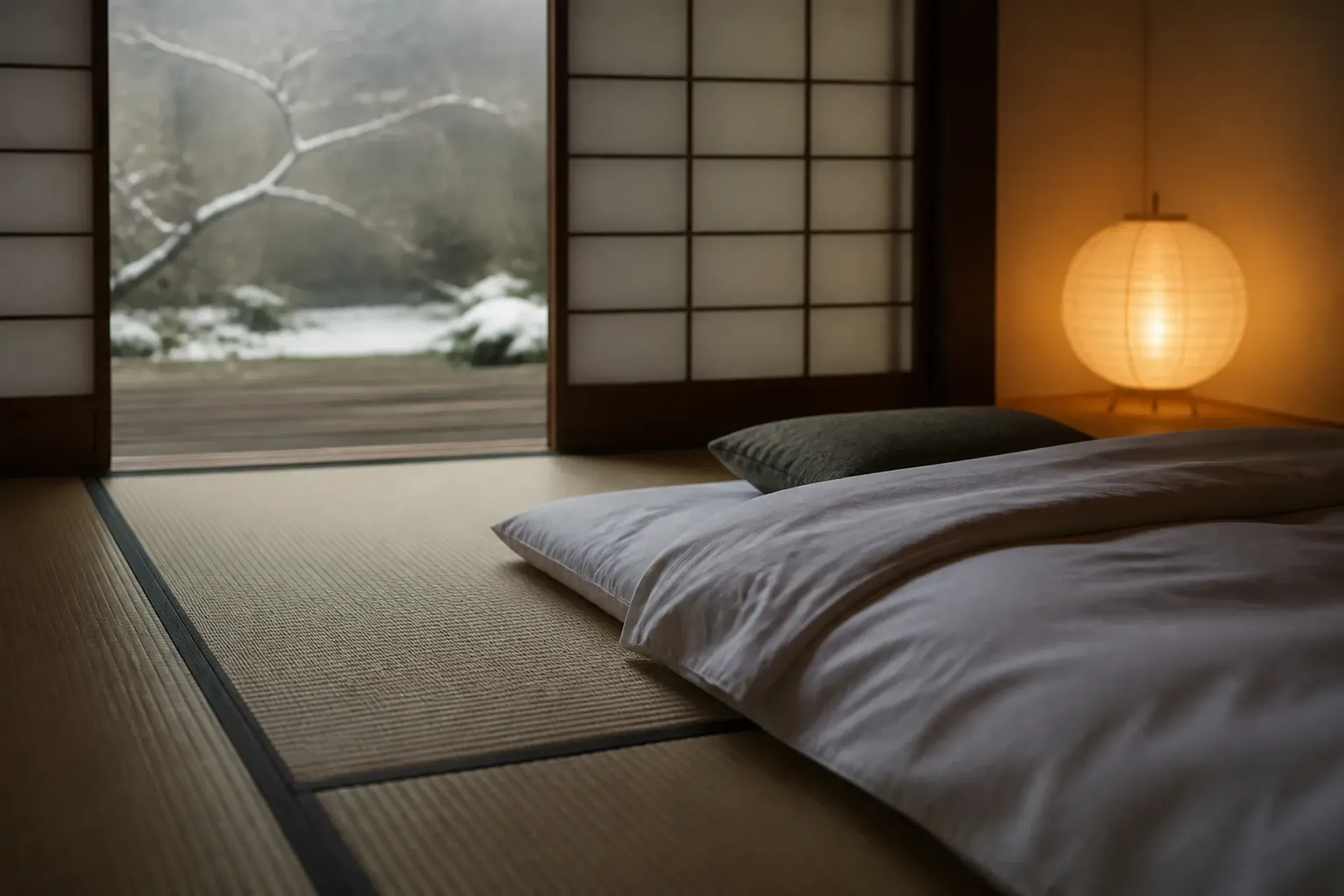
This is the single most common mismatch, so it gets the most space. A futon on tatami is firm. It sits on the floor. For some bodies that firmness is a relief and the sleep is the best of the trip. For others it is a long, aching night.
Ask yourself a few honest questions before you commit to a traditional house for more than one night. Do you sleep well on firm surfaces? Do you get up in the night, and if so, is rising from floor level a strain? Do you have a hip, knee, or back that objects to low positions? None of these are small concerns at two in the morning.
- If you prefer a soft mattress, a traditional futon will likely feel hard regardless of how well it is dressed.
- If you rise at night, getting up from and down to the floor repeatedly is worth thinking about in advance.
- If floor-level sleeping is unfamiliar, one night is a fair experiment. Several nights is a commitment.
A modern ryokan solves this quietly by putting you in a bed while keeping the kaiseki and the bath. If sleep is where your body is fussy, this is not a compromise. It is the sensible choice, and it does not cost you the ritual that drew you to a ryokan in the first place.
Mobility, Age, And Party Composition
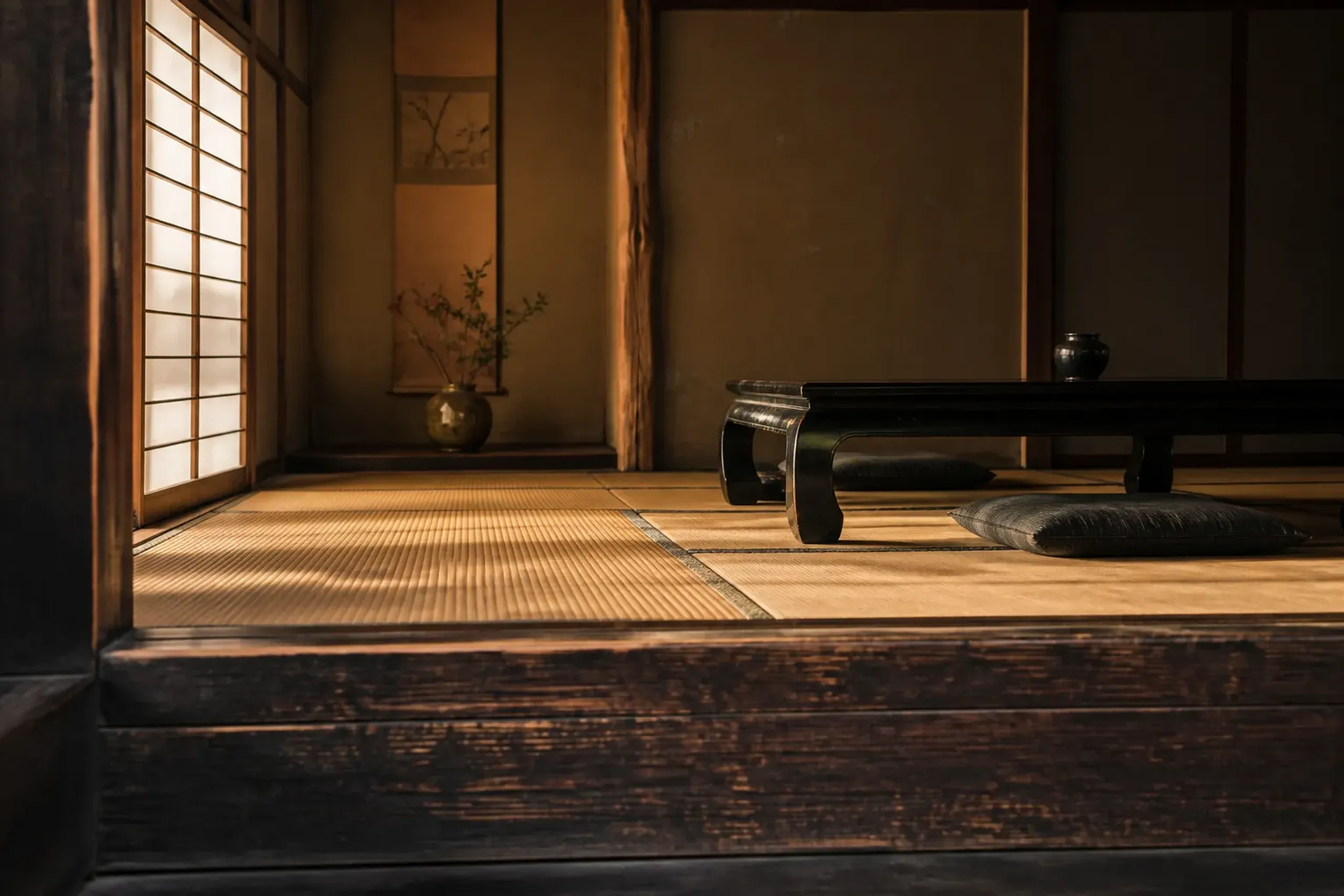
Traditional houses are built around the floor. That means floor seating at low tables, sometimes steps between levels, older bathing layouts, and rooms that were not designed with wheelchairs or walkers in mind. Barrier-free rooms exist, but you should confirm them by property rather than assume them. Never assume a traditional house is accessible.
If anyone in your party has limited mobility, is recovering from surgery, or simply dislikes sitting on the floor for a long meal, a modern ryokan usually removes the friction. Chairs and tables. In-room bathrooms you do not have to walk down a corridor to reach. Fewer steps. This is a practical decision, not a lesser one.
Party size matters too. A couple or a solo traveler fits a traditional room's intimacy well. Larger parties and families often do better in modern or resort-style houses, where connecting rooms, restaurant dining with flexible seating, and beds for everyone remove the logistical knots. For a fuller picture of how accommodation choices shift outside the major cities, our team's earlier piece on Japan Royal Service regional stays covers the ground well; see "Beyond the Route: Japan's Regions Worth the Detour."
Privacy And The Presence Of Staff
Here is a distinction that catches thoughtful travelers off guard. In a traditional house, staff presence is service. They enter to serve dinner, to clear it, to lay and clear the futon, sometimes to bring tea. It is attentive, practiced, and entirely well-meant. It is also presence.
Some guests find that presence warming. Others, particularly those who guard their privacy closely, find someone entering the room a few times an evening more than they want. Neither reaction is wrong. But it is far better to know your own preference before arrival than to discover it mid-stay.
Modern ryokan generally run on hotel privacy norms. Staff knock and wait. The room is yours between meals, and turndown is a choice rather than a scheduled event. If you value being unobserved, or you are traveling on business or with a public profile, this difference alone can decide the format. Discretion is the value we hold most tightly for the guests we serve, and it starts with matching you to a house that respects the boundary you actually want.
Meal Timing Against Your Itinerary
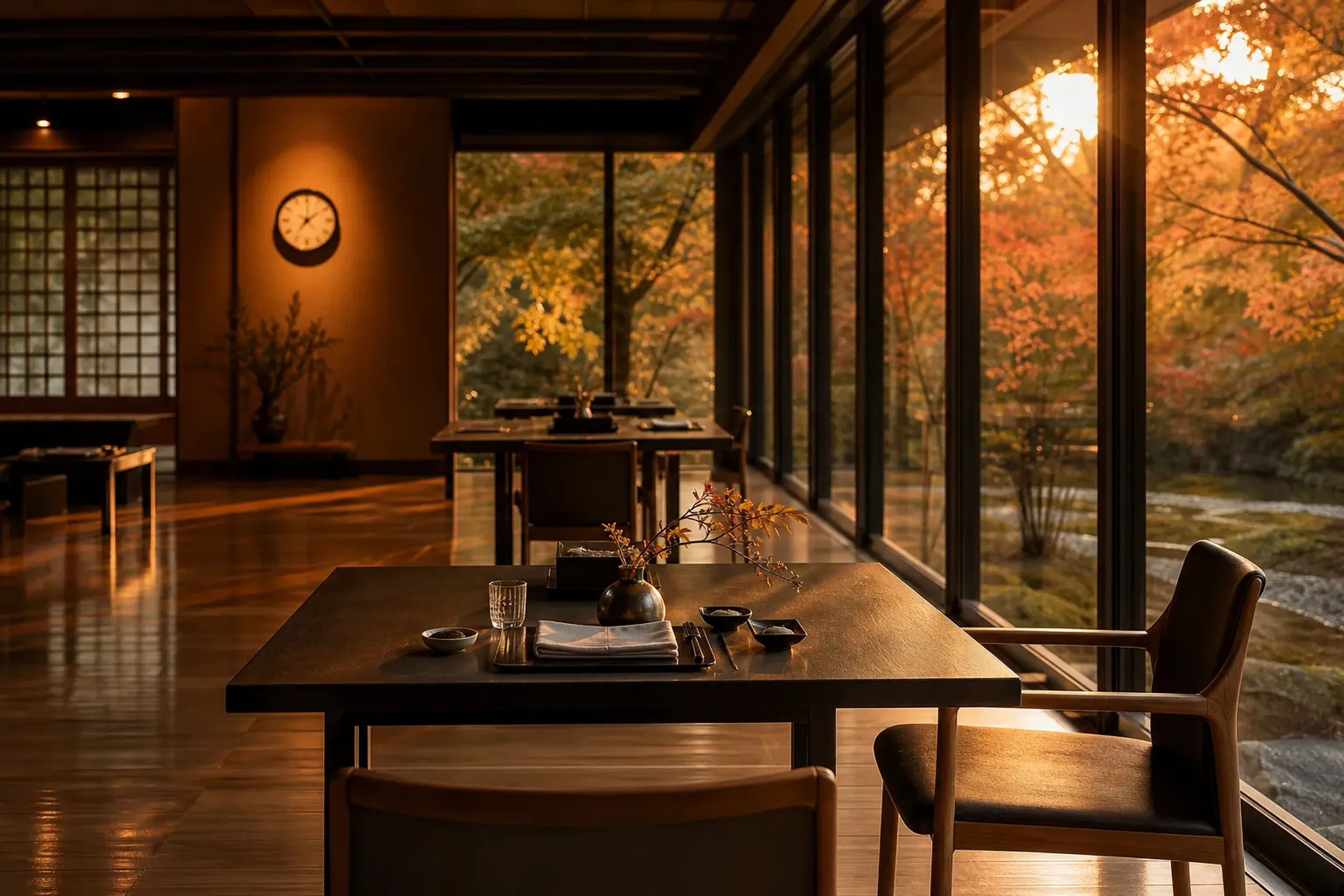
If sleep is the most common comfort mismatch, meal timing is the most common planning mismatch. A fixed dinner hour is not a detail. It is the axis the whole day turns on.
Picture it. A traditional house serves dinner around six. That means you are back, bathed, and in yukata before then. Which means your afternoon has to end by mid-afternoon. Which means a full sightseeing day, a long lunch in the city, or a late train simply does not fit. For a guest who travels hard, who eats late, who builds a day around a restaurant reservation, a fixed early dinner can quietly wreck the plan.
This is where meal-plan flexibility earns its keep. The Japan Tourism Agency notes that while it is common for ryokan to include both dinner and breakfast in the nightly fee, more houses now offer plans that separate lodging and meals, such as breakfast-only or room-only stays. JNTO's ryokan guidance likewise explains that ryokan are often priced per person with meals usually included. That flexibility is not universal, so confirm it, but where it exists it changes everything.
- One-night-two-meals (the classic plan): best when the ryokan is the destination and the evening is the point.
- Breakfast-only: lets you keep a dinner reservation in town or eat on your own clock while still getting the morning ritual.
- Room-only: rare in traditional houses, more common in modern and hybrid ones, and useful when the stay is a base rather than an experience.
Match the plan to the trip, not the trip to the plan. A food-driven itinerary and a fixed six o'clock kaiseki are on a collision course, and the fix is either a modern house with flexible dining or a traditional house booked on a lighter meal plan where the option exists.
The Hybrid Middle, Where Most Guests Land
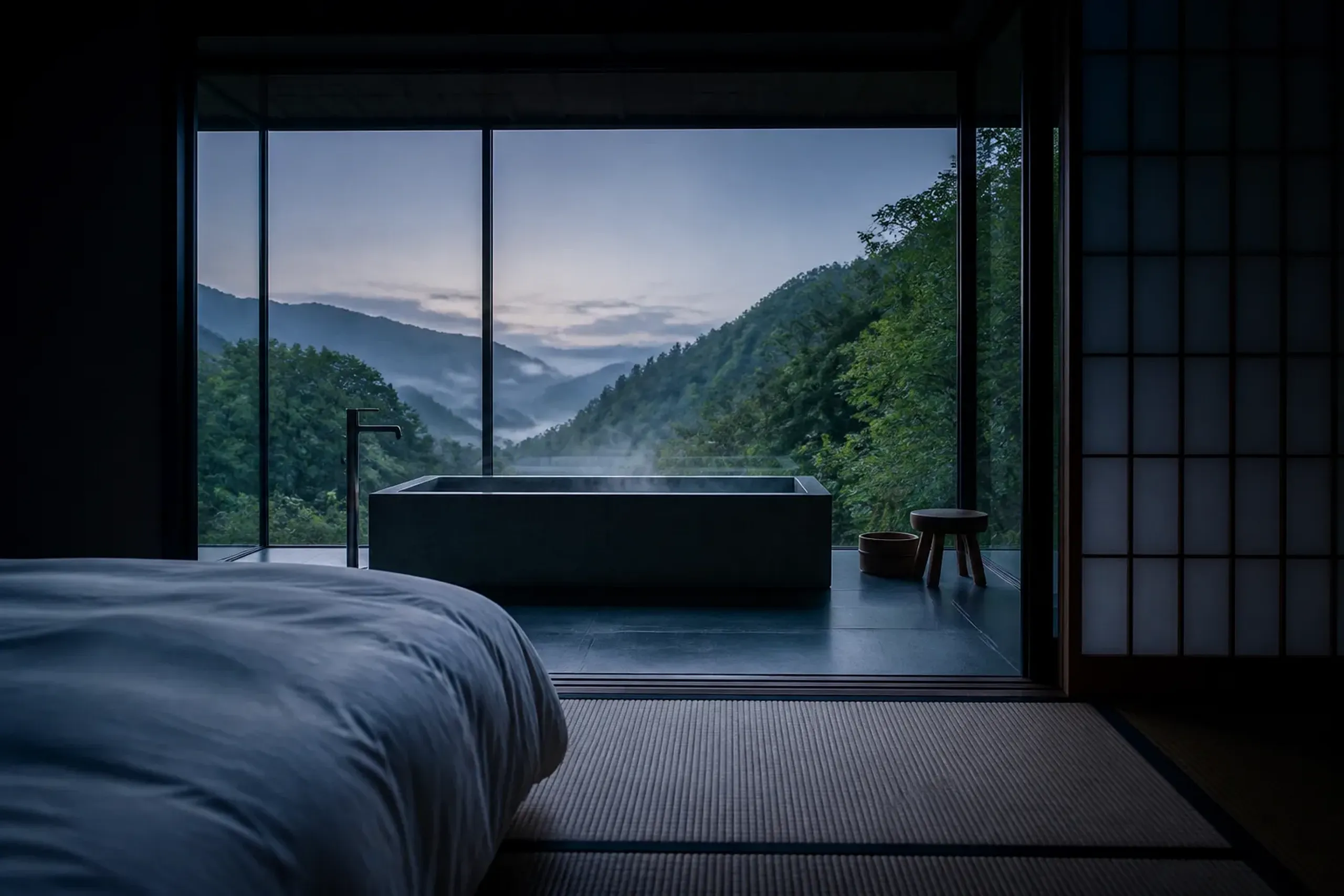
Here is the honest resolution to the whole traditional-versus-modern debate: most of the good options are neither pure. They sit in the middle, and that is where most of our guests end up, happily.
The hybrid house keeps the emotional payoff and removes the friction you personally cannot live with. Tatami rooms with beds. Kaiseki with a choice of dining times. Traditional service with private, in-room bathing. Ker & Downey's survey of top Japanese ryokan makes this point directly, noting that many of the best combine tatami rooms and communal baths with Western beds and private baths. The category is not a betrayal of tradition. It is tradition, edited for how people travel now.
The 2026 openings sharpen the picture. Hoshino Resorts has announced HOSHINOYA Nara Prison, set to open on June 25, 2026, within a Meiji-era Important Cultural Property, a case of modern hospitality inhabiting genuinely historic architecture. KAI Kusatsu, a ryokan-style retreat in the famous hot-spring town of Kusatsu in Gunma, is set for June 2026, positioned around slow, restorative stays. HOTEL THE MITSUI HAKONE has been announced for December 15, 2026, in partnership with Marriott's The Luxury Collection. And the MICHELIN Key selection, which arrived in Japan in 2024 as Asia's first, now grades hotels and ryokan alike, with houses such as the modern, ryokan-style Fufu Kawaguchiko among the recognized. A Key tells you a house clears a bar. It does not tell you the bath style, the formality of the kaiseki, or how much staff will be in your room. Use it as a shortlist, not an answer.
A Quick Way To Read A House Before You Book
- If this matters most: Bed, firm-mattress sleep, rising at night → Lean toward: Modern or hybrid
- If this matters most: Full immersion, floor living, the classic evening → Lean toward: Traditional
- If this matters most: Late dinners, a city restaurant reservation → Lean toward: Modern, or traditional on breakfast-only
- If this matters most: Limited mobility, chairs, in-room bath → Lean toward: Modern or hybrid (confirm accessibility)
- If this matters most: Strong privacy, minimal staff in the room → Lean toward: Modern or hybrid
- If this matters most: Larger party or children → Lean toward: Modern or resort-style
On the matter of private bathing specifically, from single-party kashikiri to in-room rotenburo and tattoo policy, we cover the mechanics separately. Rather than repeat it here, see our piece on designing a private winter onsen retreat.
How Many Nights In Each Format
Length changes the calculus more than most travelers expect. A traditional house rewards one or two nights and rarely more. The rhythm that feels like a gift on night one can feel like a schedule by night three, and the sleep question compounds. Book the famous traditional inn for a single, well-placed night and it becomes the memory of the trip.
Modern and hybrid houses stretch further because they give you back your day. You can stay three or four nights in a resort-style ryokan and still keep your own hours. This is why the itinerary math usually works out the same way: cities like Tokyo and Kyoto are hotel-led, while onsen regions such as Hakone, Izu, the Japanese Alps, Kusatsu, and Kinosaki are ryokan-led. Put your traditional night where the ryokan is the destination, not a place to sleep between sights.
Getting between those two worlds without friction is its own quiet luxury. Our private chauffeured transport means the shift from a Tokyo hotel to a mountain ryokan arrives on the property's clock, not a train timetable, which matters when dinner is at six and the road is long.
Frequently Asked Questions
Is a modern ryokan less authentic than a traditional one?
No. A modern ryokan keeps the defining rituals, kaiseki dining and onsen bathing, while changing the constraints around them. MICHELIN's own editorial treats contemporary houses as full ryokan. Authenticity here is a matter of interpretation, not of ranking.
Do all ryokan include dinner and breakfast?
Often, but not always. The Japan Tourism Agency notes it is common for the nightly fee to include both meals, while a growing number of houses offer plans that separate lodging and meals, such as breakfast-only or room-only. Confirm the plan before you book, especially if your evenings are spoken for.
Will I sleep on the floor?
In a traditional house, usually yes, on a futon laid on tatami. In a modern or hybrid house, usually in a bed. If firm floor sleeping does not suit you, choose a house with beds; you lose none of the ritual.
How many nights should I stay in a traditional ryokan?
One or two. The set evening rhythm and the futon are best enjoyed in a short, well-placed stay. For longer onsen-town stays, a modern or resort-style ryokan tends to sit more comfortably.
Are traditional ryokan suitable for guests with limited mobility?
Not reliably. Floor seating, low tables, and steps are common, and barrier-free rooms vary by property and must be confirmed. A modern or hybrid house is usually the practical choice.
Why Choose Japan Royal Service
The choice between a traditional and a modern ryokan is not about taste in the abstract. It is about how you sleep, how you move, how much you guard your privacy, and how your dinner hour fits the rest of the day. Get that fit right and the stay becomes the finest night of the trip. Get it wrong and even the most celebrated house disappoints.
Our team at Japan Royal Service books ryokan directly, and we match the format to the party and the itinerary rather than to a list of famous names. We ask the awkward questions first: how you sleep, who is traveling, what your evenings need to hold. Then we place the ryokan night where it does the most, on the plan you actually intend to travel, with a tailor-made itinerary built around it. Our coordinators work in English, Japanese, Thai, and Filipino, and your identity and your plans stay confidential from first inquiry to final departure.
If you would like an honest assessment of which format suits how you travel, reach our team privately via WhatsApp or LINE, or contact us here.