In this guide
- 01Crossing From Hakata: The Quiet Beginning
- 02Why Are Tsushima And Iki Called Japan’s Border Islands?
- 03How Do You Get To Tsushima And Iki From Fukuoka (Hakata) In Summer?
- 04Getting Around On Tsushima And Iki: What Summer Logistics Really Feel Like
- 05Tsushima In Summer, South To North: A Slow Line Up The Island
- 06Iki In Summer: Tide, Stone, And A Coastline That Keeps Changing
- 07Summer On The Border: Festivals, Beaches, And August Weather In Numbers
- 08How Many Days Do You Need For Tsushima And Iki In Summer?
- 09Begin Your Crossing
The boat leaves Hakata with a low, steady hum.
You watch the wake flatten, then fray into glitter. No grand announcement. Just water, sky, and time to recalibrate.
In summer, Tsushima and Iki feel like a different chapter of Japan. The border is the story. And the sea sets the pace. This is a part of Japan that rewards the traveler who values the crossing, not only the arrival.
Crossing From Hakata: The Quiet Beginning
You do not “arrive” in Tsushima and Iki. You cross.
That distinction matters in summer, when the air turns dense and the horizon shimmers, and you begin paying attention to the practical things: sea conditions, luggage you can manage, and how much daylight you want after a long transit.
Many of our guests tell us the crossing itself becomes the first experience. Not entertainment. A reset. The kind of unhurried transition that only the sea can give you.
Why Are Tsushima And Iki Called Japan’s Border Islands?
Tsushima sits about 49.5 km from Busan, and on clear days Korea is visible from the island itself.
This proximity is not trivia. It has shaped the islands’ history, their viewpoints, their defenses, and their summer festivals, and it explains why the landscape feels watchful even when it is utterly quiet.
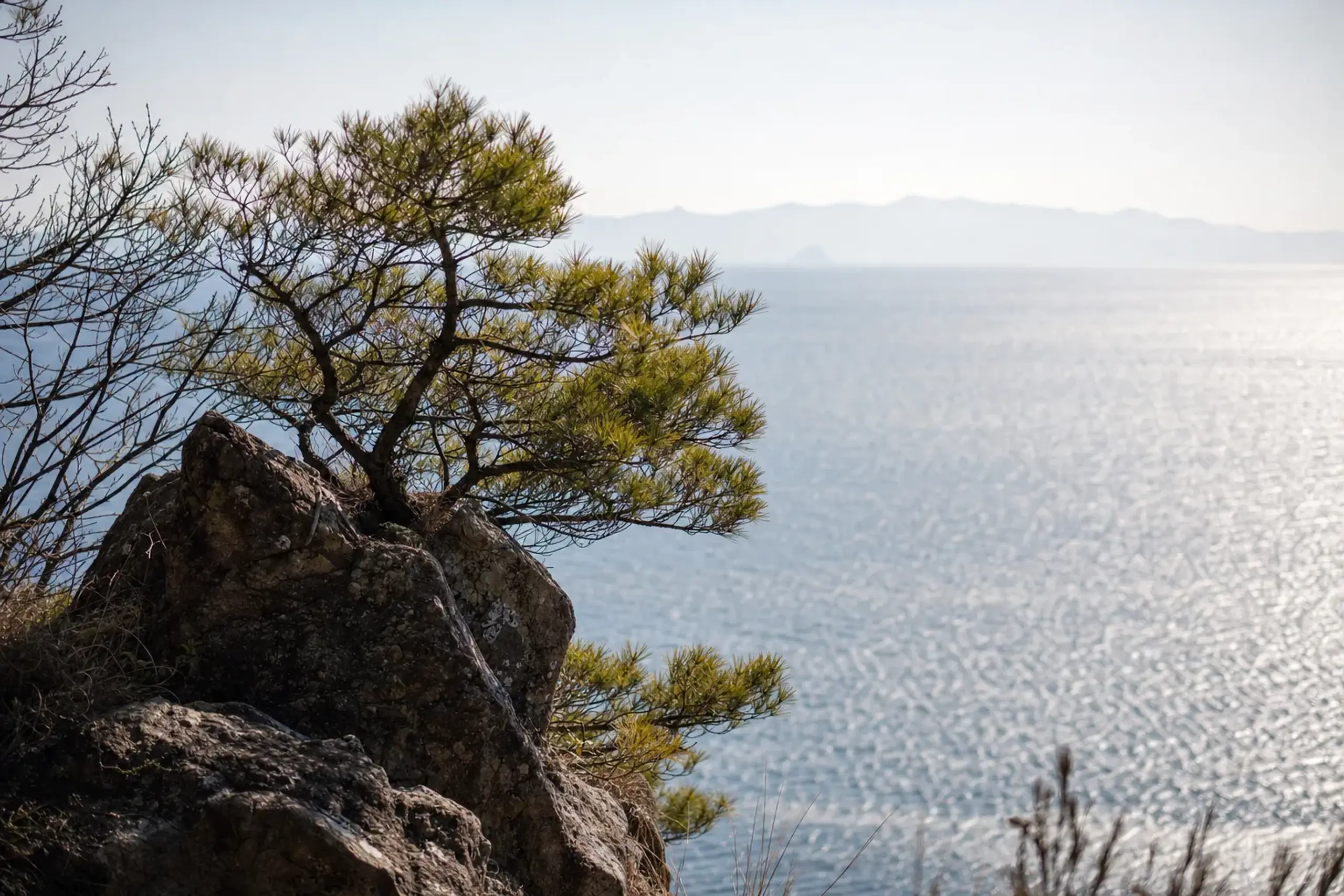
Both islands are designated under Japan’s 2016 law concerning inhabited remote border islands. You feel that “edge-of-the-map” quality without needing any drama to announce it.
There is also a cultural frame that helps you read what you see. The Japan Heritage story is titled “Border Islands Iki, Tsushima, Goto: bridges from antiquity.” It places these islands on an ancient maritime route of exchange and encounter—a passage between worlds. Gotō belongs to that same story, but this guide stays with Tsushima and Iki.
How Do You Get To Tsushima And Iki From Fukuoka (Hakata) In Summer?
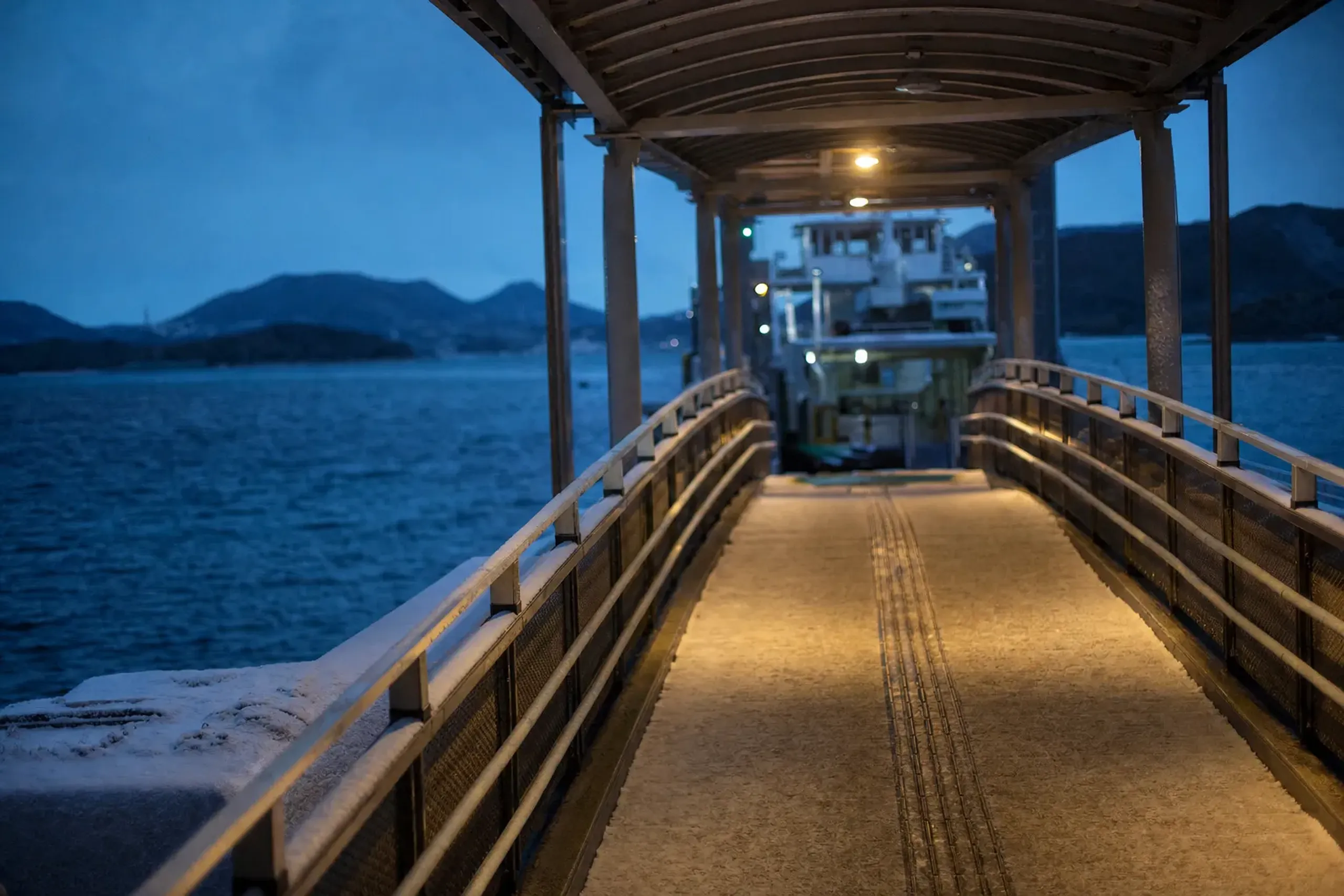
From Hakata Port, the fast boat to Iki takes about 1 hour 10 minutes, and the fast boat to Tsushima (Izuhara) takes about 2 hours 15 minutes.
Those times are the headline, yet summer adds footnotes. Fast boats can be cancelled in poor sea conditions, while ferries take longer but are often described as more stable, especially on the Iki route.
For Tsushima, official access guidance also lists a ferry option of about 4.5 hours from Hakata to Izuhara. For Iki, the ferry from Hakata is about 2 hours 20 minutes. No romance in those numbers. Just reality—and reality is what a seamless summer trip is built upon.
If you prefer air, Tsushima has flights of about 30 to 35 minutes from Fukuoka and from Nagasaki (sources differ by a few minutes, so we keep it as a range).
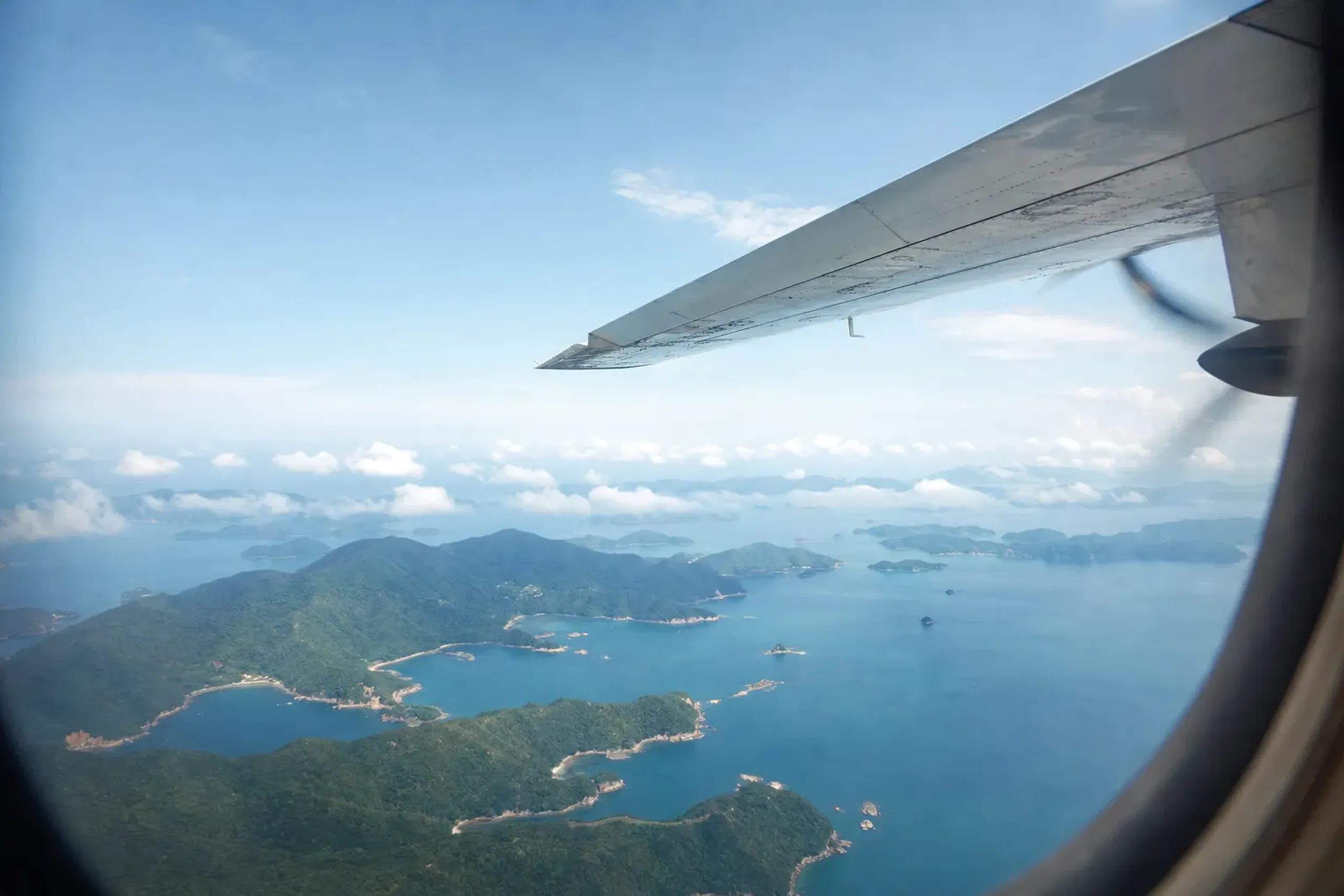
Iki has a short flight from Nagasaki, and a fast boat from Hakata.
In our experience at Japan Royal Service, a sound summer plan is one that admits weather exists. Simple, but surprisingly rare. Our concierge team builds each day around the crossing and keeps a fallback plan ready should the sea or sky refuse to cooperate—so that a cancelled sailing never becomes a lost day. A thoughtfully constructed bespoke itinerary treats the weather not as an obstacle, but as a variable we have already accounted for.
Getting Around On Tsushima And Iki: What Summer Logistics Really Feel Like
On Tsushima, private cars dominate, buses are infrequent, and National Route 382 runs north–south from Izuhara to Hitakatsu.
That single sentence changes your whole itinerary. Tsushima is long—about 82 km north to south—so “just popping up north” is rarely a casual detour.
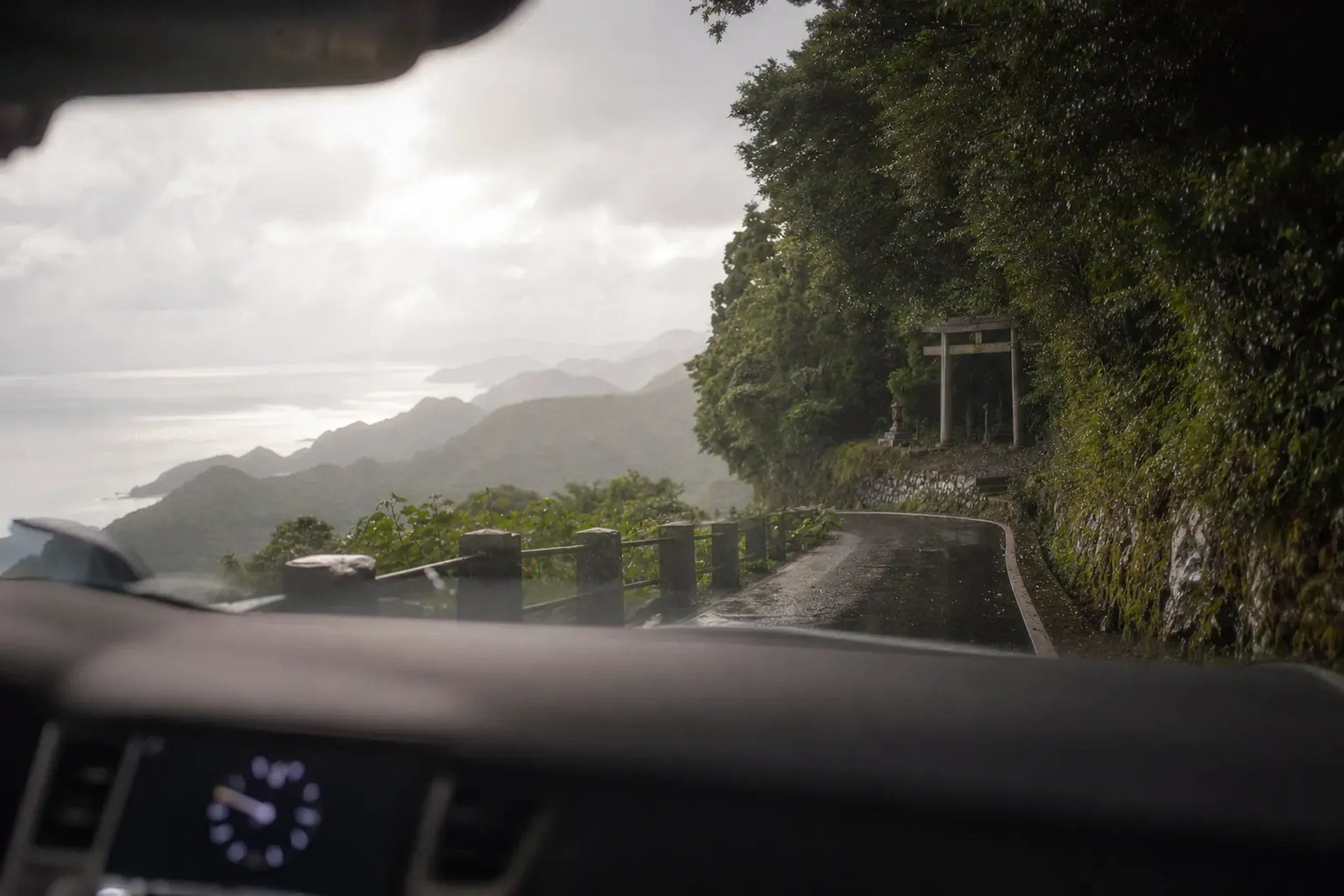
The side roads can be narrow, with sharp curves and steep slopes. You notice it more in summer, when you would rather not surrender time to missed connections or uncertain transfers.
Iki is different. The island is compact enough that a drive around it takes about 120 minutes, yet the sights are spread out, and the terrain is studded with hills. Local buses exist, along with taxis and other options, but most visitors still prefer a car-based plan.
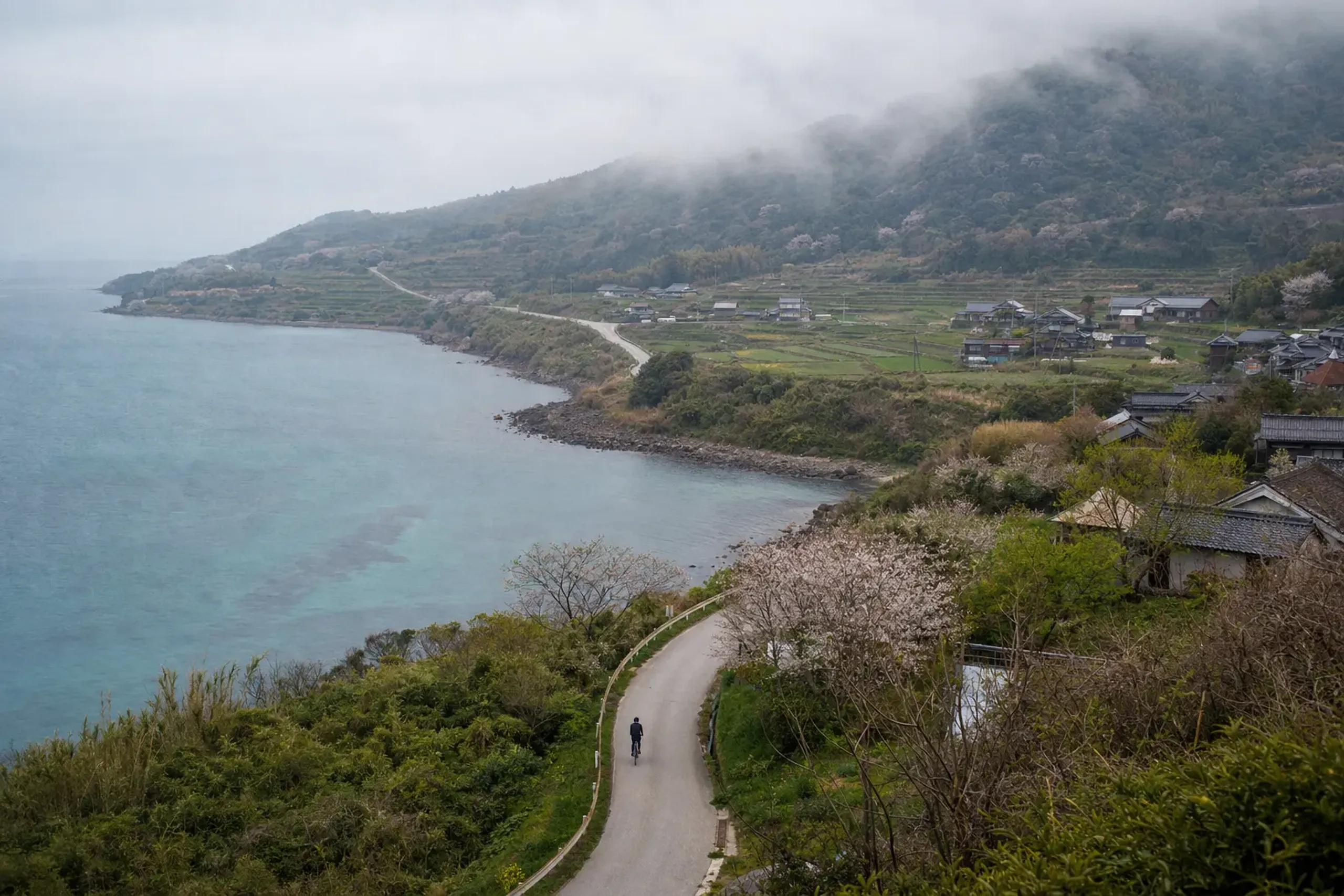
When private transportation first comes up in our conversations, we point guests to our chauffeured transportation approach, so you can see how we think about timing and comfort on travel days. On islands this intimate, where a familiar driver and a quiet car become part of the privacy you came for, that care is felt rather than announced.
Tsushima In Summer, South To North: A Slow Line Up The Island
Tsushima rewards a linear plan. South to north. No zigzags.
Start near Izuhara, where the island’s pace becomes clear. You are not here for a checklist. You are here to watch history sit in plain sight—unguarded, unperformed, and all the more powerful for it.
Izuhara And Banshoin: Stone Steps, Clan Memory
Banshoin is the family temple of the Sō clan, founded in 1615, and it stands close enough to Izuhara Port that you can reach it on foot in about 15 minutes.
The mood is measured. Steps. Shade. And then more steps—132 stone steps rising to the clan graves—where the air can feel heavier in August, and not from the heat alone. This is restraint made physical: moss, stone, and silence doing the work that gold leaf never could.
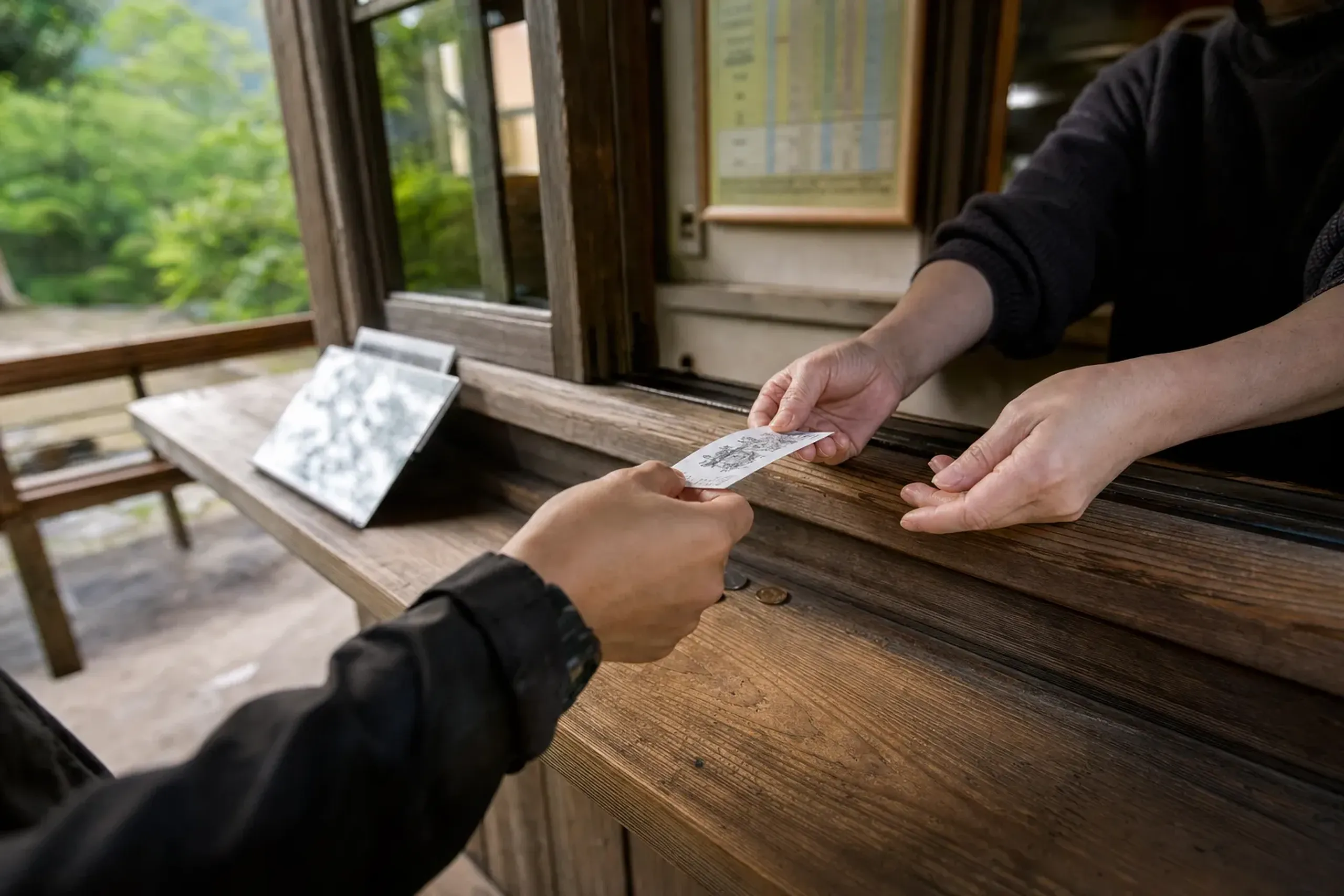
Entry is paid, and details can change, so we treat it as a place to approach with a calm schedule. Rushed visits feel wrong here, and a guide who can read the atmosphere—knowing when to speak and when to let the stillness hold—makes all the difference.
Kaneda Castle Ruins: A Border Fortress Above The Water
Kaneda Castle is a mountain fortress built in 667 and is designated a national special historic site.
It is also listed among the Continued 100 Fine Castles of Japan. That label matters less than the sensation it leaves behind: the island’s border role was never abstract. Standing here, you understand it in your body.
The site is reached on foot from a small trailhead car park, and it is about 25 minutes by car from Izuhara. Plan it for when your day still has focus. This is not a last-stop add-on.
Watatsumi Shrine: Two Torii Rising With The Tide
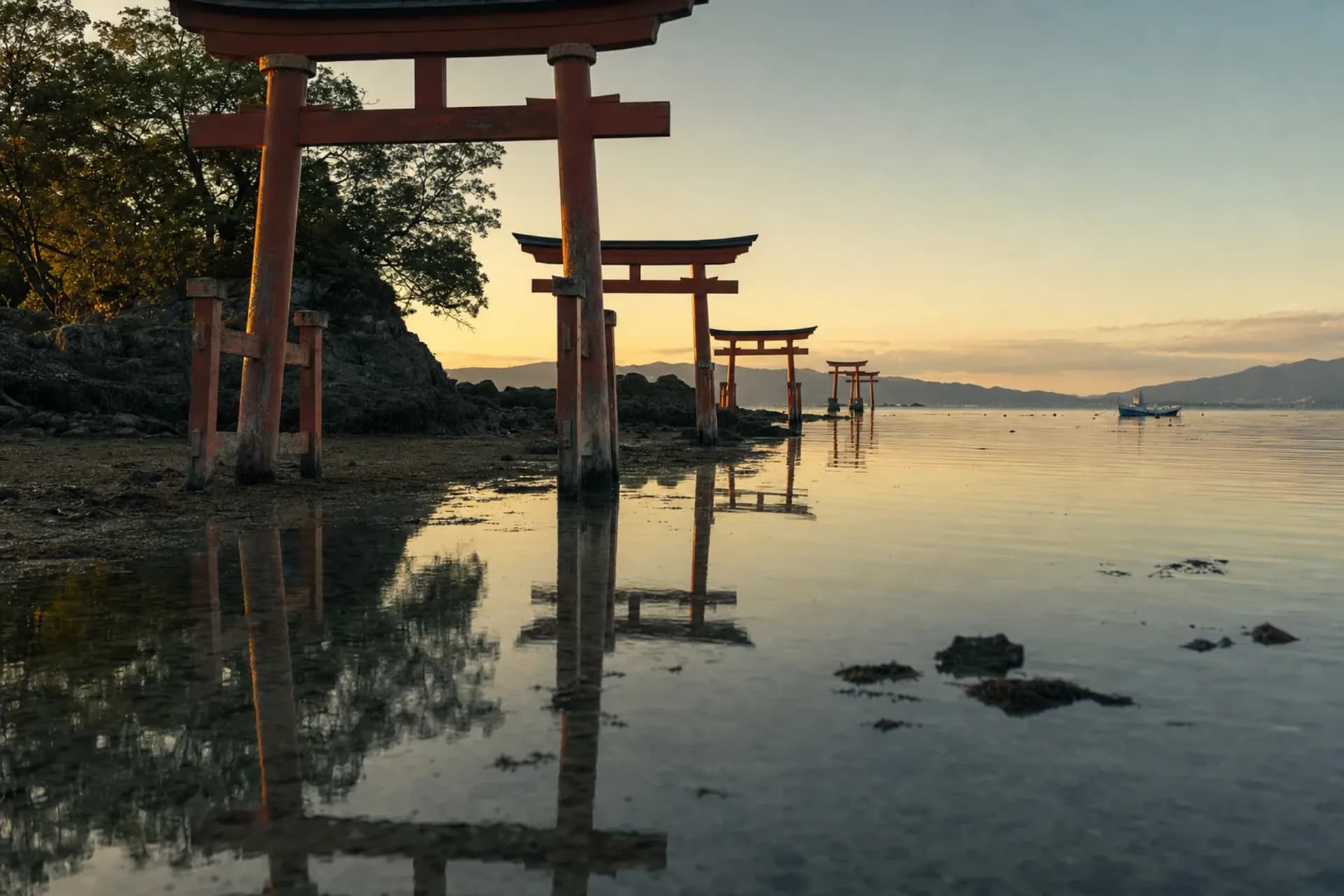
At Watatsumi Shrine, two of the five torii rise directly from the sea, changing with the ebb and flow of the tide.
Summer light can be sharp here. The waterline draws and redraws itself, and the torii seem to shift position as you watch—a slow, living sculpture that no photograph fully captures.
The shrine is about 55 minutes by car from Izuhara. We suggest arriving with enough time to simply sit and observe, not only to take photographs. Timing the visit to the tide matters, and the JRS concierge team confirms the low-tide times directly with the guest at time of arrangement.
Eboshidake Observatory: 145 Steps To A 360-Degree View
Eboshidake rises to 176 m, and the observatory is reached by 145 steps with handrails, taking about 10 minutes to climb.
This is where the border story turns visible. On days when weather conditions are good, sources note you may see the silhouette of South Korea across the water. Not always. Not promised—and that uncertainty is part of its quiet magic.
Eboshidake is about 60 minutes by car from Izuhara. In summer, we like to time it late enough for softer light, but early enough that the sky has not yet hazed over. Knowing the right hour for the right view in the right month is the kind of seasonal judgement that separates a good trip from an unforgettable one.
Korean Observatory: The View Toward Busan (When The Sky Allows)
The Korean Observatory has reopened with barrier-free access, and on clear days it offers views toward Busan.
It is about 1 hour 50 minutes by car from Izuhara Port, and about 15 minutes from Hitakatsu Port. That distance is the point. The north is not “nearby.”
If mobility needs are part of your trip, this is one of the more straightforward viewpoints on the island now. Our team can also design an accessible route that avoids awkward transfers and keeps rest stops realistic—quiet, anticipatory care that is felt without ever being discussed.
Iki In Summer: Tide, Stone, And A Coastline That Keeps Changing
Iki feels more compact than Tsushima, yet it is not small in character.
The island is about 17 km by 15 km, with a coastline of about 191 km. Summer here can be bright and salt-clean, with quick shifts in mood when clouds stack up over the water.
We like to plan Iki as a sequence of coastal scenes, with one fixed point of discipline: you must respect the tide.
Kojima Shrine: The Path That Appears Only Around Low Tide
At Kojima Shrine (Ashibe), the sea path appears for only a few hours around low tide.
Iki has two shrines bearing the name “Kojima Shrine,” and only the one in the Ashibe area has the sea path. That small detail prevents a great deal of confusion—and a wasted morning.
Access can also be limited for repairs. The Iki tourism federation posts notices, and our concierge team confirms the current status and the precise low-tide times directly with you at the time of arrangement. No guessing. This is exactly the sort of invisible groundwork that lets you walk the exposed path at the one hour it exists.
Saruiwa: A 45-Meter Sea Rock Near Gonoura
Saruiwa is a 45 m sea rock and a symbolic Iki landmark, about 20 minutes by car from Gonoura Port.
It is often described as resembling a monkey.
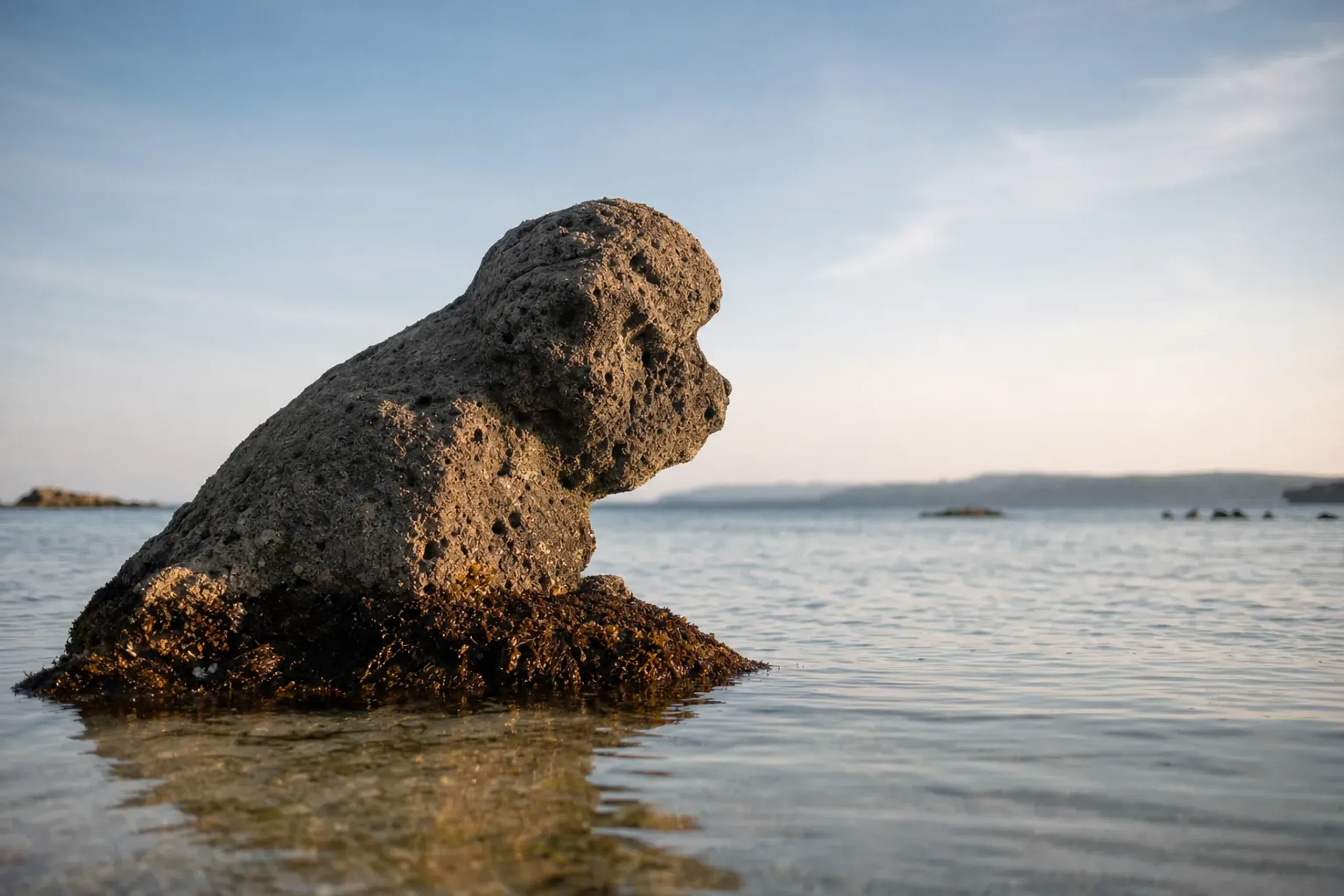
You will see it instantly. Then you will begin noticing the surrounding cliff line and the way the summer sun pulls different colors from the stone through the day.
This stop works well as a short, clean break in a driving day. Quick. Photogenic. Then you move on.
Tatsunoshima: A Small Uninhabited Island Off Katsumoto
Tatsunoshima is an uninhabited island about 10 minutes by boat from Katsumoto Port, with boat service generally running from April to November.
Rough seas can cancel the boat. That is normal, especially as summer shifts toward typhoon season.
If you go, you go for coastal scenery of a kind the mainland cannot offer, including the 60 m cliff at Hanagezaki. Tokyo and Kyoto hold no geometry like this—and the sense of standing somewhere few ever reach is precisely what makes it worth the crossing.
Harunotsuji And The Iki-Koku Museum: An Older Japan In Reconstructed Lines
Harunotsuji is a national special historic site, and the Iki-Koku Museum notes 17 reconstructed buildings on the grounds.
The pairing matters. You take in the landscape first, then you receive the interpretive layer that makes it legible—two readings of the same ancient place.
The museum is about 20 minutes by car from Ashibe Port. Hours and fees vary, so we treat the visit as flexible rather than rigidly timed.
Tsutsukihama Beach: A Long White Curve Close To The Airport
Tsutsukihama is about 600 m long and sits about 3 minutes by car from Iki Airport.
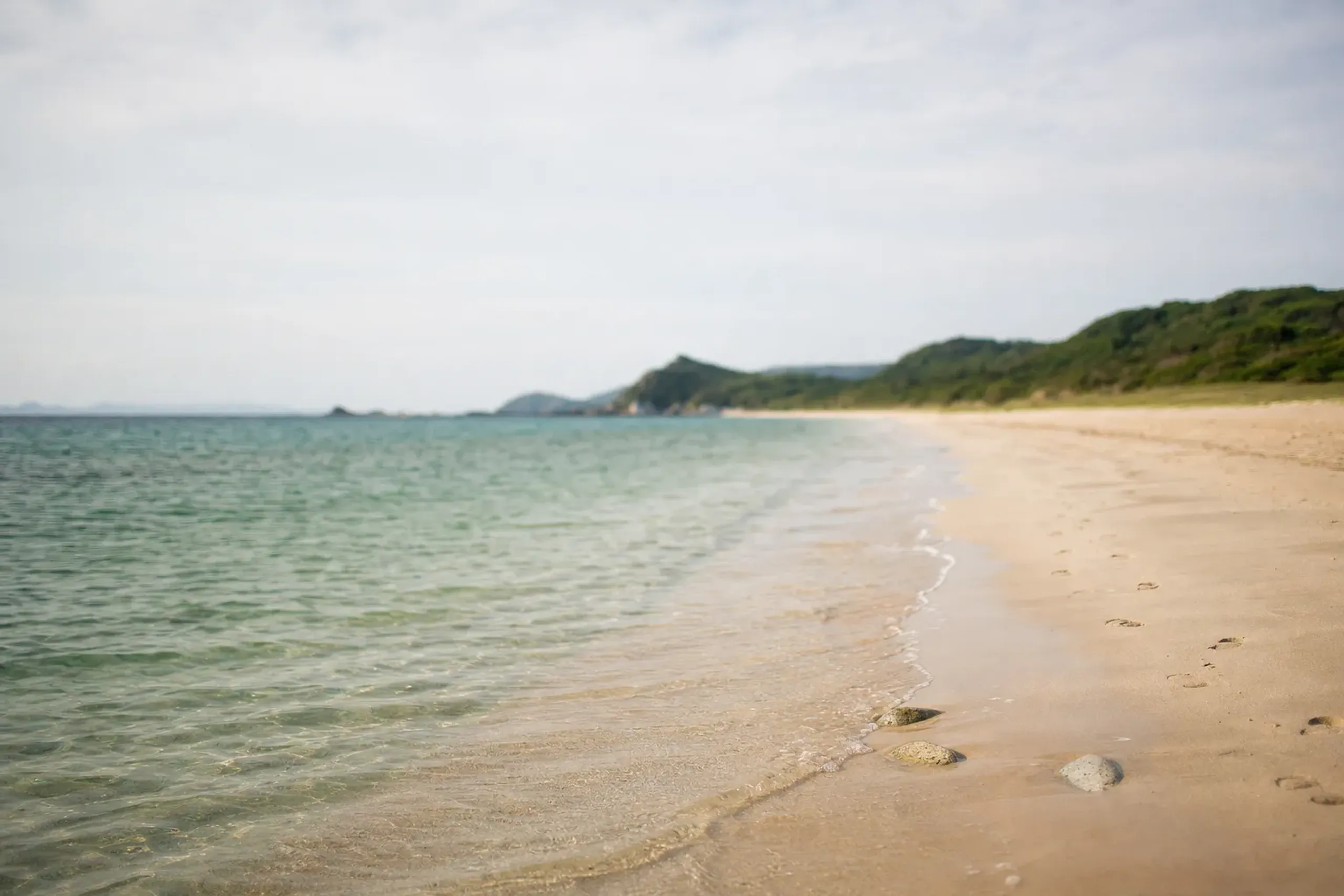
It appears on the Japan Beaches 100 and Japan Fine Bathing Beaches 100 lists, alongside places like Nishikihama and Tatsunoshima. Those names can become your shorthand when you discuss beach time with your driver or guide.
The beach has a summer opening period set each year by the island, typically from mid-July to the end of August. Local rules apply and can change. We confirm current conditions directly with you at the time of arrangement.
Summer On The Border: Festivals, Beaches, And August Weather In Numbers
Summer here is honest. Heat. Humidity. Sudden rain. Knowing how to move with it, rather than against it, is half the pleasure.
Izuhara Minato Matsuri: First Saturday And Sunday Of August
Izuhara Minato Matsuri is held every year on the first Saturday and Sunday of August, and it includes a re-enactment of the Korean envoy procession—a living echo of the island’s role as a bridge between nations.
This is a genuine public event, not a staged show. You stand where the locals stand, inside a tradition rather than in front of it.
We suggest approaching it like a moving street scene rather than a fixed “seat-and-watch” performance. Arrive early. Eat simply. Keep your schedule loose—and let a guide who knows the quiet vantage points steer you clear of the crowds.
August Climate (JMA Normals, Izuhara Station)
For Tsushima, the Japan Meteorological Agency normals at Izuhara (1991–2020) describe August as warm, humid, and rainy.
- Mean Temperature: 26.8°C
- Mean Maximum Temperature: 30.0°C
- Mean Minimum Temperature: 24.2°C
- Rainfall: 326.4 mm
- Days With ≥ 1 mm Rain: 10.5 days
- Mean Humidity: 81%
Iki’s official descriptions emphasize heavy rain during the June–July rainy season and again in September, plus typhoons and autumn rain. Summer is described as cooler than northern Fukuoka, yet it can still feel sticky when clouds settle low over the coast.
Key fact: Plan at least one “indoor pivot” each day (a museum, an interpretive stop, a longer lunch) so that a sudden downpour reshapes the day rather than erasing it.
How Many Days Do You Need For Tsushima And Iki In Summer?
Plan 4 to 6 nights for both islands in one trip, or 2 to 3 nights if you choose only one.
This is not about luxurious pacing for its own sake. It is about distance and disruption. Tsushima’s north–south shape makes day-tripping feel punishing, and Iki’s tide-based highlights reward an extra margin of time.
If you prefer a calmer first visit, choose one island and do it properly. Many travelers choose Tsushima as a history-and-viewpoint trip, and Iki as a coast-and-culture trip with a softer driving rhythm.
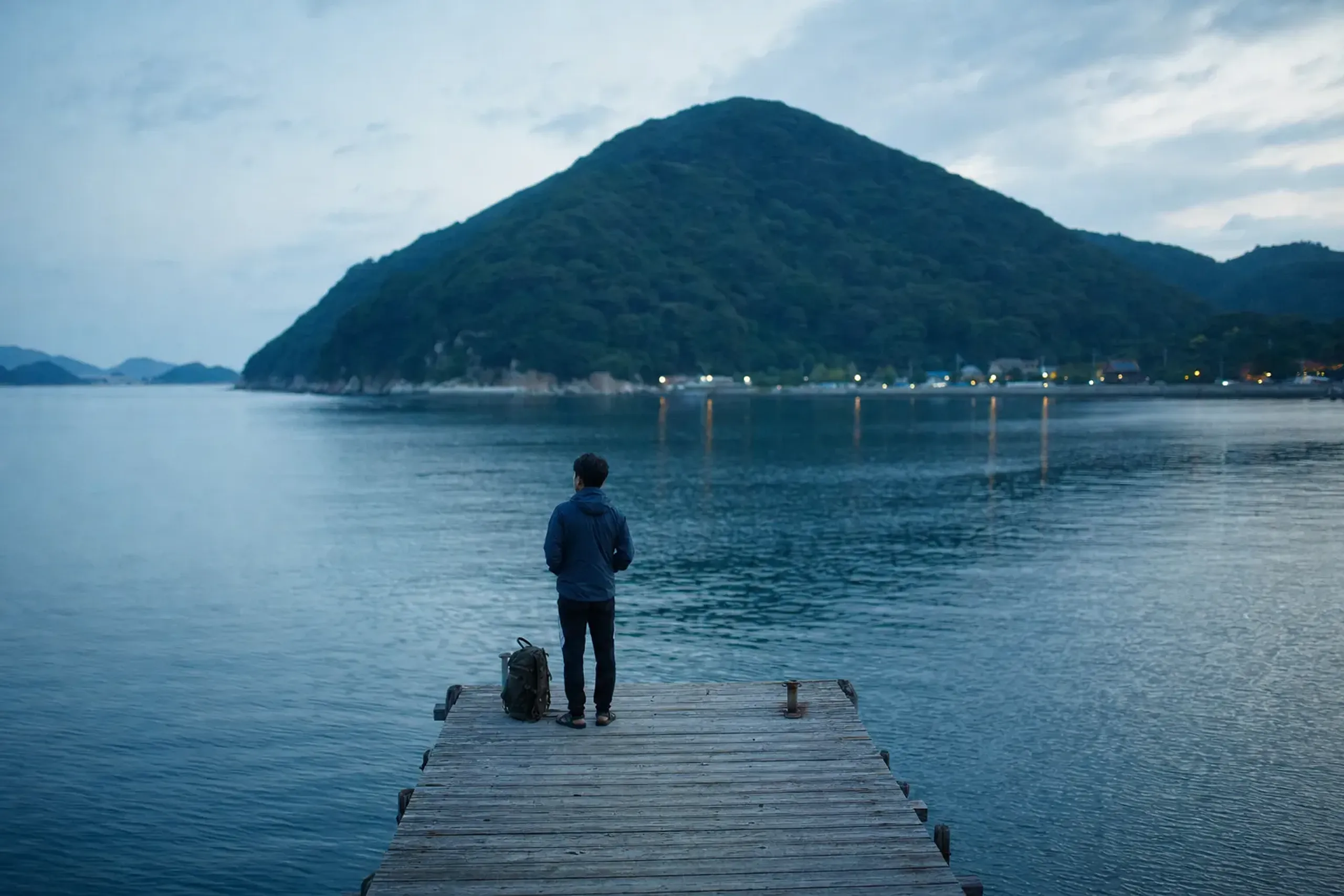
Either way, the reward is the same: a corner of Japan that cannot be reached by guidebook alone.
Where To Base On Tsushima
Izuhara is the practical base for Tsushima because it keeps you close to the port, to walkable sites like Banshoin, and to the island’s main north–south route.
From there, you can make the south and central days feel effortless, then dedicate “most of a day” to the far north, including the Korean Observatory area, without turning it into a dawn-to-night push.
Where To Base On Iki
Iki’s ports—Gonoura, Ashibe, and Katsumoto—each suggest a different rhythm. We usually choose a base according to your priority: low-tide timing for Kojima Shrine (Ashibe area), quick access for the Tatsunoshima boat (Katsumoto), or a broader loop-day plan (Gonoura).
The simple rule: pick one base, then loop outward. Constant hotel switching quietly steals your time—and time is the one luxury these islands repay with interest.
Begin Your Crossing
Tsushima and Iki are not destinations you book. They are places you reach through the right timing, the right base and a plan that flexes with the sea. This is a part of Japan that takes planning to reach.
To begin planning, contact our team here.