In this guide
- 01The Two Fronts That Control Tōhoku Autumn Color
- 02Will Tōhoku Autumn Leaves Be Late In 2026?
- 03Typical Kōyō Windows In Tōhoku, Prefecture By Prefecture
- 04Where Should I Go In Tōhoku For Early Kōyō In Late September?
- 05Mid-Season Gorges And Water: When Color Feels Like It’s Moving
- 06Shirakami-Sanchi: What You Can Enter, And What You Cannot
- 07Late-Season Color: Valleys, Onsen Towns, And Easy Trails
- 08A Current Popularity Snapshot (And How To Keep Your Day Civil)
- 09What’s Actually Bookable In 2026: Oirase Keiryu Hotel’s Autumn Walks
- 10How A Private Car Changes A Tōhoku Kōyō Trip
A gorge drops away, almost too sharply for the eye to measure. Maples catch the light for a moment, then the wind turns and the color goes matte again. You can hear the river before you see it. That’s Tōhoku in kōyō season: not a single “peak day,” but a moving target with rules.
Most travelers plan autumn foliage in Japan as one front moving south. That’s only half the story. In Tōhoku, the color also moves downhill—from high ridgelines to valley towns—over several weeks inside the same prefecture. Miss that, and you’ll chase the wrong week. Or the right week at the wrong altitude.
Our team at Japan Royal Service plans Tōhoku kōyō like an operating manual: altitude first, then date, then comfort and pacing. Quiet matters here. Discretion does too. And for guests who want more than viewpoints, shokunin craft—done privately, without performance—can sit naturally between landscapes.
The Two Fronts That Control Tōhoku Autumn Color
Tōhoku kōyō moves in two directions at once: south through Japan, and downhill within each prefecture from mountain zones to lowlands over weeks.
Japan’s kōyō zensen (autumn color front) is widely understood as the reverse of cherry blossom season: it begins in Hokkaidō in September, then reaches Kyūshū by late November or December in many years. That part is familiar.
The part that quietly changes your entire plan is the internal front. In Tōhoku, high elevations start early. Valleys keep going. If you arrive “at the right time” but spend your days at the wrong altitude, the trip feels oddly flat.
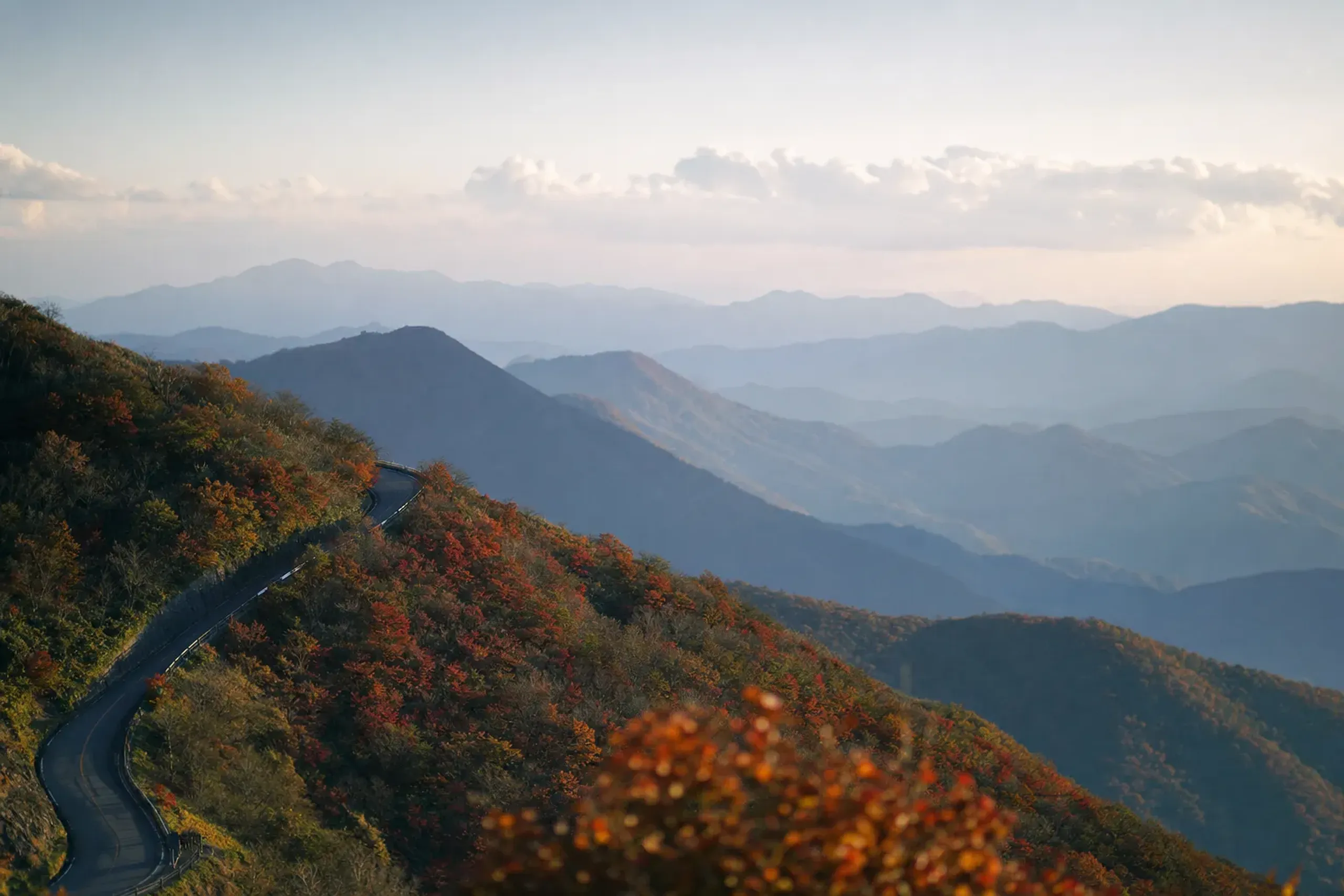
Iwate shows the mechanism most clearly. It can color from late September through late November in typical years, because its early season belongs to mountains—Mount Kurikoma, Mitsuishi-yama, the Hachimantai Aspite Line—while November belongs to lower elevations where the season lingers.
Will Tōhoku Autumn Leaves Be Late In 2026?
Current 2026 forecasting signals suggest peak timing may run about 3–7 days later than average nationally due to a warm autumn, but forecasts are revised repeatedly through the season.
Use that as a planning posture, not a promise. It is a “lean later” signal that helps you choose flight and hotel windows with room to flex. It also contrasts with this year’s cherry blossom pattern, when several regions ran unusually early.
Key fact: The Japan Weather Association publishes seasonal autumn foliage forecasting information and updates it during the season (typically September–November), with multiple revisions.
For practical planning, we treat the forecast like weather at sea: check it, then check it again. A smart kōyō chase keeps two or three “pivot days” that can move between a mountain road and a gorge without breaking the trip’s rhythm.
Typical Kōyō Windows In Tōhoku, Prefecture By Prefecture
In typical years, Tōhoku foliage runs from late September to late November depending on prefecture and altitude, with Iwate offering the widest overall window.
This is the plain-register framework we start with before we talk routes. Ranges only. No fixed dates.
| Prefecture | Typical Foliage Window (Ranges Only) | What That Usually Means On The Ground |
|---|---|---|
| Aomori | Mid-October to early November | Short, sharp window; plan tightly around Towada/Oirase and Hakkōda. |
| Akita | Mid-October to mid-November | Good mid-season pacing; mix forest walks with onsen nights. |
| Iwate | Late September to late November | The widest range; high roads first, lower elevations later—altitude is everything. |
| Miyagi | Early October to late November | Long season; gorge days can pair well with city comfort in Sendai. |
| Yamagata | Mid-October to late November | Mountain-to-town transitions; Gassan can start earlier due to elevation. |
| Fukushima | Late September to late November | Strong for late-season lower elevations; Urabandai is a reliable mid-season anchor. |
Notice what the table doesn’t show. Altitude. That’s where the “two fronts” logic turns into an itinerary that feels timed, not lucky.
Where Should I Go In Tōhoku For Early Kōyō In Late September?
For late-September kōyō in Tōhoku, prioritize high-elevation mountains such as Mount Gassan and early-color areas like the Hachimantai Aspite Line and Mount Kurikoma.
Early kōyō is not a “north vs south” problem. It’s an altitude problem. You are looking for the first cold nights, not the biggest city.
Mount Kurikoma (Iwate/Miyagi/Akita)
Kurikoma spans prefectural borders and is known for broad views from the summit. Locally, it’s nicknamed the “Carpet of the Gods” for the way color can spread across the mountain when conditions line up. It is also among the earliest-coloring mountains in Honshū. That matters.
Plan for a real mountain day. Start early. Bring layers. If you prefer a gentler pace, we often suggest keeping your base comfortable and using a private car day to control timing, rests, and photo stops without the stress of bus schedules.
Mitsuishi-yama (Iwate)
Mitsuishi-yama can color alongside Kurikoma, among the first in Honshū each year. The contrast can be striking: red foliage against the profile of Mount Iwate. It’s the kind of scene that makes even experienced travelers go quiet.
Access is typically approached via areas such as Matsukawa Onsen, and there is also access with a chair lift via Amiharashi Onsen. Conditions change. Quickly. We plan your day around daylight, wind, and crowd patterns rather than a single “arrival time.”
The Hachimantai Aspite Line (Iwate)
This mountain driving route is a clear, checkable example of Iwate’s early high-elevation color, with typical peak around late September into mid-October. A private car here is not “extra.” It’s the difference between pulling over for a 90-second light break and watching it disappear in your rearview mirror.
Mount Hakkōda Ropeway Area (Aomori)
Mount Hakkōda offers ropeway access to high marshland walking, typically coloring from early to late October. Light angle changes the scene hour by hour. Mist can roll in, then lift. Bring patience. That’s the point.
Mount Gassan (Yamagata, Dewa Sanzan)
Mount Gassan (1,984m) is part of the Dewa Sanzan, the Three Mountains of Dewa, and it peaks notably earlier than much of the region—often mid-to-late September—because of elevation. This is also a Shugendō pilgrimage area associated with Matsuo Bashō’s travels; we keep any reference respectful and paraphrased, never performative.
Mid-Season Gorges And Water: When Color Feels Like It’s Moving
Mid-season in Tōhoku often means water.
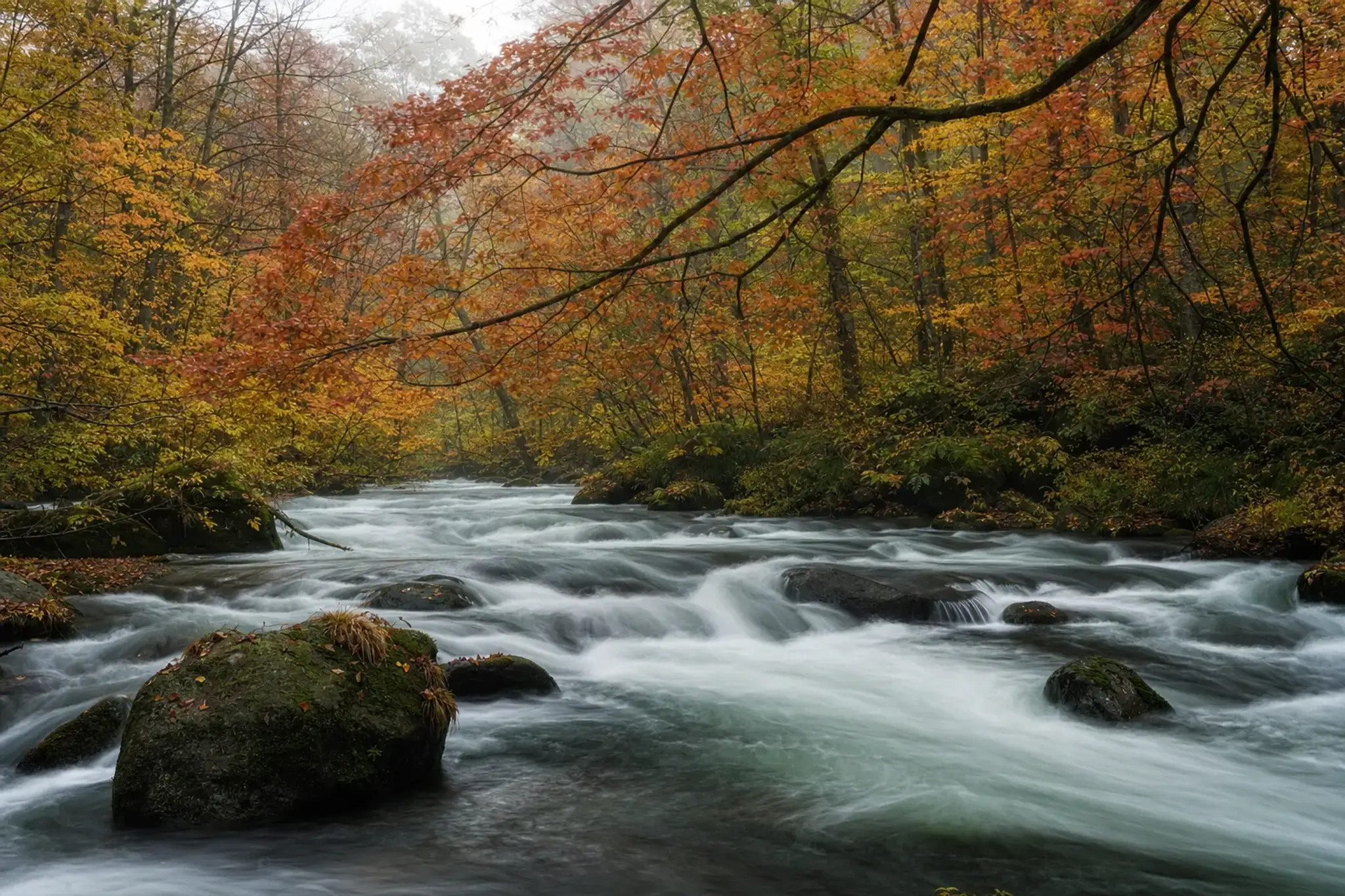
Streams that turn a simple walk into a slow day. Gorges where the scale resets your sense of distance.
Naruko Gorge (Miyagi)
Naruko Gorge is cut by the Ōtani River, dropping about 100 meters in depth, with typical peak from mid-October to early November. It is also widely visited. No surprise.
Our advice for HNW travelers is simple: don’t fight the crowd head-on. Go earlier. Go later. Or go on a day when weather keeps casual visitors away. A private car helps you commit to those narrow windows without guessing train connections.
Oirase Stream And Lake Towada (Aomori/Akita)
Oirase Stream is lined with broadleaf trees on both banks, and it works equally well from a car and on foot along the walking trail beside the water. Typical peak is late October to early November. Lake Towada (Towada-ko), straddling Aomori and Akita, is often described locally as showing its richest, most complex character in autumn.
Here, you can keep it simple: one base, short drives, long walks, early dinners. For families or multi-generation groups, that rhythm is gold.
Shirakami-Sanchi: What You Can Enter, And What You Cannot
Shirakami-Sanchi is a UNESCO World Natural Heritage site (inscribed in 1993) where the buffer-zone trails are accessible to visitors, but the protected core zone has no general public entry route on the Akita side.
This distinction is exactly where generic listicles fail. They imply you can “visit the whole thing.”
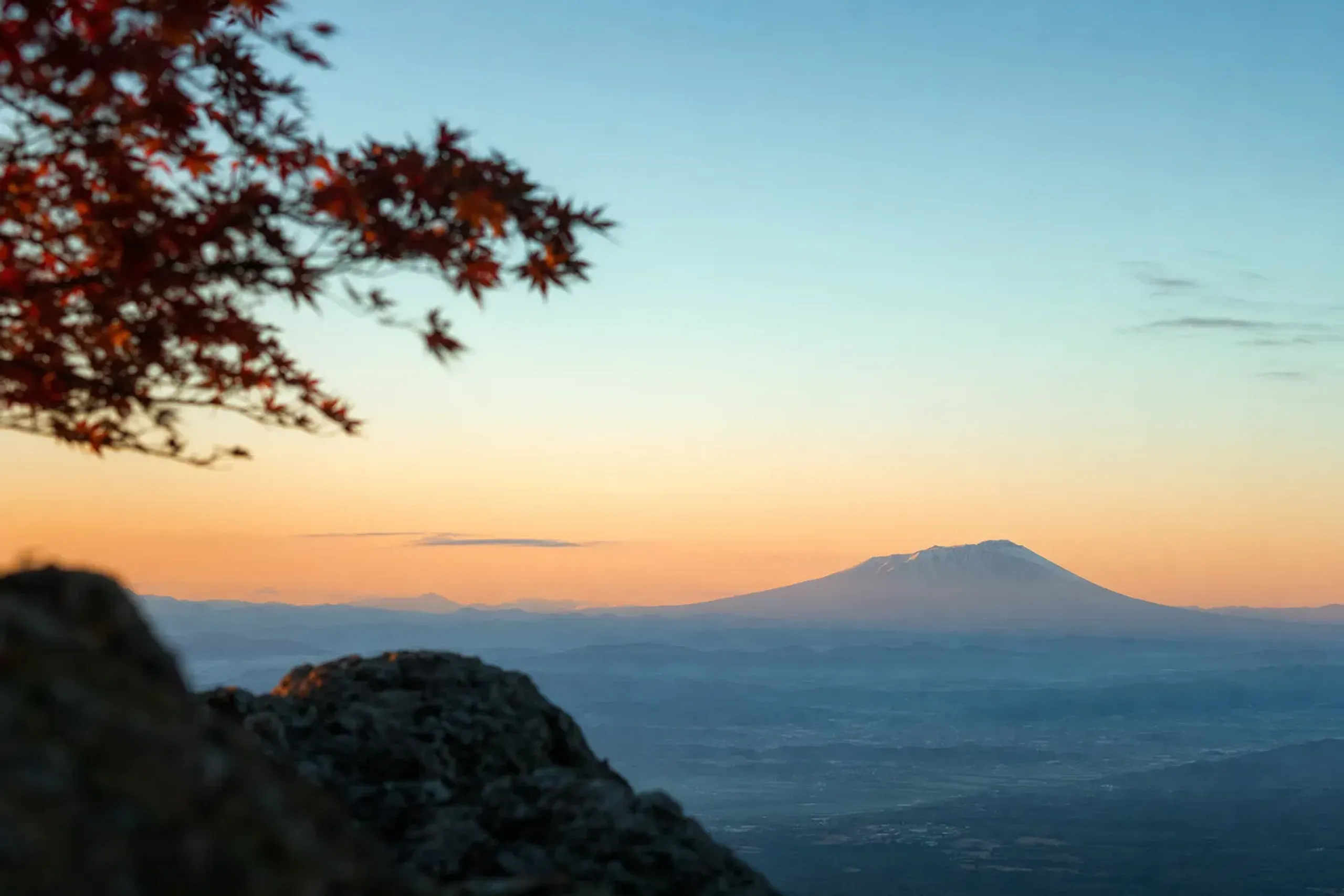
You can’t. And you shouldn’t want to.
The World Heritage Trail in the buffer zone is open to visitors and gives a legitimate sense of the forest. For more committed hikers, approaches are tied to specific trailheads and routes, including Futatsumori, Anmon Falls, and the Shirakami-dake climb.
Key fact: If a plan claims casual access to Shirakami-Sanchi’s core zone from Akita, treat it as a red flag and re-check the route details.
We like Shirakami-Sanchi for travelers who value quiet and restraint. No flash. Just trees, damp ground, and the kind of silence you notice in your shoulders.
Late-Season Color: Valleys, Onsen Towns, And Easy Trails
Late-season kōyō is where the downhill front pays off. Your mountain friends back home are already sending snow photos. You’re still walking through color at human altitude.
Goshiki-numa (Urabandai, Fukushima)
Goshiki-numa in Urabandai is a beginner-friendly nature trail through a chain of colored ponds, typically mid-to-late October. The pleasure here is pacing. Stop often. Look sideways. The ponds change color with cloud cover.
Zaō Onsen (Yamagata/Miyagi)
Zaō Onsen pairs an established hot spring town with the season and is frequently counted among the region’s most-visited foliage destinations. It can be busy. That’s reality.
We plan Zaō days with intention: early starts, a clear lunch plan, and an unhurried return to the bath. The reward is not “checking it off.” It’s stepping outside after dinner and smelling woodsmoke on cold air.
Nyuto Onsenkyo (Akita)
Akita’s tourism information describes Nyuto Onsenkyo as seven hot spring inns collectively known as Nyuto Onsen Village, located in the inner part of the Tazawako Kogen area.
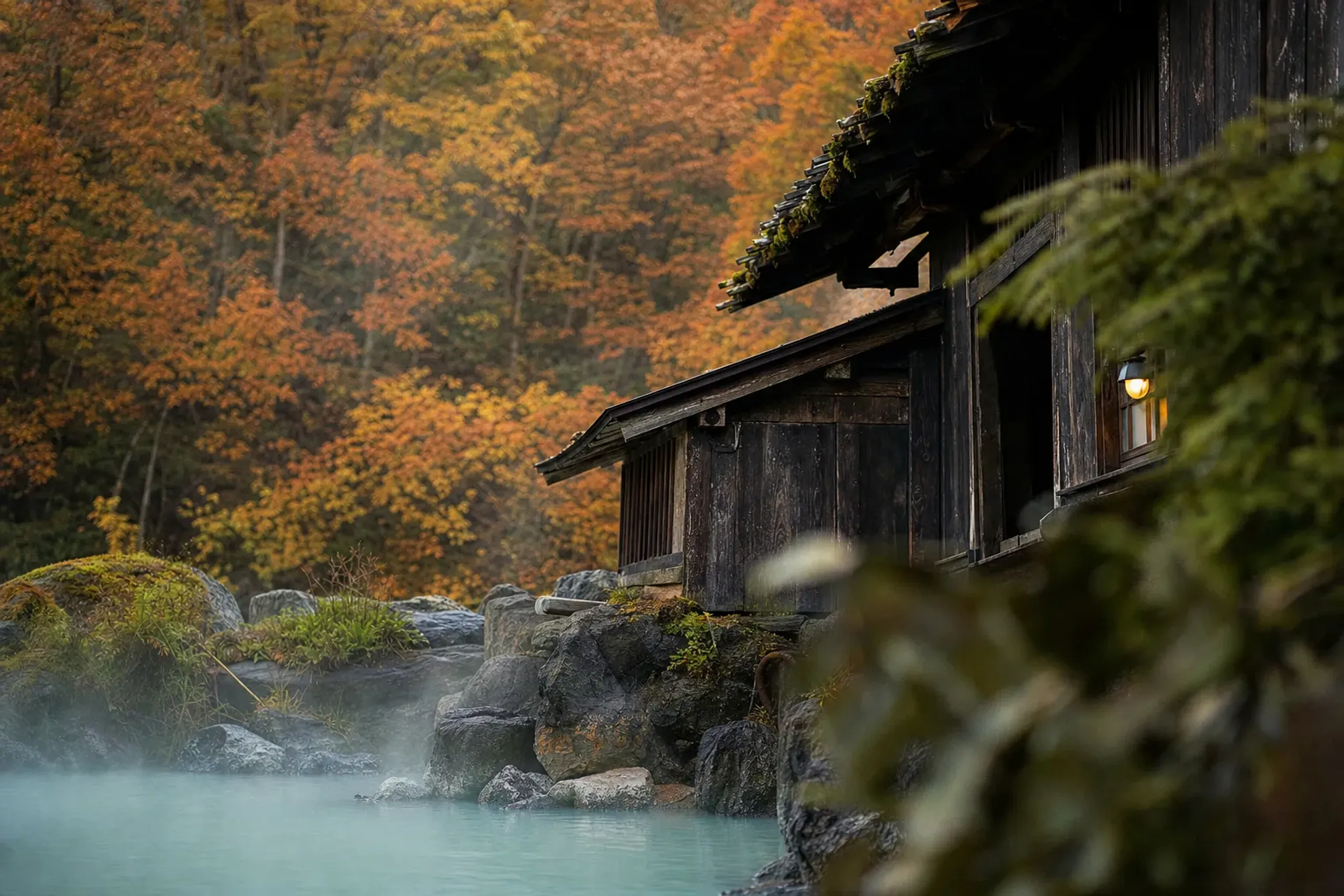
It’s a place people picture in winter, yet autumn can be the gentler choice.
For HNW travelers, the appeal is straightforward: warm water, early nights, and days that do not require heroics.
A Current Popularity Snapshot (And How To Keep Your Day Civil)
Recent regional traffic snapshots have placed Tsutanuma (Aomori) among the most-visited Tōhoku foliage sites, with Naruko Gorge and Zaō Onsen also appearing near the top depending on the period measured.
This shifts year to year. Don’t treat it like a permanent ranking. Treat it like a warning label.
Our method is to build “quiet equivalents” into each day: a second viewpoint, a second walking segment, a second café or rest stop. One coordinator on our team calls it the second door. It keeps the mood steady when the first door is crowded.
What’s Actually Bookable In 2026: Oirase Keiryu Hotel’s Autumn Walks
Hoshino Resorts’ Oirase Keiryu Hotel lists an “Autumn Leaves Walk” with availability shown as Oct 10, 2026 to Nov 3, and a “Private Autumn Walk” shown as Oct 1, 2026 to Nov 25 on weekdays.
This matters because it turns a kōyō chase into something less fragile. You are not guessing which pull-off will be “best.” You are anchoring days around a professionally guided route chosen for current conditions.
Autumn Leaves Walk (Guided)
The hotel describes a guided walk to the best foliage spots with availability displayed for Oct 10, 2026 – Nov 3.
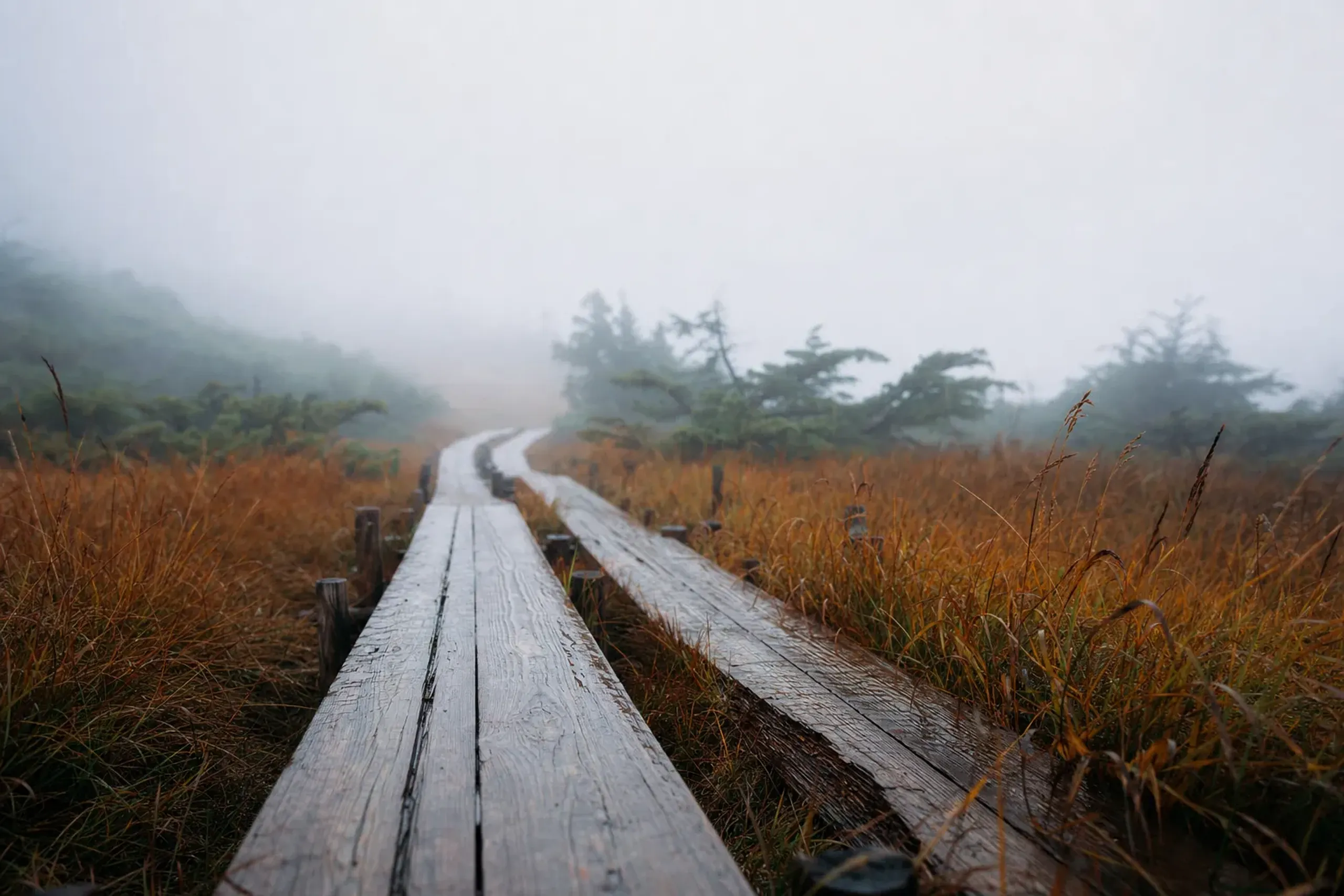
It’s a clean mid-season block. Not too early. Not too late.
Private Autumn Walk (One Group Per Day, Weekdays)
The hotel also lists a Private Autumn Walk (reservation required), described as tailored by a guide, limited to one group per day, with availability shown as Oct 1, 2026 – Nov 25 and limited to weekdays. That’s a real privacy lever.
We do not present this as something we “sell.” The operator does. If you want tailored guidance on how to build a Tōhoku basecamp strategy around these official offerings, our concierge team can advise privately.
How A Private Car Changes A Tōhoku Kōyō Trip
A private car in Tōhoku buys timing control—early departures, weather pivots, and fatigue management—which often matters more than distance when foliage is shifting by altitude and temperature.
Public transport can work in specific corridors. But kōyō days rarely behave like timetables. Light is late. Mist is early. A sudden clear hour can be the whole day’s payoff.
Our private transportation is designed for quiet comfort, with vehicles that fit the trip rather than forcing the trip to fit the vehicle. For families, an executive minivan can keep the day calm. For couples, it keeps the pace intimate.
Discretion is built into the rhythm. No loud signage. No public itinerary. Just movement that feels private even on public roads.