In this guide
- 01What Kusatsu Is (And What It Is Not)
- 02How Kusatsu Differs From Hakone (A Useful Contrast)
- 03The Water And Bathing Culture: Facts, Not Folklore
- 04Why Two Nights Works (And One Night Usually Fails)
- 05What A Day In Kusatsu Actually Looks Like
- 06Privacy, Honestly: What You Can And Cannot Expect
- 07Getting There: The Transfer Is Part Of The Decision
- 08Season Notes: Winter Adds Drama, Summer Has Dates
- 09How To Place Kusatsu Between Cities (Step By Step)
- 102026 Updates You Should Know: KAI Kusatsu And What It Signals
- 11FAQ: Kusatsu Planning Questions We Hear From HNW Travelers
- 12Why Choose Japan Royal Service
You want a break between Tokyo and Kyoto. Not a spa storyline. Not a schedule that forces you to “do wellness” every hour.
Kusatsu Onsen is a hot-spring town in Gunma Prefecture. It’s built around bathing, walking, eating, and sleeping early. That’s the point.
Two nights is the clean shape. One night turns into transit. Three nights asks the town to be something it isn’t.
Our team at Japan Royal Service uses Kusatsu as a hinge: a short, deliberate pause that changes the tempo of your trip without turning it into theatre.
What Kusatsu Is (And What It Is Not)
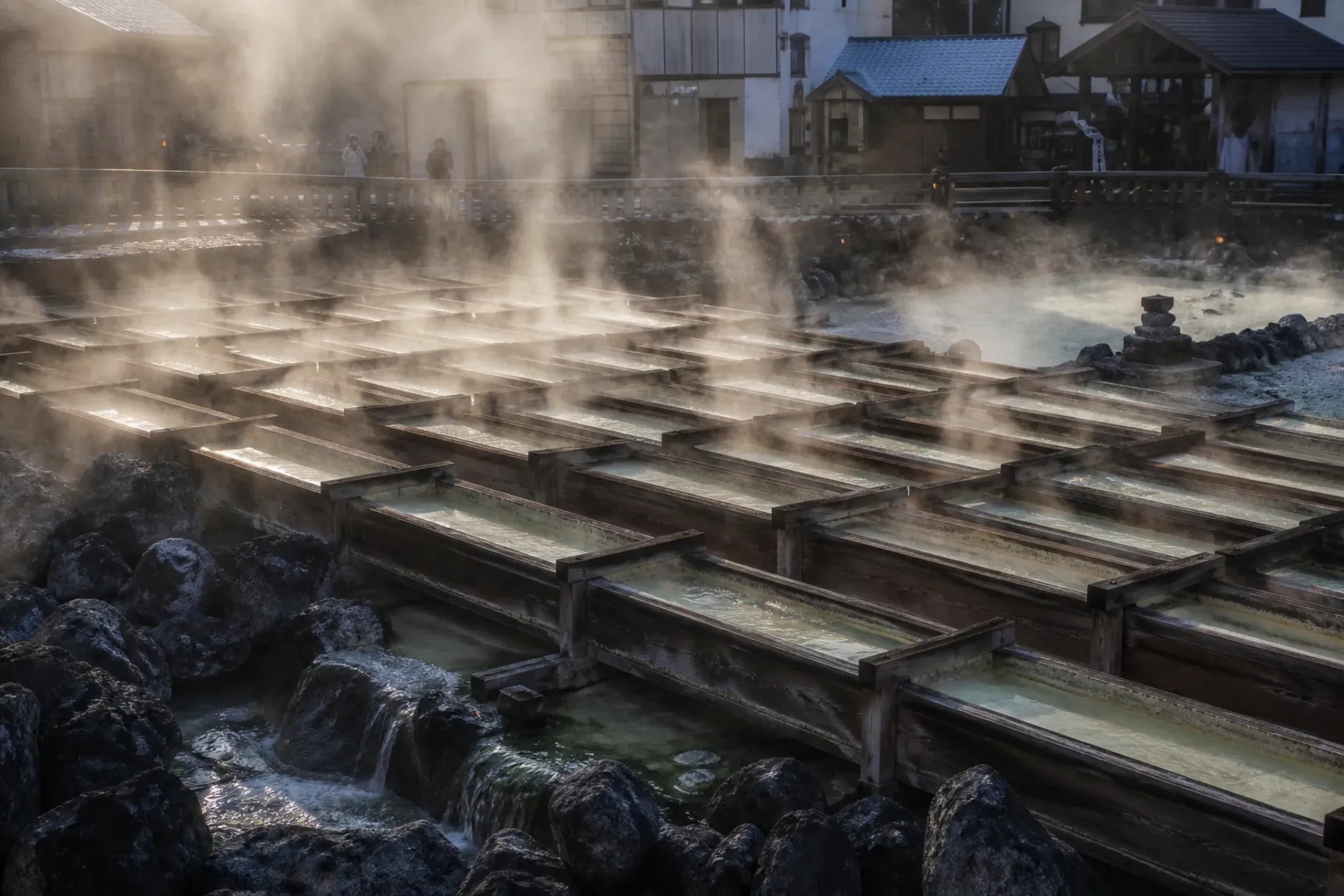
Kusatsu is built around the Yubatake—water, steam, and a walkable town core.
Kusatsu Onsen sits around 1,200 meters above sea level, in the mountains of Gunma Prefecture. You feel that altitude quickly. The air runs cooler, even when Tokyo is sticky.
The town has a working onsen rhythm. People come to soak. They change into yukata. They walk slowly, then soak again.
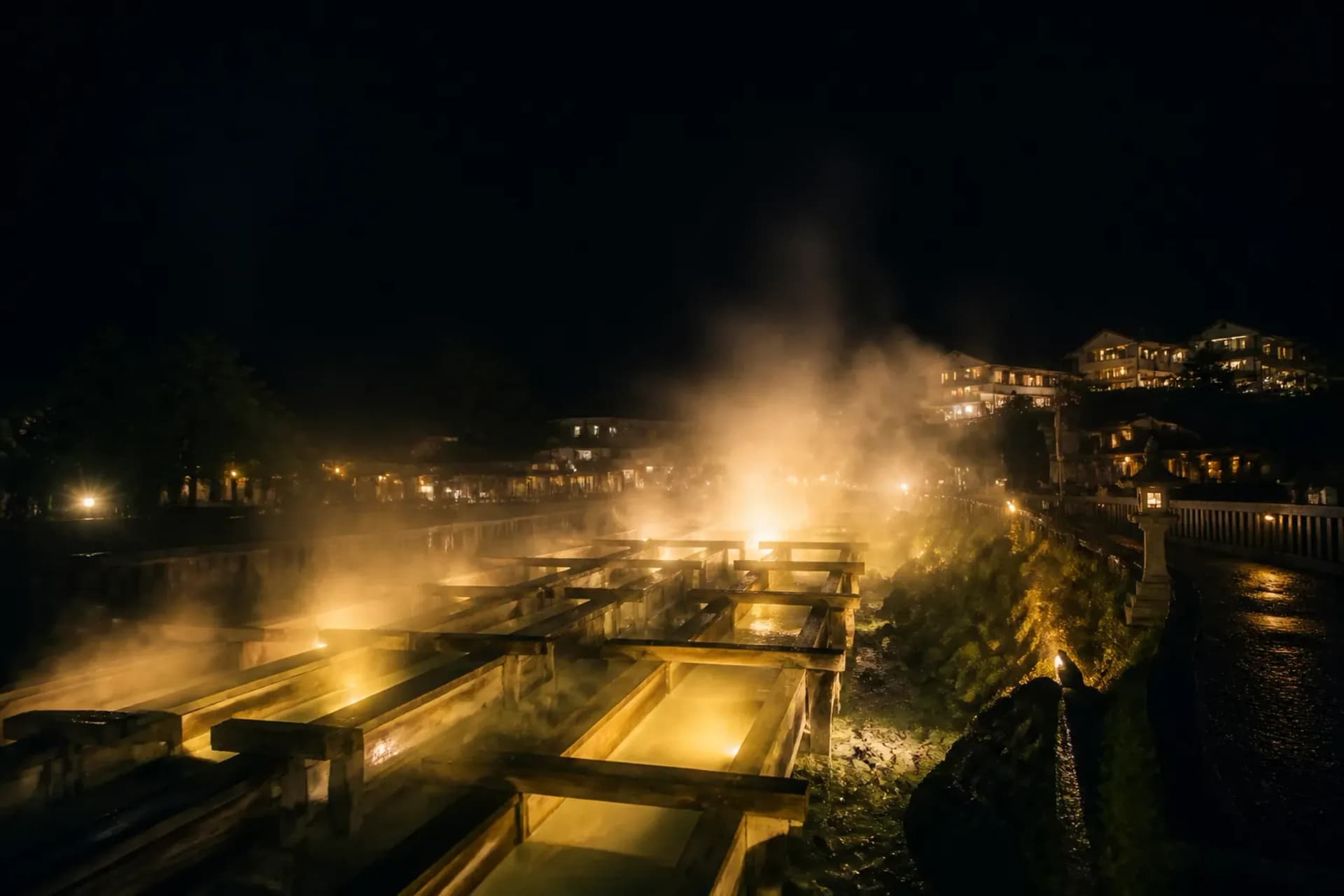
At the center is the Yubatake, the hot water fields. Water moves constantly, and you hear it everywhere near the core streets. The scent of sulfur is real. It doesn’t politely disappear.
This is not a “wellness resort.” It is not designed around treatment menus, pool music, or a lobby scene. If that is what you want, pick another stop.
How Kusatsu Differs From Hakone (A Useful Contrast)
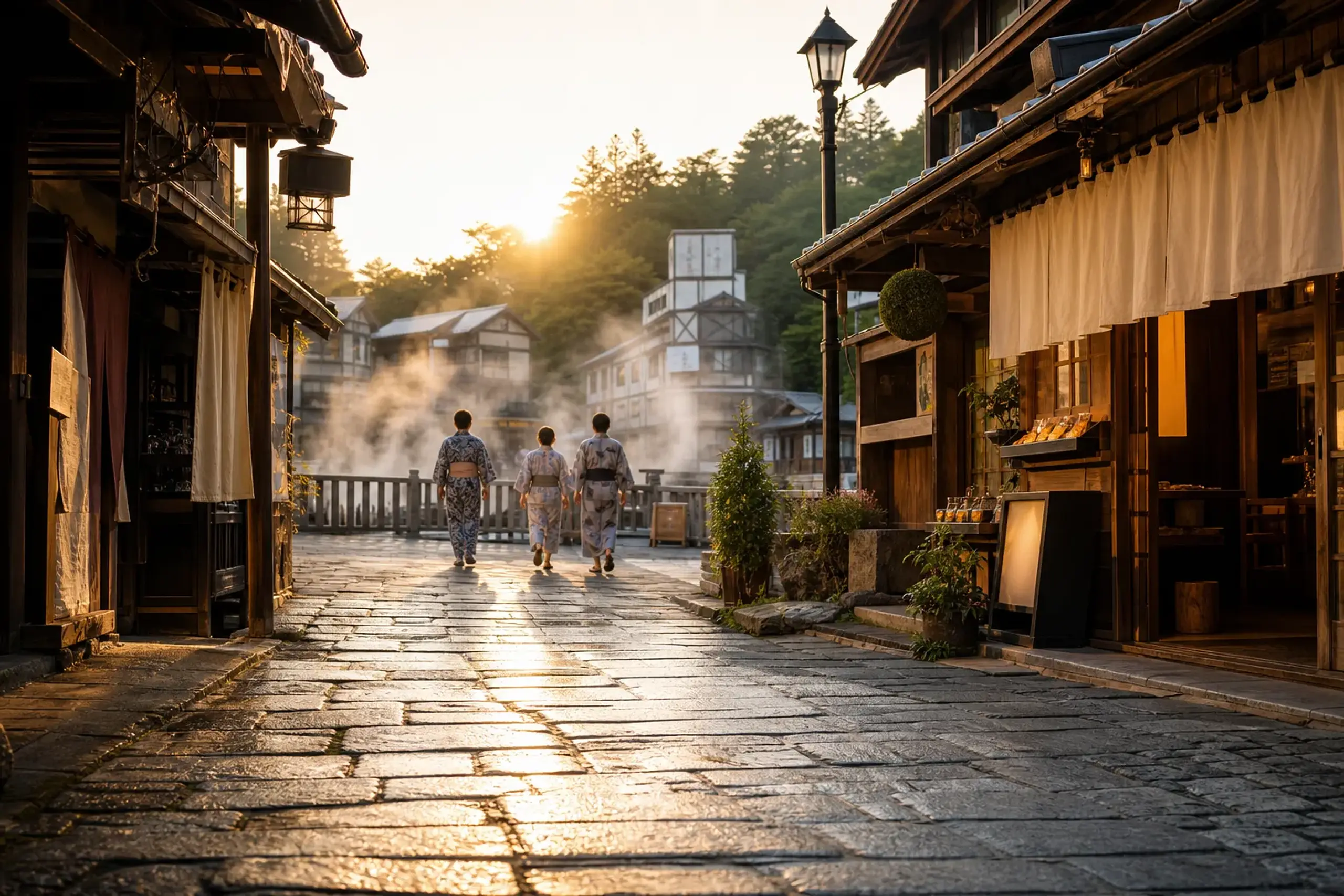
Kusatsu feels like a working onsen town—more public and street-based than resort-style areas.
Some clients assume “onsen town” means the same experience everywhere. Big mistake. Kusatsu and Hakone feel like different categories.
Kusatsu is more public-facing and town-centered. Hakone often plays better for guests who want discreet, hotel-like comfort and easier day-to-day logistics.
Kusatsu’s draw is the town itself: the Yubatake core, the walking loops, the everyday bathing culture. It can feel less polished. It can also feel more honest about what it offers.
If privacy is your top value, start with our Hakone-focused guidance rather than forcing Kusatsu to behave like Hakone. Read our article “Winter Onsen, Privately” for the private-bathing approach and facility-by-facility decision points.
The Water And Bathing Culture: Facts, Not Folklore
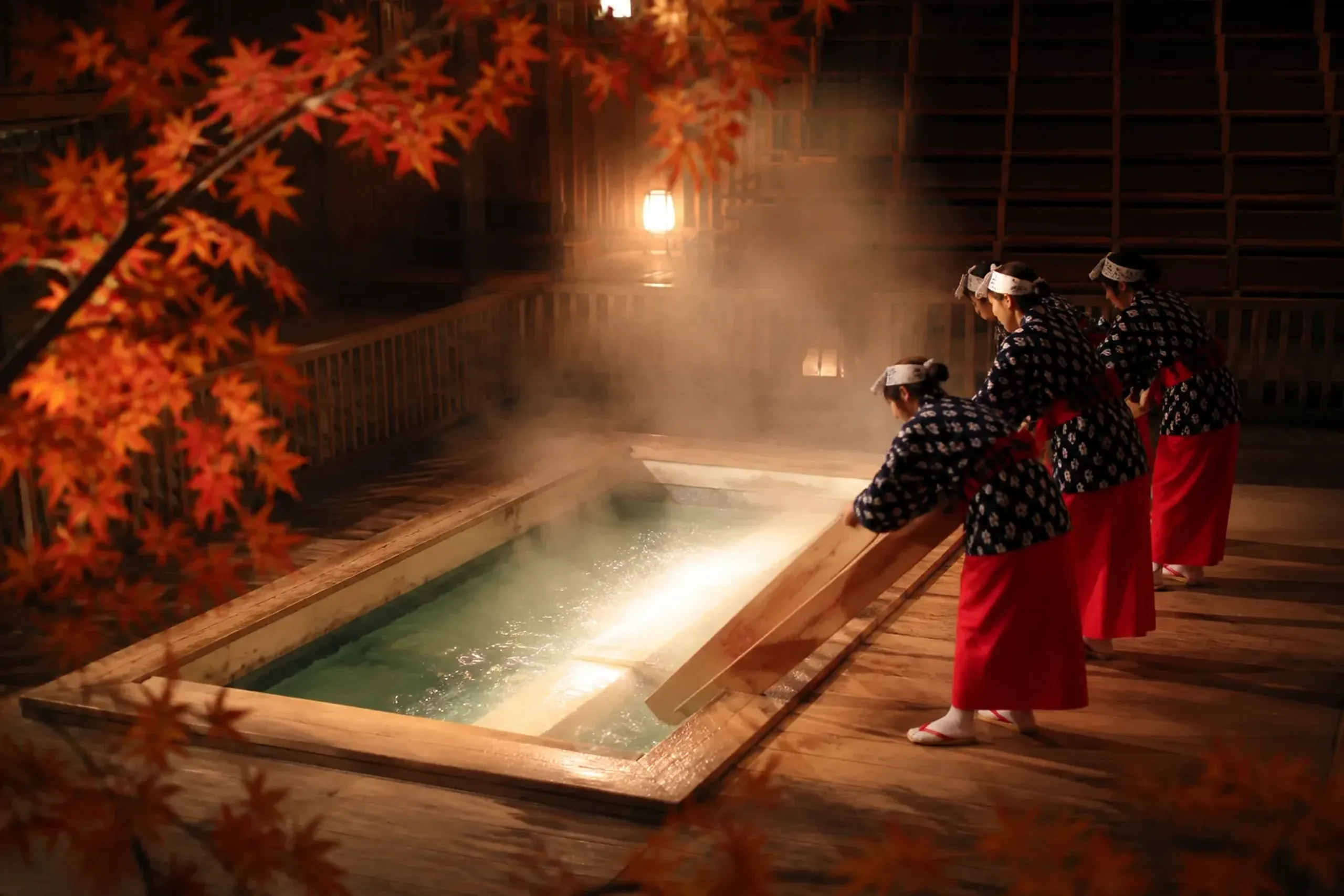
Netsunoyu, beside the Yubatake, hosts daily yumomi performances.
Kusatsu is famous for its hot springs. That is verifiable, and it is why the town exists. The water can feel strong on the skin, and the sulfur presence is part of the experience.
A core local tradition is yumomi, a method of cooling hot spring water by stirring it with wooden paddles. Kusatsu presents this tradition in a structured way that visitors can see.
Yumomi performances are held daily at Netsunoyu (熱乃湯), located next to the Yubatake. If you want one “organized” moment in Kusatsu, this is the one that still belongs to the town, not to a marketing department.
Key fact: Keep your expectations clean. Kusatsu is not about being busy. It is about repeating a simple loop—soak, cool down, walk, eat, sleep.
Why Two Nights Works (And One Night Usually Fails)
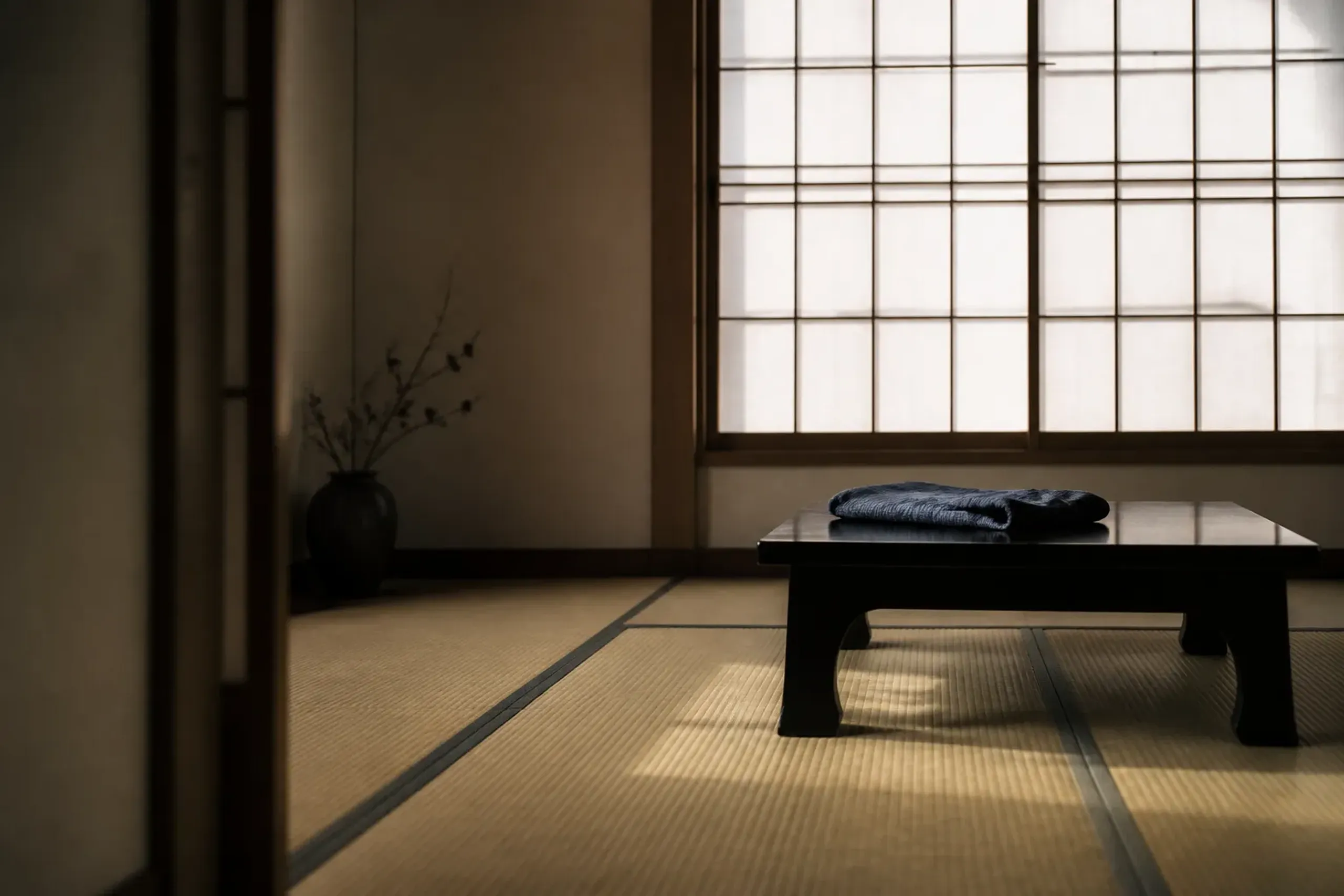
The hinge works when the plan stays simple: arrive, soak, eat, sleep early.
Two nights is not a random preference. It’s a practical shape that respects travel time and the town’s true scale.
Night 1: Arrival, First Soak, Early Dinner
Your first day is partly transit. Even with a comfortable transfer, you arrive with city noise still in your shoulders.
So the goal is modest: check in, take one calm soak, eat without chasing reservations, and sleep early. That’s enough.
If you try to “see everything” on day one, you end up doing Kusatsu as a checklist. It misses the point.
Full Day 2: The Town As A Walking Radius
The second day is when Kusatsu makes sense. You wake up in mountain air, and you can walk to the Yubatake before the day-trip rhythm builds.
That is the day for Netsunoyu’s yumomi, for an unhurried loop past the center, and for a longer pause in the afternoon. Slow hours matter here.
By evening, you’re no longer “visiting an onsen town.” You’re participating in the pattern.
Why Not Three Nights?
Kusatsu is a small town. That is a feature, not a flaw.
A third night can be right for guests who want to read, nap, soak, and do almost nothing else. Most HNW travelers don’t actually want that on a multi-stop Japan itinerary.
In our experience, three nights often triggers restlessness. Then you start looking for “activities,” and Kusatsu becomes a compromise instead of a hinge.
What A Day In Kusatsu Actually Looks Like
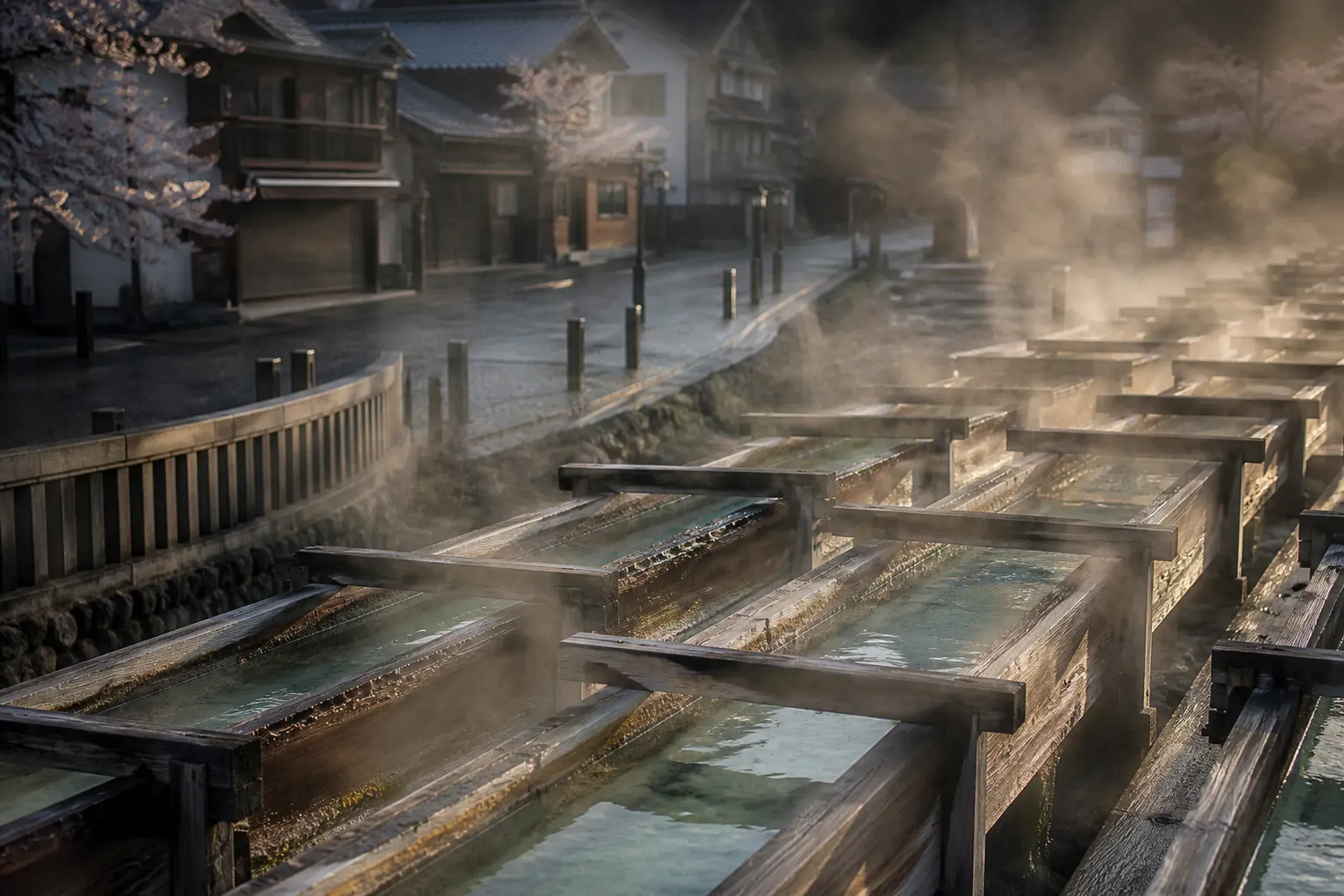
Plan for repetition. That is what makes the stop effective. A day with too many pins on a map turns into noise.
Morning: Walk First, Then Bathe
Start with a short walk near the Yubatake. The light is cleaner in the morning, and the streets are still waking up.
Then bathe. Keep it simple. Don’t turn it into a timed performance.
Midday: One Anchored Sight, Not Five
Netsunoyu’s yumomi is the clear midday anchor for many visitors. It’s right beside the Yubatake, so you are not commuting around town.
After that, choose one more place that fits the town’s pace. JNTO highlights Sainokawara Park as a “Don’t Miss.” It’s a straightforward choice if you want a longer walk and a different feel from the Yubatake streets.
Late Afternoon: Back To Your Room
This is where Kusatsu wins. You don’t “fill the afternoon.” You return, soak again if you want, and let the body cool down naturally.
Quiet hours are the point. Many itineraries forget to leave room for them.
Evening: Keep Dinner Easy
Don’t schedule a complicated dining plan that drags you across town at peak hours. Kusatsu works best when the evening is short and calm.
If your party cares about privacy, we guide you toward options that limit exposure. We do not sell that as “exclusive.” We treat it as basic discretion.
Privacy, Honestly: What You Can And Cannot Expect
Kusatsu’s identity is more public than resort-style onsen areas. The town is built around shared walking streets and communal energy.
Private bathing options can exist, but they are not the defining feature of Kusatsu in the way they can be in Hakone. If you require private-only bathing, confirm the fit before you commit.
Discretion still matters. You may simply need a different strategy: quieter timing, calmer routes, and a property choice that buffers you from the busiest flow.
Our concierge team approaches this the way we approach Tokyo: not by demanding the city change, but by changing your angles and your timing.
Getting There: The Transfer Is Part Of The Decision
Kusatsu is not “just outside Tokyo.” The travel time is real, and it influences whether one night is a bad idea.
Most travelers reach Kusatsu via a combination of rail and bus, or by car. The best choice depends on where you are starting, your luggage profile, and how much friction you will tolerate that day.
If you want the trip to feel controlled, a private transportation approach can make the transfer feel like a contained chapter rather than a public obstacle course. For detailed luggage sequencing logic, read our article “Where Your Bags Are: Luggage on a Japan Itinerary.”
We keep transfer planning plain: depart earlier than you think, arrive before dark when possible, and avoid stacking Kusatsu on a day that already has major city checkout pressure.
Season Notes: Winter Adds Drama, Summer Has Dates
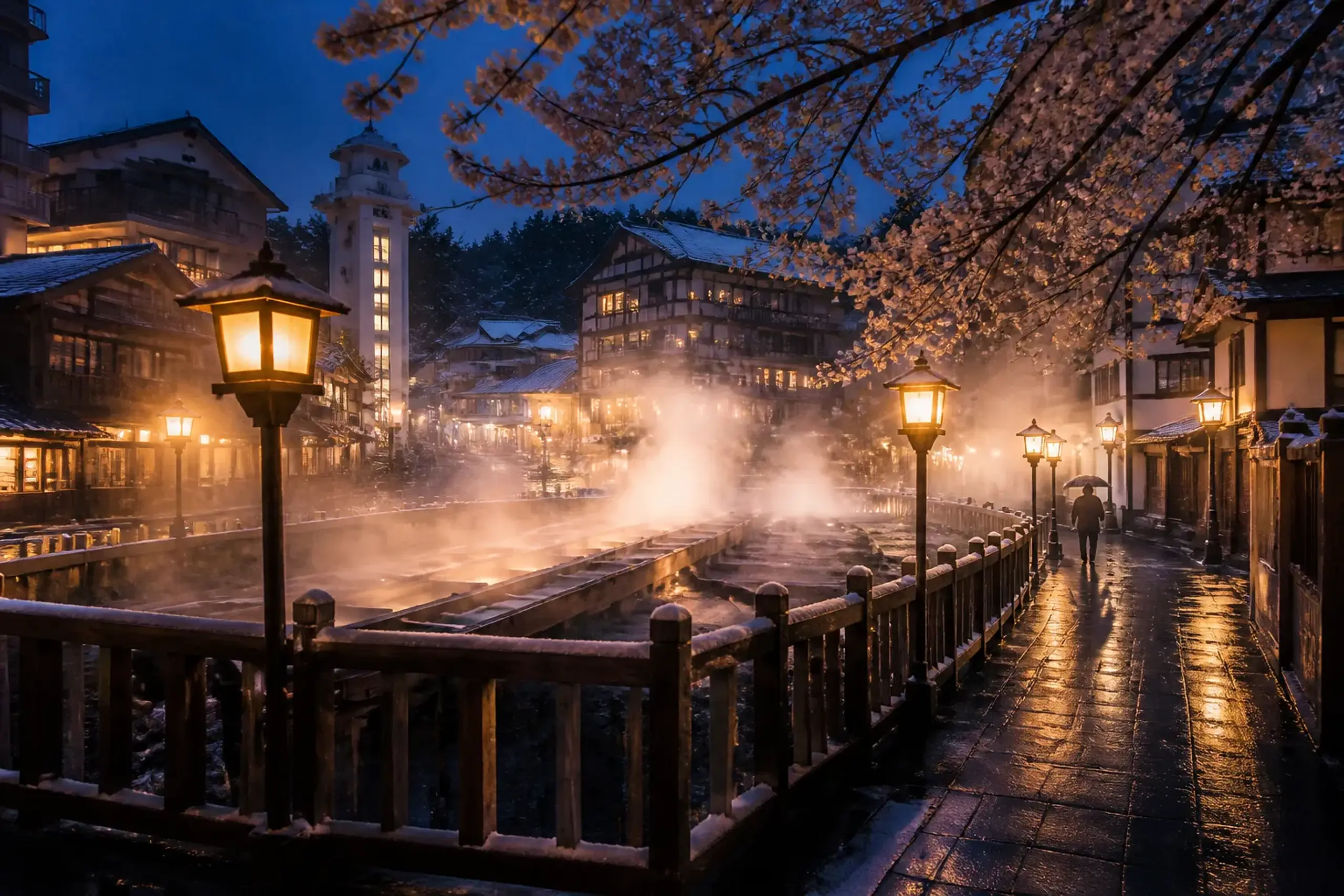
Winter heightens the contrast—cold air outside, hot water at the center of town.
Winter changes Kusatsu’s mood. Streets can look sharper, and the contrast between cold air and hot water is obvious. It can also add weather risk, so your schedule needs slack.
Summer has a concrete planning hook in 2026. The Kusatsu Onsen Kanshasai (草津温泉感謝祭) will be held on August 1–2, 2026, according to the official event listing.
The traffic regulation notice for the same dates includes vehicle restrictions during evening hours. It also asks visitors to refrain from drone filming. If you are sensitive to crowds or movement limits, build your stay to arrive before or after those evenings.
How To Place Kusatsu Between Cities (Step By Step)
This is the hinge use-case: Tokyo → Kusatsu (2 nights) → Kyoto, or the reverse if you want the city energy later.
Step 1: Decide What You Are Escaping
If you are escaping crowds, you need timing discipline. If you are escaping decision fatigue, you need fewer reservations, not more.
Say it out loud. It changes the plan.
Step 2: Lock The Two-Night Shape
Commit to two nights unless you have a clear reason not to. One night is usually just a relocation with wet hair.
Three nights is for guests who are comfortable doing almost nothing. Be honest about which one you are.
Step 3: Keep The Kusatsu Middle Clean
Do not place a major shopping day, a late Tokyo dinner, or an early-morning Kyoto temple plan right against the transfer. That’s how the hinge breaks.
Put Kusatsu between two city segments that can flex by half a day. Your nervous system will notice, even if you never call it “wellness.”
Step 4: Make The Second Day Light, Not Empty
One anchor (often Netsunoyu). One longer walk (Sainokawara Park is a common choice). Everything else is optional.
Then stop. Let the town do its job.
2026 Updates You Should Know: KAI Kusatsu And What It Signals
Luxury onsen travel in Japan keeps shifting toward place-based design, not size. Kusatsu has a concrete 2026 development: Hoshino Resorts announced KAI Kusatsu is set to open on June 7, 2026.
Hoshino’s own description highlights a guest-only tunnel connecting the ryokan and the hot spring town area. That detail matters because it formalizes the exact duality Kusatsu does best: quiet lodging, then immediate access to the town’s living core.
We do not treat one new opening as the only answer. We treat it as a signal that Kusatsu is being designed for longer, calmer stays—done properly, not as a one-night stunt.
FAQ: Kusatsu Planning Questions We Hear From HNW Travelers
Is Kusatsu Onsen A Good Luxury Stop?
Yes, if your definition of luxury includes time, sleep, and a town that doesn’t perform for you. If luxury means controlled privacy and resort-style facilities, you may prefer Hakone.
Is Two Nights Really Necessary?
For most people, yes. One night compresses everything into arrival and departure. Two nights gives you one full day where Kusatsu actually feels like Kusatsu.
What Is The One Must-Do In Kusatsu?
If you want a single structured activity, Netsunoyu’s daily yumomi performance is the obvious pick because it sits beside the Yubatake and reflects local tradition.
When Is The Kusatsu Onsen Kanshasai In 2026?
The official event listing states it will be held on August 1–2, 2026. Expect evening vehicle restrictions, and note the request to avoid drone filming during the event period.
How Do I Book A Yumomi Performance At Netsunoyu?
Netsunoyu operates as a public attraction next to the Yubatake, with tickets handled through its official on-site process and availability that can change by day. For questions, contact our concierge for tailored guidance on timing, pacing, and what to expect.
How Do I Choose Between Kusatsu And Hakone?
Choose Kusatsu if you want an onsen town with a strong public core and a simple loop of walking and bathing. Choose Hakone if you want easier access, a more resort-like feel, and a privacy-forward onsen structure—our Hakone article “Winter Onsen, Privately” is the right starting point.
Why Choose Japan Royal Service
Two nights in Kusatsu looks simple on paper. The difference is whether it lands as a real hinge, or as a detour that steals energy from the rest of Japan.
Our team at Japan Royal Service designs this stop with three non-negotiables: discretion (low-visibility movement and quiet timing), imperial-class trip discipline (clean sequencing, no messy transitions), and shokunin-level attention to detail (the small choices that change how a day feels). A brief mention is fair: when seasonality matters, we watch shun so you arrive when the town suits you, not when your calendar happens to be open.
We also speak plainly when Kusatsu is the wrong fit. That candor saves time, and it protects the tone of your whole itinerary.
If you want to place Kusatsu precisely between major cities—without turning it into wellness theatre—reach our team privately via WhatsApp or LINE, or contact us here.