
In this guide
- 01The Question Behind Every Purchase
- 02The Dealer Streets, And The Markets
- 03What The Appraiser Actually Does
- 04Can You Take It Home? Ask Before You Buy
- 05Getting It Home Intact
- 06A Note On How You Move Through Gion
- 07The Craft Behind The Objects
- 08Frequently Asked Questions
- 09Why Choose Japan Royal Service
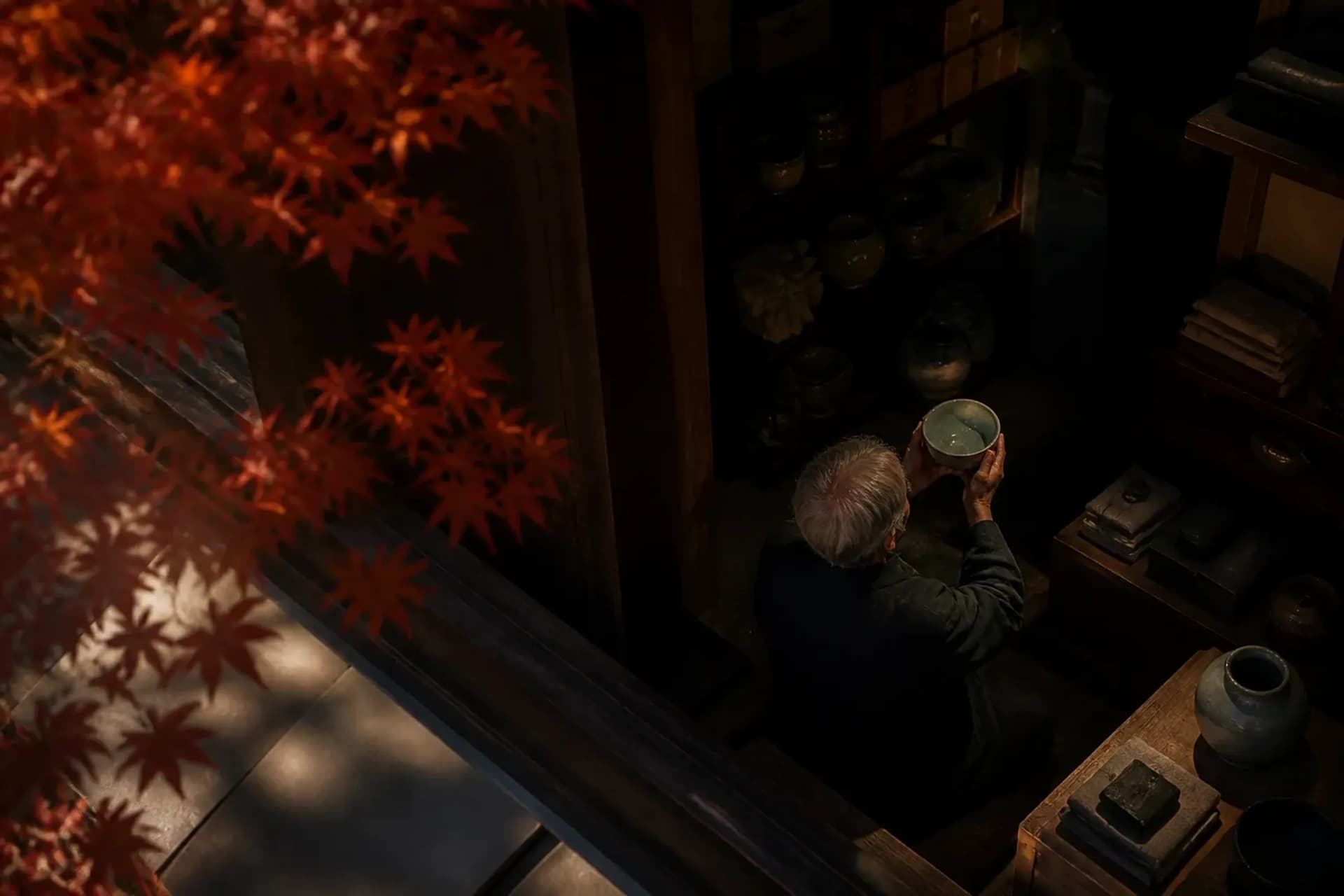
The back room smells of old paper and camphor. A hanging scroll is unrolled across a low table, one hand at each end, the dealer's movements unhurried. Behind him, cedar boxes stacked to the ceiling, each tied with faded cord, each holding something. A tea bowl. A lacquer writing set. Something that has passed through five or six hands over two centuries and shows it. You are told the piece is Edo. You would like to believe it. That, precisely, is the problem.
Kyoto sells the past better than anywhere in Japan. On the two narrow lanes near Gion, in the monthly temple markets, and in rooms you enter only by introduction, objects change hands that will outlive everyone in the transaction. The pleasure is real. So is the risk. And the single decision that separates a good buying day from an expensive lesson is one most visitors never think to make.
The Question Behind Every Purchase
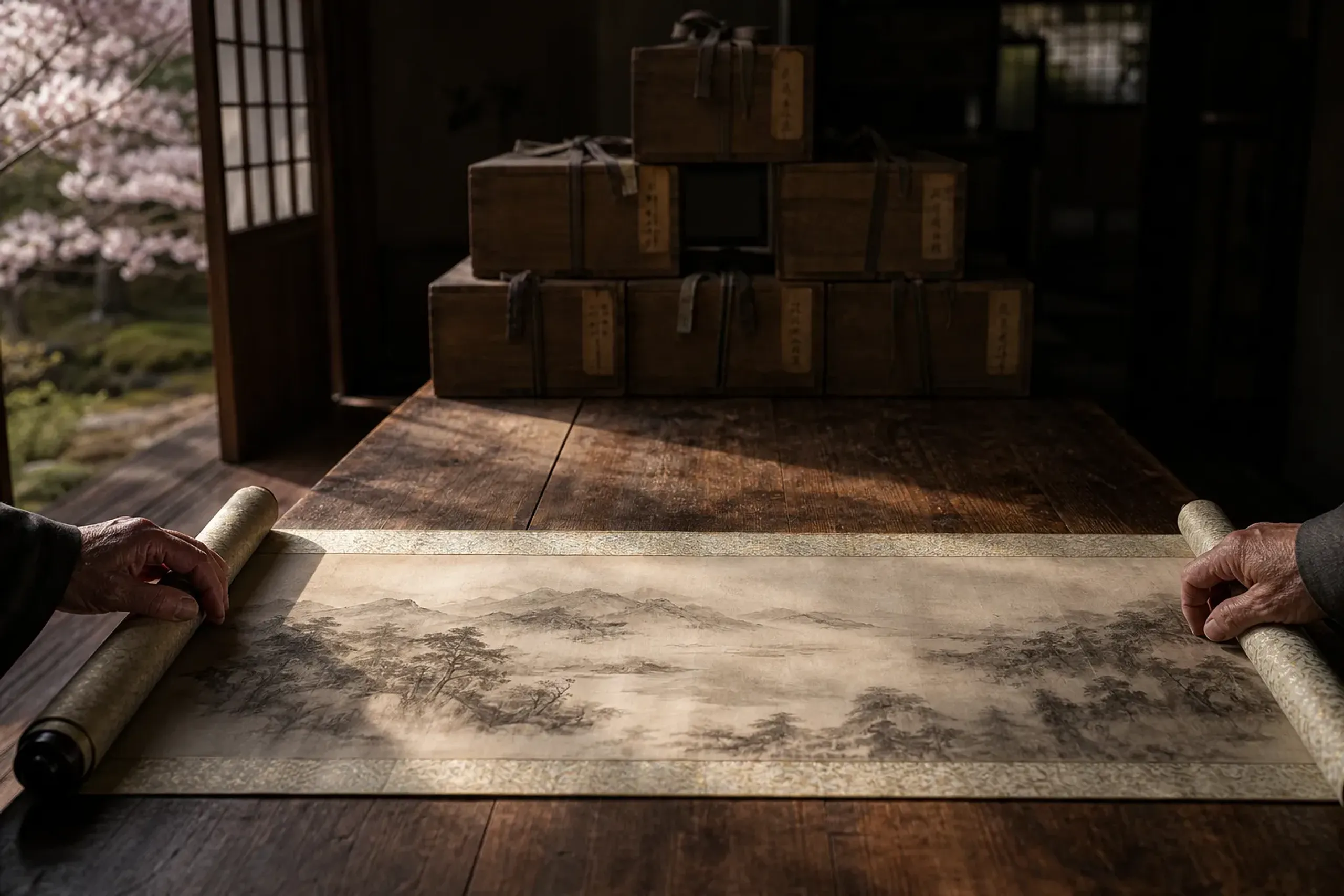
Any dealer will assess a piece for you. That assessment is not independent.
This is not an accusation. It is a description. The person telling you the scroll is early, the ceramic is right, the attribution holds — that person is also the person selling it. Their judgment may be excellent. Their interest is not neutral. These two facts sit side by side and no amount of goodwill dissolves them.
An appraiser retained by the buyer is a different product entirely. Paid by you. Taking nothing from the seller. Owing the dealer nothing beyond courtesy. What that changes, in practice, is simple and worth saying plainly: an honest "walk away" becomes available to you. When the person advising you is the person selling to you, "walk away" is the one recommendation they will never make. Independence buys you that word.
Our team at Japan Royal Service arranges private buying days in Kyoto built around exactly this arrangement. An independent appraiser acting for the buyer. Introductions to established dealers who expect serious, quiet visitors. And the unglamorous work afterward — shipping, condition, documentation — handled so that the object arrives as intact as it left the box. We do not name the appraiser or recite credentials here. The independence is the credential.
The Dealer Streets, And The Markets

Kyoto's antiques trade has centered for generations on two parallel lanes near Gion: Shinmonzen-dōri and Furumonzen-dōri, a short walk from Keihan Railway's Sanjō station. These are the established shops. Fixed premises. Reputations built over decades and, in several cases, generations. A dealer here has a name to protect and a location you can return to. That matters more than it sounds.
The monthly markets are a different proposition. Kōbō-ichi fills the grounds of Tō-ji temple on the 21st of each month. Tenjin-san takes over Kitano Tenmangū on the 25th. Hundreds of stalls, everything from farmhouse textiles to imperial-grade porcelain, and no fixed address to come back to when the wrapping comes off at home and the piece is not what you thought.
Neither is better. They suit different buyers.
Who The Shops Suit
If you are buying a single significant piece — a scroll, a tea utensil with a documented box, a lacquer object you intend to keep for life — the shops are where you belong. Provenance can be discussed. Condition examined under decent light. Questions asked and answered, and the answers stand because the seller will still be there next year. The pace is slow by design. Serious buying rewards patience.
Who The Markets Suit
If you have an educated eye, a tolerance for risk, and the willingness to lose a small sum on a mistake, the markets can deliver finds the shops never will. Best pieces sell early — a dawn start is not optional if you are serious. Bring an appraiser and the calculus shifts: on-the-spot condition assessment turns a gamble into a considered bet. But there is no recourse. What you carry away, you own, flaws and all.
Key fact: The Kyoto Antique Fair runs March 27–29, 2026 at Kyoto Pulse Plaza, one of three editions the organiser holds across spring, early summer and autumn. A large indoor gathering of dealers under one roof — a useful anchor for a collector's itinerary, and calmer than the temple grounds.
What The Appraiser Actually Does
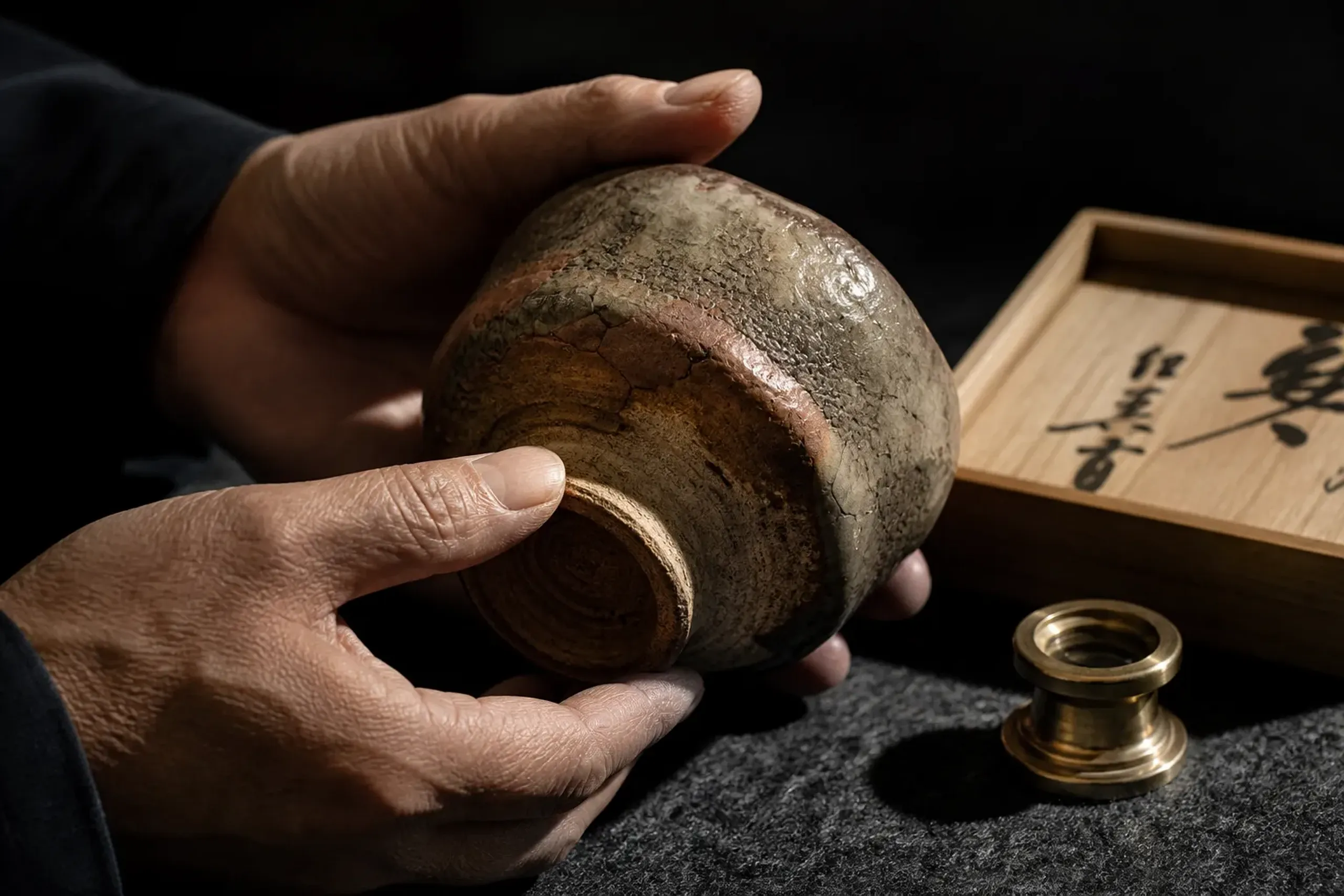
The easiest way to understand the value of an independent eye is to look at how things go wrong. Not in theory. In the specific, repeated ways the field produces disappointment.
Attributions that cannot be supported. A ceramic is presented as the work of a named kiln or maker, or of a particular period, on evidence that does not hold. Sometimes the claim is optimistic rather than dishonest. The effect on your wallet is the same. An appraiser's job is to ask what the attribution rests on, and to say clearly when the answer is "not enough."
Later impressions sold as early ones. Woodblock prints are printed from carved blocks, and those blocks were often reused for decades. A late impression from a worn block is a legitimate object. It is not an early impression, and the price difference between the two is substantial. Telling them apart is a trained skill, not a matter of looking.
Meiji export ware sold as older. A great deal of decorative Japanese ceramic and metalwork was made for Western export in the late nineteenth century. Some of it is superb. Very little of it is as old as it is sometimes said to be. Distinguishing genuine age from the appearance of age is exactly the kind of judgment you are paying an independent professional to make.
Naming these failure modes does more than warn you. It shows why the fee is worth paying better than any claim about expertise could. The appraiser earns it in the pieces you do not buy.
Can You Take It Home? Ask Before You Buy
This section is written flat on purpose. There is nothing to dress up here, and dressing it up would be a disservice.
Certain materials and object types face export controls or licensing. Materials of animal origin. Edged weapons. Items that carry heritage designations. There are others. The categories are not the point of this article and we will not attempt a legal briefing — statutes, treaty names and permit procedures vary and change, and this is not the place to summarise them.
The essential point is this: a purchase can be entirely lawful to make in Japan and still not be lawful to export. Those are two separate questions. The time to establish the second one is before you buy, not after.
The exportability of a specific object must be confirmed for that object, at the time of purchase. Not assumed from a general rule. Not settled with paperwork arranged afterward. We establish the position before a client commits — because a beautiful thing you cannot take home is not a purchase, it is a problem you have paid for. There are no workarounds worth pursuing and we will not pursue them. If an object cannot leave, the buying day moves on to the next piece.
Getting It Home Intact
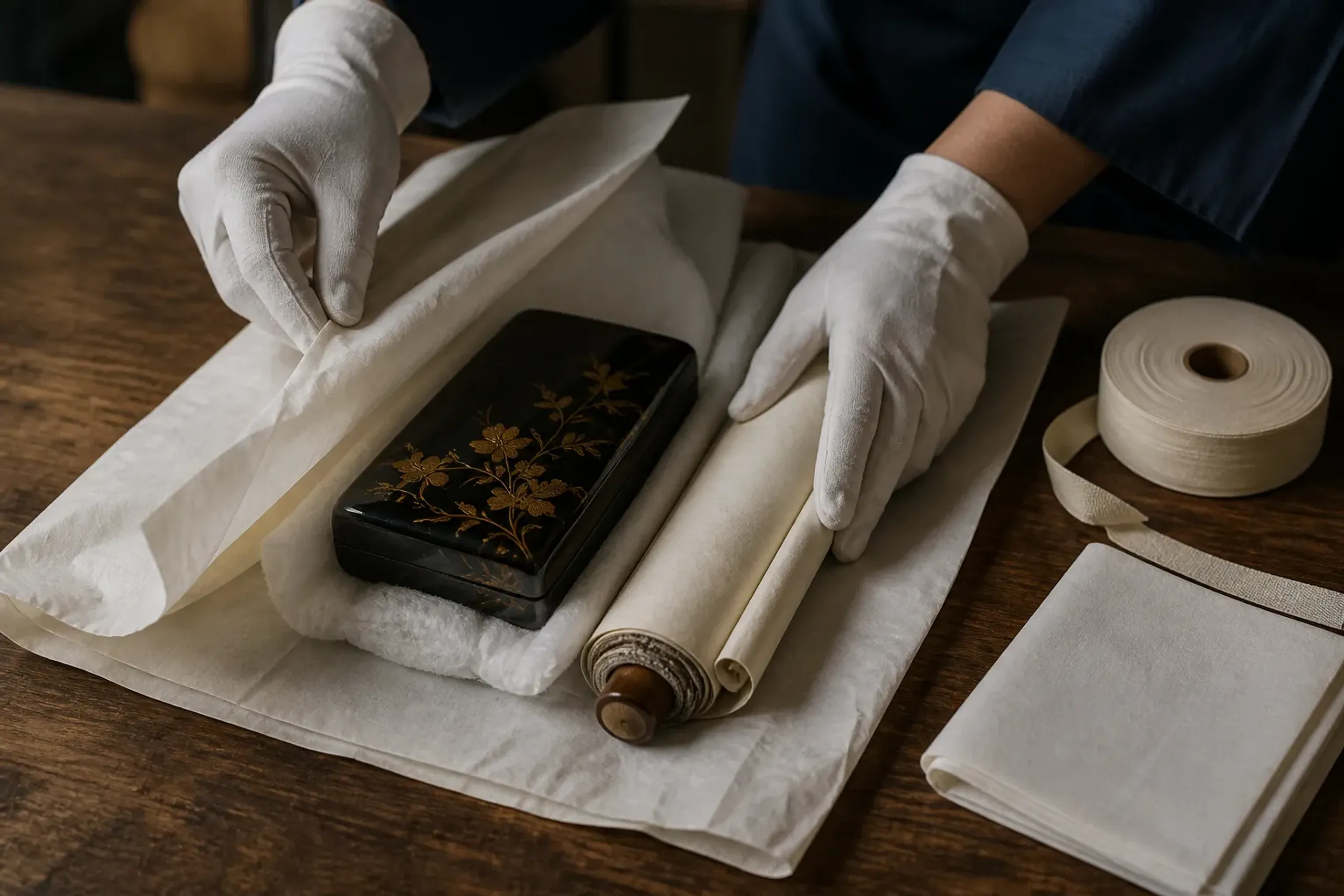
The purchase is the beginning of the object's journey, not the end. Three separate matters deserve attention, and each is easy to underestimate in the pleasure of having bought well.
Packing. Lacquer, ceramics and paper each fail differently in transit and each needs handling suited to it. Lacquer resents shock and dryness. Ceramics need immobilisation, not just padding. Scrolls and prints must travel without pressure across the image. Generic packing gets objects home most of the time. "Most of the time" is not a standard you want applied to a two-hundred-year-old tea bowl.
Humidity. Air freight and long transits subject objects to swings in humidity that a room in Kyoto never would. Materials that have been stable for a century can move — lacquer especially — when the moisture around them changes fast. Proper transit accounts for this. It is not the same as fast shipping.
Insurance valuation. Insuring a piece for transit is a separate exercise from what you paid for it. Purchase price and insured value are not interchangeable numbers, and treating them as one leaves you exposed if the worst happens between the dealer's door and yours. This is worth doing properly and doing before the object leaves the room.
A buying day that spans two dealer streets and a temple market wants a car held on the clock — a place to leave the pieces you have already bought, cushioned and out of the sun, while you keep looking. Our private chauffeured service in Kyoto exists in part for exactly this: an unhurried base that moves with you, driven by someone who knows the lanes and the parking near Gion. It sits naturally inside a tailor-made itinerary that might just as easily take in an atelier or a private garden between appointments.
A Note On How You Move Through Gion

Shinmonzen and Furumonzen run through a living neighbourhood. Kyoto has been direct about this in its 2026 visitor guidance — Gion is where people live and work, not a set. Serious antiques buying happens to align neatly with the city's request for calm, unhurried, low-visibility conduct. Quiet viewing conditions are what a considered purchase needs anyway. Photograph a dealer's stock only with permission. Keep your party small. The discretion that protects your privacy also happens to be good manners here, and dealers notice which visitors understand that.
One more practical note for high-value buyers: Japan's tax-free shopping system changes on November 1, 2026, shifting to a refund method processed after customs inspection at the airport or seaport. For antiques and art, where sums are large and paperwork matters, this affects how a purchase is documented and when the tax is settled. It is another reason the logistics are worth mapping before you buy rather than improvising at the shop counter.
The Craft Behind The Objects
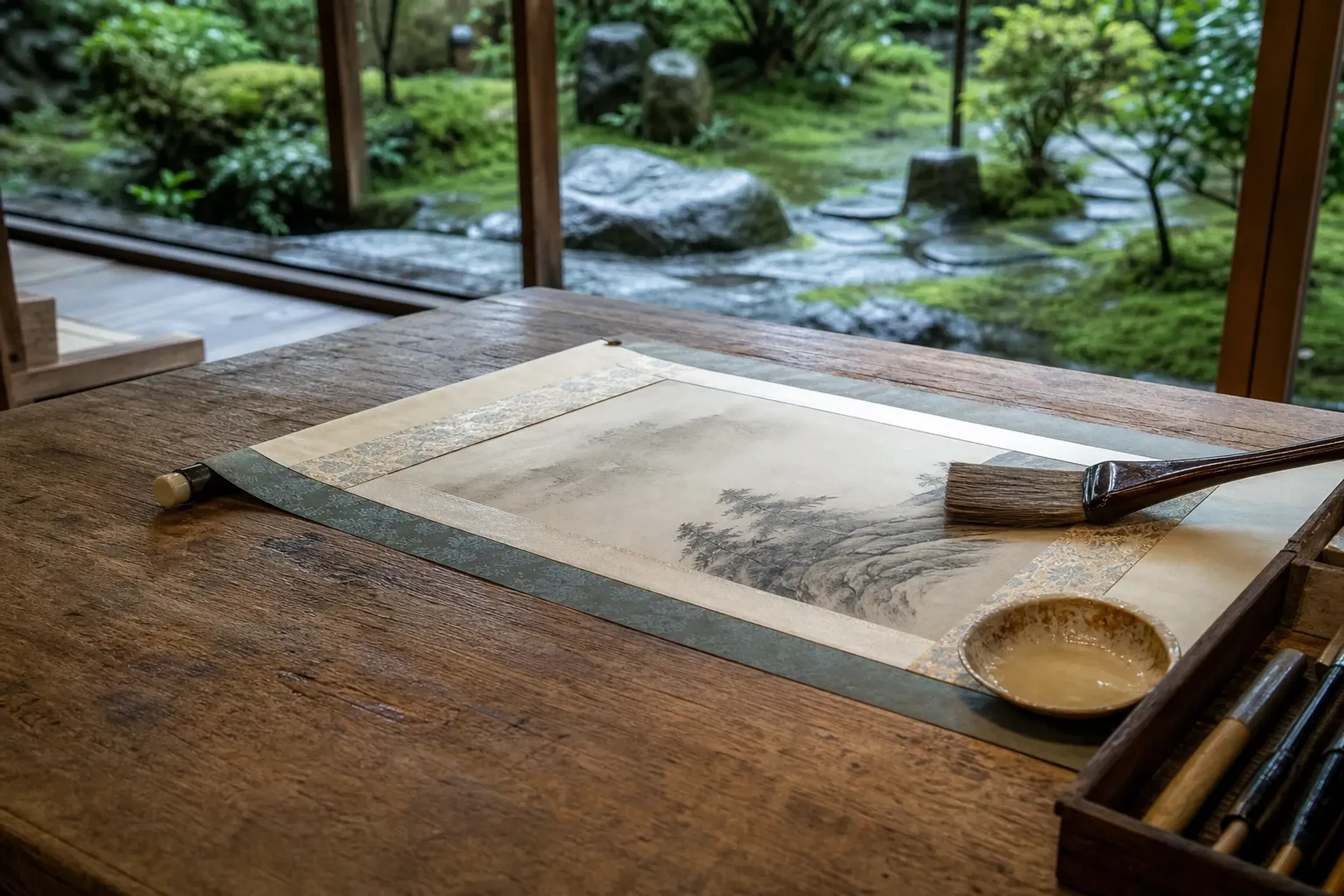
Buying an antique is, in the end, an encounter with a shokunin who is no longer in the room. The scroll was mounted by someone whose training took decades. The tea bowl carries the hand of a potter who understood glaze as chemistry and accident at once. Part of the pleasure of collecting in Kyoto is that the living traditions have not vanished — you can still meet the makers whose lineage produced the objects you are drawn to.
For readers whose interest runs to how these things are made, our writing on Japan's craft lineages goes deeper: the discipline behind Japanese knife-making, the kilns and clay of Mashiko ceramics, the slow art of bespoke shoemaking, and how Japan's finest leather is worked in Tochigi and Himeji. An antiques day and an atelier visit belong on the same trip. They are two views of the same thing — the value of a human hand that took a lifetime to train.
Frequently Asked Questions
Why Not Just Trust A Reputable Dealer?
Reputable dealers exist and are worth cultivating. But even the most honest dealer advises from a position that includes wanting to sell. An independent appraiser has no stake in the outcome, which is the entire point. The two roles are not in conflict — a good dealer often respects a buyer who brings independent counsel, because it signals a serious collector rather than a casual one.
Where Is Kyoto's Antiques District?
Shinmonzen-dōri and Furumonzen-dōri, two parallel lanes near Gion and a short walk from Keihan Railway's Sanjō station. These are the established shops. For markets, Kōbō-ichi at Tō-ji falls on the 21st of each month and Tenjin-san at Kitano Tenmangū on the 25th.
Can I Always Export What I Buy?
No. A purchase can be completely lawful in Japan and still not be exportable, depending on the material and object type. The position must be confirmed for the specific object before you commit to buying. This is established in advance on the buying days our team arranges — never left to sort out afterward.
Is There A Good Time Of Year For This?
The temple markets run monthly year-round. For a concentrated indoor gathering of dealers, the Kyoto Antique Fair at Kyoto Pulse Plaza runs three times a year, with the 2026 spring edition on March 27–29. Beyond that, the shops keep their own rhythm and appointment-based visits can be arranged in most seasons.
Why Choose Japan Royal Service
A buying day in Kyoto rewards two things above all: access and independence. Access to dealers who prefer quiet, serious visitors and open their back rooms accordingly. And an independent appraiser who is paid by you and takes nothing from the seller, so the advice you receive is advice, not a sale in another form.
Our team at Japan Royal Service arranges both, and the work that follows — confirming what may leave the country before you commit, packing lacquer and paper and ceramic for the journey, insuring the object as a separate exercise from its price, and holding a car on the clock so the day flows across two streets and a market without friction. In our experience the objects and the access justify the effort. The rest is our concern, quietly handled, your identity and your itinerary kept to ourselves.
If you are considering a collector's day in Kyoto — a single significant piece, or a slow morning across the markets with an educated eye at your side — reach our team privately via WhatsApp or LINE, or contact us here, to begin a discreet conversation.