In this guide
- 01A Flower Hat That Started As Work Gear
- 02How Did Yamagata Hanagasa Matsuri Begin, Step By Step?
- 03When Is Yamagata Hanagasa Matsuri, And What Time Does The Parade Run?
- 04Where Is The Hanagasa Parade Route In Yamagata City?
- 05The Chant "Yassho, Makasho": Why Its Origin Is Still Disputed
- 06The Honest Complication: A Lyric That Overlaps With A Hakata Celebratory Song
- 07The Dances Are More Recent Than Most Visitors Expect
- 08Can Spectators Join The Hanagasa Dance?
- 09Scale And Context: What Kind Of Festival Is This, Really?
- 10A Practical, Luxury-Minded Plan For Watching Hanagasa Without Stress
- 11Getting There Smoothly: Transfers And Private Transportation In Yamagata
- 12Where Hanagasa Fits In A Tailor-Made Japan Itinerary
- 13Where To Buy Official Paid Viewing Seats (Information Only)
- 14Frequently Asked Questions
- 15Let Us Plan Your Hanagasa Evening
On a hot day in Obanazawa, earth had to be packed by hand.
Not poetically. Literally. Teams tamped soil to build the embankment for the Tokuryō-ko reservoir, and the work demanded rhythm as much as muscle.
So they sang.
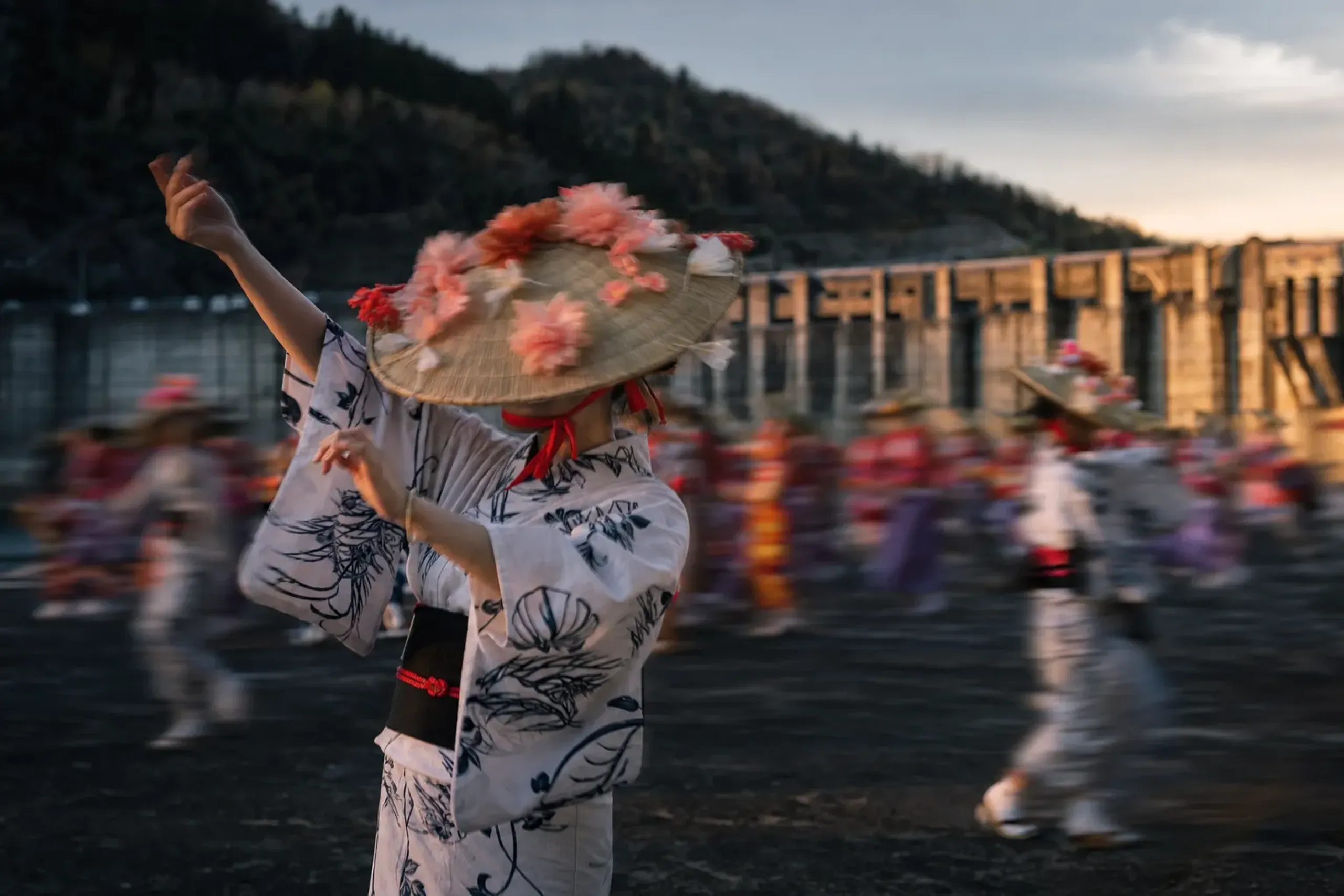
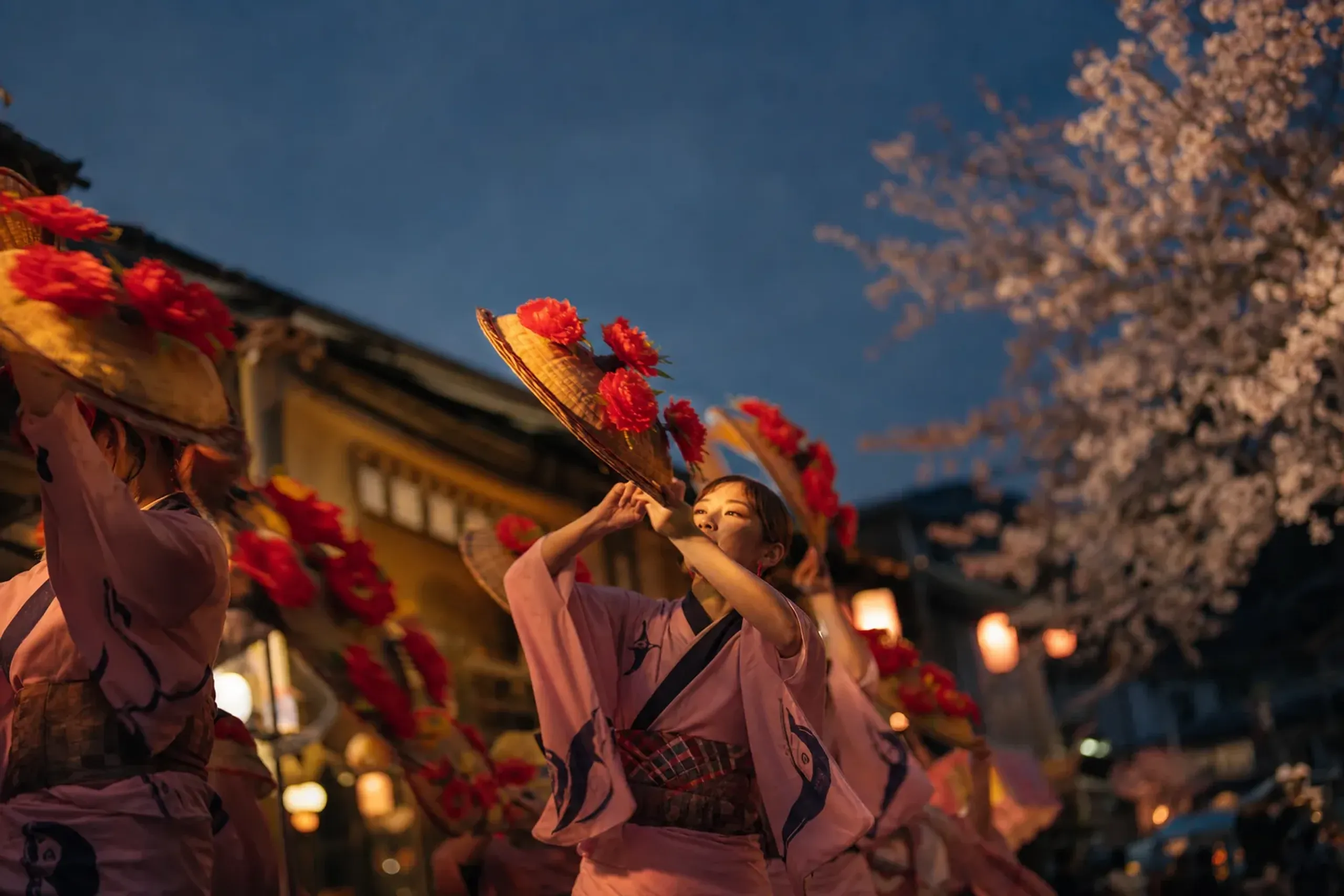
A plain sugegasa sedge hat kept sun and rain off their faces. It was not costume. It was equipment. Then, for one completion celebration in 1919, the same hats were decorated with paper flowers dyed with local safflower, and the work song was danced for the first time.
That single, practical decision is the seed of Yamagata Hanagasa Matsuri.
A Flower Hat That Started As Work Gear
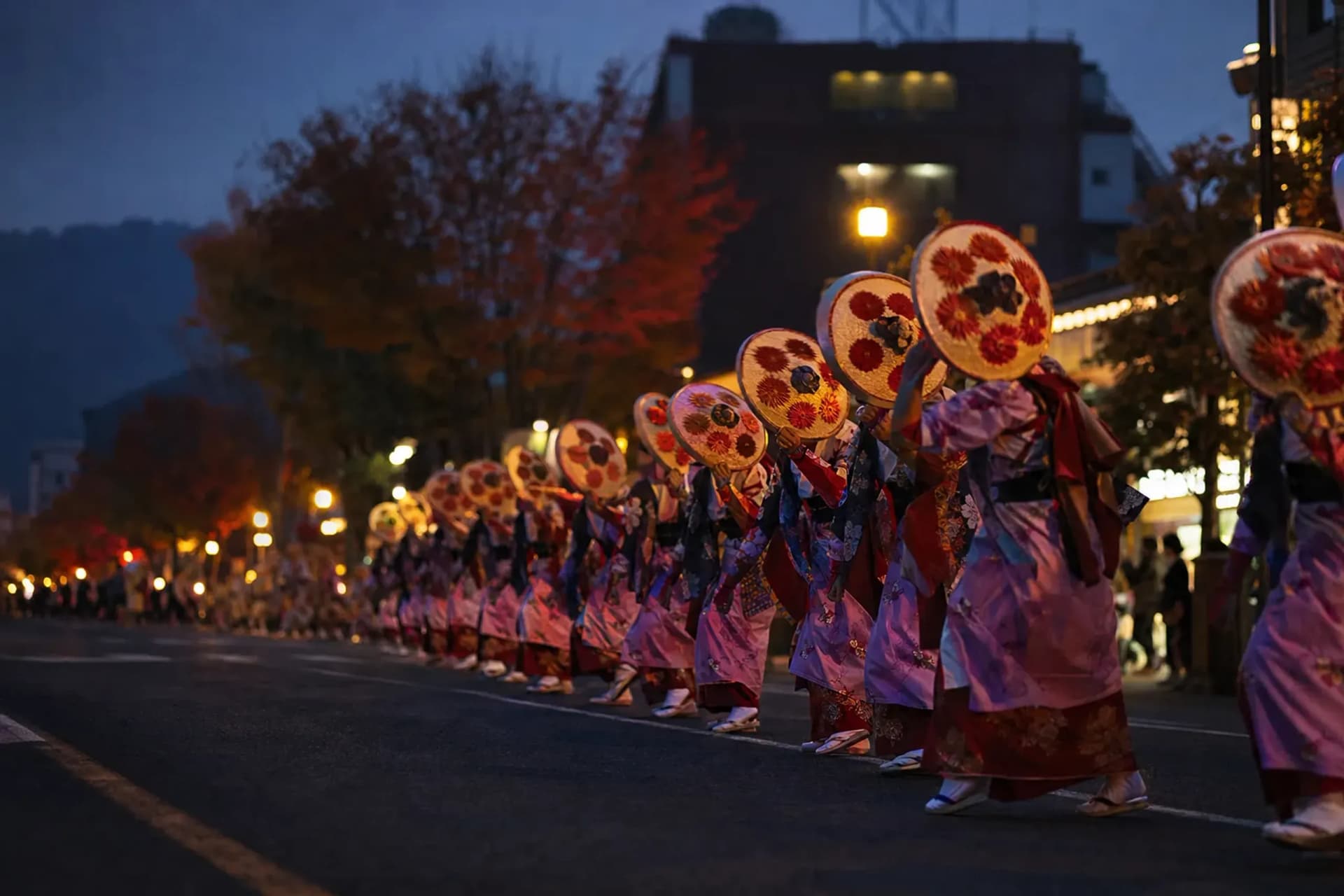
The most recognizable image of Yamagata Hanagasa Matsuri—the flower hat—didn't begin as a festival design.
It began as sugegasa: sedge hats worn by laborers for simple protection while building the Tokuryō-ko reservoir in Obanazawa, completed in 1919 for irrigation.
Then came a one-time twist.
At the reservoir's completion celebration, people decorated those plain hats with paper flowers dyed using safflower, a local specialty crop. The song gained dance steps. The workday tool turned ceremonial, once.
And once was enough.
How Did Yamagata Hanagasa Matsuri Begin, Step By Step?
Yamagata Hanagasa Matsuri traces back to a 1919 reservoir-completion celebration, then took its parade form in 1963 and became independent in 1965.
That timeline matters, especially for travelers who assume every major Japanese festival is medieval.
This one isn't.
Here is the verified arc, clean and dated.

- 1919: At the Tokuryō-ko reservoir's completion celebration in Obanazawa, the work song is performed with dance for the first time, and the once-plain hats are decorated with dyed paper flowers.
- 1963: During Japan's high-growth era, the Zaō Summer Festival includes a Hanagasa Ondo Parade as a tourism-linked event, tied to rites for Zaō Daigongen.
- 1965: The parade separates from the Zaō Summer Festival and becomes its own independent event, in essentially today's format.
- 1970: Hanagasa is featured at the Osaka World Expo, an early national milestone in its recognition.
From work song to standalone city festival: under 50 years.
That's recent for something now spoken of as a Tōhoku icon.
When Is Yamagata Hanagasa Matsuri, And What Time Does The Parade Run?
Yamagata Hanagasa Matsuri is held every year on August 5–7 in Yamagata City, with the main parade running roughly 6:00 pm to 9:45 pm and the parade itself starting around 6:10 pm.
Those hours shape everything: dinner strategy, heat strategy, and how you leave the route when the crowds tighten.
Plan for a long evening.
The official festival schedule typically notes an opening address around 6:00 pm, the parade beginning around 6:10 pm, and the full flow lasting until about 9:45 pm.
The energy spikes as the light fades.
Where Is The Hanagasa Parade Route In Yamagata City?
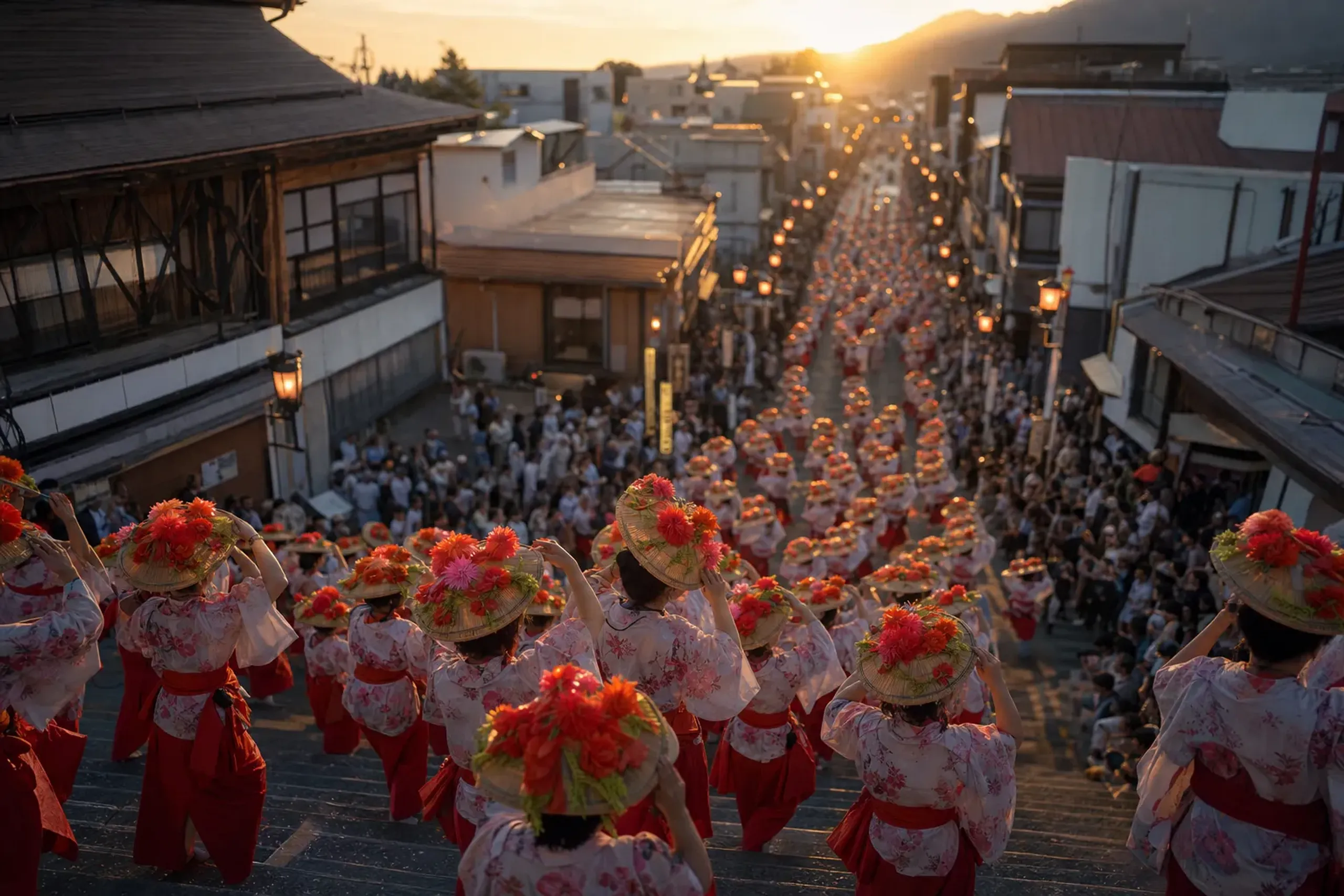
The parade runs along Yamagata's main street corridor, described as spanning Tokamachi — Honmachi — Nanokamachi — Bunshokan.
If you're picturing a single "spot," drop that idea.
This is a moving river of sound and hats.
In our experience, the easiest nights begin with a clear meeting point, a fixed viewing plan, and a deliberate exit route once the parade segment you came for has passed. It is precisely this quiet, anticipatory choreography—arranging the evening so it unfolds without friction—that separates a good festival night from a memorable one.
Key fact: Route details and viewing arrangements can shift year to year. Our concierge team at Japan Royal Service verifies the current route and on-the-ground logistics ahead of your visit.
The Chant "Yassho, Makasho": Why Its Origin Is Still Disputed
The call "Yassho, Makasho" is disputed, with one theory tying it to the original dirt-tamping work chant and another suggesting it was borrowed from a Sakata boatman's song.
Both theories are alive because both make a kind of sense.
You can hear "work" in it.
If you imagine embankment labor—hands lifting, feet bracing, bodies dropping weight in time—a sharp chant becomes practical, not decorative. Yet Sakata is a port town, and boatmen's songs travel.
That uncertainty is part of the festival's character.
The Honest Complication: A Lyric That Overlaps With A Hakata Celebratory Song
One of the most interesting knots in the origin story is lyrical.
The opening line of the song shares wording with "Hakata Iwai-uta," a celebratory song from Hakata, Fukuoka.
That overlap is real.
And the standard Obanazawa origin story doesn't fully explain how those words would land in Yamagata.
Because of that, an alternative theory appears in documented discussion: the song may trace back further, to a festival chant associated with Ise pilgrimage culture that Edo-period pilgrims carried and spread as they moved. It's not settled. We don't pretend it is.
The Dances Are More Recent Than Most Visitors Expect
What you see on the street today is not one fixed, ancient choreography.
It has layers.
Some parts are carefully measured, almost engineered for parade flow. Others are intentionally open, built for participation and local invention.
The Standard Women's Dance: Measured In Meters
The standard women's dance is Seichō Hanagasa Odori — Kunpū Mogamigawa, themed around a breeze crossing the Mogami River.
Here's the detail people miss.
One chorus corresponds to exactly 10 meters of forward movement in the parade. It's choreography designed for a moving street, not a stage—the kind of precision only a culture that prizes the craft of getting small things exactly right would trouble to codify.
The Standard Men's Dance: Created In 1998
The companion men's dance, Seichō Hanagasa Odori — Zaō Gyōkō, themed around dawn over the Zaō range, was created in 1998.
That date surprises even repeat Japan travelers.
It shouldn't.
Hanagasa's modern form is a living thing, and 1998 is close enough that many current adult participants remember the shift as "new."
Creative Dances: Participation Became The Point
From around 1993, the festival deliberately shifted toward greater citizen participation.
Groups began devising original "creative dances" alongside the two standard forms.
It changes the mood.
You're not only watching a preserved routine; you're watching neighborhoods and clubs show their personality in real time.
Obanazawa's Kasa-Mawashi: A Gesture From The Dam Site
A more energetic kasa-mawashi (hat-spinning) style survives specifically in Obanazawa, the dance's birthplace.
Its origin is said to be practical.
Laborers fanned their hats to send a cooling breeze to fellow workers during construction. Over time, that helpful motion sharpened into performance.
It still reads as relief.
Can Spectators Join The Hanagasa Dance?
Yes—spectators are invited to join the dancing for the final part of the parade, listed around 8:30 pm on the official schedule.
This is where many first-time visitors either freeze or light up.
We'd rather you do it well.
Wear something you can move in, keep your hands free, and watch a full sequence before stepping in. If you want photos, decide that upfront, because juggling a phone and a hat in tight crowds is a quick way to lose both.
Scale And Context: What Kind Of Festival Is This, Really?
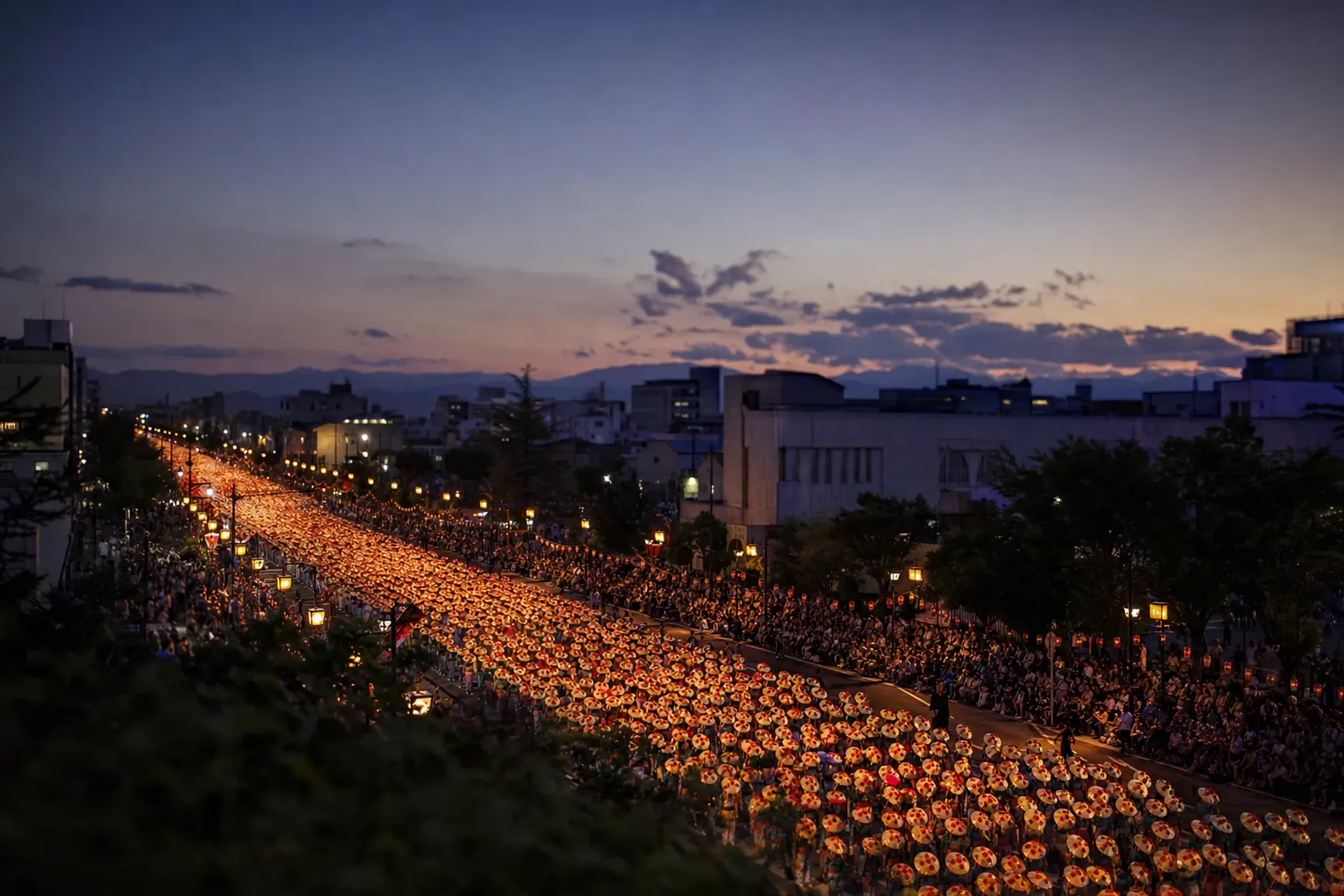
Yamagata Hanagasa Matsuri is a large public parade festival held over three nights, with over 10,000 dancers participating.
It's not intimate.
It's not quiet.
Reported visitor figures reach up to roughly one million, depending on source; the numbers aren't fully consistent, so we treat them as a reported range rather than a single fixed claim.
You may also hear two different framings in Tōhoku festival talk: some sources list Aomori Nebuta, Akita Kantō, and Sendai Tanabata as the "Three Great Festivals of Tōhoku," while others include Hanagasa as a fourth, making it "Four Great Festivals." Both circulate. We won't force one label.
A Practical, Luxury-Minded Plan For Watching Hanagasa Without Stress
This is a street festival, so comfort is earned through planning, not exclusivity.
Small choices matter.
Here is the approach our team at Japan Royal Service uses when advising HNW travelers who want atmosphere without abrasion.
Step 1: Choose Your Intensity (One Night Or Three)
One night can be perfect if your Japan schedule is tight.
Three nights changes what you notice.
If you attend more than once, spend one evening simply absorbing the flow, and use another to focus on photography or participation. Repetition removes pressure.
Step 2: Protect The Hour Before 6:00 pm
The parade begins around 6:10 pm, and that makes 5:00–6:00 pm the danger zone.
Crowds gather fast.
We suggest finishing an early dinner, restroom stop, and meeting-point check before the opening address. Being "almost ready" at 5:45 pm is the mistake that costs you the first hour.
Step 3: Heat, Hydration, And Footwear (The Quiet Luxury)
Early August in Yamagata is warm, often humid.
Dress for standing.
A hand towel, a compact fan, and shoes you can walk in for 45 minutes after the parade will do more for your mood than any "VIP" label.

Keep valuables minimal. The truest luxury here is being anticipated for—having water, a light layer, and a cool towel appear exactly when you reach for them, without a word spoken.
Step 4: Exit Like You Mean It
Leaving is where evenings unravel.
Have a post-parade pickup point that's one or two blocks off the main corridor, not directly on it.
In our experience, the fastest exits are calm, slightly indirect, and decided in advance.
Getting There Smoothly: Transfers And Private Transportation In Yamagata
For festival nights, the trip that matters is the last kilometer.
It's where taxis get scarce and sidewalks thicken.
Many HNW travelers choose private transportation so timing stays deliberate and the return to the hotel is predictable, even when the streets are busy.
For parties of two to six, a chauffeured plan also lets you keep extra items—water, a change of shoes, a light layer—out of your hands until you need them.
Where Hanagasa Fits In A Tailor-Made Japan Itinerary
Hanagasa rewards travelers who treat it as a focused cultural chapter, not a rushed detour.
One good evening can anchor a whole Tōhoku arc.
If you want the trip to feel intentional, we often build the festival night into a tailor-made itinerary where daytime is quiet—gardens, crafts, long lunches—and the parade becomes the single, bright surge of the day.
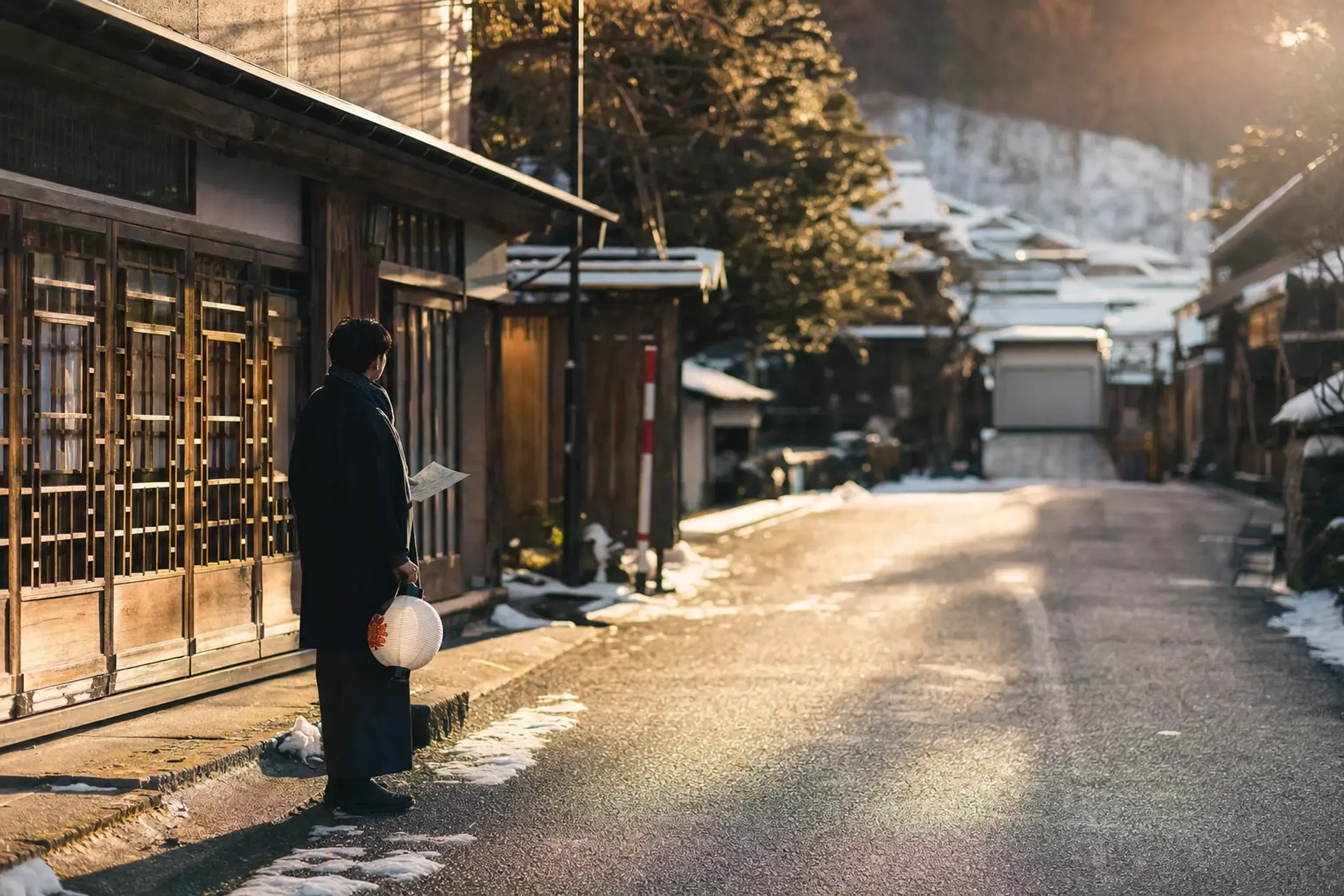
There is a certain wabi-sabi rhythm to it: hushed, moss-and-stone mornings giving way to one deliberate crescendo at dusk.
This is where discretion matters.
Not because the street is public, but because your movements can remain private. Our concierge team plans meeting points, timing, and pacing so you're never broadcasting your presence or improvising in a crowd. Guest identity and itinerary stay wholly confidential—the quiet baseline of everything we arrange.
Where To Buy Official Paid Viewing Seats (Information Only)
Official paid viewing seats are sold via Lawson Ticket, with deadlines and rules that can change by year.
It's an official channel with published cutoffs, including a web purchase deadline that has been listed as 8:00 pm (Japan time) on August 7 for at least one published edition.
Seat inventory can move quickly once sales open. If reserved seating matters to your comfort, treat it as an early decision rather than a last-week task.
Guests who want tailored guidance for their dates may reach our concierge team at Japan Royal Service for private coordination details.
Frequently Asked Questions
Is Yamagata Hanagasa Matsuri held every year on the same dates?
Yes, Yamagata Hanagasa Matsuri is held annually from August 5 to August 7 in Yamagata City.
Because it's a fixed-date festival, accommodation and transport planning should start early, especially for travelers with specific room preferences.
What time should we arrive to get a good view without rushing?
Arriving by 5:30 pm usually gives you breathing room before the opening address around 6:00 pm and the parade start around 6:10 pm.
If you want to join the dance later, arriving earlier also lets you watch full sequences first, which makes stepping in feel natural instead of awkward.
Can our family join the dance, and is it suitable for older parents?
Yes, spectators can join the final part of the parade, listed around 8:30 pm, and many families participate at their own pace.
For multi-generational groups, we suggest a shorter viewing window, a clear meeting point, and a planned exit so no one feels trapped in the densest crowd.
How many dancers and visitors are we talking about?
The festival involves over 10,000 dancers, and visitor totals are often reported up to roughly one million, depending on the source.
That scale is exactly why pacing, footwear, and an agreed pickup plan make such a difference for HNW travelers.
Let Us Plan Your Hanagasa Evening
A single night in Yamagata can become the quiet centerpiece of a wider Tōhoku journey—if the logistics disappear and only the atmosphere remains.
Whether you want reserved seating secured early, a chauffeured return that never leaves you waiting, or a full itinerary where the parade is the day's one bright surge, our concierge team can arrange every detail with total discretion. To begin shaping your dates, contact us here.