In this guide
- 01What Is The YOSAKOI Soran Festival In Sapporo?
- 02From Kōchi To Hokkaido: The One-Student Origin Story (1992)
- 03Naruko And Sōran-bushi: The Deliberate Fusion At The Core
- 04Why Does The Festival Look So Different From Team To Team?
- 05How Do Performances Work At YOSAKOI Soran (Parade, Stage, Or Street Spot)?
- 062026 Dates, Venues, And What “The City Is The Stage” Really Means
- 07How Crowded Is YOSAKOI Soran, And When Should You Go?
- 08Scale And Growth: The Numbers That Prove It Worked
- 09Where To Watch In Ōdori Park: A Simple, Respectful Strategy
- 10How To Join The Dance Without Feeling Like A Spectator In The Way
- 11Luxury Logistics That Still Respect A Citizens’ Festival
- 12How To Plan Your Day Like A Local (Without Pretending To Be One)
- 13How To Book And Verify Schedules Each Year
- 14Let Us Place You At The Heart Of Sapporo In June
- 15Frequently Asked Questions
The sound hits first. Dry wood, quick as a heartbeat.
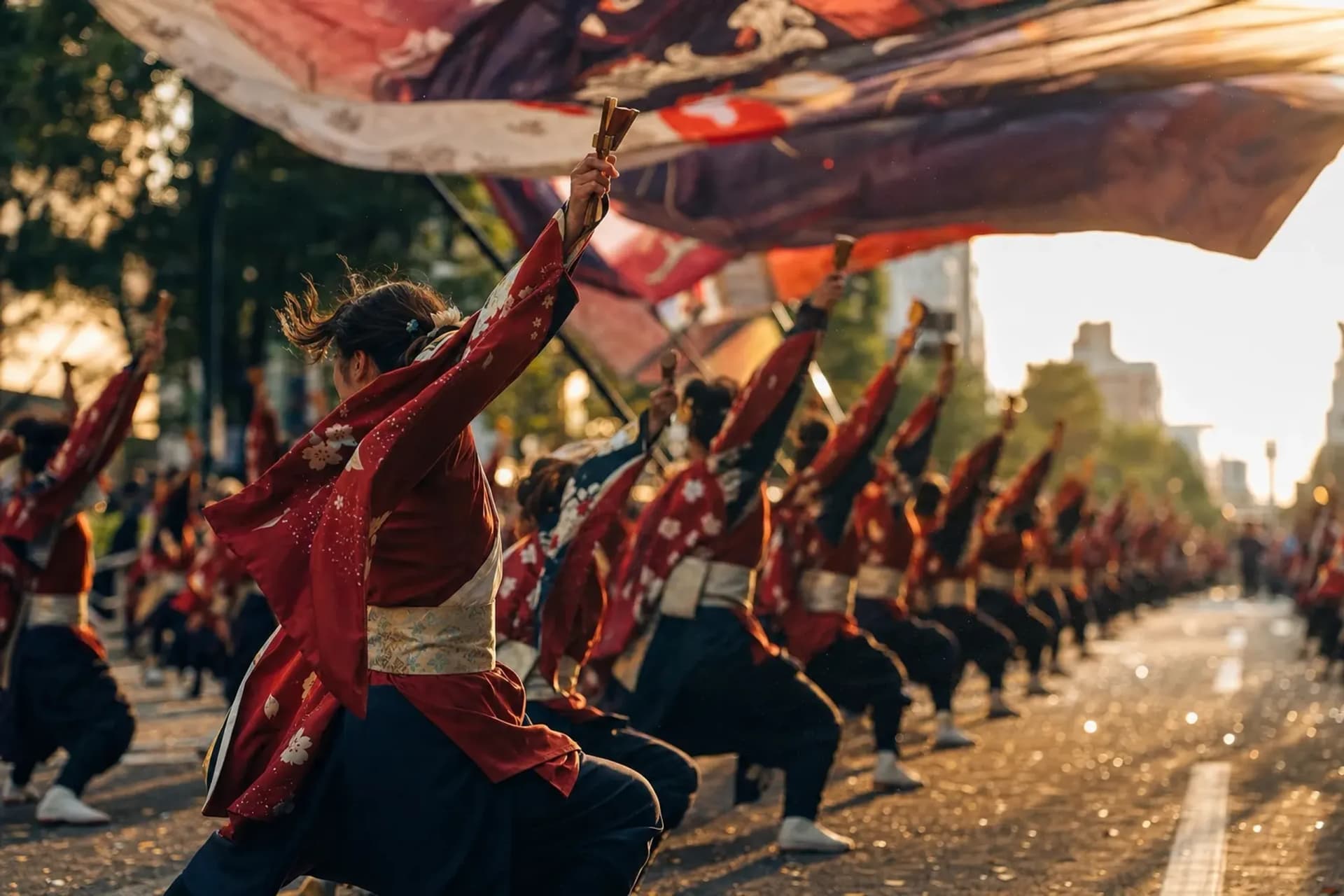
Naruko clappers snap in hundreds of hands, and the street answers back with drums, brass, and a bass line that wasn’t there a moment ago. You are standing in Sapporo in early June, watching a modern festival that behaves like a whole city deciding, all at once, to dance.
This is the YOSAKOI Soran Festival. And the reason it feels so varied—so gloriously unpredictable—is not chaos. It’s design.
What Is The YOSAKOI Soran Festival In Sapporo?
The YOSAKOI Soran Festival is a five-day dance festival in Sapporo (June 10–14, 2026) where every team must use naruko clappers and weave a Sōran-bushi phrase into its music.
Everything else is open. Costumes can tilt traditional or go full streetwear. The arrangement might carry shamisen tones, then veer into rock, pop, or electronic sound. That range is not a side effect. It is the festival’s engine.
It also matters that this is not an inherited folk rite from centuries ago. It began in 1992, built in plain sight. One person had a clear idea, and Sapporo gave it streets wide enough to test it. This is precisely the kind of living, modern Japan that a first-time visitor rarely stumbles upon and that a well-traveled one learns to seek out.
From Kōchi To Hokkaido: The One-Student Origin Story (1992)
In 1992, a Hokkaido University student visited Kōchi Prefecture’s Yosakoi Festival, felt the pull of it, and returned to Sapporo determined to create something new.
That origin changes how you watch. You are not “decoding an ancient tradition.” You are seeing a modern invention—fast-growing, competitive, and intentionally open to interpretation—built from a personal reaction and a small group of friends willing to try.
By 2026, it reaches its 35th edition. Not old. Not fragile. It is young enough to keep mutating, and established enough to fill the city with sound.
Naruko And Sōran-bushi: The Deliberate Fusion At The Core
The festival’s spine is a clean blend of two regional elements that were never meant to meet.
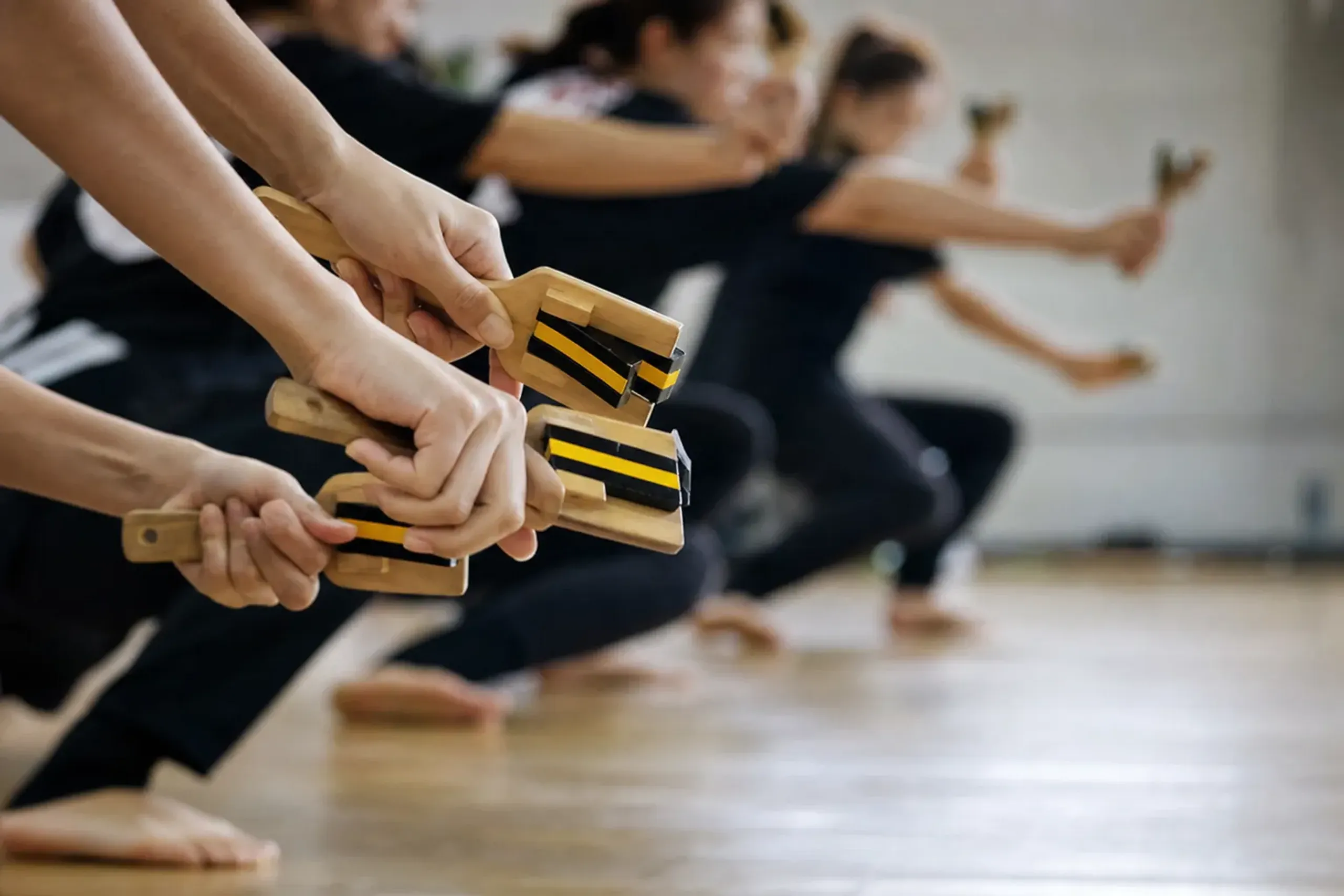
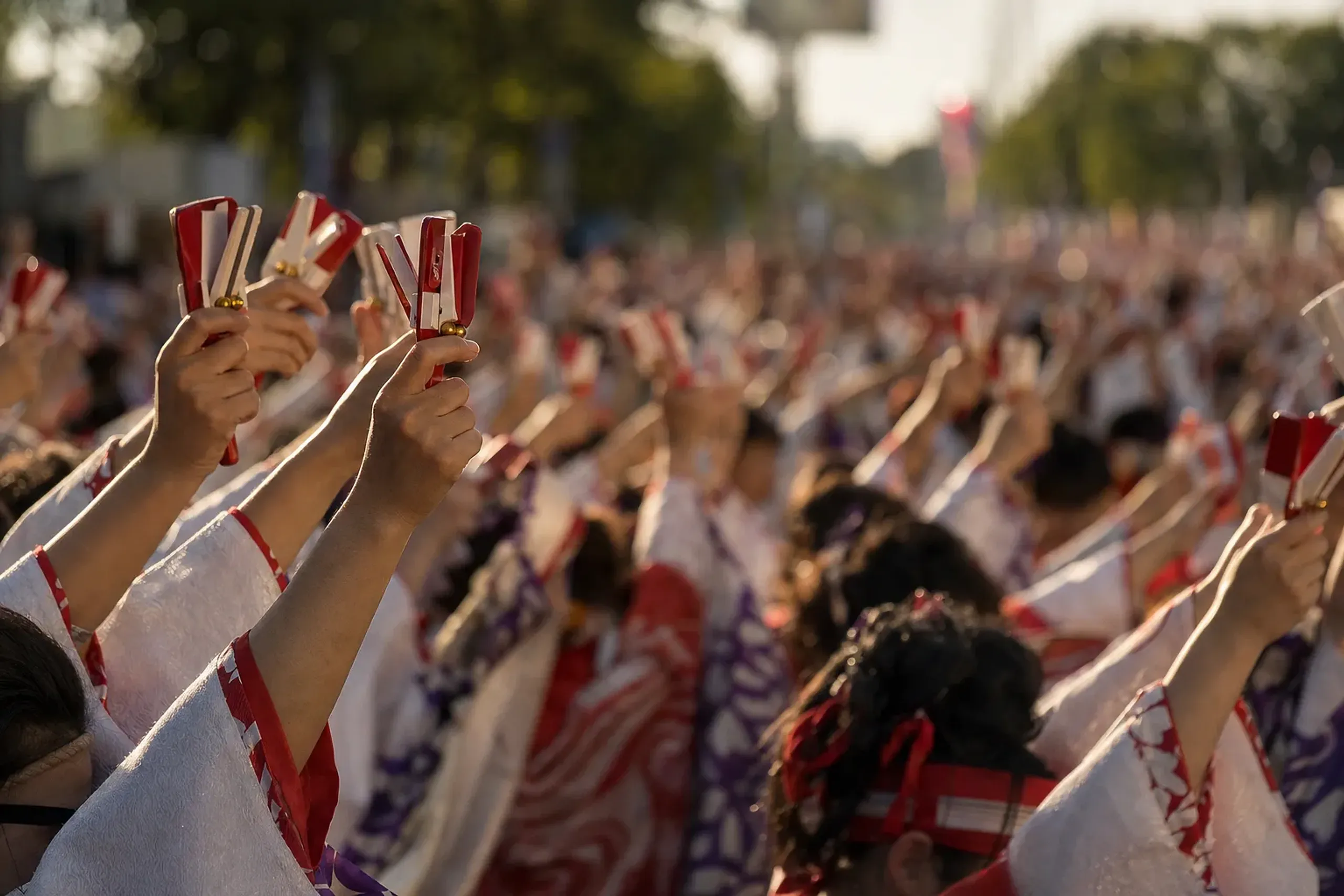
First, naruko: wooden clappers originally used in rice fields to scare birds away. Kōchi’s Yosakoi Festival adopted naruko into dance decades before Sapporo’s version existed, turning a practical tool into a rhythmic signature.
Second, Sōran-bushi: a Hokkaido folk song bound up with fishermen and the herring-fishing trade. Its phrasing and melody carry a muscular, work-song cadence, and it takes remarkably well to remixing. That’s why you’ll hear it surface inside a modern arrangement like a familiar face in a new crowd.
In our experience at Japan Royal Service, this fusion is what discerning travelers remember most. Not the scale. The moment you recognize the Sōran-bushi line inside a track that otherwise feels like a stadium concert—the past and present striking the same beat.
Why Does The Festival Look So Different From Team To Team?
Because only two rules are mandatory: every dancer must hold naruko, and every team’s music must include a phrase or melodic reference to Sōran-bushi.
That’s it. No required costume. No required tempo. No mandated formation. The result is visible instantly, even if you never read a single explainer.
One team may move with folk-dance posture and tight, disciplined lines, their costumes reading as kimono-inspired silhouettes.
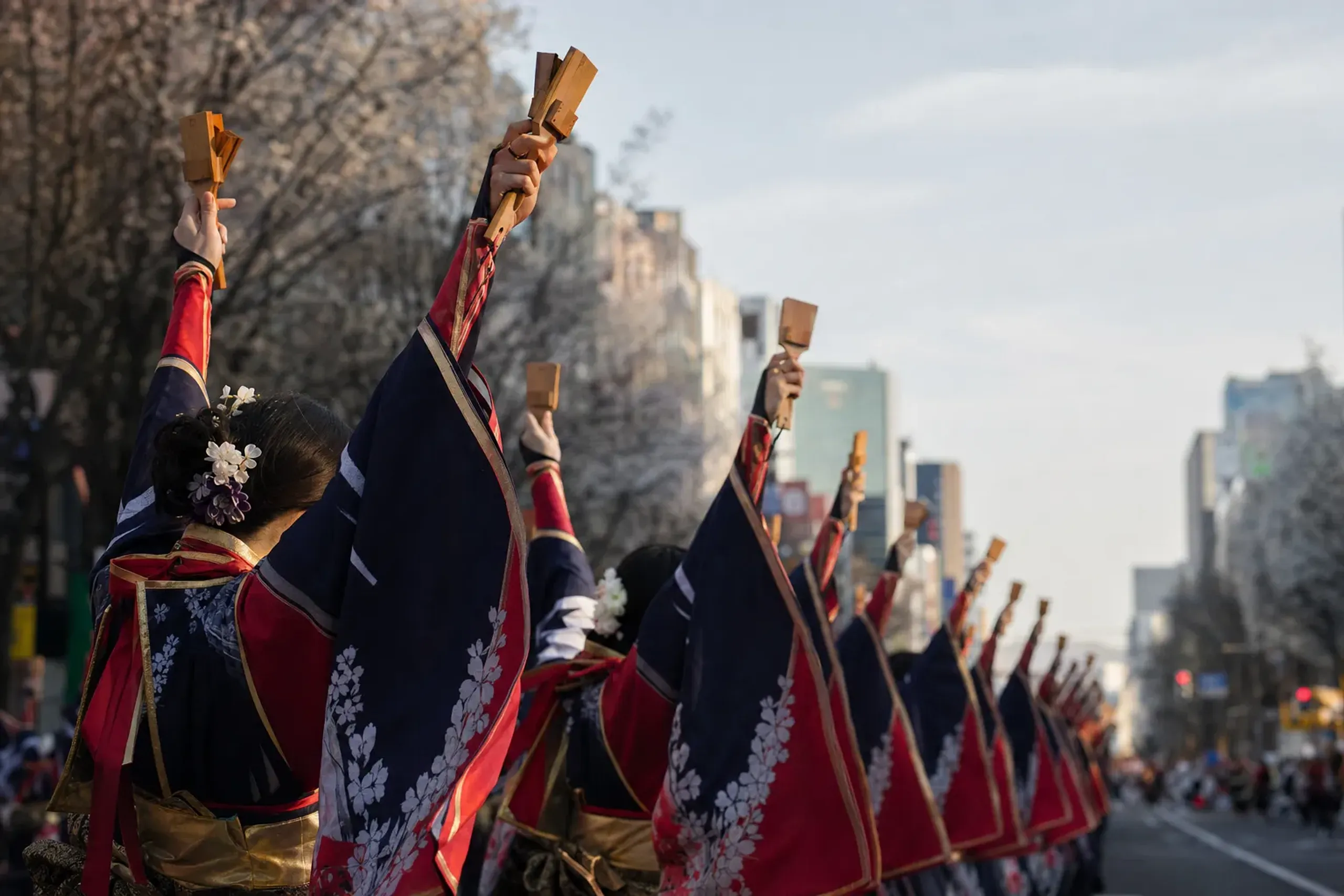
The next may hit the street with athletic choreography and a sound that leans electronic. The festival looks like a dozen genres sharing one grammar.
If you want a simple way to watch: keep your eye on the hands and your ear on the arrangement. When the naruko stays crisp and the Sōran-bushi phrase lands, you’re inside the rules. Everything else is creative argument.
How Do Performances Work At YOSAKOI Soran (Parade, Stage, Or Street Spot)?
Teams perform in three formats—parade route, fixed stage, or dancing in place at a street location—and the venue determines the format, not the team.
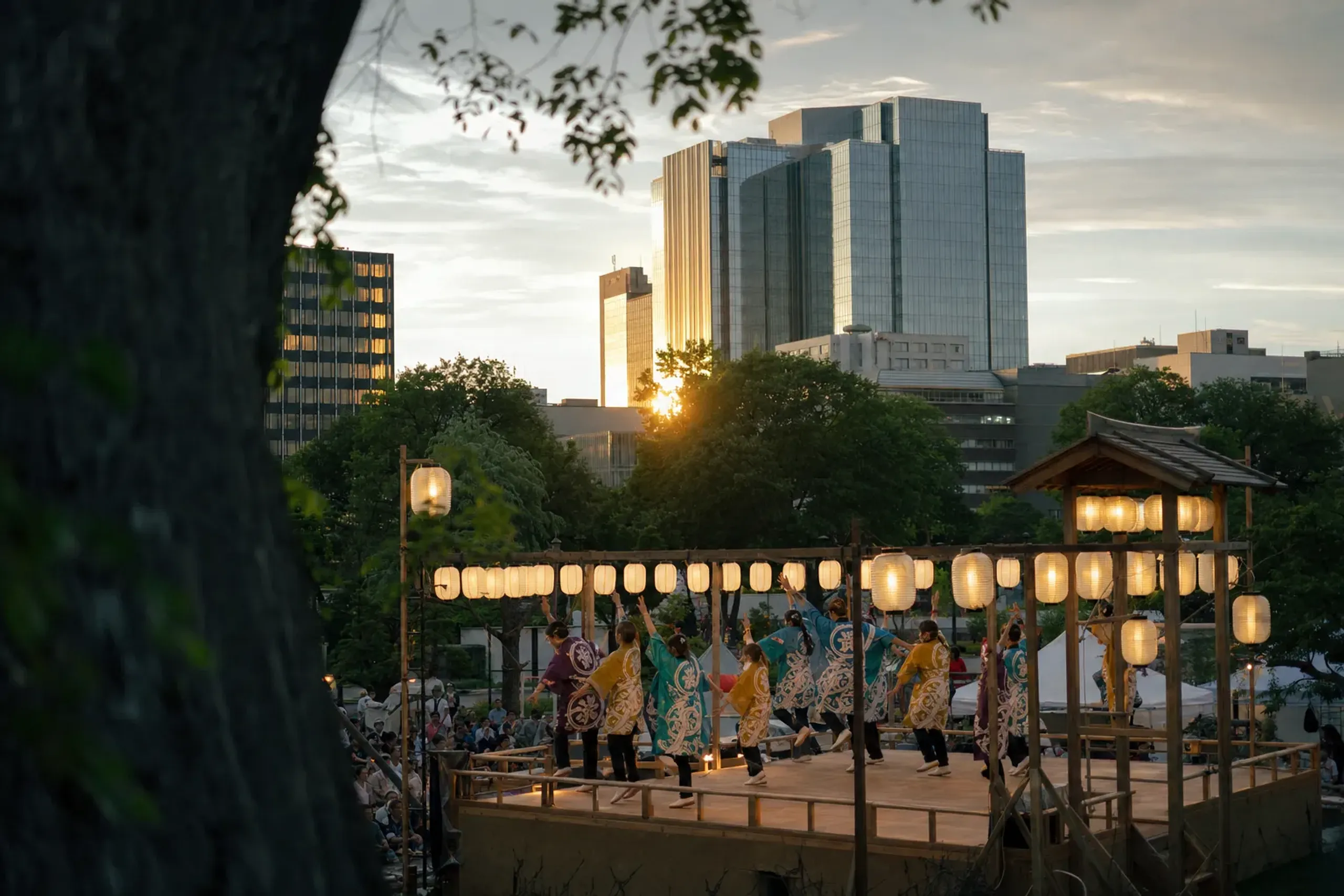
This is a practical detail that saves your day. A parade route rewards stamina and long viewing; you can follow a team’s momentum as it moves. A fixed stage compresses the energy into a single frame, which is often better for photos and for travelers who prefer a clear start and finish.
A street spot—dancing in place without marching—can feel closest of all. The clappers ricochet off nearby buildings. You hear breathing and footwork. It’s visceral.
2026 Dates, Venues, And What “The City Is The Stage” Really Means
The 35th YOSAKOI Soran Festival ran from June 10 to June 14, 2026, across roughly 17 sites around Sapporo.
The center of gravity is along Ōdori Park, including the main parade area. Yet the festival’s motto, “the city is the stage,” is not marketing fluff. It describes the practical reality of moving performances across central Sapporo so that neighborhoods and streets become part of the show.
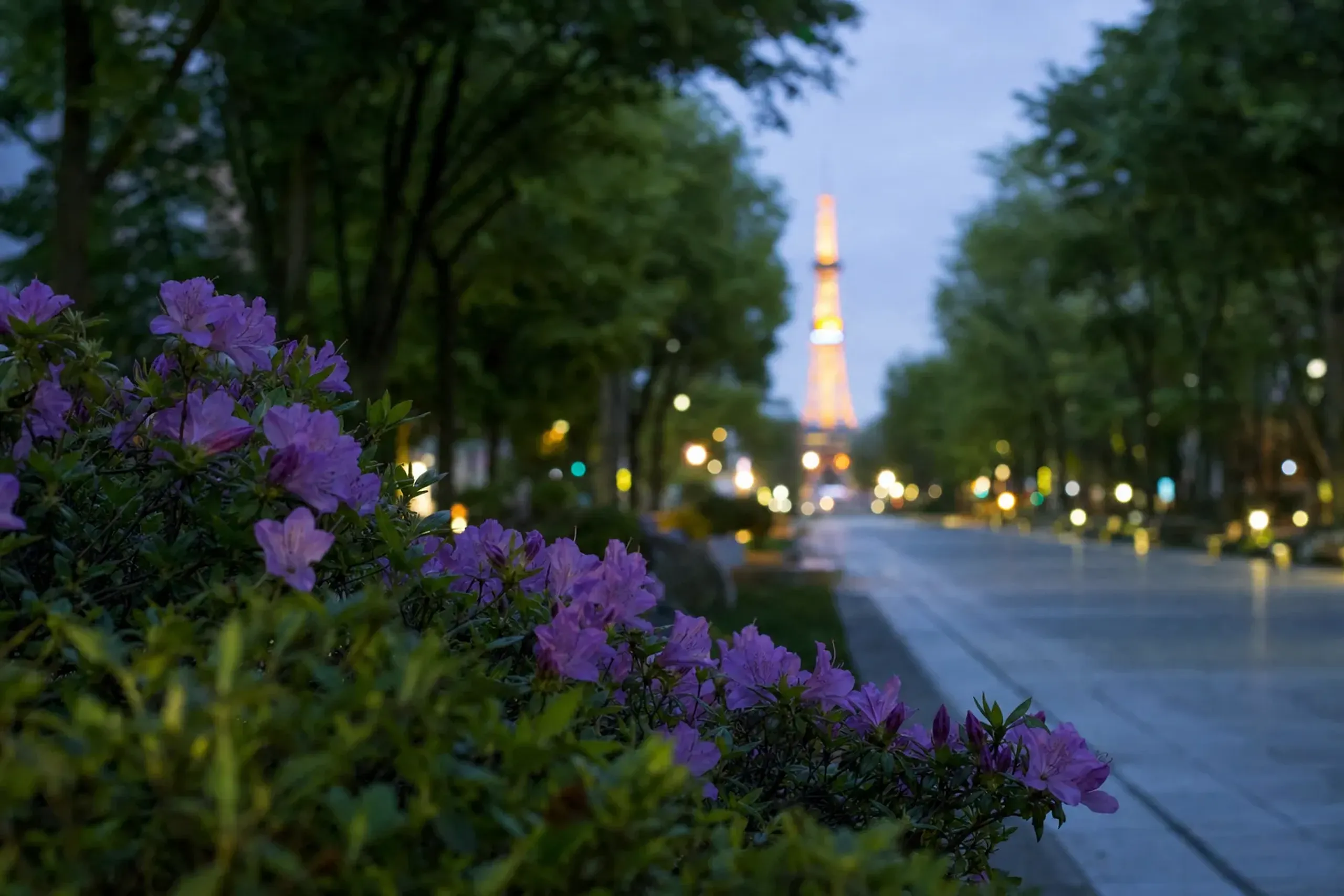
Weekdays tend to concentrate activity around the Nishi-hachi-chōme stage area. Weekends expand outward, with more venues active across the city. Plan for that shift. It changes everything: walking time, crowd density, and how you pace your meals.
Key fact: The organizers frame YOSAKOI Soran as a “citizens’ festival,” and even the judging includes a “citizen’s-eye-view” element alongside expert judging.
That philosophy matters for the discerning traveler. The value here is not exclusivity for its own sake. It’s respectful positioning: knowing where to stand, when to arrive, and how to move through it all without turning a joyful festival into an endurance test. Knowing the exact week of June when Sapporo comes alive this way—that is the quiet, seasonal knowledge that separates a good visit from an unforgettable one.
How Crowded Is YOSAKOI Soran, And When Should You Go?
Weekend afternoons are the busiest, while weekday viewing is typically calmer—especially around the central stages—so travelers who value breathing room should prioritize Wednesday to Friday.
Crowding is real and predictable. On peak weekend windows, the city can feel like a slow-moving river of spectators. If you arrive late, you may find yourself watching backs instead of choreography.
Our team at Japan Royal Service usually advises HNW travelers to treat this as a timing problem, not a comfort problem. Arrive earlier than feels necessary. Eat at slightly off hours. Choose two or three venues, not ten.
And accept one truth. Standing is part of it.
Scale And Growth: The Numbers That Prove It Worked
The first festival in 1992 began with 10 teams, roughly 1,000 participants, 3 venues, and about 200,000 spectators.
It then grew into something Sapporo now wears with ease. Historical peaks include 408 teams (2001), about 45,000 participants (2006), and about 2.18 million spectators (2010).
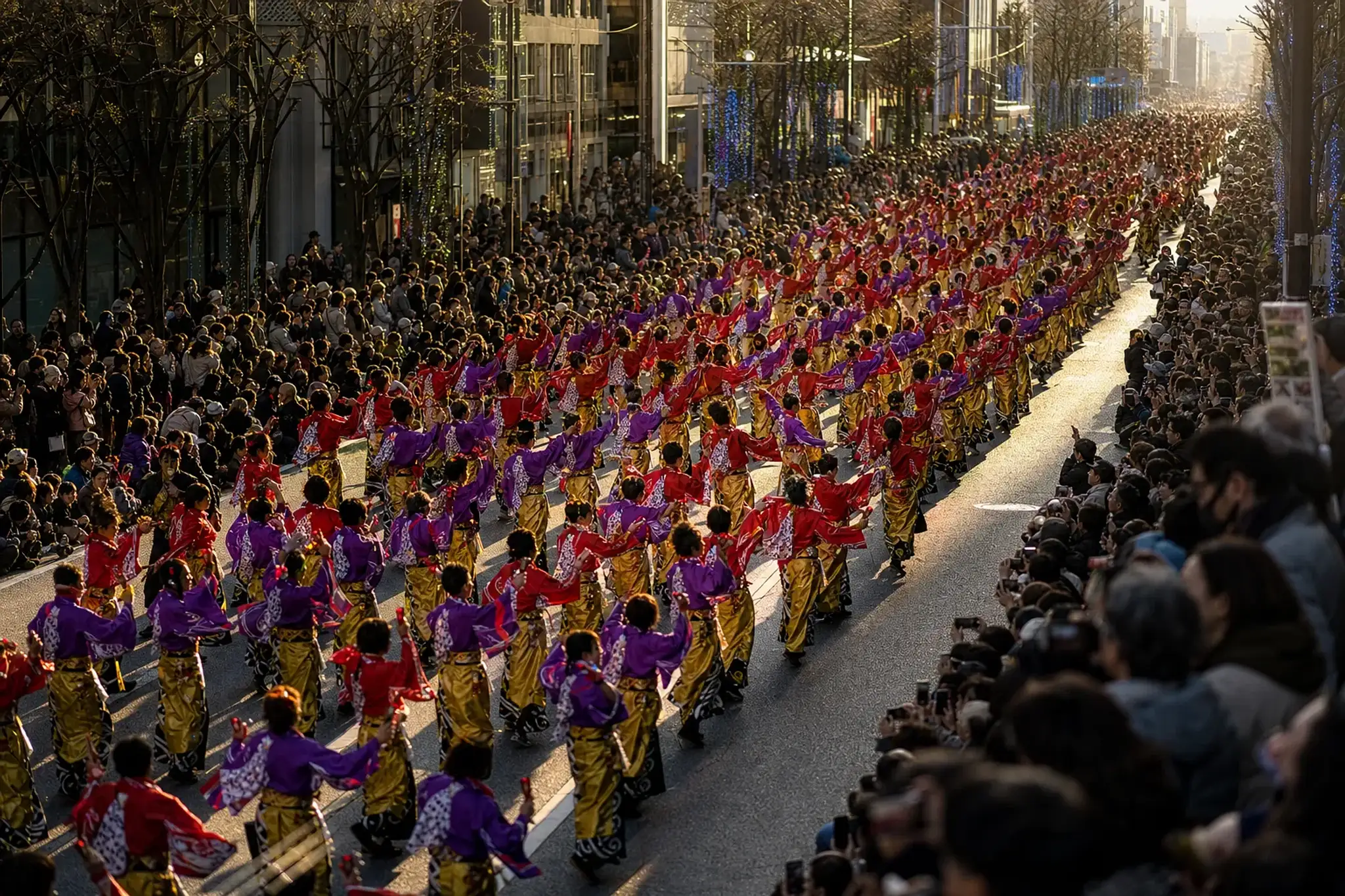
Recent typical scale sits at 260-plus teams, around 15 venues, around 26,000 participants, and roughly 2 million spectators.
In 2026, roughly 200 teams were expected across 17 to 18 venues. International teams have joined over the years, including participants from Taiwan, Brazil, Russia, and the United States. The festival doesn’t feel “international” in a branded way. It feels international in the simple sense that different groups bring different performance instincts.
The top award is the YOSAKOI Soran Grand Prize. In 2026, it was won by a team named Wasō, presented by Graphic Holdings.
Where To Watch In Ōdori Park: A Simple, Respectful Strategy
Start with Ōdori Park, then branch out once you understand the rhythm of the day.
Ōdori is the easiest place to anchor yourself because it concentrates parade energy, food areas, and the unmistakable feeling that “Sapporo is hosting.” It is also where you learn quickly what kind of viewing you enjoy: long parade flow, or compact stage intensity.
Try this step-by-step approach:
- First hour: pick one central Ōdori viewing area and stay put. Listen for how often Sōran-bushi surfaces in the arrangements.
- Second hour: move a short distance to change perspective—closer to a stage edge, or to a less-compressed stretch of route.
- Meal break: use the concurrent food festivals and beer gardens around Ōdori Park to reset, then return for one “must-see” team window if you have it.
Simple works. Over-planning backfires.
How To Join The Dance Without Feeling Like A Spectator In The Way
YOSAKOI Soran offers official participation options like Wa-Odori Square and, in 2026, a temporary team program called “BANZAI! NARUKO CARNIVAL,” which required advance reservation and a participation fee.
This is where a refined approach can be genuinely tasteful. Not by changing the festival. By helping you enter it cleanly.
If joining interests you, we recommend three preparations:
- Confirm the year’s rules early: participation mechanics can change annually, and the official site publishes the current details.
- Dress for movement: choose footwear you can stand and step in; avoid anything precious or stiff.
- Learn one listening cue: wait for the Sōran-bushi phrase; it helps you sync with the group’s timing even as a first-timer.
There is also a quiet etiquette point: don’t treat dancers like props. Ask before close-up portraits. Step back when teams are staging. Small things, sharp effect.
Luxury Logistics That Still Respect A Citizens’ Festival
The best luxury move at YOSAKOI Soran is not a special seat. It’s reducing friction while keeping the festival’s public spirit intact.
That means controlling what you can control: your arrival time, your walking load, your meeting points, and your ability to exit before the city bottlenecks. For many HNW travelers, a private chauffeured transportation plan changes the entire feel of the day—especially if your party includes older parents, younger children, or anyone who prefers not to stand for long in dense crowds.
We also suggest choosing a lodging base that allows fast returns for a break. A shower. Ten minutes of silence.
Then back out into the sound. For travelers who want a trip built around this event, our tailor-made itinerary approach keeps the festival at the center without letting it consume your energy.
And yes, we keep discretion tight. Your identity, your schedule, and your movements stay private, even within a public festival setting. That confidentiality is the same care we extend whether you are watching from Ōdori Park or slipping into a quieter corner of Hokkaido few outsiders ever reach.
How To Plan Your Day Like A Local (Without Pretending To Be One)
Think in blocks, not in a minute-by-minute chase.
A workable structure looks like this:
- Morning: arrive early, choose one central venue, and watch with patience.
- Midday: step away for food around Ōdori Park, when the crowds often thicken.
- Afternoon: pick one second venue to change format—if you began with a parade, switch to a stage, or the other way around.
- Evening: leave before you feel desperate, not after. This is how you keep the day elegant.
One more tip that feels obvious only after you learn it: choose a single rendezvous point for your group. Sapporo’s central streets are clear, but festival crowds distort distance. A fixed meeting place prevents small stress from turning into a bad mood.
How To Book And Verify Schedules Each Year
YOSAKOI Soran’s dates, venue list, and participation programs are confirmed annually on the official festival website and through local tourism authorities’ updates.
For 2026, the confirmed dates were June 10–14, with roughly 17 sites listed on the official English page. Future years should be checked each spring, because the venue count and detailed schedules can shift.
If you are considering paid seating areas at the main sites, follow the festival’s official instructions for that year.
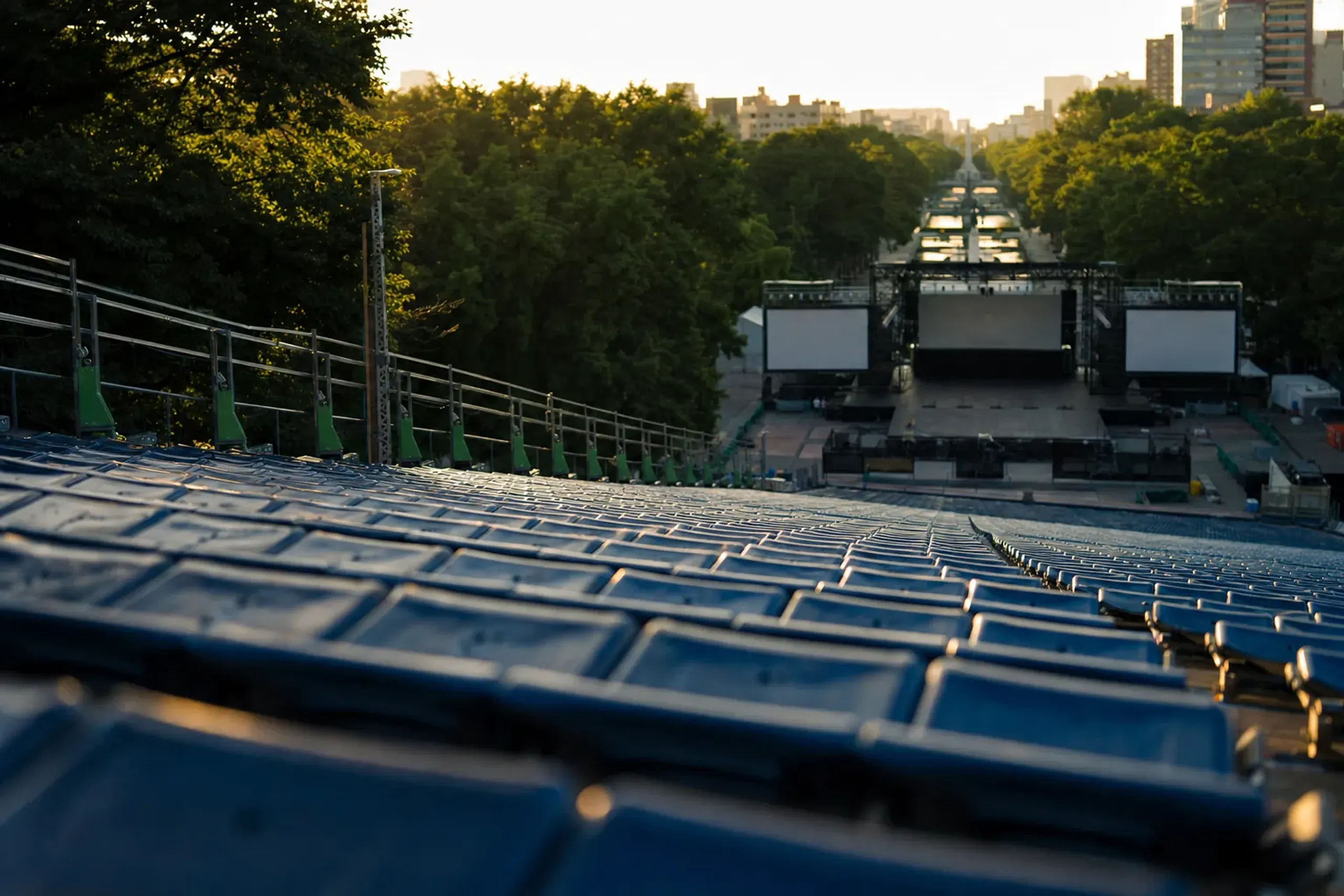
If you have any questions about the current process, our concierge is happy to confirm the details for you.
For questions—or to have every one of these details confirmed, arranged, and quietly handled on your behalf—simply reach out to our concierge.
Let Us Place You At The Heart Of Sapporo In June
YOSAKOI Soran rewards those who know where to stand and when to arrive—and that knowledge, applied with restraint, is exactly what we do best. From the first crisp snap of naruko to the last Sōran-bushi refrain, we can build the day around you: seamless timing, discreet movement, and a base to retreat to whenever the city grows loud.
To plan a visit shaped entirely around your pace and preferences, contact us here. We will handle the logistics so you are free to simply watch a city dance.
Frequently Asked Questions
Is The YOSAKOI Soran Festival Free To Watch In Sapporo?
Most YOSAKOI Soran venues can be entered freely, while some main sites offer paid seating areas.
In practice, you can have an excellent day without paid seats if you arrive early and choose your viewing points with care, especially on weekdays.
What Are The Two Rules Every YOSAKOI Soran Team Must Follow?
Every dancer must hold naruko, and the team’s music must include a phrase or melodic reference to Sōran-bushi.
Once you watch for those two anchors, the festival becomes far easier to “read,” even when the style shifts dramatically from team to team.
When Are The Best Days To Visit YOSAKOI Soran If I Dislike Crowds?
Weekdays during the festival period are typically calmer than the weekend, with more concentrated activity around central stages like Nishi-hachi-chōme.
If your schedule allows it, prioritize Wednesday to Friday and plan one or two viewing blocks rather than a full-day venue marathon.
Can Visitors Join The Dance At YOSAKOI Soran?
Yes—official participation programs like Wa-Odori Square exist, and in 2026 a temporary team option (“BANZAI! NARUKO CARNIVAL”) was offered with advance reservation and a fee.
Participation details can change year to year, so you’ll want to confirm the current rules and requirements before you plan your day.