In this guide
- 01The Spring Side Of Zaō: The Same Ropeway, A Different Reason To Go
- 02How Late Can You Ski At Zaō Onsen Ski Resort In Spring?
- 03What Do You Actually Do From The Zaō Ropeway Summit Station In Spring?
- 04Okama Crater Lake And Kumano-dake: A Step-By-Step Spring Plan
- 05Zaō Onsen’s Waters In Spring: Strongly Acidic, Sulfuric, And Not For Rushing
- 06How Do You Get To Zaō Onsen In Spring (And What Should You Not Leave To Chance)?
- 07Ropeway-First Spring Planning: What To Check Before You Commit A Day
- 08A Quiet Luxury Angle For 2026: KAI Zaō Opens October 15, 2026
- 09A One-Day Spring Itinerary Idea: Late-Season Ski, Summit Air, Acidic Onsen
- 10What We Can Do Quietly In The Background (And What We Never Promise In Public)
- 11Frequently Asked Questions
- 12Plan Your Quiet Spring In Zaō
The ropeway cabin rises, and the noise of the town falls away beneath it. The white glare of winter is gone. In its place: soft snowbanks, wet stone, and ski tracks that read less like lines and more like brushstrokes drawn across the slope.
Most visitors know Zaō for juhyō—the frost-coated “ice monsters” that make photographs look invented. But spring flips the logic entirely. The same mountain becomes a different destination, and the same ropeway carries entirely different intentions.
Some guests still ski. Others step off at the summit station and simply start walking, aiming for Kumano-dake and the Okama crater lake once the route reopens. Our team at Japan Royal Service plans Zaō in spring for travelers who want the mountain’s quieter register—without surrendering comfort, timing, or discretion.
The Spring Side Of Zaō: The Same Ropeway, A Different Reason To Go
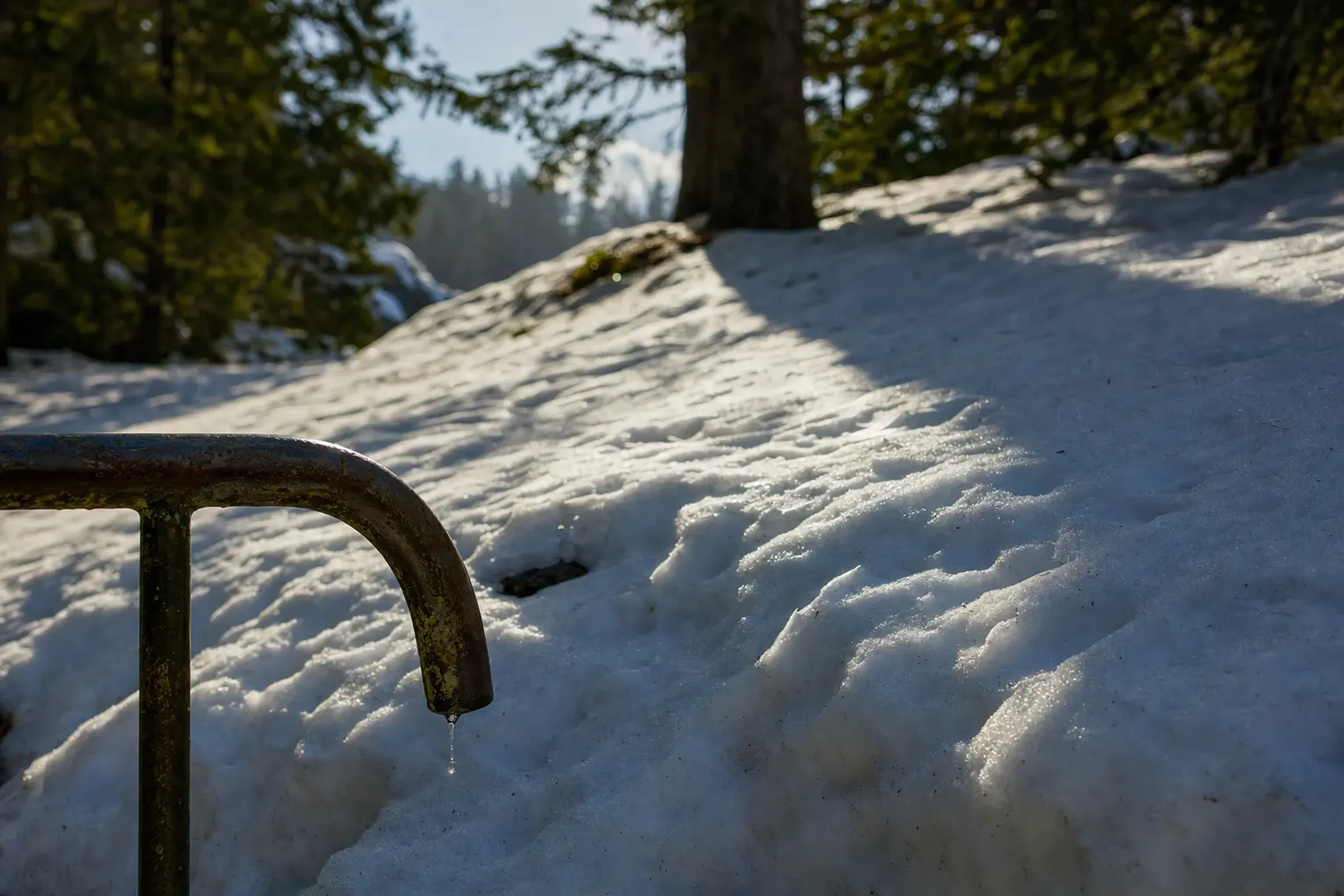
In spring, Zaō is a study in transition: runs that soften by midday, a ropeway ride that feels like a quiet reset, and air that turns faintly mineral as the town’s hot spring steam reappears. Small things stand out here. A wet handrail catching light. A cedar shadow thrown across snowmelt.
The mountain is still doing winter—just not shouting about it. Skiers come for the late season, because Zaō Onsen Ski Resort typically stays open into early May, often around May 5–6 depending on the year. Hikers arrive as soon as conditions allow, using the very same lift infrastructure that winter visitors ride out to the juhyō fields.
This is precisely where spring wins. You can keep one foot in winter—an early run, a last-lift rhythm—while beginning to plan for the mountain that lies beyond the ski map.
Two trips in one. If you time it right.
How Late Can You Ski At Zaō Onsen Ski Resort In Spring?
Zaō Onsen Ski Resort typically stays open into early May, often around May 5–6, with discounted “Spring Season” and “Final Season” lift-ticket periods used to mark the late-season transition.
That structure matters, because it signals intent. Zaō doesn’t merely “happen” to have late skiing; it plans for it. In many years, the resort’s own calendar shifts to a discounted “Spring Season” rate in late March (often around March 23–31), then to a further discounted “Final Season” rate from April 1 until closing.
We do not publish prices, and we don’t guess at this year’s exact dates on a public page. The mountain has the final word. Our concierge team verifies the current season’s closing date and the precise timing of those seasonal tiers before you travel, because spring weather can compress or extend the schedule without warning.
A practical tip: treat spring skiing here as a morning sport. Snow tends to be firmer earlier, then turns heavy as the sun settles in. Plan your onsen for the afternoon. Much better that way.
What Do You Actually Do From The Zaō Ropeway Summit Station In Spring?
From the Zaō Ropeway’s Jizō-sanchō Summit Station (1,661 m), many spring-through-autumn visitors hike toward Kumano-dake (1,841 m) and, when accessible, continue on toward Okama, Mount Zaō’s volcanic crater lake.
In winter, the summit can feel like a destination unto itself: photos, snow spectacle, then down again.
Spring changes the posture. People step off with lighter bags, different footwear, and a look that says, “We’re not done here.”
Mount Zaō spans Yamagata and Miyagi prefectures, and Kumano-dake is its highest peak at 1,841 metres. The hike is the point—not a box to tick.
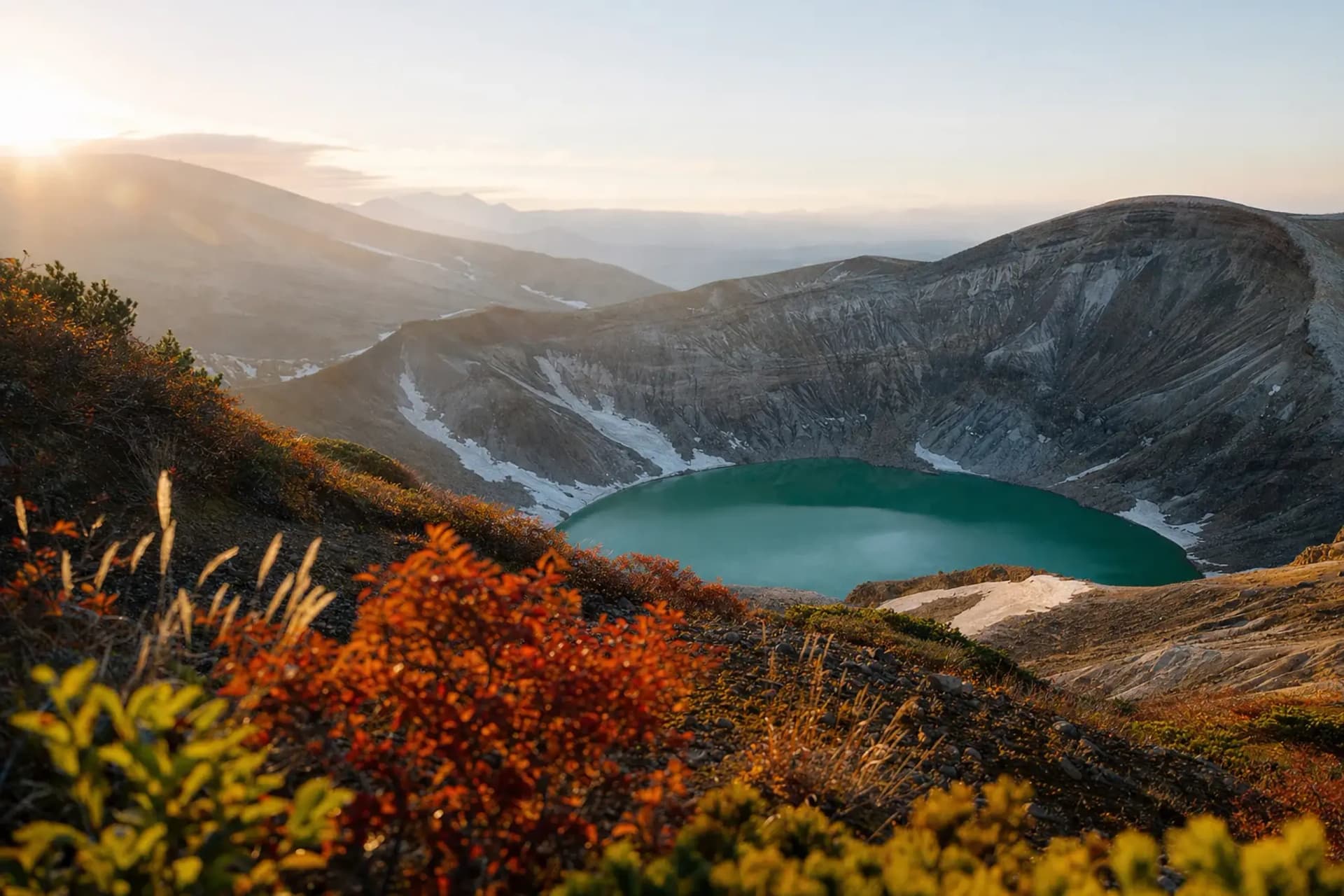
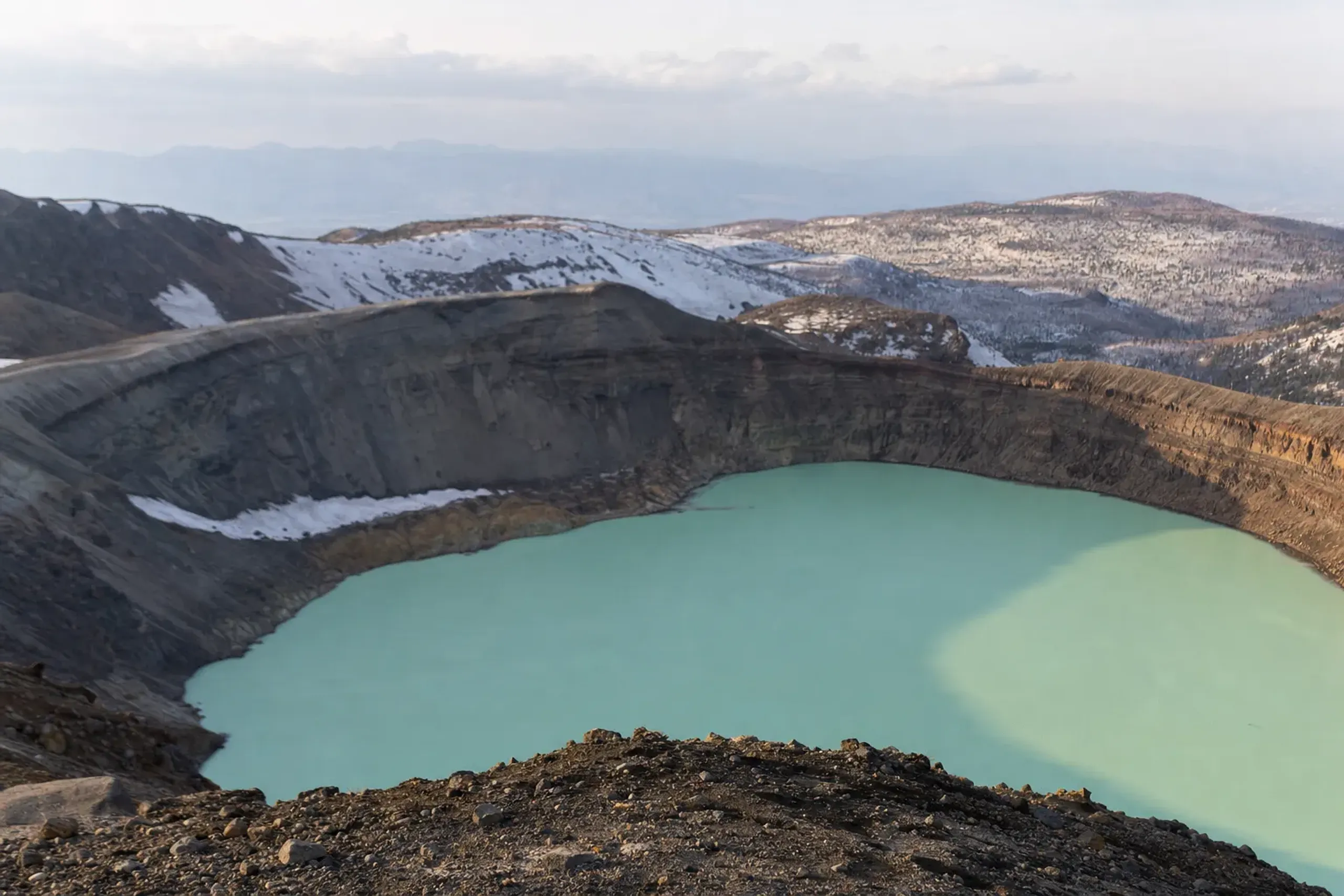
And then there is Okama. It is a crater lake, and locals often speak of its shifting color, which changes with light and mineral content. Some days it reads as deep green. On others, it looks like opaque blue glass. If you’ve only ever seen Zaō in winter photographs, it can feel like meeting the same person in a new language—the same mountain, an entirely different vocabulary of quiet.
Okama Crater Lake And Kumano-dake: A Step-By-Step Spring Plan
Spring in the Zaō range is not a single switch thrown all at once. It is a sequence. Snow lingering in one shaded hollow while a ridge line dries out under the sun. That is why we plan it as a chain of small, deliberate decisions.
Step 1: Choose Your Spring Window
If you want both skiing and a mountain walk in the same trip, aim for late March through April. You’ll catch Zaō’s late-season lift structure while the town begins to loosen its grip on winter.
If your priority is hiking toward Kumano-dake and Okama, push later into spring as conditions allow. Trails and access can change year to year. Don’t assume. Confirm.
Step 2: Use The Ropeway As Your Energy Saver
The Zaō Ropeway is the fast way to trade town elevation for thin mountain air.
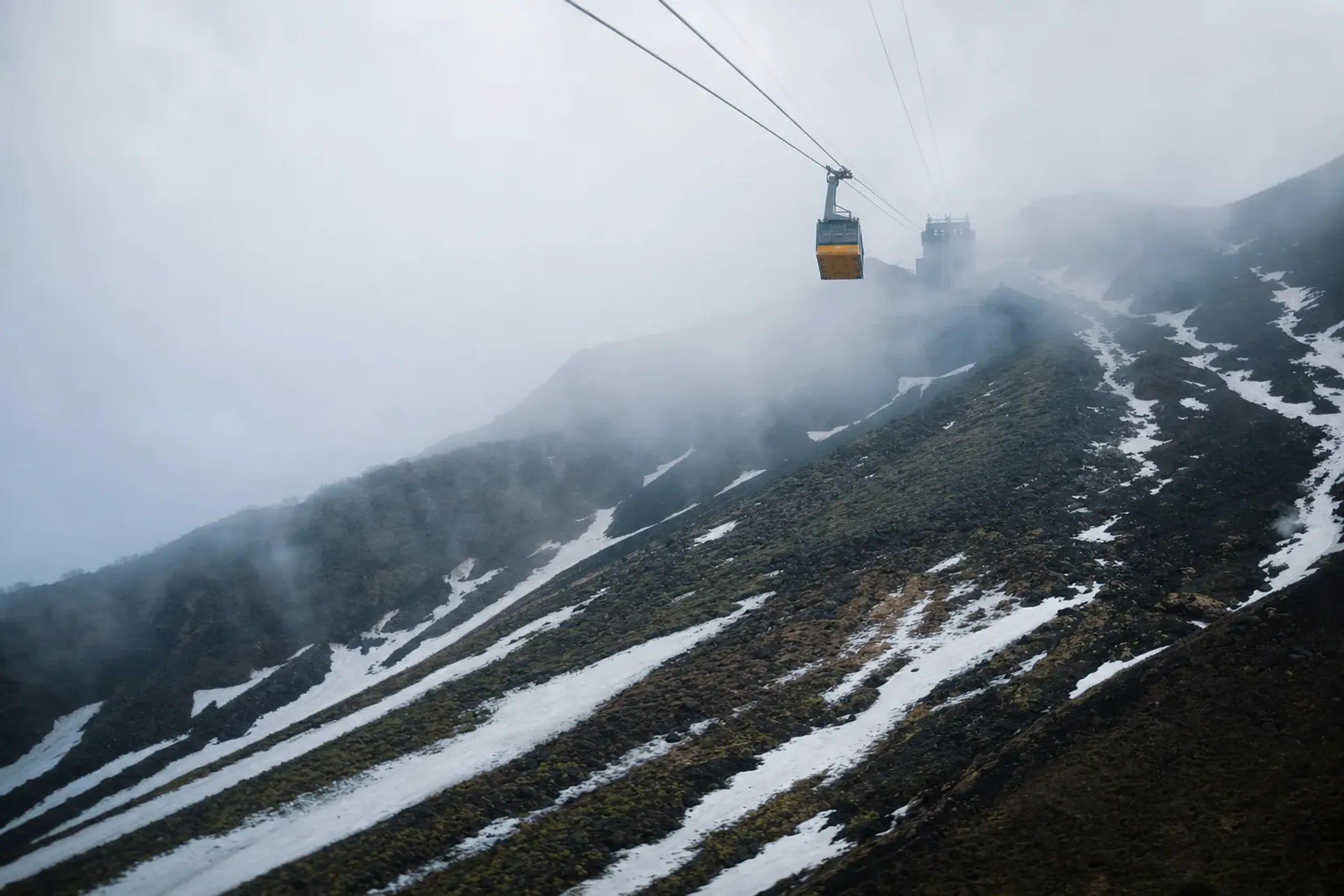
It gives you time. And time is what makes a spring day feel calm rather than rushed.
At the top, pause. Really pause. Wind can turn sharp even when the town below feels mild, and spring sun can mislead you into under-dressing.
Step 3: Walk With The Mountain’s Mood
In our experience, spring hikers do best when they stop chasing “the view” and start reading the conditions instead. Wet patches. Wind direction. The sound of meltwater running under crusted snow.
One rule holds above all: if the day turns quickly, retreat early. Pride is expensive. Mountains are not sentimental.
Key fact: Juhyō (“ice monsters”) are a winter-specific phenomenon; spring visits focus on late-season skiing and, as access allows, hiking toward Kumano-dake and the Okama crater lake.
Zaō Onsen’s Waters In Spring: Strongly Acidic, Sulfuric, And Not For Rushing
Zaō Onsen is a hot spring town on the Yamagata side of Mount Zaō, at roughly 880 metres elevation. You feel that altitude in the evenings. The air cools fast.
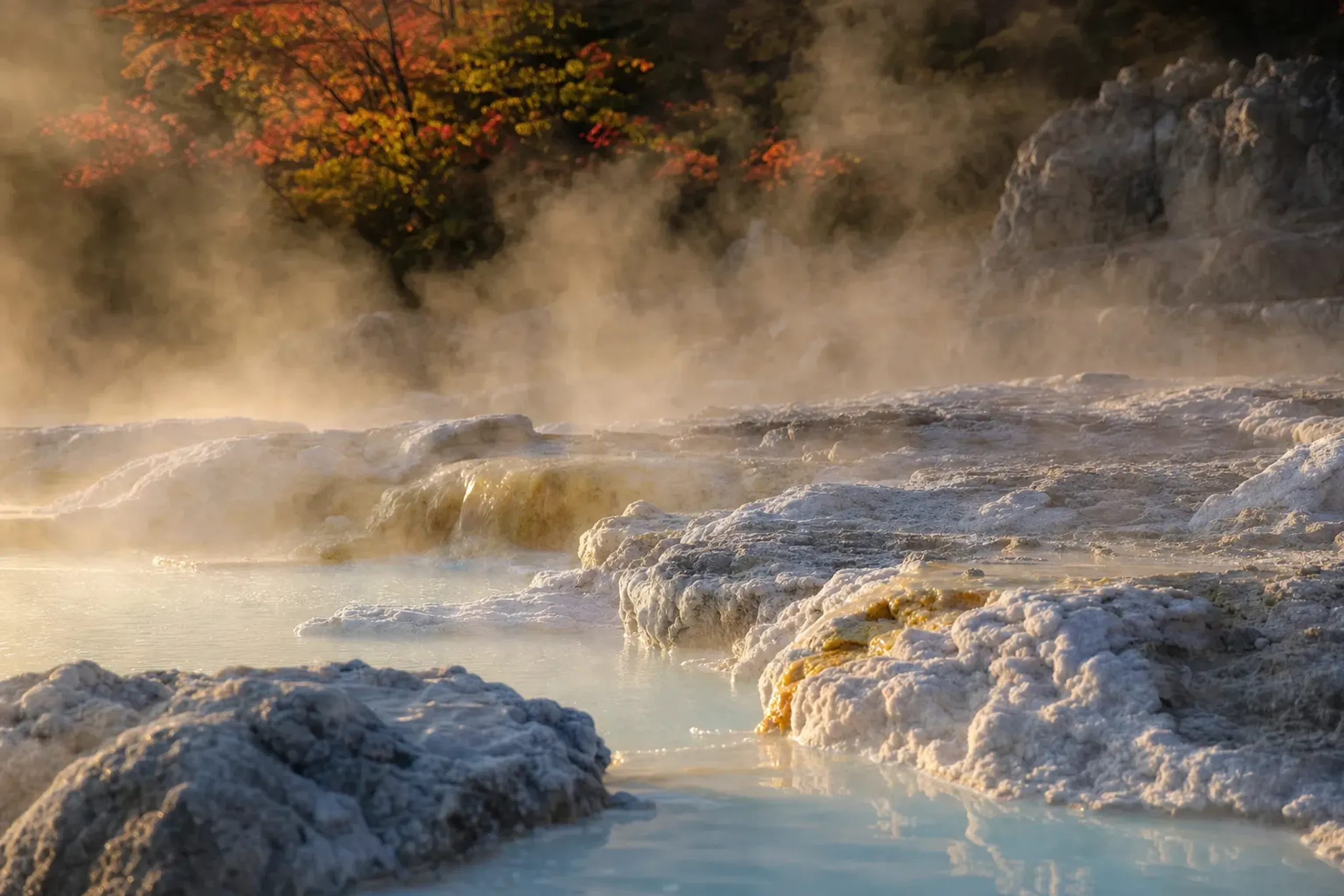
The water is central to Zaō’s identity, and it has a distinct character: sulfuric and among Japan’s most acidic, with a pH close to 1 as noted by Japan Guide. This is not an onsen you treat casually.
Slow down. Rinse carefully. Keep your soak shorter than you would at a gentler spring, especially if you’re new to strongly acidic baths. The goal is comfort, not endurance.
Three Small Public Bathhouses In Town (Simple, Local, Real)
Zaō Onsen keeps a handful of public bathhouses that hold the town’s rhythm grounded—the unhurried, understated register of wabi that rewards the traveler who slows to notice it.
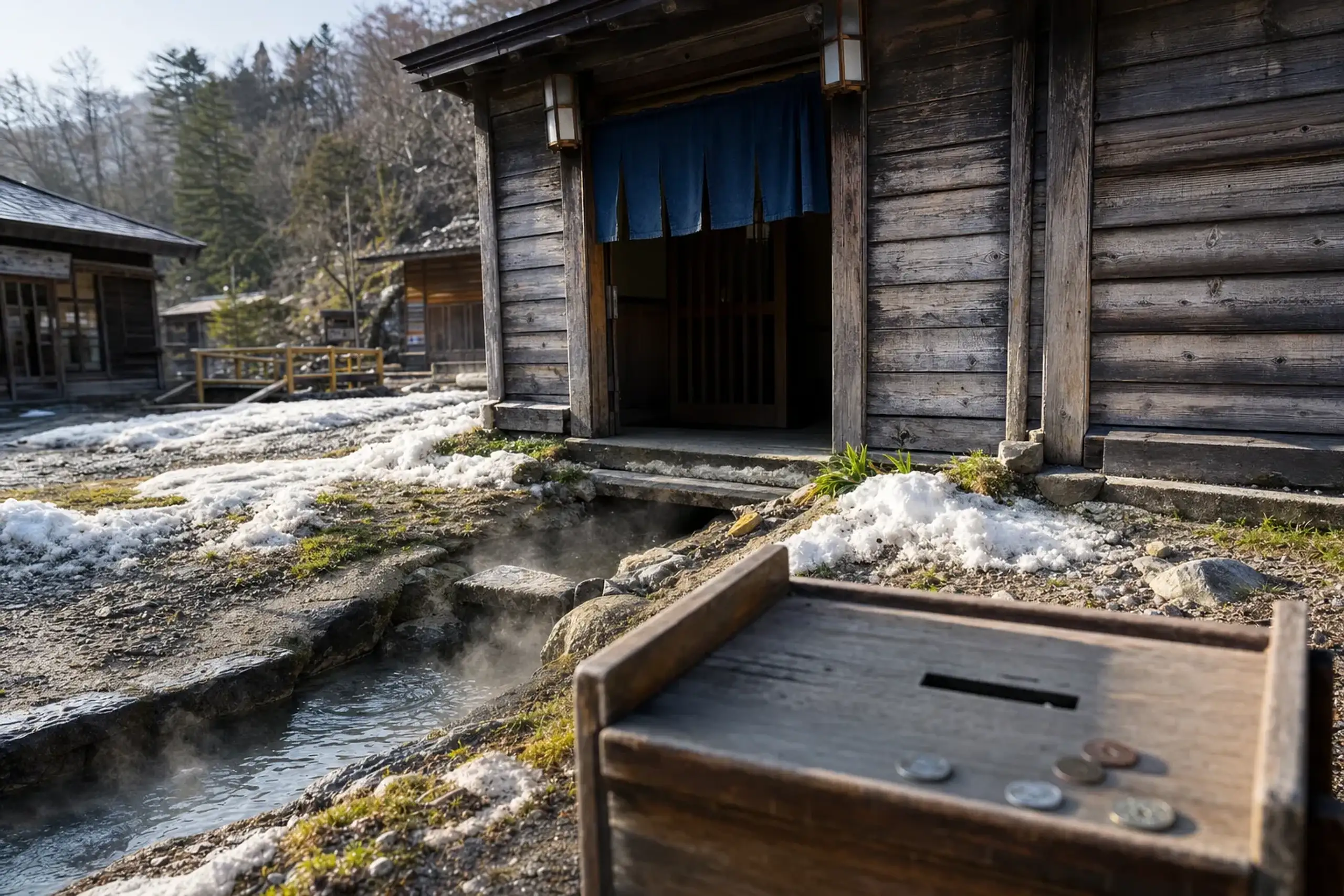
The ZAO ONSEN SKI RESORT site lists three: Kamiyu, Shimoyu, and Kawarayu.
They are open all year, with hours listed as 6:00–22:00, and payment is made by a self-pay collection box. No performance. Just routine—the kind of quiet, unadorned ritual that the Japan Google cannot easily surface.
Zao Dai-Rotemburo: A Large Outdoor Bath That Reappears After Winter
Zao Dai-Rotemburo is widely known as Zaō’s major open-air bathing spot. Japan Guide notes it is closed in winter, which makes its spring return feel like a genuine local milestone.
If you visit in spring, bring a calm mindset. Outdoor baths are about sound: water, wind, and the quiet of people who stop talking without being told to.
Shinzaemon No Yu: A Day-Use Option With A Gentler Bath Choice
Shinzaemon no Yu is a day-use onsen facility in Zaō Onsen. Its English site lists hours as 10:00–18:00 (last admission 17:30) and states that it is closed on Wednesdays.
It also describes an option where the water is softened by mixing with another hot spring source (“Shiroku no Yu”), intended to make Zaō’s strong acidity easier for sensitive skin and for infants and children. For many families, that single detail changes the entire day plan.
How Do You Get To Zaō Onsen In Spring (And What Should You Not Leave To Chance)?
Zaō Onsen sits roughly 60 minutes by taxi from Yamagata Airport, and roughly 100–110 minutes from Sendai Airport by bus depending on the route.
Those numbers look simple on paper. Spring makes them less so. Weather can slow mountain roads, and luggage—especially ski bags—turns “fine” into “annoying” very quickly.
For a smoother arrival, we often recommend private transportation for the final approach into the onsen town, so your schedule doesn’t hinge on crowded transfer timing. Quiet is a form of luxury. So is never having to negotiate for space.
Ropeway-First Spring Planning: What To Check Before You Commit A Day
Most Zaō itineraries fail for one small reason: people plan the day around a wish rather than around the operating reality. Spring is especially strict about this.
Before you decide “ski in the morning, hike after lunch,” confirm what is actually running, what time you’ll be at altitude, and how the mountain’s conditions are trending. Our concierge team checks the latest operational notices and seasonal timing before your trip, because maintenance schedules and late-season operations can shift with little notice.
Build your day around two anchors only. Ropeway up. Onsen down. Everything else stays flexible.
A Quiet Luxury Angle For 2026: KAI Zaō Opens October 15, 2026
Hoshino Resorts has announced that KAI Zaō will open in Zaō Onsen on October 15, 2026, and the official hotel page lists the same date.
That matters even if you’re reading this with spring in mind. New lodging changes demand patterns, and demand, in turn, changes availability. If you expect to travel in spring 2027, it is sensible to plan earlier than you might have a few years ago.
We treat openings as timing opportunities, not headlines. For HNW travelers, fresh inventory can quietly reduce friction. For VHNW and UHNW travelers, a new property can offer controlled privacy routines—especially at the arrival and departure moments where discretion matters most.
A One-Day Spring Itinerary Idea: Late-Season Ski, Summit Air, Acidic Onsen
This is a public mountain resort, not a private club. The luxury comes from pacing and choices—and from a bespoke itinerary shaped precisely around how you like a day to unfold.
- 08:30–11:30: Late-season skiing while the snow is still firm enough to feel responsive underfoot.
- 11:30–12:30: A slow transition—change, hydrate, and pare down what you carry.
- Early afternoon: Ropeway ride to the upper station for a short walk and long views, or to set up a fuller hike if conditions allow.
- Late afternoon: Onsen time in town. Keep that first soak brief. Let the water introduce itself.
If you’re traveling as a couple, this plan keeps the day intimate without ever feeling staged. For families, it splits the day into clear chapters, which reduces friction. Simple. Effective.
What We Can Do Quietly In The Background (And What We Never Promise In Public)
On the public site, we keep operational claims deliberately tight—for your protection and ours. Here is what we state plainly, once: our team at Japan Royal Service can provide guiding, transfers, and accommodation support for a Zaō Onsen spring trip.
Everything else—preferences, pacing, privacy, and contingency planning—belongs in a private conversation. Because that is where discretion lives. And where a trip stops looking generic and starts feeling like yours alone.
Frequently Asked Questions
Is Zaō Onsen Worth Visiting In Spring If I’m Not Chasing The Ice Monsters?
Yes—spring Zaō is worth it for late-season skiing, ropeway views, and onsen bathing, with the option to hike toward Kumano-dake and Okama as conditions allow.
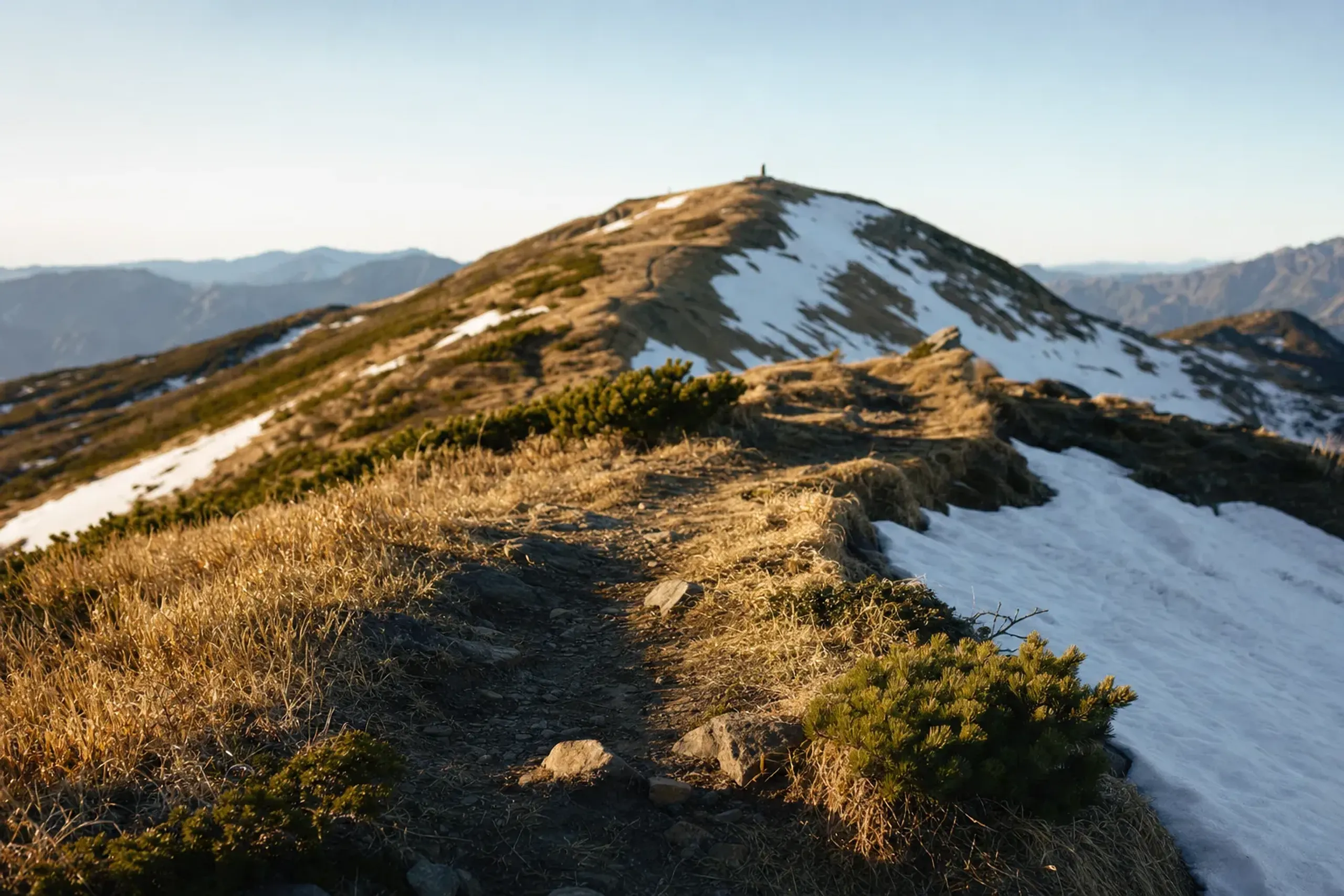
Winter is a single story. Spring is a broader one, and it rewards travelers who prefer quieter lift lines and a mountain that feels far less performed.
When Does Zaō Onsen Ski Resort Usually Close?
Zaō Onsen Ski Resort typically closes in early May, often around May 5–6, though the exact date can shift slightly year to year.
The resort also uses discounted “Spring Season” (late March) and “Final Season” (from April 1 to closing) periods to mark the transition, and our concierge can verify the current year’s calendar before you travel.
Is The Okama Crater Lake Open In Spring?
Okama is a spring-through-autumn draw, but access depends on seasonal conditions and operations in the Mount Zaō area.
If Okama is a priority, tell us your travel month early. We will help you plan around the most current access reality rather than a guess left over from last year.
Which Public Baths Should I Try In Zaō Onsen Town?
Zaō’s public bathhouses Kamiyu, Shimoyu, and Kawarayu are simple, local options listed by the ZAO ONSEN SKI RESORT site as open year-round (6:00–22:00).
If you want a larger outdoor bathing experience, Japan Guide highlights Zao Dai-Rotemburo and notes it is closed in winter, making spring a natural time to consider it.
How Acidic Is Zaō Onsen, And What Should First-Timers Do?
Zaō Onsen is among Japan’s most acidic hot springs, with a pH close to 1 as noted by Japan Guide, so first-timers should soak briefly and avoid treating it like a long, casual bath.
Plan Your Quiet Spring In Zaō
The mountain after the ice monsters leave belongs to travelers who value stillness over spectacle—the moss-and-meltwater register of a Japan that rewards patience. If a spring Zaō built around late-season snow, summit air, and acidic waters appeals to you, let us shape the timing, the transfers, and the access quietly in the background. To begin a private, unhurried conversation, contact us here.