In this guide
- 01What Actually Differentiates An Onsen Region
- 02Hakone: The Default, And Why It Earns It
- 03Kawaguchiko: The View Is The Argument
- 04Izu: Shuzenji And The Coast, For Going Further
- 05How Far Is Too Far For A Short Onsen Trip From Tokyo?
- 06One Night Or Two?
- 07When Is The Best Season For Each Region?
- 08Combining An Onsen Escape With A Tokyo Stay
- 09Who Should Choose Which — And Who Should Stay In Tokyo
- 10Frequently Asked Questions
- 11Why Choose Japan Royal Service
Three regions come up whenever someone asks where to soak near Tokyo: Hakone, Kawaguchiko, and Izu. Most writing treats them as a single interchangeable choice, a hot spring somewhere off the Tokaido line. They are not interchangeable. Different settings, different reasons to go, and a different traveller suited to each.
This guide compares the three on the same terms so you can match a region to your party and the shape of your trip. At Japan Royal Service, matching those two things is most of the work.
What Actually Differentiates An Onsen Region
The water is rarely the deciding factor. What separates these three is setting, how far you have to travel, and what the surrounding day gives you between baths. A region can have excellent hot springs and still be the wrong choice if the drive eats half the trip or the scenery is a car park.
So we compare all three on the same points, in the same order: what the region is for, its setting, the character of its ryokan, how far it sits and how that changes the trip, when to go, the honest downside, and who should choose it. We do not re-argue the mechanics of private bathing here — our post on private ryokan stays and transfers and its companion winter piece cover kashikiri, in-room rotenburo, and etiquette in full. This is a choosing guide, not a how-to-bathe guide.
Hakone: The Default, And Why It Earns It
Hakone is for the traveller who wants a hot spring without building a trip around it.
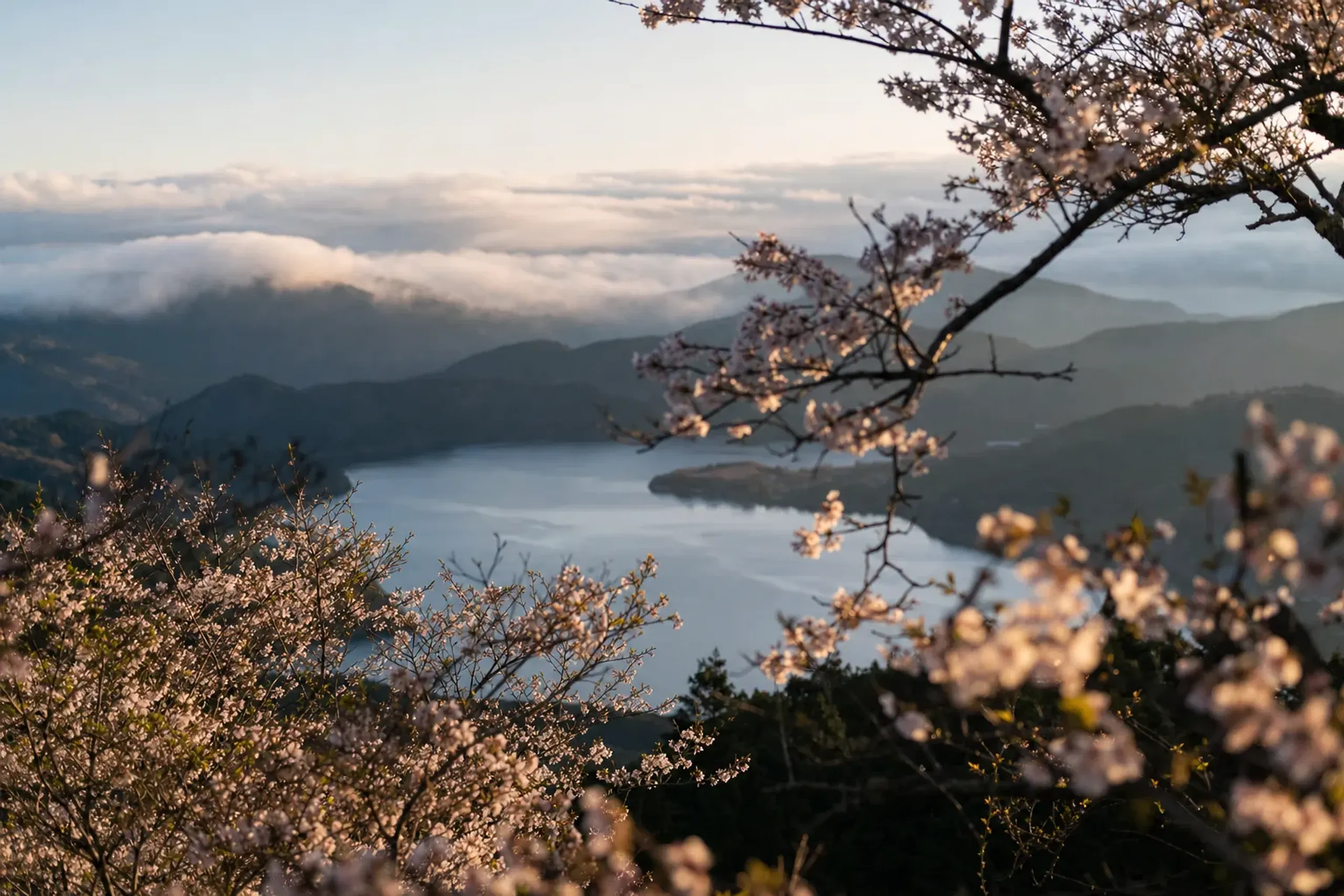
It is the closest developed onsen region to Tokyo and carries the widest range of properties — traditional ryokan, contemporary retreats, art museums between them.
The setting is mountain caldera: forested slopes, a lake, sulphur vents at Owakudani, and the volcanic terrain that gives the water its reputation. Hakone also runs a cultural calendar most onsen regions lack. The Hakone Art & Culture Festival runs July 17 through August 31, 2026, and the area's museums make a rainy afternoon easy to fill.
Ryokan character here spans the full spread. You can find a small traditional house that runs your whole evening around a kaiseki table, or a larger property that feels closer to a design hotel with baths. That range is the point.
How far, and what it costs the trip: Hakone is the shortest reach of the three. That is its structural advantage. You can leave the city after a late breakfast and be in the water before dark, which makes it the easiest region to bolt onto a short Tokyo stay without sacrificing a whole day to transit.
When to go: autumn for the foliage around the lake, late spring for green. Winter is clear and quiet if you want the calm. Summer is humid and the busiest window, though the art festival gives summer a reason.
The honest downside: Hakone is the busiest and least remote-feeling of the three. On weekends and through peak foliage the roads clog and the popular viewpoints fill. You are never far from other people. If your entire reason for leaving Tokyo is to feel far from it, Hakone under-delivers.
Who should choose it: the traveller adding one or two onsen nights to a city trip, the first-time visitor who wants range and a safety net of things to do, and anyone travelling in a season when the weather might turn and indoor options matter.
Kawaguchiko: The View Is The Argument
Kawaguchiko exists, for most visitors, to see Mount Fuji from a hot spring. That is the entire proposition, and it needs stating plainly: the view is not guaranteed.
The lake sits at the mountain's northern foot, and on a clear morning the reflection across the water is the image every visitor pictures. On many days the mountain is simply not there. Cloud and haze obscure it more often than people expect. The reliable window is a clear winter morning, cold and still, when the air is dry. Summer is the worst case — haze sits over the mountain for weeks and you may never see the summit.
A traveller booking Kawaguchiko for the view should know the odds and go in the season that favours them. If the mountain shows, there is little in Japan to match it. If it does not, the region has less to offer than the other two — say it honestly.
The lake is pleasant, the setting is open and quiet, but Kawaguchiko's ryokan and dining do not run as deep as Hakone's or Izu's.
Key fact: Fuji visibility is unreliable and seasonal. Clear winter mornings are the dependable window; summer haze is the worst. Book Kawaguchiko for the view only if your dates favour a clear morning — otherwise the region gives back less than Hakone or Izu.
Ryokan character leans toward properties built around the view — rooms and baths angled at the mountain. When it works, an open-air bath facing Fuji at dawn is unforgettable. When the mountain hides, you are paying a premium for cloud.
How far, and what it costs the trip: comparable in reach to Hakone, in a different direction. The travel does not punish a short trip. The weather does the punishing here, not the distance.
When to go: winter, without much argument. Cold, dry, clear mornings are when the mountain appears most reliably and the reflection is sharpest. Avoid high summer if the view is your reason.
The honest downside: the whole case rests on something you cannot control. Strip the view away and Kawaguchiko is the thinnest of the three for a discerning traveller.
Who should choose it: the traveller for whom the Fuji view is the trip, travelling in winter, willing to accept the gamble. Not the traveller who wants a rich onsen town regardless of weather.
Izu: Shuzenji And The Coast, For Going Further
The Izu Peninsula is the strongest case for a longer, slower stay. It is the furthest of the three and the most rural, and that distance is precisely the reason to choose it. We narrow Izu here to Shuzenji and the coast — the two reasons to make the journey.
Atami sits closest to Tokyo and is the most developed town on the peninsula. For a traveller seeking quiet, it is generally not the answer. Push past it.
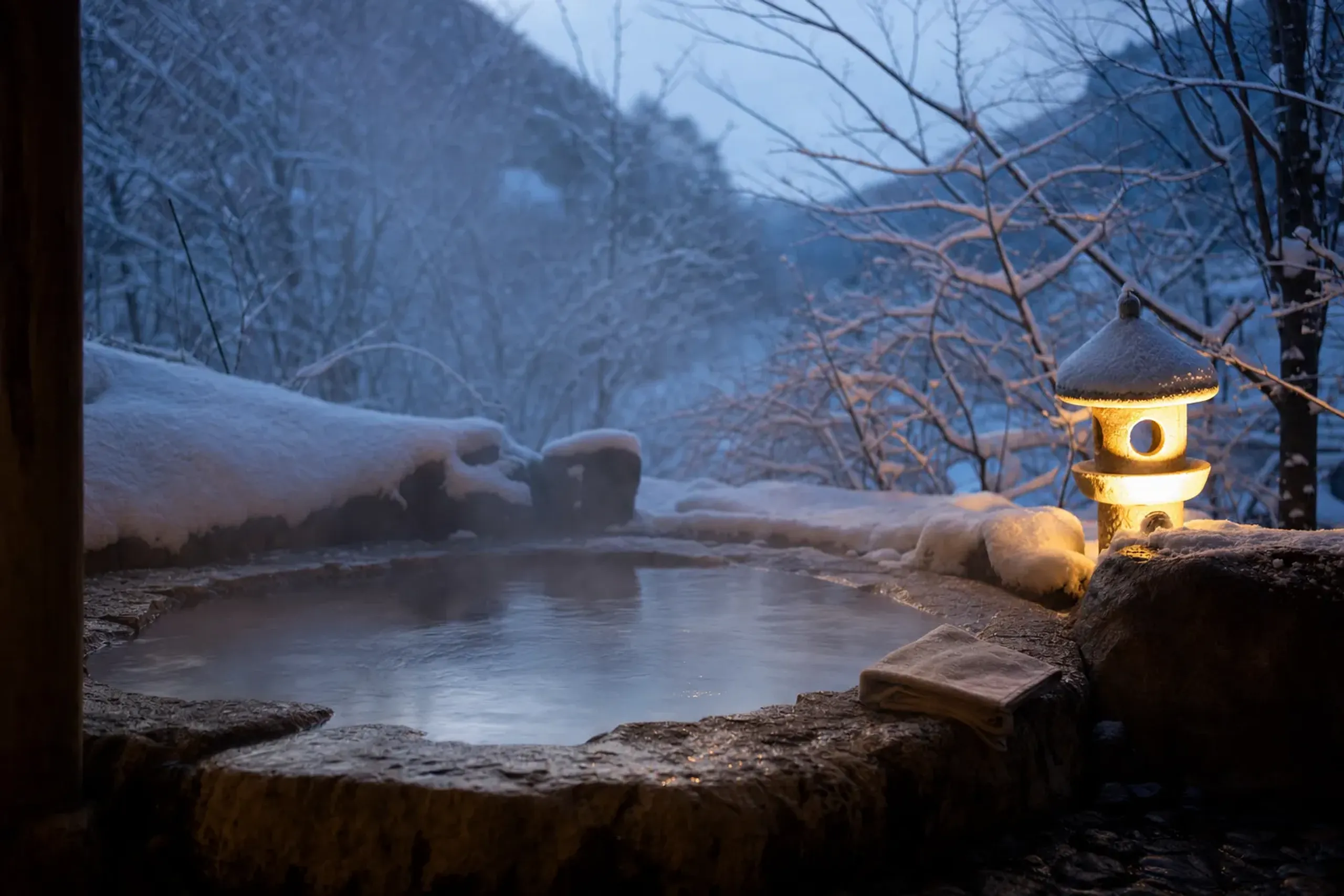
Shuzenji is the traditional onsen town in Izu's wooded interior: a river running through it, a bamboo path, an old temple, ryokan set along the water. It is the peninsula's classic hot-spring identity. The coast is the other reason to go further — a shoreline of small bays and fishing harbours, quiet in a way the closer regions cannot manage, with seafood that arrives from boats you can see.
Ryokan character in Izu is more traditional and more spread out. Properties tend to run the full day for you — the arrival, the bath, the multi-course dinner, the morning meal. That rhythm is the point of coming this far. It rewards travellers who want the ryokan itself to be the experience, not a base for touring.
How far, and what it costs the trip: Izu asks the most of your time to reach. On a one-night trip that transit is hard to justify. Give it two nights and the arithmetic reverses — the distance stops being a cost and becomes the reason the region feels genuinely removed.
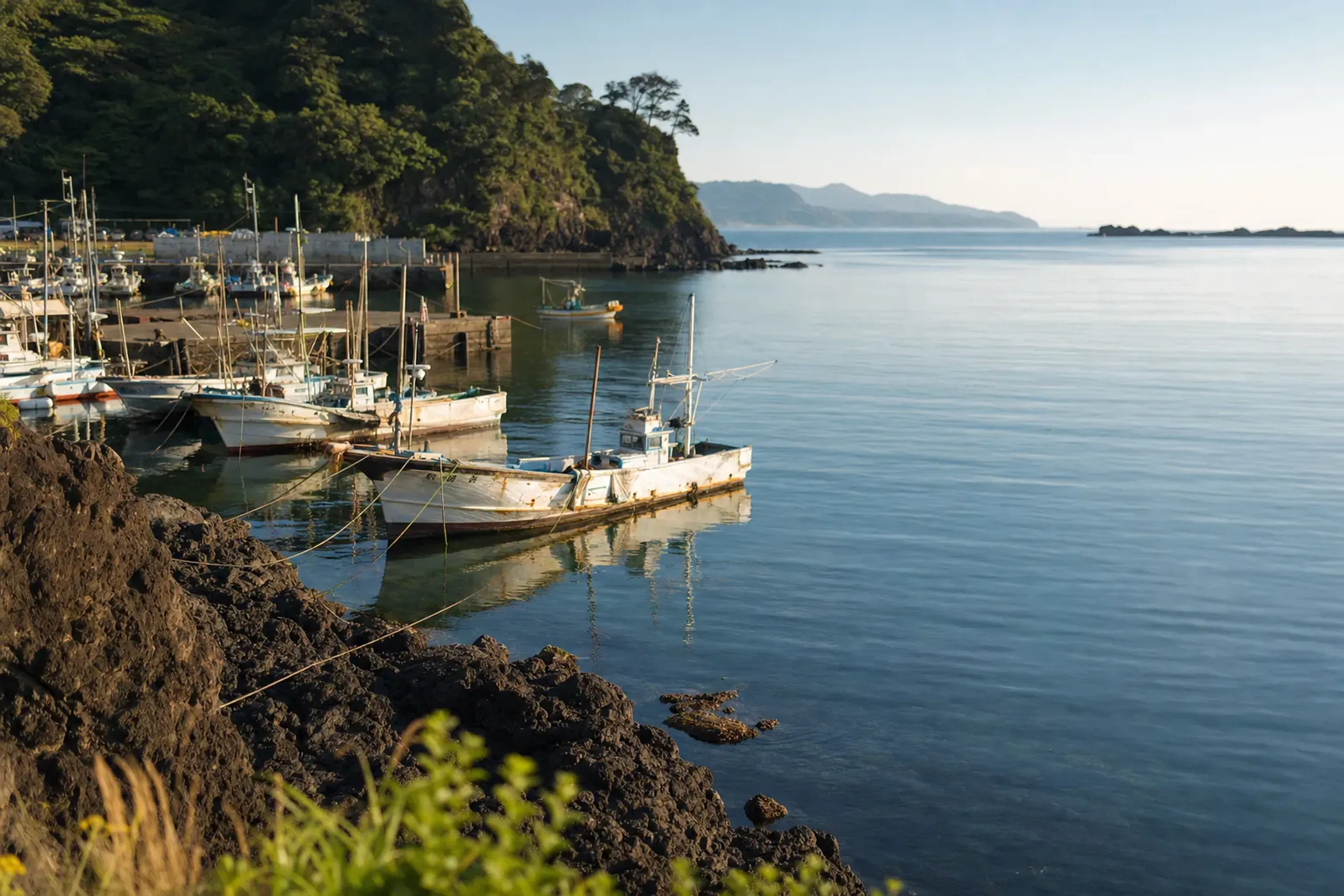
When to go: the coast is best in warm months when the sea and the seafood are at their peak, though spring and autumn are gentler and less crowded. Shuzenji holds up year round and is at its most atmospheric with autumn colour or a light winter quiet.
The honest downside: travel time, and thinner luxury inventory than Hakone. There are fewer high-end properties to choose from, and reaching them takes real commitment. This is not a region for a quick overnight.
Who should choose it: the traveller who wants distance and is willing to spend two nights or more to earn it, the returning visitor who has done Hakone and wants something more rural, and anyone for whom the coast and the seafood are as much the draw as the water.
How Far Is Too Far For A Short Onsen Trip From Tokyo?
For a single overnight, Hakone or Kawaguchiko make sense; Izu generally does not. The rule is simple. On a short trip, the shortest reach wins, because every hour in transit is an hour not in the bath.
Hakone gives back the most per hour travelled — you arrive quickly and the region fills the time. Kawaguchiko costs about the same in transit but stakes its return on the weather. Izu costs the most and, on one night, gives the least, because you spend a disproportionate share of the trip getting there and back.
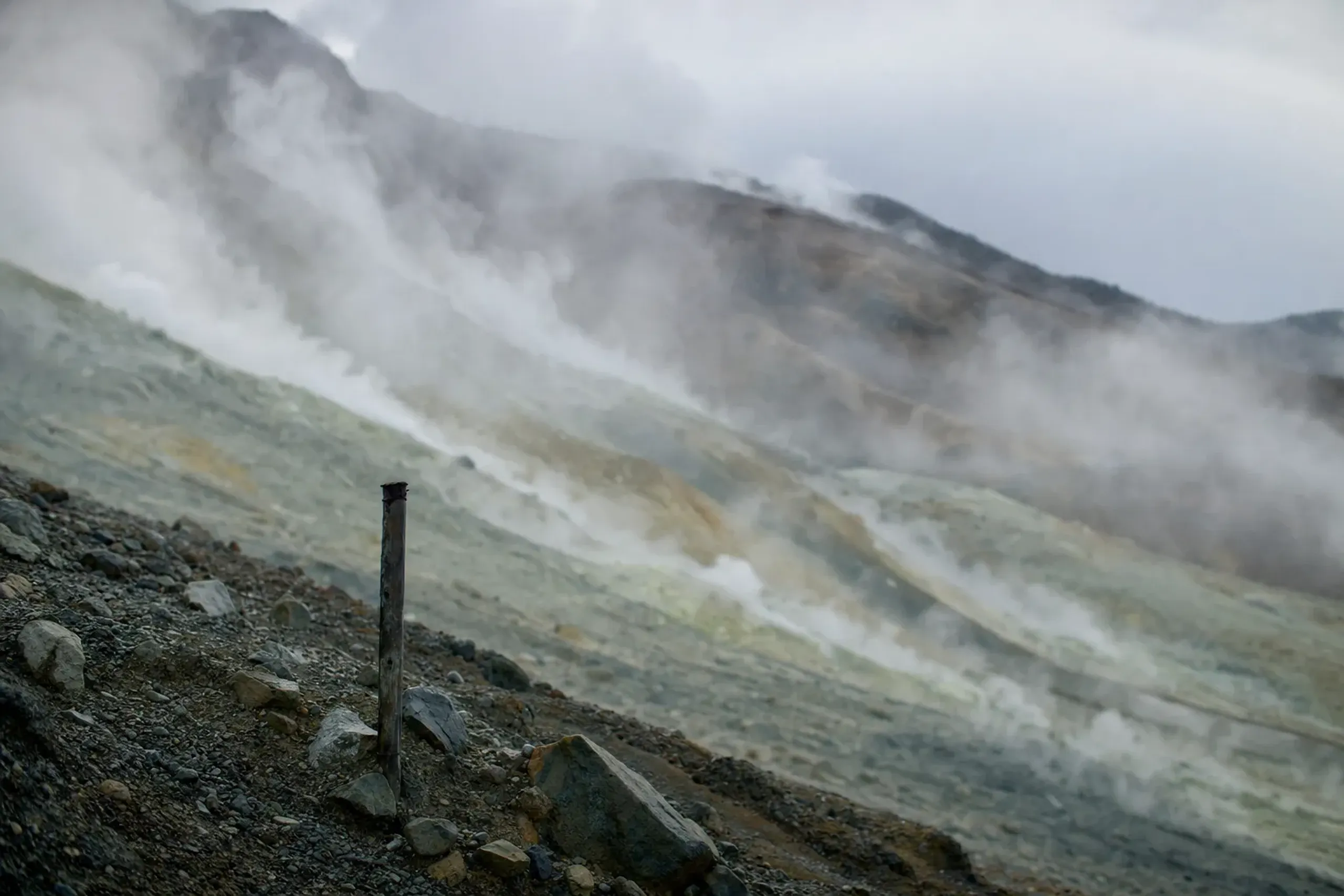
Distance is the deciding factor for short trips, and it favours Hakone plainly.
Private transport changes the texture of the journey more than the timing — door to door, no transfers, the drive itself part of the decompression. Our post on transfers and how they shape a ryokan trip covers the modes in detail.
One Night Or Two?
Hakone and Kawaguchiko justify a single night; Izu wants two. That is the cleanest way to hold the three apart.
Hakone works beautifully as one night — arrive, bathe, dine, bathe again in the morning, and you have had the full ryokan arc without over-committing. A second night lets you fold in the museums or the art festival, but it is optional. Kawaguchiko is a one-night proposition by nature: you come for a morning view, and a second night mainly buys a second chance at the mountain, which some travellers want and others do not.
Izu is the one that genuinely earns two nights. The distance only pays off if you stay long enough to stop watching the clock, and a second night is what turns the trip from a long trek into a real retreat. One night in Izu is mostly transit.
When Is The Best Season For Each Region?
Hakone is best in autumn, Kawaguchiko in clear winter, and Izu's coast in warm months. Each region has a different peak, and the season can flip which one is the right answer.
In autumn, Hakone's foliage and full calendar make it the obvious pick. In deep winter, Kawaguchiko's dry, clear mornings give the Fuji view its best odds, which is the only time the region clearly out-argues the others. In summer, the coast in Izu comes into its own while Kawaguchiko's view all but disappears into haze — the season alone can move you from one region to another. Kusatsu, further north in Gunma and outside these three, is a stronger cold-weather onsen town if you want deep winter snow country;
Combining An Onsen Escape With A Tokyo Stay
Hakone and Kawaguchiko attach cleanly to a Tokyo trip as a two-night addition; Izu needs the trip built around it. This is the practical line most itineraries get wrong.
Because Hakone is close and full of things to do, you can peel two nights off a city stay, decompress, and return without the escape feeling like a separate expedition. Kawaguchiko slots in the same way for a view-focused overnight. Izu resists that treatment — the distance and the two-night minimum mean it works best as the anchor of a trip rather than an add-on. If Izu is your onsen region, plan the Tokyo days around it, not the reverse.
Who Should Choose Which — And Who Should Stay In Tokyo
Choose Hakone if you want range, ease, and a short reach — first-timers, travellers on a tight schedule, and anyone who wants indoor options if the weather turns. Choose Kawaguchiko if the Fuji view is the entire point and your dates fall in clear winter, and you accept the gamble.
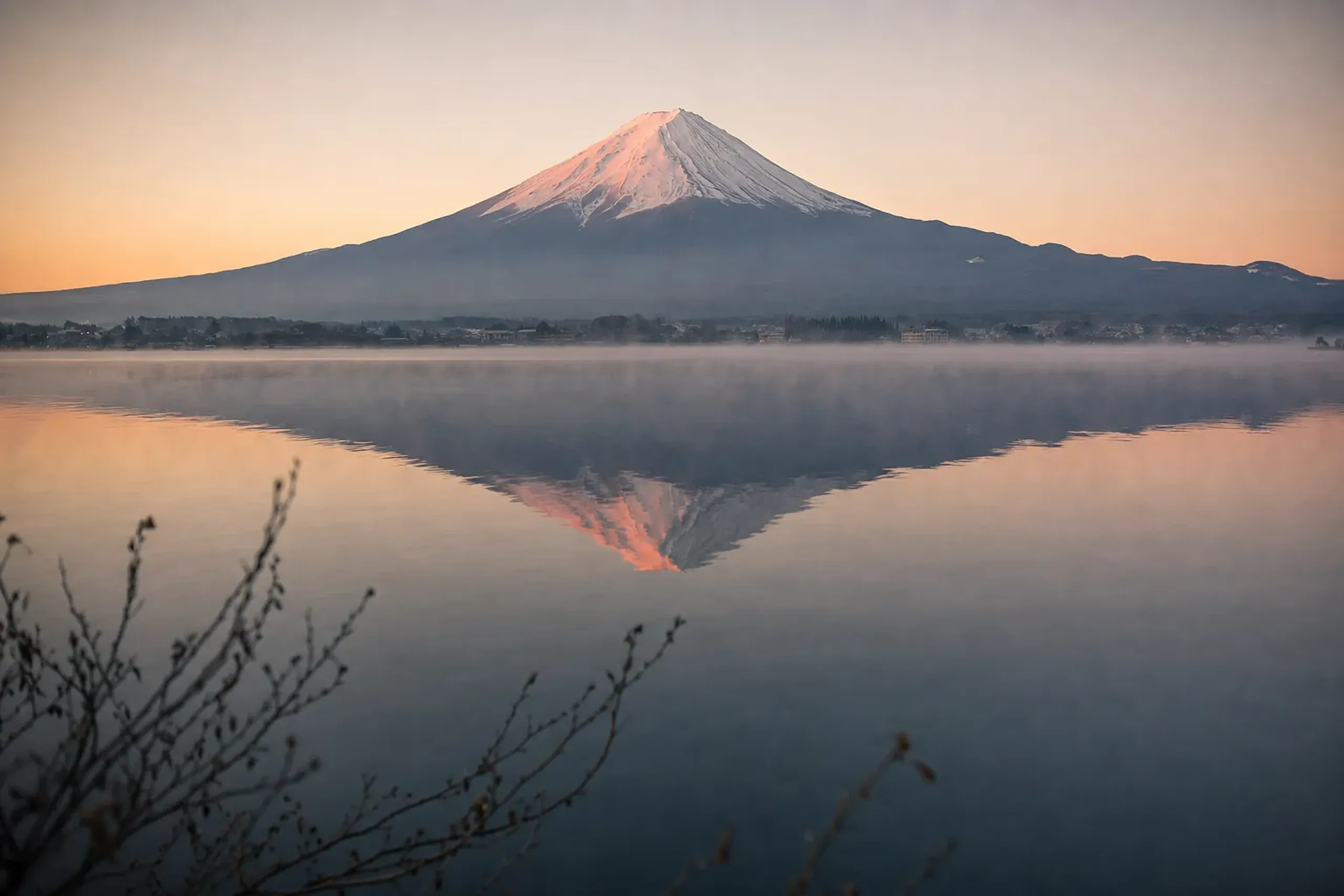
Choose Izu if you want distance and rural quiet, can give it two nights, and the coast and its seafood appeal as much as the bath.
And some travellers should choose none of them. If you have one night, want to keep every hour for the city, and are not moved by the idea of a ryokan evening, a hotel with a good bath in Tokyo will serve you better than a rushed round trip. An onsen escape earns its place only when you have the time to let it slow you down. If you do not, stay put and go properly another time.
Frequently Asked Questions
Which onsen region near Tokyo is best for a first-time visitor with only one night?
Hakone. It is the shortest reach, has the widest range of ryokan, and offers indoor options if the weather turns — the safest single-night choice for a first-timer who wants the full experience without a long journey.
Is the Mount Fuji view from Kawaguchiko guaranteed?
No. The mountain is obscured by cloud and haze more often than visitors expect. Clear, cold winter mornings offer the most reliable window; summer haze is the worst case. Book Kawaguchiko for the view only if your dates favour a clear morning.
Is Izu worth the extra travel time from Tokyo?
Only with two nights or more. Izu is the furthest and most rural of the three, and its distance pays off as genuine remoteness — but on a single overnight, too much of the trip is spent in transit to justify it.
What about Atami — isn't it the closest onsen town in Izu?
Atami is the closest and most developed town on the peninsula, which is exactly why it is generally not the answer for a traveller seeking quiet. For calm, continue to Shuzenji or the coast instead.
Can Japan Royal Service book the ryokan directly?
Yes. We book ryokan directly in all three regions and match the property to your party, your dates, and the style of stay you want. Reach our concierge to discuss which region fits your trip.
Why Choose Japan Royal Service
The value we add is not the booking — it is the matching. Most disappointments with an onsen trip come from choosing the wrong region for the party and the dates, not from a bad ryokan. A view region in summer, a two-night region squeezed into one night, a busy region for someone who wanted silence — these are fit errors, and they are avoidable.
Japan Royal Service books ryokan directly in Hakone, Kawaguchiko, and Izu. In our experience, the useful conversation is a short one: who is travelling, what dates you hold, and whether this is an add-on to Tokyo or the reason for the trip. From there our concierge points you to the region that fits, arranges the stay, and can build a tailor-made itinerary around it with private chauffeured transfers door to door.
To match a region to your party, your dates, and the shape of your trip, reach our team privately via WhatsApp or LINE, or contact us here.