目次
- 01Why Chitose Deserves More Than A Transfer
- 02Lake Shikotsu: The Caldera At The Heart Of It
- 03The Chitose-Lake Shikotsu Ice Festival In Winter
- 04Onsen And Wellness Beside The Lake
- 05Salmon, Rivers, And The Story Of Hokkaido
- 06Getting Around Chitose With Ease
- 07A Suggested Two-Day Chitose Opening
- 08When To Come: Timing The North
- 09Frequently Asked Questions
- 10Why Choose Japan Royal Service
Most travelers see Chitose only through a departure-lounge window. They land, they grab a coffee, and they bolt for Sapporo or Niseko. A quiet error.
Just past the arrivals hall sits one of Hokkaido's most under-read landscapes — a caldera lake so clear it has earned its own legal protection, brown-bear forest within twenty minutes of the runway, and onsen waters that have drawn the wellness-minded for over a century. At Japan Royal Service, we treat Chitose not as a layover but as a deliberate first chapter, the kind of opening few visitors ever think to write.
This guide explains what Chitose actually offers the discerning traveler, when to come, and how to move through it with privacy and ease.
Why Chitose Deserves More Than A Transfer
Chitose sits in southwestern Hokkaido, roughly 40 kilometers from Sapporo. New Chitose Airport (CTS) is the busiest air gateway on the island, handling well over twenty million passengers a year. That scale is exactly why most people overlook the city around it.
The name reads as "thousand years" — a wish for lasting prosperity. With a population north of 95,000, Chitose ranks among Hokkaido's larger municipalities, yet it carries none of Sapporo's downtown density. The character is different here. Forest pressing against the edge of town, salmon rivers running through it, and the long ridge of Shikotsu-Toya National Park rising just to the south.
The real argument for Chitose is geographic. You can land, decompress beside a near-pristine lake, and still reach Sapporo, Noboribetsu, or the Niseko valley within a comfortable half-day. In our experience, guests who give Chitose even one night arrive at the rest of Hokkaido calmer, and far less rushed.
Key fact: Lake Shikotsu lies about a 30-minute drive from New Chitose Airport — close enough to be your first stop, remote enough to feel a world away from the terminal.
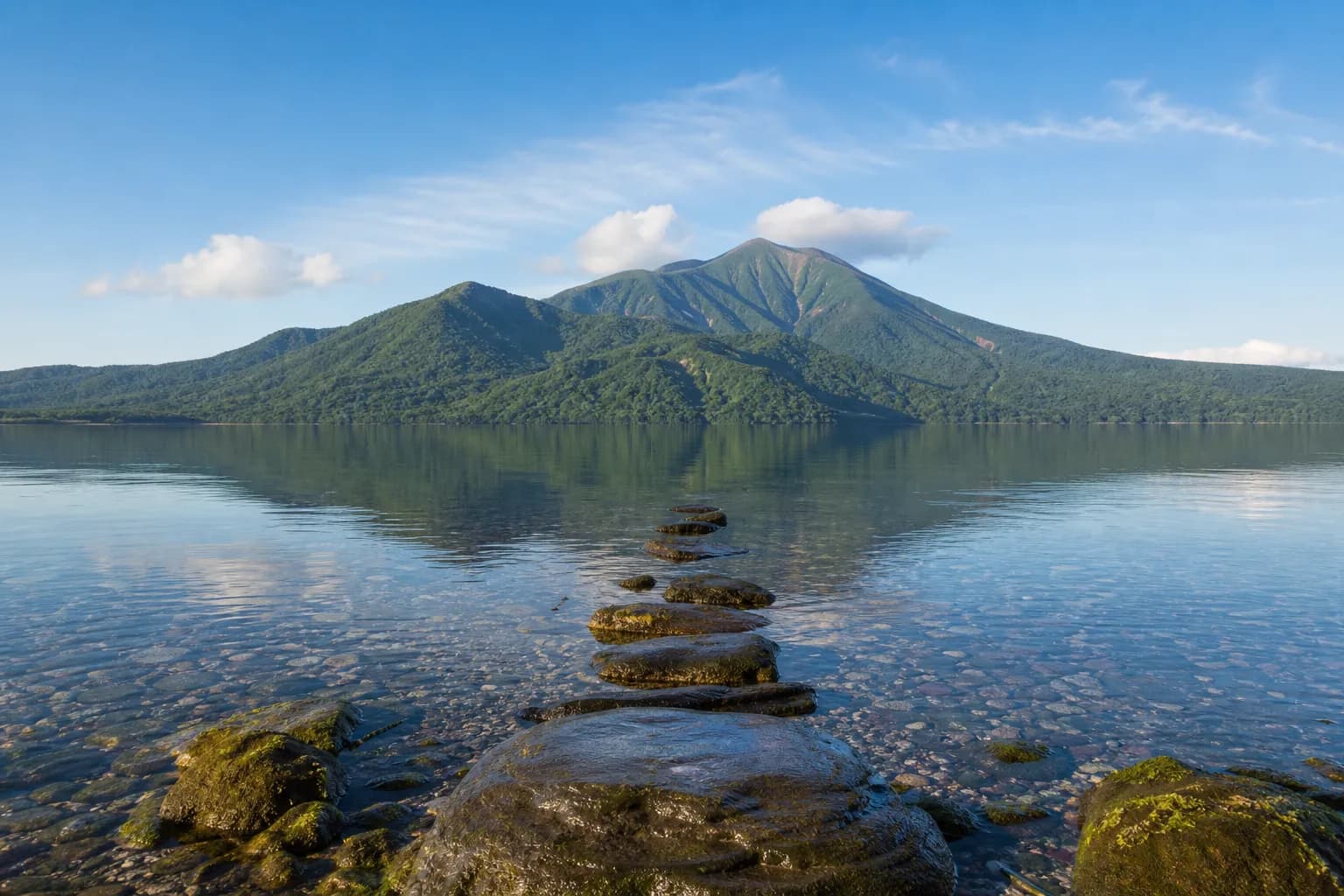
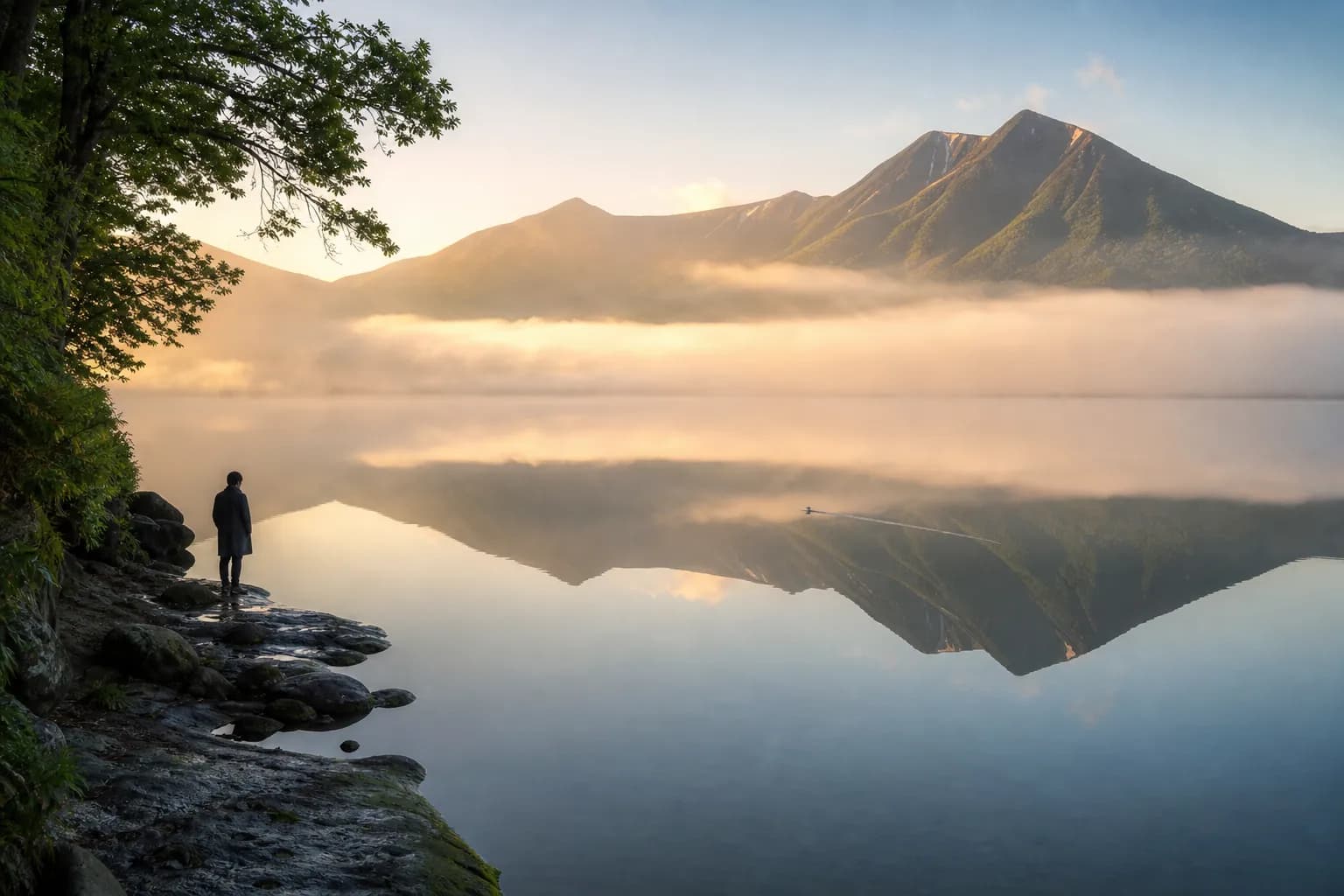
Lake Shikotsu, Japan's second-deepest and rarely-frozen caldera lake, minutes from New Chitose Airport.
Lake Shikotsu: The Caldera At The Heart Of It
Lake Shikotsu is the centerpiece, and it earns the title. It is Japan's second-deepest lake, formed by volcanic collapse roughly 40,000 years ago. The water holds an extraordinary clarity that has repeatedly placed it among the cleanest lake waters in the country.
Here is the curious part. Shikotsu rarely freezes over, which makes it Japan's northernmost ice-free lake of its size. The volume of deep water moderates the temperature, so even in a Hokkaido January the surface stays open while the air bites.
Two volcanic peaks frame the view — Mount Eniwa to the north and Mount Fuppushi to the south. The surrounding forest belongs to Shikotsu-Toya National Park, home to brown bears, red foxes, and well over a hundred bird species. It is wild country, genuinely. Yet it begins minutes from a major international airport, a contrast we never tire of pointing out to first-time guests.
What Each Season Offers
Hokkaido rewards travelers who understand timing. The lake reads completely differently across the year, and choosing the right month is most of the work.
- Spring (Apr–Jun)
- Primary activities: Lakeside walking, cycling, early fishing
- Character: Late cherry blossoms, mountain wildflowers, cool clear air
- Summer (Jul–Sep)
- Primary activities: Kayaking, paddleboarding, private boat outings
- Character: Mild water, deep visibility, long northern daylight
- Autumn (Oct–Nov)
- Primary activities: Foliage viewing, onsen bathing
- Character: Brilliant colour on the slopes, noticeably fewer visitors
- Winter (Dec–Mar)
- Primary activities: Ice festival, snow walks, cross-country skiing
- Character: Blue-tinted ice sculptures, stillness, photographer's light
Our quiet preference is late autumn. The foliage along Eniwa's lower flank turns, the onsen feels its best, and the summer kayakers have gone home.
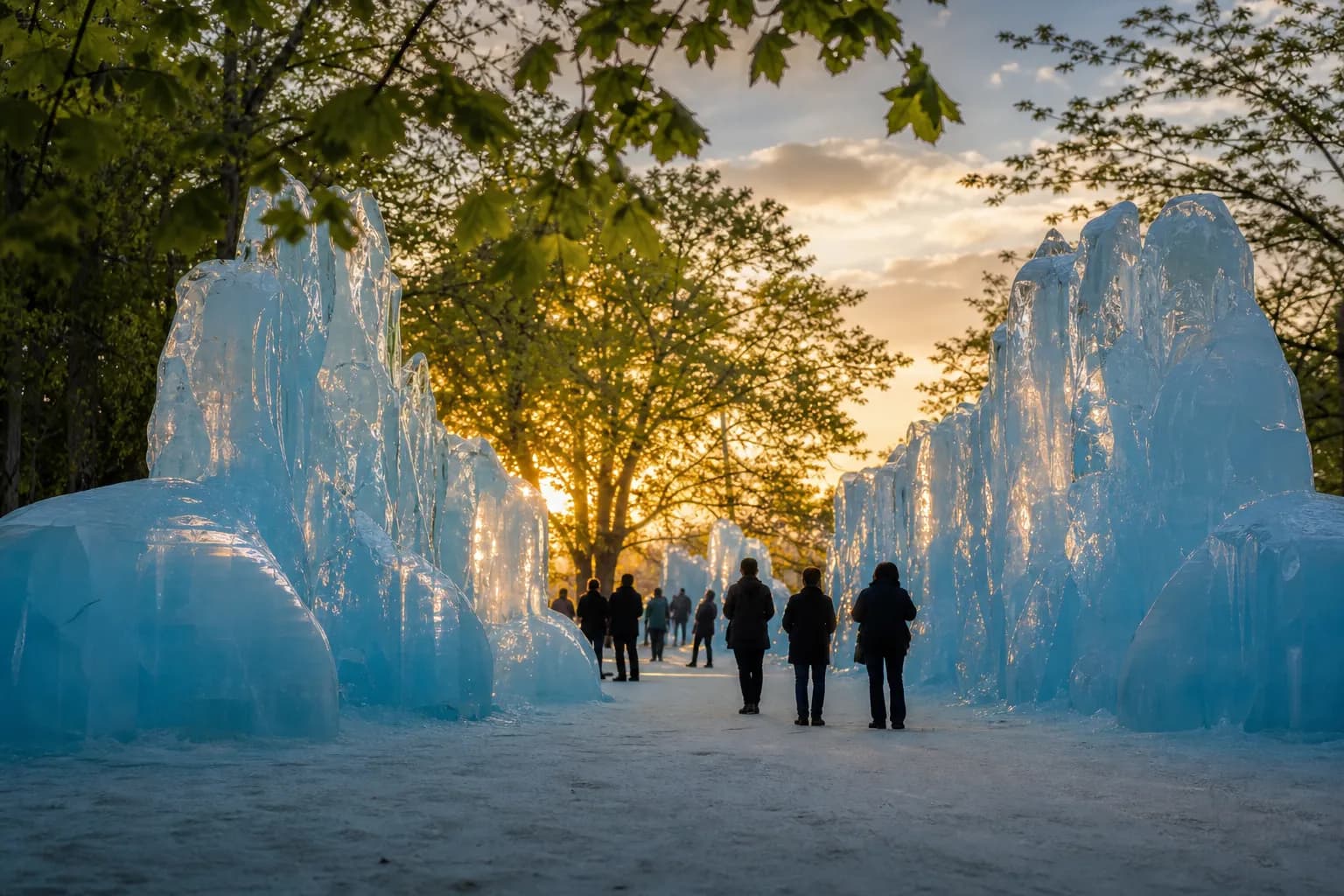
The festival's signature blue ice, formed from the lake's exceptionally pure water.
The Chitose-Lake Shikotsu Ice Festival In Winter
Each winter, the lakeshore becomes a frozen sculpture park. The Chitose-Lake Shikotsu Ice Festival — Hyoto Matsuri — builds enormous structures by spraying the lake's famously clear water onto frames, where it freezes into towers and arches tinted an unusual translucent blue.
That blue is the lake's signature. Because the source water is so pure, the ice scatters light differently from ordinary frozen water, glowing in cold daylight and again under the evening illuminations.
The festival typically runs across late January and into February. Crowds gather on weekends. For guests who prefer space and a tripod's worth of quiet, our concierge team can advise on the calmer windows — an early weekday evening, just after the lights come up, before the buses arrive.
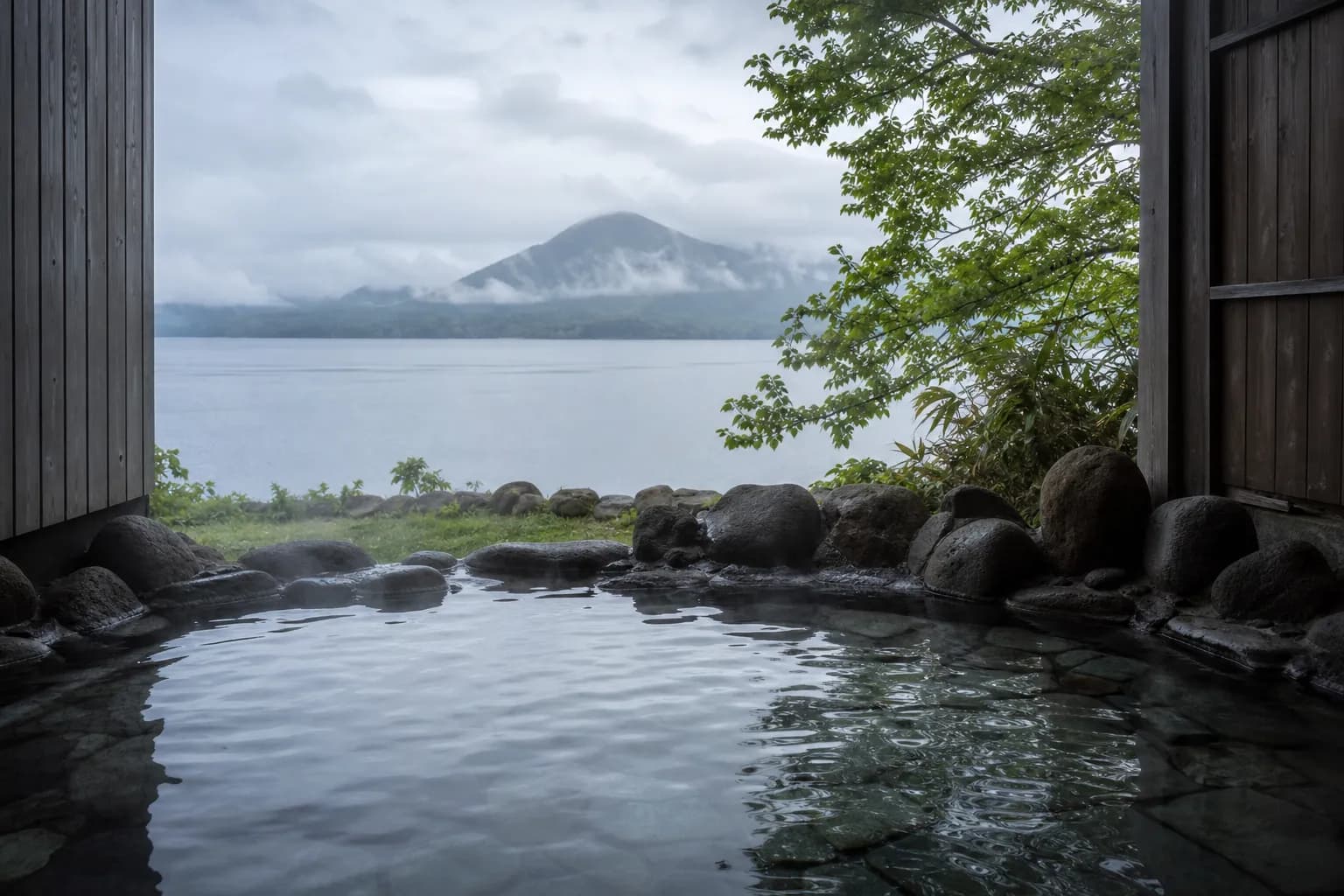
Shikotsuko Onsen's mineral waters draw from the same volcanic system that shaped the lake.
Onsen And Wellness Beside The Lake
The hamlet of Shikotsuko Onsen sits on the lake's eastern shore, and its hot springs are the reason many travelers linger. The waters here carry sulfur and other minerals, drawn from the same volcanic system that built the caldera. People have bathed here for generations.
Accommodation ranges from established lakeside ryokan to smaller, more contemporary properties. The better rooms look straight onto the water, and the kaiseki tables lean hard into Hokkaido produce — local salmon, ezo venison in season, dairy and vegetables that need no embellishment.
For guests who value privacy, the appeal is the combination: a private or semi-private bath, a quiet dinner, and a lake that empties of day visitors by late afternoon. Forest-bathing walks, guided birding, and small-boat outings can all be arranged for the morning. Our coordinators handle the introductions; you simply arrive.
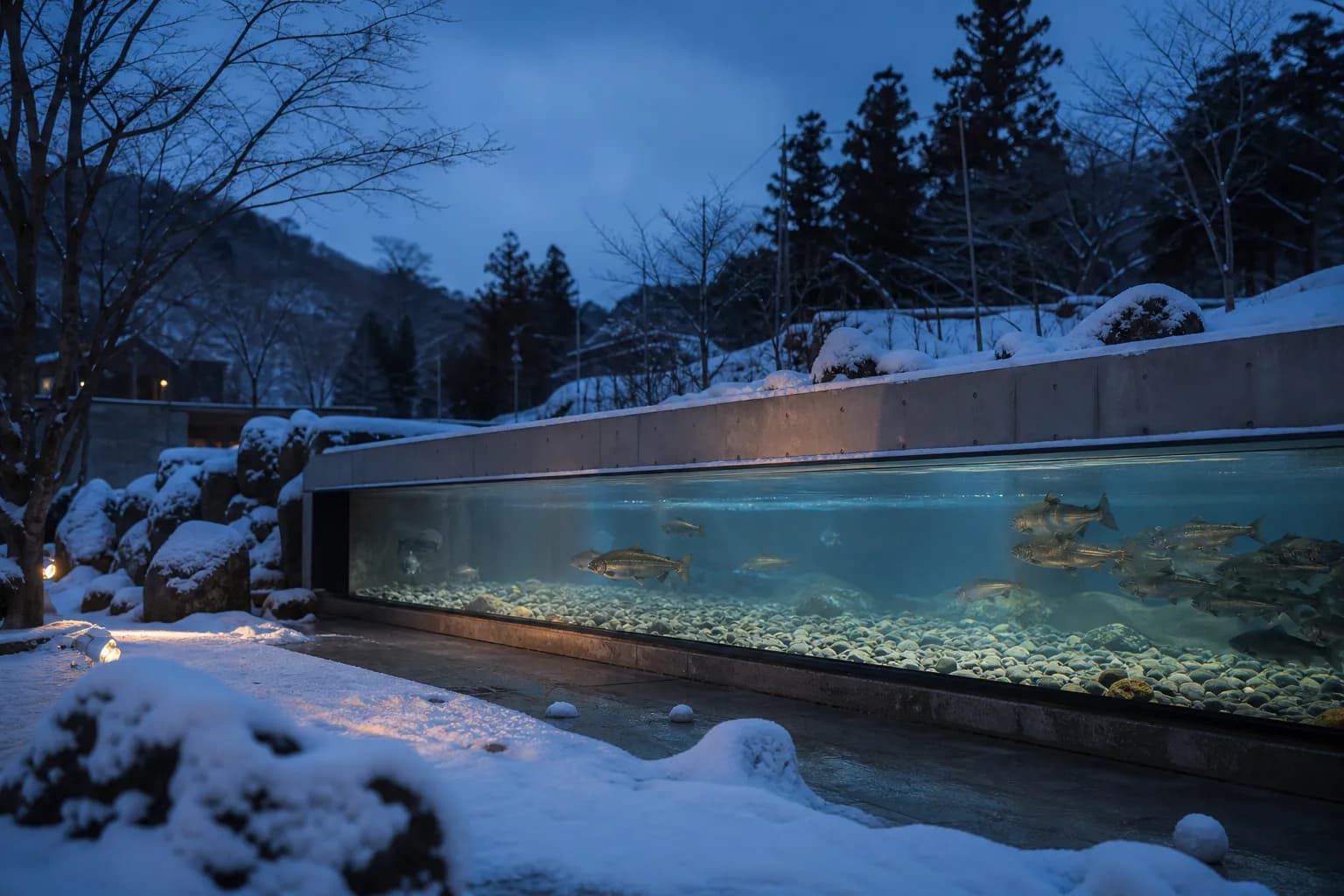
Autumn salmon ascending the Chitose River, seen from the aquarium's riverbed viewing window.
Salmon, Rivers, And The Story Of Hokkaido
Chitose owes a surprising amount of its identity to a fish. The Chitose River runs through the city, and salmon return to it each autumn in one of Hokkaido's more moving natural events.
The Chitose Salmon Aquarium — Chitose Sakemasu Suizokukan — is built around this. It focuses on the freshwater ecosystems of Hokkaido's rivers and the salmon species that shaped them. An underwater viewing window set into the riverbed lets visitors watch wild salmon move upstream during the spawning run, roughly September through November.
It is a genuinely good museum, not a tourist afterthought. The exhibits trace the salmon's life cycle and the role the fish played in settling and feeding the island. For families especially, it makes the landscape legible — the lake, the river, the fish, the people, one connected thing.
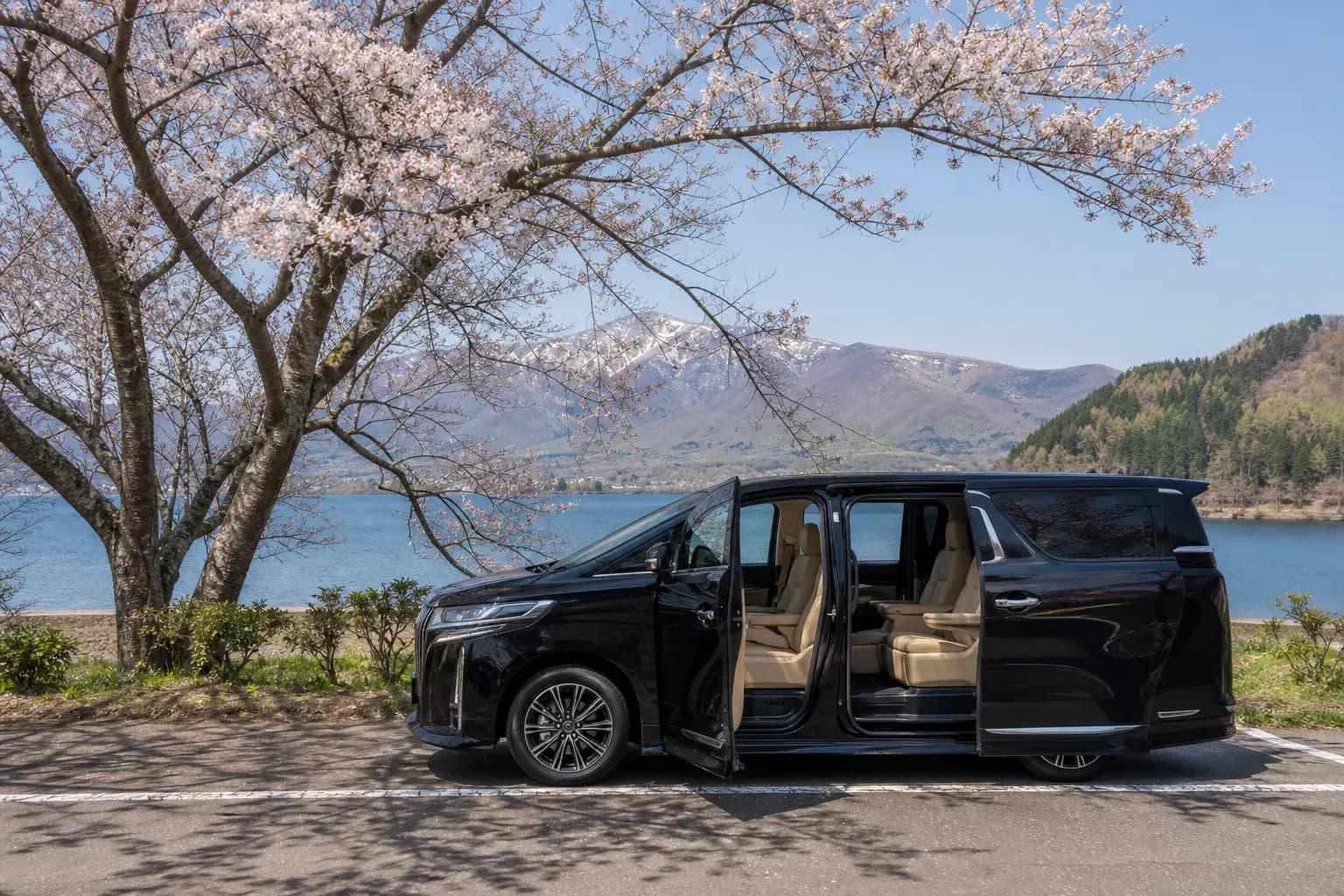
A private transfer carries guests from the terminal to the lakeside without a single change.
Getting Around Chitose With Ease
The practical layer matters. New Chitose Airport connects to the rest of Hokkaido more efficiently than almost any regional hub in Japan.
- JR Rapid Airport train to central Sapporo in roughly 37 minutes.
- Express coaches to Noboribetsu, Tomakomai, and other regional towns.
- Private chauffeured transfer directly to your lakeside ryokan or onward to Niseko.
For guests who would rather not negotiate the station, our private chauffeured service moves you from the arrivals hall to Lake Shikotsu without a single transfer, in a Lexus LM 500 or a Toyota Alphard for families. The journey itself becomes part of the calm — no luggage carts, no platforms, no waiting.
If your wider plan includes Sapporo or the Niseko valley, see our notes on the best places to go in Japan for how Chitose fits into a longer northern route.
A Suggested Two-Day Chitose Opening
Here is how we often frame a first 48 hours in Hokkaido for guests landing at CTS.
Day One: Land And Slow Down
Private transfer from the terminal to Shikotsuko Onsen — under half an hour. Settle in, then an early-afternoon walk along the lake's eastern shore while the light is soft. A long soak before a Hokkaido kaiseki dinner. No agenda beyond rest. Most guests need exactly this after a long flight.
Day Two: Lake And River
A morning on the water — a small private boat or, in summer, a guided kayak across the clearest sections near Mount Fuppushi. Afterward, the Chitose Salmon Aquarium and the riverside before an onward transfer to Sapporo or Niseko. By early afternoon you are rested, oriented, and ready for the rest of the island.
When To Come: Timing The North
Hokkaido's seasons are emphatic, and Chitose changes with them. The shorthand:
- July to September for the lake at its most usable — kayaking, paddleboarding, long days.
- October to early November for autumn colour and the quietest, most comfortable onsen window.
- Late January into February for the Ice Festival and the blue-ice spectacle.
- September to November if the salmon run is your reason to come.
Each window asks for different planning, different rooms, and different timing to avoid the crowds that do find Shikotsu on summer weekends. Getting that right is, in our view, the whole game.
Frequently Asked Questions
How far is Lake Shikotsu from New Chitose Airport?
Roughly a 30-minute drive. It is one of the few near-pristine national-park lakes in Japan you can reach this quickly from a major international airport.
Does Lake Shikotsu freeze in winter?
Rarely. Its great depth keeps the surface largely open even in deep winter, which is why it is regarded as Japan's northernmost ice-free lake of its size.
When is the Chitose-Lake Shikotsu Ice Festival held?
It typically runs across late January and February, with evening illuminations. Exact dates shift yearly, so confirm before planning around it.
Is Chitose worth more than an airport stop?
For travelers who value nature, onsen, and a calm start to a Hokkaido trip, very much so. A single night beside Lake Shikotsu transforms the rhythm of the entire journey.
Why Choose Japan Royal Service
Plenty of visitors pass through Chitose. Almost none experience it well. The difference is rarely the destination — it is who shapes the days around it.
Our team at Japan Royal Service builds Hokkaido journeys around restraint and access. That means a private transfer waiting the moment you clear customs, a lakeside room chosen for its outlook and quiet rather than its brochure, and a winter evening at the Ice Festival timed to the lull between crowds. We protect your itinerary and your identity with complete discretion, and we anticipate the small needs you should never have to voice.
We work in English, Japanese, Thai, and Filipino, and our concierge stays reachable throughout your stay. The aim is simple: a north that feels like yours alone, from the first stretch of forest road out of the airport.
To begin shaping a private Chitose and Hokkaido itinerary, reach our concierge through the contact form or WhatsApp. We will listen first, then propose a tailored plan.