
目次
- 01Why Discretion In Japan Works Differently Than In The West
- 02The Discreet Professional’s Protocol (Pre-Trip / In-Country / Post-Trip)
- 03Privacy Norms In Japan: What To Do In Hotels, Streets, And Shared Spaces
- 04Dining Discretion: Counter Seats, Kaiseki Rhythm, And The Questions That Backfire
- 05Business Card Etiquette (Meishi): A Simple, Executive-Safe Approach
- 06Ryokan Discretion: Timing, Silence, And Private Space That Feels Truly Private
- 07Kyoto With A Minimal Footprint: Discretion As Responsible Travel
- 08How To Book Official Experiences Without Risky Third-Party Resale
- 09FAQ: Discreet Japan For Professionals
- 10Why Choose Japan Royal Service
Discretion in Japan is not a decorative politeness. It is leverage.
For a working professional, it protects reputation, time, and relationships—especially when your trip overlaps with client dinners, leadership offsites, or a quiet reward after a hard quarter. Japan rewards the traveler who can be present without broadcasting themselves.
Our team at Japan Royal Service sees the same pattern again and again. A capable executive lands with good taste and a good hotel, then loses control through small, avoidable leaks: a geotagged story, a loud phone call, a dinner question that corners the host. Tiny errors. Real consequences.
This playbook explains the “why” behind Japanese privacy norms, then turns it into a practical protocol you can use before you pack, while you are in-country, and after you return.
Why Discretion In Japan Works Differently Than In The West
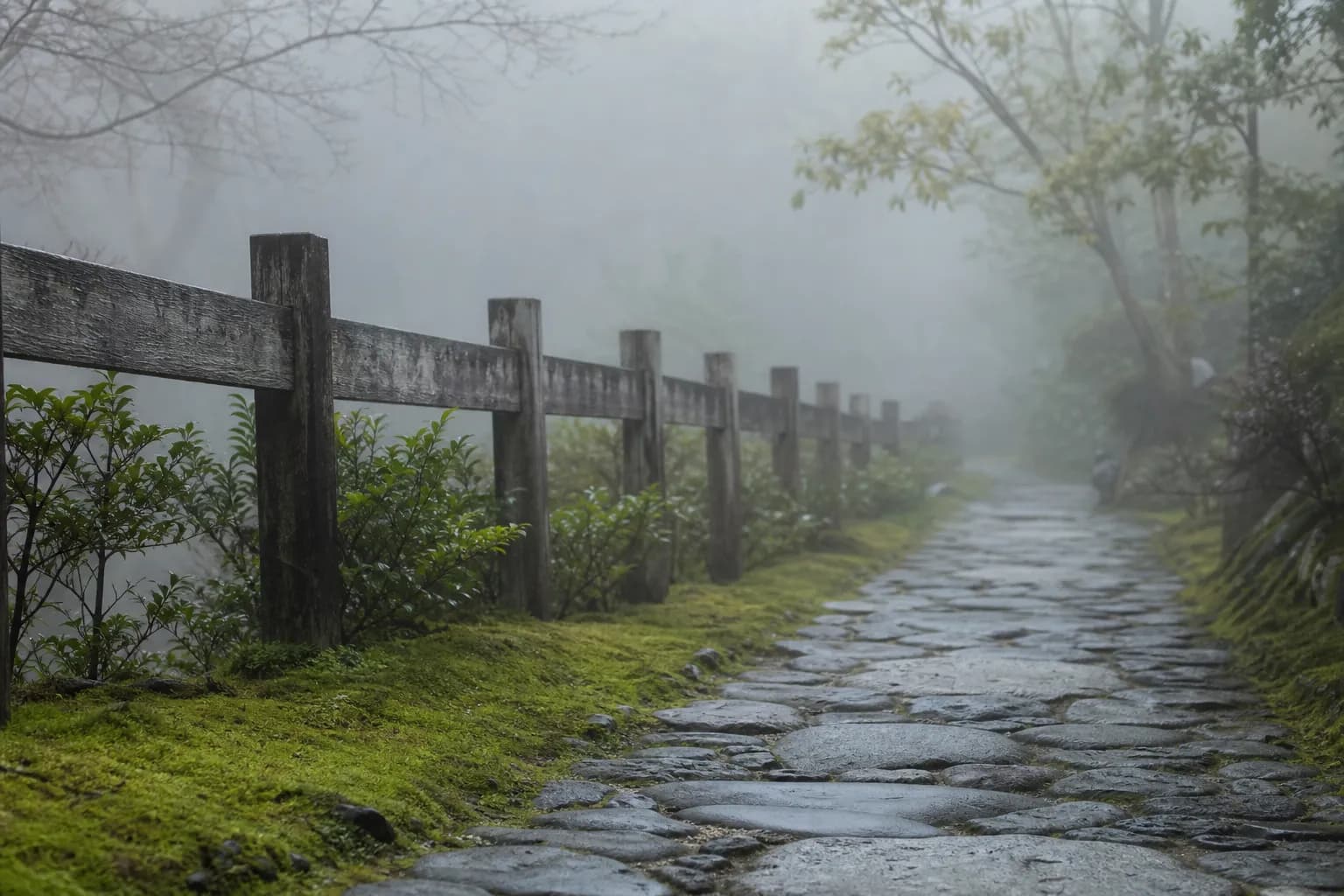
In Japan, restraint is not distance—it is consideration.
Japan is not “secretive.” It is simply calibrated for low-friction shared space.
Public life runs on consideration: quiet trains, orderly queues, and a strong sense that you should not make your needs everyone else’s problem. The outcome is a culture where restraint reads as competence, and oversharing reads as noise.
Wabi-sabi matters here. Not as a buzzword, but as a lived preference for restraint—moss, stone, and silence over performance.
Hidden-Japan places—small counters, ryokan corridors, gardens at opening hour—depend on that restraint. When travelers amplify them loudly, they stop being what they are.
Two Real-World Misreads We See Constantly
Misread #1: “Japan is private, so nobody will notice my posting.”
Wrong. People notice. Staff notice, other guests notice, and in sensitive areas (especially parts of Kyoto), residents notice patterns quickly.
Misread #2: “Being friendly means asking lots of personal questions.”
In Japan, warmth often comes from giving someone room. Silence can be respect. A light touch is often the sharper one.
Key fact: Japan National Tourism Organization (JNTO) publishes official visitor guidance on Japanese manners and etiquette, and also on responsible photography—both align with discreet, low-impact travel.
The Discreet Professional’s Protocol (Pre-Trip / In-Country / Post-Trip)
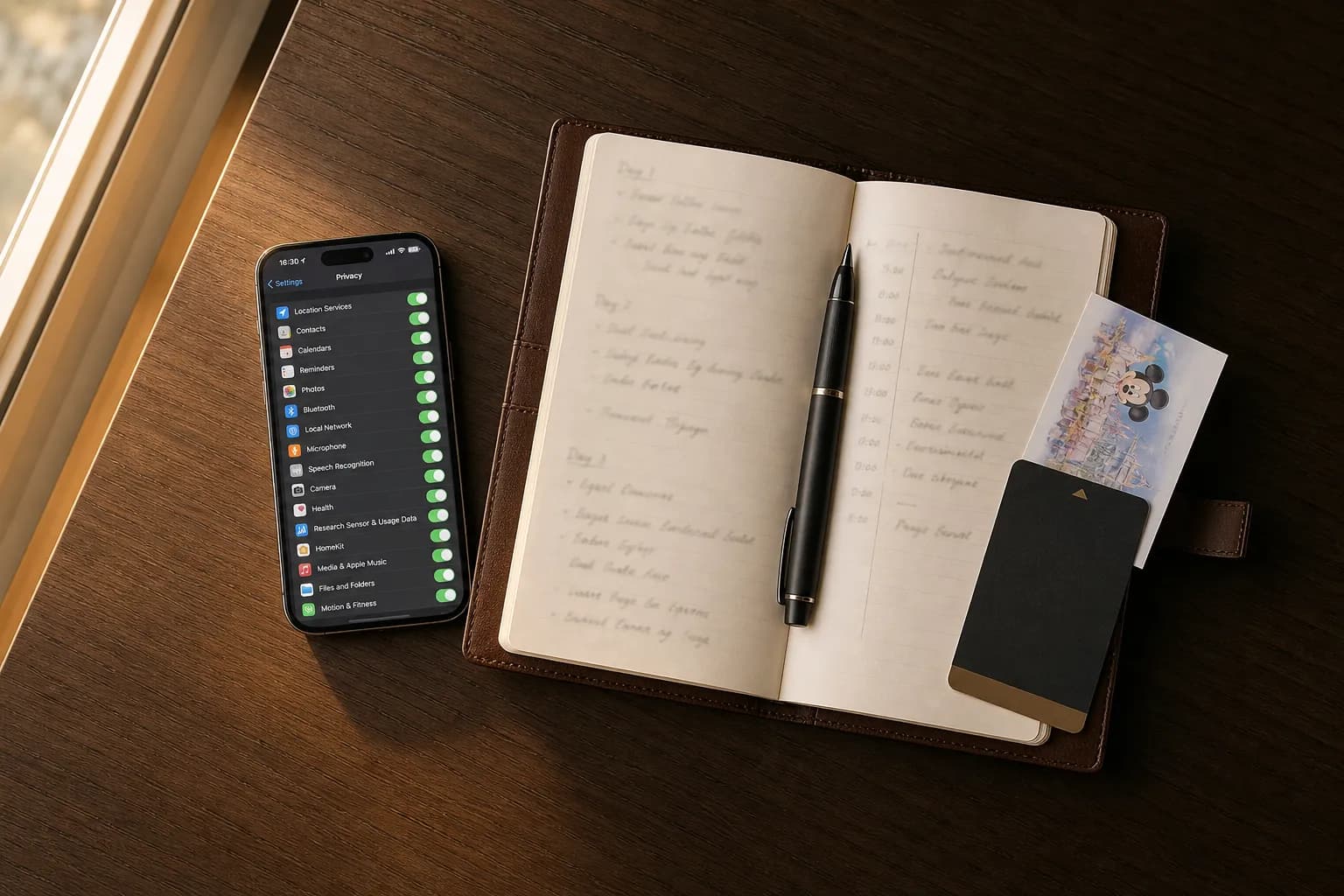
Discretion starts before you board the flight.
If discretion is your goal, do not improvise. Use stages.
We recommend a simple protocol: lock down what leaks before departure, behave quietly in shared spaces, then share your highlights after you are home. Clean. Calm. Effective.
Pre-Trip: Stop Leaks Before They Exist
Most itinerary leakage happens before the flight. Seriously.
It happens in calendar invites, forwarded PDFs, “quick” group chats, and hotel confirmation screenshots. It is rarely malicious. It is just sloppy.
- Calendar hygiene: Keep detailed location fields off shared work calendars when possible. Use a private calendar for granular addresses and timings.
- Document discipline: Avoid sending full itineraries to large groups. Share “need-to-know” fragments instead.
- Social timing: If you must post, post later. Prefer next-day or post-trip sharing to real-time stories.
- Photo defaults: Turn off automatic geotagging. Treat it like a business setting, not a beach holiday.
In-Country: Quiet Presence Beats Perfect Etiquette
You do not need to memorize hundreds of rules. You need a posture.
Move as though other people’s day matters as much as your own, especially in elevators, lobbies, narrow lanes, and on trains. Japan rewards that immediately.
- Phone mode: Silent. Always. In ryokan settings, a calm, quiet presence is especially valued.
- Public calls: Keep them brief and low. Step aside. Avoid pacing while speaking.
- Queues and thresholds: Follow the flow. Don’t drift across entrances or doorways.
- Volume: If you can hear yourself “traveling,” you are too loud.
Post-Trip: Share Without Burning The Place Down
The easiest discretion win is delayed sharing. Post after you leave.
That single habit protects your personal security and reduces crowd-amplification of fragile places, which is increasingly relevant as Japan expands overtourism countermeasures (Japan’s Tourism Agency maintains initiatives updated in 2026).
- Delay: Batch your posts after you have moved on.
- De-identify: Avoid posting recognizable room numbers, boarding passes, or timestamps that reveal patterns.
- Respect “no photo”: If a venue restricts photography, do not treat that as a challenge.
Privacy Norms In Japan: What To Do In Hotels, Streets, And Shared Spaces
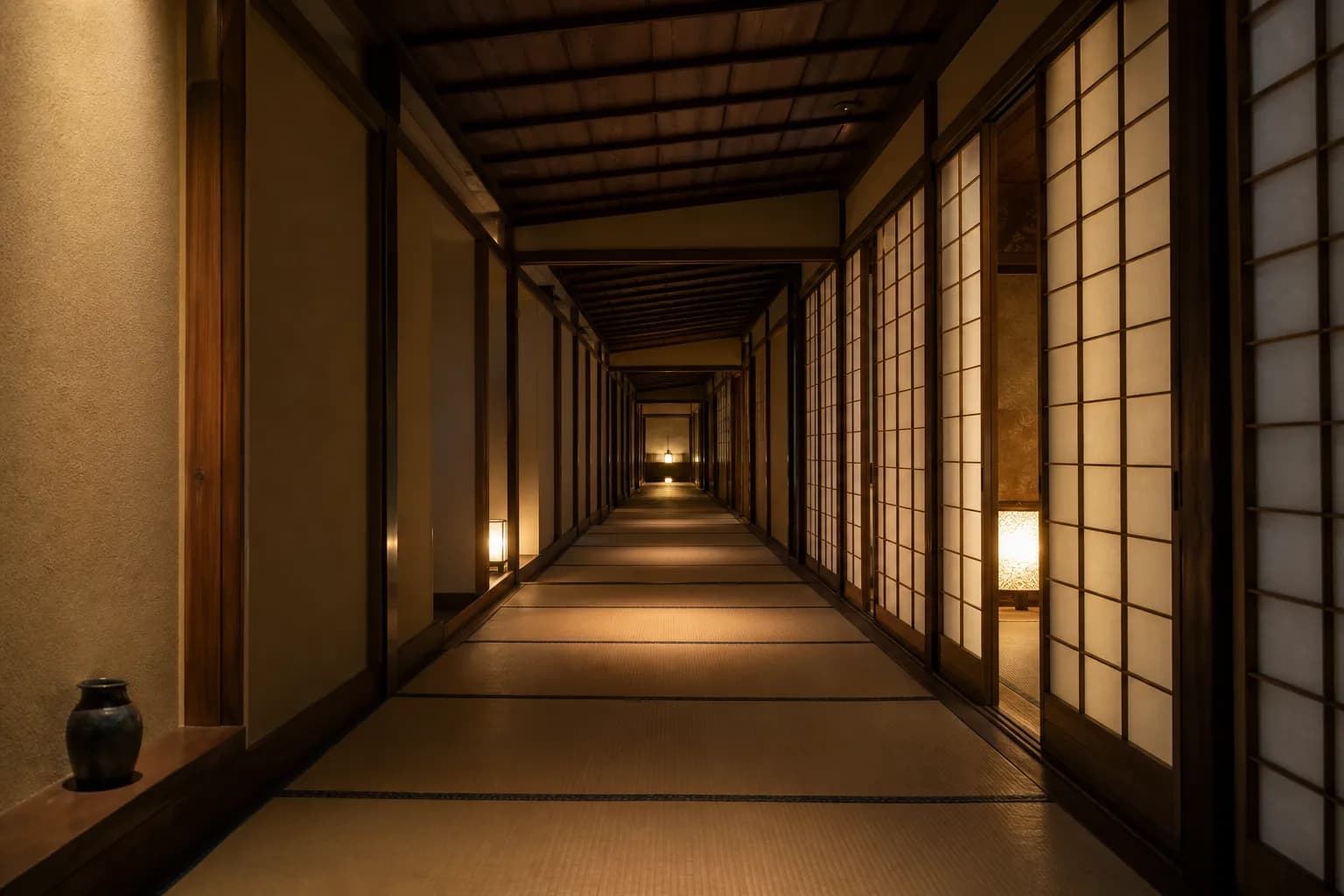
Japanese privacy norms are often about not forcing intimacy. That includes information.
In practice, it means people may not ask where you are going next, what you paid, or who you are meeting. They are not being cold. They are giving you freedom.
We encourage clients to mirror that. Offer less detail, with a warm tone.
Professional Small Talk That Stays Private
Some questions land poorly, even when meant kindly. A mistimed “So which hotel are you at?” can sound like a scan.
Try these instead. They are human, and they don’t corner anyone.
- “Is this your first time in Japan?”
- “Are you here mostly for Tokyo, or also Kyoto?”
- “Any art or gardens you’re excited to see?”
Keep your own answers light. One sentence is enough.
Photography And Privacy: The Quiet Rules That Save You
Japan is photogenic. That is not permission.
JNTO’s responsible photography guidance emphasizes consideration: be aware of restrictions, avoid nuisance behavior, and respect people and places. The professional move is to ask once, accept the answer, and stop.
- Ask before photographing people when they are identifiable. If it feels awkward, skip it.
- Watch for signage in temples, museums, shops, and dining rooms.
- Avoid livestreaming in quiet spaces. It changes the atmosphere instantly.
Dining Discretion: Counter Seats, Kaiseki Rhythm, And The Questions That Backfire
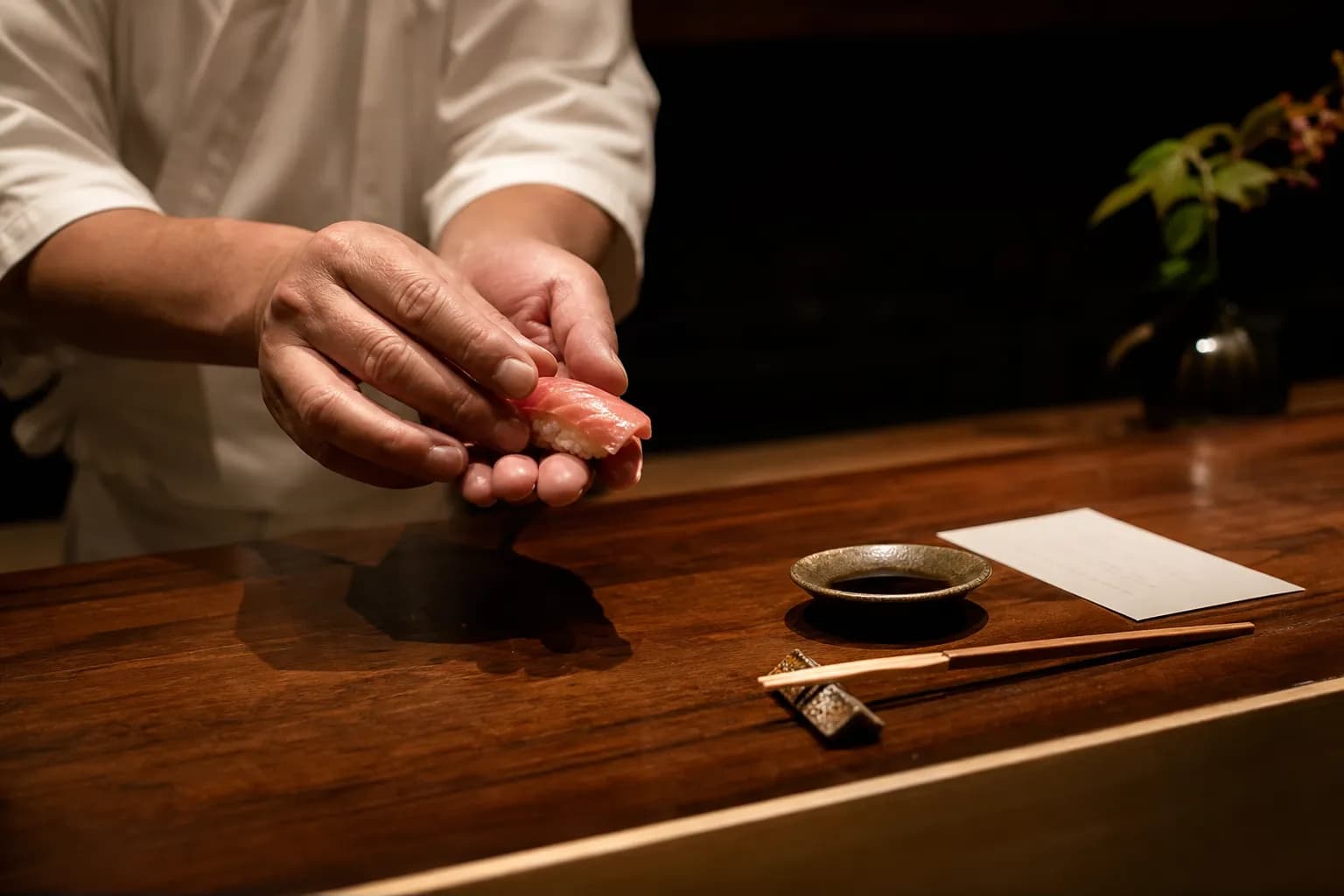
At the counter, timing and restraint matter as much as taste.
Luxury dining in Japan often rewards restraint. A lot.
At a sushi counter, the chef’s focus is the food and your timing. At kaiseki, the pacing is part of the design. Your job is not to “optimize” it in public.
This is where shokunin shows up most clearly. Craft, repetition, watchful details—done without fanfare.
The Mistimed Dinner Question (And A Better Version)
We have watched a confident guest derail the mood with one question: “What’s your most expensive course?”
In many contexts, it reads as status-checking. It also pressures the room.
Try this instead: “What is best today?” Short. Respectful. It lets the shokunin lead.
Do’s And Don’ts You Can Screenshot
Keep this list close. It prevents 90% of awkwardness.
- Do arrive on time, especially in ryokan where meal timing is part of service choreography.
- Do keep your phone silent and off the table when possible.
- Do follow the lead on photography. If others aren’t shooting, pause.
- Don’t stick chopsticks upright in rice. Japan-guide notes this is taboo.
- Don’t argue with a “no photo” policy. Accept it cleanly.
- Don’t tip by default. In Japan, tipping is generally not customary and may be declined, creating awkward misunderstandings.
Chopsticks, Shoes, And The Quiet Signals Of Competence
Some etiquette is small, but it speaks loudly. Shoes are one of them.
Japan-guide explains that shoes are expected to be removed in many indoor contexts, especially where tatami is present, and slippers may be used. Your job is not to rush. It is to handle it neatly.
- Do look for a genkan step-up and follow what others do.
- Do keep socks presentable. You will be seen.
- Don’t step on tatami with slippers if instructed otherwise.
Business Card Etiquette (Meishi): A Simple, Executive-Safe Approach
Meishi is not a ritual for tourists. It is a professional exchange.
If your Japan trip includes meetings, treat business cards as identity, not as paper. Your handling is read as your handling of the person.
Keep it simple. Two hands, a slight bow, and a moment to look at the card before you put it away.
Bowing: Enough Precision Without Overthinking It
Bowing is common in Japan, and visitors often worry about angles. Don’t freeze.
As general guidance, Scott Dunn describes informal bows around 15° and more formal bows around 45°. You do not need a protractor. You need intent.
Match the other person’s formality. Err slightly more respectful when unsure.
Ryokan Discretion: Timing, Silence, And Private Space That Feels Truly Private
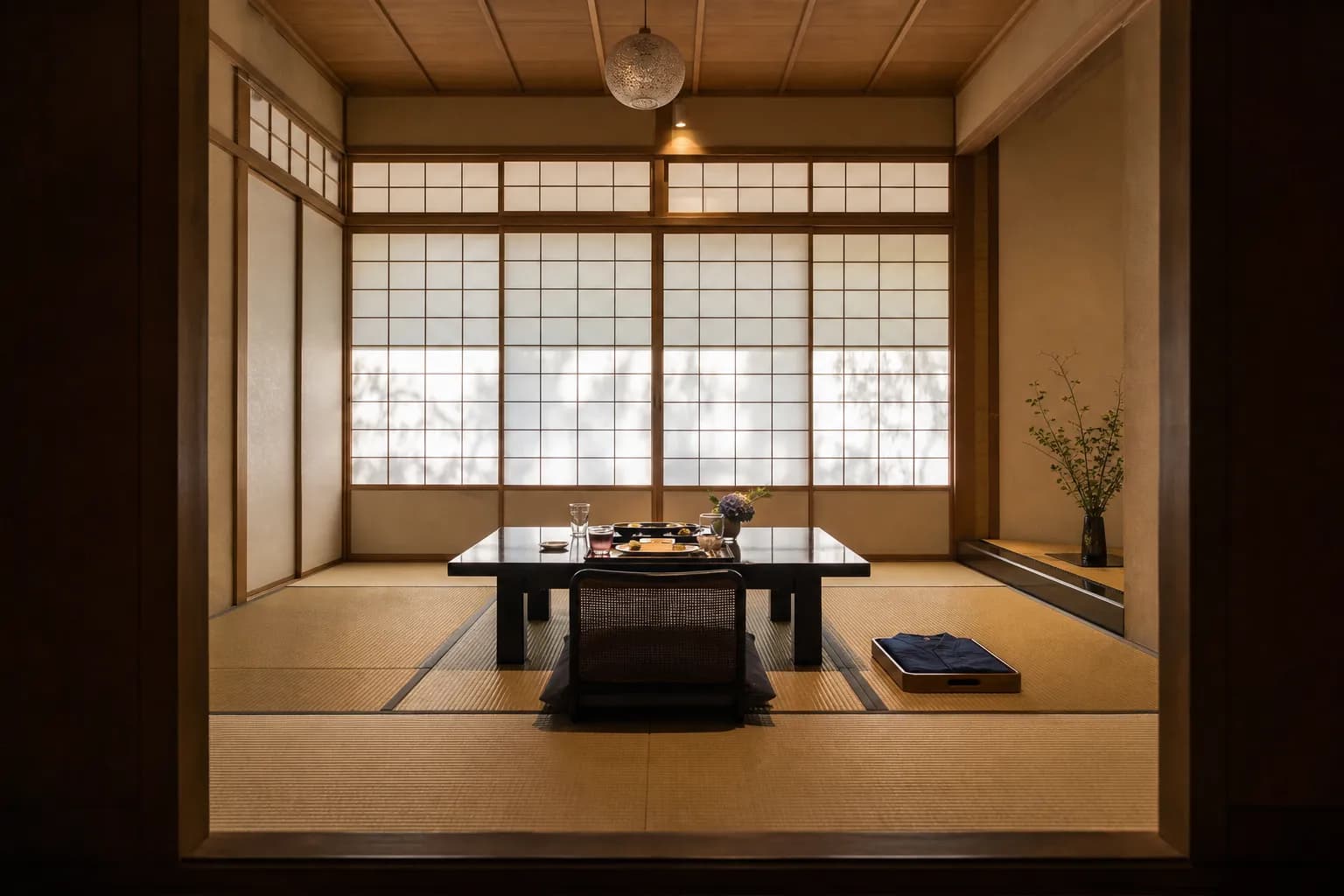
A quiet guest preserves the rhythm of a ryokan stay.
A ryokan stay can feel like your nervous system finally exhaled. That relief is fragile.
Ryokan service is often choreographed around meal times, bathing etiquette, and quiet hallways. A calm presence, phones on silent, and punctuality matter in a way many travelers don’t expect.
If privacy is a priority, many luxury-focused guides note that a private in-room onsen can be a deciding factor at certain ryokan. It changes the entire rhythm of the stay.
The Quiet Guest Checklist
Do these, and you will be remembered well—without being remembered loudly.
- Be on time for dinner and breakfast. If you need to adjust, communicate early.
- Keep corridors quiet, especially at night and early morning.
- Respect bathing etiquette: wash before entering shared baths, and keep voices low.
- Keep belongings orderly when staff enter for meal service or room setup.
Kyoto With A Minimal Footprint: Discretion As Responsible Travel
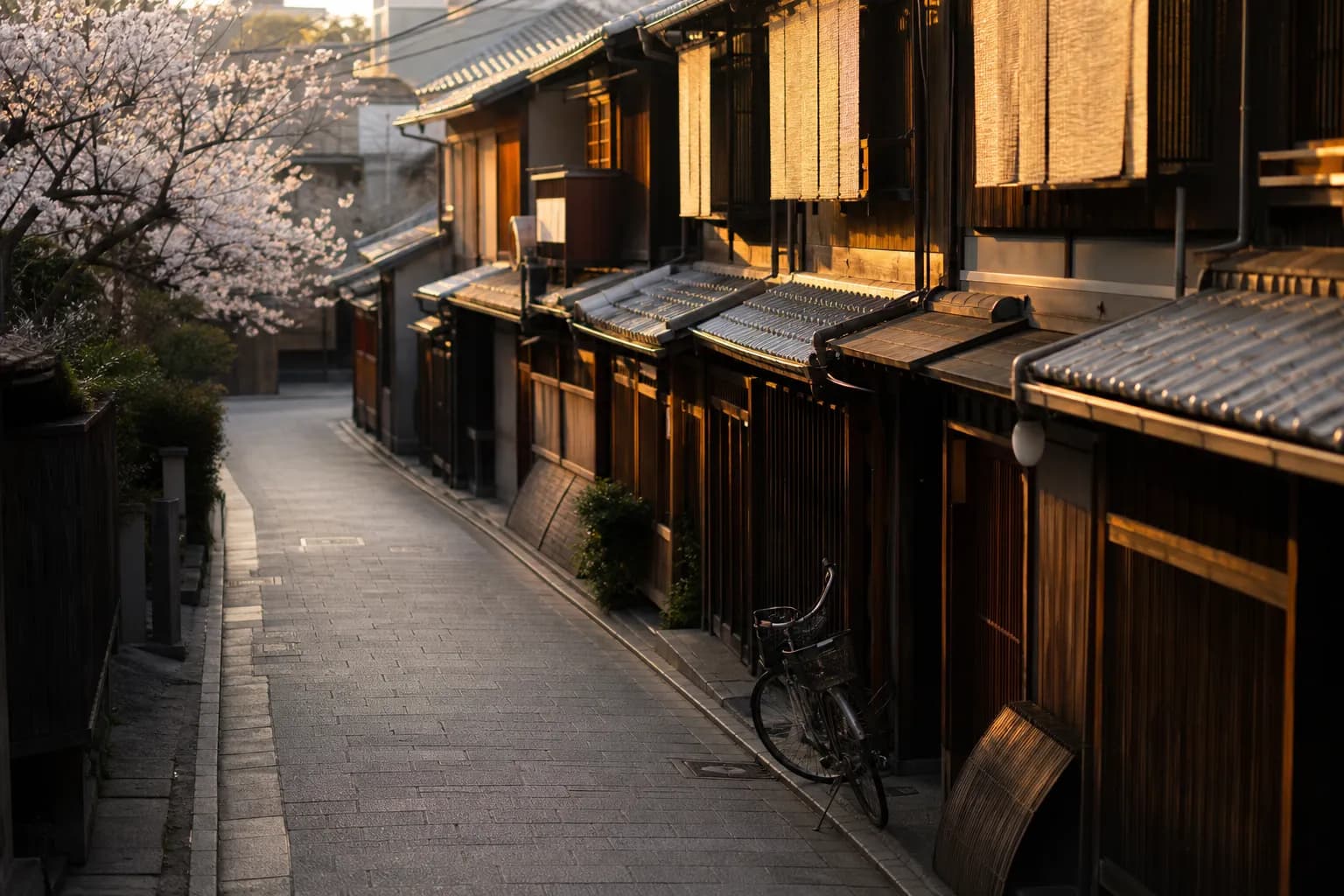
In Kyoto, discretion is also a form of responsible travel.
Kyoto is not a theme park. It is a living city with tight residential streets and daily routines.
In 2026, Kyoto City continued publishing initiatives aimed at harmony between residents’ lives and tourism, reflecting how seriously the city takes visitor impact. Japan’s Tourism Agency also maintains overtourism prevention initiatives, with updates in 2026.
Discretion here is not only personal. It is civic.
Practical Moves That Reduce Friction Immediately
These are small choices. They change everything.
- Avoid peak congestion windows when possible. Early mornings can be calmer for gardens and temple precincts.
- Limit geotags in sensitive residential areas. Share the mood, not the pin.
- Follow signage about photography and access, especially around temples and neighborhood lanes.
- Keep group behavior tight: don’t fan out across narrow sidewalks.
How To Book Official Experiences Without Risky Third-Party Resale
Professionals often ask us a direct question: “How do I book the official Tokyo Disney VIP Tour as a foreigner?”
The safe answer is structural. Use official channels, follow official rules, and avoid unofficial resale behaviors that can create avoidable friction.
Tokyo Disney Resort offers a private VIP Tour service, and published policies can change over time. Confirm current eligibility, terms, and purchase steps via Tokyo Disney Resort’s official website and official guest communications.
If you are building a larger, discreet trip around it—hotel choice, timing, transportation comfort, and what to do before and after—our concierge can provide tailored guidance privately.
FAQ: Discreet Japan For Professionals
Is tipping expected in Japan?
In general, no. Tipping is not customary and can create awkward misunderstandings; it is often declined.
How should I handle bowing as a visitor?
Bowing is common. As general guidance, informal bows are often described around 15° and more formal bows around 45°. Match the other person’s tone and keep it natural.
What is the single biggest itinerary privacy mistake?
Real-time posting with geotags. It reveals where you are now, where you will likely go next, and how you move.
Is it acceptable to take photos at a sushi counter or kaiseki meal?
Sometimes, sometimes not. Watch for signs, follow staff guidance, and ask once if you are unsure. If the answer is no, accept it without debate.
What chopsticks rule matters most?
Do not stick chopsticks upright in rice. It is widely treated as taboo.
How do I avoid being a nuisance in Kyoto?
Keep voices low, follow photography rules, avoid blocking narrow lanes, and be cautious with geotagging in residential areas. Think “minimal footprint.”
Why Choose Japan Royal Service
Most luxury travelers can “default-book” an excellent new hotel in Tokyo or Osaka now. That is not the hard part.
The hard part is building days that feel privately owned—without noise, without itinerary leakage, and without social friction—so you can move from glass-and-skyline energy into wabi-sabi quiet: gardens at opening hour, a discreet counter seat, a craft conversation with a shokunin, then back to your room without ripples.
Our team at Japan Royal Service is built for that. Discretion is not a feature we add later. It is the baseline: confidentiality around guest identity and plans, careful routing, and guidance that respects local norms while protecting your professional life.
For private coordination, reach our team privately via WhatsApp or LINE, or contact us here.