目次
- 01What Ukai Actually Is — And Why It Rewards the Patient Traveler
- 02Tokyo to Gifu, Honestly: Can You Do It in a Day?
- 03The Logistics We Quietly Handle So You Don't Have To
- 04Gifu City or Oze: Choosing Your Ukai
- 05Ayu on the Table: The Gastronomy of the Season
- 06When to Go, and the Nights That Book Out First
- 07A Note on Goryo-Ukai, Without the Hype
- 08If the Weather Turns: The Contingency Plan
- 09Where This Fits in a Wider Japan Itinerary
- 10Questions We're Asked Most
- 11Why Choose Japan Royal Service
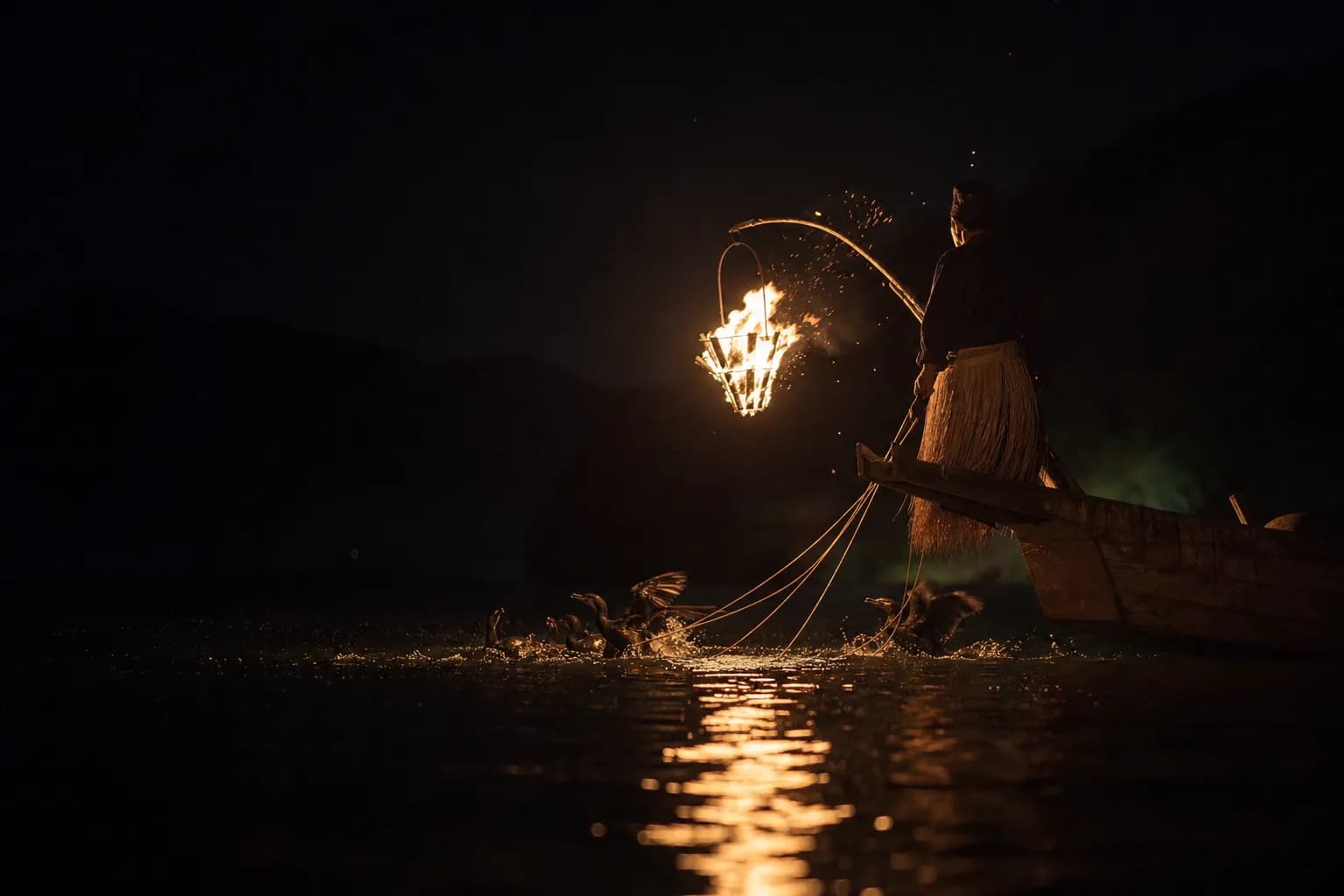
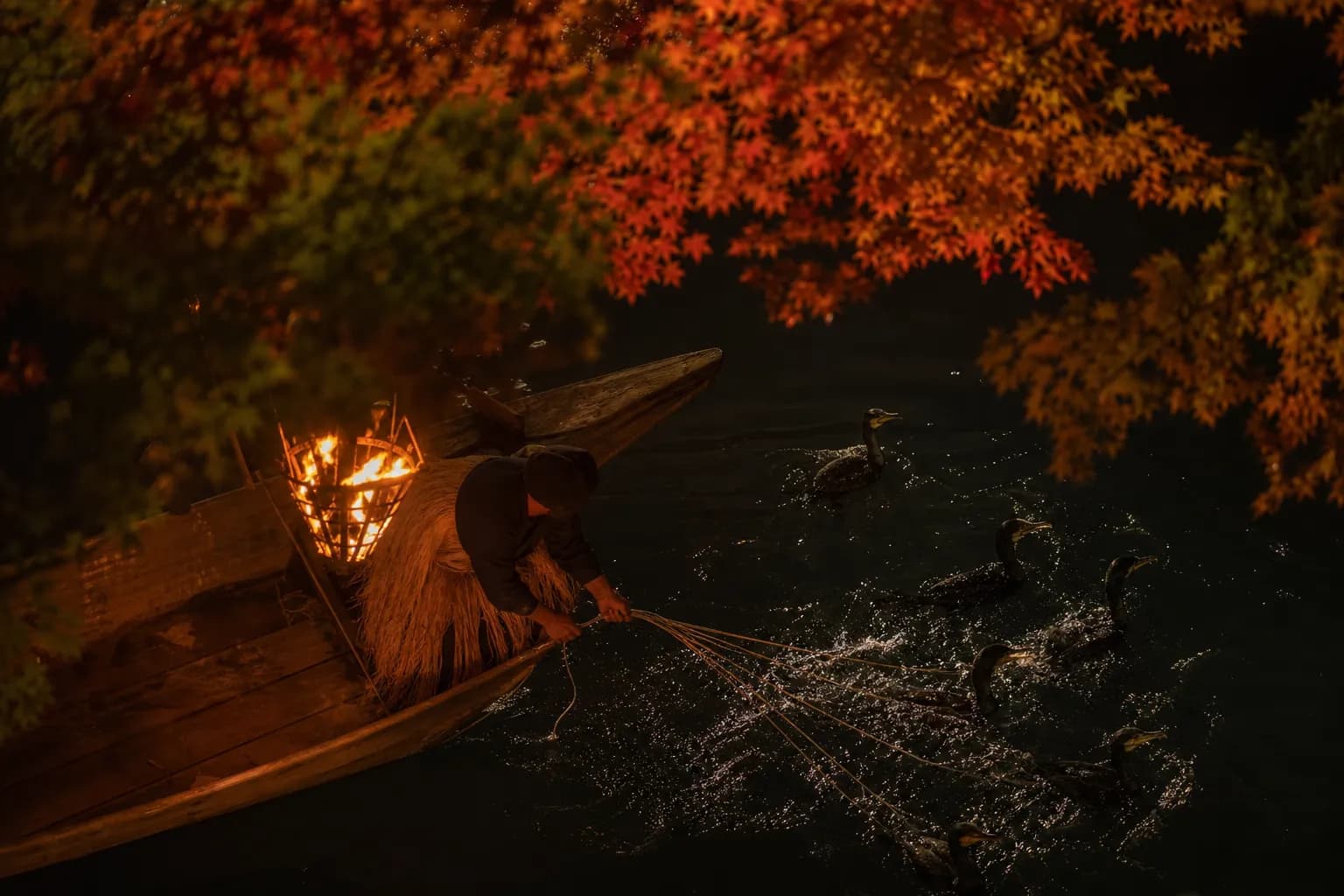
The river goes dark first. Then the torches catch. Along the Nagara River in Gifu City, six wooden boats drift downstream, iron baskets of pine fire hissing above the water, and beneath them a fisherman in a straw skirt handles a dozen cormorants on braided cords. This is ukai. It has been performed here for more than 1,300 years.
Most travelers never reach it. Gifu sits off the Golden Route, the evening ends late, and the logistics of doing it from Tokyo look daunting on paper. They are not. Our team at Japan Royal Service has choreographed this journey many times, and the honest answer is that it works beautifully — as a same-day round trip, or as a single quiet night on the riverbank. This guide walks you through both, with the timings, the trade-offs, and the small decisions that separate a rushed outing from an unhurried evening.
What Ukai Actually Is — And Why It Rewards the Patient Traveler
An usho works his cormorants beneath a basket of pine fire — a craft unchanged for over 1,300 years.
Ukai is fishing with trained cormorants. The master, called an usho, guides the birds by cords as they dive for ayu (sweetfish). A ring loosely fitted at the base of the throat lets the bird swallow the small fish and hold the prized larger ones, which the usho retrieves. It is not a show staged for tourists. It is a working craft, passed within families across generations.
In Gifu Prefecture the tradition survives in two places along the Nagara: near Gifu City, and upstream in Seki City, where it is known as Oze ukai. Across all of Japan, cormorant fishing continues in just eleven locations, according to the Japan Tourism Agency. That scarcity is part of the appeal. You are watching something that nearly vanished.
The pace suits a certain kind of traveler. There is a long dusk. Lanterns. A wait on the water while the boats gather. Then the sudden theatre of firelight and splashing. If you measure an evening by how many things you did, this is not for you. If you measure it by texture and quiet, it is exactly right.
Tokyo to Gifu, Honestly: Can You Do It in a Day?
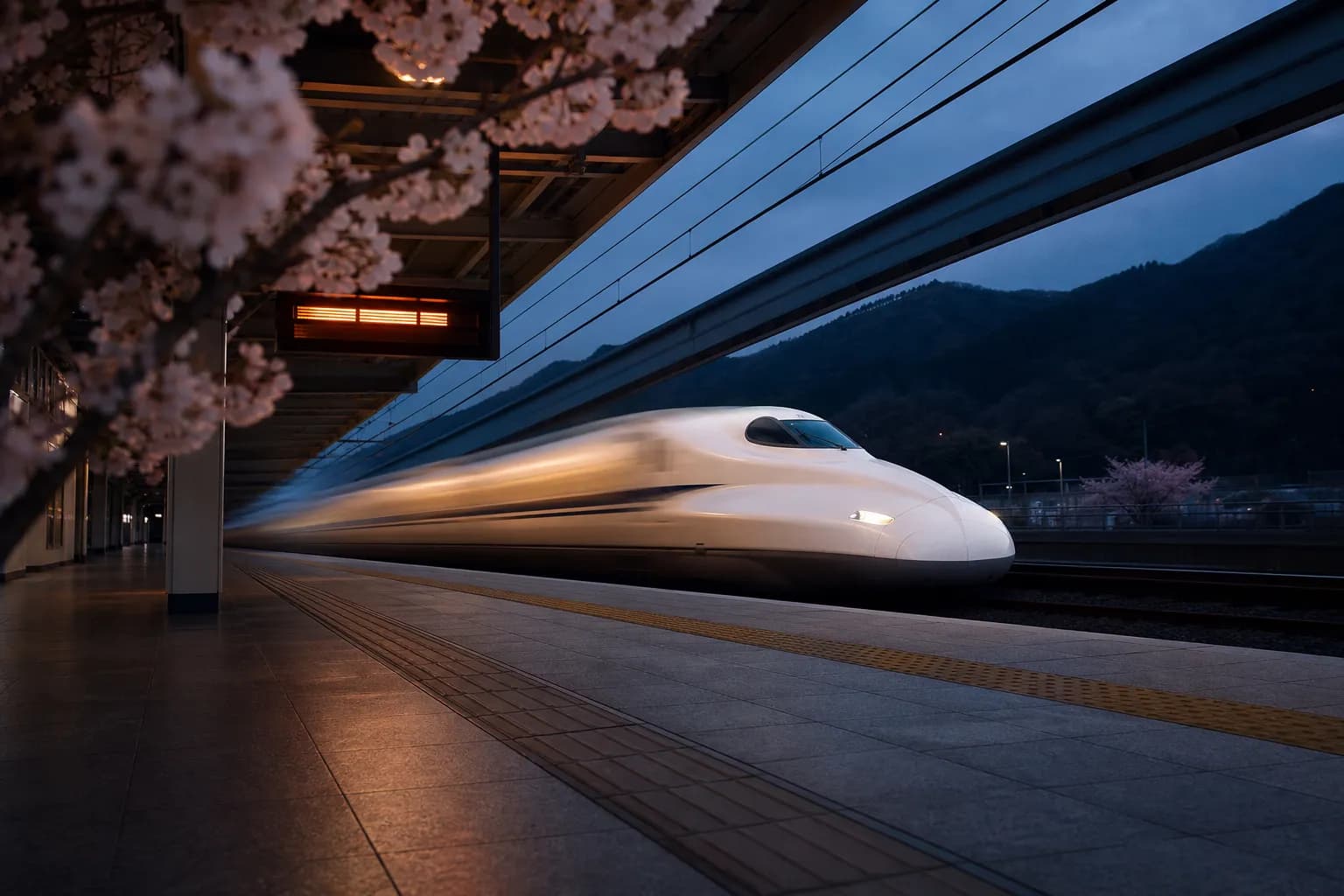
The spine of the journey: Tokyo to Nagoya in about 1 hour 40 minutes, then a short private transfer to the river.
Yes. And it is easier than the map suggests. The spine of the journey is the Tokaido Shinkansen from Tokyo to Nagoya, roughly 1 hour 40 minutes on a Nozomi. From Nagoya, Gifu City is a short private transfer — about 30 to 40 minutes by car depending on traffic and your riverside destination.
The complication is the schedule of ukai itself. Boarding gathers in the early evening, and the fishing runs into the night. That pushes your return late. A same-day plan therefore hinges on one thing: catching a late Nozomi back from Nagoya so you are asleep in your Tokyo bed rather than white-knuckling the last train.
Here is how the two shapes of the trip compare.
| Consideration | Same-Day Round Trip | One Night on the Nagara |
|---|---|---|
| Total effort | Long evening; late return to Tokyo | Unhurried; sleep steps from the river |
| Best for | Tight itineraries, single free evening | Travelers who want the ayu dinner without a clock |
| Dinner timing | Compressed; eat before or after boarding | Leisurely kaiseki at a riverside ryokan |
| Contingency room | Thin — weather cancellations sting more | Generous — the town is yours regardless |
Our recommendation for first-time guests: stay the night. Ukai ends late, and a Nagaragawa onsen ryokan lets the evening breathe. But if your week is already full and Gifu is the outlier, the day trip is genuinely comfortable when the transfers are held for you and your luggage never leaves the car.
The Logistics We Quietly Handle So You Don't Have To
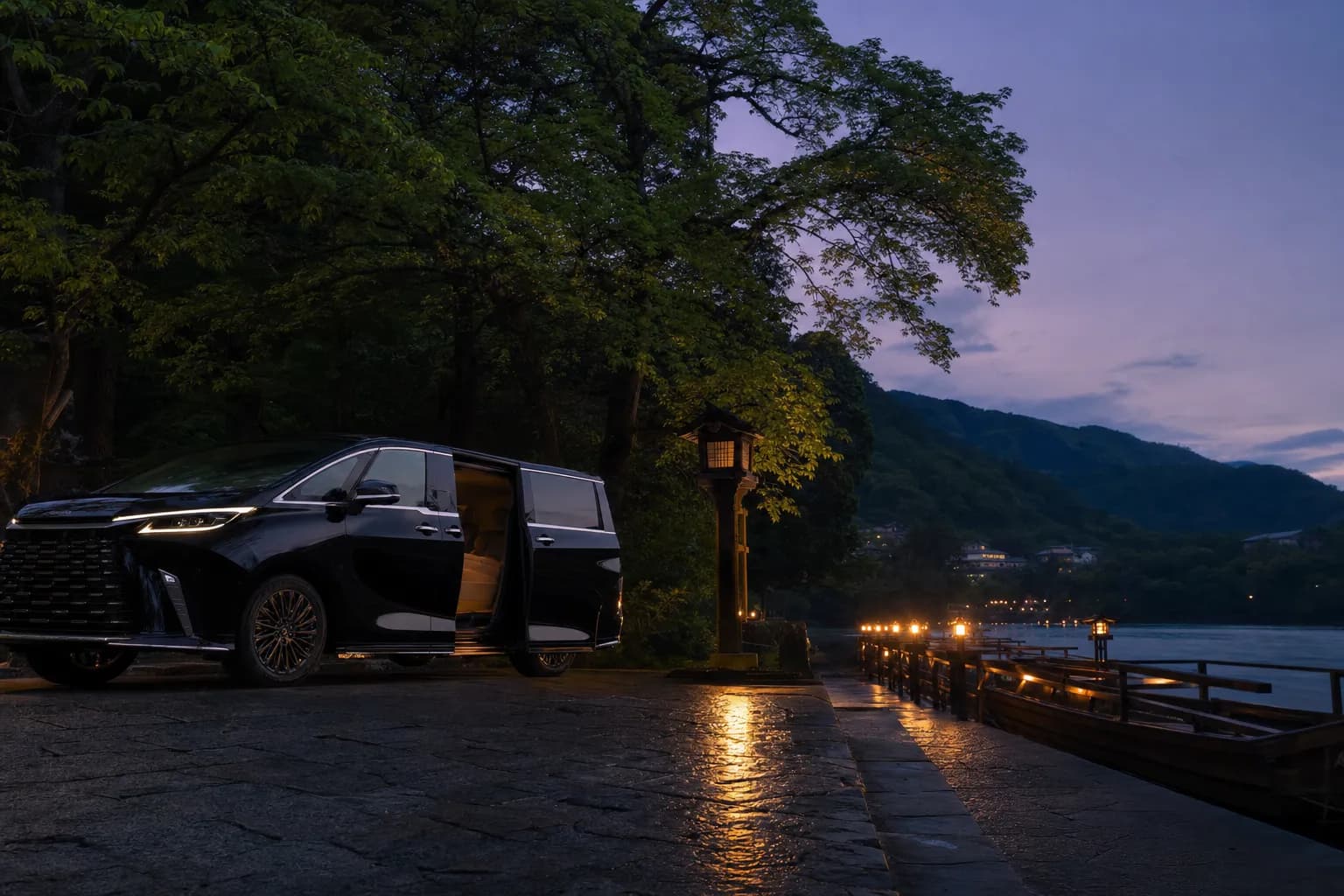
The friction in this trip is not the fishing. It is the joins between things — the platform, the car, the boarding pier, the late train home. That is where an evening either flows or frays.
Rail Timing and the Late Return
We plan the outbound Nozomi to land you in Nagoya with margin, never a sprint. On the return, we identify the latest practical departure from Nagoya so the ukai finish never becomes a race. A private chauffeur is waiting at the Gifu end of the boat, engine cool, so the transfer back to the station is a decompression rather than a scramble.
Private Transfer and Luggage
Between Nagoya and the river we use our flagship fleet — the Lexus LM 500 for couples and small parties who want a lounge on wheels, or the Toyota Executive Alphard for families. If you are mid-itinerary and carrying bags, they stay in the vehicle under our care while you are on the water. Nothing follows you onto the pier but a light layer for the river breeze.
Boarding, Positioning, and Interpretation
Gifu City's official reservation system allows online booking for both shared boats and charter (private) boats. A private boat changes the evening entirely: your own vessel, your own positioning as the fishing craft pass, and space for a bilingual guide to explain what is unfolding without leaning across strangers. Arrive before dusk, settle in, and let the light drop around you. When the torches finally sweep past close, the difference between a good seat and a private boat is the difference between watching and being inside it.
Gifu City or Oze: Choosing Your Ukai
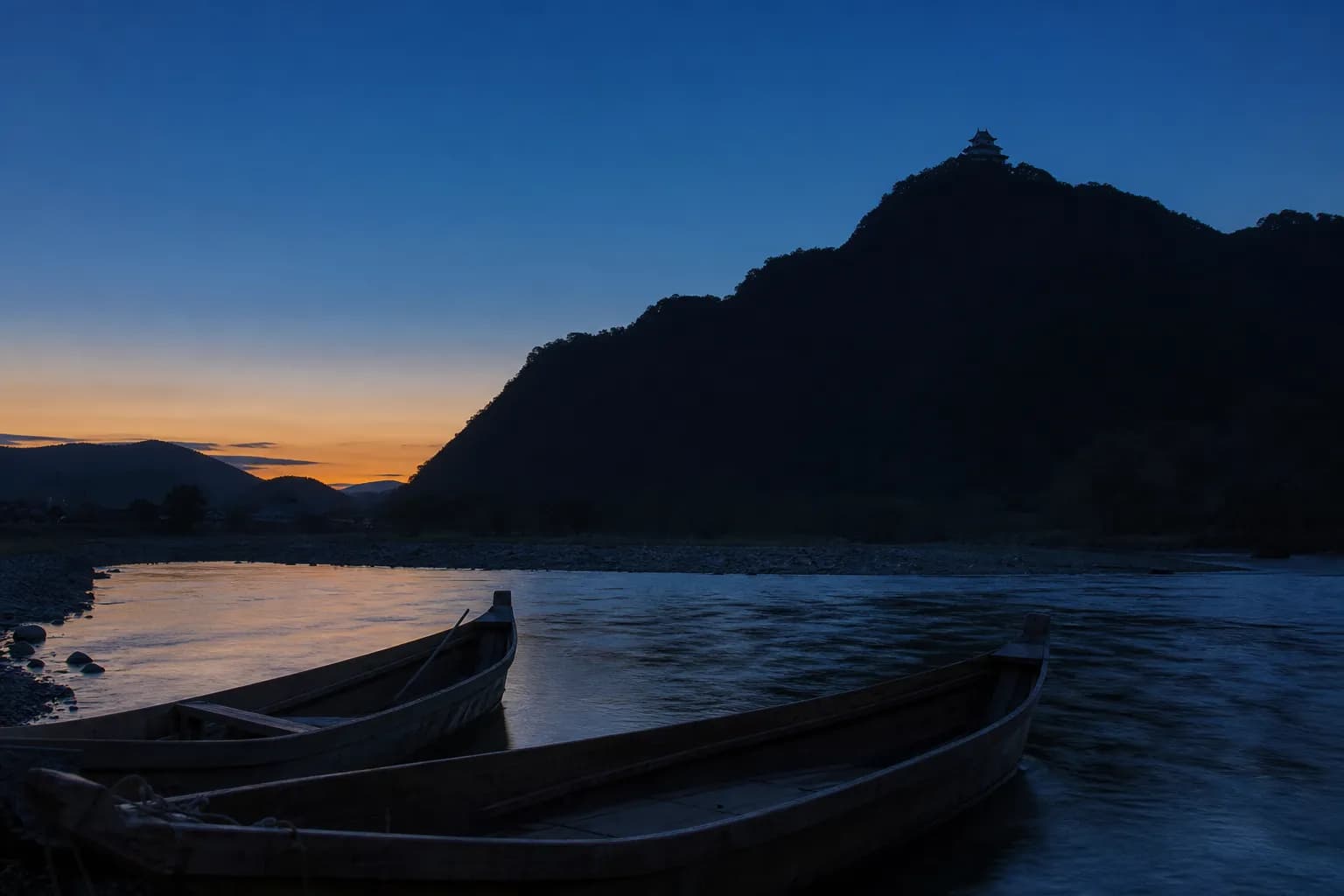
Gifu City ukai unfolds beneath the silhouette of Mount Kinka and its castle — the fuller, more cinematic setting.
There are two experiences here, not one, and they suit different temperaments.
Gifu City Ukai
The larger, better-known setting, framed by the silhouette of Mount Kinka and the castle above it. It has the fuller infrastructure — more boats, riverside dining, and, in high summer, a second nightly session. Gifu City's foreign-language municipal page notes that Noryo ukai, a second daily trip held after the standard fishing, runs between July and September when demand is greater. This is the classic, cinematic version.
Oze Ukai in Seki City
Upstream and smaller in scale, Oze ukai feels closer and quieter. The 2026 season is scheduled to begin Monday, May 11, and runs through October 15. For guests who prize intimacy over spectacle — who would rather feel the water than the crowd — Oze often lands better. Fewer boats, a tighter stretch of river, a hush that Gifu City trades for grandeur.
Quick guidance: Want the postcard — castle, fire, full theatre? Choose Gifu City. Want stillness and proximity? Choose Oze. Traveling in July, August, or September and want the calmer second session? Ask about Noryo ukai in Gifu City.
Ayu on the Table: The Gastronomy of the Season
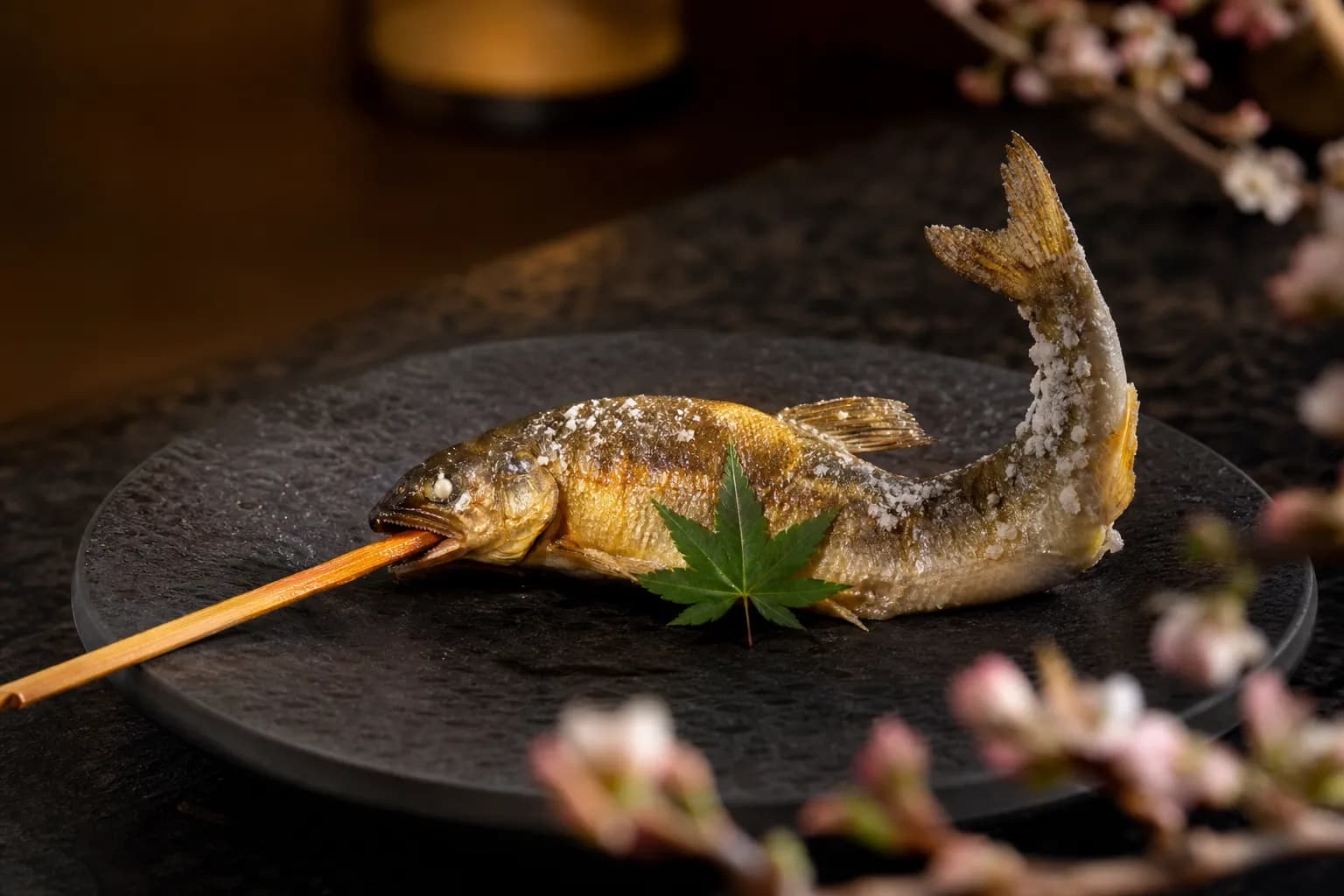
Ayu shioyaki — the sweetfish the cormorants pursue, at its summer peak, grilled slowly over charcoal.
The star of the river is also the star of the plate. Ayu, the sweetfish the cormorants pursue, is at its finest through the summer, and the Nagara River region has built its cuisine around it. The traditional treatment is shioyaki — skewered whole, salted, and grilled slowly over charcoal until the skin crisps and the flesh turns delicate and faintly bitter in the best way. Some kitchens serve it as sashimi in season; others fold it into rice or simmer it sweet.
Timing matters. On the boats themselves the emphasis is the fishing, not a full dinner service, so we generally build the meal before boarding or reserve a proper kaiseki at a riverside ryokan afterward. For the one-night plan, that after-ukai kaiseki — ayu at its peak, the river still audible outside — is often the quietest highlight of the trip. In our experience, guests remember that dinner as vividly as the torches.
When to Go, and the Nights That Book Out First
The Gifu City season broadly mirrors Oze: roughly mid-May through October 15, weather permitting. A few nights carry unusual demand and reward early planning.
- Harvest moon: Japan Guide references September 24, 2026 as a harvest-moon date in the ukai context — an evocative pairing of moonlight and firelight.
- Noryo ukai season (July–September): the second nightly session and peak visitor window; private boats disappear fastest here.
- Fireworks nights: Gifu's summer fireworks along the Nagara draw their own crowds and separate reservation windows. Aligning ukai with a fireworks evening is possible but tightens availability sharply.
One caution worth stating plainly: certain calendar dates fall outside the operating schedule each year. Because these vary, we confirm the exact night against the current official calendar before anything is locked. Assume nothing about a specific date until it is checked.
A Note on Goryo-Ukai, Without the Hype
You may read that Gifu's ukai carries imperial standing. It does, and we prefer to describe it precisely rather than dramatize it. The usho on the Nagara hold the title of Imperial Household Agency fisherman, and Goryo-ukai refers to the ceremonial catches historically presented to the imperial court. What this means for a visitor is context, not access: you are watching a craft with genuine imperial lineage. That heritage is the reason it survived at all. We think that is more compelling than any embellishment.
If the Weather Turns: The Contingency Plan
Rivers rise. Fog settles. Ukai is occasionally cancelled at short notice for safety, and on a same-day plan that can feel like a wasted evening. It need not be.
When a night is called off, our concierge pivots to what Gifu still offers well: the castle atop Mount Kinka reached by ropeway at dusk, the museums that trace the region's paper and craft traditions, or a relocated kaiseki dinner that keeps the ayu but drops the boats. For the one-night guests, a cancelled ukai simply becomes an early onsen soak and a slow dinner — hardly a loss. The point of designing an evening properly is that a change of plan is a door, not a wall.
Where This Fits in a Wider Japan Itinerary
Gifu slots neatly into a Tokyo–Kyoto arc. Because the journey runs through Nagoya, you can treat the ukai as a pivot night between the two cities: descend from Tokyo, spend the evening on the river, and continue west to Kyoto the following morning without doubling back. It pairs naturally with our Kyoto private chauffeur days and threads well into a calmer multi-day plan. For travelers already building a quiet route through the old capital, this is one worthwhile detour that most itineraries miss entirely.
Questions We're Asked Most
Is the Tokyo day trip really comfortable, or am I in for a marathon?
Comfortable, provided the transfers are held for you and the return train is planned around the ukai finish. The strain in any Gifu day trip comes from improvising the joins. Remove that and it is a long but genuinely pleasant evening.
Can I get a private boat rather than a shared one?
Yes. Gifu City's official system offers charter (private) boats alongside shared vessels. A private boat is what we recommend for the positioning, the quiet, and the room for interpretation.
Do I eat dinner on the boat?
Not a full meal, generally. We arrange dinner before boarding or a kaiseki afterward. The one-night plan makes that post-ukai ayu dinner especially relaxed.
What happens if ukai is cancelled for weather?
We shift to an alternative evening in Gifu — castle at dusk, craft museums, or a relocated dinner — and, where policy allows, address the reservation contingencies. No night is left empty.
Gifu City or Oze — which should I choose?
Gifu City for grandeur and the castle backdrop; Oze in Seki City for intimacy and quiet. Both are the real tradition.
Why Choose Japan Royal Service
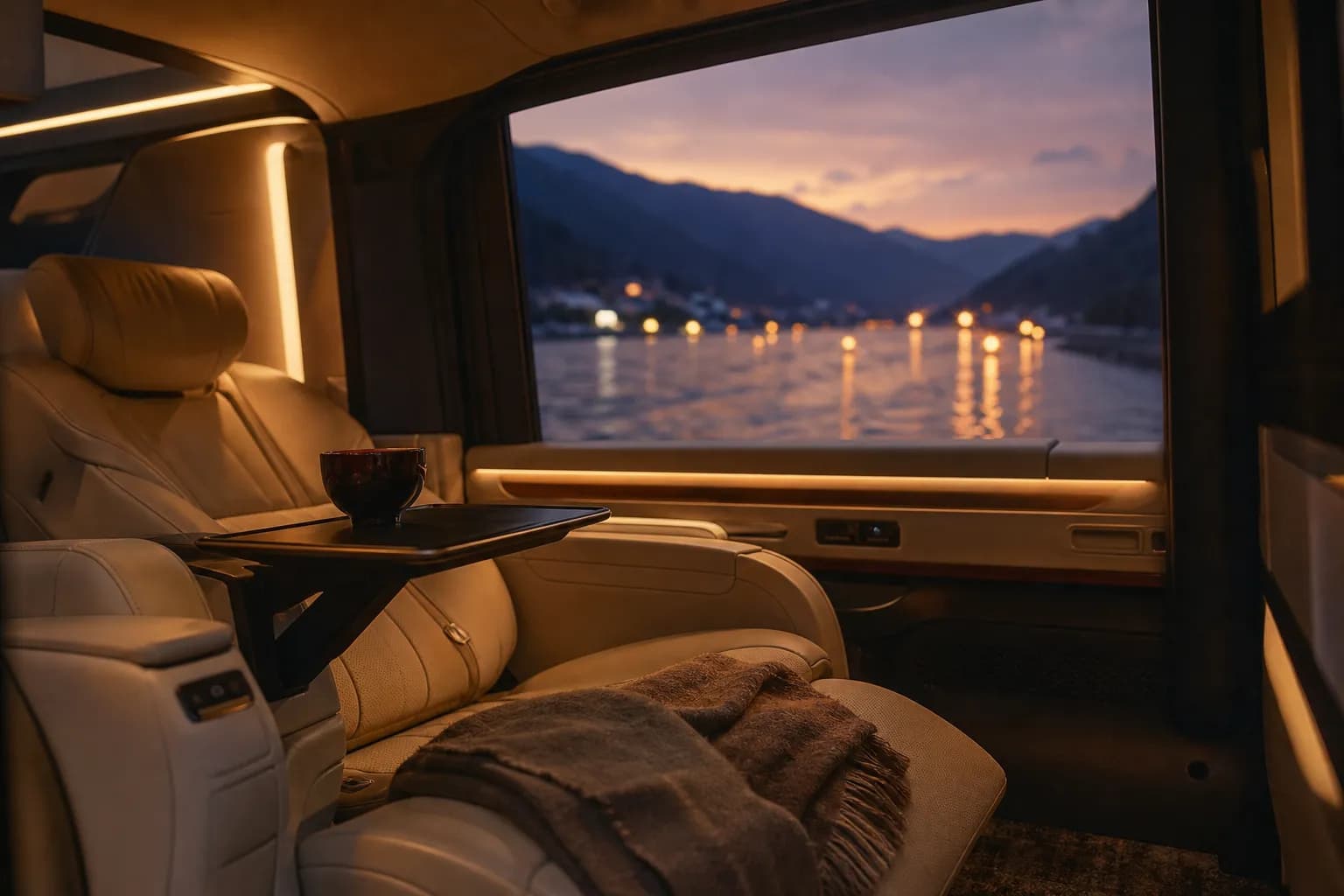
A private chauffeured vehicle waits cool at the pier — the friction removed so the evening simply flows.
What we sell on this trip is not the fishing — that belongs to the river and the men who have kept it alive for thirteen centuries. What we offer is the removal of friction around it. The Nozomi timed with margin. The private car waiting cool at the pier. Your luggage untouched in the vehicle. A bilingual guide who explains the usho's every movement without you straining to hear. The late train home already secured, and a considered fallback if the river closes.
Our team at Japan Royal Service works only with real, verifiable experiences, and we describe availability and booking pathways as information — the private coordination happens quietly, after you reach us. Discretion runs through everything: your identity, your itinerary, your evening, all kept to ourselves. For guests who value the difference between watching a tradition and being unhurriedly inside it, that quiet care is the whole point.
To plan a private Gifu ukai evening — same-day from Tokyo or a single night on the Nagara — reach our team privately via WhatsApp or LINE, or at /contact. Tell us your dates and we will shape the evening around them.