
目次
- 01What Kombu-to-Men Kiichi Actually Is
- 02Why It Is Not Vegetarian — The Ingredient Truth
- 03Why Dietary Questions Go Wrong In Japan
- 04How Our Concierge Verifies Before You Ever Sit Down
- 05If Kiichi Isn't Right: Kombu Culture And Shojin Alternatives
- 06Frequently Asked Questions
- 07Why Choose Japan Royal Service
You have read about it. A hushed second-floor counter above a centuries-old kombu shop in Kyoto, a reservation-only ramen served course by course, everyone starting at the same moment. It sounds like a rare afternoon. It is. But if you keep a vegetarian or pescatarian table, one question needs a straight answer before you book.
Is Kombu-to-Men Kiichi vegetarian? No. Not by default. And the reasons are worth understanding, because they reveal exactly how dietary requests go sideways in Japan — even at a place built around kombu, of all things.
Our team at Japan Royal Service handles this quietly for clients every week. Below is the honest picture, the ingredient-level facts, the Japanese phrases that actually work, and the alternatives worth your afternoon if Kiichi isn't the right fit.
What Kombu-to-Men Kiichi Actually Is
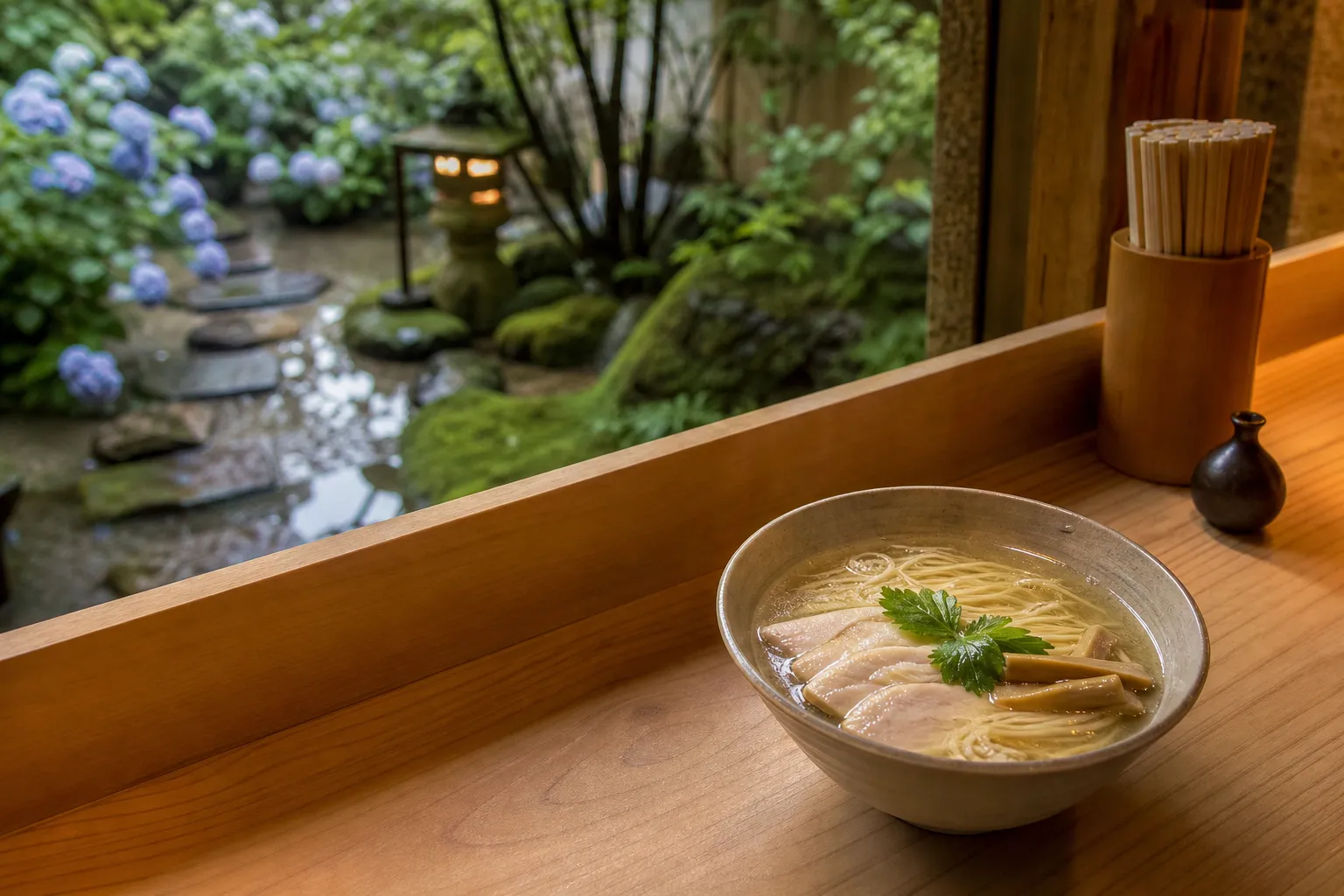
Kombu-to-Men Kiichi (昆布と麺 喜一) sits on the second floor of Itsutsuji no Kombu, a long-established kombu merchant in Kyoto's Kamigyo Ward. The address is Nishitsujihigashimachi 74-2. The shop below has sold kelp for generations; the counter above turns that expertise into a bowl.
It carries a listing in the Michelin Guide for Kyoto. That credential draws travelers. What draws them further is the format: fully reservation-based, course-style, with all guests beginning together. You do not wander in. You arrive at a set time and the meal unfolds in sequence.
There is also the "one-kombu" custom. To experience the ramen upstairs, guests are asked to purchase at least one item from the kombu shop on the ground floor. A gentle rule. It ties the bowl to the house that makes it.
The style is deliberately clean. No oil or fat. No soy sauce in the ramen. The broth is delicate rather than rich — a clear, restrained expression of umami. Beautiful. And this is precisely where the confusion begins.
Why It Is Not Vegetarian — The Ingredient Truth
A soup with no oil and no soy sauce sounds like it could be plant-based. It is not.
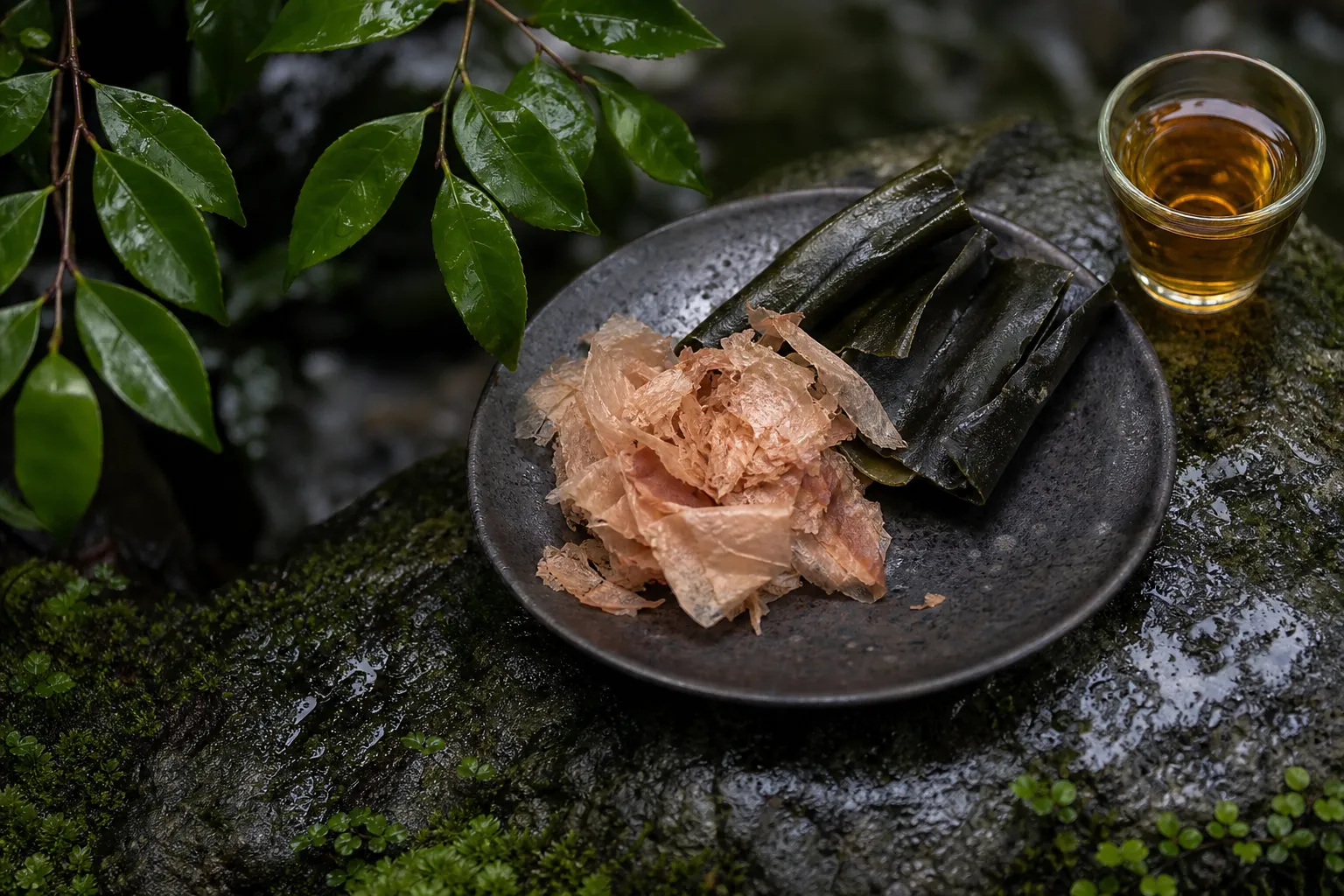
According to detailed 2026 reporting, the broth blends kombu with katsuobushi — bonito flakes — and shellfish (貝). Both are animal-derived. The bowl is then topped with domestic chicken chashu and bamboo shoots. So even the visible garnish carries meat.
Key fact: Kombu-to-Men Kiichi's broth contains bonito and shellfish, and the ramen is topped with chicken. It is not vegetarian, and the base is not pescatarian-neutral either. Kombu on the label does not make the dish plant-based.
This matters for a subtle reason. Many travelers assume that a kombu-focused shop must serve a vegetarian broth. Kombu is a sea vegetable, after all. But in Japanese cooking, kombu is almost always paired with katsuobushi to build dashi. The kelp is the foundation. The fish is the partner. The two arrive together by tradition.
So the presence of kombu tells you nothing reassuring about a vegetarian outcome. If anything, it signals a dashi tradition where fish is nearly guaranteed.
A Quick Read By Dietary Profile
Here is where different tables land, based on the verified ingredients.
- Strict vegetarian (no fish, no meat): Not suitable — broth has bonito and shellfish; topping is chicken
- Pescatarian (fish yes, meat no): Broth is fish-based, but the chicken topping is meat — confirm whether it can be omitted
- No shellfish (allergy): Caution — shellfish is in the broth itself, not just as a garnish
- Vegan: Not suitable
Whether any modification is possible is not something to assume. A course-timed counter has little room to improvise, and we would never promise a change on your behalf. The point is to ask precisely, in advance, before a reservation is made.
Why Dietary Questions Go Wrong In Japan
This is the part most guides skip. And it is the reason a careful traveler still gets caught out.
In Japan, dashi is treated as a baseline. It is not an ingredient you add — it is the water everything starts from. So when you ask "is this vegetarian?" a kind server may say yes while thinking only of the visible toppings. The fish stock underneath does not register as "an ingredient" in the same way it might for you.
Dish-level questions fail here. Ingredient-level questions work.
Do not ask whether a dish is vegetarian. Ask whether the broth contains bonito, whether it contains shellfish, whether the topping is meat. Specific. Component by component. That is the difference between a comfortable meal and an awkward surprise halfway through a course.
The Japan National Tourism Organization publishes a dedicated vegetarian traveler guide and points to the Japan Vegetarian Society's restaurant sticker system. Useful tools. But labels have limits — a "vegetarian-friendly" sticker rarely accounts for the invisible dashi problem, so structured questions remain your real safeguard.
Japanese Phrases Worth Showing Staff
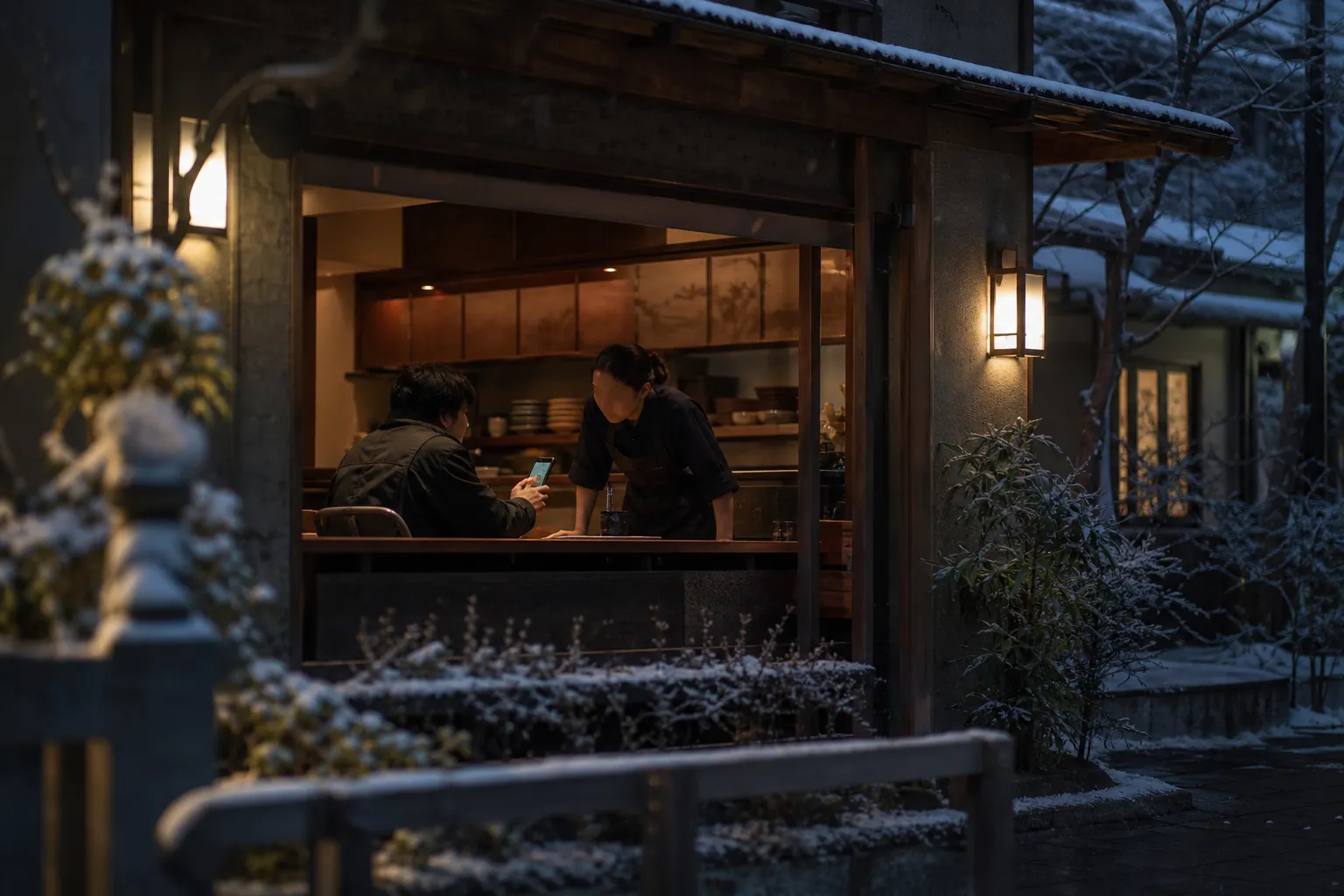
Show these on your phone. Written Japanese removes the guesswork, and it lets kitchen staff answer with certainty rather than politeness.
- だしに鰹節(かつおぶし)は入っていますか? — Does the broth contain bonito flakes?
- だしに貝(かい)は入っていますか? — Does the broth contain shellfish?
- 肉(にく)や鶏肉(とりにく)は使っていますか? — Do you use meat or chicken?
- 私はベジタリアンで、魚と肉を食べません。 — I am vegetarian; I do not eat fish or meat.
- アレルギーがあります。貝は絶対に食べられません。 — I have an allergy. I absolutely cannot eat shellfish.
A printed diet card in Japanese, carried in the wallet, does the same job at any counter. For guests with allergies rather than preferences, the word for allergy — アレルギー — signals a firmer line than a lifestyle choice, and Japanese kitchens tend to treat it with real gravity.

How Our Concierge Verifies Before You Ever Sit Down
Beautiful food should never come wrapped in uncertainty. That is the whole idea behind how we work.
In our experience, the failure point is almost always the gap between what a traveler asks and what a kitchen hears. So our concierge closes that gap before a table is confirmed. We do this in the guest's own language first — English, Japanese, Thai, or Filipino — so nothing gets lost in a rushed translation at the counter.
Our pre-trip dietary consultation covers the quiet details: broth base, hidden extracts, whether a topping is fixed or flexible, and whether a reservation-only, course-timed venue like Kiichi can accommodate a request at all. When a venue cannot, we say so plainly rather than gambling with your afternoon.
We put the questions to a restaurant directly and in precise Japanese, then relay the honest answer back. If Kiichi's course structure leaves no room for your table — a real possibility at a simultaneous-start counter — we bring you a curated alternative rather than a shrug. Never a false promise about someone else's kitchen.
If Kiichi Isn't Right: Kombu Culture And Shojin Alternatives
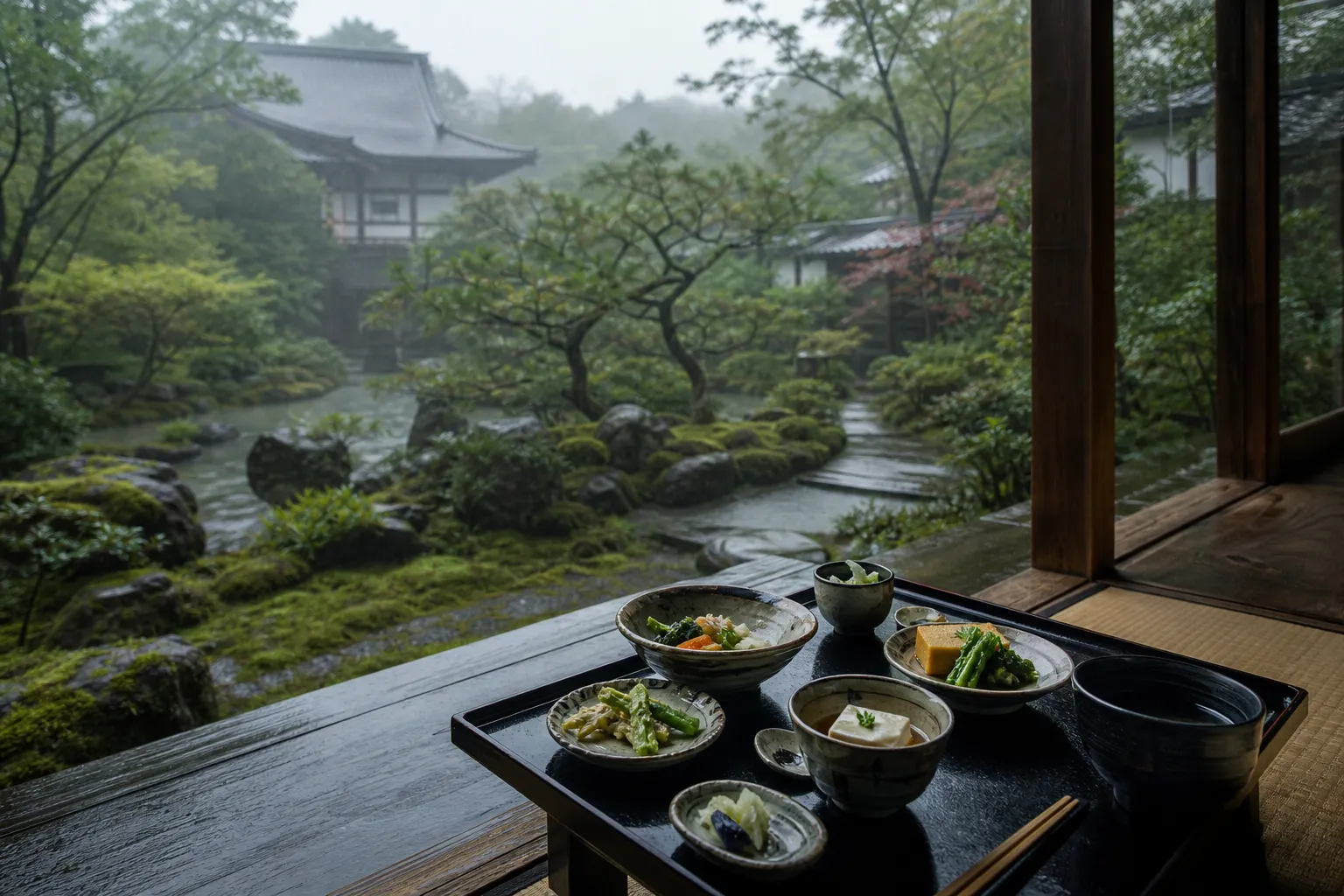
The pull of Kiichi is really the pull of kombu itself. Good news: you can meet that story without the fish.
The Kombu Shop Below
Itsutsuji no Kombu, the ground-floor merchant, is a destination in its own right. The house offers kombu-water tasting and demonstrations such as oboro-kombu shaving — the fine, cloud-thin shavings that show what real kelp craft looks like. This is shokunin work you can watch and taste. A quiet, restrained pleasure, and one that carries no dietary asterisk.
Standing at that counter, breathing the sea-mineral scent of aged kelp, you understand the ingredient far better than any bowl of ramen would teach you.
Shojin-Ryori For Strict Vegetarian Tables
For a genuinely plant-based meal in Kyoto, the honest path is shojin-ryori — the Buddhist temple cuisine developed over centuries in Japan's monastic kitchens. It is vegetarian by design and philosophy, not by modification. Kyoto, with its deep temple heritage, is one of the finest cities in the country to experience it.
Here the dashi is built from kombu and shiitake rather than fish. The seasoning is measured, the presentation spare, the whole meal an exercise in restraint that sits close to wabi-sabi. For a traveler who has been fighting hidden dashi at every turn, it is a genuine relief. Nothing to interrogate. Nothing to fear.
Our concierge can shape an afternoon that pairs the kombu-shop visit with a verified shojin meal, so the through-line of Kyoto's food culture stays intact even when Kiichi's bowl is off the table.
Frequently Asked Questions
Is Kombu-to-Men Kiichi vegetarian?
No. The broth contains bonito flakes and shellfish, and the ramen is topped with chicken chashu. It is not vegetarian, and the base is not pescatarian-neutral either.
The broth is kombu-based — doesn't that make it plant-based?
No. In Japanese cooking, kombu is almost always paired with katsuobushi (bonito) to make dashi. At Kiichi, the broth blends kombu with bonito and shellfish, so the kelp foundation does not make the soup vegetarian.
Can the chicken topping be removed?
Possibly, but never assume it. Kiichi is reservation-based and course-timed, which leaves little room to improvise. Any modification must be confirmed directly and in advance — which is exactly what a pre-booking dietary check is for.
Is Kiichi safe for a shellfish allergy?
Treat it with caution. Shellfish is in the broth itself, not merely a garnish, so it cannot simply be lifted off. Guests with an allergy should confirm current ingredients and the kitchen's cross-contact policy before booking, and may be better served elsewhere.
What should a vegetarian traveler do instead in Kyoto?
Visit the kombu shop downstairs for tasting and a shaving demonstration, then arrange a shojin-ryori meal — Buddhist temple cuisine that is vegetarian by tradition, built on kombu-and-shiitake dashi rather than fish.
Why Choose Japan Royal Service
Anyone can send you a restaurant link. Far fewer will tell you, before you commit, that the bowl you have been dreaming about contains bonito, shellfish, and chicken — and then build you a better afternoon.
That is the work we care about at Japan Royal Service. Discretion in how we handle your requests. Precision in how we read a menu. And the plain honesty to say when a venue cannot serve your table, rather than letting you discover it mid-course. We speak with kitchens in their language, confirm ingredients at the component level, and hold curated alternatives ready — from a kombu master's counter to a verified shojin meal in the old capital.
Our private chauffeured days in Kyoto carry the same care from the car door to the table: short transfers, quiet arrivals, and a concierge who has already asked the questions you would have had to ask yourself.
If you keep a vegetarian, pescatarian, or allergy-conscious table and want Kyoto's finest food without the second-guessing, reach our concierge through the contact form or WhatsApp at japanroyalservice.com. Tell us how you eat. We will design the rest with quiet certainty.