目次
- 01Ukai: The Night Ritual At The Heart Of Curated Japan
- 02Lanterns On Water: Tokyo's Imperial Moat And Beyond
- 03The Onsen Town After Dark: Where The Evening Truly Belongs
- 04Private River Culture, Done Correctly
- 05Pairing The Night With The Right Stay
- 06Frequently Asked Questions
- 07Why Choose Japan Royal Service
Most itineraries end at dinner. That is the mistake.
In Japan, the evening is not an afterthought — it is the quiet centre of the day. The bath comes first, then the meal, then a slow walk under lantern light while the river carries the last warmth of summer past your feet. Our team at Japan Royal Service has spent years choreographing these hours for couples and small families who have already seen the temples, ridden the bullet train, and photographed Mount Fuji. What they want now is different. They want the part of Japan that only appears after dark.
This is a guide to that Japan. Cormorant fishing on rivers older than most nations. Lanterns floating on an imperial moat. Onsen towns lit by bamboo lamps long after the day-trippers have gone home. We treat the night as an itinerary in its own right — and we plan it with the same care most operators reserve for daylight.
Ukai: The Night Ritual At The Heart Of Curated Japan
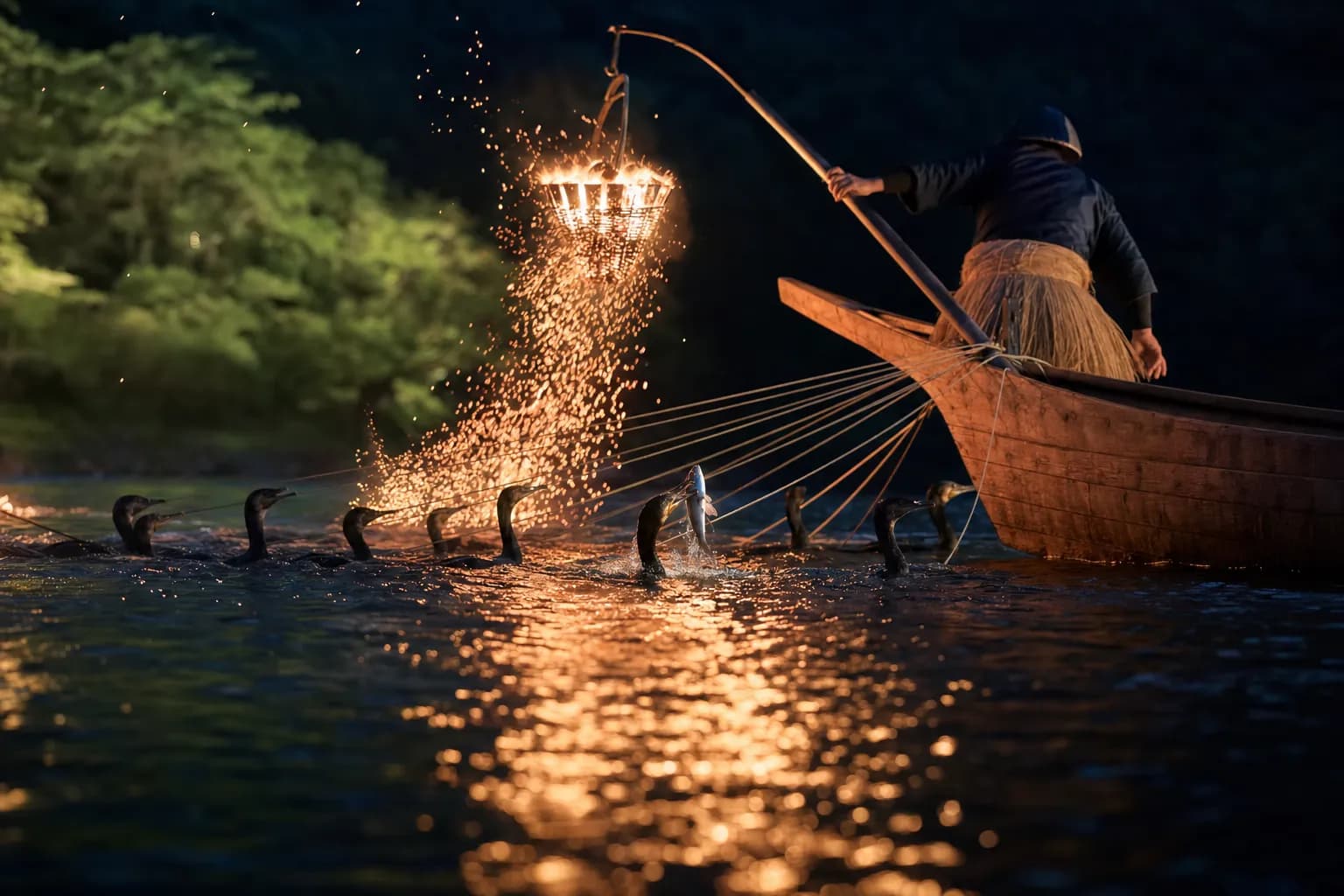
Ukai on the Nagara River, a tradition practised for over 1,300 years.
Start with fire on water.
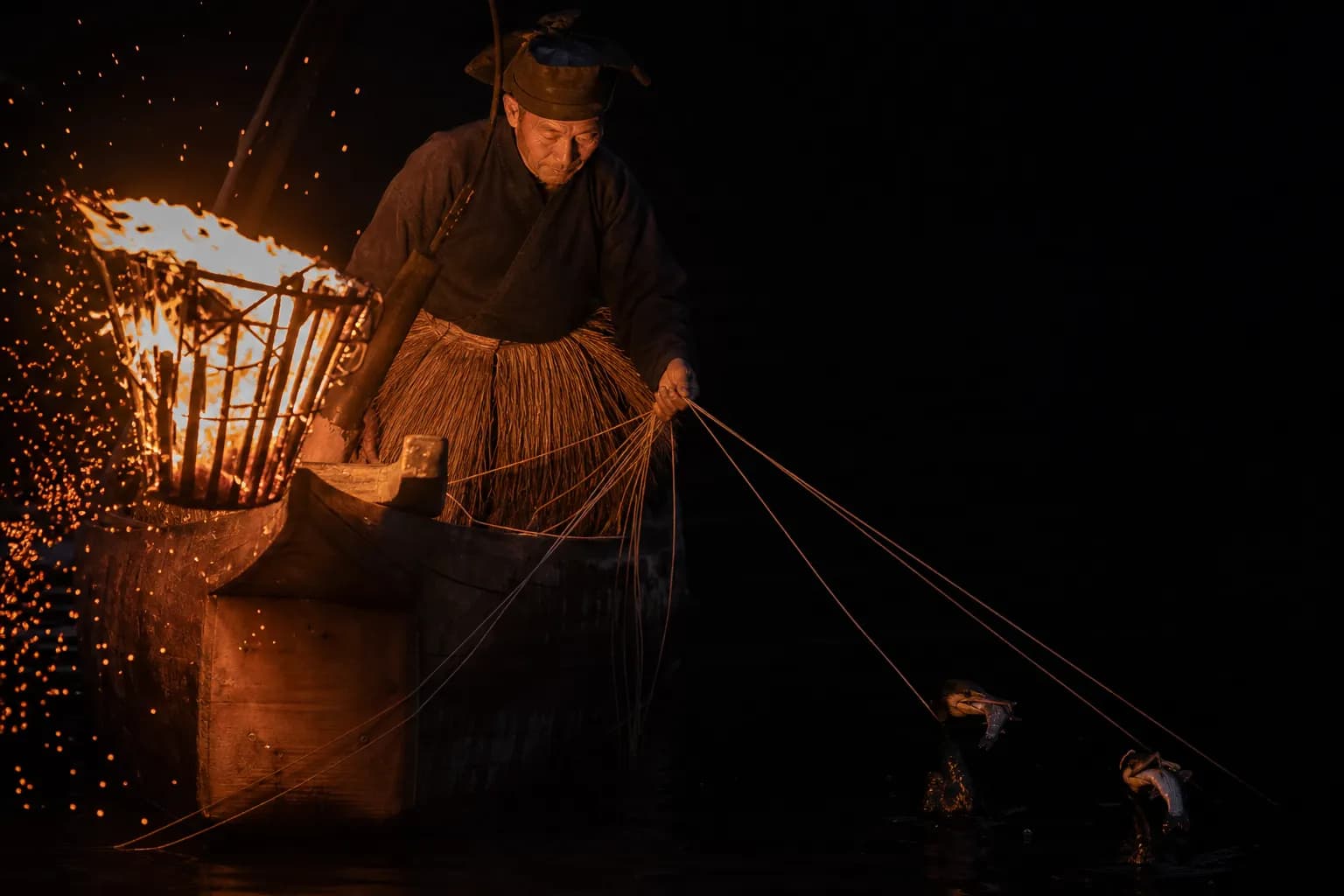
Ukai — cormorant fishing — is the anchor of any serious Japan-at-night itinerary, and it is the experience competitors describe but rarely stage well. Trained cormorants dive under torchlight to catch ayu, the sweetfish of early summer. The method is ancient. It survives on roughly a dozen rivers today, performed only in the warmer months, and watching it feels less like tourism than like being lent a thousand years of memory for an evening.
The most storied setting is the Nagara River in Gifu City, where ukai has been practised for more than 1,300 years. It is one of Japan's best-known ukai locations, and for good reason. As dusk settles, fishermen in traditional dress guide their birds while braziers throw sparks across black water. A published charter viewing plan for the Nagara River runs its 2026 season from May 11 to October 15 (excluding September 23), with fireworks around 19:45 signalling that the boats are about to begin.
Nearby, the Oze Ukai in Seki City opens its 2026 season on May 11. In Kyoto Prefecture, the Uji River holds its own ukai on summer nights, a gentler counterpart to Gifu's grandeur and easily woven into a Kyoto stay. Each river has a different temperament. Choosing the right one for your party — and the right viewing format — is the real craft.
Shared Boat Or Private Charter?
This is the decision that shapes the whole evening. Public viewing boats are atmospheric and communal. A private charter is something else entirely: your own vessel, your own pace, a curated dinner served on the water, and no negotiation over where to sit or when to leave.
- Privacy
- Shared Viewing Boat: Communal seating
- Private Charter: Your party only
- Dining
- Shared Viewing Boat: Simple or bring-your-own
- Private Charter: Curated multi-course, dietary needs planned in advance
- Pacing
- Shared Viewing Boat: Fixed schedule
- Private Charter: Flexible, unhurried
- Best for
- Shared Viewing Boat: First taste of ukai
- Private Charter: Anniversaries, honeymoons, discretion
For couples marking something — an anniversary, a first trip together, a milestone — we lean toward the private option. The difference is felt in the silences.
Lanterns On Water: Tokyo's Imperial Moat And Beyond
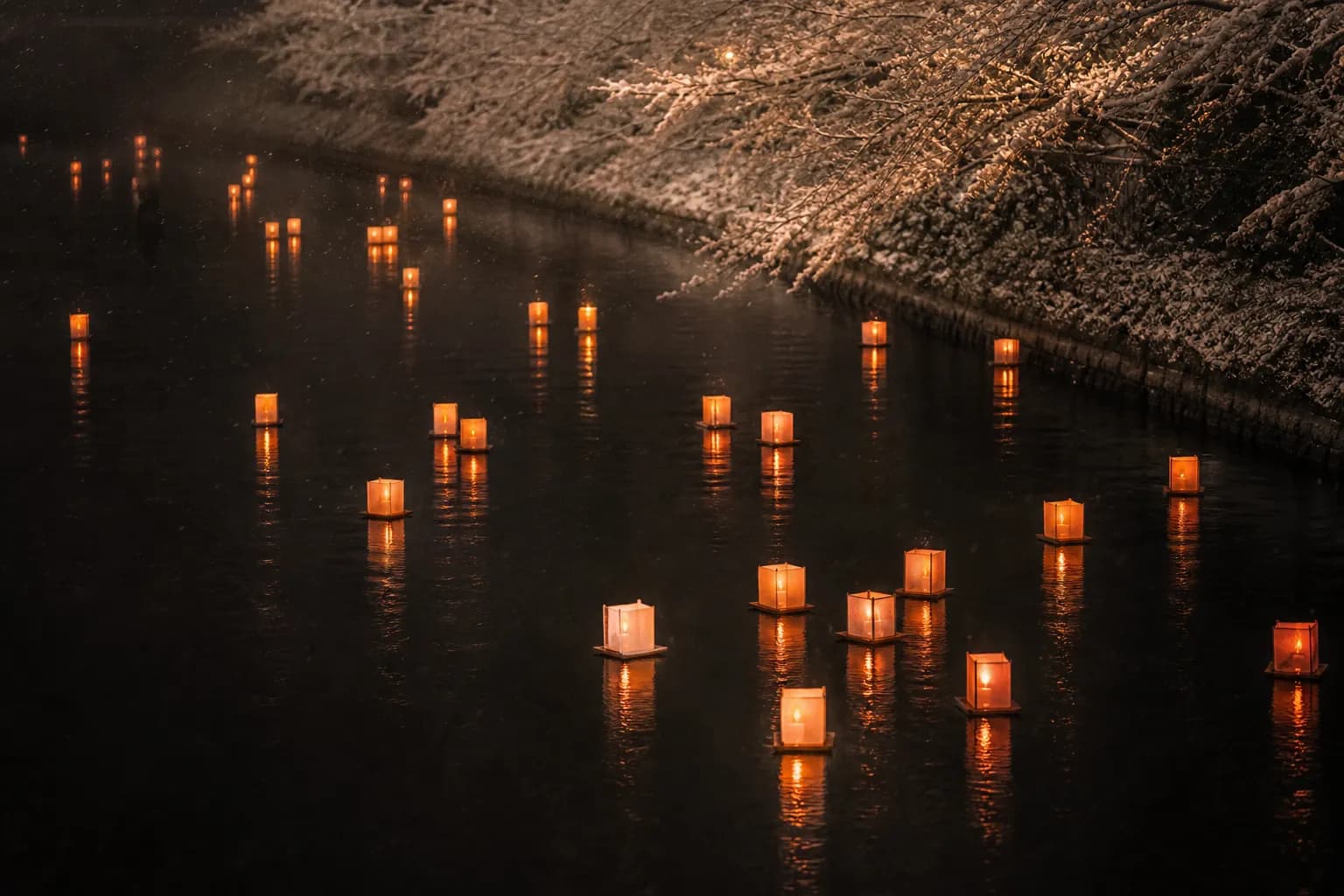
Around 2,000 lanterns drift along Tokyo's Imperial Palace moat each June.
If ukai is fire, lanterns are its softer sibling.
In central Tokyo, the Chidorigafuchi Lantern Floating Festival takes place along the Imperial Palace moat. The 2026 edition runs from Friday, June 5 to Tuesday, June 16, with around 2,000 lanterns set adrift on the water beside cherry trees that were, months earlier, the city's most photographed blossoms. An accommodation plan pairing a stay with lantern floating and a boat ride is available again in 2026. For guests who want cultural depth without leaving the capital, this is rare — a scene of genuine stillness a short walk from glass towers.
The imperial setting matters. Few night experiences in Tokyo carry this weight of place. Watching lanterns drift beside the palace grounds, with the moat reflecting each small flame, is the kind of quiet spectacle our clients remember longer than any rooftop bar.
Further afield, the lantern tradition takes bolder forms. The Owari Tsushima Tenno Festival in Aichi Prefecture sends five lantern-lit boats onto the river, each raising more than 500 lanterns; on the night festival, the lamps are lit around 6:30 pm before the boats depart later in the evening. Aichi is routinely skipped by luxury itineraries, which is precisely why we like it. Paired with a refined Nagoya base and private transport, it becomes a river-night spectacle almost no other traveller in your circle will have seen.
Winter Lanterns For The Contrarian Traveller
Not every lantern night belongs to summer. In the mountains of Tochigi, Yunishigawa Onsen stages Heike Akari, a bamboo light festival that the Japan National Tourism Organization suggests pairing with an irori — sunken-hearth — dinner at a hot spring ryokan. Snow, bamboo lamps, and a fire-lit dinner. For travellers who want Japan at its most hushed, winter has its own vocabulary.
The Onsen Town After Dark: Where The Evening Truly Belongs
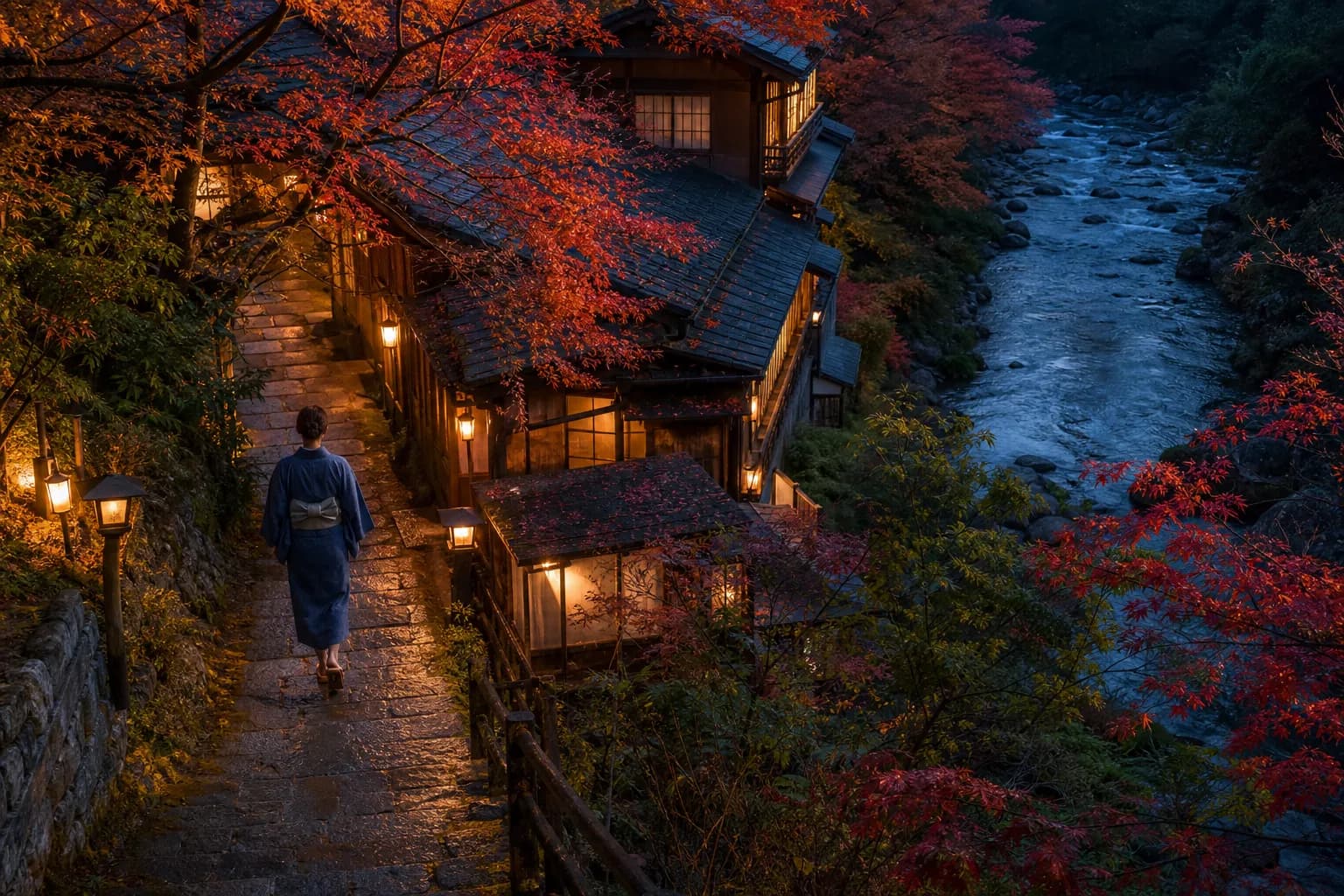
The after-dinner lantern promenade — the quiet heart of a ryokan night.
Here is the part most operators miss. The finest night in Japan often has no ticket at all.
It begins with the bath. In a good ryokan, you soak as the light fails, then dress in a yukata and step out into a town built for slow evening walking. Few places do this better than Jozankei Onsen near Sapporo, where the Natsutouro summer lantern event runs from June 1 to October 31 in 2026. Lantern-lit paths thread through the onsen town across several spots, and the Jozankei Shrine venue is reserved exclusively for guests staying overnight in the town — a small, quiet privilege that rewards those who linger rather than day-trip.
This is the emotional core of curated Japan at night: bath, meal, breeze, light. Not crowds. Not neon. A promenade after dinner, wooden geta on stone, the sound of the river beneath everything. We build entire evenings around this rhythm, and it is often the memory couples name first when they return home.
Choreographing The After-Dinner Hour
A designed evening has movement. In our experience, the sequence that works looks something like this:
- An early onsen soak, timed so the water is quietest
- A kaiseki dinner paced to the season's ingredients
- A lantern walk or river viewing while the town settles
- A final soak under stars, then silence
The broader hospitality world is catching up to this idea. Hoshino Resorts' OMO3 Tokyo Akasaka now programmes seasonal night experiences built around wind chimes and scent. The signal is clear: the evening is being designed, not left to chance. We have always treated it that way.
Private River Culture, Done Correctly
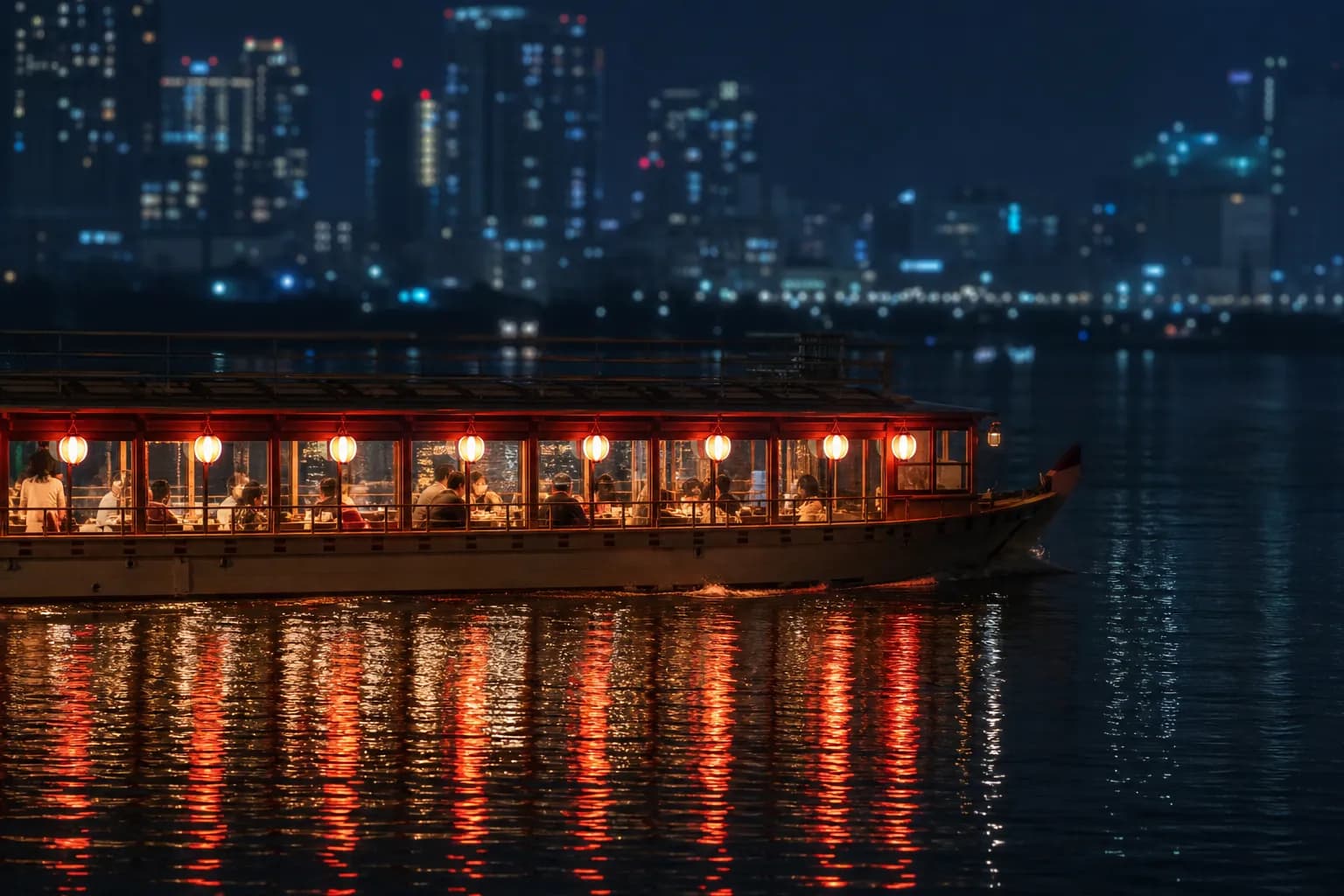
A private houseboat turns a crowded festival night into a quiet one.
River nights reward preparation. They punish improvisation.
Osaka offers a refined example. The KPG River Cruise yakatabune — a traditional houseboat — requires private reservation and serves dining and banquets while gliding along the city's rivers. During the Tenjin Festival in July, one of Japan's great river spectacles, a procession continues into the night and culminates with fireworks that begin around 19:30 and run until roughly 21:00. A private houseboat during that window is a very different experience from the packed riverbanks nearby.
But river culture asks for a little knowledge. A few realities worth understanding before you step aboard:
- Weather is the master. River events cancel or shift for rain and high water. A rigid plan is a fragile plan. We always hold a contingency.
- Dress for the water. Evenings on a river turn cool even in summer. Boats can be low and traditional; comfortable footwear matters more than formality.
- Photography has etiquette. During ukai especially, flash disturbs the birds and the fishermen. Discretion is expected.
- Dietary needs must be planned early. Boat dinners are prepared in advance. Late requests rarely land well; early ones are handled with grace.
Key fact: The Nagara River ukai charter window for 2026 is May 11 to October 15, with September 23 excluded. Book viewing dates well ahead — peak summer weekends fill first, and weather can reshape any single evening.
Pairing The Night With The Right Stay
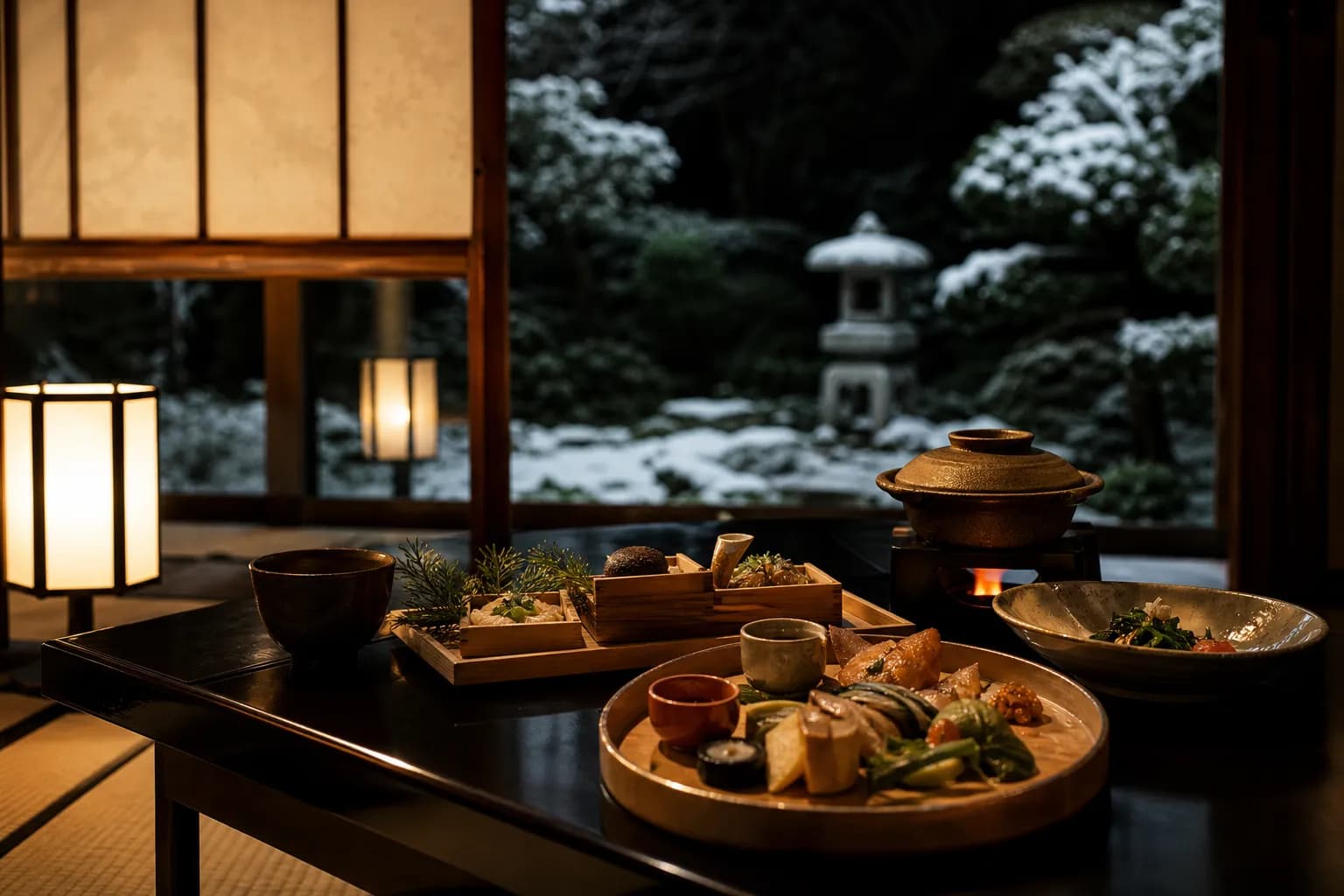
Sleeping where the night happens means the spell is never broken.
A river spectacle deserves a bed nearby. The proximity of your ryokan or hotel decides whether the evening ends in calm or in a long, tired transfer.
Japan's new flagship hotels — Fairmont Tokyo (opened July 2025), Janu Tokyo in Azabudai Hills, JW Marriott Hotel Tokyo, and in Osaka the Four Seasons and Waldorf Astoria — give urban river nights a serene base. But a hotel, however fine, is only a platform. What turns it into a private world is the routing around it: a discreet exit, a chauffeur waiting, a quiet room facing away from the street.
For onsen nights, a traditional ryokan close to the lantern paths is the correct choice. Sleeping where the event happens means you never break the spell to travel. That is the whole point of Jozankei's guest-only shrine and Chidorigafuchi's stay-and-float plan — the night belongs most fully to those who stay.
Frequently Asked Questions
When Is The Best Season For Cormorant Fishing In Japan?
Ukai is a summer tradition. The Nagara River charter season in Gifu runs May 11 to October 15 in 2026 (excluding September 23), and the Oze Ukai in Seki City opens May 11, 2026. Early summer, when the ayu are at their prime, is a favourite window.
Can I Watch Ukai On A Private Boat Rather Than A Shared One?
Yes. Published charter viewing plans exist for the Nagara River, offering a private vessel and curated dining on the water. This is the format we most often recommend for honeymoons and anniversaries, where privacy and pacing matter.
What Are The Best Lantern Festivals For Luxury Travellers In 2026?
Three stand out: the Chidorigafuchi Lantern Floating Festival in Tokyo (June 5 to June 16, 2026, around 2,000 lanterns beside the Imperial Palace moat), the Owari Tsushima Tenno Festival in Aichi (lantern boats raising over 500 lanterns), and the Jozankei Natsutouro lantern walk near Sapporo (June 1 to October 31, 2026).
Do I Need To Stay Overnight To Enjoy These Night Events?
Often it helps, and sometimes it is required. The Jozankei Shrine venue during Natsutouro is exclusively for guests staying in the onsen town, and Chidorigafuchi offers an accommodation plan that includes lantern floating and a boat ride. Staying nearby also lets you avoid a long night-time transfer.
What Happens If The Weather Cancels A River Event?
River and boat events can cancel for rain or high water. A well-planned itinerary always carries an alternative for the evening. Our coordinators build contingencies into every river night so the experience shifts rather than collapses.
Why Choose Japan Royal Service
Any traveller can find a lantern festival on a calendar. What is harder — far harder — is turning a scattered list of dates into one seamless evening that feels privately owned.
That is the work we do. Our team at Japan Royal Service treats the night as its own itinerary: the soak timed to the light, the charter secured to the right river, the private chauffeured transport waiting so no evening ends in a scramble for a taxi. We build each tailor-made itinerary around your party's pace, and we handle the details — dietary planning, weather contingencies, photography etiquette on the water — before you ever notice they existed. Our concierge speaks English, Japanese, Thai and Filipino, and our first commitment is discretion. Your identity and your itinerary stay entirely private.
We do not sell a fixed package of the night. We compose one, for you, around the rivers and lanterns that suit the season you travel.
To plan a curated Japan night — cormorant fishing, lantern floating, or a slow onsen evening — reach our team privately via WhatsApp or LINE, or contact us here.