目次
- 01Why 2026 Is Different: The New Rules, Plainly Explained
- 02The Honest Physical Journey: Altitude, Weather, And Pacing
- 03Essential Gear: What Actually Matters
- 04Which Side Fits You? A Quick Decision Table
- 05The Pilgrimage Beneath Your Feet
- 06Getting There: The 2026 Access Logistics
- 07Recovery: The Part Most Climbers Forget
- 08Frequently Asked Questions
- 09Why Choose Japan Royal Service
Fuji humbles people. Not because the trail is technical — it isn't — but because the mountain rewrites its own weather in twenty minutes, and because the last stretch to the summit is a slow, breath-thinning negotiation with 3,776 meters of altitude. Most first-time climbers underestimate one of those two things. Sometimes both.
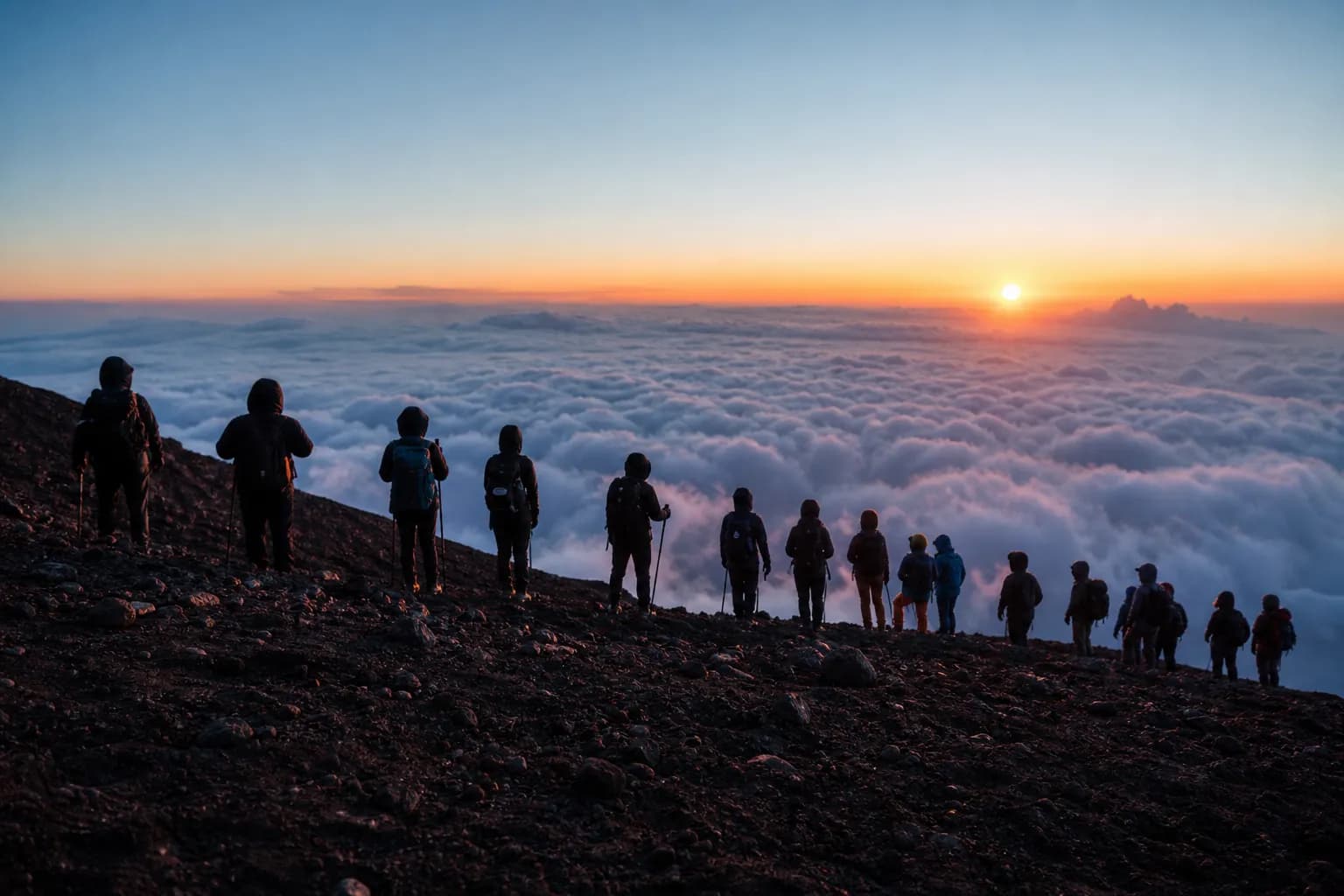
Our team at Japan Royal Service has watched confident, marathon-fit executives arrive at the Yoshida trailhead with the wrong jacket and a plan built on optimism. We have also watched calm, well-briefed guests reach the summit before dawn, wrapped in silence, and stand there as the horizon turned copper. The difference is rarely fitness. It is preparation, pacing, and — new for 2026 — quiet compliance with a set of rules that catch the unprepared off guard.
This is the guide we wish every guest read before setting a single boot on the volcanic scree. It covers the 2026 access rules, the honest physical challenge, gear that actually matters, and how to build a recovery plan that turns a punishing climb into a memory you'd repeat.
Why 2026 Is Different: The New Rules, Plainly Explained
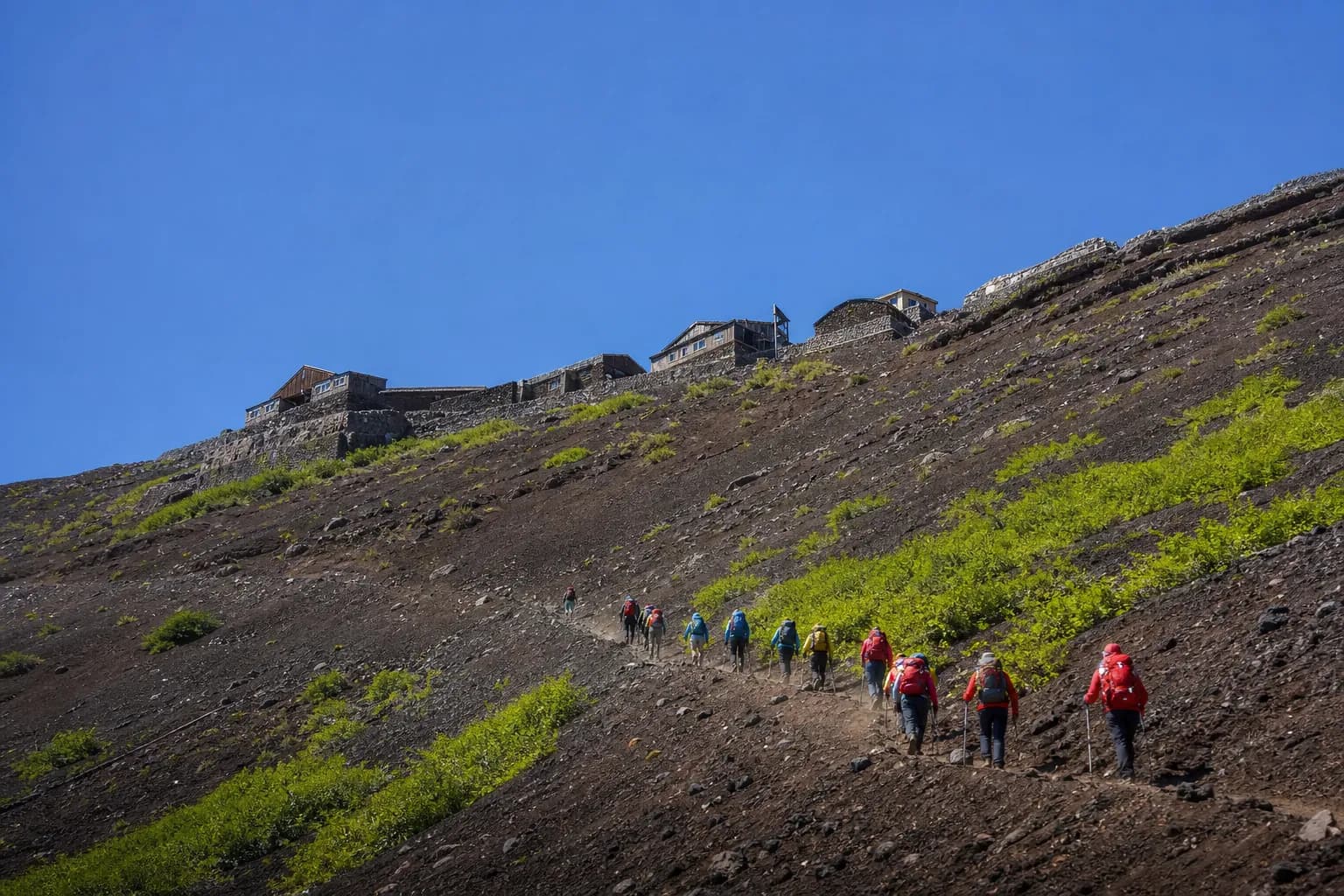
Fuji's popularity became its problem. Overcrowding, late-night "bullet climbs," and unprepared visitors pushed both prefectures to tighten access for the 2026 season. The rules aren't onerous — but they are non-negotiable, and they differ depending on which side of the mountain you climb.
Here is the part competitors gloss over. Fuji straddles two prefectures. The Yoshida Trail sits on the Yamanashi side. The Fujinomiya, Subashiri, and Gotemba trails sit on the Shizuoka side. Each side administers its own entry system.
Key fact: Per Japan National Tourism Organization guidance, trail entry is permitted between 3:00 and 14:00. Access between 14:00 and 3:00 is restricted to climbers holding a confirmed mountain hut reservation. No hut booking means no overnight passage — a rule designed to end reckless through-the-night climbing.
Yoshida Trail (Yamanashi Side): Reservations And Gate Control
The Yoshida Trail is the busiest and most beginner-friendly route, with the densest cluster of mountain huts. For 2026, Fujiyoshida City publishes updated access and reservation details on its official English page. Expect a controlled gate, a per-climber entry fee, and daily numeric limits during peak weeks.
Not everyone wants the summit. Worth knowing: the Ochudo Trail, a gentle nature walk at the 5th Station, requires no entrance fee and no reservation. It suits guests who want Fuji's presence without the altitude fight.
Shizuoka Side: E-Learning And The Official App
The Shizuoka-side trails ask more of you before you arrive. As presented on the official Mt. Fuji climbing site, Shizuoka's 2026 measures require climbers to complete a short pre-training e-learning module on rules and mountain manners, and to install the prefecture's official app — "Shizuoka Prefecture FUJI NAVI" — which carries safety functions and real-time information.
None of this is difficult. It is, however, the exact kind of small administrative friction that erodes a luxury traveler's time and patience. Our concierge team walks guests through the e-learning and app setup in advance, so arrival day is about the mountain — not fumbling with registration on hotel Wi-Fi.
The Honest Physical Journey: Altitude, Weather, And Pacing
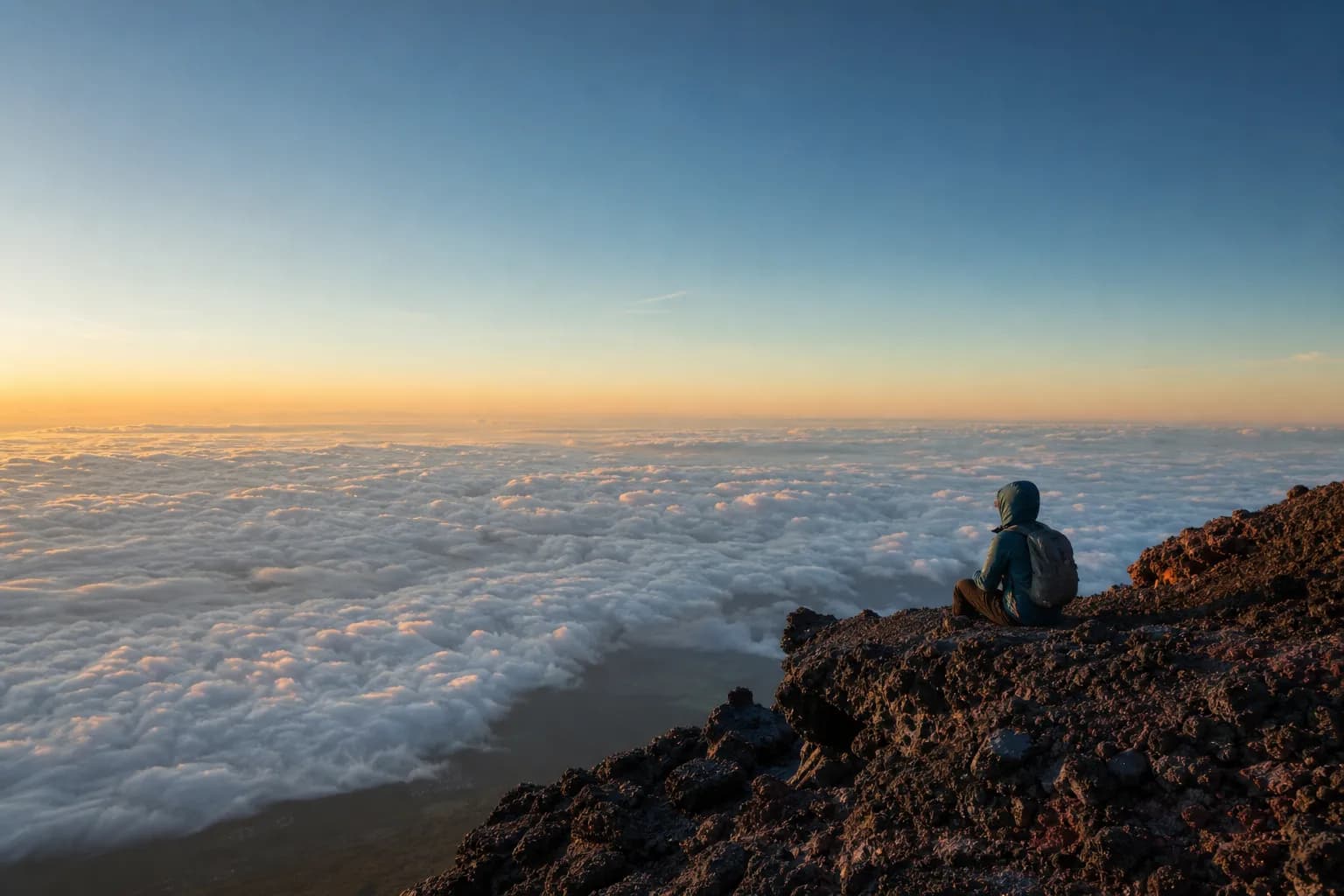
Let's be candid about what the climb feels like. The Yoshida route from the 5th Station to the summit gains roughly 1,500 meters. On paper, manageable. In reality, the final third — above 3,000 meters — is where the body starts protesting.
Altitude sickness does not care about your gym routine. Headache, nausea, a strange heaviness in the legs, shortened breath. It arrives quietly and it targets the fast. The single best defense is pace. Climb slowly enough to hold a conversation. Slower than feels natural. Then slower again.
Weather is the second adversary. The summit can sit near freezing even in August, with wind that turns drizzle into a genuine hazard. Fuji makes its own microclimate. Climbing outside the designated season, per official guidance, is extremely dangerous — the huts close, rescue thins out, and the mountain becomes an alpine environment few are equipped for.
The Calm Overnight Strategy
The disciplined approach — the one we build for our guests — splits the climb across two days. Ascend to a mountain hut around the 7th or 8th Station in the afternoon. Rest. Sleep, or something close to it. Wake in the small hours and climb the final stretch to reach the summit before sunrise.
This does three things. It gives your body hours to adjust to altitude. It removes the danger of a single exhausting overnight push. And it delivers the goryōkō — the sacred sunrise — without the crush of a thousand headlamps racing the clock. Secure the hut early. The good ones fill months ahead, and without a reservation, the 14:00–3:00 access rule locks you out anyway.
Essential Gear: What Actually Matters
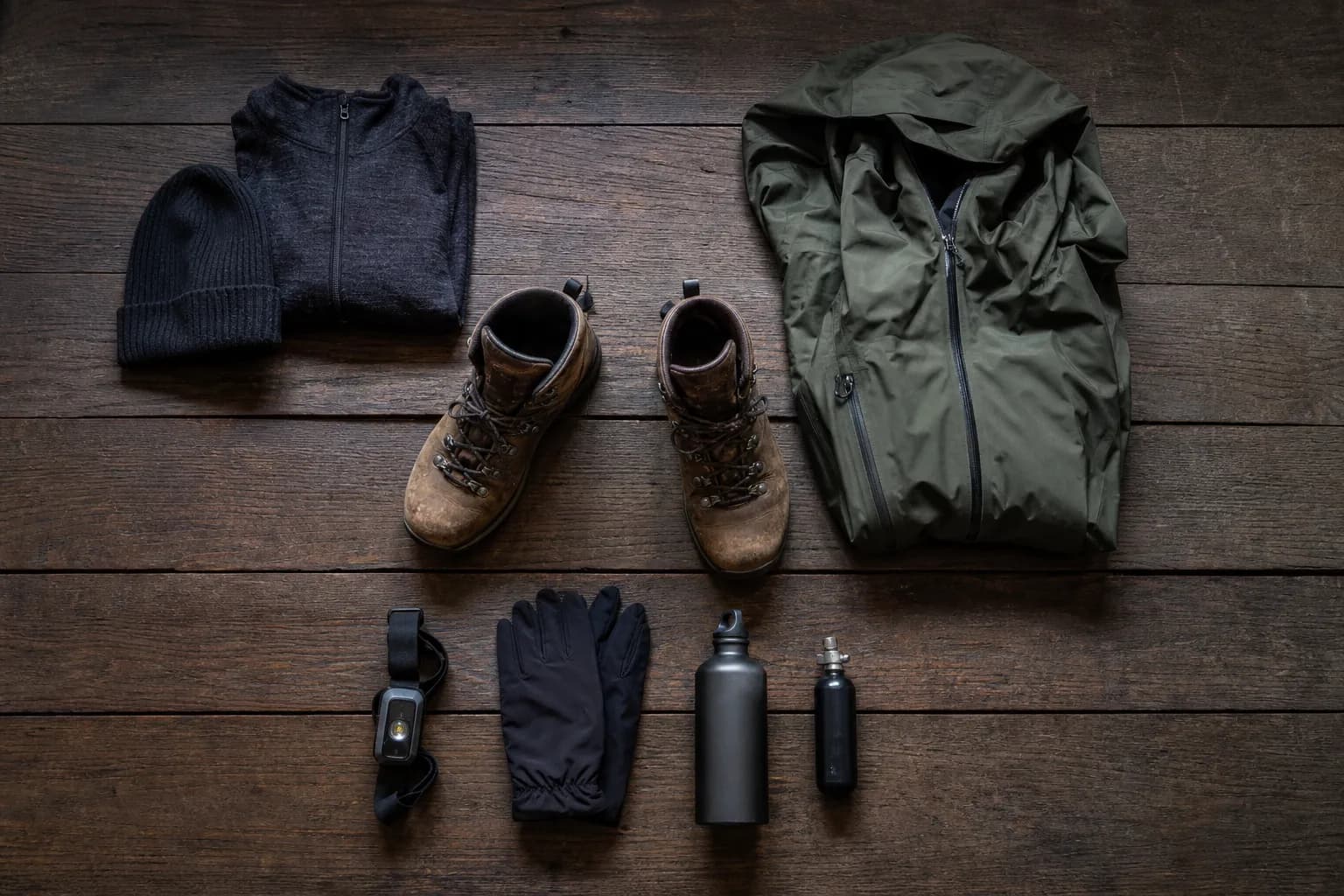
Fuji punishes the underdressed and the overpacked in equal measure. Carry too little and you freeze. Carry too much and the altitude doubles the weight of every item. This is the honest list.
- Layered clothing: a moisture-wicking base, an insulating mid-layer, and a waterproof, windproof shell. Cotton is a mistake — it holds sweat and chills you fast.
- Proper hiking boots: broken in, ankle-supporting, with grip for loose volcanic gravel. Not sneakers.
- Headlamp: non-negotiable for the pre-dawn summit push. Bring spare batteries; the cold drains them.
- Gloves and a warm hat: the summit wind is unforgiving.
- Rain gear: full jacket and trousers. Umbrellas are useless in Fuji's wind.
- Water and calorie-dense snacks: huts sell provisions, but carry your own reserve.
- 100-yen coins: for mountain toilets.
- A small oxygen canister: not a cure, but a modest comfort for the summit stretch.
The official Mt. Fuji Climbing site publishes a Safety Guide video covering clothing, routes, and rules. We recommend every guest watch it before departure — it is short, accurate, and free of the marketing gloss that clutters most climbing content.
Which Side Fits You? A Quick Decision Table
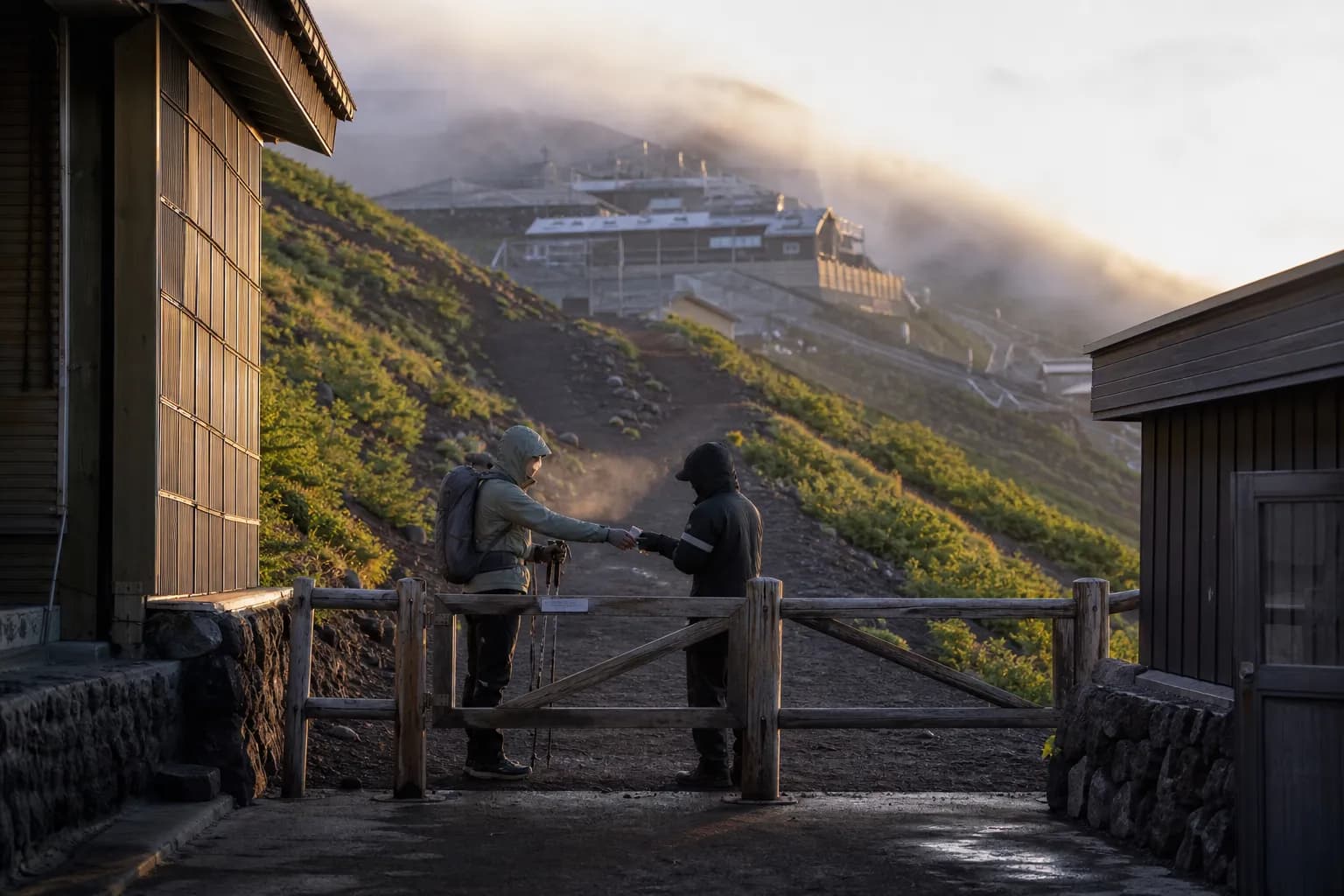
The four trails offer genuinely different experiences. Crowd density, hut availability, and altitude profile all shift. This is the frank comparison.
| Trail | Best For | Character |
|---|---|---|
| Yoshida (Yamanashi) | First-timers, sunrise seekers | Most huts, busiest, easiest logistics from Tokyo |
| Fujinomiya (Shizuoka) | Shortest route to summit | Highest trailhead, steep, requires e-learning + app |
| Subashiri (Shizuoka) | Quieter ascent, forested lower slopes | Less crowded, merges with Yoshida higher up |
| Gotemba (Shizuoka) | Fit, experienced hikers | Longest, fewest huts, most demanding |
For most of our guests, Yoshida wins on hut density and access simplicity. Those wanting a quieter climb — and willing to complete the Shizuoka onboarding — often prefer Subashiri.
The Pilgrimage Beneath Your Feet
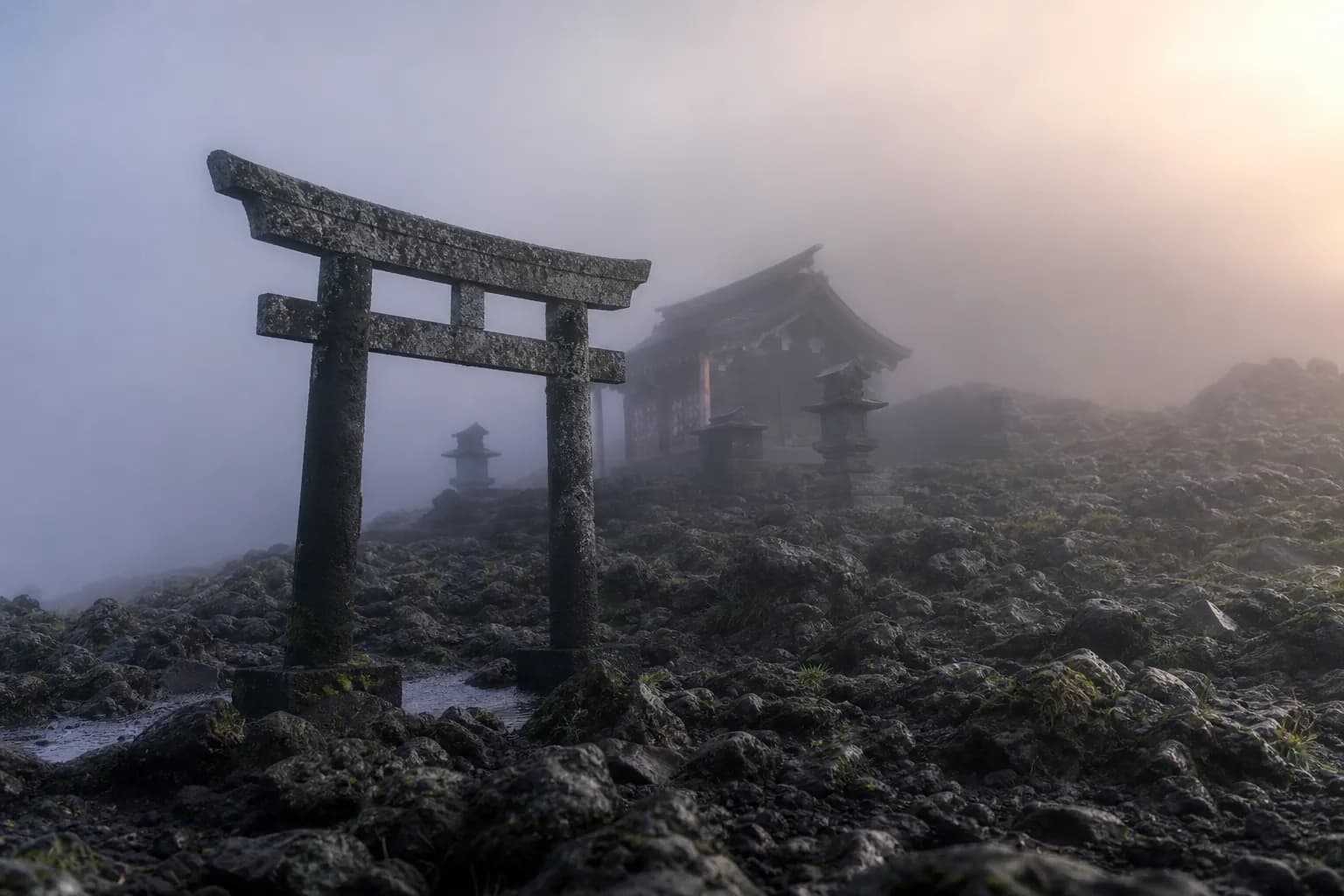
Fuji is not merely a mountain to be conquered. Japan's National Parks describe the summit hike as following ancient pilgrimage trails, walked for centuries by Shugendo mountain ascetics who treated the ascent as a spiritual act rather than a physical feat.
That history changes how the climb feels, if you let it. The torii gates near the summit, the small shrines along the route, the deliberate slowness of the old pilgrims — these were never about speed. Wabi-sabi lives here in the barest form: no flowers, no gardens, only volcanic stone, wind, and the long weathered patience of the mountain itself. We encourage guests to observe trail etiquette, pause at the shrines, and carry a measure of that reverence upward. It makes the summit mean more.
Getting There: The 2026 Access Logistics
Fuji's peak weeks bring "my car restriction" periods — マイカー規制 — when private vehicles cannot drive directly to the 5th Station. Visitors shift to shuttle buses and remote parking, which means queues, luggage juggling, and lost time during the very hours you'd rather be resting before the climb.
This is where quiet logistics matter. Our fleet — including the Lexus LM 500 and Toyota Alphard — handles the transfer to the permitted drop-off points, with luggage managed and timing built around the restriction schedule. Guests arrive composed, not frazzled. For the return, we position the vehicle so that after a night on the mountain and a descent on tired legs, the ride to recovery is already waiting. See our private chauffeur services for the ground-transport framework we build around Fuji ascents.
Recovery: The Part Most Climbers Forget
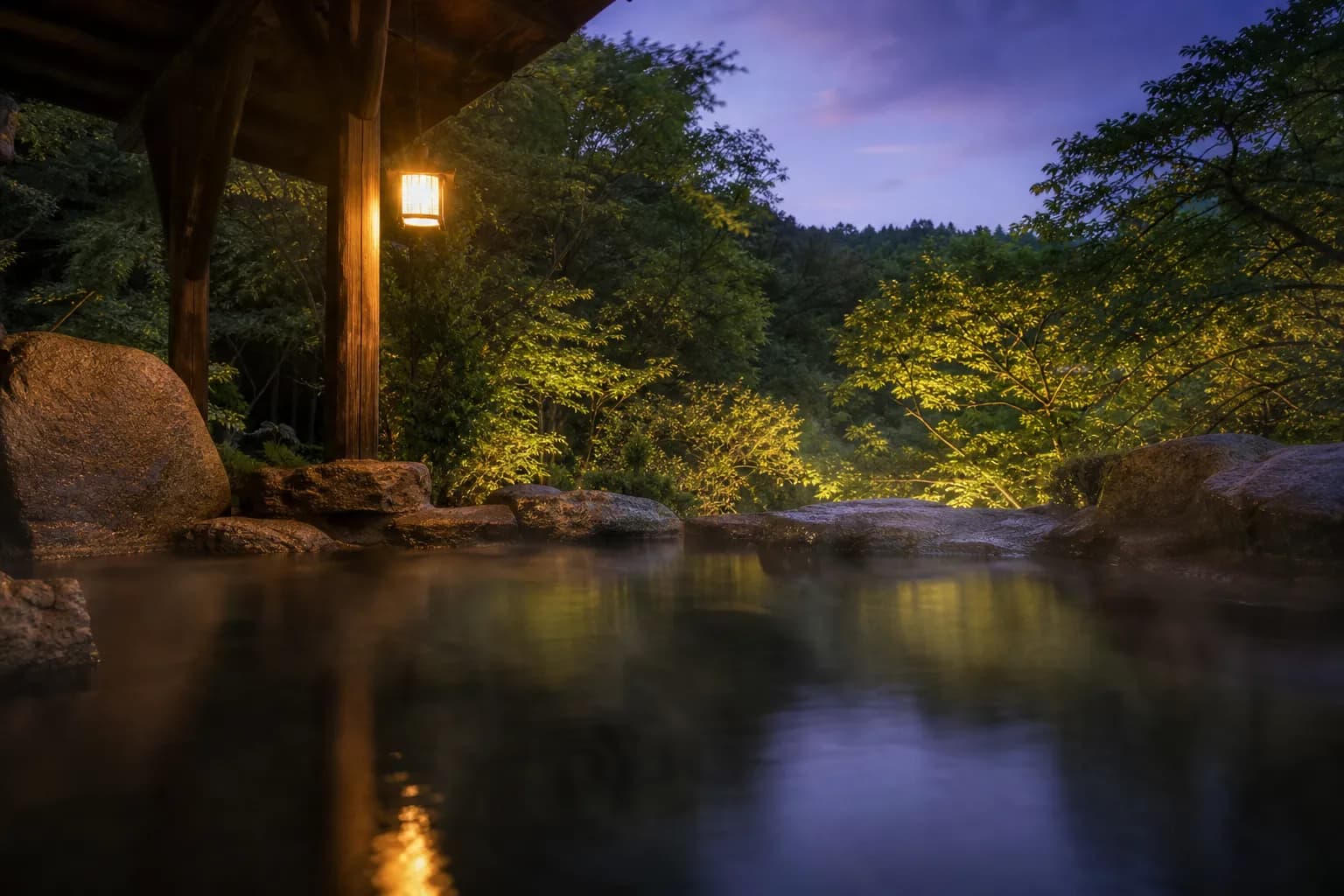
Descending Fuji is harder on the body than climbing it. Jarred knees, exhausted quads, a deep fatigue that a single night rarely fixes. The mistake is scheduling a full sightseeing day immediately after. Big mistake.
The intelligent finish routes you into an onsen town. Hakone sits within easy reach and offers ryokan with private bathing where the property provides it — hot mineral water working through sore muscles while you finally exhale. The Fuji Five Lakes region offers a quieter alternative, with lakeside stays and, on clear mornings, the mountain you just climbed reflected in still water.
We build a deliberate recovery day into every Fuji itinerary. Slow morning. Long bath. A restorative kaiseki dinner. It closes the loop between exertion and reward. For guests who prefer to admire Fuji rather than summit it, our bespoke itineraries can pivot entirely toward the calm Five Lakes and Hakone circuit instead.
Frequently Asked Questions
When Is The 2026 Mt. Fuji Climbing Season?
The official climbing season runs across the summer months, with exact operational dates published via the official Mt. Fuji Climbing site and subject to weather. Climbing outside this window is officially discouraged as extremely dangerous — huts close and rescue capacity drops sharply.
Do I Really Need A Mountain Hut Reservation?
If you intend to climb overnight to catch the sunrise, yes. Per JNTO guidance, the 14:00–3:00 access window is restricted to climbers holding confirmed hut bookings. It is also the safest, most comfortable way to ascend. Reserve early — the best huts fill months ahead.
How Fit Do I Need To Be?
Reasonable fitness suffices for the Yoshida route with an overnight hut stay. The real challenge is altitude, not distance. Conservative pacing matters more than athletic conditioning. Anyone with cardiac or respiratory concerns should consult a physician first.
What Are The New Shizuoka-Side Requirements?
For 2026, Shizuoka-side climbers must complete a pre-training e-learning module on rules and manners and install the official "Shizuoka Prefecture FUJI NAVI" app for safety functions. The Yoshida (Yamanashi) side uses a separate gate and reservation system instead.
Why Choose Japan Royal Service
Anyone can find a trail map. What our guests come to us for is the removal of friction — and the addition of judgment. We complete the 2026 e-learning and app onboarding on your behalf, secure hut reservations before they vanish, and time private transfers precisely around the car-restriction periods so no hour is wasted.
In our experience, the finest Fuji ascent is the one where the logistics are invisible and the mountain is the only thing you notice. Our concierge briefs you honestly on altitude, weather contingencies, and pacing. We hold discreet alternate plans ready should Fuji's temperament close the trail — a pivot to Hakone, a private onsen, a quiet lakeside day — so a weather change never becomes a wasted trip.
Discretion runs through all of it. Your identity, your itinerary, your pace — kept private. That is the standard we hold at Japan Royal Service, whether the goal is the summit at dawn or simply Fuji reflected in still lake water while you rest.
To plan a risk-managed, privacy-forward Fuji ascent for 2026, reach our team privately via WhatsApp or LINE, or at /contact. Tell us your dates and fitness level, and we will shape the rest.