目次
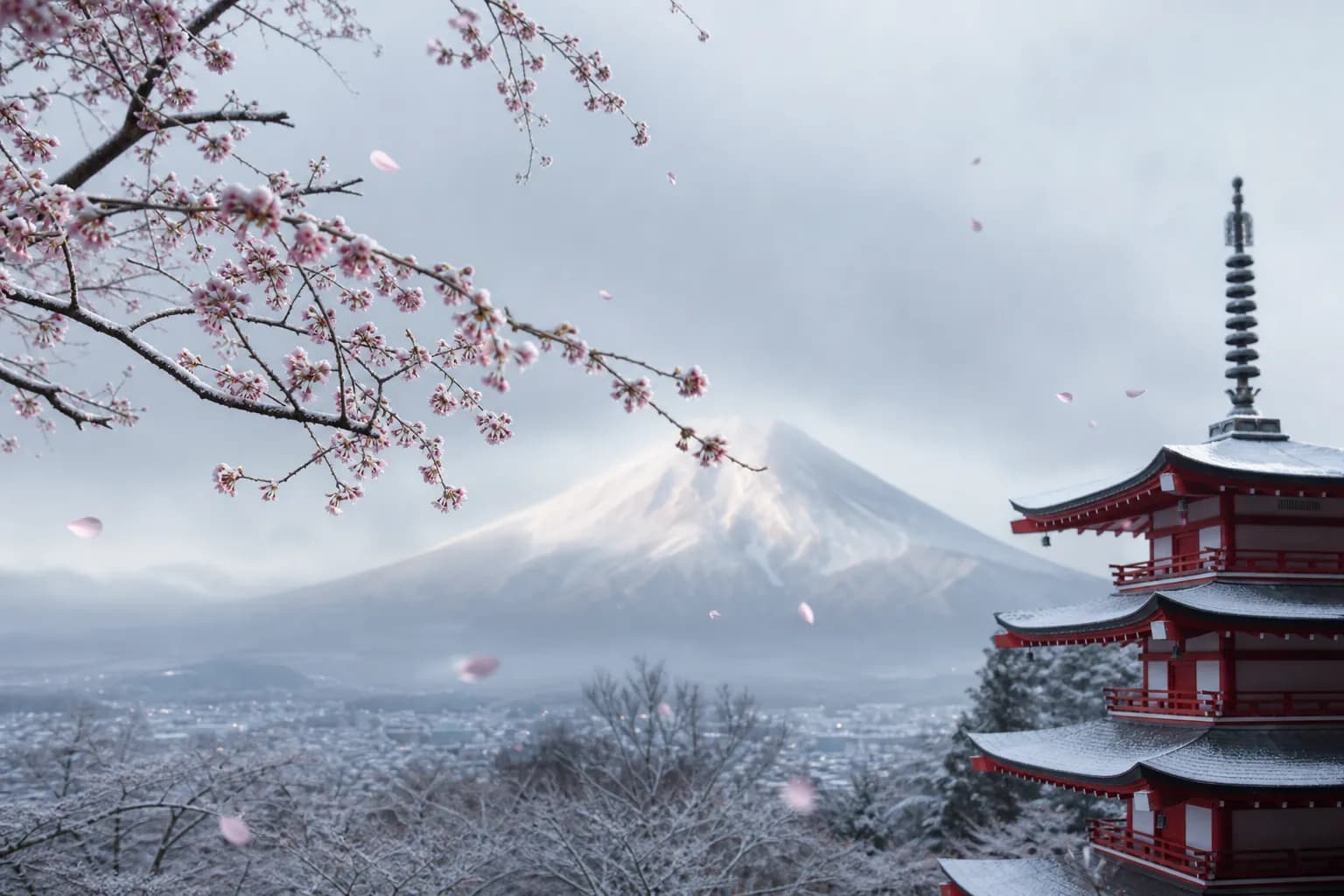
There is a single fortnight each spring when Japan's most painted mountain wears a collar of pink. Snow above. Petals below. For a few suspended days, the Fuji Five Lakes region becomes the photograph everyone already has in their mind before they arrive — and most visitors leave with a poorer version of it, jostled by tripods and shuttle queues.
It does not have to be that way. The difference between a crowded blur and a quiet, perfectly timed morning comes down to elevation, hour, and access. At Japan Royal Service, we plan these mornings for travelers who want the bloom without the bottleneck.
This guide covers what genuinely matters for 2026: when the blossoms peak, where to stand, how the weather behaves around the mountain, and the cultural weight that makes this scene more than a backdrop. Read it before you commit to a single date.
Understanding The Mt. Fuji Cherry Blossom Season
The Fuji Five Lakes bloom on a different clock than the cities. Tokyo and Kyoto usually peak in late March. Around Mount Fuji, the altitude pushes everything back by roughly one to two weeks.
The reason is simple. Cooler air at 800 to 1,000 metres slows the trees. What frustrates the casual visitor — a later, less predictable window — is exactly what gives the patient traveler an advantage. You get a second season after the cities have already faded.
The region also hosts the native Fuji cherry, Prunus incisa, a smaller-flowered species that opens earlier than the ubiquitous Somei Yoshino. That overlap stretches the viewing arc. Different elevations, different cultivars, different days of peak.
Projected Peak Bloom For 2026
Forecasts shift with each winter's temperatures, so treat the table below as a planning baseline rather than a promise. Bloom dates are confirmed only weeks out by Japan's meteorological forecasters. Our concierge team monitors these forecasts closely and adjusts itineraries as the front moves north.
| Location | Elevation | Expected Peak | Bloom Window |
|---|---|---|---|
| Arakurayama Sengen Park | ~650m | April 10–16 | 7–10 days |
| Lake Kawaguchiko | ~833m | April 12–18 | 7–10 days |
| Oshino Hakkai | ~940m | April 15–21 | 7–10 days |
| Lake Yamanakako | ~980m | April 17–23 | 7–10 days |
Notice the spread. By staging a few nights across these elevations, a traveler can effectively chase peak bloom upward — catching Arakurayama early, then drifting toward Yamanakako as the lower sites fade. This is the quiet logic behind a multi-day plan.
Key fact: Cherry blossom dates around Mount Fuji are confirmed only a few weeks ahead. Book flexible accommodation and keep two or three potential viewing mornings open. Locking a single date months out is the most common spring mistake.
Weather And Visibility Around The Mountain
The mountain hides. That is the first thing to accept. Fuji spends much of spring wrapped in cloud, and a flawless petal-and-peak shot depends as much on the sky as on the trees.
Temperatures during bloom run from roughly 5°C at dawn to 18°C by mid-afternoon. Bring layers. Morning fog often clings to the slopes after rain, then lifts.
In our experience, the clearest air arrives before nine in the morning and again after three in the afternoon, when the atmosphere settles. Wind is the other variable — a strong gust can strip blossoms days early, while still conditions hold the petals. We watch both, and we plan to be standing in the right place when the cloud parts.
Where To See Mt. Fuji Cherry Blossoms
Your vantage point decides everything. Crowds, light, composition, calm. Here are the locations that matter, with an honest read on each.
Arakurayama Sengen Park: The Postcard
This is the image you already know. The vermilion Chureito Pagoda, the cherry trees beneath it, Fuji rising behind. All three elements stacked into one frame. It is the most reproduced spring view in Japan, and for good reason.
The park sits above the town of Fujiyoshida, reached by around 400 steps. The reward at the top is an unobstructed, layered composition that simply cannot be matched elsewhere.
And that fame is the problem. During peak bloom, photographers gather before sunrise, and the viewing platform becomes shoulder-to-shoulder by mid-morning. Parking is scarce. A private, early-access morning — arriving as the gates allow rather than fighting the crowd — is the only way the place lives up to its reputation. Our coordinators build these dawn windows for exactly this reason.
Lake Kawaguchiko: Reflections And Room To Breathe
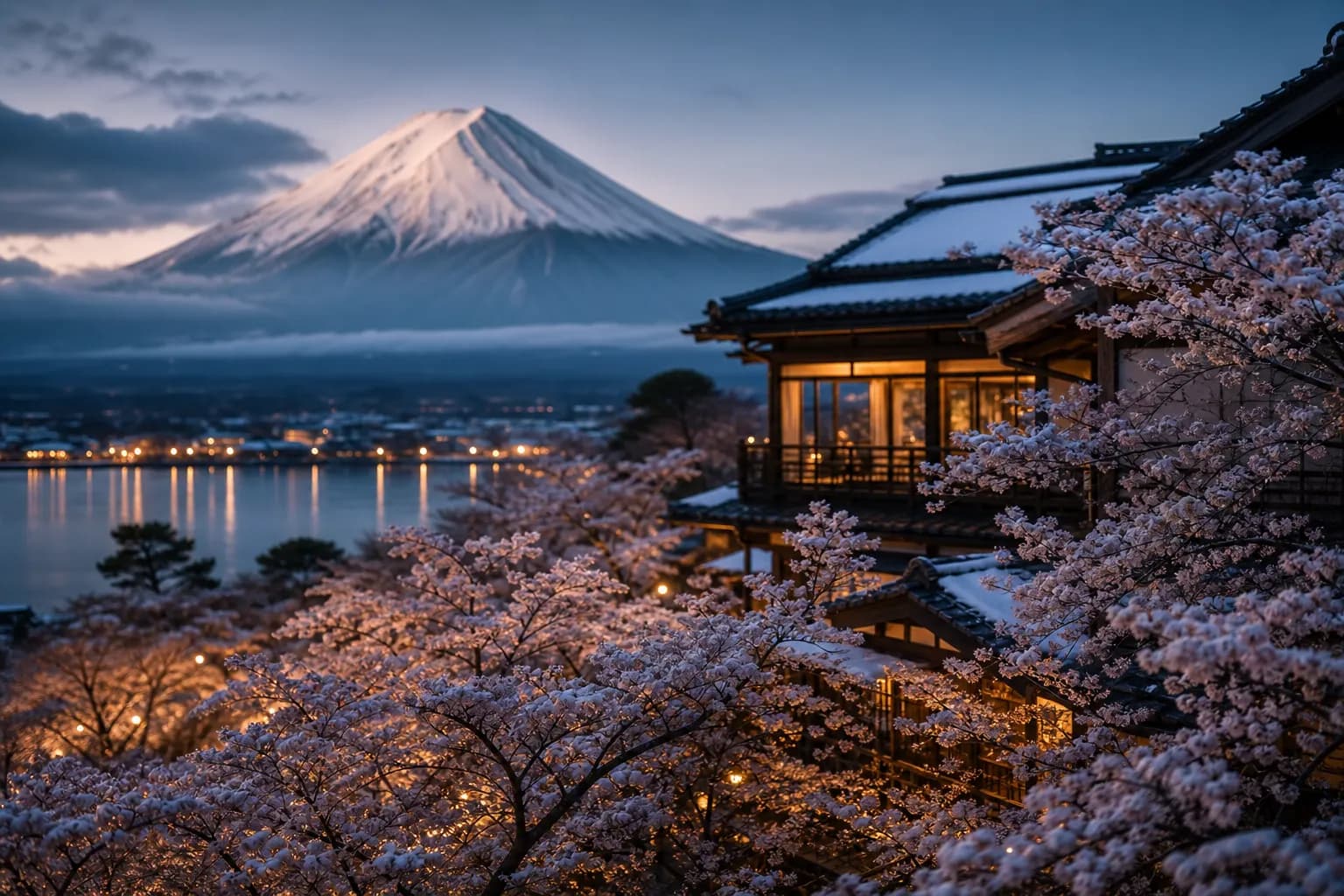
The northern shore of Lake Kawaguchiko offers something Arakurayama cannot: space. Cherry groves line the waterfront, and on a still morning the mountain doubles in the lake's surface. The pace here is slower, the paths longer, the air less contested.
Nearby, the Fuji Shibazakura Festival usually opens in mid-April. It celebrates moss phlox rather than cherry blossoms, but the carpets of pink ground cover beneath the mountain make a striking companion outing. Two different expressions of pink, one mountain.
Kawaguchiko also works as a comfortable base. From here, a private chauffeur can reach the other lakes and the pagoda within a short drive, which is precisely how we structure a relaxed Fuji morning circuit.
Oshino Hakkai And The Quieter Corners
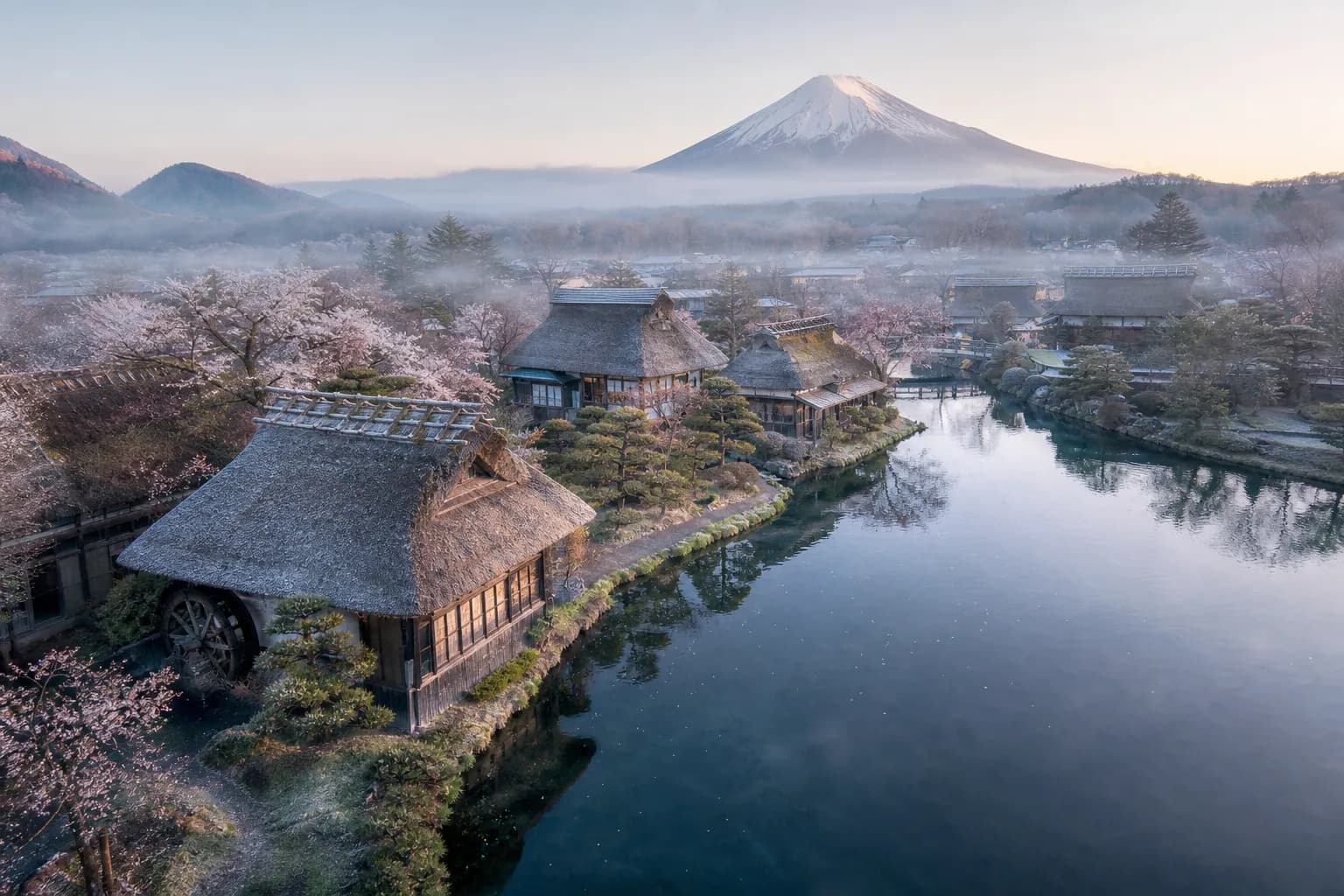
Oshino Hakkai is a cluster of spring-fed ponds fed by Fuji's snowmelt, set among thatched farmhouses. The water runs astonishingly clear. In bloom season the cherry trees here frame the mountain without the camera-wall of the famous viewpoints.
It is the kind of place that rewards arriving early and moving slowly. There is a wabi-sabi quality to the worn farmhouse roofs and the cold, clear water — beauty that asks for restraint rather than spectacle. We often pair it with a Kawaguchiko base for travelers who want the bloom without the performance.
The Cherry Varieties That Shape The Scene
Not all blossoms are the same, and knowing the difference deepens the looking. The region's diversity is the reason its season stretches longer than the cities'.
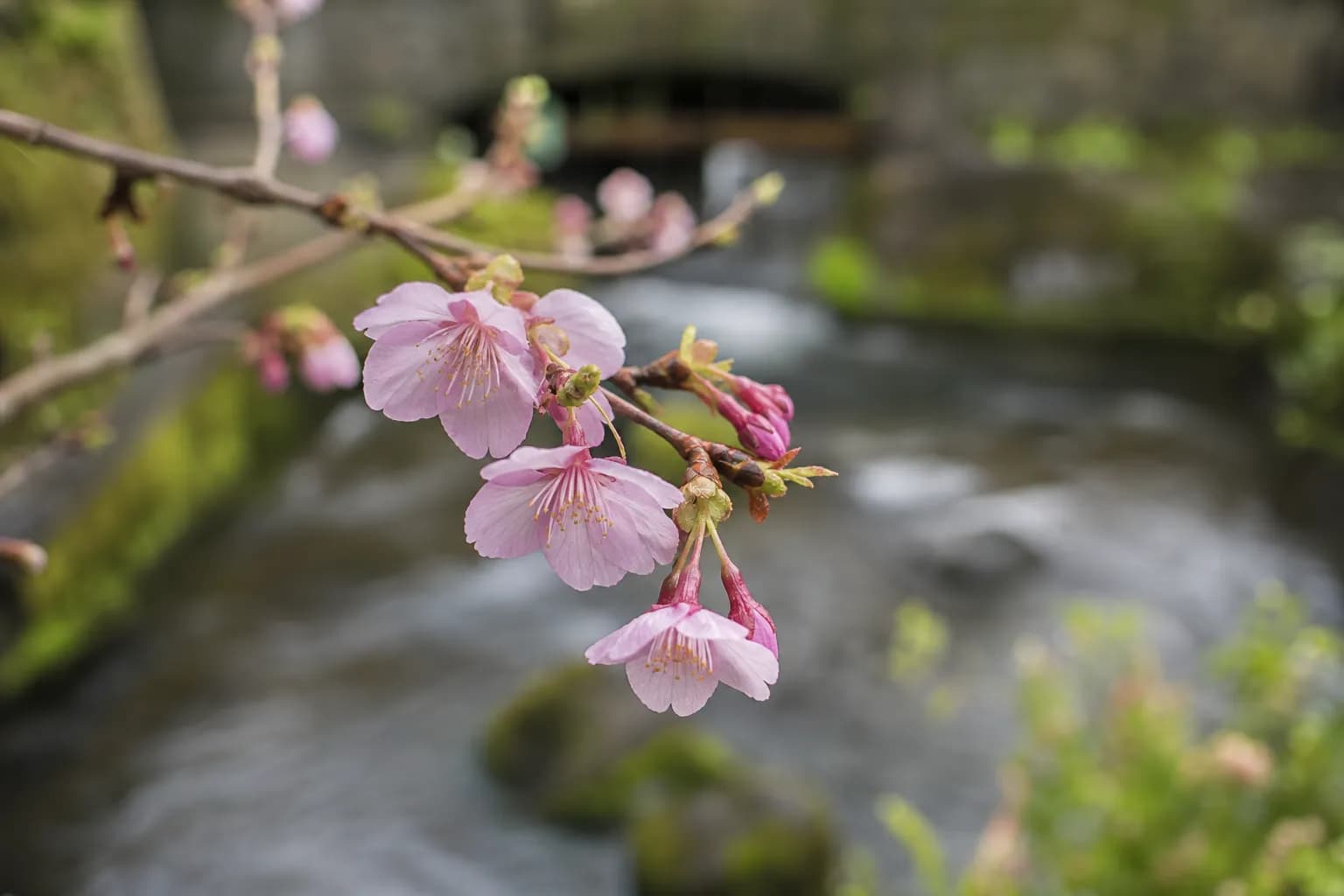
The native Fuji cherry, Prunus incisa, also called Mamezakura, carries small, delicate flowers and opens earlier on the slopes. The Somei Yoshino, the pale-pink cultivar that defines most Japanese hanami, dominates the lower parks and lakeshores. Later-blooming varieties extend the show at higher elevations.
This staggering is your friend. Where a single-cultivar location gives you one shot at peak, the Fuji region offers several, layered across days and altitudes. A well-timed multi-day plan turns a fleeting window into a sustained season.
The Meaning Behind The Mountain And The Blossom
There is a reason this pairing feels sacred. It is.
Mount Fuji's deity is Konohanasakuya-hime, the blossom-princess of Japanese myth, whose name speaks of trees bursting into flower. The mountain and the cherry blossom are bound together in legend, not merely in photographs. To stand beneath the trees with the peak above is to stand inside a story Japan has told for centuries.
The blossoms also carry mono no aware — the tender awareness of impermanence. They open, they glow, they fall within days. That brevity is the point. A contemplative early morning, before the crowds, lets a traveler feel the weight of that idea rather than simply photograph it.
Frequently Asked Questions
When Is The Best Time To See Mt. Fuji Cherry Blossoms In 2026?
The lower sites such as Arakurayama Sengen Park and Lake Kawaguchiko are projected to peak between April 10 and 18, with higher elevations like Lake Yamanakako following through late April. Confirmed forecasts arrive only a few weeks ahead, so flexibility matters.
How Do I Avoid The Crowds At The Chureito Pagoda?
Arrive at first light, before the tour buses and tripod lines gather. Private early-morning access and a chauffeured arrival remove the parking and queueing problems entirely. Our concierge team plans these dawn windows around the daily forecast.
Is It Hard To See Mount Fuji Itself During Bloom Season?
The mountain is often veiled in cloud, especially after rain. Visibility is usually best before 9 a.m. and after 3 p.m. Building in two or three viewing mornings dramatically raises your odds of a clear peak.
Where Should I Base Myself For A Fuji Cherry Blossom Trip?
Lake Kawaguchiko makes a comfortable, central base, with short private drives to the pagoda, Oshino Hakkai, and the other lakes. Some travelers prefer a calm onsen retreat nearby and treat the bloom sites as morning excursions.
Why Choose Japan Royal Service
Cherry blossom season around Mount Fuji is short, weather-dependent, and increasingly crowded. The travelers who experience it well are the ones who can move quickly when the forecast firms up and the cloud lifts. That agility is what we provide.
Our team at Japan Royal Service plans these spring mornings as private, chauffeured journeys — a Lexus LM or Alphard waiting at your accommodation before dawn, a route built around the day's real visibility, and the unhurried calm of arriving before the buses. We watch the bloom forecasts so you do not have to refresh a weather app at 5 a.m.
Beyond the viewpoints, we connect the season to the deeper Japan: a quiet onsen evening away from Hakone's busiest corridors, an introduction-only kaiseki, a morning of clear water at Oshino Hakkai while the famous platforms are still empty. The hospitality is silent and anticipatory. Your itinerary, and your identity, stay entirely private.
We coordinate every detail privately, by direct contact, so that the only thing left to you is the looking.
Planning a spring 2026 journey to Mount Fuji? Contact our concierge team for tailored guidance, and let us shape a private morning beneath the blossoms.