目次
- 01Why Marugame Became Japan's Fan Town
- 02Hand-Split Bamboo Versus The Machine
- 03Bespoke In Two Tiers: How To Choose Your Experience
- 04From Souvenir To Commissioned Object
- 05A Curated Half-Day: Museum, Workshop, Commission
- 06When To Go, And What To Pair It With
- 07How To Care For Your Uchiwa
- 08Questions Guests Ask Us About Marugame Uchiwa
- 09Why Choose Japan Royal Service
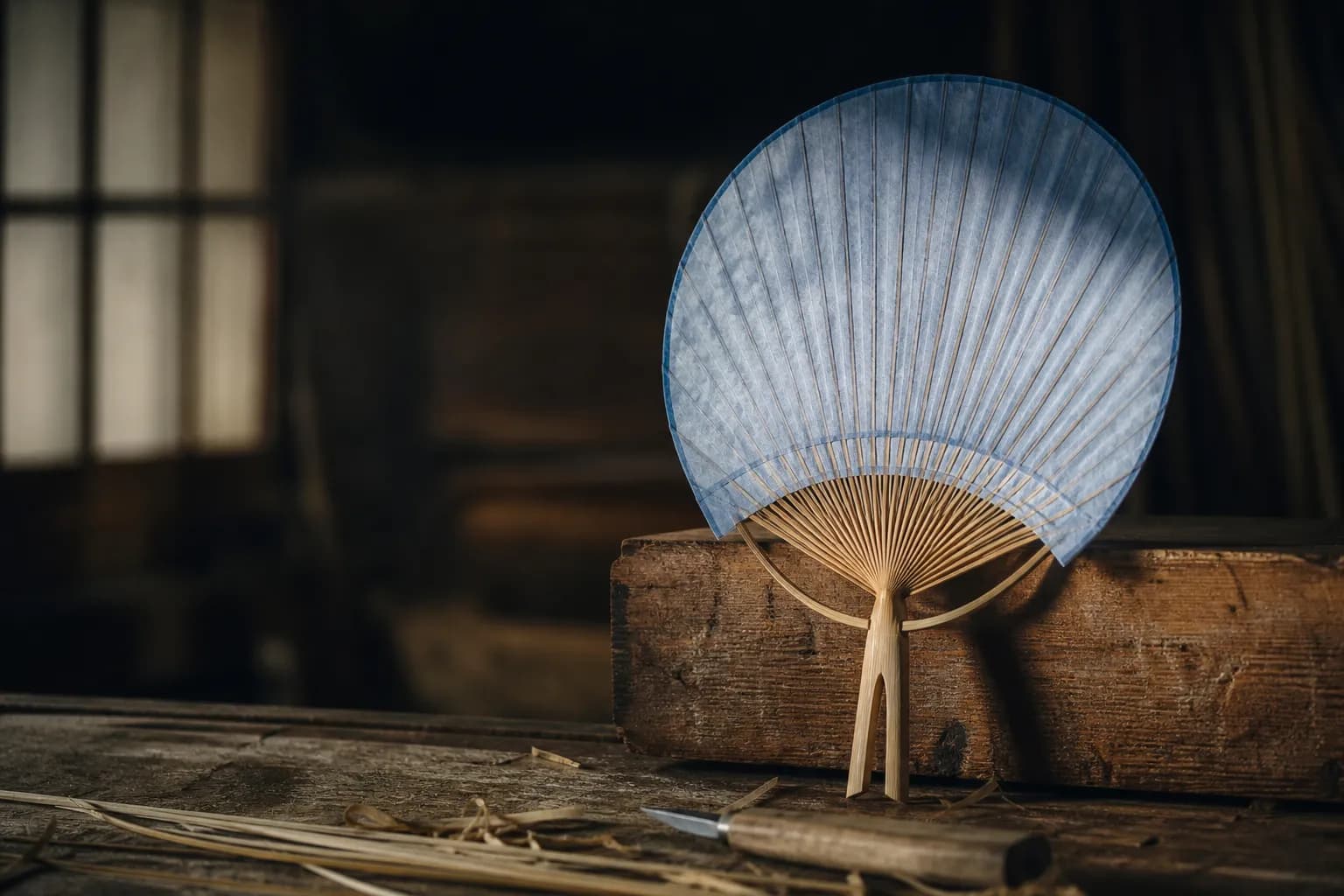
Most travelers meet a fan the way they meet a paper napkin. A quick grab, a few flicks of air, then it is forgotten in a drawer. In Marugame, a small castle town on the Seto Inland Sea, the humble uchiwa tells a different story entirely.
Here, a single fan can pass through more than twenty pairs of hands. Bamboo split into forty-odd ribs, thinner than a matchstick. Paper pasted, trimmed, and burnished by people who have done little else for decades. This is the difference between something made and something manufactured.
At Japan Royal Service, we send discerning guests to Kagawa not for a photo, but for an afternoon with the craft itself. This is our guide to the Marugame uchiwa — its history, the artisans who keep it alive, and how to hold one made just for you.
Why Marugame Became Japan's Fan Town
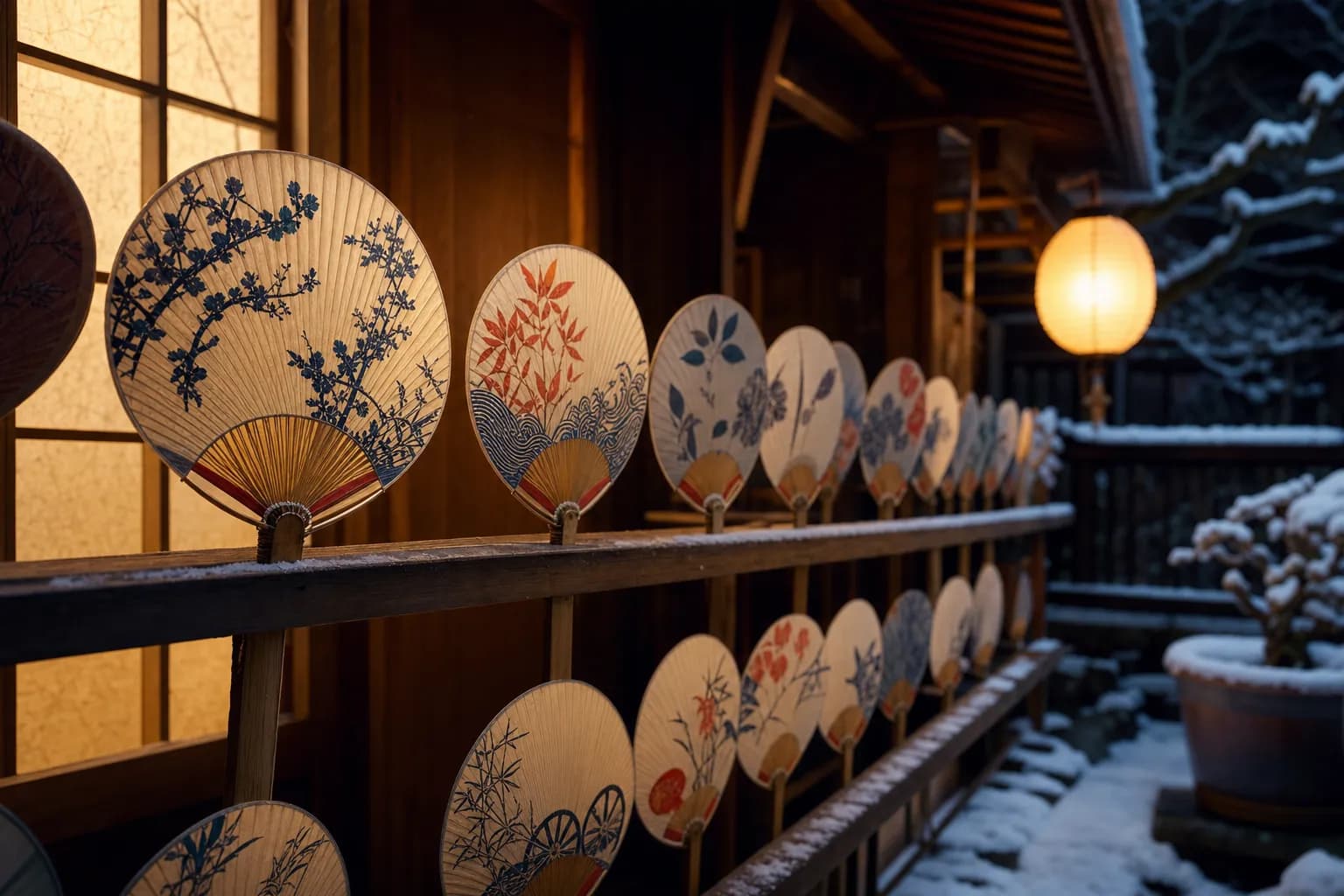
Marugame produces roughly 90 percent of Japan's domestic uchiwa fans.
Kagawa Prefecture sits on Shikoku, the smallest of Japan's four main islands. Marugame City, on its northern coast, is described by the region's official tourism board, VISIT KAGAWA, as Japan's number-one uchiwa town. The claim is not marketing gloss. Marugame accounts for roughly 90 percent of all domestic uchiwa production.
The craft's roots run through pilgrimage. Travelers walking to the nearby Kotohira Shrine — the great Konpira sanctuary — needed something light, cheap, and cooling for the road. Local makers obliged. A fan stamped with the shrine's crest became the pilgrim's souvenir of choice, and Marugame's paper-and-bamboo economy took hold.
Centuries later, the fans are still made here. What began as a devotional keepsake has quietly become a collector's object. That arc — from roadside token to gallery-worthy piece — is exactly what makes the craft worth your time.
Hand-Split Bamboo Versus The Machine
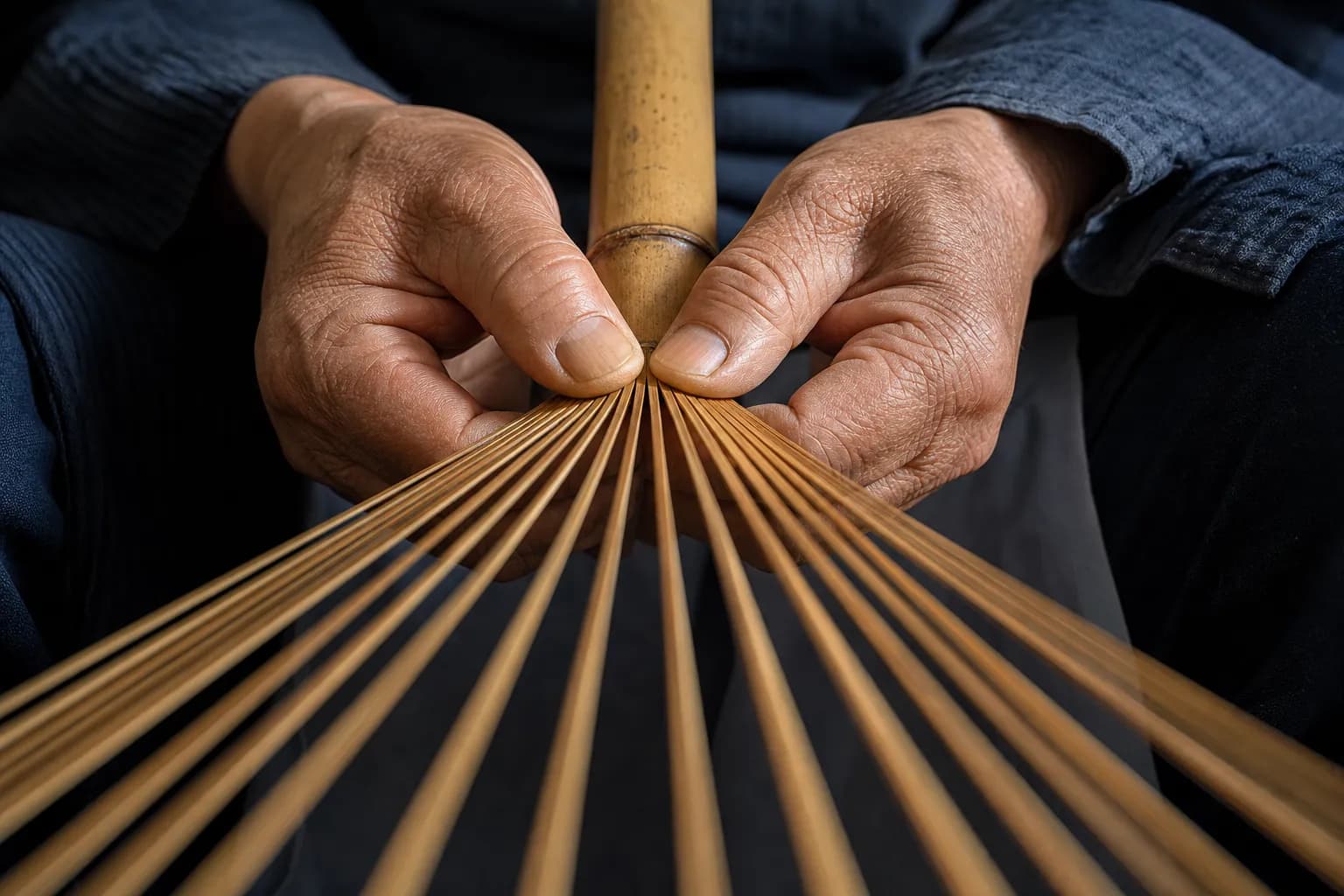
One stalk of bamboo becomes forty ribs — the signature single-piece Marugame handle.
To understand why a bespoke uchiwa matters, look at how it is built. A mass-produced plastic fan is injection-molded in seconds. A Marugame uchiwa is coaxed into being over hours, sometimes across several days when it is drying between stages.
The signature of the Marugame fan is its single-piece handle. One length of bamboo forms both the grip and the ribs — no glued joints, no shortcuts. Splitting that bamboo cleanly into dozens of even spokes is the skill of a lifetime, not a weekend.
Here is the broad shape of the making, so you know what you are watching:
- Cutting the bamboo — selecting and sizing a straight length for handle and frame.
- Splitting the ribs — the round handle is fanned open into fine, radiating spokes.
- Threading and shaping — the ribs are spread and bound into the familiar rounded silhouette.
- Pasting the paper — washi or printed paper is applied to both faces and pressed smooth.
- Trimming and edging — excess paper is cut away, and a thin border seals the rim.
- Finishing — the fan is dried, checked, and, in bespoke work, signed.
Watch a maker split a single stalk into forty ribs. It looks effortless. It is not. That ease is the residue of ten thousand repetitions, and it is the very thing you are paying for when you commission rather than buy off a shelf.
Bespoke In Two Tiers: How To Choose Your Experience
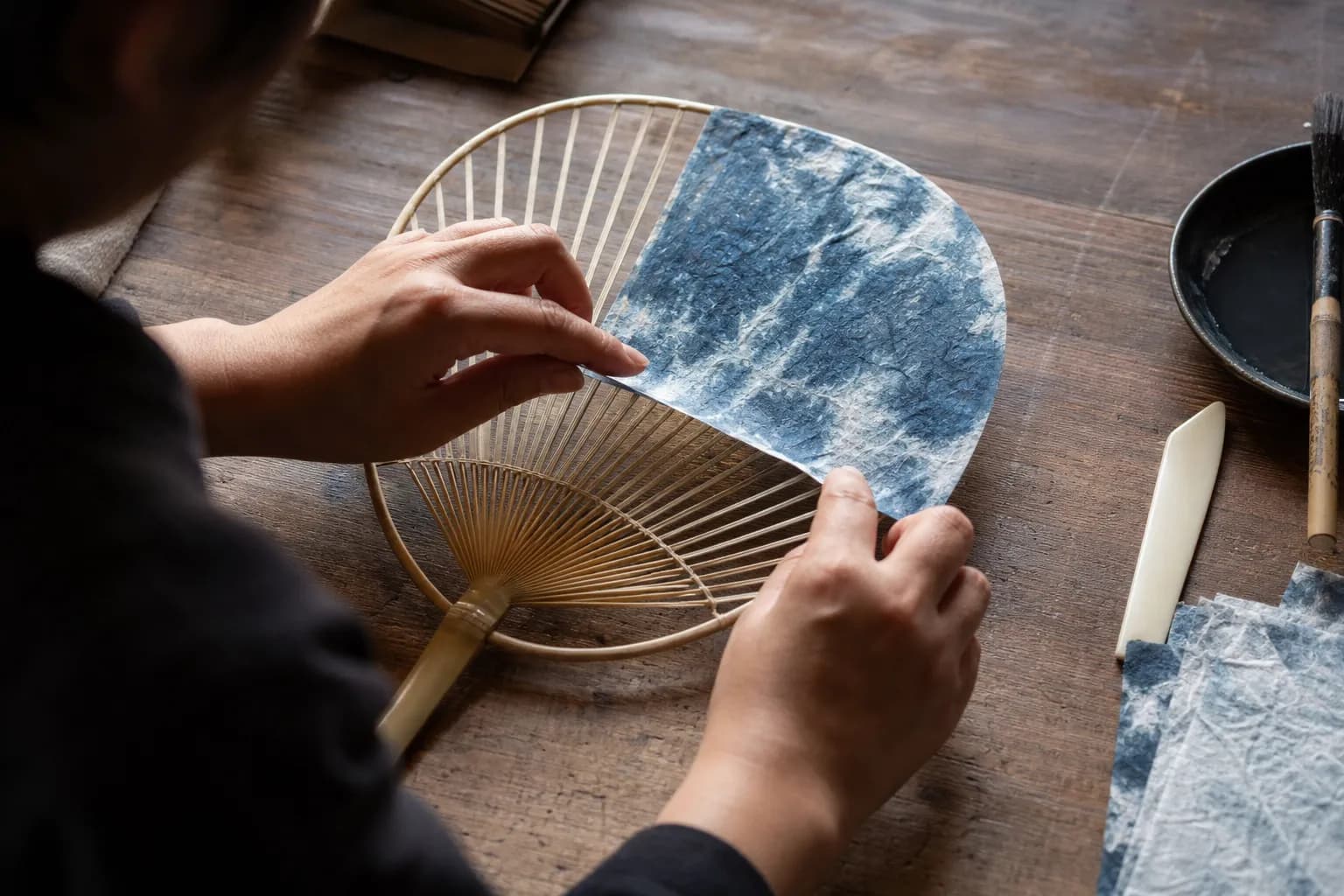
The pasting stage inside Marugame Castle, where washi is pressed smooth to both faces.
Marugame offers a rare thing — an authentic craft you can approach at more than one depth. Our concierge team generally frames the choice as two tiers, depending on how much time and immersion you want.
Tier One: The Hands-On Introduction Inside Marugame Castle
Uchiwa Workshop "TAKE" runs a fan-making experience inside the grounds of Marugame Castle, within the tourist information center. VISIT KAGAWA and Tourism SHIKOKU both list it, and it sits roughly a ten-minute walk from JR Marugame Station.
The standard session runs about one hour, priced around ¥1,500 per fan, with opening hours of 10:00–16:00. There is also a Special Plan — a more hands-on version guided by a fan craftsman, lasting roughly 90 to 120 minutes at ¥7,500 per person, for parties of one to ten.
Key fact: Craft experiences at Workshop "TAKE" are not accepted during December 12–January 25. Certain other blackout periods apply to the Special Plan. Always confirm dates before you route a visit around it.
Tier Two: The Full-Version Program At Nakazu Banshoen
For guests who want depth, the Marugame Castle Experience runs a "full version" uchiwa-making program at Shohantei, a teahouse on the grounds of Nakazu Banshoen — a historic strolling garden. The Japan Times has featured this very moment: guests walking to Shohantei to learn the fan under a maker's eye.
The program lasts 120 minutes and runs year-round. It is priced at ¥90,000 including tax for two participants, with reservations accepted up to 30 days before the date of stay. One safety note: participants must be at least 16 to handle the cutting tools.
Separately, VMG's Castle Stay Japan lists the Marugame Castle Experience as a two-day, one-night stay for four people, from ¥382,250 per person, with the uchiwa workshop among its guest-only programs. This is the rare corner of regional Japan where sleeping inside a castle precinct is genuinely possible.
| Experience | Location | Duration | Guide Fee |
|---|---|---|---|
| Standard (Workshop "TAKE") | Marugame Castle | ~1 hour | ~¥1,500 / fan |
| Special Plan | Marugame Castle | 90–120 min | ¥7,500 / person |
| Full Version | Shohantei, Nakazu Banshoen | 120 min | ¥90,000 / two people |
From Souvenir To Commissioned Object
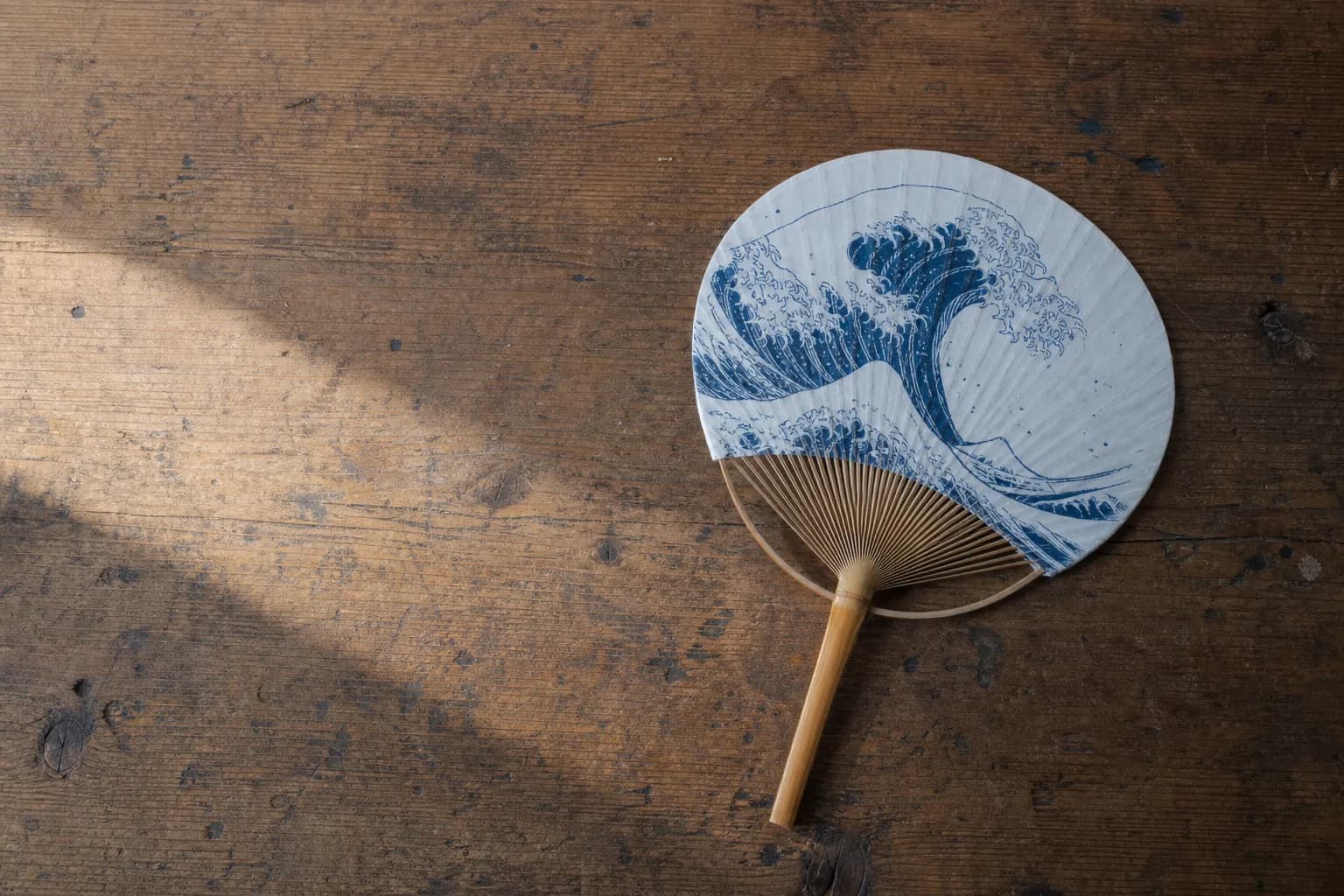
Making your own fan is one pleasure. Commissioning one is another. The truly bespoke path involves working with established makers who accept custom enquiries — a fan carrying your family motif, a seasonal pattern from the Seto Inland Sea, or a design for a wedding or corporate gift.
Uchiwa Ota-ya, for instance, indicates on its global site that it accepts enquiries for original, custom-made uchiwa alongside its own making workshop. Availability and specifics should always be confirmed directly with the maker, and our coordinator can help translate design intent into something a craftsman can actually cut and paste by hand.
Design carries meaning here. A few motifs worth knowing:
- Seigaiha — overlapping waves, an old symbol of calm and continuity, fitting for a fan born by the sea.
- Seasonal cues — maple, plum, and other markers of the year's turning, chosen to match when the fan will be given.
- Family crests — a discreet, personal touch that turns a fan into an heirloom rather than an accessory.
For corporate and event clients, a run of commissioned uchiwa makes a rare welcome amenity or executive gift — light, elegant, and unmistakably Japanese without the usual cliché.
A Curated Half-Day: Museum, Workshop, Commission
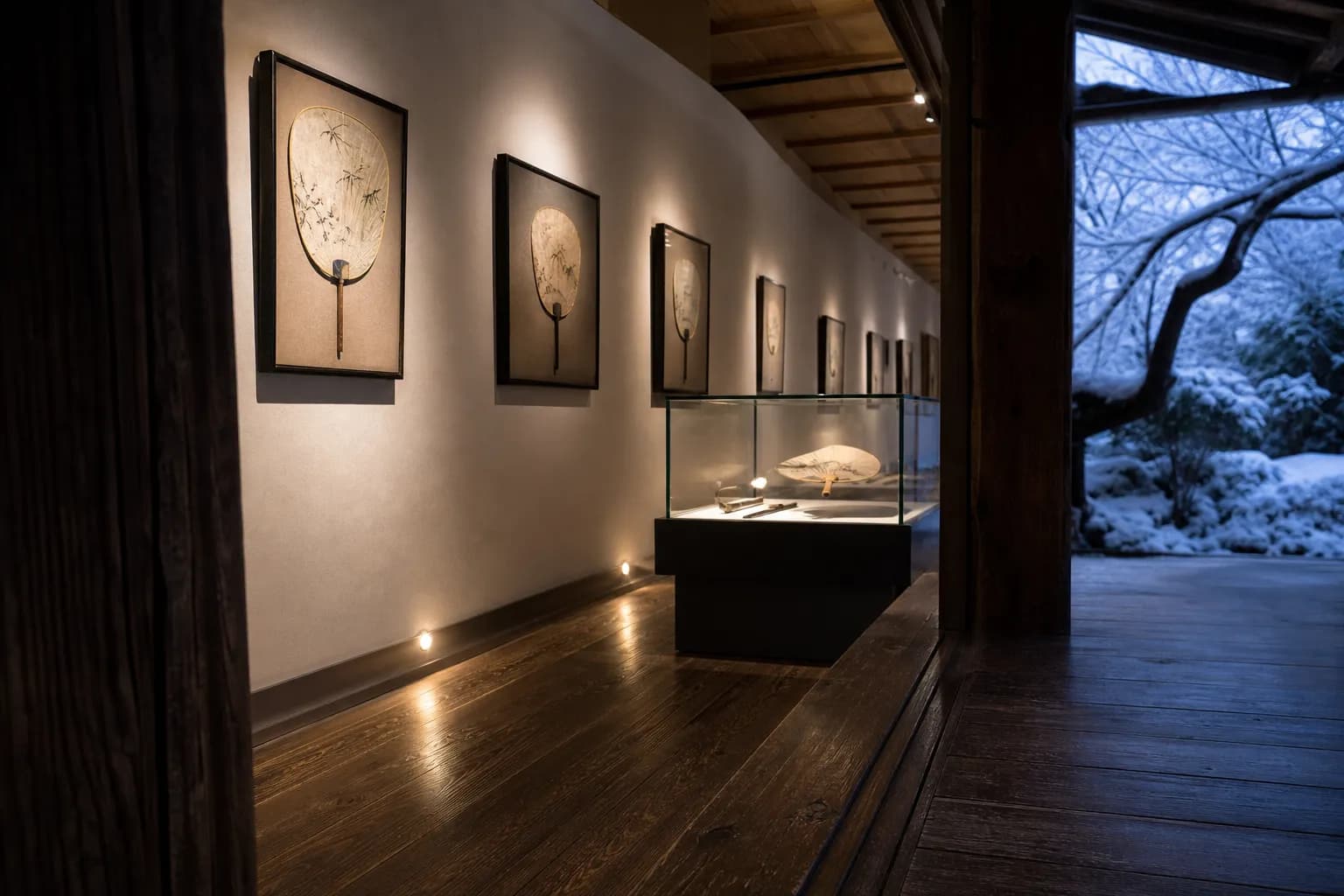
The Uchiwa no Minato Fan Museum grounds visitors in the craft's long history.
The most satisfying way to spend the craft is to move through it in sequence. Our team often builds a tight half-day in Marugame around three stops.
Begin at the Uchiwa no Minato Fan Museum. VISIT KAGAWA's listing notes that visitors here can make a one-of-a-kind uchiwa, and the museum grounds you in the history before your own hands touch the bamboo. In 2026, the Marugame Uchiwa Museum has a special exhibition on its calendar — a two-artist show noted for around May — giving collectors a reason to visit beyond the standard workshop.
From there, the workshop. Then, if the commissioning conversation is right, a consultation on a custom piece to follow you home. A private chauffeured day from your Kansai or Setouchi base makes the whole loop unhurried, and our English-speaking guides handle the introductions so nothing is lost in translation.
When To Go, And What To Pair It With
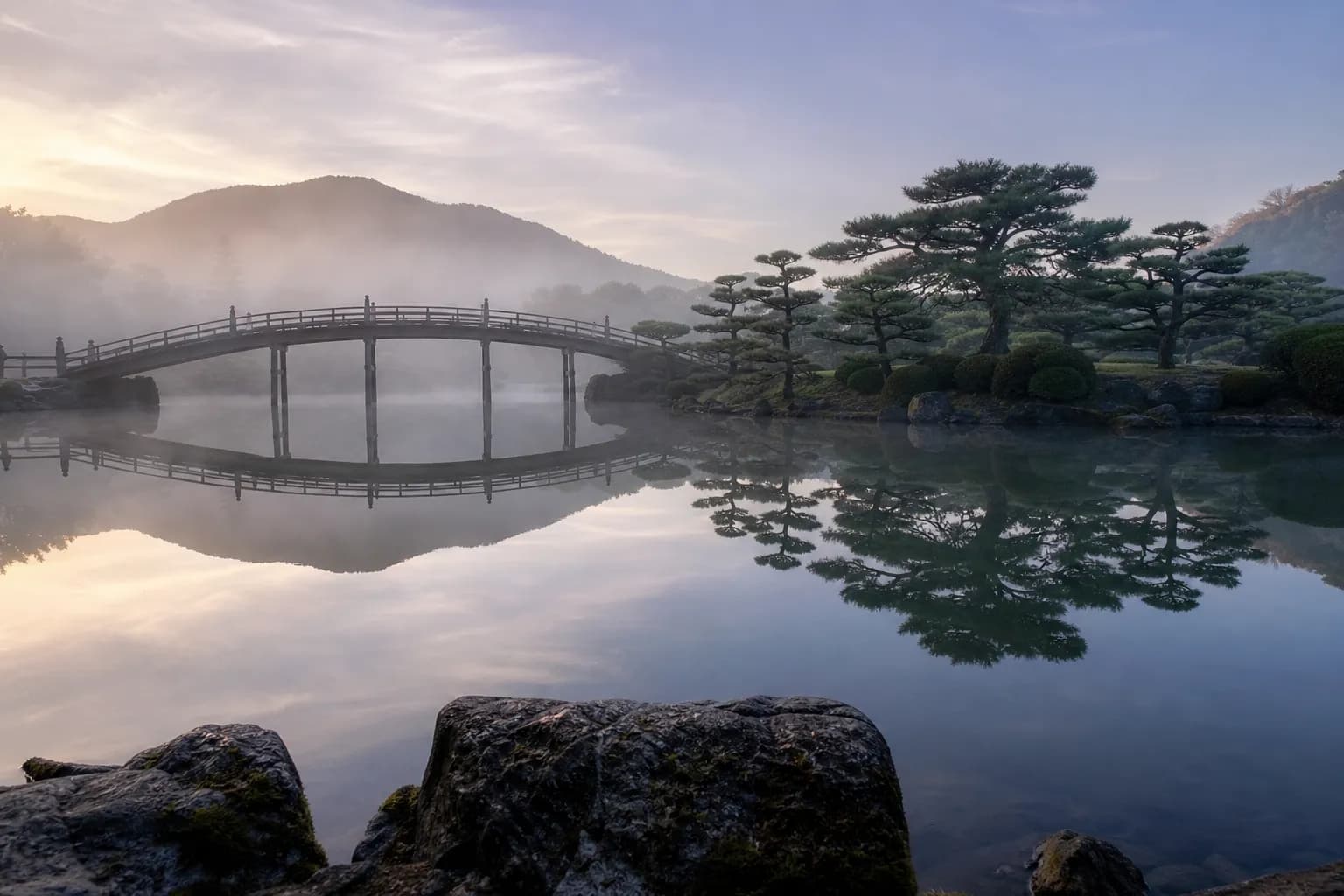
Ritsurin Garden hosts Kagawa's Traditional Artisan Weekend on March 7–8, 2026.
Marugame rewards travelers who plan around the calendar. Two fixed 2026 hooks are worth building an itinerary around.
Kagawa Prefecture has announced the KAGAWA TRADITIONAL ARTISAN WEEKEND in Ritsurin Garden, with the craft portal listing dates of March 7–8, 2026 (10:00–15:00) at Ritsurin Garden's Shoko Shoreikan in Takamatsu. Route through Takamatsu for the weekend, then add Marugame as a complementary craft day, and the trip becomes a study in Kagawa's making culture rather than a single stop.
For those combining the craft with a longer, calmer Japan, Kagawa pairs naturally with a Kansai base. The Imperial Hotel Kyoto opened on March 5, 2026, offering a discreet, culture-forward base with the service consistency the Imperial name has carried for state guests over generations. For a wellness reset afterward, Hoshino Resorts opens KAI Kusatsu on June 7, 2026 — a well-run ryokan in a famous onsen town, a quiet antidote to the crowds of the Golden Route.
How To Care For Your Uchiwa
A handmade fan is paper and bamboo. Treat it accordingly, and it will outlast the trip by decades.
- Keep it dry. Moisture warps the frame and loosens the pasted paper. Never leave it in a humid bathroom or a damp bag.
- Store it flat or upright, away from direct sun. Sunlight fades printed and dyed papers over time.
- Handle by the grip. Fingers on the paper leave oils that eventually mark it.
- Display, don't overuse. A collector-grade or commissioned fan is meant to be seen more than swung. Keep an everyday fan for actual heat.
Questions Guests Ask Us About Marugame Uchiwa
Where can I make a Marugame uchiwa?
The most accessible option is Uchiwa Workshop "TAKE" inside Marugame Castle, about a ten-minute walk from JR Marugame Station. For a deeper session, the full-version program runs at Shohantei on the grounds of Nakazu Banshoen.
How long does the experience take?
The standard session is about one hour. The Special Plan runs 90 to 120 minutes, and the full-version program at Nakazu Banshoen is a fixed 120 minutes.
Is there an age limit?
The full-version program requires participants to be at least 16, as it involves cutting equipment. Family-friendly standard sessions are gentler for younger guests.
Can I commission a truly custom fan?
Yes. Established makers such as Uchiwa Ota-ya accept enquiries for original, custom-made uchiwa. Details vary by maker and should be confirmed directly; our concierge can assist with introductions and design guidance.
When should I avoid visiting for the workshop?
Craft experiences at Workshop "TAKE" are not accepted December 12–January 25, and some blackout dates apply to the Special Plan. Confirm the calendar before fixing your dates.
Why Choose Japan Royal Service
The Marugame uchiwa is not hard to find. What is hard is the connective work around it — the introduction to a maker who will discuss a family crest, the timing that lands you at the museum during a limited exhibition, the private car that turns a scattered day trip into a single calm arc.
In our experience, the guests who remember Kagawa best are the ones who did not treat the fan as a checkbox. They sat with the bamboo. They understood, quietly, why forty ribs from one stalk is a small miracle. Our team at Japan Royal Service builds those afternoons — with discretion, English-speaking guidance, and a chauffeured base that never rushes you.
We share this information so you can plan with confidence. The bookings and commissioning conversations happen privately, one guest at a time.
To shape a Kagawa craft day or a longer Setouchi and Kansai itinerary around it, reach our team privately via WhatsApp or LINE, or at /contact. Tell us what you'd like to hold in your hands, and our concierge will take it from there.