目次
- 01Modern Geisha, Plainly Explained: A Working Artist, Not A Photo Opportunity
- 02Kyoto’s 2026 Reality: Rules Exist Because The Pressure Is Real
- 03Performance-First Travel: The Most Respectful Way To See Geiko And Maiko
- 04Beyond Kyoto: Asakusa Geisha Today In Modern Tokyo
- 05Kanazawa’s Geigi Culture: A September Anchor With Kanazawa Odori 2026
- 06Myths Vs. Current Reality: What Luxury Travelers Often Get Wrong
- 07A Day-In-The-Life View: The Modern Karyukai Rhythm (Without Voyeurism)
- 08How To Support Geiko, Maiko, And Their Communities Without Overstepping
- 09How To Plan A Modern Geisha Trip (Kyoto, Tokyo, Kanazawa) Without Guesswork
- 10Booking And Tickets: What To Know From Official Channels
- 11FAQ: The Modern Geisha (Etiquette, Access, And What To Expect)
- 12Why Choose Japan Royal Service
Most luxury travelers arrive in Japan with a tidy picture of “the geisha.” White makeup. Slow steps. A lantern-lit lane in Kyoto.
Then reality hits. Crowds. Cameras lifted too fast. A working artist trying to get from one appointment to the next.
Our team at Japan Royal Service writes about the modern geisha because the old travel approach is failing. Quietly. This guide shows a better way: performance-first, consent-first, and rooted in the living karyukai rather than street-chasing.
Modern Geisha, Plainly Explained: A Working Artist, Not A Photo Opportunity
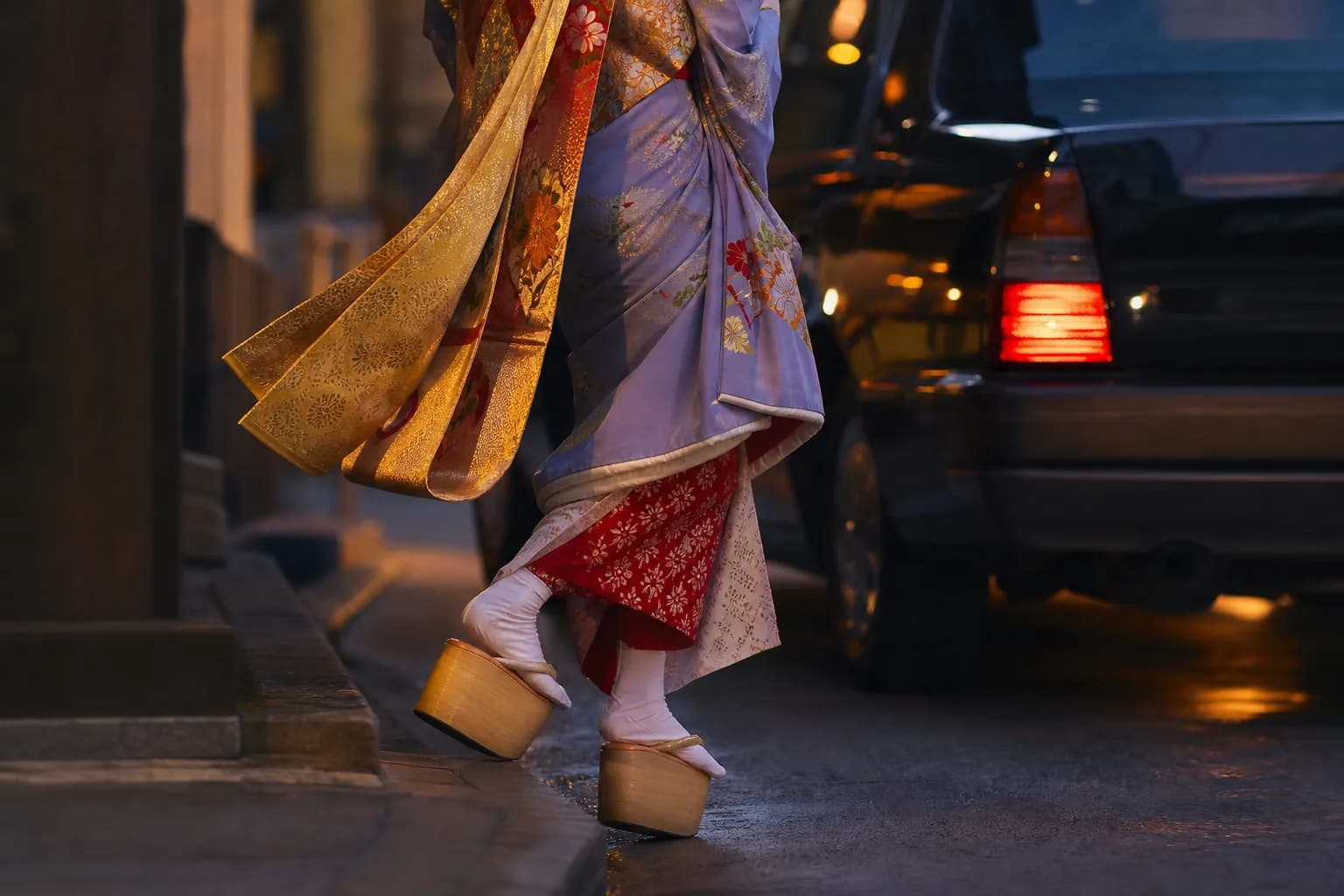
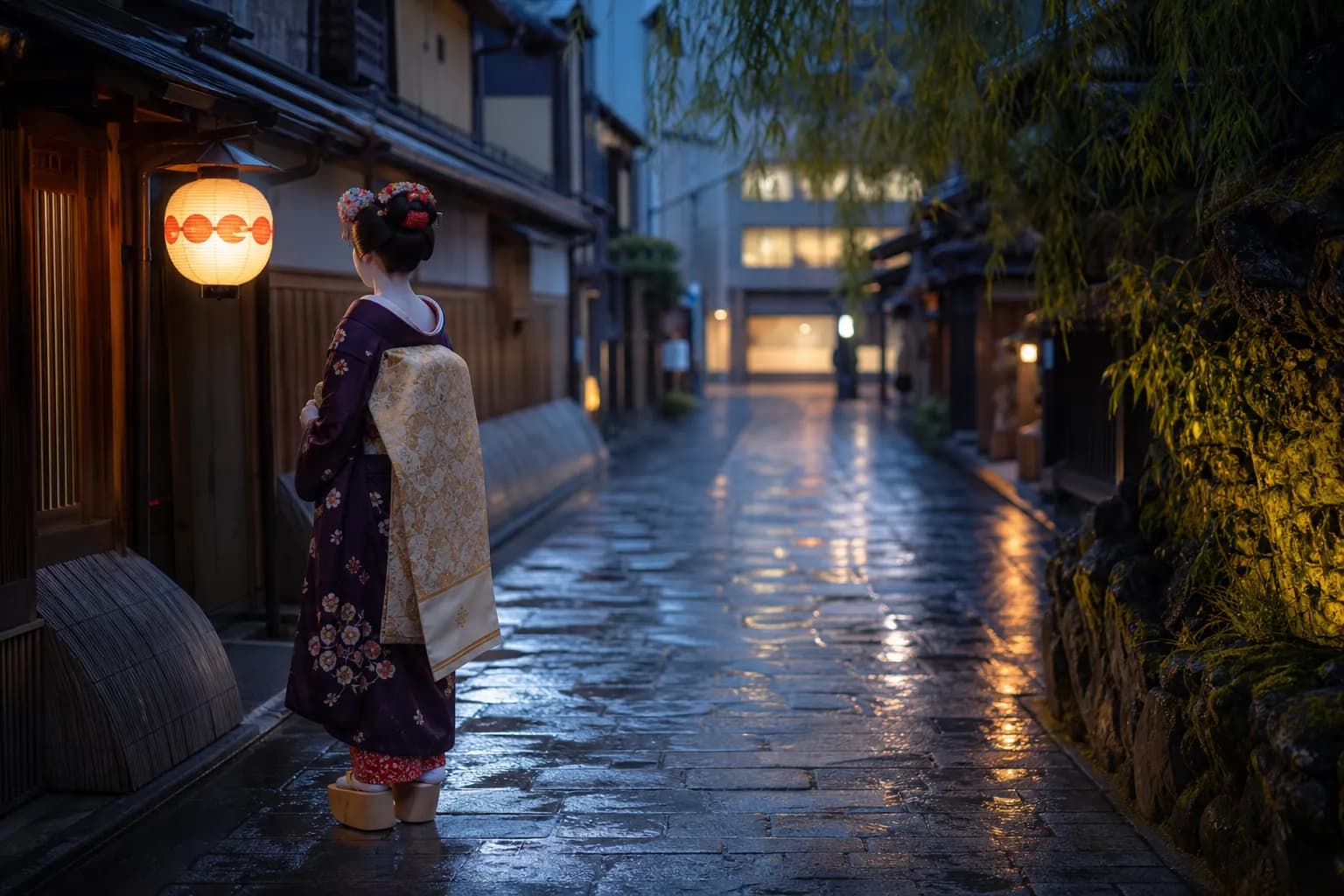
A living tradition moving through a modern street.
The word geisha is often used as a shortcut. In Kyoto, you will also hear geiko, and maiko for apprentices. Terminology varies by region, but the core is consistent: these are trained performing artists and hosts.
They study traditional dance, music, and conversation as a craft. A job. Not a costume.
That distinction matters in 2026. Kyoto has had to publish updated visitor guidelines because harassment and intrusion have become common in busy areas.
What “Modern” Means In The Karyukai
“Modern” does not mean watered down. It means the same disciplines carried into a high-pressure present: heavier tourism, constant phones, and stronger boundaries around privacy.
It also means clearer public pathways for visitors. Ticketed performances. Official event listings. Better etiquette messaging.
The Wabi-Sabi Lens: Why Restraint Reads As Luxury Here
In our experience, the most moving geiko moments are not loud. A sleeve brushed back before a dance begins. A pause. A single shamisen note held longer than you expect.
This is wabi-sabi in practice. Restraint, not spectacle. If you want a “big show,” choose theatre. If you want the real texture of the culture, choose the smaller, quieter doorway.
Kyoto’s 2026 Reality: Rules Exist Because The Pressure Is Real
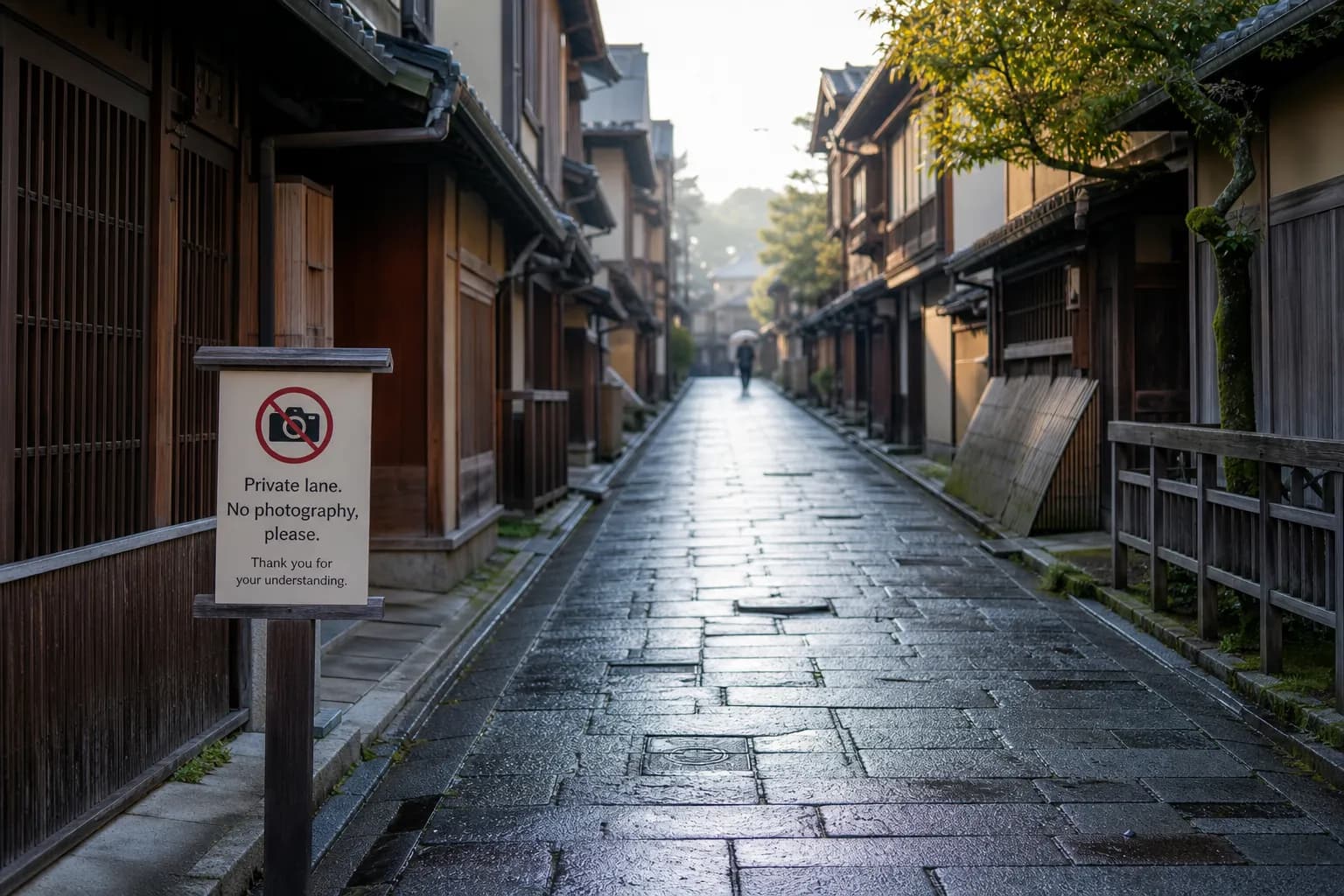
Kyoto’s rules protect residents and working artists.
Kyoto’s most photographed lanes are not a theme park. They are neighborhoods where people live and where professionals work under intense visitor attention.
Kyoto City Tourism Association (Kyoto Travel) updated its visitor guidelines on May 28, 2026. It states that in areas such as Southern Gion, forbidden acts have been observed, including following geiko/maiko, photographing them without permission, trespassing, and photographing private property.
That update is not abstract. It is a line in the sand.
Key fact: Kyoto Travel’s 2026 guidelines state that photography is only permitted in designated areas, and they explicitly warn against following geiko/maiko, trespassing, and photographing private property.
What Not To Do In Gion (Even If You See Others Doing It)
- Do not follow a geiko or maiko to “see where she’s going.” That is harassment.
- Do not step into private lanes or photograph gates, windows, and entryways as if they are scenery.
- Do not raise a camera at close range without clear consent.
- Do not block the path to force a moment. Quick. It still counts.
What To Do Instead (The High-Class Alternative)
Choose a ticketed performance. Sit down. Let the artistry come to you.
Or choose a structured, consent-based cultural evening where introductions and boundaries are respected. Hidden Japan is often less about secrecy and more about manners: access that exists only because you did not push.
Performance-First Travel: The Most Respectful Way To See Geiko And Maiko
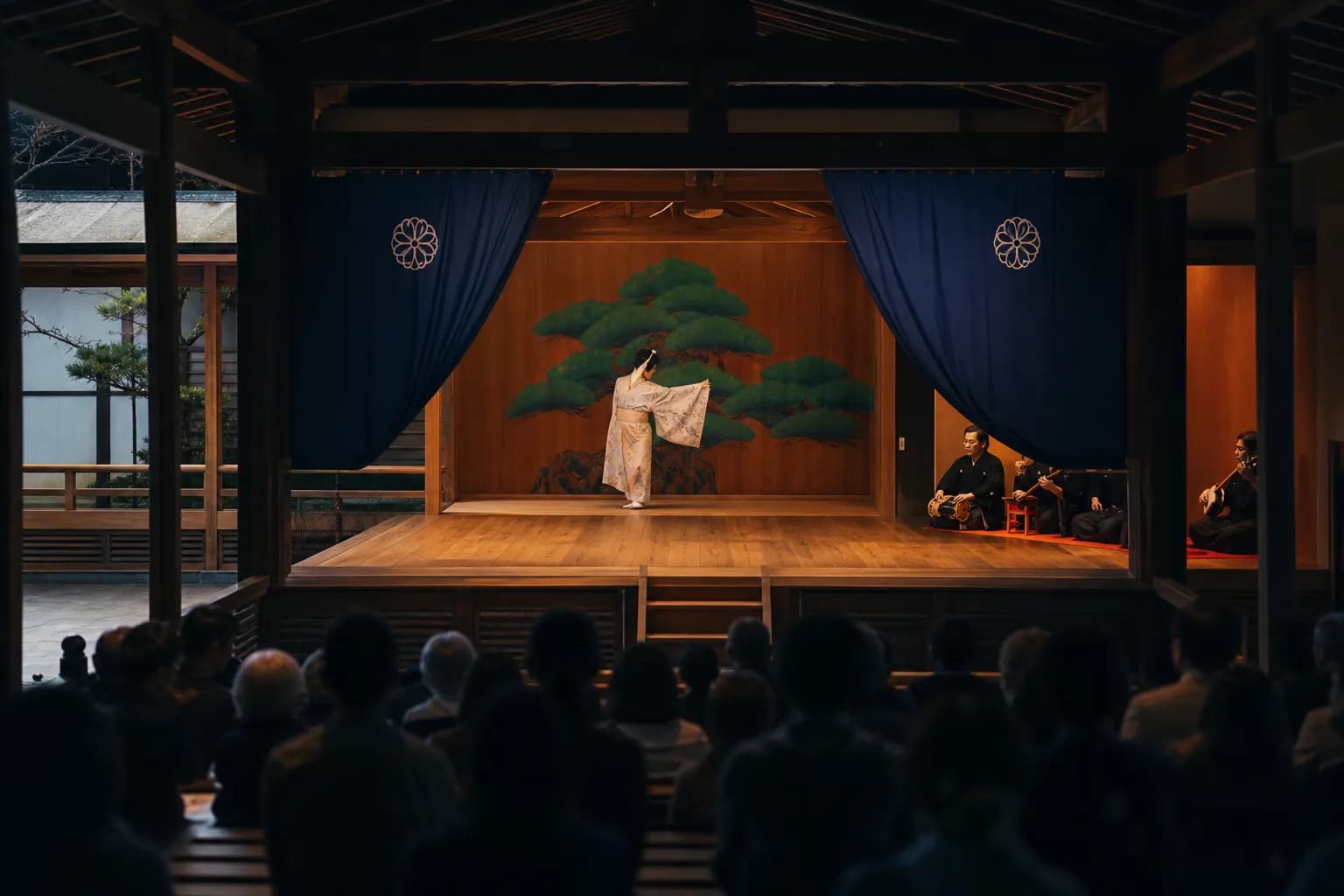
Choose the stage before the street.
If you want to understand the modern geisha, start with the stage. Not the street.
Kyoto Travel explains that Haru no Odori—spring dance performances by maiko and geiko—take place annually from late March through May at theaters across Kyoto’s five kagai (traditional entertainment districts).
This is the cleanest entry point. It is public. It is intentional. It does not turn someone’s commute into your souvenir.
Miyako Odori (Kyoto): A Concrete 2026 Reference Point
The official Miyako Odori website states that the 152nd Miyako Odori began on April 1 and reached its final performance (Senshuraku) on May 1, 2026, after a 30-day run.
We mention this because it anchors your planning in real calendars, not rumors. The modern karyukai has dates, venues, and official channels. Use them.
Kamogawa Odori (Pontocho, Kyoto): 2026 Dates You Can Plan Around
The official Pontocho Kamogawa Odori site lists 2026 dates as May 5, 2026 to May 22, 2026. It also notes the event is held by the Pontocho Kabukai Association.
If your Japan trip falls in May, this is often the smartest Kyoto “geiko moment.” Controlled entry. Clear audience behavior. A focused view of dance as a living discipline.
How We Frame These Evenings For HNW Travelers
Our concierge team at Japan Royal Service approaches these performances like a museum visit with a pulse. We plan timing so you are not rushing. We build in space for a late walk on wider streets, not the tight lanes that spark crowding.
And we keep the tone right. No hunting. No theatrics. Just attention.
Beyond Kyoto: Asakusa Geisha Today In Modern Tokyo
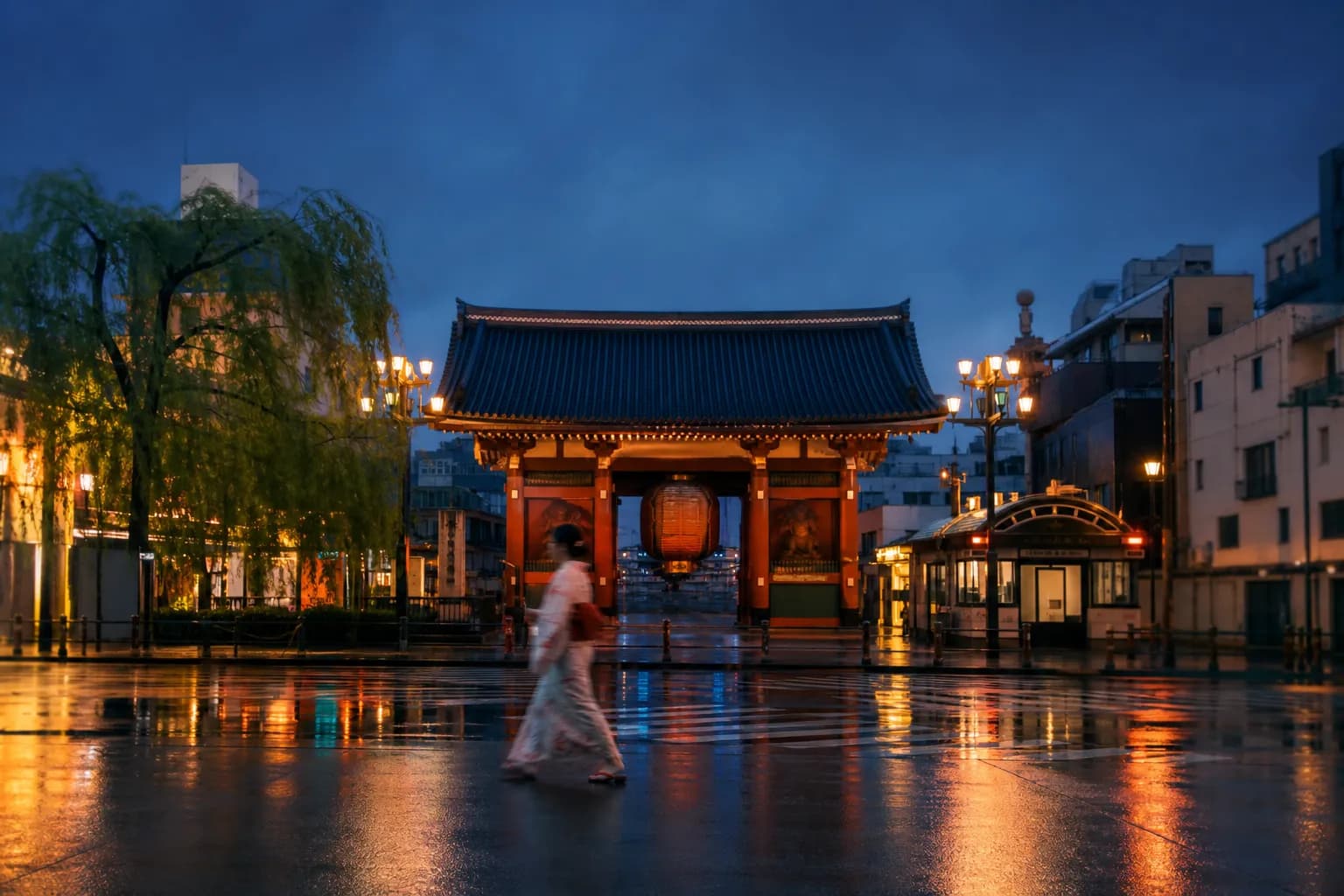
Tokyo offers a different, urban perspective.
Many well-traveled guests want a geisha-related experience without Kyoto’s most intense street pressure. Tokyo can offer a different angle.
GO TOKYO (Tokyo Metropolitan Government’s official travel guide) lists “Asakusa Geisha’s Ozashiki Odori Spring / Summer 2026” as an event entry. The Asakusa Tourism Federation also has an English page titled “Asakusa Geisha’s Parlor Dance Performance, Spring 2026.”
Asakusa is not “Kyoto-lite.” It is its own urban tradition, operating under modern Tokyo rhythms.
What Feels Modern In Asakusa
You may see traditional attire set against very contemporary streetscapes. Neon reflections on a taxi window. Office buildings nearby. A performance culture continuing in plain sight.
For HNW travelers, this can be a calmer cultural thread to weave into a Tokyo stay, especially when the rest of the itinerary is already dense with meetings or family commitments.
Practical Etiquette In Tokyo Settings
- Keep phones down during performance moments unless rules explicitly allow filming.
- Ask before photographing anyone in traditional attire, even in public areas.
- Let the venue staff set the tone. Follow it.
Kanazawa’s Geigi Culture: A September Anchor With Kanazawa Odori 2026
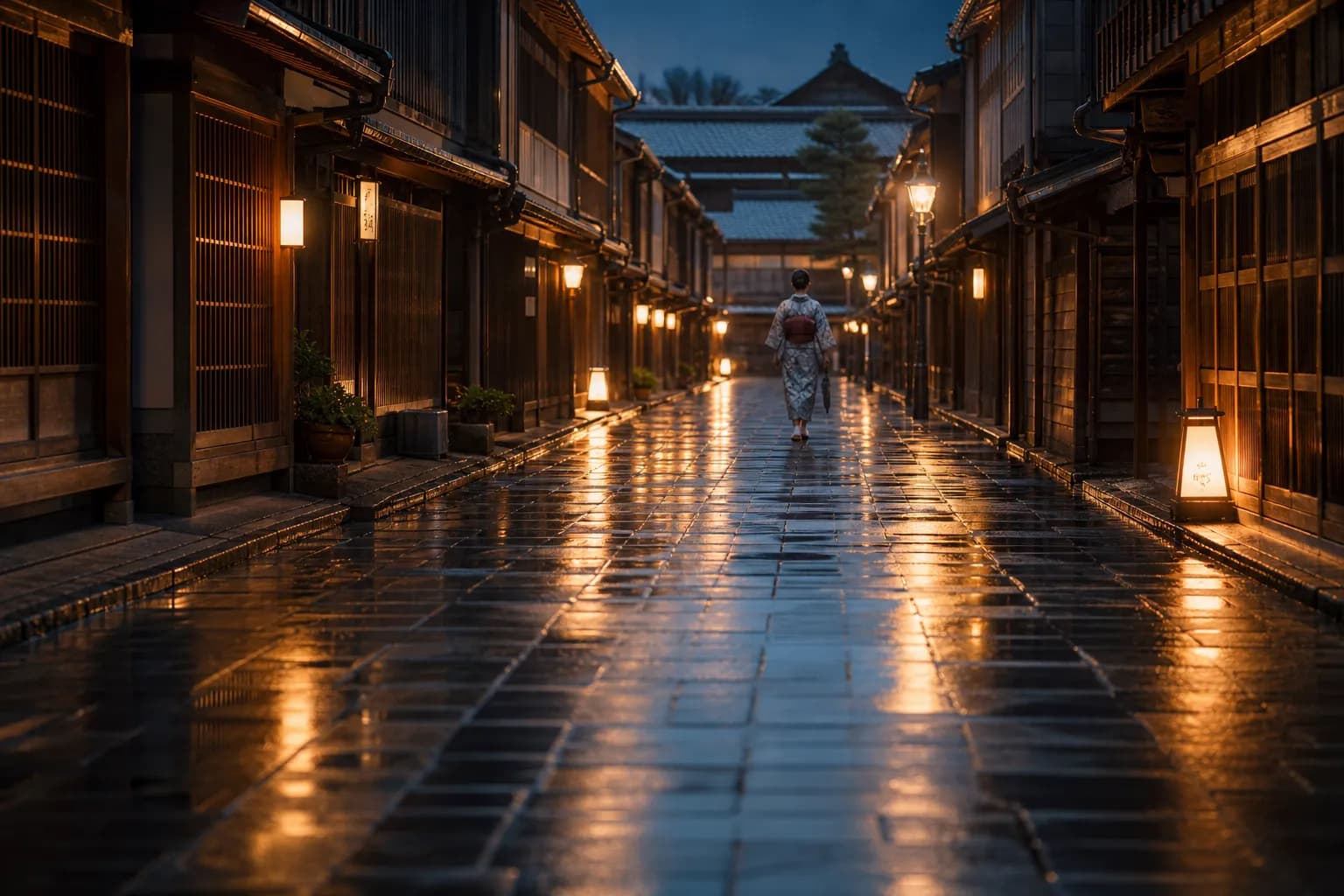
Kanazawa rewards patience and restraint.
Kyoto gets the headlines. Kanazawa rewards the patient traveler.
The Kanazawa Odori official site lists the 2026 dates as Saturday, September 19, 2026 and Sunday, September 20, 2026.
For guests who prefer quieter streets and a less performative travel atmosphere, Kanazawa can feel like a better match. Wabi-sabi shows up easily there—aged wood, careful gardens, and a pace that does not demand you sprint.
How Kanazawa Fits A Luxury Itinerary Without Feeling Like A Detour
We often see HNW travelers treat Kanazawa as a palate cleanser between Tokyo and Kyoto, or as a second cultural base after Kyoto. The aim is not quantity. It is contrast.
When you plan around a dated event like Kanazawa Odori, the city stops being “optional.” It becomes the point.
Myths Vs. Current Reality: What Luxury Travelers Often Get Wrong
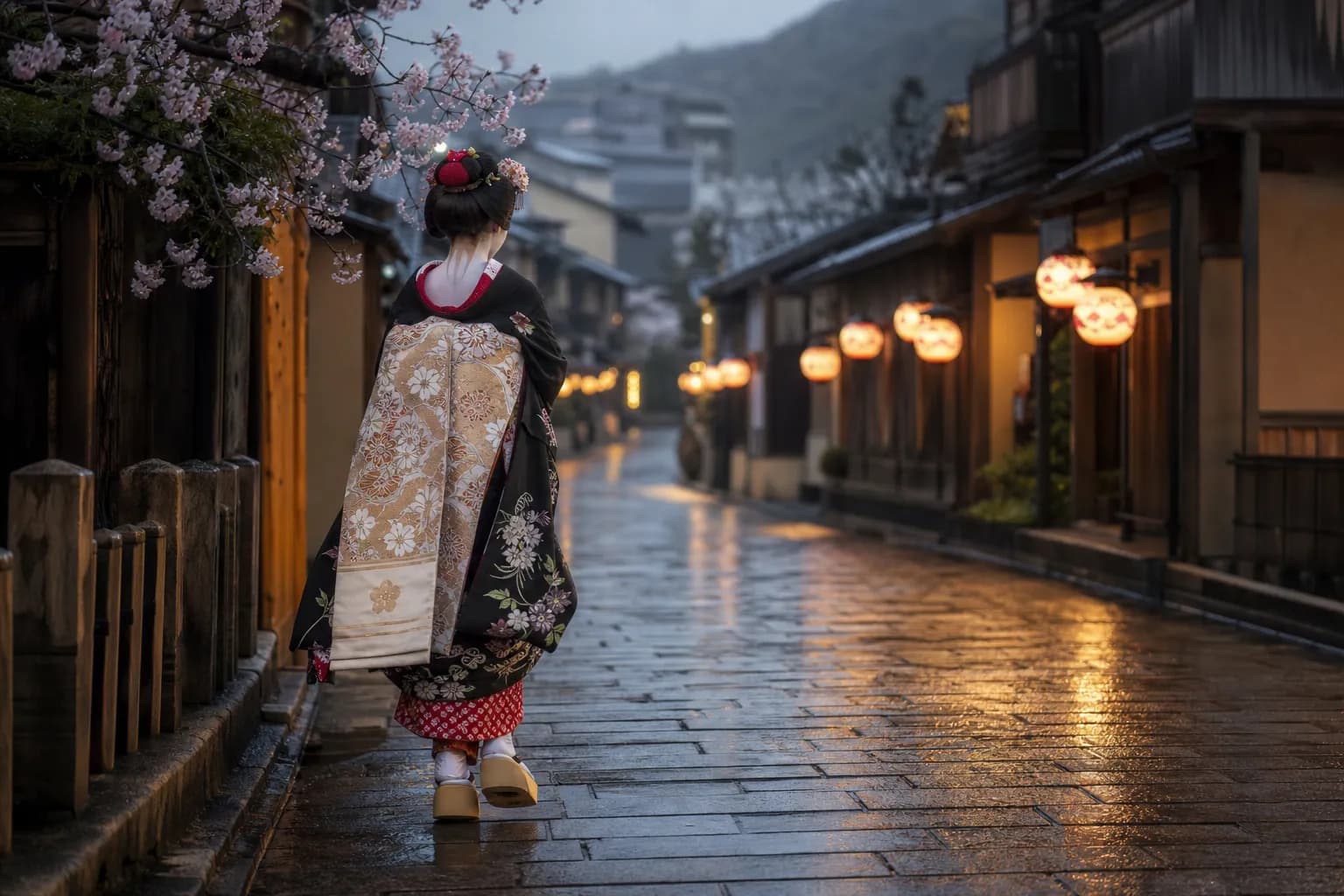
Misunderstanding creates bad behavior. Fast.
So we keep this section blunt. You can enjoy the culture and still protect it.
Myth: “Seeing A Maiko On The Street Is The Authentic Experience”
Reality: what you are seeing may be a working professional moving between commitments. Authenticity is not the same as access. Watching a performance is often more authentic than chasing a commute.
Myth: “A Quick Photo Doesn’t Hurt Anyone”
Reality: Kyoto’s official visitor guidelines were updated because harm has been observed: following, unwanted photography, trespass, and photographing private property. A single traveler can feel harmless. A hundred in a day feels like a siege.
Myth: “Geisha Culture Is Only Kyoto”
Reality: official tourism channels highlight Asakusa geisha performances in Tokyo, and Kanazawa Odori provides a dated, verifiable cultural anchor outside Kyoto.
Myth: “Any ‘Maiko Makeover’ Is A Window Into The Karyukai”
Reality: costume experiences exist, but they are not the same as geiko/maiko training and professional life. If your goal is to support working artists, choose official performances and consent-first pathways.
A Day-In-The-Life View: The Modern Karyukai Rhythm (Without Voyeurism)
We avoid romantic scripts here. Real life is more disciplined, and more human.
In a performance season, days can stack up: rehearsal, costume preparation, and stage time. Between those blocks, there is commuting, quiet meals, and rapid changes in posture—from focused practice to public composure.
That shift is the point. The modern geisha is not frozen in time. She is a professional artist moving through a modern city while carrying a traditional craft with shokunin intensity.
What Shokunin Looks Like In This World
Shokunin is not only a potter at a kiln. It is any craft pursued to a sharp edge.
Dance lines refined over years. Instruments practiced until the hands stop thinking. Conversation treated as an art with rules, timing, and grace.
How To Support Geiko, Maiko, And Their Communities Without Overstepping
Support can be quiet. It should be.
Luxury travel has influence in Japan because it can lower pressure instead of increasing it. Smaller groups. Better timing. No “must-get” street photo.
Responsible Choices That Actually Help
- Choose ticketed performances during Haru no Odori season rather than street-chasing.
- Follow official guidance in Kyoto, especially around Southern Gion and designated photography areas.
- Spend locally with intent: traditional arts, craft purchases from real studios, and meals that respect the neighborhood’s pace.
- Keep your party small when cultural sensitivity is high. Big groups change the room.
Questions That Are Usually Fine (And Those That Are Not)
Fine: asking about the performance, music, or the history of an odori. Keep it respectful. Keep it short.
Not fine: asking where someone lives, where she is going next, or trying to extract private details about the hanamachi. Discretion is not a “perk.” It is part of the culture’s survival.
How To Plan A Modern Geisha Trip (Kyoto, Tokyo, Kanazawa) Without Guesswork
The simplest mistake is building the trip around a single encounter. Big mistake.
Build the trip around a series of aligned moments: a performance, a craft visit, a quiet dinner, an early-morning shrine walk when streets are empty. Then the geiko-related element sits naturally in the itinerary instead of dominating it.
Option A: Kyoto In Late March To May (Spring Odori Window)
Kyoto Travel states spring dance performances take place annually from late March through May across Kyoto’s five kagai. That gives you a planning spine.
- Anchor on a Haru no Odori performance date.
- Choose routes that reduce friction in Southern Gion.
- Pair with a shokunin visit that matches your interests: textiles, ceramics, or lacquerwork.
Option B: Tokyo (Asakusa) For A Modern Urban Contrast
GO TOKYO and the Asakusa Tourism Federation publish official event information for Asakusa geisha performances in Spring/Summer 2026. This is a practical entry point for travelers based in Tokyo.
- Use Asakusa as an evening cultural note, not an all-day chase.
- Keep expectations realistic: it is a different tradition than Kyoto.
- Plan transport so you arrive calm and leave quietly.
Option C: Kanazawa In September (Kanazawa Odori 2026)
Kanazawa Odori is dated and verifiable: September 19–20, 2026 on the official site. That makes Kanazawa a strong “second act” for repeat Japan travelers.
- Use the performance as the anchor, then explore gardens and craft districts at a slower tempo.
- Keep evenings understated. Kanazawa rewards restraint.
Booking And Tickets: What To Know From Official Channels
Public performances like Kyoto’s spring odori and regional odori events have official websites and official ticketing pathways. Always start there.
For Kyoto examples cited in this guide, the Miyako Odori and Pontocho Kamogawa Odori sites publish dates and event information, and Kyoto Travel provides official context for Haru no Odori season.
For Tokyo, official tourism sources like GO TOKYO and the Asakusa Tourism Federation publish event listings for Asakusa geisha performances.
For Kanazawa, the Kanazawa Odori official site publishes the 2026 dates.
If you have questions about how to fit these into a discreet itinerary—timing, neighborhoods, party size, and what to avoid—contact our concierge team privately.
FAQ: The Modern Geisha (Etiquette, Access, And What To Expect)
Is It Okay To Photograph A Maiko Or Geiko In Kyoto?
Kyoto Travel’s visitor guidelines (updated May 28, 2026) warn against photographing geiko/maiko without permission and state photography is only permitted in designated areas. Treat that as your baseline.
What Is The Most Respectful Way To See Geiko Or Maiko?
Choose ticketed performances, especially during Kyoto’s Haru no Odori season (late March through May, per Kyoto Travel). You see real artistry without turning someone’s workday into a spectacle.
Can I Experience Geisha Culture Outside Kyoto?
Yes. Official tourism sources list Asakusa geisha performance events in Tokyo (Spring/Summer 2026), and Kanazawa Odori is scheduled for September 19–20, 2026 per its official site.
Is “Modern Geisha” A Different Tradition?
It is the same tradition under modern conditions: more visitors, more enforcement of privacy, and clearer public pathways like official performances.
How Do Luxury Travelers Avoid Contributing To Overtourism Harm?
Follow official rules, keep groups small, choose performances over street-chasing, and prioritize discretion. In our experience, the quiet choices leave the best memories anyway.
Why Choose Japan Royal Service
Luxury in Japan is not volume. It is judgment.
Our team at Japan Royal Service builds modern geisha itineraries around three non-negotiables: discretion, shokunin-level cultural depth, and hidden-Japan routing that keeps you out of the most stressed lanes and into experiences that are meant to be seen.
We also plan with wabi-sabi restraint. Fewer “big moments.” Better ones. The kind that do not require you to take anything from the culture to feel that you received something.
Ready to plan a respectful, performance-first karyukai journey? Reach our team privately via WhatsApp or LINE, or at </contact>.