目次
- 01What Yama Means in Japan
- 02The Yamabushi And The Practice Of Shugendo
- 03The Sacred Mountains Worth Your Journey
- 04Mountain Folklore: The Spirits Of The High Places
- 05Mountains In Japanese Art And Poetry
- 06How To Approach A Sacred Hike: Season, Etiquette, And Access
- 07Pairing The Mountains With Quiet Luxury Below
- 08Frequently Asked Questions
- 09Why Choose Japan Royal Service
There is a word in Japanese that opens more than it says. Yama. Mountain. But ask any pilgrim who has climbed the wet stone steps of Mount Haguro at dawn, and they will tell you the word carries something the dictionary leaves out. The mountains of Japan are not scenery. They are dwelling places of gods, training grounds for ascetics, and routes that have carried prayers for more than a thousand years.
For travelers who already know the world's great hiking regions, Japan offers something rarer. Not just altitude. Reverence. At Japan Royal Service, we design quiet, craft-led journeys into these sacred peaks for guests who want depth rather than distance covered.
This guide walks you through what makes Japan's holy mountains worth your time, which ones reward the discerning visitor, and how to experience them with the restraint they deserve.
What Yama Means in Japan
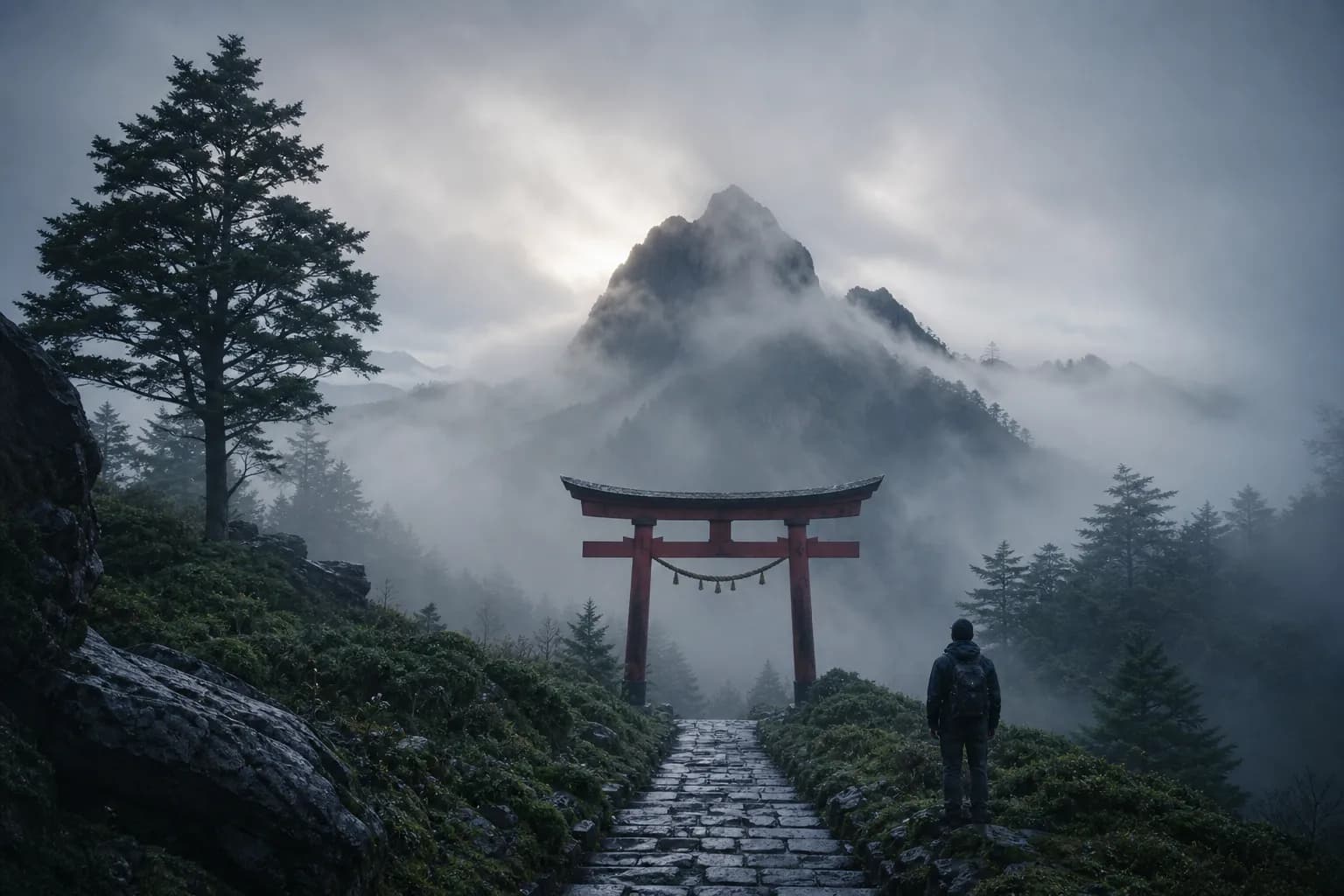
In most cultures a mountain is a place you conquer. In Japan it is a place you enter with care. The oldest layer of Japanese belief holds that yama-no-kami, the mountain deities, live in the high places.
These gods were thought to move. In spring they descended to the rice fields as ta-no-kami, blessing the planting. In autumn they returned to the peaks. Farmers, hunters, and woodcutters all kept faith with this rhythm because they believed their survival depended on it.
So mountain worship shaped the whole Japanese year. It set the timing of harvest rites and seasonal festivals. Even today, a climb up a sacred peak is understood by many as an act of devotion rather than recreation. That distinction changes everything about how you should approach it.
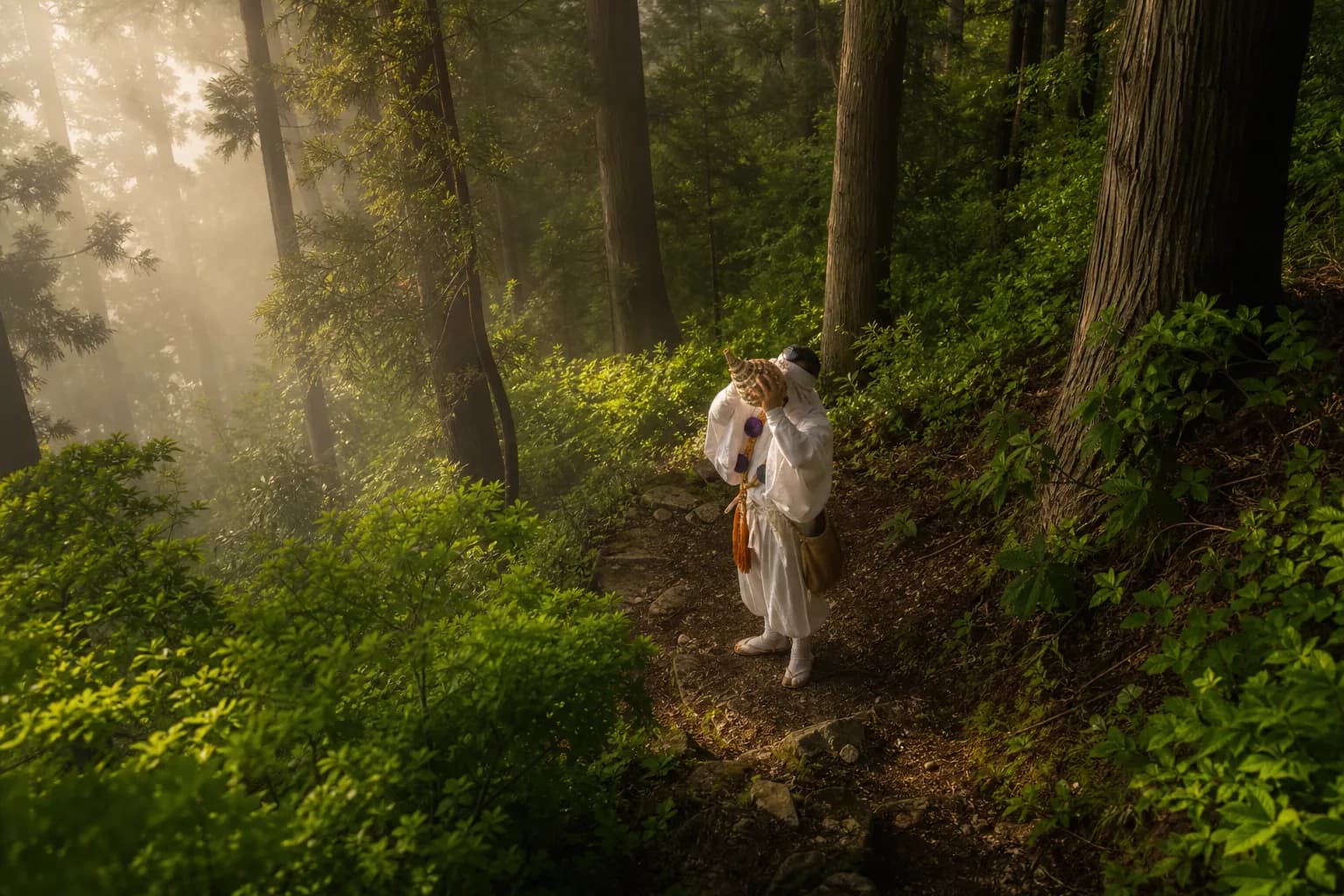
A yamabushi sounds the conch shell along an ancient mountain path in Yamagata Prefecture.
The Yamabushi And The Practice Of Shugendo
Few traditions explain Japan's mountains better than the yamabushi, the mountain ascetics. For more than a millennium these practitioners have used the peaks as a discipline.
Their faith is called shugendo. It braids together Buddhist, Shinto, and older animist threads into a single path toward enlightenment found through hardship in the wild. Waterfall standing. Long fasts. Days of walking with no comfort. The mountain itself is the teacher.
The Dewa Sanzan in Yamagata Prefecture remains the spiritual heart of this practice. Here you can still hear the conch-shell horn that yamabushi sound on the trail. With the right introduction, a guest may walk a stretch of these paths in the company of someone who has kept the tradition alive, an encounter we consider among the most quietly moving in all of Japan.
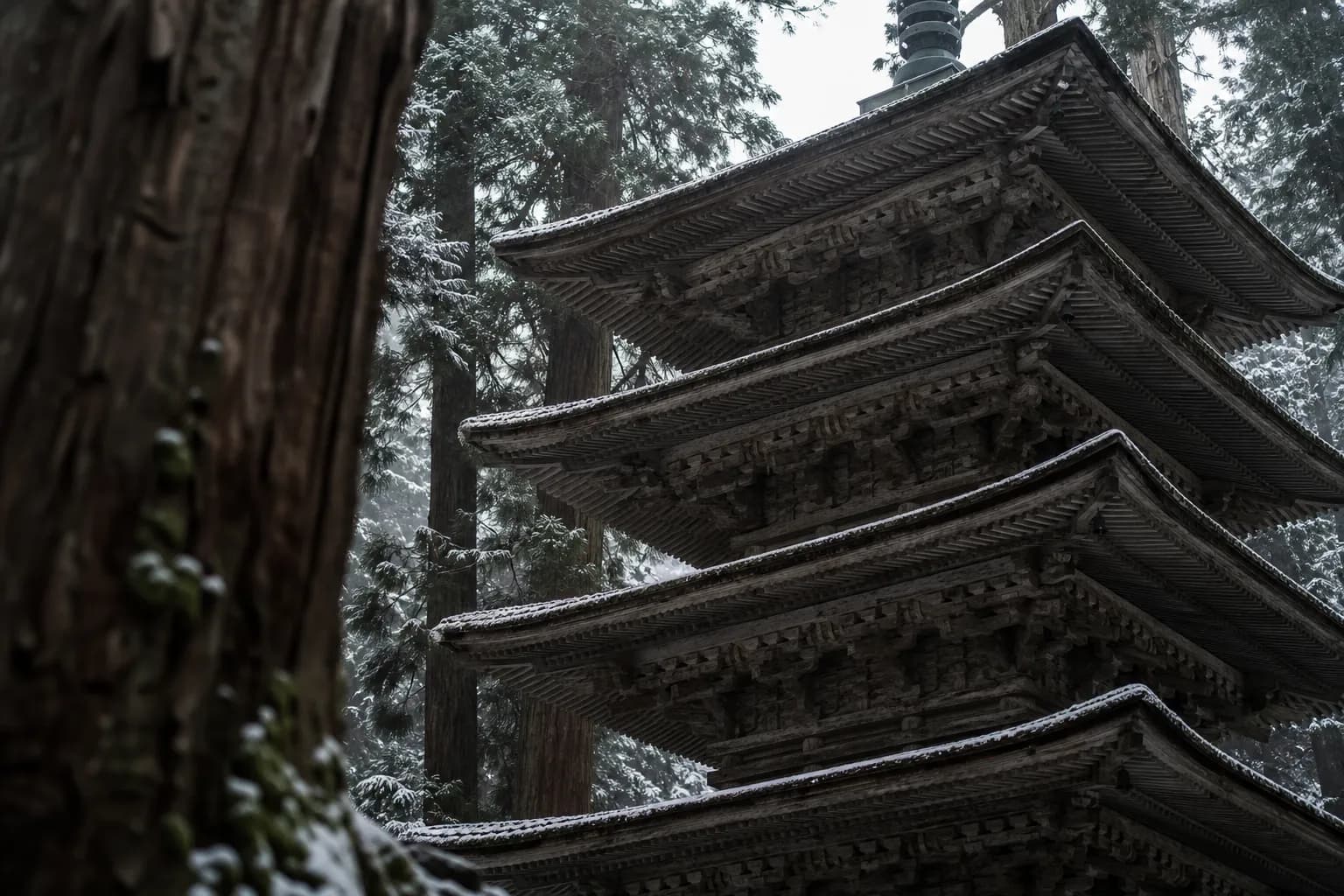
The 14th-century pagoda at the foot of Mount Haguro, weathered to the color of the surrounding cedars.
The Sacred Mountains Worth Your Journey
Japan has many holy peaks. A handful stand out for the depth of experience they offer the thoughtful traveler. Each has its own character, its own season, its own reason to go.
- Mount Fuji (Shizuoka / Yamanashi): Sacred Shinto peak, pilgrimage — Best season: July–August
- Mount Koya (Wakayama): Shingon Buddhism center — Best season: Spring / Autumn
- Dewa Sanzan (Yamagata): Yamabushi training peaks — Best season: Summer
- Mount Hiei (Kyoto / Shiga): Tendai Buddhism headquarters — Best season: Year-round
- Mount Osore (Aomori): Gateway to the afterlife — Best season: May–October
Dewa Sanzan: The Three Mountains Of Rebirth
If you want the truest pilgrimage, go here. The Dewa Sanzan are three peaks in Yamagata, and together they form one journey through life itself.
Mount Haguro stands for the present. Mount Gassan for the past, for death. Mount Yudono for the future, for rebirth. To walk all three in order is to be born again, in the old understanding.
The approach to Haguro alone is unforgettable. More than two thousand stone steps climb through a cedar forest so old and still that the air feels heavy. Near the base stands a five-story pagoda from the 14th century, weathered to the color of the trees around it. This is wabi-sabi made physical, beauty that comes from age and quiet rather than polish.
Mount Koya: A Monastery In The Clouds
Koya-san is not a single climb but a high plateau of temples, founded by the monk Kobo Daishi in 816. It remains the heart of Shingon Buddhism. More than fifty temples here offer shukubo, lodging where guests sleep, eat, and wake with the monks.
The vegetarian temple cuisine, shojin ryori, is a quiet revelation. No meat, no fish, no waste. Just seasonal vegetables prepared with the precision of a craft handed down for centuries.
Then there is Okunoin. A two-kilometer path winds through Japan's largest cemetery, more than two hundred thousand stone monuments standing among towering cryptomeria. Walk it at dawn, before the day arrives, and you will understand why people lower their voices here without being asked.
Mount Hiei: Kyoto's Guardian Peak
Rising over the northeast of Kyoto, Mount Hiei holds Enryaku-ji, headquarters of Tendai Buddhism since 788. This is where the marathon monks of the kaihogyo practice their thousand-day mountain ordeal, one of the most severe disciplines in any faith.
For the traveler based in Kyoto, Hiei offers something rare: deep mountain spirituality within reach of the city. A morning among its mossy halls, then back to the comforts of a Kyoto ryokan by evening. Few sacred peaks balance access and atmosphere so well.
Mountain Folklore: The Spirits Of The High Places
The Japanese imagination filled the mountains with beings. Some warned. Some watched. All of them reveal how seriously people took the wild.
The Yama-uba, the mountain crone, appears across Japanese theater and tale. She can nurse a hero or devour a traveler, both faces of the mountain's power. Stories of her kept the unprepared from wandering too far.
There were others. The Yamawaro, small forest dwellers. The Yamabito, mysterious mountain people living at the edge of the known world. These were not idle fictions. They were a culture working out its relationship with everything beyond the village fence.
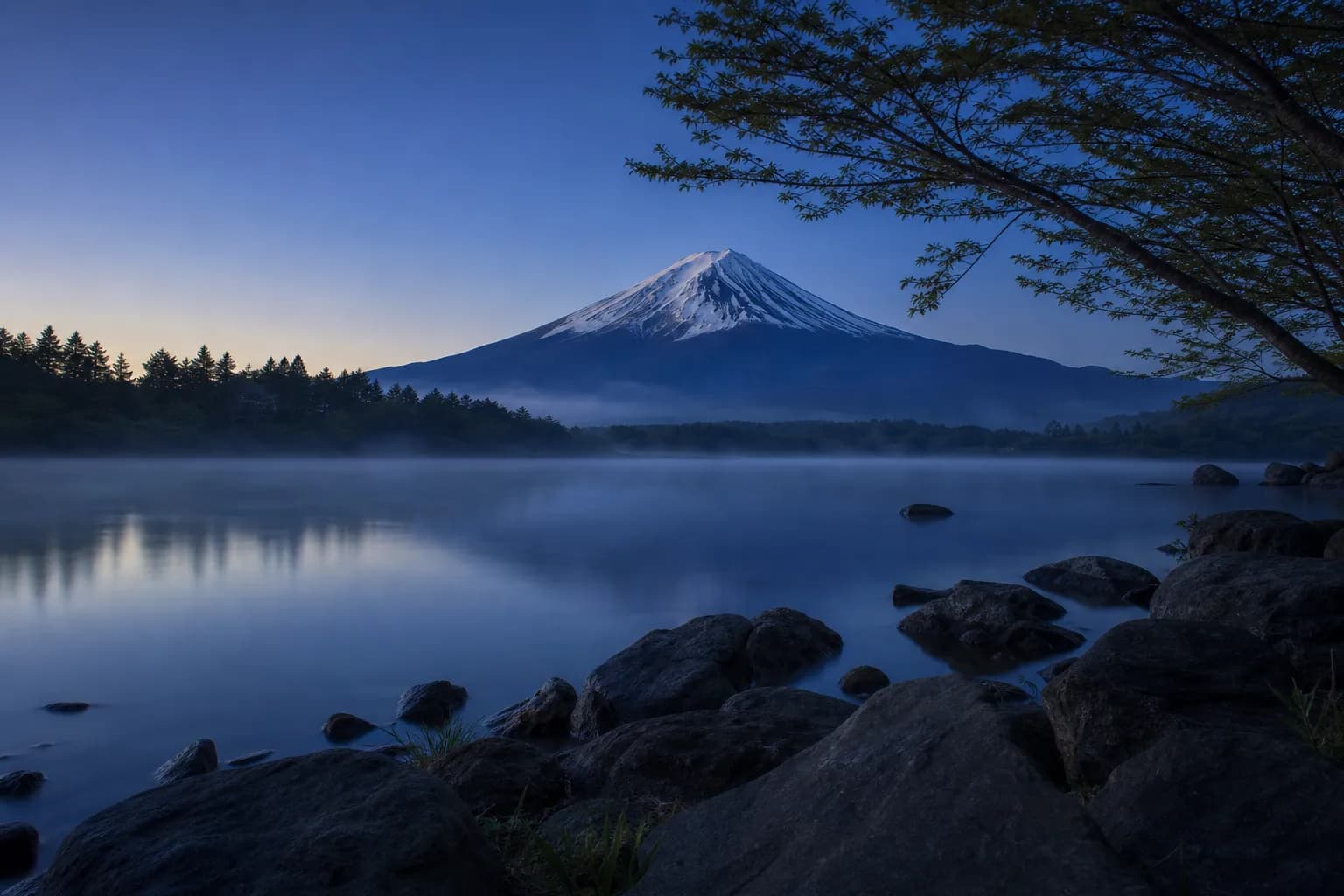
Mount Fuji, the sacred peak that inspired Hokusai's thirty-six views and a thousand years of poetry.
Mountains In Japanese Art And Poetry
No yama has been painted more than Fuji. Katsushika Hokusai gave it thirty-six views, and then more, each angle revealing a different mood in the same sacred shape. The mountain became a way of seeing.
Poetry took the same path. Haiku and waka return again and again to the peaks, using them as symbols of permanence, of the divine, of a beauty that outlasts us. The word yama appears in countless place names and verses, each adding a layer of meaning.
This matters for the traveler. When you stand before a sacred peak knowing the art and the prayers it has inspired, the view stops being a photograph. It becomes a conversation a thousand years long.
How To Approach A Sacred Hike: Season, Etiquette, And Access
Timing is everything. Mount Fuji opens to climbers only in summer, roughly early July through early September. The Dewa Sanzan are best in the warm months, when the high trails are clear. Koya-san and Hiei reward spring and autumn, when the maples turn or the cherry stirs.
Etiquette is real here, not decorative. Bow at the torii before you pass. Keep your voice low in temple grounds. Many paths remain places of active worship, and you will meet pilgrims for whom this is faith, not sightseeing.
Key fact: A genuine yamabushi walk is rarely available on request. It depends on relationships, the right season, and an introduction. We plan these well in advance and never promise what the mountain and its keepers cannot give.
Comfort and reverence are not opposites. A private chauffeured vehicle can carry you to a trailhead at dawn, before tour buses arrive, then collect you for a hot spring and a quiet ryokan dinner that evening. The hardship of the old pilgrims was the point for them. For you, the point can be presence.
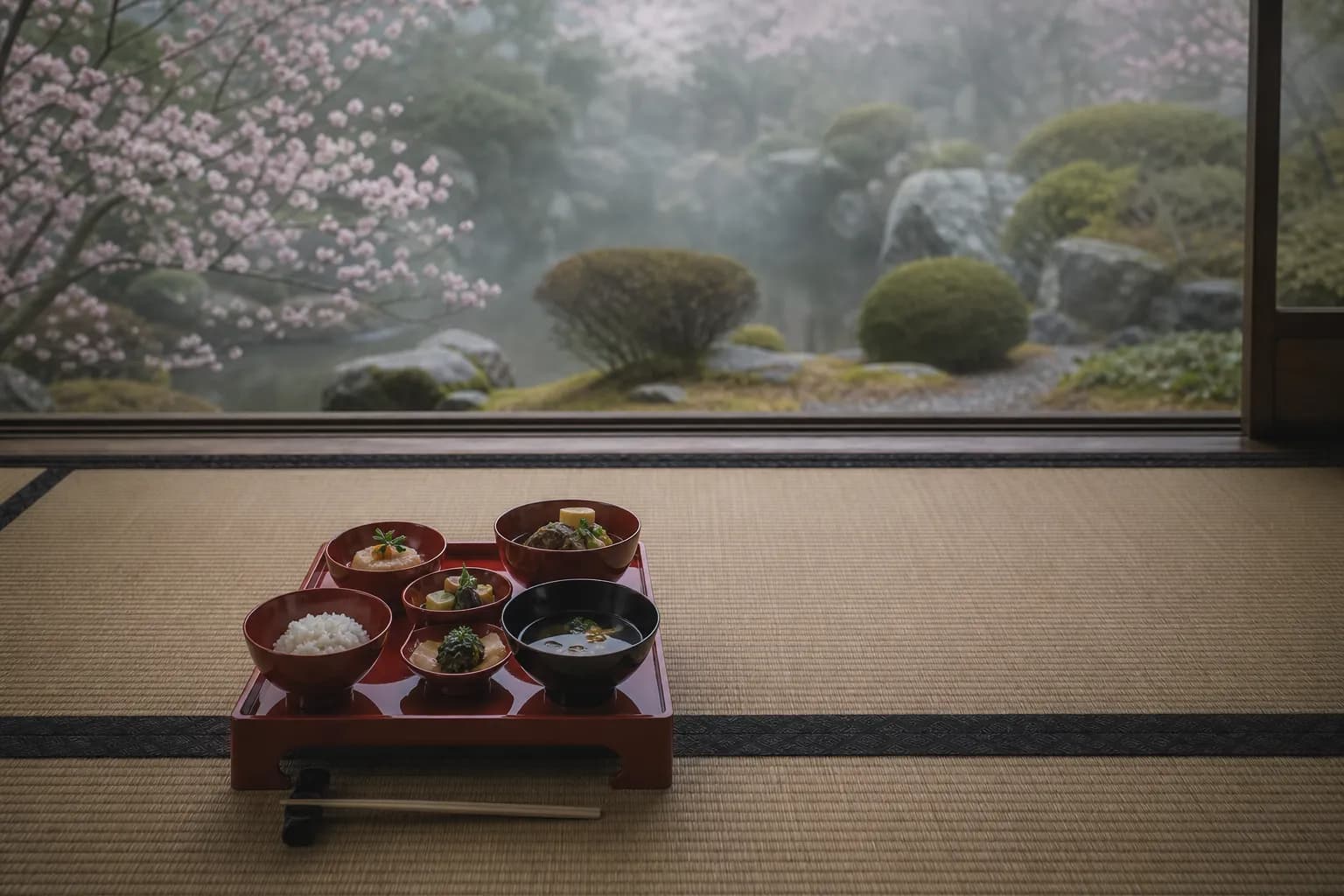
Shojin ryori, the seasonal vegetarian cuisine served in the temple lodgings of Mount Koya.
Pairing The Mountains With Quiet Luxury Below
The finest sacred-mountain journey does not end at the summit. It descends into stillness. After a day on the Dewa Sanzan, the right move is an onsen and a slow dinner in Yamagata's quiet country.
Around Koya-san, the temple lodgings themselves are the experience. Sleeping where monks have slept for centuries, waking to morning chanting, is something no five-star hotel can imitate. We help guests choose temples with the calm and the comfort that suit them.
For those building a wider itinerary, sacred peaks pair beautifully with Kyoto's craft ateliers or a stay further north. The contrast, severe mountain and soft hospitality, is the whole point. It is the rhythm of the old gods, descending and returning.
Frequently Asked Questions
Do You Need To Be Religious To Hike Japan's Sacred Mountains?
No. The peaks welcome respectful visitors of any belief. What matters is the manner in which you walk them. Quietness, courtesy, and a willingness to understand the meaning behind the paths go further than faith.
When Is The Best Time For Sacred Mountain Hiking In Japan?
It depends on the mountain. Fuji is summer only. The Dewa Sanzan are best in summer. Koya-san and Hiei shine in spring and autumn. Our concierge can match the right peak to the month you are traveling.
Can You Stay Overnight On A Sacred Mountain?
Yes. Mount Koya is famous for shukubo, temple lodging where guests share the monks' meals and morning rituals. It is one of the most authentic stays in Japan.
Are These Hikes Physically Difficult?
They vary widely. Mount Fuji is a serious climb. The stone steps of Mount Haguro are demanding but rewarding. Koya-san can be experienced almost entirely on gentle ground. We tailor each route to a guest's pace and ability.
Why Choose Japan Royal Service
Sacred mountains do not open to outsiders easily. The most meaningful encounters, a walk beside a yamabushi, a private dawn at Okunoin, a temple chosen for its silence rather than its sign-up sheet, come through trust and long relationships. That is the work we do quietly, year after year.
Our team at Japan Royal Service builds these journeys with discretion at the center. Your identity and your itinerary stay private. Our concierge handles the rhythm of each day so you arrive at the trailhead unhurried and leave the mountain unrushed.
We do not chase the loud Golden Route. We design for restraint, for the moss and the stone and the bell that has rung for a thousand years. The Japan that does not appear in a search result.
Multilingual support, private chauffeured transport across Honshu and beyond, and a craft-led approach mean every detail is considered before you ask. In our experience, the best sacred-mountain travel feels effortless precisely because so much care went into it.
Ready to walk Japan's holy peaks with the care they deserve? Contact our concierge to begin a private, tailored conversation about your journey. Reach our team via WhatsApp or the contact form, and we will craft a proposal shaped entirely around you.