In this guide
- 01Off the gangway: what is actually in Tsuchizaki
- 02Kakunodate, and the firebreak that still divides the town
- 03Tazawa: 423.4 metres deep, and what it costs to stand beside it
- 04Namahage on a day that is not New Year's Eve
- 05Lunch: kiritanpo, Inaniwa udon, and a bird too protected to eat
- 06Sake: thirty-three breweries, and one founded in 1487
- 07The Akita dog, and the honest problem with going to meet one
- 08Gravel, steps, and the walk back to the ship
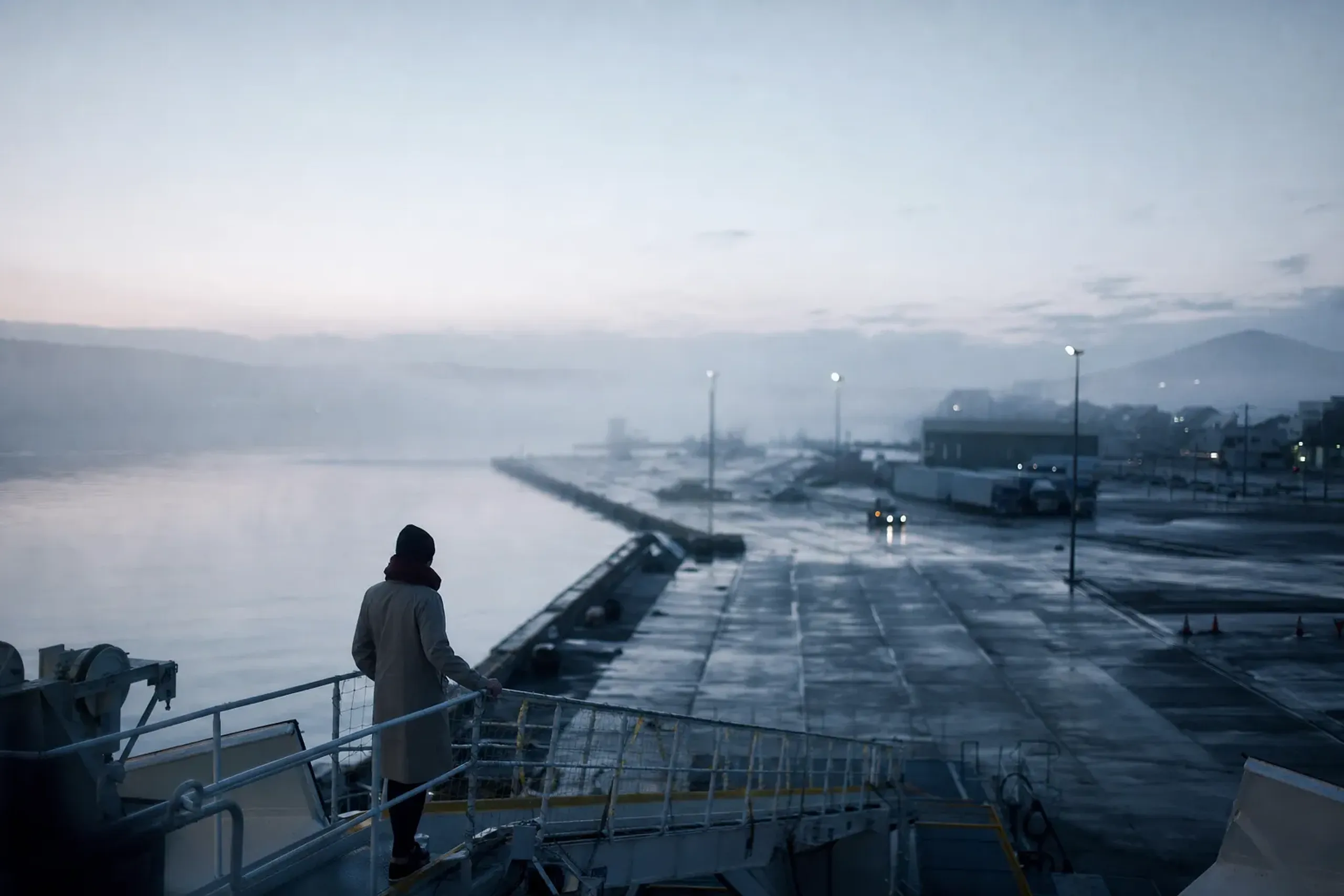
From the boat deck, the tallest thing in Akita is a spike of glass at the water's edge: a hundred metres high, attached to a motorway rest stop, with a free observation room at the top. Akita City's description of it explains, without meaning to, the whole problem of a day ashore here. From that room you can see the Oga Peninsula reaching west into the sea, and Mount Chokai standing away to the south. Two of the finest things in the prefecture, both in view, neither of them close.
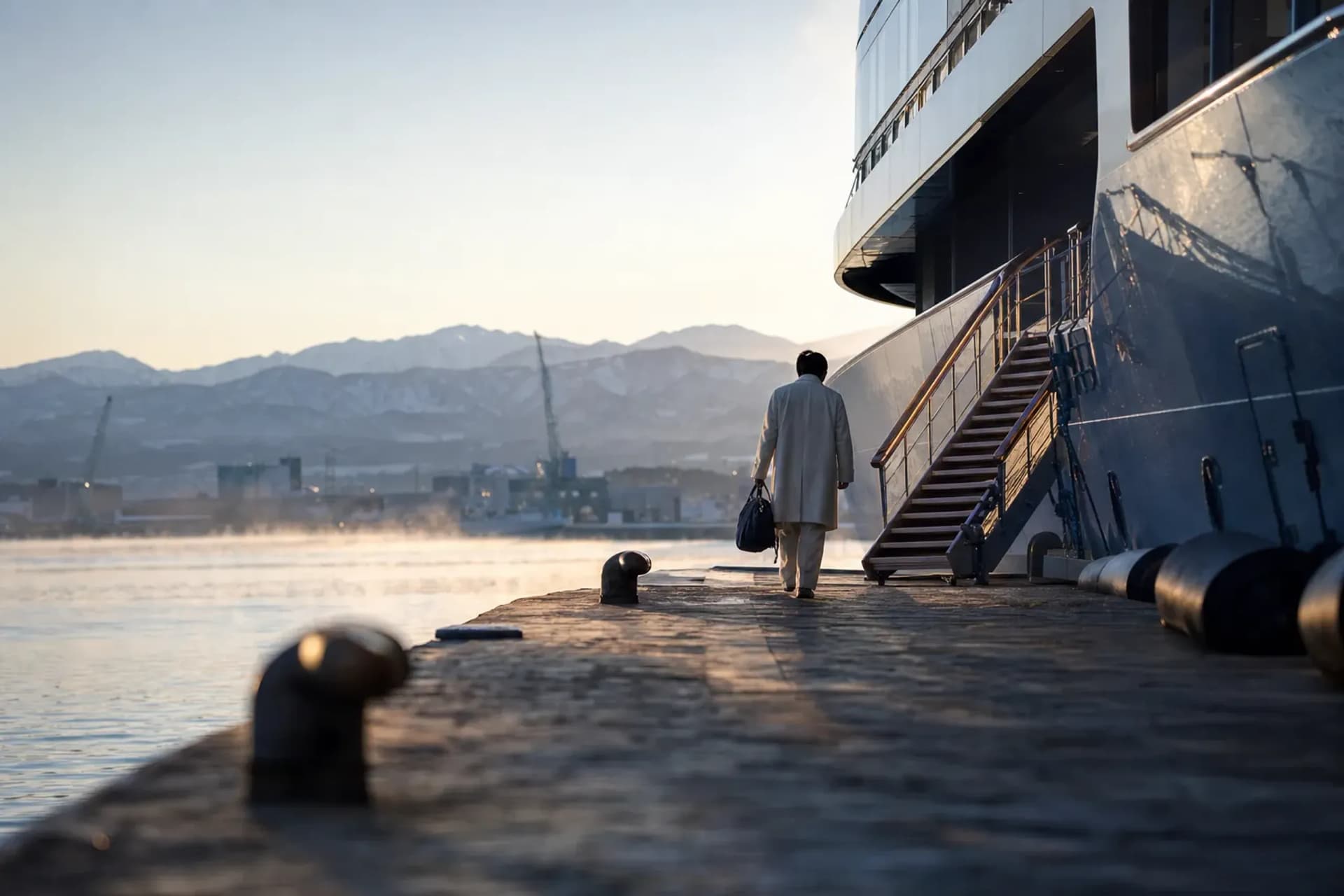
The ship ties up at Nakajima Pier, which is not in Akita City proper but in Tsuchizaki, an old port district north of it. Everything the prefecture is known for lies in a different direction from the berth — and from each other. A day here is not a route. It is a choice, and it is one better made before you sail than at the bottom of the gangway. This is precisely the kind of quiet logistical puzzle that separates a hurried shore excursion from a day that feels effortless, and it rewards the traveller who plans it with someone who knows the ground.
Off the gangway: what is actually in Tsuchizaki
The tower is the Port Tower Selion, and its own access page gives the numbers that matter: four hundred metres on foot from the ferry terminal, two kilometres from Tsuchizaki Station, and 8.4 kilometres — about eighteen minutes by car — from Akita Station. Those figures are the spine of any Akita shore day, because every drive begins with that eight-and-a-half-kilometre leg. Where a private chauffeur earns their place is not in the driving but in the margin: knowing to the minute how long that leg takes at your hour of the day, so nothing later is left to chance.
Tsuchizaki deserves ten minutes in its own right. It is a working port town with a festival on the UNESCO Representative List, and Akita City's record is precise: on 1 December 2016 UNESCO's intergovernmental committee inscribed thirty-three Japanese float festivals together as a single entry, and the Tsuchizaki Shinmeisha shrine festival — already an Important Intangible Folk Cultural Property since 1997 — is one of them.
Around twenty-odd floats carry warrior figures from history through the streets to minato-bayashi, on 20 and 21 July.
The city itself is that eighteen-minute drive away, and its strongest reason to go is a painting: Tsuguharu Foujita's mural of the prefecture's festivals and working year, 3.65 by 20.50 metres on a single canvas, in the prefectural art museum ten minutes on foot from Akita Station.
And if your call falls in the first week of August, the calculation changes completely. The Kanto festival runs 3 to 6 August, and its organising committee publishes the specification: a full-size owaka pole is twelve metres long, weighs fifty kilograms and carries forty-six lanterns. Men balance that on the palm, then the forehead, then the shoulder, then the hip. The committee traces the rite to neburi-nagashi, a midsummer purification against sickness, first described in 1789. A ship in port then should go nowhere else. This is the whole of shun in a single week: knowing what to experience where, in which month, is what turns a day ashore into an occasion — and a private terrace above the procession, arranged in advance, is the difference between watching and belonging.
Kakunodate, and the firebreak that still divides the town
Kakunodate is the answer most people are looking for, and the numbers are manageable. Semboku City gives about forty-five minutes from Akita Station on the Akita Shinkansen, and about fifty minutes by car. Add the port legs and it is still a comfortable half-day.
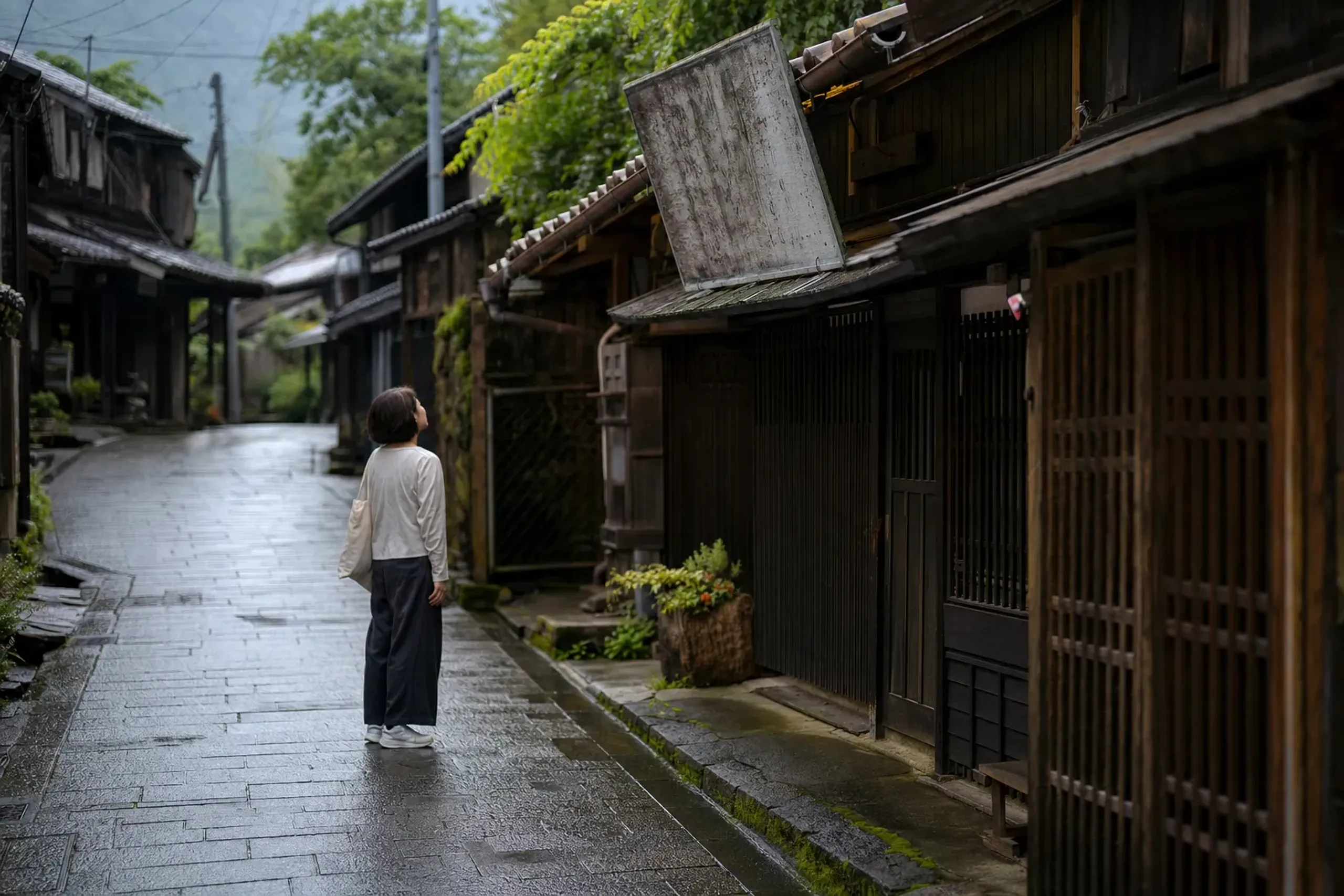
What you should know before walking it is that you are seeing half a town. Semboku City's description of the townscape is unusually specific: the town was laid out with an earth-banked firebreak running down its centre, north to south, dividing the samurai quarter, the uchimachi, from the merchants' quarter, the tomachi. The famous street is the samurai half.
The dark timber fences, the deep set-back of the houses, the width of the road — none of it is picturesque accident. It is a class boundary and a fire policy, written in wood and earth.
The Agency for Cultural Affairs selected 6.9 hectares as an Important Preservation District for Groups of Traditional Buildings, category samurai town, on 4 September 1976. Semboku City lists six residences open to visitors, three of them seasonal: Iwahashi and Odano from 3 April to 30 November, the former Matsumoto house from 10 April to 10 November. Of the three open year-round, the Ishiguro house is described by the city as the oldest samurai residence still standing there. A winter or early-spring call meets a thinner list — worth knowing a month out, not on the morning. There is also a quieter Kakunodate available to the traveller who asks the right way: a private opening of a residence still in family hands, or an unhurried hour in a house before the day's visitors arrive. That kind of access — the Japan that does not appear on any timetable — is a matter of introduction rather than ticket.
The cherries are a separate designation and a separate season. The national register entry of 9 October 1974 rewards a careful read: Edo-higan weeping cherries, planted at individual samurai houses from around 1656, all descended from a mother tree that stood in the Umetsugu family's residence until it was lost in 1889. The record counts a hundred and fifty-three surviving, the largest more than a metre through the trunk and over twenty metres tall. They flower for a fortnight and the town is unrecognisable for it; for the other eleven and a half months they are very old trees leaning over a very old street. A bespoke itinerary built around that fortnight is a different day entirely from one built around the buildings, and the two rarely coincide.
Tazawa: 423.4 metres deep, and what it costs to stand beside it
Lake Tazawa is the deepest lake in Japan, and Semboku City states the figure flatly: 423.4 metres, roughly twenty kilometres around, the surface a colour the city calls ruri — lapis.
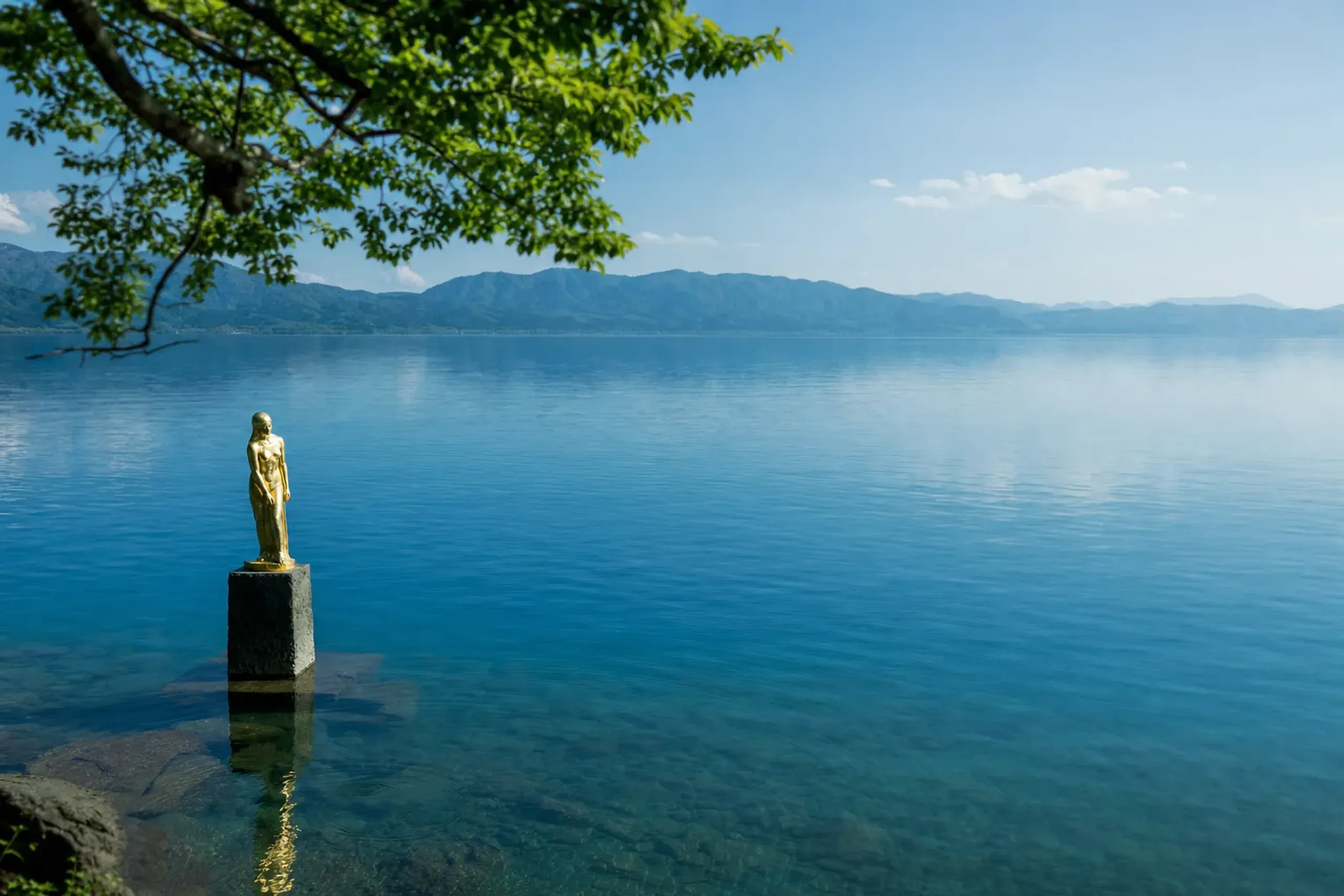
The gilded figure on the shore is Tatsuko, who, the legend runs, asked for eternal youth and beauty and was made the deity of the lake instead; the city records the statue as the work of the sculptor Yasutake Funakoshi, erected on 12 May 1968, at Katajiri.
Now the arithmetic, because this is where Akita days go wrong. Semboku City gives about an hour from Akita Station to Tazawako Station. The station is not the lake; the lakeside is another ten to fifteen minutes beyond it, and Katajiri lies round the far side of a twenty-kilometre shoreline. Tazawako is one stop past Kakunodate on the same line, which makes combining them look easy on a map. It is not. Doing both consumes the whole day and most of your margin against the gangway. The honest counsel is to choose — and to have the choice made for you by someone counting minutes against the ship's departure, not against a train schedule.
Namahage on a day that is not New Year's Eve
The name is a compression, and Oga City's explanation of it is the best fact in this article. Namomi is the local dialect word for the mottled low-temperature burns that come up on hands and shins from sitting too long by the winter hearth. Namomi-hagi — peeling the namomi off — is what you do to someone who has spent the cold months too close to the fire and not enough of it working. The masked figures who come through the door on the last night of the year are not monsters. They are an accusation of idleness, arriving annually, in person.
It became an Important Intangible Folk Cultural Property on 22 May 1978, and in 2018 UNESCO inscribed it within Raiho-shin, ten Japanese visiting-deity rituals. Oga City makes the point that explains what you will see: masks, costumes and gestures differ from village to village — carved wood in one place, tree bark in another, paper pasted over a bamboo sieve somewhere else.
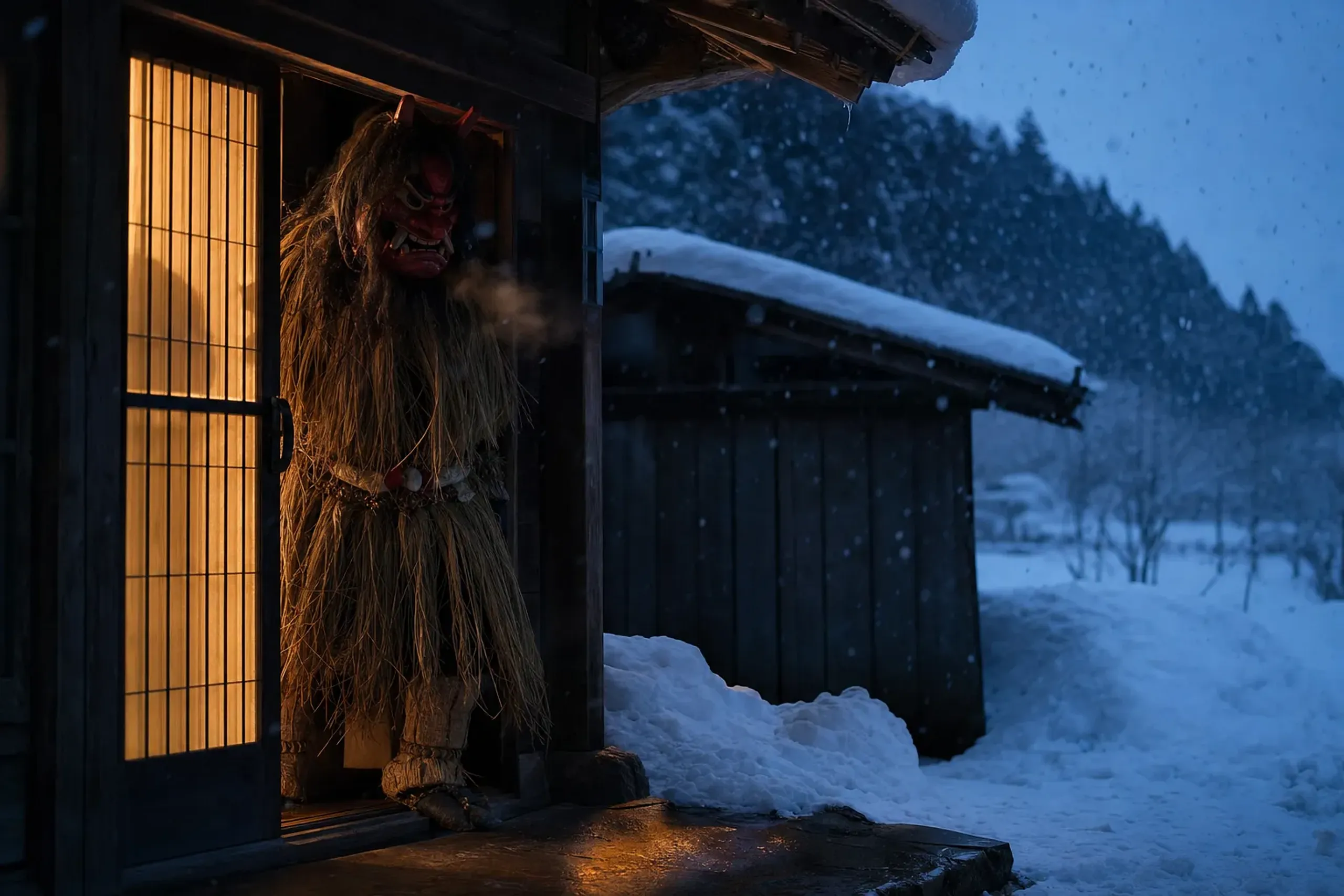
There is no single Namahage, which is why the museum at Kitaura Shinzan is not the trap the concept suggests: it holds more than a hundred and fifty masks that were actually used, from actual districts, and their variety is the exhibit. It opens 8:30 to 17:00, every day of the year. Next door, the Oga Shinzan Denshokan is a magariya, the bent-plan farmhouse of this region, and a registered national cultural property. Inside, the New Year's Eve visit is explained and then reconstructed in about twenty minutes, nine times a day from April to December and six times from January to March. You sit on the floor of a real farmhouse when they come through the door — and for those who want more than the scheduled reconstruction, a private sitting arranged with the keepers of the tradition turns a demonstration into something closer to a confidence.
Lunch: kiritanpo, Inaniwa udon, and a bird too protected to eat
Kiritanpo is not, whatever the photographs suggest, a dumpling. The Ministry of Agriculture, Forestry and Fisheries records it as a dish of the Odate and Kazuno districts, originating with charcoal burners and woodcutters in the mountains, who mashed leftover rice onto a skewer, grilled it and dropped it into a chicken pot. A grilled rice stick looks like a cattail head, and tanpo derives from a word meaning short head. The ministry's ingredient list is short and non-negotiable: chicken, burdock, spring onion and seri, Japanese parsley, root and all.
The chicken has the better story. The Hinai-dori, a native Akita breed, was made a national natural monument in 1942, which meant it could no longer be eaten.
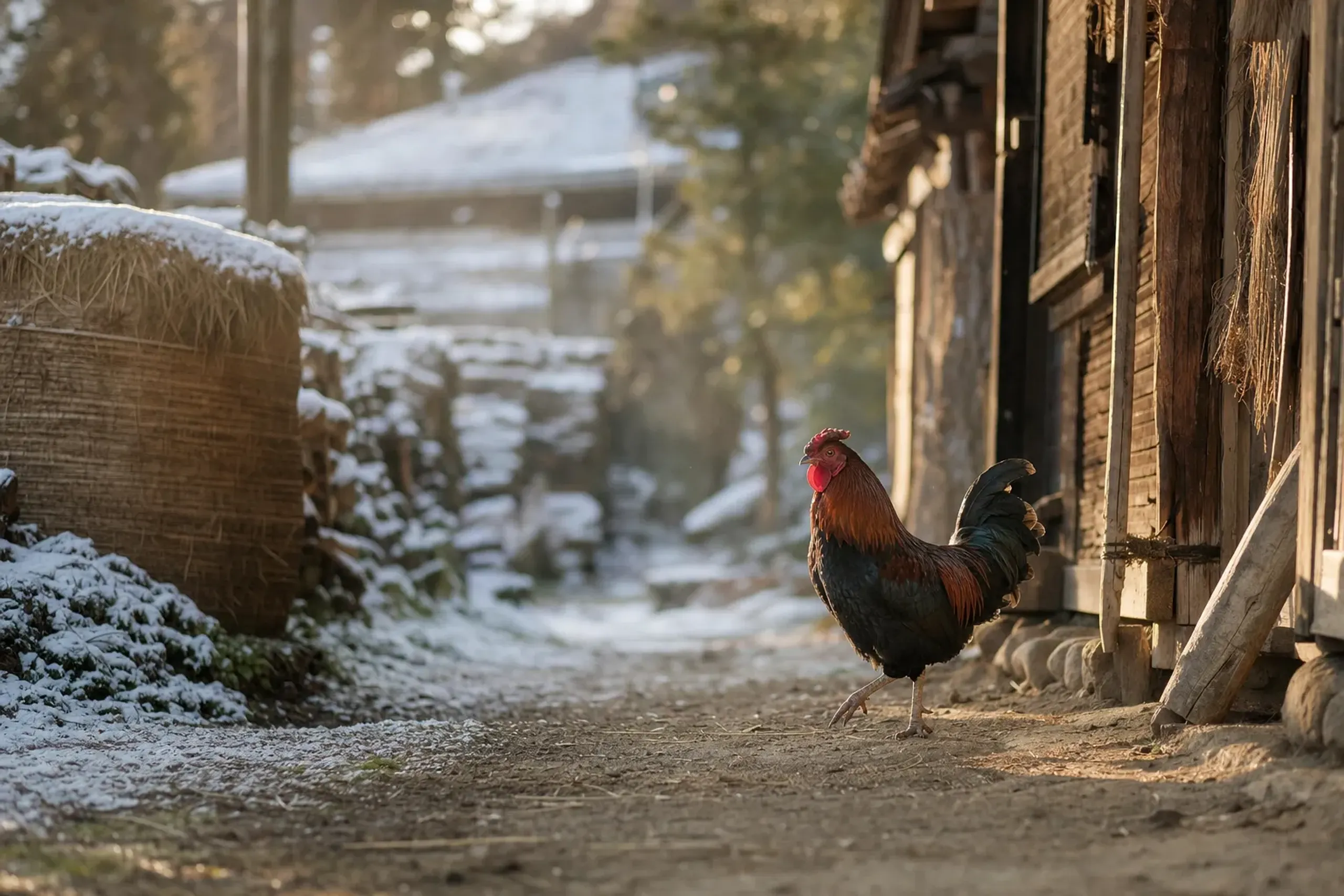
So the prefecture crossed its descendants with Rhode Island Reds to produce the Hinai-jidori, which is what is in your pot today: a dish saved from its own bird's protected status.
Inaniwa udon comes from the other end of the prefecture, and here a word of caution about a claim you will hear everywhere. Yuzawa City's own page says it is "said to be" one of Japan's three great udon — that hedge is the city's, not ours, and we found no authority that issues one. What is documented is better anyway: the noodle dates to the early Edo period and is made by tenai, hand-twisting, the dough laid between two rods in a figure of eight so that it draws down to an even thickness. It is a craft of patient, exacting hands — the shokunin's insistence that a thing be done properly or not at all — and on a short call it travels better than a hotpot in August.
Sake: thirty-three breweries, and one founded in 1487
The prefecture's brewers' cooperative lists thirty-three member breweries, which for a population this size is a lot. Most are small; one is remarkable. Hiraizumi Honpo stands at Hirasawa in Nikaho, on the coast south of the port at the foot of Mount Chokai. Its own account is worth repeating for its confidence: founded in 1487, three years before the shogun Ashikaga Yoshimasa raised the Silver Pavilion in Kyoto; the oldest brewery in Tohoku and the third oldest in Japan — their claim, passed on as theirs — now in the hands of its twenty-sixth head. It sits fifty metres from the shore on the old Ushu Kaido highway, in a town that was at once a castle town, a post station and a Kitamaebune port of call.
Everything they make is yamahai.
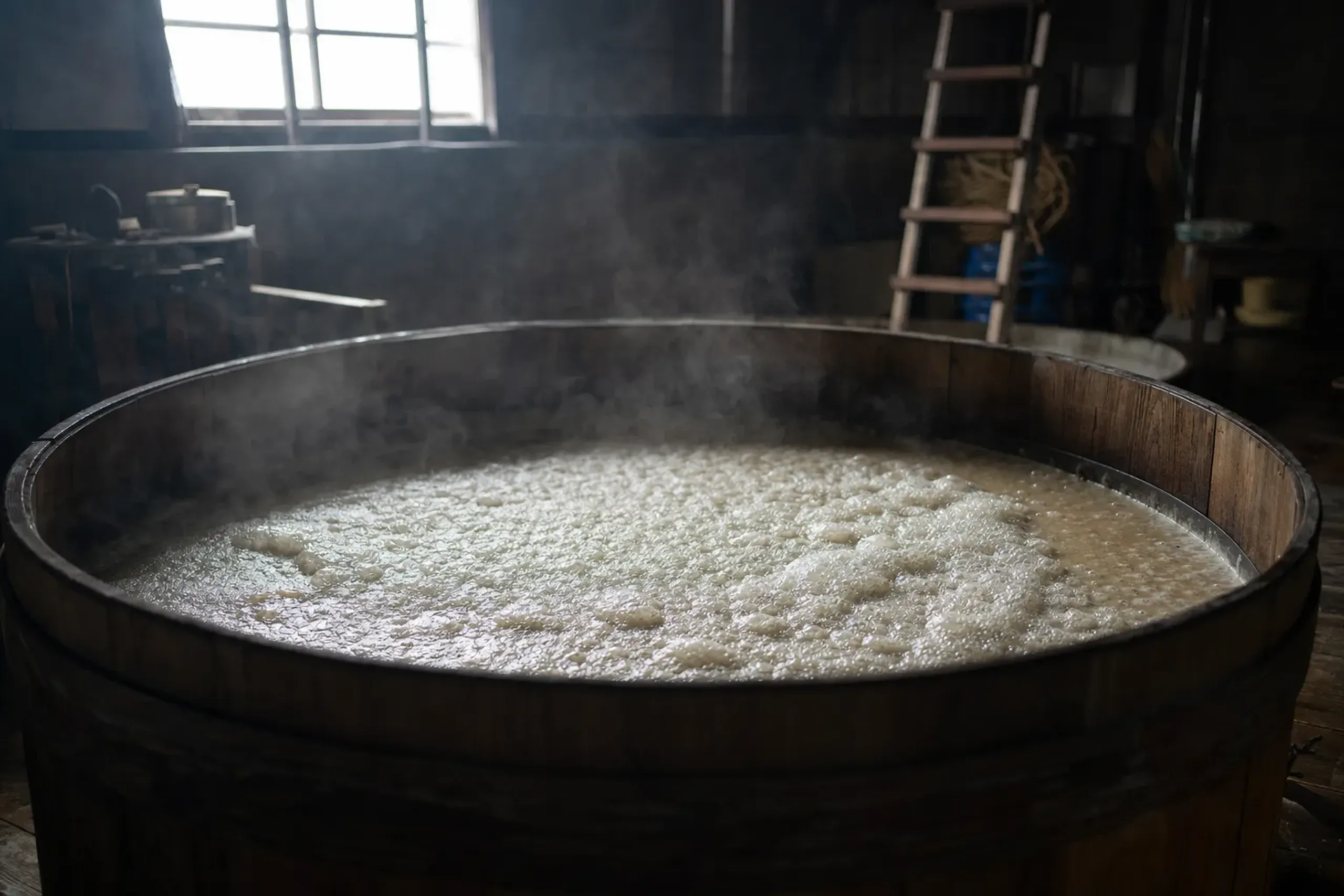
In the fast modern method you add lactic acid and the starter is ready in about two weeks; in yamahai you let airborne lactic bacteria arrive on their own and cultivate the starter for around thirty days, until the alcohol the yeast makes finishes off the bacteria that made it possible. It is a process consisting largely of waiting correctly — a shokunin's definition of skill, and a small lesson in restraint that belongs to the same aesthetic as the moss and the weathered timber elsewhere in this prefecture. Nikaho is an hour or more each way, so if the anchor is Kakunodate or Oga, a tasting closer to the city — or a private introduction to a brewing family who do not ordinarily receive visitors — is the version that fits.
The Akita dog, and the honest problem with going to meet one
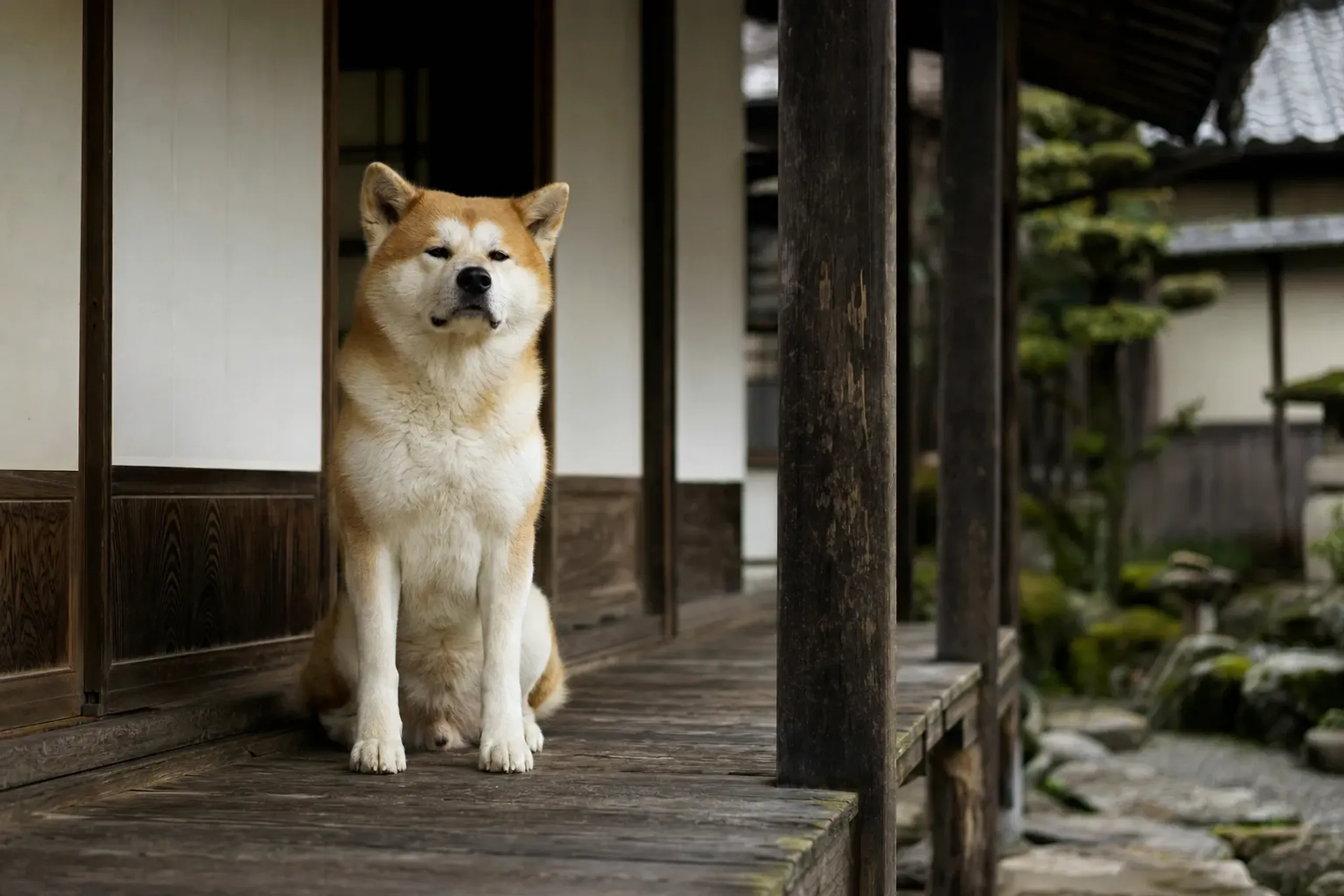
Odate City's page on the breed contains two facts most people get wrong. First: in July 1931 the Akita was the first Japanese native dog breed designated a national natural monument — the same legal category as the Hinai-dori, and as the Kakunodate cherries. Second: Hachiko was an Odate dog, born in November 1923 at Giichi Saito's house in Oshinai, in what is now Odate City, and sent to Tokyo as a puppy. The statue outside Shibuya Station commemorates an animal from northern Akita.
And here we have to be unhelpful. The Akita Dog Visitor Center stands opposite Odate Station, with a rota of dogs on view, a museum and a replica of the Shibuya statue; it opens 9:00 to 17:00, the dog exhibition room 9:30 to 16:45, and that room is closed on Mondays. But Odate is at the far northern end of the prefecture, on the Ou Main Line and the Hanawa Line, not the Akita Shinkansen that reaches Kakunodate and Tazawako. You cannot combine them. And neither Odate City's access page nor the facility's own publishes a travel time from Akita, which is usually what a page does when the honest answer is "further than you want".
Gravel, steps, and the walk back to the ship
On access we would rather tell you what is documented than what is comfortable. We could find no official accessibility statement from Semboku City for the samurai street at Kakunodate. What is not in dispute is the nature of the place: a preserved Edo street surface, not a paved promenade, with timber houses entered by stepping up from ground level. Anyone using a wheelchair should assume the street is manageable with a strong pair of hands and the interiors are not, and should have the specific houses confirmed in advance. Whatever you choose, choose one thing. Akita's distances are modest by Japanese standards and merciless by cruise standards, and the gangway does not negotiate.
Nearly everything above is public, published by the cities concerned, the Agency for Cultural Affairs, and the houses and museums themselves. What is not public is the join: which residence is open on your date, whether the Shinzan sitting you want has room, which kitchen will lay a table for a party arriving off a ship at an awkward hour, and how much road margin a driver needs between Katajiri and a berth in Tsuchizaki. That has to be arranged quietly and in advance — with the discretion that keeps a guest's identity and itinerary entirely their own — and it is the part Japan Royal Service exists to do.
If a day here built around one thing done properly appeals more than five done at speed, our concierge team is glad to begin whenever your itinerary firms up. Tell us the date your ship touches Nakajima Pier and the single experience you would most regret missing, and we will build the day backwards from the gangway — quietly, precisely, and with room to spare. When you are ready, contact us here.