In this guide
- 01What Makes Reduced-Mobility Travel In Japan Feasible?
- 02Getting Around By Car: Why A Wheelchair-Accessible Vehicle Changes The Trip
- 03How Does Rail Assistance Work For Wheelchair Users On Trains In Japan?
- 04Choosing Lodging: Why The Room Is The Decision, Not The Hotel
- 05Planning Each Day Around What Each Site Allows
- 06Pacing Two Weeks In Japan With Reduced Mobility: Fewer Moves, Better Days
- 07Accessible Airports In 2026: What To Know At Narita And Haneda
- 08How We Coordinate Reduced-Mobility Travel, Privately And Precisely
- 09Frequently Asked Questions
- 10Why Choose Japan Royal Service
Japan can be surprisingly workable with reduced mobility. But only if the arrangement is right. The same temples, neighborhoods, and museums can feel easy on one plan and exhausting on another.
What changes everything is not the destination list. It’s the chain between moments: airport to vehicle, vehicle to entrance, entrance to elevator, elevator to restroom, and back again. Small breaks in that chain become big delays.
Our team at Japan Royal Service plans reduced-mobility travel as a continuity problem. Door-to-door transport. Rail staff assistance when rail makes sense. The specific room, not just the hotel name. A day that respects how far you can comfortably go.
Quietly, that approach protects more than comfort. It protects dignity. No drama. No guessing.
What Makes Reduced-Mobility Travel In Japan Feasible?
Reduced-mobility travel in Japan becomes feasible when transport, rail assistance, room selection, and site pacing are planned as one system, not four separate tasks.
Many online guides focus on “accessible places.” Useful. Yet the bigger lever is often how you move between places and how the day is shaped.
Japan has invested in barrier-free improvements over many years. JNTO states that about 95% of Japan’s train stations are entirely accessible, and that accessibility improvements continue at public facilities such as elevators and ramps. Real progress. Still, your experience can vary by station entrance, time of day, train type, and the layout of a specific property.
So we plan from the friction points backward.
Transfers. Threshold steps. Long corridors. Taxi uncertainty. The plan is allowed to be elegant. It can also be practical.
Getting Around By Car: Why A Wheelchair-Accessible Vehicle Changes The Trip
For many travelers with reduced mobility, a wheelchair-accessible vehicle is the single biggest upgrade. Full stop. It turns “maybe possible” days into predictable ones.
Door-to-door matters in Japan. Many streets are narrow. Some drop-off points are far from the entrance you actually need. A vehicle that can meet you where you are, wait while you take your time, and keep essentials on hand changes your energy curve across the week.
Taxis are improving, and wheelchair-ramp taxis or outward-rotating seat taxis are increasing. Still, many taxis are not equipped, and some can be difficult to board. That uncertainty is the part we try to remove from your core itinerary.
For multi-generation families, this is not only about wheelchairs. It’s also about grandparents with a cane, a partner recovering stamina, or a child who needs frequent breaks. One vehicle. One known routine. Less negotiation with every move.
When private transport is part of the plan, we treat it as a comfort layer and a timing layer. You can carry cushions, a light blanket, medication you may need, and a change of shoes. Small things. Big impact.
The first question our concierge asks is simple: what is hardest for you, physically, on a normal day?
Standing. Steps. Distance. Transfers. We build from that answer.
How Does Rail Assistance Work For Wheelchair Users On Trains In Japan?
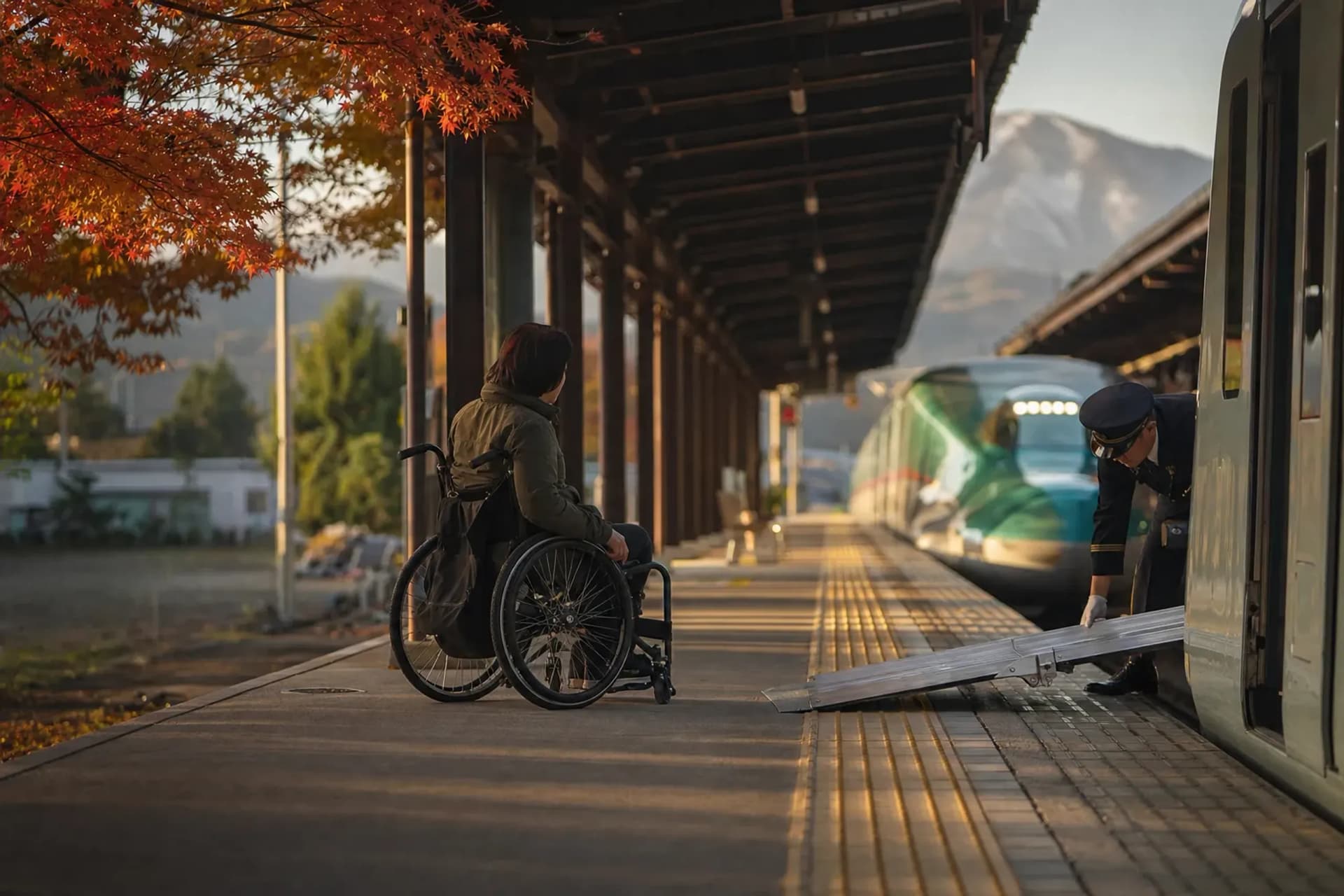
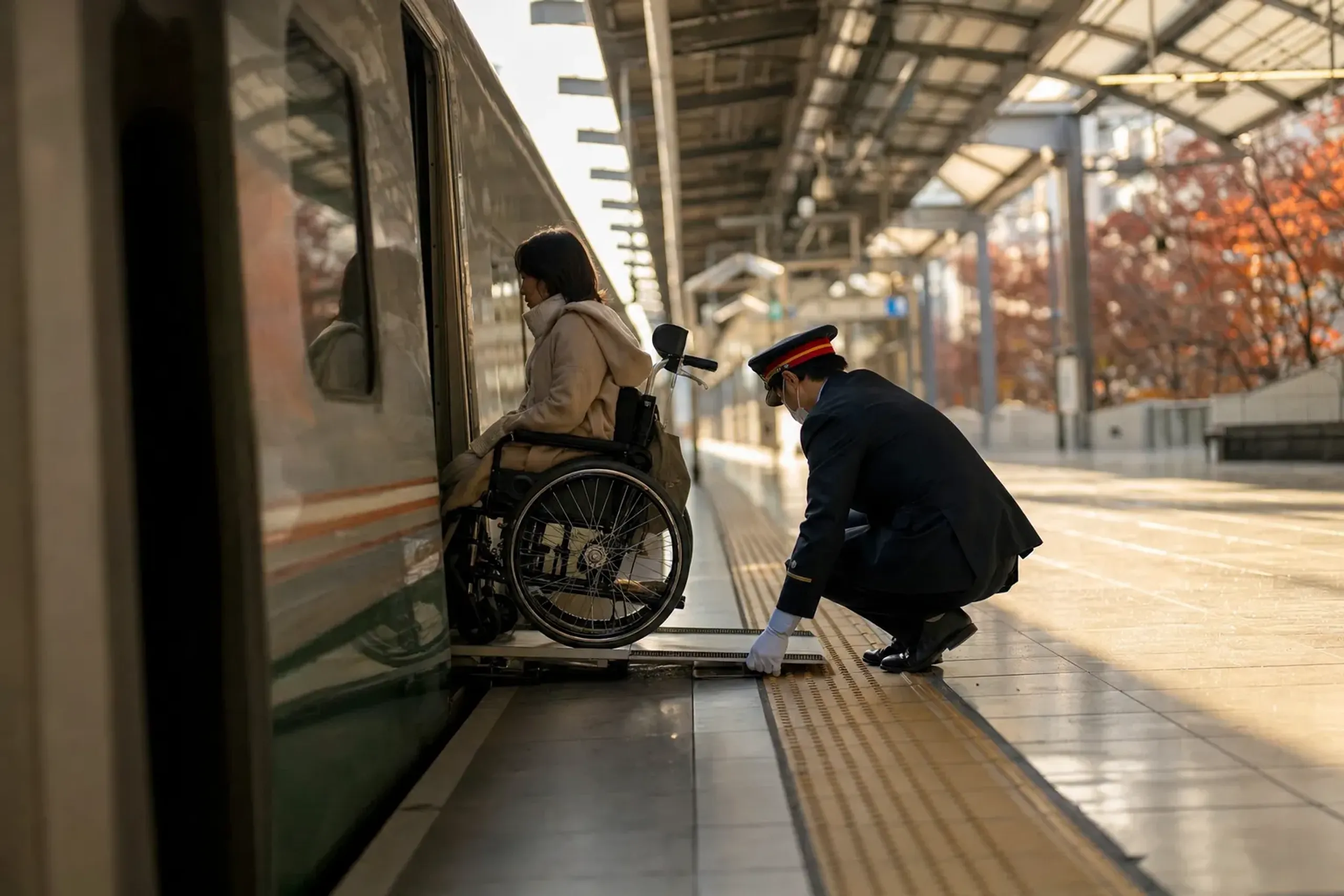
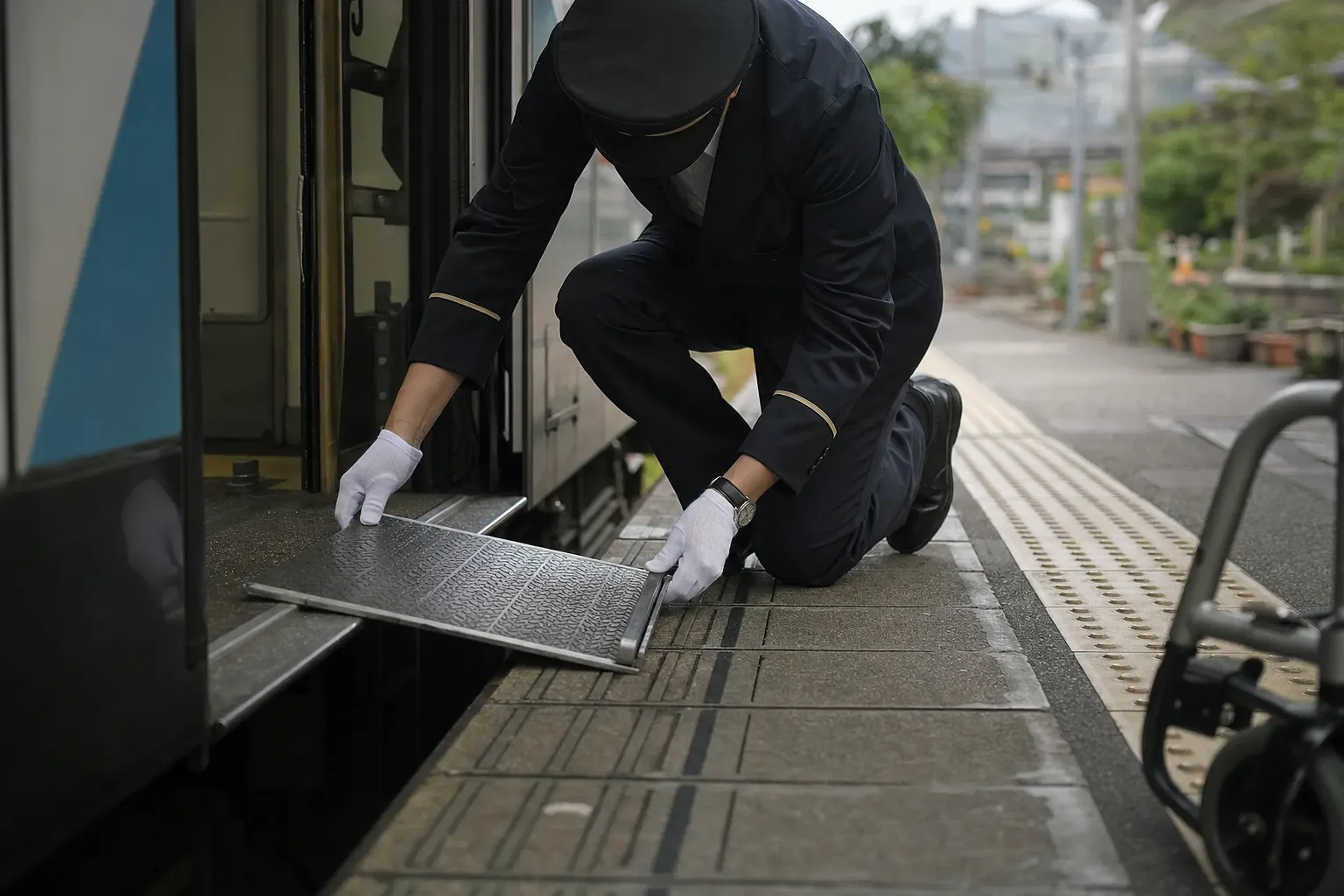
Station staff can escort wheelchair users from the ticket gate to the platform, assist with ramps for boarding and exiting, and coordinate help at transfer points and the destination when requested early.
Rail can be an excellent choice in Japan. It is fast, legible, and often step-free in major hubs. But it rewards preparation, especially when you need coordinated assistance rather than just an elevator.
Here is the real, on-the-ground flow our team plans around.
Start At The Ticket Gate, Not The Platform
Wheelchair users approach station staff at the ticket gate. This is where the escort typically begins. Staff can guide you to the correct platform route, including elevators that may not be obvious from signage.
Some stations use staff-only elevators. That detail surprises many visitors. It also means that “I saw an elevator on Google Maps” is not a plan.
Ramps, Boarding, And Calling Ahead
Staff can help with portable ramps when boarding and leaving the train. They can also call ahead so that assistance is waiting at transfer points and at your destination station. That coordination is what makes a multi-leg day feel calm.
Outside city centers, some stations are harder to use, and only some entrances may be accessible. The entrance you can reach by taxi is not always the entrance that is step-free.
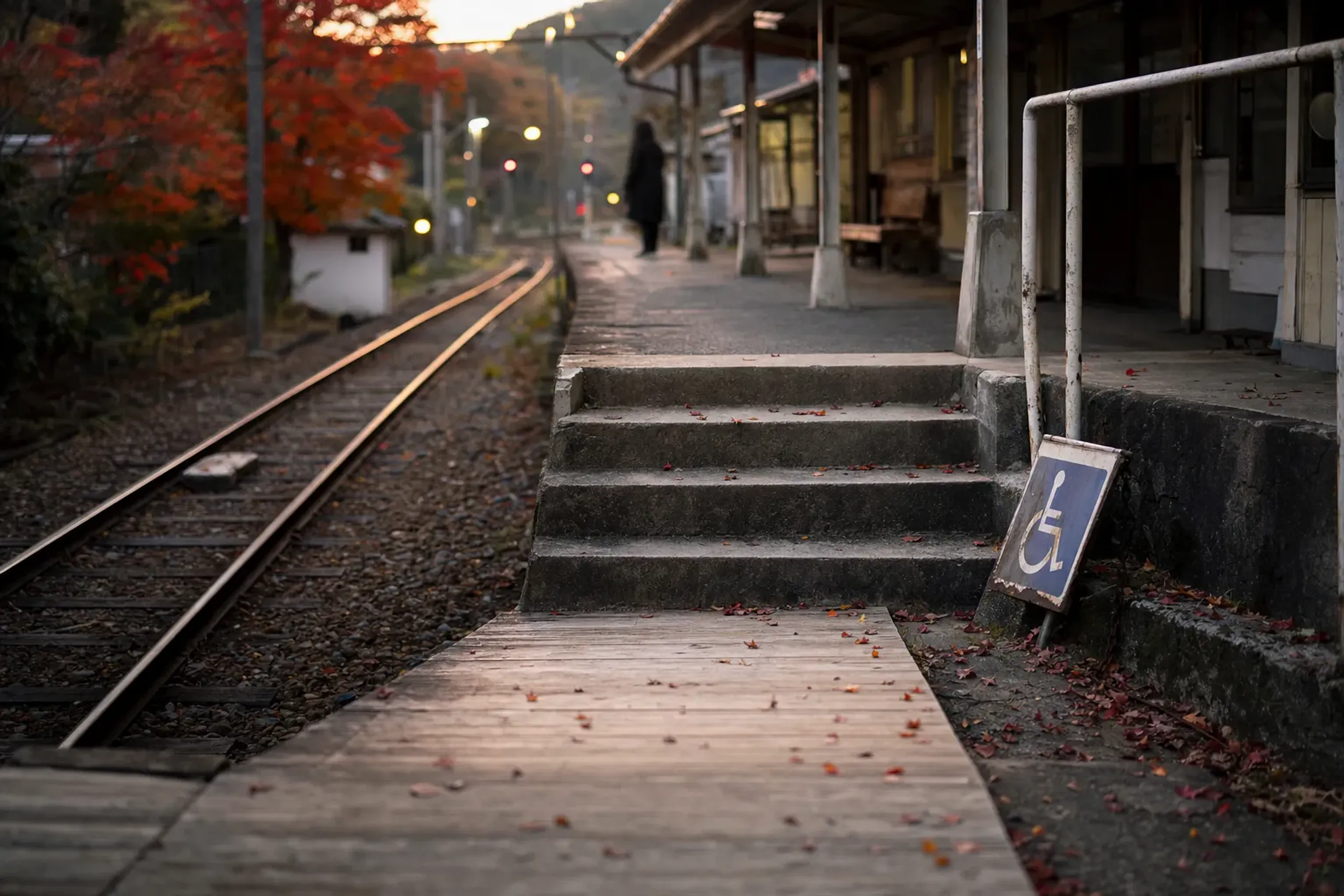
Tiny mismatch. Big delay.
Shinkansen Reality: Wheelchair Spaces And Toilets
Most shinkansen trains have at least one car with wheelchair space. Reserving a wheelchair-friendly seat in advance is strongly recommended for long-distance trips. Onboard, shinkansen trains have wheelchair-accessible toilets.
That said, rail operators can have practical limits. JR East asks wheelchair users to check with it before buying a ticket and to arrive early, since escorting takes time. Whether a wheelchair can board can depend on its type, the train, and the station.
Key fact: JR East states that wheelchairs brought on board must be no more than 120 cm in length and height, and no more than 70 cm wide.
Car Vs Rail: The Decision Is Usually About Transfers
Many travelers assume rail is always “more accessible” because stations have elevators. The stress point is often not the elevator. It’s the sequence: getting to the right entrance, finding the right car position, timing staff assistance, then repeating the process at the other end.
If you want a structured way to choose, see our guide: The Decision Framework: Private Driver or Rail?. It is written for real trip design, not for ideology.
Choosing Lodging: Why The Room Is The Decision, Not The Hotel
Your trip can look perfect on paper and fail at 9:30 pm. That failure often happens in the room. One step into the bathroom. A narrow doorway. A bed height that makes transfers difficult.
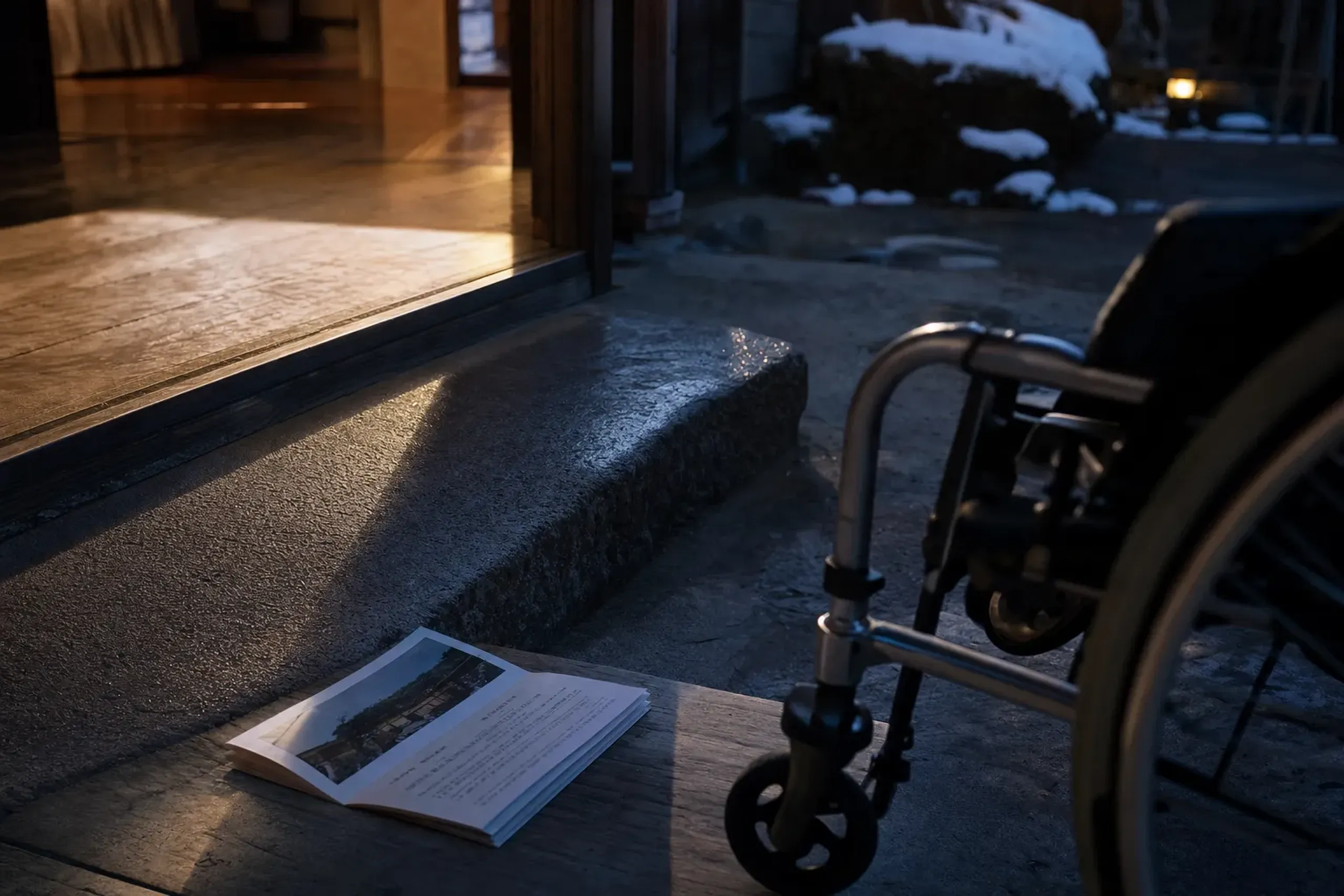
Quiet problems. Relentless problems.
New hotels in Japan must be accessible by law, and older hotels are being renovated with barrier-free designs. That trend helps. Yet barrier-free rooms with adapted bathrooms exist but are limited in number, and English accessibility details can be hard to find.
So our concierge team plans at room level. Not brand level. Not star level. We confirm the specific room with the property as part of the private coordination, because “accessible” can mean very different layouts.
What We Confirm, Practically
We keep the checklist grounded. Door widths. Step changes. Bathroom layout. Shower threshold. Bed height. The turning space you actually have once luggage is inside.
Then we plan the rest of the day around that base. If the room is easy, the mornings start easier. That tone carries.
Ryokan Realities: Beautiful, But Not Automatically Barrier-Free
Traditional ryokan design often includes tatami floors, bedding laid at floor level, and steps between areas. That can be difficult for some guests. It is not a moral failing of the building. It is just architecture.
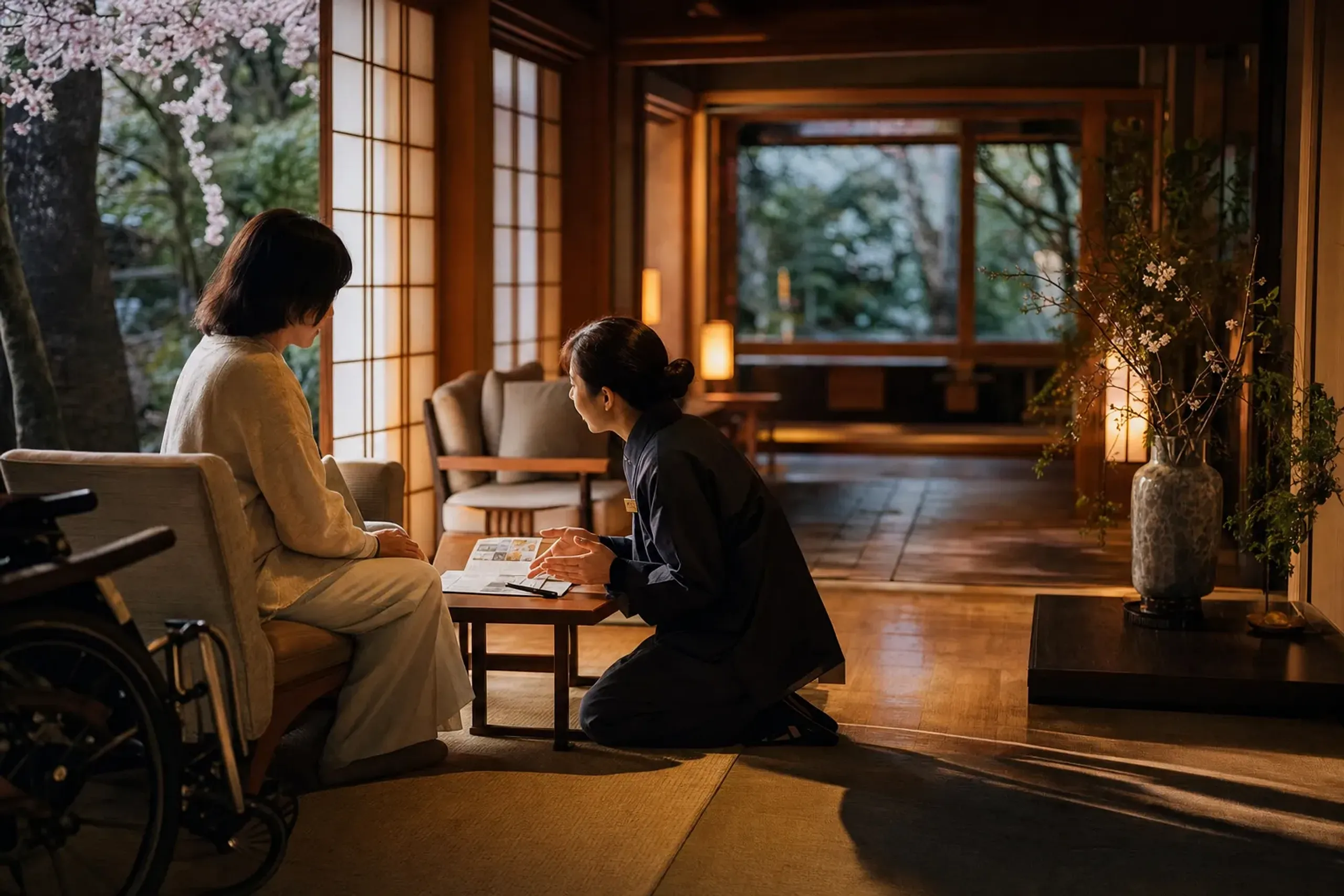
Some properties offer rooms with beds or adapted layouts. The key is confirmation of the specific room and its path from entrance to bathing and dining spaces. When a ryokan stay is part of the dream, we treat it as a design project, not a gamble.
Planning Each Day Around What Each Site Allows
A day can be “accessible” in theory and punishing in practice.
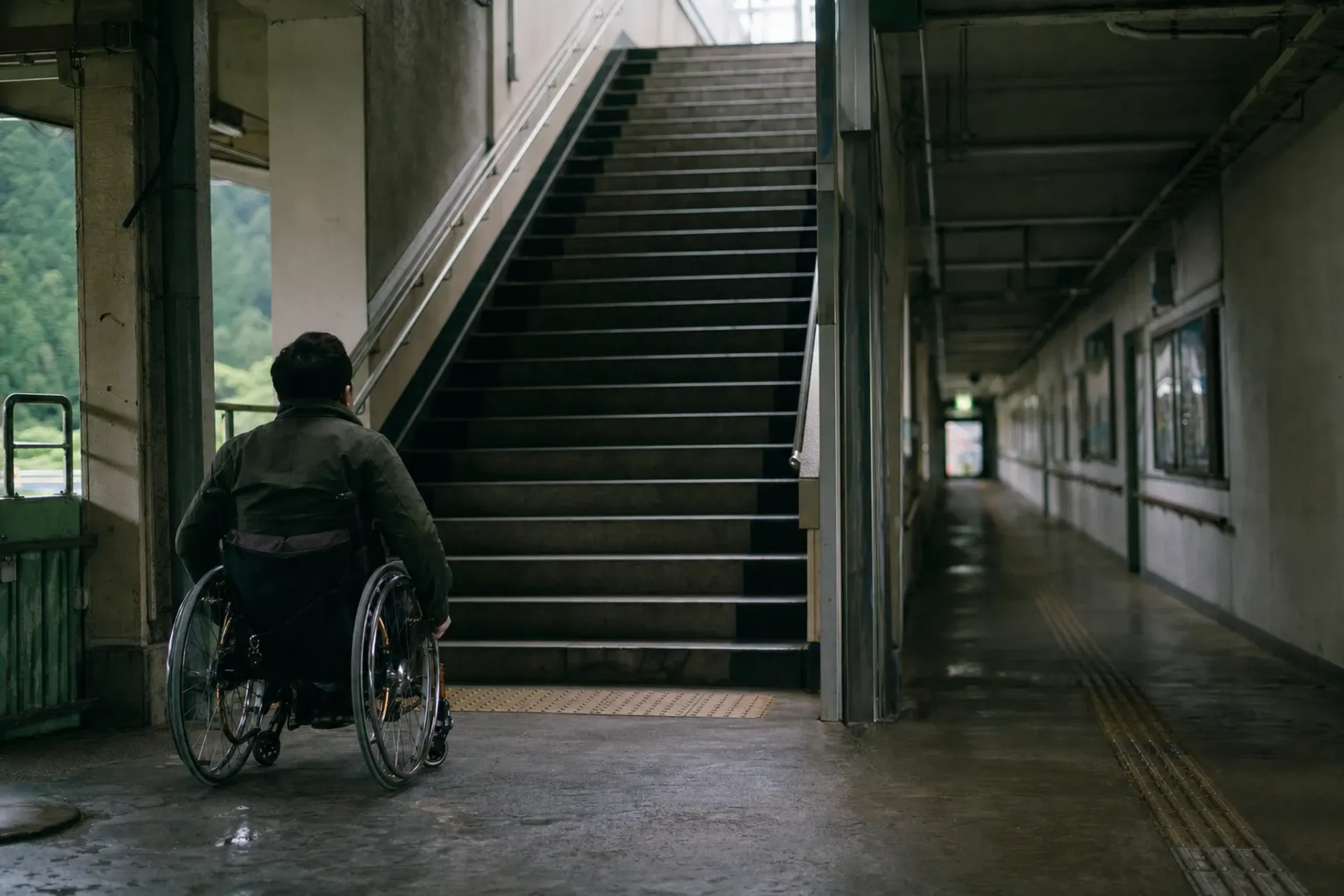
The gap is usually at the site entrance and the internal route.
Many historic and cultural sites have added ramps and lifts. Some sites cannot be upgraded. Newer sites are generally designed to be accessible. Those three facts can all be true at once, even within the same neighborhood.
This is where an experienced guide changes the feel of Japan. Not by talking more. By routing better. Which entrance. Which elevator. Where the nearest multipurpose toilet is likely to be. Where you can sit without feeling like you are blocking traffic.
We also plan “exit strategies.” If the elevator is crowded, you need a plan B that does not add ten minutes of awkward standing. Quiet competence matters here.
Pacing Two Weeks In Japan With Reduced Mobility: Fewer Moves, Better Days
Reduced-mobility planning often fails because the itinerary tries to do too much. Not too many sights. Too many transitions.
We usually improve comfort by reducing hotel changes, building shorter sightseeing windows, and inserting rests in places that feel natural. A garden bench. A museum café. The lobby of your hotel before dinner. Ordinary pauses. They keep the day intact.
Multi-generation families benefit the same way. When the plan is paced well, no one feels like the reason the group is “slower.” That is the point.
If you want the planning logic, our team wrote it out here: Three Bases, Not Seven Cities: Pacing Two Weeks In Japan.
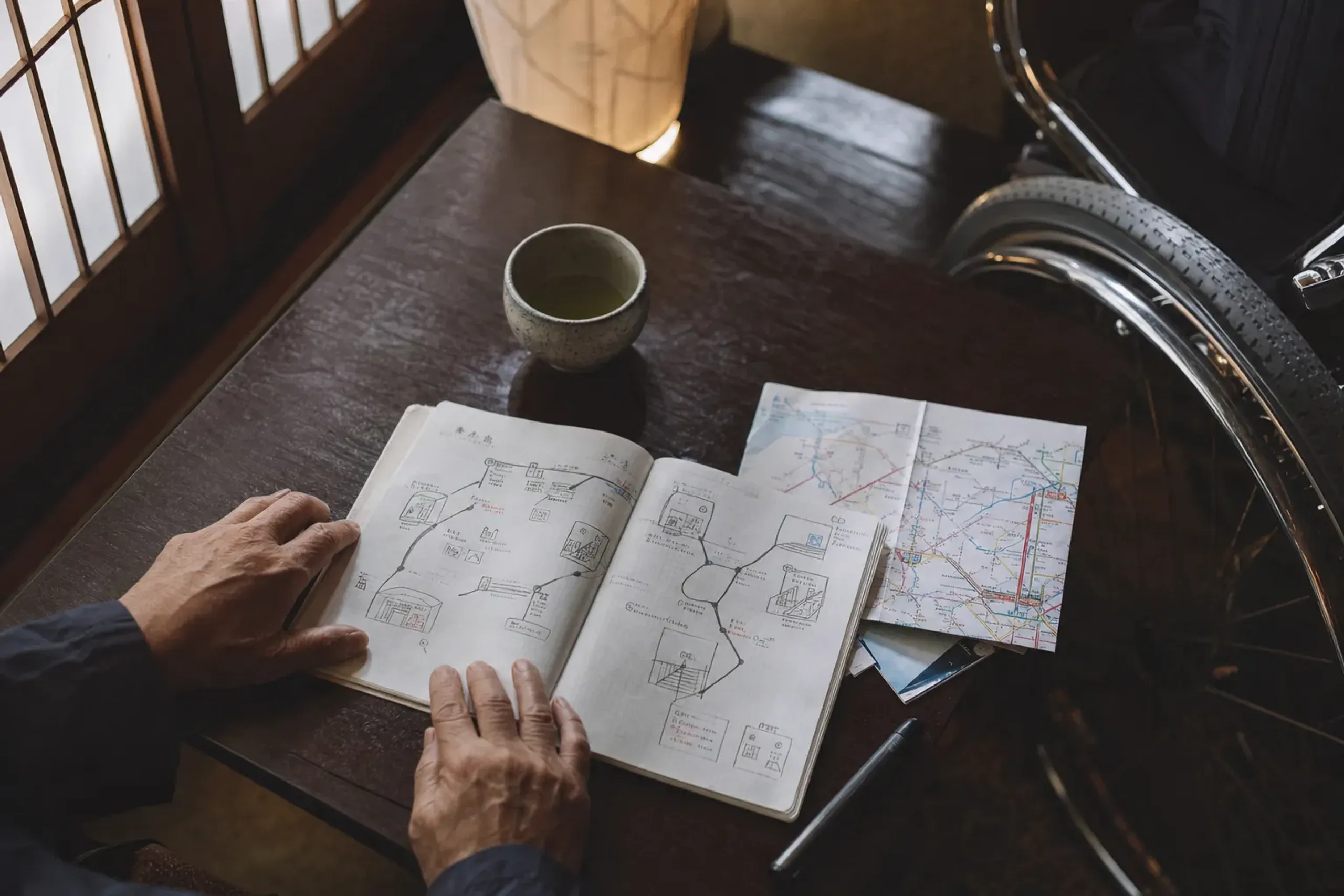
The framework is useful whether you use a wheelchair, a cane, or just want calmer days.
Accessible Airports In 2026: What To Know At Narita And Haneda
Narita Airport offers a free autonomous WHILL personal mobility service in international departure areas after departure inspection in Terminals 1 and 2, available to all customers.
Airports can be the most fatiguing environment of the entire trip. Long distances. Bright lighting. Lines that move in uneven bursts. Even travelers who walk comfortably at home can struggle on departure day.
Narita International Airport states it provides a free autonomous personal mobility service using WHILL in international departure areas after departure inspection procedures in Terminals 1 and 2. The airport notes it is available to all customers, including those anxious about walking long distances.
WHILL has also announced ongoing changes at both airports. In April 2026, WHILL announced a trial at Narita where its autonomous mobility service works in conjunction with an elevator to travel across different floors. In August 2026, WHILL announced that its autonomous service operating area at Haneda Airport Terminal 1 will expand to the new North Satellite facility starting September 1, 2026, bringing the Haneda fleet to 37 units.
We treat these services as tools, not promises. Availability and operating areas can change. Still, for many HNW travelers, just knowing that dignified, predictable movement exists inside the terminal reduces anxiety before the trip begins.
How We Coordinate Reduced-Mobility Travel, Privately And Precisely
The point of concierge planning is not to make Japan “accessible” in a blanket sense. That is not realistic. The point is to build a route that fits your body and your priorities, without forcing you into a smaller life.
In our experience, the best plans start with four decisions: your transport spine, your rail days (if any), your room requirements, and your daily pacing. Once those are set, the rest becomes lighter.
For reduced-mobility travel, our private coordination can include wheelchair-accessible vehicles (partner-supplied, with drivers), station-staff assistance planning for rail journeys, guides experienced with mobility needs, wheelchair rental, and portable ramps for small gaps. We also select and confirm barrier-free rooms directly with the property, because the specific room is what determines comfort.
We also use Japan’s quieter strengths. Shokunin experiences are often seated, focused, and naturally paced. Wabi-sabi settings—gardens, small galleries, calm streets—can be deeply satisfying without long walking loops. And for those who value privacy, discretion is not optional. It is built into how our team works.
Frequently Asked Questions
Can I Rely On Trains In Japan If I Use A Wheelchair?
Yes, many wheelchair users travel by train in Japan when they request station staff assistance and allow extra time for escorting, boarding ramps, and coordinated help at transfers.
Wheelchair users approach station staff at the ticket gate, and staff can escort them to the platform and assist with boarding and exiting.
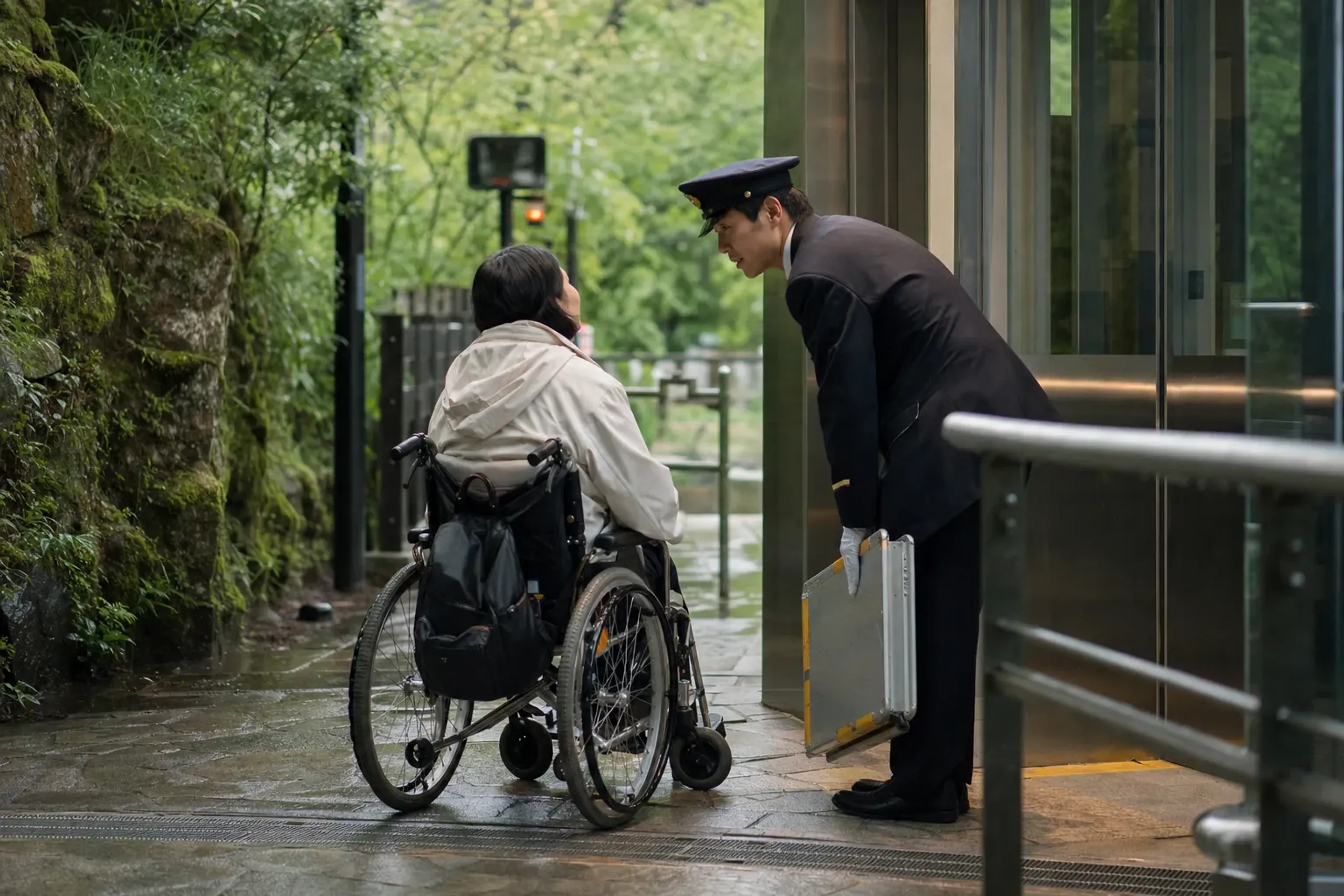
Staff can also call ahead so assistance is waiting at transfer points and the destination.
Station accessibility can vary by entrance and by station, especially outside city centers. Our concierge team plans routes and timing to reduce surprises.
What Are JR East’s Wheelchair Size Limits For Bringing A Chair On Board?
JR East states that wheelchairs brought on board must be no more than 120 cm in length and height, and no more than 70 cm wide.
JR East also asks wheelchair users to check with it before buying a ticket and to arrive early, because escorting takes time and boarding feasibility can depend on the wheelchair type, train, and station.
Are Barrier-Free Hotel Rooms Easy To Find In Japan?
Barrier-free rooms exist in Japan, but they are limited in number and accessibility details can be hard to confirm in English.
New hotels in Japan must be accessible by law, and older hotels are being renovated with barrier-free designs. Still, the specific room layout is what matters, so we confirm the exact room and its features directly with the property during private coordination.
Can I Stay In A Ryokan With Reduced Mobility?
Many travelers with reduced mobility can enjoy a ryokan stay, but traditional layouts often include tatami floors, floor-level bedding, and steps, so room-by-room confirmation is essential.
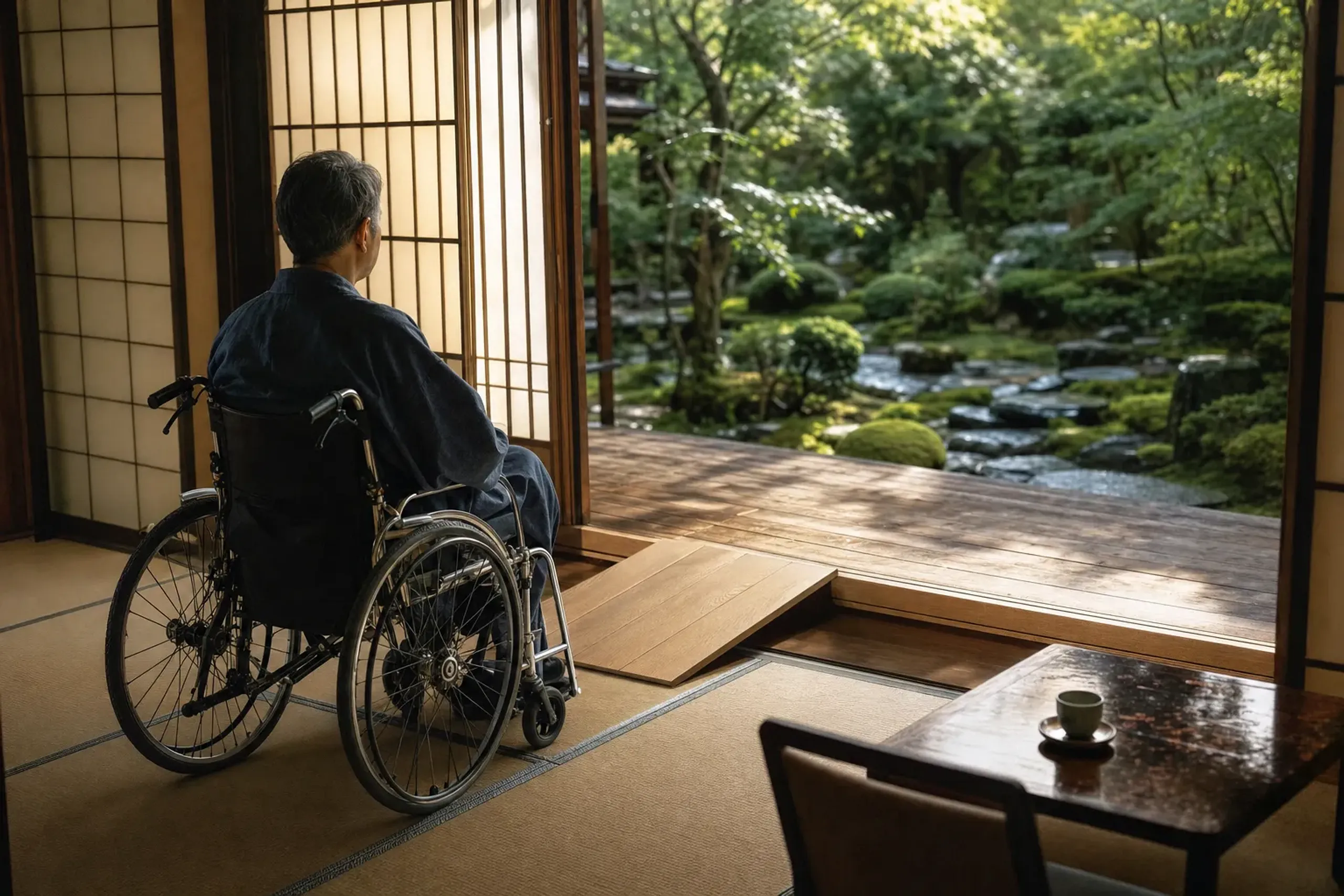
Some properties offer rooms with beds or adapted layouts. Our concierge team focuses on the actual path through the stay—entrance, room, dining, bathing—so the experience feels restful rather than effortful.
What Should I Do If I’m Traveling With Family Members Who Have Different Mobility Needs?
A mixed-mobility family trip works best with fewer hotel moves, shorter sightseeing windows, and transport that can wait without pressure.
We plan days with natural rest points and avoid itineraries that force the whole group into repeated transfers. It keeps everyone engaged, not just accommodated.
Why Choose Japan Royal Service
You are not looking for a list of “accessible things to do.” You are looking for a plan that holds together under real conditions. That is what our team at Japan Royal Service builds.
We work quietly, with discretion, and we design at the level that matters: the entrance you will use, the rail escort timing, the exact room configuration, and the daily rhythm. For HNW travelers, that precision is the difference between managing Japan and enjoying it.
And we keep the trip culturally rich. Shokunin craft sessions are often naturally seated and intimate. Wabi-sabi settings reward slow looking, not long distances. Hidden-Japan moments can be chosen for calm routes and low-friction access, rather than crowds and stairs.
If you want Japan to feel spacious again, we should talk.
For private coordination, reach our team privately via WhatsApp or LINE, or contact us here.