In this guide
- 01One Park, Three Calderas
- 02Lake Akan: Marimo, The Boat, And The Boiling Ground
- 03Akan Ainu Kotan: A Living Settlement, Not A Display
- 04Lake Kussharo: The Lake You Sit Beside
- 05Lake Mashū: The Lake You Only Look Down On
- 06How Do You Drive The Three-Lake Loop In One Day?
- 07Is One Day Enough, Or Should You Stay Two Nights?
- 08Frequently Asked Questions
- 09Plan Your Summer Among The Three Lakes
The boat pulls away from the Akan pier a little after eight. The engines settle into a low hum. Behind you, the onsen town thins into a line of roofs, and ahead the water opens out — grey-green and cool, with Mt. Oakan rising off the far shore. Somewhere beneath the hull, in the quieter bays to the north, live the strange green spheres that made this lake famous. You will not touch them. That is rather the point.
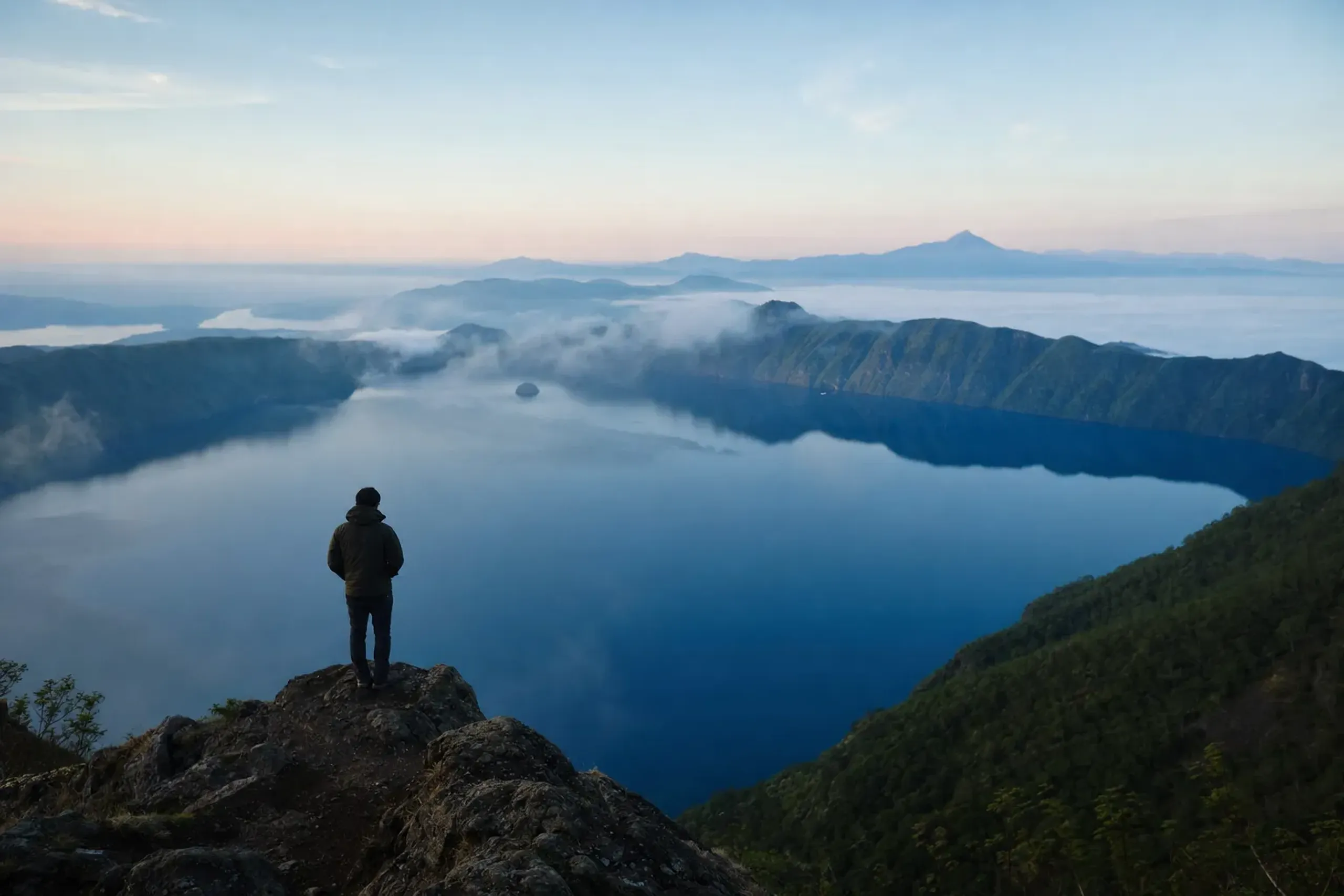
Eastern Hokkaido holds three lakes inside one park, and each asks something different of you. Akan you go out onto. Kussharo you sit beside. Mashū you can only look down on. Learn that grammar and the whole region makes sense. Our team at Japan Royal Service builds the summer route around exactly these three relationships — the landscape deciding, lake by lake, what a visitor may do. It is a region best understood through restraint rather than conquest, and we design each tailor-made itinerary to honour that quiet discipline.
One Park, Three Calderas
Akan-Mashū National Park covers 91,413 hectares of eastern Hokkaido. It was designated on 4 December 1934 as Akan National Park and renamed Akan-Mashū in 2017. Three ancient calderas sit within it: Akan, Kussharo, and Mashū. Volcanoes made all of this. Craters collapsed, water filled them, lava reshaped the shorelines, and in time the forest crept back over the scars.
The three lakes behave nothing alike. One has a shore town and a boat circuit. One has a sand beach warm enough to sit in. One cannot be reached on foot at all. A driver can run a loop that connects them in under three hours of road time, though no one should.
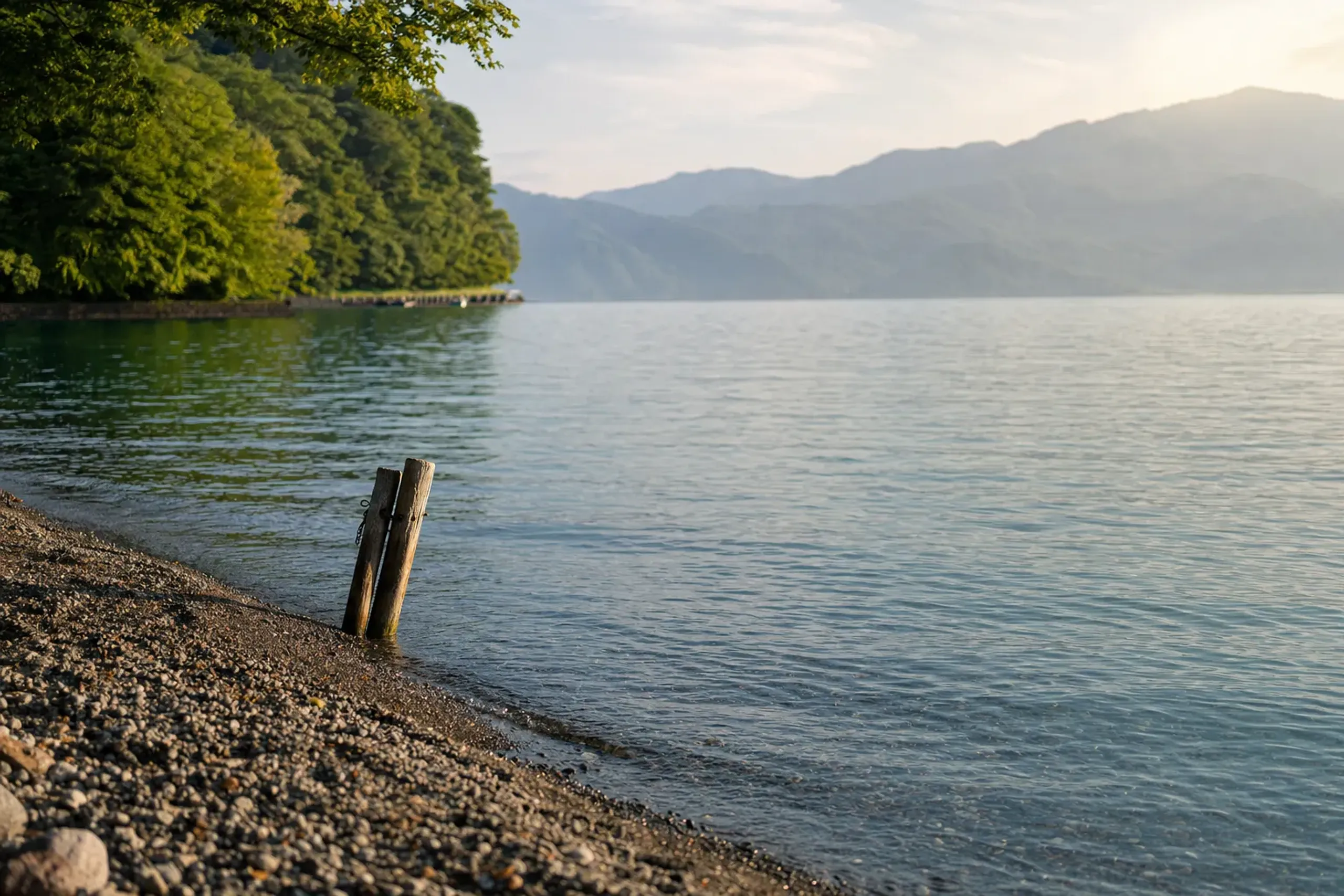
The whole pleasure lies in stopping — in the moss-covered stillness between them, the pauses most visitors drive straight past.
Lake Akan: Marimo, The Boat, And The Boiling Ground
Lake Akan is not a simple caldera lake. It is a lake within the Akan caldera, dammed by lava flowing from Mt. Oakan. Roughly 13 square kilometres of water sits at 420 metres elevation, reaching about 44.8 metres at its deepest. Three peaks frame it: Meakan at 1,499 metres, Akan-Fuji at 1,476, and Oakan at around 1,370.
Then there are the marimo. These are spherical colonies of green algae, rolled smooth by gentle currents, and they grow here as almost nowhere else on earth. They can reach about 30 centimetres across over many decades. Japan designated them a Special Natural Monument in 1952, having first protected them in 1921. The wild colonies live in the northern bays — Churui Bay and Kinetanpe Bay among them. Touching or removing marimo from the lake is prohibited. That restraint is the whole relationship.
How The Boat And The Marimo Center Work
Akan Kankō Kisen runs the sightseeing boat, an 18-kilometre circuit of about 85 minutes that includes roughly 15 minutes ashore at the Marimo Exhibition and Observation Center on Churui Island. There you see the spheres up close, in tanks, where looking is encouraged and reaching is not. The center opens from late April to 30 November.
In the 2026 season the July–August timetable ran eight departures a day, from 8:00 to 16:00, with no sailing at noon, and individuals did not reserve. Timetables shift year to year, so we confirm the current schedule when we plan your morning — and, where a private charter can be arranged, we favour the earliest sailing, before the day's first coaches arrive and the water is still and unpeopled.
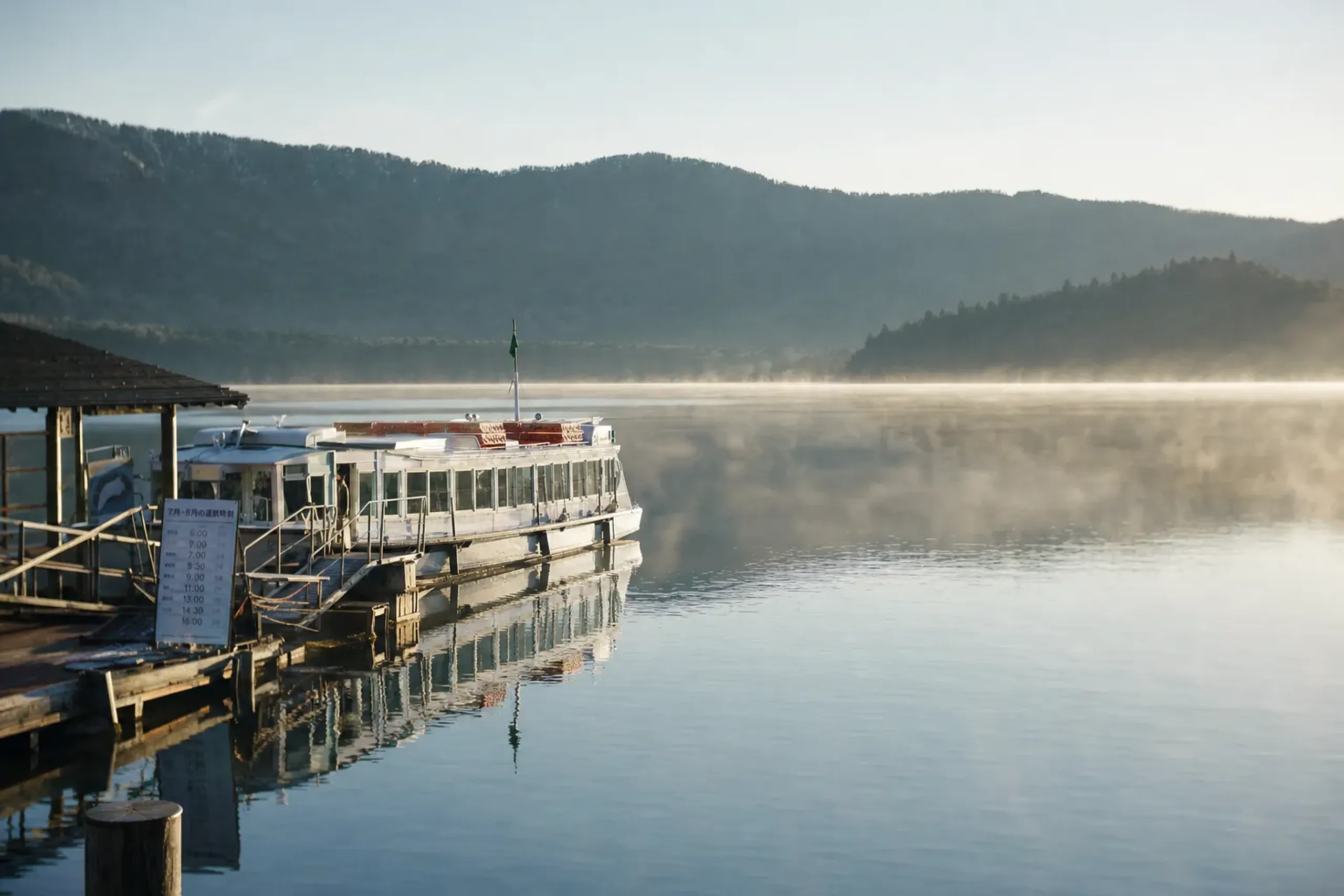
Key fact: Marimo may be looked at but never touched or taken from the lake. The boat and the Churui Island center exist so you can see them without disturbing the colonies that remain in the wild bays.
Bokke, The Mountains, And A Word On Meakan
Walk the short forest trail near Akan Onsen and you reach Bokke — pools of boiling mud that gurgle and belch at the surface, a plain reminder that the ground here is still alive. These are on the Akan side, not Kussharo.
Meakan is a working volcano. In the 2026 season it sat at Japan Meteorological Agency alert Level 2, with trails above the set stations closed. Check the Japan Meteorological Agency and Kushiro City before any climb. When restrictions apply, our concierge does not plan Meakan ascents. The Oakan trail is a different proposition, but bears range here; carry a bell and check the Akan Eco-museum Center before you set out.
Akan Ainu Kotan: A Living Settlement, Not A Display
On Lake Akan's southern shore stands Akan Ainu Kotan, home to about 120 residents and described by its own community as one of the largest Ainu kotan in Hokkaido. This is a place where people live and work, not a reconstruction. The distinction matters, and it shapes how you move through it.
The settlement has a quiet origin. In 1959 Maeda Mitsuko of Maeda Ippoen lent land, free of charge, to Ainu families.

Today the Akan Ainu Industrial Arts Association runs the kotan. The craft shops along the main street sell woodwork and embroidery made by people whose families have kept these skills alive — the kind of makers' settings that reward a quiet, introduced visit rather than a browse through shop windows.
Theater Ikor And What You Are Watching
Akanko Ainu Theater Ikor opened in April 2012 and is billed as Japan's first theater dedicated to Ainu traditional dance. Ainu traditional dance was inscribed on UNESCO's Intangible Cultural Heritage list in 2009 — a listing that covers the practice across the country, not this particular stage.
Alongside the traditional programme, the theater stages "Lost Kamuy," a contemporary production running since 2019 that pairs traditional dance with digital art, centred on the Ezo wolf. It is modern work, made now, not a recreation of the past. Performances are public and ticketed. Schedules change through the season, so check the kotan's own schedule page; our team confirms times and helps with etiquette and fair, direct purchasing from the makers.
Resident-led programmes such as "Anytime, Ainutime!" let you walk the forest and lakeside with community members who explain the relationship between people, land, and craft. This is the approach we recommend: cultural guiding from the people whose heritage it is, arranged discreetly and privately, rather than a stroll past shop windows. It is the Japan that search engines cannot surface — reached by introduction, offered with care.
Lake Kussharo: The Lake You Sit Beside
Kussharo is Japan's largest caldera lake — about 80 square kilometres, roughly 57 kilometres around.
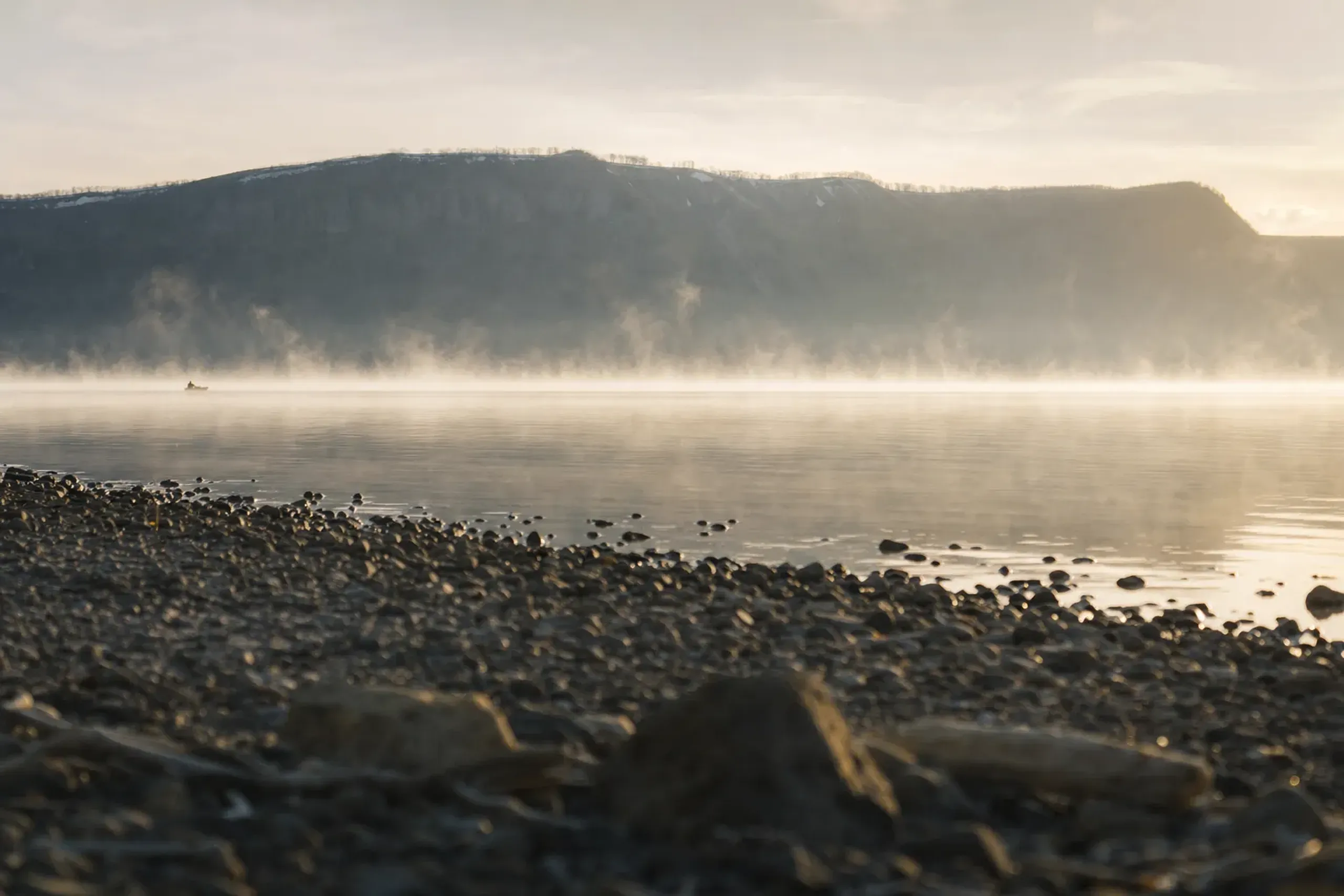
It has none of Akan's compact intensity. It sprawls. You do not board a boat here; you find a spot on the shore and stay a while.
The Wakoto Peninsula pushes out into the water, circled by a 3.2-kilometre loop trail that takes about 42 minutes at an easy pace. There is a free outdoor hot spring near the walk, open to the air and the lake view. It is the kind of place where an afternoon dissolves without your noticing.
Sunayu: Digging Your Own Hot Spring
At Sunayu, hot spring water seeps up through the beach sand. You dig a shallow pool with your hands and let it fill with warmth from below, toes in the grit, lake in front of you. There is something faintly absurd and wholly memorable about excavating your own bath on a public shore. We bring towels, a comfortable base, and an unhurried morning; the sensation does the rest.
Iōzan And The Early-Summer White
Iōzan — Mt. Iō, Atosanupuri — steams and reeks of sulphur, its slopes streaked yellow with mineral crust. The base visitor facility is open to all. The restricted zone beyond is entered only on guided treks run by the Mashū Lake Tourism Association, operating roughly mid-May to early November. These are public products; our concierge plans your day around them rather than claiming to run them.
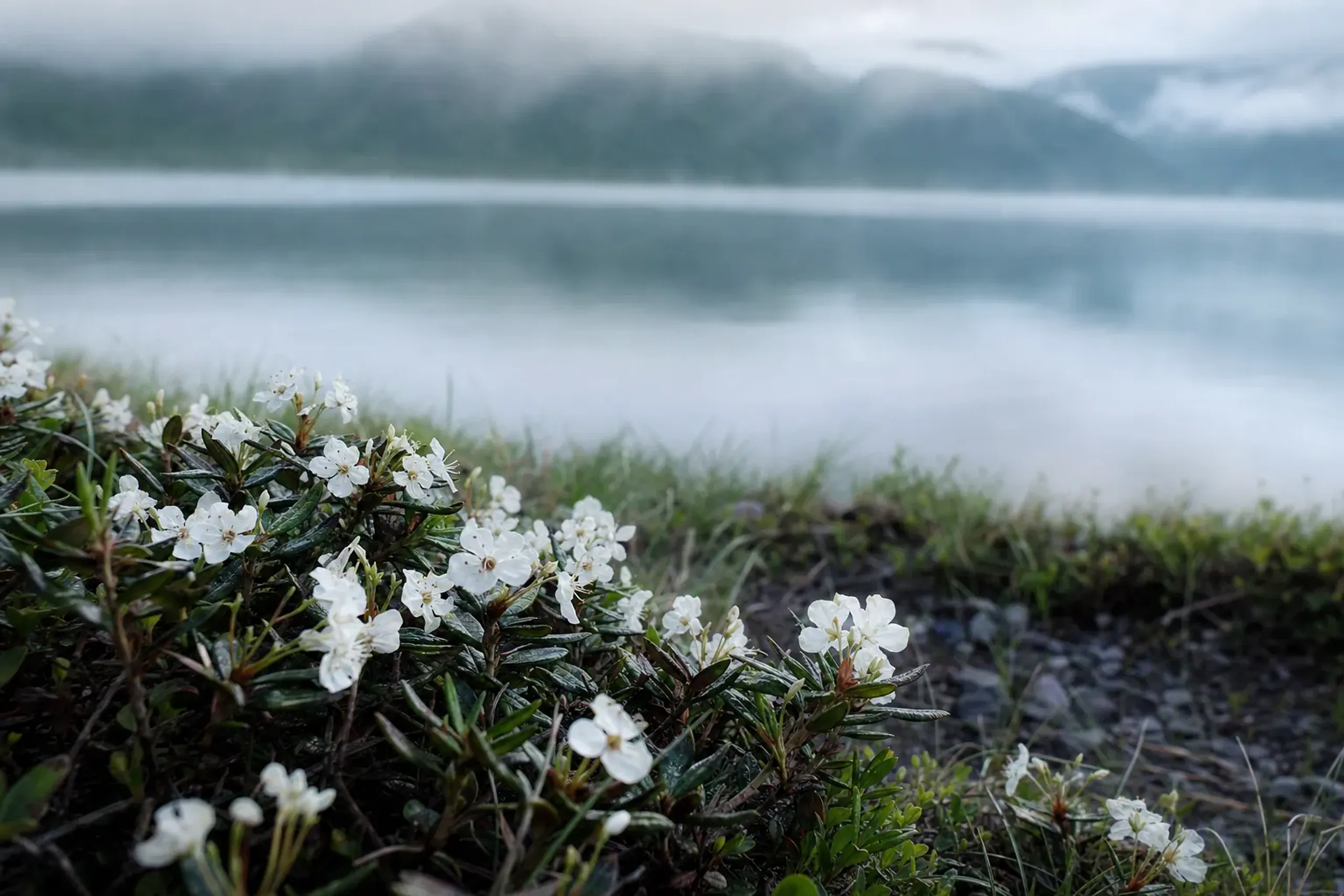
In June to early July, Ezo-isotsutsuji — Labrador tea — blooms white across about 100 hectares near Iōzan. It is an early-summer sight only, gone by high summer. If your dates fall right, it is worth the detour — the sort of narrow seasonal window that, planned well, turns an ordinary visit into one that could not have happened a week later.
Lake Mashū: The Lake You Only Look Down On
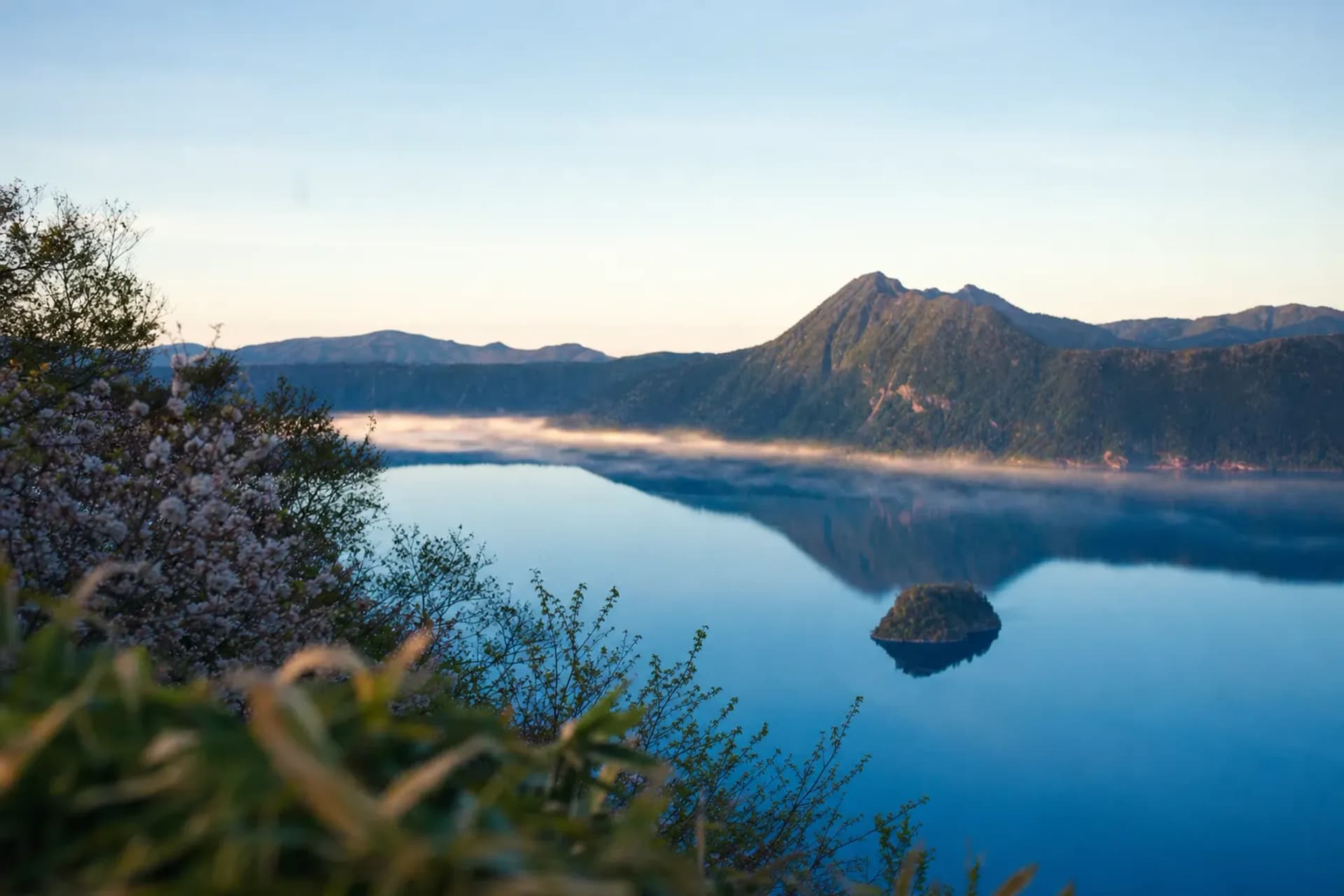
Mashū cannot be reached on foot. There is no shore path, no pier, no boat. You view it from the decks above — the First Viewing Deck at Kamuy Terrace and the Third Viewing Deck — and that distance is the whole experience. The lake reaches about 212 metres at its deepest, and its transparency was measured at 41.6 metres on 31 August 1931.
Fog is the famous complication. It can cover the lake for days in early summer, erasing the water entirely and leaving you staring into white. A two-day design raises your odds of a clear morning. We cover Mashū in full in our dedicated guide — Lake Mashū: The Lake You Look Down On But Never Reach — so here we simply mark its place in the loop and move on.
How Do You Drive The Three-Lake Loop In One Day?
The Ministry of the Environment's three-lake loop runs 131.6 kilometres with about 2 hours 48 minutes of driving, in the order Akan Onsen → Mashū → Kussharo, ending at Bihoro Pass. That is road time only. Add the boat, a meal, Sunayu, and the viewing decks, and a real day stretches far past three hours.
Two airports serve the region. Kushiro Airport sits about 60 minutes by car from Akan Onsen. Memanbetsu Airport is roughly 80 minutes from the Mashū First Deck. That pairing lets you enter near one lake and leave near another without doubling back — fly into Kushiro, work east and north, and finish at Bihoro Pass bound for Memanbetsu.

A private car and driver makes this open-jaw routing effortless, holding your schedule to the lakes' rhythm rather than a timetable's.
There is a scheduled bus option that bundles all three lakes in a day. It works. But a shared coach fixes your timing to someone else's clock, and the one window that matters most — a clear morning at Mashū — is exactly the window you want freedom to chase.
What To Pack For A Summer Visit
Inland Akan can climb past 30°C in daytime and cool quickly after dark, so bring a light jacket even in July. If you plan any walking near the Oakan trail, carry a bear bell and check the Akan Eco-museum Center first. Comfortable shoes for the Wakoto loop. A change for Sunayu. Patience for fog.
Is One Day Enough, Or Should You Stay Two Nights?
Two nights is the better design — one near Akan Onsen, one on the Teshikaga or Kawayu side. A single day can technically touch all three lakes, but it leaves no margin for Mashū's fog or a slow morning on the boat.
Splitting your base gives you an unhurried marimo cruise, a proper afternoon at the Ainu kotan, Sunayu without rushing, and a second shot at Mashū if the first morning is lost to cloud. The lakes reward slowness. The route was never meant to be a checklist.
Frequently Asked Questions
Can You Touch Or Take Marimo From Lake Akan?
No. Touching or removing marimo from the lake is prohibited under multilingual official guidance. The wild colonies grow in the northern bays, and you view cultivated examples at the Marimo Exhibition and Observation Center on Churui Island, reached by the sightseeing boat.
Is The Three-Lake Circuit Best Done As One Day Or Two?
Two nights suit it better. The Ministry's loop is 131.6 kilometres and about 2 hours 48 minutes of driving, but boat time, Sunayu, the Ainu kotan, and the Mashū decks push a real visit well past a single day — and give you a second chance at Mashū's view.
What Happens If Fog Covers Lake Mashū?
Fog can hide Lake Mashū for days in early summer, leaving only white from the decks. There is no reliable way to predict a clear morning, so we build in a second viewing window, usually across two days, to improve the odds of the blue water showing.
Are The Ainu Dance Performances Open To Visitors?
Yes. Performances at Akanko Ainu Theater Ikor, including the traditional programme and the contemporary "Lost Kamuy," are public and ticketed. Schedules change seasonally, so check the kotan's own schedule page; our concierge confirms times and purchasing when we plan your visit.
Plan Your Summer Among The Three Lakes
The pleasure of eastern Hokkaido lies in reading each lake correctly — and in the discretion and unhurried timing that let you meet them on their own terms, with the earliest boat, a resident-led afternoon at the kotan, and a second morning held in reserve for Mashū's blue. To shape a private, confidential summer itinerary around Akan, Kussharo, and Mashū, contact us here, and we will prepare a tailored proposal built to your dates and your pace.