In this guide
- 01A Lake You Can Only Look Down On, Never Reach
- 02How Clear Is Lake Mashū Today Compared With The 1931 Record?
- 03Lake Mashū In Summer: Is It Worth Visiting In Fog Season?
- 04The Lake Itself: The Facts That Explain The Feeling
- 05Which Lake Mashū Viewpoint Should You Choose In Summer?
- 06How Do You Visit Lake Mashū Without Renting A Car?
- 07A Practical Summer Plan: Rim First, Then Comfort, Then Try Again
- 08Discretion On The Road: Why The Right Transfer Changes The Day
- 09Hidden Japan Means Knowing When Not To Force The “Perfect View”
- 10Where Lake Mashū Fits In A Bespoke Eastern Hokkaido Itinerary
- 11Plan Your Lake Mashū Visit With Discretion
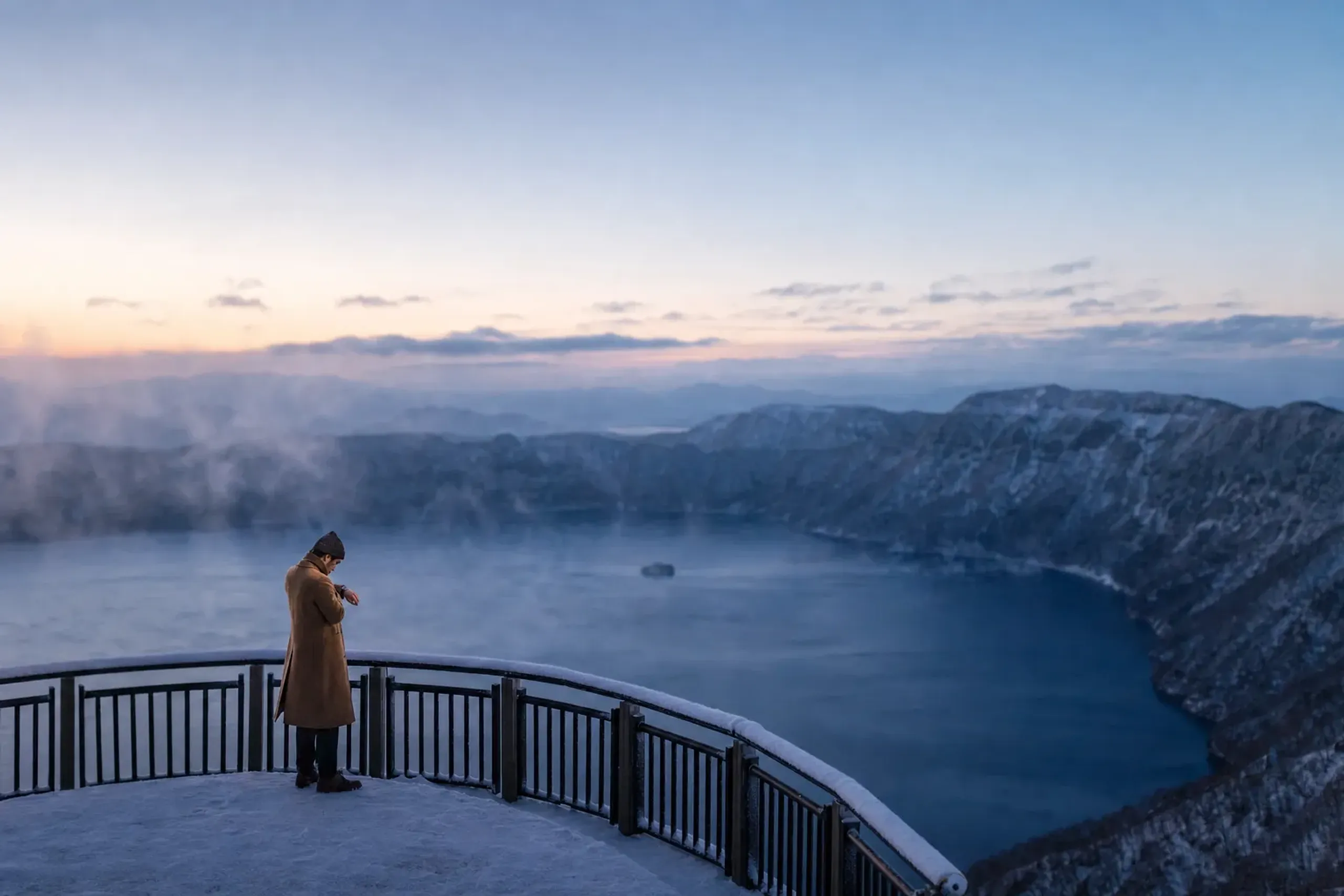
The guardrail at Lake Mashū is not a suggestion. It is the whole point.
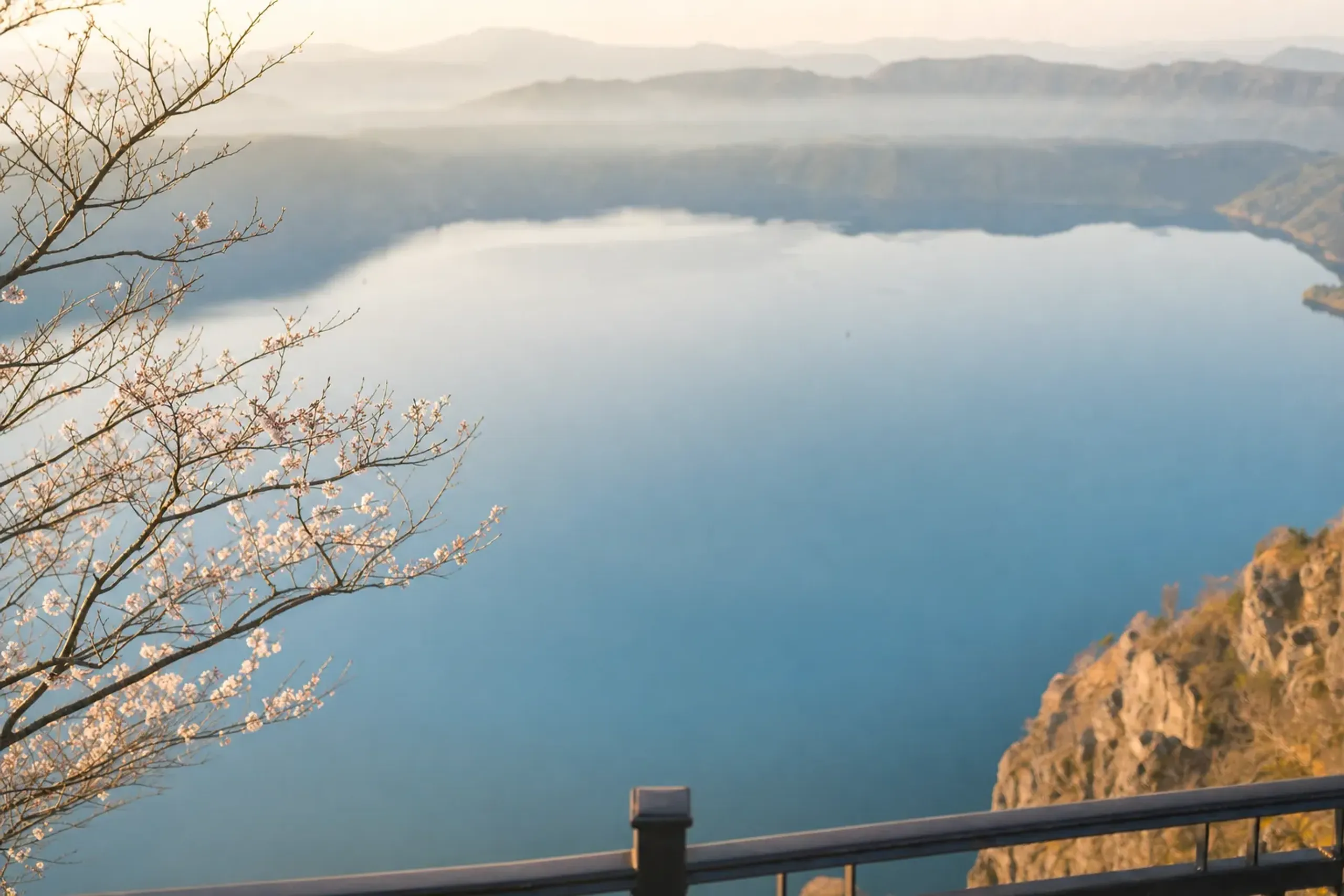
You stand on the rim. The caldera falls away in a clean drop, 150 to 350 meters of cliff, and the shore stays out of reach by design. No descent. No boat. Just a viewpoint and whatever the weather chooses to reveal.
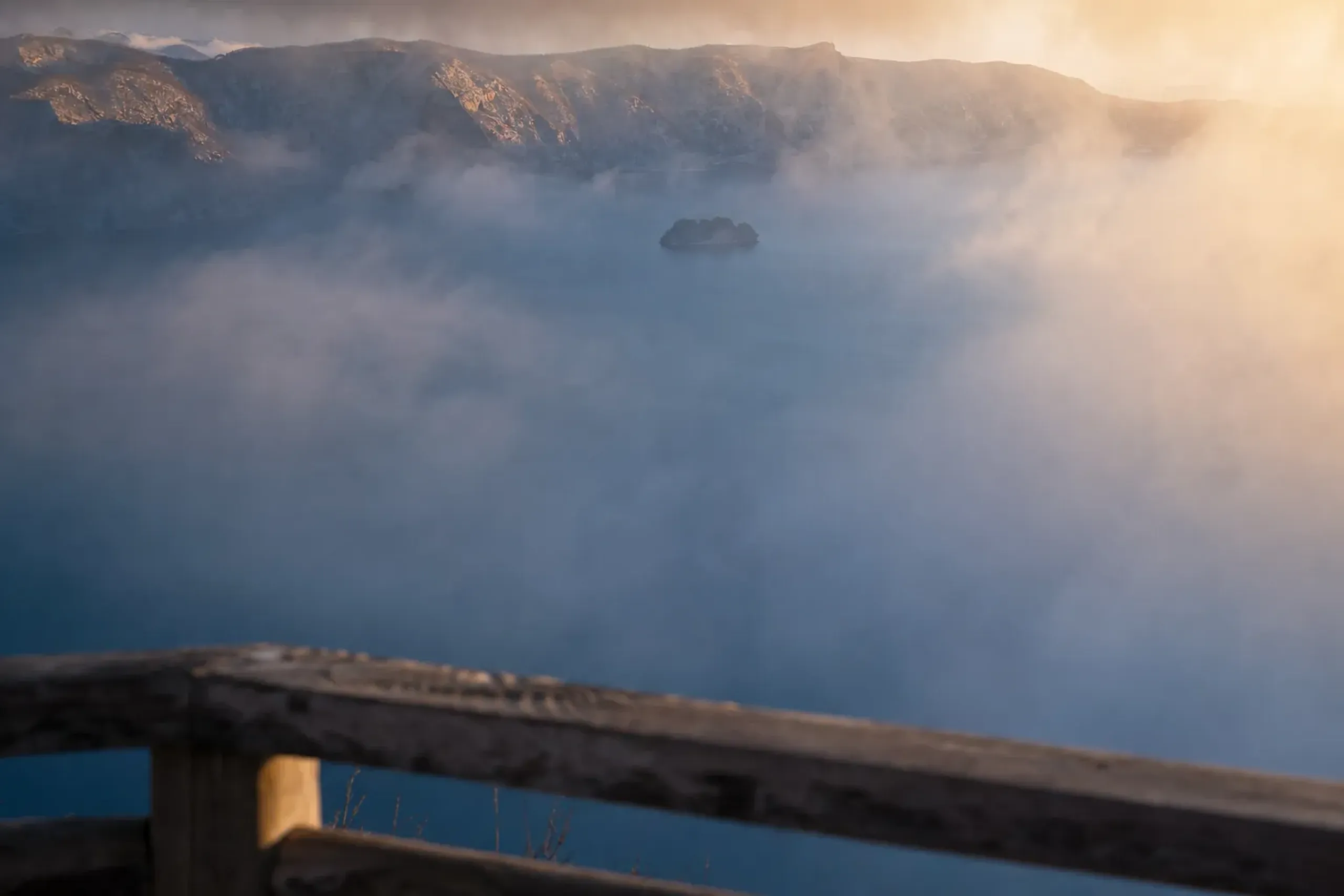
On some summer days, the lake is a white wall. Then a seam opens in the fog, and Mashū Blue appears for a minute, sharp enough to make the whole rim fall silent.
A Lake You Can Only Look Down On, Never Reach
Lake Mashū has no inflow or outflow rivers, sits inside a 7,000-year-old caldera, and general entry is restricted—so you cannot go down to the shore, only view it from the rim.
This restriction is not a gimmick. Lake Mashū and its catchment sit inside the Special Protection Area of Akan-Mashū National Park, and access is carefully controlled. The result is a rare kind of travel moment: you do not “do” Lake Mashū so much as you are permitted to witness it.
That distance changes how you look. You start reading the slope lines and the cloud ceiling, noticing where the fog is spilling in over the lowest rim. You wait for the lake to show itself. Sometimes it does not. That restraint, too, is part of the place—a wabi quietness that asks for patience rather than conquest.
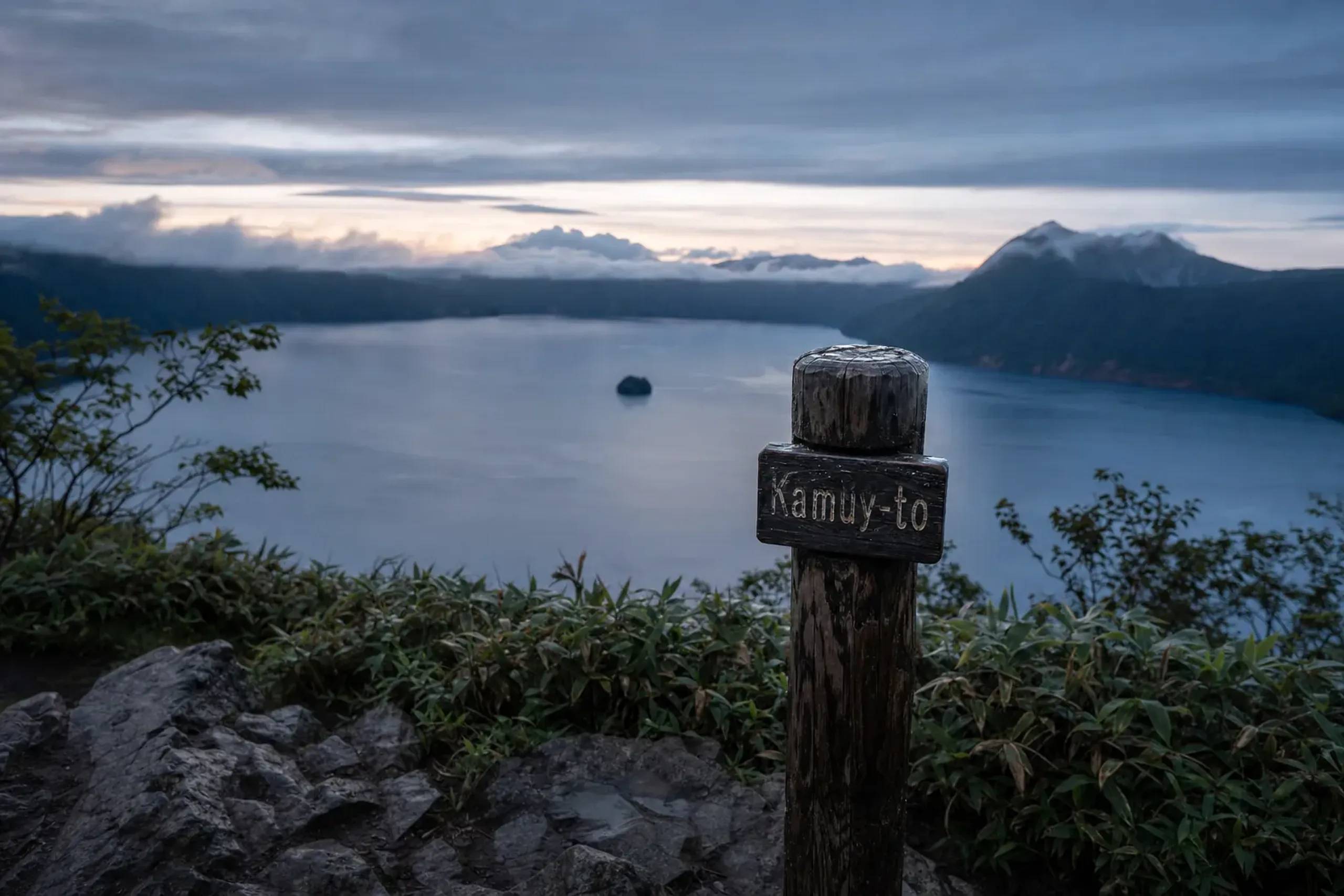
Locally, the Ainu name Kamuyto—“lake of the gods”—appears in tourism and reference sources.
We keep our own language modest on purpose. The atmosphere speaks well enough.
How Clear Is Lake Mashū Today Compared With The 1931 Record?
Lake Mashū’s transparency was measured at 41.6 meters in August 1931; recent measurements are about 20 meters (20.3 m in 2022 and about 21 m in 2024).
Transparency here is measured with a simple, almost old-fashioned method: a white disc is lowered until it disappears. The 41.6-meter reading in 1931 was a world record at the time, reported as surpassing Lake Baikal. It is a startling number, even if you never see the lake’s bottom.
Since the 1950s, the readings have fallen, and researchers continue to study why. We do not speculate with guests, because the causes are still debated and clarity depends strongly on phytoplankton and other factors that shift over time.
What matters for planning is the seasonal swing. Researchers have found clarity tends to be best in May and December and lowest in August and September, with a variation of more than ten meters. If you are visiting in summer, we frame the day honestly: you are coming for the caldera, the fog, and the chance of blue in the breaks. Knowing precisely what a place offers in which month—that sense of shun—is the quiet discipline behind any day worth your time here.
Lake Mashū In Summer: Is It Worth Visiting In Fog Season?
Yes—summer at Lake Mashū is worth it if you accept that May–September is fog season and design your day around multiple viewpoints and backups, not a single “perfect” photo moment.
From May to September, sea fog from the Pacific is the main character. It forms offshore where warm and cold currents meet near Kushiro, then drifts inland and can spill into Mashū’s caldera over its lowest rim near Viewpoint 1. Kushiro records about 100 fog days a year, with around 70 falling between May and September.
So no, we do not sell summer as the lake’s “best” season. That would be a mistake. Instead, we treat summer as a different kind of Lake Mashū: green slopes, quick weather shifts, and a moody, photographic palette when clouds hang low and then lift.
One guide we work with still calls it “Fog of Lake Mashū,” a phrase popularized by a 1966 song title. You do not need the reference to feel it. You will see the fog slide like a curtain, then tear open in uneven patches—a restrained beauty that rewards those who come willing to wait.
The Lake Itself: The Facts That Explain The Feeling
Numbers can flatten a place. Here, they sharpen it.
Lake Mashū sits at about 352 meters above sea level. Its surface area is about 19.6 square kilometers, with a shoreline around 20 kilometers. The maximum depth is about 212 meters, placing it among the deepest lakes in Japan, and the mean depth is about 146 meters.
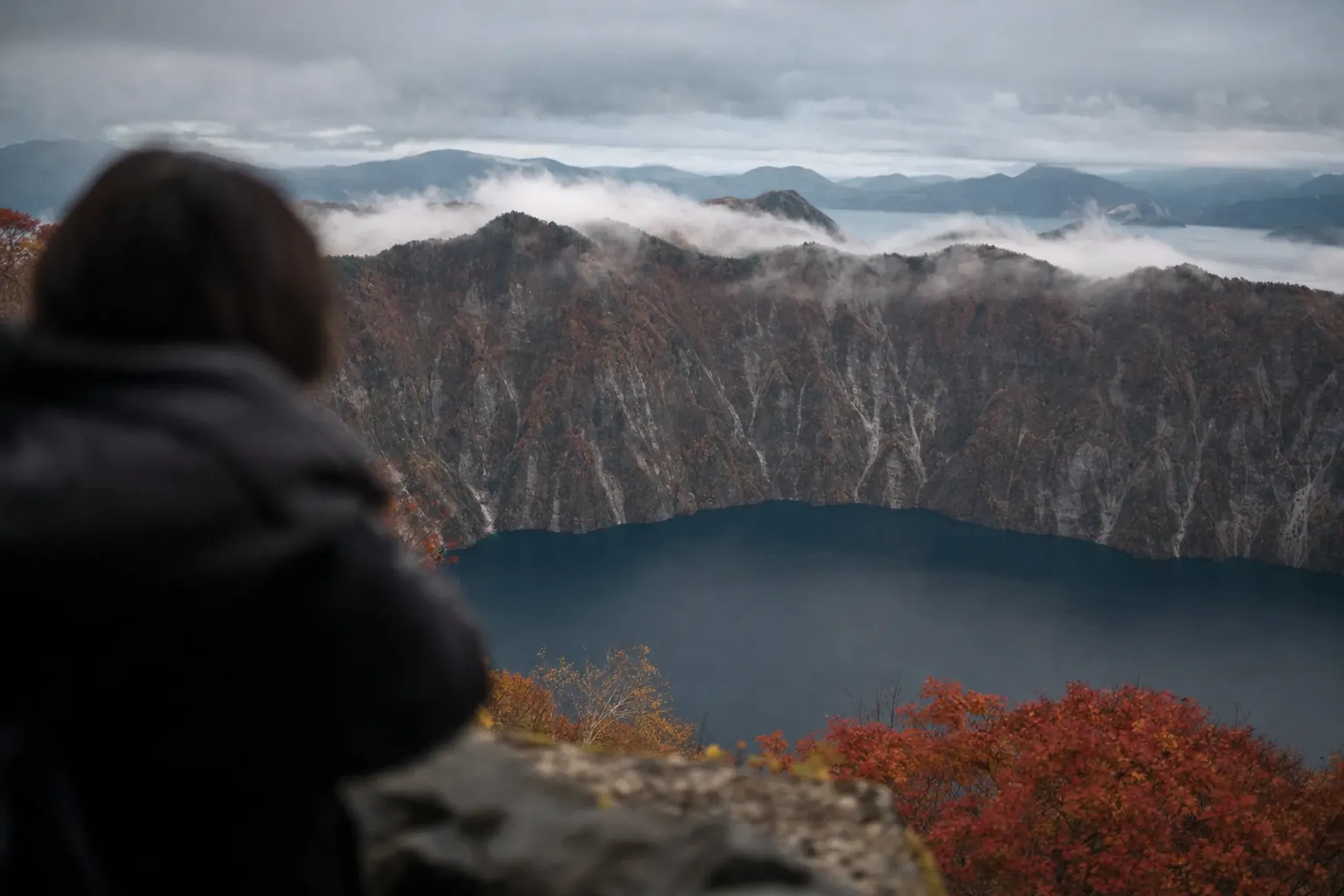
It has no rivers flowing in and none flowing out. Most of its water comes from rain. Water is thought to leave underground and emerge at springs, which is one reason the water level stays nearly constant.
There is one island, Kamuishu, the top of a submerged volcano. Mount Mashū rises on the east side of the lake to 857 meters. In clear conditions, the composition is almost too tidy: island, cone, caldera wall, and that improbable blue.
Lake Mashū is also selected as a Hokkaido Heritage site. The label matters less than the restraint behind it: a place preserved by deliberately limiting what humans are permitted to do there.
Which Lake Mashū Viewpoint Should You Choose In Summer?
Start with Viewpoint 1 for classic caldera views, add Viewpoint 3 for quiet and flexibility, and consider the lower “rear” viewpoint when fog is thick because it can sit below the cloud layer.
Lake Mashū is a rim-viewing destination. That sounds simple until you arrive on a foggy day with only one stop in your plan. Our team at Japan Royal Service sequences viewpoints the way a photographer sequences light—because fog is not just “bad weather,” it is a moving layer with edges.
Viewpoint 1 (Mashūko Daiichi Tenbōdai)
This is the most common stop and often the first place visitors see the caldera. On many days, it is also where the fog pours in, because the caldera’s lowest rim lies near here.
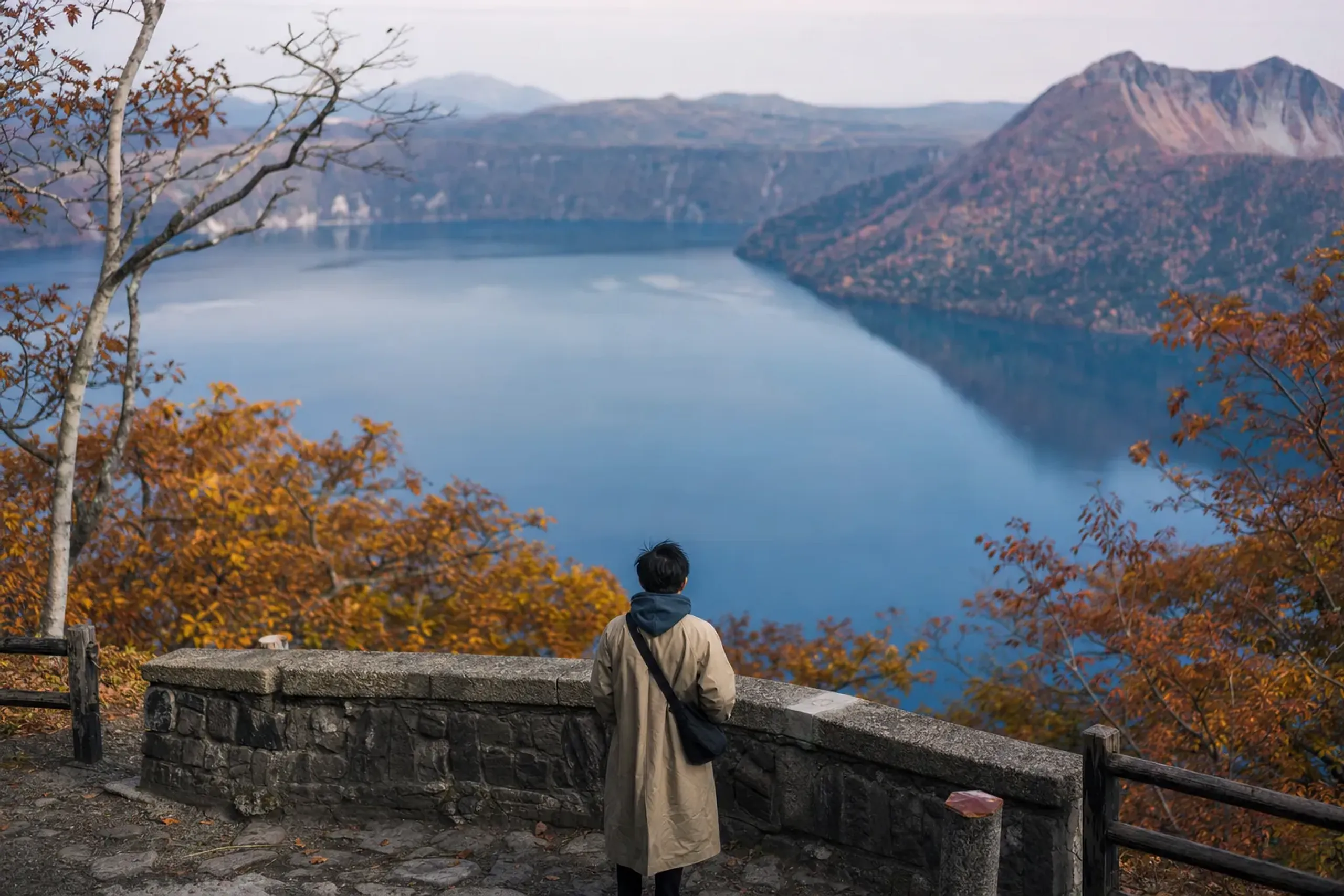
If the lake is hidden, do not linger too long. Move.
As a reference point, Viewpoint 1 is about 10 kilometers from Kawayu Onsen Station. That distance is short on a map, but it is long enough that conditions can change entirely by the time you arrive.
Viewpoint 3 (Mashūko Daisan Tenbōdai)
Quieter. Less bus traffic. In our experience, it can feel genuinely private even in peak travel months, simply because fewer people bother with the extra step.
It is about 10 kilometers from Mashū Station. If you are building a no-car day, this matters.
The Lower “Rear” Viewpoint
It can be harder to see the lake from here when conditions are clear. In thick fog, though, it can give you the best odds, because you may be sitting below the densest layer. That tradeoff is the entire summer strategy.
Key fact: There is no general access to Lake Mashū’s shore and no boating; the lake is viewed only from designated observation areas on the rim.
One guide has stated that Viewpoint 2 is closed for safety, but we do not treat that as a permanent, confirmed status. Access can change. Before your visit, our concierge team quietly verifies viewpoint access, the fog conditions on the day, and any closures—so you are never left guessing at the rim.
Bears live in this part of Hokkaido. Follow posted notices.
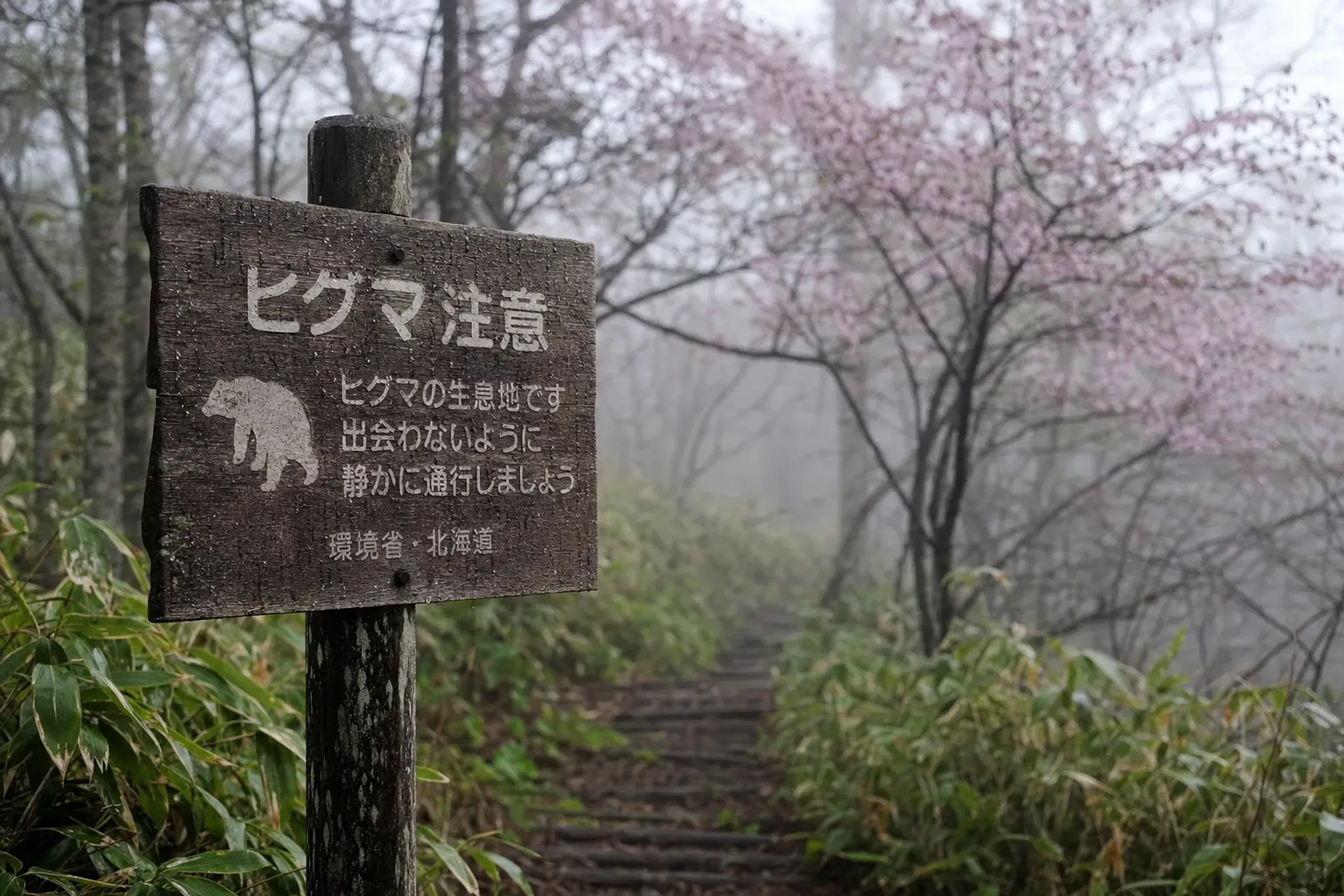
Do not improvise off-trail detours to “find another angle.”
How Do You Visit Lake Mashū Without Renting A Car?
You can visit Lake Mashū without a car by basing near Mashū Station or Kawayu Onsen Station and using published local transport options, then keeping your schedule flexible for fog and viewpoint changes.
Eastern Hokkaido rewards drivers. It also frustrates travelers who assume rail alone will deliver them to every rim and trailhead at the right hour. That gap is where a well-designed plan matters, especially for discerning travelers who want calm pacing and predictable comfort.
Two stations tend to anchor Lake Mashū logistics: Mashū Station and Kawayu Onsen Station. From there, you are thinking in short road distances—around 10 kilometers to key viewpoints—rather than long intercity transfers.
For visitors who prefer a published, structured day option, Akan Bus lists a 2026-dated sightseeing product called “The Three Lakes of East Hokkaido (Lake Mashu, Lake Kussharo, Lake Akan) 1 Day Course,” operating daily from April 18, 2026 to December 20, 2026. Akan Bus also announced web ticket sales starting July 1, 2026 for certain regular lines in its route-bus news.
We share these facts because they affect feasibility. We do not promise outcomes at Lake Mashū. No one can. What we can do is design a day that still feels complete and considered even if the lake stays hidden.
A Practical Summer Plan: Rim First, Then Comfort, Then Try Again
Fog is not a single condition.
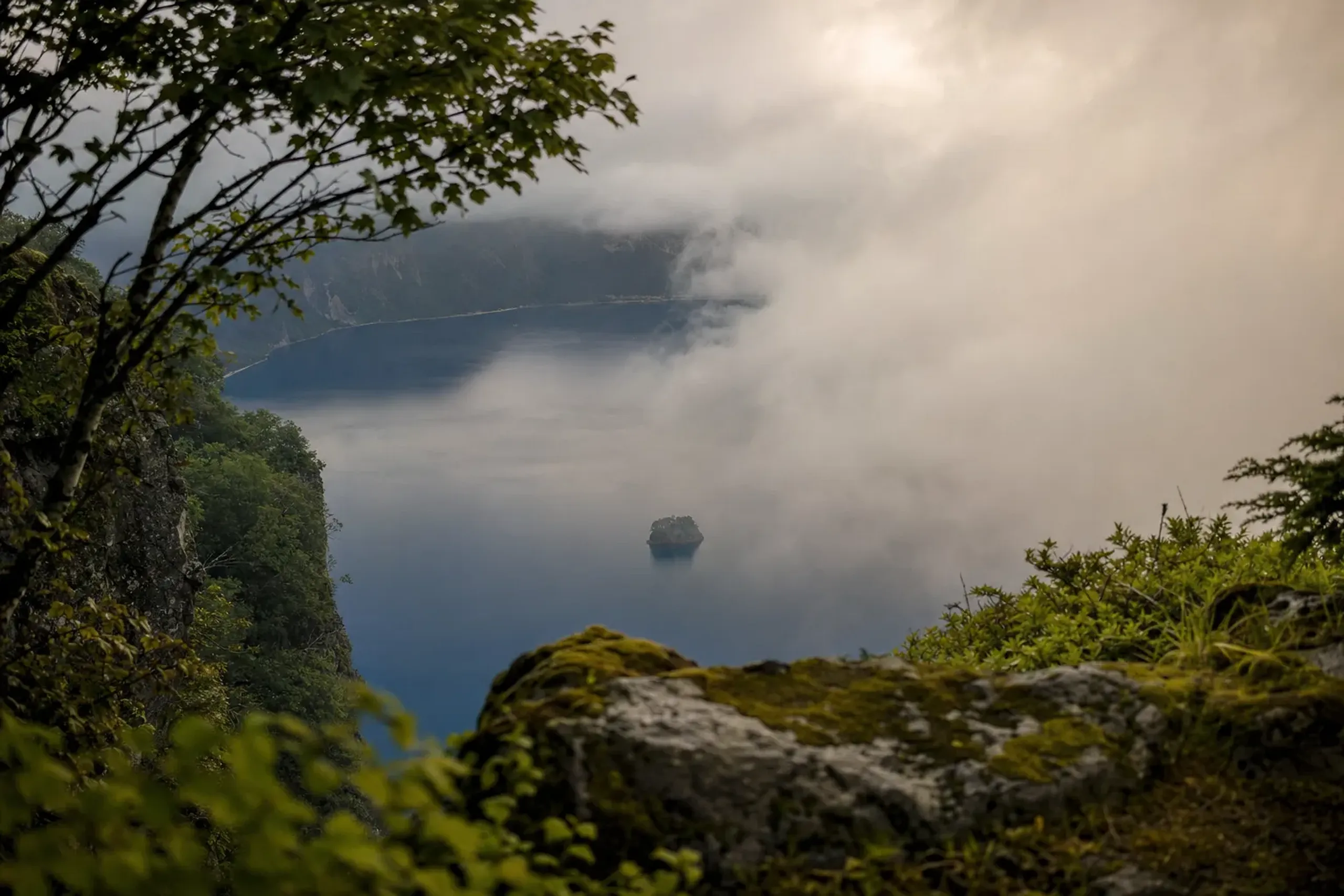
It is a moving system. So we plan in loops.
In our experience, a strong summer day at Lake Mashū follows a simple rhythm: try the rim, reset somewhere restorative, then return for a second look when the odds shift. That rhythm keeps the day from feeling like a gamble.
Step 1: Commit To Two Viewpoints, Not One
Start with Viewpoint 1 if you want the classic panorama. If it is socked in, move to Viewpoint 3 or the lower rear viewpoint rather than waiting for a miracle. The caldera’s fog thins unevenly, and a change in elevation is often the most efficient change you can make.
Step 2: Leave Space For A Second Attempt
Schedule your day so you can return to the rim later. Even a one-hour gap can be enough for a break to form. This is why we prefer not to stack too many fixed-time commitments around Lake Mashū in summer.
Step 3: Use Teshikaga As A Gentle Reset Point
Teshikaga is not a “pit stop.” It is a pacing tool. The town’s 2026 tourism action plan highlights ongoing initiatives like multilingual signage updates and circulation goals connected to Lake Mashū and Mt. Iozan, which tells you something practical: wayfinding and visitor flow are being treated seriously here.
For the travelers we serve, comfort is not indulgence. It is what makes patience possible.
Discretion On The Road: Why The Right Transfer Changes The Day
Eastern Hokkaido can feel remote, but your day still runs on minutes: fog windows, short drives between viewpoints, and the quiet need to keep your party unhurried.
Our team at Japan Royal Service often supports Lake Mashū visits with private transportation planning and discreet chauffeured touring in eastern Hokkaido. It is a public national park viewing area, and we never imply private access to the caldera or lake surface—what we protect instead is the confidentiality and ease of your day.
What changes with a luxury transfer is not the park. It is your day. Doors open and close without fuss. Luggage disappears when it should. You can pivot to another viewpoint without negotiating language barriers or timing stress, and without your plans becoming anyone else’s business.
For many of our guests, that is the real luxury. Quiet control.
Hidden Japan Means Knowing When Not To Force The “Perfect View”
Lake Mashū is famous enough to appear in guidebooks, yet it still behaves like hidden Japan: it refuses to perform on command. That refusal is the lesson.
We see two types of visitors. The first chases a postcard and leaves frustrated. The second reads the fog as part of the scene and notices the details that do show up in summer: the wet greens on the caldera wall, the wind patterns on the cloud surface, the way the lake’s color can deepen in a narrow opening like ink poured into water.
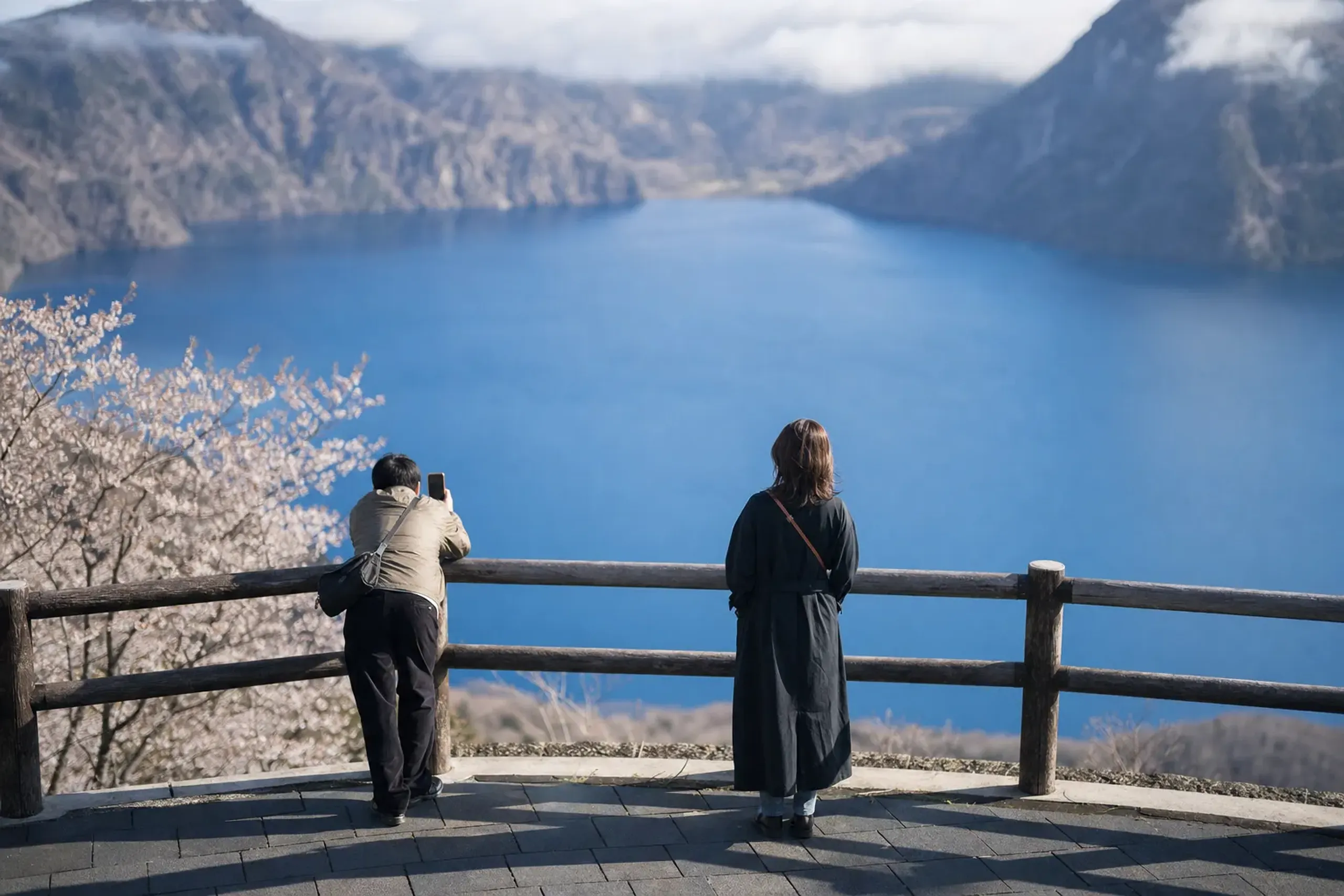
If you want a travel style that feels private without needing “private access,” Lake Mashū is a clean answer. You are allowed to look. You are not allowed to take. There is a restraint in that—a sabi-tinged beauty in watching something you cannot possess.
Where Lake Mashū Fits In A Bespoke Eastern Hokkaido Itinerary
Lake Mashū works best as a defining hour, not a full day. That is how you keep it special.
For guests asking us for a tailor-made itinerary, we usually frame Mashū as a rim-viewing sequence with enough slack to handle fog, paired with restorative time nearby. The goal is to protect your mood, not just your schedule.
If you are building a wider Hokkaido nature arc, we keep the comparisons honest. Oirase Stream and Lake Towada, for example, offer a different kind of caldera-lake experience—walkable water and river texture—covered in our guide: Oirase Stream and Lake Towada: A Guide to Autumn in Aomori. Different region. Different feel. A useful contrast.
Plan Your Lake Mashū Visit With Discretion
Lake Mashū will not perform on command, but a day built with the right rhythm, the right viewpoints, and the quiet confidence of a plan that bends with the fog is well within reach. Let us design that day around you—verifying conditions, sequencing the rim, and keeping your party unhurried and unseen. To begin shaping a bespoke eastern Hokkaido journey in complete confidence, contact us here.