In this guide
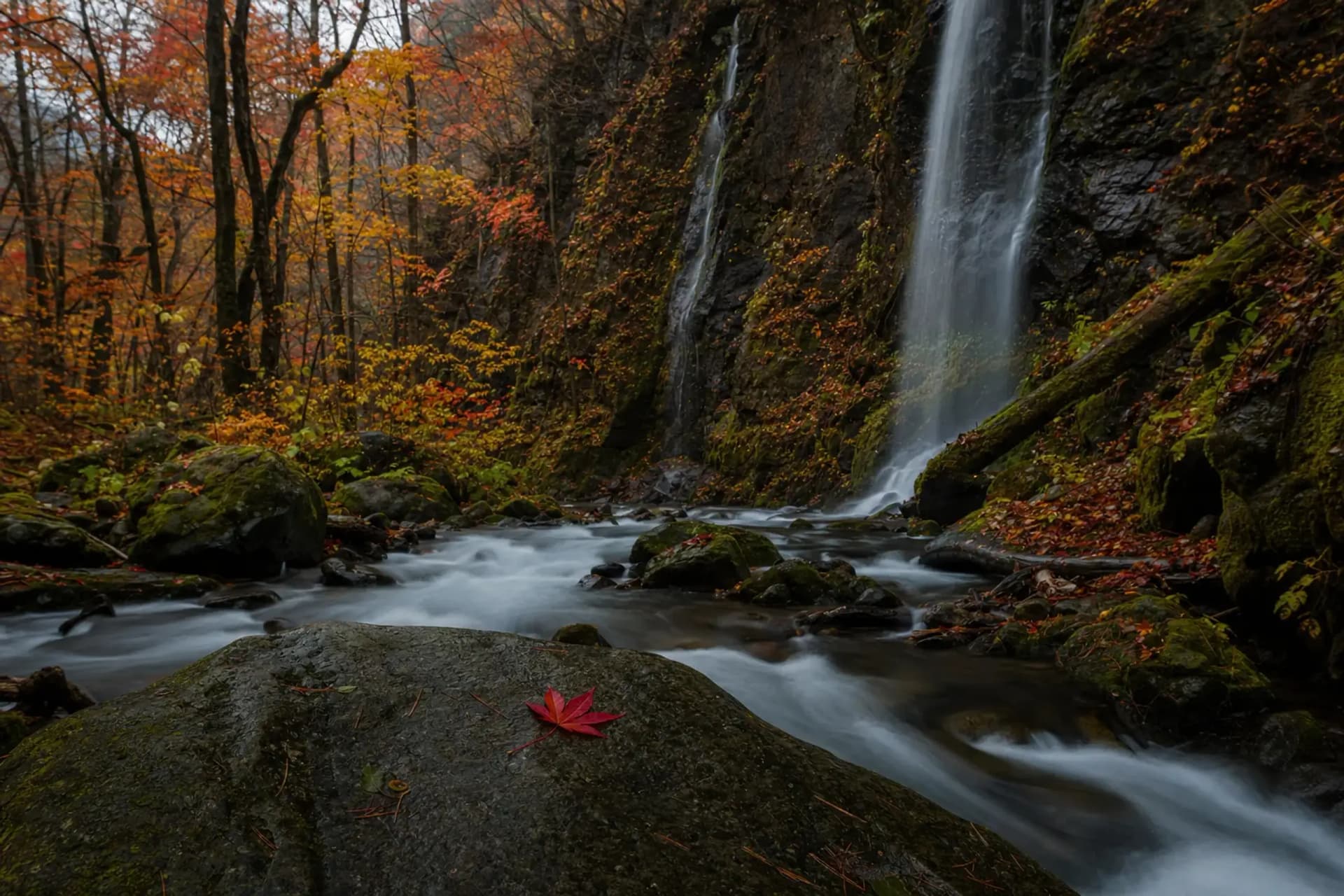
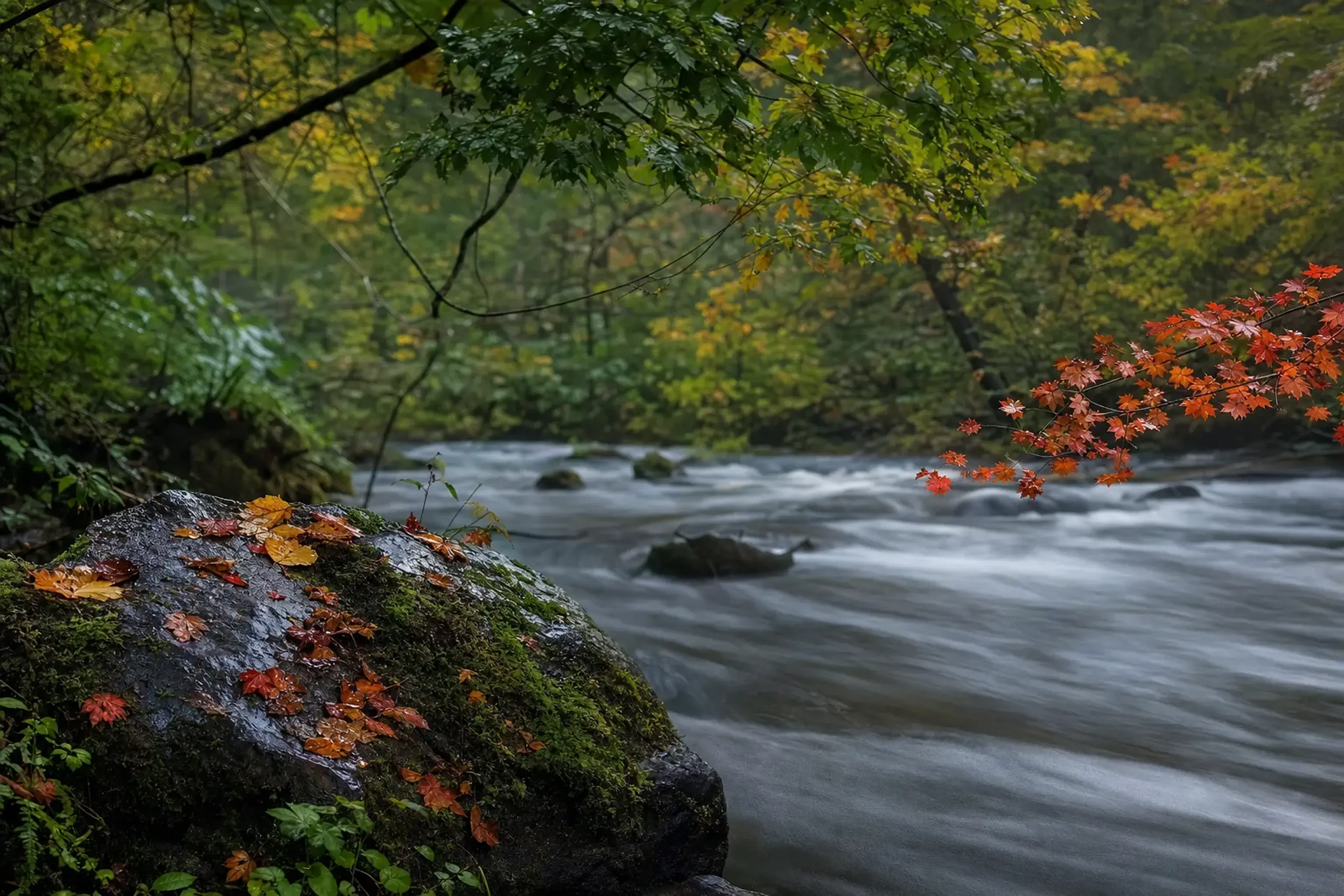
Water links these two places, so a plan should too. Lake Towada sits in a caldera straddling the border of Aomori and Akita, and Oirase Stream is its only way out. The water that spills from Nenokuchi runs down a forested gorge, past more than a dozen waterfalls, and that single thread is the reason to take the lake and the stream together rather than apart.
Autumn is when this matters most. The colour here does not arrive on a fixed date, and the lake shore and the stream rarely turn on the same days. That one fact changes how you plan. Fix the trip to a single morning on the calendar and you may miss the week the gorge is at its best. Build it around flexible dates and you can move with the season instead of against it — which is, in the end, the quiet luxury of this particular corner of Tohoku.
Two Places, One Route
Think of the day as following the water: Lake Towada first, then the stream that drains it.
The lake is the largest crater lake on Honshū, 327 metres deep at its lowest point. Its main hub is Yasumiya, on the southern shore, where the excursion boats run and where the Otome-no-Zō, the Maiden Statue, stands as the lake's quiet symbol. It is the point most people use to orient themselves.
From Yasumiya, a boat crosses to Nenokuchi in roughly fifty minutes, tracing a shoreline you cannot see any other way.
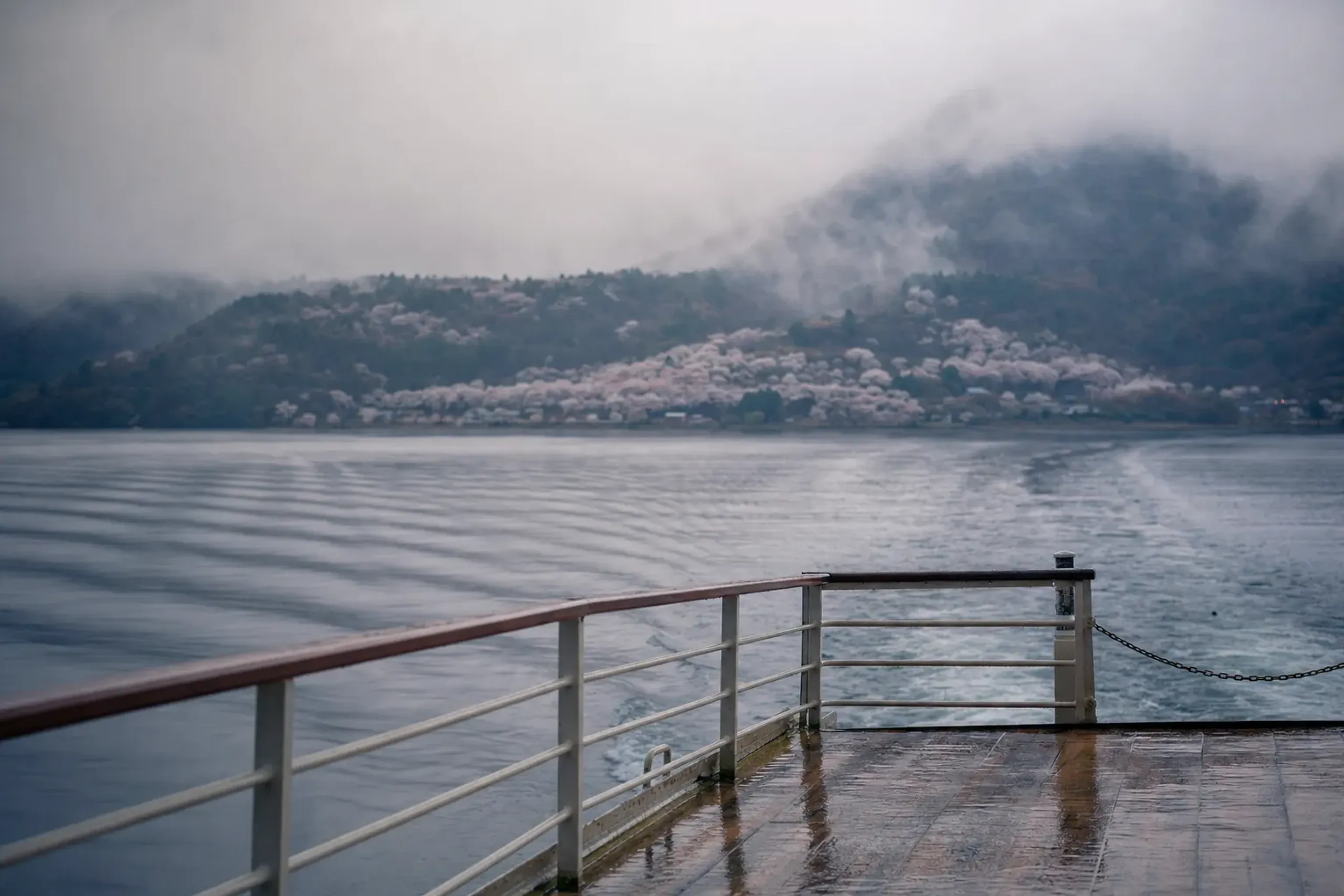
Nenokuchi is where the lake ends and the stream begins. Step off the boat and you are at the top of the gorge, with the water heading downstream ahead of you.
Downstream, Ishigedo is a well-known point along the route. The stream can be walked in sections, and several bus stops sit along its length, which is what makes a one-way plan work. You do not have to double back. The boat carries you to the upper end, and you walk, or part-walk, down from there.
Both the lake and the stream lie within Towada-Hachimantai National Park. Taken as a route rather than two separate stops, the day reads cleanly: cross the lake, reach the stream, follow the water down. Our concierge sequences it so that the transitions are the easy part, never the part that fills your attention.
When Does Autumn Colour Peak At Oirase And Lake Towada?
Autumn colour here generally runs from late October into early November, though the exact peak shifts each year and the lake shore and stream rarely turn on the same days.
That gap between the two is the planning problem worth understanding. The lake sits higher and more open; the gorge lies lower and shaded by its own walls. The maples, beeches and water-side foliage respond to cold at slightly different moments. In some years the shore leads; in others the stream does. Neither is guaranteed to be at its best on the day you first imagined.
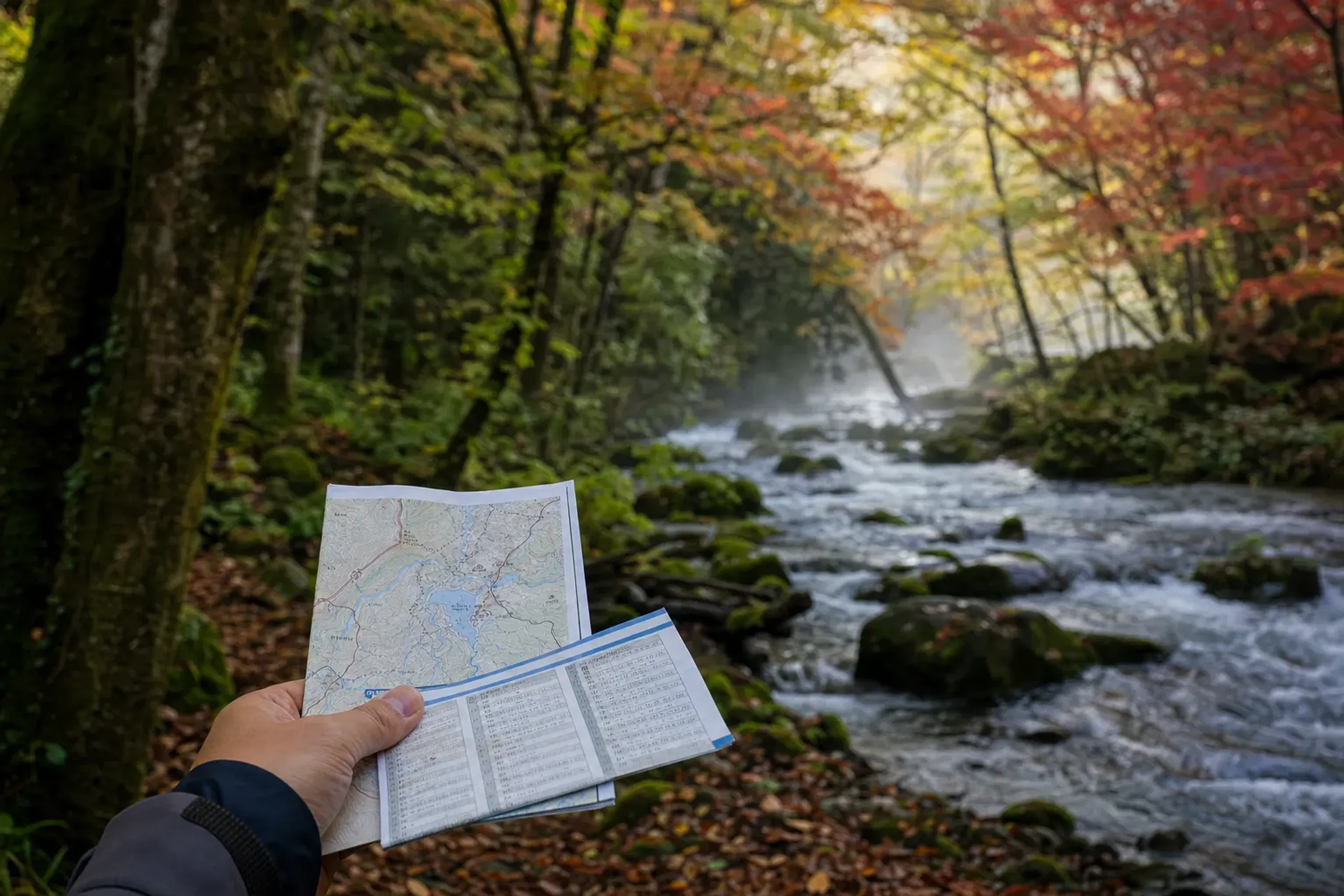
This is also why fixed dates fail here. A single booked morning is a wager on the weather of a particular week, and autumn in the mountains does not keep appointments. Our approach at Japan Royal Service is to hold flexible dates and confirm the plan against the year's forecast closer to travel, rather than commit early and hope. This is the Japanese sense of shun — knowing not merely where to go, but precisely when — applied to a landscape that rewards patience over schedules.
We cover why the old foliage averages have stopped holding in a separate piece worth reading before you plan: Nanohana: The Flower That Opens Six Weeks Before Sakura. The short version is that warmer, less predictable autumns have widened the window and softened the old calendar rules. The practical answer is to stay flexible and let someone watch the forecast for you.
Key fact: The lake shore and the stream do not always peak on the same days. A plan tied to a single fixed date can miss. Our concierge team confirms the year's forecast with you at time of arrangement.
Walking The Stream In Sections
You do not walk the gorge end to end. You take it in sections, and which section, in which direction, is a decision best made on the day.
The variables are simple once you name them.
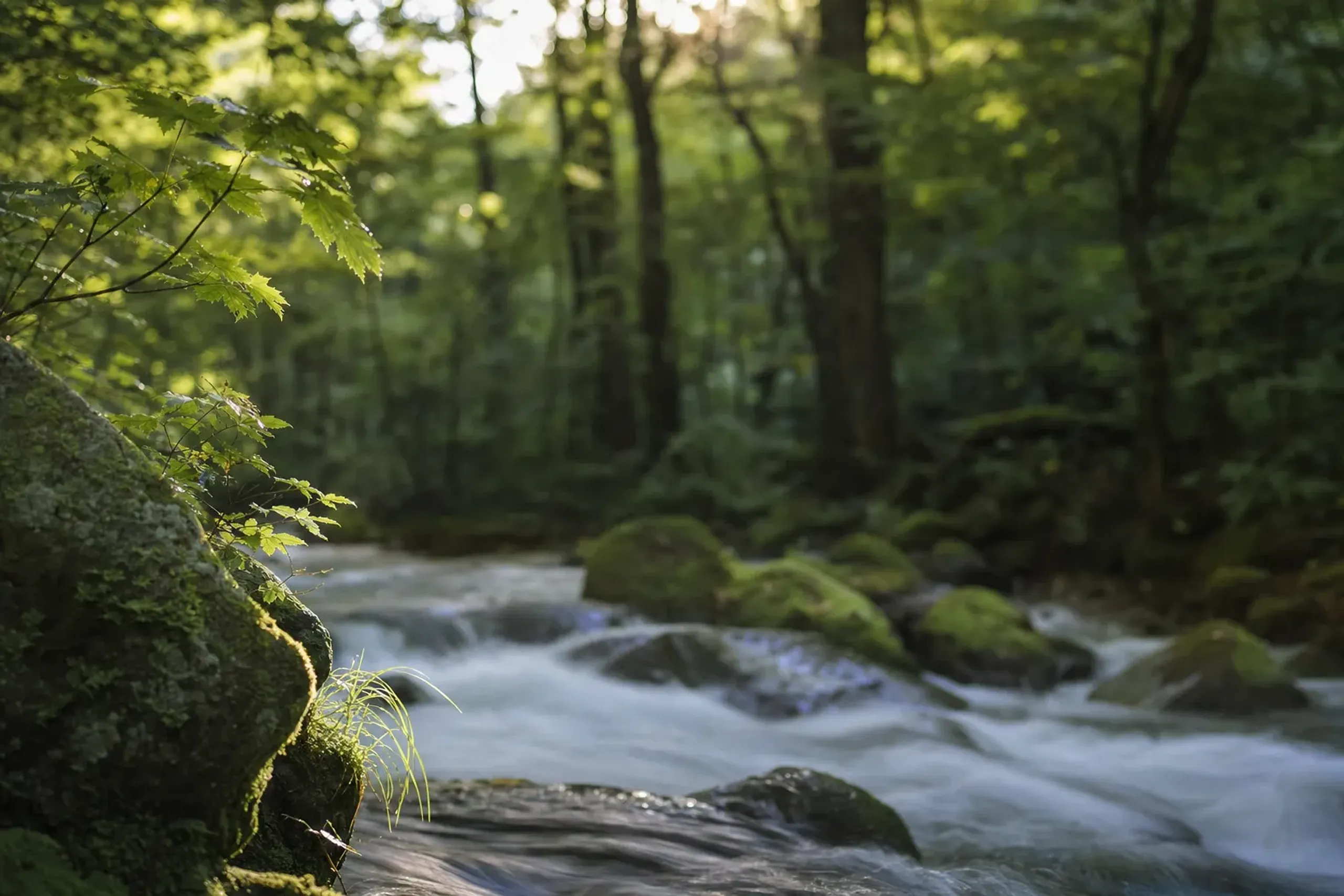
The light changes through the day, and the gorge, being narrow and shaded, reads differently in morning than in afternoon. The crowds shift too, concentrated near the easiest access points and thinner between them. And there is the plain question of how long you actually want to be on foot.
A short stretch near one of the waterfalls can be enough. So can a longer walk between two bus stops, with the vehicle meeting you at the far end. The point is that the stream rewards attention over distance. More than a dozen waterfalls drop into it, and the pleasure is in stopping, not in covering ground. There is a wabi-sabi quality to the gorge in autumn — moss on wet stone, a single scarlet maple against grey rock, the muffled hush of water — that reveals itself only to those unhurried enough to notice it.
Nenokuchi to Ishigedo is a common upper stretch. Ishigedo sits roughly in the middle of the route and works well as a start or a finish, with transport able to reach it. A guide reads the day and sets the section accordingly: which direction catches the better light, where the people are not, when to pause.
This is a walking-and-looking destination, not a hiking one. The register is unhurried. You move at the pace of noticing things, and the plan is built to protect that pace rather than fill the day.
Peak Days, Road Closures And Buses
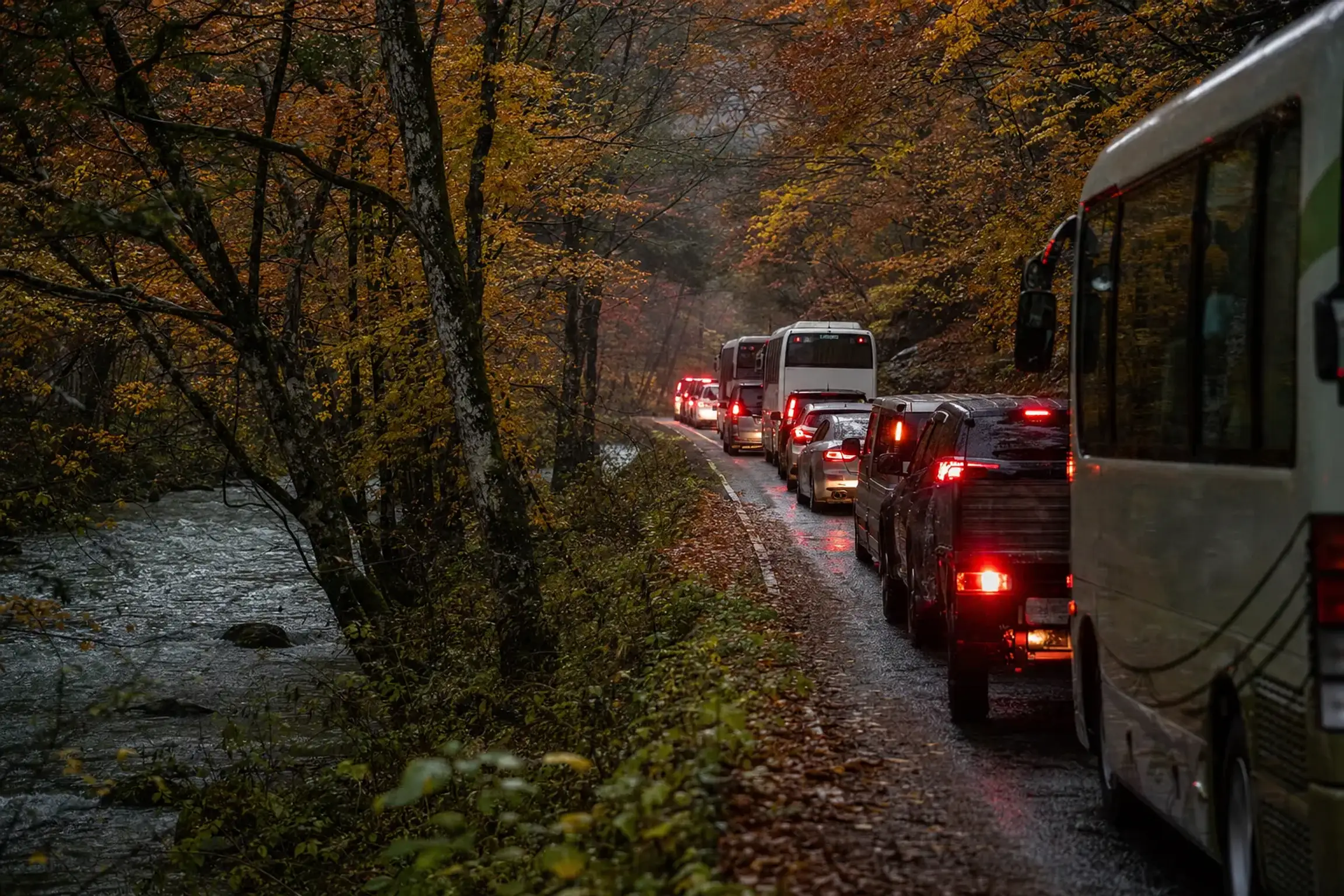
On certain days during the peak autumn period, the road along the stream is closed to private cars.
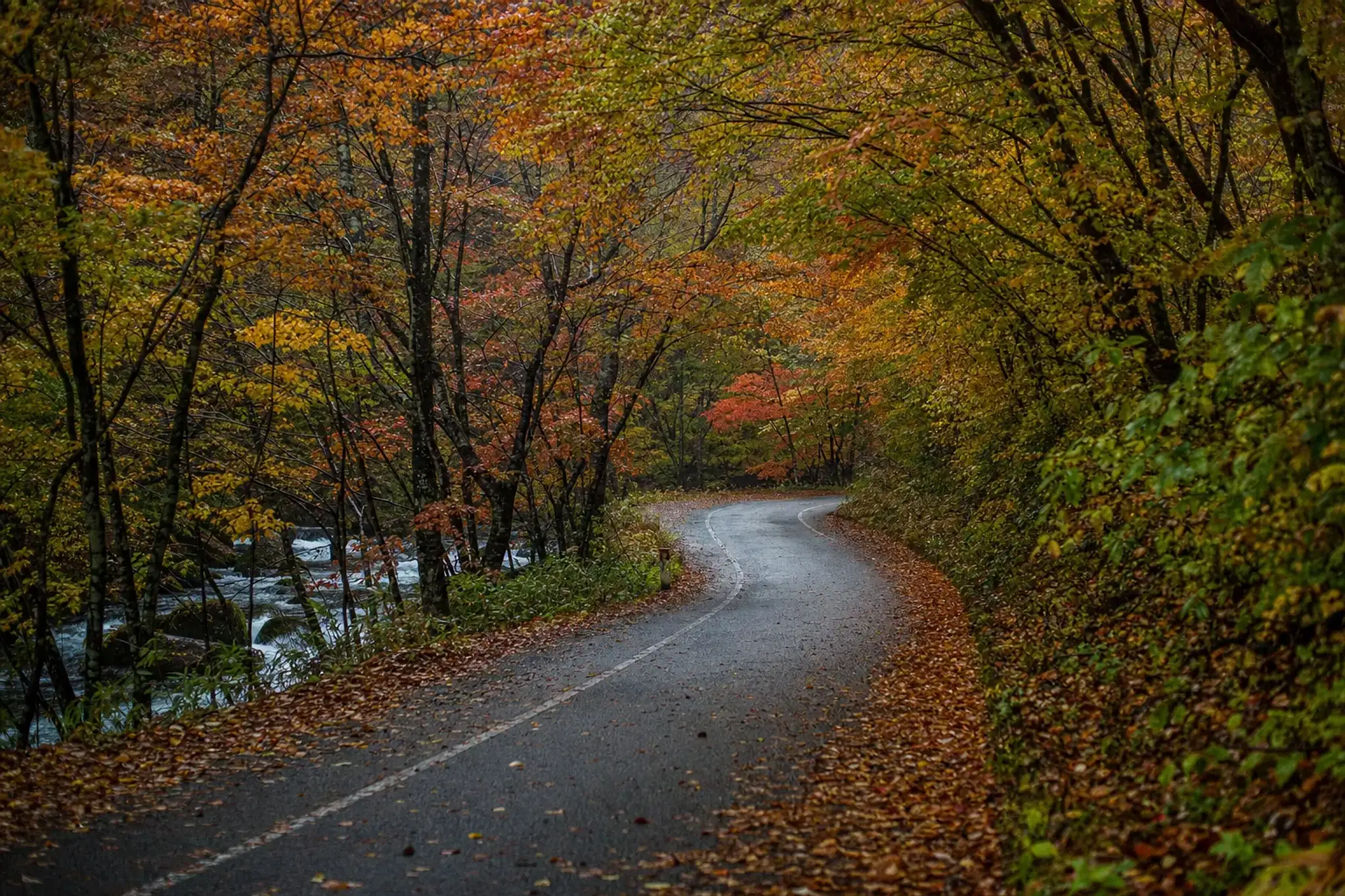
The dates are set each year, and our concierge team confirms them with you at the time of arrangement.
The closures exist to ease pressure on the gorge when it is busiest. For a private car arriving unprepared, that friction can mean a disrupted plan. For a well-arranged day, it is simply a parameter: you time the walk, the boat and the transfers around it, and the closure becomes a non-issue rather than a surprise.
Bus service along the stream and around the lake runs outside winter. It stops from about mid-November through March, and boat service is seasonal as well. So the window for the full stream-and-lake route is narrower than it first looks, and autumn sits near the end of it. Miss the season and the infrastructure that makes the day work simply isn't running.
This is why transport is arranged ahead rather than improvised. Advance planning is what keeps a peak-season day unhurried instead of spent chasing timetables and closures.
A Day, Or A Night?
The honest answer: a day trip works, but a single night in the area changes what is possible. You trade a transfer for early or late light at the water — and for the rare privilege of having the gorge nearly to yourself.
A day trip makes sense from either the Hachinohe or the Shin-Aomori side.
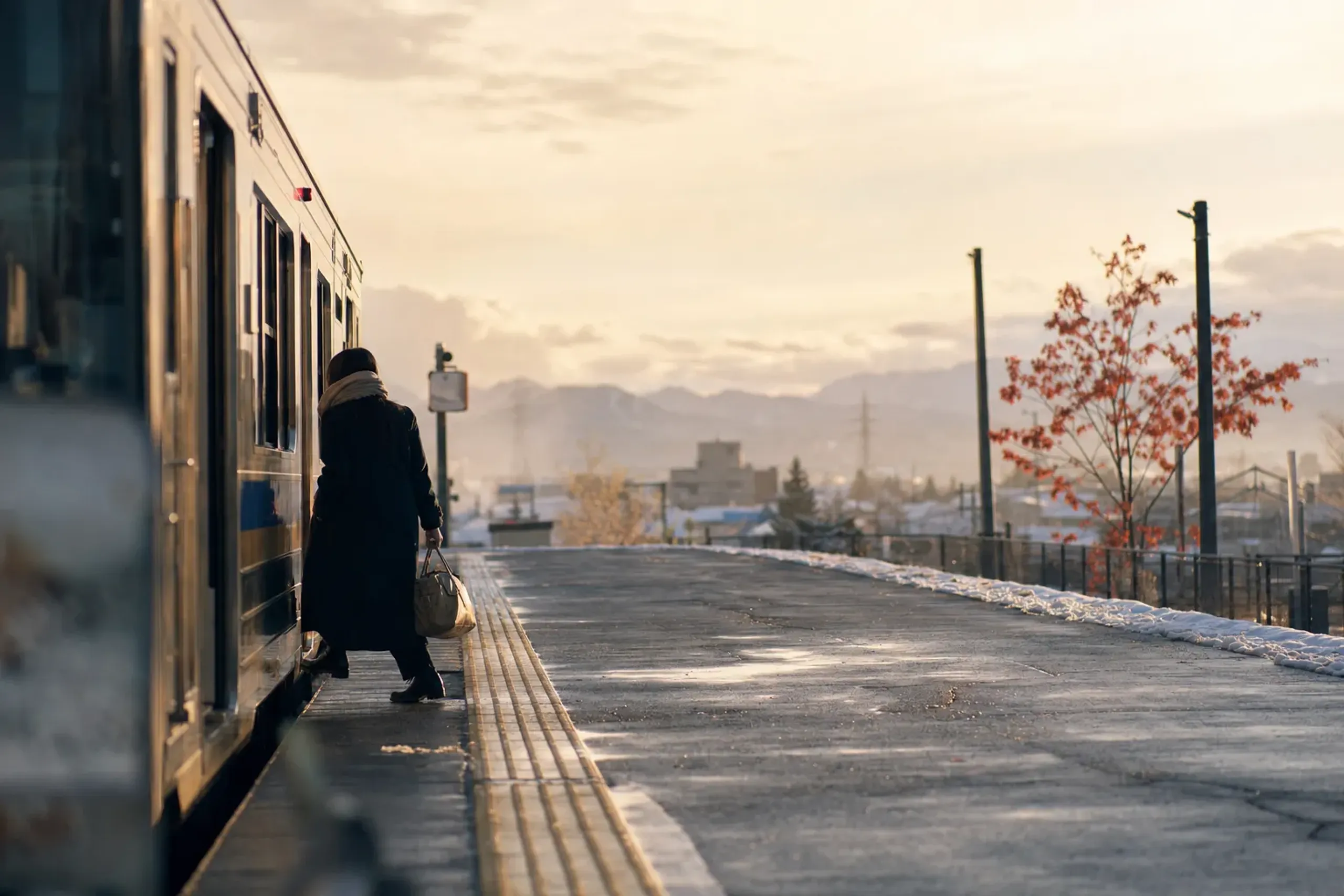
You arrive, cross the lake by boat, walk a section of the stream, and return the same day. It is a full day and a satisfying one, and for many travellers it is enough. The cost is that you arrive after the morning light and leave before the evening, sharing the gorge with the day's crowds at their fullest.
Option A: A Day Trip
Best when time is short or the visit is one stop in a wider Tohoku route. You come in from Hachinohe or Shin-Aomori, take the boat and a stream section, and head out. Our concierge builds the transfers so the middle of the day is the walk, not the driving.
- No lodging logistics in the area
- Pairs cleanly with a base elsewhere in Aomori
- Trade-off: you miss the quietest light, early and late
Option B: One Night At The Lake Or Near The Stream
Best when the season and the setting are the point. A night by the lake or beside the stream gives you the gorge before the buses arrive and the shore after the day-trippers leave. We arrange lodging in the area and sequence the two days around the boat and the light.
- Early or late walks without a transfer in between
- More room to move with the day's conditions
- Flexibility if the forecast nudges the plan
In our experience, a night is what turns a good visit into a quiet one.
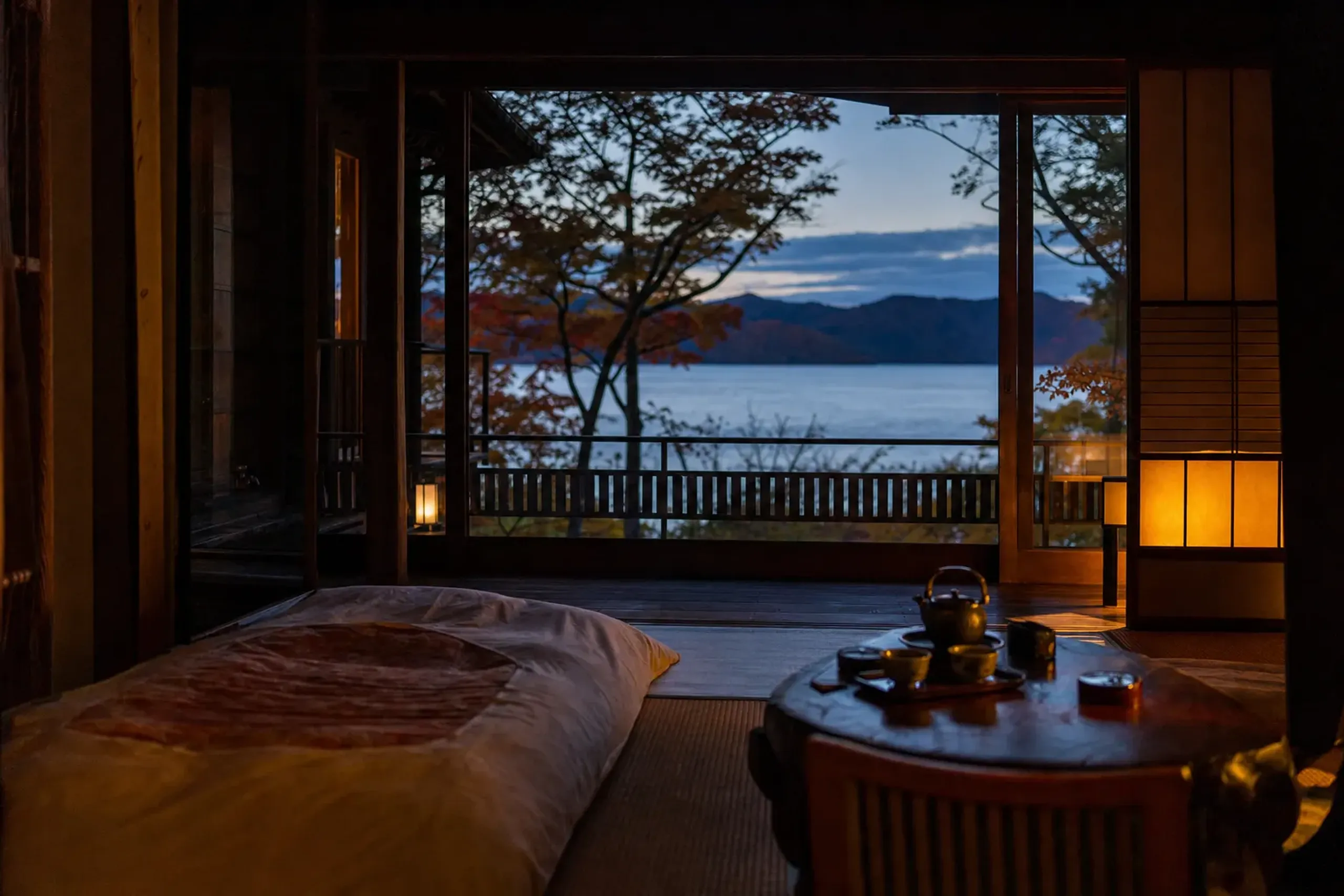
The difference is the hour you have the water to yourself — and that hour, more than any viewpoint, is what you will remember.
How Japan Royal Service Arranges It
Our contribution is arrangement. We work out the pieces that, left to chance, turn an autumn day into a logistics problem — quietly, before you arrive, so that the care behind the day is felt rather than seen.
We arrange lodging in the area, whether you want a night at the lake or near the stream. We arrange private chauffeured transport to and around the region, including the pickups that make a one-way walk possible when the road is closed to private cars. And we arrange guiding along the stream, so that the choice of section and direction is made by someone reading the day as it unfolds.
Boat timing is planned first. Late-season timetables are usually shorter, so the Yasumiya–Nenokuchi crossing anchors the day and the rest is built around it. From there we fit the walk, the transfers and the light into a sequence that holds together.
Because the season moves, we keep the dates flexible and confirm the year's foliage forecast, the road-closure dates and the boat timetable with you directly at the time of arrangement. The whole plan is a tailor-made itinerary shaped around when the colour is likely to be at its best, not around a date fixed too early to know. Your itinerary and your identity remain entirely confidential throughout.
Where It Sits In Aomori
Oirase and Towada are one part of a prefecture worth more than a single visit. The Hakkōda–Towada road, which climbs between the mountains and the lake, runs through country we cover in another season in An Hour Apart: Snow at Hakkōda, Blossom at Hirosaki.
For Aomori in summer, the Aomori Nebuta Festival fills the city with light and drums in early August. Further north, Osorezan, Japan's sacred mountain of mourning, offers a different register entirely. And for the wider regional picture, the Tohoku festival circuit places it all in context.
Frequently Asked Questions
Can I Do Oirase Stream And Lake Towada In One Day From Hachinohe Or Shin-Aomori?
Yes. A day trip from either the Hachinohe or Shin-Aomori side is workable: cross the lake by boat, walk a section of the stream, and return the same day. A night in the area adds early and late light at the water.
Do The Lake Shore And Oirase Stream Change Colour At The Same Time?
Not always. The lake shore and the gorge respond to cold at slightly different moments, so one can peak days ahead of the other. This is why we hold flexible dates and confirm the year's forecast closer to travel.
Is The Road Along Oirase Stream Ever Closed To Cars In Autumn?
Yes. On certain days during the peak autumn period the stream-side road is closed to private cars.
The dates are set each year, and our concierge team confirms them with you at the time of arrangement.
How Long Is The Boat From Yasumiya To Nenokuchi?
The boat between Yasumiya and Nenokuchi takes roughly fifty minutes. It traces the lake shoreline and delivers you to the upper end of the stream, making a one-way walk down the gorge possible.
When Does Bus And Boat Service Stop For Winter?
Bus service along the stream and around the lake runs outside winter, stopping from about mid-November through March. Boat service is also seasonal. Autumn sits near the end of the operating window.
Why Choose Japan Royal Service
Most guides to Oirase and Towada hand you a list of viewpoints. That is not the hard part here. The hard part is timing: a season that moves each year, a lake and a stream that peak on different days, a boat that runs on a shorter autumn schedule, and a road that closes to cars on dates set only that year. We hold all of it so that you do not have to — and so that the morning you step off the boat at Nenokuchi, the gorge is doing exactly what you came to see it do.
When you are ready to plan an autumn in Aomori shaped around the water, the light and the days the colour is truly at its best, contact us here and we will begin building it around you.