In this guide
- 01What Osorezan Is, And Why It Is Counted Among The Three
- 02The Landscape, And Why The Site Was Chosen
- 03Jizo, The Stones, And The Pinwheels
- 04The Itako, Briefly
- 05How Should You Behave When Visiting Osorezan?
- 06When Is Osorezan Open, And When Should You Go?
- 07Staying Overnight: Temple Lodging On The Mountain
- 08Remoteness, And Planning The Day
- 09Who Osorezan Suits, And Who Should Skip It
- 10Frequently Asked Questions
- 11Why Choose Japan Royal Service
You may have heard of Osorezan as a curiosity. A volcanic crater in the far north, odd and remote, filed somewhere between a travel oddity and a photograph. Then you arrive, and the first thing you notice is a woman stacking small stones at the edge of a pale lake. She is not sightseeing. You are a guest in a place where others come to grieve.
Osorezan, or Mount Osore, sits in Mutsu City on the Shimokita Peninsula, at the northern tip of Aomori Prefecture. It is often counted, alongside Koyasan and Hieizan, as one of Japan's three most sacred places. This article explains what the site is, what visitors find there, when it is open, how it is reached, and how to visit it with care. It is the eighth entry in our Enryaku-ji article and the first about a place the living come to for the dead.
What Osorezan Is, And Why It Is Counted Among The Three
Osorezan is a Buddhist temple inside a volcanic crater. At its center stands Bodaiji, the temple that anchors the site. The grounds are traditionally said to have been founded in 862 by the priest Ennin, who, the story goes, searched for a mountain that resembled the Buddhist vision of the afterlife and found it here.
That founding story is the whole point. Most sacred places in this series endure through politics, restoration, or renewal. Osorezan endures for a different reason. People keep coming to it with grief. Century after century, families have climbed to this crater to mourn and to remember.
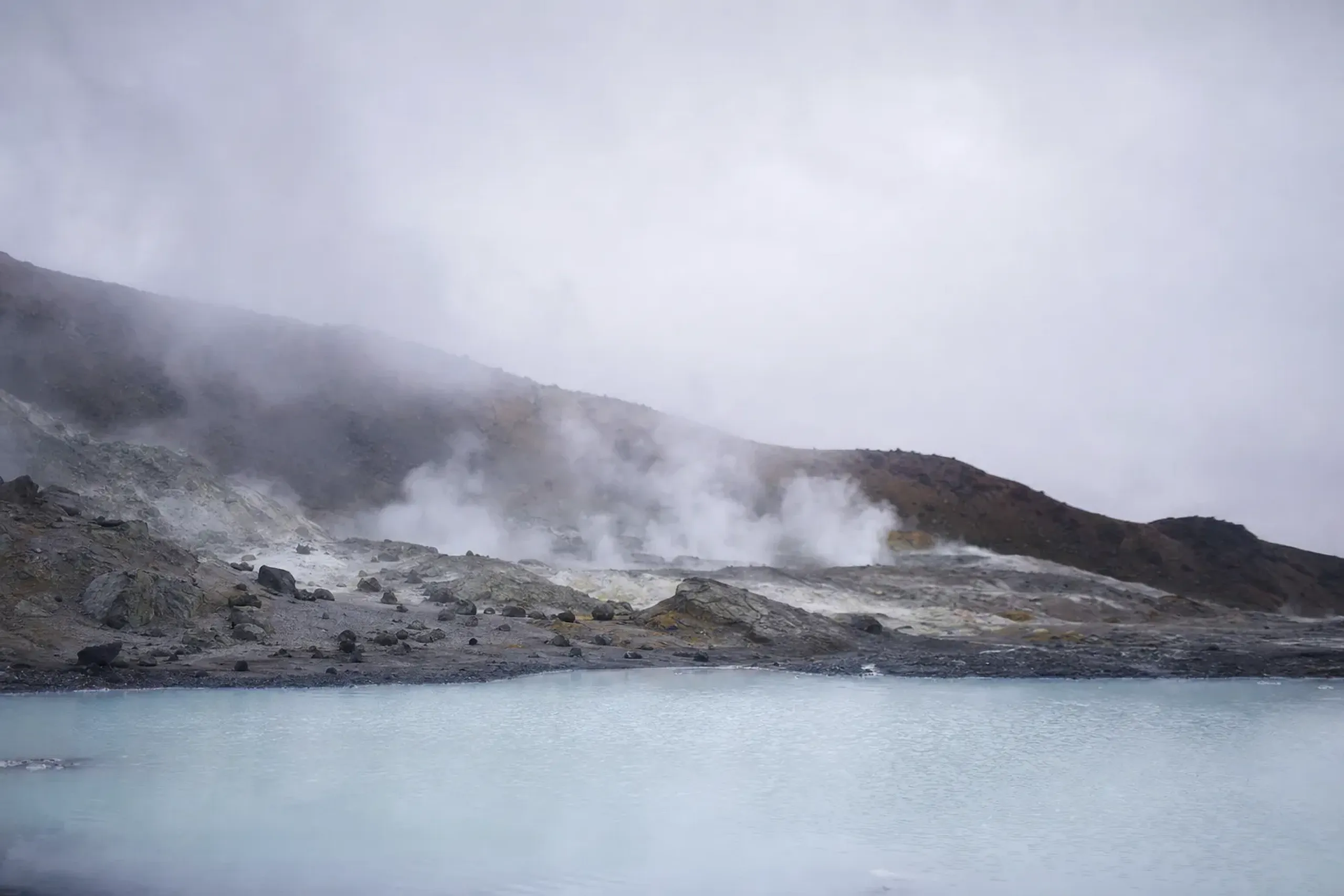
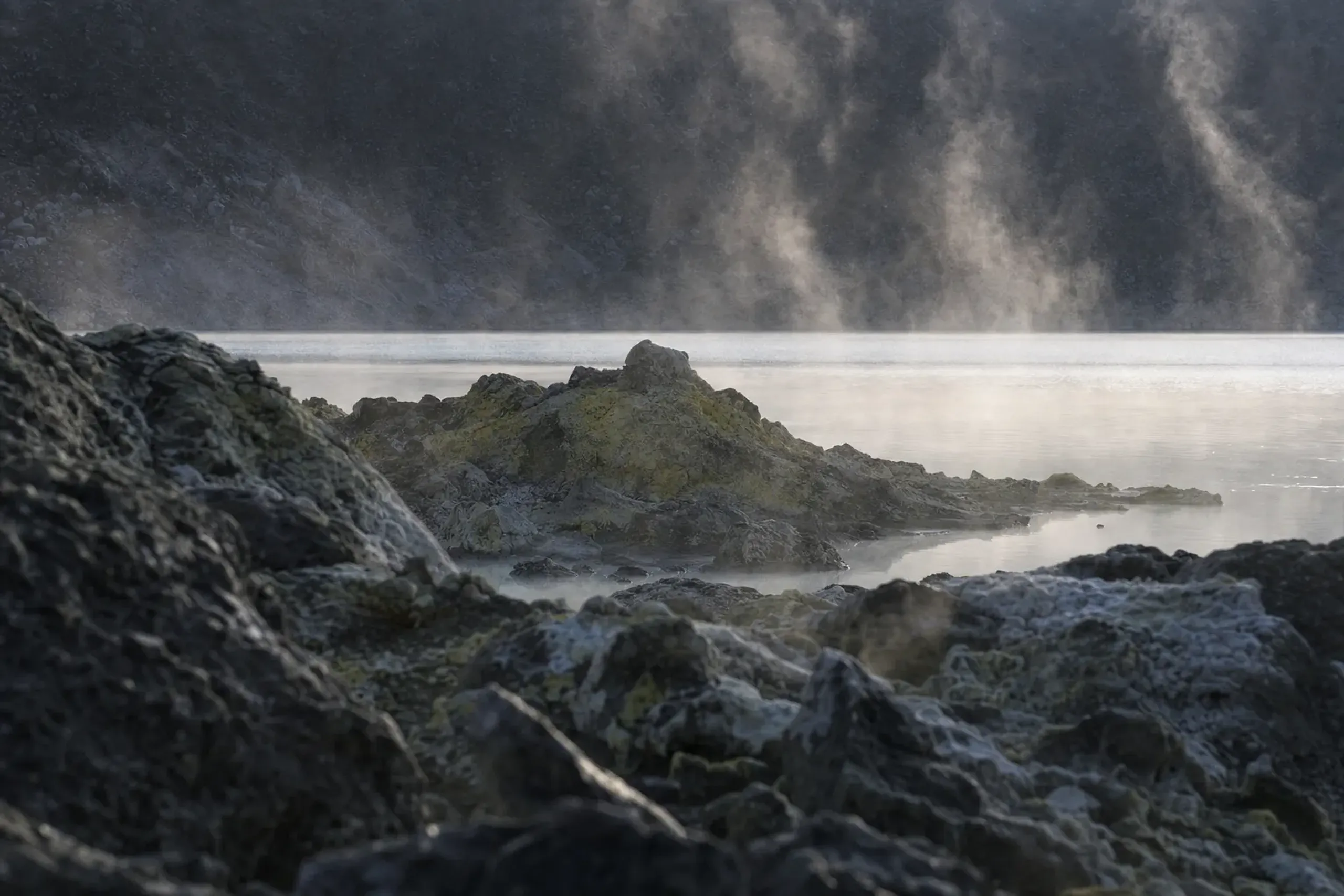
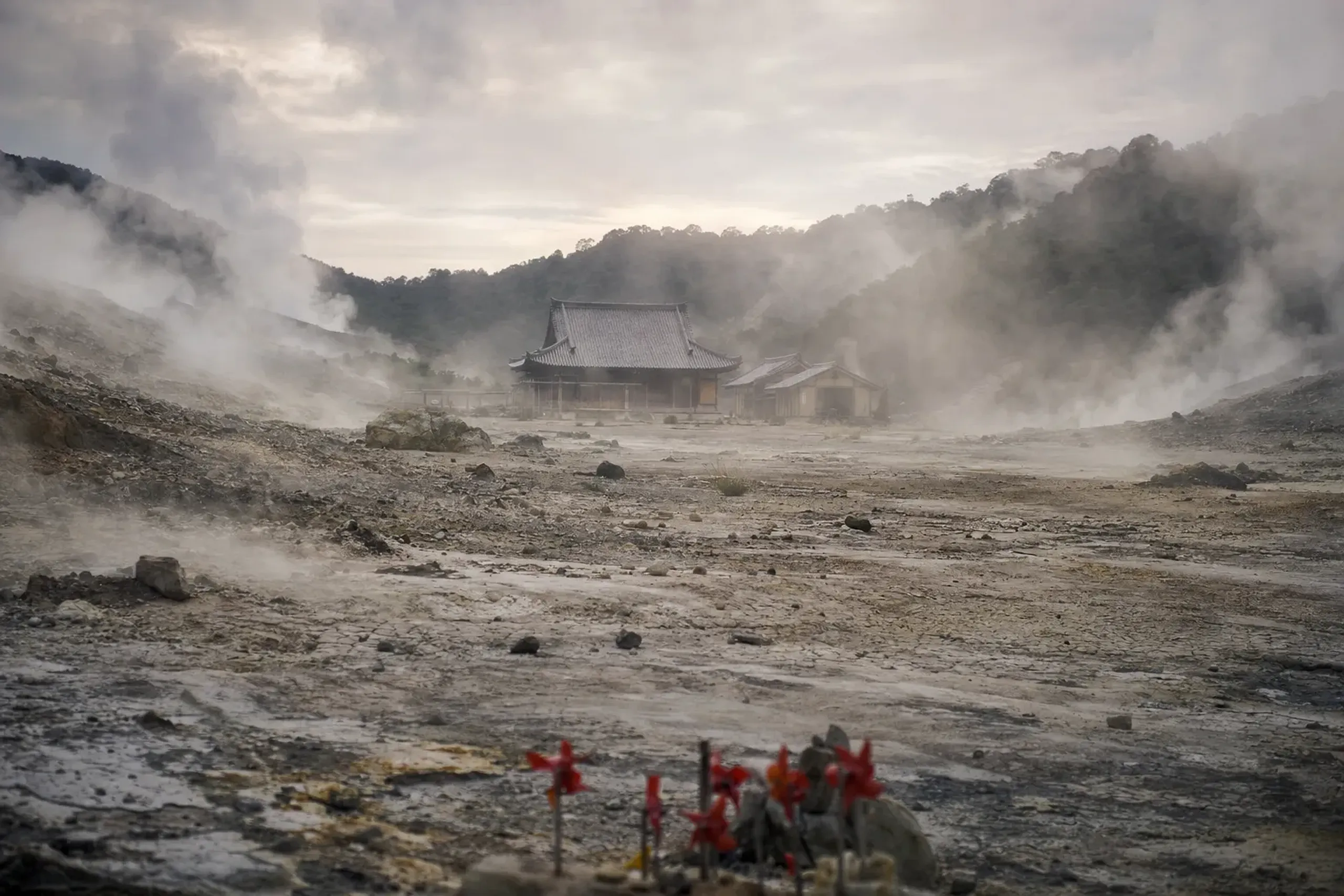
The caldera lake runs pale against dark stone, with steam drifting from the ground.
The reputation holds not because the landscape was tamed, but because the need it answers never went away.
Being counted among the three — with the great monastic complexes of Koyasan and Hieizan — places Osorezan in rare company. It earns the standing not through scale or wealth, but through the weight of what happens here.
The Landscape, And Why The Site Was Chosen
The crater is bare and strange. A caldera holds a lake whose water runs pale, almost white, against dark volcanic rock. Steam rises from vents in the ground. The air carries sulfur. In places nothing grows, and the stone lies cracked and colorless under a wide northern sky.
Early visitors looked at this ground and saw, in it, the Buddhist descriptions of the world the dead pass through. That resemblance is the reason the site was chosen, and it is the origin of its name. Osore means fear, or dread. The word probably derives from an older place name, Usori, possibly of Ainu origin. The darker reading came later, drawn from the land itself.
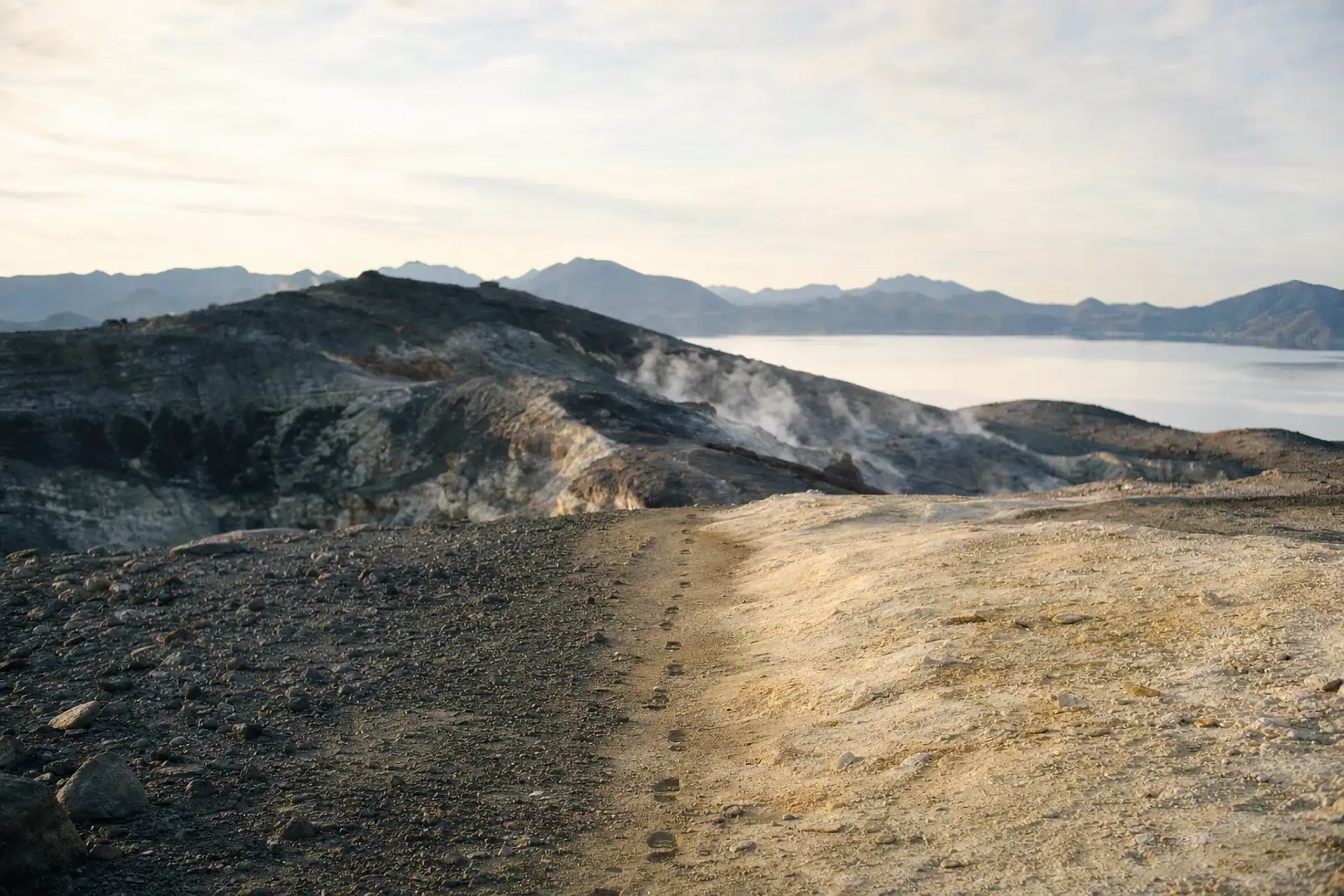
Walk the paths slowly. The ground shifts underfoot from gray ash to warm stone. Somewhere ahead, the lake opens flat and quiet, and the contrast — pale water, dark rock, drifting steam — is what people remember long after.
Jizo, The Stones, And The Pinwheels
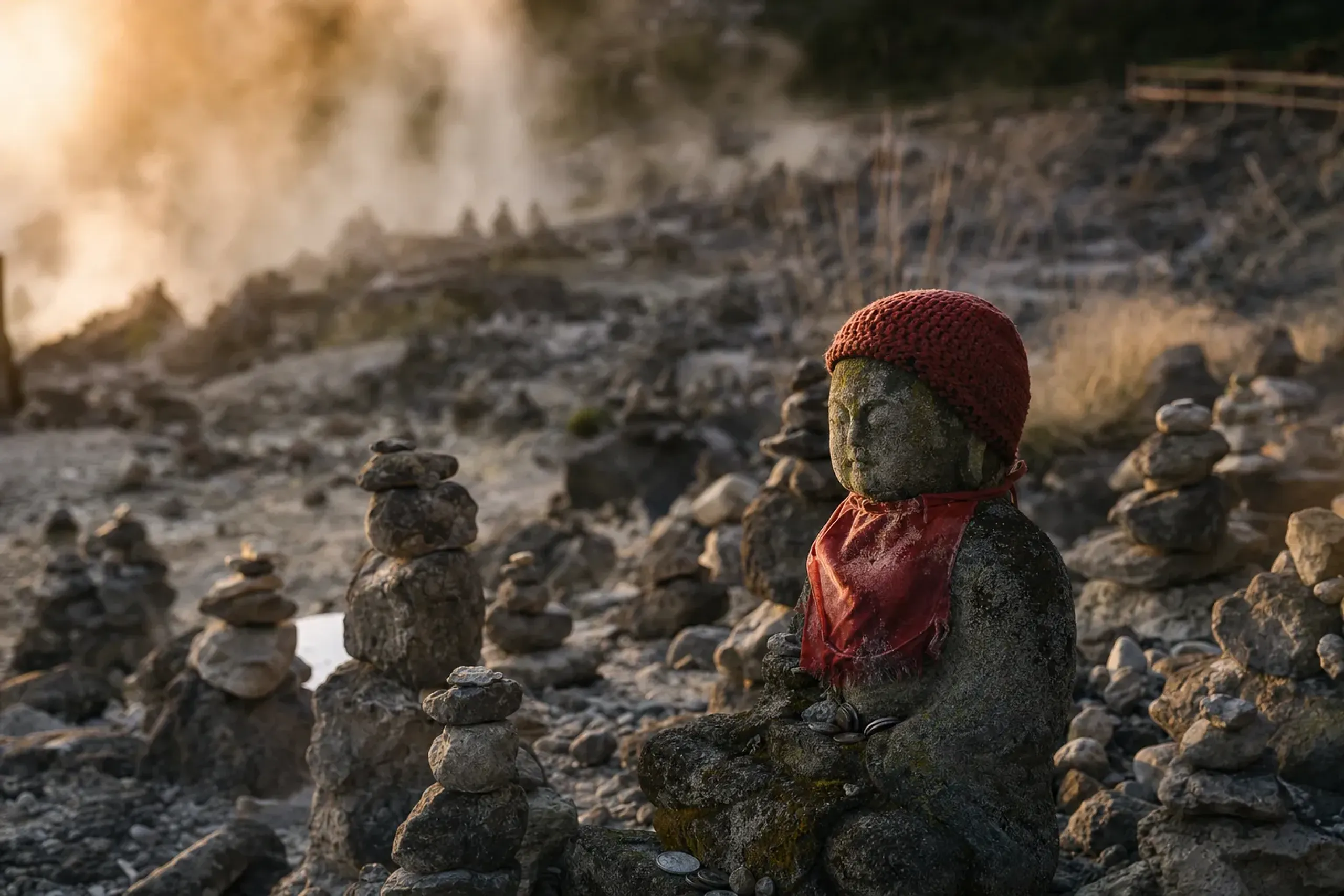
The site is dedicated to Jizo, the bodhisattva who guards children, travelers, and the souls of the dead. His statues stand across the grounds, small and weathered, often draped in red cloth. Where there is Jizo, there is care for those who cannot protect themselves.
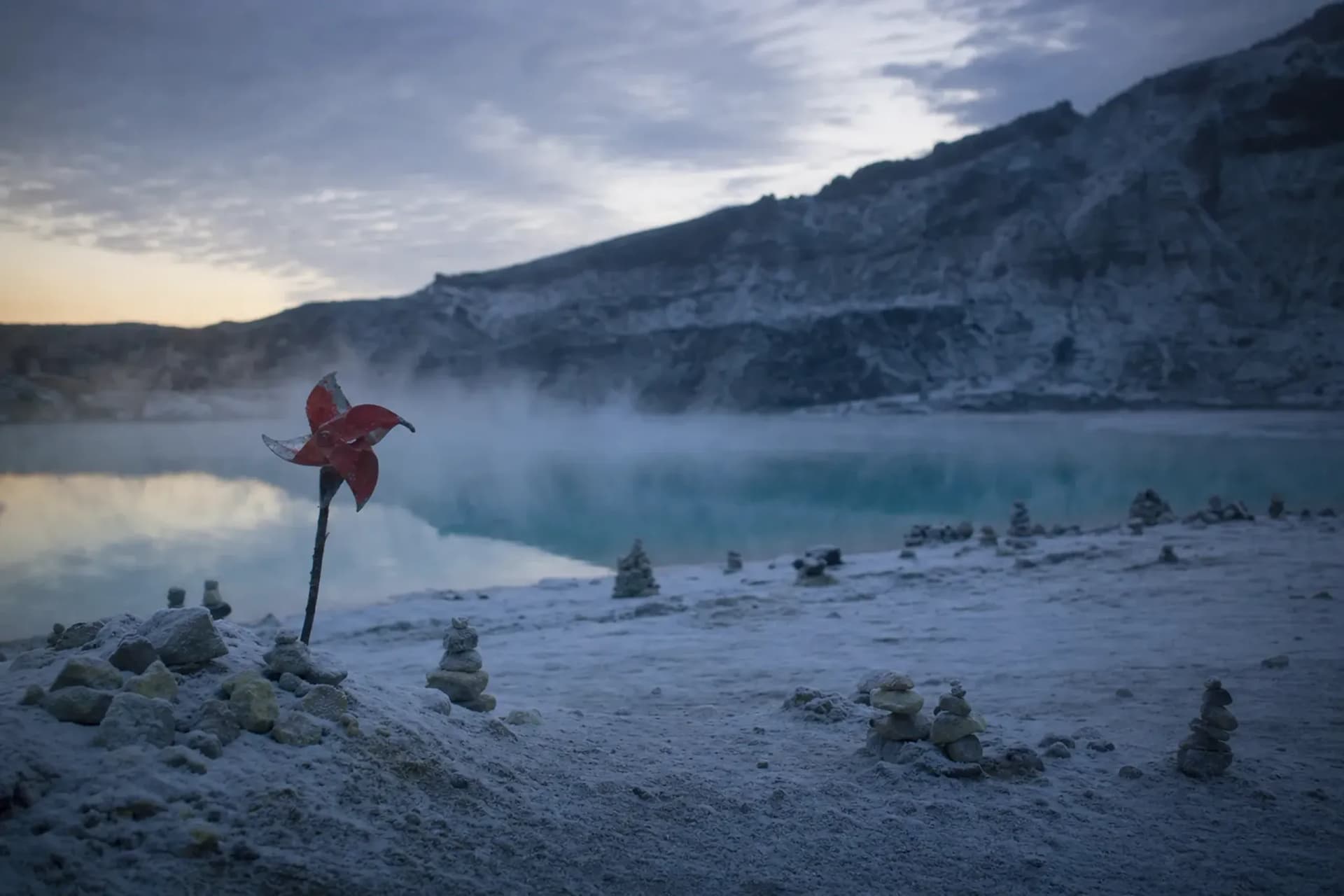
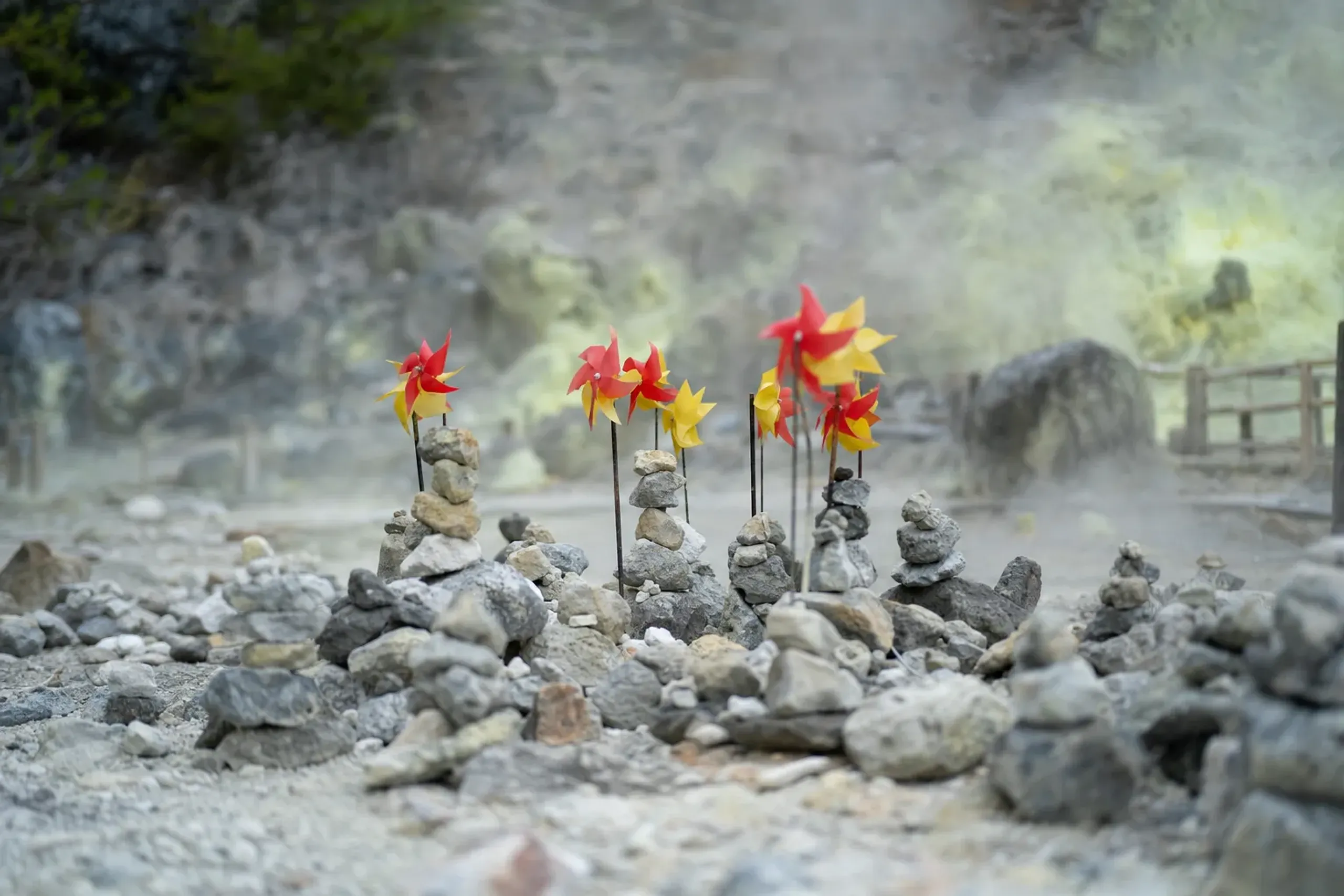
Near the lake lies a stony area called Sai-no-Kawara. Here, visitors stack small stones, one atop another, on behalf of children who died young. The belief holds that such children must build towers of stone in the afterlife, and that each stone placed by the living helps lighten their task. You will see these cairns everywhere, some neat, some toppled by wind, always rebuilt.
Alongside them: pinwheels. Bright plastic ones, turning in the sulfurous air, left by families to comfort the children they lost. Toys appear too, set down gently among the rocks. None of it is decoration. Each object is an act of mourning, placed by hand, meant for someone no longer here.
The Itako, Briefly
Osorezan is associated with the itako — blind female mediums who, by tradition, communicate with the dead. They are part of the folk religious culture of this part of Tohoku, and they gather at the site's summer festival, held in July.
This is a religious practice, not a performance, and not an arranged experience. We describe it here only so you understand what you may see. A visitor cannot assume access to it, and it should never be treated as an attraction.
If the itako are present during your visit, regard them as you would anyone engaged in private devotion.
How Should You Behave When Visiting Osorezan?
Move quietly, keep your distance from anyone in prayer, and never treat the stones, pinwheels, or offerings as props. Others around you may be grieving.
That is the whole of it, really. The specific thing Osorezan asks is awareness — awareness that the person beside you may have come to bury something, and that your presence should not intrude on it. Do not rearrange offerings. Do not pose among them. Lower your voice. If a family is at the water's edge stacking stones, give them room and time.
For the general principles of visiting sacred and sensitive places in Japan, our guide in Japan's Summer Festival Calendars is useful background, and our broader notes on respectful travel cover conduct across temples and shrines. Here, the single rule worth carrying is restraint.
When Is Osorezan Open, And When Should You Go?
Osorezan is open roughly May through October, and closed from November through April. The summer festival in July is the busiest and most charged time of year.
During the winter months the mountain is shut entirely, so any visit must fall inside that warmer window. The July festival draws pilgrims, mourners, and the itako, and the atmosphere is intense and crowded. It is a profound thing to witness, but it is not stillness.
A visitor who wants a quiet, unhurried walk through the grounds may prefer a week outside the festival — a weekday in early summer, or the calmer stretch of autumn.
Autumn brings its own pilgrimage window and a different light, cooler and lower, with steam more visible against the chill. Operating hours and closing times can shift with the season. Our concierge team confirms the current calendar, the festival dates, and the day-to-day gate schedule directly with you when planning a visit, so that your timing matches what you want from the place.
Staying Overnight: Temple Lodging On The Mountain
Bodaiji offers lodging on the grounds, and staying overnight changes the visit entirely. Guests who remain after the day-trippers leave are given vegetarian, alcohol-free meals, and may join the morning prayers. One writer has noted that the overnight stay is what gives the visit its stillness, and that rings true. The crater empties. The light fades over the pale lake. You are left on a mountain that exists for the dead, in quiet you will not find in a day.
This is a different register from the well-known temple stays elsewhere in Japan. If you are weighing the great monastic lodgings, our piece on Relais & Châteaux In Japan give context. Osorezan's lodging is its own thing, plain and bound to the site's purpose.
Key fact: Temple lodging at Osorezan Bodaiji is limited, seasonal, and governed by house rules that reflect the site's purpose. Our concierge team confirms current availability and those rules directly before any stay is arranged.
Remoteness, And Planning The Day
Shimokita is far north, and Osorezan is remote even by the standards of the peninsula.
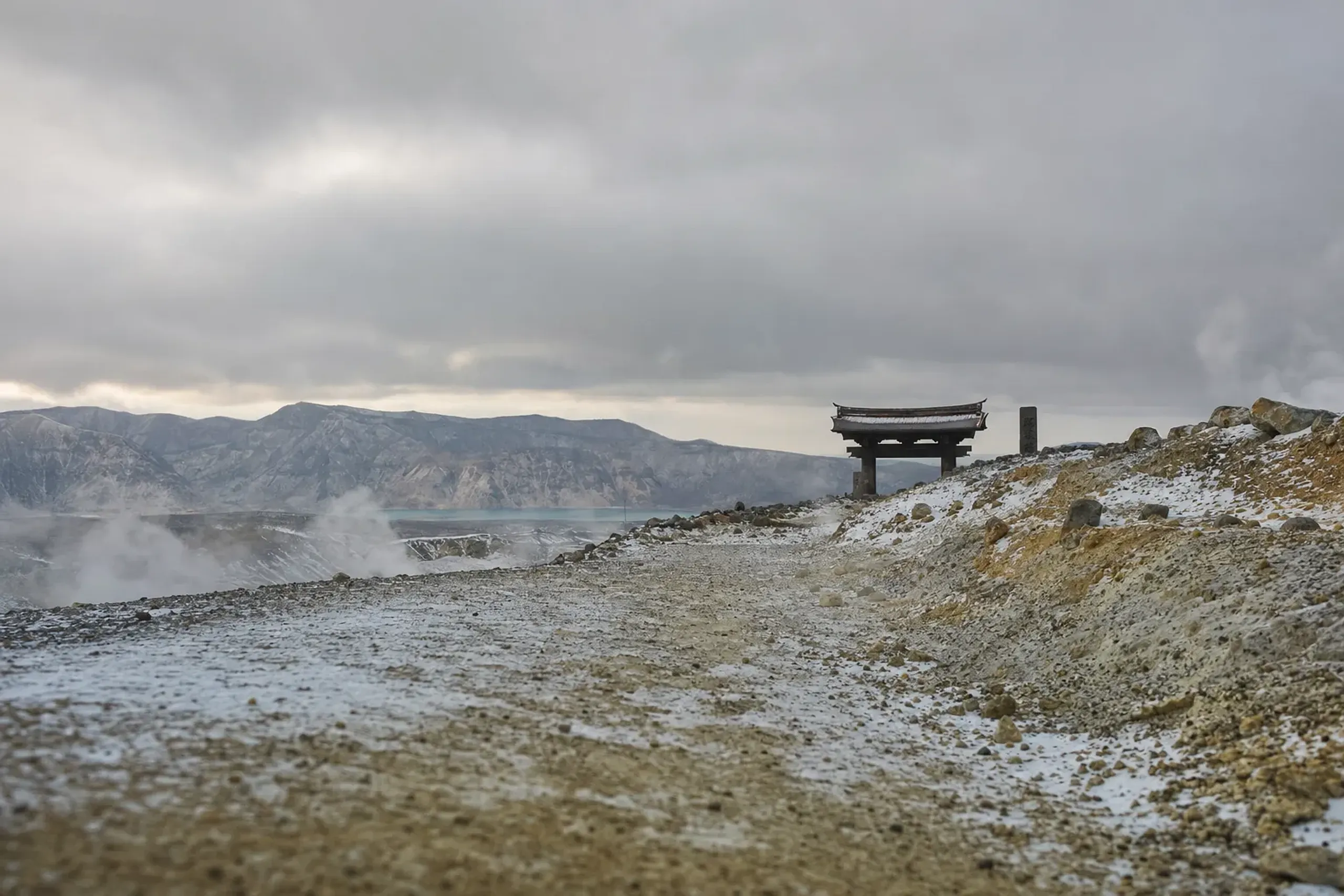
The site sits inland from Mutsu, reached by bus from the station during the operating season, with service running only at wide intervals through the day. That matters for planning. A short visit can swallow a long day of travel if the logistics are left to chance.
This is where private, chauffeured travel earns its place. A private car and driver removes the guesswork of sparse bus timetables, lets you arrive early when the grounds are quietest, and keeps the day flexible if you choose to pair Osorezan with the far northern coast. Cape Oma, home to Japan's famed tuna, lies within reach on the same peninsula, as do the remote sea cliffs at Hotokegaura. A tailor-made itinerary can thread these together at a pace that suits a serious visit rather than a rushed one.
Who Osorezan Suits, And Who Should Skip It
Osorezan suits someone who wants a serious, quiet, unhurried visit. Someone who will walk slowly, say little, and leave without needing a spectacle. If you are drawn to places that ask something of you, and you can hold your presence lightly among those who come here to mourn, you will find Osorezan unlike anywhere else.
Skip it if you want a scenic stop. It is not that. The landscape is austere, the mood is grave, and the long journey north pays off only for a visitor prepared to meet the place on its own terms. There are gentler sacred sites in Tohoku for travelers who want beauty without weight.
Frequently Asked Questions
When is Osorezan open, and is it closed in winter?
Osorezan is open roughly from May through October and closed from November through April. Any visit must fall inside that warmer window. Our concierge team confirms the current seasonal calendar and daily gate hours when planning your trip.
Can a foreign visitor arrange a session with an itako medium at Osorezan?
No. The itako are blind female mediums whose practice is a religious tradition, not a bookable experience. They gather at the July summer festival. A visitor cannot assume access, and it should never be treated as an attraction.
Is it worth staying overnight at Osorezan Bodaiji instead of a day trip?
For a quiet, serious visit, yes. Overnight guests stay after the day visitors leave, share vegetarian alcohol-free meals, and may join morning prayers. The stillness of the emptied crater is what many remember most.
How remote is Osorezan, and how hard is it to reach?
Very remote. It sits inland from Mutsu on the Shimokita Peninsula in far northern Aomori, reached by infrequent seasonal bus from the station.
A private car removes the timing risk and allows an early, quiet arrival.
Is Osorezan a good stop for travelers who just want scenery?
No. Osorezan is a place of mourning with an austere volcanic landscape, not a scenic photo stop. It rewards a slow, respectful visit. Travelers wanting beauty without weight will find gentler sacred sites in Tohoku.
Why Choose Japan Royal Service
A place like Osorezan asks to be approached carefully. The journey is long, the window is narrow, and the ground itself calls for restraint. At Japan Royal Service, our team arranges the transport, the guiding, and the lodging — including temple lodging at the site — so that your visit falls at the right time of year, moves at the right pace, and treats the place as it should be treated.
Our concierge confirms current availability, the seasonal calendar, and the house rules directly with you, and can set Osorezan within a wider northern Tohoku journey — the far coast at Cape Oma, the cliffs of Hotokegaura, and quiet onsen stays along the way. In our experience, this is a visit best built slowly, with someone who knows the ground.
To plan a visit to Osorezan, reach our team privately via WhatsApp or LINE, or contact us here. We will shape it around the stillness you are looking for.