In this guide
- 01What Makes The “Three Great Festivals Of Tohoku” One Circuit
- 02How Do You See Aomori Nebuta, Akita Kanto, And Sendai Tanabata In One Week?
- 03Aomori Nebuta Matsuri (August 2–7): Light, Scale, And Participation
- 04Akita Kanto Matsuri (August 3–6): A Harvest Prayer Turned Into Mastery
- 05Sendai Tanabata Matsuri (August 6–8): Walking Under Streamers, Not Watching A Parade
- 06What’s The Best Order For The Tohoku Festival Circuit In Early August?
- 07How Hard Is It To Book Hotels In Aomori, Akita, And Sendai During Festival Week?
- 08Reserved Seating: The Small Upgrade That Changes The Whole Night
- 09Who Should Do All Three Festivals (And Who Should Choose Just One)
- 10How To Plan The Week Like A Concierge: A Step-By-Step Outline
- 11Begin Planning Your Tohoku Festival Week
You may assume Tohoku’s great August festivals are variations on a single theme. They aren’t. One is a moving wall of light and drums that presses against you from both sides of the street. Another is a quiet, surgical test of balance that rewards a stillness you would not expect from a summer crowd.
The third isn’t a parade at all. It’s a city you walk through, streamers overhead. If you want to experience all three in a single week, the challenge is never “getting in.” It’s building a workable chain across three cities during Japan’s busiest summer travel week — and doing it in a way that feels unhurried rather than frantic.
What Makes The “Three Great Festivals Of Tohoku” One Circuit
The Three Great Festivals of Tohoku run on fixed annual dates in early August, and their overlap makes a single-week circuit genuinely realistic by rail. Simple in theory. Intense in practice.
Aomori Nebuta Matsuri is held August 2–7. Akita Kanto Matsuri runs August 3–6. Sendai Tanabata Matsuri follows August 6–8, with a separate fireworks event on August 5 that many visitors mistakenly treat as “part of Tanabata.”
Our team at Japan Royal Service plans these journeys on a clear premise: each festival asks for different stamina, different timing, and different viewing tactics. Treat them as interchangeable and you will squander your nights standing in the wrong crowds.
How Do You See Aomori Nebuta, Akita Kanto, And Sendai Tanabata In One Week?
You can see all three by starting in Aomori (Aug 2–7), moving to Akita (Aug 3–6), then finishing in Sendai for Tanabata (Aug 6–8), choosing viewing nights that make the most of the overlap.
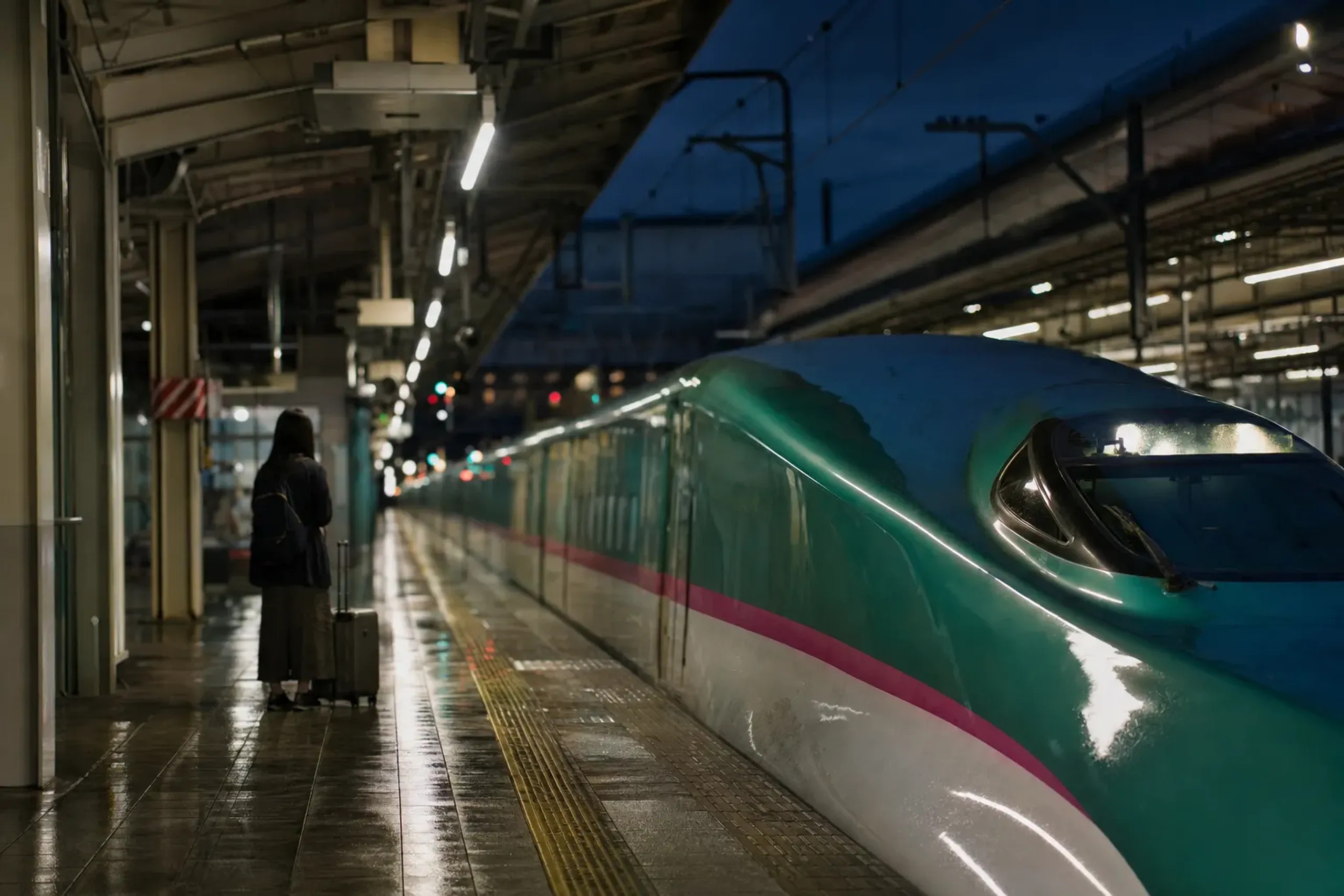
That sentence is the easy part. The execution is where most self-planners stumble. You are repositioning between cities in the same week that domestic travel demand spikes, so you need a schedule that is disciplined about check-in, luggage, and how late you are willing to stay out. A private, chauffeured link between stations and venues — arranged through our private transportation team — removes the single biggest source of friction on nights when the streets are impassable.
We usually frame the week around two decisions. First: which night (or nights) you most want reserved seating for, versus free street viewing. Second: whether you will change hotels at each stop, or build a base near Sendai and accept longer repositioning at the start. There is no wrong answer — only the answer that fits your appetite for movement.
If you want a canonical reference for the idea of linking the three festivals, the JNTO publishes an itinerary titled “Touring Through Tohoku's Lively Summer Festival Circuit” on japan.travel. Use it as a sanity check, not as your only plan.
Aomori Nebuta Matsuri (August 2–7): Light, Scale, And Participation
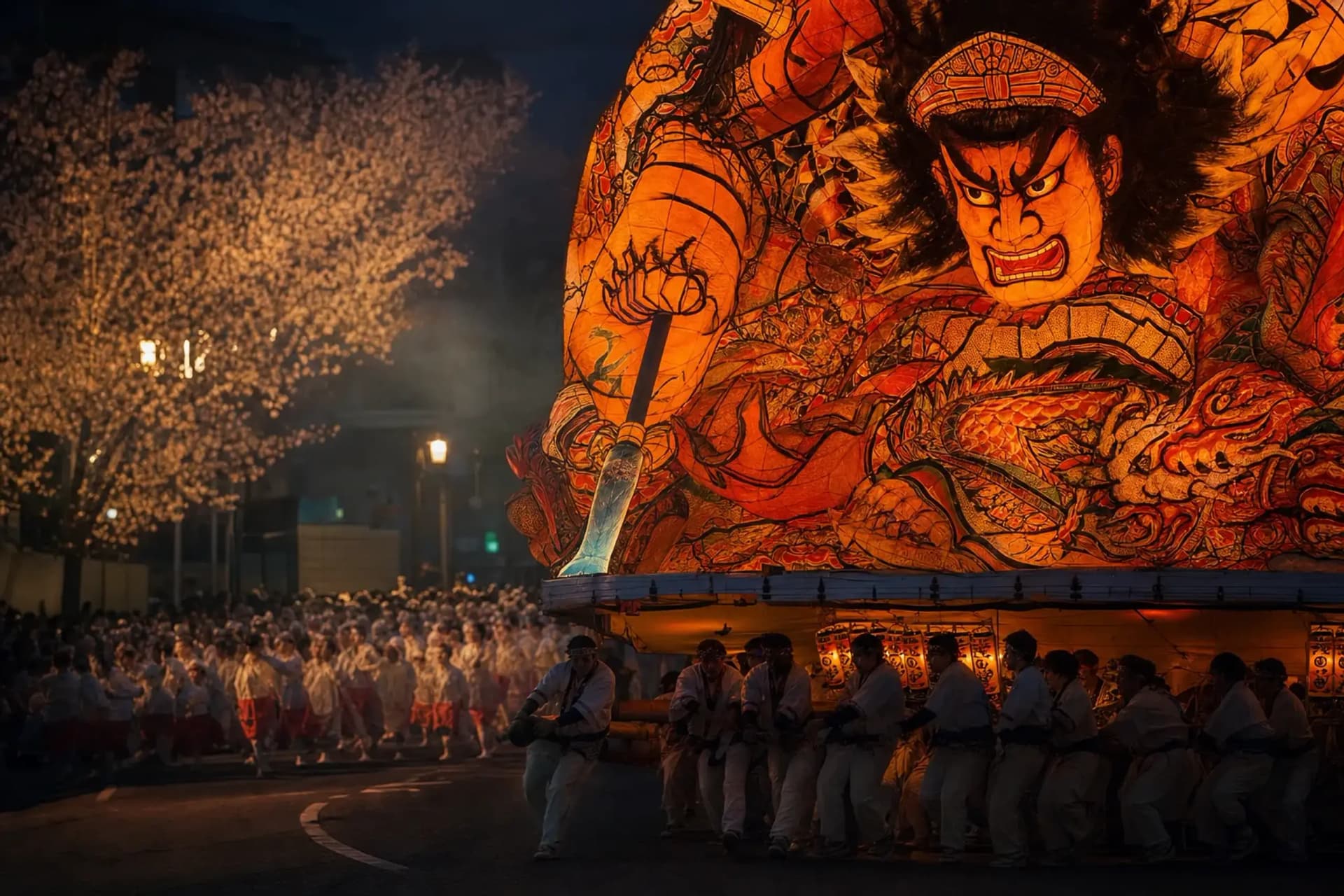
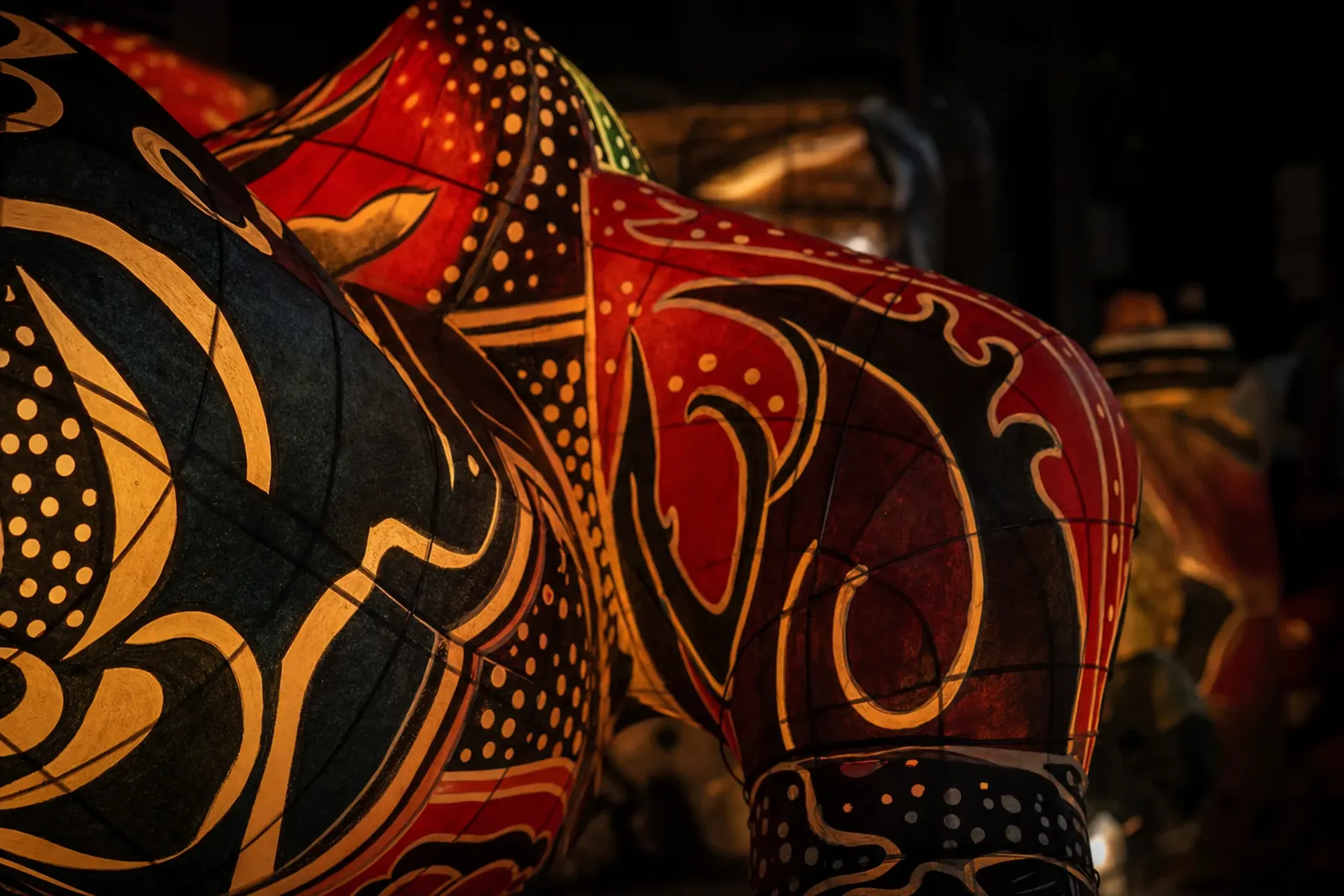
Nebuta is a night parade built around giant illuminated floats: painted washi paper stretched over wire frames, depicting historical and mythical figures. Loud. Close. Surprisingly physical.
The floats are not modest objects. Each is built over roughly a full year, and some reach about 9 meters wide and 5 meters tall. You feel the engineering as much as the artistry — the lantern surfaces glow, and the wire ribs read faintly through the paper when you stand near the edge. This shokunin culture writ large: a year of a master’s hands, paraded through the streets for a handful of August nights.
What makes Nebuta unusually welcoming is that you can participate as a haneto dancer. Visitors may rent a costume and join the procession rather than only watching from the side. It transforms your night from “spectator” to “inside the current,” and it is one of the clearest ways to touch the makers’ world without forcing a private atelier moment into an already crowded week.
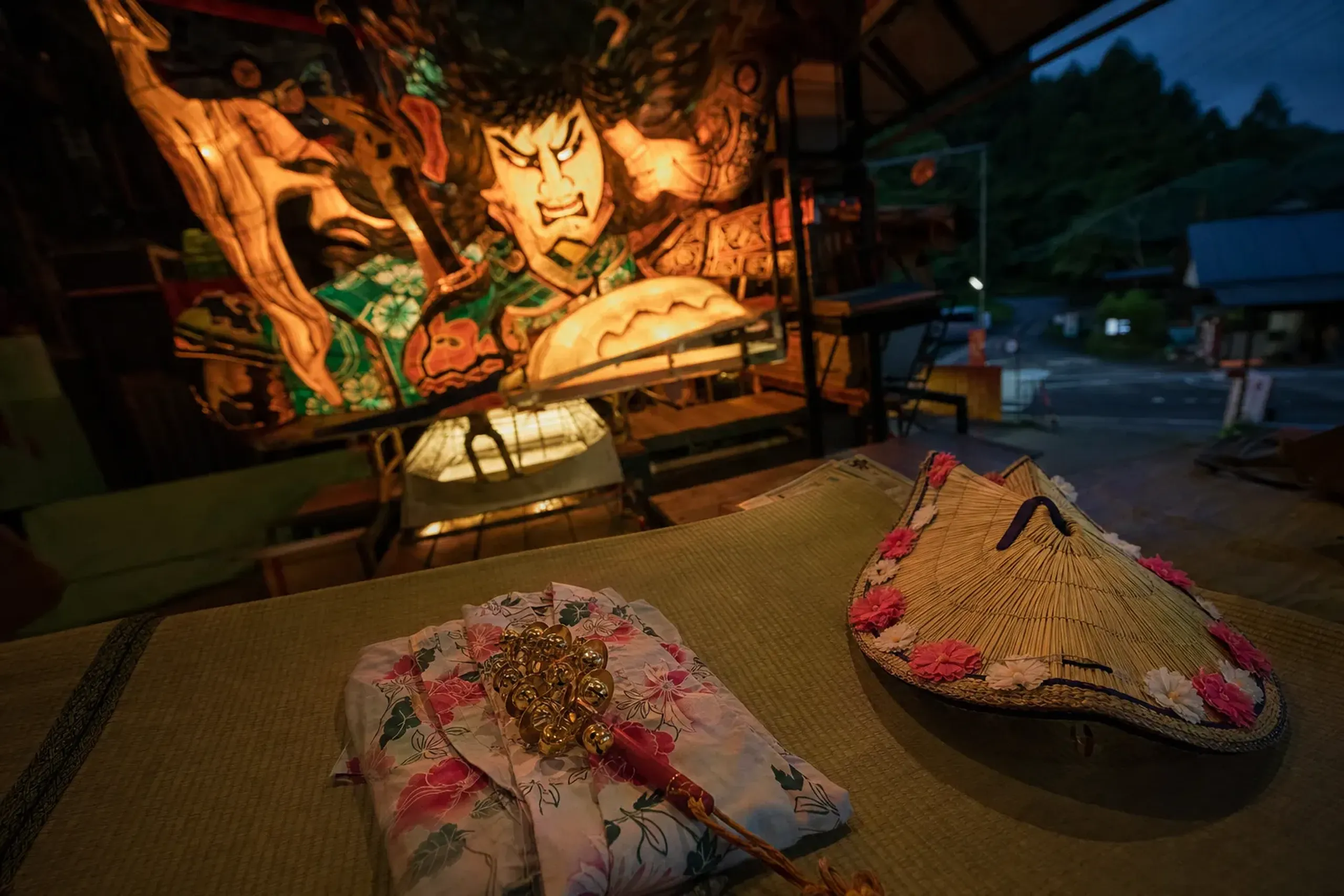
There is free sidewalk viewing. There is also paid reserved seating for the parade, and separate reserved seating for the closing fireworks on the final night. In our experience, reserved seats do not make Nebuta “exclusive.” They make it legible — they give the night a frame instead of a scramble.
If you want context before the night parade, Nebuta House Wa Rasse in Aomori is a practical daytime stop. Quiet. Museum-lighting. A place to understand float construction and visual motifs before you are shoulder-to-shoulder outside.
Practical Notes For Nebuta Nights
- Expect standing time. Even with reserved seats, you will be on your feet before and after the parade window.
- Dress for heat and humidity. Early August in Japan can be heavy even after dark.
- If you join as haneto, follow the official rules. Participation is real, but it is structured and costume-based — not improvised.
Akita Kanto Matsuri (August 3–6): A Harvest Prayer Turned Into Mastery
Kanto is a harvest-prayer tradition in which performers balance tall bamboo poles strung with lit lanterns, arranged to resemble heavy stalks of rice. No floats. No storyline. Just control.
Roughly 280 poles appear, and the headline poles reach up to 12 meters and around 50 kilograms. You watch a pole bow as it sways, then watch the performer correct it by moving the base across palm, forehead, shoulder, then hip. The skill reads like a craft discipline — repeated, technical, and oddly calm — the same shokunin devotion to form you sense in Nebuta’s painters, expressed here through the body rather than the brush.
Akita City’s tourism information identifies the main venue as Kanto Street. That detail matters, because Kanto is one of the easiest of the three festivals to mis-time. You want to be positioned early — once the balancing begins, you cannot weave through the crowd without missing the moments that matter.
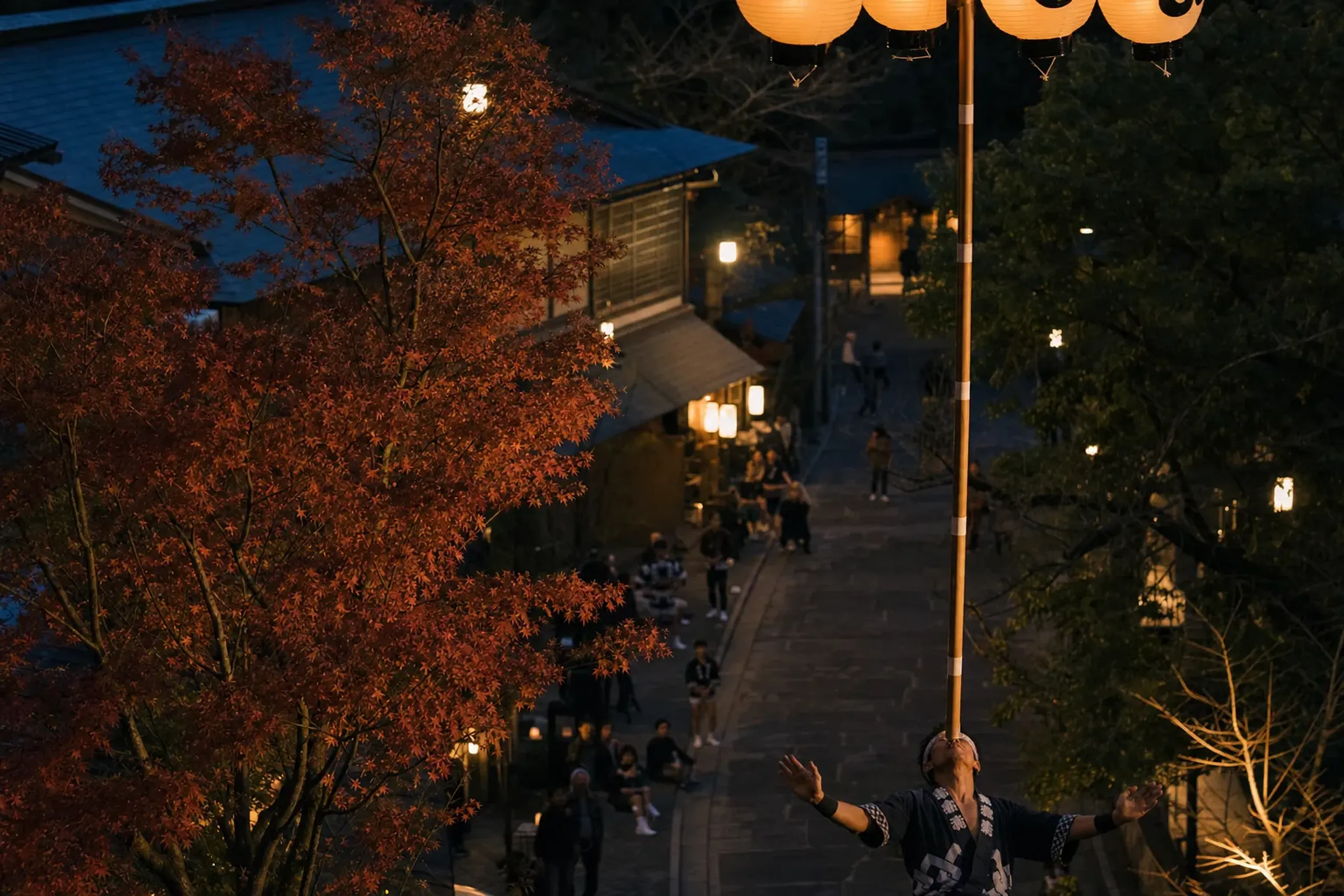
There is free street viewing. Paid reserved grandstand seating exists, and it is often booked months in advance, with reservations typically available only in Japanese. This is exactly the kind of friction that turns a “simple” circuit into a planning headache.
Why Kanto Rewards Reserved Seating
With Kanto, your sightline is the experience. Poor placement flattens the pole into a blur of lanterns and heads. Good placement lets you read the performer’s hands, the shift in posture, the small corrections that keep 50 kilograms from tipping into the crowd.
Wabi-sabi surfaces here in a way most visitors don’t expect. The beauty is in restraint. A small wobble. A quiet recovery. No theatrics — only the honest tension of a thing that might fail and, instead, holds.
Sendai Tanabata Matsuri (August 6–8): Walking Under Streamers, Not Watching A Parade
Sendai Tanabata is an atmosphere festival: you walk beneath hundreds of elaborate paper streamers hung through the central shopping arcades. Slow. Dense. Very human.
It draws over two million visitors across three days, and that number explains the texture — you will be shoulder-close at peak times, and you will move at the pace of the crowd. The reward hangs above your head: layered paper, careful folds, long fringes that stir with every draft from an arcade doorway.
One common visitor error is treating the fireworks as “Tanabata.” The fireworks display is a separate event held the evening before, on August 5, and it is organized by a different body than the main festival.
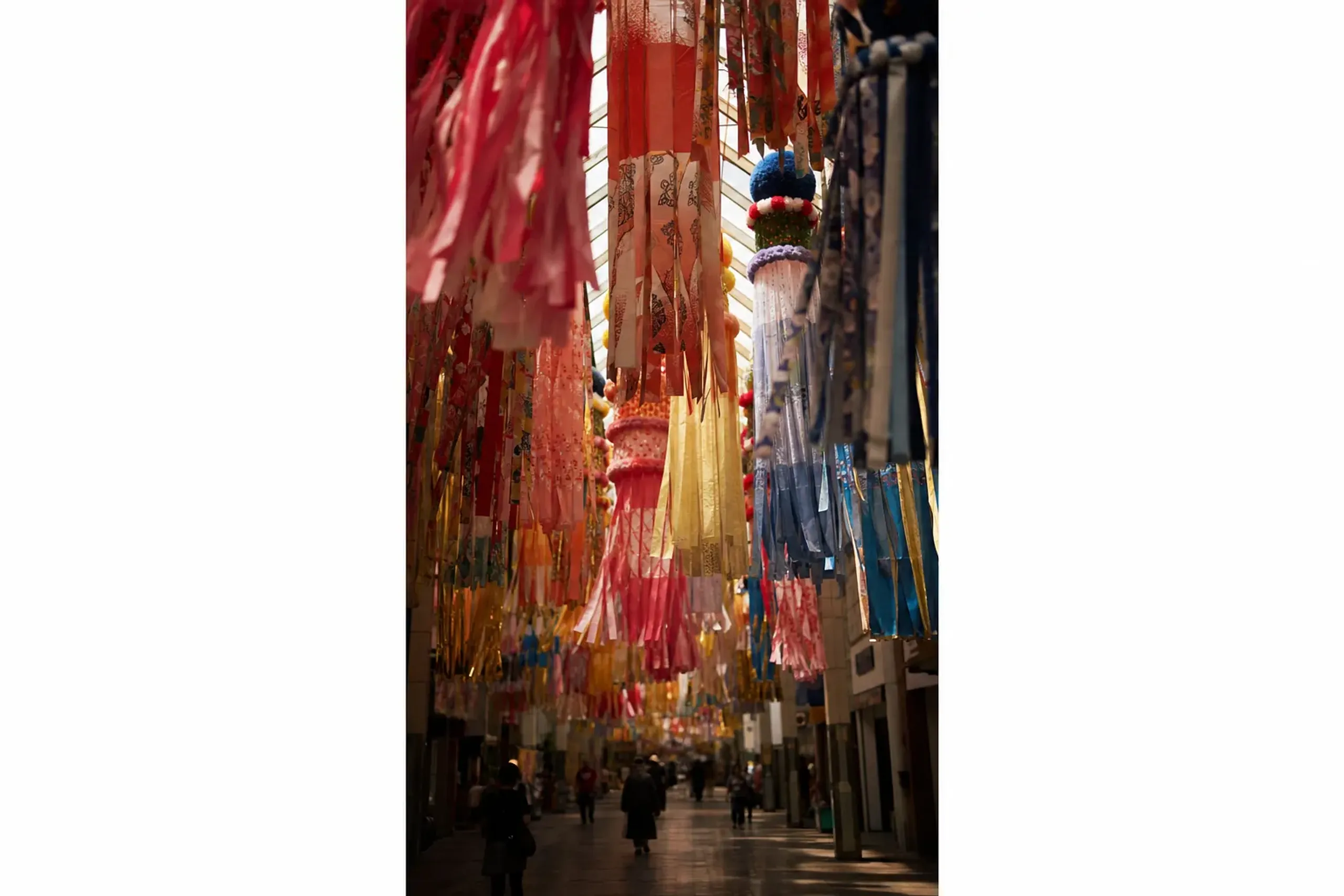
Put it in your plan deliberately, or skip it deliberately. Don’t drift into it by accident.
The official Sendai Tanabata site explains that the festival timing aligns with chureki, a one-month-later calendar that preserves the intended seasonal feeling. That single note helps you read the festival as “kept intact,” not “moved for convenience.” It is a quiet expression of shun — the Japanese conviction that an experience belongs to its proper moment — and the imperial-era instinct to protect the fidelity of a form rather than bend it to the modern calendar.
How To Experience Tanabata Like A Local Evening Walk
- Go twice. Once in daytime to study the craftsmanship, once after dark when the arcades feel intimate.
- Build in pauses. The most elegant Tanabata moments happen when you step aside and look up, not when you push forward.
- Choose your crowd tolerance. Early evening can be the tightest, even though it feels like the “right” time.
What’s The Best Order For The Tohoku Festival Circuit In Early August?
The simplest order is Aomori Nebuta first, then Akita Kanto, then Sendai Tanabata — because their fixed dates overlap in that direction, and Tanabata finishes last.
The overlap is the circuit’s secret. Nebuta and Kanto run at the same time for several nights, so you are not “missing” one by attending the other — you are simply selecting specific nights. Tanabata then takes over as the closing chapter, with its own rhythm and less of a single, defined “main event.”
We advise you to choose your anchor nights before you choose hotels. Reversing that order is the most common — and most costly — mistake.
If you fix your rooms first, you may end up commuting in a way that quietly drains your evenings. Pick the festival nights you care about, then shape your sleep around them.
Keep your days light. You are covering three cities and back-to-back nights; if you also stack ambitious daytime touring, the third festival can begin to feel like an obligation rather than a pleasure. A well-paced bespoke itinerary is designed precisely to protect that balance — building in the recovery time that keeps the final night as vivid as the first.
How Hard Is It To Book Hotels In Aomori, Akita, And Sendai During Festival Week?
Hotels are the tightest constraint in early August. Rooms in Aomori, Akita, and Sendai are widely reported to sell out months ahead — often faster than the festival seating itself.
This is where many well-traveled guests get caught off-guard. You can always “see something” for free on the street. You cannot always find a calm, well-located room across three cities in the same compressed week — especially if you are a couple who values quiet floors, or a family that needs specific room configurations.
Industry research reports severe sell-outs and sharp rate spikes across the festival dates in 2026, including very high occupancy and steep price multiples. You do not need the exact figures to grasp the operational takeaway: if you want genuine choice, you need lead time measured in months, not weeks.
Discretion, too, becomes harder when hotels are overfull. Busy lobbies. Queues for the elevators. Breakfast rooms that feel like railway stations. If privacy matters — and for our guests it always does — you want a plan that removes friction points, not merely a list of “good properties.” The Japan that stays quiet during the loudest week of the year is rarely the one you can find online; it is reached through introduction, and held in confidence.
Key fact: During the Three Great Festivals week, think “accommodation strategy first.” Tickets and street viewing are solvable; a well-paced three-city sleep plan is what makes the circuit enjoyable.
Reserved Seating: The Small Upgrade That Changes The Whole Night
All three festivals can be enjoyed for free, but reserved seating changes what you can actually see, how early you must arrive, and how long you can comfortably stay.
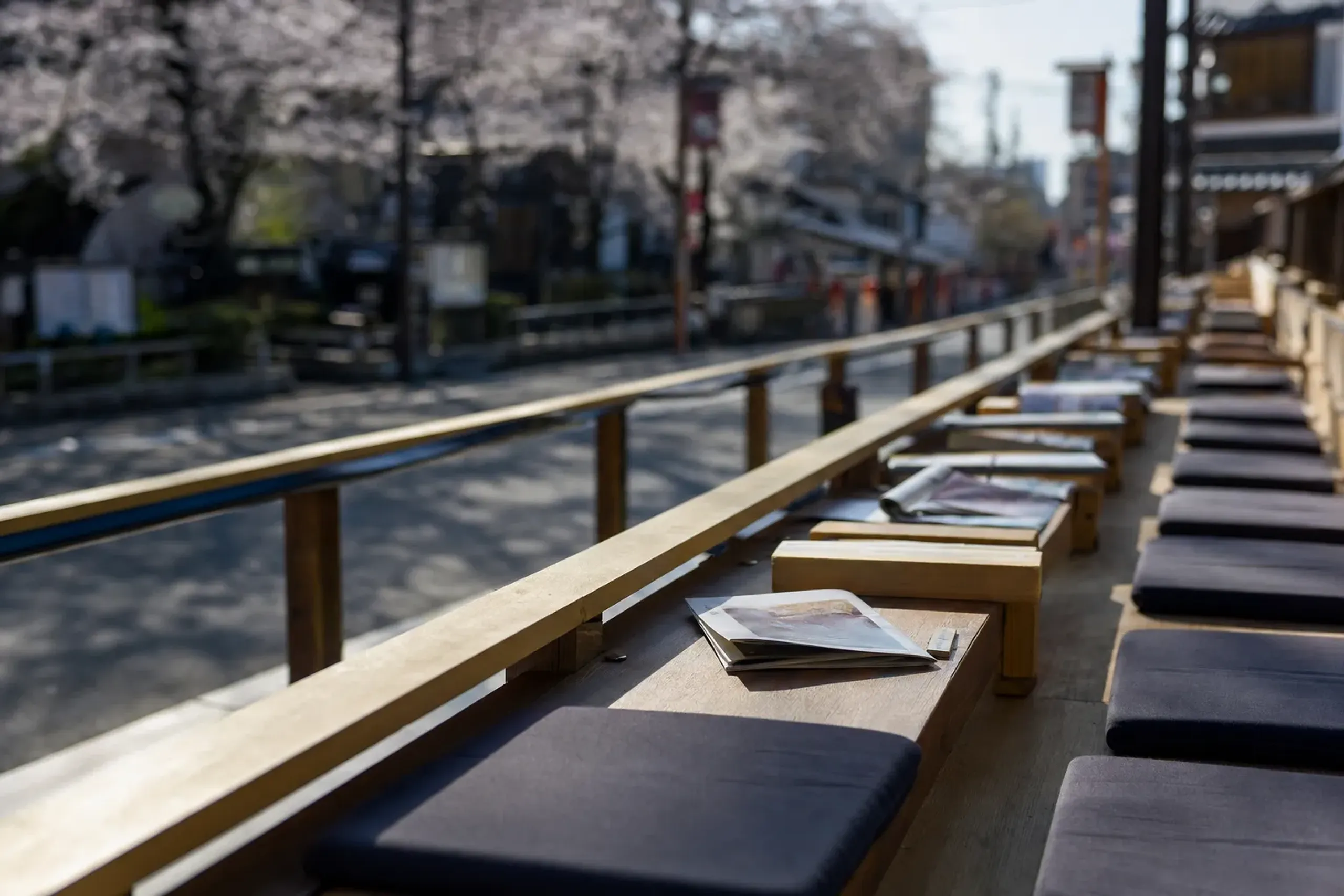
At Nebuta, reserved seating gives you a consistent view of the illuminated floats and the flow of haneto dancers. At Kanto, seating is often the difference between watching technique and watching lanterns. At Tanabata, “reserved seating” is less central — the festival is an urban walk beneath decorations — yet private routing and timing still matter, because the arcades bottleneck quickly.
There is also a language-barrier reality. For Kanto in particular, reserved-seat reservations are typically Japanese-language only. It is doable on your own if you read Japanese and enjoy administrative detail. Most travelers, understandably, do not.
Our concierge team treats reserved seating as a comfort tool, not a status object. Quietly useful — like choosing the right side of the street before the first drum hits, so the care is felt long before it is noticed.
Who Should Do All Three Festivals (And Who Should Choose Just One)
The full three-festival circuit suits travelers who enjoy movement, can handle late nights, and relish comparing three very different traditions in rapid succession. You will be tired. That is part of the trade.
If you want a calmer trip, choose one festival and build a broader Tohoku journey around it.
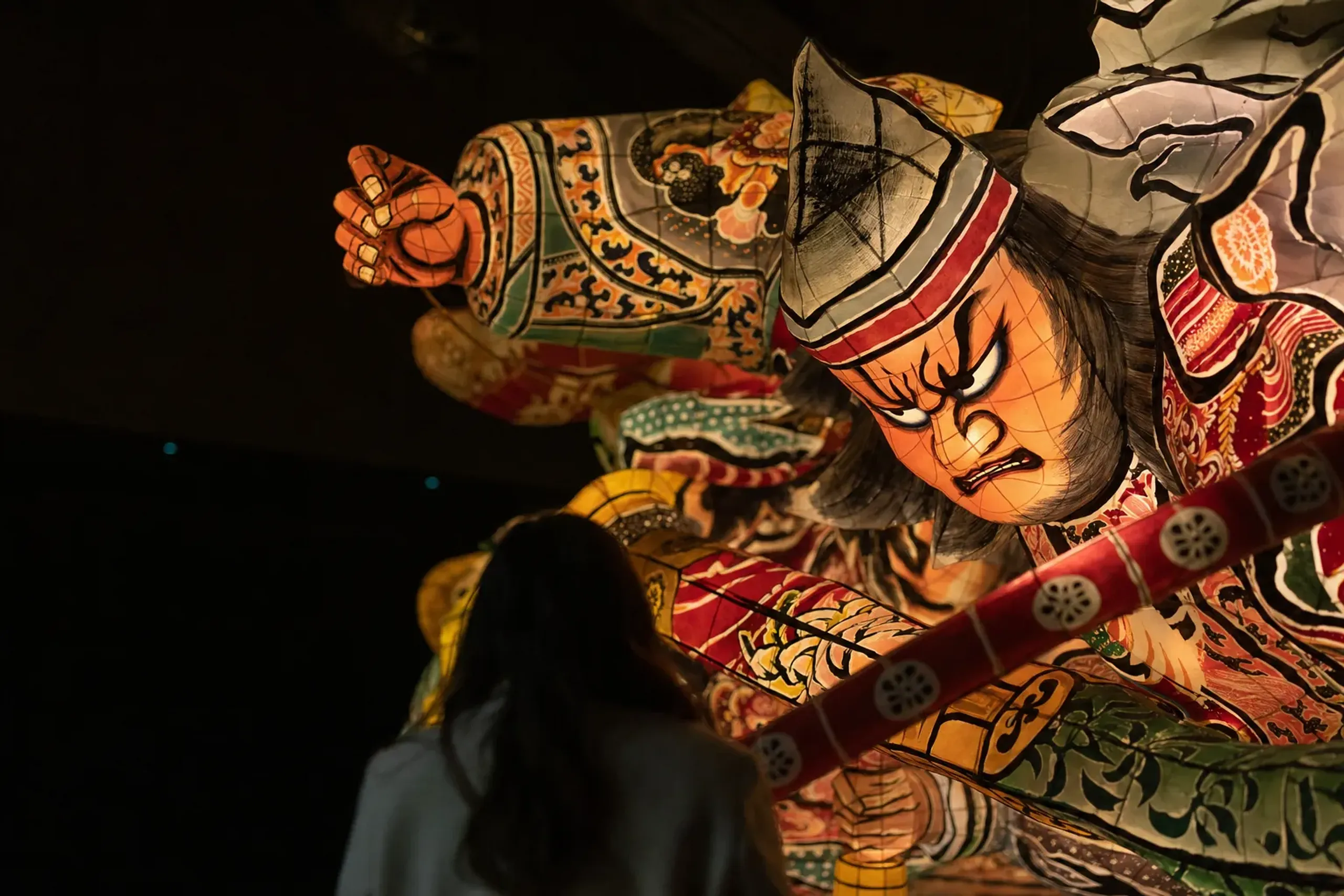
Nebuta is best if you want spectacle and participation. Kanto is best if you love skill and precision. Tanabata is best if you like to wander and notice detail, with less pressure to “catch the parade.”
Families often do well with one or two festivals rather than all three, because bedtime and crowd tolerance are not abstractions. They are real. If you are traveling with older parents, Tanabata’s walking format can be gentler than long parade nights — provided you time it to avoid the tightest crowd surges.
If you still want “more festivals” but have less appetite for hotel-hopping, consider a different calendar. The Tohoku Kizuna Festival 2026 is scheduled in Morioka on May 23–24, 2026, and is described as a combined celebration featuring elements from six major Tohoku festivals. It is not the same as August. It is a smart alternative when August is impossible.
How To Plan The Week Like A Concierge: A Step-By-Step Outline
Start with your non-negotiables — the one night you will remember years from now. Then build backward.
Step 1: Pick your anchor nights. Decide which Nebuta night matters most to you, whether you need grandstand seating for Kanto, and whether you want to be in Sendai on August 5 for the separate fireworks event.
Step 2: Choose your pace. If you want all three festivals, accept that it means three cities and back-to-back evenings. If you want elegance, you may choose one festival and add recovery time instead.
Begin Planning Your Tohoku Festival Week
The difference between a memorable circuit and an exhausting one is rarely the festivals themselves — it is the quiet architecture beneath them: the reserved seats secured months ahead, the calm rooms held across three cities, the private transfers waiting when the streets close, the itinerary paced so the last night still moves you. That is the work we do out of sight, so that yours is spent simply looking up.
When you are ready to reserve your anchor nights and secure accommodation before the week sells out, contact us here to begin a tailored proposal. We will shape the entire week around the traditions you most want to witness — and keep every detail of it discreetly yours.