In this guide
- 01Why Only Five Castles Count
- 02What All Five Castles Share: The Stairs
- 03Himeji: The One Most People Mean
- 04Inuyama: The Small, Quick One
- 05Matsumoto: The Black Keep Over the Moat
- 06Hikone, In Brief
- 07Matsue, In Brief
- 08The Geography: Five Places, No Single Route
- 09Who Should Climb, And Who Should Look From Outside
- 10Frequently Asked Questions
- 11Why Choose Japan Royal Service
You picture a castle. Something to walk up to, photograph, admire from the moat. Then you are inside, in your socks, facing a ladder of dark wood pitched so steeply you reach for the rope handrail without thinking. That is the surprise waiting in all five of Japan's National Treasure castle keeps, and it is the first thing worth knowing before you plan to climb one.
These five are not views. They are climbs. The stairs are original, and the stairs are the point. In our experience at Japan Royal Service, the real decisions are simple ones: who in your party can manage the steps, how much time each castle needs, and when to arrive to beat the queue on the stairs.
Why Only Five Castles Count
Japan has thousands of castle sites. Most of what you see at them today is concrete, rebuilt in the twentieth century on old foundations. They look the part. The keeps are modern.
Five castles are different. Their main keeps are original wooden structures, and all five carry the legal designation of National Treasure: Himeji in Hyogo, Hikone in Shiga, Inuyama in Aichi, Matsumoto in Nagano, and Matsue in Shimane. All five are also among the roughly twelve castles in Japan whose original main keep still stands. Himeji goes further still, with five separate National Treasure structures on its site; the other four each have one.
That designation is why these five are worth the intent it takes to reach them. You are climbing the actual building, not a replica of it.
What All Five Castles Share: The Stairs
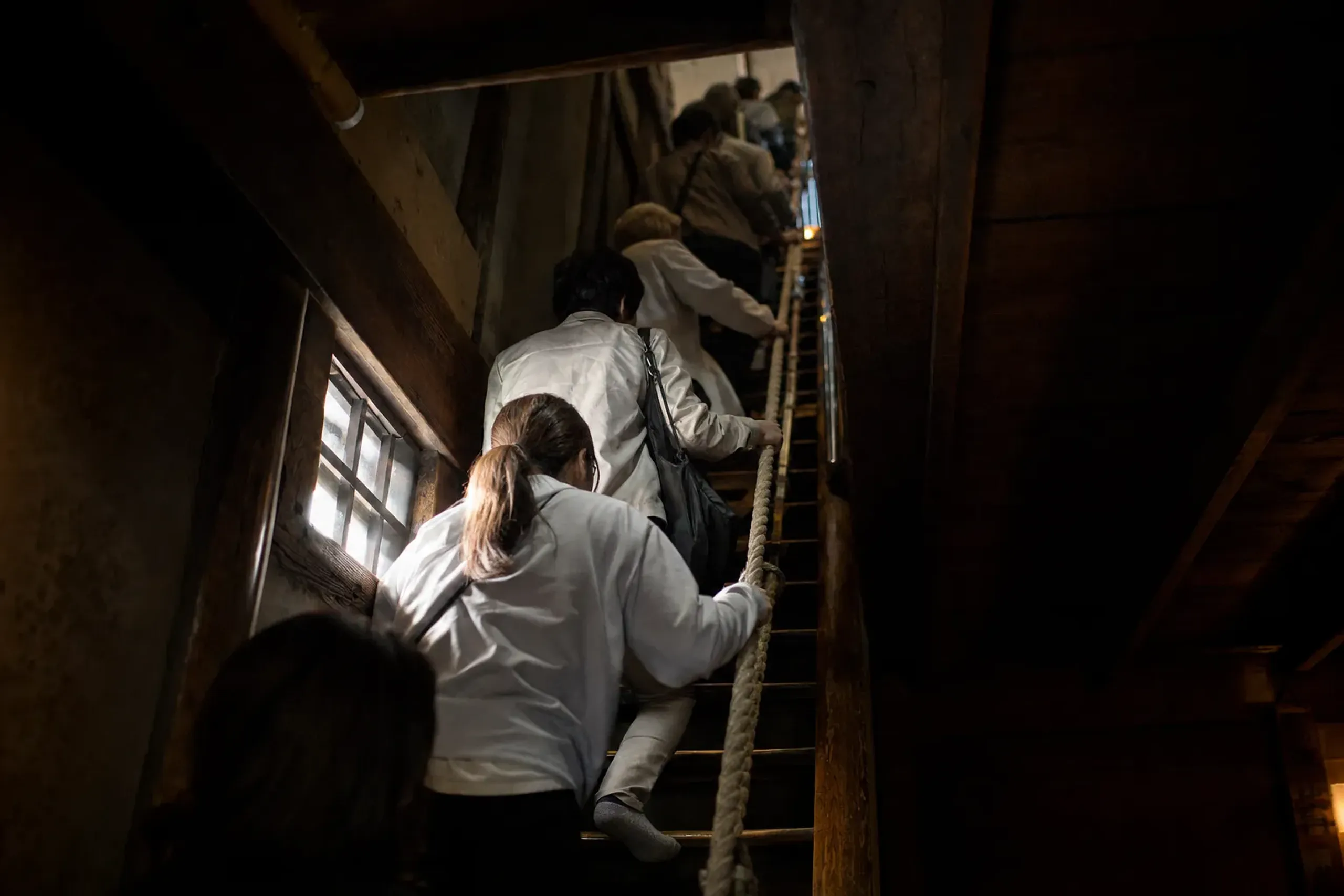
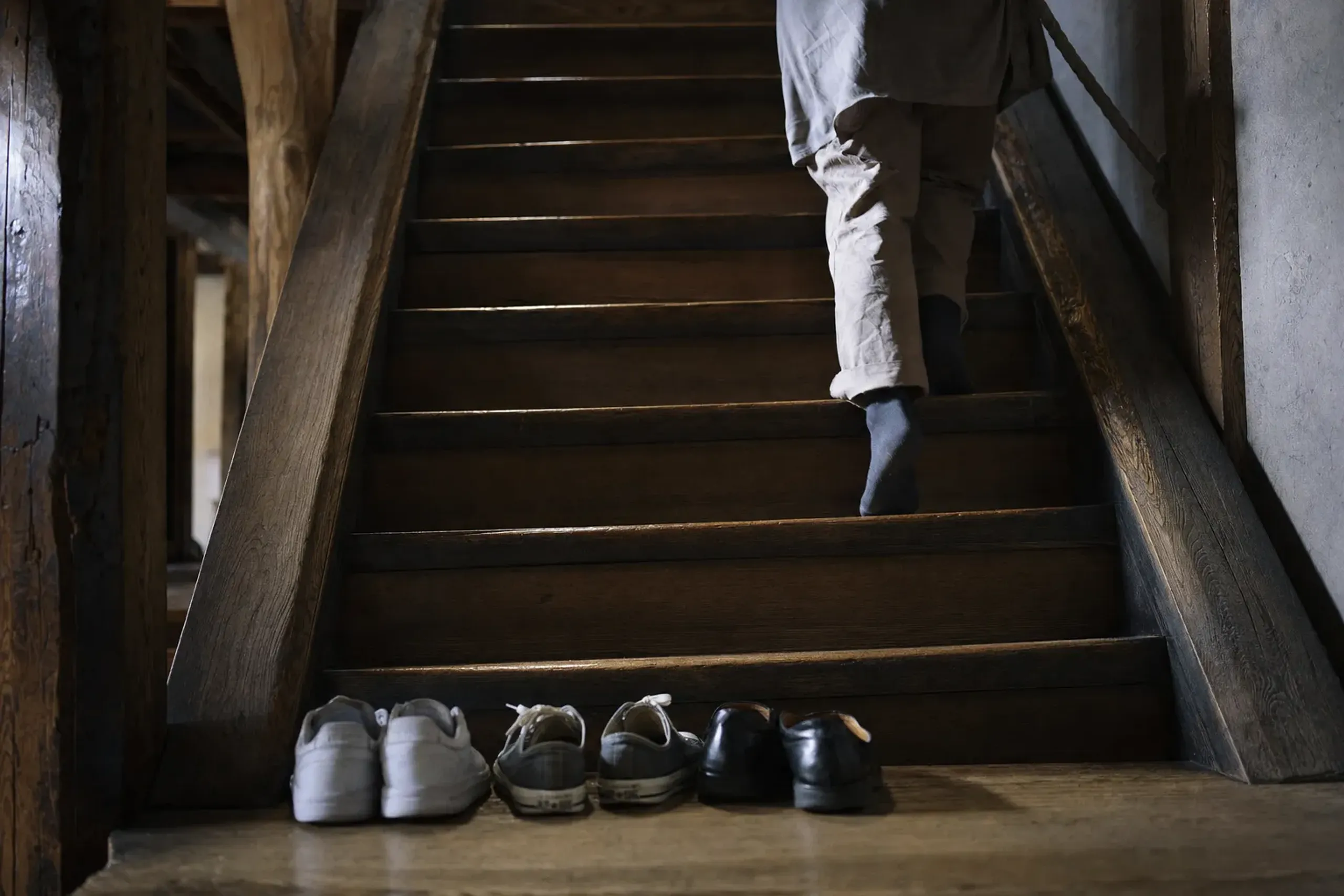
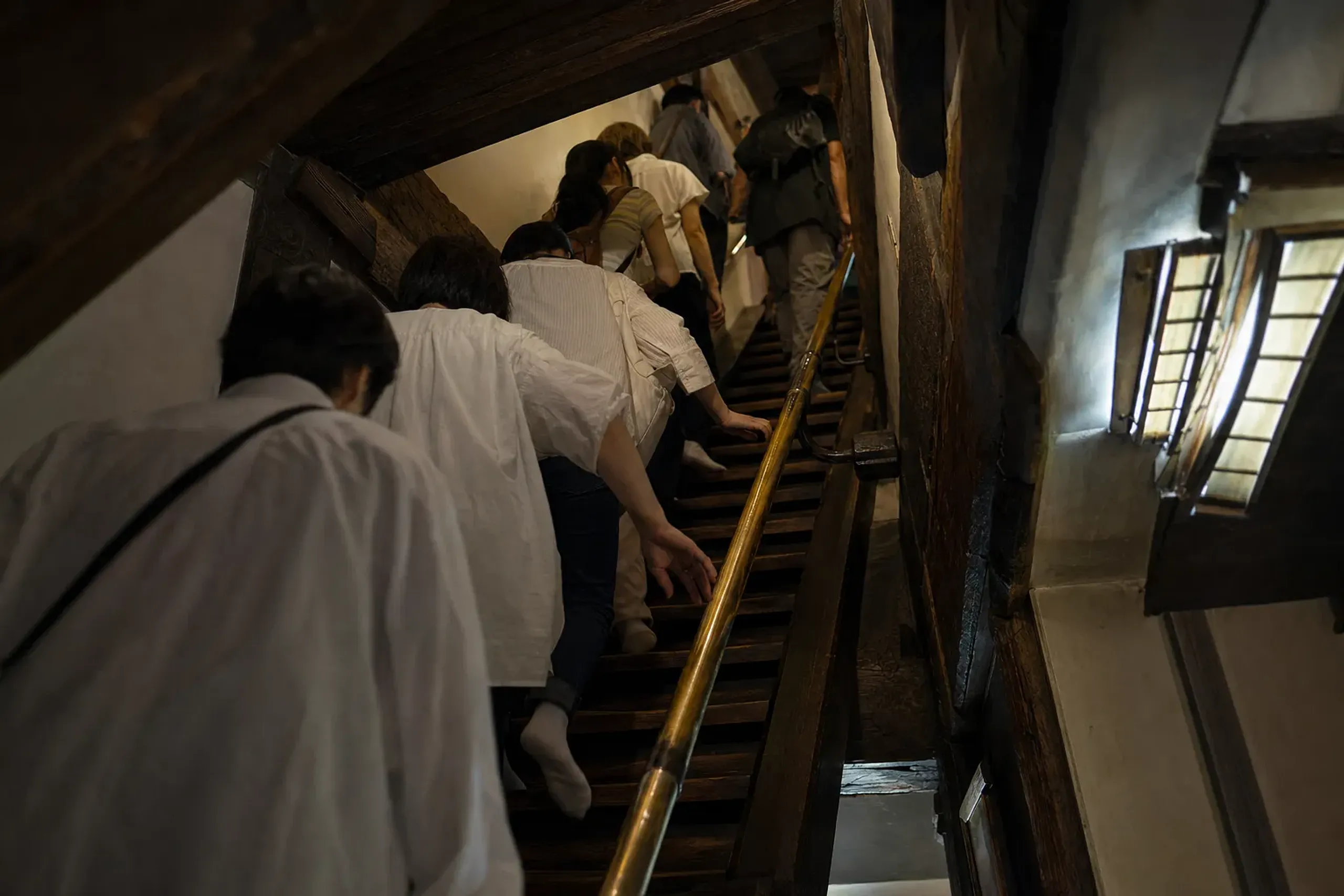
Every one of the five has very steep, narrow wooden stairs.
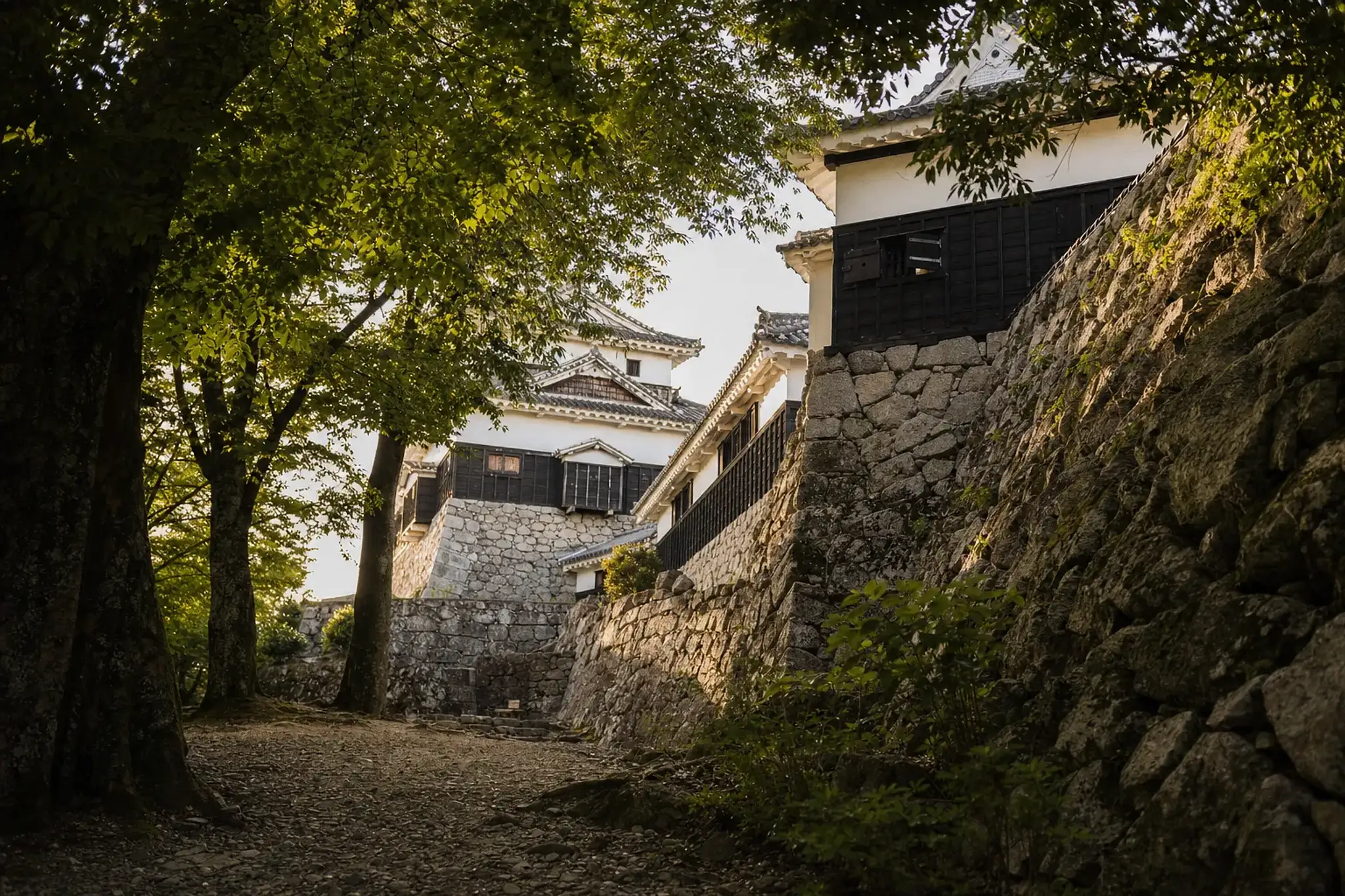
You remove your shoes at the entrance and carry them in a bag as you climb. There is no elevator. There is no alternative route to the upper floors. This is the single fact that decides who should go up and who should not.
Matsumoto's stairs reach roughly 61 degrees in places, with around 140 steps through the keep. Inuyama's climb to the third floor runs about 50 degrees by one account. These are not grand staircases. They are closer to fixed ladders with treads, worn smooth by four centuries of feet.
Key fact: No National Treasure keep has an elevator or a step-free route to the upper floors. Anyone who cannot manage steep ladder-like stairs in socks should plan to enjoy the grounds, moat, and exterior rather than the climb.
Himeji: The One Most People Mean
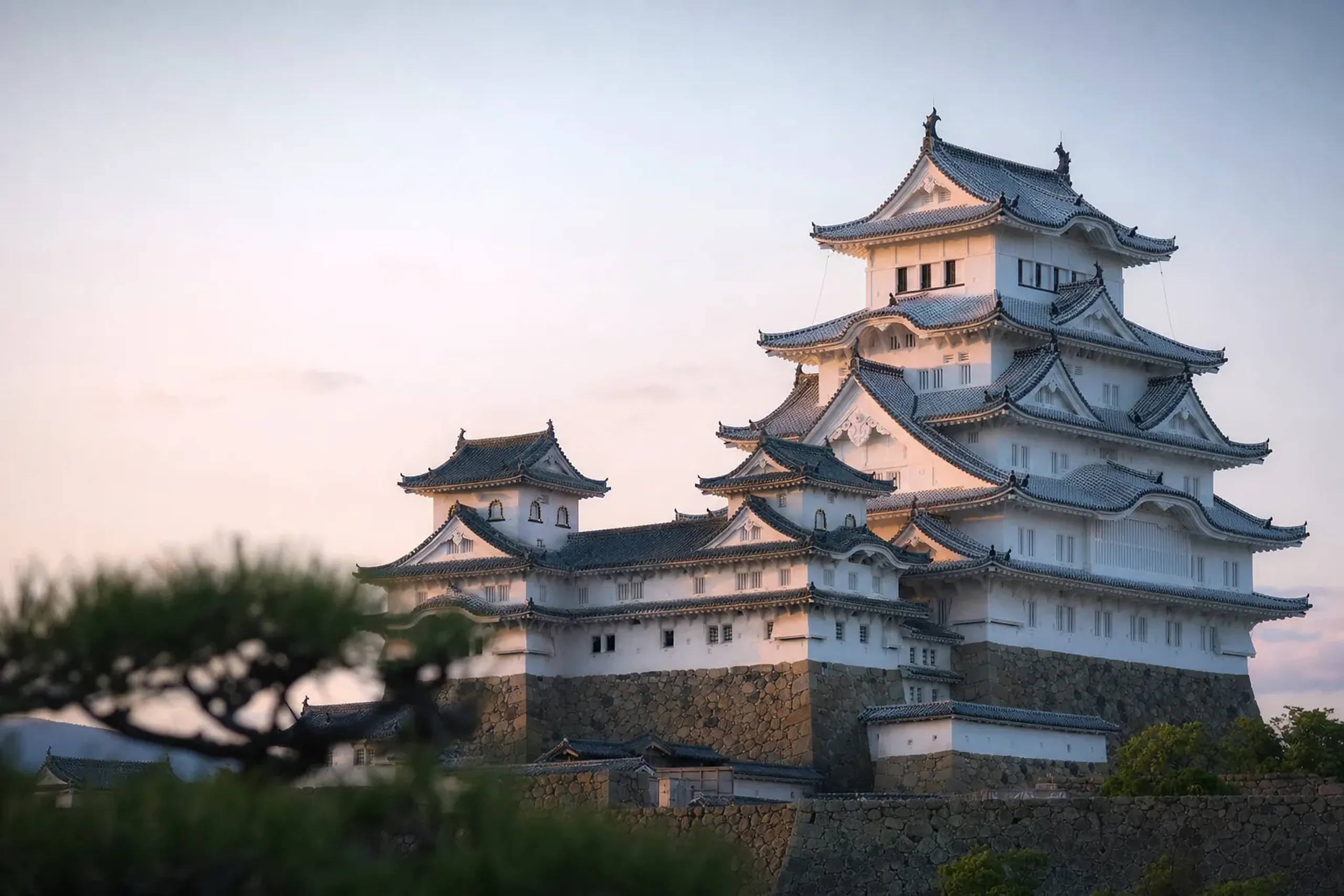
When someone pictures a Japanese castle, they are usually picturing Himeji. White-plastered walls, roofs stacked like wings, a hilltop silhouette visible from the Shinkansen platform. It is the only one of the five that is also a UNESCO World Heritage Site, listed in 1993. The keep shows five roofs from outside and holds six floors within, plus one below ground.
Reach it by Shinkansen from Kyoto or Osaka. Allow two to three hours for the keep, the West Bailey, and the grounds, and add time if you want Koko-en, the garden complex next door.
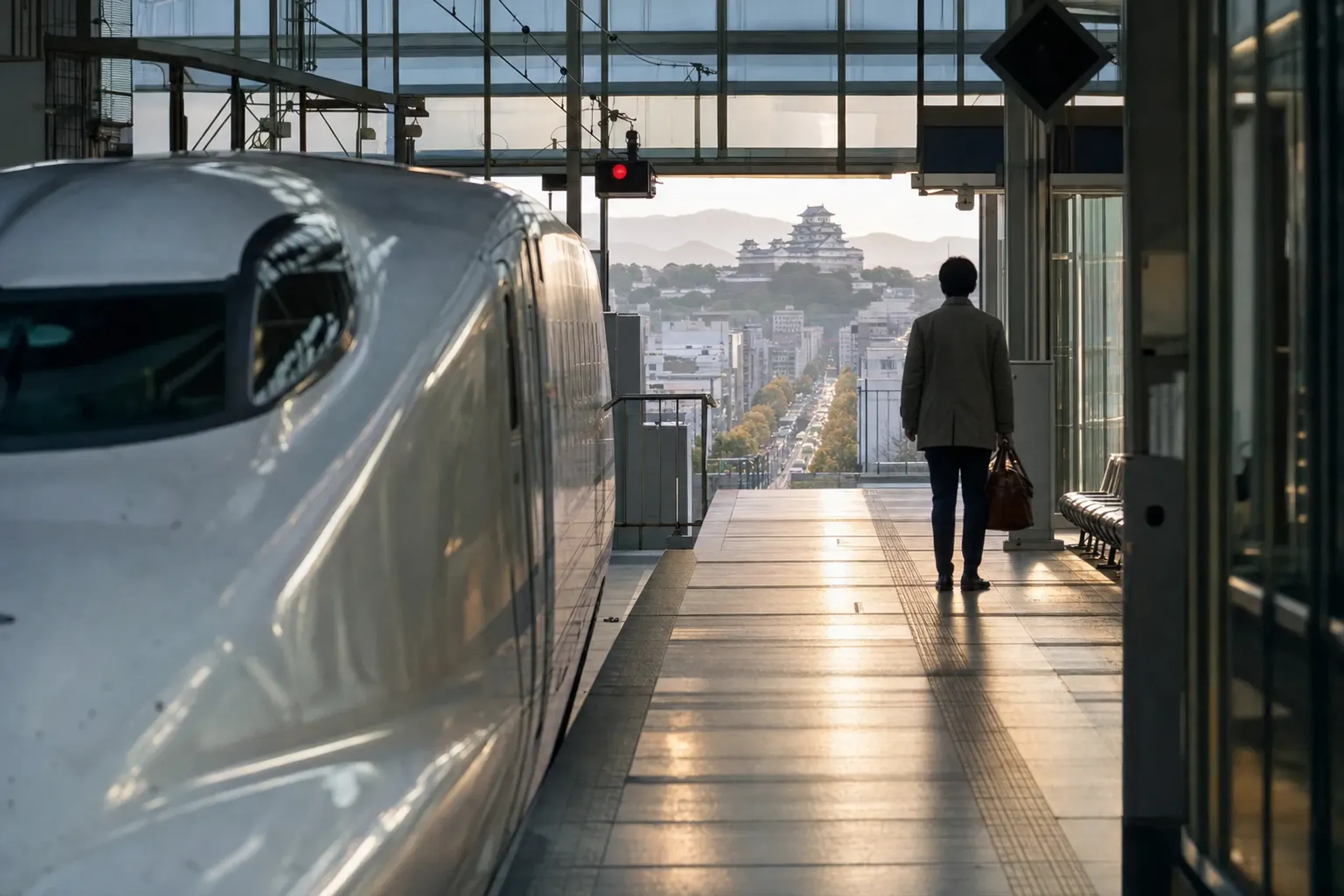
The climb inside is long, through floor after floor of dark timber, and the top rewards you with the view out over the city.
The honest downside is crowds. Himeji is busiest in cherry blossom season, during Golden Week, and through summer. Congestion on the keep stairs builds through mid-morning, and the narrow steps become a slow single file. Arrive at opening. The difference between the first hour and mid-morning is the difference between a steady climb and a standstill.
Inuyama: The Small, Quick One
Inuyama is the opposite of Himeji in scale. The keep is small, the beams are low, and a half day covers both the castle and the old town below it. You reach it by private rail from Nagoya, then walk up through the castle town to the keep on its bluff above the Kiso River.
Two things make Inuyama singular. It was privately owned, the only castle in Japan that was, until relatively recently. And it is the one keep of the five where you can walk the full circuit of the top-floor balcony, out in the open air, all the way around. On the others you look out from inside or from a fixed point. Here you can round the whole building with the river and town turning beneath you.
The downside is the queue. Inuyama's keep is compact, so even modest crowds back up on the stairs. Weekends and peak seasons bring waits. Go on a weekday, go early, and the small scale works in your favour rather than against it.
Matsumoto: The Black Keep Over the Moat
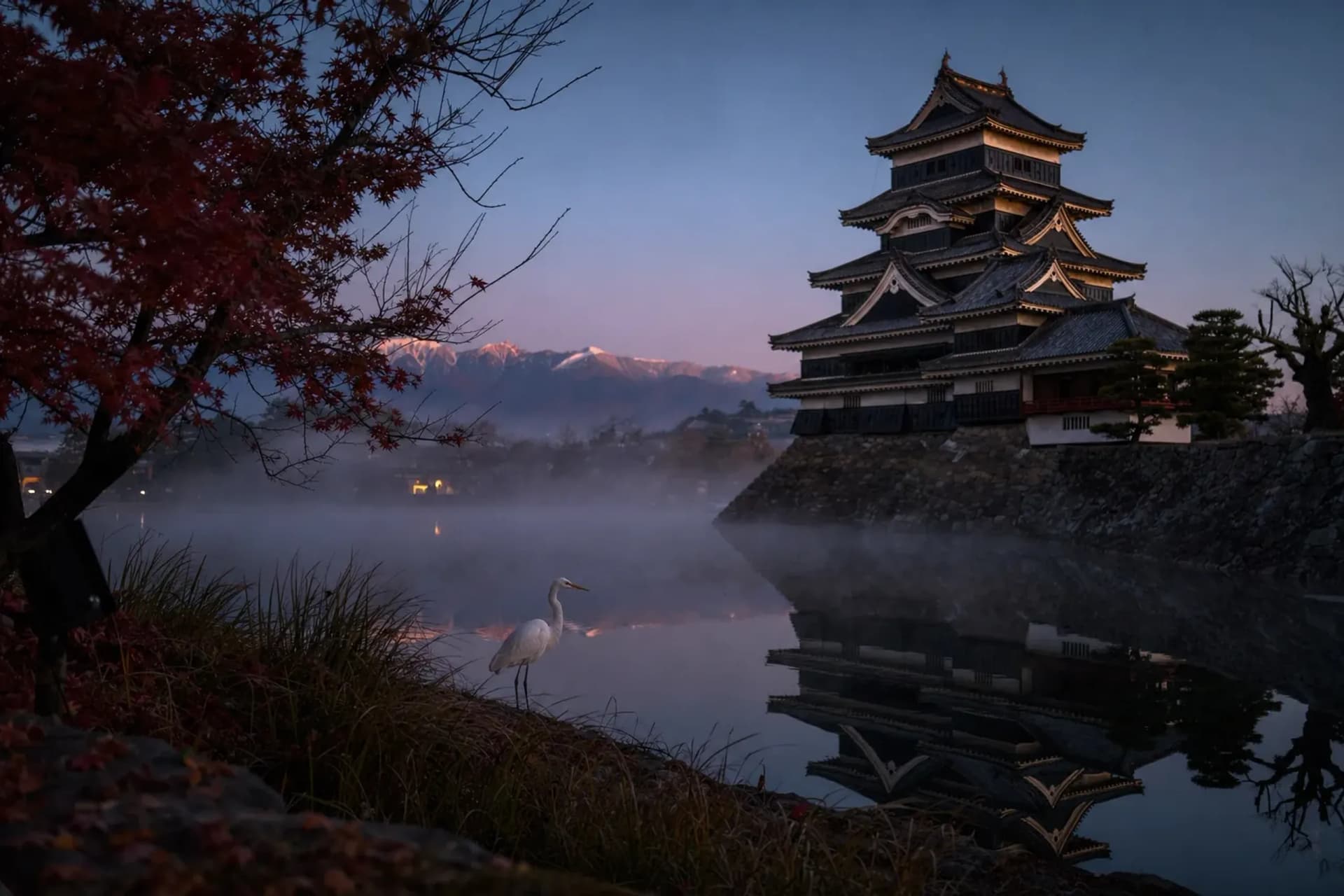
Matsumoto is the dark one. A black-and-white keep standing beside a wide moat in the middle of the city, its reflection doubling it on still water. On a clear day the Northern Alps rise behind it, and the contrast of black timber against white peaks is the image people carry home.
A visit runs one to two hours with the grounds. The keep interior is the steepest of the group by the numbers, those 61-degree flights and roughly 140 steps, so the climb demands more than it looks like from the garden. Waits build on the stairs here too, for the same reason they build everywhere: a single narrow route up, a single route down.
Of the three castles that carry this comparison, Matsumoto rewards the longest look from outside. Even visitors who skip the climb get a full experience from the moat path and the red Gekka Bridge, with the Alps as backdrop when the weather gives them.
Hikone, In Brief
Hikone sits above the eastern shore of Lake Biwa, one of only five castles with an original keep designated a National Treasure. It is a compact hilltop complex with a surviving garden and the old castle town below. We treat Hikone in full within our Lake Biwa writing, where it pairs naturally with a lakeside stay rather than a rushed stop.
The same rule applies here: steep original stairs, shoes off, no elevator. Treat it as part of a Lake Biwa day rather than a destination on its own.
Matsue, In Brief
Matsue's keep was the most recent of the five to be designated a National Treasure, in July 2015. It stands in the castle town of Matsue in Shimane, deep in the San'in region, surrounded by a moat you can tour by boat. We cover Matsue within our San'in itineraries, where it anchors a slower cultural stay alongside the town's Lafcadio Hearn connections and nearby Izumo.
Conservation work is a live consideration here. Matsue has posted a notice of major repair to the keep, and our concierge team confirms the current access and viewing status directly with you at the time of arrangement, since such works can affect routing and what is open.
The Geography: Five Places, No Single Route
These five do not line up. Himeji and Hikone sit in Kansai, reachable off the main Tokyo–Osaka corridor. Inuyama belongs to central Japan near Nagoya, and Matsumoto to the Nagano highlands. Matsue is far west, in San'in, the quietest and least-connected of the regions.
Visiting all five is possible, but it takes real intent and a lot of rail. We do not propose it as a single loop, because the distances turn it into a transport exercise rather than a pleasure. Far better to place one or two castles inside a region you were already drawn to: Himeji with Kobe and Osaka, Hikone with Lake Biwa, Inuyama with Nagoya, Matsumoto with the Nagano mountains, Matsue with Izumo and the San'in coast.
Who Should Climb, And Who Should Look From Outside
Climb if you are steady on steep stairs, comfortable in socks without a firm handrail on every flight, and untroubled by low beams and tight turns.
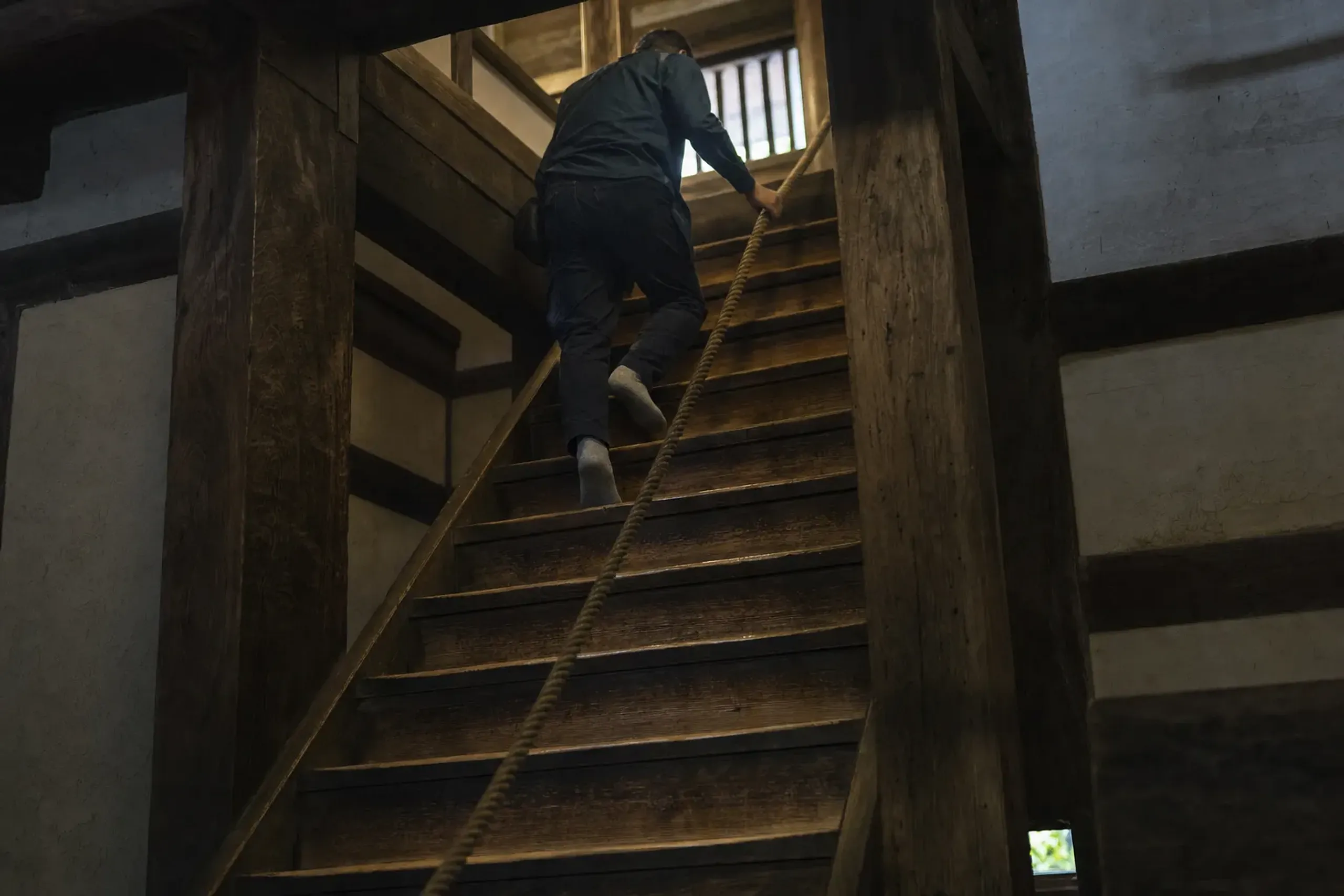
The reward is real: the actual interior of a four-century-old wooden keep, the smell of old timber, the narrow windows built for defence.
Look from outside if stairs are difficult, if you are carrying a small child, or if a knee or a hip would make the descent a worry. The descent is harder than the climb. The grounds, the moats, the gardens, and the exterior views give a complete visit to anyone, and at Matsumoto and Himeji in particular the outside is half the pleasure anyway. There is no shame in a castle seen from the moat path.
Frequently Asked Questions
Which Of Japan's Five National Treasure Castles Is Easiest For Older Travelers To Climb?
None has an elevator or a step-free upper route, so none is genuinely easy. Inuyama is the smallest climb, but its stairs are still steep. Older travelers unsure of steep stairs are best enjoying the grounds and exterior rather than the keep.
How Many Original Castle Keeps Survive In Japan, And Why Do Only Five Count As National Treasures?
Roughly twelve castles keep their original main keep; most Japanese castles are modern reconstructions. Of those twelve, five keeps hold the legal National Treasure designation: Himeji, Hikone, Inuyama, Matsumoto, and Matsue.
What Is The Best Time Of Day To Visit Himeji Castle To Avoid Crowds On The Stairs?
Arrive at opening. Congestion on Himeji's keep stairs builds through mid-morning, turning the narrow climb into slow single file. The first hour after opening is the clearest, especially in cherry blossom season, Golden Week, and summer.
Can You Walk Around The Outside Of A National Treasure Castle Keep?
Inuyama is the only one of the five where you can walk the full circuit of the top-floor balcony in the open air. The others offer views from inside or from fixed points rather than a continuous exterior walkway.
Is Matsue Castle Worth Visiting During Its Current Repair Work?
Matsue remains a rewarding cultural stay, with its castle town, moat boat tour, and Lafcadio Hearn connections. Because repair work can affect keep access and views, our concierge confirms the current status with you before your visit.
Why Choose Japan Royal Service
A castle visit is mostly logistics: getting there without a rail scramble, arriving when the stairs are clear, and knowing before you set out who in your party should climb and who should wait in the garden. Our team at Japan Royal Service arranges the transport, the private chauffeured transfers, the on-the-ground guiding, and the nearby lodging for any of the five, so the day unfolds without friction.
What we do is place a castle correctly inside a tailor-made itinerary, whether that is Himeji within a Kansai trip, Matsumoto within the Nagano highlands, or Matsue within a slower San'in journey, and confirm the details that shift, like conservation notices and seasonal openings, directly with you.
To fold one of Japan's National Treasure castles into a Kansai, central Japan, or San'in trip, reach our team privately via WhatsApp or LINE, or contact us here.