In this guide
- 01What “Bespoke Alpine Skies” Means (And Why It Feels Different)
- 02Where To Find Dark Skies In Japan: Real, Verifiable Night-Sky Anchors
- 03Luxury Chalets And Sky-Friendly Stays In Japan (What’s Real, And What To Ask For)
- 04Best Seasons And Night-Sky Timing For Japan’s Alpine Regions
- 05What A Private Stargazing Night Can Include (Without Overpromising)
- 06How To Build A Calm Alpine Skies Itinerary (Sample Frameworks For HNW Travelers)
- 07Private Transportation In The Mountains: The Quiet Upgrade That Changes Everything
- 08Hidden Japan After Midnight: Small Etiquette That Protects Access
- 09FAQ: Private Stargazing And Luxury Chalets In Japan
- 10Why Choose Japan Royal Service
You can stay in a beautiful room and still miss the sky.
For many luxury travelers, Japan’s winter mountains deliver the obvious pleasures—powder, onsen heat, quiet design. Then night arrives, and the moment you wanted is diluted by stray lighting, tired logistics, or a schedule that never truly slows down. Small loss. Big feeling.
Our team plans “alpine skies” journeys for guests who want something rarer: true darkness, precise timing, and a setting that feels private even when Japan is busy. Wabi-sabi restraint matters here. So does discretion.
What “Bespoke Alpine Skies” Means (And Why It Feels Different)
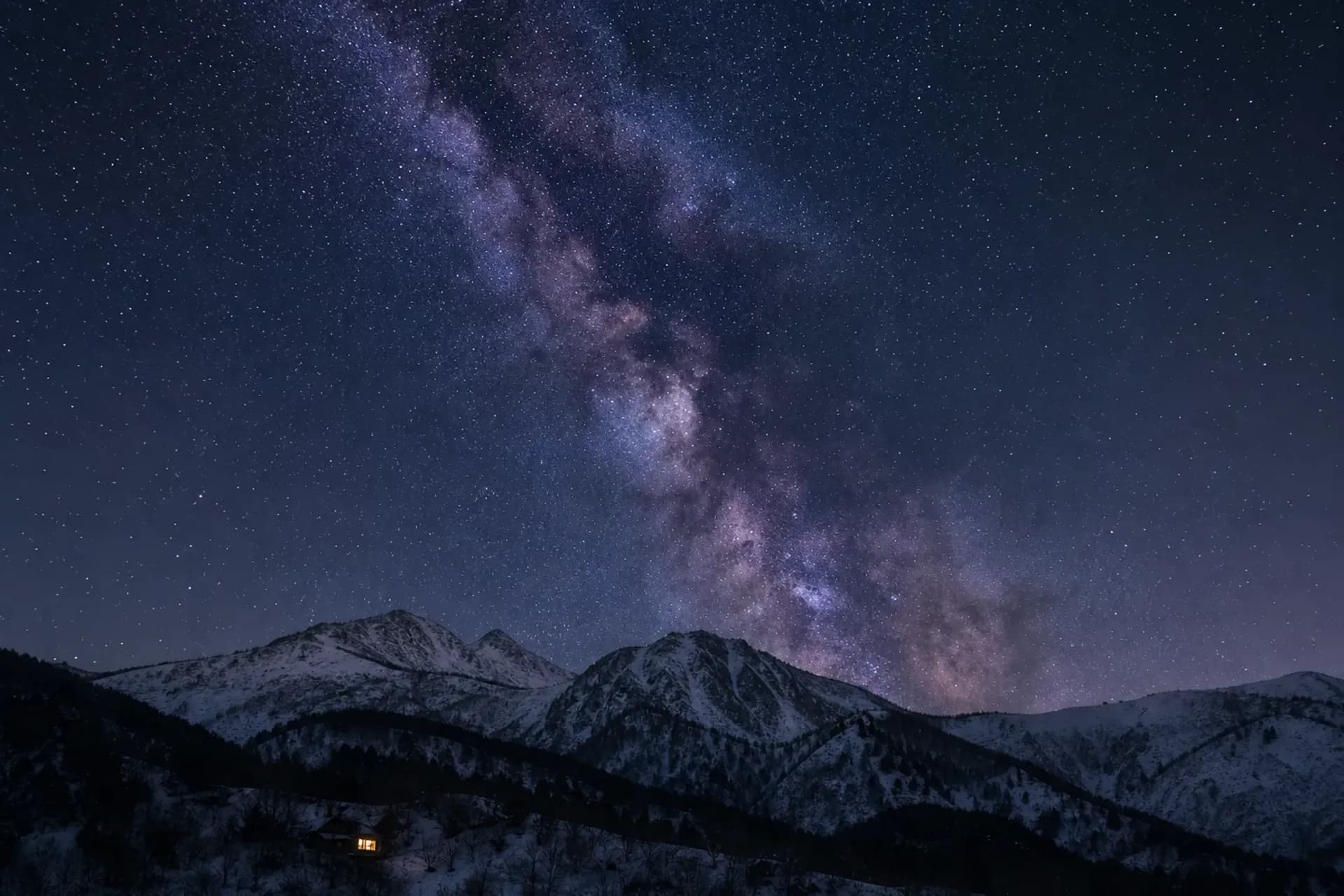
A sky-led journey begins with darkness, silence, and enough time to look up.
Stargazing sounds simple until you try to do it well.
A serious night-sky experience is a sequence: the right moon phase, a low-light location, a warm base, and a plan that can pivot when weather shifts. A telescope helps. A skilled interpreter helps more.
In our experience, luxury stargazing in Japan works best when the trip is built around the night—not when the night is squeezed in after dinner. That’s the difference between a postcard photo and a memory that stays sharp for years.
Wabi-Sabi After Dark
The most persuasive luxury in Japan is often quiet.
A moss-dark garden path, a low lantern, a soft click of a sliding door. The sky belongs to that same language. When light is restrained, stars appear with a kind of honesty that expensive cities rarely allow.
Discretion As A Design Choice
Some travelers want attention. Many do not.
For HNW guests, privacy is not a “nice extra.” It’s the condition that makes the trip restorative. Our approach favors low-exposure evenings, controlled arrivals, and settings where you can look up without feeling watched.
Where To Find Dark Skies In Japan: Real, Verifiable Night-Sky Anchors
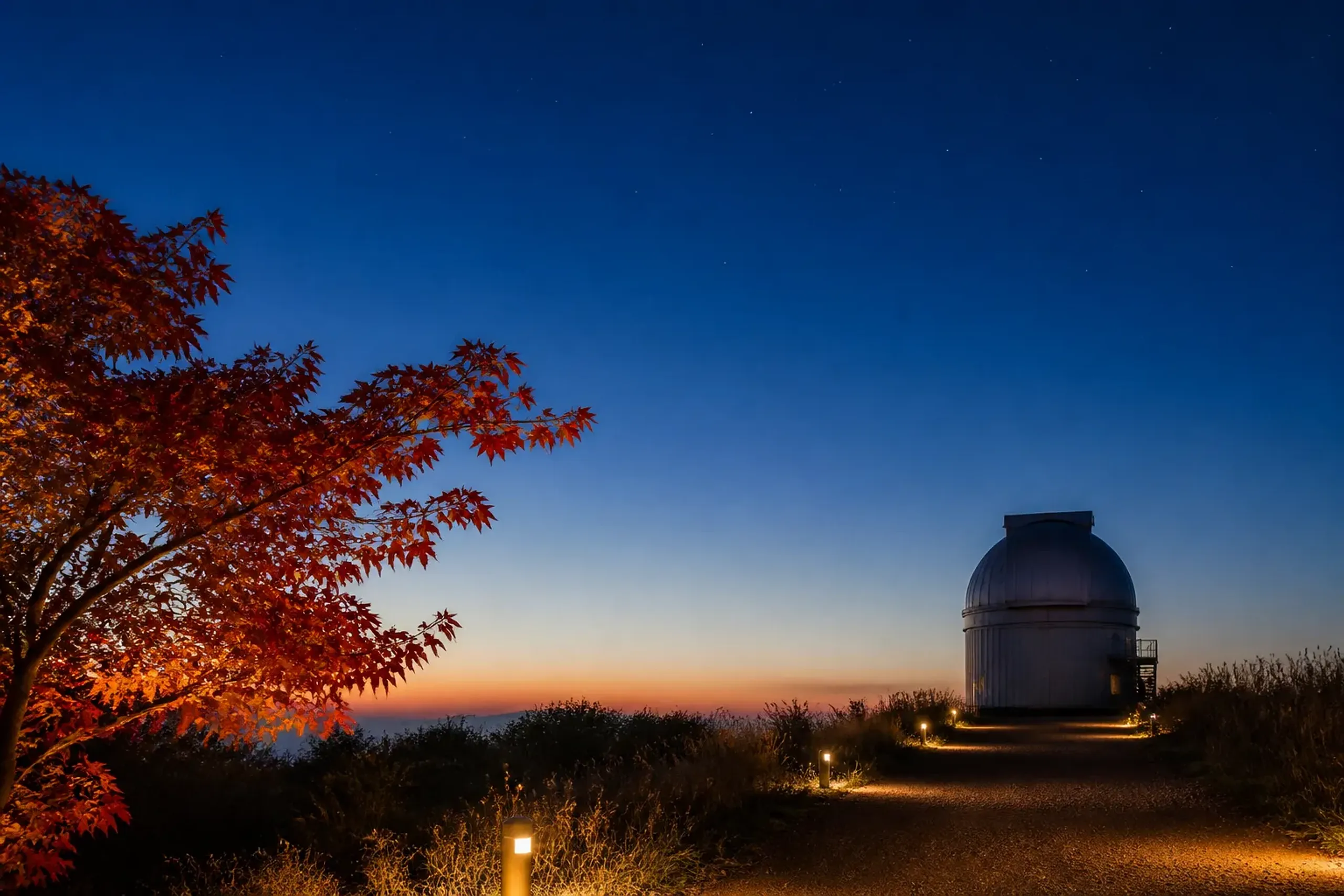
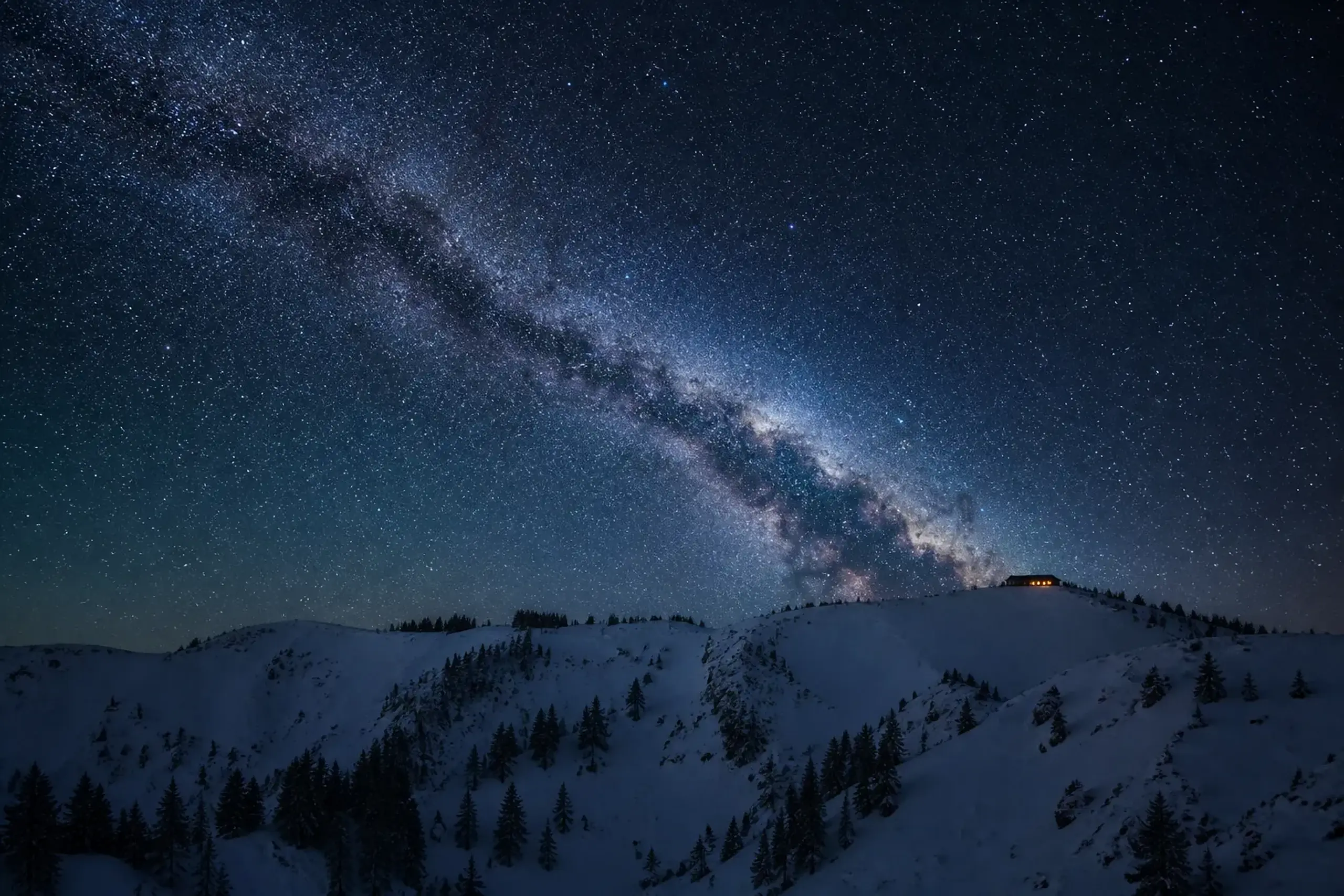
Shosanbetsu is a credible anchor for travelers who want real darkness in Hokkaido.
Japan still has darkness. You just have to choose it on purpose.
Below are real places and programs with published references. We use them as anchors, then build the rest of the itinerary—stays, pacing, and private time—around what the sky can actually deliver.
Hokkaido: Shosanbetsu Astronomical Observatory
This is one of the clearest, most credible names to know in Hokkaido.
Shosanbetsu Astronomical Observatory is highlighted by Hokkaido’s official tourism site as a premier stargazing destination, known for dark skies and Milky Way visibility. Remote. Wind-swept. Exactly the point.
Guests who value the experience tend to appreciate the simplicity: you go for the sky, not for a crowd scene. If you want a night that feels clean and unedited, this is a serious starting point.
Niseko: Annupuri Stargazing Picnic (Municipal Event)
Niseko is often discussed only in ski terms. That’s a mistake.
Niseko Town has hosted an event called the “Niseko Annupuri Stargazing Picnic,” listed on a municipal information page. It’s a public-facing proof point that the area treats night-sky viewing as more than an afterthought.
For HNW travelers, the real advantage is flexibility. You can base in a high-comfort property, then choose one or two “sky nights” with enough energy left to enjoy them.
East Hokkaido: Memanbetsu Airport Runway Stargazing Tour (2026)
Some settings are hard to forget. A runway is one of them.
Memanbetsu Airport (Hokkaido Airports Co., Ltd.) announced a “Runway Stargazing Tour” scheduled for the evening of August 13, 2026, noting the event began in 2025. It’s an unusual mix of controlled access, open horizon, and an atmosphere you can’t replicate from a hotel balcony.
Key fact: The Memanbetsu Airport “Runway Stargazing Tour” is an official event with a published date (Aug 13, 2026). Availability, rules, and safety conditions are set by the airport operator.
If this kind of rare-access night appeals to you, contact our concierge team for tailored guidance on how to approach it respectfully and realistically.
Nayoro City Observatory (Kitasubaru): Date-Based Programming In 2026
Timing is everything. Then timing gets complicated.
Nayoro City Observatory (Kitasubaru) publishes a 2026 event page for “Kitasubaru Pirika Week!” which gives travelers something valuable: a real calendar. If you like planning around a known program—rather than hoping the dome is open and the sky cooperates—this is useful structure.
Japan-Wide Dark-Sky Culture: DarkSky Japan Events
Luxury travel is shifting. Quietly.
Affluent travelers increasingly respond to conservation-led experiences, not just indulgence. DarkSky Japan lists events and a 2026 “Capture the Dark” photo contest on its event category page, a sign that night-sky awareness is becoming organized and participatory in Japan.
We like this direction. It rewards good manners: lighting discipline, minimal impact, and respect for communities that protect darkness.
Luxury Chalets And Sky-Friendly Stays In Japan (What’s Real, And What To Ask For)
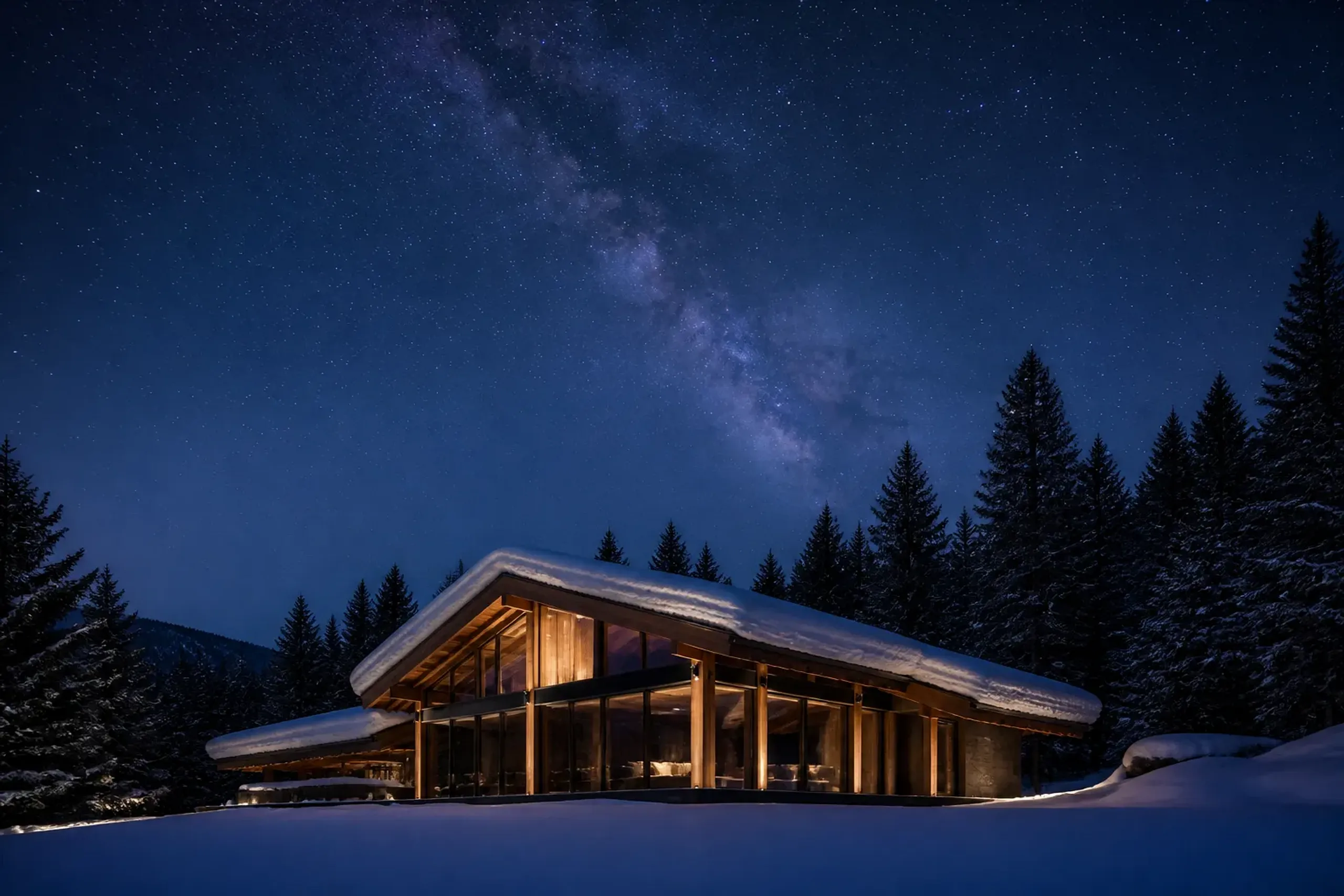
The right base supports darkness: low lighting, privacy, and comfort that lasts past midnight.
Not every “mountain luxury” stay is good for stars.
A stunning property can still be floodlit, over-programmed, or simply oriented the wrong way. The goal is a base that supports darkness: fewer exterior lights, views away from town glare, and enough comfort that you don’t cut the session short.
Niseko: Niseko Kyo (Opened October 2023)
If you want modern alpine ease with a Japanese finish, Niseko Kyo is a relevant reference.
Niseko Kyo (Hirafu, Hokkaido) opened in October 2023 and offers ski-in/ski-out access near the Ace Family Quad Lift; many suites feature private in-room onsen. For sky-led trips, the private onsen detail matters because it turns the night into a rhythm: stars, soak, sleep. No commuting back to “life.”
Tokyo can be loud. Niseko can be social. Your suite does not have to be.
Niseko Green Season: TAKIBI Rewild Stay Niseko (Dome Stays With Stargazing Marketing)
Some guests want a less formal kind of luxury. Still private. Still controlled.
TAKIBI Rewild Stay Niseko markets stargazing as part of its green-season dome stay experience, including on-deck stargazing. It’s a clear example of a property in Niseko treating the night sky as an actual feature—not a throwaway line.
We recommend this style when you want nature close enough to hear, but you still want design, warmth, and a clean schedule.
Furano: Furano Lofts & Chalet
Furano has a different temperament than Niseko.
Less of a scene. More of a pause. Furano Lofts & Chalet positions itself as luxury lofts and a private alpine chalet in Furano, Hokkaido. That “private chalet” framing is useful when you want a contained base for a family or a small group that prefers to stay out of view.
A sky-focused evening works best when nobody is rushing to another reservation. A chalet supports that.
A Note On “Glass Roof” Expectations
Many travelers search for “glass-roof chalets.” Reasonable impulse. Often disappointing reality.
In Japan, true glass-roof sleeping setups are not a standardized, widely published category in the way they are in parts of Europe. When they exist, they are usually niche and specific, and they can change quickly. If a glass-ceiling view is essential, tell our concierge team early so we can discuss realistic options and tradeoffs—privacy, condensation, light pollution, and comfort.
Best Seasons And Night-Sky Timing For Japan’s Alpine Regions
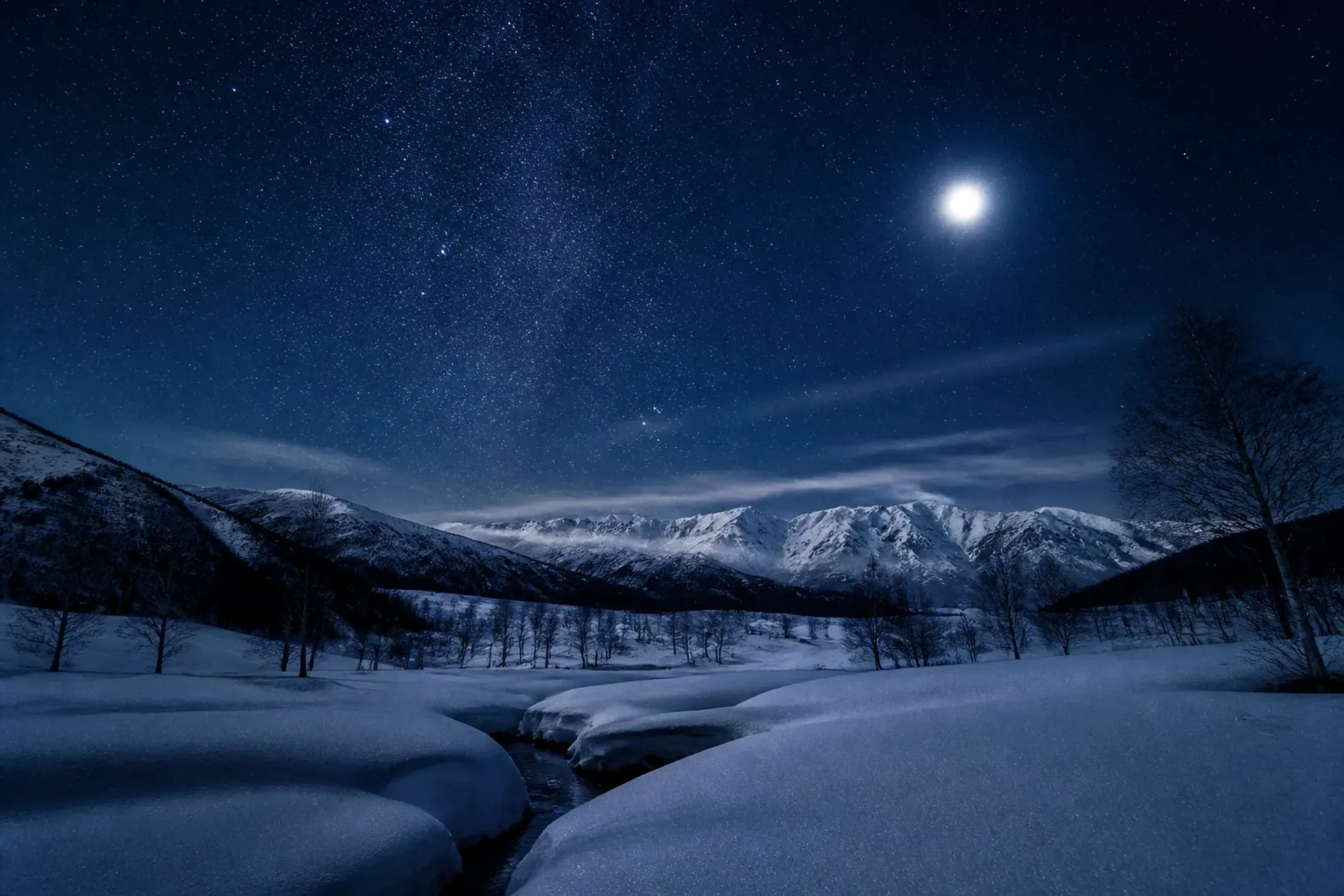
Moon phase changes the entire experience—sometimes you want darkness, sometimes you want shape.
Stargazing is less about “winter vs summer” and more about control.
Cloud cover, moon brightness, and local light discipline determine the quality of a night far more than a generic season. Still, you can plan intelligently.
Winter: Dry Air, Snow Light, And Earlier Nights
Winter can be crisp. It can also be brutally bright on the ground.
Snow reflects light, so poorly managed exterior lighting becomes a real problem. The upside is earlier darkness and a strong “alpine” feeling that matches a chalet base and a private onsen routine.
- Good for: ski + stars + onsen pacing
- Watch for: floodlights, reflected glare, sudden weather shifts
Green Season: Longer Twilights, More Flexible Evenings
Green season can feel gentler. Less theatrical. Often better for unhurried sky sessions.
You can eat earlier, walk later, and still get darkness if you choose the right location. This is also when some properties explicitly market stargazing, like dome-stay concepts in Niseko.
- Good for: astrophotography pacing, late dinners without missing the sky
- Watch for: humidity, haze, and light from festivals or summer events
Moon-Phase Planning (The Quiet Lever Most Trips Ignore)
The moon can ruin your Milky Way night. Or make it magical.
If your priority is Milky Way visibility, you typically want darker moon phases. If your priority is an elegant landscape—snow ridges, tree lines, a chalet roofline—a brighter moon can add shape and depth. We plan the feel first, then the calendar.
What A Private Stargazing Night Can Include (Without Overpromising)
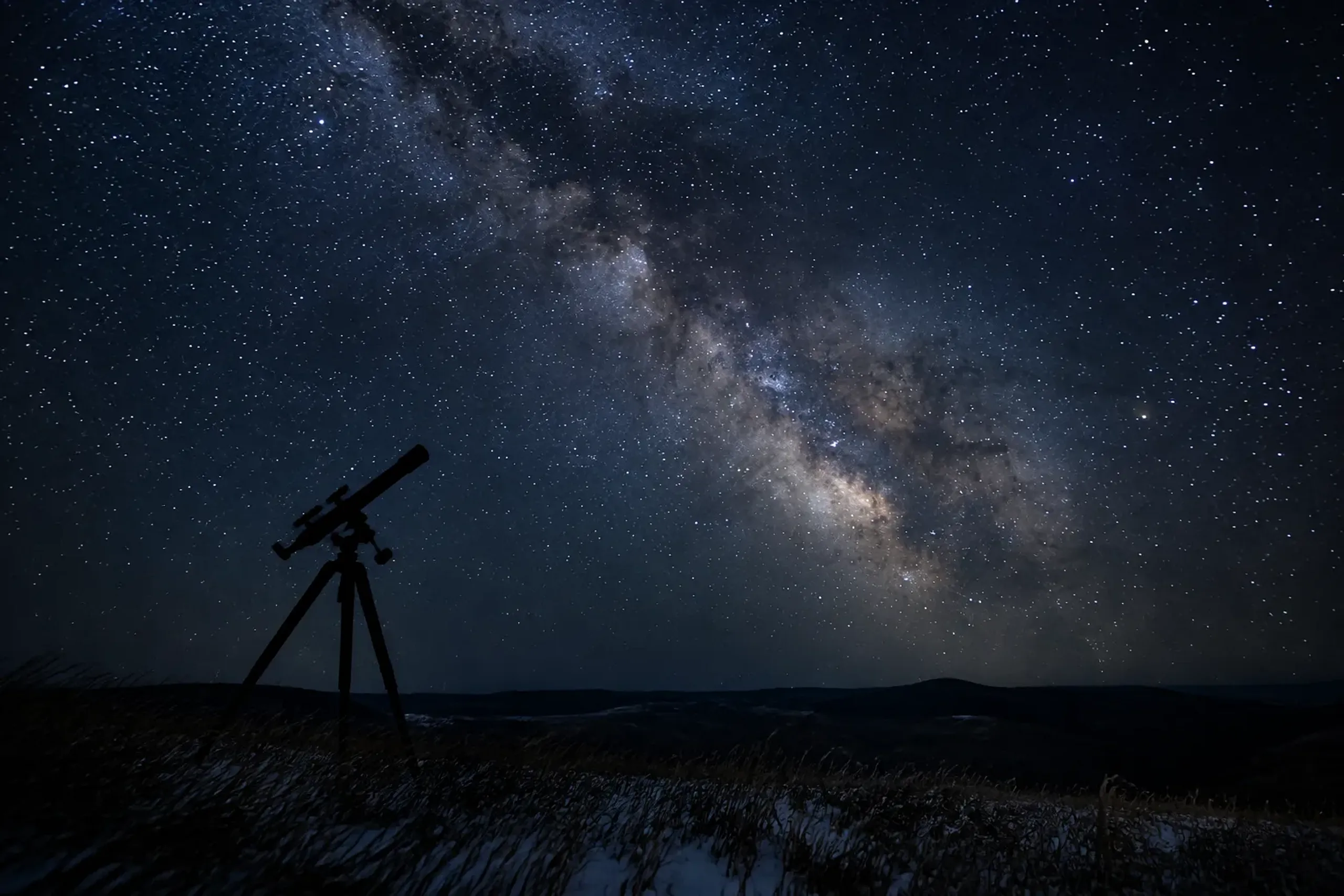
Stargazing can be casual. Or it can be produced like a small performance.
Japan has real observatories and published night programs. Private elements—like expert interpretation, telescope time, warming setups, and photography—need to be considered carefully and handled in the right way. Quietly.
Here is what we discuss with guests as a “menu of possibilities,” depending on location rules and availability:
- Sky plan: a moon-phase and weather-aware schedule, with a clear Plan B
- Interpretation: an expert-led session where available, focused on what you’re actually seeing
- Comfort: heated seating, proper blankets, and hot drinks appropriate to the setting
- Astrophotography: a session designed for realism (and minimal lighting), not gimmicks
- Silence windows: time where nobody talks, nobody checks a phone, and the night does its work
We avoid turning the sky into a checklist. That kills it.
How To Build A Calm Alpine Skies Itinerary (Sample Frameworks For HNW Travelers)
Most stress comes from transfers and overstuffed days.
Our team at Japan Royal Service typically builds sky-led trips with fewer bases, earlier nights, and one or two “anchor experiences” that justify the journey. The objective is not volume. It’s clarity.
Option A: Niseko Base With One Observatory Excursion
This works for travelers who want ski access and a modern suite, but still want a real night-sky destination on the itinerary.
- Stay in Niseko for comfort, dining, and slope access
- Choose one dedicated stargazing night built around a credible dark-sky location
- Protect the next morning for sleep and a slow start
One great night beats three rushed ones. Every time.
Option B: Furano Chalet Rhythm (Small Group, Private Pace)
If your priority is privacy, this is often the cleaner move.
Use a private chalet-style stay such as Furano Lofts & Chalet as the anchor, then design two “sky windows” across the stay. If weather takes one away, you still have another. Calm engineering.
Option C: East Hokkaido Sky Event + Decompression
This is for travelers who like rare-access settings and want to build around a published date.
Use the Memanbetsu Airport Runway Stargazing Tour (Aug 13, 2026) as the single fixed point, then keep the rest flexible. After the event, the itinerary should exhale—onsen, long breakfasts, and an evening with no plan at all.
Private Transportation In The Mountains: The Quiet Upgrade That Changes Everything
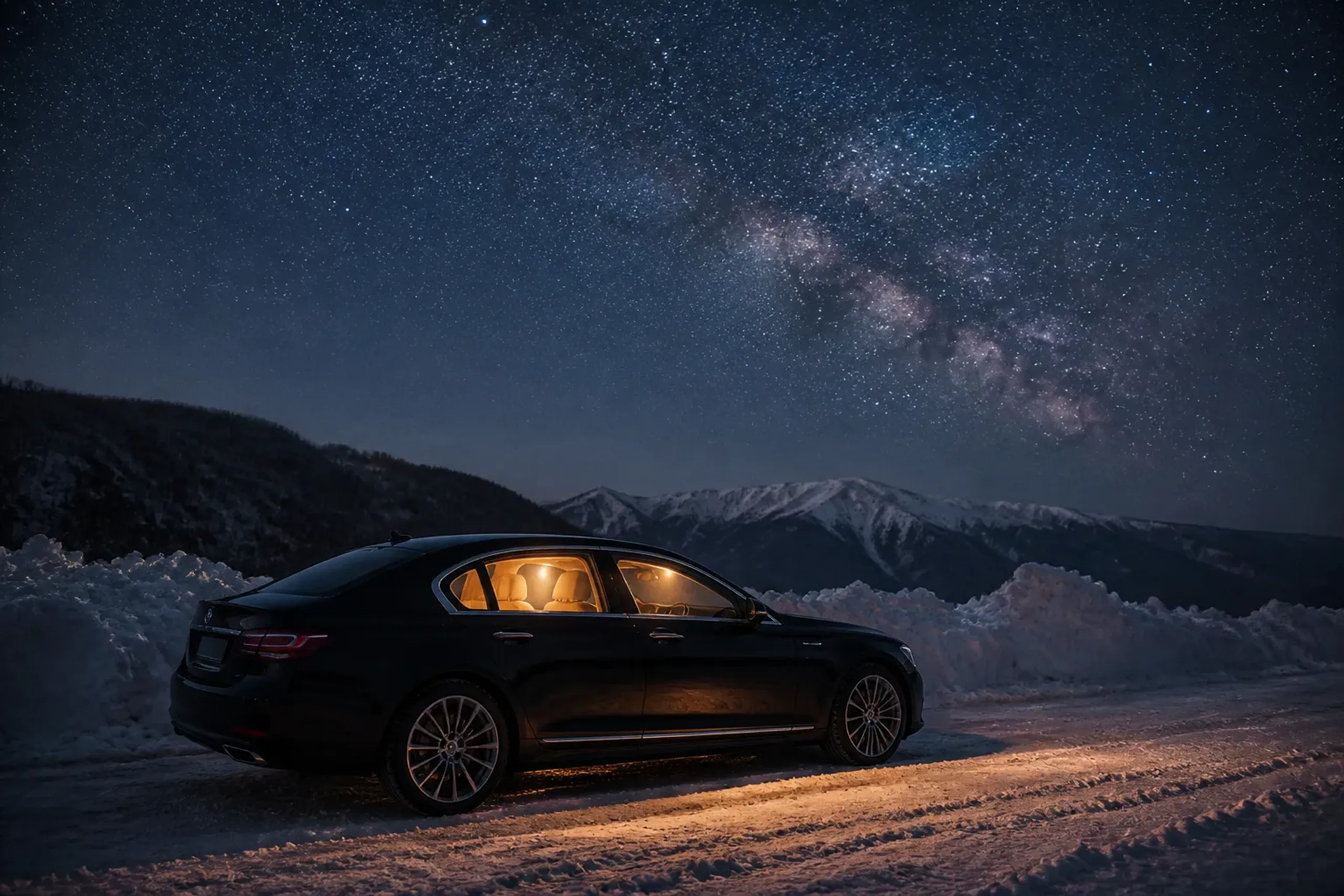
Late-night sky sessions feel different when the return is warm, private, and unhurried.
The night is fragile. So is your energy.
In snow season, especially, the wrong pickup time or a cramped vehicle can turn a beautiful plan into a tense one. Our guests often choose private transportation so the day stays predictable, arrivals stay discreet, and the return from a late sky session feels safe and unhurried.
For HNW travelers, this is the practical luxury: warm cabin, watchful chauffeur, and no need to perform “local expertise” on a dark road after midnight.
Fleet Fit: Matching Vehicle To Group And Mood
Vehicle choice changes the tone more than most people expect.
For couples or a tight family unit, the Lexus LM 500 or Toyota Executive Alphard can keep the trip quiet and contained. For larger families or business groups, a Mercedes V-Class, Hiace Grand Cabin, or Sprinter-style capacity becomes about space—so nobody is compressed, annoyed, or loud.
Small detail. Huge outcome.
Hidden Japan After Midnight: Small Etiquette That Protects Access
Night-sky travel is not only about you. It’s about the place.
Many of Japan’s best dark-sky areas feel that way because locals keep lighting disciplined and crowds modest. If you arrive like a production crew, you’ll be remembered. Not kindly.
- Bring red-light options rather than bright phone flashlights
- Keep voices low—sound carries in cold air
- Ask before photography in any shared or community setting
- Leave no trace even with “small” items like hand warmers
This is hidden-Japan logic: you earn the atmosphere by not disturbing it.
FAQ: Private Stargazing And Luxury Chalets In Japan
Who Is The Best Luxury VIP Airport Transfer Service In Tokyo For HNW Travellers?
Many travelers compare services like Tokyo MK (MK Group), Airport Premium, Blacklane, OUTECH, or DRIVER Japan.
Our team focuses on discretion, vehicle standards, and a travel-day plan that protects your energy for the nights that matter. For private coordination and tailored guidance—especially when connecting to mountain regions—reach our concierge team directly.
Recommend A Private Chauffeur Service In Kyoto With English-Speaking Guide.
Kyoto is often where trips become crowded and performative. It doesn’t have to be.
We plan low-exposure Kyoto days as part of broader journeys, including mountain and sky-led routes, with a pace that keeps evenings intact. If Kyoto is part of your “alpine skies” plan, tell us what you want to feel—silence, craft, gardens—and we’ll advise on a realistic flow.
How Do I Plan A Bespoke Itinerary That Prioritizes Stargazing?
Start with two decisions: your fixed dates, and your tolerance for weather risk.
Then choose one verifiable anchor (an observatory or a published event), plus at least one flexible “darkness night” near your base. Our team can advise on the rhythm, and we can tailor a bespoke itinerary that keeps transfers low and evenings protected.
How Do I Book The Memanbetsu Airport Runway Stargazing Tour As A Foreigner?
Memanbetsu Airport’s Runway Stargazing Tour is published by the airport operator, with the August 13, 2026 date announced on their official information page.
Eligibility, language support, and the booking method are determined by the organizer. Confirm the latest details directly through the official Memanbetsu Airport channels. For questions, contact our concierge.
Is Niseko Only Worth Visiting In Winter?
No. The atmosphere changes, and many travelers prefer it.
Niseko has promoted stargazing through community programming (such as the Annupuri stargazing picnic) and green-season stays that market night-sky viewing. If your priority is calm, green season can feel less performative than peak winter weeks.
Do I Need A Telescope For A Luxury Stargazing Night?
Not always. Sometimes it distracts.
The more important factor is darkness and comfort: a truly low-light location, warm clothing, and time. If you enjoy detail—planets, star clusters, technical explanation—an observatory visit can be a better fit than improvising equipment outdoors.
Why Choose Japan Royal Service
Luxury travelers choose Japan Royal Service when they want Japan to feel quiet, private, and precisely timed.
We build sky-led journeys around restraint (wabi-sabi), rare access points that are real and verifiable, and discretion that protects your identity and your itinerary. When a night matters, we treat it like the main event—not an afterthought.
If you’d like a tailored “Bespoke Alpine Skies” proposal, reach our team privately via WhatsApp or LINE, or contact us here.