In this guide
- 01What “Low-Visibility” Actually Means In Japan (And What It Does Not)
- 02Why 2026 Makes Low-Visibility A Serious Design Problem
- 03The Bespoke Japan Protocol: The Seven-Layer System
- 04Case Study Anatomy: Kyoto, Designed For Quiet In A High-Pressure City
- 05Event-Pressure Protocol: Gion Matsuri 2026 Without The Crush
- 06Private Aviation And Discreet Transfers In Japan: What To Know
- 07Villa Buyouts And Private Stays: The Vetting Checklist That Protects Privacy
- 08Shokunin Sessions: The Quietest Form Of “Exclusive”
- 09How To Book Third-Party “Private Access” Experiences Without Getting Burned
- 10Japan Royal Service Vs. Global Luxury Travel Brands: Where The Difference Shows Up
- 11FAQ: Low-Visibility Luxury Travel In Japan (2026)
- 12Why Choose Japan Royal Service
Japan is not hard to visit. Privacy is.
For UHNW travelers, the friction rarely comes from language or train schedules. It comes from exposure: hotel lobbies, curbside drop-offs, popular temple gates, and the predictability of a public-facing itinerary.
Our team at Japan Royal Service designs travel like a quiet operation. Not flashy. Not loud. Just controlled, calm, and hard to notice.
This article lays out the operational anatomy of a low-visibility Japan itinerary in 2026. You will see the protocol: micro-timing, routing, buffers, discreet transport posture, and a short list of verifiable after-hours cultural access that exists in the real world.
What “Low-Visibility” Actually Means In Japan (And What It Does Not)

Low-visibility is not “secret Japan.” It is not a promise that crowds vanish. Japan is popular, and 2026 will keep pressure on major cities.
Low-visibility means you are rarely the center of a scene. Your entry points are chosen, your timing is quiet, your movements look ordinary, and your exposure windows are short.
Wabi-sabi matters here. Restraint becomes a tool. A mossy stone path at the right minute beats a famous viewpoint at the wrong hour.
The Core Goal: Reduce Predictability
Paparazzi is not the only risk. The bigger issue is pattern recognition: the same hotel entrance, the same “must-see” stops, the same peak hours as everyone else.
Our protocol breaks patterns on purpose. Quick changes. Alternating entrances. A different neighborhood for the same outcome.
The Hidden Japan Principle (Without Myth-Making)
“Hidden Japan” is not a scavenger hunt. It is the Japan you reach by introduction, context, and timing, not by an algorithmic list.
Sometimes it is a quiet sub-temple. Sometimes it is a neighborhood restaurant you return to twice because it fits your cadence.
Why 2026 Makes Low-Visibility A Serious Design Problem
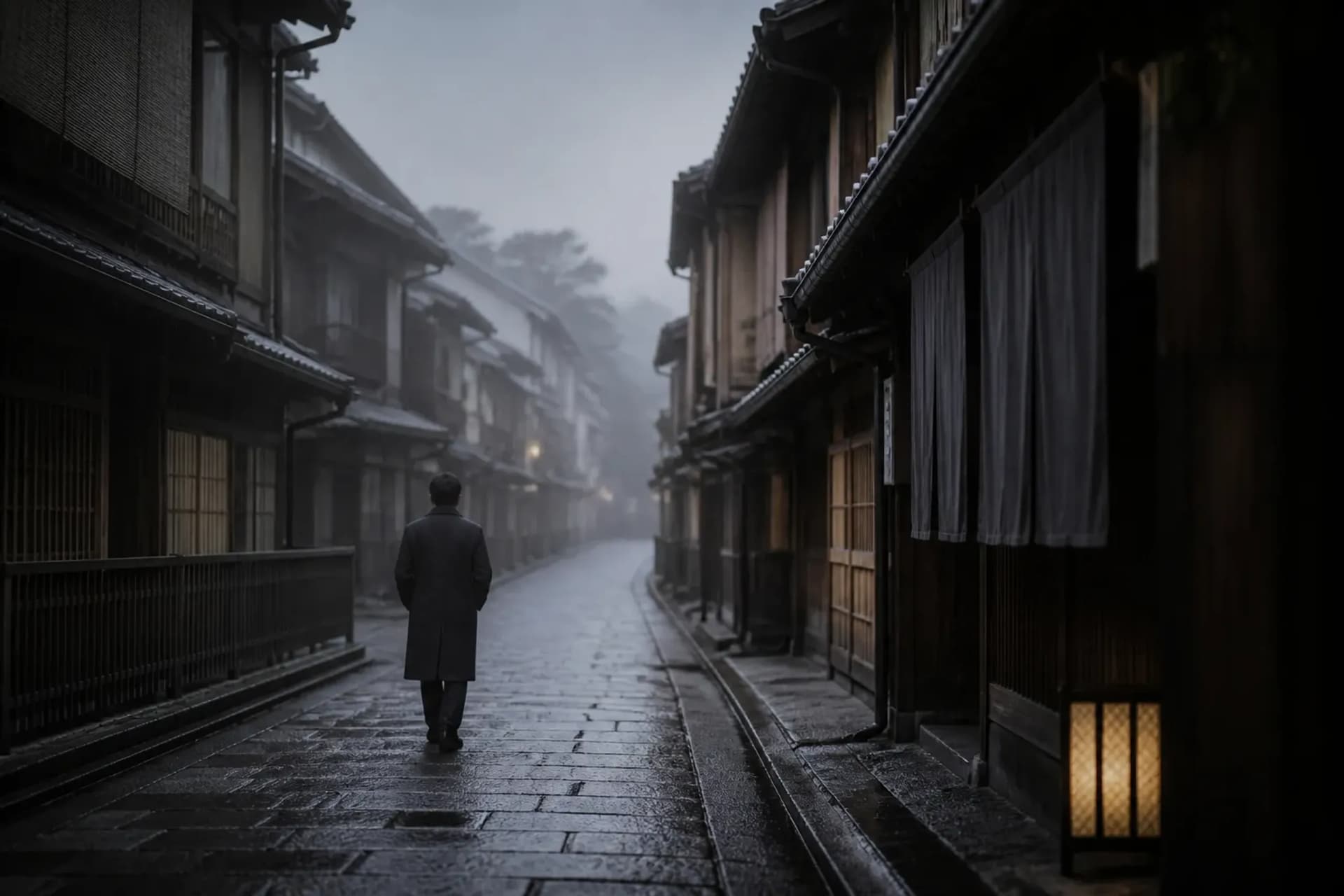
In 2026, timing is not a preference. It is the difference between calm and exposure.
Luxury travelers feel crowd pressure earlier than everyone else. Once a lobby gets noisy, the trip is already off-tone.
Japan’s national tourism authority has an overtourism policy page with updates, last updated April 24, 2026. The direction is clear: more regions will implement overtourism measures over time.
Kyoto is the sharpest example. Kyoto City has published policy/results materials (dated February 17, 2026) on harmony and coexistence between resident life and tourism, including Spring 2026 initiatives.
Key fact: Kyoto offers an official “Kyoto Travel Congestion Forecast” tool (last update: Jun 11th, 2026). For low-visibility travel, it becomes operational input, not trivia.
Kyoto’s Accommodation Tax Change (March 1, 2026)
Kyoto’s official tourism site states that accommodation tax rates will change on March 1, 2026, and notes the tax has existed since October 1, 2018.
This is not a “cost” story in public copy. It is a compliance story. In our experience, UHNW guests want clean accounting and no awkward surprises at checkout.
Peak-Demand Airflow Still Matters
Kansai Airports published a Golden Week 2026 international passenger traffic forecast on April 24, 2026. Peak periods compress everything.
That compression is where quiet protocol pays for itself: buffer planning, non-theatrical meet points, and a transfer posture that keeps attention low.
The Bespoke Japan Protocol: The Seven-Layer System
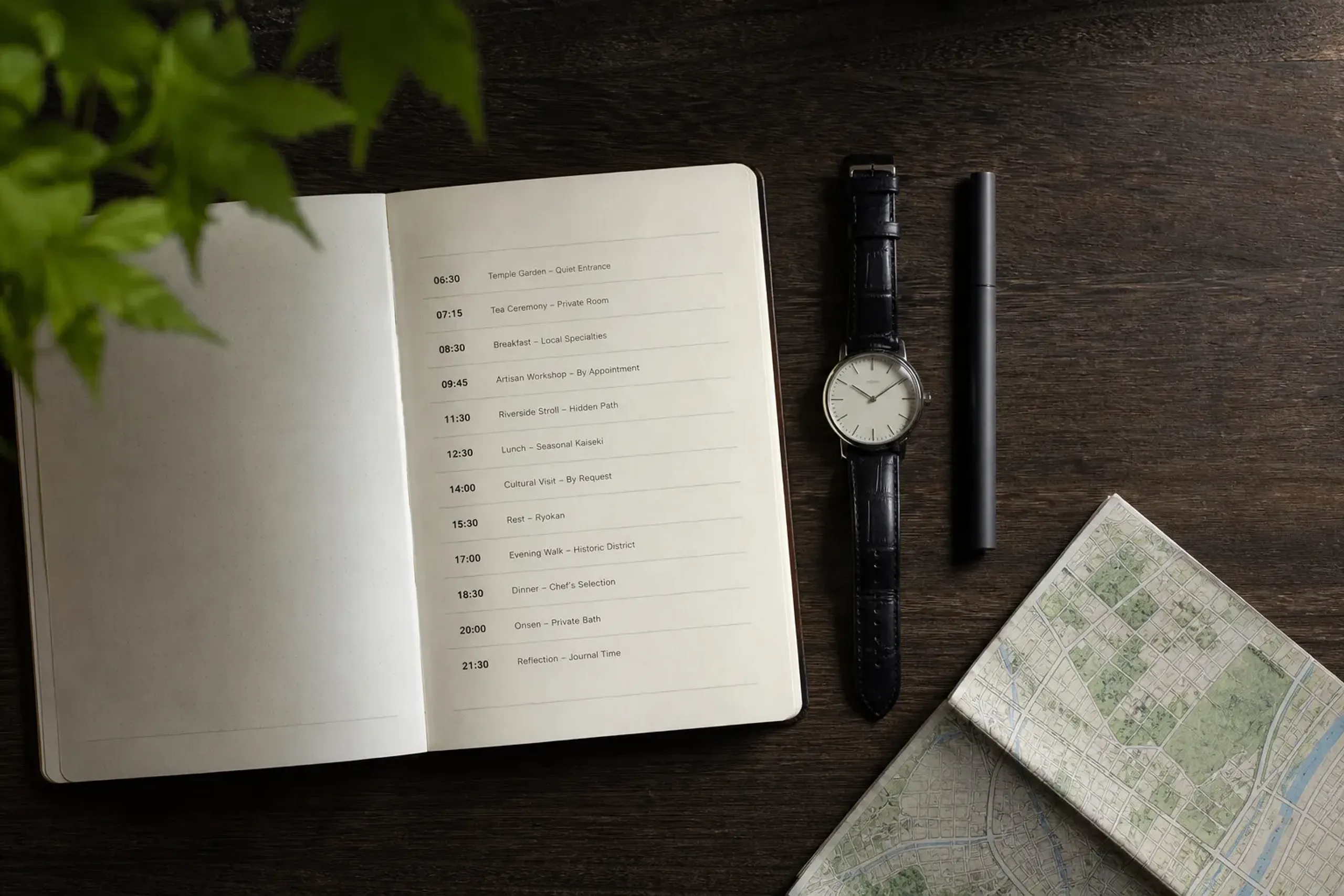
A low-visibility itinerary is a system—micro-timing, buffers, and thresholds.
A low-visibility itinerary is not a list of places. It is a system with layers. Miss one layer and the whole thing becomes fragile.
Our team at Japan Royal Service uses a seven-layer approach. Simple to read. Strict to execute.
Layer 1: Identity And Name-Handling Rules
Small mistakes create outsized exposure. A recognizable name spoken in a lobby. A printed welcome sign at the wrong entrance. A public booking note that should never exist.
We start with name-handling rules and a communications posture. Quiet defaults. Minimal distribution. Need-to-know only.
- Public-facing identifiers: limited, standardized, and consistent across vendors.
- On-the-ground etiquette: no casual announcements, no performative greetings, no crowd-facing waiting.
- Photography posture: assume every space has cameras, and some guests will film.
Layer 2: Micro-Timing (The Most Underpriced Luxury)
Two hours can change Japan completely. The same shrine gate can feel ceremonial or chaotic depending on timing.
Micro-timing is not “early wake-ups.” It is designing arrival windows, dwell time, and exit routes so you do not collide with group flows.
For Kyoto, the official Kyoto Travel Congestion Forecast is a practical reference point. It helps choose quiet corridors and avoid predictable spikes around major sightseeing areas.
Layer 3: Routing As A Privacy Tool
Most itineraries route for landmarks. Low-visibility routing starts with exposure points: where crowds bottleneck, where lines form, where photo-taking clusters.
We route for calm. Sometimes that means taking a longer drive to avoid a single famous intersection at the wrong minute.
Layer 4: Buffer Architecture (So One Delay Does Not Cascade)
Buffer time is not “free time.” It is insulation.
Without buffers, you arrive late, then rush, then linger at entrances. That is how exposure happens. One slow elevator becomes a public scene.
- Hard buffers: fixed time blocks that protect flights, long-distance transfers, and formal appointments.
- Soft buffers: flexible windows used for quiet detours, quick tea, or an unplanned garden stop.
Layer 5: Transport Posture (Arrive Like You Belong There)
In Japan, attention often follows motion. The wrong vehicle behavior attracts eyes even before the door opens.
We plan transport posture around discreet curb presence, low-drama pickup points, and clean transitions. This is where a private chauffeur model earns its place.
The first decision is how you move. The second decision is how you are seen moving.
For guests who want a private chauffeured approach, see our private transportation overview here: /services/transportation.
Layer 6: Controlled Thresholds (Entrances, Exits, And Waiting)
The most exposed moments are thresholds: hotel doors, museum gates, shrine steps, and curbside waiting. Fix thresholds and the day goes quiet.
Our protocol designs “no-wait” behavior. You should not be standing in public with no purpose.
Layer 7: Verified Access (Real Inventory, Real Rules)
This is where many competitors drift into myth. We do not.
When we talk about after-hours cultural access, we use examples that have public descriptions and clear parameters.
- Taizo-in (Myoshin-ji, Kyoto): Wabunka lists a private after-hours visit that can include viewing the 15th-century ink painting “Hyonenzu” (Catching a catfish with a gourd).
- Komyo-in (Kyoto): Wabunka lists a special temple tour and zazen meditation, with an option for private after-hours access, and notes a tearoom not usually open to the public.
These are not “stunts.” They are quiet moments, governed by etiquette, timing, and respect. Exactly the point.
Case Study Anatomy: Kyoto, Designed For Quiet In A High-Pressure City
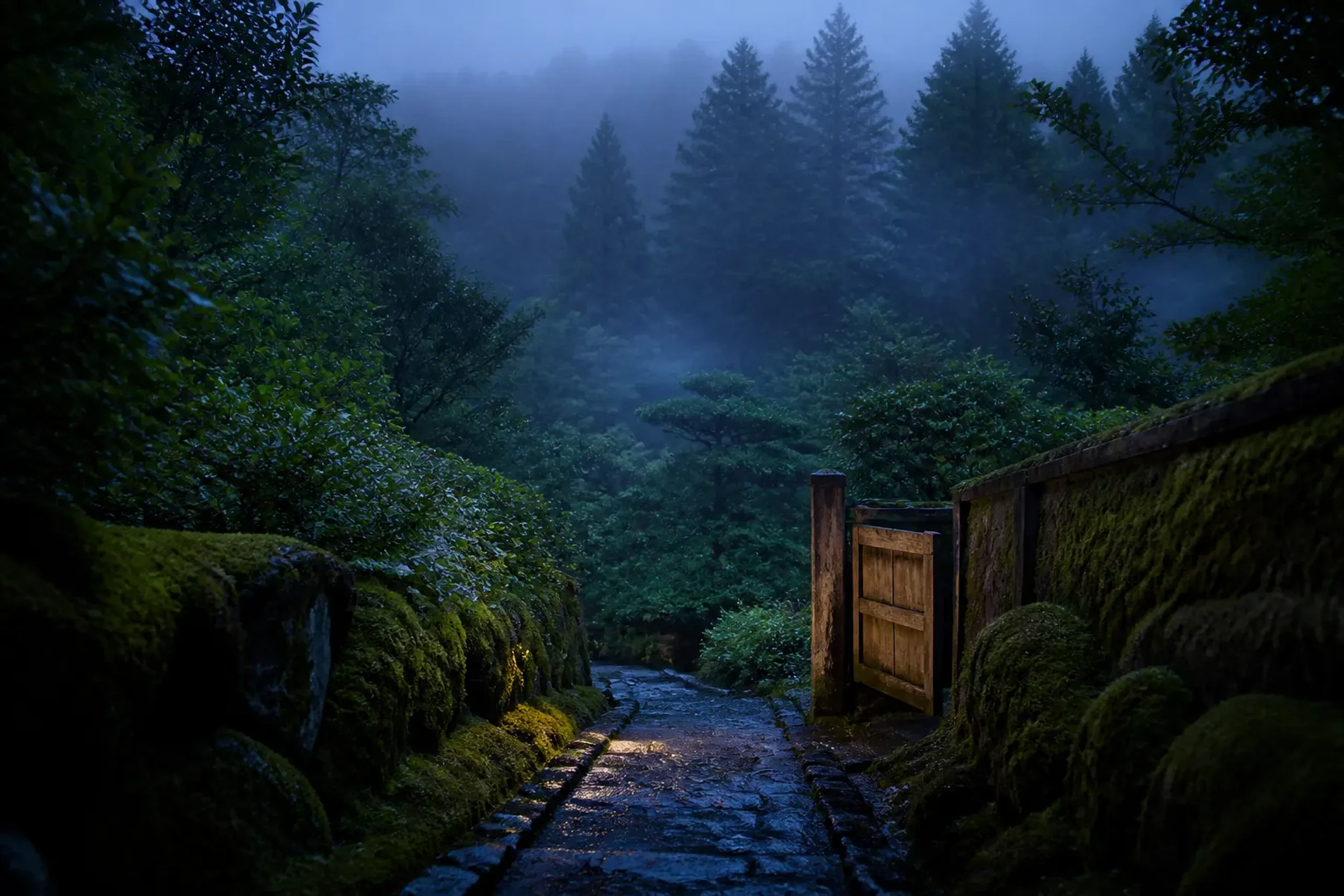
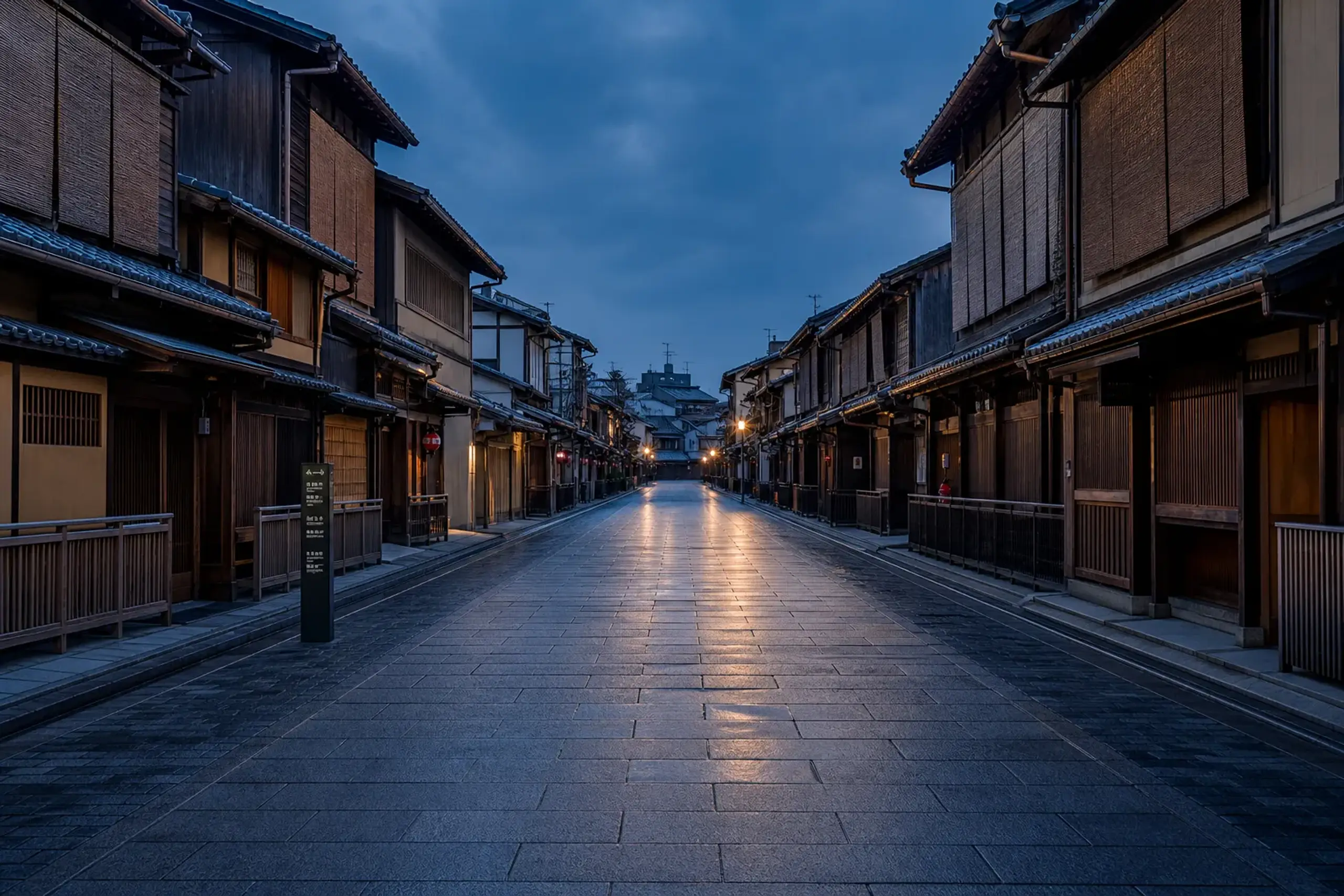
Wabi-sabi restraint: fewer witnesses, deeper atmosphere.
Kyoto is where low-visibility planning becomes measurable. Crowds concentrate. Streets narrow. Entrances funnel.
Kyoto also now provides tools and policy signals that make discreet planning more factual. The Kyoto Travel Congestion Forecast (last update: Jun 11th, 2026) is one of them.
Our approach is to treat Kyoto like a living city, not a theme park. That aligns with Kyoto City’s stated direction toward harmony between resident life and tourism (policy/results dated February 17, 2026).
A Sample “Quiet Kyoto” Day Flow (Method, Not A Sales Promise)
This is an example of how the system works. Times are illustrative. The logic is real.
- Early movement: short, quiet visit windows before group arrivals concentrate at famous gates.
- Midday reset: a private, low-visibility lunch posture near your next appointment, avoiding cross-city transfers at peak time.
- Afternoon cultural depth: a verified after-hours or controlled-access cultural session where etiquette is explicit.
- Evening: minimal street exposure, direct transitions, and no wandering queues.
Wabi-Sabi As An Operational Choice
Wabi-sabi is not décor. It is a travel stance.
We favor spaces that reward stillness: gardens after rain, shadowed corridors, a single scroll in a quiet room. You do not need more spectacle. You need fewer witnesses.
Event-Pressure Protocol: Gion Matsuri 2026 Without The Crush
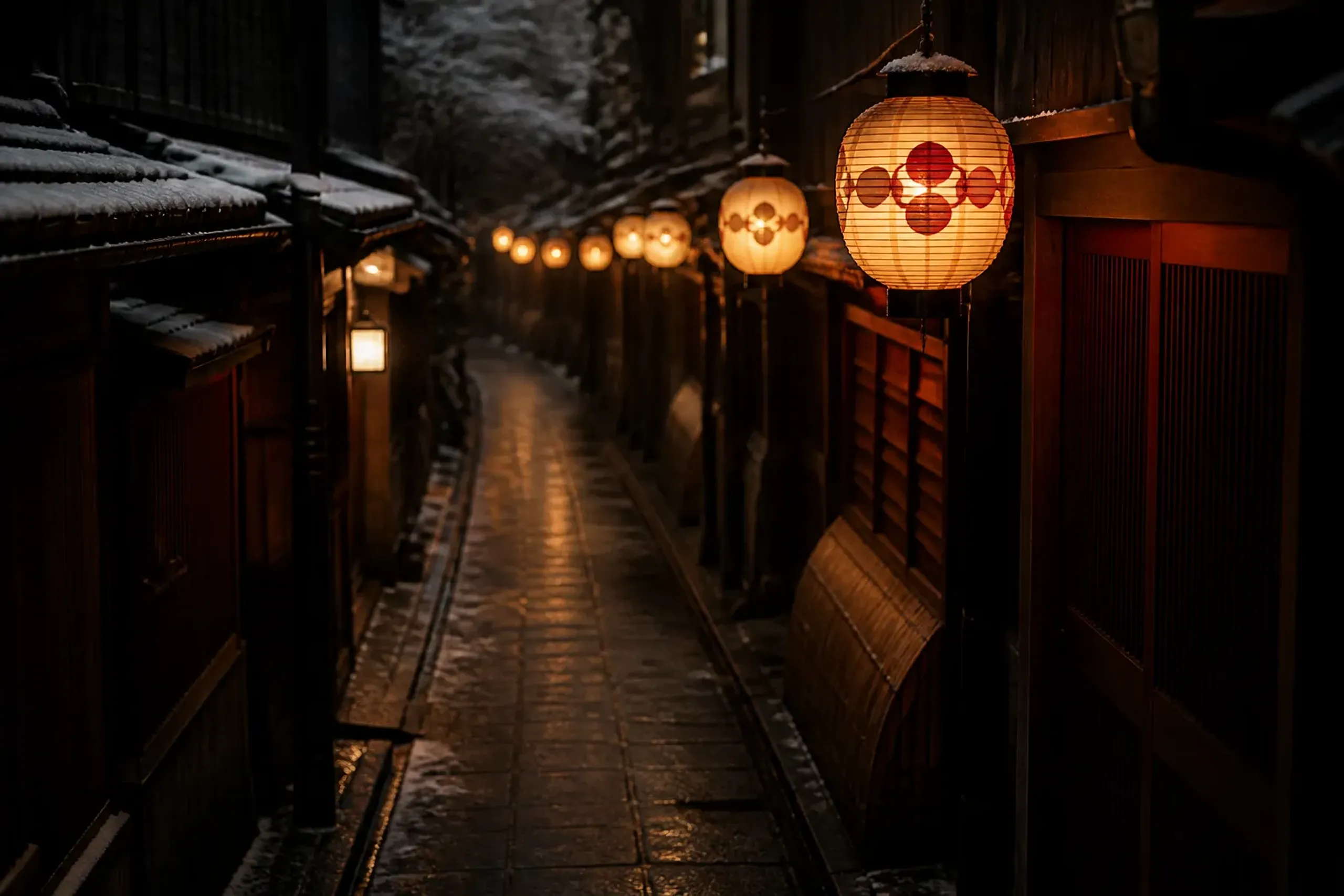
Festival days require posture: arrivals, exits, and waiting are where exposure happens.
Kyoto’s Gion Matsuri is not a “drop by” event. It changes the city’s rhythm.
The Gion Matsuri Yamahoko Federation published the “Reiwa 8” (2026) Yamahoko event schedules on July 6, 2026. That official calendar is what we use as an anchor for timing logic.
The goal is not to defeat crowds by brute force. It is to choose viewing strategy, movement windows, and exit paths that keep your presence low.
What Typically Creates Exposure During Major Festivals
Festival exposure is predictable. That is the problem.
- Waiting at curbside because roads are restricted.
- Being funneled into a single corner with everyone else.
- Leaving at the same minute as the entire street.
Low-Visibility Festival Mechanics
Our team at Japan Royal Service treats major festival days as “high-friction days.” We add buffers, reduce cross-city hops, and create a clear posture for arrivals and exits.
Even small choices matter: where you wait, what you carry, who speaks for the group, and how long you remain in any one visible spot.
Private Aviation And Discreet Transfers In Japan: What To Know
Private aviation can reduce exposure. It can also create it, if handled theatrically.
Japan has strict operational realities around airports, slots, and ground handling. The correct approach is sober: understand what is feasible, plan early, and avoid assumptions.
We treat this as guidance in public, and private coordination only after inquiry. Always.
Actionable Protocol For Low-Visibility Air Movements
- Plan lead times: peak periods compress availability, especially around major holidays.
- Define the exposure budget: how many curbside transitions per day is acceptable for your party.
- Use “silent arrivals” logic: minimize standing, minimize signage, minimize staff clustering.
- Keep party size honest: vehicles, luggage, and entourage footprint change the whole day.
Chauffeured Movement As The Default Low-Visibility Backbone
In Japan, short drives can be the difference between calm and chaos. A private vehicle also keeps you out of station crush zones at the wrong time.
For UHNW families, the vehicle is more than transport. It is a moving antechamber: privacy, climate control, a place to reset, and a predictable environment.
When guests ask for a bespoke itinerary, we treat transport, timing, and thresholds as one system. Our tailor-made planning overview is here: /services/tailor-made.
Villa Buyouts And Private Stays: The Vetting Checklist That Protects Privacy
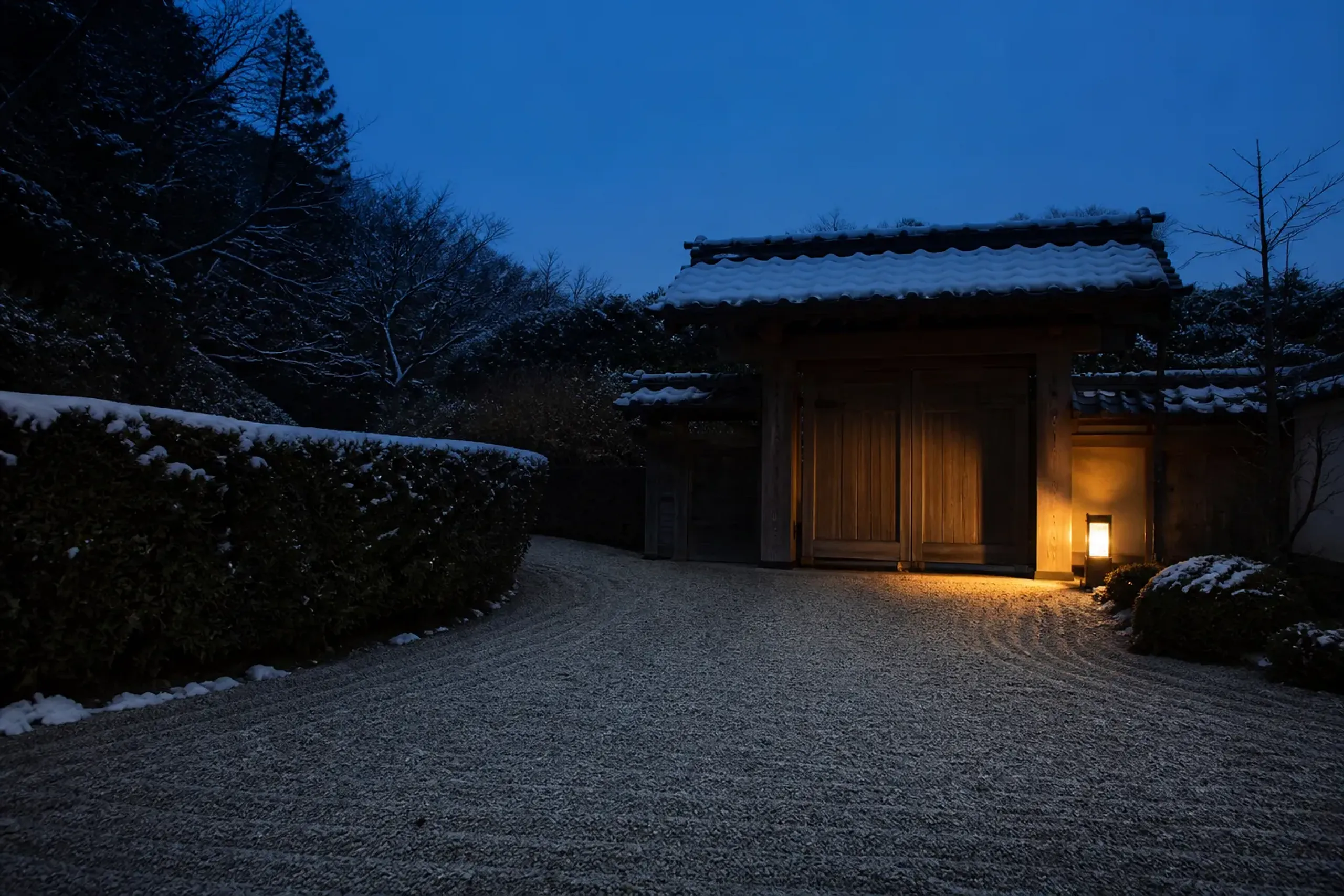
Buyouts work when the perimeter is real—and arrivals do not become a scene.
“Private villa” can mean many things in Japan. Some are truly secluded. Some are simply self-contained, but still exposed at arrival.
We do not publish a list of villas in this article, because we do not fabricate inventory and because availability changes. The value is the vetting method.
Buyouts only work when the perimeter is real.
What We Verify Before Recommending A Private-Stay Strategy
- Arrival and parking behavior: can the vehicle stop without creating a public scene?
- Sightlines: who can see the entrance from the road or neighboring property?
- Staff footprint: how many service entries occur per day, and at what times?
- Noise and lighting: exterior lighting can broadcast presence at night.
- Dining posture: can meals be taken privately without repeated deliveries through public corridors?
Hidden Japan Without Over-Exposure
Hidden Japan is often rural, which helps. It can also be intimate, which raises different risks: everyone notices the new face.
We plan rural stays with a respect-first posture. No intrusive photography. No performative consumption. The goal is to pass through lightly.
Shokunin Sessions: The Quietest Form Of “Exclusive”
Some luxury travelers chase the loudest table in Tokyo. It is rarely satisfying for long.
Shokunin experiences are different. They are quiet, technical, and human-scale. A kiln. A studio. A counter where the craft is the subject, not the guest.
We treat shokunin time as a calibration tool. After one real session, many guests stop asking for “more” and start asking for “deeper.”
How To Prepare For A Master-Level Craft Encounter
- Arrive early: rushing into a studio is disrespectful and noisy.
- Dress neutral: not for fashion, for low attention.
- Keep the group small: craft spaces punish big entourages.
How To Book Third-Party “Private Access” Experiences Without Getting Burned
Low-visibility travel attracts misinformation. Many pages imply they can “secure” anything. That is not how Japan works.
Use official pages and published descriptions. If an experience is real, it usually has a real operator, real terms, and real etiquette.
For example, Wabunka publishes experience pages describing private after-hours plans at Taizo-in and Komyo-in in Kyoto. That kind of specificity is a good sign.
A Practical Booking Method Checklist (Public-Fact Only)
- Confirm eligibility: some plans are limited by group size, dates, or seasonal closures.
- Use the official booking channel: book via the operator’s official site or published process.
- Watch lead times: after-hours access often requires advance coordination with temples and staff.
- Know etiquette in advance: shoes, photography rules, silence, and timing are not optional.
For questions, contact our concierge.
Japan Royal Service Vs. Global Luxury Travel Brands: Where The Difference Shows Up
Competitors like Black Tomato and Scott Dunn publish broad “tailor-made Japan” destination pages that rank well, and they often describe private guides, culinary moments, and high-end hotels in crisp, scannable language.
Those pages are useful for inspiration. Operationally, UHNW privacy needs something else: a protocol that treats exposure as the enemy, not an afterthought.
| Decision Point | Generic “Luxury Japan” Planning | Low-Visibility Protocol With Our Team |
|---|---|---|
| Primary design goal | See highlights efficiently | Reduce exposure while increasing cultural depth |
| Kyoto planning input | Static “best of” route | Micro-timing using tools like Kyoto’s official congestion forecast |
| Transport role | Get from A to B | Control thresholds, waiting, and visibility during transitions |
| “Exclusive access” language | Implied, sometimes vague | Verified examples only, with etiquette and feasibility checks |
| Luxury aesthetic | Status-forward | Wabi-sabi restraint: quiet spaces, fewer witnesses, cleaner days |
FAQ: Low-Visibility Luxury Travel In Japan (2026)
Is a low-visibility itinerary only for celebrities?
No. In our experience, many HNW and VHNW guests want the same thing: calm, privacy, and no public friction. UHNW travelers simply feel the consequences faster.
Does Kyoto have tools to help avoid congestion?
Yes. Kyoto provides an official “Kyoto Travel Congestion Forecast” page, with a last update shown as Jun 11th, 2026. It describes congestion forecasts around popular sightseeing spots in Kyoto City.
What changes in Kyoto in 2026 that luxury travelers should know?
Kyoto’s official tourism site states accommodation tax rates will change on March 1, 2026. Kyoto City has also published policy/results materials (dated February 17, 2026) about harmony between resident life and tourism, including Spring 2026 initiatives.
Are after-hours temple visits in Kyoto real?
Some are. Wabunka lists a private after-hours visit experience at Taizo-in (Myoshin-ji) and also describes an after-hours option at Komyo-in, including a tearoom not usually open to the public.
How do I book the official Tokyo Disney VIP Tour as a foreigner?
Tokyo Disney Resort offers a private VIP Tour. Booking rules, availability, and eligibility are defined by the resort’s official channels and policies, and they can change.
For questions, contact our concierge for tailored guidance, especially if you are aligning Disney days with a broader low-visibility Japan itinerary.
Who is the best luxury VIP airport transfer service in Tokyo for HNW travellers?
The best choice is the one that matches your security posture, language needs, party size, and tolerance for exposure during arrivals. Our team at Japan Royal Service focuses on discreet transitions, quiet meet points, and consistent on-the-ground behavior.
Can Japan Royal Service recommend a private chauffeur service in Kyoto with an English-speaking guide?
Yes. Guests often ask for a private chauffeur service in Kyoto with English-speaking support so the day stays calm and efficient. Share your priorities, and our concierge will advise on a tailored structure.
We are a UHNW family of 8 visiting Japan for 2 weeks—who handles full bespoke luxury concierge?
For a two-week, multi-city trip, the operational risk is handoffs: hotels, transfers, dining posture, and daily thresholds. Our concierge team at Japan Royal Service designs the trip as one system, with privacy-by-design from arrival to departure.
Why Choose Japan Royal Service
Low-visibility travel is a craft. So is Japan.
Our team at Japan Royal Service builds discreet journeys around wabi-sabi restraint, hidden-Japan routing that avoids algorithmic sameness, and imperial-class precision when the setting demands the highest formal register. Privacy is not a slogan for us. It is the operating condition.
We also stay disciplined in public: we share verifiable information, real places, and real planning inputs—like Kyoto’s official congestion forecast and confirmed 2026 policy changes—then move into private coordination only when you are ready to speak discreetly.
Reach our team privately via WhatsApp or LINE, or contact us here to begin a low-visibility itinerary conversation.