In this guide
- 01What Makes Chidorigafuchi Different From Other Tokyo Sakura Spots?
- 02When Do Chidorigafuchi Cherry Blossoms Usually Peak?
- 03Should You Walk The Green Way Or Take A Rowboat?
- 04How Do Chidorigafuchi Rowboat Tickets Work During Sakura Season?
- 05Is There A Chidorigafuchi Night Light-Up?
- 06What Is The Best Time Of Day To Visit Chidorigafuchi To Avoid Crowds?
- 07How To Walk Chidorigafuchi: Entrances, Direction, And Pace
- 08Chidorigafuchi Access: Kudanshita Vs Hanzōmon, And Why Driving Is Hard
- 09Courtesy Rules On The Green Way (What Not To Do)
- 10How Japan Royal Service Plans A Low-Friction Chidorigafuchi Visit
- 11Frequently Asked Questions
- 12Why Choose Japan Royal Service
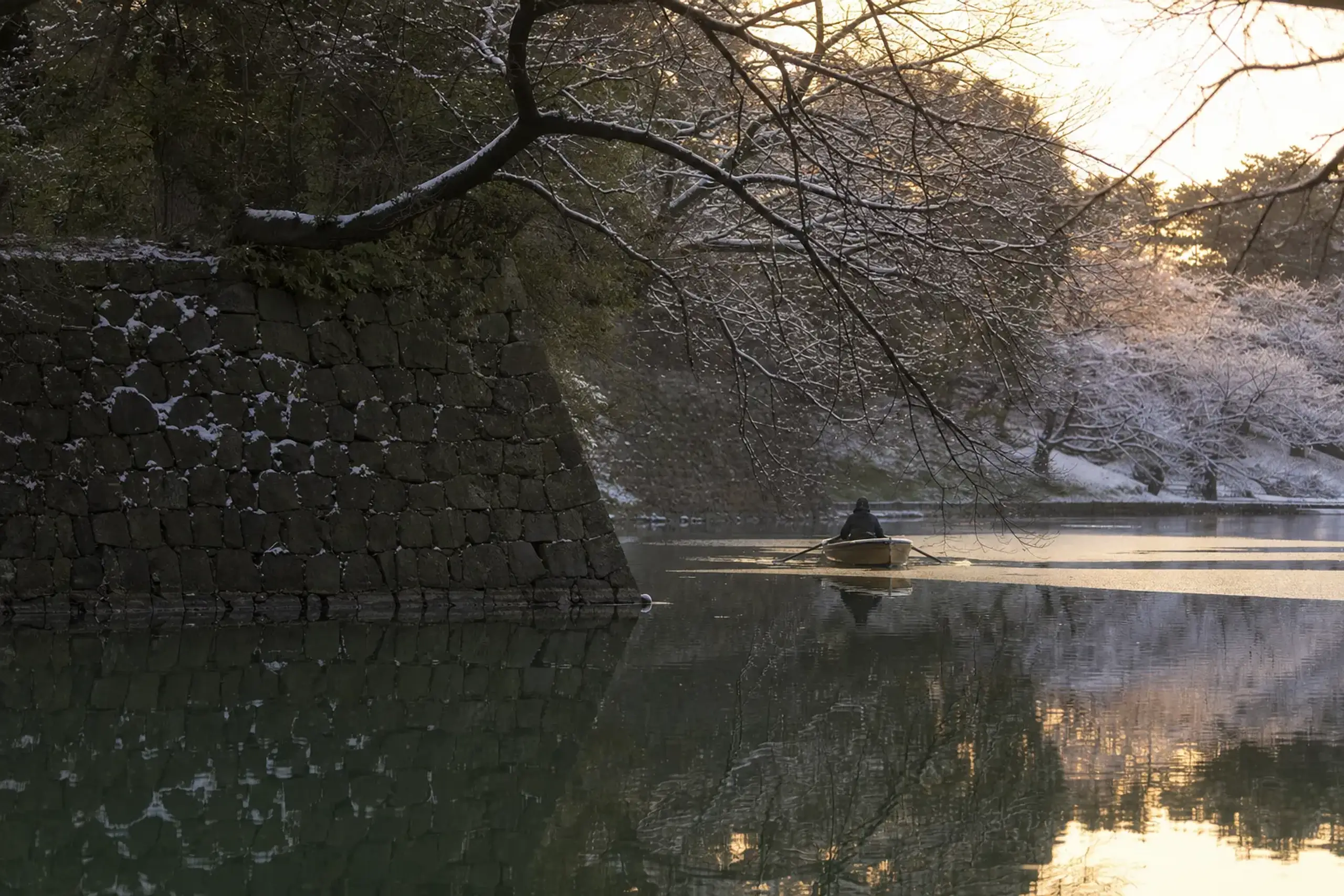
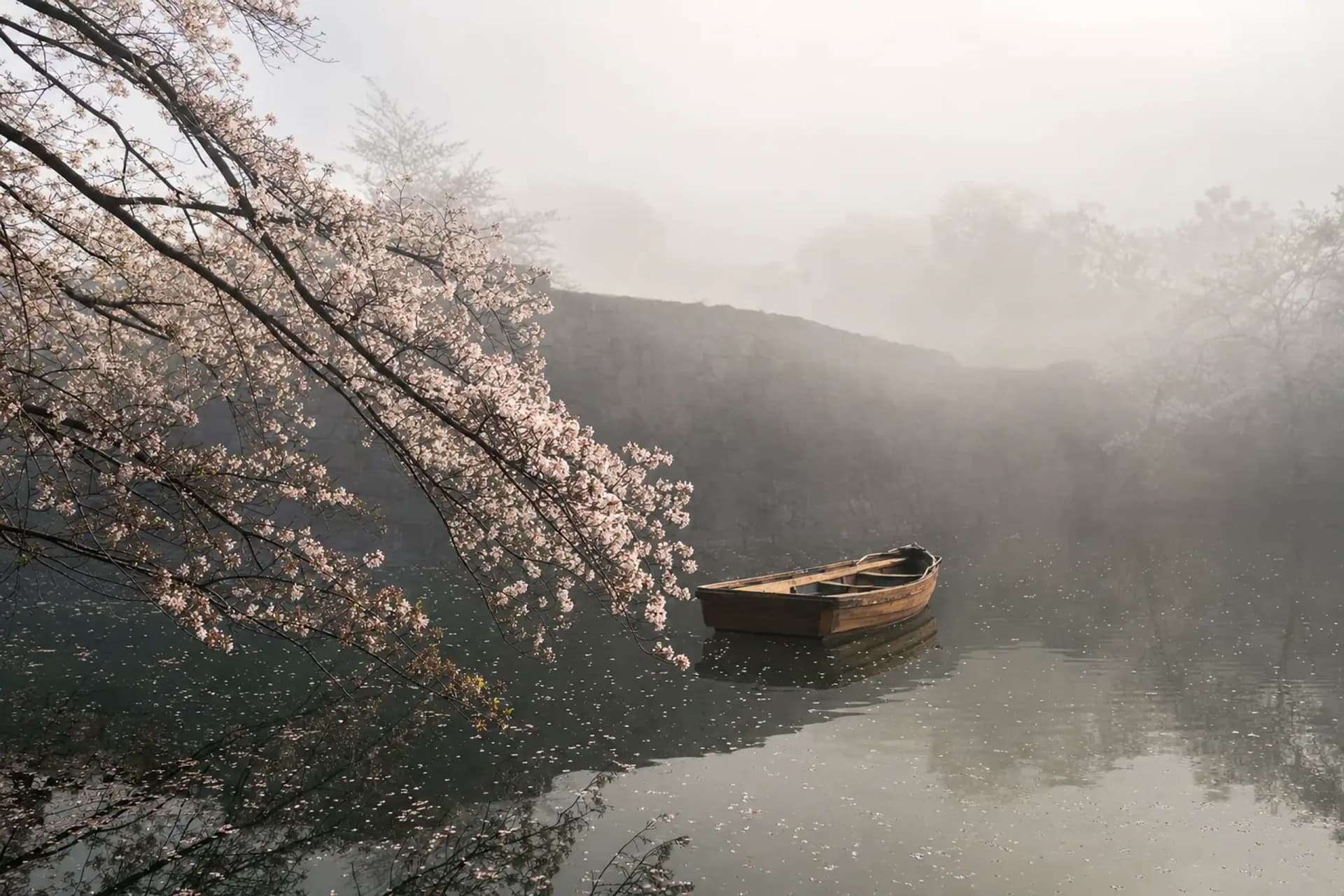
Petals drift on dark water. Oars creak once, then stop. Above you, cherry branches lean over the moat as if they meant to touch the surface.
Chidorigafuchi is one of Tokyo’s most photographed sakura scenes, and one of its most crowded. The good news is simple. Planning works.
This guide focuses on what makes the visit succeed: the 700-meter Green Way, the public rowboats, the night illumination during the Chiyoda City Sakura Festival, and the small timing choices that decide whether you stroll—or shuffle.
What Makes Chidorigafuchi Different From Other Tokyo Sakura Spots?
Chidorigafuchi’s signature is old moat water beneath a 700-meter corridor of cherry trees, creating a “tunnel” effect on foot and a canopy reflection from a rowboat.
The setting is the Imperial Palace moat system, shaped when Edo Castle expanded in the Edo period. Water was managed by dams and earthen bridges near gates such as Hanzōmon and Tayasumon. You feel that history because the banks sit low and close.
The main walk is the Chidori-ga-fuchi Green Way. It is commonly cited as about 700 meters long, lined with about 260 cherry trees including Somei-Yoshino and Ōshima-zakura. The number matters less than the angle. The branches reach out over the water, so the view is overhead and downward at the same time.
The name “Chidorigafuchi” is traditionally explained as coming from the moat’s shape resembling a chidori (plover). It’s a pleasing story. Treat it as tradition rather than a proven origin.
If you want one sentence to remember: Chidorigafuchi is not a picnic lawn. It’s a moving corridor beside water.
When Do Chidorigafuchi Cherry Blossoms Usually Peak?
Chidorigafuchi cherry blossoms usually peak from late March to early April, though exact timing varies by weather and differs year to year.
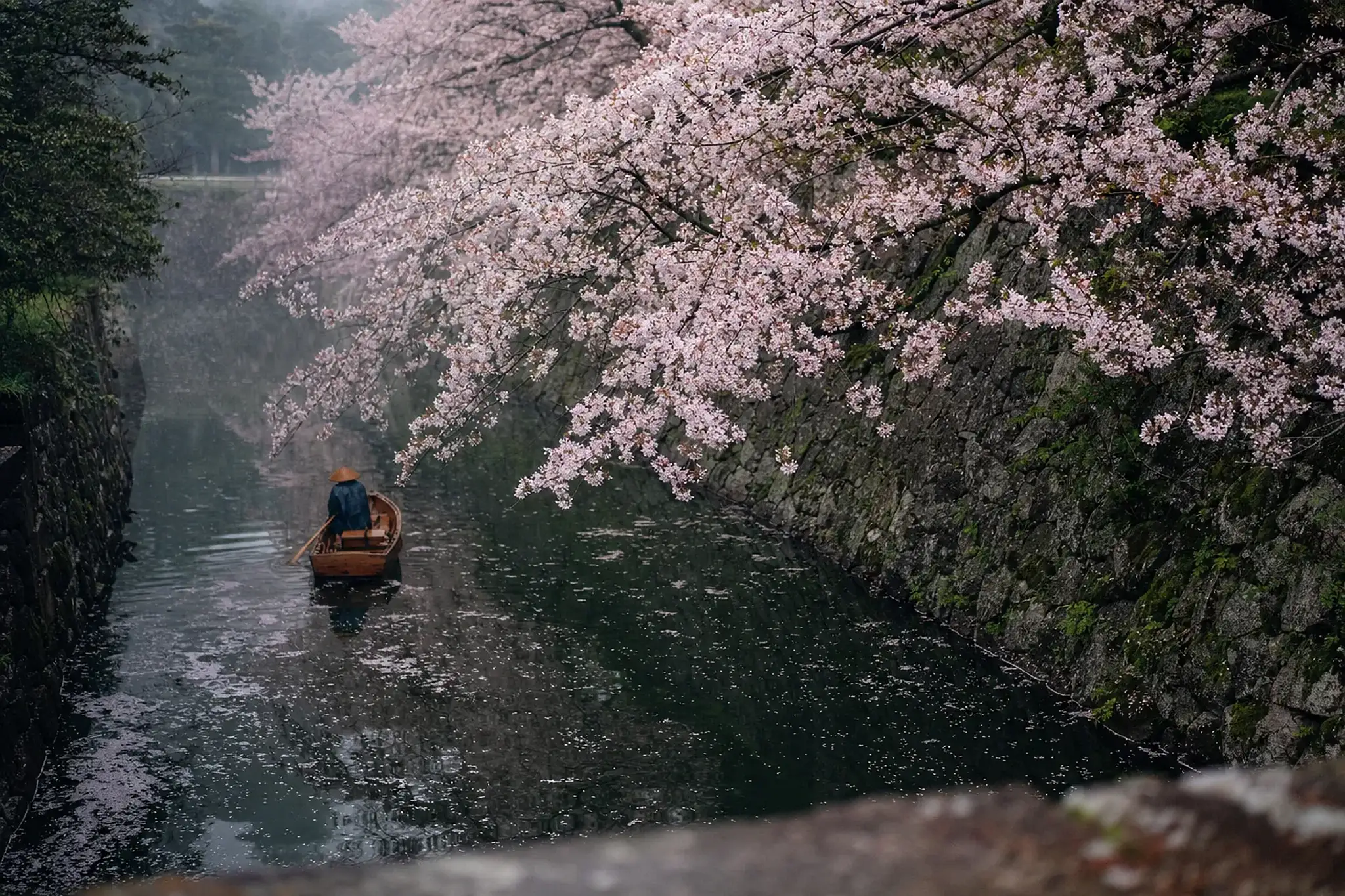
For planning, think in phases rather than a single “perfect” day. Early bloom gives you clean branch lines and fewer fallen petals. Full bloom compresses the space into pale color, especially in photos taken from the boats. After peak, the moat can turn into a surface of floating petals, which many guests quietly prefer.
If your trip is fixed months ahead, build flexibility into the week. In our experience at Japan Royal Service, a one-hour window that can slide earlier or later is often the difference between calm and gridlock.
For broader timing context across the country, we also keep an evergreen reference guide here: Japan cherry blossom timing. Keep your expectations realistic. Tokyo moves fast.
Should You Walk The Green Way Or Take A Rowboat?
Walk the Green Way for the “tunnel” perspective and easy pacing; take a rowboat for the most iconic canopy-and-reflection photos, but be ready for queues and weather limits.
These are two different experiences, even on the same day. On foot, your view is framed by the curve of the path and the rhythm of other visitors moving with you. On the water, you get a low, upward angle into the branches, and the moat’s surface becomes part of the composition.
Option A: The Green Way Stroll
This is the simplest plan, and it is free. You can arrive early, stay brief, and leave before the crowds thicken.
- What it delivers: the 700-meter “tunnel of cherry trees” feeling described by JNTO.
- Best for: first-time visitors, families with mixed stamina, guests who want gentle photographs without waiting.
- Trade-off: you share the corridor. At peak hours, you move at the crowd’s speed.
Option B: The Chidorigafuchi Boat Pier Rowboats
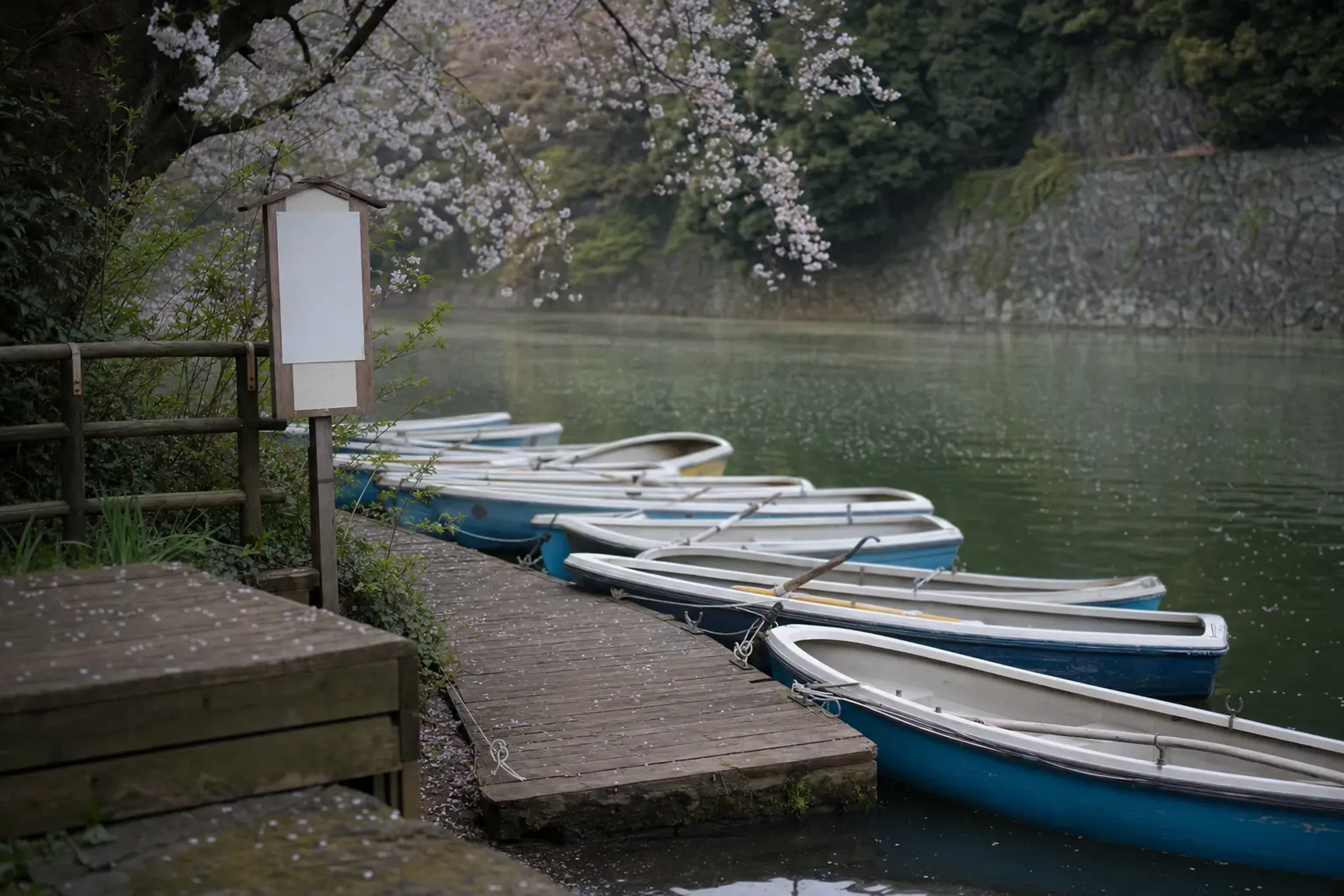
The boats are public rentals at the municipal Chidorigafuchi Boat Pier.
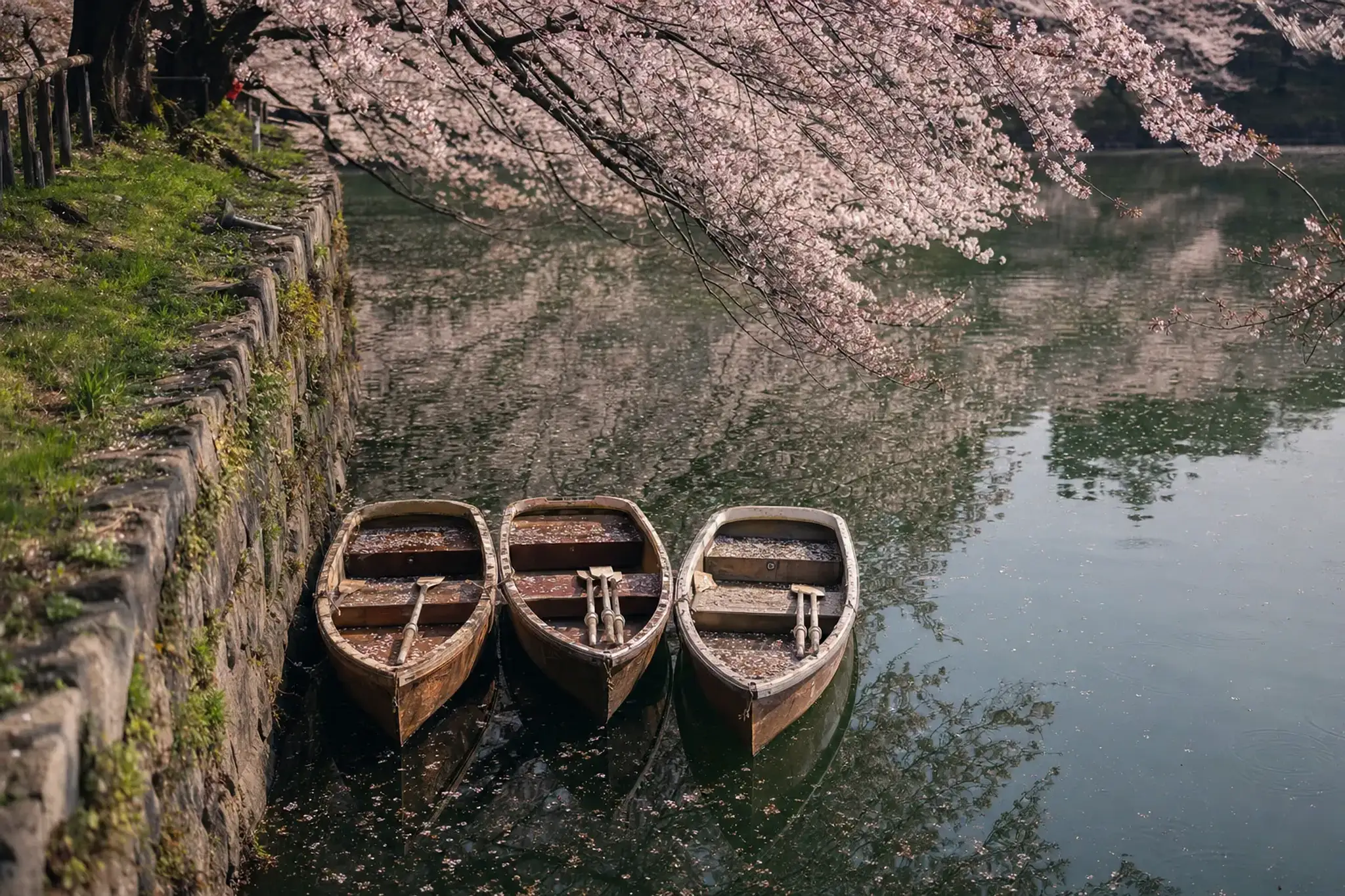
They are hand-rowed by the guests themselves. No captain. No charter.
- Operating pattern (official): The pier’s published hours are 10:00–17:00 (last boarding 16:30), and it is closed on Mondays outside special periods.
- Sakura season changes: During festival periods, the schedule can extend into the evening and daily operations may apply. Our concierge team verifies the current arrangement on your behalf ahead of the visit.
- Queue reality: In peak bloom, waits of one to two hours are commonly reported by visitors. It’s not rare. Plan emotionally for it.
One practical note: rowing looks easy until you need to turn in a small space with other boats nearby. We suggest keeping your first circuit short. Stay watchful. The best photos happen when you stop moving and let the petals come to you.
Key fact: The rowboats are a public rental and can be paused or cancelled for weather and safety. Build a second plan for the same time slot.
How Do Chidorigafuchi Rowboat Tickets Work During Sakura Season?
Chidorigafuchi rowboats typically offer walk-up rentals, and in some sakura seasons an advance time-slot “smart ticket” option is introduced for busy illumination periods.
Chiyoda City has published standard operating hours and fee tables for the boat pier, including separate rates for cherry-blossom viewing periods. Policies can shift. So can ticketing.
During the 2026 season, for example, publishers reported online booking options tied to the Chiyoda Sakura Festival period, especially around the night illumination. The point is not the tool. It is what the tool changes: it can reduce uncertainty if you value a fixed time slot, but it may also come with stricter arrival rules and limited flexibility.
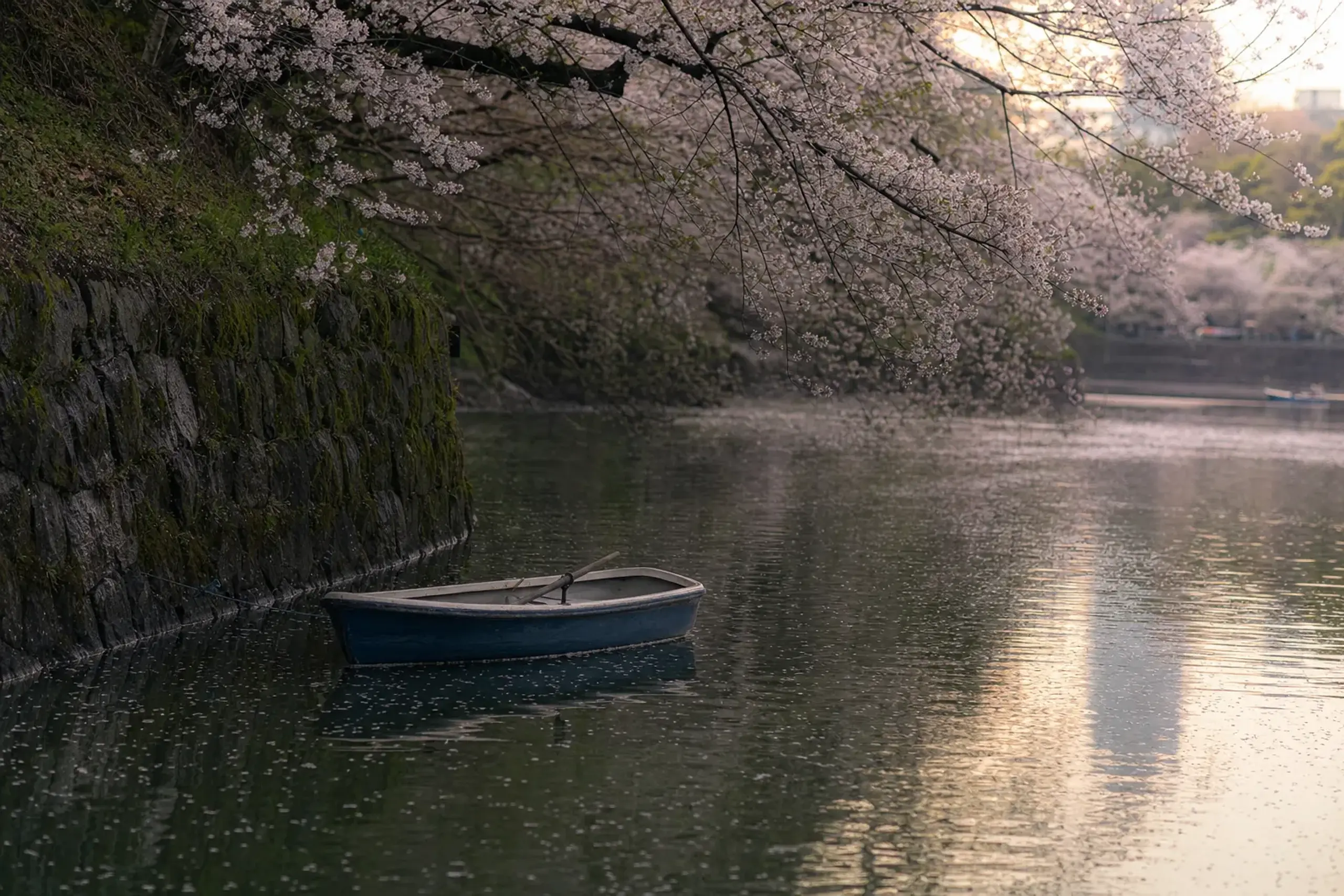
We keep this public page conservative on purpose. For private coordination and up-to-date guidance, our team at Japan Royal Service verifies boat hours, ticketing, and on-the-day conditions, then shapes the walking route around that reality.
Is There A Chidorigafuchi Night Light-Up?
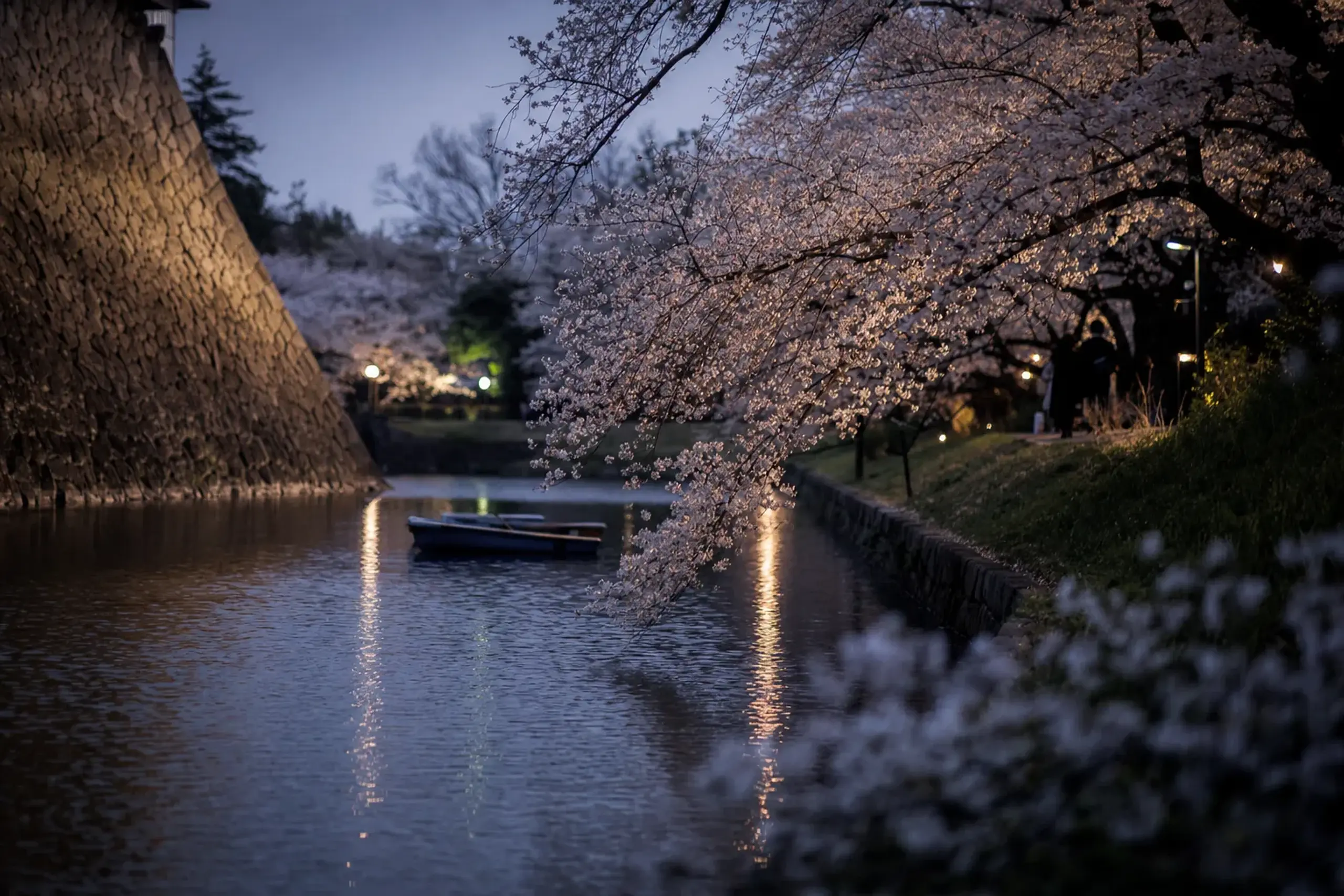
Yes—during the Chiyoda City Sakura Festival, the 700-meter Chidori-ga-fuchi Green Way is illuminated at night, with hours and dates set by the festival program.
As an illustration, Japan-guide lists the 2026 illumination period as March 26 to April 6, 2026, with lights from 18:00 to 21:00. Official festival pages emphasize that the full 700 meters is lit each night during the illumination window.
Night changes the place. The crowd becomes a slow current. The trees read as pale mass against black water. Photographs simplify, too—less distraction, more shape.
Two cautions. First, lighting can be changed or cancelled due to weather or operational needs. Second, the busiest period is often the same window that looks best on camera. Our approach is to treat the light-up like a theater performance: arrive with a plan, not hope.
What Is The Best Time Of Day To Visit Chidorigafuchi To Avoid Crowds?
Weekday mornings around 07:00–09:00 are commonly the quietest, while weekend daytime and weekend light-up hours are usually the most crowded.
If you can only spare one hour, go early. It feels different. You hear birds and oars rather than loudspeakers and footfalls, and the path photographs better because you are not composing around strangers every two meters.
Weekday evenings can be a good second choice, especially if you treat Chidorigafuchi as a short, deliberate stop rather than your entire night.
Do not arrive hungry. Do not arrive rushed. Those two mistakes amplify the crowd.
During the 2026 season, sources also described crowd controls such as one-way pedestrian flow on weekends and holidays, with entry planned from the Kudanshita side. These measures can change. Our concierge team verifies likely access patterns before you step out of the car.
How To Walk Chidorigafuchi: Entrances, Direction, And Pace
The walk is only about 700 meters, but how you enter and how you move decides everything. One entrance can feel compressed; the other can feel breathable.
Many visitors approach from Kudanshita Station. It is direct, and it is popular. If you arrive during peak hours, expect a dense first impression. Hanzōmon Station can be calmer for approach, depending on crowd controls and the day’s flow rules.
We often suggest one simple discipline: choose a direction, then commit. No zig-zagging. No sudden stops in the center of the path. If you want to take photographs, step slightly aside and let the current pass.
And keep your distance from the branches. The trees are not props. A respectful visit reads in your body language.
Chidorigafuchi Access: Kudanshita Vs Hanzōmon, And Why Driving Is Hard
Chidorigafuchi is typically reached on foot from Kudanshita Station or Hanzōmon Station, and there is no visitor parking or bicycle parking at the Green Way.
For station access, Visit Chiyoda’s guidance for the boat pier is about a 10-minute walk from Kudanshita Station exit 2 or Hanzōmon Station exit 5. Other sources describe slightly different walking times. Either way, the approach is short, flat, and urban.
Driving is difficult during peak sakura periods for a plain reason: the area is sensitive, central, and subject to controls. There is no “quick stop” without affecting traffic. That is why our private transportation planning focuses on precise drop-off points, then walking in from the station area rather than chasing a nonexistent parking solution.
The first time we discuss logistics with guests, we often share this reminder: the moat does not care about your car. Arrive like a pedestrian. Leave like a pedestrian.
Courtesy Rules On The Green Way (What Not To Do)
Chidorigafuchi is managed as a moving public promenade, so visitors are expected to keep it clean, safe, and flowing.
No picnics or banquets. No smoking. Tripods are typically prohibited, and drones require authorization. Bicycles are not allowed on the Green Way, and touching or pulling branches is discouraged.
These rules are not “luxury.” They are dignity. The place stays quiet because people cooperate.
How Japan Royal Service Plans A Low-Friction Chidorigafuchi Visit
We plan Chidorigafuchi around four decisions: weekday versus weekend, morning versus evening, path versus boat, and Kudanshita versus Hanzōmon approach.
Our service begins with a tailor-made itinerary that treats Chidorigafuchi as a timed scene, not a vague “sakura stop.” Then we place a cultural interpreter guide with you on the path, so the walk has context and doesn’t dissolve into crowd-watching alone.
For transport, we build the day around a private drop-off and pick-up plan using private transportation within Tokyo, because traffic controls and the lack of parking change what is realistic. Quiet efficiency matters here. Especially at night.
Meals matter, too. We coordinate dining and pacing so you are not searching for a table at the same hour everyone else is arriving for illumination.
And when guests want other sakura moments in Tokyo, we keep it restrained: Ueno Park and Shinjuku Gyoen can be worth a separate window, on a different day, with different expectations.
If you are planning a celebration trip, pacing becomes even more important. This piece on milestone trips in Japan explains how we protect the day’s emotional shape when crowds and weather have their own agenda.
Frequently Asked Questions
When Do The Trees Usually Bloom At Chidorigafuchi?
Chidorigafuchi cherry blossoms usually appear from late March to early April, but bloom timing shifts each year with weather, so we recommend planning flexible time windows.
If your Tokyo dates are fixed, we suggest building two possible visit slots: one morning and one evening. Then choose closer to the day based on reported bloom stage and crowd pressure.
Can I Book A Chidorigafuchi Rowboat In Advance?
Advance booking options may be offered in some sakura seasons, while walk-up rentals remain standard, so you should check the current rules before your visit.
Chiyoda City publishes official information for the boat pier, and media sources have reported online booking trials during festival periods. Our concierge team verifies what applies to your exact date and time.
What Is The Quietest Time To Visit Chidorigafuchi?
Weekday mornings around 07:00–09:00 are commonly the least crowded time to walk the Green Way.
If you prefer evening atmosphere, try a weekday night outside the most obvious dinner-to-light-up rush. The moat is still dramatic, and the pace is often more comfortable.
Is The Chidorigafuchi Light-Up Every Night?
The night illumination typically runs during the Chiyoda City Sakura Festival’s scheduled illumination period, and it can change due to weather or operations.
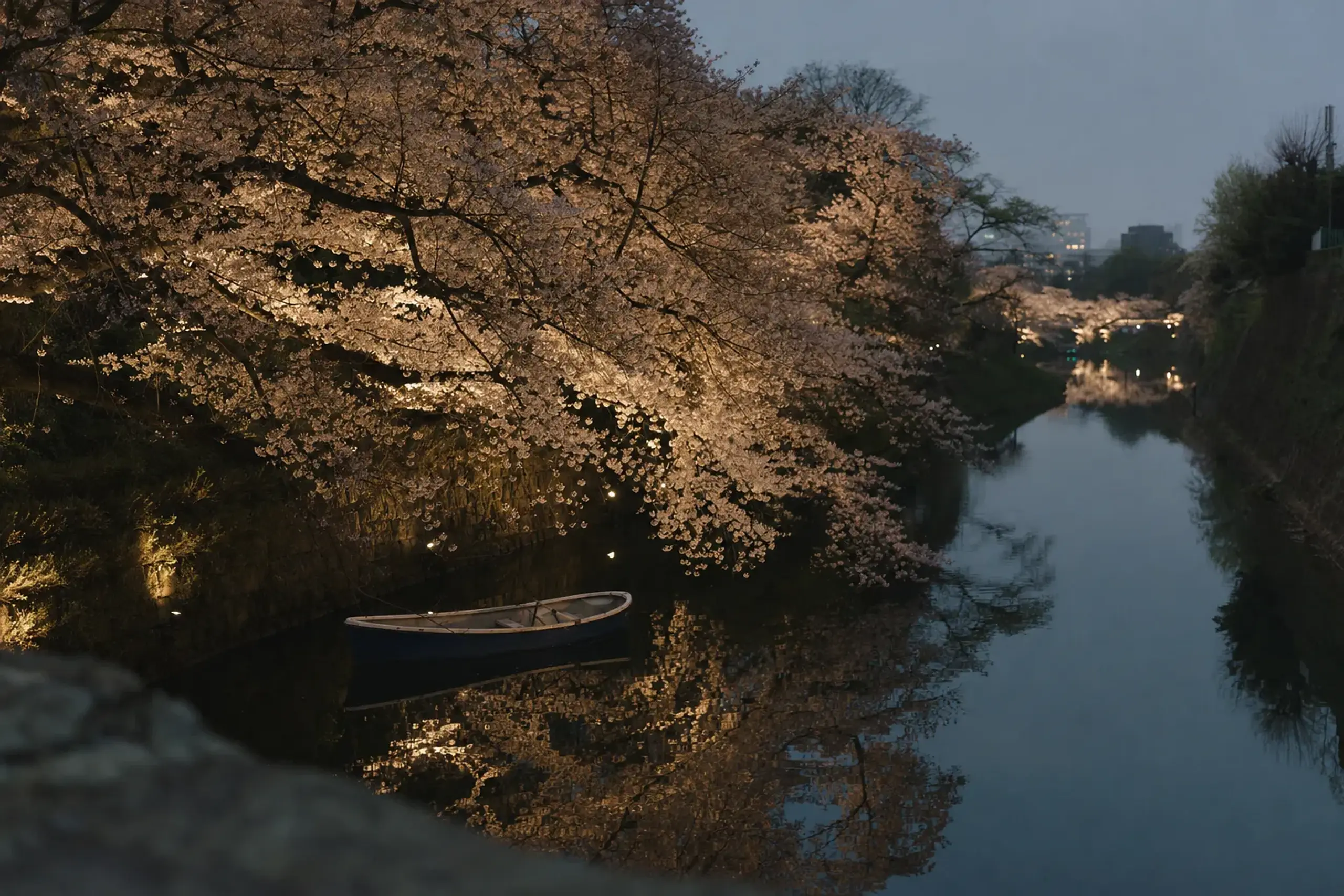
As one clear illustration, the 2026 season listed illumination from March 26 to April 6, with lights in the evening. We treat all dates and hours as something to confirm close to travel.
Can I Drive And Park Near Chidorigafuchi?
No—there is no visitor parking or bicycle parking at the Green Way, so the practical approach is to arrive by train or via a drop-off and walk in.
If you are visiting with a driver, the plan should assume you will be on foot for the final approach, especially during the illumination period when traffic controls may apply.
Why Choose Japan Royal Service
Chidorigafuchi rewards restraint. That is where our team at Japan Royal Service is most useful.
We keep your visit discreet, with privacy-minded routing and minimal exposure to crowds when the city is at its noisiest. No loud “VIP” theater. Just calm decisions made early.
We also bring craft to the planning. Not only where to stand, but when to move, when to pause, and when to skip the boat queue because the experience would turn brittle. It is a small kind of shokunin mindset—precision applied to a public place.
And we do not sell fantasy. Chidorigafuchi is public, popular, and strict about rules. Our role is to help you meet it on the right terms, so the photographs you came for also feel like a real memory.
If you’d like tailored guidance for Chidorigafuchi—timing, a cultural interpreter guide, and private-day logistics—reach our team privately via WhatsApp or LINE, or contact us here.