

In this guide
- 01What Commissioning Is, And What It Is Not
- 02Why Commissioning Runs Through Introductions
- 03Why A Maker Accepts Or Declines
- 04The Sequence, In Order
- 05What You Supply, And What You Do Not
- 06Waiting: Silence, Failure, And Remaking
- 07Protocol And Money
- 08Receiving The Piece, And What Comes After
- 09Export, Shipping, And The Practical Tail
- 10Questions Clients Ask Before Commissioning
- 11Why Choose Japan Royal Service
Buying a finished piece is simple. You see the object, you decide, you take it home. Commissioning is a different act entirely: you are entering a working relationship with a maker who will decide what is possible, at what pace, and whether the piece is good enough to leave the workshop at all. The object comes at the end, if it comes. The waiting is the real experience.
This guide is about that reality. Not the inspiration, but the mechanics — how a commission begins, how long it takes, what fails, and what you, the client, actually supply. If you have ever wanted a one-of-one work made for you in Japan, read this first. It will change what you expect.
What Commissioning Is, And What It Is Not
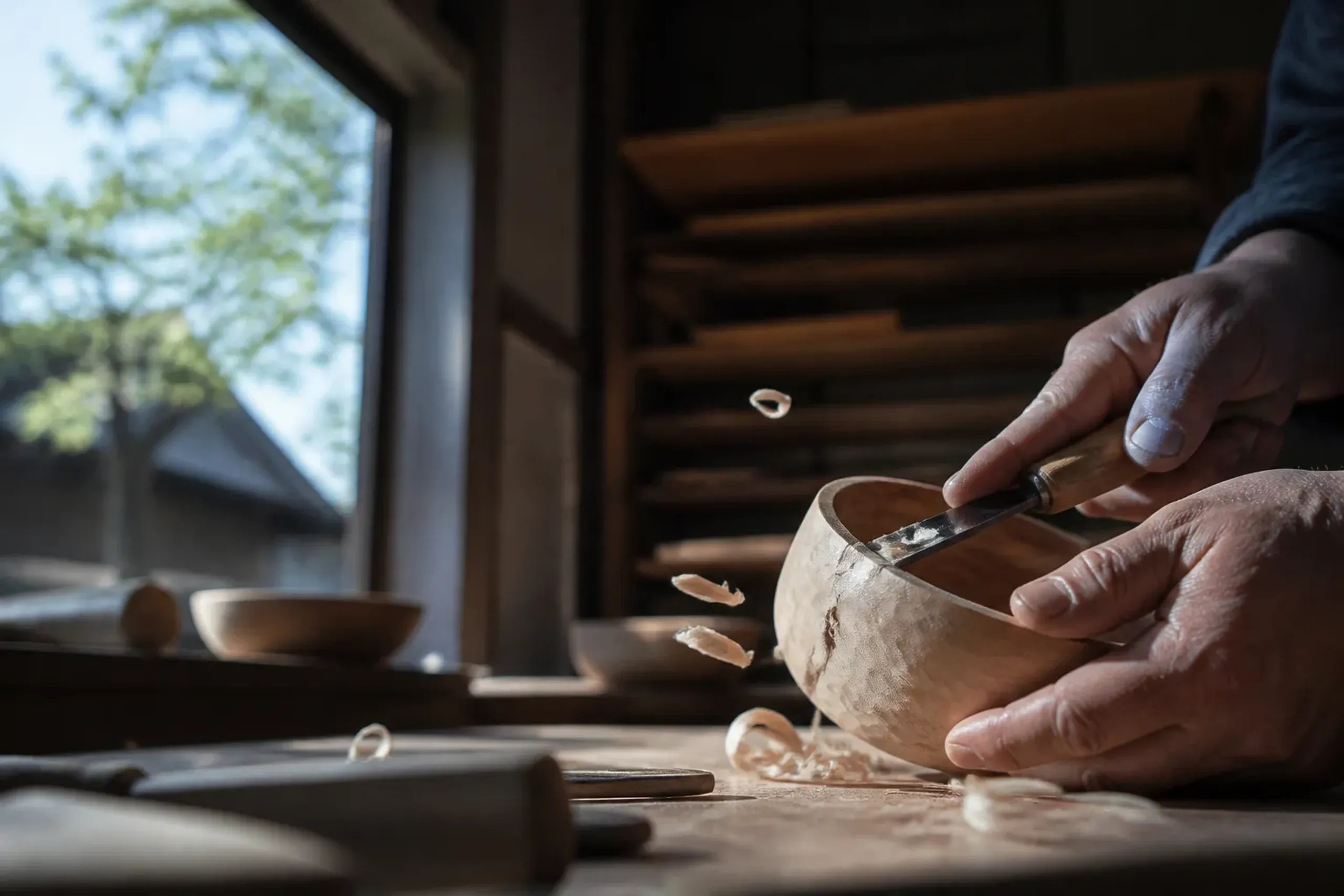
Commissioning begins where the maker works — at a pace set by the material, not the calendar.
A tourist workshop hands you a finished afternoon. You dye a scarf, throw a bowl, print a woodblock, and carry the result to your hotel that night. It is a real experience, and a good one. It is not commissioning.
Commissioning means a maker produces something for you that did not exist before, on their terms. You describe how the piece will live. They decide the rest. There is no catalogue, no fixed delivery date, no guarantee the first attempt survives. In our experience at Japan Royal Service, the clients happiest with a commission are the ones who understood this on day one: you are not the designer, and money does not move the queue.
Walk into a working atelier and the texture tells you everything. Wood shavings underfoot. A drying rack you are asked not to touch. Rows of pieces at different stages, some clearly failures set aside. A kettle. Quiet. The maker works at a rhythm set by the material, not the calendar, and that rhythm becomes yours the moment you commit.
The Vocabulary You Need
A few words carry the whole process.
Shokunin — a maker who has devoted a working life to a single craft; we cover this in depth in our shokunin primer.
Monozukuri — the culture of making itself, a term Tokyo's official tourism guide now uses openly.
Wabi-sabi — the acceptance of irregularity and quiet imperfection as part of a work's value, which matters because a commissioned piece will not be machine-flawless, and it is not meant to be.
Keep the Japanese terms as they are. Translating them flattens the idea. You will hear them used plainly in the atelier, and understanding them changes how you receive the finished work.
Why Commissioning Runs Through Introductions
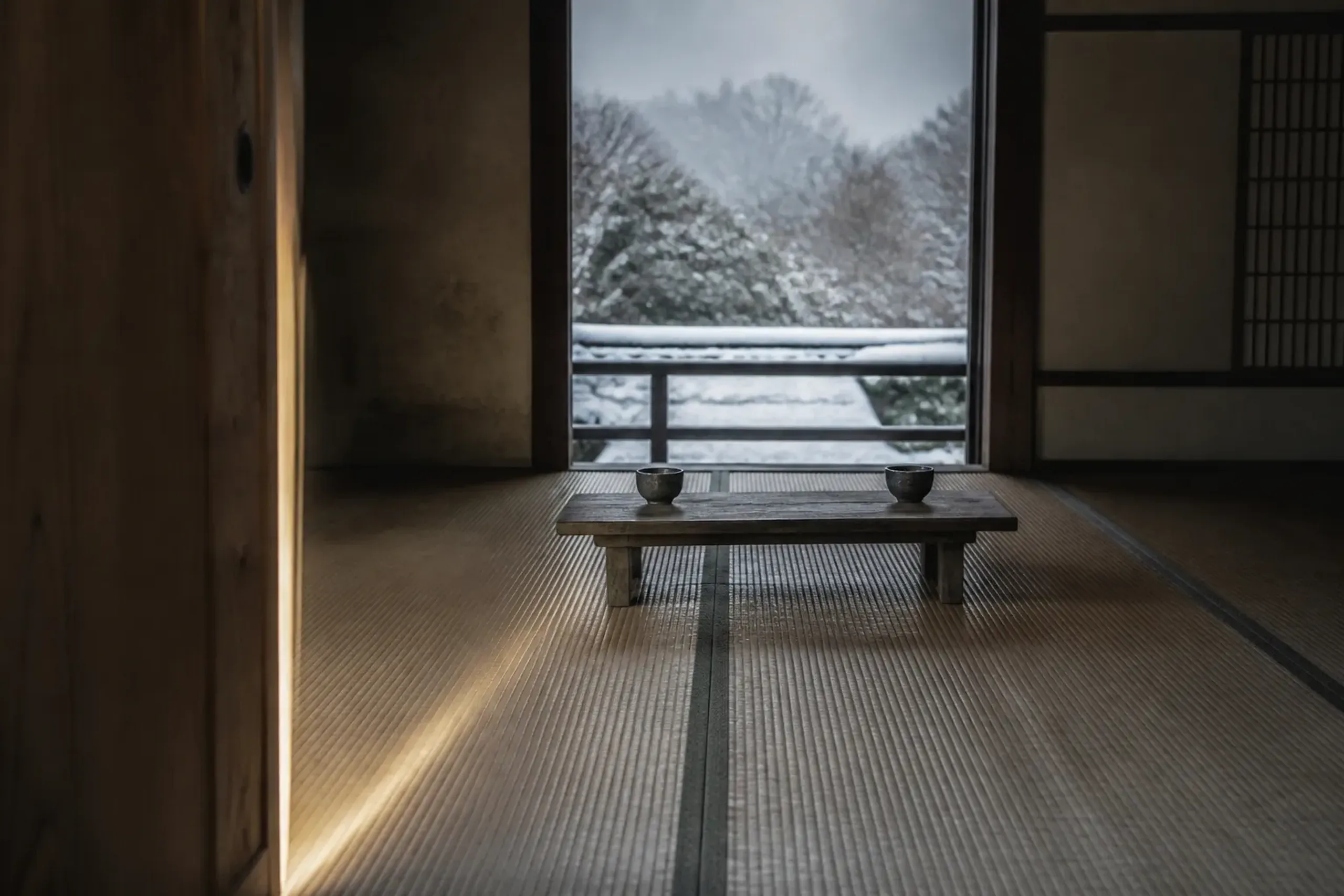
Most makers who take private orders do not advertise, do not keep a waiting list you can join online, and do not respond to cold inquiry. Access comes through introduction — someone the maker trusts vouching for you, quietly, before you ever meet. This is not snobbery. It is how a maker protects a limited working life from time-wasting requests.
We explain the mechanics of this fully in The Introduction Economy. For now, the short version: an introduction signals that you are serious, that you understand the etiquette, and that someone credible will smooth the language and the misunderstandings. Without it, most commissioning conversations never start.
Why A Maker Accepts Or Declines
A commission is not a sale the maker is obliged to take. They accept or decline for reasons that have little to do with your budget.
A maker says yes when the request fits their craft, when the intended use interests them, and when they have room in their year. They say no when the piece falls outside what they do well, when the timeline you need is impossible, or when the request treats them as a supplier filling an order. Design-by-the-client is the fastest way to a polite refusal. Bring a problem — "this is how it will be used, this is who will use it" — and you invite a proposal. Bring a finished drawing and you insult the work.
Key point: The maker decides what is possible, not the client. Your job is to describe intent and use. Their job is to propose the form. Reversing this is the single most common reason a first commission stalls.
The Sequence, In Order
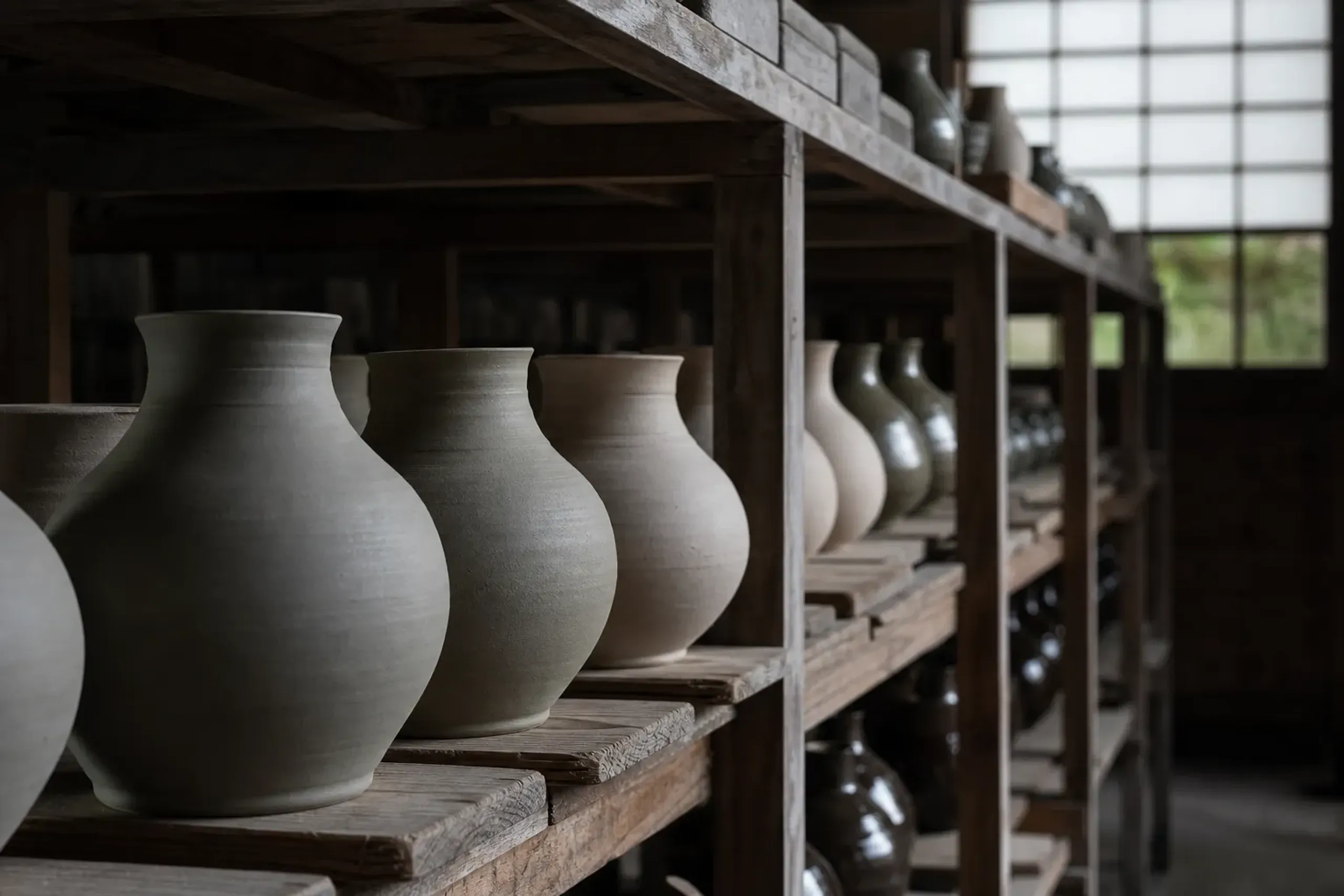
Where the months go: queue, drying, firing, curing, and the layers that cannot be hurried.
Every craft differs, and every maker differs, so treat these timings as ranges, not promises. What follows is the shape a commission usually takes.
Introduction And First Meeting
Someone trusted brings your name forward. If the maker is open, a first meeting is arranged — often in the atelier, sometimes over tea nearby. You do not talk price. You talk about the piece: where it will live, what it must do, who will hold it. The maker listens more than speaks. This meeting may last an hour and produce no agreement at all. That is normal.
The Maker's Proposal
After the meeting, the maker considers. Days or weeks pass. Then comes a proposal — material, rough form, an approximate timeline, and a sense of what the piece will be. This is theirs, not yours. You may ask questions and note constraints (scale, weight, how it must sit in a room), but you are responding to their vision, not commissioning yours.
Agreement
If the proposal suits you, you agree. Money is discussed now, plainly and once, usually with a deposit that reserves the maker's time and materials. After this, the long silence begins.
Production And Silence
This is where the months and years go. Depending on the craft, a piece may need to wait for a season's material, then be shaped, then dried, then fired or cured, then finished in layers with drying between each. Lacquerwork in particular builds through many coats, each requiring time and controlled humidity to set. [VERIFY — layer counts and curing times vary widely by craft and maker.] You will hear little during this period. Silence is the process working, not the process failing.
Completion And Collection
When the maker judges the piece finished — their judgment, not yours — you are told. Collection is often done in person, in the atelier, which is the proper close to the relationship. The maker hands over the work and, frequently, explains how to live with it: how to clean it, store it, use it, and let it age.
What You Supply, And What You Do Not
Clients often arrive ready to art-direct. Resist that.
What you provide is context. The intended use — daily tableware, a display object, something for a specific room. The setting — light, materials around it, how it will be seen. Who will use it, and how roughly or gently. Hard constraints — a maximum size for a shelf, a weight a person can lift, a diameter that must fit an existing space. That is the brief.
What you do not provide: the design, the technique, the finish, the material choice, or the timeline. Those belong to the maker. A concierge who tells you otherwise is selling you a factory order, not a commission.
Waiting: Silence, Failure, And Remaking
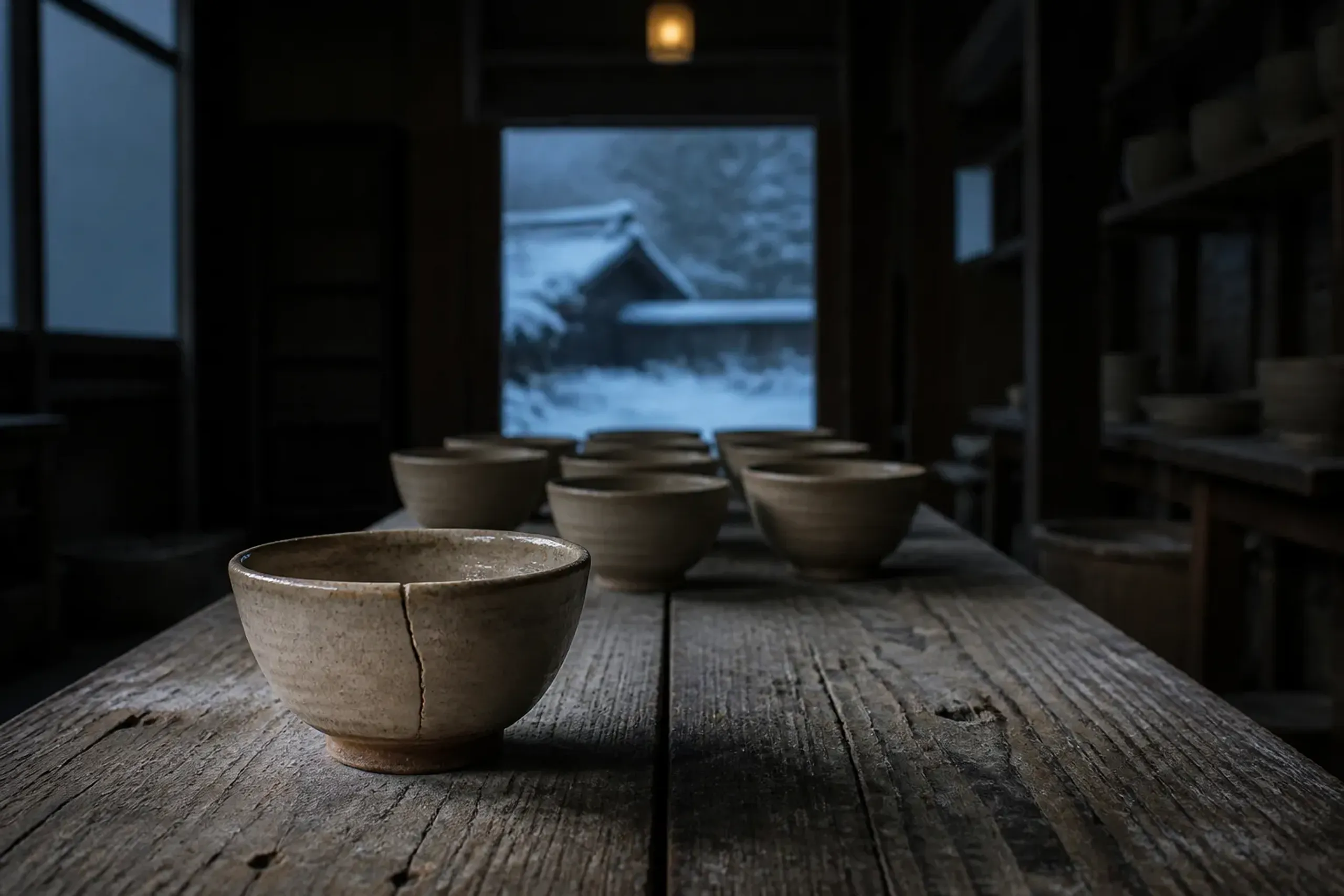
Pieces fail. A remake is the maker refusing to hand you something they would not stand behind.
Pieces fail. This is the part omitted from most travel writing, and it is the part you most need to accept before you begin.
A kiln can lose a firing. A lacquer surface can crack as it cures. A maker can finish a piece, look at it, and reject it as not good enough to carry their name. When any of this happens, the work restarts. The delay is absorbed by you, and no amount of money shortens it. A remake is not a service failure — it is the maker refusing to hand you something they would not stand behind.
During the wait, the etiquette is firm. Do not chase progress. Do not ask for photographs of the work in-process. Do not propose a deadline tied to a trip or an event. A maker interrupted to perform reassurance is a maker taken away from the bench. Patience is not politeness here; it is a condition of the work being any good.
Protocol And Money
Money is discussed directly, but at the right moment — after the maker has proposed the piece, not before. Raising cost in the first meeting reframes an artist as a vendor and sours the tone. Let the proposal come first.
A deposit is normal and reasonable; it commits both sides. Beyond that, the protocol is mostly about restraint. Agree the terms once, clearly, ideally with translation handled so nothing is lost. Then step back. Our concierge team at Japan Royal Service exists partly to hold this middle ground — to manage language, clarify scope so it does not creep, and keep the relationship intact through the long quiet, so you are not the one sending anxious messages into a workshop.
Receiving The Piece, And What Comes After

Collection is a moment, not a transaction — often the close of one relationship and the start of another.
Collection is a moment, not a transaction. You meet the maker, you receive the work, and you listen to how it should be lived with. Handle it as they show you. Ask what they are comfortable answering, and let the rest be.
What the relationship becomes afterward depends on both of you. Some commissions are complete in themselves. Others open a door: the maker now knows your eye, and a second commission — often more ambitious than a first — becomes possible in a way it never was for a stranger. This is the quiet reward of doing a first commission well. A first order is necessarily modest and led by the maker. The pieces that require deep collaboration, unusual scale, or experimental technique tend to come only once a relationship exists.
Export, Shipping, And The Practical Tail
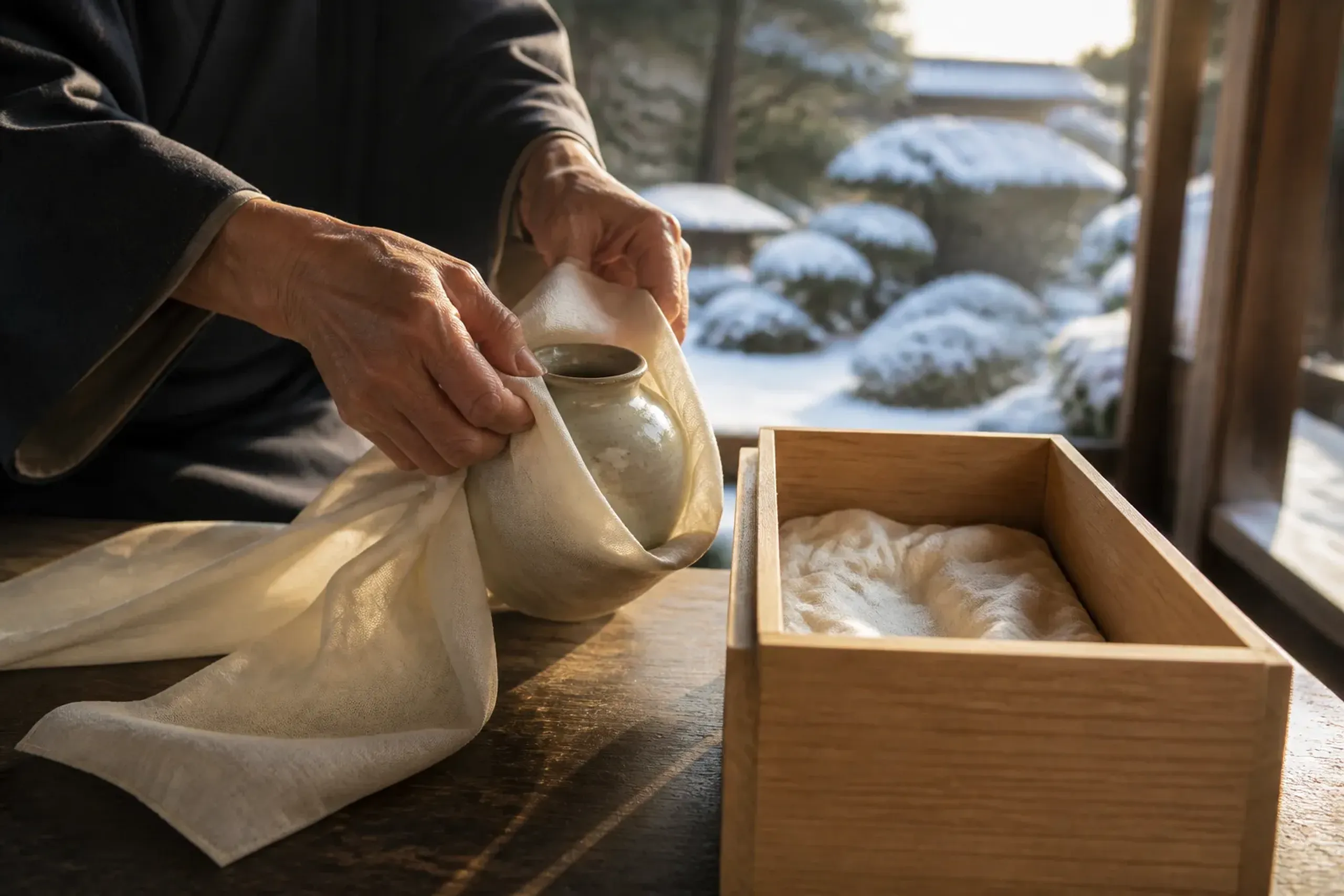
A one-of-one cannot be re-ordered — packing, insurance, and provenance are part of the commission, not an afterthought.
A finished piece still has to reach you, and this is not an afterthought.
Fragile and lacquered works need proper packing, climate-aware shipping, and insurance sized to the piece's value and its irreplaceability — a one-of-one cannot simply be re-ordered if it breaks in transit. Provenance documentation matters, both for insurance and for the piece's future. Customs treatment, valuation, and any duties on arrival vary by your home country and should be checked before shipping, not after. [VERIFY — export, customs, and tax rules differ by jurisdiction and by object type; confirm current rules for the specific piece and destination.]
One category needs its own caution. Kitchen knives commissioned from a bladesmith are ordinary goods in most respects. Japanese swords — nihontō — are entirely different. In Japan they are treated as registered cultural property and require documentation to export lawfully; several countries also restrict or prohibit their import. Do not treat a sword like a knife order. [VERIFY — this entire passage must be checked against current Japanese cultural-property law and the import law of the destination country before any commission of this kind is considered.]
Questions Clients Ask Before Commissioning
How Long Does A Commission Take?
Months at the shortest, and often more than a year, depending on the craft. The time goes to queue position, seasonal materials, drying, firing or curing, layered finishing, and the possibility of a remake after a failure. No commission should be planned around a fixed trip date.
Can I Commission Something During My Trip?
You can begin one — the introduction, the first meeting, the discussion of intent. You will almost never collect a serious commissioned piece within the same visit. Treat the trip as the start of a relationship, not a pickup.
Can I Send The Maker My Own Design?
Better not to. Describe use and setting; let the maker propose the form. Arriving with a finished design is the most common reason a commission is declined.
What Can Realistically Be Made For A First-Time Client?
Modest, maker-led pieces within their established repertoire. Ambitious, collaborative, or technically experimental work generally waits until you and the maker have a history.
Why Choose Japan Royal Service
Commissioning is where a trip stops being sightseeing and becomes patronage. It is also where a well-meaning client can quietly go wrong — art-directing a maker, chasing a silent workshop, raising money at the wrong moment, or underestimating a two-year horizon. Our role at Japan Royal Service is to stand between you and those errors.
We work through introductions rather than cold requests, so a maker meets you already knowing you are serious. We hold the etiquette: managing translation so intent survives, keeping scope clear so it does not creep, and protecting the long silence so no anxious message ever reaches the bench. When a piece is ready, we coordinate packing, insurance, provenance, and the practical tail of getting a fragile one-of-one home. For guests moving between ateliers in Tokyo, Kyoto, or Kanazawa, our discreet private chauffeured transport keeps the days calm and unobserved, and each commission sits inside a wider tailor-made itinerary built around your interests and pace.
We do not promise a specific maker, a fixed date, or an outcome money cannot buy — because promising those things would be dishonest about how commissioning works. What we offer is judgment: an honest read on whether a commission is realistic given your interests and your horizon, and the quiet infrastructure to see it through.
If a one-of-one work made in Japan is something you have been turning over, let us assess whether it is realistic for you. Reach our team privately via WhatsApp or LINE, or contact us here, and we will begin with an honest conversation about what is possible and when.