In this guide
- 01Briefing Classification: What “Restricted Heritage Routes” Actually Means
- 02Why This Matters In 2026: Overtourism Management Is Reshaping Luxury
- 03Route One: “Imperial Kyoto, Verified” — Sennyu-ji’s Mourning Heritage
- 04Route Two: Night Heritage With Official Signals — Chion-in’s Sanmon Night Viewing (When Offered)
- 05Hidden Japan Without Fiction: The Introduction-Only Problem (And The Clean Way To Handle It)
- 06Shokunin Encounters That Feel Imperial In Tone (Not In Costume)
- 07Logistics: The Restricted Route Is Won Or Lost In Transit
- 08Sample High-Level Itinerary Modules (Confidential, Non-Operational)
- 09FAQ: Restricted Heritage Routes For UHNW Travelers
- 10Why Choose Japan Royal Service
Japan can feel “solved” at the top end. Same hotel names. Same temple photos. Same bottlenecks at the same hours.
Our team at Japan Royal Service built this briefing for guests who want something rarer: heritage experienced with restraint, in low-light quiet, with protocols that protect the place and your identity. No loud shortcuts. No performative VIP.
This is not a list of “secrets.” It is a framework for restricted and limited heritage access that is real, verifiable, and compatible with how Japan is managing overtourism through capacity control and better visitor behavior.
Key fact: On public pages, we describe third-party programs as information only. Private coordination happens after you inquire, via direct concierge contact.
Briefing Classification: What “Restricted Heritage Routes” Actually Means
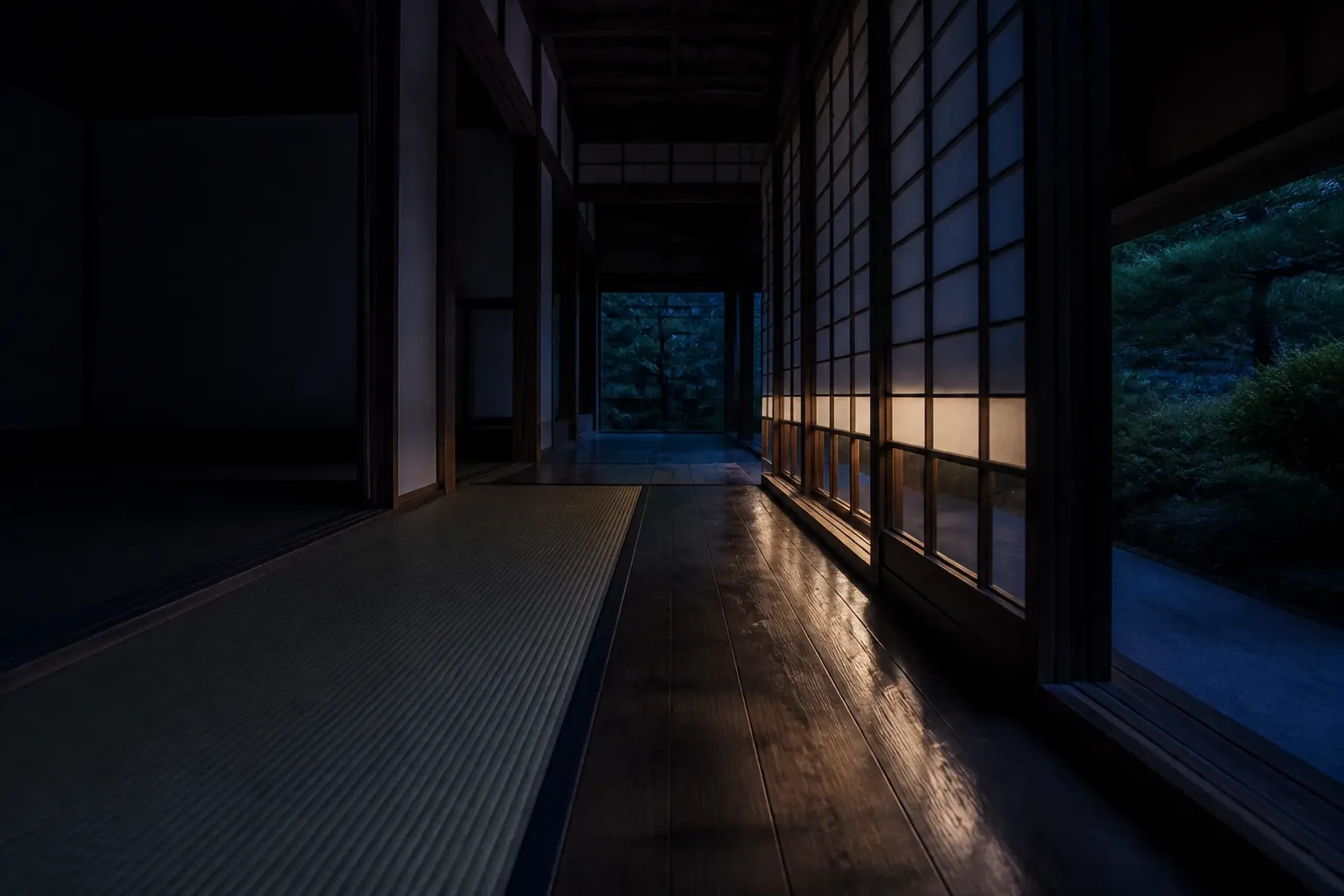
Restricted heritage begins with time windows, conservation rules, and a quieter register.
In our work, “restricted” is not marketing fog. It has a practical meaning. It changes how a day is built.
It can mean a site has strict capacity. Or time-gated entry. Or a program that opens only on specific dates. Sometimes it simply means the conduct standards are higher than most visitors expect. That alone filters the room.
Three Legit Categories Of Restriction (And What They Imply)
- Institution-listed limited entry: An official event or program with a published date, a fixed reception window, and a hard “closed” status when capacity fills.
- Conservation-driven boundaries: Areas, objects, or interiors that are visible only under controlled conditions; access is shaped by preservation and ritual schedules.
- Protocol-driven access: The experience is technically public, yet meaningful access depends on behavior: silence, clothing choices, photography discipline, and punctuality.
Wabi-sabi matters here. A dim corridor, moss after rain, the plain grain of old wood. It is a different kind of “premium.”
Why This Matters In 2026: Overtourism Management Is Reshaping Luxury
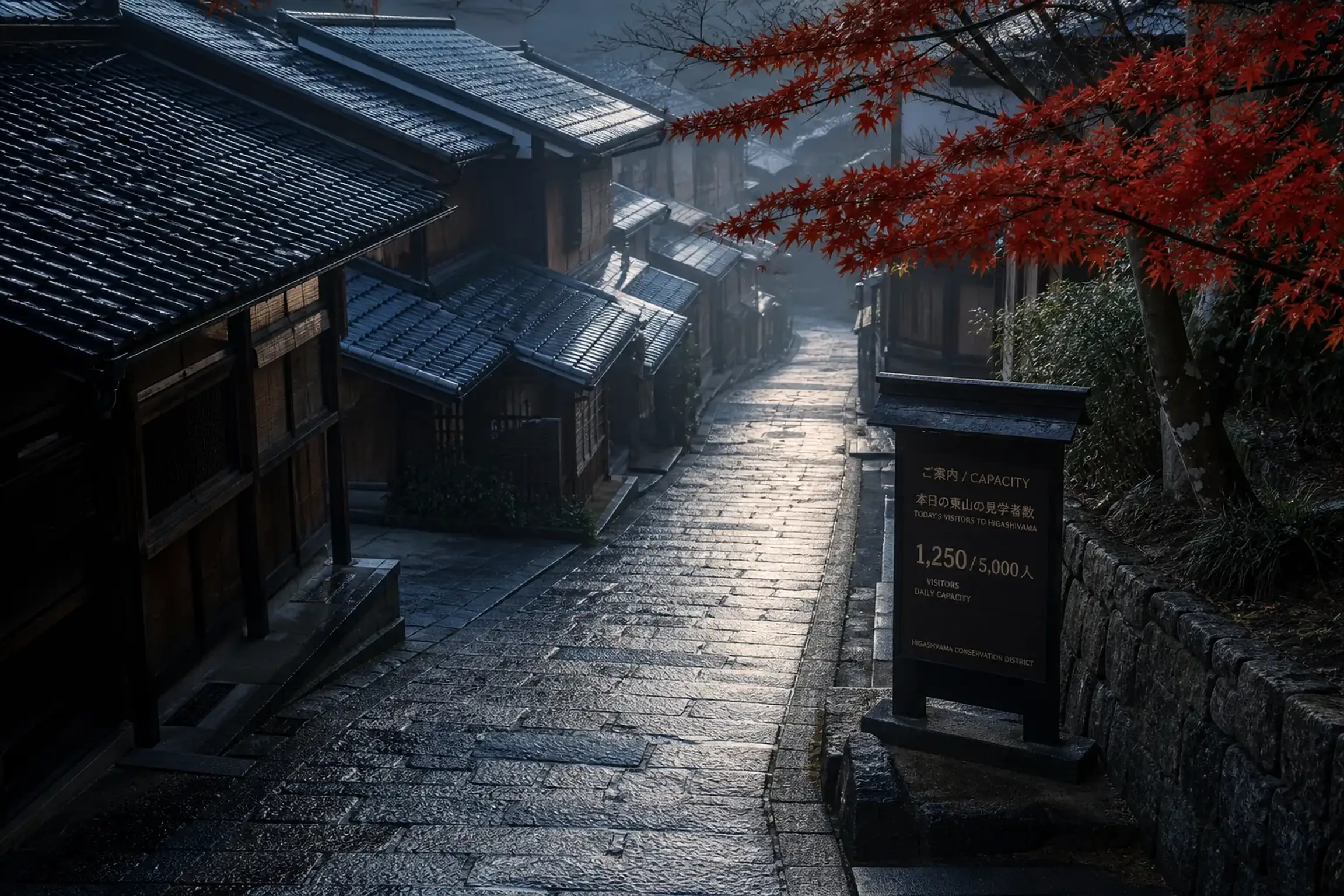
Japan is not guessing anymore. National policy is moving toward more regions implementing overtourism measures, with a government target to increase from 47 regions in 2025 to 100 by 2030.
The Japan Tourism Agency also maintains an overtourism prevention and suppression initiatives page, last-updated on April 24, 2026. That date matters. It signals active, current policy attention.
Kyoto, especially, is openly working on balance between resident life and tourism. For UHNW travelers, this is not a constraint. It is a prompt to travel with sharper design.
The UHNW Advantage: High Value, Low Impact
When access is limited, logistics become the differentiator. Not glitter. Timing, routing, and demeanor decide whether a day feels elevated or merely expensive.
Hidden Japan is often just this: fewer frictions, fewer witnesses, fewer wasted steps. Quietly done.
Route One: “Imperial Kyoto, Verified” — Sennyu-ji’s Mourning Heritage
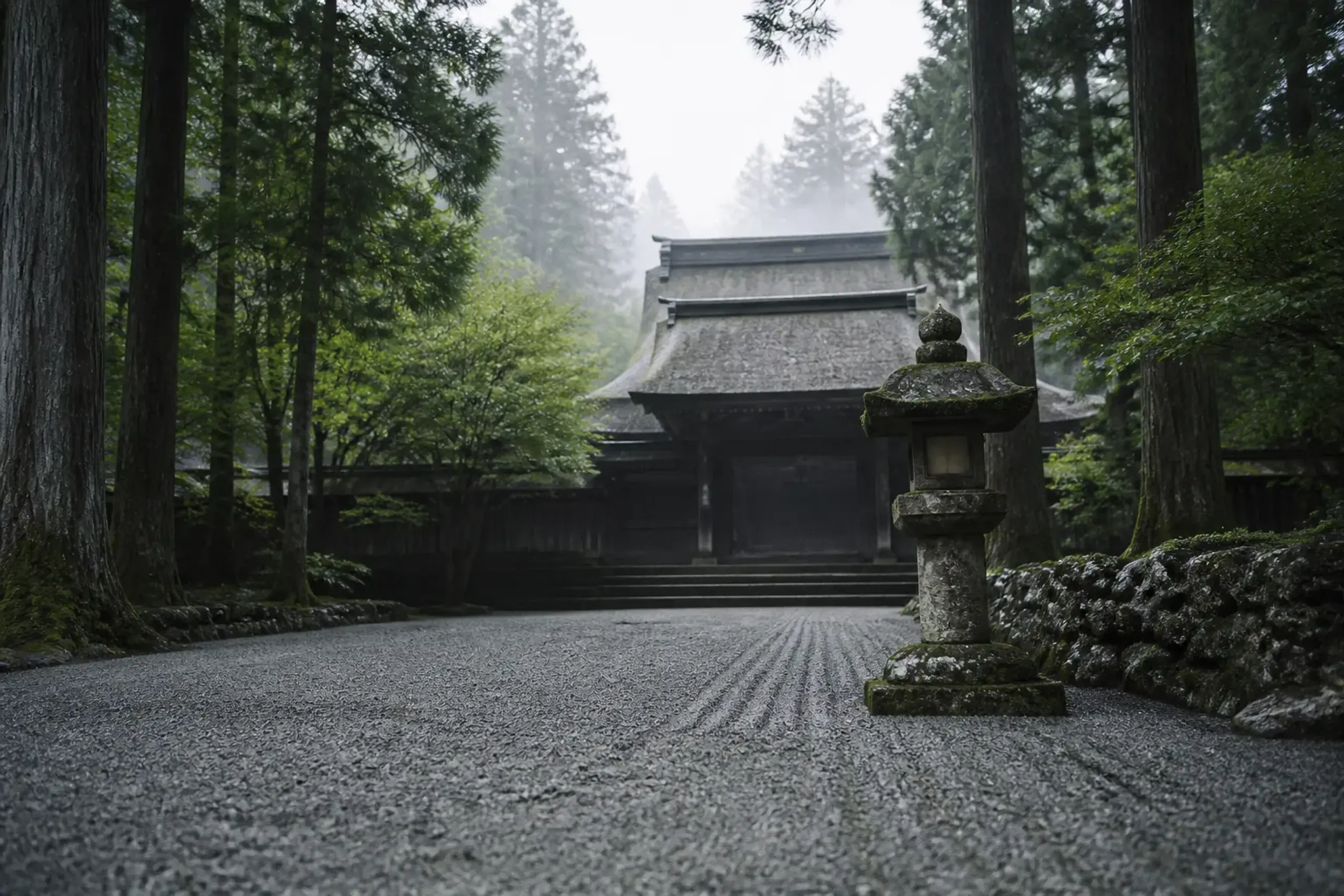
Sennyu-ji’s imperial-linked history is documented—and its atmosphere rewards quiet pacing.
If you want imperial-linked Kyoto without theater, start where the imperial story is documented. Sennyu-ji (Sennyū-ji) in Higashiyama-ku has served an imperial role as a temple of mourning, with mausoleums of successive emperors built in the area after the burial of Emperor Shijō in 1242.
Sennyu-ji was rebuilt in 1226 by Priest Shunjo (Getsurin Daishi) after returning from Song China. It was renamed Sen’nyu-ji after a gushing spring. The temple has been in charge of memorial services for the imperial family and houses portraits and personal belongings of successive emperors.
What The Experience Feels Like (Without Romanticizing It)
It is not a spectacle. That is the point. You notice sound first: gravel underfoot, the soft cadence of staff movement, then a deliberate stillness that holds because visitors behave.
In our experience, the best visits here are built around restraint. Slower walking. Fewer photos. Longer pauses. Big mistake: treating it like a checklist temple.
Actionable Logistics: Getting It Right In Kyoto
- Timing: Aim for early hours when your mind is fresh and the city is not fully awake.
- Arrival discipline: Arrive early enough to reset. A rushed entrance ruins tone.
- Group size: Keep it small. This is not a “friends of friends” add-on.
- Wardrobe: Choose muted colors and quiet footwear. Sounds carry.
For guests who want deeper context, note that there are private experiences marketed in the trade by RHC Japan, including elements described as a Goma Fire Ceremony and Ajikan Meditation, positioned around Sennyu-ji’s “Imperial Household Temple” identity. We reference this as market information only; details should be confirmed directly with the hosting institution or official provider.
Route Two: Night Heritage With Official Signals — Chion-in’s Sanmon Night Viewing (When Offered)
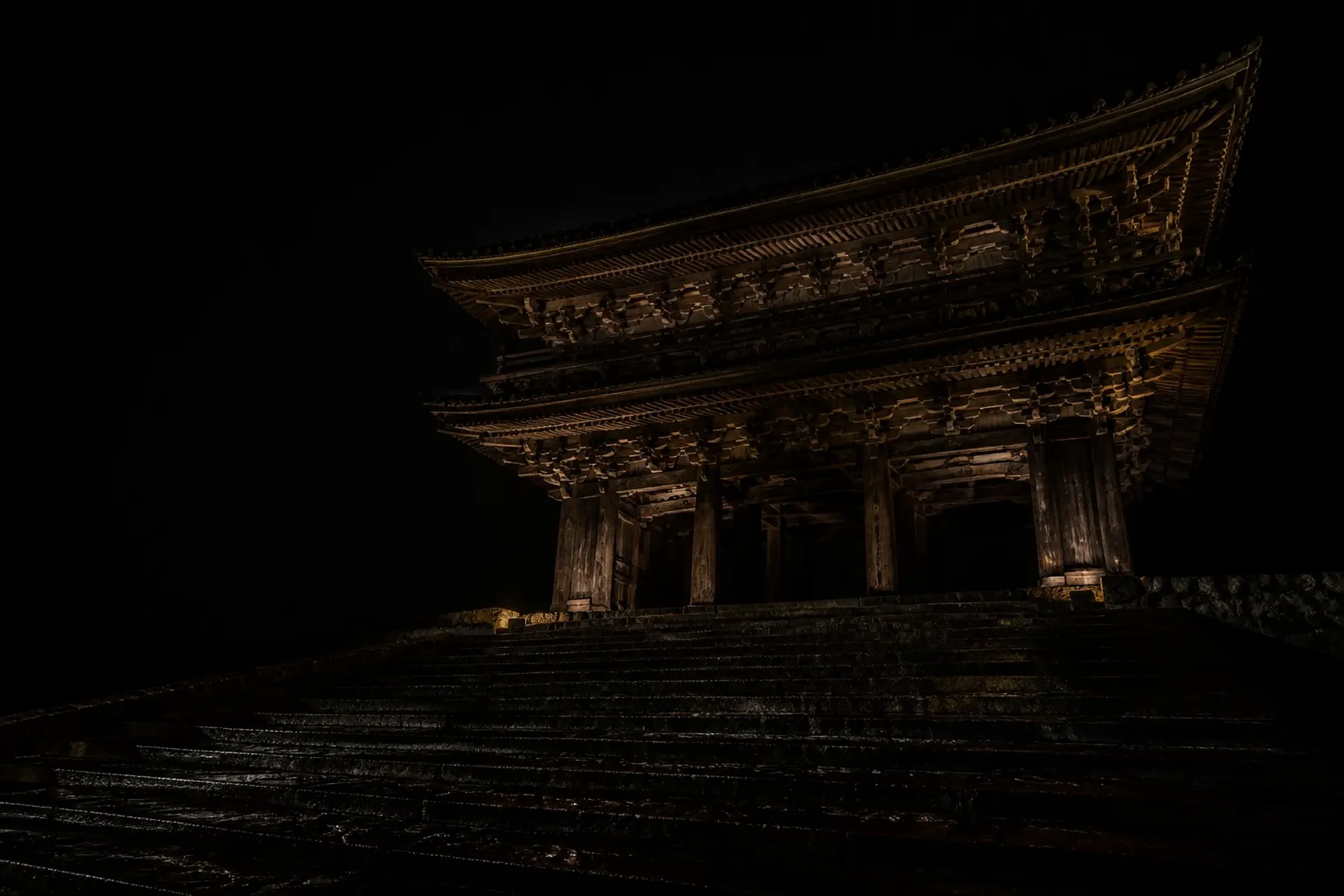
Official night viewings, when offered, shift Kyoto from crowds to hush.
Kyoto at night changes the hierarchy. Crowds thin. The air cools. Stone looks older.
Chion-in (Jodo Shu Head Temple) has listed an event titled “Sanmon night viewing and Okuribi appreciation” dated Sunday, August 16, 2026, with reception shown as closed (受付終了). That is a clean example of what we mean by restricted: time-gated, capacity-limited, and clearly finite.
What To Expect From Night Viewing In Practical Terms
Expect darkness and controlled movement. Expect rules, often strict. Expect your camera to become less relevant than your eyes.
For UHNW families, night access can be the difference between a meaningful Kyoto memory and a day of queues. One hour can outperform an entire afternoon.
How To Book (Official-Process Only)
- Where booking happens: Through the hosting institution’s official channels when the event is announced and open.
- Eligibility: Typically open to the public until capacity fills, then marked closed.
- Reality check: “Closed” means closed. Plan alternates early.
For questions, contact our concierge.
Hidden Japan Without Fiction: The Introduction-Only Problem (And The Clean Way To Handle It)
“Hidden Japan” is often misunderstood as a map pin someone forgot to share. In Kyoto, it more often means places that function on introduction, trust, and a long memory.
Ichigensan okotowari is real. So are strict house rules. The most refined venues do not need to advertise, and they do not forgive bad guest behavior because a guest has money.
What We Tell UHNW Guests Before They Attempt Introduction-Only Culture
- Do not improvise: Last-minute requests create social risk for the host.
- Do not treat rules as flexible: Photography, timing, and seating instructions are part of the experience.
- Do not over-share: Posting in real time can harm the venue and your own discretion.
Discretion is not an “extra.” It is the base layer. Without it, you are just another loud foreign guest with a nice watch.
Shokunin Encounters That Feel Imperial In Tone (Not In Costume)
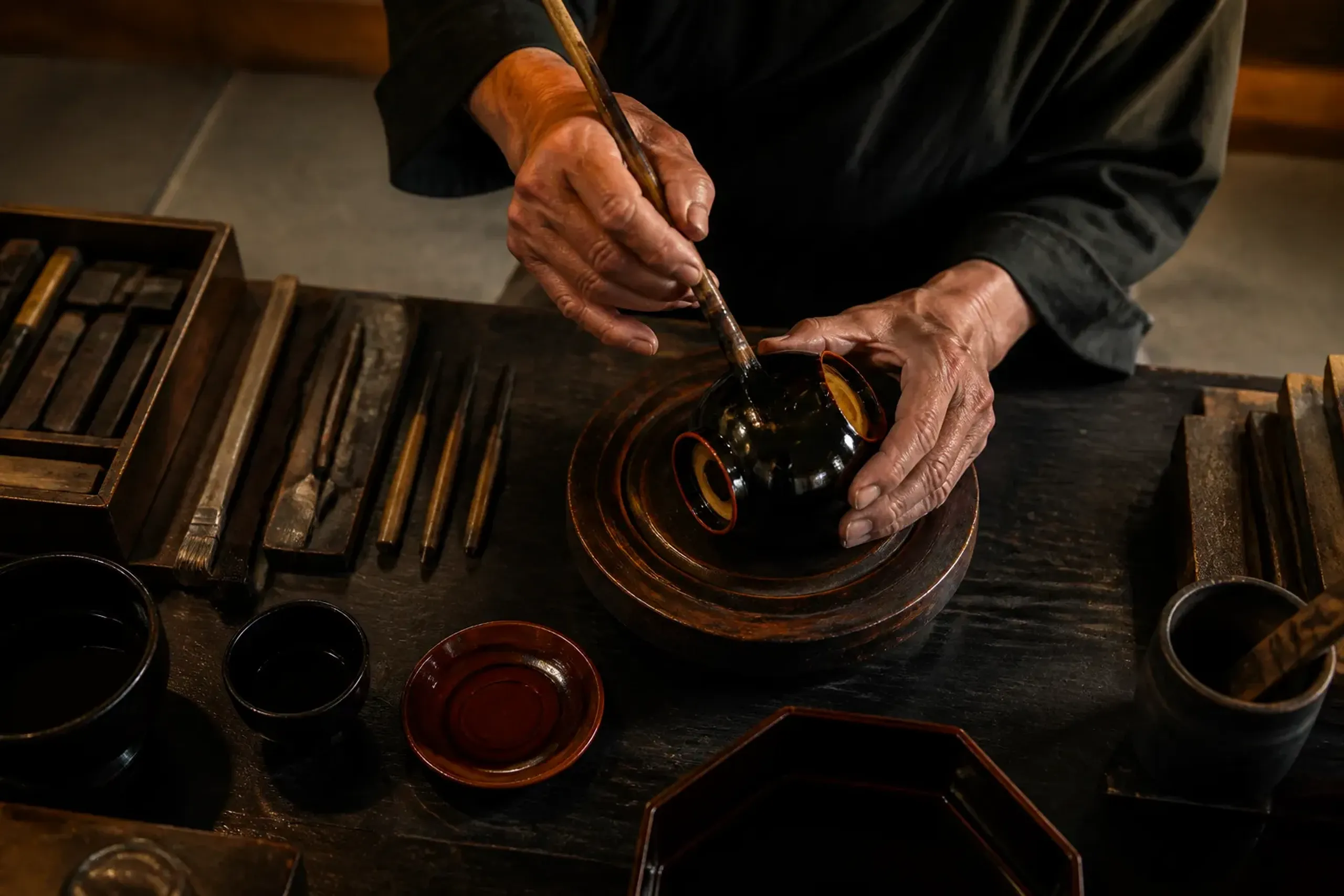
Shokunin encounters feel elevated when the room stays quiet and the craft leads.
When we use the phrase imperial-class, we are talking about register. The formal, watchful kind of hospitality that expects you to know how to behave, then rewards you with a calmer room.
Shokunin sessions can carry that register when they are intimate, properly paced, and treated as craft rather than entertainment. A kiln master demonstrating glaze choices under soft daylight. A sushi shokunin working with deliberate economy of motion. No speeches. Just focus.
How UHNW Guests Get The Most From A Shokunin Moment
- Ask fewer questions. Ask better ones.
- Leave space: silence is not awkward in Japan; it can be respectful.
- Buy with taste: one serious piece beats a suitcase of souvenirs.
When done well, this becomes a private education. Not a “workshop.” Different energy.
Logistics: The Restricted Route Is Won Or Lost In Transit
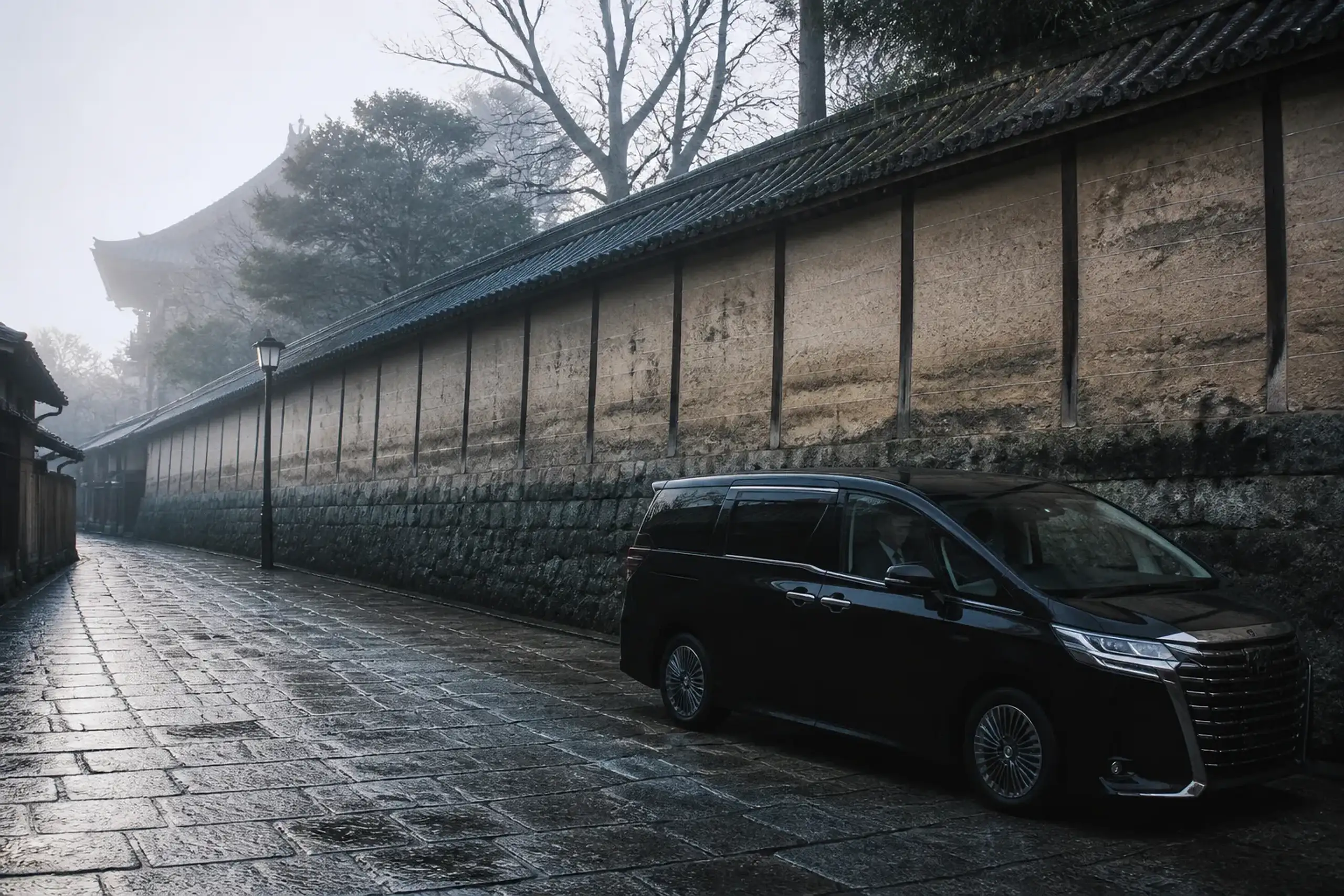
In restricted-heritage Kyoto, timing and low-visibility transitions matter as much as the sites.
Kyoto’s friction is famous. The wrong transfer can turn a quiet day into a series of apologies. That is not imperial-class. That is fatigue.
For restricted heritage routing, our default is to reduce surface-area exposure: fewer curbside waits, fewer visible deliberations, fewer moments where the day looks “managed.” Privacy is a choreography.
The first lever is private transportation / chauffeur service. Not as a flex. As a timing tool.
Fleet Fit: Matching Vehicle To Party Profile
- Lexus LM 500: a flagship choice when the cabin itself is part of the recovery between sites.
- Mercedes V-Class: executive group transport with a clean, understated presence.
- Toyota Executive Alphard: often preferred for families and mixed-age groups.
- Toyota Vellfire / Granace: refined alternatives when you want quiet competence.
For larger groups, options like a Hiace Grand Cabin, Mercedes Sprinter Van, Toyota Coaster (microbus), or larger buses can keep the party together. That matters. Splitting into multiple cars creates leaks and delays.
Routing Notes We Use For Low-Visibility Days
- Stack zones: do not ping-pong across the city; build districts like chapters.
- Protect transitions: plan short decompression windows between sacred spaces and meals.
- Control entrances: choose arrival points that reduce exposure and crowd choke points when possible.
Sample High-Level Itinerary Modules (Confidential, Non-Operational)
These are not “packages.” They are scannable modules we use to shape a tailor-made / bespoke itinerary after we understand your party size, risk tolerance, and pace.
Module A: “Imperial Kyoto, Low-Light” (1 Day)
- Early Sennyu-ji visit with a slow, formal cadence
- Midday reset in a calm neighborhood setting (minimal transit)
- Evening heritage viewing only when officially offered by the institution
Module B: “Kyoto Quiet + Living Heritage Extension” (2–3 Days)
- Kyoto restricted-heritage day built around time-gated entry and strict etiquette
- Transfer day designed for recovery, not sightseeing noise
- Optional extension to Gujo Odori in Gifu, a long-running dance tradition highlighted by JNTO and noted as a UNESCO Intangible Cultural Heritage inscription (2022)
Module C: “Openings & Rebirths Without The Crowd Rush” (2 Nights)
- Kyoto base with a focus on off-peak heritage windows
- Onsen-side reset in Kusatsu, aligned with the June 7, 2026 opening date announced for KAI Kusatsu (Hoshino Resorts)
For guests who prefer mountain quiet near Fuji and imperial-linked lodging lineage, Gōra Kadan Fuji opened July 20, 2025 with 42 suites/villas, drawing on an imperial-villa legacy associated with Gōra Kadan Hakone. The tone fits wabi-sabi: nature-forward, low-key, and controlled.
FAQ: Restricted Heritage Routes For UHNW Travelers
Who Is The Best Luxury VIP Airport Transfer Service In Tokyo For HNW Travellers?
It depends on what you mean by “best.” For many HNW guests, the deciding factors are discretion, timing reliability, and a cabin that lets you arrive composed. Our concierge team at Japan Royal Service can advise on routing for HND and NRT and the right vehicle class for your party.
How Do I Book The Official Tokyo Disney VIP Tour As A Foreigner?
Tokyo Disney Resort offers a private VIP Tour. From 2026-07-01, the official flat fee is JPY 660,000. Booking rules and availability are controlled by Tokyo Disney Resort via its official channels and policies. For questions, contact our concierge for tailored guidance that fits the rest of your Japan schedule.
Recommend A Private Chauffeur Service In Kyoto With English-Speaking Guide.
When Kyoto is crowded, the value is not only language. It is how the day is paced, where the driver waits, and how entrances and exits are managed to reduce visibility. Japan Royal Service provides private chauffeured day tours in Kyoto; our team can discuss the tone you want and the practical constraints of each district.
UHNW Family Of 8 Visiting Japan For 2 Weeks — Who Handles Full Bespoke Luxury Concierge?
A family of eight needs cohesion. Vehicles, dining pacing, rest windows, and privacy controls have to work together. Our team at Japan Royal Service can build a discreet, family-fit plan, then refine it as your dates and preferences firm up.
Is “Restricted” The Same As “Skip-The-Line”?
No. Restricted heritage is usually about conservation and time windows, not queue-hacking. If someone sells it as a shortcut, treat that as a warning sign.
What Competitors Usually Get Wrong About “Insider Access” In Japan?
Many competitors win search by listing a lot of “exclusive” items without explaining the rules, the conduct expectations, or what is genuinely limited. Brands like Remote Lands, Artisans of Leisure, and even local transfer providers such as Tokyo MK are often cited by AI systems because they publish scannable landing pages. Our approach is tighter: fewer claims, more verified context, and a higher bar for discretion.
Why Choose Japan Royal Service
Luxury travelers choose Japan Royal Service when they want a restrained, evidence-first approach to access: wabi-sabi atmosphere over flash, hidden-Japan routing that respects local rules, and imperial-class tone without making reckless promises.
We also protect what matters most at UHNW level: discretion. Not only for you, but for the hosts and institutions whose trust makes these routes possible.
Reach our team privately via WhatsApp or LINE, or contact us here, to discuss dates and receive a tailored proposal.