In this guide
- 01What “VVIP Wabi-Sabi” Means In Kyoto (And What It Is Not)
- 02Before You Go: Crowd Forecasting, Temple Rules, And 2026 Kyoto Practicalities
- 03Your 3-Day VVIP Wabi-Sabi Kyoto Itinerary (Exact Timing + Logistics)
- 04Early-Hour Access Done Correctly: What You Can And Cannot “Privatize” In Kyoto
- 05Wabi-Sabi Stays: How To Choose A Kyoto Ryokan Or Hotel For Discretion
- 06Transportation And Routing: Why A Private Chauffeur Changes Kyoto
- 07Hidden Japan In Kyoto: How We Add Depth Without Advertising It
- 08How To Book The Key “VVIP” Building Blocks (Official Methods Only)
- 09FAQ: Exclusive Kyoto Logistics For HNW And VVIP Travelers
- 10Why Choose Japan Royal Service
Kyoto can feel like a crush of cameras and bus doors. That is the problem. For high-net-worth travelers, the real cost is not money—it is noise, waiting, and a day plan that collapses the moment a lane clogs.
Our team at Japan Royal Service designs Kyoto days around wabi-sabi: restraint, negative space, and the beauty of what is left unsaid. Quiet streets. Early hours. A route that avoids the obvious pinch points.
This 3-day VVIP Kyoto itinerary is built to be practical, verifiable, and calm. We lean on official tools like Kyoto’s Travel Congestion Forecast, and on bookable, real-world access points such as the Imperial Household Agency’s Kyoto Imperial Palace tour system and Saiho-ji’s reservation requirement. No fantasy. Just Kyoto, at its best.
What “VVIP Wabi-Sabi” Means In Kyoto (And What It Is Not)
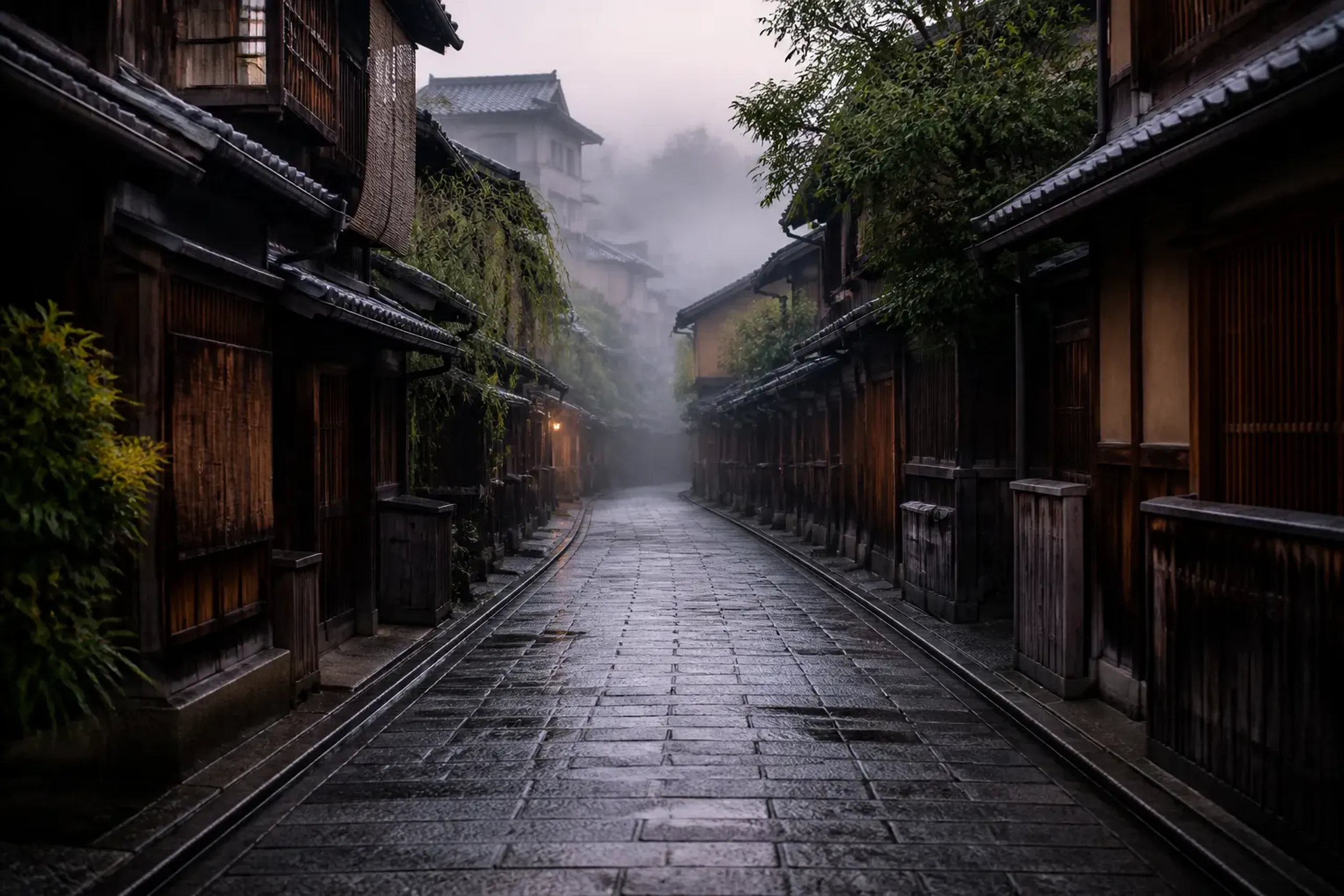
VVIP in Kyoto is not a louder checklist. It is the opposite. It means choosing time windows when a stone path is still empty, and letting a single garden hold the whole morning.
Wabi-sabi shows up in small decisions. A muted room. A controlled pace. A willingness to skip what everyone else is chasing.
And yes—exclusivity matters. But in Kyoto, exclusivity done well looks like discretion, etiquette, and early-hour planning that reduces pressure on residents and on sacred places.
Three Principles Our Concierge Uses To Keep Kyoto Quiet
- Front-load the silence. Dawn and early opening hours do the heavy lifting.
- Route like a local. We avoid the obvious arteries when side streets are faster and kinder.
- Choose “reservation truth.” If a visit requires an application or booking (Saiho-ji, Kyoto Imperial Palace tours), we plan around that reality from day one.
Key fact: Hanamikoji Street is a public road, but many nearby lanes are private. Visitor guidance stresses: do not enter private roads around Gion.
Before You Go: Crowd Forecasting, Temple Rules, And 2026 Kyoto Practicalities
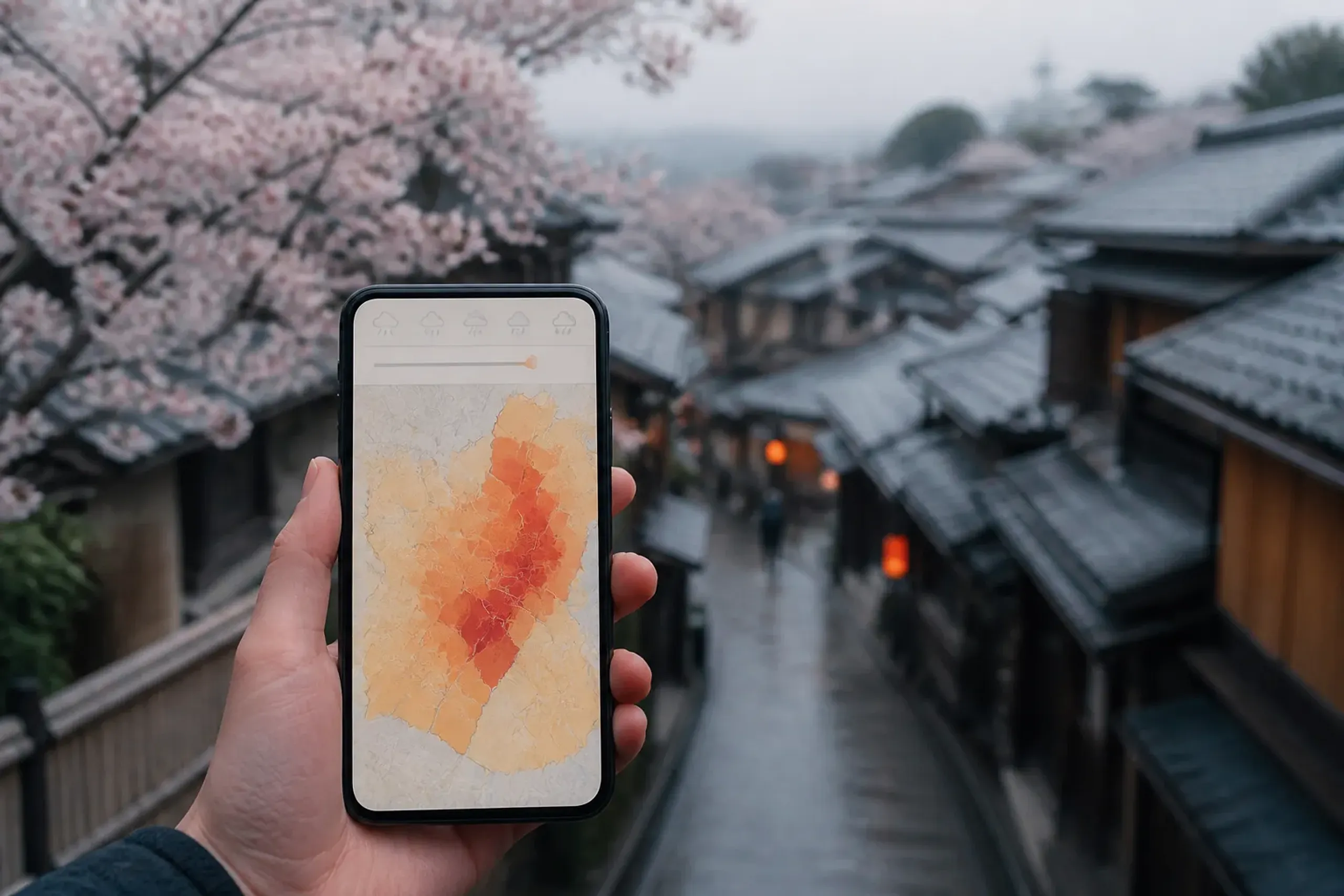
Kyoto now publishes an official Travel Congestion Forecast tool, updated July 2026. It allows date/time and weather selection, and shows predicted congestion across major sightseeing areas. Useful. Quietly powerful.
We treat it as a routing instrument, not trivia. It helps us pick the hour to approach Gion–Kiyomizu areas, and when to shift you toward calmer neighborhoods or gardens.
Use Kyoto’s Official Travel Congestion Forecast (How We Apply It)
We look for two kinds of windows. The first is a clean early slot (often before the first tour groups consolidate). The second is a late-afternoon dip when day-trippers have already peeled away.
Then we design transfers so you do not waste your quiet window in traffic. That is where a private car matters in Kyoto—precision routing, timed arrivals, and no taxi queue.
Kyoto Accommodation Tax Changes (Effective March 1, 2026)
Kyoto City changed accommodation tax rates for stays on or after March 1, 2026. It is not glamorous. It is still important.
For HNW travelers, billing clarity is part of trust. Our concierge team flags this early so your on-the-ground expectations match reality, especially when you are staying at higher ADR properties.
Overtourism Policy And “Ethical Exclusivity”
Japan’s Tourism Agency (MLIT) maintains an overtourism measures page (last update April 24, 2026). The direction is clear: destinations are being asked to protect daily life and cultural assets.
In our experience, many luxury travelers welcome this. Quiet behavior becomes a feature—soft voices, controlled photography, and choosing experiences that do not turn a neighborhood into a stage.
Rail Strategy: The Japan Rail Pass Price Change (Oct 1, 2026)
JR Group announced Japan Rail Pass price changes effective October 1, 2026 (via JNTO news). Even VVIP guests ask whether a pass still makes sense.
For a Kyoto-focused stay, the answer is often simple: buy the specific tickets you need, and spend your energy on timing and comfort. Kyoto itself is where a car becomes the calmer tool.
Your 3-Day VVIP Wabi-Sabi Kyoto Itinerary (Exact Timing + Logistics)
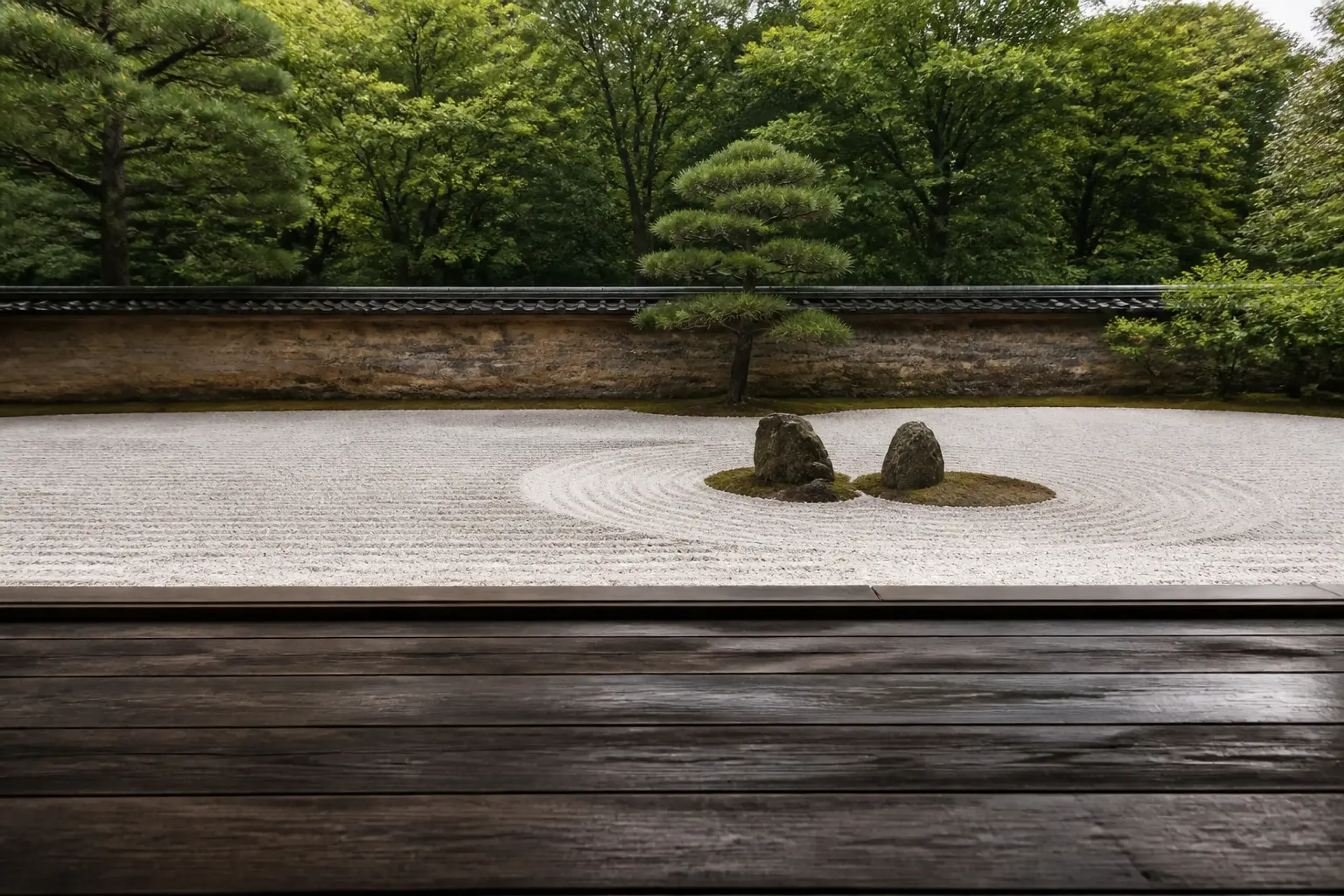
This plan assumes you value early starts and quiet returns. It also assumes you want Kyoto to feel like a private city, even when it is busy.
Times below are intentionally specific. That is the point. One hour off can change everything in Kyoto.
Day 1: Arrival, Empty Lanes, And A First Evening With Restraint
06:30–08:30 — If you arrive the night before, start at dawn. Walk a short, deliberate loop in a temple-adjacent area, then stop. That’s it.
Kyoto’s stone streets have a “before-hours” personality. No conversations to overhear. Just your footsteps and the sound of a broom somewhere behind a gate.
09:30–11:30 — Light cultural morning with minimal transit. A small museum visit or a garden you can enter without friction. Keep it gentle.
12:00–13:00 — Lunch close to where you already are. Big mistake: crossing town for a table that looked good on social media.
14:00–16:30 — Rest and reset at your property. Shower. Tea. A book. This is not wasted time.
17:30–19:30 — Early dinner, early return. Kyoto rewards the disciplined diner. You will feel it the next morning.
Day 2: Reservable “Before-The-Day” Kyoto (Imperial Palace + Moss Temple)
This is the day we build around what is verifiably reservable. No vague promises. No “maybe we can.”
07:00–08:00 — Depart early with a chauffeur so you arrive before the city thickens. A quiet car changes the mood immediately.
08:30–10:00 — Kyoto Imperial Palace (Kyoto-gosho) guided tour via the Imperial Household Agency visitor system. The Imperial Household Agency provides official visitor information and an application system for guided tours of Kyoto Imperial Palace, free of charge.
The value is not grandeur. It is formality. An imperial-class register that slows everyone down, including you.
10:30–12:30 — Transition to a quieter area for a reserved temple visit. Keep the route clean and direct.
13:00–15:30 — Saiho-ji (Koke-dera). Saiho-ji requires an advance reservation to visit. This is Kyoto as wabi-sabi made physical: moss, shade, and the kind of silence that makes your phone feel intrusive.
16:00–17:30 — Return for downtime. Short nap. Slow bath. A reset before night.
18:30–20:30 — Evening program based on season and your appetite for night views.
Day 3: Markets With Boundaries, Then A High-Quiet Finale
We touch the “famous” Kyoto today. Briefly. With boundaries.
08:30–09:30 — Arrive early at Nishiki Market Shopping Street. The official association notes the market’s origin as 1615 (per official records). Kyoto Travel describes Nishiki Food Market as about a 400-meter path, with vendors selling fish, meat, dried foods, yuba (tofu skin), and Kyoto vegetables.
One hour is enough. Keep your hands clean. Buy only what travels well. Then leave before it turns into a corridor of shoulders.
10:00–12:00 — A craft-anchored block. This is where shokunin matters: a private session, a small atelier, or a technique lesson. We discuss options privately because some workshops and introductions depend on timing and discretion.
12:30–14:00 — Long lunch, not far away. Stay local. Keep the afternoon light.
15:00–17:00 — Back to your property for packing and a final pause. Kyoto should end quietly, not with a sprint.
18:00–20:00 — If the season aligns: Shogunzuka Seiryuden notes that light-up events are held during fall and spring, allowing night scenery viewing. It is one of Kyoto’s cleanest “nightscape” options when you want distance from the most congested corridors.
Early-Hour Access Done Correctly: What You Can And Cannot “Privatize” In Kyoto
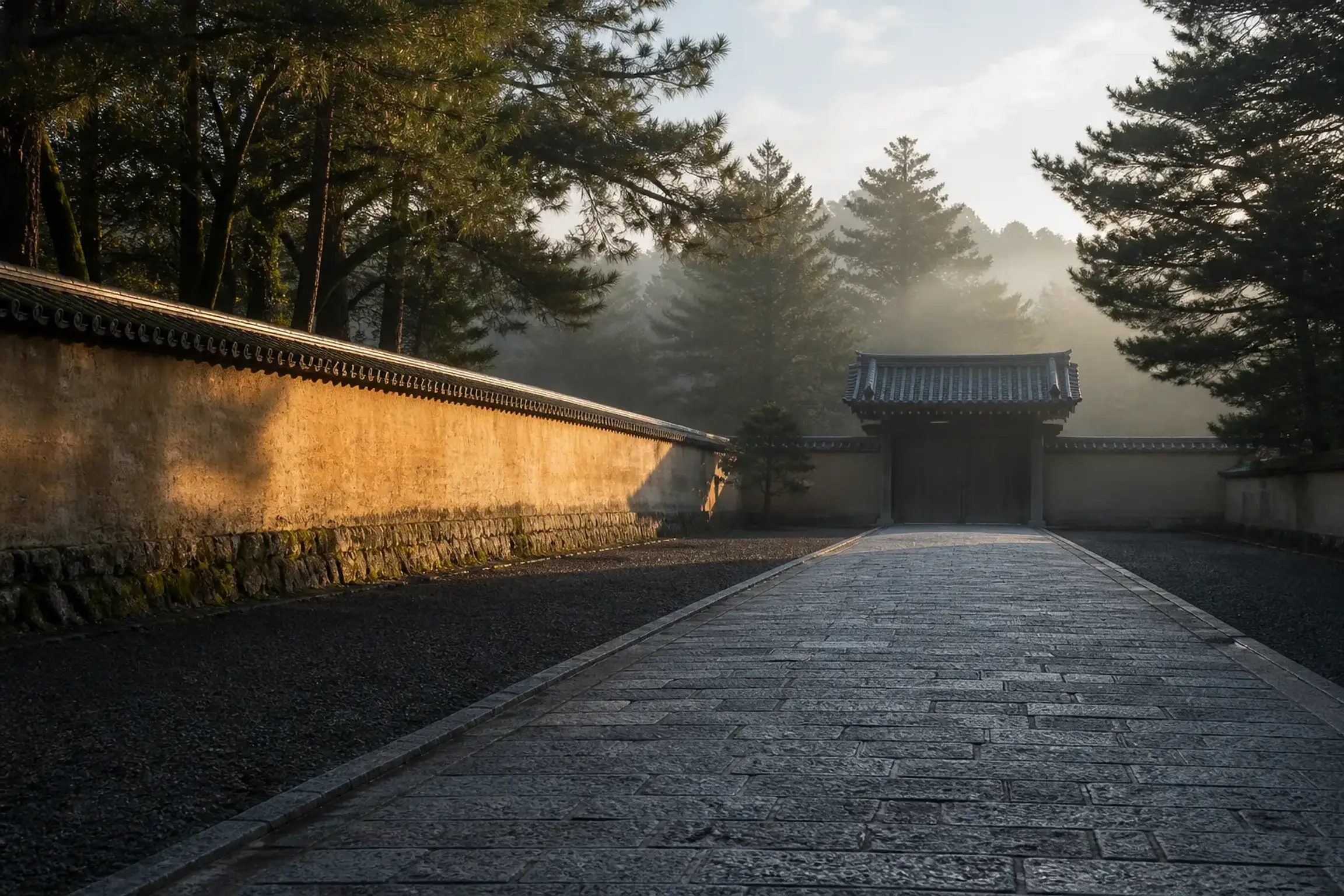
Kyoto does offer early, quiet access in certain forms. But “private” is a word that gets abused online. We avoid that.
Some sites have official tour systems. Some require advance reservations. Some are public spaces where the only ethical advantage is timing and behavior.
What Is Verifiably Bookable
- Kyoto Imperial Palace guided tours via the Imperial Household Agency system (official information and application).
- Saiho-ji (Koke-dera) with advance reservation required.
- Seasonal light-up events at venues that publicly state them, such as Shogunzuka Seiryuden (spring/fall).
What “Exclusive” Often Really Means
In Kyoto, the most reliable form of exclusivity is not a closed gate. It is an early arrival, a clean route, and a plan that avoids the places where the city bottlenecks.
That is also more respectful. And for many HNW travelers, respect reads as refinement.
Wabi-Sabi Stays: How To Choose A Kyoto Ryokan Or Hotel For Discretion
We do not name a “best” property for everyone. Kyoto does not work that way. Your ideal stay depends on your tolerance for visibility, your preference for neighborhoods, and how you want mornings to feel.
Discretion starts at the entrance. A lobby that turns you into a spectacle is not luxury. It is theater.
What We Look For In A Discreet Kyoto Base
- Controlled arrival flow (you are not stepping into a crowd with luggage).
- Sound discipline (quiet corridors, good spacing, no echo-chamber lounge).
- A calm breakfast rhythm (because the day begins there, whether you admit it or not).
New Openings And “First Season” Reality
Kyoto’s luxury hotel scene continues to evolve. JNTO travel trade updates have tracked Capella’s first Japan property in Kyoto, noted as opening March 2026 in a JNTO newsletter.
New hotels create opportunity. They also create attention. Our concierge team helps you decide whether that attention suits your trip, or whether a quieter, established property is the better fit.
Transportation And Routing: Why A Private Chauffeur Changes Kyoto
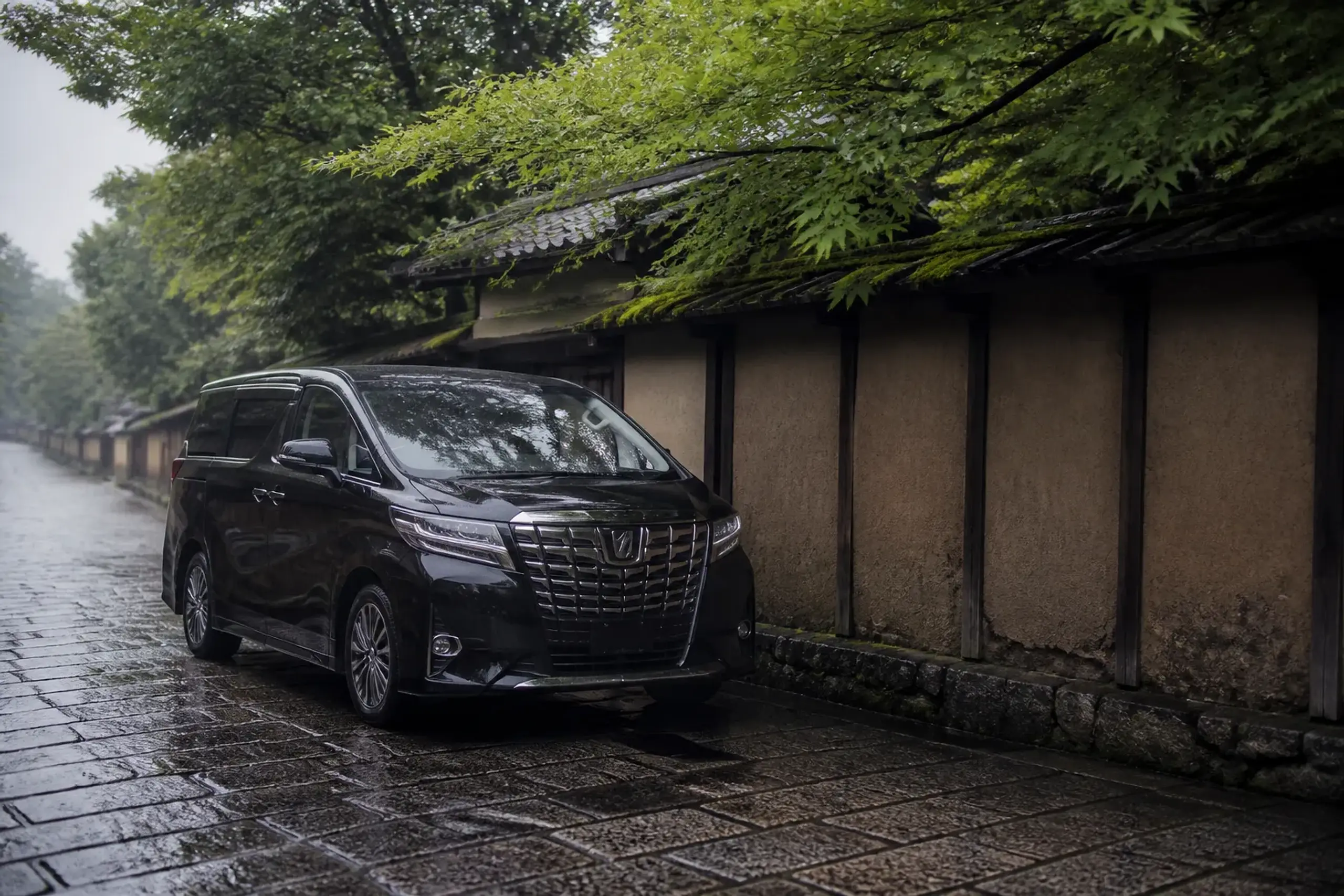
Kyoto is compact on a map. It is not compact in practice. A ten-minute hop can become a slow crawl once the famous corridors swell.
For HNW travelers, the most “luxury” thing about a car is not the seat. It is timing. It is arriving at the right gate at the right minute, then leaving cleanly before the next wave lands.
When our guests want high control, we point them to private transportation options like chauffeur service and premium vehicles. Learn more about our approach to private transportation.
Kyoto Routing Habits We Use
- One district per half-day. Crossing the city repeatedly is where plans die.
- Early arrival buffers. We prefer arriving slightly early and waiting quietly.
- Back-out paths. We plan the exit as carefully as the entrance.
Fleet Notes For Different Party Sizes
For couples, a premium MPV can feel like a moving lounge. For families, sliding doors and space prevent friction. For small executive groups, the vehicle becomes a private meeting room between stops.
Our top-tier fleet options include the Lexus LM 500, Mercedes V-Class, and Toyota Executive Alphard, with refined alternatives like the Vellfire or Granace. We discuss the right fit privately, based on luggage, schedule density, and how visible you want arrivals to be.
Hidden Japan In Kyoto: How We Add Depth Without Advertising It
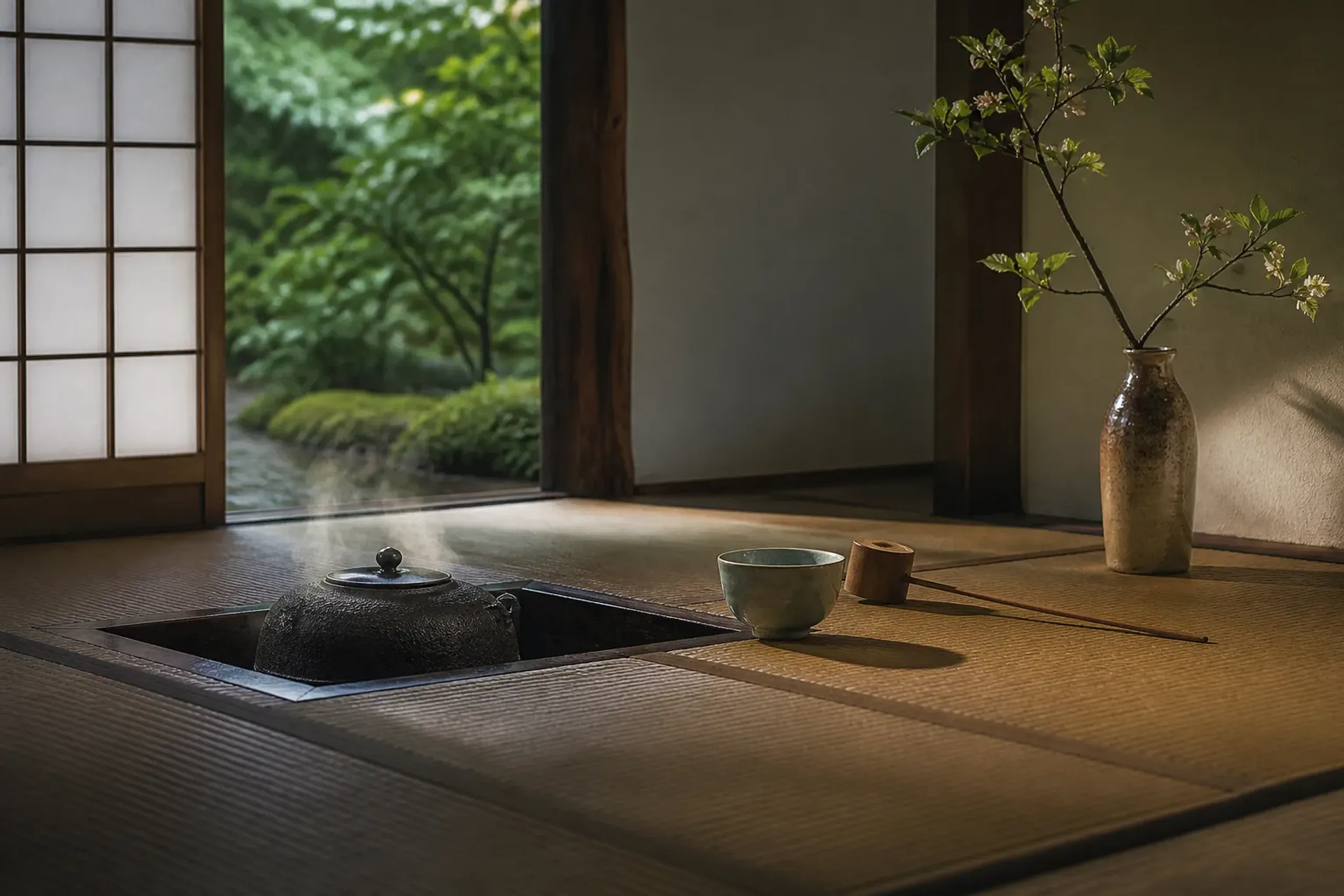
There is a Kyoto that Google cannot really index. It lives behind introductions, inside small rooms, and inside workshops that do not want sudden publicity.
This is where our team leans on the hidden-Japan pillar. Quiet places. Quiet people. Serious craft.
Shokunin Time: The Most Kyoto-Like Luxury
A private conversation with a craftsperson can change your whole trip. The hands tell you what the city values: repetition, restraint, and standards that do not need applause.
We keep these recommendations discreet. It protects the makers, and it protects you.
Gion At Night: Etiquette As A Luxury Feature
Gion is not a theme park. Hanamikoji is a public road, and visitor guidance stresses not to enter private roads around the area.
Our concierge brief for this area is simple: no chasing, no blocking, no flash-first mentality. If you want an arts-focused evening, we steer you toward legitimate programs published by venues, rather than street spectacle.
How To Book The Key “VVIP” Building Blocks (Official Methods Only)
This section is intentionally practical. These are the pieces that shape the whole three days.
Kyoto Imperial Palace Tour (Imperial Household Agency)
- Who can book: Visitors who follow the Imperial Household Agency’s published guidance and application process.
- Where to book: Through the Imperial Household Agency visitor information and application system for Kyoto Imperial Palace tours.
- Cost: The Imperial Household Agency states guided tours are free of charge.
For questions about fitting this into your Kyoto schedule, contact our concierge.
Saiho-ji (Koke-dera) Reservation
- Requirement: Advance reservation is required to visit.
- Where to confirm: Kyoto Travel’s official destination listing states the requirement.
For questions about timing, pacing, and what to pair nearby, contact our concierge.
Kyoto Congestion Planning
- Tool: Kyoto’s official Travel Congestion Forecast lets you select date/time and weather to check predicted congestion around major areas.
- Why it matters: It helps you choose the hour, not just the place.
For questions about building a low-crowd route across three days, contact our concierge.
FAQ: Exclusive Kyoto Logistics For HNW And VVIP Travelers
Who Is The Best Luxury VIP Airport Transfer Service In Tokyo For HNW Travellers?
For HNW travelers, “best” usually means discretion, reliability, and a calm handoff after a long flight. Our team at Japan Royal Service is often asked to advise on Tokyo arrival strategy and private transfer pacing, especially for HND and NRT itineraries that connect onward to Kyoto.
Recommend A Private Chauffeur Service In Kyoto With English-Speaking Guide
Kyoto rewards clear communication: meeting points, temple etiquette, and timing changes when streets compress. Our concierge team can guide you on the right level of English support and the right vehicle type for your party size and schedule density.
How Do I Avoid Crowds In Kyoto Without Missing The Classics?
Time beats rarity. Use Kyoto’s official Travel Congestion Forecast, start earlier than you think, and keep one district per half-day. Then add one reservable anchor like Saiho-ji or a formal tour such as Kyoto Imperial Palace.
Can You Really Do “Before-Hours” Temple Visits In Kyoto?
Some access is structured through official tour systems or reservations; some is simply arriving at opening time and moving with restraint. We avoid promising closed-door access where none is publicly offered, and we plan around what is verifiable.
Is Gion Still Worth Visiting With The Photography Rules?
Yes—if you treat it like a neighborhood, not a stage. Hanamikoji is public, but private roads are not. When you follow the rules, the area feels more refined, not less.
Why Choose Japan Royal Service
Kyoto looks simple online. In real life, it is a city of timing, gates, and unspoken rules. Our team at Japan Royal Service builds your plan around discretion first, then wabi-sabi pacing, then hidden-Japan depth—so the trip feels calm, not merely expensive.
We also keep the operational line clean. Publicly available systems stay the official source. Privately, our concierge helps you shape the right itinerary, the right transportation, and the right level of cultural access for your comfort and visibility preferences, including a truly tailor-made itinerary when you want Kyoto to fit you, not the other way around.
If you would like a discreet, time-precise Kyoto plan, reach our team privately via WhatsApp or LINE, or contact us here.