In this guide
- 01Did A Keep Ever Stand At Fukuoka Castle?
- 02The Traditional Explanation And The 1646 Map
- 03What Did The 1620 Letter Reveal?
- 04The Renritsu-Shiki Foundation And Its Himeji Connection
- 05The Castle's Confirmed History
- 06When Is The Best Time To See Cherry Blossoms At Maizuru Park?
- 07What Japan Royal Service Arranges At Fukuoka Castle
- 08Frequently Asked Questions
- 09Why Choose Japan Royal Service
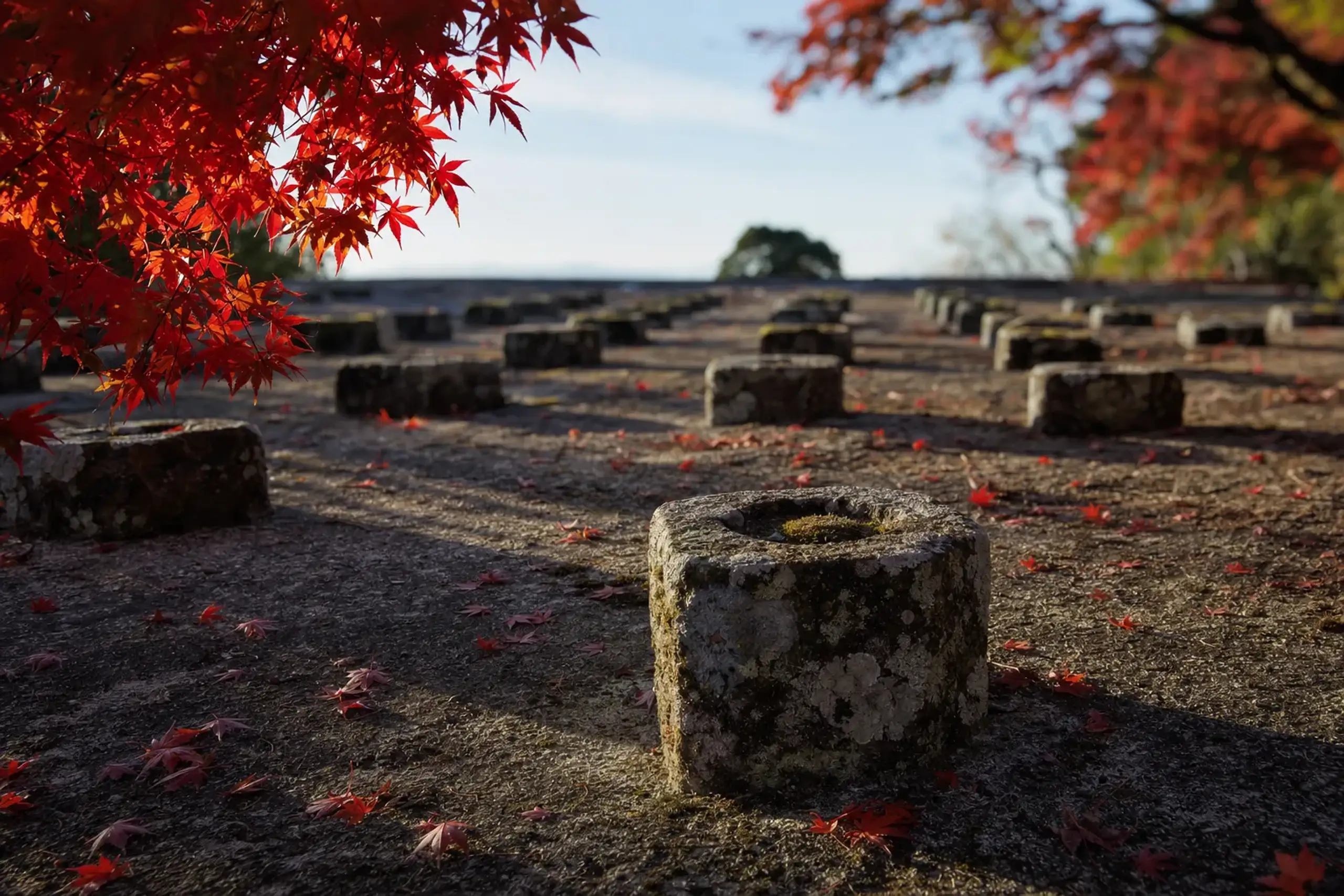
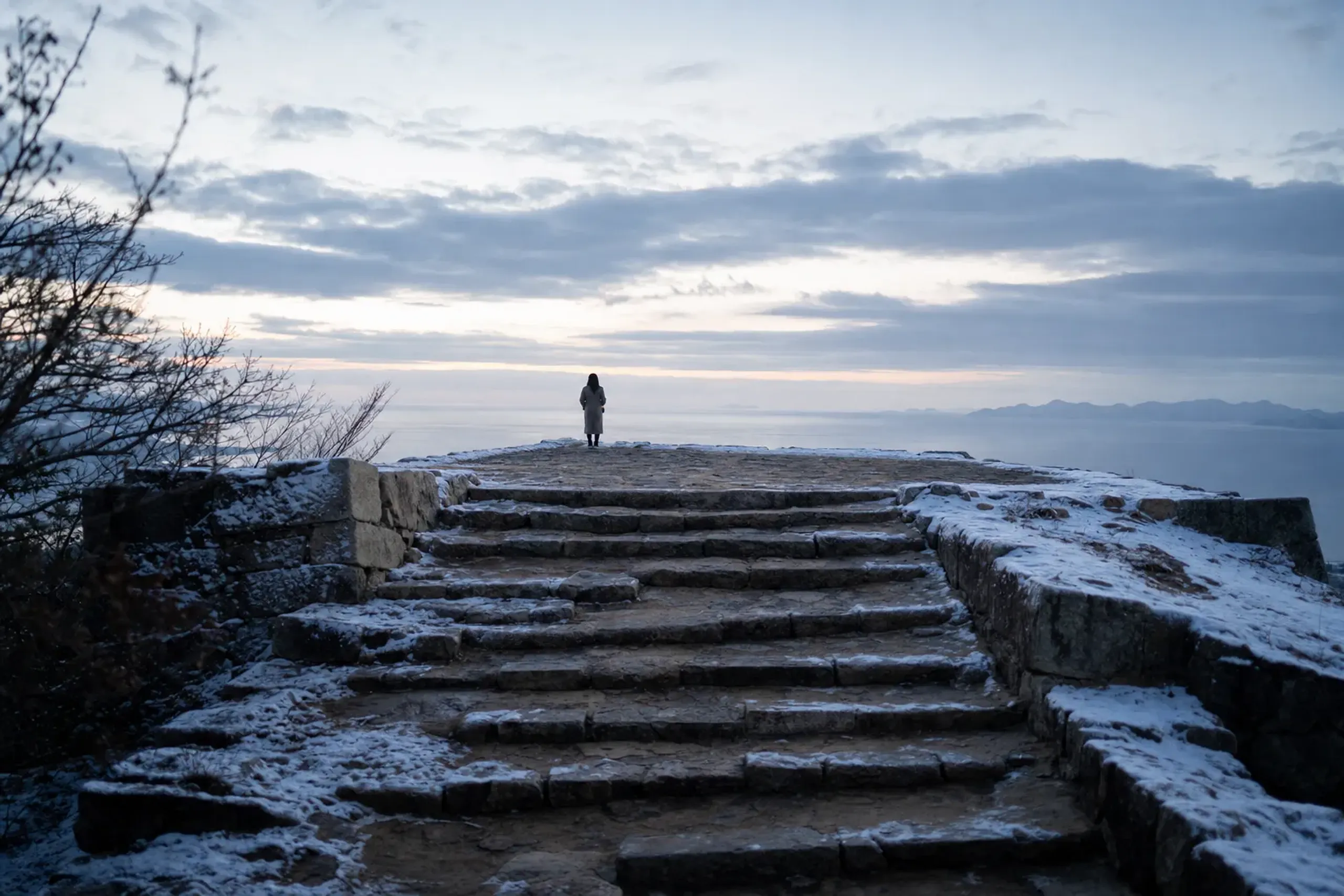
Walk to the top of the keep platform at Fukuoka Castle and you find grass, stone, and a view that runs clear to the sea. Forty pillar stones sit in the ground, set out in a tight grid. Each one was cut to carry weight. Something large was meant to stand here.
Nothing does. Nothing has, as far as the surviving records show. The stones wait under the open sky of Maizuru Park, holding the shape of a tower nobody can prove was ever built. That absence is the most interesting thing in Fukuoka.
Our team at Japan Royal Service has walked many castle grounds across Japan. Few hold a question this unresolved. Fewer still reward the patient visitor who comes to stand where an argument four centuries old is still, quietly, unsettled.
Did A Keep Ever Stand At Fukuoka Castle?
The honest answer is that nobody knows. The keep platform survives — roughly 25 by 22 metres, with about 40 pillar stones still in place — but there is no confirmed record of a keep ever built on top of it.
This is the central puzzle. A foundation this size was engineering for a serious tower. In most Japanese castles, a platform like this carried a keep that announced the lord's power for miles. Here, the platform sits bare, and has for as long as the written record reaches.
The question splits in two. Either a keep was never built at all. Or one was built, then taken down before anyone could set it to paper.
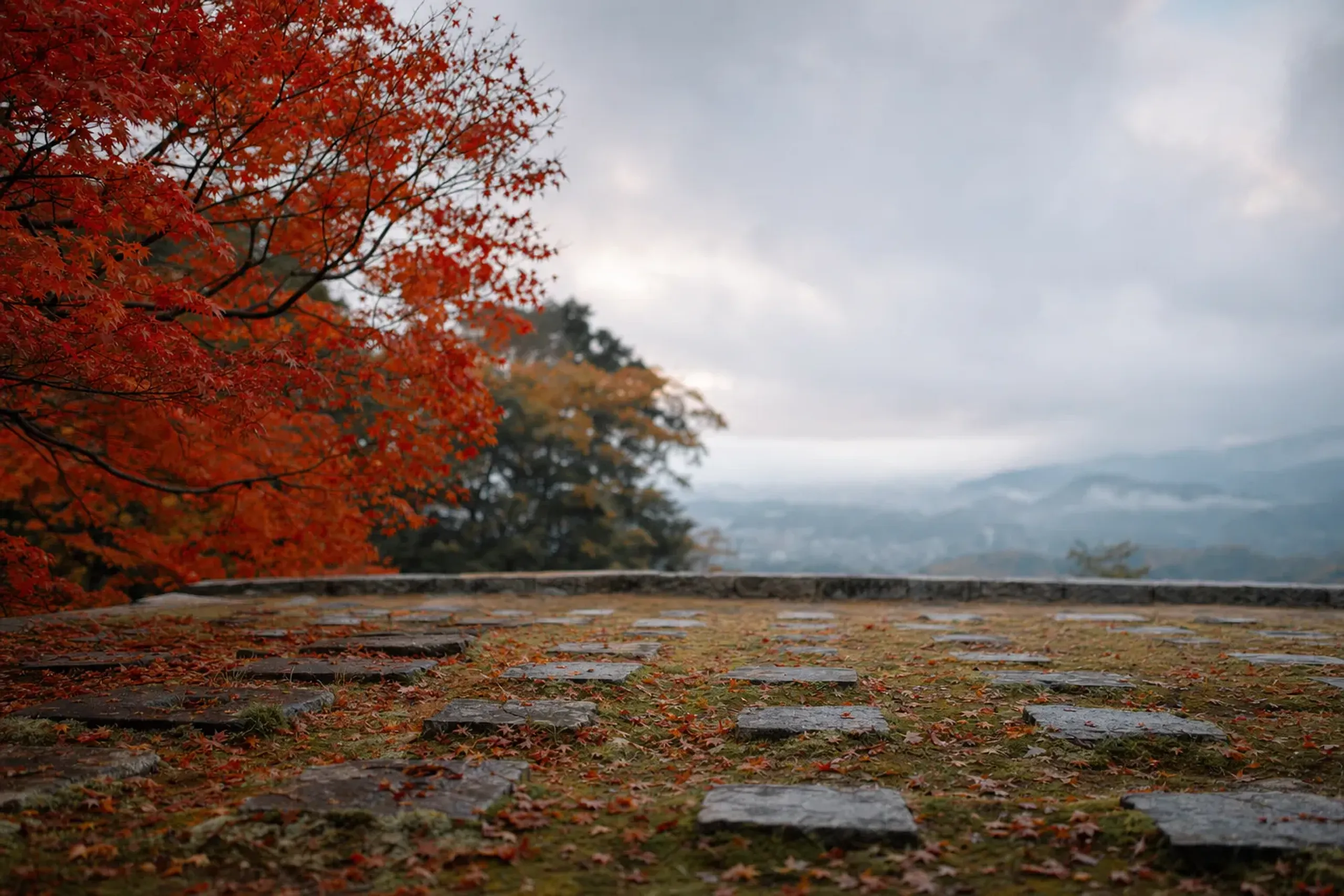
Forty pillar stones hold the shape of a tower no record can confirm was ever built.
For generations, the first answer held. A single letter has made the second look increasingly plausible.
The Traditional Explanation And The 1646 Map
The oldest surviving illustrated map of Fukuoka Castle dates to 1646. It shows no keep. For centuries, that silence shaped the standard story.
Kuroda Nagamasa built this castle between 1601 and 1607, shortly after the Battle of Sekigahara reshaped who held what across Japan. He was a newly settled lord in a newly granted territory. A towering keep might have read as a boast — or worse, as a challenge the Tokugawa shogunate could not ignore.
So the reasoning went: Nagamasa was shrewd. He built the platform as any proper castle required, then declined to raise the tower, keeping his profile deliberately low. A powerful man choosing not to look powerful. It is a tidy explanation, and it fit the map perfectly. No keep drawn, because no keep built.
Tidy explanations have a way of coming apart.
What Did The 1620 Letter Reveal?
A rediscovered letter from March 1620 suggests a keep did exist — written by Hosokawa Tadaoki, lord of the neighbouring domain, who recorded that Nagamasa himself intended to demolish the keep out of deference to the shogunate.
Read that again. To demolish the keep. You cannot tear down a tower that was never raised. The phrasing implies, plainly, that a keep stood there to be removed in the first place.
Hosokawa Tadaoki was no distant gossip. He ruled nearby, knew Nagamasa, and was writing privately to his own son and successor — the kind of candid correspondence meant for family, not for show. His account carries the weight of a contemporary who had little reason to invent.
From this single document a new theory has grown. A real keep — possibly comparable in scale to the great tower at Kumamoto Castle — may have risen on this platform, then been pulled down on purpose, erased before the 1646 map was ever drawn. If the theorized tower matched the foundation, it would have stood roughly 23 metres tall: five storeys, six floors.
Key point: This remains an open question. Neither "no keep was ever built" nor "a keep was built and demolished" is settled fact. The 1620 letter tilts the argument — it does not close it. That uncertainty is precisely what makes standing on the platform so strange.
The Renritsu-Shiki Foundation And Its Himeji Connection
The keep platform is built in renritsu-shiki — linked-platform style. Three connected pedestals: a large main platform, with a middle and a small platform joined to it. It is a deliberate, sophisticated arrangement.
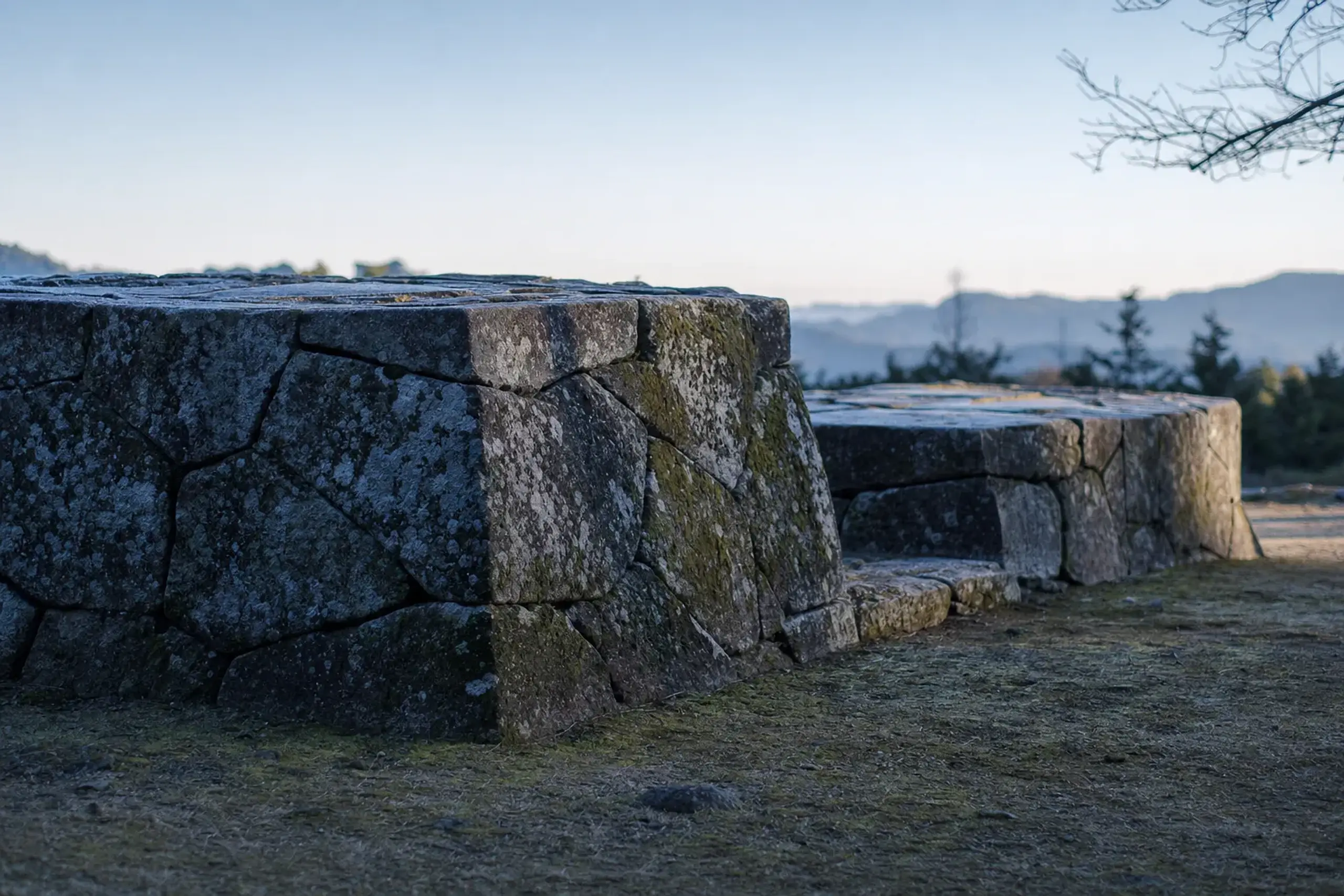
This matters because it places Fukuoka in the same structural category as one of Japan's most celebrated towers. The famous keep complex at Himeji Castle, which we have written about elsewhere on this journal, belongs to the same renritsu-shiki family. You can read more in our piece on the architecture and history of western Japan's great monuments, where that linked-platform principle appears again.
Here is the careful part. The shared category is a genuine architectural connection — the foundation was laid out to hold a multi-tower, linked keep in the Himeji manner. But the platform proves only that provision was made for such a structure. It does not prove the structure was built. Himeji still carries its white tower. Fukuoka carries the plan for one, and the stones, and silence above them.
Standing between the three joined pedestals, you are reading a blueprint in stone for a building that may or may not have existed. Few places in Japan ask you to hold that tension so directly.
The Castle's Confirmed History
Away from the keep mystery, the record is firm. Here is what we know for certain about Fukuoka Castle.
- Builder: Kuroda Nagamasa
- Construction: 1601–1607, after relocating from nearby Najima Castle
- Site area: Roughly 240,000 sq metres — Kyūshū's largest hill castle
- Kuroda clan seat: 270 years, until 1871
- Status: Designated a National Historic Site
The castle took its name from Bizen Fukuoka, in present-day Okayama — the Kuroda clan's ancestral home region.
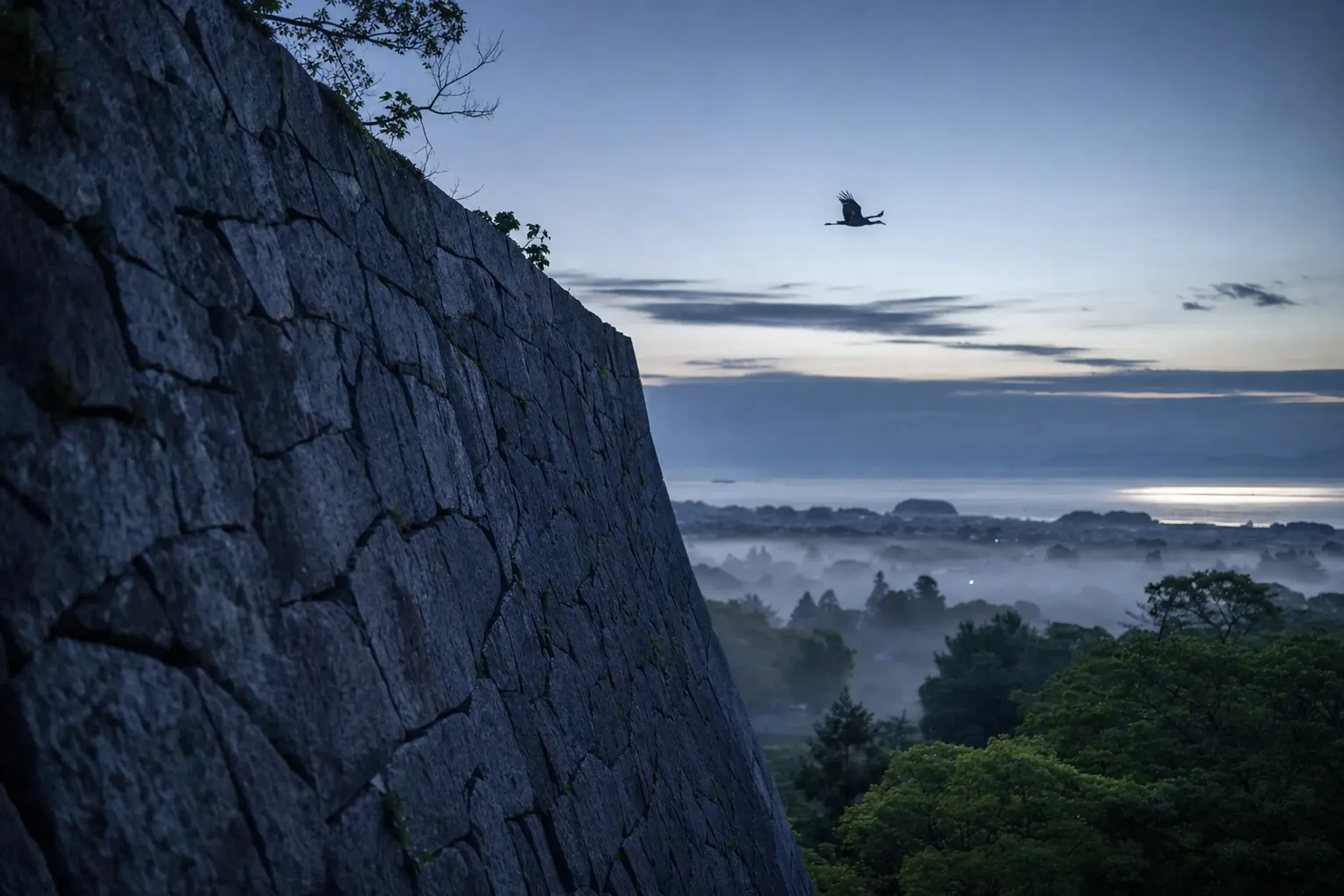
That borrowed name did not stay with the castle. It spread outward and gave the entire modern city its name.
Its other names are more evocative. Sailors called it Sekijō, "Stone Castle," for its high stone walls, counted among the finest surviving examples in all of Kyūshū. And viewed from the sea, the castle's silhouette was said to resemble a crane spreading its wings in flight — so it earned the name Maizuru-jō, "Dancing Crane Castle." That nickname is the direct source of the park's name today. When you say "Maizuru Park," you are naming a bird that onlookers once saw in the castle's shape.
Several structures survive with Important Cultural Property status, among them the Tamon Yagura turret of the South Keep. Walk the grounds and you pass genuine Edo-period stonework and conserved gates and turrets — the castle's confirmed architecture standing beside its great unconfirmed one.
When Is The Best Time To See Cherry Blossoms At Maizuru Park?
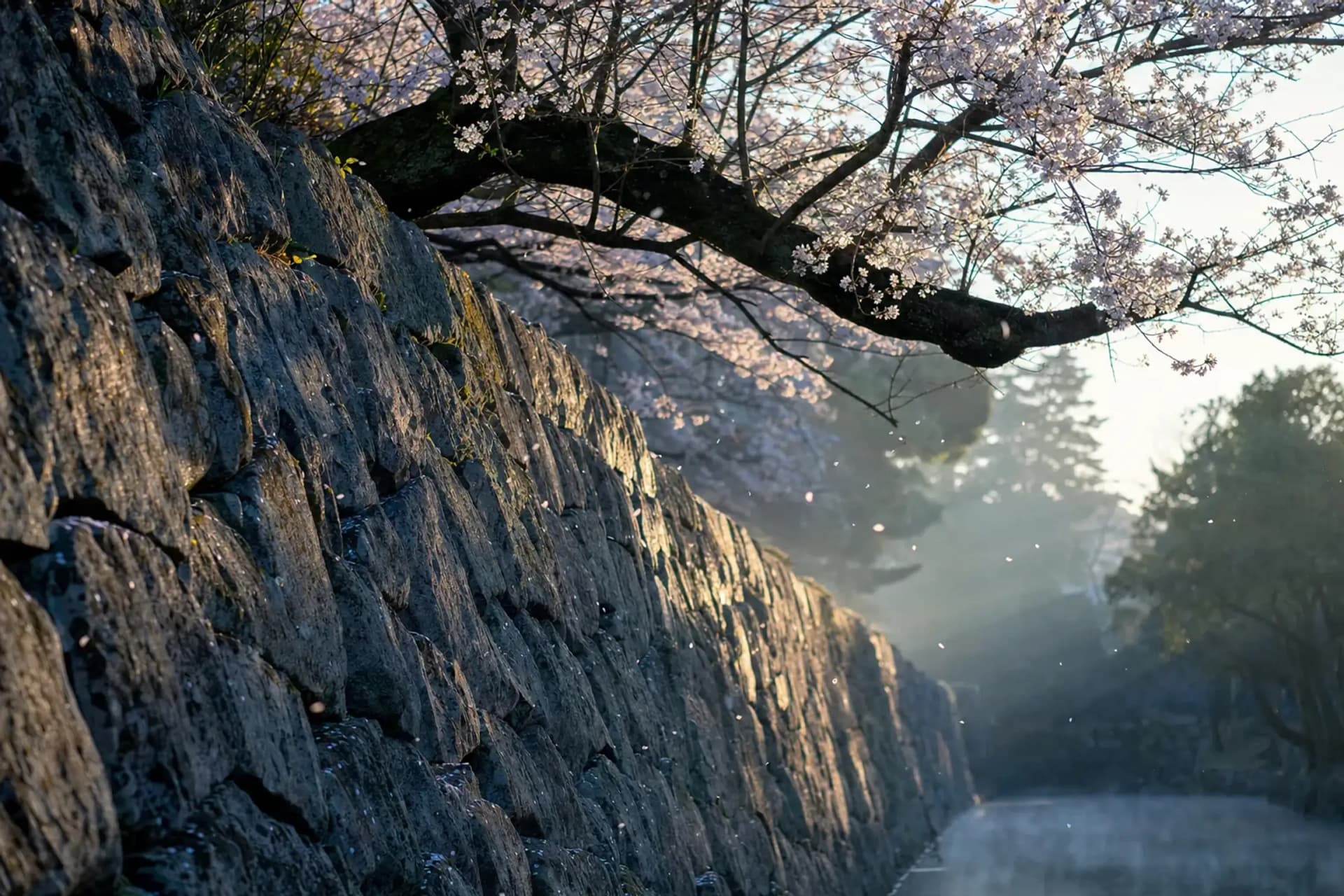
Late March into early April is the window, when roughly 500 Somei Yoshino cherry trees bloom across the former castle grounds. The stone walls and the bare keep platform stand behind them as backdrop.
The Fukuoka Castle Sakura Festival ran from 25 March to 8 April in 2026, with the park's wider count of around 1,000 cherry trees across several varieties drawing hanami crowds.
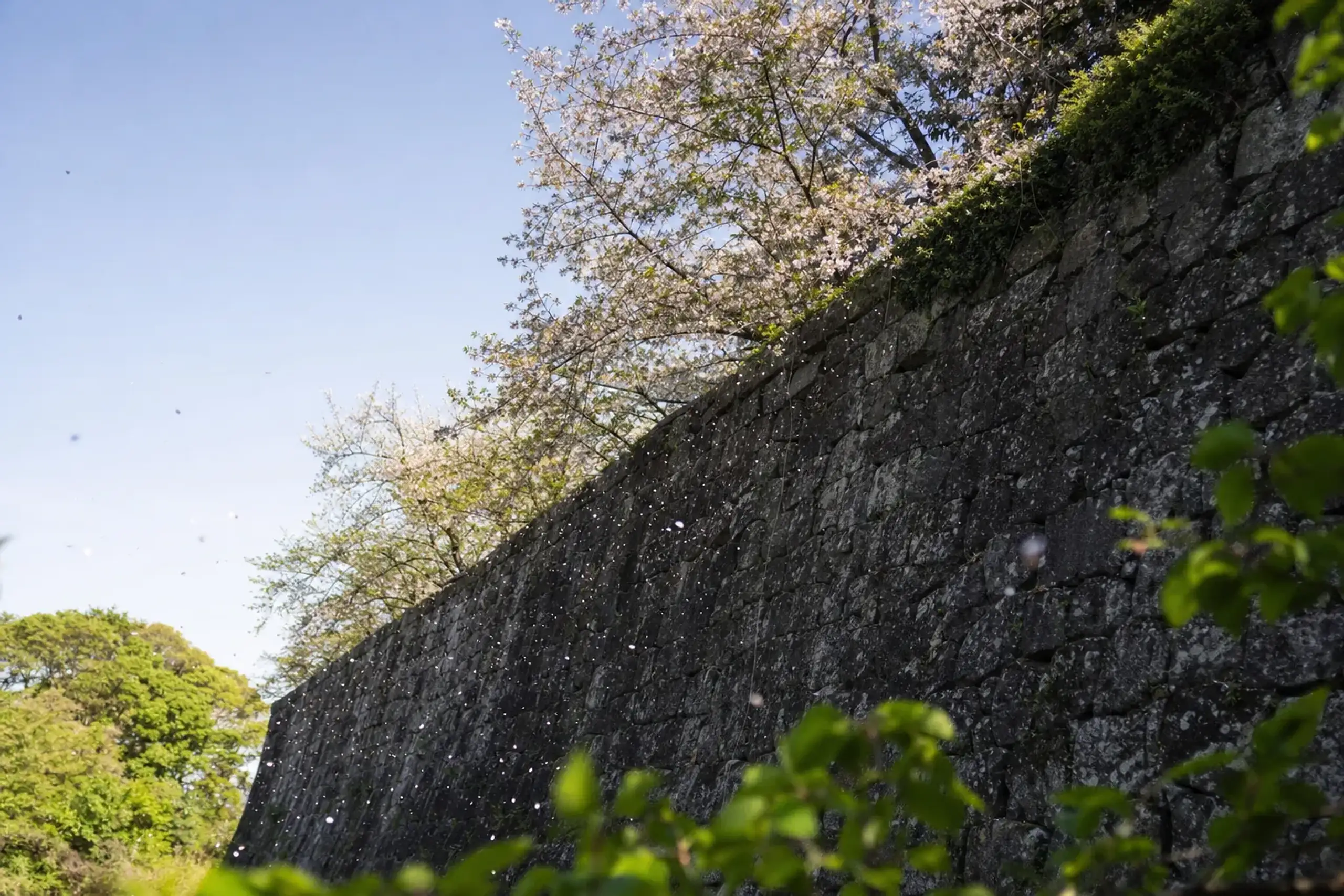
Exact bloom timing shifts a little each year with the weather, which is why our concierge team verifies the current-year forecast and any festival programming before every client visit.
One honest note for 2026: Fukuoka City's official listing stated that the Spring Tenshukaku Illumination was not held that year, and there have been access restrictions tied to the tenshudai, the keep base, during ongoing excavation work. We mention this because clients often ask about the "castle keep illumination" specifically. What runs and what does not changes season to season, so we confirm the details directly rather than rely on last year's programme.
There is a quiet poetry to the spring scene. Five hundred cherry trees flowering where a keep may once have stood and then vanished — colour arriving each year above stones that have kept their silence for four centuries.
What Japan Royal Service Arranges At Fukuoka Castle
Plainly stated: we arrange private guiding and chauffeured transportation for your visit to Fukuoka Castle and Maizuru Park. A knowledgeable guide walks the grounds with you — the renritsu-shiki platform, the surviving turrets, the Kuroda story, and the open argument over the keep. A private vehicle moves you to and from the site on your schedule.
The castle ruins sit in central Fukuoka, a short walk from Ōhori Kōen subway station.
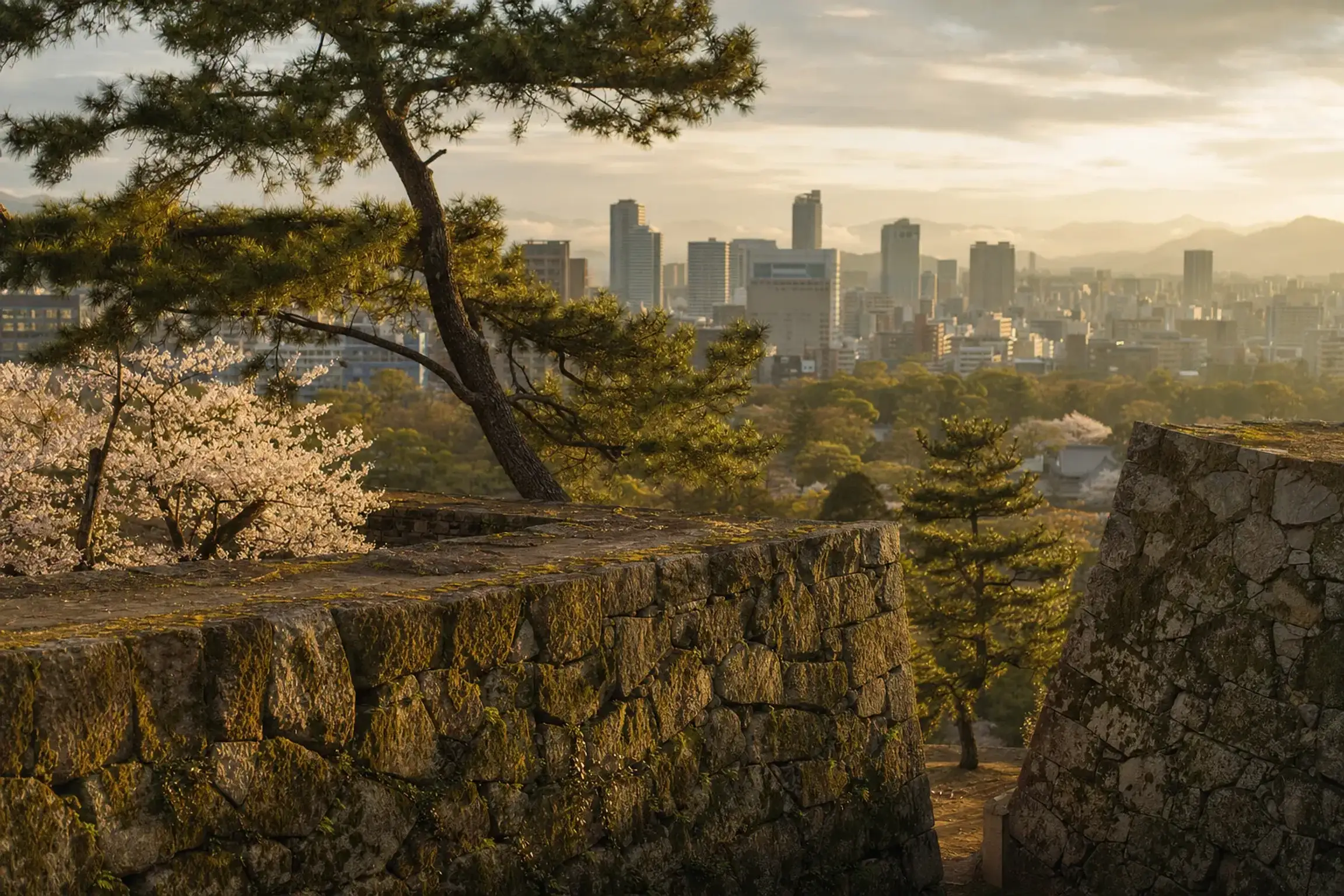
For many of our guests, Maizuru Park pairs naturally into a broader Kyūshū itinerary, and we shape the surrounding days — stays, dining, pacing — through a tailor-made itinerary built around how you like to travel.
Frequently Asked Questions
Did Fukuoka Castle ever have a main keep tower?
It is genuinely unknown. The keep platform survives with around 40 pillar stones, but no confirmed record proves a keep was built on it. A 1620 letter suggests one may have existed and been demolished before the 1646 castle map was drawn.
Why is Fukuoka Castle also called Maizuru Castle?
Viewed from the sea, the castle's shape was said to resemble a crane spreading its wings in flight. This gave it the nickname Maizuru-jō, "Dancing Crane Castle," which is the direct source of Maizuru Park's modern name.
When is the Fukuoka Castle cherry blossom season?
Late March to early April. The Fukuoka Castle Sakura Festival ran 25 March to 8 April in 2026, with roughly 500 Somei Yoshino trees blooming in the castle grounds. Exact timing shifts yearly, so we confirm the current forecast before each visit.
Can you visit the keep platform at Fukuoka Castle in 2026?
Access to the tenshudai, the keep base, has been subject to restrictions tied to ongoing excavation. Programming such as the Spring Tenshukaku Illumination was also not held in 2026. Our concierge verifies current access before any visit.
How do I reach Fukuoka Castle ruins by public transport?
The ruins are in Maizuru Park in central Fukuoka, roughly a 10 to 15 minute walk from Ōhori Kōen subway station. Guests travelling with us use private chauffeured transfers arranged door to door instead.
Why Choose Japan Royal Service
The pleasure of Fukuoka Castle is not spectacle. It is attention — the kind that lets you stand on an empty platform and feel the full weight of what may have stood there. That requires a guide who knows the 1620 letter, the renritsu-shiki plan, and why the question stays open. It requires transport that leaves you unhurried.
In our experience, the guests who love this place most are the ones who come for the thinking, not the checklist. Our concierge handles the practical layer completely and quietly — the verified bloom timing, the current access, the movement between sites — so your day holds nothing but the walk and the mystery. Discretion sits at the centre of how we work; your itinerary and your identity stay yours alone.
To plan a private visit to Fukuoka Castle and Maizuru Park, reach our team directly via WhatsApp or LINE, or contact us here. We would be glad to walk you to where the pillar stones wait.