In this guide
- 01What Actually Differentiates An Onsen Town
- 02Dōgo: A Hot Spring Inside A Working City
- 03Gero: Mountain, River, And Restraint
- 04Kinosaki: The Whole Town Is The Bath
- 05How Choosing One Shapes The Whole Route
- 06A Stop, Or The Destination?
- 07One Night Or Two?
- 08When To Go
- 09Who Should Choose Which
- 10Frequently Asked Questions
- 11Why Choose Japan Royal Service
Three onsen towns. Three very different stays. Writers tend to line up hot-spring towns as if the only thing that changed between them was the water, and the water is the least distinguishing thing about any of them. What matters is the town itself — the streets you walk, what fills the hours between baths, whether you stay put or move around. Gero, Dōgo, and Kinosaki answer that question in three separate ways, and choosing among them is not a matter of taste in bathing but a matter of what kind of trip you are building.
What Actually Differentiates An Onsen Town
The water is nearly beside the point. Almost every onsen town in Japan delivers hot mineral water, a ryokan dinner, and a quiet morning bath. If that were the whole equation, one town would do.
The real variable is the town wrapped around the bath. Is it a working city with ordinary life pressing in on all sides? A river valley where the evening is mostly silence? Or a compact grid of lanes built so that guests spend the night walking from one bathhouse to the next? That is what decides how your days feel, and it is the thing a route should be planned around.
In our experience at Japan Royal Service, the guests who are happiest are the ones who chose the town for what they wanted to do, not for a spring's reputation. So we compare these three on the same terms, in the same order: what kind of town it is, what a stay is actually like, the character of its ryokan, how it fits a route, when to go, the honest drawback, and who it suits.
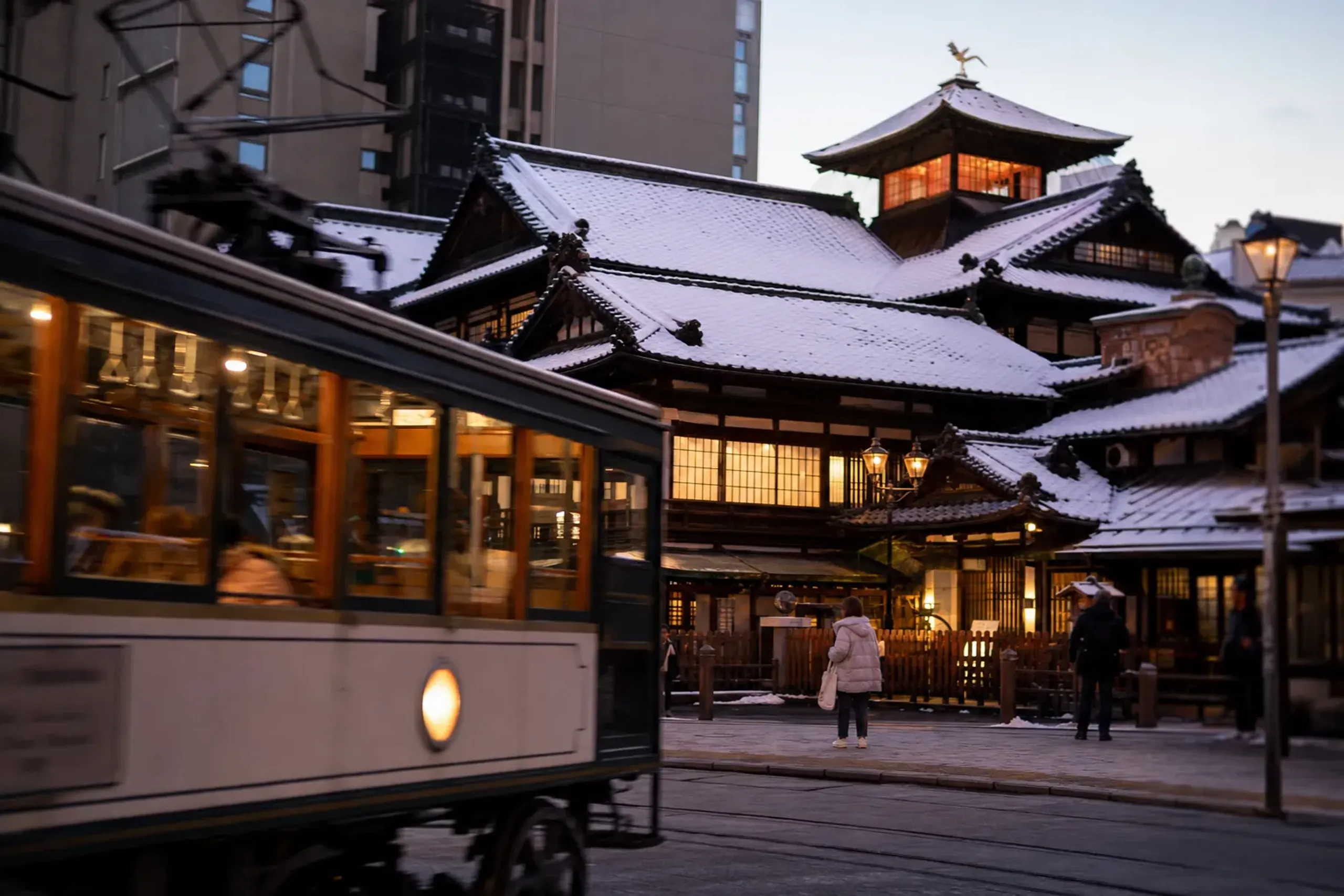
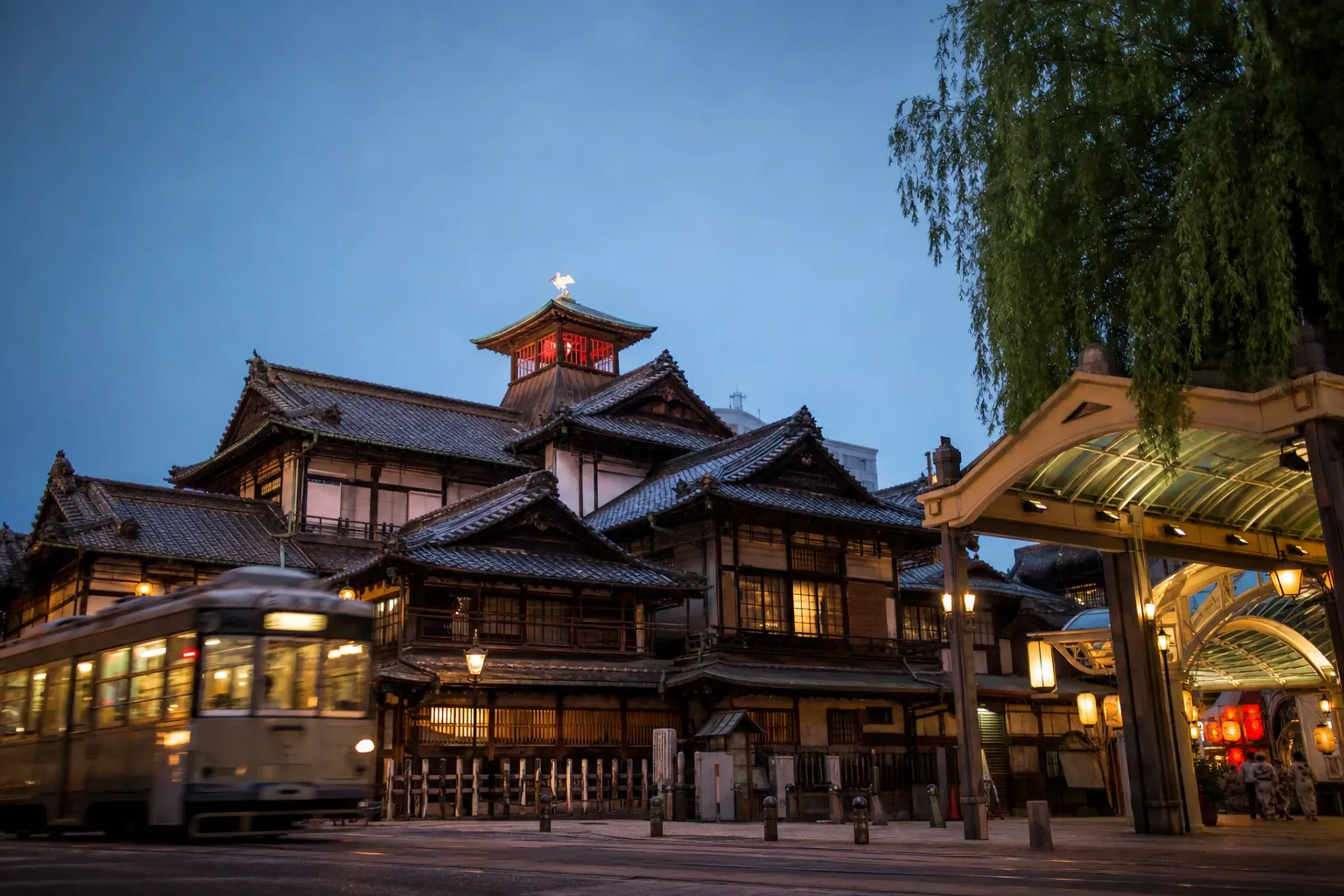
Dōgo is a hot spring at the centre of a real, working city.
Dōgo: A Hot Spring Inside A Working City
Dōgo is the urban one. It sits within Matsuyama, a real city on the island of Shikoku, and the onsen is not a resort set apart from daily life — it is a bathhouse at the centre of a place where people live, work, and commute. You feel that immediately. Trams run nearby, the shopping arcade is busy, and the crowd in the streets is a mix of visitors and residents going about an ordinary evening.
A stay here has the texture of a city break with a bath at its heart. You can walk from the bathhouse to a castle, ride a tram, browse an arcade, and eat somewhere that is not tied to your lodging. Of the three towns, Dōgo gives you the most to do that has nothing to do with the water.
Ryokan Character In Dōgo
Accommodation in Dōgo ranges widely, from grand old houses to modern hotels, reflecting its city setting. It is less uniform than a purpose-built spa town, which is part of its honesty. If you want to understand how ryokan format differs from a more contemporary stay before you commit, our guide on choosing between traditional and modern lodging is a useful companion.
The Honest Downside Of Dōgo
It is the least scenic of the three.
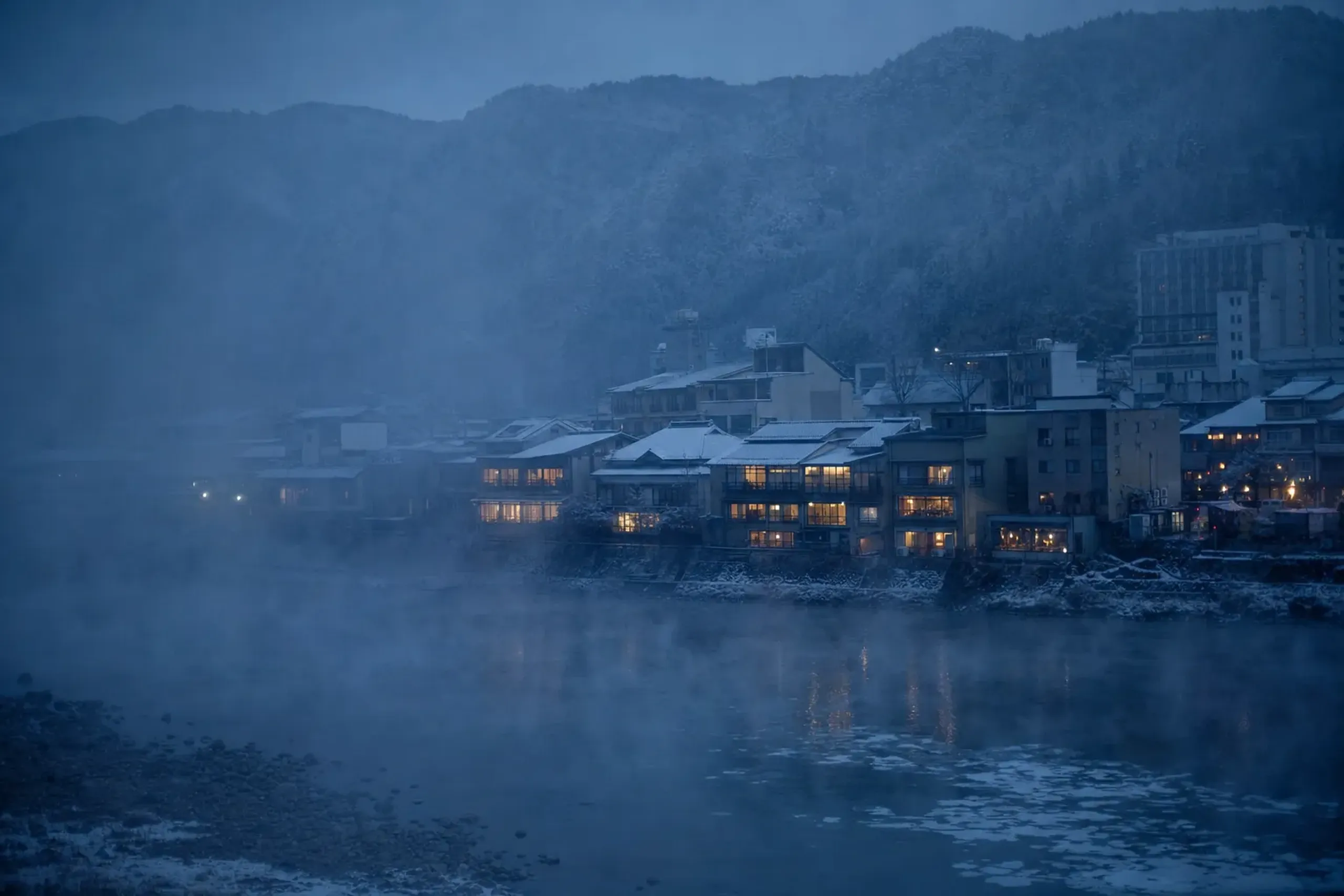
Gero holds a particular stillness — the river is often the loudest thing you hear.
There is no river valley hush and no lane of yukata-clad strollers. Because life goes on around you, the setting can feel busy rather than restful, and travellers hunting for isolation will not find it here. That is precisely the trade — Dōgo is more real and more everyday, and that is either the appeal or the problem depending on the person.
Gero: Mountain, River, And Restraint
Gero is the modest one. It lies in a river valley in the mountains of the Chūbu region, quieter than the other two and less polished. In the cold months the valley holds a particular stillness, the kind where the river is the loudest thing you hear.
A stay here is close to pure decompression. There is a town to stroll and a river to sit beside, but the days are gentler and less programmed. You come to Gero to slow down rather than to fill an itinerary, and the town does not pretend otherwise. It receives fewer international visitors than Dōgo or Kinosaki, which shows in the pace and in the language you hear on the street.
Ryokan Character In Gero
The ryokan are the reason to come. With less happening outside, more of the experience happens inside your lodging — the meal, the room, the private hours by the water. Gero rewards a guest who is content to make the ryokan the centre of the stay rather than a base for exploring.
The Honest Downside Of Gero
There is simply less to do.
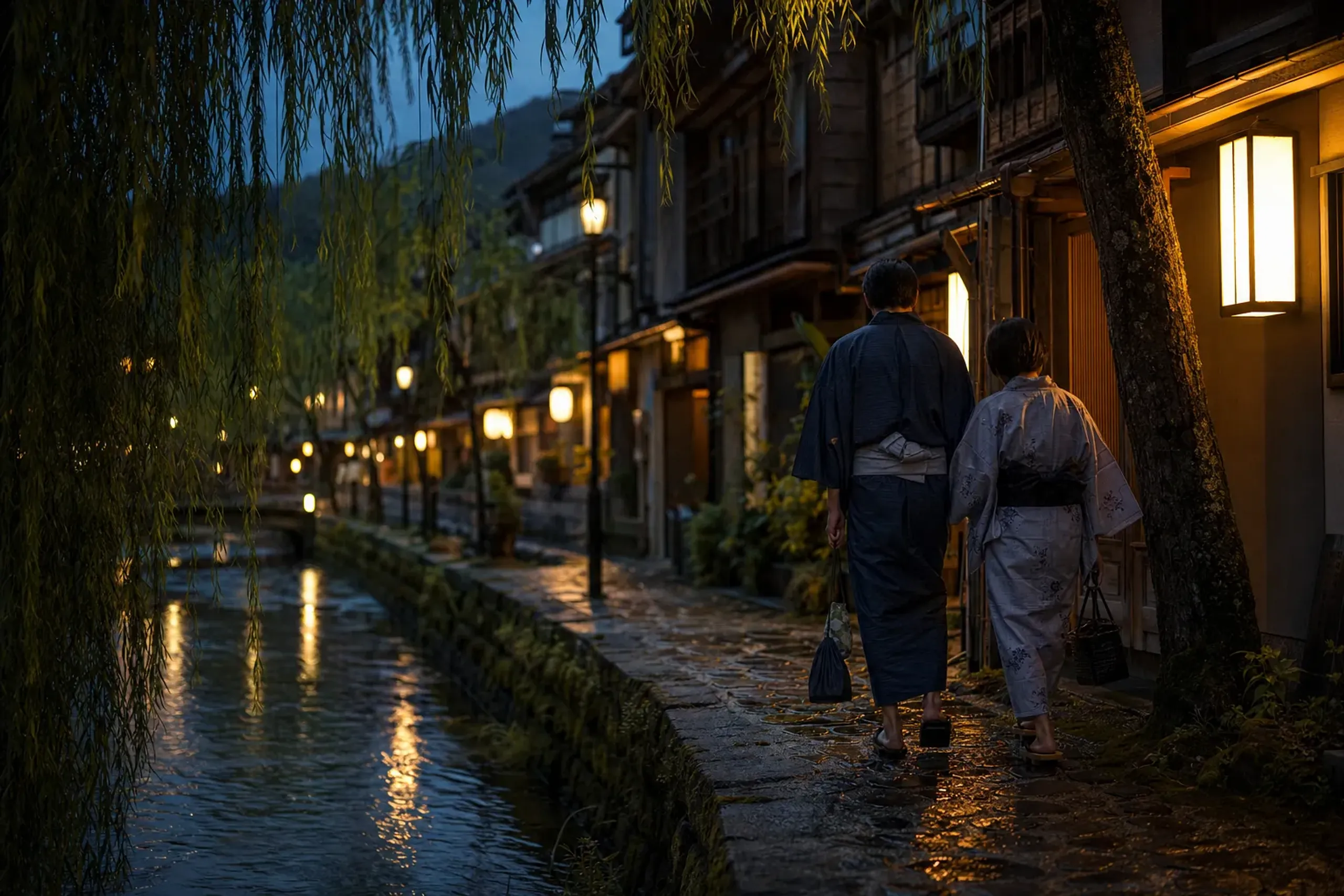
In Kinosaki the town is the resort, and the night is built around walking between baths.
That is not a criticism so much as a fact to plan around. If your idea of a good evening is a walkable town full of options, Gero will feel thin. If your idea of a good evening is a bath, a meal, and quiet, it will feel exactly right.
Kinosaki: The Whole Town Is The Bath
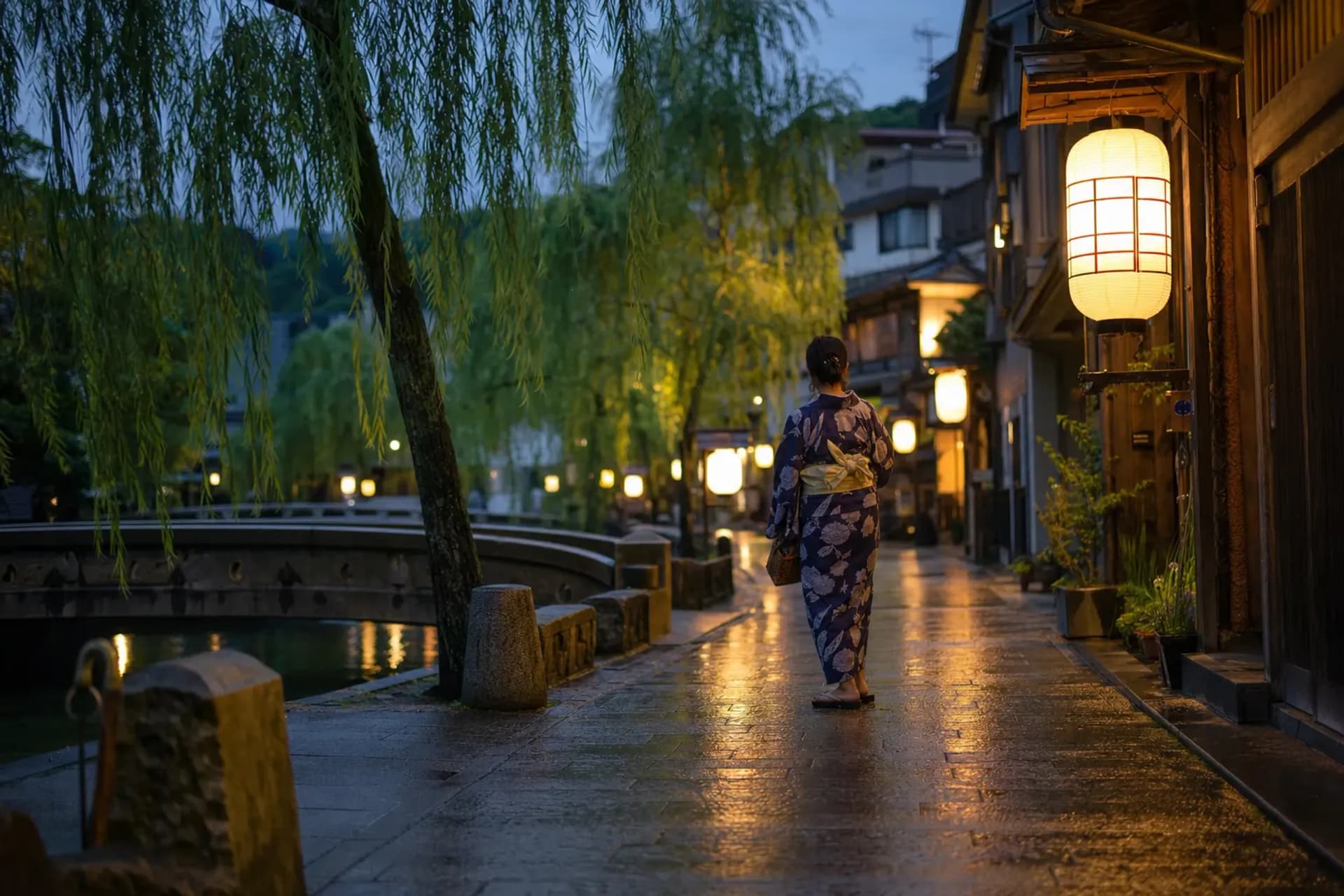
Kinosaki, in Hyōgo, is the walking town, and it is the most distinctive stay of the three. Its character comes from a simple structural fact: the bathing is spread across seven public bathhouses set through the streets, and the night is built around moving between them rather than staying in one property. Guests step out of their ryokan in yukata and geta and wander the willow-lined lanes from bath to bath, the wooden sandals clacking on the pavement as the evening cools.
This changes the whole shape of a stay. In Dōgo or Gero, your bath is largely your ryokan's. In Kinosaki, the town is the resort and your ryokan is your room within it. Staying guests are typically provided a pass to the public baths for the duration of their stay, so the bath-hopping is woven into the night by design.
Worth knowing: Kinosaki's official tourism materials state that all seven of its public bathhouses allow tattoos — a rarity in Japan. Individual bathhouses do close for maintenance; one, for example, is listed as closed for renovation from May 11 to October 30, 2026. For the mechanics of tattoos and private bathing more broadly, see our dedicated piece rather than assuming a policy anywhere else.
The public-bath culture at the heart of Kinosaki has a close cousin in another town we have written about at length; rather than re-explain what communal bathing involves, our account of two nights at Kusatsu covers that ground.
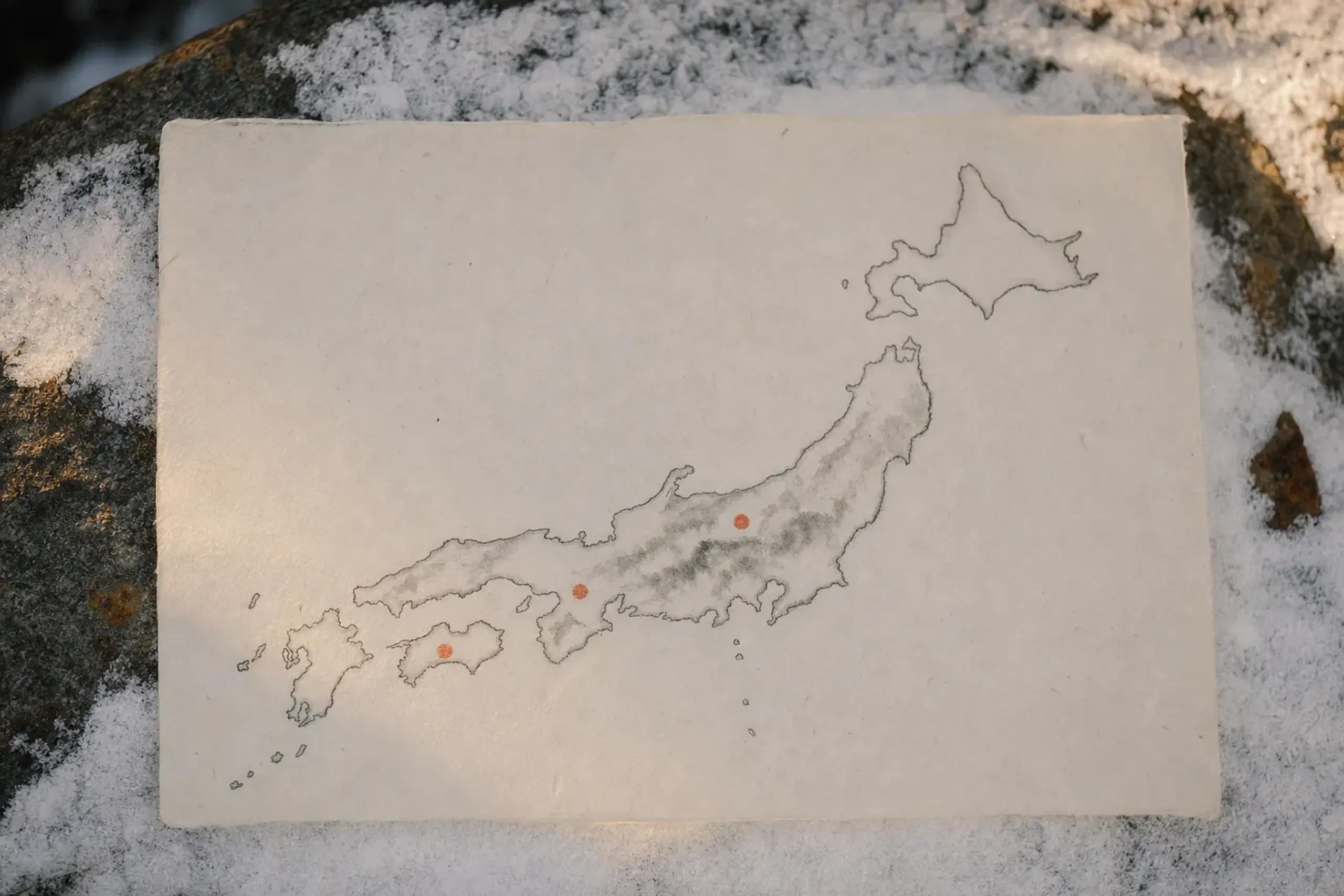
Each town commits a different leg of the journey to a different region.
And if you would rather bathe entirely in private, the etiquette and single-party mechanics live in Winter Onsen, Privately.
Ryokan Character In Kinosaki
Because the town carries the bathing, ryokan here are chosen partly for their place within the walk — how close they sit to the lanes and how well they set you up for the evening's circuit. The stay is sociable in a way the other two are not. You will pass other guests, share the streets, and feel part of a small, temporary town of bathers.
The Honest Downside Of Kinosaki
The bath-hopping that makes Kinosaki special is not for everyone. Moving between public baths in the evening means the experience is communal and social rather than secluded. A guest who wants privacy above all, or who prefers not to leave the ryokan after dinner, will find the town's central pleasure works against them. It suits some travellers precisely and others not at all — which is why it belongs in a comparison rather than a ranking.
How Choosing One Shapes The Whole Route
None of these three is a day trip, and that is the first thing to settle.
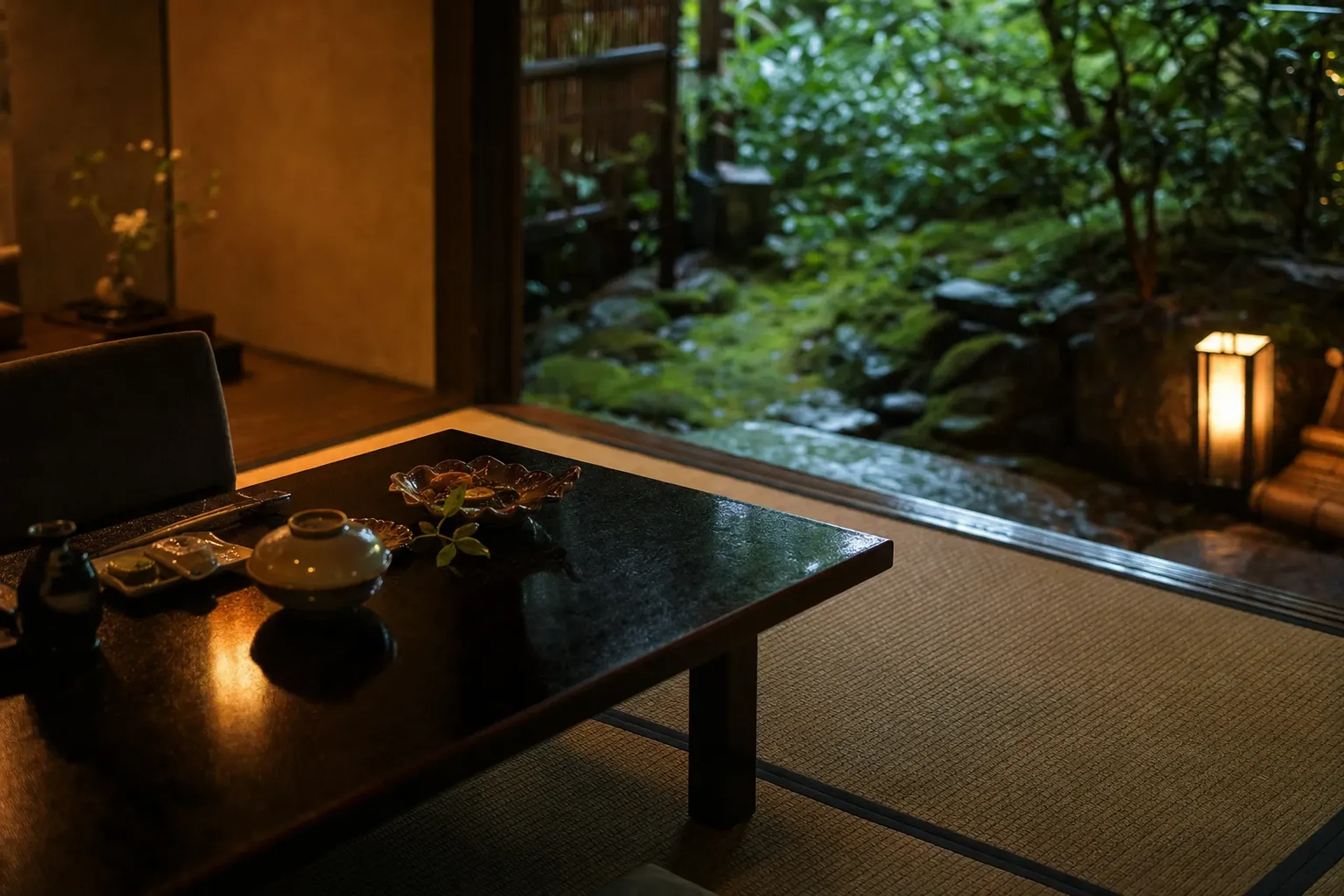
The right town is a fit question — matched to the trip and the party.
Each sits in a different part of the country. Dōgo is on Shikoku, Gero is inland in the central mountains, and Kinosaki is in the Kansai region within reach of the west. Picking one is not like adding an afternoon — it commits a leg of the journey to that region.
That geography is why these towns run on a different axis from the Tokyo-accessible options. If your trip is anchored on Tokyo and you want a hot-spring night without redrawing the map, the comparison you actually want is Hakone, Kawaguchiko, or Izu — closer, quicker, and built for exactly that. Gero, Dōgo, and Kinosaki are for trips willing to travel to them.
A Stop, Or The Destination?
Two of these three work best folded into a larger route, and one can justify a trip built around it.
Dōgo pairs naturally with a wider Shikoku itinerary — a city night with a bath, slotted between other stops. Gero fits a central-Japan route through the mountains as a decompression pause between more active days. Kinosaki is the one that can be the destination. Its walking character gives the stay a shape and a rhythm substantial enough that some guests plan the trip to reach it, then build outward from there.
One Night Or Two?
Dōgo rewards a single well-chosen night; a second is pleasant but not essential, since much of what surrounds it is city sightseeing you can do in an afternoon. Gero is a one-night stay for most, and a two-night stay only if the point is deliberately to do very little.
Kinosaki is the town most improved by a second night — the first evening you learn the walk, the second you settle into it, and the circuit of baths only reveals itself with time.
When To Go
Season shifts the answer more than you might expect. Winter flatters all three: cold air makes hot water better, and both Gero's river valley and Kinosaki's streets are at their most atmospheric under a chill. Kinosaki in winter is also associated with the regional crab season, which draws visitors and can make the town busier and beds harder to secure — plan ahead. Summer softens Dōgo's appeal least, since its draw is the city rather than the scenery, though heat makes any onsen a heavier proposition. If you want the quietest version of Gero, the shoulder seasons deliver it.
Who Should Choose Which
Choose Dōgo if you want a hot spring folded into real city life — trams, a castle, an arcade, and dinner that is not tied to your lodging. It suits travellers who tire of resort seclusion and want somewhere lived-in.
Choose Gero if the goal is to do almost nothing well. It suits a guest who wants the ryokan itself to be the experience, who values quiet over options, and who is untroubled by a town that offers little beyond the bath.
Choose Kinosaki if you want the stay to have a rhythm — yukata, geta, willow lanes, and a night structured around walking between baths.
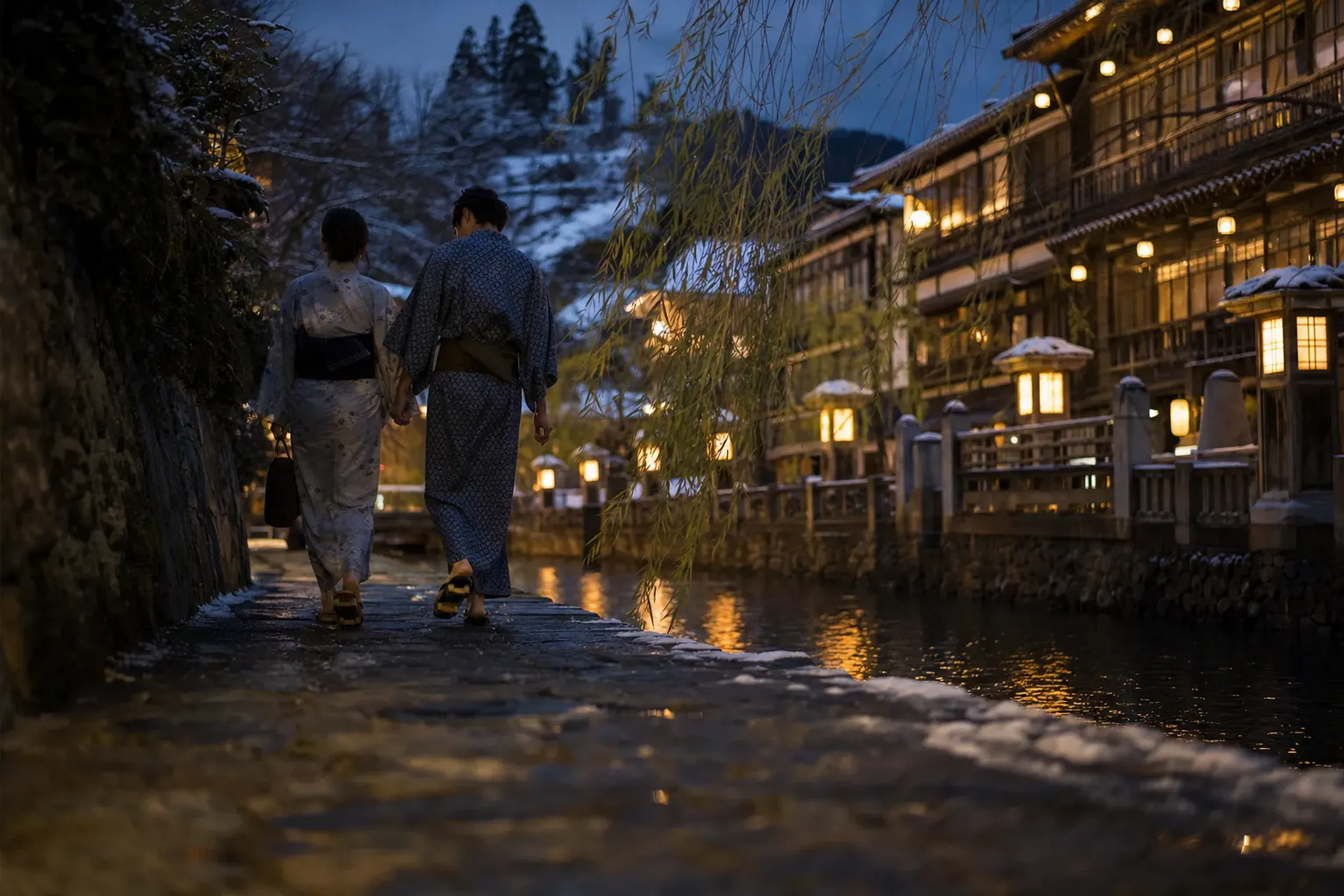
It suits the sociable traveller and the one who wants the most distinctive of the three, and it is the one to build a trip around.
And if none of that fits the trip you are actually planning — if Tokyo is the anchor and time is short — look instead at the Tokyo-accessible towns in our Hakone, Kawaguchiko, or Izu comparison.
Frequently Asked Questions
Which of these three onsen towns is best for a first visit to Japan?
Kinosaki suits most first-time visitors best. Its walking, bath-hopping character gives the stay a clear rhythm and a strong sense of place, and staying guests are typically given a pass to the town's seven public bathhouses.
Can I visit Gero, Dōgo, or Kinosaki as a day trip?
No. All three sit in different, distant parts of the country and require an overnight stay to experience properly. For a genuine hot-spring day trip from Tokyo, look instead at Hakone, Kawaguchiko, or Izu.
Are tattoos allowed in these onsen towns?
Kinosaki's official tourism materials state that all seven of its public bathhouses allow tattoos, which is unusual in Japan. Policies elsewhere vary by property, so we confirm each case individually rather than assuming.
Should I stay one night or two in an onsen town?
Dōgo and Gero suit a single well-chosen night for most travellers. Kinosaki is the town most rewarded by two nights, since its circuit of public baths reveals itself only once you have settled into the walk.
Which town is quietest and least crowded?
Gero. Set in a mountain river valley, it receives fewer international visitors and offers less to do, which makes it the calmest and most restful of the three for guests seeking seclusion.
Why Choose Japan Royal Service
Japan Royal Service books ryokan in all three of these towns, and the value we add is not the reservation — it is the judgement before it. We place a town against the route you are building and the people you are travelling with, so the choice fits the trip rather than a magazine list. Our concierge team works quietly and holds guest details in confidence, arranging private chauffeured transport between regions and shaping a tailor-made itinerary around whichever town earns its place.
Tell us the shape of the journey and we will tell you honestly which of Gero, Dōgo, or Kinosaki belongs in it — or whether a closer town serves you better.
To plan privately, reach our team via WhatsApp or LINE, or contact us here.