In this guide
- 01How Do You Get To The Gotō Islands From Nagasaki?
- 02Why Fukue Is The Right Base
- 03Fukue's Churches: Starting With Dōzaki
- 04The World Heritage Villages And Why They Need Advance Notice
- 05Visiting A Working Church, Respectfully
- 06Should You Spend Two Nights Or Three In The Gotō Islands?
- 07Frequently Asked Questions
- 08Why Choose Japan Royal Service
Nagasaki tells the first half of the story. The Gotō Islands tell the rest. Out in the East China Sea, roughly 100 kilometres off the Kyushu coast, this chain of islands is where much of the Hidden Christian history was not just remembered but lived. Villages held on. Churches rose once the old ban lifted. For travellers who already know Japan and want a quieter, onward chapter after the city, Gotō offers exactly that. This is a slow trip. Two nights, perhaps three. A base on one island, a car, a boat or two, and the time to sit inside a working church without a crowd. Our team at Japan Royal Service arranges the crossing, the advance-notice visits, and everything between.
How Do You Get To The Gotō Islands From Nagasaki?
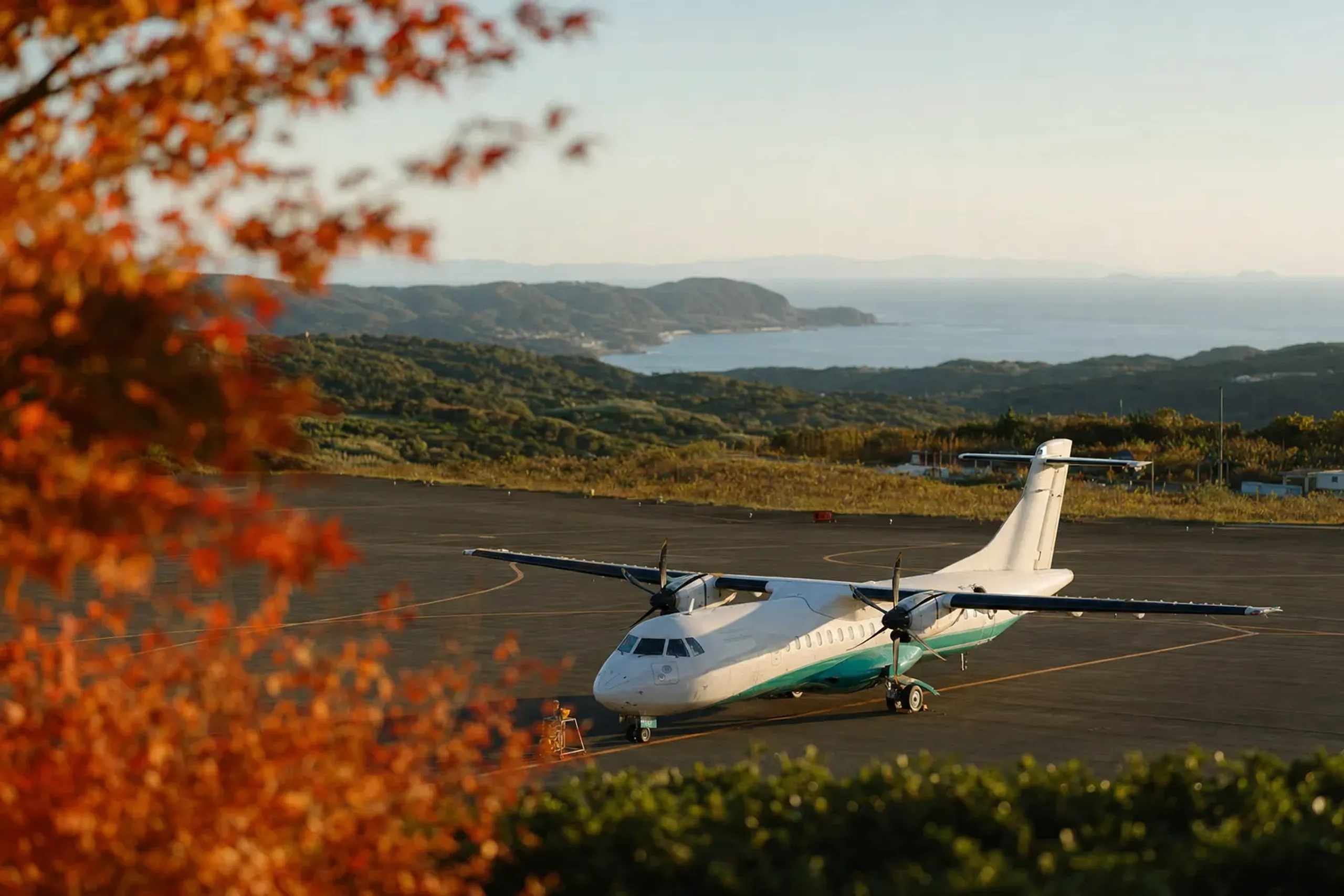
You reach the Gotō Islands from Nagasaki by high-speed boat in about 90 minutes, by car ferry in about three hours, or by a roughly 40-minute flight. Flights also connect Fukue with Fukuoka.
The crossing is the first real decision, and it shapes the rest of the trip. High-speed boats bring you to Fukue Port in around an hour and a half. Car ferries take closer to three hours, and some sailings stop at Nakadōri Island on the way, which adds time. If you would rather skip the sea entirely, Fukue Airport receives flights from both Nagasaki and Fukuoka several times a day, each around 40 minutes in the air.
Sea crossings depend on weather. That is the plain truth of island travel, and it is better said early than discovered late.
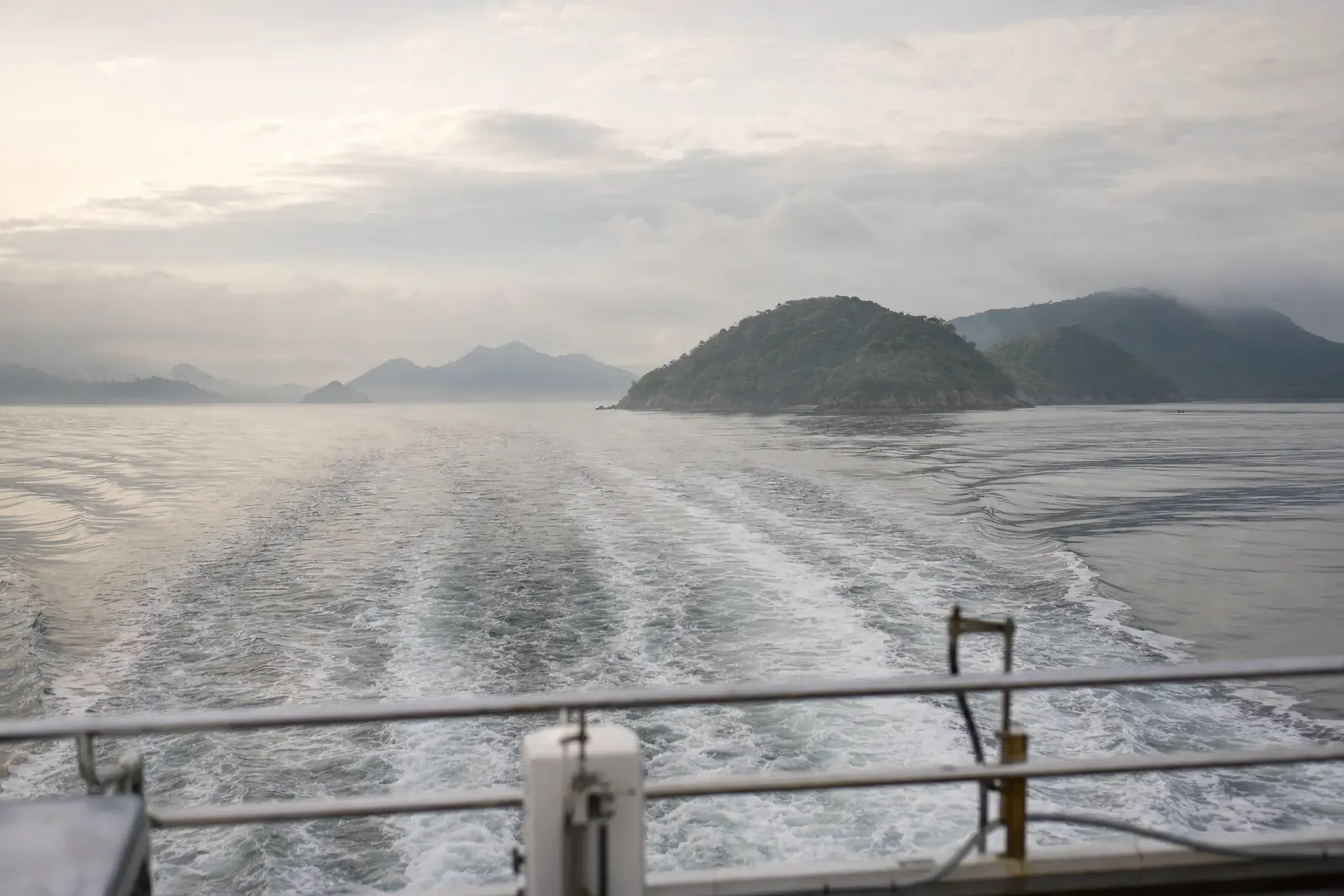
When the sea is up, sailings change. Our concierge team confirms timings directly with the guest at the time of arrangement, and we build in margin so a shifted boat does not collapse the day. For most itineraries, we pair a short flight in with a sea crossing out, or the reverse, so you see the water from the deck but never gamble the whole trip on it.
Key fact: Sea conditions govern boat schedules. We plan a weather contingency into every Gotō crossing rather than treating the ferry as fixed.
Why Fukue Is The Right Base
Fukue is the largest and most populated of the Gotō Islands, which makes it the natural place to settle. It has the airport, the port, and enough of a town to anchor a stay. From here, the rest of the archipelago is a short hop by boat.
A car is by far the most convenient way to move around Fukue. Buses exist, but they mainly serve residents and rarely reach the sites you have come to see. The practical answer is a private vehicle with a driver, which lets you treat the island as a loop rather than a timetable. Fukue itself can be driven around in roughly half a day, so one unhurried morning and early afternoon covers the coast road, the viewpoints, and the main churches.
That half-day loop leaves the rest of your time for the outlying islands, which is where the planning earns its keep.
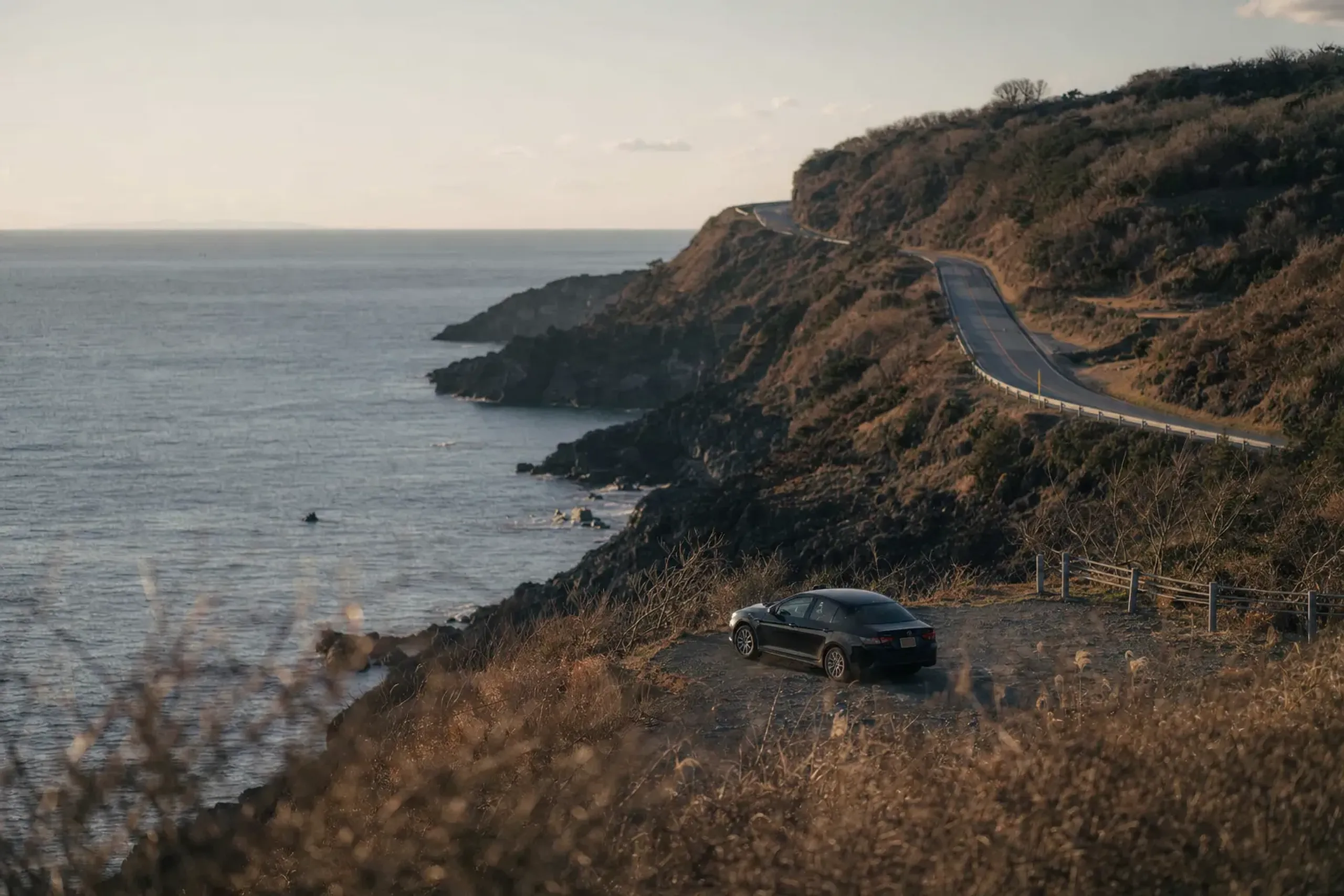
We arrange the vehicle and private chauffeured transport on the island, so you are not negotiating with maps or bus stops. A driver who knows the roads also knows when the light is best on the western coast, and when a church is likely to be quiet.
If you have read our guide to Nagasaki as a base, the logic here is the same, scaled down: one settled point, short radiating trips, no daily repacking.
Fukue's Churches: Starting With Dōzaki
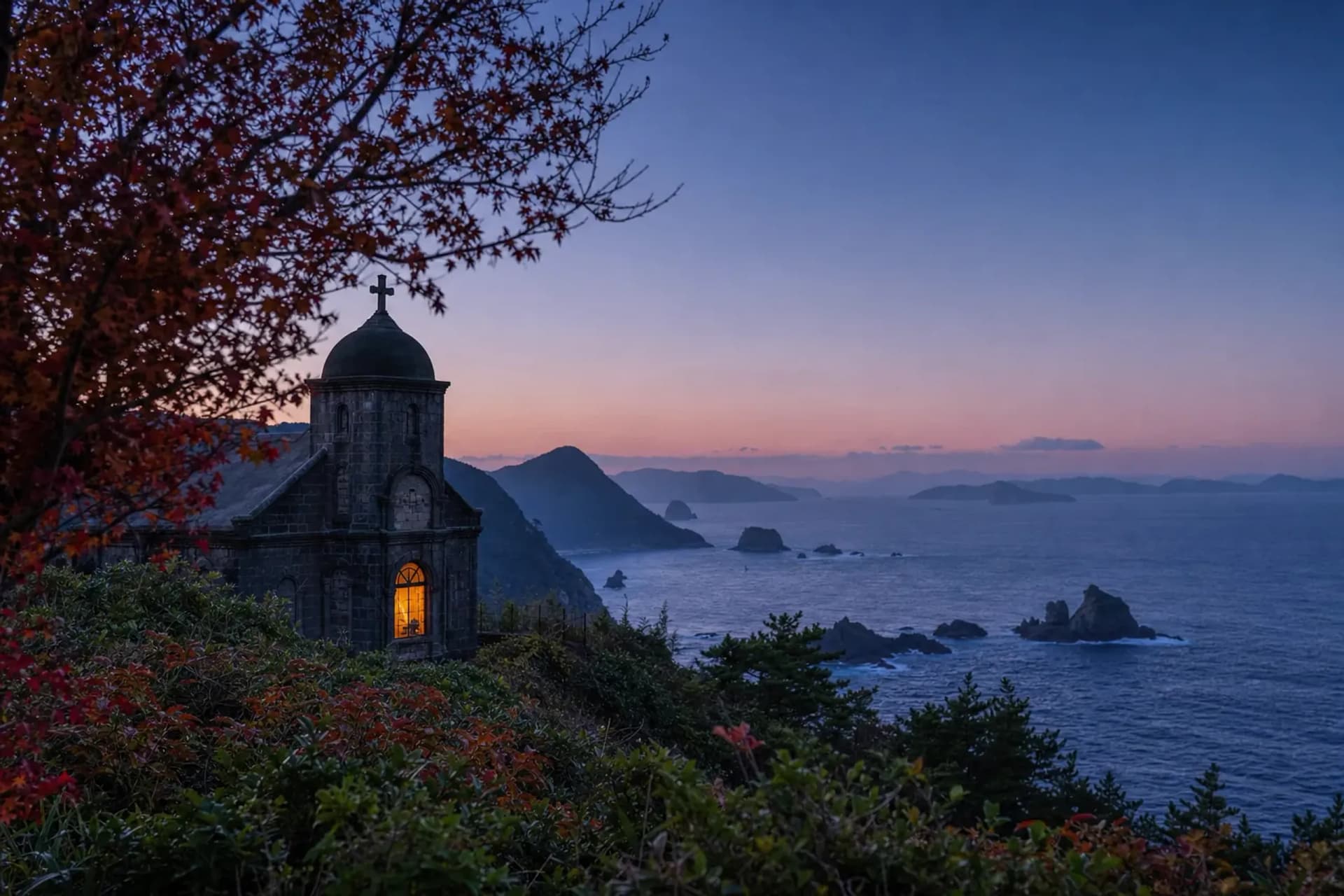
Around twenty churches have been built across Fukue since the end of the feudal era. They are the first layer of the story, and they sit within easy reach of the coast road, which makes them a good opening to the islands before you commit to a boat day.
Begin with Dōzaki Church. Built after the ban on Christianity was lifted in 1873, it was the first Western-style church on the Gotō Islands. Standing before it, you are looking at the moment the faith stepped out of hiding and into stone and timber, the point where the long private history of the islands became something that could finally be built in the open.
From Dōzaki, the wider church landscape unfolds along the loop. Some stand near the water, others back from it, each tied to a community that willed it into being. They are not monuments in the museum sense. They are the ordinary buildings of island life, which is precisely what gives them weight.
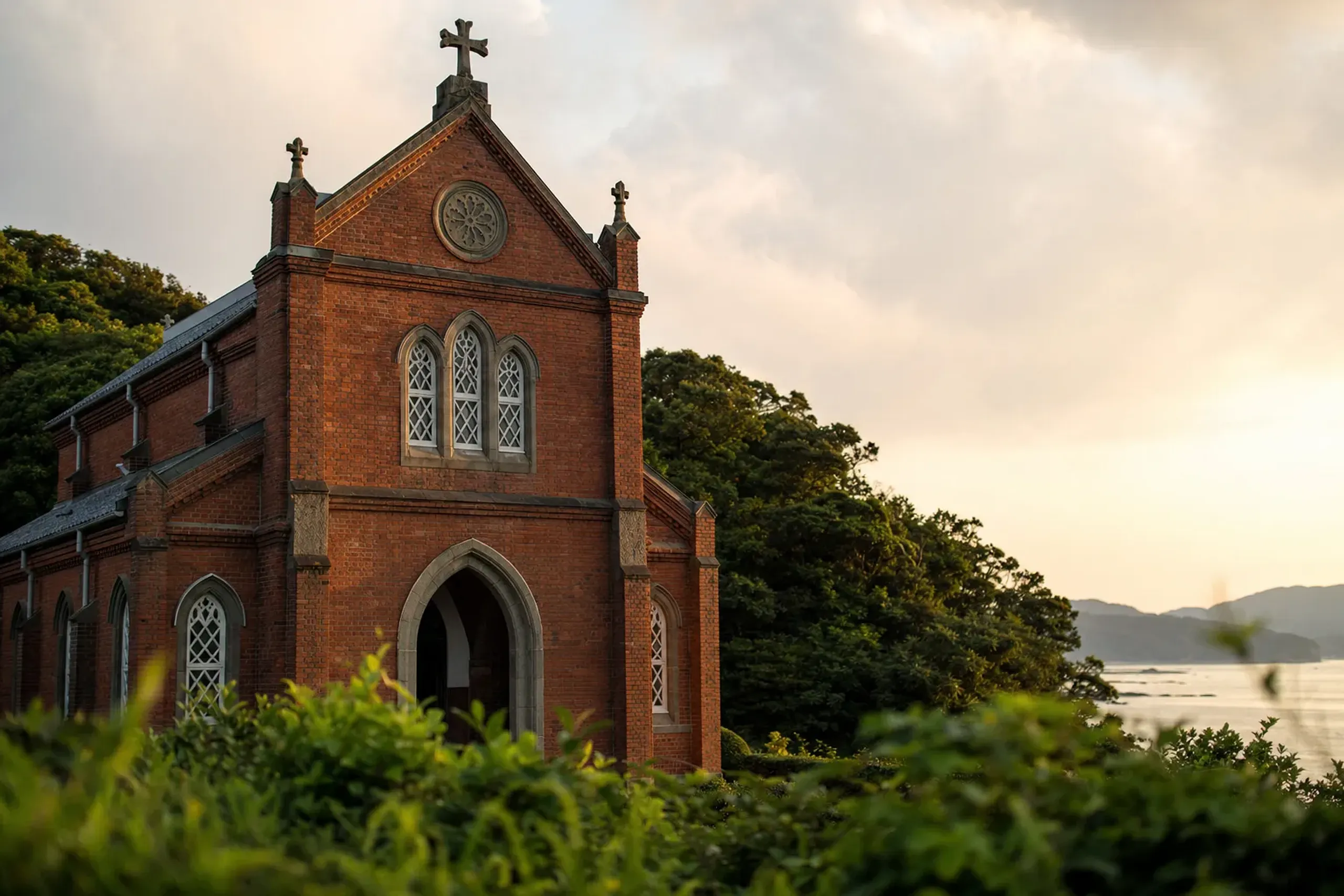
A note on expectation. These are not grand cathedrals, and they are better for it. The pleasure is in the accumulation: one church, then a stretch of coast, then another, each small, each particular. A driver who understands the sequence can pace the morning so you are never rushing from one to the next, and so you arrive at each with the quiet it deserves. We keep the itinerary loose enough that if a service is underway, the order simply shifts.
The World Heritage Villages And Why They Need Advance Notice
Several of the Hidden Christian components in the Gotō area are registered within the UNESCO World Heritage listing for the Nagasaki region, and they are the reason many travellers come this far. They sit on outlying islands, which means a boat, and they require the prior-notice system, which means planning. These are the four:
- Former Gorin Church — Villages on Hisaka Island, Gotō City.
- Egami Church — Egami Village on Naru Island, Gotō City. UNESCO notes Egami Church holds a high degree of authenticity.
- Kashiragashima Church — Village on Kashiragashima Island, Shin-Kamigotō.
- Former Nokubi Church — Remains of Villages on Nozaki Island, Ojika.
Visitors to these churches are asked to use the prior-notice system. This is not a formality to work around; it is how the islands protect places that remain, first of all, places of prayer. A visit may not be possible during church events, and the number of visitors at one time can be limited by the size of the building.
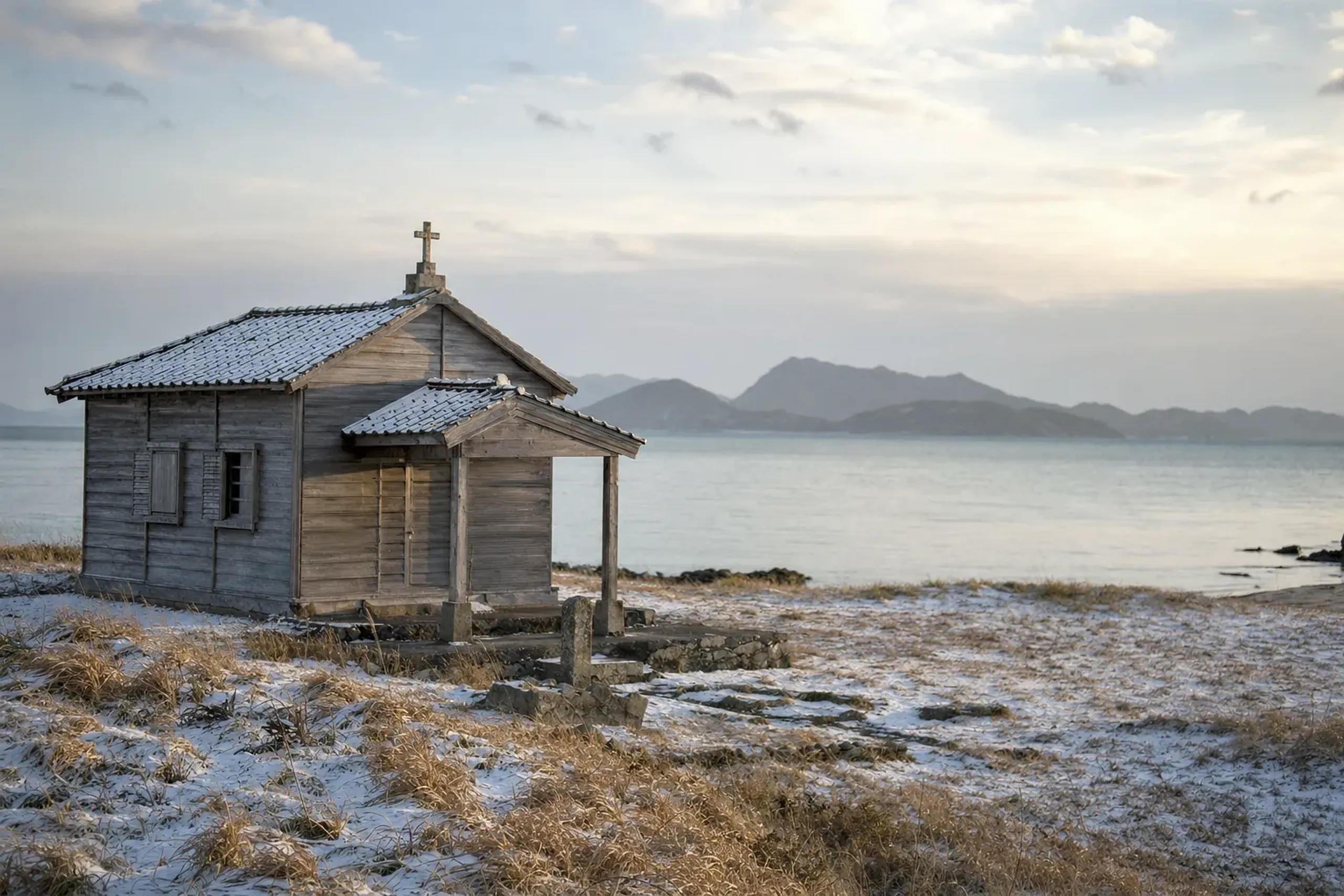
Interior access, in particular, is handled through advance notice rather than simply turning up.
This is where a concierge earns its place. Our team at Japan Royal Service handles the notice and arranges the boats that reach these islands, then sequences the day so the crossing, the visit, and the return all hold together. Weather, event calendars, visitor limits, and whether photography is permitted inside any given church all vary, and we confirm each point directly with the guest at the time of arrangement.
Of the four, Egami Church on Naru Island and the Former Gorin Church on Hisaka Island pair naturally with a Fukue base, since both fall within Gotō City. A single boat day can often take in one of these islands with time to walk the surrounding village, which is as much the point as the church itself. The settlements, the fields, the shape of the land all belong to the listing, not only the buildings.
Kashiragashima, in Shin-Kamigotō, and Nozaki, under Ojika, sit further north in the chain. They reward travellers with a third night and a second boat day. We will say plainly when a component is a stretch from Fukue, because a trip that tries to do all four in a weekend does justice to none of them.
Visiting A Working Church, Respectfully
These are not attractions. They are active places of worship, and the islands ask that you treat them so.
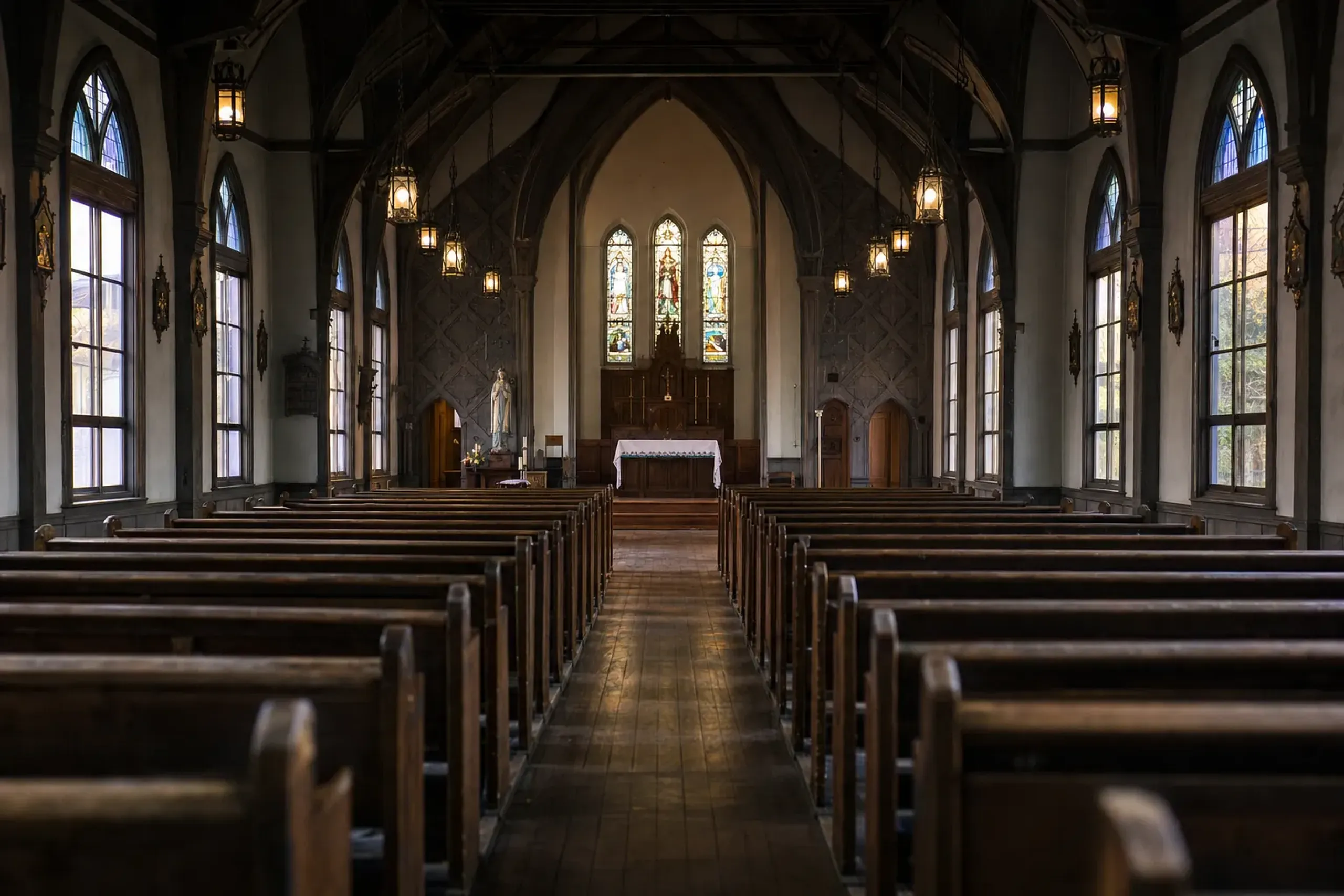
The etiquette is simple and worth stating before you go.
Dress modestly. Keep your voice low, or silent. Move slowly. If a service or private prayer is underway, step back and let it be, even if it means your visit shifts to another church or another hour. Photography rules differ from church to church, and whether you may photograph an interior is confirmed in advance rather than assumed at the door.
Expect, too, that a visit may simply move. A funeral, a mass, a feast day on the parish calendar all take precedence over any itinerary. We build our Gotō days with that flexibility already inside them, so a change is an adjustment rather than a disappointment. In our experience, travellers who arrive understanding this leave having had the better day, because they met the islands on the islands' terms.
Should You Spend Two Nights Or Three In The Gotō Islands?
Two nights cover Fukue and one outlying island; three nights allow a second boat day and a more northerly component without rushing any part of it.
On a two-night plan, the shape is clear. One half-day loops Fukue and its churches, starting with Dōzaki. One full day crosses to a single outlying island, Naru or Hisaka, for a World Heritage component and the village around it. That leaves evenings for the quiet the islands are good at, and a buffer if the sea moves a crossing.
Three nights change the trip from a visit into a stay.
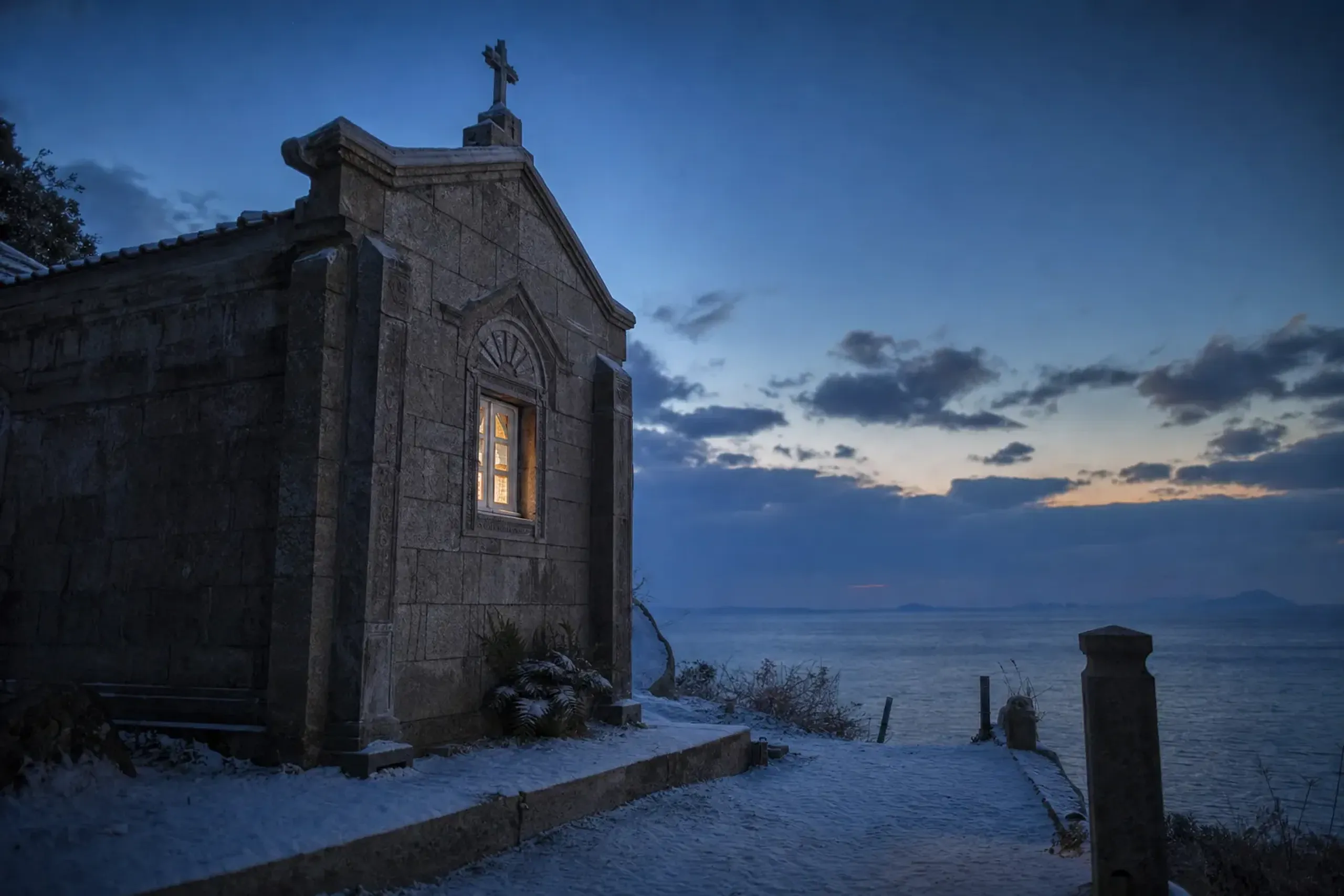
A second boat day opens Kashiragashima or Nozaki to the north, or simply gives you a slower pass at an island you liked. For travellers using Gotō as a decompression chapter after Tokyo or Kyoto, the third night is the one that does the work.
Frequently Asked Questions
Do You Need A Reservation To Visit The World Heritage Churches In Gotō?
Yes. Visitors to the registered Hidden Christian components, including Egami Church and the Former Gorin Church, are asked to use the prior-notice system. Interior access in particular is arranged in advance, not on arrival.
How Do You Get Around Fukue Island Without A Rental Car?
A private vehicle with a driver is the most practical option, since local buses mainly serve residents and rarely reach the churches and viewpoints. Our team arranges a car and driver so you move on your own schedule.
Can You See All Four Gotō World Heritage Churches In One Trip?
It is possible but rarely advisable in a short stay. Egami and Former Gorin pair well with a Fukue base, while Kashiragashima and Former Nokubi lie further north and need a third night and a second boat day.
Is It Better To Fly Or Take The Boat To The Gotō Islands?
A flight from Nagasaki or Fukuoka takes around 40 minutes and avoids the sea, while a high-speed boat takes about 90 minutes. We often pair a flight one way with a sea crossing the other, building in weather margin.
What Is The Etiquette For Visiting A Working Church On Gotō?
Dress modestly, keep quiet, and move slowly, as these remain active places of prayer. A visit may shift around services or church events, and photography rules vary by church and are confirmed in advance.
Why Choose Japan Royal Service
Gotō rewards travellers who plan the friction out of it. The crossing, the advance notice, the boats between islands, the driver who knows which church will be quiet at which hour: these are not details you want to assemble from the mainland.
Our team at Japan Royal Service arranges the lodging, the sea or air travel to Gotō, a private vehicle with a driver on the islands, the guiding, and the advance-notice church visits, along with the boats that reach the outlying components. We confirm the variables, crossings, weather, church calendars, visitor limits and photography, directly with you at the time of arrangement, and we build contingency into every day. You travel with discretion, at your own pace, as part of a tailor-made itinerary shaped around your time rather than a timetable. For a wider view of where in Kyushu a detour earns its place, our regional notes on pacing a longer trip across Japan are a good companion read.
To plan a quiet two or three nights in the Gotō Islands, reach our team privately via WhatsApp or LINE, or contact us here.