In this guide
- 01Why Are There Two Types Of Yamakasa Floats In Hakata Gion Yamakasa?
- 02What Is The Difference Between Kakiyama Running Floats And Kazariyama Display Floats?
- 03When Should I Visit Hakata Gion Yamakasa If I Want Both The Floats And The Run?
- 04How Old Is Hakata Gion Yamakasa? Three Origin Accounts You Will Hear In Hakata
- 05What Happens At Oiyama At 4:59 A.M. On 15 July At Kushida Shrine?
- 06How Hot Is Fukuoka In Early July, And What Should I Wear To Watch Yamakasa?
- 07How To Watch Hakata Gion Yamakasa Respectfully (And Get Better Photos)
- 08UNESCO And Cultural Recognition: What It Means For Yamakasa
- 09Practical Logistics For HNW Travelers: Where To Stay, When To Move, What To Avoid
- 10How Does Hakata Gion Yamakasa Compare To Other Summer Festivals?
- 11Plan Your Yamakasa Morning With Us
At 4:59 a.m., Hakata is not a city yet.
It is a hush of shutters and wet pavement, the smell of summer rain caught in the drains, and a corridor of people holding their phones low so the light doesn’t sting anyone’s eyes. Then the shout starts. “Osshoi.” It rolls forward like a wave pushed down a narrow street.
A one-tonne float surges out of the dark.
Men in short coats lean in, shoulder pressed to timber, and the whole structure moves as if it has a stubborn will of its own. This is Hakata Gion Yamakasa, the July ritual centered on Kushida Shrine in Fukuoka’s Hakata district, held every year from 1 to 15 July. It unfolds in public, yet it never feels staged for the onlooker. You are not an audience here; you are a witness to something the neighborhood does for itself.
Why Are There Two Types Of Yamakasa Floats In Hakata Gion Yamakasa?
Hakata’s Yamakasa floats split into running floats and display floats after Meiji-era modernization, when tall floats began snagging power and tram wires and a governor proposed halting the festival in 1898.
That single opening fact explains almost everything you will see today.
Accounts agree that Hakata’s floats were once far taller—often described as around 15 metres—and were carried through the streets at that soaring height. By the late 19th century, the city had wires. Low-hung lines sat at roughly five metres, and floats began cutting them as they passed.
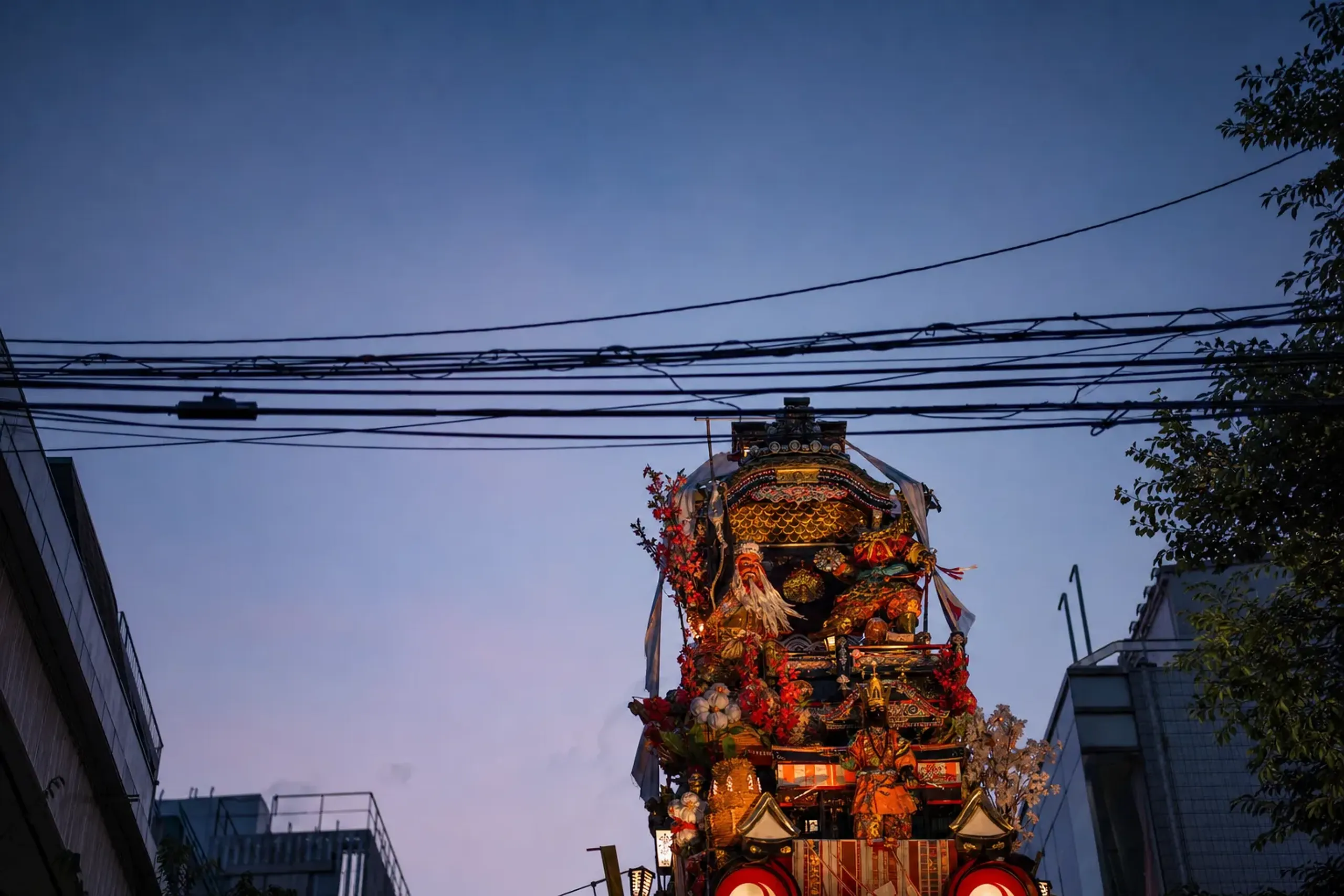
One local festival account adds a second pressure: the carriers’ near-naked appearance struck the Meiji eye as “uncivilised,” and officials wanted the town to present a more modern face to the world. Sources differ on which reason weighed most heavily. The compromise that endured is the festival you can visit now—two float forms, each with its own purpose.
Key fact: The festival’s modern format is literally shaped by infrastructure—electric wiring and the politics around it—rather than by tourism trends.
What Is The Difference Between Kakiyama Running Floats And Kazariyama Display Floats?
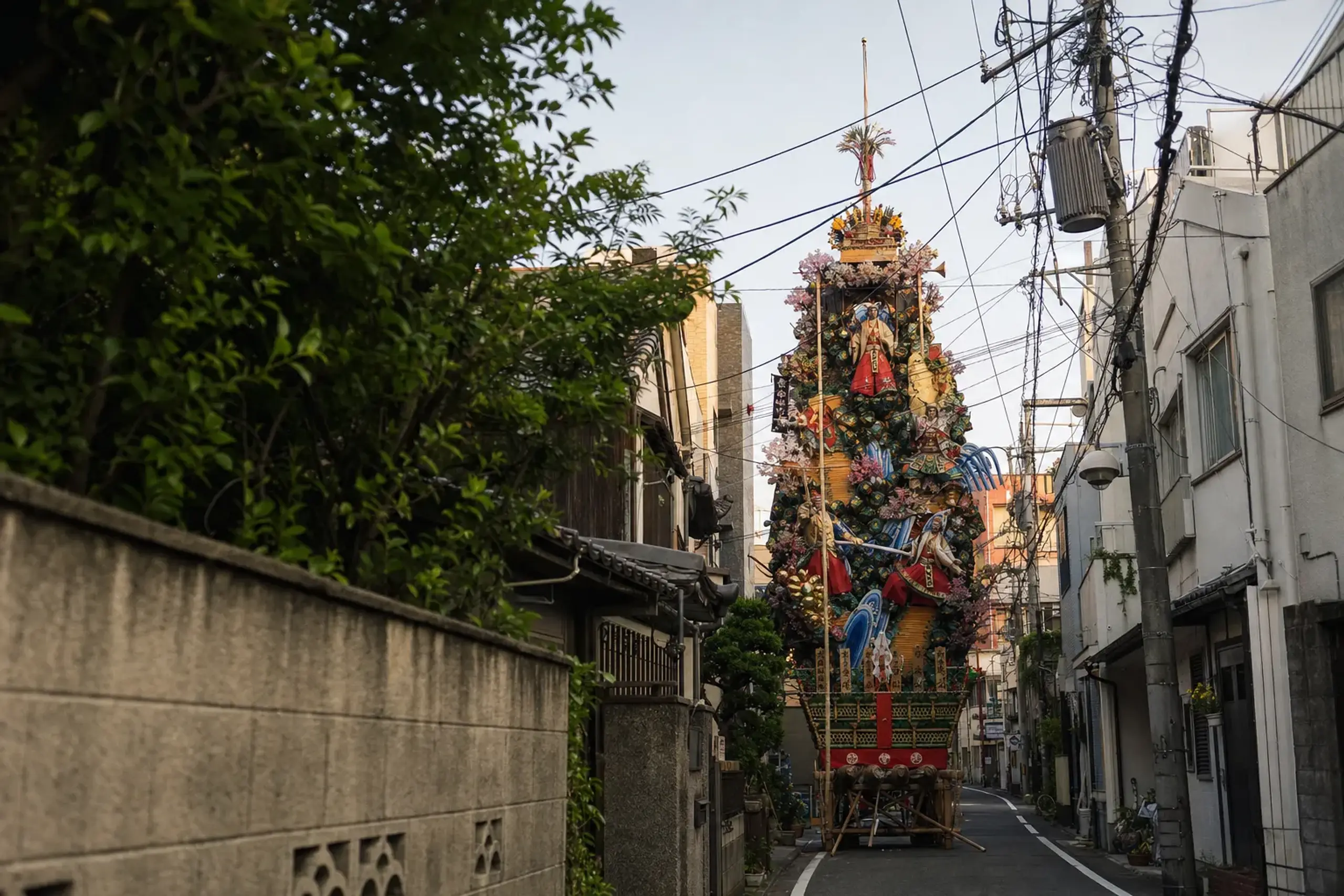
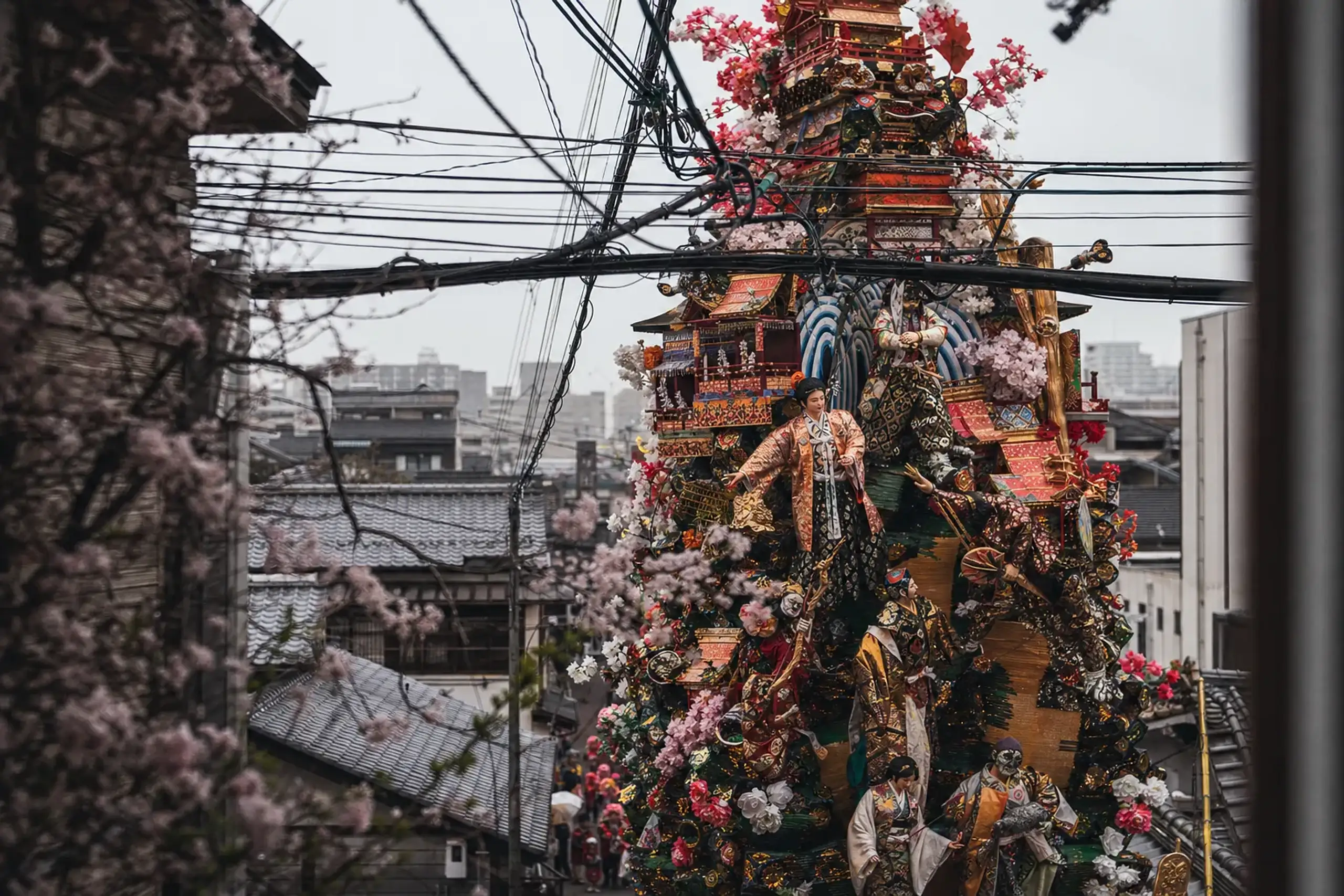
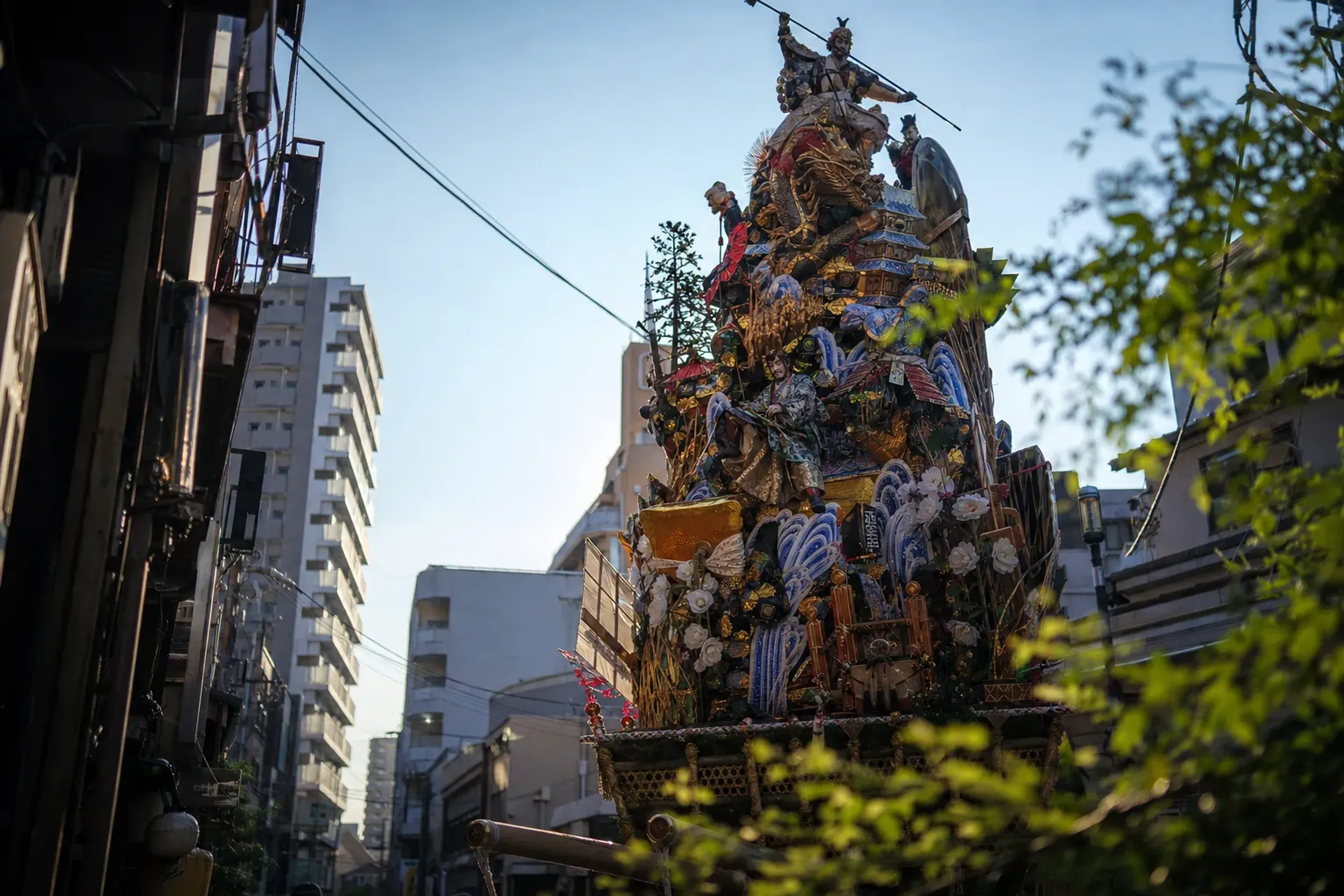
Kakiyama are compact, nail-free running floats carried at speed; kazariyama are towering display floats (about 10–13 metres) exhibited across the city from 1 July until midnight on 15 July.
Once you understand the split, watching becomes far easier. You stop searching for a single “main float.” You begin to see two distinct arts at once: the engineering of speed, and the sculpture of height.
Kakiyama: The Low Float Built To Run
The running floats are the ones you feel before you fully see them.
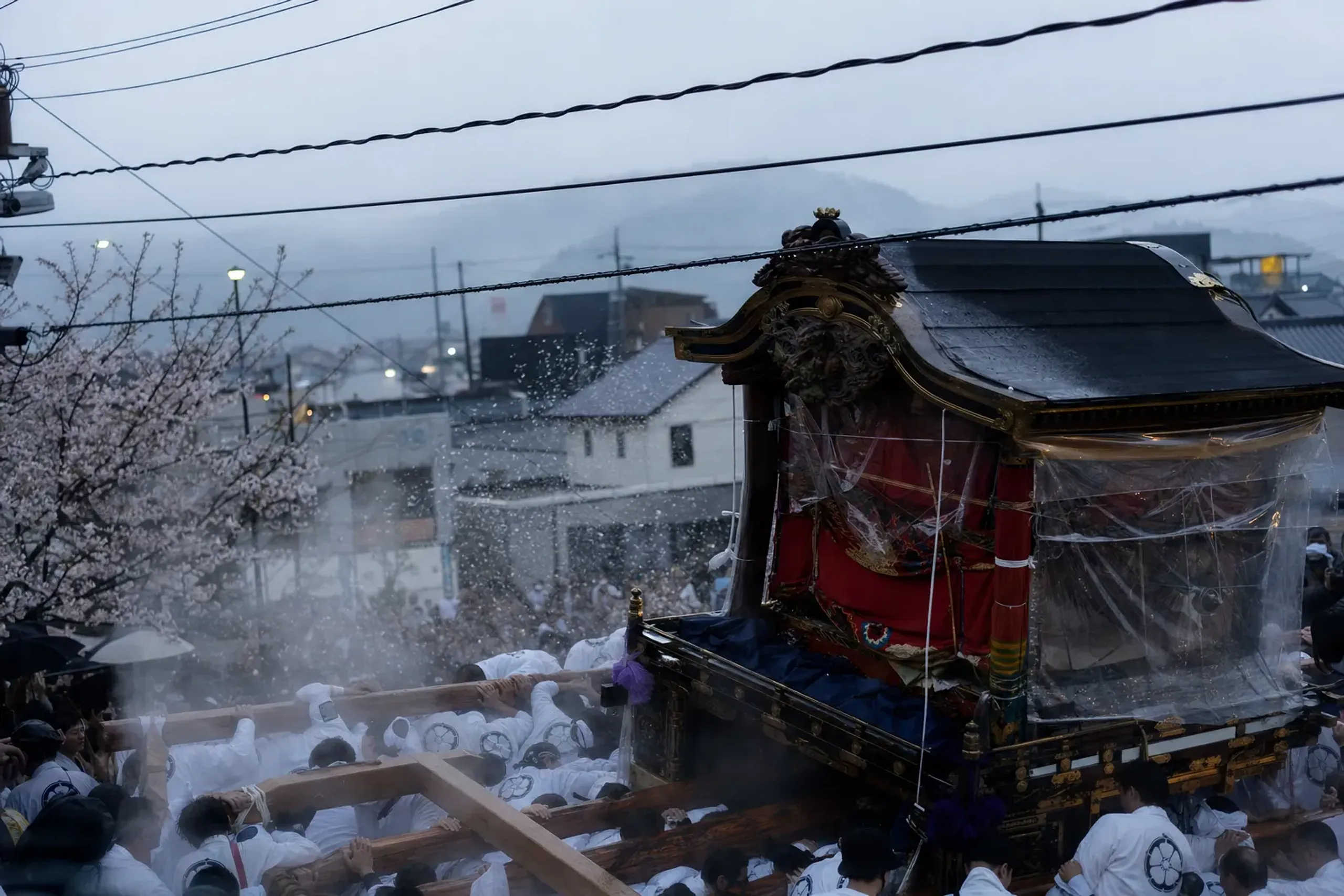
They are commonly described as about one tonne in weight and roughly 3 to 4.5 metres tall. They are built from timber lashed with hemp rope, using no nails whatsoever. This is practical. It is also a quiet statement of pride in method—shokunin thinking applied to a neighborhood object, where the maker’s hand is visible in every knot.
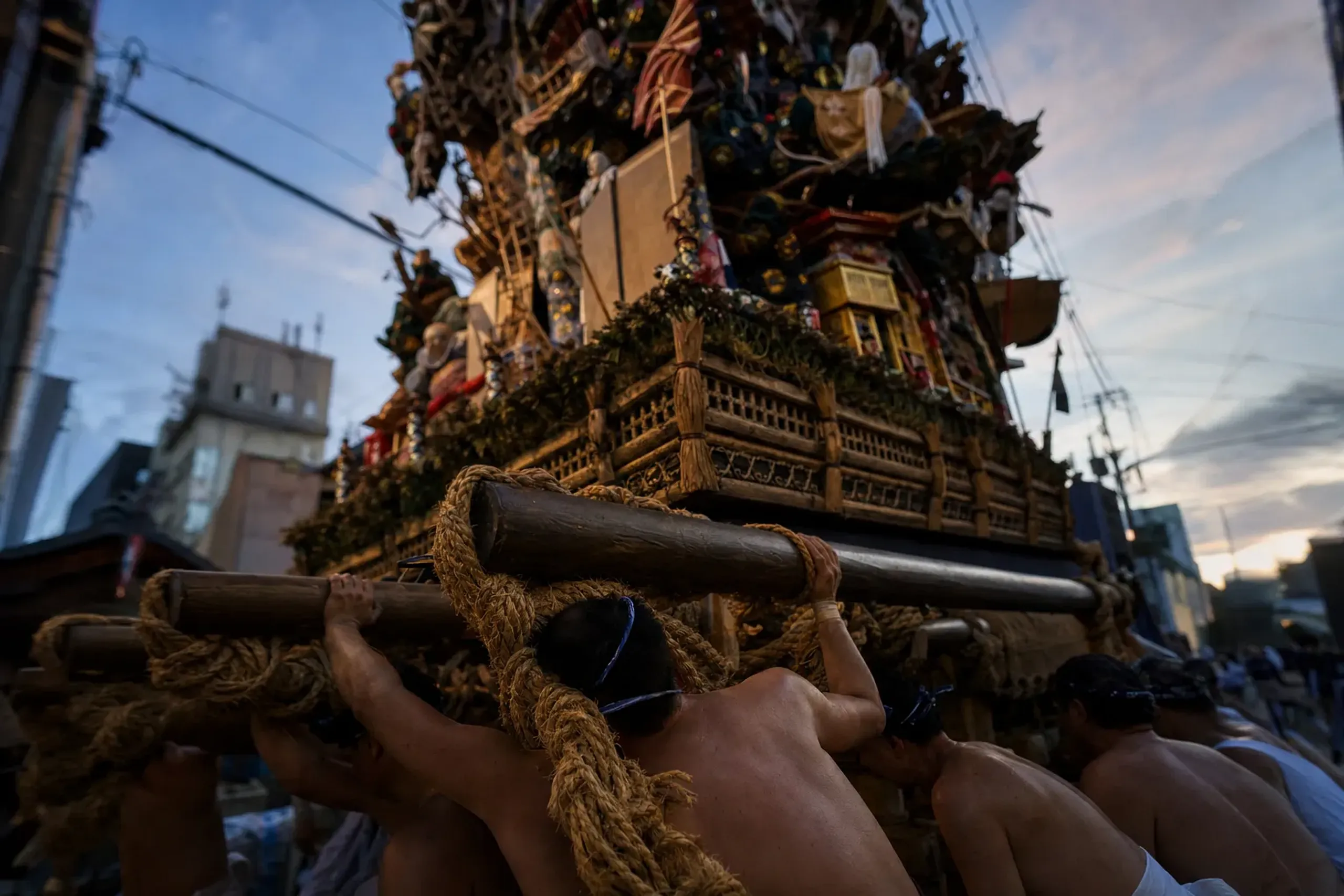
They are carried by neighborhood teams. Sources commonly put the number of carriers in the mid-to-high twenties—often 26 to 28. The float does not drift. It snaps through corners, urged on by straining bodies and shouted rhythm.
As a visitor, your best mindset is simple: you are standing close to a moving wall of momentum. Stay watchful. Step back early.
Kazariyama: The Tall Float That Turns Streets Into A Gallery
The display floats offer the opposite experience. Slow. Vertical. Almost theatrical.
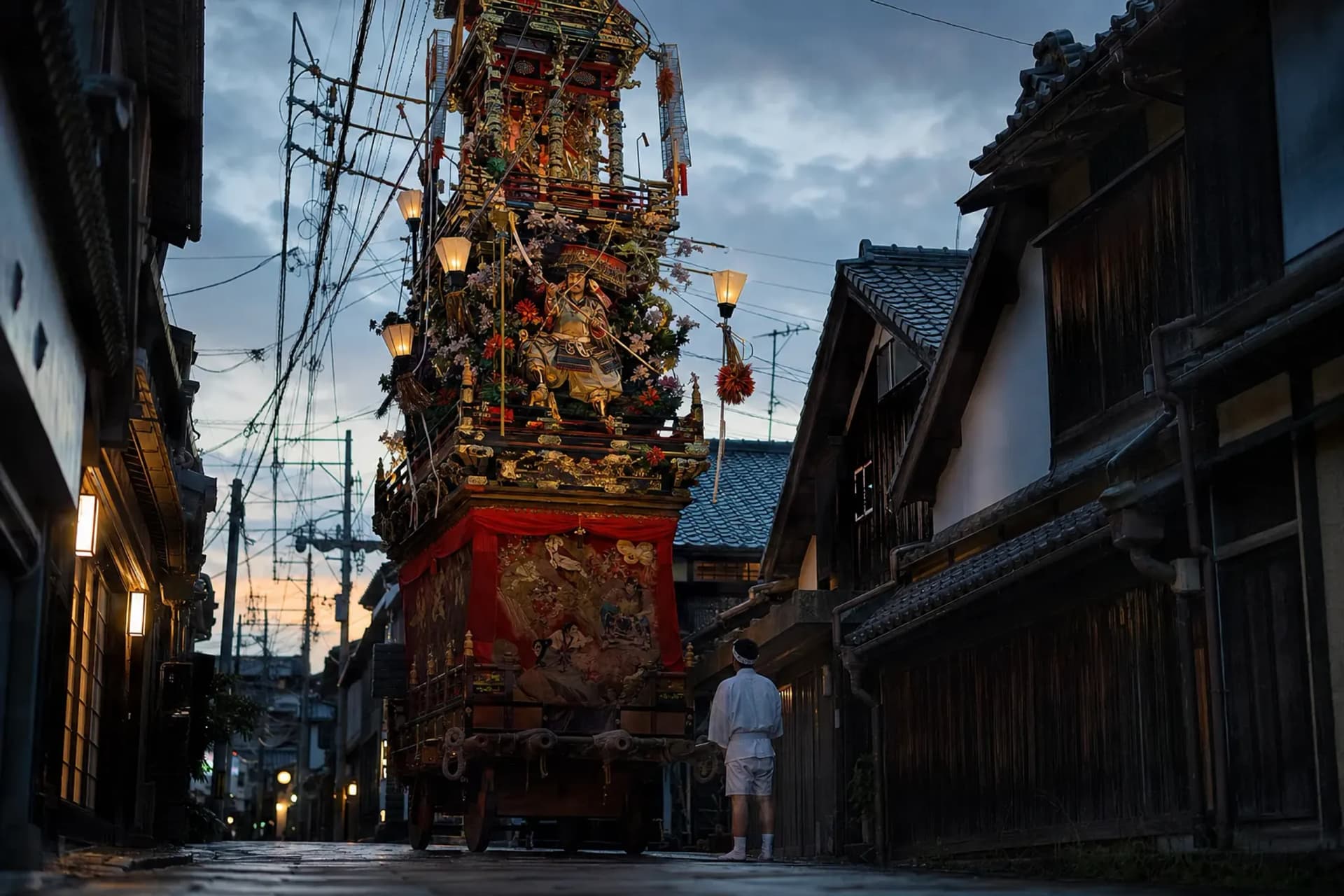
They rise roughly 10 to 13 metres and are exhibited at around 13 or 14 sites across the city during the festival period, from 1 July until midnight on 15 July. In the evening, they become landmarks you can navigate by, glowing under street lamps and convenience-store signage.
A classic detail rewards a second lap around each float: the side facing Kushida Shrine shows warrior themes, while the back often shifts to fairy tales or contemporary pop culture, including television anime figures. These figures are crafted by Hakata doll makers—a lineage of sculptors whose work you will rarely see acknowledged at this scale anywhere else. There is also a long-standing rule, introduced in 1973, requiring a doll on every float.
It is “hidden Japan” in plain view: a local art form, sponsored and maintained by the neighborhoods themselves, presented outdoors for two full weeks, and easy to miss entirely if you only chase the final morning run.
The One Kazariyama That Still Moves: Kamikawabata
One display float stands apart because it refuses to stay still.
On Kamikawabata Street, a kazariyama is still carried in a telescoping form that recalls the older, taller style. It enters Kushida Shrine on the practice run and again on the final run. If you want a single moment that links “museum-scale” height to the living, carried tradition, this is the thread that ties the two together.
When Should I Visit Hakata Gion Yamakasa If I Want Both The Floats And The Run?
Arrive between 1 and 14 July to walk the kazariyama displays at a calm pace, then plan an early, late-night-to-pre-dawn schedule for 15 July to witness the 4:59 a.m. Oiyama finale.
This festival rewards patience. Two visits, two moods.
During the day, you can treat Hakata like an open-air exhibition. You stroll. You take a wide-angle photograph, then a close shot of a face, then the ropework detail that reveals how the whole structure holds together. At night, the same float seems to keep watch over the street.
On the final morning, the city feels transformed. Quieter. Tenser. You are no longer “seeing floats.” You are getting out of the way of a ritual that happens at speed.
A Plain Schedule Outline (Evergreen)
Hakata Gion Yamakasa is held annually from 1 July to 15 July.
- 1–14 July: kazariyama display floats are set around the city for public viewing.
- About three days before 15 July: a practice run takes place in the afternoon.
- 15 July: the final run, Oiyama, starts at 4:59 a.m. from Kushida Shrine.
For travelers, that 4:59 start time is the detail that changes everything. Sleep, transport, clothing, and breakfast all need to be planned around it. There is no room for improvising. Knowing precisely what to experience, where, and in which hour is exactly the sort of planning that separates a rushed glimpse from a flawless front-row morning—a quiet form of seasonal expertise that rewards those who arrange it well in advance.
How Old Is Hakata Gion Yamakasa? Three Origin Accounts You Will Hear In Hakata
The festival’s story is told in three layers, and the honest way to hold them is side by side.
One account is the one the festival’s promotion society has adopted: in 1241, the monk Enni, newly returned from China, rode a “spirit shelf” carried by townspeople while scattering prayer water to cleanse a plague-struck Hakata. It is a powerful image, and it is still repeated because it captures the festival’s heart: a community carrying something sacred through its own streets.
Kushida Shrine’s own tradition dates the invocation of the Gion deity to 941.
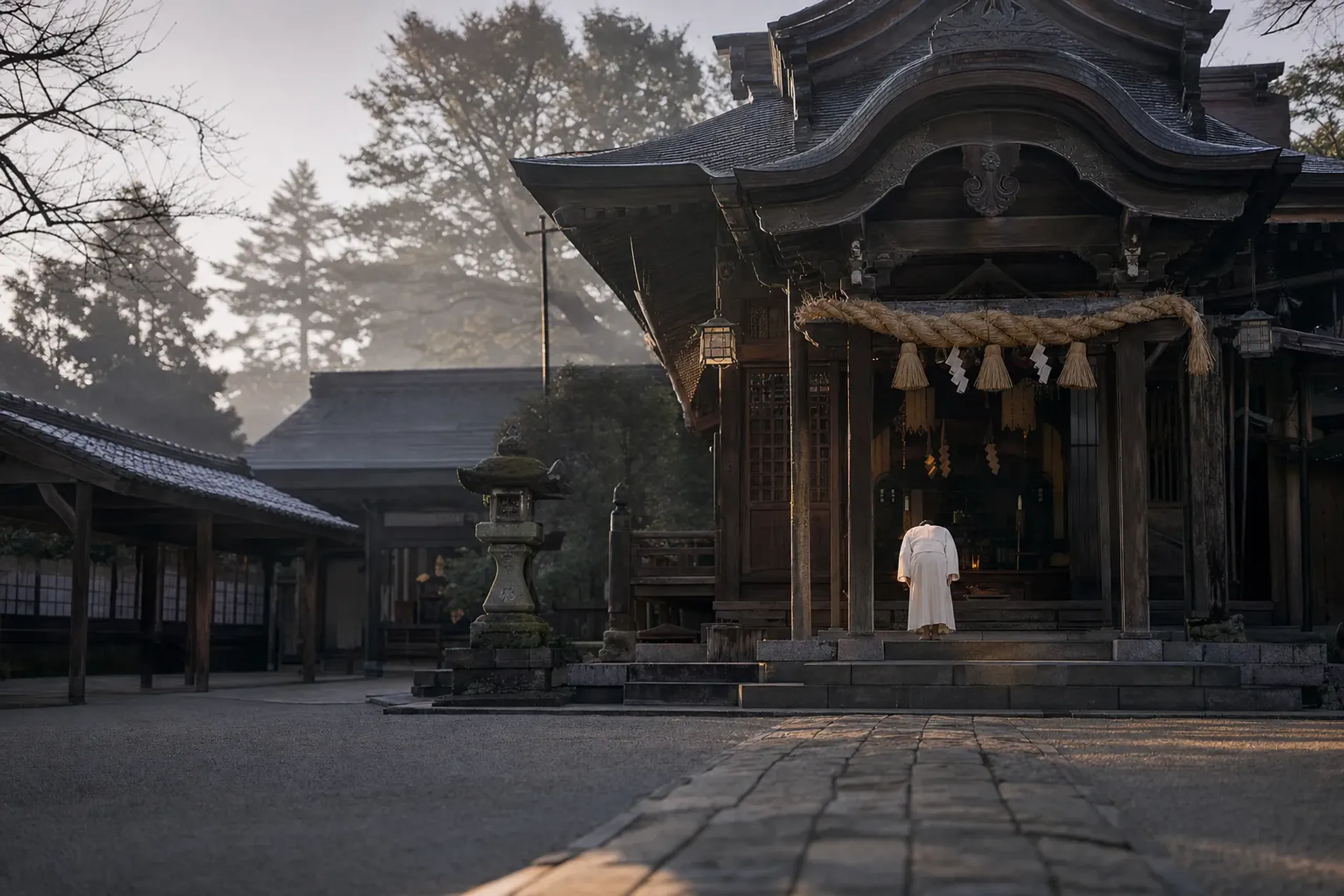
That sits deeper in shrine memory. It also reminds you that, long before the race and the spectacle, this is a shrine offering.
The earliest documentary mention supports 1432. That matters for a traveler who prefers a paper trail to legend. It is the anchor you can cite without a trace of romance.
There is also a social history behind the teams. The neighborhood “flows” that organize the festival are traced to Toyotomi Hideyoshi’s 1587 rebuilding of the war-damaged town. One account says the race itself began when one flow ran past another during lunch, and the second gave chase. It is a small, human story. It sounds exactly like Hakata.
Modern history has its ruptures too. In 1872, the Meiji government abruptly banned the festival. It was revived after the war, in 1948. Traditions can be stubborn, but they are not indestructible.
What Happens At Oiyama At 4:59 A.M. On 15 July At Kushida Shrine?
At 4:59 a.m. on 15 July, each neighborhood team enters Kushida Shrine in a rotating annual order and then runs a set route through Hakata in the Oiyama finale.
If you make time for only one moment of the festival, make time for that start.
Kushida Shrine is the emotional center, not merely a backdrop. The teams enter in a rotating annual order—a detail that locals notice even if visitors miss it entirely. Then they launch into the city on a fixed course through Hakata.
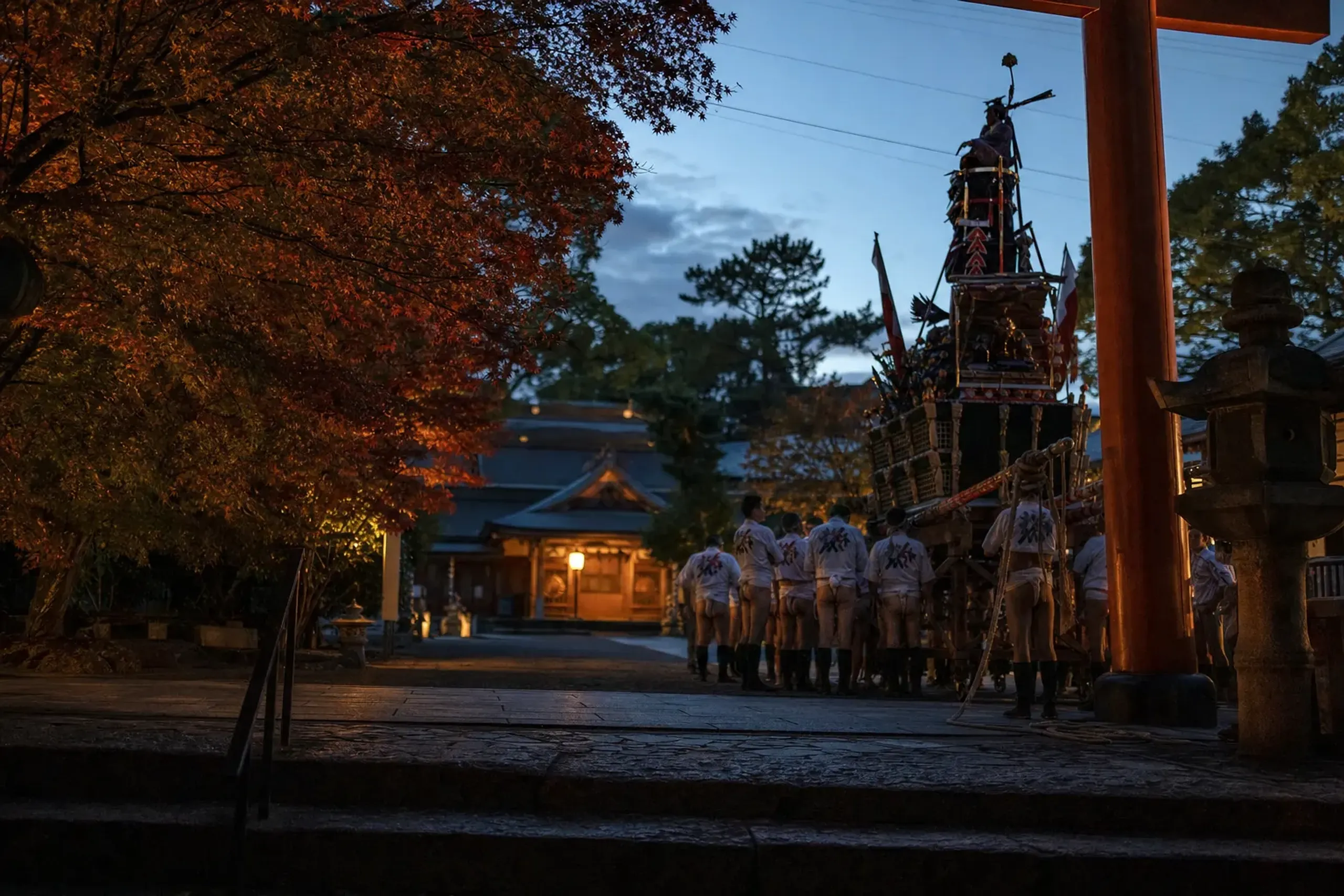
One guide gives the route as about 5.5 kilometres completed in roughly 20 minutes. Treat those numbers as an illustration of intensity rather than a stopwatch promise. The point is the sensation: the run is fast, physical, and startlingly loud for that hour of the morning.
The shouted “Osshoi” has its own cultural afterlife. It was selected among Japan’s 100 Soundscapes in 1996. If you hear it even once in the narrow streets, you will understand why.
How Hot Is Fukuoka In Early July, And What Should I Wear To Watch Yamakasa?
July in Fukuoka is hot and humid, so wear breathable clothing, bring water, and plan for both sweat and sudden rain—especially if you’re outside for the pre-dawn Oiyama.
Heat changes behavior. It makes crowds sharper. It makes waiting feel longer.
For visitors, practical choices matter more than style. Light layers help, because you may stand still for a while and then have to move quickly to clear space. Shoes should be stable and closed-toe. Streets can be wet, and curbs turn slick without warning.
Carry as little as possible. A common mistake is arriving with a large tote and nowhere to put it down. Keep your phone brightness low near other viewers. And remember that you are visiting a shrine-centered event; modesty and restraint read, here, as respect.
How To Watch Hakata Gion Yamakasa Respectfully (And Get Better Photos)
Good viewing is less about a “secret spot” and more about the manners that locals recognize at a glance.
Do not step into the street once the run approaches. Don’t test the boundary. You will lose, and you will force others to move with you. If you are traveling with children, keep them slightly behind you, never at the curb’s edge.
For photographs, choose one position and commit to it. The best images come from anticipating motion, not chasing it. Look for the rope lashings and the soaked coats. Wait for the moment when a carrier’s face turns toward the shout.
If you want a calmer experience altogether, build your festival time around the kazariyama walks. The displays are public, and they reward slow, unhurried observation—the kind of quiet, considered looking that the running floats never allow.
UNESCO And Cultural Recognition: What It Means For Yamakasa
In 2016, Hakata Gion Yamakasa was inscribed as part of UNESCO’s grouped element “Yama, Hoko, Yatai, float festivals in Japan.”
It is also designated a national Important Intangible Folk Cultural Property. These labels do not turn the festival into a theme park. They signal that the tradition is recognized as heritage worth protecting and passing on, with real local responsibilities working quietly behind the scenes.
Yamakasa is also counted among Japan’s three great Gion festivals—an informal grouping, but a widely cited one.
Kyoto’s Gion Matsuri sits on the same UNESCO listing, and if you are curious how different “float culture” can be from one city to the next, read our related piece: Gion Matsuri floats in Kyoto.
Practical Logistics For HNW Travelers: Where To Stay, When To Move, What To Avoid
Hakata is navigable, but Oiyama morning is not the hour to discover that your plan is soft.
If you want to watch the start near Kushida Shrine, you need to be in position early. That means the evening before should be calm. Eat early. Hydrate. Lay your clothing out. Set alarms with a generous buffer.
Traffic and crowd-control measures can change from year to year. So can the best place to stand along the route, depending on works, weather, and local guidance. This is where discreet, on-the-ground relationships matter: a vantage point arranged through introduction—rather than a spot fought for in a crowd—can turn the pre-dawn run from a scramble into something composed. Our concierge team at Japan Royal Service verifies the current year’s schedule and on-the-ground viewing considerations ahead of each client’s visit, and holds the details of every itinerary in complete confidence.
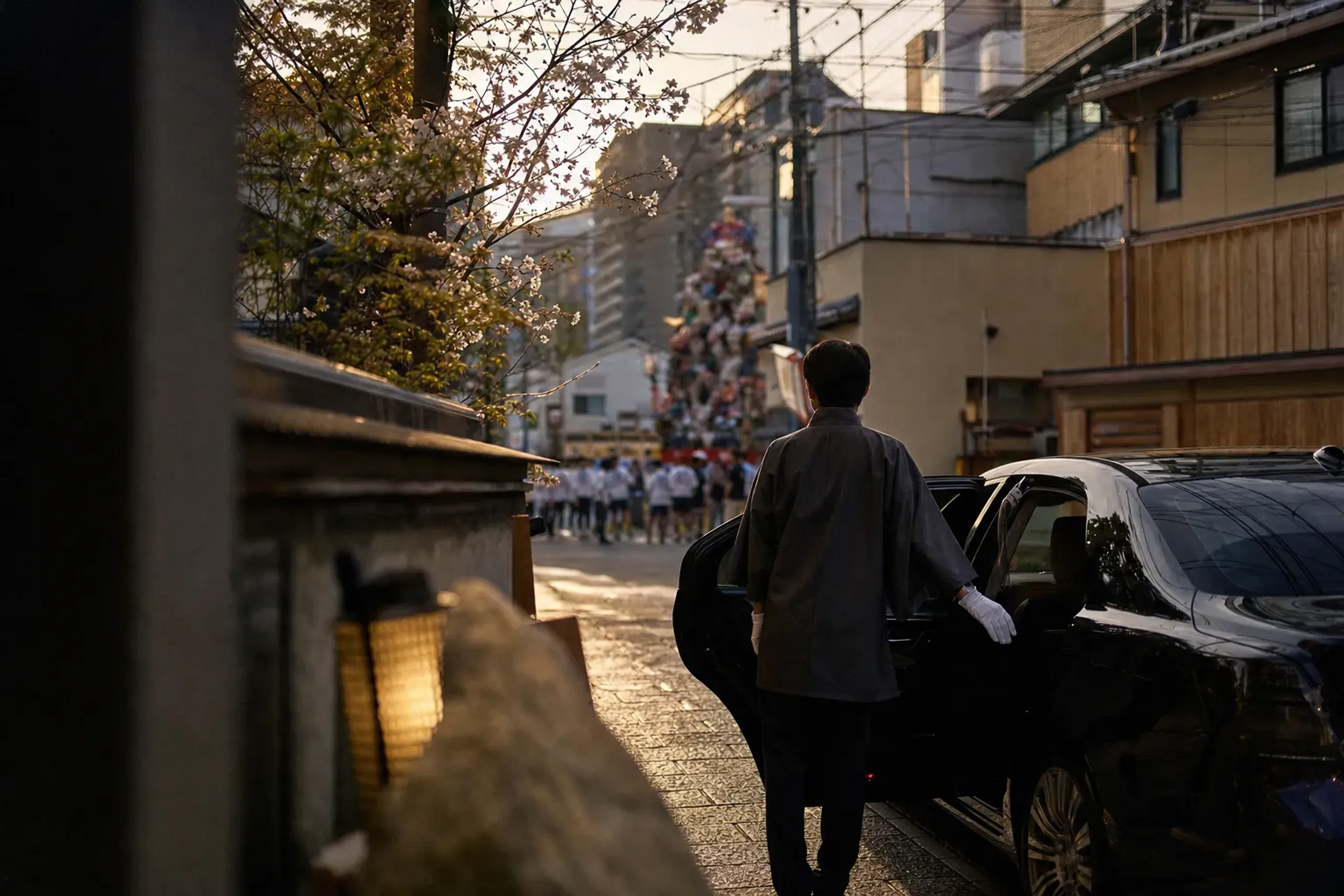
For comfort and timing, many HNW travelers prefer private ground transport over relying on last-minute taxis at an hour when few are running. Our private transportation planning focuses on quiet pickups, sensible drop points, and avoiding the bottlenecks that form while the city is still half-asleep.
The same care extends to a fully tailor-made itinerary that frames Yamakasa within a wider, considered journey through Fukuoka and beyond.
A Simple Pre-Dawn Plan That Works
- Night before: Early dinner, then back to your hotel. Keep it low-key.
- Pickup window: Leave with enough margin to walk the last stretch on foot if needed.
- After the run: Have a warm, unhurried breakfast arranged in advance. You will be tired, and you will have earned it.
That last point is badly underrated. People plan the adrenaline and forget the landing.
How Does Hakata Gion Yamakasa Compare To Other Summer Festivals?
Yamakasa is physically closer to a sprint than most major festivals, and it carries a shrine-centered intensity that feels sharper at 4:59 a.m. than it ever does at midday. It is less a spectacle to be consumed than a ritual to be quietly admitted into—which is precisely what makes a well-planned, discreet presence at the run so rewarding.
Plan Your Yamakasa Morning With Us
A 4:59 a.m. ritual leaves no margin for error, and the finest vantage points in Hakata are rarely found by chance. If you would like to witness the Oiyama finale from a composed, well-placed position—with private transport, verified timings, and an itinerary shaped entirely around your pace and privacy—contact us here to begin a tailored proposal.